

Concurrent inhibition of oncogenic and wild-type RAS-GTP for cancer therapy
Open accessPublished version of a preprint
The DOI matches its Crossref record; 43 of the 48 references it cites were found in a registry or an index.
Abstract
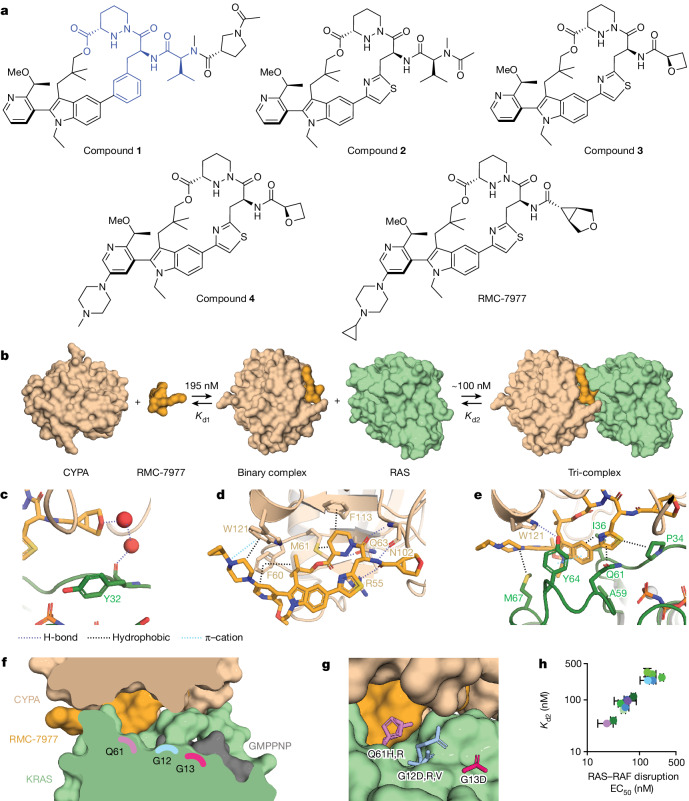
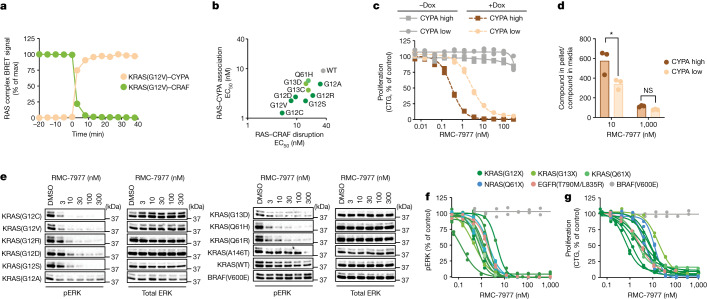
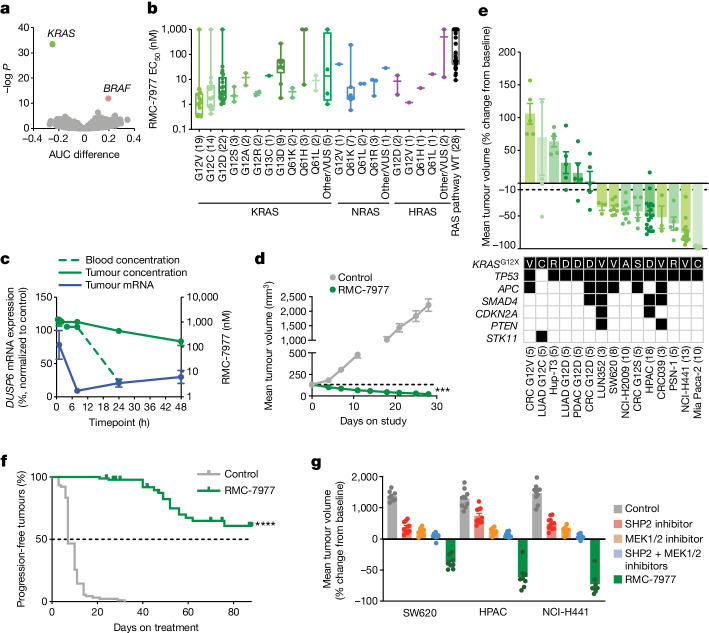
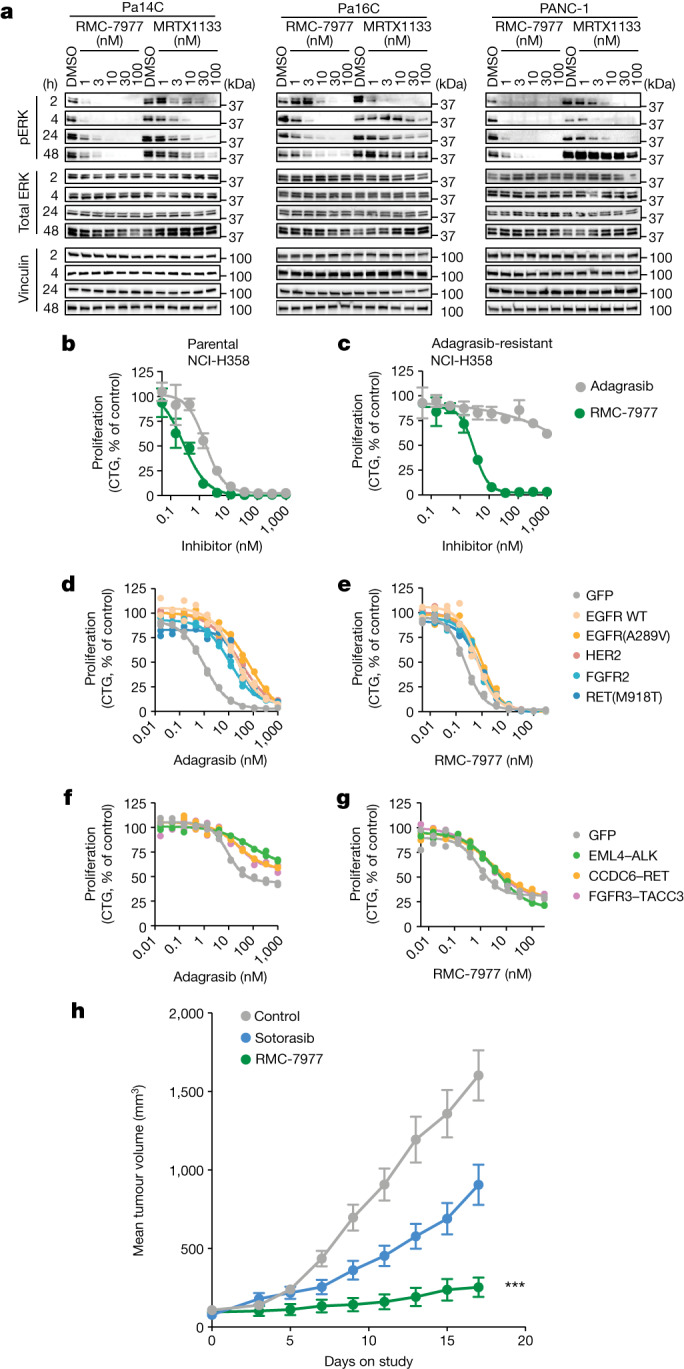
RAS oncogenes (collectively NRAS , HRAS and especially KRAS ) are among the most frequently mutated genes in cancer, with common driver mutations occurring at codons 12, 13 and 61 1 . Small molecule inhibitors of the KRAS(G12C) oncoprotein have demonstrated clinical efficacy in patients with multiple cancer types and have led to regulatory approvals for the treatment of non-small cell lung cancer 2,3 . Nevertheless, KRAS G12C mutations account for only around 15% of KRAS -mutated cancers 4,5 , and there are no approved KRAS inhibitors for the majority of patients with tumours containing other common KRAS mutations. Here we describe RMC-7977, a reversible, tri-complex RAS inhibitor with broad-spectrum activity for the active state of both mutant and wild-type KRAS, NRAS and HRAS variants (a RAS(ON) multi-selective inhibitor). Preclinically, RMC-7977 demonstrated potent activity against RAS-addicted tumours carrying various RAS genotypes, particularly against cancer models with KRAS codon 12 mutations ( KRAS G12X ). Treatment with RMC-7977 led to tumour regression and was well tolerated in diverse RAS-addicted preclinical cancer models. Additionally, RMC-7977 inhibited the growth of KRAS G12C cancer models that are resistant to KRAS(G12C) inhibitors owing to restoration of RAS pathway signalling. Thus, RAS(ON) multi-selective inhibitors can target multiple oncogenic and wild-type RAS isoforms and have the potential to treat a wide range of RAS-addicted cancers with high unmet clinical need. A related RAS(ON) multi-selective inhibitor, RMC-6236, is currently under clinical evaluation in patients with KRAS -mutant solid tumours (ClinicalTrials.gov identifier: NCT05379985).
Overview
The claims and statistics of this paper haven’t been checked yet.
Free: it reads the open-access text and checks the first 5 claims that cite a source we can check. Create a free account to check every claim.
Integrity signals
Registry
Cites
Statistics
Figures
Verification
Claims the paper makes
The claims and statistics of this paper haven’t been checked yet.
Free: it reads the open-access text and checks the first 5 claims that cite a source we can check. Create a free account to check every claim.
Claims other papers make about this one
Each is checked against this paper’s own text: does it say what the citing paper says it does?
The source backs part of the claim, not all of it — or backs it for a different population, condition or comparison.
In the citing paper
“Recently developed “pan-RAS” or “pan-KRAS” inhibitors capable of targeting all RAS isoforms or all KRAS alleles will be broadly applicable to most patients with PDAC (71–74).”
From Mechanisms of Resistance to Oncogenic KRAS Inhibition in Pancreatic Cancer (2024) · cites this paper as [73]
Experimental — accuracy not yet measured
Self-check
Percentages, sums and reported differences re-computed from the paper’s own numbers.
The self-check needs the paper’s full text.
Citations
Cites
Colorectal cancer statistics, 2023
Siegel, R. L., Wagle, N. S., Cercek, A., Smith, R. A., & Jemal, A. (2023) · CA: A Cancer Journal for Clinicians · doi:10.3322/caac.21772 · Cited by 3,733
K-Ras(G12C) inhibitors allosterically control GTP affinity and effector interactions
Ostrem, J. M., Peters, U., Sos, M. L., Wells, J. A., & Shokat, K. M. (2013) · Nature · doi:10.1038/nature12796 · Cited by 2,557
Improved Survival with MEK Inhibition in BRAF-Mutated Melanoma
Flaherty, K. T., Robert, C., Hersey, P., Nathan, P., Garbe, C., Milhem, M., Demidov, L. V., Hassel, J. C., Rutkowski, P., Mohr, P., et al. (2012) · New England Journal of Medicine · doi:10.1056/nejmoa1203421 · Cited by 2,160
Drugging the undruggable RAS: Mission Possible?
Cox, A. D., Fesik, S. W., Kimmelman, A. C., Luo, J., & Der, C. J. (2014) · Nature Reviews Drug Discovery · doi:10.1038/nrd4389 · Cited by 1,997 · cited 1×
“RAS proteins have historically been recalcitrant drug targets 2,3 , although progress in targeting the inactive, GDP-bound state of KRAS(G12C) has resulted in regulatory approvals for two drugs, sotorasib and adagra-sib 10,11 .”
BackgroundSelf-citationRAS Proteins and Their Regulators in Human Disease
Simanshu, D. K., Nissley, D. V., & McCormick, F. (2017) · Cell · doi:10.1016/j.cell.2017.06.009 · Cited by 1,943 · cited 2×
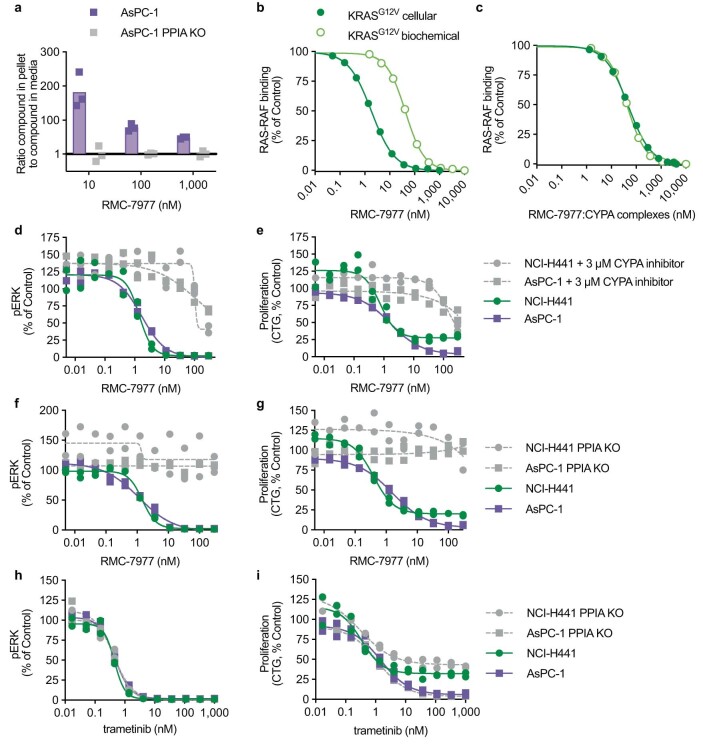
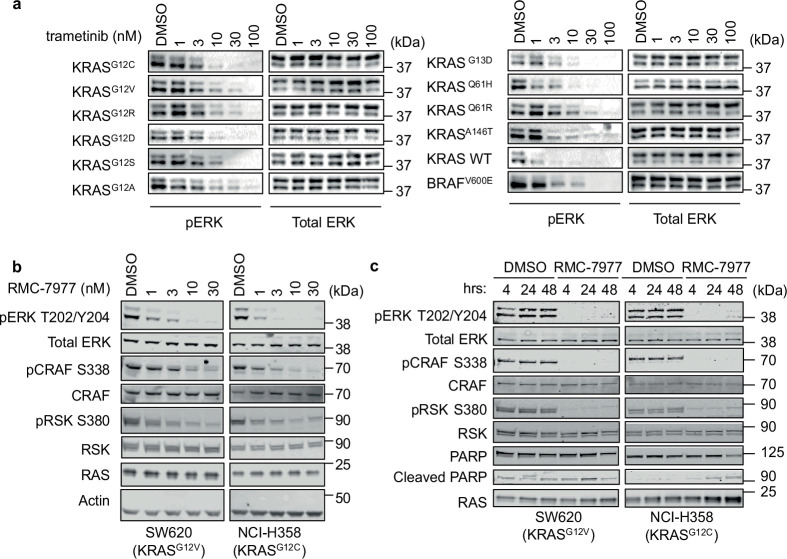
“These studies confirm that CYPA binding is required for inhibition of RAF–MEK–ERK signalling and proliferation by RMC-7977 in NCI-H441 ( KRAS G12V , NSCLC) and AsPC-1 ( KRAS G12D , PDAC) cells (Extended Data Fig.”
BackgroundRAS oncogenes: the first 30 years
Malumbres, M., & Barbacid, M. (2003) · Nature Reviews Cancer · doi:10.1038/nrc1097 · Cited by 1,902
Sotorasib for Lung Cancers with KRAS p.G12C Mutation
Skoulidis, F., Li, B. T., Dy, G. K., Price, T. J., Falchook, G. S., Wolf, J., Italiano, A., Schuler, M., Borghaei, H., Barlesi, F., et al. (2021) · New England Journal of Medicine · doi:10.1056/nejmoa2103695 · Cited by 1,849 · cited 1×
“Finally, CYPA is abundantly expressed across cancer types and exhibits low inter-patient variation in expression 12 , suggesting that tumour expression of CYPA is unlikely to be limiting for RMC-7977 potency.”
BackgroundRAS oncogenes: weaving a tumorigenic web
Pylayeva-Gupta, Y., Grabocka, E., & Bar-Sagi, D. (2011) · Nature Reviews Cancer · doi:10.1038/nrc3106 · Cited by 1,789 · cited 1×
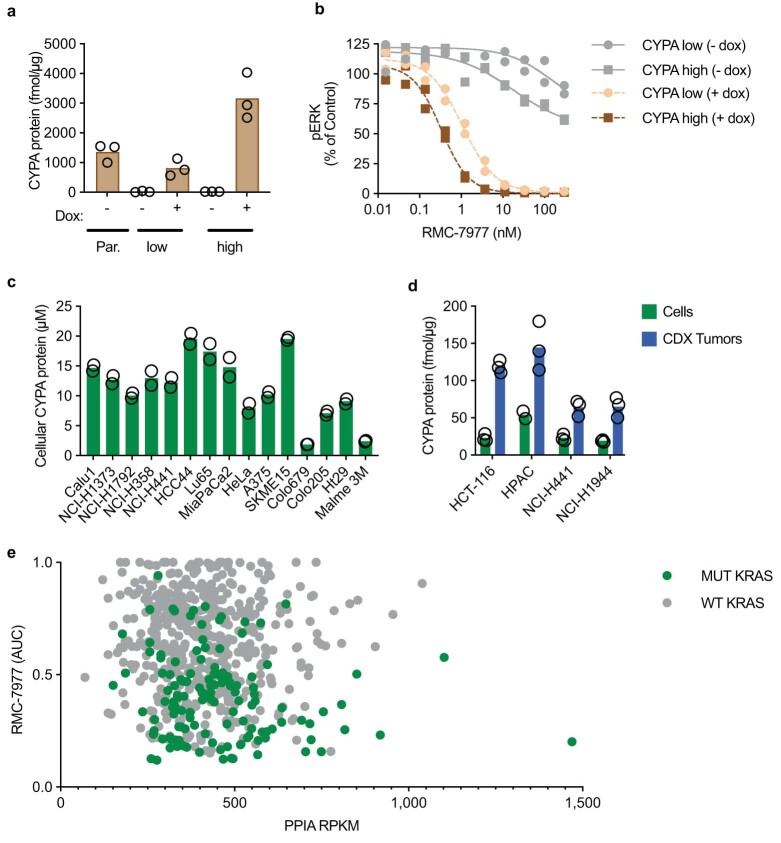
“We further investigated whether exogenous CYPA expression could restore RMC-7977 sensitivity in NCI-H358 ( KRAS G12C , NSCLC) cells lacking PPIA .”
BackgroundAcquired Resistance to KRAS G12C Inhibition in Cancer
Awad, M. M., Liu, S., Rybkin, I. I., Arbour, K. C., Dilly, J., Zhu, V. W., Johnson, M. L., Heist, R. S., Patil, T., Riely, G. J., et al. (2021) · New England Journal of Medicine · doi:10.1056/nejmoa2105281 · Cited by 1,247
Self-citationRAS-targeted therapies: is the undruggable drugged?
Moore, A. R., Rosenberg, S. C., McCormick, F., & Malek, S. (2020) · Nature Reviews Drug Discovery · doi:10.1038/s41573-020-0068-6 · Cited by 1,103 · cited 1×
“RAS proteins have historically been recalcitrant drug targets 2,3 , although progress in targeting the inactive, GDP-bound state of KRAS(G12C) has resulted in regulatory approvals for two drugs, sotorasib and adagra-sib 10,11 .”
Background
Cited by
Items 301–400 of 433
Discovery of TCR-like antibodies to the KRAS G12D neoantigen via in silico-in vitro workflow
Ahn, S., Oh, T.-S., Suh, S., Jeon, J. H., Lah, S., Ryu, K., Choi, S., Kim, H., Lee, E. G., Lee, H., et al. (2026) · Molecular Therapy · doi:10.1016/j.ymthe.2026.05.032 · Cited by 1
Choi, P. H., Meredith, J., Sharma, M., Chen, X., Qiu, J., Markov, V., de Stanchina, E., Singh, M., & Rosen, N. X. (2026) · Cell Reports · doi:10.1016/j.celrep.2026.117559 · Cited by 2
Self-citationShen, J., Ma, Y., Wang, Y., Yang, M., Liang, T., & Guo, L. (2026) · Biochemical Pharmacology · doi:10.1016/j.bcp.2026.118184 · Cited by 1
Self-citationLu, D., Osgood, T., Ma, S., Zhang, H., Kanke, M., Tan, J. A., Paudel, S. N., Zhou, H., Estrada, J., Yamawaki, T., et al. (2026) · Cancer Immunology Research · doi:10.1158/2326-6066.cir-25-0794 · Cited by 1
A telomerase-SUCLG2 signaling axis drives drug resistance by protecting persister cells
Liu, Y., Zhao, K., Hu, B., Tan, J., Yang, Z., Vasilopoulos, T., Luo, N., Ku, Y., Zhou, G., Wei, S., et al. (2026) · Cell Reports · doi:10.1016/j.celrep.2026.117668 · Cited by 1
Self-citationSharmin, S., Kashatus, J. A., Adair, S. J., Loewgren, E. B., Fallahi‐Sichani, M., Bauer, T. W., & Kashatus, D. F. (2026) · British Journal of Cancer · doi:10.1038/s41416-026-03542-7 · Cited by 1
Mizgalska, K., Urbaniak, K., Imbody, D. J., Haura, E. B., Guida, W. C., Branciamore, S., & Karolak, A. M. (2026) · Frontiers in Chemical Biology · doi:10.3389/fchbi.2026.1900407 · Cited by 1
Targeting Oncogenic KRAS Using Peptide Nucleic Acid Oligomers Attached to Cell-Penetrating Peptides
Mondal, J., Lam, D., Alcindor, T. O., Gerritsen, M. E., Brotz, T. M., Kennedy, J., Rehlaender, B., Ross, A. J., Levy, D. E., Bonagura, C. A., et al. (2026) · International Journal of Molecular Sciences · doi:10.3390/ijms27167158 · Cited by 1
“Experimental tri-complex pan-KRAS inhibitors currently in the clinic target other alleles, as well as wild-type KRAS, NRAS, HRAS, and other structurally related proteins [5,8].”
RAS Inhibitor RMC ‐7977 Blocks Vascular Overgrowth of NRAS Q61R Mutant Endothelial Cells
Alharbi, S., Merkle, S., Pastura, P. A., McDaniel, C. G., Zaky, G. S., Waters, A. M., & Cras, T. D. L. (2026) · Journal of Cellular and Molecular Medicine · doi:10.1111/jcmm.71316 · Cited by 1
“RMC-7977 forms a binary complex with cyclophilin A and then a tri-complex with the RAS-GTP bound state, thereby suppressing downstream MAPK and PI3K signalling pathways by steric occlusion [12, 14, 20].”
InfluentialSelf-citationSelenium Nanoparticles Selectively Target KRAS G13D to Inhibit Colorectal Cancer
Liu, X., Wu, C., Song, S., Ma, L., Huang, S., He, Y., Li, Q., Chang, Y., Jiang, D., Mei, Y., et al. (2026) · Advanced Science · doi:10.1002/advs.202523795 · Cited by 1
“…(RMC-6236), which are now in Phase 3 development, have shown activity across multiple KRAS alleles, including G12X, G13X, and Q61X [ 37, 38 ]; pan-KRAS (OFF) compounds, such as BI-2865, bind KRAS G13D with nanomolar affinity (KD approximately 4.3 nM) and have been co-crystallized with…”
InfluentialSmall-molecule RAS/RAF inhibitors target RAS-driven cancers via allosteric RAF disruption
Yoshikawa, Y., Kubota, H., Matsumoto, S., Makino, Y., Kawamura, T., Yuki, H., Sakai, N., Shibaike, A., Okamura, M., Fujimoto-Sakisaka, W., et al. (2026) · Nature Communications · doi:10.1038/s41467-026-76337-2 · Cited by 1
Lou, J., & Zhang, D. (2026) · Experimental Hematology and Oncology · doi:10.1186/s40164-026-00833-w · Cited by 2
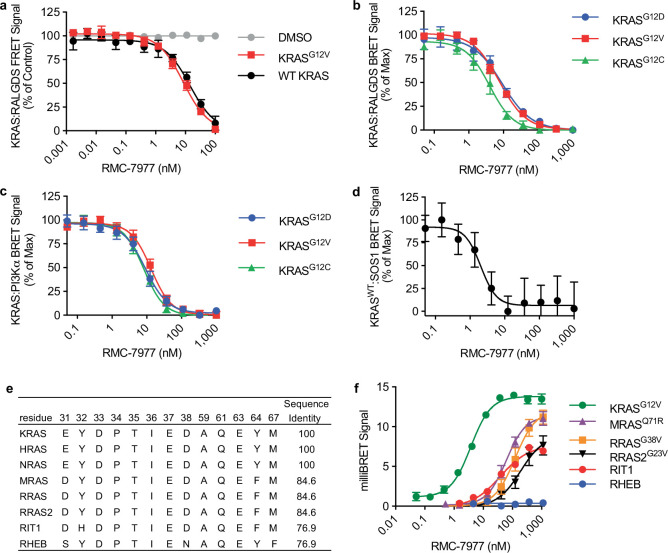
“However, these inhibitors do not bind MRAS (muscle RAS), failing to disrupt the high-affinity SHOC2–MRAS–PP1C (SMP) complex, and RMC-7977-induced tri-complex formation was > 10-fold more potent for KRAS than MRAS [1, 30].”
InfluentialLineage identity governs oncogene dependence in mouse NSCLC models of KRAS inhibitor resistance
Mathey‐Andrews, N., Rodriguez, C. L., Shui, B., Patriotis, A. L., Rideout, W. M., Chen, V. Z., Murazzi, I., Ghazi, P., Cornwall-Brady, M. R., Liu, M., et al. (2026) · Nature Genetics · doi:10.1038/s41588-026-02768-8 · Cited by 2
Zhang, Y., Tang, S., Zhang, Y., Liu, J., Shi, X., Li, Y., Li, Y., Wang, H., Zhong, C., Sun, M., et al. (2026) · Cancer Cell · doi:10.1016/j.ccell.2026.10.003 · Cited by 3
Xiong, Q., & Zhang, Y. (2024) · Science China Life Sciences · doi:10.1007/s11427-024-2669-2 · Cited by 1
“Holderfield et al. (2024) research highlights the creation of RMC-7977, a reversible tri-complex RAS inhibitor with broad-spectrum activity against the active RAS state.”
Targeting the Yin and Yang of KRASG12C
Adamopoulos, C., Papavassiliou, K. A., & Papavassiliou, A. G. (2025) · Trends in Molecular Medicine · doi:10.1016/j.molmed.2025.03.007 · Cited by 1
The evolution of RAS structural biology
Simanshu, D. K., & Knox, J. E. (2024) · Elsevier eBooks · doi:10.1016/b978-0-443-21861-3.00012-7 · Cited by 1
Self-citationSerresi, M., Çetin, A. O., Dramaretska, Y., Kertalli, S., Schmitt, M. J., Naumann, H., Zschummel, M., Asselin-Labat, M.-L., Maciel, L. F., Declercq, J., et al. (2024) · bioRxiv (Cold Spring Harbor Laboratory) · doi:10.1101/2024.12.29.630643 · Cited by 1
Cuesta, C., Pérez, M. A., Cota, R. R., Coadour, S., Zheng, J., Procel, N., Galparsoro, D. F., Rosell, A., Loa-Mesón, D., Martínez-Castedo, B., et al. (2025) · bioRxiv (Cold Spring Harbor Laboratory) · doi:10.1101/2025.01.20.633776 · Cited by 2
Modelling Acral Melanoma in Admixed Brazilians Uncovers Genomic Drivers and Targetable PathwaysPreprint
Squiavinato, A. C. M. S., Bernardes, S. S., Aguiar, F. C., Facciolo, A. C., Herrera, M. D. C. V., Wong-Ramirez, J. R. C., Basurto‐Lozada, P., Nobre, A. B., Annamalai, G., do Nascimento, R. M. C., et al. (2025) · medRxiv · doi:10.1101/2025.08.08.25332963 · Cited by 1
Chu, B., He, Y., Chen, Y., Toth, E. A., & Orban, J. P. (2026) · bioRxiv (Cold Spring Harbor Laboratory) · doi:10.64898/2026.01.15.699477 · Cited by 1
“…been a long-standing target for downregulation via small-molecule inhibitors, with recent successes starting with the covalent modification of KRAS-G12C (17-23), followed by the development of KRAS-G12D-specific inhibitors (24, 25) and pan-RAS inhibitors (26-30) that directly target RAS activity.”
Solomon, H., Mukherjee, R., Yang, Y. C., Meredith, J., Schram, A. M., Yi, S. A., Chen, X., Tribuzio, M., Gundlapalli, H., Meyerowitz, J., et al. (2026) · bioRxiv (Cold Spring Harbor Laboratory) · doi:10.64898/2026.02.12.705558 · Cited by 1
Self-citationYeung, S. F., Chen, J. X., Law, C. T., Law, A. C. H., Lee, C., Leung, A. M. F., Chau, M. P. K., Chi-Bun, B. K., Yue, W., Tong, M., et al. (2026) · bioRxiv (Cold Spring Harbor Laboratory) · doi:10.64898/2026.02.18.706707 · Cited by 1
Gazi, M. Y., Ye, Y., Okoko, O. D., Wang, X., Simon, S. E., Alimadadi, A., Suryawanshi, N., Brandle, C., Zheng, M., Pei, L., et al. (2026) · bioRxiv (Cold Spring Harbor Laboratory) · doi:10.64898/2026.02.26.708383 · Cited by 1
Goldstein, M. E., Chu, B., Carillo, K. J., Orban, J. P., Toth, E. A., & Fuerst, T. R. (2026) · bioRxiv (Cold Spring Harbor Laboratory) · doi:10.64898/2026.03.04.709402 · Cited by 1
Mutant KRAS promotes NF-κB driven CCL20 chemokine expression in pancreatic ductal adenocarcinomaPreprint
Drouillard, D., Davies, M., McAllister, D. M., & Dwinell, M. B. (2026) · bioRxiv (Cold Spring Harbor Laboratory) · doi:10.64898/2026.04.13.717530 · Cited by 1
Chang, W.-H., Vaughan, A. J., Stamey, A. G., Mancini, M., Hayashi, M., Yang, R. Y., Robb, R. N., Andrussier, D., Klomp, J. A., Waters, A. M., et al. (2026) · bioRxiv (Cold Spring Harbor Laboratory) · doi:10.64898/2026.04.18.719329 · Cited by 1
Self-citationBreaking the RAS Barrier in Pancreatic Cancer
Sivakumar, S. (2026) · New England Journal of Medicine · doi:10.1056/nejme2606948 · Cited by 1
Targeting AXL Overcomes Adaptive Resistance to KRAS Inhibition in KRAS-Driven CancerPreprint
Thege, F. I., Kramer, A., Kreisz, N., Salim, I., Girma, E. G., Welte, L., Adams, E., Pluchinsky, A., Kirschstein, E., Harder, O. E., et al. (2026) · bioRxiv (Cold Spring Harbor Laboratory) · doi:10.64898/2026.08.02.742234 · Cited by 1
Recent Advances of Drug Design Strategies for Classical KRAS Mutations
Huang, X. (2024) · Transactions on Materials Biotechnology and Life Sciences · doi:10.62051/yc6p5d86
Generative AI in Cancer: Improving Therapies Against Common Oncogenic DriversPreprint
Chen, K. (2024) · doi:10.58445/rars.1675
The emergence of pan-KRAS drugs
McConnell, D. B., & Kraut, N. (2024) · Elsevier eBooks · doi:10.1016/b978-0-443-21861-3.00019-x
Immune-oncology potential of KRAS inhibitors
Molina‐Arcas, M., Boumelha, J., & Downward, J. (2024) · Elsevier eBooks · doi:10.1016/b978-0-443-21861-3.00013-9
KRAS-driven cancer models for in vivo pharmacology and drug discovery
Chugh, S., Dow, L. E., Singh, M., & Aguirre, A. J. (2024) · Elsevier eBooks · doi:10.1016/b978-0-443-21861-3.00004-8
Self-citationFirst molecules to reactivate RASG12V GTPase activity
Włodarczyk, A., Tręda, C., Pacholczyk, M., Rutkowska, A., Węgierska, M., Kierasińska, A., Wasiak, K., Ciunowicz, D., Grot, D., Głowacki, P., et al. (2025) · BMC Cancer · doi:10.1186/s12885-025-13580-8
Immunotherapies versus small-molecule therapies of cancers with RAS oncogene mutations
Rieske, P. (2025) · Alergologia Polska - Polish Journal of Allergology · doi:10.5114/pja.2025.148075
Targeting RAS and associated proteins
Müller, M. P., Goody, R. S., & Rauh, D. (2025) · Elsevier eBooks · doi:10.1016/b978-0-443-29808-0.00008-x
The Role of Ras Gene in Cancer and Progress in Antibody Research
Ma, G.-L. (2025) · Biomedical Data Science · doi:10.47297/wspbdswsp2752-630529.20250501
Mechanisms of genomic resistance across emerging classes of KRAS inhibitors
Riedl, J. M., & Corcoran, R. B. (2025) · Annals of Oncology · doi:10.1016/j.annonc.2025.06.019
Opsahl, E. L. L., & di Magliano, M. P. (2025) · Cancer Discovery · doi:10.1158/2159-8290.cd-25-0878
Advances in the Treatment of Pancreatic CancerPreprint
李, 仁., Zhang, T., Jing, F., & Gao, X. (2025) · Preprints.org · doi:10.20944/preprints202508.1933.v1
Another Slice of the Pie Uncovered: RIT1M90I Is an Actionable Driver in Non–Small Cell Lung Cancer
Wu, C., & Vaishnavi, A. (2025) · Cancer Research · doi:10.1158/0008-5472.can-25-1989
Ahn, S., Oh, T.-S., Suh, S., Jeon, J. H., Lah, S., Ryu, K., Kim, H., Lee, E. G., Lee, H., Lee, J. Y., et al. (2025) · bioRxiv (Cold Spring Harbor Laboratory) · doi:10.1101/2025.08.31.673313
The very druggable RAS proteins
Hasselluhn, M. C., & Olive, K. P. (2025) · Trends in cancer · doi:10.1016/j.trecan.2025.10.005
Tsuda, M., Keith, D. J., Daniel, C. J., Pelz, C., Blise, K. E., Ozmen, T. Y., Ozmen, F., Hawthone, K., Eng, J. R., Li, X., et al. (2025) · bioRxiv (Cold Spring Harbor Laboratory) · doi:10.64898/2025.12.12.693851
Resistance is not futile: RAS inhibition resensitizes AML
Collins, C. T., & Majeti, R. (2026) · Blood · doi:10.1182/blood.2025031932
Understanding the Kinetic Mechanism of Ligands Stabilizing the RAS–CYPA Interaction
Xu, K., Shen, M., Wang, Z., Xiang, S., Deng, Q., Yang, K., Jiang, Z., Wang, Z., Yin, C., Hou, T., et al. (2026) · Journal of Chemical Information and Modeling · doi:10.1021/acs.jcim.5c02966
Self-citationMacrophage Antigen Presentation Is Unleashed by Pan-RAS Inhibition to Promote Antitumor ImmunityPreprint
Shen, J., Li, W., He, X., Zhang, L., Shucheng, H., Zeng, C., Che, M., Fan, W., Jo, S., Yang, H., et al. (2026) · bioRxiv (Cold Spring Harbor Laboratory) · doi:10.64898/2026.01.30.702886
Interleukin-1β as target to induce synthetic lethality in KRAS mutant biliary tract cancer
Li, S., Shan, Y., Chen, T., Topatana, W., Juengpanich, S., Lu, Z., Sun, Y., Xie, T., Ruijing, R., Hou, L., et al. (2026) · Clinical and Molecular Hepatology · doi:10.3350/cmh.2025.1278
Sensing and Reprogramming Surface Receptor Activation With Synthetic Transcriptional Circuits
Liu, F., Yuan, M., Tang, L., Wang, F., Chu, X., & Jiang, J. (2026) · Advanced Science · doi:10.1002/advs.202522557
“Ras mutations were considered to account for various human cancers, and these mutations used to occur at hotspot codons G12, G13 or Q61 and entail gain-of-function missense alterations [ 37 ].”
InfluentialSelf-citationDissecting KRAS Functional Heterogeneity in Patient-Derived Lung Adenocarcinoma Models
Rosen, J. C. (2025) · TSpace (University of Toronto)
Cancer biology and the principles of targeted cancer drug discovery
Davies, A., Jones, G., Krishnan, S., Krishnamoorthy, M., Maruggi, M., Kaneda, M., & Marjon, K. (2026) · Elsevier eBooks · doi:10.1016/b978-0-443-29808-0.00035-2
Letter to the Editor. Reappraising dual MAPK/VEGF inhibition in KRAS-mutated bAVMs
Shi, J., Zhang, T., & Chen, J. (2026) · Journal of neurosurgery · doi:10.3171/2025.12.jns252753
Self-citationVicent, S., Welch, C., Novoa, G., Vasquez-Valencia, C., Macaya, I., Jimenez-Alonso, J. J., Subrizio, A., Lagos, A. F., Llorente, S., Jimenez, M., et al. (2026) · Research Square · doi:10.21203/rs.3.rs-9085811/v1
Innovative targeted therapies for mosaic RAS-related vascular malformations
Morin, G. (2024) · theses.fr (ABES) · doi:10.70675/88882e5fz1bf9z4dbezae13zba4200ee9598
Unlocking drug sensitivity in KRAS
MingCong, L. I., YueSong, Z. H. O. U., Qiao, T. D., QingLin, B. A. I., & Li, C. (2026) · Scientia Sinica Vitae · doi:10.1360/ssv-2025-0279
Yi, Y., Hu, Y., Ren, S., Wu, Y., Chen, X.-S., Lu, Y., Yu, Q., Zuo, D., Bi, G., Wang, Q., et al. (2026) · Respiratory Research · doi:10.1186/s12931-026-03673-8
“…this challenge, active-state pan-KRAS inhibitors, such as RMC-7977 and RMC-6236, as well as other emerging RAS(ON)-state inhibitors, have been developed to more comprehensively suppress both mutant and wild-type KRAS signaling [14 The function of MXD4 in tumors is still not thoroughly investigated.”
Shi, T., & Qian, Y. (2026) · Elsevier eBooks · doi:10.1016/b978-0-443-45105-8.00014-7
Miao, S., Zhao, H., Liu, A., Xu, N., Liu, X., & Wang, X. (2026) · Molecules · doi:10.3390/molecules31101577
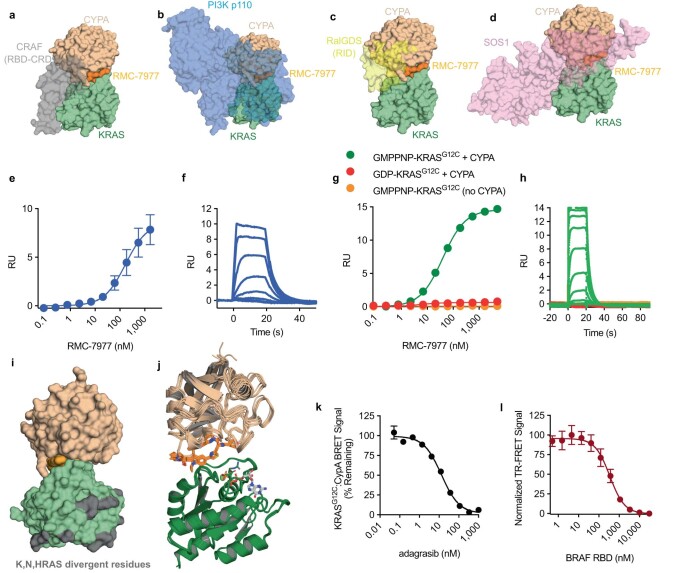
“The assembled tricomplex demonstrated that CYPA blocks the binding interface of KRAS G12C effectors, including CRAF, PI3K, and SOS1 [56,57].”
Emerging concepts, hot topics, and open questions in today’s pancreatic cancer research
Keber, C. U., Schmitt, M., Visekruna, A., Brichkina, A. I., von Strandmann, E. P., Bartsch, J. W., Huber, M., Bauer, U., Gress, T. M., & Lauth, M. (2026) · Biochimica et Biophysica Acta (BBA) - Reviews on Cancer · doi:10.1016/j.bbcan.2026.189614
SAIMSARA (2026) · SAIMSARA Journal · doi:10.62487/saimsaradc4d1e0f
Shrivastava, A., Pederson, E. N., Nguyen, T. U., Chuen, J., Mohan, P., Pande, S., Toribio, A. R., Lecomte, N., Melchor, J. P., McAuliffe, J. C., et al. (2026) · Cell Reports · doi:10.1016/j.celrep.2026.117520
M1C IS NECESSARY FOR DARAXONRASIB RESISTANCE OF NSCLC KRAS(G12C) MUTANT CELLSPreprint
Takamori, S., Haratake, N., Nonaka, K., Moriya, M., Bhattacharya, A., Takenaka, T., Yoshizumi, T., Long, M. D., & Kufe, D. W. (2026) · bioRxiv (Cold Spring Harbor Laboratory) · doi:10.64898/2026.06.20.733526
“Daraxonrasib is a RAS(ON) tri-complex inhibitor (TCI) that binds to active GTP-bound RAS and recruits cyclophilin A (CYPA) to block wild-type and mutant RAS(ON) signaling 1, 2 .”
InfluentialValencia-Sama, I., Kee, L., Weiss, A., Hayes, M. N., Ohh, M., & Irwin, M. S. (2026) · bioRxiv (Cold Spring Harbor Laboratory) · doi:10.64898/2026.06.24.734371
Tumor-targeted pan-RAS inhibition as a novel biologic therapy for diffuse midline glioma
Sbergio, S.-G., Liang, H., Chen, L., Canty, L., Carette, S., Pajovic, S., Sabha, N. S., Vadivel, A. K. A., Beilhartz, G. L., Melnyk, R. A., et al. (2026) · Neuro-Oncology · doi:10.1093/neuonc/noag148
Therapeutic inhibition of RAS in non-small cell lung cancer
Nichols, K. B., & Herzberg, B. O. (2026) · Frontiers in Oncology · doi:10.3389/fonc.2026.1817943
Biochemistry at scale: Seeing both the forest and the trees
Harry, S. A., Vasavda, C., Wahida, A., Stevens, R., Singh, H., Goldman, I. D., Chabner, B. A., & Bar‐Peled, L. (2026) · Trends in Biochemical Sciences · doi:10.1016/j.tibs.2026.05.005
Aly, A. S., Yacoub, Z., & Yacoub, J. (2026) · Therapeutic Innovation & Regulatory Science · doi:10.21203/rs.3.rs-10252473/v1
TMEM87A/EBP/7-DHC/7-DHD Axis Promotes Pancreatic Cancer Progression via Ferroptosis EvasionPreprint
Li, J., Ouyang, S., Yu, X., Xu, Y., Li, Z., Li, Y., Fei, J., Song, L., & Li, M. (2026) · Research Square · doi:10.21203/rs.3.rs-10197859/v1
Behara, S., Yadav, U., Sahu, V. K., Nagar, S., Basu, S., Gupta, S., Rudagi, B. M., Kheur, S. M., Davray, D., & Sur, S. (2026) · Scientific Reports · doi:10.1038/s41598-026-61238-7
“The selected 3D crystal structures of EGFR (PDB ID: 8A27) and HRAS (PDB ID: 8TBG) were obtained from the Protein Data Bank (PDB) based on their high resolution and taxonomic relevance 55,56 .”
Tusa, I., Mazzei, C., Papini, D., Menconi, A., Sfragano, Y., Tubita, A., Montemurro, G., Penitenti, J., Esparís-Ogando, A., Pandiella, A., et al. (2026) · bioRxiv (Cold Spring Harbor Laboratory) · doi:10.64898/2026.07.17.737152
“To evaluate the translational potential of these findings, we tested the effects of the pan-Ras inhibitor RMC-6236 on the observed reciprocal MAPK rewiring following targeted inhibition pressure (23,35,38).”
EGUCHI, K., Kajita, Y., Suguru, M., Somekawa, K., & Chin, K. (2026) · Journal of Clinical Question · doi:10.69854/jcq.2026.0020
Mintoo, M., Rajagopalan, V., Greathouse, R. L., Nasarre, C., Trebino, T., Santana, D., Flores-Galvez, K. O., Ketavarapu, G., Koide, A., Hood, F. E., et al. (2026) · Scientific Reports · doi:10.1038/s41598-026-63488-x
Functional role of MAPK signaling pathway in cancer cells
Ramachandran, R., & Kumaran, S. (2026) · Research Journal of Biotechnology · doi:10.25303/219rjbt3060322
Daraxonrasib and Beyond: Pan‐ RAS Inhibition, Resistance, and Next‐Generation Strategies
Honda, R. P. (2026) · Cancer Science · doi:10.1111/cas.70497
“…of mutant and wild-type RAS may suppress adaptive feedback and pathway reactivation; a single agent may address heterogeneous RAS alterations [24, 25] Wild-type RAS inhibition may narrow the therapeutic window and cause normal-tissue toxicity; acquired resistance may occur through…”
Hruban, R. H., & Kern, S. E. (2026) · Modern Pathology · doi:10.1016/j.modpat.2026.101059
Fu, Y., Amiot, M., Kuzniak, I., Jouenne, F., Mourah, S., Lebbé, C., & Dumaz, N. (2026) · Oncogene · doi:10.1038/s41388-026-03951-1 · Cited by 1
Personalized Medicine in Cancer: Challenges and Future Perspectives
Kumari, S., Gupta, R., Dhurve, G., Jia, X., & Chaudhary, N. (2026) · Springer eBooks · doi:10.1007/978-981-92-0477-9_23
Engineered caspases directly rewire mutant Ras to cell deathPreprint
Moeller, L., Lu, A. C., Ho, K., Zhang, E., & Elowitz, M. B. (2026) · bioRxiv (Cold Spring Harbor Laboratory) · doi:10.64898/2026.08.06.743376
“Clinically, intracellular Ras is primarily targeted with small-molecule inhibitors, including mutation-selective agents ( e.g. , Sotorasib 35,36 ) and emerging pan-Ras inhibitors ( e.g. , RMC-7977, the clinical tool compound for Daraxonrasib 16,37,38 ).”
Basole, U. M., Fitzpatric, M. M., Donohoe, J., Obulasetti, S., Snider, W., Haugen, E., García‐Cehic, D., González-Manteiga, A., Sertorio, M. G., & Oria, M. (2026) · Frontiers in Molecular Neuroscience · doi:10.3389/fnmol.2026.1857885
“RAS-GTP inhibitors, specifically RAS(ON) multi-selective inhibitors, have been proven to act on wild-type RAS as well as mutant forms (Holderfield et al., 2024).”
Therapeutic targeting of RAS-mediated resistance in oncogene-driven lung cancer
Facchinetti, F., Friboulet, L., Liao, L., Peroni, M., Nakazawa, S., Zullo, L., Aldea, M., Pecci, F., Makarem, M., Alonso-García, I., et al. (2026) · Annals of Oncology · doi:10.1016/j.annonc.2026.08.004
Arioka, M., & Takahashi‐Yanaga, F. (2026) · Biochemical Pharmacology · doi:10.1016/j.bcp.2026.118380
Li, L., Li, J., Yang, L., Zhou, J., & Ma, Y. (2026) · Pharmaceuticals · doi:10.3390/ph19091388
“In addition, the therapeutic window of multi-selective RAS(ON) inhibitors requires continued evaluation because these agents can engage both mutant and wild-type RAS isoforms [40].”
RAS-targeted therapies for pancreatic cancer
Chan, L. L., Kwong, T. T., Yau, J., & Chan, S. L. (2026) · ESMO Gastrointestinal Oncology · doi:10.1016/j.esmogo.2026.100414
“15,16 These agents are designed to inhibit the active GTP-bound state of multiple RAS isoforms, including mutant and wild-type KRAS, NRAS (NRAS proto-oncogene, GTPase), and HRAS (HRas proto-onco-gene, GTPase) variants.”
Wang, E., Yao, A., Sasaki, M., Tanaka, R., Hassanein, M., Fujiwara, Y., & Tokuhara, T. (2026) · Journal of Clinical Question · doi:10.69854/jcq.2026.0026
The dawn of RAS-targeted therapy: a landmark breakthrough of daraxonrasib in pancreatic cancer
Liu, C., & Liu, L. (2026) · Clinical Cancer Bulletin · doi:10.1007/s44272-026-00072-4
“It first forms a binary complex with intracellular cyclophilin A, and this complex then selec‑ tively binds to the GTP‑bound (RAS[ON]) form of both mutant and wild‑type RAS proteins [11, 12].”
Nguyen, H. H., Maneenet, J., Omar, A. M., Mori, T., Daodee, S., Monthakantirat, O., Boonyarat, C., Khamphukdee, C., Chulikhit, Y., Fujii, T., et al. (2026) · Pharmaceuticals · doi:10.3390/ph19091454
“In PDAC, MAPK signaling is frequently hyperactivated by KRAS mutations [40].”
Fuerst, T. R., Goldstein, M., Chu, B., Carillo, K. J., Orban, J. P., & Toth, E. (2026) · Research Square · doi:10.21203/rs.3.rs-10438702/v1
Song, Z. (2026) · Transactions on Materials Biotechnology and Life Sciences · doi:10.62051/ndcdrx21
“Thus, there is an unmet need for therapies that are able to recognize the multiple KRAS mutation variants instead of one particular mutation [5,6].”
Difluoromethylornithine modulates mutant K-RAS signaling pathways in pancreatic cancer cells
Chen, H., Stringer, D. E., Cui, H., Gerner, E. W., & Ignatenko, N. A. (2026) · Amino Acids · doi:10.1007/s00726-026-03559-5
“The signif - icant improvement in targeting K-RAS mutations in PDAC has been achieved with the development of a novel multise-lective, tri-complex inhibitor of the active GTP-bound RAS protein (RAS (ON) inhibitor), daraxonrasib (Holderfield et al. 2024 ).”
野村, 禎. (2026) · Institutional Repositories DataBase (IRDB)
Vulnerability of triple negative breast cancer to daraxonrasib pan-RAS(on) inhibitionPreprint
East, M. P., Olivares-Quintero, J. F., Okumu, D. O., Mott, K. R., Sprung, R. W., Whitman, A. A., Joisa, C. U., Chen, X., Zhang, Q., Erdmann-Gilmore, P., et al. (2026) · bioRxiv (Cold Spring Harbor Laboratory) · doi:10.64898/2026.09.16.752096
“To do this, we tested the novel pan-RAS(on) inhibitor daraxonrasib (RMC-6236) that inhibits both wild-type RAS and oncogenic RAS mutants 13, 16 .”
InfluentialTargeting KRAS-Mutant Lung Cancers
Garbo, E., Scaparone, P., Hoe, H. J., Luo, J., Shaw, A. T., Ambrogio, C., & Ricciuti, B. (2026) · Journal of the National Comprehensive Cancer Network · doi:10.6004/jnccn.2026.7038
Self-citationPost-translational modifications of KRAS: from molecular regulation to therapeutic targeting
Yao, N., Yang, L., 周然, Wang, J., & Li, X. (2026) · Advanced Cancer Research · doi:10.55092/acr20260014
Tong, B., Tang, S. A., Deng, Y., Nan, Z., Gao, A. X., Michaud, G. A., Bonazzi, S., Berst, F., Zécri, F. J., Liu, S., et al. (2026) · Advanced Science · doi:10.1002/advs.77819
Stickler, S., Eggerstorfer, M.-T., Rieche, M., Weigl, L. G., Hohenegger, M., Kashofer, K., Hochmair, M. J., & Hamilton, G. (2026) · Translational Lung Cancer Research · doi:10.21037/tlcr-2026-0798
“Mechanisms of escape include secondary RAS mutations, amplification of the KRAS G12C allele and reactivation of upstream RTK (36).”
InfluentialComputational design of a versatile, zero-radius proximity labeling enzymePreprint
Dai, S. A., Cavanagh, P. E., Qiang, A., Zhang, Z., Geng, Q., Anguiano, M., Xue, A. G., Matsui, T., Nguyen, K., Udeshi, N. D., et al. (2026) · bioRxiv (Cold Spring Harbor Laboratory) · doi:10.64898/2026.09.24.754223
Harnessing novel agents to target KRAS-driven pathways in pancreatic cancer
Kreidi, J., Hoyek, C., Eslinger, C. R., & Bekaii-Saab, T. (2026) · Expert Opinion on Biological Therapy · doi:10.1080/14712598.2026.2738708
“RMC-7977 and its clinical analog daraxonrasib (RMC-6236) are first-in-class reversible tri-complex RAS(ON) pan-RAS-selective inhibitors that bind to both wild-type and mutant KRAS, NRAS, and HRAS proteins [60–63].”
Metadata
- Authors
- Holderfield, M., Lee, B. J., Jiang, J., Tomlinson, A., Seamon, K. J., Mira, A., Patrucco, E., Goodhart, G., Dilly, J., Gindin, Y., Dinglasan, N., Wang, Y., Lai, L. P., Cai, S., Jiang, L., Nasholm, N., Shifrin, N., Blaj, C., Shah, H., Evans, J. W., Montazer, N., Lai, O., Shi, J., Ahler, E., Quintana, E., Chang, S., Salvador, A., Marquez, A., Cregg, J., Liu, Y., Milin, A., Chen, A., Ziv, T. B., Parsons, D., Knox, J. E., Klomp, J. E., Roth, J., Rees, M., Ronan, M., Cuevas-Navarro, A., Hu, F., Lito, P., Santamaria, D., Aguirre, A. J., Waters, A. M., Der, C. J., Ambrogio, C., Wang, Z., Gill, A. L., Koltun, E. S., Smith, J. A. M., Wildes, D., & Singh, M.
- Affiliations
- Revolution Medicines (United States) (US)
- University of Turin (IT)
- University of Cincinnati (US)
- Dana-Farber Cancer Institute (US)
- University of North Carolina at Chapel Hill (US)
- Broad Institute (US)
- Memorial Sloan Kettering Cancer Center (US)
- Corresponding author
- Smith, Jacqueline A. M.
- Wildes, David
- Singh, Mallika
- ORCID
- Holderfield, Matthew
- Lee, Bianca J.
- Jiang, Jingjing
- Tomlinson, Aidan
- Seamon, Kyle J.
- Mira, Alessia
- Patrucco, Enrico
- Goodhart, Grace
- Dilly, Julien
- Gindin, Yevgeniy
- Dinglasan, Nuntana
- Wang, Yingyun
- Cai, Shurui
- Jiang, Lingyan
- Nasholm, Nicole
- Shifrin, Nataliya
- Blaj, Cristina
- Shah, Harshit
- Evans, James W.
- Shi, Jade
- Ahler, Ethan
- Quintana, Elsa
- Chang, Stephanie
- Salvador, Anthony
- Marquez, Abby
- Milin, Anthony
- Chen, Anqi
- Ziv, Tamar Bar
- Parsons, Dylan
- Knox, John E.
- Klomp, Jennifer E.
- Roth, Jennifer
- Rees, Matthew
- Ronan, Melissa
- Cuevas-Navarro, Antonio
- Hu, Feng
- Lito, Piro
- Aguirre, Andrew J.
- Waters, Andrew M.
- Der, Channing J.
- Ambrogio, Chiara
- Wang, Zhengping
- Gill, Adrian L.
- Koltun, Elena S.
- Smith, Jacqueline A. M.
- Wildes, David
- Singh, Mallika
- Venue
- Nature
- Published
- 2024-04-08
- Volume
- 629
- Issue
- 8013
- Pages
- 919-926
- ISSN
- 0028-0836 (ISSN-L)
- 1476-4687
- PMC
- PMC11111408
- OpenAlex
- W4394580100
- Cited by
- 369
- References
- 48
- Citations by year
- 2026: 135 · 2025: 169 · 2024: 64
- FWCI
- 50.10
- Type
- journal article
- Language
- en
- Open access
- hybrid
- doi.org
- Licence
- cc-by
- creativecommons.org/licenses/by/4.0 (tdm)
- creativecommons.org/licenses/by/4.0 (vor)
- Locations
- Nature (publishedVersion, cc-by)
- Research Square (acceptedVersion, cc-by)
- PubMed Central (publishedVersion, cc-by)
- PubMed (publishedVersion)
- Carolina Digital Repository (University of North Carolina at Chapel Hill) (submittedVersion)
- Institutional Research Information System University of Turin (University of Turin) (submittedVersion, other-oa)
- RePEc: Research Papers in Economics (submittedVersion)
- DIGITAL.CSIC (Spanish National Research Council (CSIC)) (submittedVersion, cc-by)
- UNC Libraries
- Funders
- U.S. Department of Defense (P30CA008748, W81XWH2110692)
- U.S. Department of Health and Human Services (P30 CA008748)
- American Cancer Society
- Pew Charitable Trusts
- Damon Runyon Cancer Research Foundation (P30 CA008748)
- Pancreatic Cancer Action Network (22-WG-DERB)
- Bristol-Myers Squibb
- Eli Lilly and Company
- Jackson Laboratory
- Giovanni Armenise-Harvard Foundation
- Memorial Sloan-Kettering Cancer Center (CA008748, P30 CA008748)
- Pershing Square Sohn Cancer Research Alliance (P30 CA008748)
- Deciphera Pharmaceuticals
- Mirati Therapeutics
- Revolution Medicines
- Springworks Therapeutics
- European Commission (HORIZON2020)
- Associazione Italiana per la Ricerca sul Cancro (IG 2021, 25737)
- Pharmaron
- National Institutes of Health (CA008748)
- National Cancer Institute (R01CA230267, K99CA276700, CA008748, R35CA232113, T32CA009156, F32CA239328, P30CA008748, K22CA276632, P50CA257911, R01CA279264, R01CA230745, R01CA276268, R00CA276700)
- H2020 European Research Council (101001288)
- Topics
- Life Sciences › Biochemistry, Genetics and Molecular Biology › Molecular Biology › Protein Kinase Regulation and GTPase Signaling
- Life Sciences › Biochemistry, Genetics and Molecular Biology › Molecular Biology › Protein Tyrosine Phosphatases
- Life Sciences › Biochemistry, Genetics and Molecular Biology › Molecular Biology › Melanoma and MAPK Pathways
- Keywords
- oncogenic Ras, RMC-7977, RMC-6236, KRAS G12C, K-ras codon 12 mutation, NRAS, HRAS, KRAS inhibitor resistance, cancer therapy
- MeSH terms
- Animals, Antineoplastic Agents, Female, Guanosine Triphosphate, Humans, Male, Membrane Proteins, Mice, Inbred BALB C, Mice, Inbred C57BL, Mutation, Neoplasms, Piperazines, Signal Transduction, Oncogene Protein p21(ras), Proto-Oncogene Proteins p21(ras), GTP Phosphohydrolases, Xenograft Model Antitumor Assays, Cell Line, Tumor, Mice
About these checks
Registry, retraction, Cites and statistics results are computed, not judged, with one exception: a printed reference that no index lists is read once by a model before it counts as a citation error. Claims are extracted by a model and kept only when their quote appears verbatim in the text; each cited source is then checked, with a model’s help, for whether it says what the claim relies on. Those verdicts can be wrong — read the claim’s quote and the cited source before relying on one.
Statistics and arithmetic are recomputed, not judged.
Confidence bands are shown only for fields calibrated on our annotated test set. None is calibrated yet, so no band is shown.
What counts as a claim ›How we measure confidence ›How we check this ›
Are you an author, or do you see a problem with this page? Request a review
Data sources
Bibliographic data: Semantic Scholar, OpenAlex, Crossref.
Contains information from the Semantic Scholar Academic Graph Datasets, made available under the ODC Attribution License (ODC-BY 1.0).
Semantic Scholar’s data is described in: Kinney, R., et al. (2023). The Semantic Scholar Open Data Platform. arXiv:2301.10140.
