

Single-nucleus atlas of cell-type specific genetic regulation in the human brain
Open accessPublished version of a preprint
The DOI matches its Crossref record; 88 of the 88 references it cites were found in a registry or an index; none of the 86 sources its claims cite is checked for support yet.
Abstract
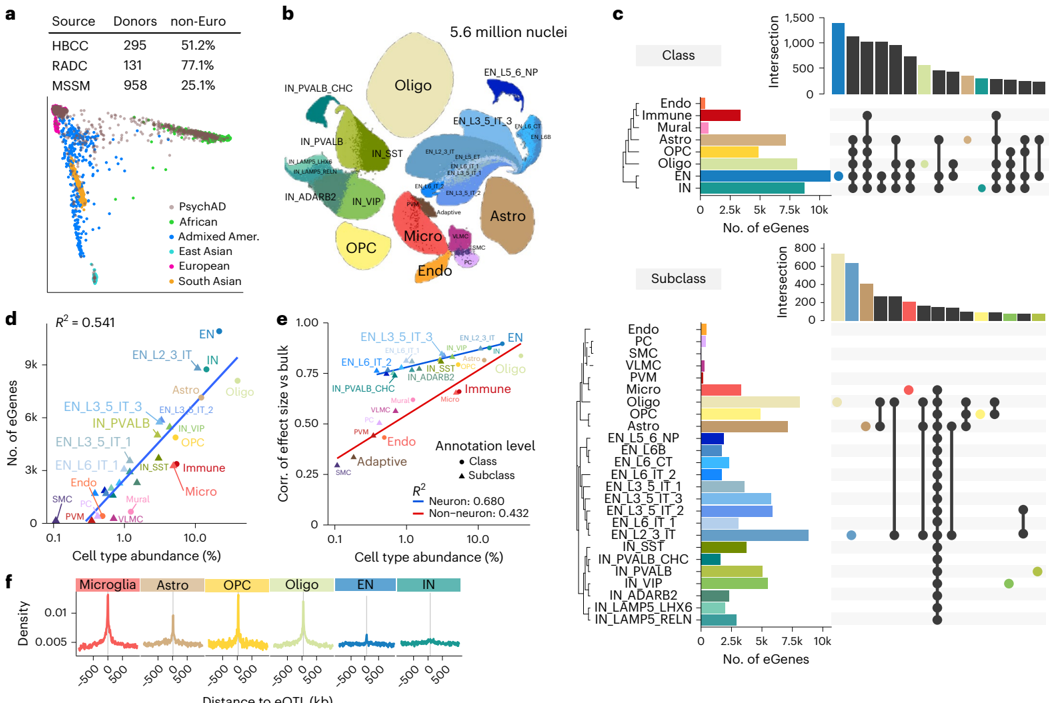
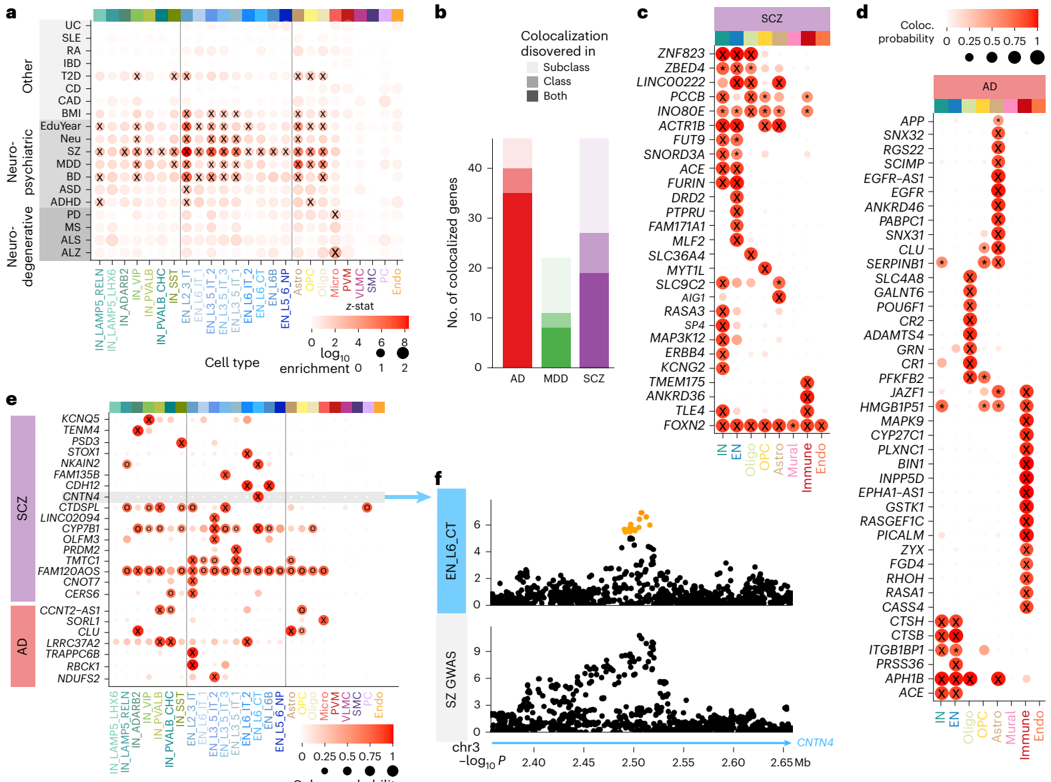
Genetic risk variants for common diseases are predominantly located in non-coding regulatory regions and modulate gene expression. Although bulk tissue studies have elucidated shared mechanisms of regulatory and disease-associated genetics, the cellular specificity of these mechanisms remains largely unexplored. Here we present a comprehensive, single-nucleus multi-ancestry atlas of genetic regulation of gene expression in the human prefrontal cortex, comprising 5.6 million nuclei from 1,384 donors of diverse ancestries. Through multi-resolution analyses spanning eight major cell classes and 27 subclasses, we identify genetic regulation for 14,258 genes, with 981 showing cell type-specific regulatory effects at the class level and 857 at the subclass level. Colocalization of genetic variants associated with gene regulation and disease traits uncovers novel cell type-specific genes implicated in Alzheimer’s disease, schizophrenia and other disorders that were not detectable in bulk tissue analyses. Analysis of dynamic genetic regulation at the single-nucleus level identifies 2,073 genes with regulatory effects that vary across developmental trajectories, inferred from a broad age range of donors. We also uncover 1,655 genes with trans -regulatory effects, revealing distal regulation of gene expression. This high-resolution atlas provides insight into the cell type-specific regulatory architecture of the human brain, and offers novel mechanistic targets for understanding the genetic basis of neuropsychiatric and neurodegenerative diseases.
Overview
CoChat Summary
TL;DR
This paper presents a single-nucleus multi-ancestry atlas of genetic regulation in human dorsolateral prefrontal cortex, using 5.6 million nuclei from 1,384 donors across eight cell classes and 27 subclasses. It identifies cis-eQTLs for 14,258 genes, cell-type-specific and dynamic regulatory effects, and trans-eQTLs, linking regulatory variants to neuropsychiatric and neurodegenerative disease risk.
Key findings
- The atlas comprises 5.6 million nuclei from 1,384 donors, 35.6% of non-European ancestry, annotated into eight cell classes and 27 subclasses; cis-eQTLs were identified for 14,258 genes. eGene counts varied widely, from 10,913 in excitatory neurons to 414 in endothelial cells at the class level, and from 8,812 in EN_L2_3_IT to 1,683 in EN_L6B at the subclass level.
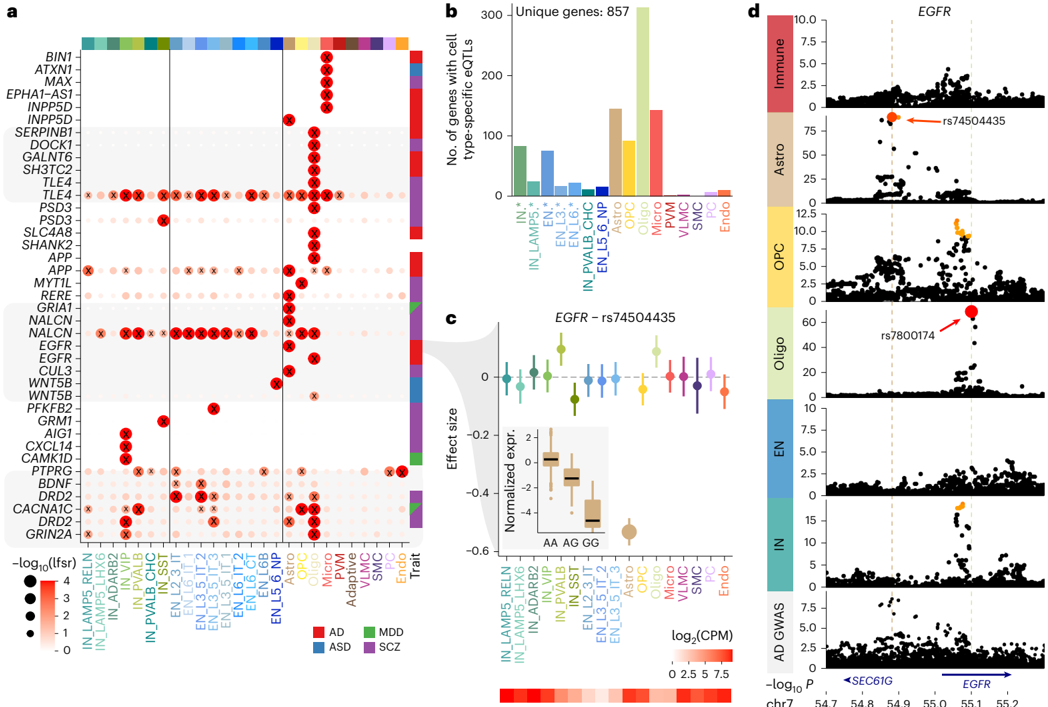
- Cell type-specific regulatory effects were identified for 981 genes at the class level and 857 at the subclass level at posterior probability >0.5; stricter >0.8 cutoffs retained 630 class-level and 644 subclass-level genes. At the subclass level, oligodendrocytes had the most such effects (313 genes), followed by astrocytes (145) and microglia (143). For example, rs74504435 had a composite posterior probability of 0.946 for astrocyte-specific regulation of EGFR, and only the astrocyte signal colocalized with Alzheimer’s disease risk.
- Colocalization with disease risk identified 46 genes for Alzheimer’s disease, 22 for major depressive disorder, and 46 for schizophrenia; up to 18 of these were exclusively detected in snRNA-seq analyses and not captured by previous bulk RNA-seq studies. Schizophrenia showed the broadest neuronal enrichment, while Alzheimer’s and Parkinson’s diseases showed enrichment in microglia but not neuronal subclasses; examples include CNTN4 colocalizing with schizophrenia risk only in EN_L6_CT and SORL1 colocalizing with Alzheimer’s disease risk in microglia but not perivascular macrophages.
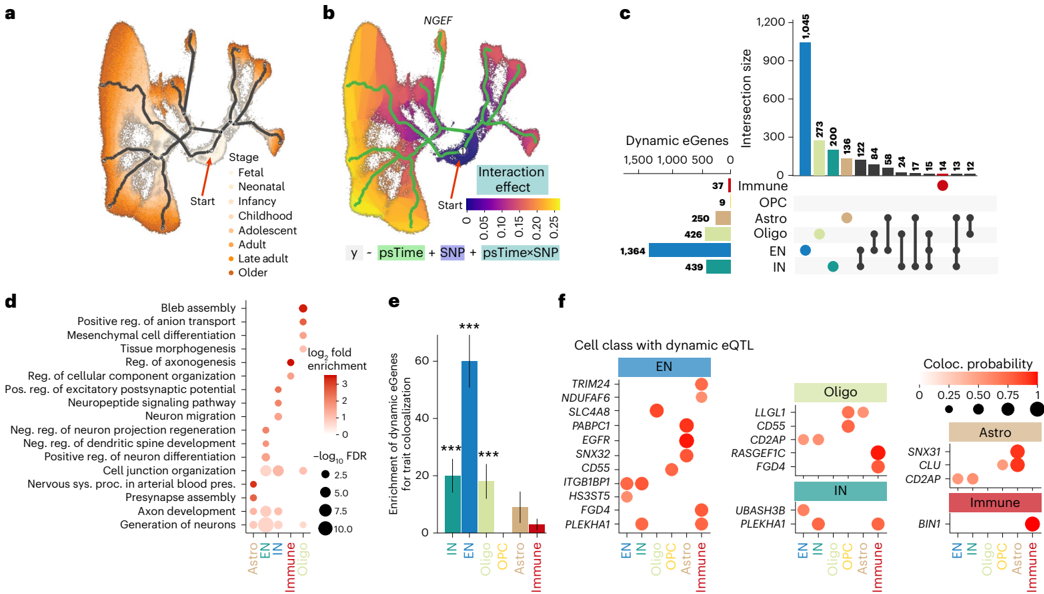
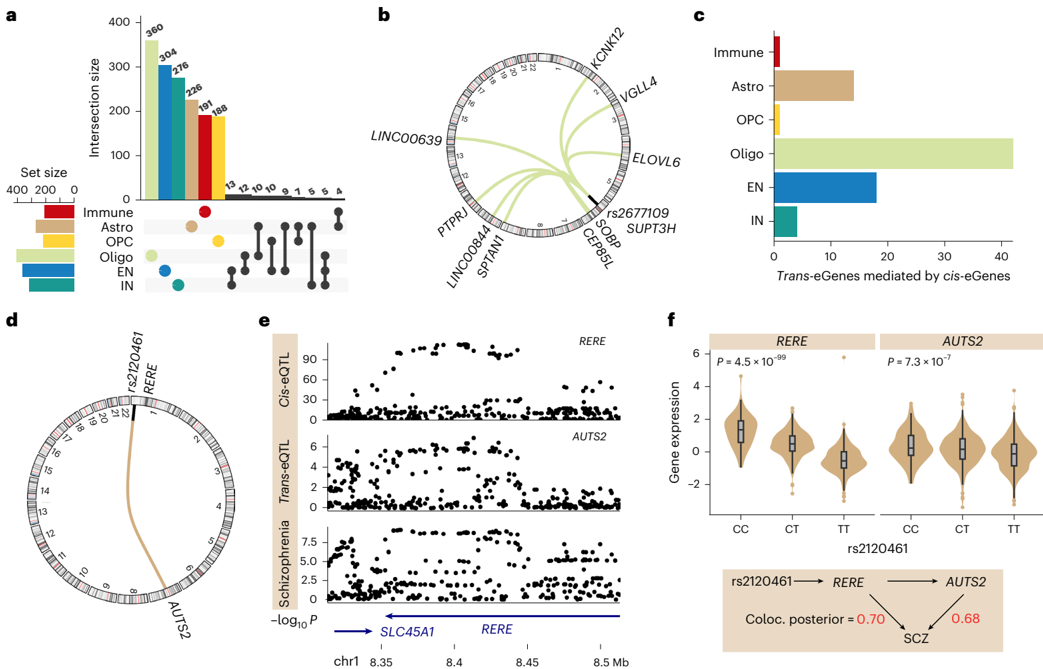
- Dynamic eQTLs were detected for 2,073 genes at FDR 5%, ranging from 1,364 in excitatory neurons to nine in OPCs. Trans-eQTLs >5 Mb from the gene body were identified for 1,655 genes at FDR 5%, ranging from 407 in oligodendrocytes to 210 in immune cells, with replication rates of 66–95% in an independent cohort; an estimated 43% of trans signals were mediated by cis-genes, and 42 mediated trans-eQTLs were identified in oligodendrocytes. In astrocytes, mediation supported RERE cis-regulation as mediating a trans-eQTL for AUTS2 (FDR = 1.5 × 10⁻³), with both signals weakly colocalizing with schizophrenia risk.
Methods
- Postmortem dorsolateral prefrontal cortex tissue was obtained from 1,494 donors across three brain banks (Rush Alzheimer’s Disease Center, Human Brain Collection Core, and Mount Sinai Brain Bank), with 1,384 donors passing genotype and snRNA-seq quality control; donors spanned ages 0–108 years and included similar numbers of males and females. Genotyping used the Infinium Psych Chip Array with TOPMed imputation, and nuclei were annotated into eight classes and 27 subclasses.
- Pseudobulk cis-eQTL analysis tested variants within 1 Mb of the transcription start site using a linear mixed model (mmQTL) with a genetic relatedness matrix, covariates for age, sex, postmortem interval, mitochondrial rate, ribosomal rate, and disease status, plus PEER factors; results were combined by fixed-effects meta-analysis with two-step Benjamini–Hochberg FDR control. Downstream analyses included CAVIAR fine-mapping, S-LDSC and MESC, coloc/moloc, mashr multivariate Bayesian meta-analysis with a composite test for cell-type specificity, negative binomial mixed models for dynamic eQTLs along pseudotime, and trans-eQTL mapping using lead cis-eSNPs and GWAS variants.
- Replication used independent snRNA-seq datasets (Bryois and Fujita), with π1 replication rates of 0.73–0.82 for Bryois and 0.84–0.91 for Fujita for cis-eQTLs, and 66–95% for trans-eQTLs depending on cell type.
Limitations
- The paper states that power to detect eQTLs is strongly influenced by cell-type abundance and, to a lesser extent, sequencing depth; major classes such as inhibitory neurons, excitatory neurons, oligodendrocytes, and astrocytes have more detectable eQTLs than rarer populations including immune, endothelial, and mural cells. Subclass-level analysis increases cellular resolution but often reduces statistical power relative to class-level analyses because of smaller sample sizes per subclass, representing a trade-off between granularity and power.
- The paper states that trans mediation analysis was underpowered to detect a large number of cis-mediators at the study-wide 5% FDR, and dynamic eQTL analysis was limited to one top variant per gene per cell type because of computational cost. Cis-eQTL analyses were performed exclusively on autosomal chromosomes, with X chromosome analysis reported separately, and no statistical methods were used to predetermine sample size.
- Evident from the text: the atlas is based on cross-sectional postmortem dorsolateral prefrontal cortex tissue, so developmental pseudotime is inferred from donor age rather than longitudinal sampling; cell-type-specific findings depend on posterior probability thresholds and may be sensitive to power differences across cell types; and colocalization identifies shared genetic signals but does not by itself establish causal mechanisms.
Model-written summary. Check it against the paper before relying on it.
Integrity signals
Registry
Cites
Statistics
Figures
Verification
Claims the paper makes
0 Valid · 0 Not valid · 47 Not checked · 113 Own results and interpretations
A result the paper reports from its own data — it cites no other source for it, so there is none to check. The quote shows it is in the paper.
In the paper
“with 981 showing cell type-specific regulatory effects at the class level”
§ Single-nucleus atlas of cell-type specific genetic regulation in the human brain > Abstract
plainstates an associationn = 1,384- Asserted: passes — The authors put it forward as true.
- Checkable: passes — It can be checked against evidence.
- Load-bearing: passes — The paper’s conclusions depend on it.
- Based: passes — The paper gives a reason why it holds.
A result the paper reports from its own data — it cites no other source for it, so there is none to check. The quote shows it is in the paper.
In the paper
“that were not detectable in bulk tissue analyses”
§ Single-nucleus atlas of cell-type specific genetic regulation in the human brain > Abstract
plainn = 1,384- Asserted: passes — The authors put it forward as true.
- Checkable: passes — It can be checked against evidence.
- Load-bearing: passes — The paper’s conclusions depend on it.
- Based: passes — The paper gives a reason why it holds.
A result the paper reports from its own data — it cites no other source for it, so there is none to check. The quote shows it is in the paper.
In the paper
“Colocalization of genetic variants associated with gene regulation and disease traits uncovers novel cell type-specific genes implicated in Alzheimer’s disease, schizophrenia and other disorders”
§ Single-nucleus atlas of cell-type specific genetic regulation in the human brain > Abstract
plainstates an associationn = 1,384- Asserted: passes — The authors put it forward as true.
- Checkable: passes — It can be checked against evidence.
- Load-bearing: passes — The paper’s conclusions depend on it.
- Based: passes — The paper gives a reason why it holds.
A result the paper reports from its own data — it cites no other source for it, so there is none to check. The quote shows it is in the paper.
In the paper
“and 857 at the subclass level”
§ Single-nucleus atlas of cell-type specific genetic regulation in the human brain > Abstract
plainstates an associationn = 1,384- Asserted: passes — The authors put it forward as true.
- Checkable: passes — It can be checked against evidence.
- Load-bearing: passes — The paper’s conclusions depend on it.
- Based: passes — The paper gives a reason why it holds.
A result the paper reports from its own data — it cites no other source for it, so there is none to check. The quote shows it is in the paper.
In the paper
“we identify genetic regulation for 14,258 genes”
§ Single-nucleus atlas of cell-type specific genetic regulation in the human brain > Abstract
plainn = 1,384- Asserted: passes — The authors put it forward as true.
- Checkable: passes — It can be checked against evidence.
- Load-bearing: passes — The paper’s conclusions depend on it.
- Based: passes — The paper gives a reason why it holds.
74 more claims
Create a free account to see all 160 claims and to verify the 86 references still open.
- It may state two separate claims as one. 55
- Probably not a substantial claim. 35
Self-check
Percentages, sums and reported differences re-computed from the paper’s own numbers.
Each contradiction between two passages listed here was confirmed by an independent check.
Rated major: it would touch a result — a value a result rests on, reported and recomputed p-values on opposite sides of the significance level, two passages that conflict with no sign which is right, or a cited work retracted before this paper was published.
In the paper
§ Single-nucleus atlas of cell-type specific genetic regulation in the human brain > Results > Genetic regulation of gene expression in the human brain
“yielding 5.6 million nuclei after quality control”
§ Single-nucleus atlas of cell-type specific genetic regulation in the human brain > Methods > Sample selection and preprocessing
“astrocytes, 763,000; excitatory neurons, 1.45 million; immune cells, 331,000; inhibitory neurons, 973,000; oligodendrocytes, 2.28 million; and OPCs, 363,000”
Citations
Cites
Controlling the False Discovery Rate: A Practical and Powerful Approach to Multiple Testing
Benjamini, Y., & Hochberg, Y. (1995) · Journal of the Royal Statistical Society Series B: Statistical Methodology · doi:10.1111/j.2517-6161.1995.tb02031.x · Cited by 109,482
Fitting Linear Mixed-Effects Models Using lme4
Bates, D., Mächler, M., Bolker, B., & Walker, S. (2015) · Journal of Statistical Software · doi:10.18637/jss.v067.i01 · Cited by 86,835
STAR: ultrafast universal RNA-seq aligner
Dobin, A., Davis, C. A., Schlesinger, F., Drenkow, J., Zaleski, C., Jha, S., Batut, P., Chaisson, M., & Gingeras, T. R. (2013) · Bioinformatics · doi:10.1093/bioinformatics/bts635 · Cited by 51,709
SCANPY: large-scale single-cell gene expression data analysis
Wolf, F. A., Angerer, P., & Theis, F. J. (2018) · Genome Biology · doi:10.1186/s13059-017-1382-0 · Cited by 8,881
Massively parallel digital transcriptional profiling of single cells
Zheng, G. X. Y., Terry, J. M., Belgrader, P., Ryvkin, P., Bent, Z. W., Wilson, R., Ziraldo, S. B., Wheeler, T. D., McDermott, G. P., Zhu, J., et al. (2017) · Nature Communications · doi:10.1038/ncomms14049 · Cited by 7,353
UMAP: Uniform Manifold Approximation and Projection for Dimension Reduction
McInnes, L., Healy, J., & Melville, J. (2018) · arXiv · doi:10.48550/arxiv.1802.03426 · Cited by 7,101
From Louvain to Leiden: guaranteeing well-connected communities
Traag, V. A., Waltman, L., & van Eck, N. J. (2019) · Scientific Reports · doi:10.1038/s41598-019-41695-z · Cited by 5,635
A Direct Approach to False Discovery Rates
Storey, J. D. (2002) · Journal of the Royal Statistical Society Series B: Statistical Methodology · doi:10.1111/1467-9868.00346 · Cited by 5,603
The GTEx Consortium atlas of genetic regulatory effects across human tissues
The GTEx Consortium, Aguet, F., Anand, S., Ardlie, K. G., Gabriel, S., Getz, G. A., Graubert, A., Hadley, K., Handsaker, R. E., Huang, K. H., et al. (2020) · Science · doi:10.1126/science.aaz1776 · Cited by 5,547
Giambartolomei, C., Vukcevic, D., Schadt, E. E., Franke, L., Hingorani, A. D., Wallace, C., & Plagnol, V. (2014) · PLoS Genetics · doi:10.1371/journal.pgen.1004383 · Cited by 4,261
Robust relationship inference in genome-wide association studies
Manichaikul, A., Mychaleckyj, J. C., Rich, S. S., Daly, K., Sale, M., & Chen, W.-M. (2010) · Bioinformatics · doi:10.1093/bioinformatics/btq559 · Cited by 3,541
Mapping genomic loci implicates genes and synaptic biology in schizophrenia
Trubetskoy, V., Pardiñas, A. F., Qi, T., Panagiotaropoulou, G., Awasthi, S., Bigdeli, T. B., Bryois, J., Chen, C.-Y., Dennison, C. A., Hall, L. S., et al. (2022) · Nature · doi:10.1038/s41586-022-04434-5 · Cited by 2,964
Self-citationPartitioning heritability by functional annotation using genome-wide association summary statistics
ReproGen Consortium, Finucane, H. K., Schizophrenia Working Group of the Psychiatric Genomics Consortium, The RACI Consortium, Bulik-Sullivan, B., Gusev, A., Trynka, G., Reshef, Y., Loh, P.-R., Anttila, V., et al. (2015) · Nature Genetics · doi:10.1038/ng.3404 · Cited by 2,604
Howard, D. M., Adams, M. J., Clarke, T.-K., Hafferty, J. D., Gibson, J., Shirali, M., Coleman, J. R. I., Hagenaars, S. P., Ward, J., Wigmore, E. M., et al. (2019) · Nature Neuroscience · doi:10.1038/s41593-018-0326-7 · Cited by 2,565
New insights into the genetic etiology of Alzheimer’s disease and related dementias
Bellenguez, C., Küçükali, F., Jansen, I. E., Kleineidam, L., Moreno-Grau, S., Amin, N., Naj, A. C., Campos-Martin, R., Grenier-Boley, B., Andrade, V., et al. (2022) · Nature Genetics · doi:10.1038/s41588-022-01024-z · Cited by 2,498
Regev, A., Teichmann, S. A., Lander, E. S., Amit, I., Benoist, C., Birney, E., Bodenmiller, B., Campbell, P., Carninci, P., Clatworthy, M., et al. (2017) · eLife · doi:10.7554/elife.27041 · Cited by 2,232
Using Bayes to get the most out of non-significant results
Dienes, Z. (2014) · Frontiers in Psychology · doi:10.3389/fpsyg.2014.00781 · Cited by 1,998
SoupX removes ambient RNA contamination from droplet-based single-cell RNA sequencing data
Young, M. D., & Behjati, S. (2020) · GigaScience · doi:10.1093/gigascience/giaa151 · Cited by 1,739 · cited 1×
“In addition, to ensure the highest fidelity of the final processed object and to robustly confirm that our cell-type specificity results were not driven by background noise, we additionally performed an analysis using SoupX (1.6.2) 52 .”
InfluentialSoupX removes ambient RNA contamination from droplet based single-cell RNA sequencing data
Young, M. D., & Behjati, S. (2018) · doi:10.1101/303727 · Cited by 1,648
Religious Orders Study and Rush Memory and Aging Project
Bennett, D. A., Buchman, A. S., Boyle, P. A., Barnes, L. L., Wilson, R. S., & Schneider, J. A. (2018) · Journal of Alzheimer's Disease · doi:10.3233/jad-179939 · Cited by 1,260 · cited 1×
“The Rush Alzheimer’s Disease Center repository of tissue from the Religious Orders Study or Rush Memory and Aging Project 46 provided 152 specimens; the Human Brain Collection Core provided 300; and the Mount Sinai Brain Bank (Mount Sinai School of Medicine) provided 1,042 specimens.”
Self-citationA high-resolution transcriptomic and spatial atlas of cell types in the whole mouse brain
Yao, Z., van Velthoven, C. T. J., Kunst, M., Zhang, M., McMillen, D., Lee, C., Jung, W., Goldy, J., Abdelhak, A., Aitken, M., et al. (2023) · Nature · doi:10.1038/s41586-023-06812-z · Cited by 1,203 · cited 4×
“A total of 2,073 unique genes with dynamic eQTLs were detected at a false discovery rate (FDR) of 5%, with the number varying widely from 1,364 in excitatory neurons to only nine in OPCs, with the highest overlap between excitatory and inhibitory neurons (Fig.”
InfluentialFinucane, H. K., Reshef, Y. A., Anttila, V., Slowikowski, K., Gusev, A., Byrnes, A., Gazal, S., Loh, P.-R., Lareau, C., Shoresh, N., et al. (2018) · Nature Genetics · doi:10.1038/s41588-018-0081-4 · Cited by 1,097 · cited 2×
“S-LDSC was used to test whether custom variant annotations from statistical fine-mapping of eQTL signals were enriched for heritability attributable to genetic risk for complex traits 3,64 .”
Gene expression elucidates functional impact of polygenic risk for schizophrenia
Fromer, M., Roussos, P., Sieberts, S. K., Johnson, J. S., Kavanagh, D. H., Perumal, T. M., Ruderfer, D. M., Oh, E. C., Topol, A., Shah, H. R., et al. (2016) · Nature Neuroscience · doi:10.1038/nn.4399 · Cited by 1,091
Self-citationFalse discovery rates: a new deal
Stephens, M. (2016) · Biostatistics · doi:10.1093/biostatistics/kxw041 · Cited by 1,067
Advantages and pitfalls in the application of mixed-model association methods
Yang, J., Zaitlen, N. A., Goddard, M. E., Visscher, P. M., & Price, A. L. (2014) · Nature Genetics · doi:10.1038/ng.2876 · Cited by 981 · cited 1×
“Given the diverse genetic ancestry of the individuals in this dataset, we used a linear mixed model to account for population structure and avoid false-positive findings resulting from genetic confounding 61 .”
Comprehensive functional genomic resource and integrative model for the human brain
Wang, D., Liu, S., Warrell, J., Won, H., Shi, X., Navarro, F. C. P., Clarke, D., Gu, M., Emani, P., Yang, Y. T., et al. (2018) · Science · doi:10.1126/science.aat8464 · Cited by 965 · cited 1×
“We also note eight loci at the class level and 11 at the subclass level that contain multiple genes with colocalization signals within 1 Mb (Supplementary Table 2).”
Self-citationFleming, S. J., Chaffin, M. D., Arduini, A., Akkad, A.-D., Banks, E., Marioni, J. C., Philippakis, A. A., Ellinor, P. T., & Babadi, M. (2023) · Nature Methods · doi:10.1038/s41592-023-01943-7 · Cited by 867
Brain cell type–specific enhancer–promoter interactome maps and disease - risk association
Nott, A., Holtman, I. R., Coufal, N. G., Schlachetzki, J. C. M., Yu, M., Hu, R., Han, C. Z., Pena, M., Xiao, J., Wu, Y., et al. (2019) · Science · doi:10.1126/science.aay0793 · Cited by 699
Single-cell eQTL mapping identifies cell type–specific genetic control of autoimmune disease
Yazar, S., Alquicira-Hernandez, J., Wing, K., Senabouth, A., Gordon, M. G., Andersen, S., Lu, Q., Rowson, A., Taylor, T. R. P., Clarke, L., et al. (2022) · Science · doi:10.1126/science.abf3041 · Cited by 682 · cited 2×
“Following previous work 13 , we addressed both of these issues by selecting lead variants, including 56,204 eSNPs from the cis -eQTL analysis and 45,088 genome-wide significant variants from eight brain disease GWAS studies (that is, variants with P 5 × 10 −8 in AD, binge eating disorder, bipolar…”
The impact of sex on gene expression across human tissues
Oliva, M., Muñoz-Aguirre, M., Kim-Hellmuth, S., Wucher, V., Gewirtz, A. D. H., Cotter, D. J., Parsana, P., Kasela, S., Balliu, B., Viñuela, A., et al. (2020) · Science · doi:10.1126/science.aba3066 · Cited by 670
Fast and efficient QTL mapper for thousands of molecular phenotypes
Ongen, H., Buil, A., Brown, A. A., Dermitzakis, E. T., & Delaneau, O. (2016) · Bioinformatics · doi:10.1093/bioinformatics/btv722 · Cited by 598
Cell type–specific genetic regulation of gene expression across human tissues
Kim-Hellmuth, S., Aguet, F., Oliva, M., Muñoz-Aguirre, M., Kasela, S., Wucher, V., Castel, S. E., Hamel, A. R., Viñuela, A., Roberts, A. L., et al. (2020) · Science · doi:10.1126/science.aaz8528 · Cited by 547
A multimodal cell census and atlas of the mammalian primary motor cortex
BRAIN Initiative Cell Census Network (BICCN), BRAIN Initiative Cell Census Network (BICCN) Corresponding authors, Callaway, E. M., Dong, H.-W., Ecker, J. R., Hawrylycz, M. J., Huang, Z. J., Lein, E. S., Ngai, J., Osten, P., et al. (2021) · Nature · doi:10.1038/s41586-021-03950-0 · Cited by 522
Stegle, O., Parts, L., Durbin, R., & Winn, J. (2010) · PLoS Computational Biology · doi:10.1371/journal.pcbi.1000770 · Cited by 497 · cited 1×
“We applied the PEER package 60 to detect hidden unobserved covariates.”
Identifying Causal Variants at Loci with Multiple Signals of Association
Hormozdiari, F., Kostem, E., Kang, E. Y., Pasaniuc, B., & Eskin, E. (2014) · Genetics · doi:10.1534/genetics.114.167908 · Cited by 465
Urbut, S. M., Wang, G., Carbonetto, P., & Stephens, M. (2019) · Nature Genetics · doi:10.1038/s41588-018-0268-8 · Cited by 418
The complex genetic architecture of Alzheimer's disease: novel insights and future directions
Andrews, S. J., Renton, A. E., Fulton-Howard, B., Podlesny-Drabiniok, A., Marcora, E., & Goate, A. M. (2023) · eBioMedicine · doi:10.1016/j.ebiom.2023.104511 · Cited by 377
Wingo, A. P., Liu, Y., Gerasimov, E. S., Gockley, J., Logsdon, B. A., Duong, D. M., Dammer, E. B., Robins, C., Beach, T. G., Reiman, E. M., et al. (2021) · Nature Genetics · doi:10.1038/s41588-020-00773-z · Cited by 366 · cited 1×
“Consistent with previous work by our group 8 and others 67,68 , no P value thresholds were used, so it is possible to identify colocalization with a locus that does not reach genome-wide significance.”
Self-citationA complete tool set for molecular QTL discovery and analysis
Delaneau, O., Ongen, H., Brown, A. A., Fort, A., Panousis, N. I., & Dermitzakis, E. T. (2017) · Nature Communications · doi:10.1038/ncomms15452 · Cited by 360
Corces, M. R., Shcherbina, A., Kundu, S., Gloudemans, M. J., Frésard, L., Granja, J. M., Louie, B. H., Eulalio, T., Shams, S., Bagdatli, S. T., et al. (2020) · Nature Genetics · doi:10.1038/s41588-020-00721-x · Cited by 358
Vireo: Bayesian demultiplexing of pooled single-cell RNA-seq data without genotype reference
Huang, Y., McCarthy, D. J., & Stegle, O. (2019) · Genome Biology · doi:10.1186/s13059-019-1865-2 · Cited by 348 · cited 1×
“5.8) 48 .”
InfluentialCNS Myelin Wrapping Is Driven by Actin Disassembly
Zuchero, J. B., Fu, M.-M., Sloan, S. A., Ibrahim, A., Olson, A., Zaremba, A., Dugas, J. C., Wienbar, S., Caprariello, A. V., Kantor, C., et al. (2015) · Developmental Cell · doi:10.1016/j.devcel.2015.06.011 · Cited by 335
Bryois, J., Calini, D., Macnair, W., Foo, L., Urich, E., Ortmann, W., Iglesias, V. A., Selvaraj, S., Nutma, E., Marzin, M., et al. (2022) · Nature Neuroscience · doi:10.1038/s41593-022-01128-z · Cited by 311 · cited 5×
“The PsychAD cohort from the current study was used for discovery, and replication rates were evaluated using independent snRNA-seq data of human postmortem brain tissue from the Bryois 21 and Fujita 22 datasets.”
InfluentialA Bayesian framework for multiple trait colocalization from summary association statistics
Giambartolomei, C., Zhenli Liu, J., Zhang, W., Hauberg, M., Shi, H., Boocock, J., Pickrell, J., Jaffe, A. E., The CommonMind Consortium, Pasaniuc, B., et al. (2018) · Bioinformatics · doi:10.1093/bioinformatics/bty147 · Cited by 300
Self-citationQuantifying genetic effects on disease mediated by assayed gene expression levels
Yao, D. W., O’Connor, L. J., Price, A. L., & Gusev, A. (2020) · Nature Genetics · doi:10.1038/s41588-020-0625-2 · Cited by 298
Held, L., & Ott, M. (2018) · Annual Review of Statistics and Its Application · doi:10.1146/annurev-statistics-031017-100307 · Cited by 272
Molecular and cellular evolution of the primate dorsolateral prefrontal cortex
Ma, S., Skarica, M., Li, Q., Xu, C., Risgaard, R. D., Tebbenkamp, A. T. N., Mato-Blanco, X., Kovner, R., Krsnik, Ž., de Martin, X., et al. (2022) · Science · doi:10.1126/science.abo7257 · Cited by 260
Cumulus provides cloud-based data analysis for large-scale single-cell and single-nucleus RNA-seq
Li, B., Gould, J., Yang, Y., Sarkizova, S., Tabaka, M., Ashenberg, O., Rosen, Y., Slyper, M., Kowalczyk, M. S., Villani, A.-C., et al. (2020) · Nature Methods · doi:10.1038/s41592-020-0905-x · Cited by 252
Herring, C. A., Simmons, R. K., Freytag, S., Poppe, D., Moffet, J. J. D., Pflueger, J., Buckberry, S., Vargas-Landin, D. B., Clément, O., Echeverría, E. G., et al. (2022) · Cell · doi:10.1016/j.cell.2022.09.039 · Cited by 238
Cell subtype-specific effects of genetic variation in the Alzheimer’s disease brain
Fujita, M., Gao, Z., Zeng, L., McCabe, C., White, C. C., Ng, B., Green, G. S., Rozenblatt-Rosen, O., Phillips, D., Amir-Zilberstein, L., et al. (2024) · Nature Genetics · doi:10.1038/s41588-024-01685-y · Cited by 219
Self-citationSingle-cell eQTL models reveal dynamic T cell state dependence of disease loci
Nathan, A., Asgari, S., Ishigaki, K., Valencia, C., Amariuta, T., Luo, Y., Beynor, J. I., Baglaenko, Y., Suliman, S., Price, A. L., et al. (2022) · Nature · doi:10.1038/s41586-022-04713-1 · Cited by 213
Hormozdiari, F., Gazal, S., van de Geijn, B., Finucane, H. K., Ju, C. J.-T., Loh, P.-R., Schoech, A., Reshef, Y., Liu, X., O’Connor, L., et al. (2018) · Nature Genetics · doi:10.1038/s41588-018-0148-2 · Cited by 179
Genetics of the human microglia regulome refines Alzheimer’s disease risk loci
Kosoy, R., Fullard, J. F., Zeng, B., Bendl, J., Dong, P., Rahman, S., Kleopoulos, S. P., Shao, Z., Girdhar, K., Humphrey, J., et al. (2022) · Nature Genetics · doi:10.1038/s41588-022-01149-1 · Cited by 168 · cited 1×
“Consistent with previous work by our group 8 and others 67,68 , no P value thresholds were used, so it is possible to identify colocalization with a locus that does not reach genome-wide significance.”
Self-citationFleming, S. J., Chaffin, M. D., Arduini, A., Akkad, A.-D., Banks, E., Marioni, J. C., Philippakis, A. A., Ellinor, P. T., & Babadi, M. (2019) · doi:10.1101/791699 · Cited by 164
Single-cell genomics and regulatory networks for 388 human brains
Emani, P. S., Liu, J. J., Clarke, D., Jensen, M., Warrell, J., Gupta, C., Meng, R., Lee, C. Y., Xu, S., Dursun, C., et al. (2024) · Science · doi:10.1126/science.adi5199 · Cited by 163
Self-citationGenetic and molecular architecture of complex traits
Lappalainen, T., Li, Y. I., Ramachandran, S., & Gusev, A. (2024) · Cell · doi:10.1016/j.cell.2024.01.023 · Cited by 134
Single-cell genomics meets human genetics
Cuomo, A. S. E., Nathan, A., Raychaudhuri, S., MacArthur, D. G., & Powell, J. E. (2023) · Nature Reviews Genetics · doi:10.1038/s41576-023-00599-5 · Cited by 124
Rere controls retinoic acid signalling and somite bilateral symmetry
Vilhais-Neto, G. C., Maruhashi, M., Smith, K. T., Vasseur-Cognet, M., Peterson, A. S., Workman, J. L., & Pourquié, O. (2010) · Nature · doi:10.1038/nature08763 · Cited by 124
Cruchaga, C., Western, D., Timsina, J., Wang, L., Wang, C., Yang, C., Ali, M., Beric, A., Gorijala, P., Kohlfeld, P., et al. (2023) · doi:10.21203/rs.3.rs-2814616/v1 · Cited by 112
Western, D., Timsina, J., Wang, L., Wang, C., Yang, C., Phillips, B., Wang, Y., Liu, M., Ali, M., Beric, A., et al. (2024) · Nature Genetics · doi:10.1038/s41588-024-01972-8 · Cited by 111 · cited 1×
“Consistent with previous work by our group 8 and others 67,68 , no P value thresholds were used, so it is possible to identify colocalization with a locus that does not reach genome-wide significance.”
Reconciling S-LDSC and LDAK functional enrichment estimates
Gazal, S., Marquez-Luna, C., Finucane, H. K., & Price, A. L. (2019) · Nature Genetics · doi:10.1038/s41588-019-0464-1 · Cited by 106
Bayesian estimation of cell type–specific gene expression with prior derived from single-cell data
Wang, J., Roeder, K., & Devlin, B. (2021) · Genome Research · doi:10.1101/gr.268722.120 · Cited by 100
Cell type specific genetic regulation of gene expression across human tissues
Kim-Hellmuth, S., Aguet, F., Oliva, M., Muñoz-Aguirre, M., Wucher, V., Kasela, S., Castel, S. E., Hamel, A. R., Viñuela, A., Roberts, A. L., et al. (2019) · bioRxiv (Cold Spring Harbor Laboratory) · doi:10.1101/806117 · Cited by 98
Pierce, B. L., Tong, L., Chen, L. S., Rahaman, R., Argos, M., Jasmine, F., Roy, S., Paul-Brutus, R., Westra, H.-J., Franke, L., et al. (2014) · PLoS Genetics · doi:10.1371/journal.pgen.1004818 · Cited by 97
Zeng, B., Bendl, J., Kosoy, R., Fullard, J. F., Hoffman, G. E., & Roussos, P. (2022) · Nature Genetics · doi:10.1038/s41588-021-00987-9 · Cited by 96
Self-citationHoffman, G. E., Lee, D., Bendl, J. M., Prashant, N. M., Hong, A., Casey, C., Alvia, M., Shao, Z., Argyriou, S., Therrien, K., et al. (2026) · Nature Communications · doi:10.1038/s41467-026-75680-8 · Cited by 90
Self-citationGirdhar, K., Hoffman, G. E., Bendl, J., Rahman, S., Dong, P., Liao, W., Hauberg, M. E., Sloofman, L., Brown, L., Devillers, O., et al. (2022) · Nature Neuroscience · doi:10.1038/s41593-022-01032-6 · Cited by 75
Self-citationSaha, A., & Battle, A. (2018) · F1000Research · doi:10.12688/f1000research.17145.1 · Cited by 75
Regev, A., Teichmann, S. A., Lander, E. S., Amit, I., Benoist, C., Birney, E., Bodenmiller, B., Campbell, P., Carninci, P., Clatworthy, M., et al. (2017) · bioRxiv (Cold Spring Harbor Laboratory) · doi:10.1101/121202 · Cited by 74
Cross-ancestry atlas of gene, isoform, and splicing regulation in the developing human brain
Wen, C., Margolis, M., Dai, R., Zhang, P., Przytycki, P. F., Vo, D. D., Bhattacharya, A., Matoba, N., Tang, M., Jiao, C., et al. (2024) · Science · doi:10.1126/science.adh0829 · Cited by 69
Self-citationMethods and Insights from Single-Cell Expression Quantitative Trait Loci
Kang, J. B., Raveane, A., Nathan, A., Soranzo, N., & Raychaudhuri, S. (2023) · Annual Review of Genomics and Human Genetics · doi:10.1146/annurev-genom-101422-100437 · Cited by 62
Saha, A., & Battle, A. (2019) · F1000Research · doi:10.12688/f1000research.17145.2 · Cited by 62
Genetic regulation of cell type–specific chromatin accessibility shapes brain disease etiology
Zeng, B., Bendl, J., Deng, C., Lee, D., Misir, R., Reach, S. M., Kleopoulos, S. P., Auluck, P., Marenco, S., Lewis, D. A., et al. (2024) · Science · doi:10.1126/science.adh4265 · Cited by 56
Self-citationAUTS2 Syndrome: Molecular Mechanisms and Model Systems
Biel, A., Castanza, A. S., Rutherford, R., Fair, S. R., Chifamba, L., Wester, J. C., Hester, M. E., & Hevner, R. F. (2022) · Frontiers in Molecular Neuroscience · doi:10.3389/fnmol.2022.858582 · Cited by 53
AUTS2 isoforms control neuronal differentiation
Monderer-Rothkoff, G., Tal, N., Risman, M., Shani, O., Nissim-Rafinia, M., Malki-Feldman, L., Medvedeva, V., Groszer, M., Meshorer, E., & Shifman, S. (2021) · Molecular Psychiatry · doi:10.1038/s41380-019-0409-1 · Cited by 50
Proneurogenic Ligands Defined by Modeling Developing Cortex Growth Factor Communication Networks
Yuzwa, S. A., Yang, G., Borrett, M. J., Clarke, G., Cancino, G. I., Zahr, S. K., Zandstra, P. W., Kaplan, D. R., & Miller, F. D. (2016) · Neuron · doi:10.1016/j.neuron.2016.07.037 · Cited by 43
Cell-subtype specific effects of genetic variation in the aging and Alzheimer cortex
Fujita, M., Gao, Z., Zeng, L., McCabe, C., White, C. C., Ng, B., Green, G. S., Rozenblatt-Rosen, O., Phillips, D., Amir-Zilberstein, L., et al. (2022) · doi:10.1101/2022.11.07.515446 · Cited by 36
Self-citationLee, D., Koutrouli, M., Masse, N. Y., Hoffman, G. E., Kinrot, S., Wang, X., Prashant, N. M., Pjanic, M., Clarence, T., Tsetsos, F., et al. (2025) · Alzheimer s & Dementia · doi:10.1002/alz70855_097915 · Cited by 36
Self-citationKim, J.-H., Afridi, R., Cho, E., Yoon, J. H., Lim, Y.-H., Lee, H.-W., Ryu, H., & Suk, K. (2022) · Molecular & Cellular Proteomics · doi:10.1016/j.mcpro.2022.100424 · Cited by 33
Kasela, S., Aguet, F., Kim-Hellmuth, S., Brown, B. C., Nachun, D. C., Tracy, R. P., Durda, P., Liu, Y., Taylor, K. D., Johnson, W. C., et al. (2024) · The American Journal of Human Genetics · doi:10.1016/j.ajhg.2023.11.013 · Cited by 30
Lee, D., Koutrouli, M., Masse, N. Y., Hoffman, G. E., Kinrot, S., Wang, X., N.M., P., Pjanic, M., Clarence, T., Tsetsos, F., et al. (2024) · doi:10.1101/2024.10.31.24316513 · Cited by 26
Self-citationPopulation-scale cross-disorder atlas of the human prefrontal cortex at single-cell resolution
Fullard, J. F., NM, P., Lee, D., Mathur, D., Therrien, K., Hong, A., Casey, C., Shao, Z., Alvia, M., Argyriou, S., et al. (2025) · Scientific Data · doi:10.1038/s41597-025-04687-5 · Cited by 23
Self-citationSingle-cell atlas of transcriptomic vulnerability across brain disorders
Lee, D., Koutrouli, M., Masse, N. Y., Hoffman, G. E., Kinrot, S., Wang, X., N. M., P., Pjanic, M., Clarence, T., Tsetsos, F., et al. (2026) · Nature · doi:10.1038/s41586-025-09573-z · Cited by 13
Self-citationCNS Myelin Wrapping Is Driven by Actin Disassembly
Zuchero, J. B., Fu, M.-M., Sloan, S. A., Ibrahim, A., Olson, A., Zaremba, A., Dugas, J. C., Wienbar, S., Caprariello, A. V., Kantor, C., et al. (2015) · Developmental Cell · doi:10.1016/j.devcel.2015.08.013 · Cited by 8
Lifespan single-cell transcriptomic atlas of the human prefrontal cortex
Yang, H., Clarence, T., Scott, M. R., Wang, X., N. M., P., Pjanic, M., Venkatesh, S., Hong, A., Casey, C., Murphy, S. R., et al. (2026) · Nature · doi:10.1038/s41586-026-10271-7 · Cited by 7
Self-citationDiseaseNeuroGenomics/nps_ad: Release 1
GEHoffman (2026) · Zenodo (CERN European Organization for Nuclear Research) · doi:10.5281/zenodo.21226933 · Cited by 1
Scott, D. A., & Sherr, E. H. (2019) · PubMed
DiseaseNeuroGenomics/nps_ad: Release 1
GEHoffman (2026) · Zenodo · doi:10.5281/zenodo.21226934
Cited by
Population-scale cross-disorder atlas of the human prefrontal cortex at single-cell resolution
Fullard, J. F., NM, P., Lee, D., Mathur, D., Therrien, K., Hong, A., Casey, C., Shao, Z., Alvia, M., Argyriou, S., et al. (2025) · Scientific Data · doi:10.1038/s41597-025-04687-5 · Cited by 23
Self-citationSingle-cell atlas of transcriptomic vulnerability across brain disorders
Lee, D., Koutrouli, M., Masse, N. Y., Hoffman, G. E., Kinrot, S., Wang, X., N. M., P., Pjanic, M., Clarence, T., Tsetsos, F., et al. (2026) · Nature · doi:10.1038/s41586-025-09573-z · Cited by 13
Self-citationSingle-nucleus transcriptome-wide association study of human brain disorders
Venkatesh, S., Kosoy, R., Wu, Z., Anyfantakis, M., Dillard, C., Prashant, N. M., Burstein, D., Mathur, D. D., Chatzinakos, C., Ajanaku, B., et al. (2026) · Nature · doi:10.1038/s41586-026-10836-6 · Cited by 9
Self-citationSingle-cell transcriptomics of human brain disorders
Arbabi, K., Carito, G., Luquez, T., & Wainberg, M. (2026) · Molecular Psychiatry · doi:10.1038/s41380-026-03573-9 · Cited by 2
Early and late RNA eQTL are driven by different genetic mechanisms
Sakaue, S., Accelerating Medicines Partnership®: RA/SLE Network, Anolik, J. H., Apruzzese, W., Arazi, A., Barnas, J. L., Belmont, H. M., Berthier, C. C., Buyon, J. P., Curtis, M., et al. (2026) · Nature Communications · doi:10.1038/s41467-026-72139-8 · Cited by 2
Metadata
- Authors
- Zeng, B., Yang, H., N. M, P., Venkatesh, S., Mathur, D., Auluck, P., Bennett, D. A., Marenco, S., Haroutunian, V., PsychAD Consortium, Hong, A., Li, A. Z., He, C., Gupta, C., Dillard, C., Porras, C., Casey, C., McClung, C. A., Spencer, C., Wang, D., Bennett, D. A., Burstein, D., Tsetsos, F., Hoffman, G. E., Ryan, G., Fortes, J. M., Choi, J. J., Arachchilage, K. H., Therrien, K., Jensen, L. J., Barnes, L. L., Dumitrescu, L. C., Sheu, L., Scott, M. R., Alvia, M., Anyfantakis, M., Signaevsky, M., Koutrouli, M., Pjanic, M., Ahirwar, M., Masse, N. Y., Kalafut, N. C., Auluck, P. K., Katsel, P., Dong, P., Chandrashekar, P. B., Bercovitch, R., Kosoy, R., Khullar, S., Murphy, S. R., Alatkar, S. A., Kinrot, S., Argyriou, S., Finkbeiner, S., Kleopoulos, S. P., Clarence, T., Hohman, T. J., Jin, T., Haroutunian, V., Ramaswamy, V. G., Huang, X., Wang, X., Wu, Z., Shao, Z., Voloudakis, G., Lee, D., Fullard, J. F., Bendl, J., Girdhar, K., Hoffman, G. E., & Roussos, P.
- Affiliations
- Icahn School of Medicine at Mount Sinai (US)
- National Institute of Mental Health (US)
- University of Wisconsin–Madison (US)
- University of Pittsburgh (US)
- Gladstone Institutes (US)
- University of Copenhagen (DK)
- Rush University Medical Center (US)
- Vanderbilt University Medical Center (US)
- University of California, San Francisco (US)
- James J. Peters VA Medical Center (US)
- Corresponding author
- Roussos, Panos
- ORCID
- Yang, Hui
- N. M, Prashant
- Venkatesh, Sanan
- Mathur, Deepika
- Auluck, Pavan
- Marenco, Stefano
- Hong, Aram
- Li, Athan Z.
- Gupta, Chirag
- Dillard, Christian
- Porras, Christian
- Casey, Clara
- McClung, Colleen A.
- Wang, Daifeng
- Ryan, Gennadi
- Fortes, Jennifer Monteiro
- Choi, Jerome J.
- Arachchilage, Kalpana H.
- Therrien, Karen
- Barnes, Lisa L.
- Dumitrescu, Logan C.
- Scott, Madeline R.
- Alvia, Marcela
- Anyfantakis, Marios
- Signaevsky, Maxim
- Koutrouli, Mikaela
- Pjanic, Milos
- Ahirwar, Monika
- Masse, Nicolas Y.
- Kalafut, Noah Cohen
- Katsel, Pavel
- Dong, Pengfei
- Chandrashekar, Pramod B.
- Bercovitch, Rachel
- Kosoy, Roman
- Khullar, Saniya
- Alatkar, Sayali A.
- Kinrot, Seon
- Argyriou, Stathis
- Finkbeiner, Steven
- Kleopoulos, Steven P.
- Clarence, Tereza
- Hohman, Timothy J.
- Ramaswamy, Vivek G.
- Wang, Xinyi
- Wu, Zhenyi
- Shao, Zhiping
- Voloudakis, Georgios
- Lee, Donghoon
- Fullard, John F.
- Bendl, Jaroslav
- Girdhar, Kiran
- Roussos, Panos
- Venue
- Nature Genetics
- Published
- 2026-09-23
- Volume
- 58
- Issue
- 10
- Pages
- 2525-2534
- ISSN
- 1061-4036 (ISSN-L)
- 1546-1718
- PMC
- PMC13649572
- OpenAlex
- W7214069110
- Semantic Scholar
- bc430f4de2f9fd5ce12bf593fb684c0daaa2cec2
- Cited by
- 10
- References
- 80
- Citations by year
- 2026: 9
- FWCI
- 9.86
- Type
- journal article
- Language
- en
- Open access
- hybrid
- doi.org
- Licence
- cc-by
- creativecommons.org/licenses/by/4.0 (tdm)
- creativecommons.org/licenses/by/4.0 (vor)
- Locations
- Nature Genetics (publishedVersion, cc-by)
- Research Square (submittedVersion, cc-by)
- medRxiv (submittedVersion)
- PubMed Central (publishedVersion, cc-by)
- PubMed (publishedVersion)
- PubMed Central (submittedVersion, cc-by)
- PubMed (submittedVersion)
- Funders
- U.S. Department of Health & Human Services | National Institutes of Health (R01AG067025, R01AG082185, R01AG065582, R01MH125246, R01AG050986, R01AG095776, U24AG087563)
- U.S. Department of Health & Human Services | NIH | National Institute on Aging (P30AG72975, R01AG15819, R01AG17917, R01AG22018, U01AG46152, U01AG61356, R01AG078657, R01AG067025, R01AG065582, R01MH125246)
- U.S. Department of Health & Human Services | NIH | National Institute of Mental Health (MH002903, 75N95019C00049)
- National institute on aging
- Topics
- Life Sciences › Biochemistry, Genetics and Molecular Biology › Molecular Biology › Single-cell and spatial transcriptomics
- Life Sciences › Biochemistry, Genetics and Molecular Biology › Genetics › Genetic Associations and Epidemiology
- Life Sciences › Biochemistry, Genetics and Molecular Biology › Molecular Biology › Genomics and Chromatin Dynamics
- Keywords
- single-nucleus RNA sequencing, cell type-specific gene regulation, prefrontal cortex, human brain, genetic risk variants, non-coding regulatory regions, Alzheimer's disease, schizophrenia, neuropsychiatric disorders, neurodegenerative diseases, developmental trajectories
- MeSH terms
- Single-Cell Gene Expression Analysis, Alzheimer Disease, Brain, Cell Nucleus, Gene Expression Regulation, Humans, Organ Specificity, Schizophrenia, Prefrontal Cortex, Genetic Predisposition to Disease
About these checks
Registry, retraction, Cites and statistics results are computed, not judged, with one exception: a printed reference that no index lists is read once by a model before it counts as a citation error. Claims are extracted by a model and kept only when their quote appears verbatim in the text; each cited source is then checked, with a model’s help, for whether it says what the claim relies on. Those verdicts can be wrong — read the claim’s quote and the cited source before relying on one.
A language model drew the claims from the paper on 2026-11-26, under version 3 of the claim definition (model deepseek-v4.1-flash, prompt extract-v3).
A second model labelled each claim on 2026-11-26 (model jev-1.13-20260917, definition revision gold-guideline-v0.2).
Statistics and arithmetic are recomputed, not judged.
Confidence bands are shown only for fields calibrated on our annotated test set. None is calibrated yet, so no band is shown.
What counts as a claim ›How we measure confidence ›How we check this ›
Are you an author, or do you see a problem with this page? Request a review
Data sources
Bibliographic data: Semantic Scholar, OpenAlex, Crossref.
Contains information from the Semantic Scholar Academic Graph Datasets, made available under the ODC Attribution License (ODC-BY 1.0).
Semantic Scholar’s data is described in: Kinney, R., et al. (2023). The Semantic Scholar Open Data Platform. arXiv:2301.10140.
