

Brain clocks capture diversity and disparities in aging and dementia across geographically diverse populations
Open accessPublished version of a preprint
The DOI matches its Crossref record; 81 of the 81 references it cites were found in a registry or an index.
Abstract
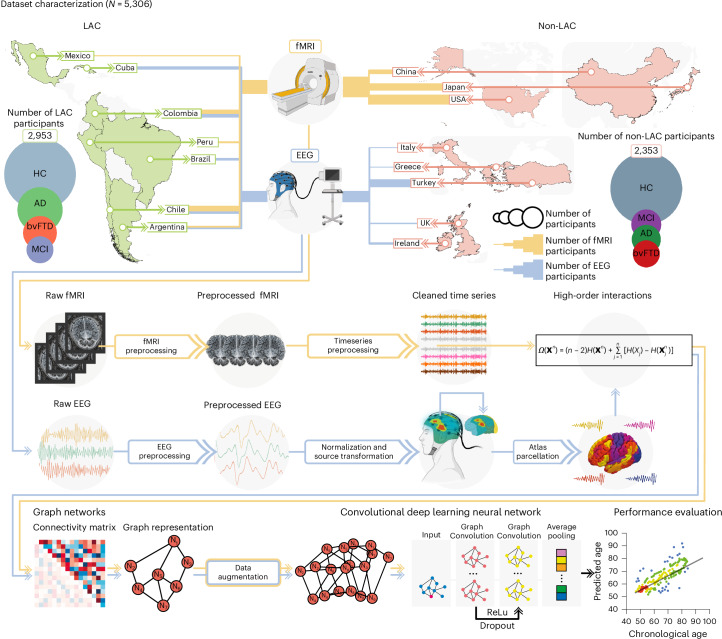
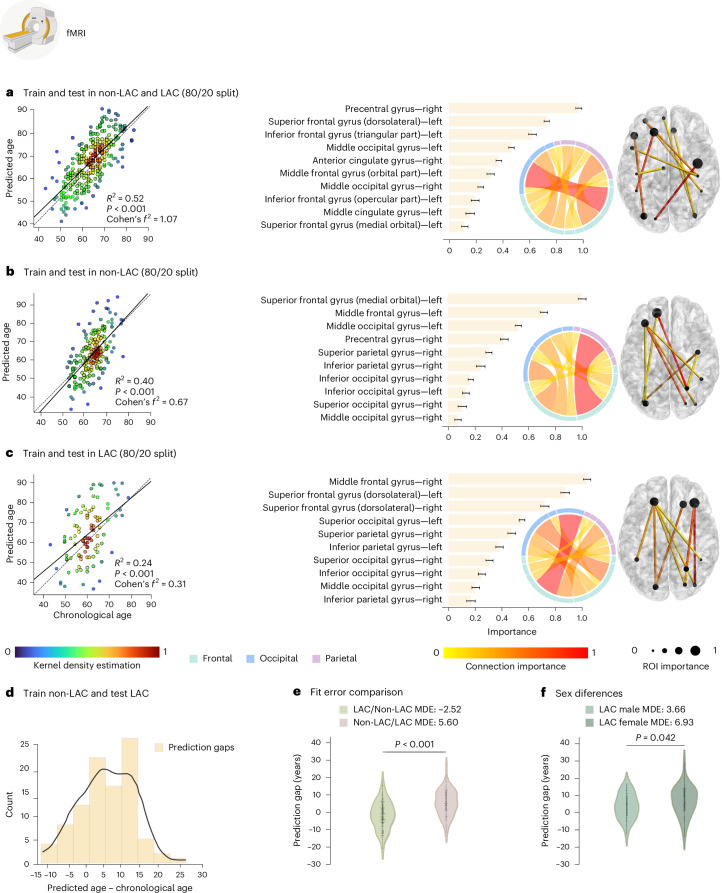
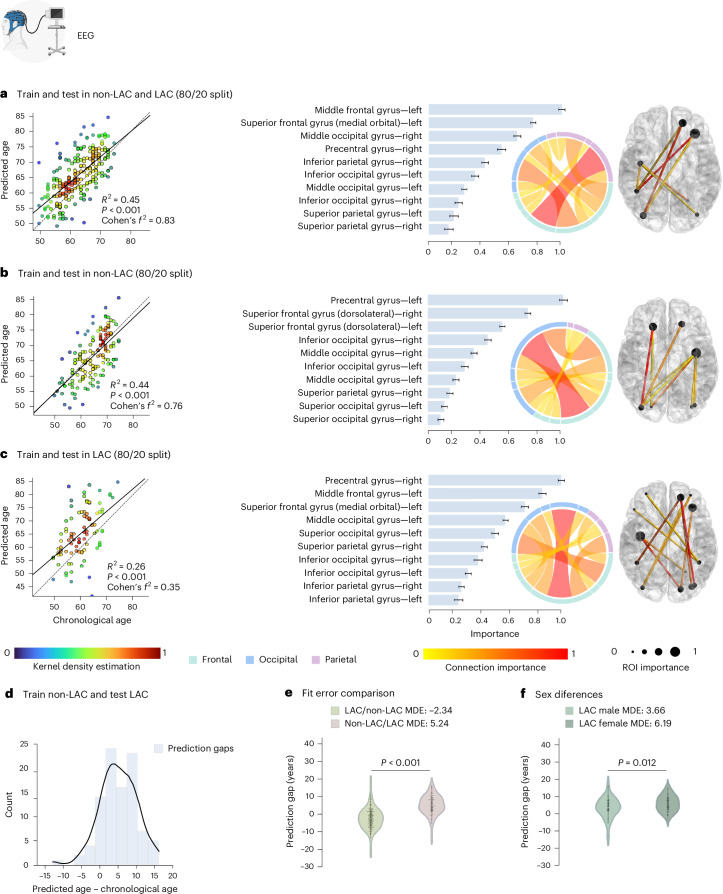
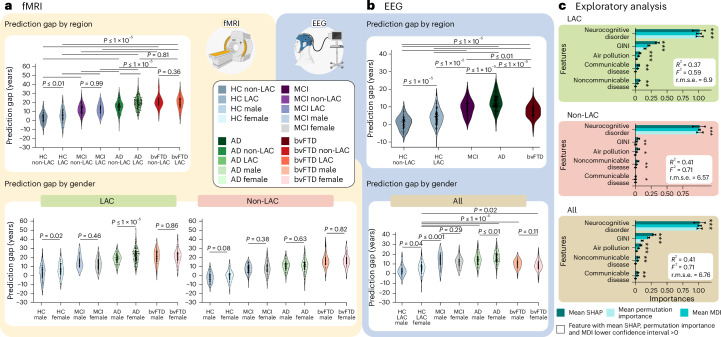
Brain clocks, which quantify discrepancies between brain age and chronological age, hold promise for understanding brain health and disease. However, the impact of diversity (including geographical, socioeconomic, sociodemographic, sex and neurodegeneration) on the brain-age gap is unknown. We analyzed datasets from 5,306 participants across 15 countries (7 Latin American and Caribbean countries (LAC) and 8 non-LAC countries). Based on higher-order interactions, we developed a brain-age gap deep learning architecture for functional magnetic resonance imaging (2,953) and electroencephalography (2,353). The datasets comprised healthy controls and individuals with mild cognitive impairment, Alzheimer disease and behavioral variant frontotemporal dementia. LAC models evidenced older brain ages (functional magnetic resonance imaging: mean directional error = 5.60, root mean square error (r.m.s.e.) = 11.91; electroencephalography: mean directional error = 5.34, r.m.s.e. = 9.82) associated with frontoposterior networks compared with non-LAC models. Structural socioeconomic inequality, pollution and health disparities were influential predictors of increased brain-age gaps, especially in LAC ( R ² = 0.37, F ² = 0.59, r.m.s.e. = 6.9). An ascending brain-age gap from healthy controls to mild cognitive impairment to Alzheimer disease was found. In LAC, we observed larger brain-age gaps in females in control and Alzheimer disease groups compared with the respective males. The results were not explained by variations in signal quality, demographics or acquisition methods. These findings provide a quantitative framework capturing the diversity of accelerated brain aging.
Overview
The claims and statistics of this paper haven’t been checked yet.
Free: it reads the open-access text and checks the first 5 claims that cite a source we can check. Create a free account to check every claim.
Integrity signals
Registry
Cites
Statistics
Figures
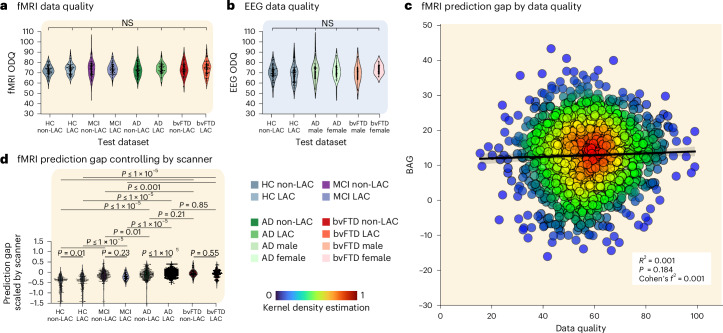
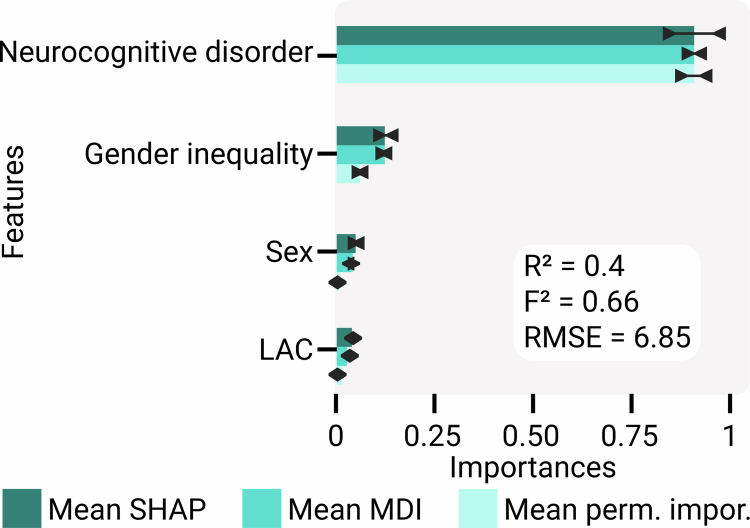
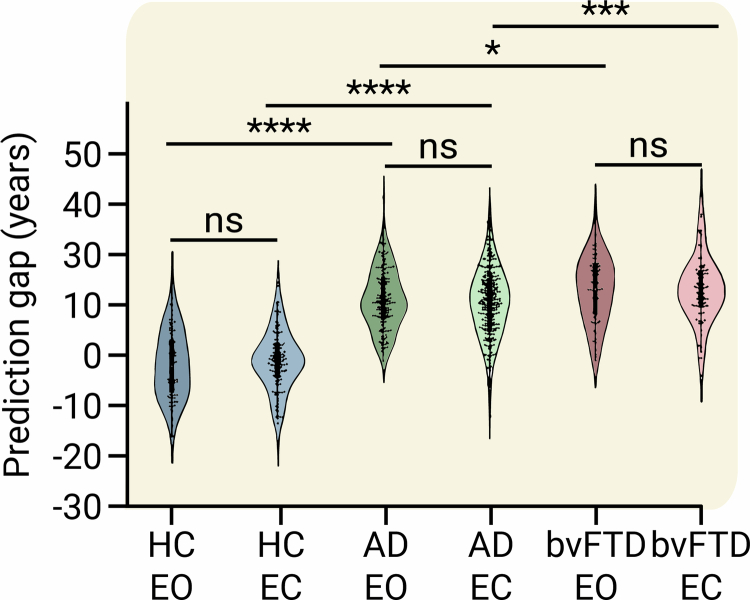
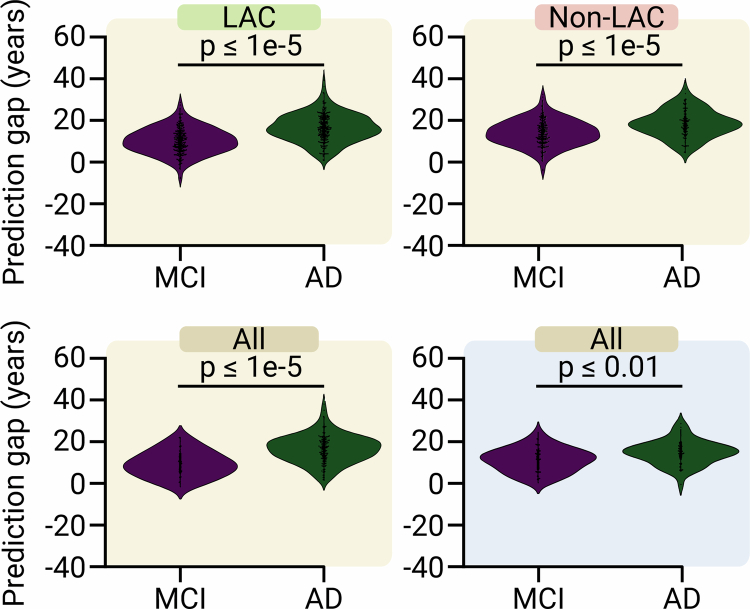
Verification
Claims the paper makes
The claims and statistics of this paper haven’t been checked yet.
Free: it reads the open-access text and checks the first 5 claims that cite a source we can check. Create a free account to check every claim.
Claims other papers make about this one
Each is checked against this paper’s own text: does it say what the citing paper says it does?
The source backs part of the claim, not all of it — or backs it for a different population, condition or comparison.
In the citing paper
“While extensively studied in high-income countries, resilience remains underexplored in the majority world, including low-, middleand upper-middle-income countries—where socioeconomic inequities, environmental stressors, large burdens of infectious and noncommunicable diseases and limited healthcare access shape unique health trajectories6–15.”
From Resilience and brain health in global populations (2025) · cites this paper as [13]
Experimental — accuracy not yet measuredThe source backs part of the claim, not all of it — or backs it for a different population, condition or comparison.
In the citing paper
“The current clinical diagnostic criteria, however, is the current gold standard for clinical diagnosis within the literature and has been used globally to diagnose AD and bvFTD.53,56,101,102”
From Altered spatiotemporal brain dynamics of interoception in behavioural-variant frontotemporal dementia (2025) · cites this paper as [102]
Experimental — accuracy not yet measuredThe cited source says what the claim attributes to it.
In the citing paper
“Inequalities and multimodal exposomal factors were associated with accelerated aging, shedding light on prior individual reports of brain health2,26,27 and aging trajectories24,25.”
From The exposome of healthy and accelerated aging across 40 countries (2025) · cites this paper as [2]
The check wasn’t confident either way, so it gives no verdict — never disputed.
In the citing paper
“As in other works2,20, aggregate-level metrics are not without bias from data sources, especially those of national relevance.”
From The exposome of healthy and accelerated aging across 40 countries (2025) · cites this paper as [2]
Experimental — accuracy not yet measuredIn the citing paper
“In poorer regions, individuals face a combination of social stressors such as poverty, violence, and isolation, which are further exacerbated by exposure to physical risk factors such as poor air quality, inadequate nutrition, untreated vision loss, and poor access to health care.134”
From Next generation brain health: transforming global research and public health to promote prevention of dementia and reduce its risk in young adult populations (2024) · cites this paper as [134]
Self-check
Percentages, sums and reported differences re-computed from the paper’s own numbers.
The self-check needs the paper’s full text.
Citations
Cites
Greedy function approximation: A gradient boosting machine
Friedman, J. H. (2001) · The Annals of Statistics · doi:10.1214/aos/1013203451 · Cited by 30,731 · cited 1×
“We used gradient-boosting regression models 75 to investigate the impact of factors associated with the physical and social exposomes, and disease disparities, on brain-age gaps between LAC and non-LAC populations.”
MethodMcKhann, G. M., Knopman, D. S., Chertkow, H., Hyman, B. T., Jack, C. R., Kawas, C. H., Klunk, W. E., Koroshetz, W. J., Manly, J. J., Mayeux, R., et al. (2011) · Alzheimer's & Dementia · doi:10.1016/j.jalz.2011.03.005 · Cited by 18,657
Sensitivity of revised diagnostic criteria for the behavioural variant of frontotemporal dementia
Rascovsky, K., Hodges, J. R., Knopman, D., Mendez, M. F., Kramer, J. H., Neuhaus, J., van Swieten, J. C., Seelaar, H., Dopper, E. G. P., Onyike, C. U., et al. (2011) · Brain · doi:10.1093/brain/awr179 · Cited by 5,221
Self-citationDeep learning in medical image analysis
Shen, D., Wu, G., & Suk, H.-I. (2017) · Annual Review of Biomedical Engineering · doi:10.1146/annurev-bioeng-071516-044442 · Cited by 4,968 · cited 1×
“In addition, standard machine learning approaches are less generalizable than deep learning methods 33 .”
MethodFry, A., Littlejohns, T. J., Sudlow, C., Doherty, N., Adamska, L., Sprosen, T., Collins, R., & Allen, N. E. (2017) · American Journal of Epidemiology · doi:10.1093/aje/kwx246 · Cited by 3,979 · cited 1×
“Brain-age indices have been restricted by the predominant use of MRI or positron emission tomography, which are less accessible and affordable in LAC, leading to selection biases 34 .”
MethodAgeing as a risk factor for neurodegenerative disease
Hou, Y., Dan, X., Babbar, M., Wei, Y., Hasselbalch, S. G., Croteau, D. L., & Bohr, V. A. (2019) · Nature Reviews Neurology · doi:10.1038/s41582-019-0244-7 · Cited by 3,310
Appelhof, B., Bakker, C., Van Duinen-van den Ijssel, J. C. L., Zwijsen, S. A., Smalbrugge, M., Verhey, F. R. J., de Vugt, M. E., Zuidema, S. U., & Koopmans, R. T. C. M. (2017) · Dementia and Geriatric Cognitive Disorders · doi:10.1159/000477087 · Cited by 2,760
ICLabel: An automated electroencephalographic independent component classifier, dataset, and website
Pion-Tonachini, L., Kreutz-Delgado, K., & Makeig, S. (2019) · NeuroImage · doi:10.1016/j.neuroimage.2019.05.026 · Cited by 2,267 · cited 1×
“ICLabel (a tool for classifying EEG independent components into signals and different noise categories) 66 , and EyeCatch (a tool for identifying eye-related independent component analysis scalp maps) were used 67 .”
MethodPollution and health: a progress update
Fuller, R., Landrigan, P. J., Balakrishnan, K., Bathan, G., Bose-O'Reilly, S., Brauer, M., Caravanos, J., Chiles, T., Cohen, A., Corra, L., et al. (2022) · The Lancet Planetary Health · doi:10.1016/s2542-5196(22)00090-0 · Cited by 2,143
Enriched environments, experience-dependent plasticity and disorders of the nervous system
Nithianantharajah, J., & Hannan, A. J. (2006) · Nature Reviews Neuroscience · doi:10.1038/nrn1970 · Cited by 1,771
Research works printed but not linked: 1
- 73. Kohavi, R. A study of cross-validation and bootstrap for accuracy estimation and model selection. Proc. of 14th International Joint Conference on AI 1137–1143 (1995).
Cited by
The generative era of medical AI
Fahrner, J., Chen, E., Topol, E. J., & Rajpurkar, P. (2025) · Cell · doi:10.1016/j.cell.2025.05.018 · Cited by 145
The exposome of healthy and accelerated aging across 40 countries
Hernandez, H., Santamaria-Garcia, H., Moguilner, S., Farina, F. R., Legaz, A., Prado, P., Cuadros, J., Gonzalez, L., Gonzalez-Gomez, R., Migeot, J., et al. (2025) · Nature Medicine · doi:10.1038/s41591-025-03808-2 · Cited by 71
“Measurements and harmonization details are in Supplementary Notes 1 and 2.”
InfluentialSelf-citationBiomarkers of ageing of humans and non-human primates
Wu, Z., Qu, J. T., Zhang, W., Bao, Z., Bi, Y., Cai, J.-P., Cai, S.-Q., Cao, C.-M., Cao, F., Cao, Z., et al. (2025) · Nature Reviews Molecular Cell Biology · doi:10.1038/s41580-025-00883-8 · Cited by 60
“Structural and functional changes include brain atrophy and reduced cortical thickness, volume of the grey matter and integrity of the white matter 14,219–222 (Supplementary Table 3).”
Farina, F. R., Bridgeman, K., Gregory, S., Crivelli, L., Foote, I. F., Jutila, O.-E. I., Kucikova, L., Mariano, L. I., Nguyen, K.-H., Thayanandan, T., et al. (2024) · The Lancet Healthy Longevity · doi:10.1016/j.lanhl.2024.100665 · Cited by 45
“134 Internal factors such as chronic stress and depression can result from or be aggravated by adverse social and physical environments.”
Self-citationBrain age gap as a predictive biomarker that links aging, lifestyle, and neuropsychiatric health
Zhang, R., Fan, Y., Mao, H., Huang, Z., Wang, K., & Zhang, J. (2025) · Communications Medicine · doi:10.1038/s43856-025-01100-5 · Cited by 57
Resilience and brain health in global populations
Udeh-Momoh, C. T., Migeot, J., Blackmon, K., Mielke, M. M., Melloni, M., Cox, L., Yaffe, K., Santamaria-Garcia, H., Stern, Y., & Ibanez, A. (2025) · Nature Medicine · doi:10.1038/s41591-025-03846-w · Cited by 42
“…and whole-body health 21 , frameworks encompassing the exposome (the cumulative physical and social exposures interacting with biological systems 13,21–23 ), participatory budgeting 24 and community-led cooperative finance models 25,26 —many of which remain underrepresented in global discourse.”
Self-citationMostert, C. M., Udeh-Momoh, C., Winkler, A. S., McLaughlin, C., Eyre, H., Salama, M., Ranchod, K., Trepel, D., Vradenburg, G., Hynes, W., et al. (2025) · eBioMedicine · doi:10.1016/j.ebiom.2025.105950 · Cited by 42
“47”
Jeste, D. V., Smith, J., Lewis‐Fernández, R., Saks, E. R., Na, P. J., Pietrzak, R. H., Quinn, M. J., & Kessler, R. C. (2025) · Translational Psychiatry · doi:10.1038/s41398-025-03332-4 · Cited by 44
“Thus, SDoMH shape brain development and there is now evidence that SDoMH can accelerate brain aging across the lifespan [90, 91].”
Wen, J. (2025) · Nature Aging · doi:10.1038/s43587-025-00928-9 · Cited by 47
“I also investigated the influence of sexes (men versus women) in predicting the brain ProtBAG as well as a discussion on sex difference in the literature 1,15,17,34 (Supplementary Note 2 and Supplementary Figure 5).”
Whitman, E. T., Elliott, M. L., Knodt, A. R., Abraham, W. C., Anderson, T. J., Cutfield, N. J., Hogan, S., Ireland, D., Melzer, T. R., Ramrakha, S., et al. (2025) · Nature Aging · doi:10.1038/s43587-025-00897-z · Cited by 37
“Latin Americans are underrepresented in biomedical research 60,62 and may experience distinct social and environmental influences on brain aging compared to people in high-income countries in North America and Europe 60 .”
Legaz, A., Altschuler, F., Gonzalez-Gomez, R., Hernández, H., Baez, S., Migeot, J., Fittipaldi, S., Medel, V., Maito, M. A., Godoy, M. E., et al. (2024) · Nature Aging · doi:10.1038/s43587-024-00781-2 · Cited by 36
“Our study focused on the emerging research of aggregate-level analysis 1,3–6 .”
InfluentialSelf-citationCognitive synaptopathy: synaptic and dendritic spine dysfunction in age-related cognitive disorders
Barrantes, F. J. (2024) · Frontiers in Aging Neuroscience · doi:10.3389/fnagi.2024.1476909 · Cited by 41
Social exposome and brain health outcomes of dementia across Latin America
Migeot, J., Piña‐Escudero, S. D., Hernandez, H., González-Gómez, R., Legaz, A., Fittipaldi, S., Resende, E. D. P. F., Duran-Aniotz, C. A., Ávila‐Funes, J. A., Behrens, M. I., et al. (2025) · Nature Communications · doi:10.1038/s41467-025-63277-6 · Cited by 46
“Results matched the connectivity patterns described in the main results (Supplementary Information 4, Supplementary Tables 11 and 12).”
InfluentialSelf-citationCreative experiences and brain clocks
Coronel‐Oliveros, C., Migeot, J., Lehue, F., Amoruso, L., Kowalczyk‐Grębska, N., Jakubowska, N., Mandke, K. N., Seabra, J. P., Orio, P., Campbell, D., et al. (2025) · Nature Communications · doi:10.1038/s41467-025-64173-9 · Cited by 44
“Thus, delayed brain aging, driven by creative experiences, presented an inverted pattern (accelerated aging) seen in many neurological disorders 8 – 11 .”
InfluentialSelf-citationZegarra-Valdivia, J. A., Vilca, B. N. C., Tituana, K. A., Zapata‐Restrepo, L. M., Pilalumbo, M. M. U., Norori, M. G. D. J. L., Paredes-Manrique, C., & Custodio, N. (2025) · Behavioral Sciences · doi:10.3390/bs15020207 · Cited by 29
Self-citationAlpha rhythm and Alzheimer’s disease: Has Hans Berger’s dream come true?
Babiloni, C., Arakaki, X., Báez, S., Barry, R. J., Benussi, A., Blinowska, K. J., Bonanni, L., Borroni, B., Bosch‐Bayard, J., Bruno, G., et al. (2025) · Clinical Neurophysiology · doi:10.1016/j.clinph.2025.02.256 · Cited by 30
Self-citationComputational whole-body-exposome models for global precision brain health
Ibáñez, A. M., Duran-Aniotz, C. A., Migeot, J., Báez, S., Fittipaldi, S., Coronel‐Oliveros, C., Eyre, H. A., Udeh‐Momoh, C. T., Zetterberg, H., Alladi, S., et al. (2025) · Nature Communications · doi:10.1038/s41467-025-67448-3 · Cited by 33
Self-citationPsychiatric genetics in the diverse landscape of Latin American populations
Bruxel, E. M., Rovaris, D. L., Belangero, S. I., Chavarría‐Soley, G., Barboza, A. B. C., Martínez‐Magaña, J. J., Nagamatsu, S. T., Nievergelt, C. M., Núñez-Ríos, D. L., Ota, V., et al. (2025) · Nature Genetics · doi:10.1038/s41588-025-02127-z · Cited by 32
“Although limited, research in Latin America has demonstrated that SDoMH have a critical role in predicting neuropsychiatric outcomes 123,124 .”
Plasma proteomic signatures of cellular aging predict human disease
Ding, D. Y., Bot, V. A., Chen, K. L., Groves, J. E., Pálovics, R., Masuda, D., Farinas, A., Oh, H. S., Wagner, V., Lu, N., et al. (2026) · Nature Medicine · doi:10.1038/s41591-026-04446-y · Cited by 30
Structural inequality and temporal brain dynamics across diverse samples
Baez, S., Hernandez, H., Moguilner, S., Cuadros, J., Santamaria‐Garcia, H., Medel, V., Migeot, J., Cruzat, J., Valdes‐Sosa, P. A., Lopera, F., et al. (2024) · Clinical and Translational Medicine · doi:10.1002/ctm2.70032 · Cited by 21
“10,127,137 The EEG signal was segmented into 1-s epochs, each labelled as 1 (low quality) or 0 (high quality).”
BackgroundInfluentialSelf-citationUnequal burdens: How structural socioeconomic inequality shapes brain health in aging and dementia
Legaz, A., Báez, S., & Ibáñez, A. M. (2025) · Neuroscience · doi:10.1016/j.neuroscience.2025.02.016 · Cited by 22
Self-citationGonzalez-Gomez, R., Cruzat, J., Hernández, H., Migeot, J., Legaz, A., Santamaria-García, H., Fittipaldi, S., Maito, M. A., Medel, V., Tagliazucchi, E., et al. (2025) · eClinicalMedicine · doi:10.1016/j.eclinm.2025.103187 · Cited by 19
“6,8,9,23 These environmental in fl uences can be analyzed across multiple scales, from immediate surroundings to regional, national, and global levels.”
InfluentialSelf-citationThe exposome of brain aging across 34 countries
Legaz, A., Moguilner, S., Barttfeld, P., Cuadros, J., Rial, D. S. G., Migeot, J., Farina, F. R., González-Gómez, R., Salazar‐Londoño, S., Azzi, T. D. S., et al. (2026) · Nature Medicine · doi:10.1038/s41591-026-04302-z · Cited by 31
“As in previous studies 8,26,54 , acquisition and protocol variability was mitigated by sensitivity analyses (comparisons, regressions and covarying for scanner and ODQ metrics).”
InfluentialSelf-citationThe X-Age Project to construct a Chinese aging clock
Li, J., Jiang, M., Wang, Q., Zheng, Z., Shen, J., Li, J., Xiong, M., Zheng, Y., Lu, X., Cai, Y., et al. (2025) · Nature Aging · doi:10.1038/s43587-025-00935-w · Cited by 21
“High-resolution magnetic resonance imaging can be used to construct brain imaging clocks, acquiring detailed structural images of the brain with a focus on aging-related indicators, such as gray matter volume and brain network connectivity 25–29 .”
Amoruso, L., Hernandez, H., Santamaría‐García, H. A., Moguilner, S., Legaz, A., Prado, P., Cuadros, J., Gonzalez, L., González-Gómez, R., Migeot, J., et al. (2025) · Nature Aging · doi:10.1038/s43587-025-01000-2 · Cited by 29
“Our approach 5,23–26 leverages aggregate-level meas-ures—such as multilingualism and exposome variables—as predictors and covariates of individual-level health outcomes 20,27,28 , captured through biobehavioral age gaps (BAGs) 5 .”
InfluentialSelf-citationKalyakulina, A., Yusipov, I., Trukhanov, A. I., Franceschi, C., Moskalev, A., & Ivanchenko, M. (2025) · International Journal of Molecular Sciences · doi:10.3390/ijms26136284 · Cited by 21
“These models would be based on analyses of cerebrospinal fluid, brain electroencephalography signals, or magnetic resonance imaging [45,46].”
Brain health is a human right: Implications for policy and research
Daly, T. P. (2025) · Neuroscience · doi:10.1016/j.neuroscience.2025.01.063 · Cited by 20
Enhancing brain health in the global south through a sex and gender lens
Baez, S., Castro-Aldrete, L., Britton, G. B., Ibañez, A., & Santuccione-Chadha, A. (2024) · Nature Mental Health · doi:10.1038/s44220-024-00339-6 · Cited by 15
“Education, socioeconomic-and exposome-related disparities in the global south are associated with greater accelerated brain age in female participants, both in healthy aging and AD 48 .”
Human Brain Cell‐Type‐Specific Aging Clocks Based on Single‐Nuclei Transcriptomics
Muralidharan, C., Zakar‐Polyák, E., Adami, A., Abbas, A. A., Sharma, Y., Garza, R., Johansson, J., Atacho, D. A. M., Renner, É., Palkovits, M., et al. (2025) · Advanced Science · doi:10.1002/advs.202506109 · Cited by 23
Hazelton, J. L., Della Bella, G., Barttfeld, P., Dottori, M., Gonzalez-Gomez, R., Migeot, J., Moguilner, S., Legaz, A., Hernandez, H., Prado, P., et al. (2025) · eBioMedicine · doi:10.1016/j.ebiom.2025.105614 · Cited by 14
“…however, is the current gold standard for clinical diagnosis within the literature and has been used globally to diagnose AD and bvFTD. 53,56,101,102 Moreover, another challenge is the accessibility and feasibility of these biomarkers in global settings, together with the current lack of…”
Self-citationBrain age prediction from MRI scans in neurodegenerative diseases
Papouli, A., & Cole, J. H. (2025) · Current Opinion in Neurology · doi:10.1097/wco.0000000000001383 · Cited by 13
“Recent studies have shown that combining fMRI and EEG improves brain age predictions, revealing how different brain networks contribute to aging at varied rates [20].”
InfluentialRodda, J. E., Kuchenbecker, L. A., Borelli, W. V., DeMarco, M. L., Castilhos, R. M., Cawston, E. E., Chabrashvili, T., Budelier, M. M., Duran-Aniotz, C. A., Udeh‐Momoh, C. T., et al. (2025) · Alzheimer s & Dementia · doi:10.1002/alz.70201 · Cited by 15
“37,38 Key questions to be addressed include the nature of validation of AD BBMs in specific populations that would provide clinicians with sufficient confidence to use them in clinical practice (e.g., numbers of participants included, types of population studied).”
Self-citationAlzheimer's & Dementia: Translational Research & Clinical Interventions
(2020) · Alzheimer s & Dementia Translational Research & Clinical Interventions · doi:10.1002/(issn)2352-8737 · Cited by 12
Diversity-sensitive brain clocks linked to biophysical mechanisms in aging and dementia
Coronel‐Oliveros, C., Moguilner, S., Hernandez, H., Cruzat, J., Báez, S., Medel, V., Cuadros, J., Santamaría‐García, H. A., Valdes-Sosa, P. A., Lopera, F. J., et al. (2025) · Nature Mental Health · doi:10.1038/s44220-025-00502-7 · Cited by 19
“Our recent work has shown that EEG-based brain clock models are sensitive to diversity and disparities across heterogeneous acquisition parameters 1 .”
InfluentialSelf-citationAgeML: Age Modeling With Machine Learning
Condado, J. G., Elorriaga, I. T., Cortés, J. M., & Erramuzpe, A. (2025) · IEEE Journal of Biomedical and Health Informatics · doi:10.1109/jbhi.2025.3531017 · Cited by 11
“This has been observed when applying models trainedonwhitepopulationstonon-whitepopulations [19],[20].”
Mind the Gap: Does Brain Age Improve Alzheimer’s Disease Prediction?
Tan, T. W. K., Nguyen, K., Zhang, C., Kong, R., Cheng, S. F., Ji, F., Chong, J. S. X., Chong, E. J. Y., Venketasubramanian, N., Orbán, C., et al. (2025) · Human Brain Mapping · doi:10.1002/hbm.70276 · Cited by 12
Frost, B. E., Rowe, J. B., Akinyemi, R., Abisambra, J. F., Ashton, N. J., Brendel, M., Buée, L., Butler, D., Carrillo, M. C., Chung, P. S., et al. (2025) · Alzheimer s & Dementia · doi:10.1002/alz.70078 · Cited by 12
“14 These efforts underscore the complex interplay of socioeconomic, genetic, and brain diversity in shaping FTLD phenotypes.”
Age-related hearing loss and dementia risk across the lifespan: mechanisms, equity, and prevention
Loughrey, D. G. (2025) · Neuroscience · doi:10.1016/j.neuroscience.2025.08.056 · Cited by 11
Randomized controlled trial of resistance exercise and brain aging clocks
González-Gómez, R., Demnitz, N., Coronel, C., Gates, A. T., Kjær, M., Siebner, H. R., Boraxbekk, C., & Ibáñez, A. M. (2026) · GeroScience · doi:10.1007/s11357-026-02141-x · Cited by 11
“While previous studies have highlighted isolated regional effects in the hippocampus, motor, and prefrontal cortices [14–16], they could not determine whether such changes were local or part of a whole-brain adaptation.”
InfluentialBiological aging clocks in health and disease
Wyss‐Coray, T., & Topol, E. J. (2026) · Nature Medicine · doi:10.1038/s41591-026-04495-3 · Cited by 19
“Brain age gaps were also defined by combining MRI and electroencephalogram data 117 .”
Acosta‐Uribe, J., Piña‐Escudero, S. D., Cochran, J. N., Taylor, J. W., Castruita, P. A., Jonson, C., Barinaga, E. A., Roberts, K., Levine, A. R., George, D. S., et al. (2024) · medRxiv · doi:10.1101/2024.10.29.24315197 · Cited by 10
Self-citationGong, J., & Zaninotto, P. (2025) · International Journal of Environmental Research and Public Health · doi:10.3390/ijerph22060815 · Cited by 10
“…epigenomics, proteomics) in combination with multi-modal neuroimaging (e.g., structural, functional, and diffusion MRI), more nuanced indices (i.e., brain age index) and ageing clocks (i.e., brain clock) [54,55] can be constructed to quantify deviations from healthy neurobiological ageing.”
Electroencephalography (EEG) and the Quest for an Inclusive and Global Neuroscience
Mushtaq, F., & Ibáñez, A. M. (2025) · European Journal of Neuroscience · doi:10.1111/ejn.70078 · Cited by 9
Cardiovascular risk factors and the allostatic interoceptive network in dementia
Hazelton, J. L., Migeot, J., González-Gómez, R., Altschuler, F., Duran-Aniotz, C. A., Wen, O., Rial, D. S. G. G., Barttfeld, P., Medel, V., Campo, C. G., et al. (2025) · Cardiovascular Research · doi:10.1093/cvr/cvaf185 · Cited by 9
Self-citationImaging-based organ-specific aging clock predicts human diseases and mortality
Ren, P., Su, W., You, J., Liang, Y., Gong, W., Zhang, W., Zhou, Z., Dai, F., Hou, X., Liu, W., et al. (2026) · npj Digital Medicine · doi:10.1038/s41746-026-02488-7 · Cited by 9
“In particular, magnetic resonance imaging (MRI)-based measurements have been increasingly utilized to capture brain aging 7 – 9 , which exhibit clinical 8,10 .”
InfluentialMoguilner, S., Báez, S., Hernandez, H., Migeot, J., Legaz, A., González-Gómez, R., Farina, F. R., Prado, P., Cuadros, J., Tagliazucchi, E., et al. (2024) · Nature Medicine · doi:10.1038/s41591-024-03294-y · Cited by 8
Self-citationNeuroscience and climate action: intersecting pathways for brain and planetary health
Todorova, B., Steininger, M. O., Lamm, C., & Doell, K. C. (2025) · Current Opinion in Behavioral Sciences · doi:10.1016/j.cobeha.2025.101522 · Cited by 10
“…in processes, including, but not limited to, motivation, affective responses, cognitive control, and perspective-taking, environmental social neuroscience provides valuable insights into how sustainable actions are formed, reinforced, and maintained, paving the way for more targeted,…”
Condado, J. G., Recuero, I. V., Elorriaga, I. T., Birkenbihl, C., Carrigan, M., Diez, I. P., Buckley, R. F., Erramuzpe, A., Cortés, J. M., & Initiative, T. A. D. N. (2025) · NeuroImage · doi:10.1016/j.neuroimage.2025.121548 · Cited by 11
Sex differences in Alzheimer’s disease: a systematic review of two decades of neuroimaging research
Massoumzadeh, P., Tiemann, S. J., Naghashzadeh, M., Rizzo, J., Hu, J. Y., Yaeger, L., Alkelani, H., Wang, Q., Chen, G., Dolatshahi, M., et al. (2026) · British Journal of Radiology · doi:10.1093/bjr/tqag011 · Cited by 9
“71 There is a stark absence of studies from African and South American countries (see Table S2) Without funding to encourage cross-country collaboration and neuroimaging studies in under-resourced regions, particularly those without access to scanners, the imaging field risks perpetuating…”
InfluentialPercio, C. D., Lizio, R., Lopez, S., Noce, G., Jakhar, D., Carpi, M., Bölükbaş, B., Soricelli, A., Salvatore, M., Güntekin, B., et al. (2025) · Neurobiology of Disease · doi:10.1016/j.nbd.2025.106807 · Cited by 6
Self-citationLavretsky, H., Khalsa, S. S., Oughli, H. A., Ibáñez, A. M., Cruzat, J. C., Edwards, E., NEWHOUSE, P. A., Bassetti, C. L., Bègue, I., Winkler, A. S., et al. (2026) · Neuropsychopharmacology · doi:10.1038/s41386-026-02332-2 · Cited by 11
Self-citationCaviedes, A., Cabral‐Miranda, F., Orellana, P., Hernández, H., Henriquez, F. A., González-Gómez, R., Pizarro, M., Migeot, J., Ochoa‐Rosales, C., Gonzalez‐Silva, C., et al. (2026) · Nature Aging · doi:10.1038/s43587-025-01061-3 · Cited by 6
“Our cross-sectional design limits the ability to capture disease progression and temporal changes in biomarker trajectories, which is important given the dynamic influence of exposome factors (social and environmental) across Latin America 6,12,13 .”
InfluentialSelf-citationInspired by struggle: A personal journey to global precision brain health
Ibanez, A. (2025) · iScience · doi:10.1016/j.isci.2025.111918 · Cited by 5
Altschuler, F., Canziani, V., Fraile-Vazquez, M. E., González-Gómez, R., Hernández, H. G., Báez, S., Migeot, J., Fittipaldi, S., Maito, M. A., Legaz, A., et al. (2025) · Alzheimer s Research & Therapy · doi:10.1186/s13195-025-01832-5 · Cited by 8
“Additionally, socio-environmental influences may impact the different atrophy patterns observed between LA and the US [60].”
Self-citationWhen Age Is More Than a Number: Acceleration of Brain Aging in Neurodegenerative Diseases
Doering, E., Hoenig, M. C., Cole, J. H., & Drzezga, A. E. (2025) · Journal of Nuclear Medicine · doi:10.2967/jnumed.125.270325 · Cited by 6
“Functional BAGs, from both fMRI and electroencephalography, have been found to be elevated in AD ( 38 , 39 ) and to a lesser extent in MCI and the behavioral-variant of frontotemporal dementia ( 38 ).”
Brown, G., Bustamante‐Paytan, D., Pereira, M. F. A., Huilca, J. C., Custodio, B., Agüero, K., Verastegui, G., Yauri, Z., Bartolo, P., Bendezu, D., et al. (2025) · Alzheimer s & Dementia · doi:10.1002/alz.70671 · Cited by 5
“23 Furthermore, individuals in LAC countries may display a higher brain age (based on functional magnetic resonance imaging and electroencephalography) compared to non-LAC countries, 24 which may be due to structural socioeconomic inequality, pollution, and health disparities.”
Self-citationShaaban, C. E., Suryadevara, V., Hill, A. V., Milani, S. A., Agarwal, P., Aggarwal, N. T., Akinyemi, R., Alladi, S., Brown, M. J., Caldwell, J. K., et al. (2026) · Nature Aging · doi:10.1038/s43587-025-01035-5 · Cited by 9
“Factors including childhood adversity, lower socioeconomic status (SES), social inequalities, disease burden, PM 2.5 level, discrimination, and perceived stress lead to a higher allostatic load, accelerated biological and brain aging, and greater multimorbidity risk 29,112 .”
InfluentialPeace in Colombia requires healing the scars of conflict on the mind and brain
Cardona, J. F., Trujillo, C., Miller, J., & Ibáñez, A. M. (2025) · Nature Medicine · doi:10.1038/s41591-025-03857-7 · Cited by 7
Self-citationA Multimodal Vision-text AI Copilot for Brain Disease Diagnosis and Medical ImagingPreprint
Zhang, G., Gao, Z., Duan, C., Liu, J., Lizhu, Y., Liu, Y., Chen, Q., Wang, L., Fei, K., Wang, T., et al. (2025) · medRxiv · doi:10.1101/2025.01.09.25320293 · Cited by 10
Lozada-Martínez, I. D., Toro, S. M. C., Guillen-Burgos, H. F., Salazar-Uribe, J. C., & Anaya, J. (2025) · Alzheimer s & Dementia · doi:10.1002/alz.71034 · Cited by 6
Acosta‐Uribe, J., Piña‐Escudero, S. D., Cochran, J. N., Taylor, J. W., Castruita, P. A., Jonson, C., Barinaga, E. A., Roberts, K., Levine, A. R., George, D. S., et al. (2026) · npj Dementia · doi:10.1038/s44400-025-00025-z · Cited by 14
“ReDLat aims to highlight the unique genetic diversity and demographic features of these populations associated withneurodegenerativediseasesofcognition 14 .”
Self-citationA multi-modal foundation model for brain disease diagnosis and medical imaging
Zhang, G., Gao, Z., Duan, C., Liu, J., Lizhu, Y., Liu, Y., Chen, Q., Wang, L., Fei, K., Wang, T., et al. (2026) · Patterns · doi:10.1016/j.patter.2026.101538 · Cited by 5
Linking the exposome to the brain–behaviour phenotype
Genon, S., Ibáñez, A. M., Tahmasian, M., & Eickhoff, S. B. (2026) · Nature reviews. Neuroscience · doi:10.1038/s41583-026-01049-x · Cited by 8
“Accord-ingly, the association between socio-economic factors and neurocognitive health can also be readily observed in older populations 35–42 .”
Aging beyond diagnosis: the MRI brain age gap across disorders
Mhanna, H. Y. A., Oestreich, L., Vashistha, R., Wang, Y., & Vegh, V. (2026) · GeroScience · doi:10.1007/s11357-026-02315-7 · Cited by 5
Ju, Y., Zhao, T. T., Gao, Z., Hu, W., Luo, J., Cheng, N., Liu, C., Jiang, Y., Hong, B., Ji, T., et al. (2025) · Frontiers in Neurology · doi:10.3389/fneur.2025.1605291 · Cited by 4
Exposome-wide patterns predict brain health in aging
Mahdipour, M., Balajoo, S. M., Raimondo, F., Wu, J., Nicolaisen‐Sobesky, E., More, S., Hoffstaedter, F., Schwender, H. R., Tahmasian, M., Eickhoff, S. B., et al. (2026) · Nature Communications · doi:10.1038/s41467-026-71271-9 · Cited by 4
“This would contribute in the future to a better understanding of how socio-demographic factors interact with others in explaining interindividual variability in brain health 6,50 .”
What accelerates brain ageing? This AI ‘brain clock’ points to answers
Nowogrodzki, J. (2024) · Nature · doi:10.1038/d41586-024-02770-2 · Cited by 4
Gonzalez‐Montealegre, R. A., González‐Hernández, A., Bonilla‐Santos, J., Cala-Martínez, D. Y., & Parra, M. A. (2025) · Clinical Neurophysiology · doi:10.1016/j.clinph.2025.01.009 · Cited by 3
Self-citationHuman development, inequality, and their associations with brain structure across 29 countries
Medel, V., Alliende, L. M., Bethlehem, R. A. I., Seidlitz, J., Ringlein, G., Arango, C., Arnatkevičiūtė, A., Asmal, L., Bellgrove, M. A., Benegal, V., et al. (2025) · European Psychiatry · doi:10.1192/j.eurpsy.2025.10060 · Cited by 3
“For example, worse macro-economic conditions as those from low-and middle-income countries (LMIC), are associated with a higher proportion of dementia cases [16] and explain disparities in ageing processes [17, 18].”
Self-citationHeikal, S. A., Fawi, G., Khedr, E. M., Othman, M., Moustafa, S. A., Elsheikh, N. G., Tawfik, H. M., Elfarrash, S., Salama, S., Ali, E., et al. (2025) · Alzheimer s & Dementia · doi:10.1002/alz.70770 · Cited by 3
Neuroimaging-derived brain age as a new promising biomarker in mental disorders
Zhao, R., Ge, R., Zhang, X., Liu, X., Zhao, W., Zhang, Z., Jia, Z., Gong, Q., & Chen, T. (2026) · Neuroscience & Biobehavioral Reviews · doi:10.1016/j.neubiorev.2026.106606 · Cited by 5
Pregnancy lab test dynamics resemble rejuvenation of some organs and aging of others
Moran, R., Pridham, G., Toledano, Y., & Alon, U. (2026) · Nature Communications · doi:10.1038/s41467-026-69340-0 · Cited by 3
“These clocks were recently extended to the level of individual organs 18 – 21 .”
Towards Feasible Deep Learning Approach Using EEG for Neurodegenerative Diseases
Park, D., Kim, H.-J., Ju, Y.-G., Kim, K.-T., & Wont, D.-O. (2025) · International Winter Conference on Brain-Computer Interface (BCI) · doi:10.1109/bci65088.2025.10931330 · Cited by 3
“Particularly, neurodegenerative brain diseases such as Alzheimer’s disease (AD) [1], vascular dementia [2], Lewy body dementia [3], and frontotemporal dementia (FTD) [4] significantly impact not only patients but also their families’ and caregivers’ quality of life.”
EEG-based graph network analysis in relation to regional tau in asymptomatic Alzheimer’s disease
Spruyt, L., Mlinarič, T., Dusart, N., Reinartz, M., Meade, G. F., Hulle, M. M. V., Laere, K. V., Dupont, P. J., & Vandenberghe, R. R. (2025) · Brain Communications · doi:10.1093/braincomms/fcaf138 · Cited by 3
“Moguilne et al. 41 report accelerated brain aging influenced by sex, geographical, macrosocial and disease-based factors.”
An integrated computational approach for diversity-sensitive personalized medicine
Coronel‐Oliveros, C., Gatica, M., Herzog, R. A., & Neri, M. (2025) · Neuroscience · doi:10.1016/j.neuroscience.2025.08.019 · Cited by 5
Self-citationQiu, X., Qiu, W., Zhang, Y., Qian, K., Li, C., Hu, B., Schuller, B. W., & Yamamoto, Y. (2025) · IEEE Journal of Biomedical and Health Informatics · doi:10.1109/jbhi.2025.3562090 · Cited by 4
“As emotion recognition technologies have advanced, they play pivotal roles in areas such as depression diagnosis, mental health assessment [2], [3], and therapeutic interventions for special populations.”
Prevalence of Neurocognitive Disorders in the Elderly Quechua Population Using the Q-RUDAS
Zegarra-Valdivia, J. A., Quispe, R. D. M., Turpo, J. C., Paredes-Manrique, C., Malaga, M., Mamani-Benito, O., Montesinos, R., Custodio, N., & Tosto, G. (2025) · Brain Sciences · doi:10.3390/brainsci15121307 · Cited by 3
“Moguilner et al. [44] reported larger brain age gaps in females in both control and Alzheimer’s disease groups compared with males from eight non LAC countries.”
Self-citationClark, A. L., McGill, M. B., Weigand, A. J., Wisch, J. K., Petersen, K. J., Ances, B. M., Braskie, M. N., O’Bryant, S. E., Thomas, K. R., & HABS‐HD Study Team (2025) · Alzheimer s & Dementia Translational Research & Clinical Interventions · doi:10.1002/trc2.70109 · Cited by 3
Pan, G., Zhang, Y., Kang, J., Jiang, Y., Zhang, W., Ren, P., You, J., Gong, W., Yu, J.-T., Feng, J., et al. (2025) · npj Aging · doi:10.1038/s41514-025-00255-8 · Cited by 2
Gaser, C., Garo-Pascual, M., & Strange, B. A. (2025) · GeroScience · doi:10.1007/s11357-025-01836-x · Cited by 2
A Covalent Protein Painting Assay Differentiates Amyloid-β Polymorphs in Alzheimer Disease
Bamberger, C., Diedrich, J. K., Jung, T., Lane, J. B., Schäfer, J.-H., Lander, G. C., Galasko, D. R., & Yates, J. R. (2025) · Journal of Proteome Research · doi:10.1021/acs.jproteome.5c00735 · Cited by 3
Multimodal brain network analysis: Research advances and challenges
Hou, T., Dai, W., Huang, J., Kong, Y., & Ding, W. (2025) · Information Fusion · doi:10.1016/j.inffus.2025.104096 · Cited by 2
Chen, Y., Shu, J., Liu, H., Jiao, Y., He, M., Zha, X., Guo, R., Huang, C., Liu, Z., Li, G., et al. (2026) · International Immunopharmacology · doi:10.1016/j.intimp.2026.116476 · Cited by 2
Genetic–exposome interactions and aging clocks in dementia: the ReDLat2 initiative
Ibáñez, A. M., Yokoyama, J. S., Duran-Aniotz, C. A., & Miller, B. L. (2026) · Nature Medicine · doi:10.1038/s41591-026-04433-3 · Cited by 3
Self-citationFarombi, T., Azzi, T. D. S., Legaz, A., Aguillón, D., Ávila‐Funes, J. A., Behrens, M. I., Bruno, M., Cardona, J. F., Custodio, N., Delgado, C., et al. (2026) · Alzheimer s & Dementia · doi:10.1002/alz.71534 · Cited by 2
“23,25,27,30 Relat-edly, structural inequality and lower educational attainment is associated with smaller brain volume and weaker brain connectivity in the Latin American region, with effects stronger than those from high income countries.”
Self-citationBroche‐Pérez, Y., Fernández-Fleites, Z., Díaz‐Guerra, D. D., Hernández-Lugo, M. D. L. C., & Ramos-Galarza, C. (2025) · Neuroscience · doi:10.1016/j.neuroscience.2025.01.052 · Cited by 3
Gemein, L. A. W., Gaubert, S., Paquet, C., Paillard, J., Holst, S. C., Tveitstøl, T., Haraldsen, I., Kam‐Thong, T., Hawellek, D. J., Hipp, J. F., et al. (2026) · Alzheimer s & Dementia Translational Research & Clinical Interventions · doi:10.1002/trc2.70302 · Cited by 2
“38 These results were comparable to EEG-BAG scores derrived from wakeful resting EEG and MEG.”
InfluentialHeffernan, K. S., Barnes, J. N., London, A. S., Monroe, D. C., Stern, Y., Sloan, R. P., & Schaefer, S. M. (2025) · Alzheimer s & Dementia · doi:10.1002/alz.70833 · Cited by 2
Mental health and subjective well-being of trans and non-binary population in Colombia
Reyes, M. F., Levy, N., Salamanca, D. M., Lyons, M. T., & Leongómez, J. D. (2025) · Neuroscience · doi:10.1016/j.neuroscience.2025.10.039 · Cited by 1
Cárdenas, M. K., Anza‐Ramirez, C., Bernabé‐Ortiz, A., Custodio, N., Montesinos, R., Miranda, J. J., Re, M. D., Belón-Hercilla, V., Lazo‐Porras, M., Hawkins, J. L., et al. (2025) · BMJ Open · doi:10.1136/bmjopen-2025-107142 · Cited by 1
“54 This study will also provide a comprehensive estimation of the societal costs related to dementia and how this condition affects the HR-QoL of both participants and study partners (including caregivers).”
Self-citationOughli, H. A., Ainsworth, N. J., Butters, M. A., Brown, P. J., Gebara, M. A., Gettinger, T. R., Karp, J. F., Lavretsky, H., Lenard, E. M., Miller, J. P., et al. (2025) · The Lancet Healthy Longevity · doi:10.1016/j.lanhl.2025.100767 · Cited by 2
Lu, H., Yang, C.-Y., Zhang, H., Shi, X., Huang, P., Liu, P.-K., Wang, Z., Asthana, S., Carlsson, C. M., Okonkwo, O. C., et al. (2026) · ACS Central Science · doi:10.1021/acscentsci.5c02048 · Cited by 1
Yang, L., Li, Y., Shi, K., Rominger, A., & Ni, R. (2026) · Neural Regeneration Research · doi:10.4103/nrr.nrr-d-25-01816 · Cited by 1
“In a recent multi-center study (Moguilner et al., 2024), fMRI datasets from 2953 participants across 15 countries, i.e., seven Latin American and Caribbean countries and eight non-Latin American and Caribbean countries, were analyzed using a deep learning neural network.”
Metabolomic signatures reveal an association between healthy dietary patterns and brain aging
Hu, L., Wang, Z., Chen, A., Wang, G., Xie, X., He, Q., Wang, Y., Shi, H., Zheng, Z., & Jia, Y. (2026) · The journal of nutrition health & aging · doi:10.1016/j.jnha.2026.100806 · Cited by 1
Pereira, L. E. C., Castro, F. N., & de Almondes, K. M. (2026) · Frontiers in Human Neuroscience · doi:10.3389/fnhum.2026.1768390 · Cited by 1
MRI-Based Multi-Scale Multi-Modal Neonatal Brain Age Estimation Framework with Weight-Aware Feature
Yang, Z., Xu, J., Yu, S., Ouyang, Y., & Zhang, X. (2026) · IEEE International Symposium on Biomedical Imaging (ISBI) · doi:10.1109/isbi61048.2026.11515942 · Cited by 1
“…brain age prediction: employing transformers to fuse sMRI and dMRI data [6], utilizing graph-based frameworks to model the topological structure of brain networks [7], and leveraging functional data (fMRI and EEG) to achieve geographical diversity and large-scale population generalizability [8].”
Li, J., Gao, D.-D., Li, J., Cao, L., Du, Y., Xiong, M., Chu, X., Lei, W., Ye, W.-D., Xu, G., et al. (2026) · Nature Aging · doi:10.1038/s43587-026-01180-5 · Cited by 1
The Meanings of Alzheimer’s Disease
Daly, T. P. (2025) · Philosophy of Medicine · doi:10.5195/pom.2025.251 · Cited by 1
Attention-Guided Multimodal Neuroimaging Fusion Network for Modeling Brain Aging PatternPreprint
Wan, Z., Fu, W., Hossain, J., Gollo, L. L., & Wu, K. (2026) · bioRxiv (Cold Spring Harbor Laboratory) · doi:10.64898/2026.03.28.713645 · Cited by 1
“Furthermore, large-scale work by Moguilner et al. [88] has demonstrated that brain age predictions are sensitive to population-level differences such as geographic and socioeconomic factors.”
Reconsidering Brain Age: Why Age-Prediction Models Fail as Measures of Brain AgingPreprint
Grødem, E., Smith, S. M., Dídac Vidal-piñeiro, A., Elliott, M. L., Initiative, F. T. A. D. N., Walhovd, K. B., & Fjell, A. M. (2026) · Research Square · doi:10.21203/rs.3.rs-9608519/v1 · Cited by 1
Metadata
- Authors
- Moguilner, S., Baez, S., Hernandez, H., Migeot, J., Legaz, A., Gonzalez-Gomez, R., Farina, F. R., Prado, P., Cuadros, J., Tagliazucchi, E., Altschuler, F., Maito, M. A., Godoy, M. E., Cruzat, J., Valdes-Sosa, P. A., Lopera, F., Ochoa-Gómez, J. F., Hernandez, A. G., Bonilla-Santos, J., Gonzalez-Montealegre, R. A., Anghinah, R., d’Almeida Manfrinati, L. E., Fittipaldi, S., Medel, V., Olivares, D., Yener, G. G., Escudero, J., Babiloni, C., Whelan, R., Güntekin, B., Yırıkoğulları, H., Santamaria-Garcia, H., Lucas, A. F., Huepe, D., Di Caterina, G., Soto-Añari, M., Birba, A., Sainz-Ballesteros, A., Coronel-Oliveros, C., Yigezu, A., Herrera, E., Abasolo, D., Kilborn, K., Rubido, N., Clark, R. A., Herzog, R., Yerlikaya, D., Hu, K., Parra, M. A., Reyes, P., García, A. M., Matallana, D. L., Avila-Funes, J. A., Slachevsky, A., Behrens, M. I., Custodio, N., Cardona, J. F., Barttfeld, P., Brusco, I. L., Bruno, M. A., Sosa Ortiz, A. L., Pina-Escudero, S. D., Takada, L. T., Resende, E., Possin, K. L., de Oliveira, M. O., Lopez-Valdes, A., Lawlor, B., Robertson, I. H., Kosik, K. S., Duran-Aniotz, C., Valcour, V., Yokoyama, J. S., Miller, B., & Ibanez, A.
- Affiliations
- Adolfo Ibáñez University (CL)
- University of California, Santa Barbara (US)
- Universidad San Sebastián (CL)
- Universidad Nacional Experimental del Táchira (VE)
- University of San Andrés (AR)
- University of Electronic Science and Technology of China (CN)
- Universidad de Antioquia (CO)
- Universidade de São Paulo (BR)
- University of California, San Francisco (US)
- İzmir University of Economics (TR)
- University of Edinburgh (GB)
- Sapienza University of Rome (IT)
- Istanbul Medipol University (TR)
- Universidad Complutense de Madrid (ES)
- Universidad Icesi (CO)
- University of Glasgow (GB)
- University of Aberdeen (GB)
- University of Strathclyde (GB)
- Centre National de la Recherche Scientifique (FR)
- Dokuz Eylül University (TR)
- Harvard University (US)
- Pontificia Universidad Javeriana (CO)
- Universidad de Santiago de Chile (CL)
- Hospital del Salvador (CL)
- Clínica Alemana (CL)
- Instituto Peruano de Neurociencias (PE)
- Universidad del Valle (CO)
- Consejo Nacional de Investigaciones Científicas y Técnicas (AR)
- Universidad de Buenos Aires (AR)
- Universidade Federal de Minas Gerais (BR)
- University of Chicago (US)
- ORCID
- Hernandez, Hernan
- Migeot, Joaquín
- Legaz, Agustina
- Gonzalez-Gomez, Raul
- Farina, Francesca R.
- Prado, Pavel
- Cuadros, Jhosmary
- Tagliazucchi, Enzo
- Altschuler, Florencia
- Maito, Marcelo Adrián
- Cruzat, Josephine
- Valdes-Sosa, Pedro A.
- Lopera, Francisco
- Ochoa-Gómez, John Fredy
- Gonzalez-Montealegre, Rodrigo A.
- Anghinah, Renato
- Fittipaldi, Sol
- Medel, Vicente
- Yener, Görsev G.
- Escudero, Javier
- Babiloni, Claudio
- Whelan, Robert
- Güntekin, Bahar
- Yırıkoğulları, Harun
- Huepe, David
- Soto-Añari, Marcio
- Birba, Agustina
- Yigezu, Amanuel
- Herrera, Eduar
- Abasolo, Daniel
- Rubido, Nicolás
- Clark, Ruaridh A.
- Herzog, Ruben
- Yerlikaya, Deniz
- Hu, Kun
- Parra, Mario A.
- Reyes, Pablo
- García, Adolfo M.
- Matallana, Diana L.
- Avila-Funes, José Alberto
- Slachevsky, Andrea
- Behrens, María I.
- Custodio, Nilton
- Cardona, Juan F.
- Barttfeld, Pablo
- Takada, Leonel T.
- Resende, Elisa
- Possin, Katherine L.
- Lopez-Valdes, Alejandro
- Lawlor, Brian
- Robertson, Ian H.
- Kosik, Kenneth S.
- Duran-Aniotz, Claudia
- Valcour, Victor
- Yokoyama, Jennifer S.
- Miller, Bruce
- Ibanez, Agustin
- Venue
- Nature Medicine
- Published
- 2024-08-26
- Volume
- 30
- Issue
- 12
- Pages
- 3646-3657
- ISSN
- 1078-8956 (ISSN-L)
- 1546-170X
- PMC
- PMC11645278
- OpenAlex
- W4401894695
- Cited by
- 128
- References
- 78
- Citations by year
- 2026: 55 · 2025: 63 · 2024: 10
- FWCI
- 37.43
- Type
- journal article
- Language
- en
- Update notices
- correction (2024-09-16)
- Open access
- hybrid
- doi.org
- Licence
- cc-by
- creativecommons.org/licenses/by/4.0 (tdm)
- creativecommons.org/licenses/by/4.0 (vor)
- Locations
- Nature Medicine (publishedVersion, cc-by)
- PubMed Central (publishedVersion, cc-by)
- PubMed (publishedVersion)
- eScholarship (California Digital Library) (submittedVersion, cc-by)
- IRIS Research product catalog (Sapienza University of Rome) (submittedVersion, cc-by)
- Edinburgh Research Explorer (University of Edinburgh) (submittedVersion, cc-by)
- Universidad de Chile (submittedVersion, cc-by-nc-nd)
- Funders
- Alzheimer's Association (20-725707, SG-20- 725707)
- Universidad de Santiago de Chile
- John E. Fogarty Foundation for Persons with Intellectual and Developmental Disabilities (R01AG083799)
- Agencia Nacional de Investigación y Desarrollo (15150012, ANID/FONDAP/15150012, 1210195, 1210176, 1220995)
- National Institutes of Health (15150012)
- Departamento de Investigaciones Científicas y Tecnológicas, Universidad de Santiago de Chile (032351G_DAS)
- National Institute on Aging (R01AG057234, P01AG019724, P30AG062422, R01AG075775, R01AG083799)
- National Institute on Drug Abuse (75N95022C00031)
- Fogarty International Center
- Fondo de Financiamiento de Centros de Investigación en Áreas Prioritarias (15150012)
- Topics
- Health Sciences › Medicine › Psychiatry and Mental health › Dementia and Cognitive Impairment Research
- Life Sciences › Neuroscience › Cognitive Neuroscience › Functional Brain Connectivity Studies
- Health Sciences › Medicine › Radiology, Nuclear Medicine and Imaging › Advanced MRI Techniques and Applications
- Keywords
- brain age, brain age gap, accelerated brain aging, dementia, Alzheimer's disease, behavioral variant frontotemporal dementia, mild cognitive impairment, Latin America and the Caribbean, socioeconomic disparities, health disparities, sex differences, deep learning, functional MRI, EEG
- MeSH terms
- Aged, Aged, 80 and over, Aging, Alzheimer Disease, Brain, Dementia, Electroencephalography, Female, Humans, Magnetic Resonance Imaging, Male, Middle Aged, Socioeconomic Factors, Health Status Disparities, Cognitive Dysfunction
About these checks
Registry, retraction, Cites and statistics results are computed, not judged, with one exception: a printed reference that no index lists is read once by a model before it counts as a citation error. Claims are extracted by a model and kept only when their quote appears verbatim in the text; each cited source is then checked, with a model’s help, for whether it says what the claim relies on. Those verdicts can be wrong — read the claim’s quote and the cited source before relying on one.
Statistics and arithmetic are recomputed, not judged.
Confidence bands are shown only for fields calibrated on our annotated test set. None is calibrated yet, so no band is shown.
What counts as a claim ›How we measure confidence ›How we check this ›
Are you an author, or do you see a problem with this page? Request a review
Data sources
Bibliographic data: Semantic Scholar, OpenAlex, Crossref.
Contains information from the Semantic Scholar Academic Graph Datasets, made available under the ODC Attribution License (ODC-BY 1.0).
Semantic Scholar’s data is described in: Kinney, R., et al. (2023). The Semantic Scholar Open Data Platform. arXiv:2301.10140.
