

Brain clocks capture diversity and disparities in aging and dementia across geographically diverse populations
Open accessPublished version of a preprint
The DOI matches its Crossref record; 81 of the 81 references it cites were found in a registry or an index.
Abstract
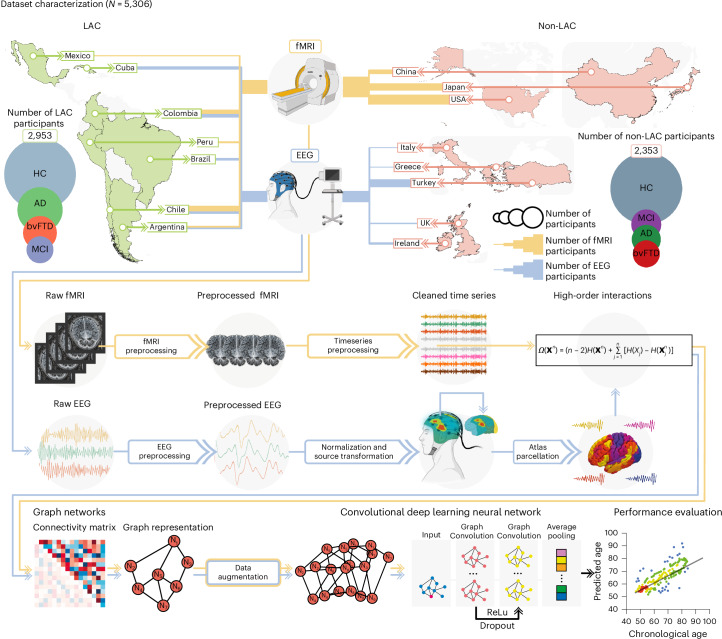
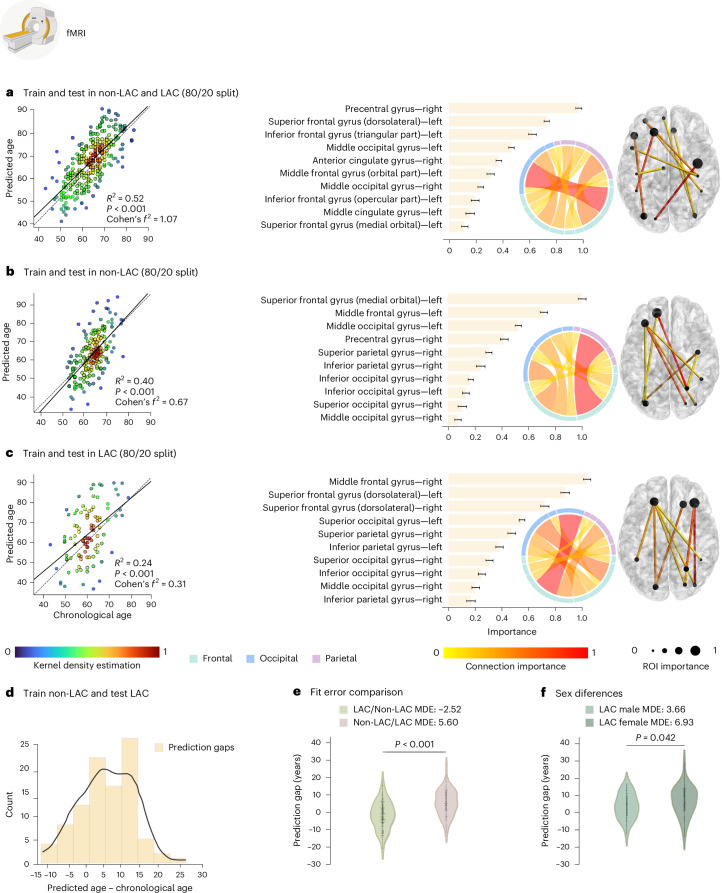
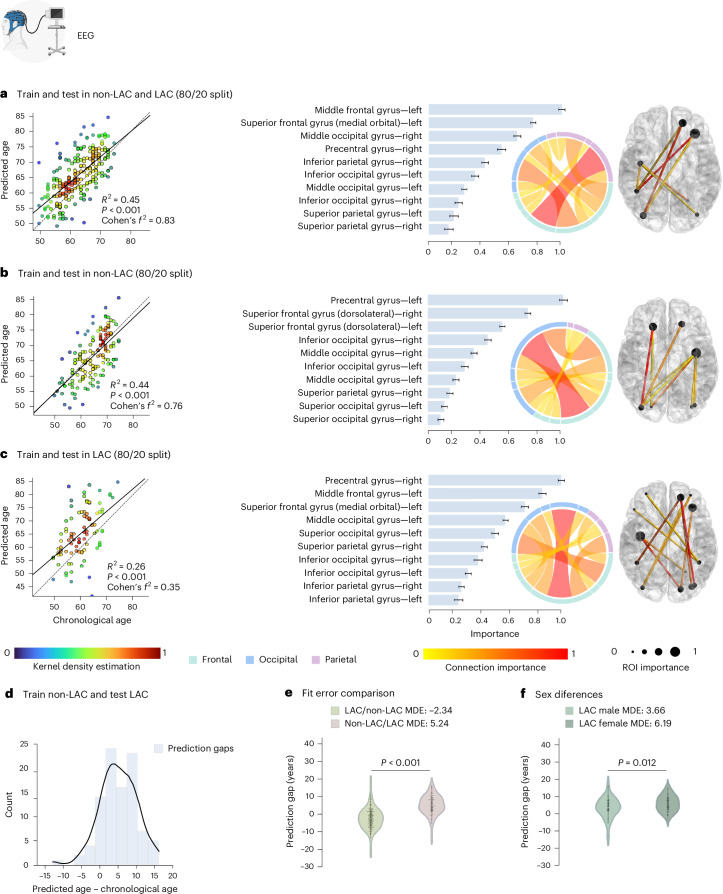
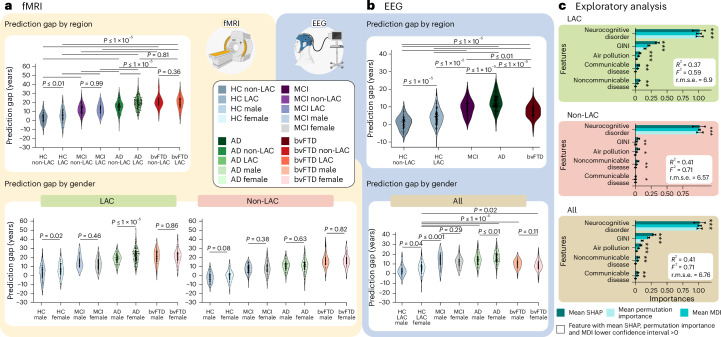
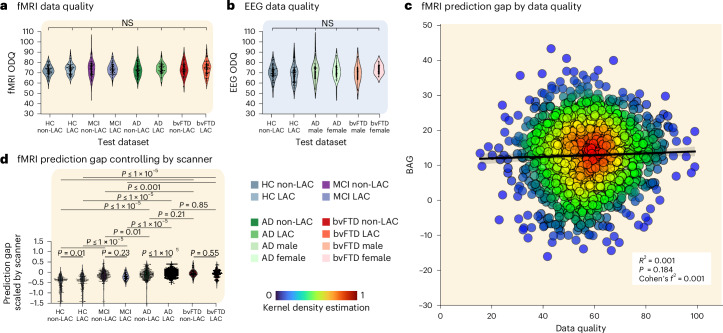
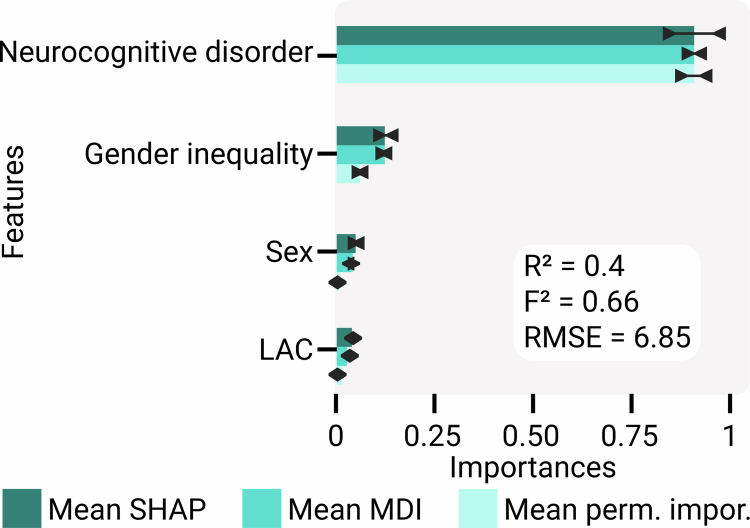
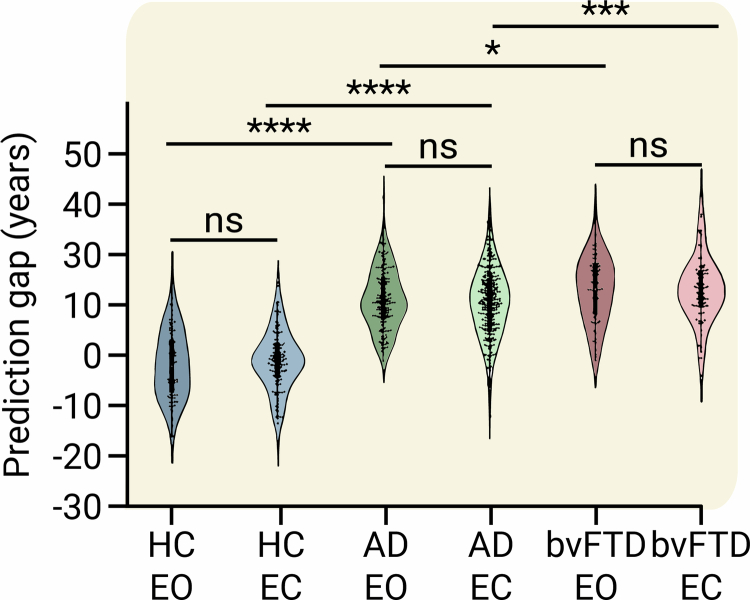
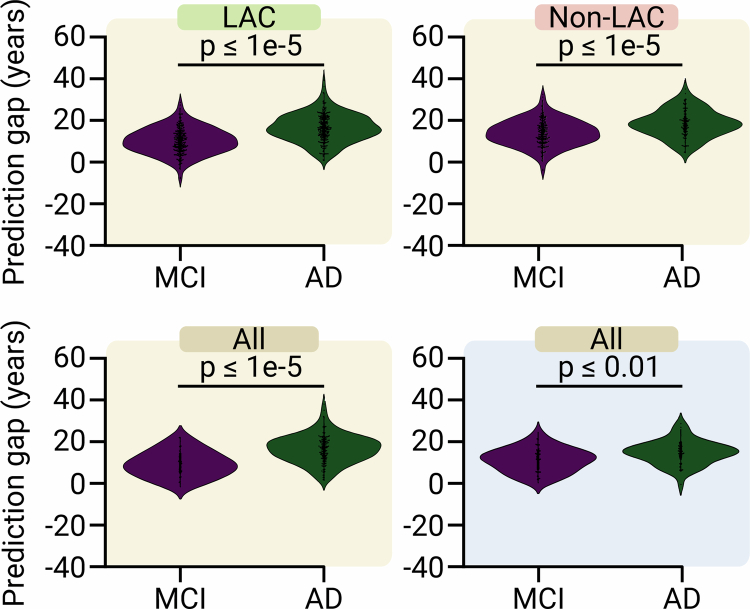
Brain clocks, which quantify discrepancies between brain age and chronological age, hold promise for understanding brain health and disease. However, the impact of diversity (including geographical, socioeconomic, sociodemographic, sex and neurodegeneration) on the brain-age gap is unknown. We analyzed datasets from 5,306 participants across 15 countries (7 Latin American and Caribbean countries (LAC) and 8 non-LAC countries). Based on higher-order interactions, we developed a brain-age gap deep learning architecture for functional magnetic resonance imaging (2,953) and electroencephalography (2,353). The datasets comprised healthy controls and individuals with mild cognitive impairment, Alzheimer disease and behavioral variant frontotemporal dementia. LAC models evidenced older brain ages (functional magnetic resonance imaging: mean directional error = 5.60, root mean square error (r.m.s.e.) = 11.91; electroencephalography: mean directional error = 5.34, r.m.s.e. = 9.82) associated with frontoposterior networks compared with non-LAC models. Structural socioeconomic inequality, pollution and health disparities were influential predictors of increased brain-age gaps, especially in LAC ( R ² = 0.37, F ² = 0.59, r.m.s.e. = 6.9). An ascending brain-age gap from healthy controls to mild cognitive impairment to Alzheimer disease was found. In LAC, we observed larger brain-age gaps in females in control and Alzheimer disease groups compared with the respective males. The results were not explained by variations in signal quality, demographics or acquisition methods. These findings provide a quantitative framework capturing the diversity of accelerated brain aging.
Overview
The claims and statistics of this paper haven’t been checked yet.
Free: it reads the open-access text and checks the first 5 claims that cite a source we can check. Create a free account to check every claim.
Integrity signals
Registry
Cites
Statistics
Figures
Verification
Claims the paper makes
The claims and statistics of this paper haven’t been checked yet.
Free: it reads the open-access text and checks the first 5 claims that cite a source we can check. Create a free account to check every claim.
Claims other papers make about this one
Each is checked against this paper’s own text: does it say what the citing paper says it does?
The source backs part of the claim, not all of it — or backs it for a different population, condition or comparison.
In the citing paper
“While extensively studied in high-income countries, resilience remains underexplored in the majority world, including low-, middleand upper-middle-income countries—where socioeconomic inequities, environmental stressors, large burdens of infectious and noncommunicable diseases and limited healthcare access shape unique health trajectories6–15.”
From Resilience and brain health in global populations (2025) · cites this paper as [13]
Experimental — accuracy not yet measuredThe source backs part of the claim, not all of it — or backs it for a different population, condition or comparison.
In the citing paper
“The current clinical diagnostic criteria, however, is the current gold standard for clinical diagnosis within the literature and has been used globally to diagnose AD and bvFTD.53,56,101,102”
From Altered spatiotemporal brain dynamics of interoception in behavioural-variant frontotemporal dementia (2025) · cites this paper as [102]
Experimental — accuracy not yet measuredThe cited source says what the claim attributes to it.
In the citing paper
“Inequalities and multimodal exposomal factors were associated with accelerated aging, shedding light on prior individual reports of brain health2,26,27 and aging trajectories24,25.”
From The exposome of healthy and accelerated aging across 40 countries (2025) · cites this paper as [2]
The check wasn’t confident either way, so it gives no verdict — never disputed.
In the citing paper
“As in other works2,20, aggregate-level metrics are not without bias from data sources, especially those of national relevance.”
From The exposome of healthy and accelerated aging across 40 countries (2025) · cites this paper as [2]
Experimental — accuracy not yet measuredIn the citing paper
“In poorer regions, individuals face a combination of social stressors such as poverty, violence, and isolation, which are further exacerbated by exposure to physical risk factors such as poor air quality, inadequate nutrition, untreated vision loss, and poor access to health care.134”
From Next generation brain health: transforming global research and public health to promote prevention of dementia and reduce its risk in young adult populations (2024) · cites this paper as [134]
Self-check
Percentages, sums and reported differences re-computed from the paper’s own numbers.
The self-check needs the paper’s full text.
Citations
Cites
Greedy function approximation: A gradient boosting machine
Friedman, J. H. (2001) · The Annals of Statistics · doi:10.1214/aos/1013203451 · Cited by 30,731 · cited 1×
“We used gradient-boosting regression models 75 to investigate the impact of factors associated with the physical and social exposomes, and disease disparities, on brain-age gaps between LAC and non-LAC populations.”
MethodMcKhann, G. M., Knopman, D. S., Chertkow, H., Hyman, B. T., Jack, C. R., Kawas, C. H., Klunk, W. E., Koroshetz, W. J., Manly, J. J., Mayeux, R., et al. (2011) · Alzheimer's & Dementia · doi:10.1016/j.jalz.2011.03.005 · Cited by 18,657
Sensitivity of revised diagnostic criteria for the behavioural variant of frontotemporal dementia
Rascovsky, K., Hodges, J. R., Knopman, D., Mendez, M. F., Kramer, J. H., Neuhaus, J., van Swieten, J. C., Seelaar, H., Dopper, E. G. P., Onyike, C. U., et al. (2011) · Brain · doi:10.1093/brain/awr179 · Cited by 5,221
Self-citationDeep learning in medical image analysis
Shen, D., Wu, G., & Suk, H.-I. (2017) · Annual Review of Biomedical Engineering · doi:10.1146/annurev-bioeng-071516-044442 · Cited by 4,968 · cited 1×
“In addition, standard machine learning approaches are less generalizable than deep learning methods 33 .”
MethodFry, A., Littlejohns, T. J., Sudlow, C., Doherty, N., Adamska, L., Sprosen, T., Collins, R., & Allen, N. E. (2017) · American Journal of Epidemiology · doi:10.1093/aje/kwx246 · Cited by 3,979 · cited 1×
“Brain-age indices have been restricted by the predominant use of MRI or positron emission tomography, which are less accessible and affordable in LAC, leading to selection biases 34 .”
MethodAgeing as a risk factor for neurodegenerative disease
Hou, Y., Dan, X., Babbar, M., Wei, Y., Hasselbalch, S. G., Croteau, D. L., & Bohr, V. A. (2019) · Nature Reviews Neurology · doi:10.1038/s41582-019-0244-7 · Cited by 3,310
Appelhof, B., Bakker, C., Van Duinen-van den Ijssel, J. C. L., Zwijsen, S. A., Smalbrugge, M., Verhey, F. R. J., de Vugt, M. E., Zuidema, S. U., & Koopmans, R. T. C. M. (2017) · Dementia and Geriatric Cognitive Disorders · doi:10.1159/000477087 · Cited by 2,760
ICLabel: An automated electroencephalographic independent component classifier, dataset, and website
Pion-Tonachini, L., Kreutz-Delgado, K., & Makeig, S. (2019) · NeuroImage · doi:10.1016/j.neuroimage.2019.05.026 · Cited by 2,267 · cited 1×
“ICLabel (a tool for classifying EEG independent components into signals and different noise categories) 66 , and EyeCatch (a tool for identifying eye-related independent component analysis scalp maps) were used 67 .”
MethodPollution and health: a progress update
Fuller, R., Landrigan, P. J., Balakrishnan, K., Bathan, G., Bose-O'Reilly, S., Brauer, M., Caravanos, J., Chiles, T., Cohen, A., Corra, L., et al. (2022) · The Lancet Planetary Health · doi:10.1016/s2542-5196(22)00090-0 · Cited by 2,143
Enriched environments, experience-dependent plasticity and disorders of the nervous system
Nithianantharajah, J., & Hannan, A. J. (2006) · Nature Reviews Neuroscience · doi:10.1038/nrn1970 · Cited by 1,771
Research works printed but not linked: 1
- 73. Kohavi, R. A study of cross-validation and bootstrap for accuracy estimation and model selection. Proc. of 14th International Joint Conference on AI 1137–1143 (1995).
Cited by
Items 101–140 of 140
Acosta‐Uribe, J., Piña‐Escudero, S. D., Cochran, J. N., Taylor, J. W., Castruita, P. A., Jonson, C., Barinaga, E. A., Roberts, K., Levine, A. R., George, D. S., et al. (2025) · Research Square · doi:10.21203/rs.3.rs-5462510/v1
“ReDLat aims to highlight the unique genetic diversity and demographic features of these populations associated with neurodegenerative diseases of cognition 14 .”
Self-citationEl aire contaminado de las ciudades acelera el envejecimiento del cerebro
Cabrera, V., & García-Rubio, M. (2024) · The Conversation · doi:10.64628/aao.chw6qnq95
Regional brain aging patterns reveal disease-specific pathways of neurodegenerationPreprint
Vakli, P., Weiss, B., Keresztes, A., Hermann, P., Initiative, A. D. N., Cole, J. H., & Vidnyánszky, Z. (2025) · medRxiv · doi:10.1101/2025.11.12.25339989 · Cited by 1
Task-Aligned Foundation Models for Linking Imaging Features with DNA Methylation in Aging ResearchPreprint
Wang, J., Parayil, A. S., & Hariharan, R. (2025) · doi:10.36227/techrxiv.176539553.36816358/v1
Affeldt, A. M. (2026) · Zeitschrift für Gerontologie und Geriatrie · doi:10.1007/s00391-025-02533-2
Tang, Y., Tao, S., & Zhu, J.-Q. (2026) · Research Square · doi:10.21203/rs.3.rs-8401071/v1
Villegas-Trujillo, L. M., Parra, B., López-Álvarez, D., Gonzalez-Ojeda, L. M., Torres-Parga, A., Cardona, S., Rivera-Franco, N., & Cardona, J. F. (2026) · Molecular Neurobiology · doi:10.1007/s12035-025-05597-8 · Cited by 1
Self-citationGlobal Disparities in Neuroimaging Research for Mental Health ConditionsPreprint
Connell, T., Casella, C., Esper, N. B., Tottenham, N., Tomlinson, M., Ibáñez, A. M., Kousoulis, A. A., Seedat, S., Bantjes, J. R., Kohrt, B. A., et al. (2026) · medRxiv · doi:10.64898/2026.01.27.26344057 · Cited by 1
Self-citationCui, L., Wang, Q.-M., Zhang, Z., Wang, M., Tu, Y.-Y., Jiang, J., Guan, Y., Li, Y.-H., Xie, F., & Guo, Q.-H. (2026) · The Journal of Prevention of Alzheimer s Disease · doi:10.1016/j.tjpad.2026.100501
“Building on initial efforts based on structural magnetic resonance imaging (MRI) [5], recent research has turned toward multimodal integration for example using data from MRI, metabolic positron emission tomography (PET), or other modalities, to enhance sensitivity to subtle brain change[6 – 8].”
Li, X., Wang, H., Miao, Q., Zhou, R., He, M., Wan, H., Zhang, Y., Zhang, Q., Li, Z., Wu, Q., et al. (2026) · Diagnostics · doi:10.3390/diagnostics16081186
“However, the pronounced mechanistic heterogeneity underlying these vulnerabilities has hindered the development of precise, dynamic, and biologically informed risk-stratification tools [13].”
Exposure to negative physical and social factors accelerates brain aging
(2026) · Nature Medicine · doi:10.1038/s41591-026-04348-z
Neural embedding of frailty in cognitively unimpaired aging and dementia across Latin America
Migeot, J., Wen, O., González-Gómez, R., Hernandez, H., Aguillon, D. F., Ávila‐Funes, J. A., Behrens, M. I., Bruno, M. A., Custodio, N., Delgado, C., et al. (2026) · Alzheimer s & Dementia · doi:10.1002/alz.71232
“In line with previous functional connectivity-based brain aging models in AD and FTLD, 70 fronto-temporo-posterior disruptions were observed across groups, with a more marked aging-related frontotemporal component in CU.”
InfluentialSelf-citationBroche‐Pérez, Y., Fernández-Fleites, Z., Díaz‐Guerra, D. D., Hernández-Lugo, M. D. L. C., & Ramos-Galarza, C. (2026) · Brain and Behavior · doi:10.1002/brb3.71358
Pitti, L., Sitti, G., & Candia‐Rivera, D. (2026) · medRxiv · doi:10.64898/2026.04.22.26351482
Defining ‘successful’ episodic memory ageing: Implications of methodological heterogeneity
Garo-Pascual, M., Frank, D., Ramponi, C., & Draganski, B. (2026) · Neuroscience & Biobehavioral Reviews · doi:10.1016/j.neubiorev.2026.106707 · Cited by 1
Global Socioeconomic Context and Brain Ageing in Epilepsy: an ENIGMA-Epilepsy studyPreprint
Pardoe, H., Devinsky, O., Robson, J., Ireland, M., Absil, J., Altmann, A., Alvim, M. K. M., Arienzo, D., Ballerini, A., Barbi, E., et al. (2026) · medRxiv · doi:10.64898/2026.04.30.26352177
Conserved neuroectodermal aging encodes primate health and longevityPreprint
Yang, S., Xin, Z., & Wang, W. (2026) · medRxiv · doi:10.64898/2026.05.05.26352498
Source-space EEG alpha activity reveals brain age gaps due to neurodegeneration and disparity
Otero, M., Carriel-Rubilar, F., Hernandez, H., Cuadros, J., Condado, J. G., Sainz‐Ballesteros, A., Santamaria-Garcia, H., Legaz, A., Birba, A., Fittipaldi, S., et al. (2026) · Communications Biology · doi:10.1038/s42003-026-10205-z
“Recent developments in brain-age modeling, particularly studies using resting-state magneto-and electroencephalography (rsM/EEG), have provided a methodological framework for this purpose 5,12,13 .”
InfluentialSelf-citationLee, H., Ye, Z., Yang, Y., Pan, Y., Maron, B., Wang, Z., Kochunov, P., Thompson, P. M., Hong, L. E., Ma, T., et al. (2026) · bioRxiv (Cold Spring Harbor Laboratory) · doi:10.64898/2026.05.27.728155
Metabolomic signatures of brain aging: A multimodal and genetic study
Li, Z., Miao, Y., Zhang, X., Ma, Y., & Jin, L. (2026) · Molecular Psychiatry · doi:10.1038/s41380-026-03703-3
Báez, S. (2026) · Alzheimer s & Dementia · doi:10.1002/alz.71625
“Structural determinants, including socioeconomic inequality, 3 educational opportunities, 4 and neighborhood conditions, 5 play a central role in shaping aging 6,7 and dementia risk across populations.”
Kim, Y., Choe, S., Jeong, S., Ding, J., Wang, X., Lee�, H., & Kim, B. (2026) · Journal of Clinical Neurology · doi:10.3988/jcn.2026.0312 · Cited by 1
“24,97 Neurology has additional sources of inequity: cognitive tests are influenced by education and language 24,97 ; stroke mechanisms vary across populations 22,27 ; wearable adoption differs by age and socioeconomic status 23,24 ; and access to AI-enabled stroke networks or amyloid biomarkers is…”
GeNED.ar cohort: Neuroimaging resource for aging studies in an admixed population from Argentina
Vallejo-Azar, M. N., Freccero, P., Postillone, M. B., Princich, J. P., Solis, P. C. L., Medel, N., Lisso, J., Irureta, N., Morganti, S., Fernández, J., et al. (2026) · NeuroImage · doi:10.1016/j.neuroimage.2026.122117
Tamayo, A. E. C., Caroy, E. C., Nolasco, M., Lanata, S., Custodio, N., Diaz, M. M., & Herrera‐Pérez, E. (2026) · Dementia and Geriatric Cognitive Disorders · doi:10.1159/000553139
Self-citationSinghal, M., Lin, J., Delehanty, M., Karimi, A., Rittner, L., & Bento, M. (2026) · Digital Health · doi:10.1177/20552076261470698
Generalizability of EEG-Based Dementia Classifiers: A Multicenter study of Alzheimer’s, MCI, And FTDPreprint
Belloli, L. M. L., Bruno, N. M., Hernandez, H., Cuadros, J., Dellavale, D., Prado, P., Anghinah, R., Güntekin, B., Hanoğlu, L., Parra, M. A., et al. (2026) · medRxiv · doi:10.64898/2026.07.28.26359133
“…technical, demographic, and site-specific heterogeneity (Prado et al., 2022) spanning EEG acquisition systems, preprocessing pipelines, and population diversity introduces variance that may obscure disease-specific signals and compromise robustness in diverse cohorts (Moguilner et al., 2024).”
InfluentialSelf-citationBrain aging clocks: From methodological advances to cellular mechanisms
Suk, K. (2026) · Experimental Gerontology · doi:10.1016/j.exger.2026.113260
Brain Capital and the Future of Human Performance
Dange, R. M., Gorthy, A. S., Perez-Chadid, D. A., & Eyre, H. A. (2026) · Springer eBooks · doi:10.1007/978-3-032-21528-4_6
An Open-Source End-to-End Pipeline for Large-Scale EEG-Based Brain Age ModellingPreprint
Rajesh, S., Sharma, D., Venugopal, R., Sasidharan, A., Malipeddi, S., Chowdhury, P., & Ravindra, P. N. (2026) · bioRxiv (Cold Spring Harbor Laboratory) · doi:10.64898/2026.08.04.742735
“…increases in brain network efficiency and biophysical coupling, particularly in frontoparietal regions known to be vulnerable to aging (Moguilner et al In classical machine learning pipelines for resting-state EEG, researchers typically extract spectral power features, entropy-based…”
Gait age clocks in health and diseasePreprint
Coronel, C., Lehue, F., Killane, I., Donnell, J. M., Knight, S., & Gainza, M. (2026) · medRxiv · doi:10.64898/2026.08.14.26357566
Multi-organ aging quantified from routine chest CT predicts chronic disease risk and mortalityPreprint
Sato, J., Salehjahromi, M., Zafar, A. M., Muneer, A., Xu, X., Zhu, E., Vokes, N. I., Cascone, T., Le, X., Altan, M., et al. (2026) · medRxiv · doi:10.64898/2026.08.26.26361434
Self-citationFermín‐Martínez, C. A., Garcia-Gonzalez, S. B., Castañeda, E. G. L., Ramirez-Rivera, D. L., Carrillo-Herrera, K. B., Cabrera-Quintana, L. A., López-Teros, M. T., Antonio‐Villa, N. E., Gonçalves, N. G., García‐Peña, C., et al. (2026) · Revista de investigaci�n Cl�nica · doi:10.1016/j.ric.2026.100053
Environmental and Geo-Social Factors in Alzheimer’s Disease and Related Dementia Development
Husted, G. (2026) · eScholarship (California Digital Library)
Qu, J., Yang, J., Li, W., Zeng, X., He, X., Guo, H., Lu, J., Jiang, X., Zhuang, X., Qian, C., et al. (2026) · Neuron · doi:10.1016/j.neuron.2026.08.022
Speech clocks decode dementia phenotypes, social exposome, and biological aging
Hernandez, H., Pedraza, L. K., Santamaría‐García, H. A., Moguilner, S., Legaz, A., Prado, P., Cuadros, J., Amoruso, L., Gonzalez, L., Dellavale, D., et al. (2026) · Science Advances · doi:10.1126/sciadv.aef9864 · Cited by 1
Self-citationMulti-organ imaging genetics: towards an integrated view of brain, body and brain diseases
Fan, Z., & Zhao, B. (2026) · Nature Reviews Neurology · doi:10.1038/s41582-026-01276-x
Public brain health: a framework for action to promote and safeguard brain health
Daly, T., Horstkötter, D., Eyre, H. A., Murphy, E. M., Gale, S. A., Cosgrove, L., Bruno, D., Cotter, E., Slachevsky, A. Z., Fletcher, J. R., et al. (2026) · BMC Global and Public Health · doi:10.1186/s44263-026-00340-4
“In particular, recent landmark studies have used deep learning techniques to develop algorithmic biomarkers of brain health gaps in populations exposed to poverty, pollution, reduced access to healthcare, and where indices of political instability are high [93, 94].”
Self-citationWang, W., Xiao, Y., & Peng, J. (2026) · Biology · doi:10.3390/biology15211905
Crocetta, A., Morandini, M., Bittner, N., Caspers, S., Cauda, F., Brovelli, A., & Gilson, M. (2026) · bioRxiv (Cold Spring Harbor Laboratory) · doi:10.64898/2026.10.20.760445
“Positive BAG indicates accelerated (higher-than-expected) brain aging, while negative BAG indicates delayed (lower-than-expected) brain aging 40,60–63 .”
Neurovascular-immune-clearance remodeling in brain aging
Liu, Y., Yang, R., & Chang, H. (2026) · Frontiers in Immunology · doi:10.3389/fimmu.2026.1950144
Metadata
- Authors
- Moguilner, S., Baez, S., Hernandez, H., Migeot, J., Legaz, A., Gonzalez-Gomez, R., Farina, F. R., Prado, P., Cuadros, J., Tagliazucchi, E., Altschuler, F., Maito, M. A., Godoy, M. E., Cruzat, J., Valdes-Sosa, P. A., Lopera, F., Ochoa-Gómez, J. F., Hernandez, A. G., Bonilla-Santos, J., Gonzalez-Montealegre, R. A., Anghinah, R., d’Almeida Manfrinati, L. E., Fittipaldi, S., Medel, V., Olivares, D., Yener, G. G., Escudero, J., Babiloni, C., Whelan, R., Güntekin, B., Yırıkoğulları, H., Santamaria-Garcia, H., Lucas, A. F., Huepe, D., Di Caterina, G., Soto-Añari, M., Birba, A., Sainz-Ballesteros, A., Coronel-Oliveros, C., Yigezu, A., Herrera, E., Abasolo, D., Kilborn, K., Rubido, N., Clark, R. A., Herzog, R., Yerlikaya, D., Hu, K., Parra, M. A., Reyes, P., García, A. M., Matallana, D. L., Avila-Funes, J. A., Slachevsky, A., Behrens, M. I., Custodio, N., Cardona, J. F., Barttfeld, P., Brusco, I. L., Bruno, M. A., Sosa Ortiz, A. L., Pina-Escudero, S. D., Takada, L. T., Resende, E., Possin, K. L., de Oliveira, M. O., Lopez-Valdes, A., Lawlor, B., Robertson, I. H., Kosik, K. S., Duran-Aniotz, C., Valcour, V., Yokoyama, J. S., Miller, B., & Ibanez, A.
- Affiliations
- Adolfo Ibáñez University (CL)
- University of California, Santa Barbara (US)
- Universidad San Sebastián (CL)
- Universidad Nacional Experimental del Táchira (VE)
- University of San Andrés (AR)
- University of Electronic Science and Technology of China (CN)
- Universidad de Antioquia (CO)
- Universidade de São Paulo (BR)
- University of California, San Francisco (US)
- İzmir University of Economics (TR)
- University of Edinburgh (GB)
- Sapienza University of Rome (IT)
- Istanbul Medipol University (TR)
- Universidad Complutense de Madrid (ES)
- Universidad Icesi (CO)
- University of Glasgow (GB)
- University of Aberdeen (GB)
- University of Strathclyde (GB)
- Centre National de la Recherche Scientifique (FR)
- Dokuz Eylül University (TR)
- Harvard University (US)
- Pontificia Universidad Javeriana (CO)
- Universidad de Santiago de Chile (CL)
- Hospital del Salvador (CL)
- Clínica Alemana (CL)
- Instituto Peruano de Neurociencias (PE)
- Universidad del Valle (CO)
- Consejo Nacional de Investigaciones Científicas y Técnicas (AR)
- Universidad de Buenos Aires (AR)
- Universidade Federal de Minas Gerais (BR)
- University of Chicago (US)
- ORCID
- Hernandez, Hernan
- Migeot, Joaquín
- Legaz, Agustina
- Gonzalez-Gomez, Raul
- Farina, Francesca R.
- Prado, Pavel
- Cuadros, Jhosmary
- Tagliazucchi, Enzo
- Altschuler, Florencia
- Maito, Marcelo Adrián
- Cruzat, Josephine
- Valdes-Sosa, Pedro A.
- Lopera, Francisco
- Ochoa-Gómez, John Fredy
- Gonzalez-Montealegre, Rodrigo A.
- Anghinah, Renato
- Fittipaldi, Sol
- Medel, Vicente
- Yener, Görsev G.
- Escudero, Javier
- Babiloni, Claudio
- Whelan, Robert
- Güntekin, Bahar
- Yırıkoğulları, Harun
- Huepe, David
- Soto-Añari, Marcio
- Birba, Agustina
- Yigezu, Amanuel
- Herrera, Eduar
- Abasolo, Daniel
- Rubido, Nicolás
- Clark, Ruaridh A.
- Herzog, Ruben
- Yerlikaya, Deniz
- Hu, Kun
- Parra, Mario A.
- Reyes, Pablo
- García, Adolfo M.
- Matallana, Diana L.
- Avila-Funes, José Alberto
- Slachevsky, Andrea
- Behrens, María I.
- Custodio, Nilton
- Cardona, Juan F.
- Barttfeld, Pablo
- Takada, Leonel T.
- Resende, Elisa
- Possin, Katherine L.
- Lopez-Valdes, Alejandro
- Lawlor, Brian
- Robertson, Ian H.
- Kosik, Kenneth S.
- Duran-Aniotz, Claudia
- Valcour, Victor
- Yokoyama, Jennifer S.
- Miller, Bruce
- Ibanez, Agustin
- Venue
- Nature Medicine
- Published
- 2024-08-26
- Volume
- 30
- Issue
- 12
- Pages
- 3646-3657
- ISSN
- 1078-8956 (ISSN-L)
- 1546-170X
- PMC
- PMC11645278
- OpenAlex
- W4401894695
- Cited by
- 128
- References
- 78
- Citations by year
- 2026: 55 · 2025: 63 · 2024: 10
- FWCI
- 37.43
- Type
- journal article
- Language
- en
- Update notices
- correction (2024-09-16)
- Open access
- hybrid
- doi.org
- Licence
- cc-by
- creativecommons.org/licenses/by/4.0 (tdm)
- creativecommons.org/licenses/by/4.0 (vor)
- Locations
- Nature Medicine (publishedVersion, cc-by)
- PubMed Central (publishedVersion, cc-by)
- PubMed (publishedVersion)
- eScholarship (California Digital Library) (submittedVersion, cc-by)
- IRIS Research product catalog (Sapienza University of Rome) (submittedVersion, cc-by)
- Edinburgh Research Explorer (University of Edinburgh) (submittedVersion, cc-by)
- Universidad de Chile (submittedVersion, cc-by-nc-nd)
- Funders
- Alzheimer's Association (20-725707, SG-20- 725707)
- Universidad de Santiago de Chile
- John E. Fogarty Foundation for Persons with Intellectual and Developmental Disabilities (R01AG083799)
- Agencia Nacional de Investigación y Desarrollo (15150012, ANID/FONDAP/15150012, 1210195, 1210176, 1220995)
- National Institutes of Health (15150012)
- Departamento de Investigaciones Científicas y Tecnológicas, Universidad de Santiago de Chile (032351G_DAS)
- National Institute on Aging (R01AG057234, P01AG019724, P30AG062422, R01AG075775, R01AG083799)
- National Institute on Drug Abuse (75N95022C00031)
- Fogarty International Center
- Fondo de Financiamiento de Centros de Investigación en Áreas Prioritarias (15150012)
- Topics
- Health Sciences › Medicine › Psychiatry and Mental health › Dementia and Cognitive Impairment Research
- Life Sciences › Neuroscience › Cognitive Neuroscience › Functional Brain Connectivity Studies
- Health Sciences › Medicine › Radiology, Nuclear Medicine and Imaging › Advanced MRI Techniques and Applications
- Keywords
- brain age, brain age gap, accelerated brain aging, dementia, Alzheimer's disease, behavioral variant frontotemporal dementia, mild cognitive impairment, Latin America and the Caribbean, socioeconomic disparities, health disparities, sex differences, deep learning, functional MRI, EEG
- MeSH terms
- Aged, Aged, 80 and over, Aging, Alzheimer Disease, Brain, Dementia, Electroencephalography, Female, Humans, Magnetic Resonance Imaging, Male, Middle Aged, Socioeconomic Factors, Health Status Disparities, Cognitive Dysfunction
About these checks
Registry, retraction, Cites and statistics results are computed, not judged, with one exception: a printed reference that no index lists is read once by a model before it counts as a citation error. Claims are extracted by a model and kept only when their quote appears verbatim in the text; each cited source is then checked, with a model’s help, for whether it says what the claim relies on. Those verdicts can be wrong — read the claim’s quote and the cited source before relying on one.
Statistics and arithmetic are recomputed, not judged.
Confidence bands are shown only for fields calibrated on our annotated test set. None is calibrated yet, so no band is shown.
What counts as a claim ›How we measure confidence ›How we check this ›
Are you an author, or do you see a problem with this page? Request a review
Data sources
Bibliographic data: Semantic Scholar, OpenAlex, Crossref.
Contains information from the Semantic Scholar Academic Graph Datasets, made available under the ODC Attribution License (ODC-BY 1.0).
Semantic Scholar’s data is described in: Kinney, R., et al. (2023). The Semantic Scholar Open Data Platform. arXiv:2301.10140.
