

Shared computational principles for language processing in humans and deep language models
Open accessThe DOI matches its Crossref record; 65 of the 65 references it cites were found in a registry or an index.
Abstract
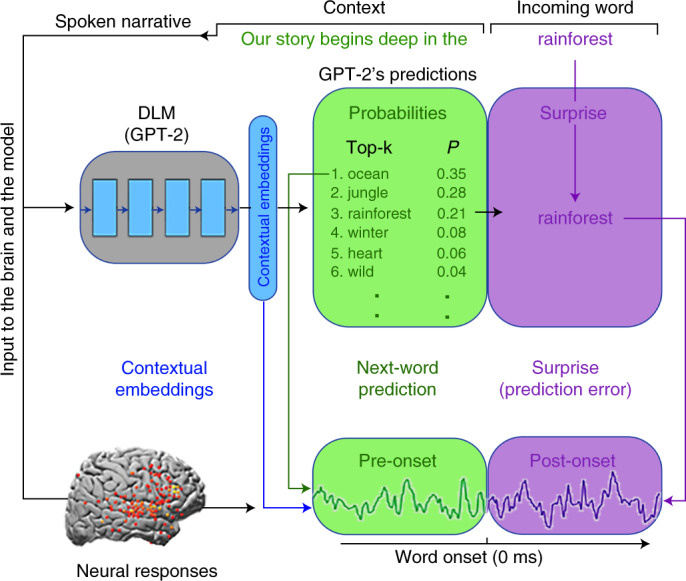
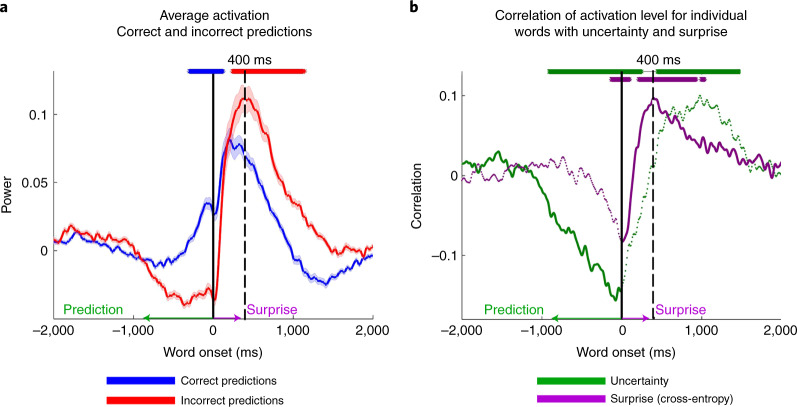
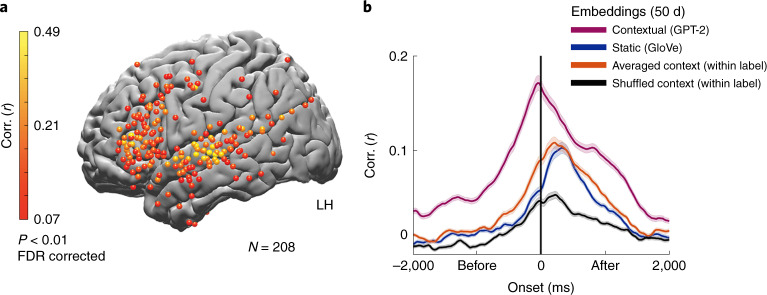
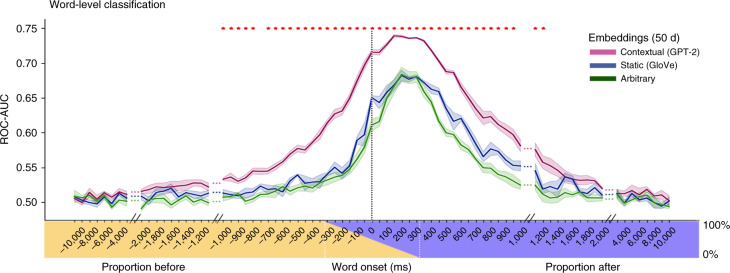
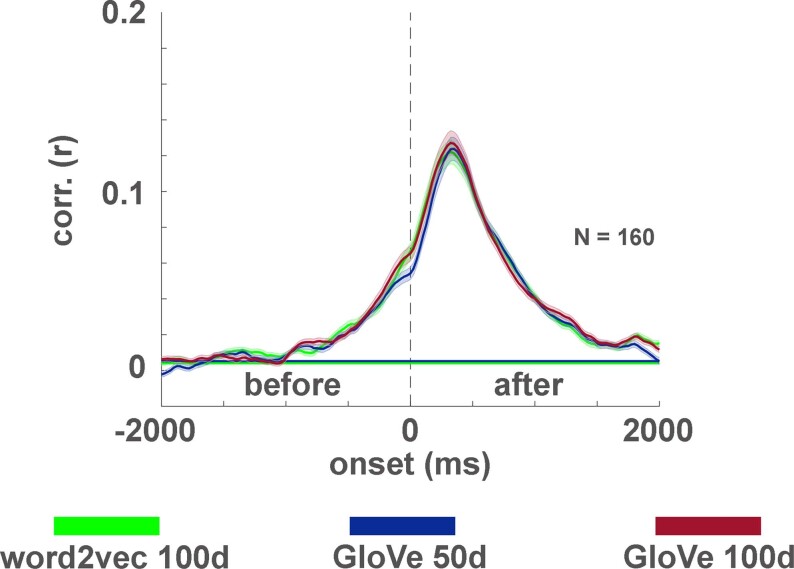
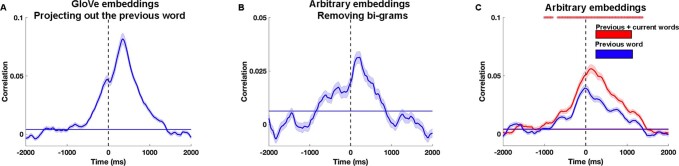
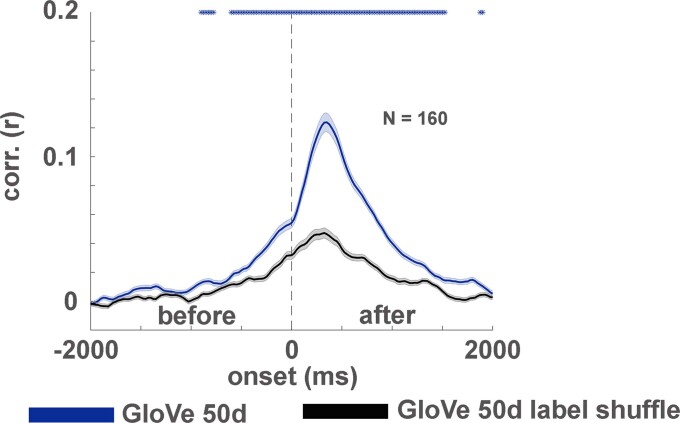
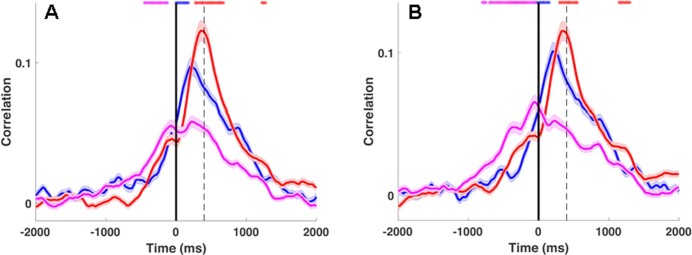
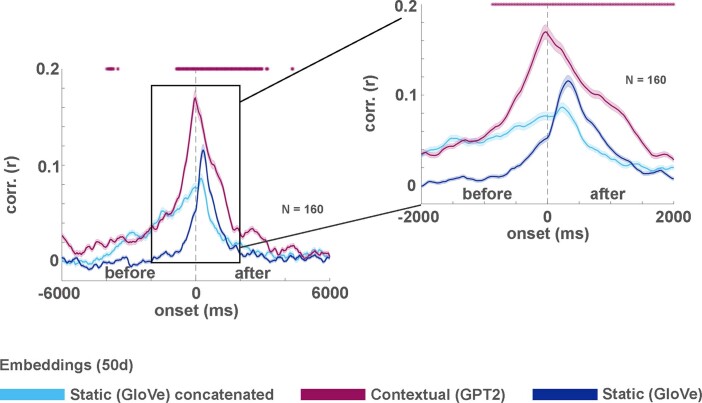
Departing from traditional linguistic models, advances in deep learning have resulted in a new type of predictive (autoregressive) deep language models (DLMs). Using a self-supervised next-word prediction task, these models generate appropriate linguistic responses in a given context. In the current study, nine participants listened to a 30-min podcast while their brain responses were recorded using electrocorticography (ECoG). We provide empirical evidence that the human brain and autoregressive DLMs share three fundamental computational principles as they process the same natural narrative: (1) both are engaged in continuous next-word prediction before word onset; (2) both match their pre-onset predictions to the incoming word to calculate post-onset surprise; (3) both rely on contextual embeddings to represent words in natural contexts. Together, our findings suggest that autoregressive DLMs provide a new and biologically feasible computational framework for studying the neural basis of language.
Overview
The claims and statistics of this paper haven’t been checked yet.
Free: it reads the open-access text and checks the first 5 claims that cite a source we can check. Create a free account to check every claim.
Integrity signals
Registry
Cites
Statistics
Figures
Verification
Claims the paper makes
The claims and statistics of this paper haven’t been checked yet.
Free: it reads the open-access text and checks the first 5 claims that cite a source we can check. Create a free account to check every claim.
Claims other papers make about this one
Each is checked against this paper’s own text: does it say what the citing paper says it does?
The cited source doesn’t support the claim as written.
In the citing paper
“Previous studies in the neural encoding literature all used LLMs that were only aware of the short-term context, i.e., where the context window size was as large as several tens of words1–10.”
From Incremental accumulation of linguistic context in artificial and biological neural networks (2025) · cites this paper as [10]
Checked by a reasoning model — may be wrong.
Experimental — accuracy not yet measuredThe cited source says what the claim attributes to it.
In the citing paper
“Studying AI can also advance psychological science (80–82).”
From Evaluating large language models in theory of mind tasks (2024) · cites this paper as [82]
The cited source says what the claim attributes to it.
In the citing paper
“Large Language Models (LLMs) have shown success in predicting neural signals associated with narrative processing”
From Incremental accumulation of linguistic context in artificial and biological neural networks (2025) · cites this paper as [10]
The cited source says what the claim attributes to it.
In the citing paper
“This was the case even though the participants in these studies were exposed to language stimuli that encompassed hundreds and even thousands of words.”
From Incremental accumulation of linguistic context in artificial and biological neural networks (2025) · cites this paper as [10]
Self-check
Percentages, sums and reported differences re-computed from the paper’s own numbers.
The self-check needs the paper’s full text.
Citations
Cites
Controlling the False Discovery Rate: A Practical and Powerful Approach to Multiple Testing
Benjamini, Y., & Hochberg, Y. (1995) · Journal of the Royal Statistical Society Series B: Statistical Methodology · doi:10.1111/j.2517-6161.1995.tb02031.x · Cited by 109,482
Glove: Global Vectors for Word Representation
Pennington, J., Socher, R., & Manning, C. (2014) · Proceedings of the 2014 Conference on Empirical Methods in Natural Language Processing (EMNLP) · doi:10.3115/v1/d14-1162 · Cited by 34,071
Language Models are Few-Shot Learners
Brown, T. B., Mann, B., Ryder, N., Subbiah, M., Kaplan, J., Dhariwal, P., Neelakantan, A., Shyam, P., Sastry, G., Askell, A., et al. (2020) · arXiv · doi:10.48550/arxiv.2005.14165 · Cited by 23,372
ASPECTS OF THE THEORY OF SYNTAX
Chomsky, N. (1964) · doi:10.21236/ad0616323 · Cited by 13,587
Oostenveld, R., Fries, P., Maris, E., & Schoffelen, J.-M. (2011) · Computational Intelligence and Neuroscience · doi:10.1155/2011/156869 · Cited by 10,323
Lewis, M., Liu, Y., Goyal, N., Ghazvininejad, M., Mohamed, A., Levy, O., Stoyanov, V., & Zettlemoyer, L. (2020) · Proceedings of the 58th Annual Meeting of the Association for Computational Linguistics · doi:10.18653/v1/2020.acl-main.703 · Cited by 8,821
Self-citationLewis, M., Liu, Y., Goyal, N., Ghazvininejad, M., Mohamed, A., Levy, O., Stoyanov, V., & Zettlemoyer, L. (2019) · arXiv · doi:10.48550/arxiv.1910.13461 · Cited by 8,816
Self-citationChomsky, N. (1957) · doi:10.1515/9783112316009 · Cited by 7,885
Whatever next? Predictive brains, situated agents, and the future of cognitive science
Clark, A. (2013) · Behavioral and Brain Sciences · doi:10.1017/s0140525x12000477 · Cited by 5,924
Reading Senseless Sentences: Brain Potentials Reflect Semantic Incongruity
Kutas, M., & Hillyard, S. A. (1980) · Science · doi:10.1126/science.7350657 · Cited by 4,888
Research works printed but not linked: 9
- Yang, Z. et al. XLNet: generalized autoregressive pretraining for language understanding. in Advances in Neural Information Processing Systems (eds. Wallach, H. et al.) 5753–5763 (Curran Associates, 2019).
- Schwartz, D. et al. Inducing brain-relevant bias in natural language processing models. in Advances in Neural Information Processing Systems (eds. Wallach, H. et al.) 14123–14133 (Curran Associates, 2019).
- Athanasiou, N., Iosif, E. & Potamianos, A. Neural activation semantic models: computational lexical semantic models of localized neural activations. in Proceedings of the 27th International Conference on Computational Linguistics 2867–2878 (Association for Computational Linguistics, 2018).
- Caucheteux, C., Gramfort, A. & King, J.-R. GPT-2’s activations predict the degree of semantic comprehension in the human brain. Preprint at bioRxiv https://doi.org/10.1101/2021.04.20.440622 (2021). · DOI
- Mikolov, T., Sutskever, I., Chen, K., Corrado, G. S. & Dean, J. Distributed Representations of Words and Phrases and their Compositionality. in Advances in Neural Information Processing Systems (eds. Burges et al.) 3111–3119 (Curran Associates, 2013).
- Toneva, M. & Wehbe, L. Interpreting and improving natural-language processing (in machines) with natural language-processing (in the brain). in 33rd Conference on Neural Information Processing Systems (2019).
- Khandelwal, U., Levy, O., Jurafsky, D., Zettlemoyer, L. & Lewis, M. Generalization through memorization: nearest neighbor language models. in International Conference on Learning Representations (2020).
- Goldberg, A. E. Explain me This: Creativity, Competition, and the Partial Productivity of Constructions (Princeton University Press, 2019). · DOI · Paper page
- Marcus, G. F. The Algebraic Mind: Integrating Connectionism and Cognitive Science (MIT Press, 2019).
Cited by
Items 101–200 of 710
Are Vision Transformers More Data Hungry Than Newborn Visual Systems?
Pandey, L., Wood, S. M. W., & Wood, J. N. (2023) · neural information processing systems · doi:10.52202/075280-3196 · Cited by 33
Language-specific representation of emotion-concept knowledge causally supports emotion inference
Li, M., Su, Y.-S., Huang, H.-Y., Cheng, J., Hu, X., Zhang, X., Wang, H., Qin, Y., Wang, X., Lindquist, K. A., et al. (2024) · iScience · doi:10.1016/j.isci.2024.111401 · Cited by 30
Qiu, Y., Liu, H., & Zhao, M. (2025) · Applied Sciences · doi:10.3390/app15010392 · Cited by 30
Hadidi, N., Feghhi, E., Song, B. H., Blank, I., & Kao, J. C. (2026) · Nature Communications · doi:10.1038/s41467-026-72253-7 · Cited by 30
Computational Modeling of Bilingual Language Learning: Current Models and Future Directions
Li, P., & Xu, Q. (2022) · Language Learning · doi:10.1111/lang.12529 · Cited by 32
Learning attentional templates for value-based decision-making
Jahn, C. I., Markov, N. T., Morea, B. M., Daw, N. D., Ebitz, R. B., & Buschman, T. J. (2024) · Cell · doi:10.1016/j.cell.2024.01.041 · Cited by 29
Visual Grounding Helps Learn Word Meanings in Low-Data Regimes
Zhuang, C., Fedorenko, E. G., & Andreas, J. (2024) · Conference of the North American Chapter of the Association for Computational Linguistics: Human Language Technologies (NAACL-HLT) · doi:10.18653/v1/2024.naacl-long.71 · Cited by 28
Improving Semantic Understanding in Speech Language Models via Brain-tuning
Moussa, O., Klakow, D., & Toneva, M. (2025) · International Conference on Learning Representations · doi:10.48550/arxiv.2410.09230 · Cited by 29
Nakagi, Y., Matsuyama, T., Koide‐Majima, N., Yamaguchi, H. Q., Kubo, R., Nishimoto, S., & Takagi, Y. (2024) · Conference on Empirical Methods in Natural Language Processing (EMNLP) · doi:10.18653/v1/2024.emnlp-main.1133 · Cited by 28
Towards large language models with human-like episodic memory
Dong, C., Lu, Q., Norman, K. A., & Michelmann, S. (2025) · Trends in Cognitive Sciences · doi:10.1016/j.tics.2025.06.016 · Cited by 28
Self-citationA Survey on Artificial Intelligence for Music Generation: Agents, Domains and PerspectivesPreprint
Hernandez-Olivan, C., Hernandez-Olivan, J., & Beltrán, J. R. (2022) · arXiv (Cornell University) · doi:10.48550/arxiv.2210.13944 · Cited by 28
Semantic Brain Decoding: from fMRI to conceptually similar image reconstruction of visual stimuliPreprint
Ferrante, M., Boccato, T., & Toschi, N. (2022) · arXiv (Cornell University) · doi:10.48550/arxiv.2212.06726 · Cited by 27
Is the Mind Inherently Predicting? Exploring Forward and Backward Looking in Language Processing
Onnis, L., Lim, A., Cheung, S., & Huettig, F. (2022) · Cognitive Science · doi:10.1111/cogs.13201 · Cited by 26
Zenni, R. D., & Andrew, N. R. (2023) · Austral Ecology · doi:10.1111/aec.13417 · Cited by 27
Inductive reasoning in minds and machines.
Bhatia, S. (2024) · Psychological Review · doi:10.1037/rev0000446 · Cited by 26
Generalized Measures of Anticipation and Responsivity in Online Language Processing
Giulianelli, M., Opedal, A., & Cotterell, R. (2024) · Findings of the Association for Computational Linguistics: EMNLP (Findings of EMNLP) · doi:10.18653/v1/2024.findings-emnlp.682 · Cited by 27
Joint processing of linguistic properties in brains and language modelsPreprint
Oota, S. R., Gupta, M., & Toneva, M. (2022) · arXiv (Cornell University) · doi:10.48550/arxiv.2212.08094 · Cited by 26
Clinical efficacy of pre-trained large language models through the lens of aphasia
Cong, Y., LaCroix, A. N., & Lee, J. (2024) · Scientific Reports · doi:10.1038/s41598-024-66576-y · Cited by 25
“These models often surpass previous NLP benchmarks, likely because they share computational principles with human language processing 9 .”
BackgroundFradkin, I., Nour, M. M., & Dolan, R. J. (2023) · Biological Psychiatry Cognitive Neuroscience and Neuroimaging · doi:10.1016/j.bpsc.2023.05.005 · Cited by 25
Crafting Interpretable Embeddings for Language Neuroscience by Asking LLMs Questions
Benara, V., Singh, C., Morris, J., Antonello, R., Stoica, I. G., Huth, A. G., & Gao, J. (2024) · neural information processing systems · doi:10.52202/079017-3944 · Cited by 26
Incremental accumulation of linguistic context in artificial and biological neural networks
Tikochinski, R., Goldstein, A., Meiri, Y., Hasson, U., & Reichart, R. (2025) · Nature Communications · doi:10.1038/s41467-025-56162-9 · Cited by 24
Self-citationShen, X., Tao, L., Chen, X., Song, S., Liu, Q., & Zhang, D. (2024) · NeuroImage · doi:10.1016/j.neuroimage.2024.120890 · Cited by 24
Semantic composition in experimental and naturalistic paradigms
Li, J., Lai, M. C.-H., & Pylkkänen, L. (2024) · Imaging Neuroscience · doi:10.1162/imag_a_00072 · Cited by 24
Disclosing Results of Tests for Covert Consciousness: A Framework for Ethical Translation
Young, M. J., Kazazian, K., Fischer, D. B., Lissak, I. A., Bodien, Y. G., & Edlow, B. L. (2024) · Neurocritical Care · doi:10.1007/s12028-023-01899-8 · Cited by 24
Fan, Y., Wang, M., Fang, F., Ding, N., & Luo, H. (2024) · Nature Human Behaviour · doi:10.1038/s41562-024-02047-8 · Cited by 24
Zeng, Y., Brown, C., Raymond, J., Byari, M., Hotz, R., & Rounsevell, M. (2025) · Earth System Dynamics · doi:10.5194/esd-16-423-2025 · Cited by 24
Russo, A. G., Ciarlo, A., Ponticorvo, S., Salle, F. D., Tedeschi, G., & Esposito, F. (2022) · Scientific Reports · doi:10.1038/s41598-022-21782-4 · Cited by 24
A systematic framework for generating novel experimental hypotheses from language modelsPreprint
Misra, K., & Kim, N. (2024) · arXiv (Cornell University) · doi:10.48550/arxiv.2408.05086 · Cited by 24
Incremental Accumulation of Linguistic Context in Artificial and Biological Neural Networks
(2024) · doi:10.1101/2024.01.15.575798 · Cited by 24
Anderson, A. J., Davis, C., & Lalor, E. C. (2024) · PLoS Computational Biology · doi:10.1371/journal.pcbi.1012537 · Cited by 23
van der Burght, C. L., Friederici, A. D., Maran, M., Papitto, G., Pyatigorskaya, E., Schroën, J. A. M., Trettenbrein, P. C., & Zaccarella, E. (2023) · Journal of Cognitive Neuroscience · doi:10.1162/jocn_a_02058 · Cited by 23
Pham, T. Q., Matsui, T., & Chikazoe, J. (2023) · Biology · doi:10.3390/biology12101330 · Cited by 23
A large-scale database of Mandarin Chinese word associations from the Small World of Words Project
Li, B., Ding, Z., Deyne, S. D., & Cai, Q. (2024) · Behavior Research Methods · doi:10.3758/s13428-024-02513-1 · Cited by 24
A population code for semantics in human hippocampus
Franch, M. C., Mickiewicz, E. A., Belanger, J. L., Joiner, B., Katlowitz, K. A., Zhu, H., Chavez, A. G., Chericoni, A., Goldman, A. M., Krishnan, V., et al. (2026) · Nature Neuroscience · doi:10.1038/s41593-026-02436-4 · Cited by 22
Language models are better than humans at next-token prediction
Shlegeris, B., Roger, F., Chan, L., & McLean, E. (2022) · Transactions on machine learning research · doi:10.48550/arxiv.2212.11281 · Cited by 22
When Language Models Fall in Love: Animacy Processing in Transformer Language Models
Hanna, M., Belinkov, Y., & Pezzelle, S. (2023) · Conference on Empirical Methods in Natural Language Processing (EMNLP) · doi:10.18653/v1/2023.emnlp-main.744 · Cited by 22
Deep speech-to-text models capture the neural basis of spontaneous speech in everyday conversationsPreprint
Goldstein, A., Wang, H., Niekerken, L., Zada, Z., Aubrey, B., Sheffer, T., Nastase, S. A., Gazula, H., Schain, M., Singh, A., et al. (2023) · bioRxiv (Cold Spring Harbor Laboratory) · doi:10.1101/2023.06.26.546557 · Cited by 23
Self-citationCrafting Interpretable Embeddings by Asking LLMs QuestionsPreprint
Benara, V., Singh, C., Morris, J. X., Antonello, R., Stoica, I. G., Huth, A. G., & Gao, J. (2024) · arXiv (Cornell University) · doi:10.48550/arxiv.2405.16714 · Cited by 22
Revealing Vision-Language Integration in the Brain with Multimodal NetworksPreprint
Subramaniam, V., Conwell, C., Wang, C., Kreiman, G., Katz, B., Cases, I., & Barbu, A. (2024) · PubMed Central · doi:10.48550/arxiv.2406.14481 · Cited by 23
Zhang, T., Zhou, S., Bai, X., Zhou, F., Zhai, Y., Long, Y., & Lu, C. (2023) · NeuroImage · doi:10.1016/j.neuroimage.2023.120400 · Cited by 21
Hong, Z., Wang, H., Zada, Z., Gazula, H., Turner, D. D., Aubrey, B., Niekerken, L., Doyle, W., Devore, S., Dugan, P. C., et al. (2024) · eLife · doi:10.7554/elife.101204.1 · Cited by 22
Self-citationWhole-brain dynamics of articulatory, acoustic and semantic speech representations
Verwoert, M., Amigó-Vega, J., Gao, Y., Ottenhoff, M. C., Kubben, P., & Herff, C. (2025) · Communications Biology · doi:10.1038/s42003-025-07862-x · Cited by 21
Schönmann, I., Szewczyk, J., de Lange, F. P., & Heilbron, M. (2026) · eLife · doi:10.7554/elife.106543 · Cited by 20
Temporal integration in human auditory cortex is predominantly yoked to absolute time
Norman-Haignere, S., Keshishian, M., Devinsky, O., Doyle, W., McKhann, G. M., Schevon, C. A., Flinker, A., & Mesgarani, N. (2025) · Nature Neuroscience · doi:10.1038/s41593-025-02060-8 · Cited by 21
Self-citationArtificial neural network modelling of the neural population code underlying mathematical operations
Nakai, T., & Nishimoto, S. (2023) · NeuroImage · doi:10.1016/j.neuroimage.2023.119980 · Cited by 20
Reanimating Images using Neural Representations of Dynamic Stimuli
Yeung, J., Luo, A. F., Sarch, G. H., Henderson, M. M., Ramanan, D., & Tarr, M. J. (2025) · IEEE Computer Society Conference on Computer Vision and Pattern Recognition/Proceedings - IEEE Computer Society Conference on Computer Vision and Pattern Recognition/Proceedings · doi:10.1109/cvpr52734.2025.00502 · Cited by 20
Algorithmic solutions, subjectivity and decision errors: a study of AI accountability
Biju, P. R., & Gayathri, O. (2024) · Digital Policy Regulation and Governance · doi:10.1108/dprg-05-2024-0090 · Cited by 20
A left-lateralized dorsolateral prefrontal network for naming
Yu, L., Dugan, P. C., Doyle, W., Devinsky, O., Friedman, D. J., & Flinker, A. (2025) · Cell Reports · doi:10.1016/j.celrep.2025.115677 · Cited by 18
Self-citationHuman cortical dynamics of auditory word form encoding
Zhang, Y., Leonard, M. K., Bhaya-Grossman, I., Gwilliams, L., & Chang, E. F. (2025) · Neuron · doi:10.1016/j.neuron.2025.10.011 · Cited by 60
Rosen, Z. P., & Dale, R. A. C. (2023) · Behavior Research Methods · doi:10.3758/s13428-023-02267-2 · Cited by 18
Sievers, B., & Thornton, M. A. (2024) · Social Cognitive and Affective Neuroscience · doi:10.1093/scan/nsae014 · Cited by 21
Beyond Markov: Transformers, memory, and attention
Parr, T., Pezzulo, G., & Friston, K. J. (2025) · Cognitive Neuroscience · doi:10.1080/17588928.2025.2484485 · Cited by 18
On convex decision regions in deep network representations
Tětková, L., Brüsch, T., Dorszewski, T., Mager, F. M., Aagaard, R. Ø., Foldager, J., Alstrøm, T. S., & Hansen, L. K. (2025) · Nature Communications · doi:10.1038/s41467-025-60809-y · Cited by 18
Distributional Semantics: Meaning Through Culture and Interaction
Contreras Kallens, P., & Christiansen, M. H. (2025) · Topics in Cognitive Science · doi:10.1111/tops.12771 · Cited by 17
“For example, LLMs are better at capturing the granularity of the brain’s semantic space (Sun et al., 2020) thanks to the inclusion of context (Goldstein et al., 2022; Jain & Huth, 2018) and the optimization of the space for in-context prediction (Caucheteux & King, 2022; Goldstein et al., 2022).”
Zada, Z., Nastase, S. A., Speer, S. P. H., Mwilambwe-Tshilobo, L., Tsoi, L., Burns, S. M., Falk, E. B., Hasson, U., & Tamir, D. (2025) · Neuron · doi:10.1016/j.neuron.2025.11.004 · Cited by 18
Self-citationConstituent-constrained word prediction during language comprehension
Zou, J., Poeppel, D., & Ding, N. (2026) · Nature Neuroscience · doi:10.1038/s41593-026-02272-6 · Cited by 17
Studying Psychosis Using Natural Language Generation: A Review of Emerging Opportunities
Palaniyappan, L. K., Benrimoh, D. A., Voppel, A., & Rocca, R. (2023) · Biological Psychiatry Cognitive Neuroscience and Neuroimaging · doi:10.1016/j.bpsc.2023.04.009 · Cited by 17
Zhang, X., Li, J., Li, Z., Hong, B., Diao, T., Ma, X., Nolte, G., Engel, A. K., & Zhang, D. (2023) · NeuroImage · doi:10.1016/j.neuroimage.2023.120404 · Cited by 17
Distinguishing AI-Generated and Human-Written Text Through Psycholinguistic Analysis
Opara, C. (2025) · Lecture notes in computer science · doi:10.1007/978-3-031-98462-4_27 · Cited by 17
Child-Directed Language Does Not Consistently Boost Syntax Learning in Language Models
Padovani, F., Jumelet, J., Matusevych, Y., & Bisazza, A. (2025) · Conference on Empirical Methods in Natural Language Processing (EMNLP) · doi:10.18653/v1/2025.emnlp-main.999 · Cited by 17
Emergence of syntax and word prediction in an artificial neural circuit of the cerebellum
Ohmae, K., & Ohmae, S. (2024) · Nature Communications · doi:10.1038/s41467-024-44801-6 · Cited by 17
A Cross-lingual Comparison of Human and Model Relative Word Importance
Morger, F., Brandl, S., Beinborn, L., & Hollenstein, N. (2022) · Research at the University of Copenhagen (University of Copenhagen) · Cited by 17
Niu, Q., Liu, J., Bi, Z., Feng, P., Peng, B., Chen, K., Li, M., Yan, L. K., Zhang, Y., Yin, C. H., et al. (2024) · arXiv · doi:10.48550/arxiv.2409.02387 · Cited by 16
Privileged representational axes in biological and artificial neural networks
Khosla, M., Williams, A. H., McDermott, J. H., & Kanwisher, N. (2023) · Conference on Cognitive Computational Neuroscience (CCN) · doi:10.32470/ccn.2023.1664-0 · Cited by 18
Do Self-Supervised Speech and Language Models Extract Similar Representations as Human Brain?
Chen, P., He, L., Fu, L., Fan, L., Chang, E. F., & Li, Y. (2024) · IEEE International Conference on Acoustics Speech and Signal Processing · doi:10.1109/icassp48485.2024.10446334 · Cited by 16
Gu, C., Nastase, S. A., Zada, Z., & Li, P. (2025) · npj Science of Learning · doi:10.1038/s41539-025-00337-y · Cited by 57
Self-citationRepresentations of smells: The next frontier for language models?
Kurfalı, M., Herman, P. A., Pierzchajlo, S., Olofsson, J., & Hörberg, T. (2025) · Cognition · doi:10.1016/j.cognition.2025.106243 · Cited by 17
Multi-modal brain encoding models for multi-modal stimuli
Oota, S. R., Pahwa, K., Marreddy, M., Singh, M., Gupta, M., & Bapi, R. S. (2025) · International Conference on Learning Representations · doi:10.48550/arxiv.2505.20027 · Cited by 16
Schema-based predictive eye movements support sequential memory encoding
Huang, J., Velarde, I., Ma, W. J., & Baldassano, C. A. (2023) · eLife · doi:10.7554/elife.82599 · Cited by 16
Long-term, multi-event surprise correlates with enhanced autobiographical memory
Antony, J. W., Dam, J. V., Massey, J., Barnett, A. J., & Bennion, K. A. (2023) · Nature Human Behaviour · doi:10.1038/s41562-023-01631-8 · Cited by 16
Antonello, R., Singh, C., Jain, S., Hsu, A. R., Guo, S., Gao, J., Yu, B., & Huth, A. G. (2024) · arXiv (Cornell University) · doi:10.48550/arxiv.2410.00812 · Cited by 16
From Thought to Action: How a Hierarchy of Neural Dynamics Supports Language ProductionPreprint
Mingfang, Lévy, J., d’Ascoli, S., Rapin, J., Alario, F. ‐., Bourdillon, P., Pinet, S., & King, J.-R. (2025) · arXiv (Cornell University) · doi:10.48550/arxiv.2502.07429 · Cited by 16
Diverse Perceptual Representations Across Visual Pathways Emerge from A Single ObjectivePreprint
Tang, Y., Gökce, A., Jedoui, K., Yamins, D. L. K., & Schrimpf, M. (2025) · bioRxiv (Cold Spring Harbor Laboratory) · doi:10.1101/2025.07.22.664908 · Cited by 16
Vezhnevets, A. S., Agapiou, J. P., Aharon, A., Ziv, R., Matyas, J., Duéñez-Guzmán, E. A., Cunningham, W. A., Osindero, S., Karmon, D., & Leibo, J. Z. (2023) · arXiv · doi:10.48550/arxiv.2312.03664 · Cited by 15
“Recent experimental (Goldstein et al., 2022; Schrimpf et al., 2020) and theoretical (Linzen and Baroni, 2021; McClelland et al., 2020) work in computational cognitive (neuro-)science has posited a deep relationship between the operations of LLM models and how language is processed by the human…”
BackgroundStructural oppression and AI: A systematic review of data policy frameworks in India
Biju, P. R., & Gayathri, O. (2025) · Technological Forecasting and Social Change · doi:10.1016/j.techfore.2025.124415 · Cited by 15
Semantic Reconstruction of Continuous Language from Meg Signals
Wang, B., Xu, X., Zhang, L., Xiao, B., Wu, X. H., & Chen, J. (2024) · IEEE International Conference on Acoustics Speech and Signal Processing · doi:10.1109/icassp48485.2024.10448281 · Cited by 15
Ferrante, M., Boccato, T., Passamonti, L., & Toschi, N. (2024) · Journal of Neural Engineering · doi:10.1088/1741-2552/ad593c · Cited by 15
Firdaus, A. S. B., Aksar, I. A., Gong, J., Abidin, M. Z. Z., Baloch, H. U. R., & Gomez, E. (2025) · International Journal of Qualitative Methods · doi:10.1177/16094069241309274 · Cited by 15
Conversational content is organized across multiple timescales in the brain
Yamashita, M., Kubo, R., & Nishimoto, S. (2025) · Nature Human Behaviour · doi:10.1038/s41562-025-02231-4 · Cited by 15
Vision-Language Integration in Multimodal Video Transformers (Partially) Aligns with the BrainPreprint
Dong, D. T., & Toneva, M. (2023) · arXiv (Cornell University) · doi:10.48550/arxiv.2311.07766 · Cited by 15
Tikochinski, R., Goldstein, A., Yeshurun, Y., Hasson, U., & Reichart, R. (2023) · Cerebral Cortex · doi:10.1093/cercor/bhad082 · Cited by 14
Self-citationDeciphering language disturbances in schizophrenia: A study using fine-tuned language models
Li, R., Cao, M., Fu, D., Wei, W., Wang, D., Yuan, Z., Hu, R., & Deng, W. (2024) · Schizophrenia Research · doi:10.1016/j.schres.2024.07.016 · Cited by 14
Computational Architecture of Speech Comprehension in the Human Brain
Gwilliams, L., Bhaya-Grossman, I., Zhang, Y., Scott, T. L., Harper, S., & Levy, D. F. (2024) · Annual Review of Linguistics · doi:10.1146/annurev-linguistics-031120-111245 · Cited by 15
Sun, K., & Wang, R. (2025) · Cognitive Science · doi:10.1111/cogs.70092 · Cited by 14
Osorio, S., Straube, B., Meyer, L., & He, Y. (2023) · Language Cognition and Neuroscience · doi:10.1080/23273798.2023.2295499 · Cited by 14
Raykov, P., Keidel, J. L., Oakhill, J. V., & Bird, C. M. (2022) · eNeuro · doi:10.1523/eneuro.0116-22.2022 · Cited by 14
Brain-Like Language Processing via a Shallow Untrained Multihead Attention NetworkPreprint
AlKhamissi, B., Tuckute, G., Bosselut, A., & Schrimpf, M. (2024) · arXiv (Cornell University) · doi:10.48550/arxiv.2406.15109 · Cited by 14
DERCo: A Dataset for Human Behaviour in Reading Comprehension Using EEG
Quach, B. M., Gurrin, C. G., & Healy, G. F. (2024) · Scientific Data · doi:10.1038/s41597-024-03915-8 · Cited by 14
AI shares emotion with humans across languages and culturesPreprint
Xiangshu, W. U., Wang, H., Yan, Z., Tang, X., Xu, P., Siok, W. T., Li, P., Gao, J., Lyu, B., & Qin, L. (2025) · arXiv (Cornell University) · doi:10.48550/arxiv.2506.13978 · Cited by 14
Sohoglu, E., Beckers, L., & Davis, M. H. (2024) · Nature Communications · doi:10.1038/s41467-024-53782-5 · Cited by 13
Active use of latent tree-structured sentence representation in humans and large language models
Liu, W., Xiang, M., & Ding, N. (2025) · Nature Human Behaviour · doi:10.1038/s41562-025-02297-0 · Cited by 13
Aligning brains into a shared space improves their alignment with large language models
Bhattacharjee, A., Zada, Z., Wang, H., Aubrey, B., Doyle, W., Dugan, P. C., Friedman, D. J., Devinsky, O., Flinker, A., Ramadge, P. J., et al. (2025) · Nature Computational Science · doi:10.1038/s43588-025-00900-y · Cited by 14
Self-citationFalse perspectives on human language: Why statistics needs linguistics
Greco, M., Cometa, A., Artoni, F., Frank, R., & Moro, A. (2023) · Frontiers in Language Sciences · doi:10.3389/flang.2023.1178932 · Cited by 13
Finding structure during incremental speech comprehension
Lyu, B., Marslen‐Wilson, W. D., Fang, Y., & TYLER, L. K. (2024) · eLife · doi:10.7554/elife.89311 · Cited by 14
Modeling Brain Representations of Words' Concreteness in Context Using GPT‐2 and Human Ratings
Bruera, A., Tao, Y., Anderson, A. J., Çokal, D., Haber, J., & Poesio, M. (2023) · Cognitive Science · doi:10.1111/cogs.13388 · Cited by 13
Explanations of Large Language Models Explain Language Representations in the BrainPreprint
Rahimi, M., Daliri, M. R., & Yaghoobzadeh, Y. (2025) · arXiv (Cornell University) · doi:10.48550/arxiv.2502.14671 · Cited by 13
Brains and language models converge on a shared conceptual space across different languagesPreprint
Zada, Z., Nastase, S. A., Li, J., & Hasson, U. (2025) · PubMed Central · doi:10.48550/arxiv.2506.20489 · Cited by 13
Self-citationBetz, G., & Richardson, K. (2023) · PLoS ONE · doi:10.1371/journal.pone.0281372 · Cited by 12
Muralidharan, J., & Thomas, T. (2024) · Journal of the Association of Physicians of India · doi:10.59556/japi.72.0518 · Cited by 12
Zhang, Y., Wang, S., Lin, N., Fan, L., & Zong, C. (2025) · NeuroImage · doi:10.1016/j.neuroimage.2025.121096 · Cited by 12
Metadata
- Authors
- Goldstein, A., Zada, Z., Buchnik, E., Schain, M., Price, A., Aubrey, B., Nastase, S. A., Feder, A., Emanuel, D., Cohen, A., Jansen, A., Gazula, H., Choe, G., Rao, A., Kim, C., Casto, C., Fanda, L., Doyle, W., Friedman, D., Dugan, P., Melloni, L., Reichart, R., Devore, S., Flinker, A., Hasenfratz, L., Levy, O., Hassidim, A., Brenner, M., Matias, Y., Norman, K. A., Devinsky, O., & Hasson, U.
- Affiliations
- Google (United States) (US)
- Princeton University (US)
- New York University (US)
- Technion – Israel Institute of Technology (IL)
- Tel Aviv University (IL)
- Corresponding author
- Goldstein, Ariel
- ORCID
- Goldstein, Ariel
- Zada, Zaid
- Price, Amy
- Nastase, Samuel A.
- Feder, Amir
- Cohen, Alon
- Gazula, Harshvardhan
- Choe, Gina
- Kim, Catherine
- Casto, Colton
- Fanda, Lora
- Doyle, Werner
- Friedman, Daniel
- Dugan, Patricia
- Melloni, Lucia
- Reichart, Roi
- Devore, Sasha
- Flinker, Adeen
- Hasenfratz, Liat
- Levy, Omer
- Hassidim, Avinatan
- Brenner, Michael
- Matias, Yossi
- Norman, Kenneth A.
- Devinsky, Orrin
- Hasson, Uri
- Venue
- Nature Neuroscience
- Published
- 2022-03
- Volume
- 25
- Issue
- 3
- Pages
- 369-380
- ISSN
- 1097-6256 (ISSN-L)
- 1546-1726
- PMC
- PMC8904253
- OpenAlex
- W4220949944
- Cited by
- 447
- References
- 62
- Citations by year
- 2026: 97 · 2025: 123 · 2024: 111 · 2023: 94 · 2022: 21
- FWCI
- 44.98
- Type
- journal article
- Language
- en
- Open access
- hybrid
- doi.org
- Licence
- cc-by
- creativecommons.org/licenses/by/4.0 (tdm)
- creativecommons.org/licenses/by/4.0 (vor, 6 d)
- Locations
- Nature Neuroscience (publishedVersion, cc-by)
- PubMed Central (publishedVersion, cc-by)
- PubMed (publishedVersion)
- Funders
- Finding A Cure for Epilepsy and Seizures
- National Institutes of Health
- National Institute of Mental Health (R01MH112566)
- National Institute of Neurological Disorders and Stroke (R01NS109367)
- Eunice Kennedy Shriver National Institute of Child Health and Human Development (DP1HD091948)
- Topics
- Life Sciences › Neuroscience › Cognitive Neuroscience › Neurobiology of Language and Bilingualism
- Social Sciences › Psychology › Developmental and Educational Psychology › Reading and Literacy Development
- Social Sciences › Psychology › Developmental and Educational Psychology › Language Development and Disorders
- Keywords
- deep language models, autoregressive language models, language processing, next-word prediction, contextual embeddings, neural basis of language, electrocorticography, narrative comprehension
- MeSH terms
- Brain, Humans, Language, Linguistics
About these checks
Registry, retraction, Cites and statistics results are computed, not judged, with one exception: a printed reference that no index lists is read once by a model before it counts as a citation error. Claims are extracted by a model and kept only when their quote appears verbatim in the text; each cited source is then checked, with a model’s help, for whether it says what the claim relies on. Those verdicts can be wrong — read the claim’s quote and the cited source before relying on one.
Statistics and arithmetic are recomputed, not judged.
Confidence bands are shown only for fields calibrated on our annotated test set. None is calibrated yet, so no band is shown.
What counts as a claim ›How we measure confidence ›How we check this ›
Are you an author, or do you see a problem with this page? Request a review
Data sources
Bibliographic data: Semantic Scholar, OpenAlex, Crossref.
Contains information from the Semantic Scholar Academic Graph Datasets, made available under the ODC Attribution License (ODC-BY 1.0).
Semantic Scholar’s data is described in: Kinney, R., et al. (2023). The Semantic Scholar Open Data Platform. arXiv:2301.10140.
