

Reduced neural feedback signaling despite robust neuron and gamma auditory responses during human sleep
Open accessPublished version of a preprint
The DOI matches its Crossref record; 93 of the 93 references it cites were found in a registry or an index.
Abstract
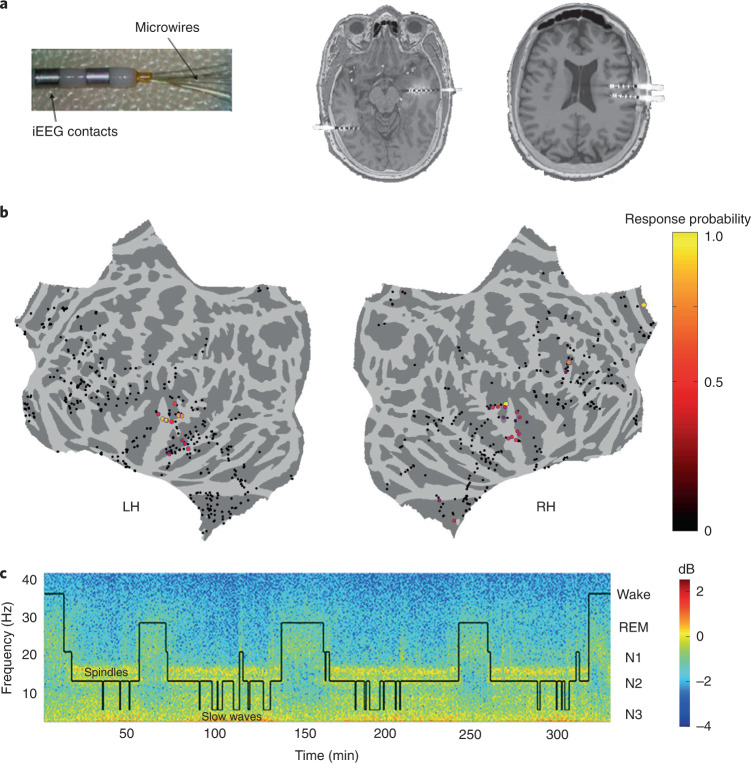
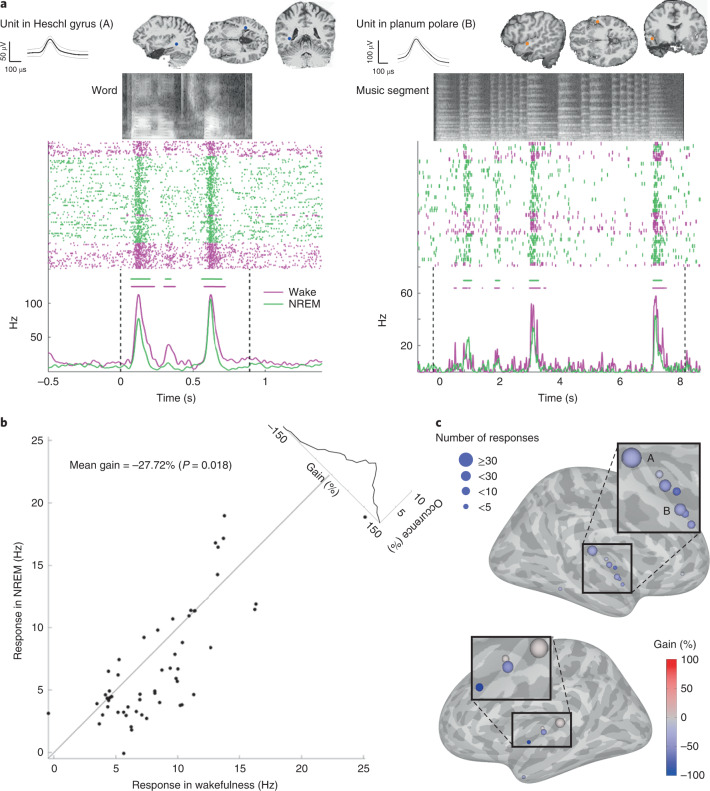
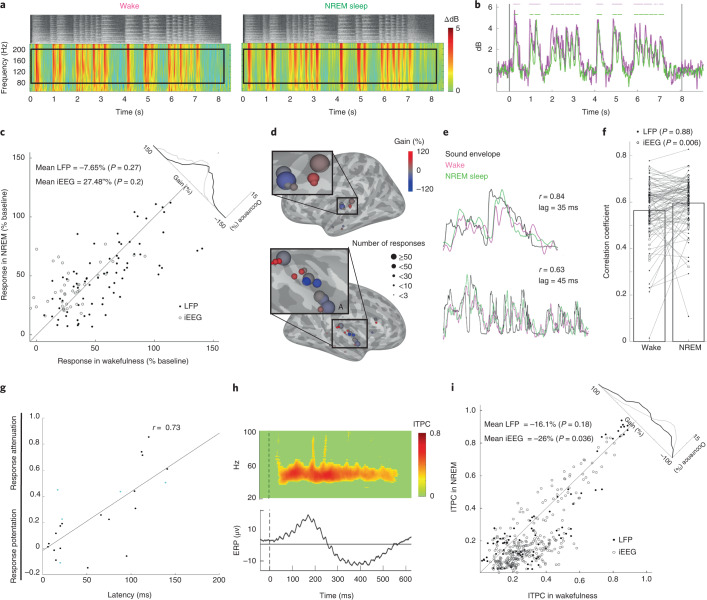
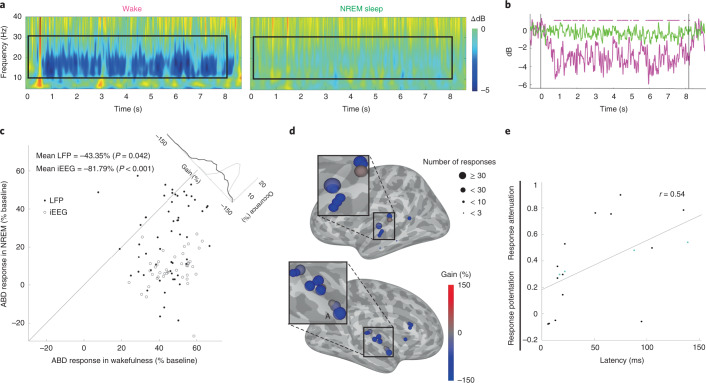
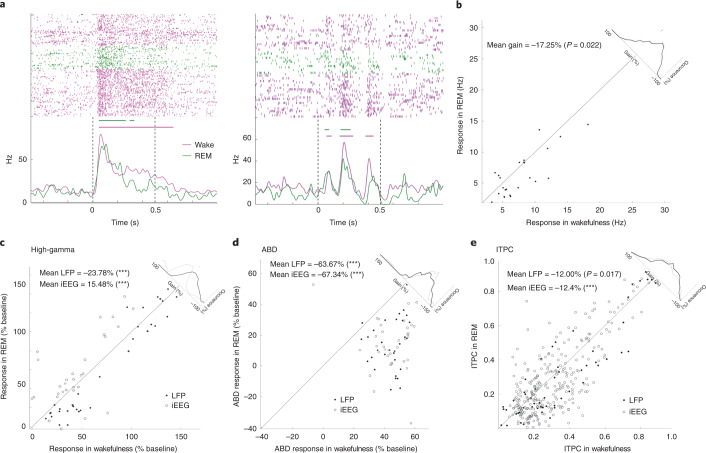
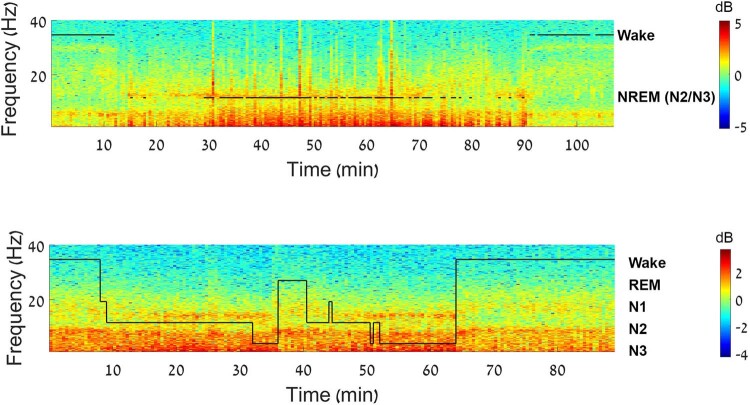
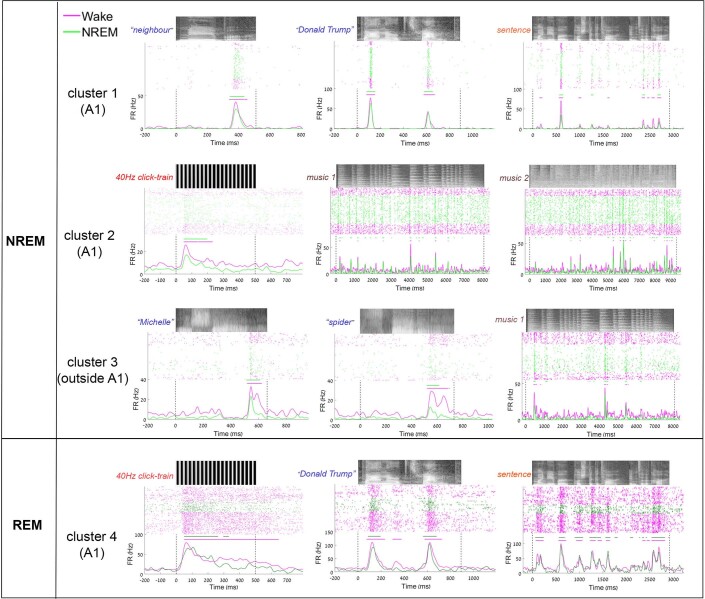
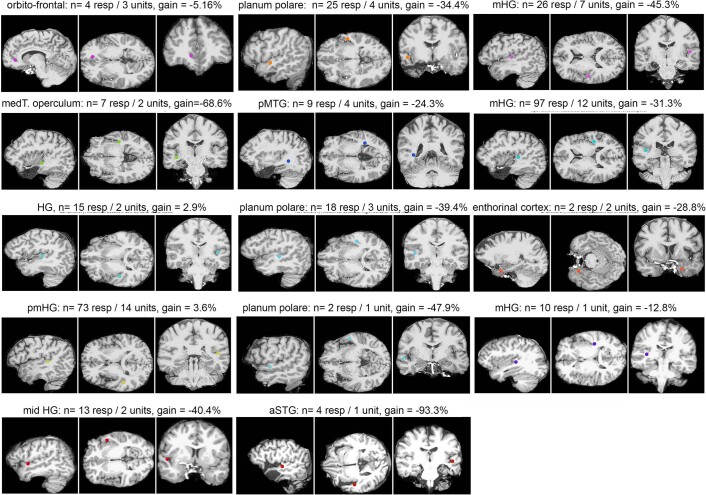
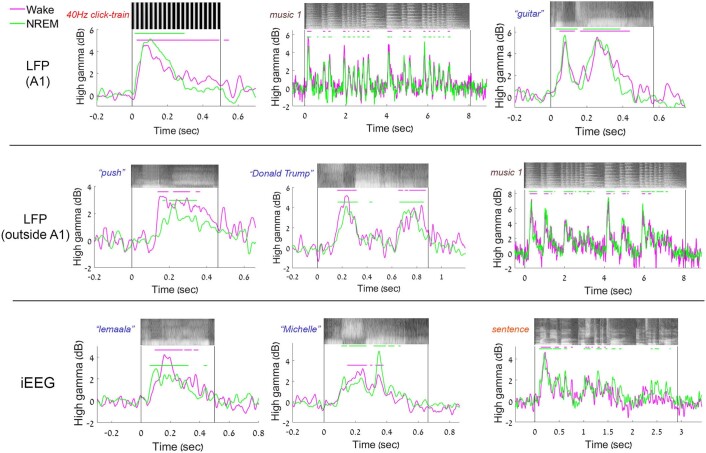
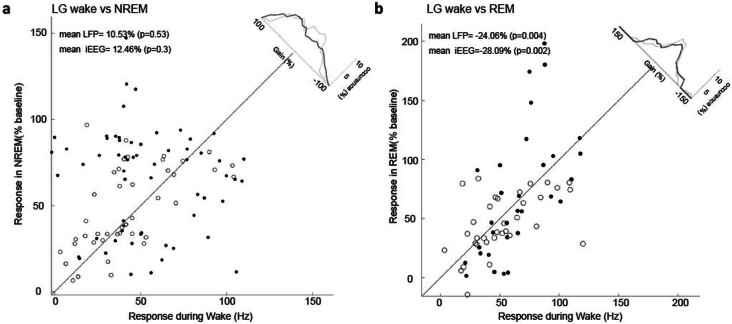
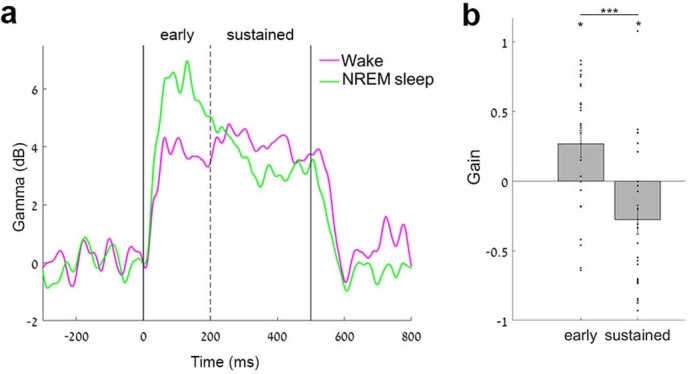
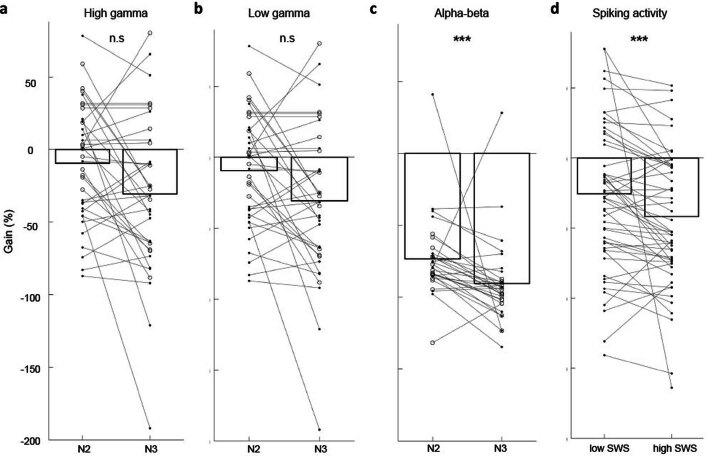
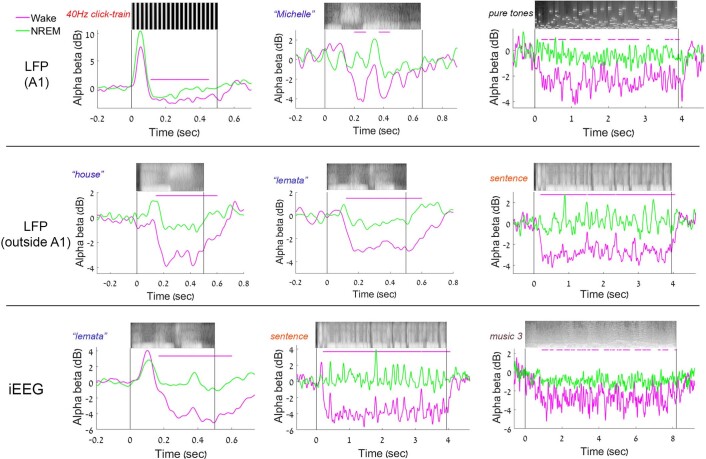
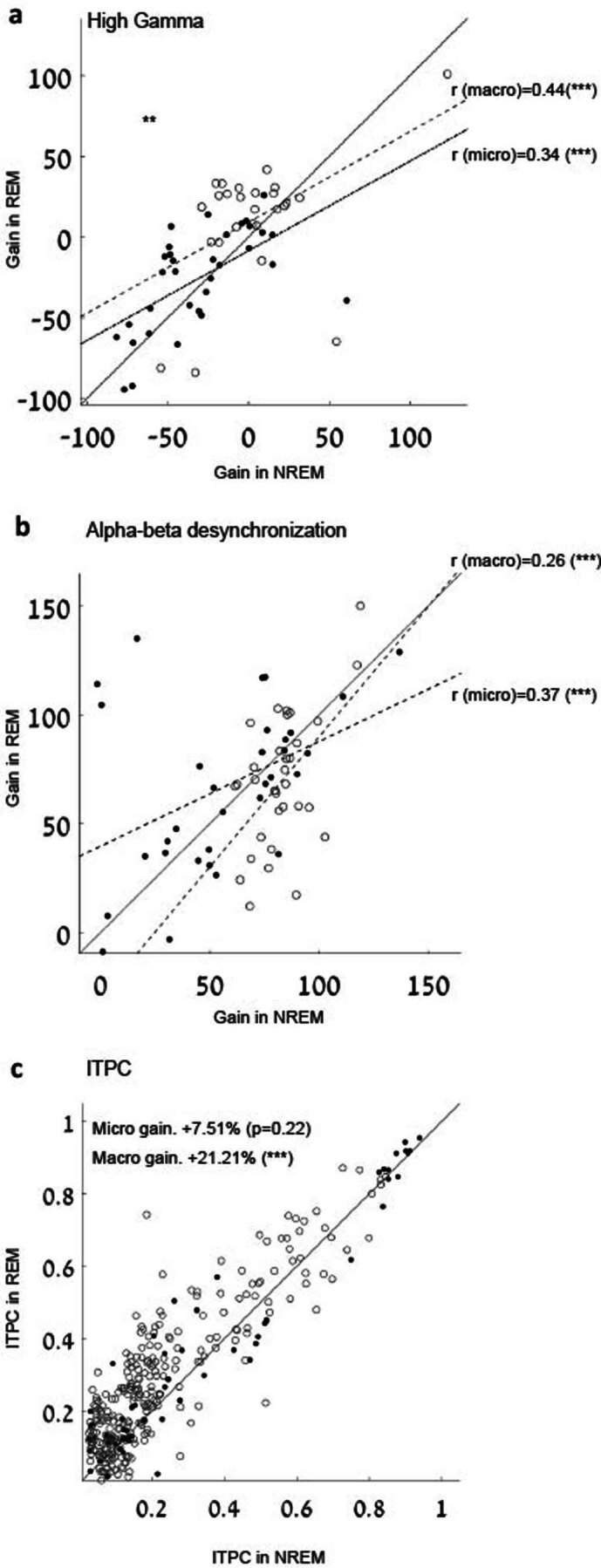
During sleep, sensory stimuli rarely trigger a behavioral response or conscious perception. However, it remains unclear whether sleep inhibits specific aspects of sensory processing, such as feedforward or feedback signaling. Here, we presented auditory stimuli (for example, click-trains, words, music) during wakefulness and sleep in patients with epilepsy, while recording neuronal spiking, microwire local field potentials, intracranial electroencephalogram and polysomnography. Auditory stimuli induced robust and selective spiking and high-gamma (80–200 Hz) power responses across the lateral temporal lobe during both non-rapid eye movement (NREM) and rapid eye movement (REM) sleep. Sleep only moderately attenuated response magnitudes, mainly affecting late responses beyond early auditory cortex and entrainment to rapid click-trains in NREM sleep. By contrast, auditory-induced alpha–beta (10–30 Hz) desynchronization (that is, decreased power), prevalent in wakefulness, was strongly reduced in sleep. Thus, extensive auditory responses persist during sleep whereas alpha–beta power decrease, likely reflecting neural feedback processes, is deficient. More broadly, our findings suggest that feedback signaling is key to conscious sensory processing.
Overview
The claims and statistics of this paper haven’t been checked yet.
Free: it reads the open-access text and checks the first 5 claims that cite a source we can check. Create a free account to check every claim.
Integrity signals
Registry
Cites
Statistics
Figures
Verification
Claims the paper makes
The claims and statistics of this paper haven’t been checked yet.
Free: it reads the open-access text and checks the first 5 claims that cite a source we can check. Create a free account to check every claim.
Claims other papers make about this one
Each is checked against this paper’s own text: does it say what the citing paper says it does?
The check wasn’t confident either way, so it gives no verdict — never disputed.
In the citing paper
“Lucid dreamers are also able to partially connect with the environment189, responding to prearranged stimuli with prearranged motor responses (typically movements of the eyes, which are not paralyzed190) and they can remember what they experienced.”
From Consciousness and sleep (2024) · cites this paper as [189]
Experimental — accuracy not yet measured
Self-check
Percentages, sums and reported differences re-computed from the paper’s own numbers.
The self-check needs the paper’s full text.
Citations
Cites
Fitting Linear Mixed-Effects Models Using lme4
Bates, D., Mächler, M., Bolker, B., & Walker, S. (2015) · Journal of Statistical Software · doi:10.18637/jss.v067.i01 · Cited by 86,835
lmerTest Package: Tests in Linear Mixed Effects Models
Kuznetsova, A., Brockhoff, P. B., & Christensen, R. H. B. (2017) · Journal of Statistical Software · doi:10.18637/jss.v082.i13 · Cited by 24,346
Jenkinson, M., Bannister, P., Brady, M., & Smith, S. (2002) · NeuroImage · doi:10.1006/nimg.2002.1132 · Cited by 11,888
The control of the false discovery rate in multiple testing under dependency
Benjamini, Y., & Yekutieli, D. (2001) · The Annals of Statistics · doi:10.1214/aos/1013699998 · Cited by 10,490
Random effects structure for confirmatory hypothesis testing: Keep it maximal
Barr, D. J., Levy, R., Scheepers, C., & Tily, H. J. (2013) · Journal of Memory and Language · doi:10.1016/j.jml.2012.11.001 · Cited by 10,328
Fischl, B. (2012) · NeuroImage · doi:10.1016/j.neuroimage.2012.01.021 · Cited by 9,526
Distributed hierarchical processing in the primate cerebral cortex
Felleman, D. J., & Van Essen, D. C. (1991) · Cerebral Cortex · doi:10.1093/cercor/1.1.1 · Cited by 7,783
Preface: Cerebral Cortex Has Come of Age
Goldman-Rakic, P. S., & Rakic, P. (1991) · Cerebral Cortex · doi:10.1093/cercor/1.1.1-a · Cited by 3,393
The distinct modes of vision offered by feedforward and recurrent processing
Lamme, V. A. F., & Roelfsema, P. R. (2000) · Trends in Neurosciences · doi:10.1016/s0166-2236(00)01657-x · Cited by 2,338
Neural correlates of consciousness: progress and problems
Koch, C., Massimini, M., Boly, M., & Tononi, G. (2016) · Nature Reviews Neuroscience · doi:10.1038/nrn.2016.22 · Cited by 1,600
Visual areas exert feedforward and feedback influences through distinct frequency channels
Bastos, A. M., Vezoli, J., Bosman, C. A., Schoffelen, J.-M., Oostenveld, R., Dowdall, J. R., De Weerd, P., Kennedy, H., & Fries, P. (2015) · Neuron · doi:10.1016/j.neuron.2014.12.018 · Cited by 1,320
Odor cues during slow-wave sleep prompt declarative memory consolidation
Rasch, B., Büchel, C., Gais, S., & Born, J. (2007) · Science · doi:10.1126/science.1138581 · Cited by 1,181
Event-related cortical desynchronization detected by power measurements of scalp EEG
Pfurtscheller, G., & Aranibar, A. (1977) · Electroencephalography and Clinical Neurophysiology · doi:10.1016/0013-4694(77)90235-8 · Cited by 1,108
Regional Slow Waves and Spindles in Human Sleep
Nir, Y., Staba, R. J., Andrillon, T., Vyazovskiy, V. V., Cirelli, C., Fried, I., & Tononi, G. (2011) · Neuron · doi:10.1016/j.neuron.2011.02.043 · Cited by 924
Self-citationvan Kerkoerle, T., Self, M. W., Dagnino, B., Gariel-Mathis, M.-A., Poort, J., van der Togt, C., & Roelfsema, P. R. (2014) · Proceedings of the National Academy of Sciences · doi:10.1073/pnas.1402773111 · Cited by 918
Animal sleep: A review of sleep duration across phylogeny
Campbell, S. S., & Tobler, I. (1984) · Neuroscience & Biobehavioral Reviews · doi:10.1016/0149-7634(84)90054-x · Cited by 829
Neural correlates of consciousness in humans
Rees, G., Kreiman, G., & Koch, C. (2002) · Nature Reviews Neuroscience · doi:10.1038/nrn783 · Cited by 742
Haegens, S., Nácher, V., Luna, R., Romo, R., & Jensen, O. (2011) · Proceedings of the National Academy of Sciences · doi:10.1073/pnas.1117190108 · Cited by 738
Top-down processing mediated by interareal synchronization
von Stein, A., Chiang, C., & König, P. (2000) · Proceedings of the National Academy of Sciences · doi:10.1073/pnas.97.26.14748 · Cited by 729
Michalareas, G., Vezoli, J., van Pelt, S., Schoffelen, J.-M., Kennedy, H., & Fries, P. (2016) · Neuron · doi:10.1016/j.neuron.2015.12.018 · Cited by 696
Cirelli, C., & Tononi, G. (2008) · PLoS Biology · doi:10.1371/journal.pbio.0060216 · Cited by 646
Nir, Y., Fisch, L., Mukamel, R., Gelbard-Sagiv, H., Arieli, A., Fried, I., & Malach, R. (2007) · Current Biology · doi:10.1016/j.cub.2007.06.066 · Cited by 621
Self-citationLaminar differences in gamma and alpha coherence in the ventral stream
Buffalo, E. A., Fries, P., Landman, R., Buschman, T. J., & Desimone, R. (2011) · Proceedings of the National Academy of Sciences · doi:10.1073/pnas.1011284108 · Cited by 606
Dreaming and the brain: from phenomenology to neurophysiology
Nir, Y., & Tononi, G. (2010) · Trends in Cognitive Sciences · doi:10.1016/j.tics.2009.12.001 · Cited by 595
Self-citationBoly, M., Massimini, M., Tsuchiya, N., Postle, B. R., Koch, C., & Tononi, G. (2017) · The Journal of Neuroscience · doi:10.1523/jneurosci.3218-16.2017 · Cited by 557
Fast modulation of visual perception by basal forebrain cholinergic neurons
Pinto, L., Goard, M. J., Estandian, D., Xu, M., Kwan, A. C., Lee, S.-H., Harrison, T. C., Feng, G., & Dan, Y. (2013) · Nature Neuroscience · doi:10.1038/nn.3552 · Cited by 529
Preserved Feedforward But Impaired Top-Down Processes in the Vegetative State
Boly, M., Garrido, M. I., Gosseries, O., Bruno, M.-A., Boveroux, P., Schnakers, C., Massimini, M., Litvak, V., Laureys, S., & Friston, K. (2011) · Science · doi:10.1126/science.1202043 · Cited by 498
Disruption of frontal-parietal communication by ketamine, propofol, and sevoflurane
Lee, U., Ku, S., Noh, G., Baek, S., Choi, B., & Mashour, G. A. (2013) · Anesthesiology · doi:10.1097/aln.0b013e31829103f5 · Cited by 426
Horvath, J. C., Carter, O., & Forte, J. D. (2014) · Frontiers in Systems Neuroscience · doi:10.3389/fnsys.2014.00002 · Cited by 414
Siegel, J. M. (2008) · Trends in Neurosciences · doi:10.1016/j.tins.2008.02.001 · Cited by 403
Auditory Processing across the Sleep-Wake Cycle
Portas, C. M., Krakow, K., Allen, P., Josephs, O., Armony, J. L., & Frith, C. D. (2000) · Neuron · doi:10.1016/s0896-6273(00)00169-0 · Cited by 392
Sensory gating mechanisms of the thalamus
McCormick, D. A., & Bal, T. (1994) · Current Opinion in Neurobiology · doi:10.1016/0959-4388(94)90056-6 · Cited by 392
A cortical-hippocampal-cortical loop of information processing during memory consolidation
Rothschild, G., Eban, E., & Frank, L. M. (2017) · Nature Neuroscience · doi:10.1038/nn.4457 · Cited by 387
Miller, K. J., Zanos, S., Fetz, E. E., den Nijs, M., & Ojemann, J. G. (2009) · The Journal of Neuroscience · doi:10.1523/jneurosci.5506-08.2009 · Cited by 350
General anesthesia decouples cortical pyramidal neurons
Suzuki, M., & Larkum, M. E. (2020) · Cell · doi:10.1016/j.cell.2020.01.024 · Cited by 348
A systematic framework for functional connectivity measures
Wang, H. E., Bénar, C. G., Quilichini, P. P., Friston, K. J., Jirsa, V. K., & Bernard, C. (2014) · Frontiers in Neuroscience · doi:10.3389/fnins.2014.00405 · Cited by 327
A differential brain response to the subject's own name persists during sleep
Perrin, F. (1999) · Clinical Neurophysiology · doi:10.1016/s1388-2457(99)00177-7 · Cited by 310
BioImage Suite: An integrated medical image analysis suite: An update
Papademetris, X., Jackowski, M., Rajeevan, N., DiStasio, M., Okuda, H., Constable, R. T., & Staib, L. (2006) · The Insight Journal · doi:10.54294/2g80r4 · Cited by 298
Fontolan, L., Morillon, B., Liegeois-Chauvel, C., & Giraud, A.-L. (2014) · Nature Communications · doi:10.1038/ncomms5694 · Cited by 276
Fisch, L., Privman, E., Ramot, M., Harel, M., Nir, Y., Kipervasser, S., Andelman, F., Neufeld, M. Y., Kramer, U., Fried, I., et al. (2009) · Neuron · doi:10.1016/j.neuron.2009.11.001 · Cited by 275
Self-citationThe Jellyfish Cassiopea Exhibits a Sleep-like State
Nath, R. D., Bedbrook, C. N., Abrams, M. J., Basinger, T., Bois, J. S., Prober, D. A., Sternberg, P. W., Gradinaru, V., & Goentoro, L. (2017) · Current Biology · doi:10.1016/j.cub.2017.08.014 · Cited by 260
Exploring phylogeny to find the function of sleep
Anafi, R. C., Kayser, M. S., & Raizen, D. M. (2019) · Nature Reviews Neuroscience · doi:10.1038/s41583-018-0098-9 · Cited by 259
Locus coeruleus norepinephrine activity mediates sensory-evoked awakenings from sleep
Hayat, H., Regev, N., Matosevich, N., Sales, A., Paredes-Rodriguez, E., Krom, A. J., Bergman, L., Li, Y., Lavigne, M., Kremer, E. J., et al. (2020) · Science Advances · doi:10.1126/sciadv.aaz4232 · Cited by 252
Self-citationGroppe, D. M., Bickel, S., Dykstra, A. R., Wang, X., Mégevand, P., Mercier, M. R., Lado, F. A., Mehta, A. D., & Honey, C. J. (2017) · Journal of Neuroscience Methods · doi:10.1016/j.jneumeth.2017.01.022 · Cited by 245
Disruption of hierarchical predictive coding during sleep
Strauss, M., Sitt, J. D., King, J.-R., Elbaz, M., Azizi, L., Buiatti, M., Naccache, L., van Wassenhove, V., & Dehaene, S. (2015) · Proceedings of the National Academy of Sciences · doi:10.1073/pnas.1501026112 · Cited by 244
Humans can learn new information during sleep
Arzi, A., Shedlesky, L., Ben-Shaul, M., Nasser, K., Oksenberg, A., Hairston, I. S., & Sobel, N. (2012) · Nature Neuroscience · doi:10.1038/nn.3193 · Cited by 241
An anatomical and functional topography of human auditory cortical areas
Moerel, M., De Martino, F., & Formisano, E. (2014) · Frontiers in Neuroscience · doi:10.3389/fnins.2014.00225 · Cited by 234
Spatiotemporal dynamics of word processing in the human brain
Canolty, R. T. (2007) · Frontiers in Neuroscience · doi:10.3389/neuro.01.1.1.014.2007 · Cited by 226
Fried, I., Wilson, C. L., Maidment, N. T., Engel, J., Behnke, E., Fields, T. A., Macdonald, K. A., Morrow, J. W., & Ackerson, L. (1999) · Journal of Neurosurgery · doi:10.3171/jns.1999.91.4.0697 · Cited by 222
Self-citationBidirectional prefrontal-hippocampal dynamics organize information transfer during sleep in humans
Helfrich, R. F., Lendner, J. D., Mander, B. A., Guillen, H., Paff, M., Mnatsakanyan, L., Vadera, S., Walker, M. P., Lin, J. J., & Knight, R. T. (2019) · Nature Communications · doi:10.1038/s41467-019-11444-x · Cited by 222
A novel and fully automatic spike-sorting implementation with variable number of features
Chaure, F. J., Rey, H. G., & Quian Quiroga, R. (2018) · Journal of Neurophysiology · doi:10.1152/jn.00339.2018 · Cited by 222
Podvalny, E., Noy, N., Harel, M., Bickel, S., Chechik, G., Schroeder, C. E., Mehta, A. D., Tsodyks, M., & Malach, R. (2015) · Journal of Neurophysiology · doi:10.1152/jn.00943.2014 · Cited by 214
Bifurcation in brain dynamics reveals a signature of conscious processing independent of report
Sergent, C., Corazzol, M., Labouret, G., Stockart, F., Wexler, M., King, J.-R., Meyniel, F., & Pressnitzer, D. (2021) · Nature Communications · doi:10.1038/s41467-021-21393-z · Cited by 200
Selective neuronal lapses precede human cognitive lapses following sleep deprivation
Nir, Y., Andrillon, T., Marmelshtein, A., Suthana, N., Cirelli, C., Tononi, G., & Fried, I. (2017) · Nature Medicine · doi:10.1038/nm.4433 · Cited by 197
Self-citationNeural Markers of Responsiveness to the Environment in Human Sleep
Andrillon, T., Poulsen, A. T., Hansen, L. K., Léger, D., & Kouider, S. (2016) · The Journal of Neuroscience · doi:10.1523/jneurosci.0902-16.2016 · Cited by 155
Edwards, E., Soltani, M., Kim, W., Dalal, S. S., Nagarajan, S. S., Berger, M. S., & Knight, R. T. (2009) · Journal of Neurophysiology · doi:10.1152/jn.90954.2008 · Cited by 153
State-Dependent Population Coding in Primary Auditory Cortex
Pachitariu, M., Lyamzin, D. R., Sahani, M., & Lesica, N. A. (2015) · The Journal of Neuroscience · doi:10.1523/jneurosci.3318-14.2015 · Cited by 142
Top-down mechanisms of anesthetic-induced unconsciousness
Mashour, G. A. (2014) · Frontiers in Systems Neuroscience · doi:10.3389/fnsys.2014.00115 · Cited by 134
Noradrenaline Modulates Visual Perception and Late Visually Evoked Activity
Gelbard-Sagiv, H., Magidov, E., Sharon, H., Hendler, T., & Nir, Y. (2018) · Current Biology · doi:10.1016/j.cub.2018.05.051 · Cited by 134
Self-citationNeural representations during sleep: From sensory processing to memory traces
Hennevin, E., Huetz, C., & Edeline, J.-M. (2007) · Neurobiology of Learning and Memory · doi:10.1016/j.nlm.2006.10.006 · Cited by 133
Mashour, G. A., & Hudetz, A. G. (2017) · Frontiers in Neural Circuits · doi:10.3389/fncir.2017.00044 · Cited by 133
Nir, Y., Vyazovskiy, V. V., Cirelli, C., Banks, M. I., & Tononi, G. (2015) · Cerebral Cortex · doi:10.1093/cercor/bht328 · Cited by 132
Self-citationTemporal dynamics of cortical sources underlying spontaneous and peripherally evoked slow waves
Riedner, B. A., Hulse, B. K., Murphy, M. J., Ferrarelli, F., & Tononi, G. (2011) · Progress in Brain Research · doi:10.1016/b978-0-444-53839-0.00013-2 · Cited by 130
Sensory Responses during Sleep in Primate Primary and Secondary Auditory Cortex
Issa, E. B., & Wang, X. (2008) · The Journal of Neuroscience · doi:10.1523/jneurosci.3086-08.2008 · Cited by 127
Current Results of the Surgical Management of Aneurysms of the Basilar Apex
Samson, D., Batjer, H. H., & Kopitnik, T. A. (1999) · Neurosurgery · doi:10.1097/00006123-199904000-00001 · Cited by 119
The Long Journey of Pontine Nuclei Neurons: From Rhombic Lip to Cortico-Ponto-Cerebellar Circuitry
Kratochwil, C. F., Maheshwari, U., & Rijli, F. M. (2017) · Frontiers in Neural Circuits · doi:10.3389/fncir.2017.00033 · Cited by 119
Sleep Disrupts High-Level Speech Parsing Despite Significant Basic Auditory Processing
Makov, S., Sharon, O., Ding, N., Ben-Shachar, M., Nir, Y., & Zion Golumbic, E. (2017) · The Journal of Neuroscience · doi:10.1523/jneurosci.0168-17.2017 · Cited by 104
Self-citationInducing Task-Relevant Responses to Speech in the Sleeping Brain
Kouider, S., Andrillon, T., Barbosa, L. S., Goupil, L., & Bekinschtein, T. A. (2014) · Current Biology · doi:10.1016/j.cub.2014.08.016 · Cited by 102
Brain rhythms define distinct interaction networks with differential dependence on anatomy
Vezoli, J., Vinck, M., Bosman, C. A., Bastos, A. M., Lewis, C. M., Kennedy, H., & Fries, P. (2021) · Neuron · doi:10.1016/j.neuron.2021.09.052 · Cited by 102
Preferential effect of isoflurane on top-down vs. bottom-up pathways in sensory cortex
Raz, A., Grady, S. M., Krause, B. M., Uhlrich, D. J., Manning, K. A., & Banks, M. I. (2014) · Frontiers in Systems Neuroscience · doi:10.3389/fnsys.2014.00191 · Cited by 97
Sleep and wakefulness modulation of the neuronal firing in the auditory cortex of the guinea pig
Peña, J. L., Pérez-Perera, L., Bouvier, M., & Velluti, R. A. (1999) · Brain Research · doi:10.1016/s0006-8993(98)01194-9 · Cited by 89
Responses in Rat Core Auditory Cortex are Preserved during Sleep Spindle Oscillations
Sela, Y., Vyazovskiy, V. V., Cirelli, C., Tononi, G., & Nir, Y. (2016) · Sleep · doi:10.5665/sleep.5758 · Cited by 77
Self-citationAnesthesia-induced loss of consciousness disrupts auditory responses beyond primary cortex
Krom, A. J., Marmelshtein, A., Gelbard-Sagiv, H., Tankus, A., Hayat, H., Hayat, D., Matot, I., Strauss, I., Fahoum, F., Soehle, M., et al. (2020) · Proceedings of the National Academy of Sciences · doi:10.1073/pnas.1917251117 · Cited by 74
Self-citationBlume, C., del Giudice, R., Wislowska, M., Heib, D. P. J., & Schabus, M. (2018) · NeuroImage · doi:10.1016/j.neuroimage.2018.05.056 · Cited by 72
Sleepers track informative speech in a multitalker environment
Legendre, G., Andrillon, T., Koroma, M., & Kouider, S. (2019) · Nature Human Behaviour · doi:10.1038/s41562-018-0502-5 · Cited by 71
Sensory perception during sleep in humans: a magnetoencephalograhic study
Kakigi, R., Naka, D., Okusa, T., Wang, X., Inui, K., Qiu, Y., Tran, T. D., Miki, K., Tamura, Y., Nguyen, T. B., et al. (2003) · Sleep Medicine · doi:10.1016/s1389-9457(03)00169-2 · Cited by 68
Preferential processing of emotionally and self-relevant stimuli persists in unconscious N2 sleep
Blume, C., del Giudice, R., Lechinger, J., Wislowska, M., Heib, D. P. J., Hoedlmoser, K., & Schabus, M. (2017) · Brain and Language · doi:10.1016/j.bandl.2016.02.004 · Cited by 60
Slow brain oscillations of sleep, resting state, and vigilance
Van Someren, E. J. W., Van Der Werf, Y. D., Roelfsema, P. R., Mansvelder, H. D., & Lopes da Silva, F. H. (2011) · Progress in Brain Research · doi:10.1016/b978-0-444-53839-0.00001-6 · Cited by 58
Sensory processing during sleep in Drosophila melanogaster
French, A. S., Geissmann, Q., Beckwith, E. J., & Gilestro, G. F. (2021) · Nature · doi:10.1038/s41586-021-03954-w · Cited by 58
Leske, S. L., Tse, A., Oosterhof, N. N., Hartmann, T., Müller, N., KEIL, J. E., & Weisz, N. (2013) · NeuroImage · doi:10.1016/j.neuroimage.2013.11.014 · Cited by 54
A Sound-Sensitive Source of Alpha Oscillations in Human Non-Primary Auditory Cortex
Billig, A. J., Herrmann, B., Rhone, A. E., Gander, P. E., Nourski, K. V., Snoad, B. F., Kovach, C. K., Kawasaki, H., Howard, M. A., & Johnsrude, I. S. (2019) · Journal of Neuroscience · doi:10.1523/jneurosci.0696-19.2019 · Cited by 52
Diminished Auditory Responses during NREM Sleep Correlate with the Hierarchy of Language Processing
Wilf, M., Ramot, M., Furman-Haran, E., Arzi, A., Levkovitz, Y., & Malach, R. (2016) · PLOS ONE · doi:10.1371/journal.pone.0157143 · Cited by 50
Local targeted memory reactivation in human sleep
Bar, E., Marmelshtein, A., Arzi, A., Perl, O., Livne, E., Hizmi, E., Paz, R., Sobel, N., Dudai, Y., & Nir, Y. (2020) · Current Biology · doi:10.1016/j.cub.2020.01.091 · Cited by 50
Self-citationAttenuated Fast Steady-State Visual Evoked Potentials During Human Sleep
Sharon, O., & Nir, Y. (2018) · Cerebral Cortex · doi:10.1093/cercor/bhx043 · Cited by 46
Self-citationElectrophysiology of the Human Superior Temporal Sulcus during Speech Processing
Nourski, K. V., Steinschneider, M., Rhone, A. E., Kovach, C. K., Banks, M. I., Krause, B. M., Kawasaki, H., & Howard, M. A. (2020) · Cerebral Cortex · doi:10.1093/cercor/bhaa281 · Cited by 41
Sela, Y., Krom, A. J., Bergman, L., Regev, N., & Nir, Y. (2020) · Journal of Neuroscience · doi:10.1523/jneurosci.1186-19.2020 · Cited by 31
Self-citationResponses of VPL thalamic neurones to peripheral stimulation in wakefulness and sleep
Mariotti, M., Formenti, A., & Mancia, M. (1989) · Neuroscience Letters · doi:10.1016/0304-3940(89)90309-1 · Cited by 29
Corticothalamic gating of population auditory thalamocortical transmission in mouse
Ibrahim, B. A., Murphy, C. A., Muscioni, G., Taheri, A., Yudintsev, G., Kenyon, R. V., Berger-Wolf, T. Y., Banks, M. I., & Llano, D. A. (2021) · eLife · doi:10.7554/elife.56645 · Cited by 23
Neural dynamics of associative learning during human sleep.
Canales-Johnson, A., Merlo, E., Bekinschtein, T. A., & Arzi, A. (2020) · Cerebral Cortex · doi:10.1093/cercor/bhz197 · Cited by 19
Sleep-like changes in neural processing emerge during sleep deprivation in early auditory cortex
Marmelshtein, A., Eckerling, A., Hadad, B., Ben‐Eliyahu, S., & Nir, Y. (2023) · Current Biology · doi:10.1016/j.cub.2023.06.022 · Cited by 16
Self-citationBergman, L., Krom, A. J., Sela, Y., Marmelshtein, A., Hayat, H., Regev, N., & Nir, Y. (2022) · Cerebral Cortex · doi:10.1093/cercor/bhab528 · Cited by 7
Self-citationSleep-like changes in neural processing emerge during sleep deprivation in early auditory cortexPreprint
Marmelshtein, A., & Nir, Y. (2022) · bioRxiv (Cold Spring Harbor Laboratory) · doi:10.1101/2022.03.06.483154 · Cited by 2
Self-citationBergman, L., Krom, A. J., Sela, Y., Marmelshtein, A., Hayat, H., Regev, N., & Nir, Y. (2020) · bioRxiv (Cold Spring Harbor Laboratory) · doi:10.1101/2020.10.28.359323 · Cited by 1
Self-citation
Research works printed but not linked: 3
- Berry, R. B. et al. The AASM Manual for the Scoring of Sleep and Associated Events. Am. Acad. Sleep. Med. 53, 1689–1699 (2013).
- Edwards, E. et al. Comparison of time–frequency responses and the event-related potential to auditory speech stimuli in human cortex. J. Neurophysiol. 102, 377–386 (2009). 19439673 PMC2712274 · DOI · Paper page
- Nir, Y. et al. Regional slow waves and spindles in human sleep. Neuron 70, 153–169 (2011). 21482364 PMC3108825 · DOI · Paper page
Cited by
Advances in human intracranial electroencephalography research, guidelines and good practices
Mercier, M. R., Dubarry, A.-S., Tadel, F., Avanzini, P., Axmacher, N., Cellier, D., Vecchio, M. D., Hamilton, L. S., Hermes, D., Kahana, M. J., et al. (2022) · NeuroImage · doi:10.1016/j.neuroimage.2022.119438 · Cited by 229
Improving the study of brain-behavior relationships by revisiting basic assumptions
Westlin, C., Theriault, J. E., Katsumi, Y., Nieto-Castanon, A., Kucyi, A., Ruf, S. F., Brown, S. M., Pavel, M., Erdogmus, D., Brooks, D. H., et al. (2023) · Trends in Cognitive Sciences · doi:10.1016/j.tics.2022.12.015 · Cited by 164
“, the brain and/or the body were in different starting states during each instance [80]).”
BackgroundThe feasibility of artificial consciousness through the lens of neuroscience
Aru, J., Larkum, M. E., & Shine, J. M. (2023) · Trends in Neurosciences · doi:10.1016/j.tins.2023.09.009 · Cited by 98
Sleep-like cortical dynamics during wakefulness and their network effects following brain injury
Massimini, M., Corbetta, M., Sanchez-Vives, M. V., Andrillon, T., Deco, G., Rosanova, M., & Sarasso, S. (2024) · Nature Communications · doi:10.1038/s41467-024-51586-1 · Cited by 82
Tononi, G., Boly, M., & Cirelli, C. (2024) · Neuron · doi:10.1016/j.neuron.2024.04.011 · Cited by 70
Metadata
- Authors
- Hayat, H., Marmelshtein, A., Krom, A. J., Sela, Y., Tankus, A., Strauss, I., Fahoum, F., Fried, I., & Nir, Y.
- Affiliations
- Tel Aviv University (IL)
- University of California, Los Angeles (US)
- Corresponding author
- Fried, Itzhak
- Nir, Yuval
- ORCID
- Venue
- Nature Neuroscience
- Published
- 2022-07
- Volume
- 25
- Issue
- 7
- Pages
- 935-943
- ISSN
- 1097-6256 (ISSN-L)
- 1546-1726
- PMC
- PMC9276533
- OpenAlex
- W4285006447
- Cited by
- 91
- References
- 92
- Citations by year
- 2026: 15 · 2025: 23 · 2024: 30 · 2023: 19 · 2022: 4
- FWCI
- 9.79
- Type
- journal article
- Language
- en
- Update notices
- correction (2022-07-19)
- Open access
- hybrid
- doi.org
- Licence
- cc-by
- creativecommons.org/licenses/by/4.0 (tdm)
- creativecommons.org/licenses/by/4.0 (vor, 10 d)
- Locations
- Nature Neuroscience (publishedVersion, cc-by)
- bioRxiv (Cold Spring Harbor Laboratory) (acceptedVersion, cc-by-nc-nd)
- PubMed Central (publishedVersion, cc-by)
- PubMed (publishedVersion)
- eScholarship (California Digital Library) (submittedVersion, cc-by)
- Funders
- National Science Foundation (1756473)
- Israel Science Foundation (1326/15, 762/16, 51/11)
- Azrieli Foundation
- National Institutes of Health (1756473)
- Israeli Centers for Research Excellence (#51/11)
- National Institute of Neurological Disorders and Stroke (U01NS108930, R01NS084017)
- H2020 European Research Council (864353)
- Topics
- Life Sciences › Neuroscience › Cognitive Neuroscience › Sleep and Wakefulness Research
- Life Sciences › Neuroscience › Cognitive Neuroscience › Neural dynamics and brain function
- Life Sciences › Neuroscience › Cognitive Neuroscience › Neuroscience and Music Perception
- Keywords
- sleep, auditory processing, high-gamma power, NREM sleep, REM sleep, epilepsy, lateral temporal lobe, intracranial recordings
- MeSH terms
- Acoustic Stimulation, Auditory Cortex, Electroencephalography, Feedback, Humans, Neurons, Sleep, Wakefulness
About these checks
Registry, retraction, Cites and statistics results are computed, not judged, with one exception: a printed reference that no index lists is read once by a model before it counts as a citation error. Claims are extracted by a model and kept only when their quote appears verbatim in the text; each cited source is then checked, with a model’s help, for whether it says what the claim relies on. Those verdicts can be wrong — read the claim’s quote and the cited source before relying on one.
Statistics and arithmetic are recomputed, not judged.
Confidence bands are shown only for fields calibrated on our annotated test set. None is calibrated yet, so no band is shown.
What counts as a claim ›How we measure confidence ›How we check this ›
Are you an author, or do you see a problem with this page? Request a review
Data sources
Bibliographic data: Semantic Scholar, OpenAlex, Crossref.
Contains information from the Semantic Scholar Academic Graph Datasets, made available under the ODC Attribution License (ODC-BY 1.0).
Semantic Scholar’s data is described in: Kinney, R., et al. (2023). The Semantic Scholar Open Data Platform. arXiv:2301.10140.
