

Cereblon induces G3BP2 neosubstrate degradation using molecular surface mimicry
Open accessThe DOI matches its Crossref record; 64 of the 64 references it cites were found in a registry or an index; 10 of the 19 sources its claims cite were checked for support.
Abstract
Molecular glue degraders (MGDs) are small-molecule compounds that divert E3 ligases to degrade nonnatural substrates called neosubstrates. Clinically effective MGDs bind cereblon (CRBN), a substrate receptor of the Cullin 4–RING E3 ubiquitin ligase (CRL4CRBN), and recruit neosubstrates to an MGD-induced neosurface on the CRBN CULT domain through molecular mimicry of a natural CRBN degron. Here, we identify G3BP2 (Ras–GAP SH3 domain-binding protein 2), a neosubstrate that bypasses canonical interactions with CRBN by engaging an unconventional binding site on the CRBN LON domain. The ternary complex interface does not resemble known interactions with CRBN. Instead, CRBN leverages a preexisting protein–protein interaction (PPI) hotspot on the target protein by mimicking an endogenous binding partner of G3BP2. Our findings suggest that composite neosurfaces that mimic and stabilize the footprint of natural PPIs (in short, ‘glueprints’) could become a viable strategy for the rational expansion of the MGD target repertoire. Annunziato, Quan and Donckele et al. identify G3BP2 (Ras–GAP SH3 domain-binding protein 2) as a molecular glue-induced neosubstrate of the CRL4CRBN E3 ubiquitin ligase. The CRBN–glue neosurface uses a molecular surface mimicry mechanism to recruit and degrade G3BP2 in a compound-dependent manner.
Overview
CoChat Summary
## TL;DR
The paper identifies G3BP2 as a bona fide CRBN neosubstrate degraded by the molecular glue degrader MRT-5702, and shows that recruitment occurs through an unconventional CRBN LON-domain interaction rather than the canonical G-loop/CULT-domain mechanism. Structural, biochemical, computational, and cellular data support a “surface mimicry” model in which CRBN mimics a natural G3BP2 partner to hijack a preexisting protein–protein interaction hotspot.
## Key findings
- In CAL51 cells, MS-based global proteomics after 6 h of treatment with 10 µM MRT-5702 identified G3BP2 as significantly reduced, with USP10 also reduced to a lesser extent; both effects were dependent on cullin neddylation, proteasome activity, and CRBN.
- MRT-5702 produced a dose-dependent NanoBRET signal with NanoLuc–G3BP2 in HEK293T cells, but not with NanoLuc–USP10 or NanoLuc–G3BP1, supporting G3BP2 as a specific CRBN neosubstrate.
- Domain swapping showed that the NTF2L domain of G3BP2 is necessary and sufficient for MRT-5702-induced recruitment and degradation; recombinant G3BP2NTF2L (residues 1–139) formed a ternary complex with CRBN and MRT-5702 in TR-FRET.
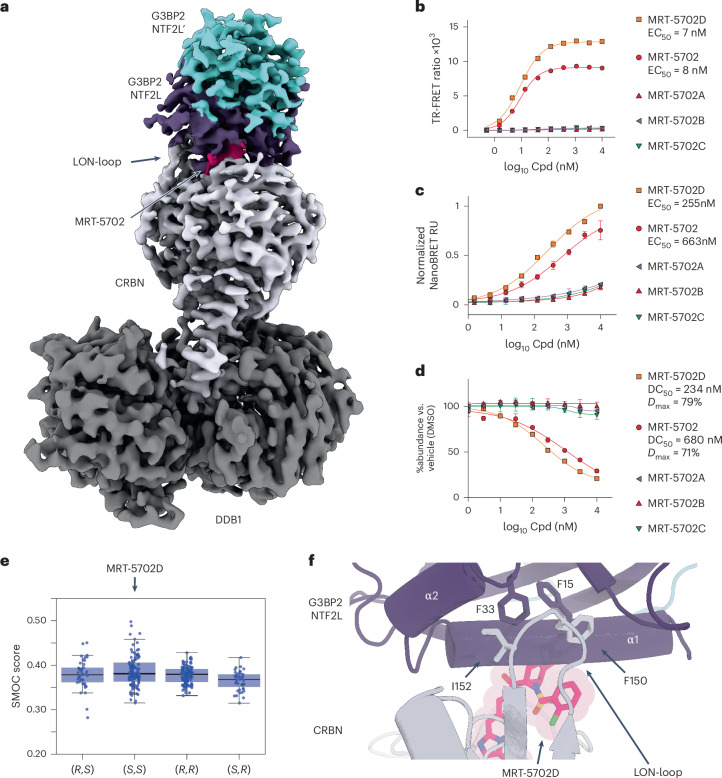
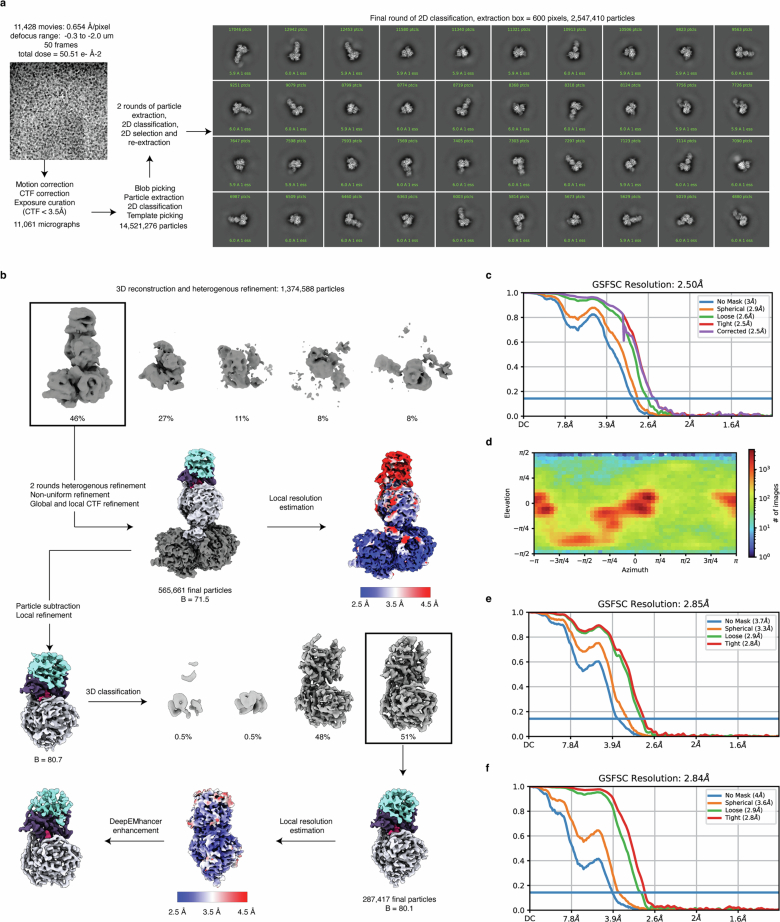
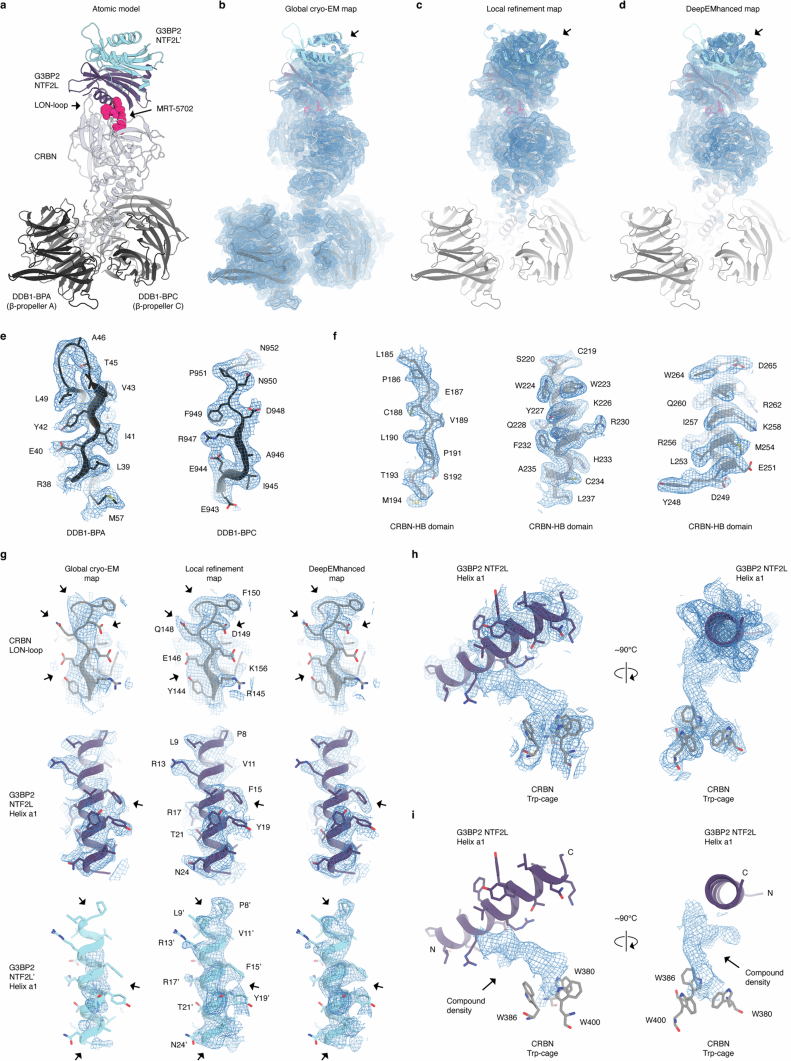
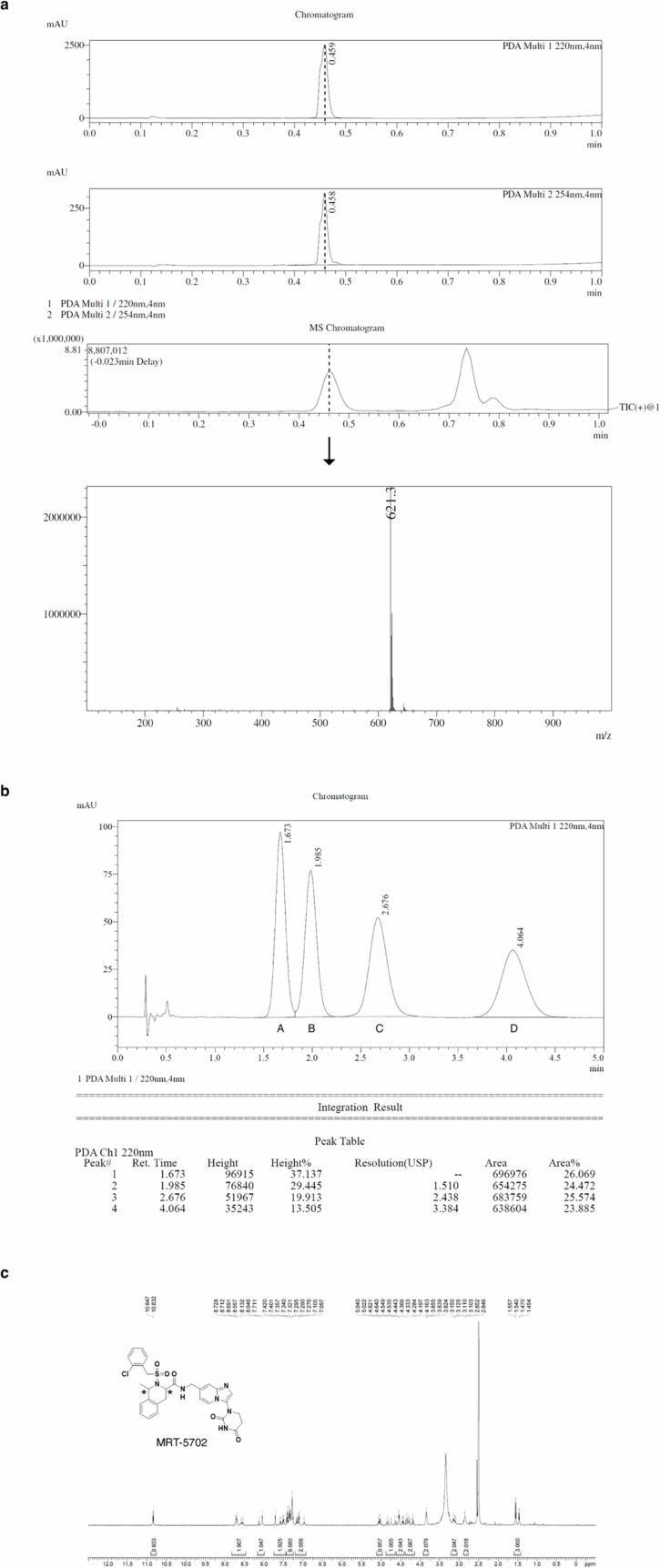
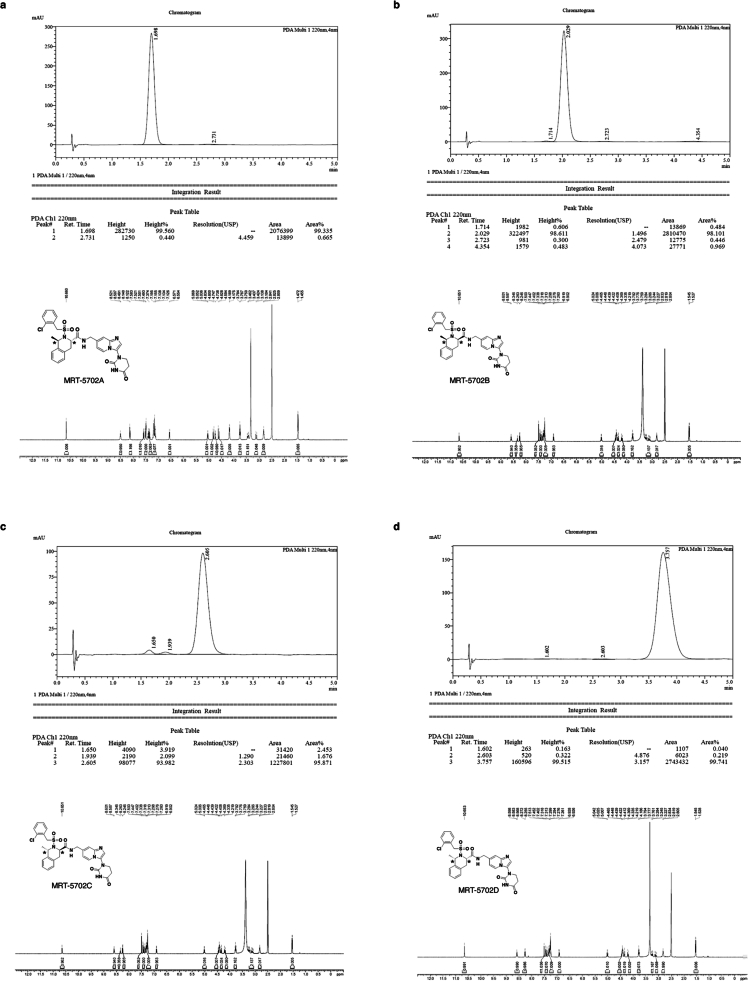
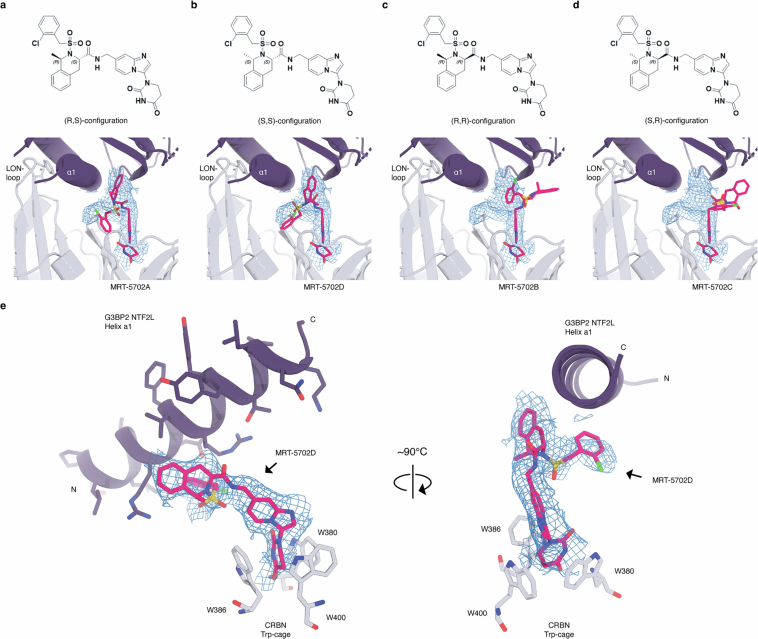
- Cryo-EM of the DDB1ΔBPB–CRBNΔ1–40–MRT-5702–G3BP2NTF2L complex reached 2.5 Å overall resolution, with a locally refined ternary interface of 2.8 Å, and showed that MRT-5702D is the only active configuration for G3BP2; ligand density favored the (S,S)-configuration.
## Methods
- The study combined global proteomics, cellular NanoBRET, HiBiT assays, mutagenesis/domain swaps, TR-FRET, cryo-EM, and computational modeling to map the CRBN–G3BP2 interaction and validate the ternary complex.
- Cellular experiments used CAL51 and HEK293T cells; proteomics profiling treated CAL51 cells with 10 µM compound for 6 h, while NanoBRET and degradation assays tested MRT-5702-dependent target engagement and protein loss.
- Structural work used purified CRBN–DDB1 and G3BP2NTF2L proteins, with cryo-EM grid preparation and single-particle analysis in cryoSPARC, followed by atomic model building and refinement in PHENIX, Coot, ChimeraX, and PyMOL.
## Limitations
- The paper states that the local resolution at the CRBN–G3BP2 interface was only 3.5–4.5 Å in the initial cryo-EM reconstruction because of conformational flexibility; this limits direct atomic interpretation of the interface in that region.
- The Methods section refers to a “Nature Portfolio Reporting Summary” and supplementary materials for further research design details, but those details are not included in the provided text; this is evident from the text.
- The provided text does not state in vivo validation, disease-model testing, or clinical relevance experiments for G3BP2 degradation; this absence is evident from the text.
Model-written summary. Check it against the paper before relying on it.
Integrity signals
Registry
Cites
Statistics
Figures
Verification
Claims the paper makes
4 Valid · 1 Not valid · 1 Not checked · 36 Own results and interpretations
The sources with a verdict support this claim; the rest weren’t checked yet, have no full text we could read, or their verdicts aren’t rated yet.
In the paper
“These motifs bind a conserved site on the NTF2L domain45–47 that is predicted to possess a high propensity to engage in PPIs (Fig. 1h).”
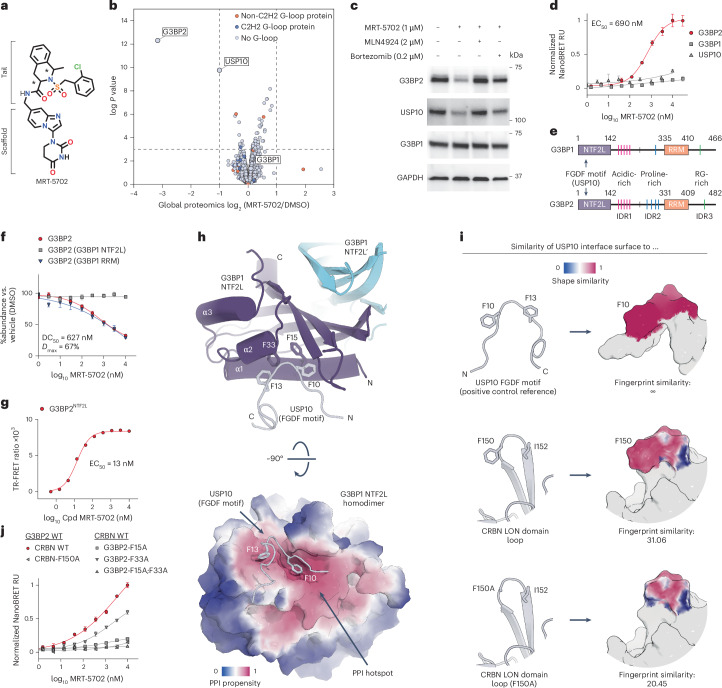
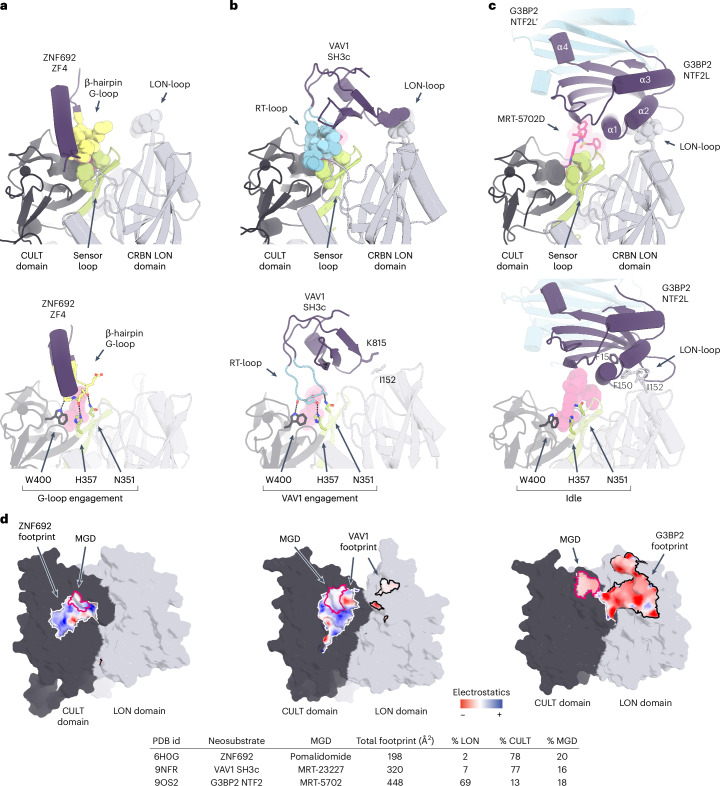
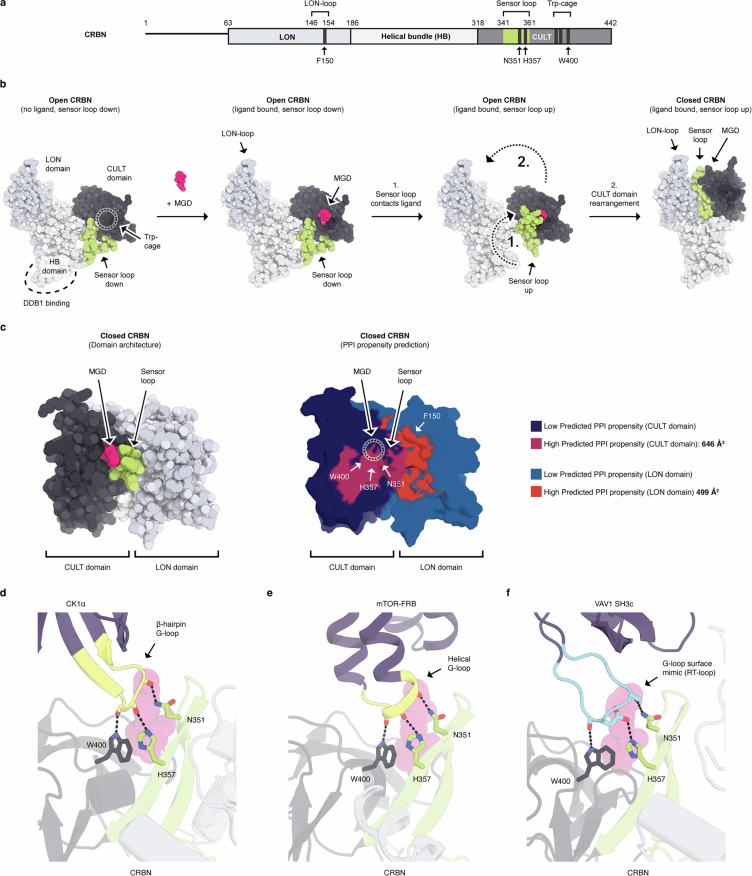
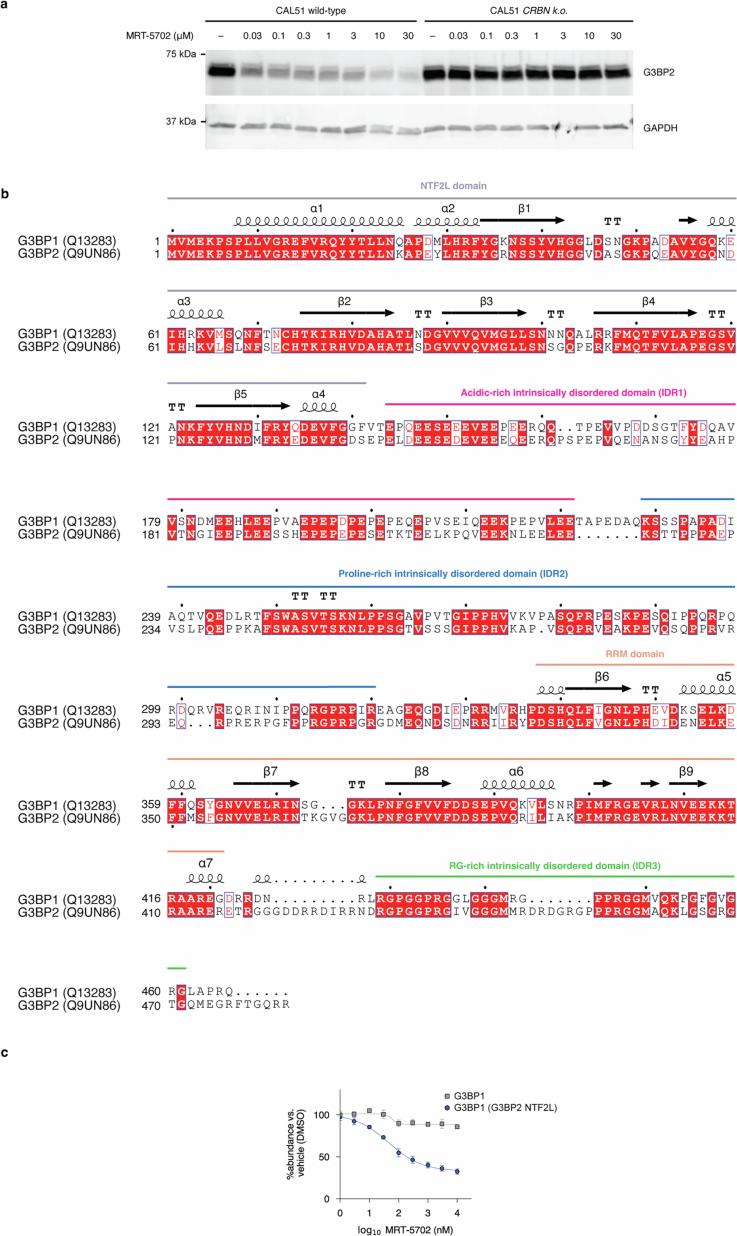
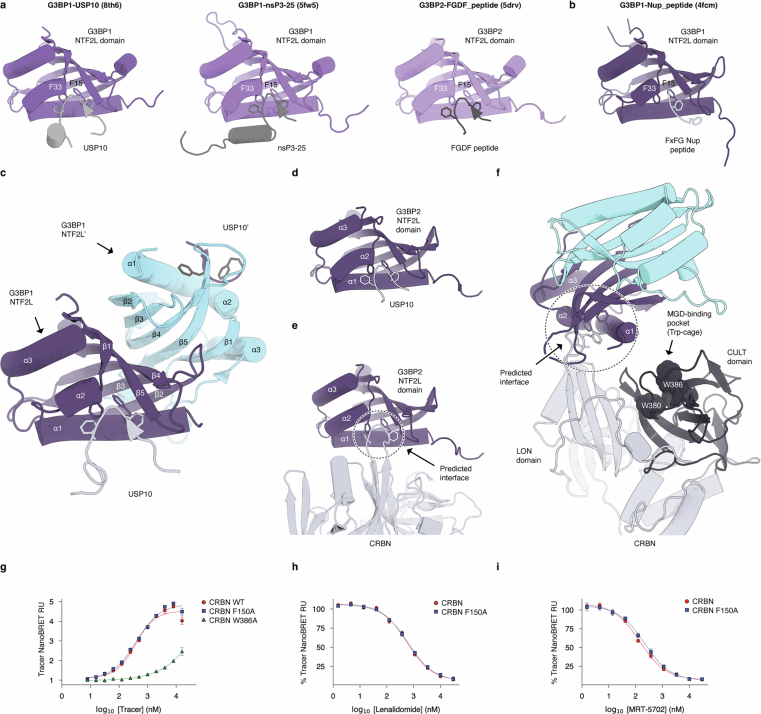
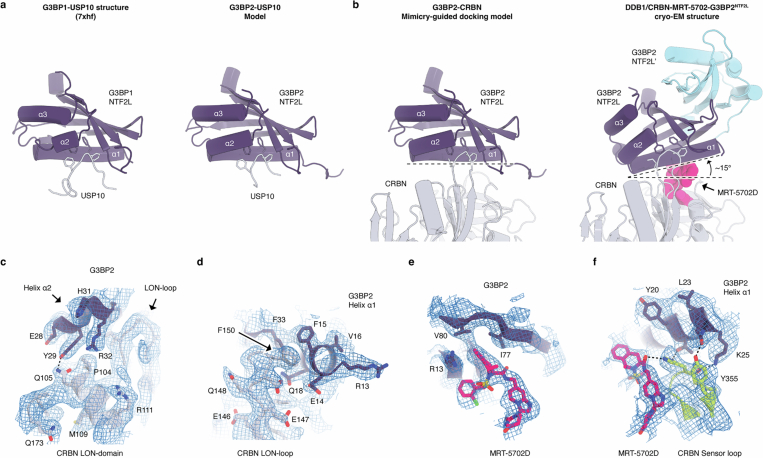
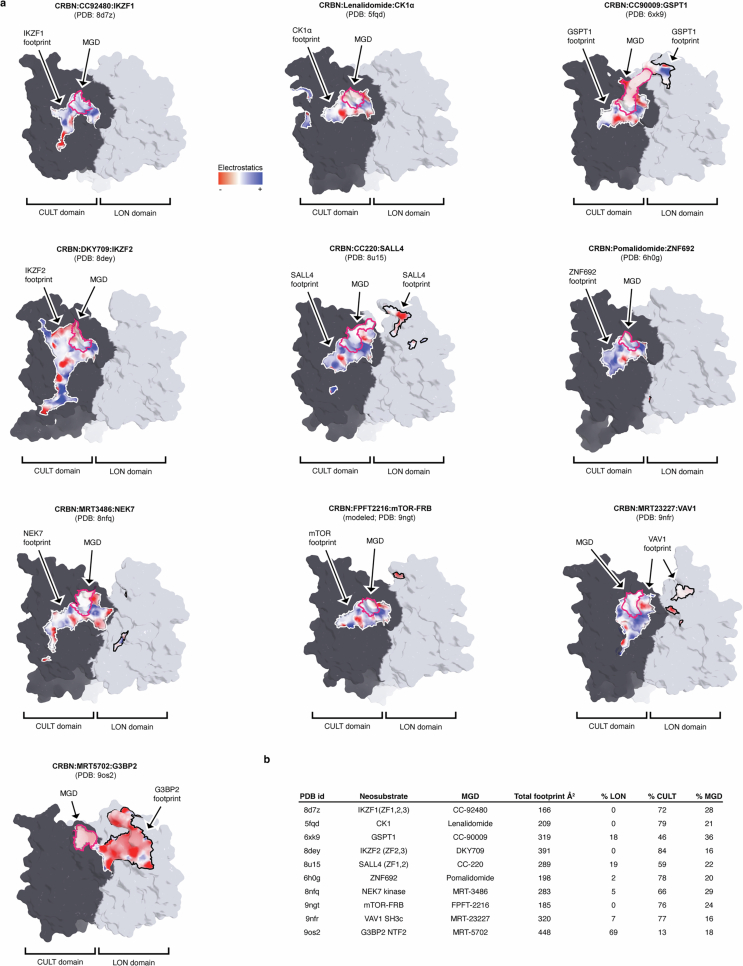
§ Cereblon induces G3BP2 neosubstrate degradation using molecular surface mimicry > Results > CRBN uses a surface mimicry mechanism to hijack a preexisting PPI hotspot on G3BP2 As computational analyses of the G3BP2 NTF2L domain did not identify structural elements with similarities to β-hairpin or helical G-loop degrons, we explored other strategies to pinpoint its CRBN-binding site. Recently, the G-loop-independent target VAV1 was shown to engage CRBN through surface features that resemble the GSPT1 degron, a well-established CRBN neosubstrate, demonstrating that target compatibility with CRBN depends on surface complementarity rather than the presence of conserved structural motifs25. Examination of the G3BP2 NTF2L domain for surface similarities to known CRBN degrons, however, only identified low-scoring surface patches lacking key features of characterized CRBN neosubstrates. This suggests that G3BP2 forms a novel PPI interface with CRBN by engaging in an unprecedented binding mode. Protein surfaces are classified on the basis of their predicted propensity to engage in PPIs39,40 and regions of high PPI propensity are frequently used by various interaction partners41–44. As no degron mimicry could be detected between G3BP2 and known CRBN neosubstrates, we took the inverse approach and examined CRBN for surface similarities to natural interaction partners of G3BP2. Both G3BP paralogs interact with a variety of different proteins, including the known interaction partner USP10 (ref. 30), through recruitment of FGDF or FxFG primary sequence motifs to their respective NTF2L domains (Fig. 1h and Extended Data Fig. 3a,b). These motifs bind a conserved site on the NTF2L domain45–47 that is predicted to possess a high propensity to engage in PPIs (Fig. 1h). This PPI hotspot is readily accessible on both protomers of the constitutive NTF2L homodimer (Extended Data Fig. 3c) and could potentially be engaged by CRBN through surface mimicry despite the absence of any FGDF or FxFG motifs. To rationalize the interaction between CRBN and G3BP2, we used the structure of the G3BP1–USP10 complex46 (Fig. 1h) and generated a model of the USP10-engaged NTF2L domain of the G3BP2 paralog (Extended Data Fig. 3d). This model was used as a query to computationally probe the CRBN surface for molecular mimicry to the USP10 interface. We identified a surface patch on the N-terminal LON domain of CRBN centered around residues F150, G151 and I152 that mimics features of the FGDF motif (Fig. 1i). Using the predicted CRBN surface patch to guide the creation of a ternary complex docking model (Methods) resulted in an overall compatible orientation of the G3BP2 NTF2L homodimer with the closed conformation of CRBN24 (Extended Data Fig. 3e,f). Although engaged with the LON domain, the model positioned the NTF2L homodimer proximal to the MGD-binding pocket, which in principle could allow for interactions with MRT-5702 (Extended Data Fig. 3f). To probe the interface prediction experimentally, we substituted key residues in CRBN and G3BP2 and tested ternary complex formation of the mutant constructs using NanoBRET. Substitution of CRBN F150 to alanine did not affect binary binding of MRT-5702 (Extended Data Fig. 3g–i) but markedly reduced the ability to engage full-length wild-type G3BP2 (Fig. 1j). Similarly, substitutions of amino acids in the PPI hotspot of G3BP2 (F15A and F33A) affected ternary complex formation with CRBN (Fig. 1j). These data support that, in the presence of MRT-5702, CRBN uses a surface mimicry mechanism to hijack a preexisting PPI hotspot on the G3BP2 NTF2L domain.
What the sources say
- Supportedcites [45] Vognsen, T., Moller, I. R. & Kristensen, O. Crystal structures of the human G3BP1 NTF2-like domain visualize FxFG Nup repeat specificity. PLoS ONE 8, e80947 (2013). 24324649 PMC3852005 source
In Results and Discussion, the FxFG peptide is located in a hydrophobic pocket of the G3BP1 NTF2-like domain, and the paper says most residues involved in binding it are conserved across G3BPs. This supports the FxFG binding point for which this source is cited. The PPI-propensity prediction follows the citation and is presented with the citing paper’s Figure 1h, not attributed to this source. (LLM, conf=0.90)
- Not checked — no full text of the sourcecites [46] Kristensen, O. Crystal structure of the G3BP2 NTF2-like domain in complex with a canonical FGDF motif peptide. Biochem. Biophys. Res. Commun. 467, 53–57 (2015). 26410532 source
- Supportedcites [47] Song, D. et al. Yin and yang regulation of stress granules by Caprin-1. Proc. Natl Acad. Sci. USA 119, e2207975119 (2022). 36279435 PMC9636964 source
The Results section (page unavailable) reports that Caprin-1 and USP10 peptides bind the same hydrophobic pocket on G3BP1’s NTF2L domain and identifies conserved aromatic residues important for binding. The citation is attached to the binding-site statement; the subsequent prediction about PPI propensity is presented with the citing paper’s own Fig. 1h. (LLM, conf=0.86)
plainstates a cause- Asserted: passes — The authors put it forward as true.
- Checkable: passes — It can be checked against evidence.
- Load-bearing: passes — The paper’s conclusions depend on it.
- Based: passes — The paper gives a reason why it holds.
- Supported
A result the paper reports from its own data — it cites no other source for it, so there is none to check. The quote shows it is in the paper.
In the paper
“Profiling a diversity selection of CRBN-centric MGDs29 in mass spectrometry (MS)-based global proteomics led to the identification of MRT-5702 (Fig. 1a), a dihydrouracil-containing compound that significantly reduced levels of G3BP2 (Fig. 1b) and, to a lesser extent, ubiquitin-specific peptidase 10 (USP10)30 in CAL51 cells after 6 h of compound treatment.”
§ Cereblon induces G3BP2 neosubstrate degradation using molecular surface mimicry > Results > G3BP2 is a G-loop-independent CRBN neosubstrate
plainstates a cause- Asserted: passes — The authors put it forward as true.
- Checkable: passes — It can be checked against evidence.
- Load-bearing: passes — The paper’s conclusions depend on it.
- Based: passes — The paper gives a reason why it holds.
A result the paper reports from its own data — it cites no other source for it, so there is none to check. The quote shows it is in the paper.
In the paper
“As the recombinant NTF2L domain of G3BP2 (G3BP2NTF2L; residues 1–139) formed a ternary complex with CRBN and MRT-5702 in time-resolved fluorescence resonance energy transfer (TR-FRET) in vitro (Fig. 1g)”
§ Cereblon induces G3BP2 neosubstrate degradation using molecular surface mimicry > Results > G3BP2 is a G-loop-independent CRBN neosubstrate
plainstates an association- Asserted: passes — The authors put it forward as true.
- Checkable: passes — It can be checked against evidence.
- Load-bearing: passes — The paper’s conclusions depend on it.
- Based: passes — The paper gives a reason why it holds.
A result the paper reports from its own data — it cites no other source for it, so there is none to check. The quote shows it is in the paper.
In the paper
“Replacement of the N-terminal nuclear transport factor 2-like (NTF2L) domain but not of the C-terminal RNA recognition motif domain in G3BP2 with the corresponding G3BP1 sequences abrogated MRT-5702-mediated degradation of the chimeric construct (Fig. 1f).”
§ Cereblon induces G3BP2 neosubstrate degradation using molecular surface mimicry > Results > G3BP2 is a G-loop-independent CRBN neosubstrate
plainstates a cause- Asserted: passes — The authors put it forward as true.
- Checkable: passes — It can be checked against evidence.
- Load-bearing: passes — The paper’s conclusions depend on it.
- Based: passes — The paper gives a reason why it holds.
A result the paper reports from its own data — it cites no other source for it, so there is none to check. The quote shows it is in the paper.
In the paper
“Profiling a diversity selection of CRBN-centric MGDs29 in mass spectrometry (MS)-based global proteomics led to the identification of MRT-5702 (Fig. 1a), a dihydrouracil-containing compound that significantly reduced levels of G3BP2 (Fig. 1b) and, to a lesser extent, ubiquitin-specific peptidase 10 (USP10)30 in CAL51 cells after 6 h of compound treatment.”
§ Cereblon induces G3BP2 neosubstrate degradation using molecular surface mimicry > Results > G3BP2 is a G-loop-independent CRBN neosubstrate
plainstates a cause- Asserted: passes — The authors put it forward as true.
- Checkable: passes — It can be checked against evidence.
- Load-bearing: unclear — It is unclear whether the paper’s conclusions depend on it.
- Based: passes — The paper gives a reason why it holds.
14 more claims
Create a free account to see all 42 claims and to verify the 1 reference still open.
- It may state two separate claims as one. 16
- Probably not a substantial claim. 10
Claims other papers make about this one
Each is checked against this paper’s own text: does it say what the citing paper says it does?
The source backs part of the claim, not all of it — or backs it for a different population, condition or comparison.
In the citing paper
“The recently reported degraders of G3BP2 (14) also lack a canonical degron and, similar to KAT2A, the major interface contacting the MG is a helix without noticeable degron-like features.”
From Degron-independent recruitment of KAT2A expands the target space of CRBN molecular glues (2026) · cites this paper as [14]
Experimental — accuracy not yet measuredThe cited source says what the claim attributes to it.
In the citing paper
“In contrast to KAT2A, however, the interaction of G3BP2 with CRBN appears more hotspot-driven, engaging a defined interface on the LON domain that the authors describe as mimicking a natural PPI.”
From Degron-independent recruitment of KAT2A expands the target space of CRBN molecular glues (2026) · cites this paper as [14]
The cited source says what the claim attributes to it.
In the citing paper
“the same CRBN loop (146-153) also plays a role in G3BP2 recruitment (14).”
From Degron-independent recruitment of KAT2A expands the target space of CRBN molecular glues (2026) · cites this paper as [14]
Citations
Cites
Features and development of Coot
Emsley, P., Lohkamp, B., Scott, W. G., & Cowtan, K. (2010) · Acta Crystallographica Section D Biological Crystallography · doi:10.1107/s0907444910007493 · Cited by 29,915
UCSF ChimeraX: Structure visualization for researchers, educators, and developers
Pettersen, E. F., Goddard, T. D., Huang, C. C., Meng, E. C., Couch, G. S., Croll, T. I., Morris, J. H., & Ferrin, T. E. (2021) · Protein Science · doi:10.1002/pro.3943 · Cited by 9,514
Liebschner, D., Afonine, P. V., Baker, M. L., Bunkóczi, G., Chen, V. B., Croll, T. I., Hintze, B., Hung, L.-W., Jain, S., McCoy, A. J., et al. (2019) · Acta Crystallographica Section D Structural Biology · doi:10.1107/s2059798319011471 · Cited by 7,953
Deciphering key features in protein structures with the new ENDscript server
Robert, X., & Gouet, P. (2014) · Nucleic Acids Research · doi:10.1093/nar/gku316 · Cited by 7,053 · cited 1×
“G3BP2 and its paralog, G3BP1, show a high degree of sequence conservation 37 (64% identity, 76% similarity; Extended Data Fig.”
RING Domain E3 Ubiquitin Ligases
Deshaies, R. J., & Joazeiro, C. A. P. (2009) · Annual Review of Biochemistry · doi:10.1146/annurev.biochem.78.101807.093809 · Cited by 2,679 · cited 1×
“E3 ubiquitin ligases typically function as protein–protein interaction (PPI) hubs that juxtapose substrate proteins and E2~ubiquitin for ubiquitin transfer, marking the substrate for proteasomal degradation 3 .”
Identification of a Primary Target of Thalidomide Teratogenicity
Ito, T., Ando, H., Suzuki, T., Ogura, T., Hotta, K., Imamura, Y., Yamaguchi, Y., & Handa, H. (2010) · Science · doi:10.1126/science.1177319 · Cited by 2,136 · cited 1×
“Cereblon (CRBN), for example, serves as the substrate receptor of the CRL4 CRBN E3 ubiquitin ligase, a multisubunit Cullin– RING ligase (CRL) complex that is repurposed by lenalidomide-type MGDs in the treatment of hematologic malignancies 5–9 .”
A Hot Spot of Binding Energy in a Hormone-Receptor Interface
Clackson, T., & Wells, J. A. (1995) · Science · doi:10.1126/science.7529940 · Cited by 1,983 · cited 6×
“Substrates are recruited through recognition motifs called degrons that engage in specific PPIs with corresponding E3 ligase substrate receptors 4 .”
InfluentialLenalidomide Causes Selective Degradation of IKZF1 and IKZF3 in Multiple Myeloma Cells
Krönke, J., Udeshi, N. D., Narla, A., Grauman, P., Hurst, S. N., McConkey, M., Svinkina, T., Heckl, D., Comer, E., Li, X., et al. (2014) · Science · doi:10.1126/science.1244851 · Cited by 1,879
The Myeloma Drug Lenalidomide Promotes the Cereblon-Dependent Destruction of Ikaros Proteins
Lu, G., Middleton, R. E., Sun, H., Naniong, M., Ott, C. J., Mitsiades, C. S., Wong, K.-K., Bradner, J. E., & Kaelin, W. G. (2014) · Science · doi:10.1126/science.1244917 · Cited by 1,583
Suppression of inflammation by a synthetic histone mimic
Nicodeme, E., Jeffrey, K. L., Schaefer, U., Beinke, S., Dewell, S., Chung, C.-W., Chandwani, R., Marazzi, I., Wilson, P., Coste, H., et al. (2010) · Nature · doi:10.1038/nature09589 · Cited by 1,563
DeepEMhancer: a deep learning solution for cryo-EM volume post-processing
Sanchez-Garcia, R., Gomez-Blanco, J., Cuervo, A., Carazo, J. M., Sorzano, C. O. S., & Vargas, J. (2021) · Communications Biology · doi:10.1038/s42003-021-02399-1 · Cited by 1,343
Shape Complementarity at Protein/Protein Interfaces
Lawrence, M. C., & Colman, P. M. (1993) · Journal of Molecular Biology · doi:10.1006/jmbi.1993.1648 · Cited by 1,331
Structure of the DDB1–CRBN E3 ubiquitin ligase in complex with thalidomide
Fischer, E. S., Böhm, K., Lydeard, J. R., Yang, H., Stadler, M. B., Cavadini, S., Nagel, J., Serluca, F., Acker, V., Lingaraju, G. M., et al. (2014) · Nature · doi:10.1038/nature13527 · Cited by 1,141
Lenalidomide induces ubiquitination and degradation of CK1α in del(5q) MDS
Krönke, J., Fink, E. C., Hollenbach, P. W., MacBeth, K. J., Hurst, S. N., Udeshi, N. D., Chamberlain, P. P., Mani, D. R., Man, H. W., Gandhi, A. K., et al. (2015) · Nature · doi:10.1038/nature14610 · Cited by 863 · cited 1×
“Cereblon (CRBN), for example, serves as the substrate receptor of the CRL4 CRBN E3 ubiquitin ligase, a multisubunit Cullin– RING ligase (CRL) complex that is repurposed by lenalidomide-type MGDs in the treatment of hematologic malignancies 5–9 .”
Deciphering interaction fingerprints from protein molecular surfaces using geometric deep learning
Gainza, P., Sverrisson, F., Monti, F., Rodolà, E., Boscaini, D., Bronstein, M. M., & Correia, B. E. (2020) · Nature Methods · doi:10.1038/s41592-019-0666-6 · Cited by 834 · cited 1×
“Protein surfaces are classified on the basis of their predicted propensity to engage in PPIs 39,40 and regions of high PPI propensity are frequently used by various interaction partners 41–44 .”
Stress granules and neurodegeneration
Wolozin, B., & Ivanov, P. (2019) · Nature Reviews Neuroscience · doi:10.1038/s41583-019-0222-5 · Cited by 810 · cited 1×
“Aberrant G3BP2 expression occurs in multiple human malignancies 33–35 and G3BP2 stress granule formation is linked to cardiovascular and neurodegenerative disorders 36 .”
A novel cereblon modulator recruits GSPT1 to the CRL4CRBN ubiquitin ligase
Matyskiela, M. E., Lu, G., Ito, T., Pagarigan, B., Lu, C.-C., Miller, K., Fang, W., Wang, N.-Y., Nguyen, D., Houston, J., et al. (2016) · Nature · doi:10.1038/nature18611 · Cited by 701
Molecular architecture and assembly of the DDB1–CUL4A ubiquitin ligase machinery
Angers, S., Li, T., Yi, X., MacCoss, M. J., Moon, R. T., & Zheng, N. (2006) · Nature · doi:10.1038/nature05175 · Cited by 674
Structural basis of lenalidomide-induced CK1α degradation by the CRL4CRBN ubiquitin ligase
Petzold, G., Fischer, E. S., & Thomä, N. H. (2016) · Nature · doi:10.1038/nature16979 · Cited by 620
Self-citationGandhi, A. K., Kang, J., Havens, C. G., Conklin, T., Ning, Y., Wu, L., Ito, T., Ando, H., Waldman, M. F., Thakurta, A., et al. (2014) · British Journal of Haematology · doi:10.1111/bjh.12708 · Cited by 619
Defining the human C2H2 zinc finger degrome targeted by thalidomide analogs through CRBN
Sievers, Q. L., Petzold, G., Bunker, R. D., Renneville, A., Słabicki, M., Liddicoat, B. J., Abdulrahman, W., Mikkelsen, T., Ebert, B. L., & Thomä, N. H. (2018) · Science · doi:10.1126/science.aat0572 · Cited by 537 · cited 2×
“Most MGD-dependent CRBN neosubstrates share a common structural recognition motif composed of a β-hairpin α-turn carrying a key glycine residue commonly referred to as the G-loop 26–28 .”
Self-citationChamberlain, P. P., Lopez-Girona, A., Miller, K., Carmel, G., Pagarigan, B., Chie-Leon, B., Rychak, E., Corral, L. G., Ren, Y. J., Wang, M., et al. (2014) · Nature Structural & Molecular Biology · doi:10.1038/nsmb.2874 · Cited by 531 · cited 1×
“16,17).”
Rheb Activates mTOR by Antagonizing Its Endogenous Inhibitor, FKBP38
Bai, X., Ma, D., Liu, A., Shen, X., Wang, Q. J., Liu, Y., & Jiang, Y. (2007) · Science · doi:10.1126/science.1147379 · Cited by 382
Structure of the mitotic checkpoint complex
Chao, W. C. H., Kulkarni, K., Zhang, Z., Kong, E. H., & Barford, D. (2012) · Nature · doi:10.1038/nature10896 · Cited by 321
De novo design of protein interactions with learned surface fingerprints
Gainza, P., Wehrle, S., Van Hall-Beauvais, A., Marchand, A., Scheck, A., Harteveld, Z., Buckley, S., Ni, D., Tan, S., Sverrisson, F., et al. (2023) · Nature · doi:10.1038/s41586-023-05993-x · Cited by 236 · cited 1×
“This CRBN surface patch serves as a binding seed 49 that nucleates additional neointeractions between G3BP2, CRBN and the MGD, a process that is further assisted by the inherent conformational flexibility of the CRBN LON-loop.”
Prospective discovery of small molecule enhancers of an E3 ligase-substrate interaction
Simonetta, K. R., Taygerly, J., Boyle, K., Basham, S. E., Padovani, C., Lou, Y., Cummins, T. J., Yung, S. L., von Soly, S. K., Kayser, F., et al. (2019) · Nature Communications · doi:10.1038/s41467-019-09358-9 · Cited by 217
Molecular glue CELMoD compounds are regulators of cereblon conformation
Watson, E. R., Novick, S., Matyskiela, M. E., Chamberlain, P. P., H. de la Peña, A., Zhu, J., Tran, E., Griffin, P. R., Wertz, I. E., & Lander, G. C. (2022) · Science · doi:10.1126/science.add7574 · Cited by 208 · cited 2×
“Using the predicted CRBN surface patch to guide the creation of a ternary complex docking model (Methods) resulted in an overall compatible orientation of the G3BP2 NTF2L homodimer with the closed conformation of CRBN 24 (Extended Data Fig.”
The E3 ligase adapter cereblon targets the C-terminal cyclic imide degron
Ichikawa, S., Flaxman, H. A., Xu, W., Vallavoju, N., Lloyd, H. C., Wang, B., Shen, D., Pratt, M. R., & Woo, C. M. (2022) · Nature · doi:10.1038/s41586-022-05333-5 · Cited by 195 · cited 3×
“In contrast, the CULT domain appears critical for native and drug-induced CRBN functions, as it harbors the tritryptophan pocket (Trp-cage) that engages cyclic imide degrons 10,11 , as well as its small-molecule mimetic, the glutarimide moiety of lenalidomide-type MGDs 16–18 .”
From Thalidomide to Rational Molecular Glue Design for Targeted Protein Degradation
Oleinikovas, V., Gainza, P., Ryckmans, T., Fasching, B., & Thomä, N. H. (2024) · Annual Review of Pharmacology and Toxicology · doi:10.1146/annurev-pharmtox-022123-104147 · Cited by 178 · cited 1×
“Profiling a diversity selection of CRBN-centric MGDs 29 in mass spectrometry (MS)-based global proteomics led to the identification of MRT-5702 (Fig.”
Self-citationAcute pharmacological degradation of Helios destabilizes regulatory T cells
Wang, E. S., Verano, A. L., Nowak, R. P., Yuan, J. C., Donovan, K. A., Eleuteri, N. A., Yue, H., Ngo, K. H., Lizotte, P. H., Gokhale, P. C., et al. (2021) · Nature Chemical Biology · doi:10.1038/s41589-021-00802-w · Cited by 124
Mining the CRBN target space redefines rules for molecular glue-induced neosubstrate recognition
Petzold, G., Gainza, P., Annunziato, S., Lamberto, I., Trenh, P., McAllister, L. A., DeMarco, B., Schwander, L., Bunker, R. D., Zlotosch, M., et al. (2025) · Science · doi:10.1126/science.adt6736 · Cited by 117 · cited 13×
“…G-loop-independent target VAV1 was shown to engage CRBN through surface features that resemble the GSPT1 degron, a well-established CRBN neosubstrate, demonstrating that target compatibility with CRBN depends on surface complementarity rather than the presence of conserved structural motifs 25 .”
InfluentialSelf-citationMolecular glues and bifunctional compounds: Therapeutic modalities based on induced proximity
Schreiber, S. L. (2024) · Cell Chemical Biology · doi:10.1016/j.chembiol.2024.05.004 · Cited by 112 · cited 1×
“Targeted protein degradation by molecular glue degraders (MGDs) is an emergent therapeutic modality in which small-molecule compounds repurpose the activity of E3 ubiquitin ligases to recruit, ubiquitinate and induce degradation of nonnatural substrates called neosub-strates 1 .”
Yang, W., Ru, Y., Ren, J., Bai, J., Wei, J., Fu, S., Liu, X., Li, D., & Zheng, H. (2019) · Cell Death & Disease · doi:10.1038/s41419-019-2178-9 · Cited by 107 · cited 1×
“1e), suggesting functional redundancy of both G3BP proteins 38 .”
Stress granule-associated protein G3BP2 regulates breast tumor initiation
Gupta, N., Badeaux, M., Liu, Y., Naxerova, K., Sgroi, D., Munn, L. L., Jain, R. K., & Garkavtsev, I. (2017) · Proceedings of the National Academy of Sciences · doi:10.1073/pnas.1525387114 · Cited by 106 · cited 1×
“Aberrant G3BP2 expression occurs in multiple human malignancies 33–35 and G3BP2 stress granule formation is linked to cardiovascular and neurodegenerative disorders 36 .”
Takayama, K.-I., Suzuki, T., Fujimura, T., Takahashi, S., & Inoue, S. (2018) · Molecular Cancer Research · doi:10.1158/1541-7786.mcr-17-0471 · Cited by 104 · cited 1×
“30), through recruitment of FGDF or FxFG primary sequence motifs to their respective NTF2L domains (Fig.”
A molecular glue degrader of the WIZ transcription factor for fetal hemoglobin induction
Ting, P. Y., Borikar, S., Kerrigan, J. R., Thomsen, N. M., Aghania, E., Hinman, A. E., Reyes, A., Pizzato, N., Fodor, B. D., Wu, F., et al. (2024) · Science · doi:10.1126/science.adk6129 · Cited by 97
Dimerization quality control ensures neuronal development and survival
Mena, E. L., Kjolby, R. A. S., Saxton, R. A., Werner, A., Lew, B. G., Boyle, J. M., Harland, R., & Rape, M. (2018) · Science · doi:10.1126/science.aap8236 · Cited by 85
Li, H., Lin, P., Gupta, P., Li, X., Zhao, L., Zhou, X., Li, Z., Wei, S., Xu, L., Han, R., et al. (2021) · Molecular Cancer · doi:10.1186/s12943-021-01418-3 · Cited by 76 · cited 1×
“Aberrant G3BP2 expression occurs in multiple human malignancies 33–35 and G3BP2 stress granule formation is linked to cardiovascular and neurodegenerative disorders 36 .”
Degrons: defining the rules of protein degradation
Zhang, Z., Mena, E. L., Timms, R. T., Koren, I., & Elledge, S. J. (2025) · Nature Reviews Molecular Cell Biology · doi:10.1038/s41580-025-00870-z · Cited by 74
Crystal Structures of the Human G3BP1 NTF2-Like Domain Visualize FxFG Nup Repeat Specificity
Vognsen, T., Møller, I. R., & Kristensen, O. (2013) · PLoS ONE · doi:10.1371/journal.pone.0080947 · Cited by 73
Quancard, J., Klein, T., Fung, S.-Y., Renatus, M., Hughes, N., Israël, L., Priatel, J. J., Kang, S., Blank, M. A., Viner, R. I., et al. (2019) · Nature Chemical Biology · doi:10.1038/s41589-018-0222-1 · Cited by 72
Yin and yang regulation of stress granules by Caprin-1
Song, D., Kuang, L., Yang, L., Wang, L., Li, H., Li, X., Zhu, Z., Shi, C., Zhu, H., & Gong, W. (2022) · Proceedings of the National Academy of Sciences · doi:10.1073/pnas.2207975119 · Cited by 72 · cited 1×
“These motifs bind a conserved site on the NTF2L domain 45–47 that is predicted to possess a high propensity to engage in PPIs (Fig.”
Induced protein degradation for therapeutics: past, present, and future
Yoon, H., Rutter, J. C., Li, Y.-D., & Ebert, B. L. (2024) · Journal of Clinical Investigation · doi:10.1172/jci175265 · Cited by 67 · cited 1×
“The mode of action of clinically approved MGDs, such as lenalidomide, does not depend on conventional druggable pockets on the neo substrate protein itself, which provides opportunities to unlock therapeutic targets previously deemed undruggable 2 .”
Unveiling the hidden interactome of CRBN molecular glues
Baek, K., Metivier, R. J., Roy Burman, S. S., Bushman, J. W., Yoon, H., Lumpkin, R. J., Ryan, J. K., Abeja, D. M., Lakshminarayan, M., Yue, H., et al. (2025) · Nature Communications · doi:10.1038/s41467-025-62099-w · Cited by 61
UM171 glues asymmetric CRL3–HDAC1/2 assembly to degrade CoREST corepressors
Yeo, M. J. R., Zhang, O., Xie, X., Nam, E., Payne, N. C., Gosavi, P. M., Kwok, H. S., Iram, I., Lee, C., Li, J., et al. (2025) · Nature · doi:10.1038/s41586-024-08532-4 · Cited by 58
Identification and structural basis of C-terminal cyclic imides as natural degrons for cereblon
Heim, C., Spring, A.-K., Kirchgäßner, S., Schwarzer, D., & Hartmann, M. D. (2022) · Biochemical and Biophysical Research Communications · doi:10.1016/j.bbrc.2022.11.001 · Cited by 51 · cited 1×
“In contrast, the CULT domain appears critical for native and drug-induced CRBN functions, as it harbors the tritryptophan pocket (Trp-cage) that engages cyclic imide degrons 10,11 , as well as its small-molecule mimetic, the glutarimide moiety of lenalidomide-type MGDs 16–18 .”
The cyclimids: Degron-inspired cereblon binders for targeted protein degradation
Ichikawa, S., Payne, N. C., Xu, W., Chang, C., Vallavoju, N., Frome, S., Flaxman, H. A., Mazitschek, R., & Woo, C. M. (2024) · Cell chemical biology · doi:10.1016/j.chembiol.2024.01.003 · Cited by 51
Converging mechanism of UM171 and KBTBD4 neomorphic cancer mutations
Xie, X., Zhang, O., Yeo, M. J. R., Lee, C., Tao, R., Harry, S. A., Payne, N. C., Nam, E., Paul, L., Li, Y., et al. (2025) · Nature · doi:10.1038/s41586-024-08533-3 · Cited by 50
Lupas, A. N., Zhu, H., & Korycinski, M. (2015) · PLoS Computational Biology · doi:10.1371/journal.pcbi.1004023 · Cited by 47 · cited 2×
“Although engaged with the LON domain, the model positioned the NTF2L homodimer proximal to of unknown activity binding ligands and thalidomide) and a central helical bundle (HB) domain 16–18 (Extended Data Fig.”
Design of a Cereblon construct for crystallographic and biophysical studies of protein degraders
Kroupova, A., Spiteri, V. A., Rutter, Z. J., Furihata, H., Darren, D., Ramachandran, S., Chakraborti, S., Haubrich, K., Pethe, J., Gonzales, D., et al. (2024) · Nature Communications · doi:10.1038/s41467-024-52871-9 · Cited by 47
Jin, G., Zhang, Z., Wan, J., Wu, X., Liu, X., & Zhang, W. (2022) · Pharmacological Research · doi:10.1016/j.phrs.2022.106548 · Cited by 47 · cited 1×
“The CRBN substrate receptor is composed of three domains: an N-terminal LON domain, a C-terminal CULT domain (CRBN domain Article https://doi.org/10.1038/s41594-025-01738-8 G3BP2 is implicated in RNA processing and stress granule formation 32 .”
InfluentialCrystal structure of the G3BP2 NTF2-like domain in complex with a canonical FGDF motif peptide
Kristensen, O. (2015) · Biochemical and Biophysical Research Communications · doi:10.1016/j.bbrc.2015.09.123 · Cited by 45
The mechanism of activation of MEK1 by B-Raf and KSR1
Maloney, R., Zhang, M., Liu, Y., Jang, H., & Nussinov, R. (2022) · Cellular and Molecular Life Sciences · doi:10.1007/s00018-022-04296-0 · Cited by 34 · cited 1×
“Protein surfaces are classified on the basis of their predicted propensity to engage in PPIs 39,40 and regions of high PPI propensity are frequently used by various interaction partners 41–44 .”
Zhang, H., Zhang, S., He, H.-W., Zhang, C.-X., Yu, D.-K., & Shao, R.-G. (2013) · Cancer Gene Therapy · doi:10.1038/cgt.2013.62 · Cited by 34
Unbiased mapping of cereblon neosubstrate landscape by high-throughput proteomics
Steger, M., Nishiguchi, G., Wu, Q., Schwalb, B., Shashikadze, B., McGowan, K., Actis, M., Aggarwal, A., Shi, Z., Price, J., et al. (2025) · Nature Communications · doi:10.1038/s41467-025-62829-0 · Cited by 32 · cited 1×
“Template-guided G-loop mining of the human proteome has proven an invaluable first step to chart the CRBN target space 25,31,48 proteomic screens of CRBN-directed MGD chemistry can empower target space diversification through the rational discovery of a non-G-loop target, G3BP2.”
Tsai, T.-H., Choi, M., Banfai, B., Liu, Y., MacLean, B. X., Dunkley, T., & Vitek, O. (2020) · Molecular & Cellular Proteomics · doi:10.1074/mcp.ra119.001792 · Cited by 31
An engineered cereblon optimized for high-throughput screening and molecular glue discovery
Bailey, H., Eisert, J., Kazi, R. S., Gerhartz, J., Pieńkowska, D. E., Dressel, I., Vollrath, J., Kondratov, I. S., Matviiuk, T., Tolmachova, N. A., et al. (2024) · Cell chemical biology · doi:10.1016/j.chembiol.2024.11.002 · Cited by 28 · cited 2×
“CRBN constructs carried an internal deletion of residues 191–248 replaced with a GGGGS linker on the basis of an engineered version developed to study binary and ternary interactions 20 and were designed to encode NanoLuc C-terminally to CRBN, spaced by a 3×GGGGS linker.”
Cereblon neo-substrate binding mimics the recognition of the cyclic imide degron
Heim, C., Spring, A.-K., Kirchgäßner, S., Schwarzer, D., & Hartmann, M. D. (2023) · Biochemical and Biophysical Research Communications · doi:10.1016/j.bbrc.2023.01.051 · Cited by 25
Genesis and regulation of C-terminal cyclic imides from protein damage
Xu, W., Zhao, Z., Su, M., Jain, A. D., Lloyd, H. C., Feng, E. Y., Cox, N., & Woo, C. M. (2024) · Proceedings of the National Academy of Sciences · doi:10.1073/pnas.2415976121 · Cited by 21
PCMT1 generates the C-terminal cyclic imide degron on CRBN substrates
Zhao, Z., Xu, W., Feng, E. Y., Cao, S., Hermoso-López, A., Peña-Vega, P., Lloyd, H. C., Porter, A. K. D., Guzmán, M., Zheng, N., et al. (2025) · Nature Chemical Biology · doi:10.1038/s41589-025-02106-9 · Cited by 20 · cited 1×
“Native functions of CRBN are related to protein quality control and homeostasis as it recognizes cyclic imide degrons that arise after protein fragmentation to facilitate CRL4 CRBN -mediated turnover 10–15 .”
Processive cleavage of substrate at individual proteolytic active sites of the Lon protease complex
Li, S., Hsieh, K., Kuo, C.-I., Su, S.-C., Huang, K.-F., Zhang, K., & Chang, C. (2021) · Science Advances · doi:10.1126/sciadv.abj9537 · Cited by 18 · cited 1×
“The function of the LON domain remains poorly understood, yet its homology to LON proteases suggests a contribution in substrate recognition 21–23 .”
Structural basis for the allosteric activation of Lon by the heat shock protein LarA
Wang, H.-J., Kuan, Y.-E., Ho, M., & Chang, C. (2025) · Nature Communications · doi:10.1038/s41467-025-57482-6 · Cited by 4
Substrate recognition and cleavage-site preferences of Lon protease
Cragan, M., Puri, N., & Karzai, A. W. (2025) · Journal of Biological Chemistry · doi:10.1016/j.jbc.2025.108365 · Cited by 4 · cited 1×
“The function of the LON domain remains poorly understood, yet its homology to LON proteases suggests a contribution in substrate recognition 21–23 .”
CRL4CRBN induces G3BP2 neosubstrate degradation using a molecular surface mimicry mechanism
Gainza, P. (2025) · Zenodo (CERN European Organization for Nuclear Research) · doi:10.5281/zenodo.17751894 · Cited by 1
Self-citation
Cited by
Degron-independent recruitment of KAT2A expands the target space of CRBN molecular glues
Ojeda, S., Wang, M., Baek, K., Bourgeois, W., Sommerschield, A., Yue, H., Metivier, R. J., Karagiannis, P., Levitz, T. S., Xiong, Y., et al. (2026) · Science · doi:10.1126/science.aef5391 · Cited by 5
Zhang, Y., Li, L., Xu, J., Che, C.-C., Jia, J., Lu, H., You, Q., & Xu, X. (2026) · Molecules · doi:10.3390/molecules31030459 · Cited by 5
“The interface of its ternary complex does not resemble known CRBN interactions; rather, CRBN mimics the “footprint” of G3BP2 ′ s endogenous binding partner, utilizing pre-existing protein–protein interaction hotspots on the target protein [129].”
Developing potent and selective TBK1 molecular glue degraders for cancer immunotherapyPreprint
Caldwell, J. J., Zanon, P. R. A., Ferguson, I., Hallett, S. T., Tenev, T., Serrano-Aparicio, N., Wood, R. J. H., Khan, S., John, S. W., Wilson, R., et al. (2026) · bioRxiv (Cold Spring Harbor Laboratory) · doi:10.64898/2026.01.30.702304 · Cited by 3
“Computational mining of the human proteome identified more than 1,600 proteins harbouring G-loop-like motifs, further highlighting drug discovery opportunities 41 .”
Discovery of CDK4-selective molecular glue degraders by high-throughput proteomicsPreprint
Zanon, P. R. A., Shashikadze, B., Winkler, D., Scheller, I. F., Bartoschek, D., Bednarz, A., Graef, T., Machata, S., Ohmayer, U., Schwalb, B., et al. (2026) · bioRxiv (Cold Spring Harbor Laboratory) · doi:10.64898/2026.06.19.733443 · Cited by 1
“26,27,29,30 When screening CRBN-based MGDs derived from a phenyl-glutarimide CRBN warhead, 34 we previously encountered neosubstrate profiles that were strikingly different from those of MGDs harboring classical lenalidomide or thalidomide core scaffolds.”
Reprogramming VHL with molecular glues enables selective degradation of caspase-2Preprint
Hu, J., Deng, W., Ou, S., Golkar, A., Inglis, A., Smither, K., Li, S., Chen, K., Cho, K. F., Bae, S. J., et al. (2026) · bioRxiv (Cold Spring Harbor Laboratory) · doi:10.64898/2026.08.12.744529
“…proteomic and chemo-proteomic studies have revealed that CRBN recognizes a broad, ligand-programmable spectrum of neosubstrates, including proteins harboring the canonical β-hairpin G-loop degron as well as substrates recruited through emerging structural features such as surface mimicry 17-20 .”
Self-citation
Metadata
- Authors
- Annunziato, S., Quan, C., Donckele, E. J., Lamberto, I., Bunker, R. D., Zlotosch, M., Schwander, L., Murthy, A., Wiedmer, L., Staehly, C., Matysik, M., Gilberto, S., Kapsitidou, D., Wible, D., De Donatis, G. M., Trenh, P., SriRamaratnam, R., Strande, V., Lieberherr, R., Lyon, D., Steiner, D., Silva, J., Almeida, R., Dolgikh, E., DeMarco, B., Tsai, J., Sadok, A., Zarayskiy, V., Walter, M., Tiedt, R., Lumb, K. J., Bonenfant, D., Fasching, B., Castle, J. C., Townson, S. A., Gainza, P., & Petzold, G.
- Affiliations
- Boston Foundation (US)
- Corresponding author
- Petzold, Georg
- ORCID
- Venue
- Nature Structural & Molecular Biology
- Published
- 2026-01-20
- Volume
- 33
- Issue
- 3
- Pages
- 479-487
- ISSN
- 1545-9985 (ISSN-L)
- 1545-9993
- PMC
- PMC12999498
- OpenAlex
- W7124843030
- Semantic Scholar
- 1c95f2f6bd2276b614af8d338be326a672470010
- Cited by
- 9
- References
- 59
- Citations by year
- 2026: 9
- FWCI
- 18.39
- Type
- journal article
- Language
- en
- Open access
- hybrid
- doi.org
- Licence
- cc-by-nc-nd
- creativecommons.org/licenses/by-nc-nd/4.0 (tdm)
- creativecommons.org/licenses/by-nc-nd/4.0 (vor)
- Locations
- Nature Structural & Molecular Biology (publishedVersion, cc-by-nc-nd)
- PubMed (publishedVersion)
- PubMed Central (publishedVersion, cc-by-nc-nd)
- Topics
- Life Sciences › Biochemistry, Genetics and Molecular Biology › Molecular Biology › Protein Degradation and Inhibitors
- Life Sciences › Biochemistry, Genetics and Molecular Biology › Molecular Biology › Ubiquitin and proteasome pathways
- Physical Sciences › Chemistry › Organic Chemistry › Chemical Synthesis and Analysis
- Keywords
- cereblon, molecular glues, G3BP2, E3 ubiquitin ligase, protein degradation
- MeSH terms
- Degrons, Binding Sites, Carrier Proteins, Humans, Models, Molecular, Protein Binding, Molecular Mimicry, Ubiquitin-Protein Ligases, Adaptor Proteins, Signal Transducing, Proteolysis
About these checks
Registry, retraction, Cites and statistics results are computed, not judged, with one exception: a printed reference that no index lists is read once by a model before it counts as a citation error. Claims are extracted by a model and kept only when their quote appears verbatim in the text; each cited source is then checked, with a model’s help, for whether it says what the claim relies on. Those verdicts can be wrong — read the claim’s quote and the cited source before relying on one.
The claim verdicts this report counts are experimental: their accuracy is not yet measured.
A language model drew the claims from the paper on 2026-10-10, under version 3 of the claim definition (model deepseek-v4.1-flash, prompt extract-v3).
A second model labelled each claim on 2026-10-10 (model jev-1.13-20260917, definition revision gold-guideline-v0.2).
Cited sources are checked with a language model’s help (gpt-6-sol).
Statistics and arithmetic are recomputed, not judged.
Confidence bands are shown only for fields calibrated on our annotated test set. None is calibrated yet, so no band is shown.
What counts as a claim ›How we measure confidence ›How we check this ›
Are you an author, or do you see a problem with this page? Request a review
Data sources
Bibliographic data: Semantic Scholar, OpenAlex, Crossref.
Contains information from the Semantic Scholar Academic Graph Datasets, made available under the ODC Attribution License (ODC-BY 1.0).
Semantic Scholar’s data is described in: Kinney, R., et al. (2023). The Semantic Scholar Open Data Platform. arXiv:2301.10140.
