

The DOI matches its Crossref record; 88 of the 90 references it cites were found in a registry or an index.
Augmentation of working memory training by transcranial direct current stimulation (tDCS)
Open accessAbstract
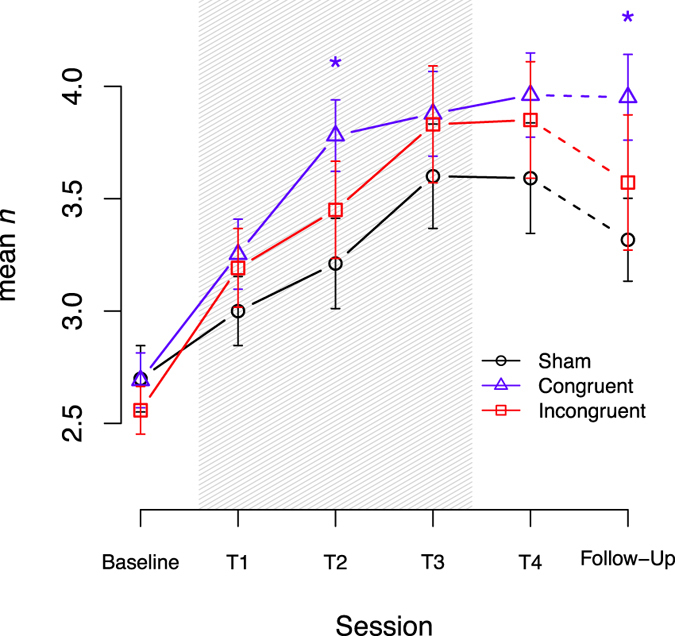
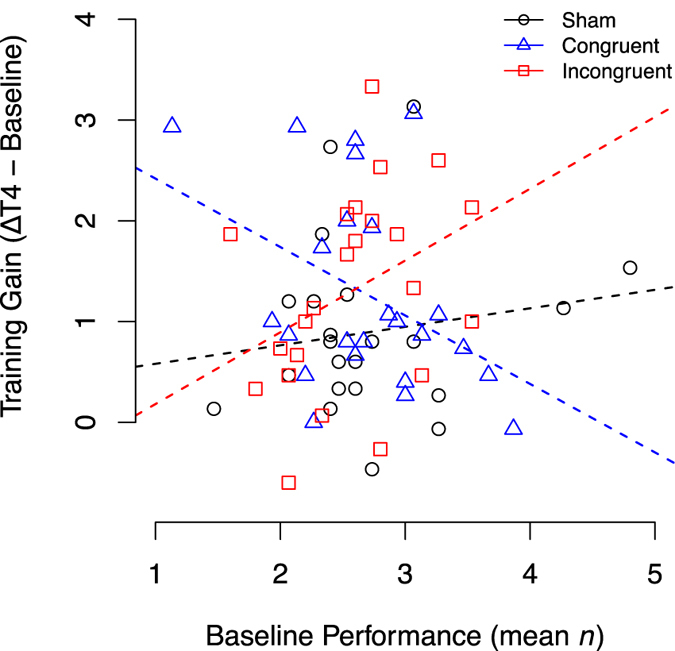
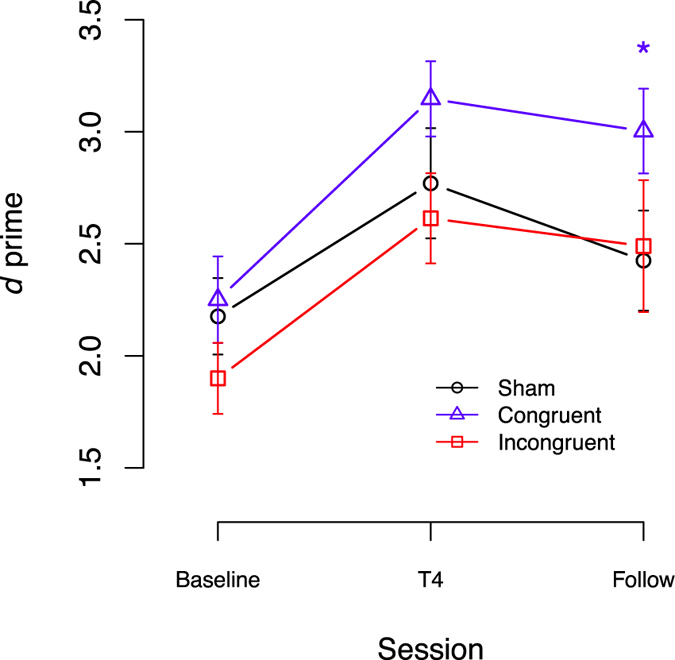
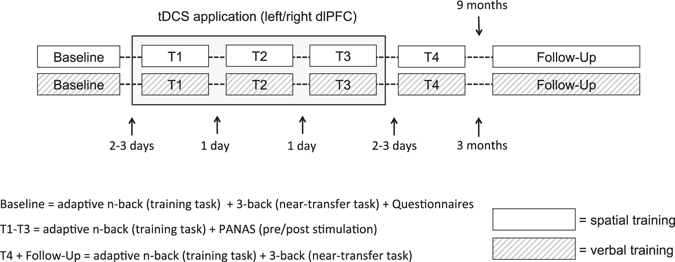
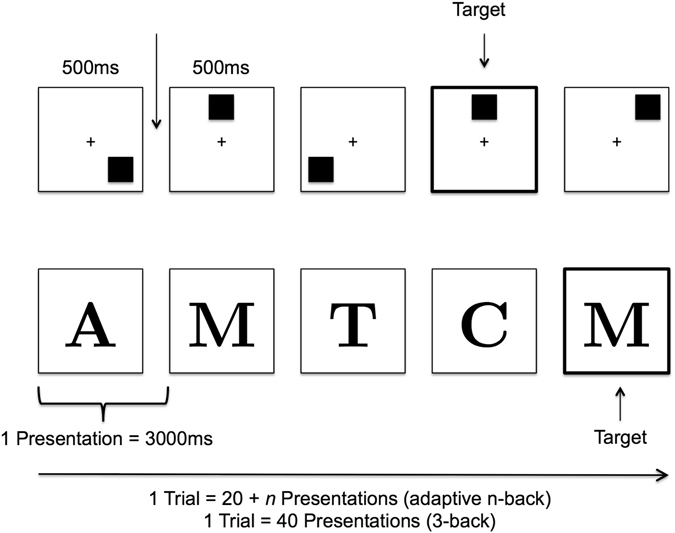
Transcranial direct current stimulation (tDCS) to the dorsolateral prefrontal cortex (dlPFC) can modulate working memory (WM) performance. However, evidence regarding the enhancement of WM training, its sustainability and transferability is ambiguous. Since WM functioning appears to be lateralized in respect to stimulus characteristics, this study examined the difference between task-congruent (spatial-right, verbal-left), task-incongruent (spatial-left, verbal-right) and sham tDCS in regards to the efficacy of WM training. In a randomized, sham-controlled experiment, 71 healthy adults trained on a spatial or verbal adaptive n-back task. After a baseline session, anodal or sham tDCS (1 mA) to the right or left dlPFC was applied during the next three training sessions. Sustainability of training gains and near-transfer (verbal or spatial 3-back task) were tested in a fourth training and a follow-up session. Compared to sham stimulation, we found a steeper learning curve when WM training was combined with task-congruent tDCS. This advantage was also present compared to task-incongruent tDCS. Moreover, these effects lasted for up to nine months and transferred to the respective untrained task. These long-lasting, transferable, task-specific effects demonstrate a behaviorally relevant and sustainable facilitation of neuroplastic processes by tDCS that could be harnessed for the treatment of disorders associated with deficient WM.
Overview
The claims and statistics of this paper haven’t been checked yet.
Run the check — free, no account needed. It reads the open-access text and checks the sources it cites.
Integrity signals
Registry
Cites
Statistics
Figures
Verification
Claims the paper makes
The claims and statistics of this paper haven’t been checked yet.
Run the check — free, no account needed. It reads the open-access text and checks the sources it cites.
Claims other papers make about this one
Each is checked against this paper’s own text: does it say what the citing paper says it does?
The source backs part of the claim, not all of it — or backs it for a different population, condition or comparison.
In the citing paper
“Combining tDCS with cognitive training has demonstrated additive effects on cognitive and functional abilities in younger [30–32] and older adults [33–36].”
From Primary outcome from the augmenting cognitive training in older adults study (ACT): A tDCS and cognitive training randomized clinical trial (2023) · cites this paper as [30]
Experimental — accuracy not yet measured
Self-check
Percentages, sums and reported differences re-computed from the paper’s own numbers.
The self-check needs the paper’s full text.
Citations
Cites
R: A Language and Environment for Statistical Computing
R Core Team (2000) · doi:10.32614/r.manuals · Cited by 355,893
Fitting Linear Mixed-Effects Models Using lme4
Bates, D., Mächler, M., Bolker, B., & Walker, S. (2015) · Journal of Statistical Software · doi:10.18637/jss.v067.i01 · Cited by 86,835
The assessment and analysis of handedness: The Edinburgh inventory
Oldfield, R. C. (1971) · Neuropsychologia · doi:10.1016/0028-3932(71)90067-4 · Cited by 35,900
Development and validation of brief measures of positive and negative affect: The PANAS scales.
Watson, D., Clark, L. A., & Tellegen, A. (1988) · Journal of Personality and Social Psychology · doi:10.1037/0022-3514.54.6.1063 · Cited by 32,433
Simultaneous Inference in General Parametric Models
Hothorn, T., Bretz, F., & Westfall, P. H. (2008) · Biometrical Journal · doi:10.1002/bimj.200810425 · Cited by 14,265
Nitsche, M. A., & Paulus, W. (2000) · The Journal of Physiology · doi:10.1111/j.1469-7793.2000.t01-1-00633.x · Cited by 5,656
Report of the committee on methods of clinical examination in electroencephalography
(1958) · Electroencephalography and Clinical Neurophysiology · doi:10.1016/0013-4694(58)90053-1 · Cited by 2,717
Calculation of signal detection theory measures
Stanislaw, H., & Todorov, N. (1999) · Behavior Research Methods, Instruments, & Computers · doi:10.3758/bf03207704 · Cited by 2,673
Sustained excitability elevations induced by transcranial DC motor cortex stimulation in humans
Nitsche, M. A., & Paulus, W. (2001) · Neurology · doi:10.1212/wnl.57.10.1899 · Cited by 2,617
Improving fluid intelligence with training on working memory
Jaeggi, S. M., Buschkuehl, M., Jonides, J., & Perrig, W. J. (2008) · Proceedings of the National Academy of Sciences · doi:10.1073/pnas.0801268105 · Cited by 2,187
Research works printed but not linked: 1
- Hoskinson, P. & Toomim, J. Brain Workshop (Version 4.8.4). (2012).
Cited by
Sorted by citations
Imburgio, M. J., & Orr, J. M. (2018) · Neuropsychologia · doi:10.1016/j.neuropsychologia.2018.04.022 · Cited by 161
Westwood, S. J., Raduà, J., & Rubia, K. (2021) · Journal of Psychiatry and Neuroscience · doi:10.1503/jpn.190179 · Cited by 114
Ke, Y., Wang, N., Du, J., Kong, L., Liu, S., Xu, M., An, X., & Ming, D. (2019) · Frontiers in Human Neuroscience · doi:10.3389/fnhum.2019.00019 · Cited by 109
Randomized controlled trial of TDCS on cognition in 201 seniors with mild neurocognitive disorder
Lu, H., Chan, S. S. M., Chan, W. C., Lin, C., Cheng, C. P. W., & Wa, L. L. C. (2019) · Annals of Clinical and Translational Neurology · doi:10.1002/acn3.50823 · Cited by 101
Cognitive Effects of Transcranial Direct Current Stimulation in Healthy and Clinical Populations
Berryhill, M. E., & Martin, D. M. (2018) · Journal of Ect · doi:10.1097/yct.0000000000000534 · Cited by 95
Neurotherapeutics for Attention Deficit/Hyperactivity Disorder (ADHD): A Review
Rubia, K., Westwood, S. J., Aggensteiner, P.-M., & Brandeis, D. (2021) · Cells · doi:10.3390/cells10082156 · Cited by 91
Expectations may influence the effects of transcranial direct current stimulation
Rabipour, S., Wu, A. D., Davidson, P. S. R., & Iacoboni, M. (2018) · Neuropsychologia · doi:10.1016/j.neuropsychologia.2018.09.005 · Cited by 89
Working memory training mostly engages general-purpose large-scale networks for learning
Salmi, J., Nyberg, L., & Laine, M. (2018) · Neuroscience & Biobehavioral Reviews · doi:10.1016/j.neubiorev.2018.03.019 · Cited by 70
Antonenko, D., Fromm, A. E., Thams, F., Grittner, U., Meinzer, M., & Flöel, A. (2023) · Nature Communications · doi:10.1038/s41467-023-38910-x · Cited by 74
Neuronal and behavioral effects of multi-day brain stimulation and memory training
Antonenko, D., Külzow, N., Sousa, A., Prehn, K., Grittner, U., & Flöel, A. (2018) · Neurobiology of Aging · doi:10.1016/j.neurobiolaging.2017.09.017 · Cited by 70
Friehs, M. A., & Frings, C. (2019) · Neuroreport · doi:10.1097/wnr.0000000000001272 · Cited by 74
Weller, S., Nitsche, M. A., & Plewnia, C. (2020) · Brain stimulation · doi:10.1016/j.brs.2020.07.006 · Cited by 66
Self-citationIndahlastari, A., Hardcastle, C., Albizu, A., Alvarez-Alvarado, S., Boutzoukas, E. M., Evangelista, N. D., Hausman, H. K., Kraft, J., Langer, K., & Woods, A. J. (2021) · Neuropsychiatric Disease and Treatment · doi:10.2147/ndt.s259499 · Cited by 64
Bajbouj, M., Aust, S., Spies, J., Herrera-Meléndez, A. L., Mayer, S. V., Peters, M., Plewnia, C., Fallgatter, A. J., Frase, L., Normann, C., et al. (2017) · European Archives of Psychiatry and Clinical Neuroscience · doi:10.1007/s00406-017-0859-x · Cited by 62
Self-citationdos Santos, V. S. D. S., Zortéa, M., Alves, R. L., Naziazeno, C. C. D. S., Saldanha, J. S., Carvalho, S., Leite, J., Torres, I. L. D. S., de Souza, A., Calvetti, P. Ü., et al. (2018) · Scientific Reports · doi:10.1038/s41598-018-30127-z · Cited by 61
The influence of tDCS intensity on decision-making training and transfer outcomes
Ehrhardt, S. E., Filmer, H. L., Wards, Y., Mattingley, J. B., & Dux, P. E. (2020) · Journal of Neurophysiology · doi:10.1152/jn.00423.2020 · Cited by 60
Rosa, E. D., Brigadoi, S., Cutini, S., Tarantino, V., Dell’Acqua, R., Mapelli, D., Braver, T. S., & Vallesi, A. (2019) · NeuroImage · doi:10.1016/j.neuroimage.2019.116062 · Cited by 62
Dedoncker, J., Baeken, C., Raedt, R. D., & Vanderhasselt, M. (2020) · Biological Psychology · doi:10.1016/j.biopsycho.2020.107991 · Cited by 64
Westwood, S. J., Criaud, M., Lam, S.-L., Lukito, S., Wallace-Hanlon, S., Kowalczyk, O. S., Kostara, A., Mathew, J. P., Agbedjro, D., Wexler, B. E., et al. (2021) · Psychological Medicine · doi:10.1017/s0033291721001859 · Cited by 63
Anodal tDCS applied during multitasking training leads to transferable performance gains
Filmer, H. L., Lyons, M., Mattingley, J. B., & Dux, P. E. (2017) · Scientific Reports · doi:10.1038/s41598-017-13075-y · Cited by 55
Wiegand, A., Sommer, A., Nieratschker, V., & Plewnia, C. (2019) · Scientific Reports · doi:10.1038/s41598-019-43234-2 · Cited by 54
Self-citationCaulfield, K. A., Indahlastari, A., Nissim, N. R., Lopez, J. W., Fleischmann, H. H., Woods, A. J., & George, M. S. (2020) · Neuromodulation Technology at the Neural Interface · doi:10.1111/ner.13342 · Cited by 51
Effects of single-session transcranial direct current stimulation on reactive response inhibition
Friehs, M. A., Frings, C., & Hartwigsen, G. (2021) · Neuroscience & Biobehavioral Reviews · doi:10.1016/j.neubiorev.2021.07.013 · Cited by 58
Hill, A. T., Rogasch, N. C., Fitzgerald, P. B., & Hoy, K. E. (2018) · Cortex · doi:10.1016/j.cortex.2018.11.022 · Cited by 51
Pergher, V., Au, J., Shalchy, M. A., Santarnecchi, E., Seitz, A. R., Jaeggi, S. M., & Battelli, L. (2022) · Brain stimulation · doi:10.1016/j.brs.2022.11.008 · Cited by 51
Papazova, I., Strube, W., Becker, B., Henning, B., Schwippel, T., Fallgatter, A. J., Padberg, F., Palm, U., Falkai, P., Plewnia, C., et al. (2018) · Schizophrenia Research · doi:10.1016/j.schres.2018.06.032 · Cited by 47
Self-citationAntal, A., Bjekić, J., Ganho-Ávila, A., Alekseichuk, I., Assecondi, S., Bergmann, T. O., Bikson, M., Brunelin, J., Brunoni, A. R., Charvet, L. E., et al. (2025) · Clinical Neurophysiology · doi:10.1016/j.clinph.2025.2111436 · Cited by 54
Self-citationReplacing tDCS with theta tACS provides selective, but not general WM benefits
Jones, K. T., Arciniega, H., & Berryhill, M. E. (2019) · Brain Research · doi:10.1016/j.brainres.2019.146324 · Cited by 50
Krebs, C. R., Peter, J., Wyss, P., Brem, A., & Klöppel, S. (2021) · Clinical Neurophysiology · doi:10.1016/j.clinph.2021.01.034 · Cited by 46
Antonenko, D., Fromm, A. E., Thams, F., Kuzmina, A. V., Backhaus, M., Knochenhauer, E., Li, S., Grittner, U., & Flöel, A. (2024) · Alzheimer s Research & Therapy · doi:10.1186/s13195-024-01381-3 · Cited by 44
Schwippel, T., Papazova, I., Strube, W., Fallgatter, A. J., Hasan, A., & Plewnia, C. (2018) · European Neuropsychopharmacology · doi:10.1016/j.euroneuro.2018.09.009 · Cited by 41
Self-citationMattioli, F., Maglianella, V., D'Antonio, S., Trimarco, E., & Caligiore, D. (2023) · Journal of the Neurological Sciences · doi:10.1016/j.jns.2023.122825 · Cited by 43
Brooks, H., Oughli, H. A., Kamel, L. Y., Subramanian, S., Morgan, G., Blumberger, D. M., Kloeckner, J., Kumar, S., Mulsant, B. H., Lenze, E. J., et al. (2021) · Mindfulness · doi:10.1007/s12671-021-01764-9 · Cited by 45
Rassovsky, Y., Dunn, W., Wynn, J. K., Wu, A. D., Iacoboni, M., Hellemann, G., & Green, M. F. (2018) · PLoS ONE · doi:10.1371/journal.pone.0197023 · Cited by 36
Anodal tDCS augments and preserves working memory beyond time-on-task deficits
Karthikeyan, R., Smoot, M. R., & Mehta, R. K. (2021) · Scientific Reports · doi:10.1038/s41598-021-98636-y · Cited by 37
Assecondi, S., Hu, R., Eskes, G. A., Pan, X., Zhou, J., & Shapiro, K. L. (2021) · Scientific Reports · doi:10.1038/s41598-021-84298-3 · Cited by 36
Boosting working memory: uncovering the differential effects of tDCS and tACS
Senkowski, D., Sobirey, R., Haslacher, D., & Soekadar, S. R. (2022) · Cerebral Cortex Communications · doi:10.1093/texcom/tgac018 · Cited by 37
Fehring, D. J., Illipparampil, R., Acevedo, N., Jaberzadeh, S., Fitzgerald, P. B., & Mansouri, F. A. (2019) · Neuropsychologia · doi:10.1016/j.neuropsychologia.2019.05.011 · Cited by 33
A review of transcranial electrical stimulation methods in stroke rehabilitation
Shanmugasundaram, V., & Solomons, C. D. (2019) · Neurology India · doi:10.4103/0028-3886.258057 · Cited by 31
Kolskår, K. K., Richard, G., Alnæs, D., Dørum, E. S., Sanders, A., Ulrichsen, K. M., Sánchez, J. M., Ihle‐Hansen, H., Formoe, H., Nordvik, J. E., et al. (2020) · Human Brain Mapping · doi:10.1002/hbm.25284 · Cited by 28
Brain Aging and APOE ε4 Interact to Reveal Potential Neuronal Compensation in Healthy Older Adults
Scheller, E., Schumacher, L. V., Peter, J., Lahr, J., Wehrle, J., Kaller, C. P., Gaser, C., & Klöppel, S. (2018) · Frontiers in Aging Neuroscience · doi:10.3389/fnagi.2018.00074 · Cited by 30
Working memory function in patients with major depression disorder: A narrative review
Chen, L., Wang, Q., & Xu, T. (2022) · Clinical Psychology & Psychotherapy · doi:10.1002/cpp.2811 · Cited by 35
Randomized trial of cognitive training and brain stimulation in non‐demented older adults
Antonenko, D., Thams, F., Grittner, U., Uhrich, J., Glöckner, F., Li, S., & Flöel, A. (2022) · Alzheimer s & Dementia Translational Research & Clinical Interventions · doi:10.1002/trc2.12262 · Cited by 30
Kim, K., Sherwood, M. S., McIntire, L. K., McKinley, R. A., & Charan Ranganath, A. (2021) · Journal of Cognitive Neuroscience · doi:10.1162/jocn_a_01725 · Cited by 28
Teixeira-Santos, A. C., Moreira, C. S., Pereira, D. R., Pinal, D., Fregni, F., Leite, J., Carvalho, S., & Sampaio, A. (2022) · Frontiers in Aging Neuroscience · doi:10.3389/fnagi.2022.827188 · Cited by 27
Sandrini, M., Manenti, R., Sahin, H., & Cotelli, M. (2020) · Ageing Research Reviews · doi:10.1016/j.arr.2020.101065 · Cited by 26
Šimko, P., Pupíková, M., Gajdoš, M., & Rektorová, I. (2021) · Neural Plasticity · doi:10.1155/2021/6664479 · Cited by 26
Haque, Z. Z., Samandra, R., & Mansouri, F. A. (2021) · Journal of Neurophysiology · doi:10.1152/jn.00041.2021 · Cited by 26
Ke, Y., Liu, S., Chen, L., Wang, X., & Ming, D. (2023) · npj Science of Learning · doi:10.1038/s41539-023-00200-y · Cited by 29
Fujiyama, H., Tan, J., Puri, R., & Hinder, M. R. (2021) · Neurobiology of Aging · doi:10.1016/j.neurobiolaging.2021.09.014 · Cited by 21
Westwood, S. J., Bozhilova, N. S., Criaud, M., Lam, S.-L., Lukito, S., Wallace-Hanlon, S., Kowalczyk, O. S., Kostara, A., Mathew, J. P., Wexler, B. E., et al. (2021) · IBRO Neuroscience Reports · doi:10.1016/j.ibneur.2021.12.005 · Cited by 26
Au, J., Smith-Peirce, R. N., Carbone, E., Moon, A., Evans, M., Jonides, J., & Jaeggi, S. M. (2022) · Journal of Cognitive Neuroscience · doi:10.1162/jocn_a_01839 · Cited by 24
Assecondi, S., Hu, R., Kroeker, J., Eskes, G. A., & Shapiro, K. L. (2022) · Frontiers in Aging Neuroscience · doi:10.3389/fnagi.2022.1009262 · Cited by 26
Schroeder, P. A., Nuerk, H., & Plewnia, C. (2017) · Frontiers in Neuroscience · doi:10.3389/fnins.2017.00654 · Cited by 24
Self-citationQuinn, D. K., Story-Remer, J., Brandt, E., Fratzke, V., Rieger, R. E., Wilson, J. K., Gill, D., Mertens, N., Hunter, M., Upston, J., et al. (2022) · Frontiers in Human Neuroscience · doi:10.3389/fnhum.2022.1026639 · Cited by 23
Külzow, N., de Sousa, A. V. C., Cesarz, M. E., Hanke, J.-M., Günsberg, A., Harder, S., Koblitz, S., Grittner, U., & Flöel, A. (2018) · Frontiers in Neuroscience · doi:10.3389/fnins.2017.00746 · Cited by 24
Prefrontal neuromodulation reverses spatial associations of non-numerical sequences, but not numbers
Schroeder, P. A., Nuerk, H., & Plewnia, C. (2017) · Biological Psychology · doi:10.1016/j.biopsycho.2017.07.008 · Cited by 22
Self-citationLipka, R., Ahlers, E., Reed, T. L., Karstens, M. I., Nguyen, V., Bajbouj, M., & Kadosh, R. C. (2020) · Experimental Neurology · doi:10.1016/j.expneurol.2020.113586 · Cited by 18
Noninvasive brain stimulation to augment language therapy for poststroke aphasia
Harvey, D. Y., & Hamilton, R. H. (2022) · Handbook of clinical neurology · doi:10.1016/b978-0-12-823384-9.00012-8 · Cited by 18
Non-invasive brain stimulation modulates GABAergic activity in neurofibromatosis 1
Garg, S., Williams, S., Jung, J., Pobric, G., Nandi, T., Lim, B., Vassallo, G., Green, J., Evans, D. G., Stagg, C. J., et al. (2022) · Scientific Reports · doi:10.1038/s41598-022-21907-9 · Cited by 19
Papazova, I., Strube, W., Wienert, A., Henning, B., Schwippel, T., Fallgatter, A. J., Padberg, F., Falkai, P., Plewnia, C., & Hasan, A. (2020) · Consciousness and Cognition · doi:10.1016/j.concog.2020.102959 · Cited by 19
Self-citationSommer, A., & Plewnia, C. (2021) · Brain stimulation · doi:10.1016/j.brs.2021.06.004 · Cited by 19
Self-citationMarián, M., Szöllősi, Á., & Racsmány, M. (2018) · Cortex · doi:10.1016/j.cortex.2018.07.012 · Cited by 18
New information on the effects of transcranial direct current stimulation on n-back task performance
Mashal, N., & Metzuyanim-Gorelick, S. (2019) · Experimental Brain Research · doi:10.1007/s00221-019-05500-7 · Cited by 19
Bashir, S., Al‐Hussain, F., Hamza, A., Niaz, T. A., Albaradie, R., & Habib, S. S. (2019) · Physiological Reports · doi:10.14814/phy2.14264 · Cited by 19
Kumar, S., Batist, J., Ghazala, Z., Zomorrodi, R., Brooks, H., Goodman, M. S., Blumberger, D. M., Daskalakis, Z. J., Mulsant, B. H., & Rajji, T. K. (2020) · International Journal of Geriatric Psychiatry · doi:10.1002/gps.5361 · Cited by 17
Thams, F., Kuzmina, A. V., Backhaus, M., Li, S., Grittner, U., Antonenko, D., & Flöel, A. (2020) · Alzheimer s Research & Therapy · doi:10.1186/s13195-020-00692-5 · Cited by 19
Byrne, E. M., Ewbank, M., Gathercole, S. E., & Holmes, J. (2020) · Brain and Cognition · doi:10.1016/j.bandc.2020.105552 · Cited by 18
The left prefrontal cortex supports inhibitory processing during semantic memory retrieval
Marko, M., & Riečanský, I. (2020) · Cortex · doi:10.1016/j.cortex.2020.11.001 · Cited by 20
Weller, S., Derntl, B., & Plewnia, C. (2023) · Biology of Sex Differences · doi:10.1186/s13293-023-00561-4 · Cited by 17
Self-citationSreeraj, V. S., Bose, A., Chhabra, H., Shivakumar, V., Agarwal, S. M., Narayanaswamy, J. C., Rao, N. P., Kesavan, M., Varambally, S. S., & Venkatasubramanian, G. (2020) · Asian Journal of Psychiatry · doi:10.1016/j.ajp.2020.101946 · Cited by 17
Dawood, A. B., Dickinson, A. H., Aytemür, A., Howarth, C., Milne, E., & Jones, M. (2019) · Journal of Cognitive Enhancement · doi:10.1007/s41465-019-00154-3 · Cited by 17
Zhu, R., Luo, Y., Wang, Z., & You, X. (2020) · Brain and Cognition · doi:10.1016/j.bandc.2020.105630 · Cited by 16
Thams, F., Antonenko, D., Fleischmann, R., Meinzer, M., Grittner, U., Schmidt, S. H., Brakemeier, E., Steinmetz, A., & Flöel, A. (2022) · BMJ Open · doi:10.1136/bmjopen-2021-055038 · Cited by 17
Au, J., Katz, B., Moon, A., Talati, S., Abagis, T. R., Jonides, J., & Jaeggi, S. M. (2021) · Journal of Neuroscience Research · doi:10.1002/jnr.24784 · Cited by 16
Challenging control over emotions in borderline personality disorder - a tDCS study
Wolkenstein, L., Rombold, F., Bingmann, T., Sommer, A., Kanske, P., & Plewnia, C. (2021) · Neuropsychologia · doi:10.1016/j.neuropsychologia.2021.107850 · Cited by 14
Self-citationRocha, K. D. M., Marinho, V., Magalhães, F. E. X., Carvalho, V., Fernandes, T. R. S., Ayres, M., Crespo, E., Velasques, B., Ribeiro, P. F. M., Cagy, M., et al. (2020) · Physiology & Behavior · doi:10.1016/j.physbeh.2020.113036 · Cited by 15
Hausman, H. K., Alexander, G. E., Cohen, R., Marsiske, M., DeKosky, S. T., Hishaw, G. A., O'Shea, A., Kraft, J. N., Dai, Y., Wu, S., et al. (2023) · Brain Stimulation · doi:10.1016/j.brs.2023.05.021 · Cited by 13
Crum, J. E., II, Ronca, F., Herbert, G., Funk, S. G., Carmona, E., Hakim, U., Jones, I. L., Hamer, M., Hirsch, J., Hamilton, A. F. D. C., et al. (2022) · Frontiers in Neuroergonomics · doi:10.3389/fnrgo.2022.806485 · Cited by 16
Fehring, D. J., Yokoo, S., Abe, H., Buckley, M. J., Miyamoto, K., Jaberzadeh, S. J., Yamamori, T., Tanaka, K., Rosa, M. G. P., & Mansouri, F. A. (2024) · Brain · doi:10.1093/brain/awae273 · Cited by 13
Olgiati, E., & Malhotra, P. (2020) · Neuropsychological Rehabilitation · doi:10.1080/09602011.2020.1805335 · Cited by 13
Vanderhasselt, M., Demeyer, I., Imschoot, L. V., Hoorelbeke, K., & Raedt, R. D. (2020) · Cognitive Therapy and Research · doi:10.1007/s10608-020-10154-9 · Cited by 13
Marois, A., & Lafond, D. (2022) · Cognition Technology & Work · doi:10.1007/s10111-022-00715-1 · Cited by 16
Brain–Computer Interfaces for Human Augmentation
Valeriani, D., Cinel, C., & Poli, R. (2019) · Brain Sciences · doi:10.3390/brainsci9020022 · Cited by 13
Wards, Y., Ehrhardt, S. E., Filmer, H. L., Mattingley, J. B., Garner, K., & Dux, P. E. (2023) · Cerebral Cortex · doi:10.1093/cercor/bhad406 · Cited by 11
de Launay, K. Q., Cheung, S. T., Riggs, L., Reed, N. P., & Beal, D. S. (2022) · Brain Injury · doi:10.1080/02699052.2022.2034179 · Cited by 12
Repetitive Anodal TDCS to the Frontal Cortex Increases the P300 during Working Memory Processing
Voegtle, A., Reichert, C., Hinrichs, H., & Sweeney‐Reed, C. M. (2022) · Brain Sciences · doi:10.3390/brainsci12111545 · Cited by 13
Zhang, Y., Song, H., Chen, Y., Zuo, L., Xia, X., & Zhang, X. (2019) · Frontiers in Human Neuroscience · doi:10.3389/fnhum.2019.00157 · Cited by 11
Kolskår, K. K., Richard, G., Alnæs, D., Dørum, E. S., Sanders, A., Ulrichsen, K. M., Sánchez, J. M., Ihle‐Hansen, H., Nordvik, J. E., & Westlye, L. T. (2019) · bioRxiv (Cold Spring Harbor Laboratory) · doi:10.1101/603985 · Cited by 11
Brain-Computer Interfaces for Human Augmentation
Poli, R., Valeriani, D., & Cinel, C. (2019) · MDPI eBooks · doi:10.3390/books978-3-03921-907-0 · Cited by 11
Guo, J., Luo, J., An, Y., & Xia, T. (2023) · Brain Sciences · doi:10.3390/brainsci13030449 · Cited by 11
Peter, J., Neumann-Dunayevska, E., Geugelin, F., Ninosu, N., Plewnia, C., & Klöppel, S. (2019) · Brain Structure and Function · doi:10.1007/s00429-019-01946-1 · Cited by 11
Self-citationSchwippel, T., Korsapathy, S., Hajiyev, I., Utlu, A., Weller, S., Kamp, D., & Plewnia, C. (2025) · Schizophrenia · doi:10.1038/s41537-025-00647-5 · Cited by 10
Self-citationStoynova, N., Laske, C., & Plewnia, C. (2019) · Brain stimulation · doi:10.1016/j.brs.2019.04.008 · Cited by 10
Self-citationChan, M. M. Y., & Han, Y. M. Y. (2020) · Neural Plasticity · doi:10.1155/2020/8854412 · Cited by 10
Smits, F., Geuze, E., de Kort, G. J., Kouwer, K., Geerlings, L., van Honk, J., & Schutter, D. J. L. G. (2022) · Neuromodulation Technology at the Neural Interface · doi:10.1016/j.neurom.2022.05.002 · Cited by 10
Berglund-Barraza, A., Tian, F., Basak, C., Hart, J., & Evans, J. L. (2020) · Frontiers in Human Neuroscience · doi:10.3389/fnhum.2020.00362 · Cited by 9
Nöromodülasyon: Eğitim ve Nörobilim Kavşağından Geleceğe Bakış
Dündar‐Coecke, S. (2021) · Türk Eğitim Bilimleri Dergisi · doi:10.37217/tebd.868102 · Cited by 9
Azar, E. F., Hosseinzadeh, S., Abadi, M. N., Nasiri, M. S., & Haghgoo, H. A. (2021) · Hong Kong Journal of Occupational Therapy · doi:10.1177/15691861211065155 · Cited by 9
Calub, C. A., Rapport, M. D., Irurita, C., Eckrich, S. J., & Bohil, C. J. (2022) · Child Neuropsychology · doi:10.1080/09297049.2022.2047913 · Cited by 9
Metadata
- Authors
- Ruf, S. P., Fallgatter, A. J., & Plewnia, C.
- Affiliations
- University of Tübingen (DE)
- Corresponding author
- Plewnia, Christian
- Venue
- Scientific Reports
- Published
- 2017-04-21
- Volume
- 7
- Issue
- 1
- Pages
- 876-876
- ISSN
- 2045-2322 (ISSN-L)
- PMC
- PMC5430723
- OpenAlex
- W2604508934
- Cited by
- 167
- References
- 90
- Citations by year
- 2026: 8 · 2025: 15 · 2024: 11 · 2023: 12 · 2022: 22 · 2021: 29 · 2020: 27 · 2019: 21 · 2018: 15 · 2017: 7
- FWCI
- 9.54
- Type
- journal article
- Language
- en
- Open access
- gold
- doi.org
- Locations
- Scientific Reports (publishedVersion, cc-by)
- PubMed Central (publishedVersion, cc-by)
- PubMed (publishedVersion)
- DOAJ (DOAJ: Directory of Open Access Journals) (submittedVersion, cc-by-sa)
- Funders
- Deutsche Forschungsgemeinschaft
- Bundesministerium für Bildung und Forschung (GCBS/FKZ01EE1403D, ESPRIT/FKZ 01EE1407H, FKZ 01EE1407H, 01EE1407H, FKZ 01EE1403D, 01EE1403D)
- Topics
- Life Sciences › Neuroscience › Neurology › Transcranial Magnetic Stimulation Studies
- Social Sciences › Psychology › Experimental and Cognitive Psychology › Cognitive Abilities and Testing
- Life Sciences › Neuroscience › Cognitive Neuroscience › Neural and Behavioral Psychology Studies
- Keywords
- transcranial direct current stimulation, working memory training, dorsolateral prefrontal cortex, n-back task, transfer of training, neuroplasticity, learning curve, sham stimulation
- MeSH terms
- Adult, Female, Humans, Learning, Male, Memory, Short-Term, Prefrontal Cortex, Transcranial Direct Current Stimulation
About these checks
Registry, retraction, Cites and statistics results are computed, not judged, with one exception: a printed reference that no index lists is read once by a model before it counts as a citation error. Claims are extracted by a model and kept only when their quote appears verbatim in the text; each cited source is then checked, with a model’s help, for whether it says what the claim relies on. Those verdicts can be wrong — read the claim’s quote and the cited source before relying on one.
Statistics and arithmetic are recomputed, not judged.
Confidence bands are shown only for fields calibrated on our annotated test set. None is calibrated yet, so no band is shown.
What counts as a claim ›How we measure confidence ›How we check this ›
Are you an author, or do you see a problem with this page? Request a review
