

Altered miRNA expression network in locus coeruleus of depressed suicide subjects
Open accessThe DOI matches its Crossref record; 68 of the 68 references it cites were found in a registry or an index.
Abstract
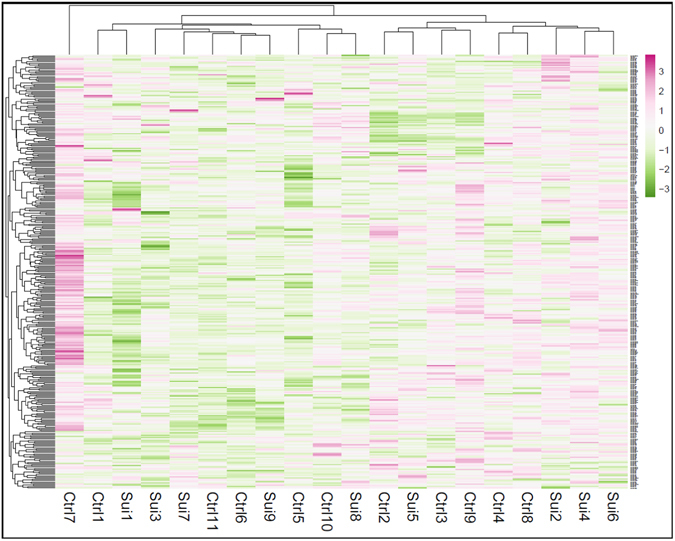
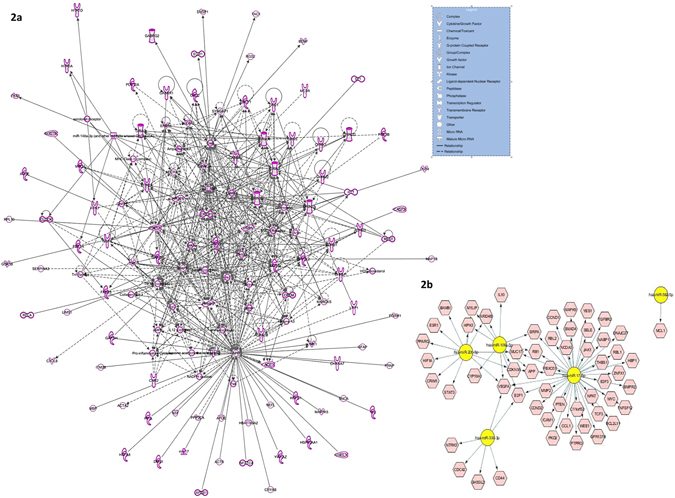
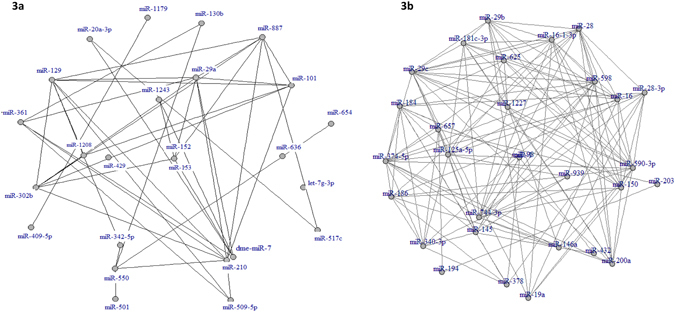
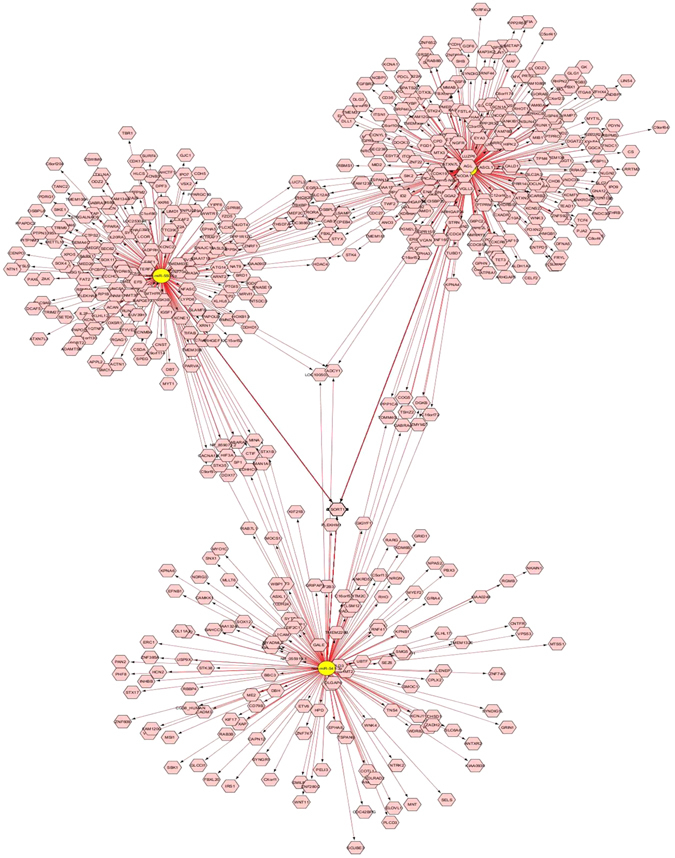
Norepinephrine (NE) is produced primarily by neurons in the locus coeruleus (LC). Retrograde and ultrastructural examinations reveal that the core of the LC and its surrounding region receives afferent projections from several brain areas which provide multiple neurochemical inputs to the LC with changes in LC neuronal firing, making it a highly coordinated event. Although NE and mediated signaling systems have been studied in relation to suicide and psychiatric disorders that increase the risk of suicide including depression, less is known about the corresponding changes in molecular network within LC. In this study, we examined miRNA networks in the LC of depressed suicide completers and healthy controls. Expression array revealed differential regulation of 13 miRNAs. Interaction between altered miRNAs and target genes showed dense interconnected molecular network. Functional clustering of predicated target genes yielded stress induced disorders that collectively showed the complex nature of suicidal behavior. In addition, 25 miRNAs were pairwise correlated specifically in the depressed suicide group, but not in the control group. Altogether, our study revealed for the first time the involvement of LC based dysregulated miRNA network in disrupting cellular pathways associated with suicidal behavior.
Overview
The claims and statistics of this paper haven’t been checked yet.
Free: it reads the open-access text and checks the first 5 claims that cite a source we can check. Create a free account to check every claim.
Integrity signals
Registry
Cites
Statistics
Figures
Verification
Claims the paper makes
The claims and statistics of this paper haven’t been checked yet.
Free: it reads the open-access text and checks the first 5 claims that cite a source we can check. Create a free account to check every claim.
Claims other papers make about this one
Each is checked against this paper’s own text: does it say what the citing paper says it does?
The cited source says what the claim attributes to it.
In the citing paper
“MiR-1179 is associated with GRIA3 and MAOA, which are involved in neuropsychiatric diseases. 455”
From Major depressive disorder: hypothesis, mechanism, prevention and treatment (2024) · cites this paper as [455]
The cited source says what the claim attributes to it.
In the citing paper
“MiRNA expression levels were also found to be altered in BA10,244 BA44,245 anterior cingulate cortex (ACC),246 and other brain regions in MDD.247”
From Epigenetic regulation in major depression and other stress-related disorders: molecular mechanisms, clinical relevance and therapeutic potential (2023) · cites this paper as [247]
Self-check
Percentages, sums and reported differences re-computed from the paper’s own numbers.
The self-check needs the paper’s full text.
Citations
Cites
Analysis of Relative Gene Expression Data Using Real-Time Quantitative PCR and the 2−ΔΔCT Method
Livak, K. J., & Schmittgen, T. D. (2001) · Methods · doi:10.1006/meth.2001.1262 · Cited by 180,860
KEGG: Kyoto Encyclopedia of Genes and Genomes
Kanehisa, M. (2000) · Nucleic Acids Research · doi:10.1093/nar/28.1.27 · Cited by 37,077
Bartel (2004) · doi:10.1016/s0092-8674(04)00045-5 · Cited by 34,714
KEGG: Kyoto Encyclopedia of Genes and Genomes
Ogata, H., Goto, S., Sato, K., Fujibuchi, W., Bono, H., & Kanehisa, M. (1999) · Nucleic Acids Research · doi:10.1093/nar/27.1.29 · Cited by 31,232
In silico prediction of protein-protein interactions in human macrophages
Souiai, O., Guerfali, F., Ben Miled, S., Brun, C., & Benkahla, A. (2014) · BMC Research Notes · doi:10.1186/1756-0500-7-157 · Cited by 10,803
Significance analysis of microarrays applied to the ionizing radiation response
Tusher, V. G., Tibshirani, R., & Chu, G. (2001) · Proceedings of the National Academy of Sciences · doi:10.1073/pnas.091062498 · Cited by 10,568
KEGG: new perspectives on genomes, pathways, diseases and drugs
Kanehisa, M., Furumichi, M., Tanabe, M., Sato, Y., & Morishima, K. (2017) · Nucleic Acids Research · doi:10.1093/nar/gkw1092 · Cited by 8,865
Kessler, R. C., Berglund, P., Demler, O., Jin, R., Koretz, D., Merikangas, K. R., Rush, A. J., Walters, E. E., & Wang, P. S. (2003) · JAMA · doi:10.1001/jama.289.23.3095 · Cited by 7,988
KEGG as a reference resource for gene and protein annotation
Kanehisa, M., Sato, Y., Kawashima, M., Furumichi, M., & Tanabe, M. (2016) · Nucleic Acids Research · doi:10.1093/nar/gkv1070 · Cited by 7,387
miRBase: annotating high confidence microRNAs using deep sequencing data
Kozomara, A., & Griffiths-Jones, S. (2014) · Nucleic Acids Research · doi:10.1093/nar/gkt1181 · Cited by 5,073
Research works printed but not linked: 2
- Chandley, M. J. & Ordway, G. A. In The Neurobiological Basis of Suicide (ed Y. Dwivedi) (CRC Press/Taylor & Francis Llc., 2012). 23035294
- First, M. B. Diagnostic and statistical manual of mental disorders. DSM IV-4th edition. APA, 1994 (1994).
Cited by
Major depressive disorder: hypothesis, mechanism, prevention and treatment
Cui, L., Li, S., Wang, S., Wu, X., Liu, Y., Yu, W., Wang, Y., Tang, Y., Xia, M., & Li, B. (2024) · Signal Transduction and Targeted Therapy · doi:10.1038/s41392-024-01738-y · Cited by 1,244
Locus coeruleus imaging as a biomarker for noradrenergic dysfunction in neurodegenerative diseases
Betts, M. J., Kirilina, E., Otaduy, M. C. G., Ivanov, D., Acosta-Cabronero, J., Callaghan, M. F., Lambert, C., Cardenas-Blanco, A., Pine, K., Passamonti, L., et al. (2019) · Brain · doi:10.1093/brain/awz193 · Cited by 365
“, 2011), depression (Berridge and Waterhouse, 2003), suicidal behaviour (Roy et al., 2017) and chronic pain (Llorca-Torralba”
BackgroundYuan, M., Yang, B., Rothschild, G., Mann, J. J., Sanford, L. D., Tang, X., Huang, C., Wang, C., & Zhang, W. (2023) · Signal Transduction and Targeted Therapy · doi:10.1038/s41392-023-01519-z · Cited by 246
“The FTO variant rs9939609 in human trials was associated with a lower risk of developing MDD. 358 A correlation is reported between FTO variants and the severity of MDD. 359 Lack of the FTO gene impacts anxiety-depression-like behavior in mice.”
BackgroundInfluentialMicroRNA mediators of early life stress vulnerability to depression and suicidal behavior
Allen, L., & Dwivedi, Y. (2020) · Molecular Psychiatry · doi:10.1038/s41380-019-0597-8 · Cited by 147
Self-citationNeuropeptide and small transmitter coexistence: Fundamental studies and relevance to mental illness
Hökfelt, T., Barde, S., Xu, Z.-Q. D., Kuteeva, E., Rüegg, J., Le Maitre, E., Risling, M., Kehr, J., Ihnatko, R., Theodorsson, E., et al. (2018) · Frontiers in Neural Circuits · doi:10.3389/fncir.2018.00106 · Cited by 139
Self-citationExploiting Circulating MicroRNAs as Biomarkers in Psychiatric Disorders
Roy, B., Yoshino, Y., Allen, L., Prall, K., Schell, G., & Dwivedi, Y. (2020) · Molecular Diagnosis & Therapy · doi:10.1007/s40291-020-00464-9 · Cited by 95
Self-citationmiR-323a regulates ERBB4 and is involved in depression
Fiori, L. M., Kos, A., Lin, R., Théroux, J.-F., Lopez, J. P., Kühne, C., Eggert, C., Holzapfel, M., Huettl, R.-E., Mechawar, N., et al. (2021) · Molecular Psychiatry · doi:10.1038/s41380-020-00953-7 · Cited by 88
“prefrontal cortex [2, 12–14], and the locus coeruleus [15] of”
BackgroundNon-Coding RNAs in Psychiatric Disorders and Suicidal Behavior
Yoshino, Y., & Dwivedi, Y. (2020) · Frontiers in Psychiatry · doi:10.3389/fpsyt.2020.543893 · Cited by 77
Self-citationMicroRNAs in depression and suicide: Recent insights and future perspectives
Dwivedi, Y. (2018) · Journal of Affective Disorders · doi:10.1016/j.jad.2018.07.075 · Cited by 78
Self-citationMiR-218: a molecular switch and potential biomarker of susceptibility to stress
Torres-Berrío, A., Nouel, D., Cuesta, S., Parise, E. M., Restrepo-Lozano, J. M., Larochelle, P., Nestler, E. J., & Flores, C. (2020) · Molecular Psychiatry · doi:10.1038/s41380-019-0421-5 · Cited by 79
Non-coding RNAs in depression: Promising diagnostic and therapeutic biomarkers
Shi, Y., Wang, Q., Song, R., Kong, Y., & Zhang, Z. (2021) · eBioMedicine · doi:10.1016/j.ebiom.2021.103569 · Cited by 79
“[107] Roy B, Wang Q, Palkovits M, et al.”
BackgroundSelf-citationGruzdev, S. K., Yakovlev, A. A., Druzhkova, T. A., Guekht, A. B., & Gulyaeva, N. V. (2019) · Cellular and Molecular Neurobiology · doi:10.1007/s10571-019-00684-6 · Cited by 75
Yoshino, Y., Roy, B., & Dwivedi, Y. (2021) · Neuropsychopharmacology · doi:10.1038/s41386-020-00861-y · Cited by 70
“Recently, microRNAs (miRNAs), members of small noncoding RNA families, have received much attention for their unique ability to control complex gene regulatory networks [4, 5].”
BackgroundSelf-citationThe role of microRNAs in depression
Ding, R., Su, D., Zhao, Q., Wang, Y., Wang, J., Lv, S., & Ji, X. (2023) · Frontiers in Pharmacology · doi:10.3389/fphar.2023.1129186 · Cited by 75
Mauer, J., Xavier, G., Ota, V., Chehimi, S. N., Mafra, F., Cuóco, C., Ito, L. T., Ormond, R., Asprino, P. F., Oliveira, A., et al. (2023) · Translational Psychiatry · doi:10.1038/s41398-023-02326-4 · Cited by 66
“A previous study demonstrated that this miRNA was downregulated in brain samples of individuals with MDD who had committed suicide [47].”
BackgroundŻurawek, D., & Turecki, G. (2021) · International Journal of Molecular Sciences · doi:10.3390/ijms222111312 · Cited by 73
“[78] Locus coeruleus miR-17-5p, miR-20b-5p, miR-106a-5p, miR-330-3p, miR-541-3p, miR-582-5p, miR-890, miR-99-3p, miR-550-5p, miR-1179 Up RELN, GSK-3β, MAOA, CHRM1, PLCB1,GRIK1 Indirect miR-409-5p, let-7g-3p, miR-1197 Down”
BackgroundSilva, R. C., Pisanu, C., Maffioletti, E., Menesello, V., Bortolomasi, M., Gennarelli, M., Baune, B. T., Squassina, A., & Minelli, A. (2023) · European Neuropsychopharmacology · doi:10.1016/j.euroneuro.2023.07.012 · Cited by 61
The role of Locus Coeruleus in neuroinflammation occurring in Alzheimer’s disease
Giorgi, F. S., Saccaro, L. F., Galgani, A., Busceti, C. L., Biagioni, F., Frati, A., & Fornai, F. (2019) · Brain Research Bulletin · doi:10.1016/j.brainresbull.2019.08.007 · Cited by 55
Roy, B., Dunbar, M., Agrawal, J., Allen, L., & Dwivedi, Y. (2020) · International Journal of Neuropsychopharmacology · doi:10.1093/ijnp/pyz071 · Cited by 53
Self-citationGlăvan, D., Gheorman, V., Greșiță, A., Hermann, D. M., Udriștoiu, I., & Popa‐Wagner, A. (2021) · Scientific Reports · doi:10.1038/s41598-021-98210-6 · Cited by 52
Microglial PCGF1 alleviates neuroinflammation associated depressive behavior in adolescent mice
Li, N., Du, J., Yang, Y., Zhao, T., Wu, D., Peng, F., Wang, D., Kong, L., Zhou, W., & Hao, A. (2024) · Molecular Psychiatry · doi:10.1038/s41380-024-02714-2 · Cited by 46
“These epigenetic effects have been widely investigated in various psychiatric conditions [16 – 18].”
Wang, Q., Roy, B., & Dwivedi, Y. (2019) · Translational Psychiatry · doi:10.1038/s41398-019-0448-z · Cited by 42
Self-citationSegaran, R. C., Chan, L. Y., Wang, H., Sethi, G., & Tang, F. R. (2020) · Current Medicinal Chemistry · doi:10.2174/0929867327666200121122910 · Cited by 42
Mendes-Silva, A. P., Fujimura, P. T., Silva, J. R. D. C., Teixeira, A. L., Vieira, E. M., Guedes, P. H. G., Barroso, L. S. S., Nicolau, M. D. S., Ferreira, J. D. R., Bertola, L., et al. (2019) · Journal of Psychiatric Research · doi:10.1016/j.jpsychires.2019.01.019 · Cited by 35
Suicide epigenetics, a review of recent progress
Cheung, S., Woo, J., Maes, M. S., & Zai, C. C. H. (2020) · Journal of Affective Disorders · doi:10.1016/j.jad.2020.01.040 · Cited by 47
Roy, B., Ochi, S., & Dwivedi, Y. (2023) · International Journal of Molecular Sciences · doi:10.3390/ijms24054664 · Cited by 41
“Most prevalent neuropsychiatric illnesses, including MDD, BD, and suicidal behavior, have often shown discernable changes in miRNA expression [17,32].”
BackgroundInfluentialSelf-citationTillage, R. P., Wilson, G. E., Liles, L. C., Holmes, P. V., & Weinshenker, D. (2020) · Journal of Neuroscience · doi:10.1523/jneurosci.0973-20.2020 · Cited by 38
Mirza, S. A., Docherty, A. R., Bakian, A. V., Coon, H. H., Soares, J. C., Walss‐Bass, C., & Fries, G. R. (2022) · American Journal of Medical Genetics Part B Neuropsychiatric Genetics · doi:10.1002/ajmg.b.32917 · Cited by 41
Roy, B., & Dwivedi, Y. (2023) · Neuroscience & Biobehavioral Reviews · doi:10.1016/j.neubiorev.2023.105040 · Cited by 31
Self-citationMiR-137 Deficiency Causes Anxiety-Like Behaviors in Mice
Yan, H., Sun, X., Wang, Z., Liu, P., Mi, T., Liu, C., Wang, Y., He, X., Du, H., Liu, C., et al. (2019) · Frontiers in Molecular Neuroscience · doi:10.3389/fnmol.2019.00260 · Cited by 32
Sokolowski, M., & Wasserman, D. (2020) · European Neuropsychopharmacology · doi:10.1016/j.euroneuro.2020.06.002 · Cited by 29
Zhou, Y., Lutz, P., Ibrahim, E. C., Courtet, P., Tzavara, E., Turecki, G., & Belzeaux, R. (2020) · Journal of Neuroscience Research · doi:10.1002/jnr.24367 · Cited by 24
“Studies using these techniques have only just begun to reveal distinct molecular profiles from specific cell types and popula‐ tions (Byne et al., 2008; Ruzicka et al., 2007), which could even be used to distinguish between certain psychiatric illnesses (Arion et al., 2017).”
BackgroundMolecular mechanisms underlying major depressive disorder and post-stroke affective disorders
Coliță, D., Burdusel, D., Glăvan, D., Hermann, D. M., Coliță, C.-I., Coliță, E., Udriștoiu, I., & Popa‐Wagner, A. (2023) · Journal of Affective Disorders · doi:10.1016/j.jad.2023.10.037 · Cited by 28
Epigenetic Mechanisms of Rapid-Acting Antidepressants
Inserra, A., Campanale, A., Rezai, T., Romualdi, P., & Rubino, T. (2024) · Translational Psychiatry · doi:10.1038/s41398-024-03055-y · Cited by 27
“Dysregulated miRNA dynamics are observed in depression and suicide, with studies pinpointing alterations in the PFC and hippocampus during depressive states [121, 122, 128, 129].”
BackgroundYoshino, Y., Roy, B., & Dwivedi, Y. (2020) · European Neuropsychopharmacology · doi:10.1016/j.euroneuro.2020.06.004 · Cited by 27
Self-citationDepressive disorder and antidepressants from an epigenetic point of view
Arčan, I. Š., Kouter, K., & Paska, A. V. (2022) · World Journal of Psychiatry · doi:10.5498/wjp.v12.i9.1150 · Cited by 30
Locus Coeruleus Malfunction Is Linked to Psychopathology in Prodromal Dementia With Lewy Bodies
Hansen, N. (2021) · Frontiers in Aging Neuroscience · doi:10.3389/fnagi.2021.641101 · Cited by 30
“, 1992), suicide behavior (Roy et al., 2017) and defective emotional-memory encoding (Jacobs et al.”
BackgroundRoy, B., Ochi, S., & Dwivedi, Y. (2022) · The International Journal of Neuropsychopharmacology · doi:10.1093/ijnp/pyac068 · Cited by 27
“More recently, our laboratory and others have reported that at the molecular level, dysregulation in specific miRNAs and their functions are associated with several neuropsychiatric diseases, including stressful conditions and MDD (Serafini et al., 2012; Roy et al., 2017b; Yoshino et al., 2021a).”
BackgroundMethodResultInfluentialSelf-citationLiu, Z., Yang, J., Fang, Q., Shao, H., Yang, D., Sun, J., & Gao, L. (2021) · Brain and Behavior · doi:10.1002/brb3.2107 · Cited by 22
“Depression is one of the major public health concerns, and chronic depression may cause neuron and synapse atrophies in the limbic system (Moussavi et al., 2007; Strine et al., 2009).”
BackgroundEpigenetic mechanisms linking early-life adversities and mental health
Cánepa, E. T., & Berardino, B. G. (2024) · Biochemical Journal · doi:10.1042/bcj20230306 · Cited by 25
Kouter, K., & Paska, A. V. (2020) · Epigenomics · doi:10.2217/epi-2020-0196 · Cited by 22
miR-218: A Stress-Responsive Epigenetic Modifier
Schell, G., Roy, B., Prall, K., & Dwivedi, Y. (2022) · Non-Coding RNA · doi:10.3390/ncrna8040055 · Cited by 21
“Since their first report as epigenetic modifiers, miRNAs have evolved from being a modulator of a single protein-coding gene to acting as a potential regulatory hub to control a wide array of complex gene networks either through direct association or by indirect intermediates [35].”
BackgroundSelf-citationUnderstanding the Neuroepigenetic Constituents of Suicide Brain
Roy, B., & Dwivedi, Y. (2018) · Progress in Molecular Biology and Translational Science · doi:10.1016/bs.pmbts.2018.01.007 · Cited by 17
Self-citationRecent developments in omics studies and artificial intelligence in depression and suicide
Wang, Q., & Dwivedi, Y. (2025) · Translational Psychiatry · doi:10.1038/s41398-025-03497-y · Cited by 18
“Our research group further used miRNA PCR arrays to explore the expression changes of miRNA in the locus coeruleus of suicide subjects and identi fi ed signi fi cantly altered miRNAs and potential target genes forming speci fi c networks, providing a basis for explaining suicidal behavior [63].”
Self-citationZhao, L., Yang, X., Cui, L., Wei, J., Ni, P., Li, M., Wang, Y., He, Y., Li, X., Liang, S., et al. (2018) · Journal of Affective Disorders · doi:10.1016/j.jad.2018.10.363 · Cited by 17
Self-citationZou, S., Dai, L., Wang, P., Du, H., Guo, Q., Li, F., & He, X. (2021) · CNS & Neurological Disorders - Drug Targets · doi:10.2174/1871527320666211104123343 · Cited by 16
Clausen, A. R., Durand, S., Petersen, R. L., Staunstrup, N. H., & Qvist, P. (2022) · Genes · doi:10.3390/genes13061038 · Cited by 19
Diagnostic value of MicroRNAs for depression: A systematic review and meta-analysis
Li, W., Li, X., Li, Y., Chen, Y., Zhu, L., & Guo, R. (2022) · Journal of Psychiatric Research · doi:10.1016/j.jpsychires.2022.11.028 · Cited by 16
Psychoneuroimmunology: The new frontier in suicide research
Neupane, S. P. (2021) · Brain Behavior & Immunity - Health · doi:10.1016/j.bbih.2021.100344 · Cited by 17
Su, B., Cheng, S., Wang, L., & Wang, B. (2022) · Bioengineered · doi:10.1080/21655979.2022.2059937 · Cited by 14
RetractedKrivosova, M., Adamčáková, J., Kaadt, E., Mumm, B. H., Dvorská, D., Braný, D., Daňková, Z., Dohál, M., Samec, M., Ferencová, N., et al. (2023) · Journal of Affective Disorders · doi:10.1016/j.jad.2023.04.094 · Cited by 15
The potential of microRNAs as putative biomarkers in major depressive disorder and suicidal behavior
Serafini, G., Trabucco, A., Corsini, G. P., Escelsior, A., Amerio, A., Aguglia, A., Nasrallah, H. A., & Amore, M. (2021) · Biomarkers in Neuropsychiatry · doi:10.1016/j.bionps.2021.100035 · Cited by 14
Takahashi, M., & Shelton, R. C. (2025) · Frontiers in Psychiatry · doi:10.3389/fpsyt.2025.1666599 · Cited by 18
Arčan, I. Š., Katrašnik, M., Kouter, K., Zupanc, T., & Paska, A. V. (2023) · Genes Brain & Behavior · doi:10.1111/gbb.12868 · Cited by 13
“16,17 MiRNA wide approach studies 18 – 20 and candidate approach 21 – 25 were used to show differentially regulated miRNAs.”
BackgroundEpigenetic studies in suicidal ideation and behavior
Dada, O. O., Qian, J., Al-Chalabi, N., Kolla, N. J., Graff, A., Zai, C. C. H., Gerretsen, P., & Luca, V. D. (2021) · Psychiatric Genetics · doi:10.1097/ypg.0000000000000298 · Cited by 13
“…et al., 2012; Im and Kenny, 2012). miRNAs are also involved in the development of stress-related disorders such as suicidal behavior and depression (Roy et al., 2017b; Smalheiser et al., 2012; Lopez et al., 2014a). miRNAs have been extensively studied in psychiatric disorders such as schizophrenia…”
Background‘Omics’ of suicidal behaviour: A path to personalised psychiatry
Kouter, K., & Paska, A. V. (2021) · World Journal of Psychiatry · doi:10.5498/wjp.v11.i10.774 · Cited by 11
Chenthamara, D., Prasathkumar, M., Robert, B., Anisha, S., Sadhasivam, S., Essa, M. M., Chidambaram, S. B., Al-Balushi, B., Guillemin, G. J., & Qoronfleh, M. W. (2020) · International Journal of Tryptophan Research · doi:10.1177/1178646920978243 · Cited by 11
Molecular programs underlying differences in the expression of mood disorders in males and females
Mena, F., & Benoit, L. (2019) · Brain Research · doi:10.1016/j.brainres.2019.05.016 · Cited by 9
Deregulation of exosomal miRNAs in rheumatoid arthritis patients
Hussain, M. Z., Haris, M. S., Rizwan, M., Ashraf, N. S., Arshad, M., & Mahjabeen, I. (2023) · PLoS ONE · doi:10.1371/journal.pone.0289301 · Cited by 9
Depicting the molecular features of suicidal behavior: a review from an “omics” perspective
Pereira, C. A., Reis‐de‐Oliveira, G., Pierone, B. C., Martins‐de‐Souza, D., & Kaster, M. P. (2023) · Psychiatry Research · doi:10.1016/j.psychres.2023.115682 · Cited by 9
Ali, S., & Dwivedi, Y. (2025) · Molecular Neurobiology · doi:10.1007/s12035-025-05309-2 · Cited by 5
Self-citationEpigenetic marks in suicide: a review
Ramos-Rosales, D. F., Vázquez-Alaníz, F., Urtiz-Estrada, N., Ramirez-Valles, E. G., Méndez-Hernández, E. M., Salas-Leal, A. C., & Barraza-Salas, M. (2021) · Psychiatric Genetics · doi:10.1097/ypg.0000000000000297 · Cited by 6
“Roy et al. (2017b) focused on the transcriptome in the locus coeruleus (LC) of depressed suicide completers and healthy controls.”
BackgroundÁgoston, D. V. (2024) · Frontiers in Neuroanatomy · doi:10.3389/fnana.2024.1374864 · Cited by 4
Hagihara, H., & Miyakawa, T. (2024) · Translational Psychiatry · doi:10.1038/s41398-024-03173-7 · Cited by 4
Das, S. C., Schulmann, A., Callor, W. B., Jerominski, L., Panicker, M. M., Christensen, E. D., Bunney, W. E., Williams, M. E., Coon, H. H., & Vawter, M. P. (2024) · Journal of Affective Disorders · doi:10.1016/j.jad.2024.08.144 · Cited by 4
Specific miRNAs associated with treatment response during hospitalization for suicidal ideationPreprint
Kosten, T. R., Ye, A., Nielsen, D. A., Patriquin, M. A., Palat, A., Rezaei, H., Salas, R., Harding, M. J., Haile, C. N., Gunaratne, P. H., et al. (2022) · Research Square · doi:10.21203/rs.3.rs-2100363/v1 · Cited by 4
Ni, L., Zhu, Y., Lv, L., Zhang, R., Xie, S., & Zhang, X. (2025) · Journal of Affective Disorders · doi:10.1016/j.jad.2025.04.126 · Cited by 3
Epigenetics and immunology: Under-recognized aspects of suicidality
Kouter, K., Šmon, J., & Paska, A. V. (2025) · World Journal of Psychiatry · doi:10.5498/wjp.v15.i9.107726 · Cited by 4
MicroRNAs and suicidality: a systematic review and bioinformatic evaluation
Malekpour, M., Akbari, M., Tafti, M. F., Falamarzi, K., Golabi, F., Meybodi, M. J. E., Shahrivar, K., Ghasemi, N., Midjani, F., Jaafari, N., et al. (2026) · Frontiers in Psychiatry · doi:10.3389/fpsyt.2026.1723187 · Cited by 3
Expression and related mechanisms of miR-330-3p and S100B in an animal model of cartilage injury
Wu, W., & Liang, D. (2021) · Journal of International Medical Research · doi:10.1177/03000605211039471 · Cited by 3
“miR-330-3p is located on human chromosome 19.(51) Studies have shown that it has differential expression in a variety of digestive tract tumuors.”
BackgroundTemporal effects on death by suicide: empirical evidence and possible molecular correlates
Bhagar, R., Le-Niculescu, H., Roseberry, K., Kosary, K., Daly, C., Ballew, A., Yard, M., Sandusky, G. E., & Niculescu, A. B. (2023) · Discover Mental Health · doi:10.1007/s44192-023-00035-4 · Cited by 3
Zajkowska, A., Czajka, M., Gulik, K., Gawrychowski, K., & Małecki, M. (2023) · Advances in Clinical and Experimental Medicine · doi:10.17219/acem/171745 · Cited by 2
Zhang, L., Tian, Q., & Chunming, X. (2024) · Neuroscience · doi:10.1016/j.neuroscience.2024.09.029 · Cited by 2
Epigenetics and suicidal behavior in adolescents: a critical review
Funahashi, Y., & Dwivedi, Y. (2025) · Epigenomics · doi:10.1080/17501911.2025.2453415 · Cited by 2
Self-citationThe epigenetics of suicide: The critical impact of environment on epigenetic regulation in suicide
Lutz, P.-É., Turecki, G., & Labonté, B. (2021) · Elsevier eBooks · doi:10.1016/b978-0-12-823577-5.00010-6 · Cited by 2
Epigenetic epidemiology of psychiatric disorders
Dahrendorff, J., & Uddin, M. (2021) · Elsevier eBooks · doi:10.1016/b978-0-12-823577-5.00031-3 · Cited by 2
Research progress of miRNA in different depression model samples
Zhu, W., & Zhang, X. (2022) · Advances in Engineering Technology Research · doi:10.56028/aetr.1.2.497 · Cited by 2
“Moreover, several studies have shown that miRNA can not only exist in patients' brain tissue or cerebrospinal fluid (CSF), but also be encapsulated in exosomes and released into the blood by crossing the blood-brain barrier, and miRNA detected in the blood can reflect the alteration of miRNA in the brain[93].”
BackgroundEpigenetika in samomorilno vedenje
Uršič, K., & Paska, A. V. (2018) · Slovenian Medical Journal · doi:10.6016/zdravvestn.2660
Bioinformatic Applications in Neuroscience
Çağlar, C., & Gürsoy, B. K. (2025) · Elsevier eBooks · doi:10.1016/b978-0-323-95502-7.00282-7
Translational potential of RNA biomarkers in mental health: A narrative review
Lim, E. C. N., & Lim, C. E. D. (2025) · NeuroMarkers. · doi:10.1016/j.neumar.2025.100127 · Cited by 2
Overview of the Clinical Potential of microRNAs in the Detection of Suicide
López-Martínez, K. M., Cortez-Sánchez, J. L., Sánchez, G. P., Chin-Chan, M., & Bautista, E. (2025) · Cureus · doi:10.7759/cureus.94501
“Other relevant findings come from the locus coeruleus, where altered miRNA networks regulating genes such as RELN, GSK3 β , and MAOA were identified, linking gene dysregulation with major depression and anxiety, both risk factors for suicidal behavior [19].”
Relación entre la conducta suicida del trastorno depresivo mayor con marcadores genéticos de lípidos
(n.d.) · Tesis Doctorals en Xarxa (Consorci de Serveis Universitaris de Catalunya)
Dahrendorff, J. (2025) · Digital Commons - University of South Florida (University of South Florida)
Dahrendorff, J., Wang, C., Wani, A. H., Graham, Z., Aiello, A. E., Qu, A., Wildman, D. E., & Uddin, M. (2026) · Epigenomes · doi:10.3390/epigenomes10020035
“The downregulation of hsa-miR-409-3p has previously been associated with adolescent depression in peripheral blood [32] and in brain samples of suicide completers [38].”
Tison, M., Zagury, J., Leboyer, M., & Tamouza, R. (2025) · Elsevier eBooks · doi:10.1016/b978-2-294-78794-2.00011-7
Kaadt, E., Søkilde, R., Hansen, H. D., Raval, N. R., Donovan, L. L., Just, J., Knudsen, G. M., & Elfving, B. (2026) · European Journal of Pharmacology · doi:10.1016/j.ejphar.2026.179222
Metadata
- Authors
- Roy, B., Wang, Q., Palkovits, M., Faludi, G., & Dwivedi, Y.
- Affiliations
- University of Alabama at Birmingham (US)
- Corresponding author
- Dwivedi, Yogesh
- Venue
- Scientific Reports
- Published
- 2017-06-29
- Volume
- 7
- Issue
- 1
- Pages
- 4387-4387
- ISSN
- 2045-2322 (ISSN-L)
- PMC
- PMC5491496
- OpenAlex
- W2673388768
- Semantic Scholar
- 0ae8cdacde6bd2aec92dfc396f9c8e4793267a08
- Cited by
- 86
- References
- 68
- Citations by year
- 2026: 3 · 2025: 10 · 2024: 8 · 2023: 14 · 2022: 10 · 2021: 14 · 2020: 11 · 2019: 10 · 2018: 6
- FWCI
- 2.48
- Type
- journal article
- Language
- en
- Open access
- gold
- doi.org
- Licence
- cc-by
- creativecommons.org/licenses/by/4.0 (tdm)
- creativecommons.org/licenses/by/4.0 (vor)
- Locations
- Scientific Reports (publishedVersion, cc-by)
- Europe PMC (PubMed Central) (publishedVersion, cc-by)
- PubMed Central (publishedVersion, cc-by)
- PubMed (publishedVersion)
- DOAJ (DOAJ: Directory of Open Access Journals) (submittedVersion, cc-by-sa)
- Semmelweis University Repository (Semmelweis University) (submittedVersion)
- Funders
- American Foundation for Suicide Prevention (1R01MH101890, R01MH082802, R01MH100616, R21MH081099, 1R01MH107183, SRG-XXXX-001778-1209)
- National Institute of Mental Health (R21MH081099, R01MH101890, R01MH082802, R01MH100616, R01MH107183)
- Topics
- Life Sciences › Biochemistry, Genetics and Molecular Biology › Cancer Research › MicroRNA in disease regulation
- Social Sciences › Psychology › Clinical Psychology › Suicide and Self-Harm Studies
- Health Sciences › Medicine › Pharmacology (medical) › Treatment of Major Depression
- Keywords
- microRNA expression, locus coeruleus, suicide, depression, norepinephrine, miRNA-mRNA regulatory network, stress-related disorders, suicidal behavior
- MeSH terms
- Adult, Aged, Aged, 80 and over, Depression, Depressive Disorder, Female, Gene Expression Regulation, Humans, Locus Coeruleus, Male, Middle Aged, Neurons, Suicide, Signal Transduction, Computational Biology, Gene Expression Profiling, MicroRNAs, Gene Regulatory Networks, Transcriptome
About these checks
Registry, retraction, Cites and statistics results are computed, not judged, with one exception: a printed reference that no index lists is read once by a model before it counts as a citation error. Claims are extracted by a model and kept only when their quote appears verbatim in the text; each cited source is then checked, with a model’s help, for whether it says what the claim relies on. Those verdicts can be wrong — read the claim’s quote and the cited source before relying on one.
Statistics and arithmetic are recomputed, not judged.
Confidence bands are shown only for fields calibrated on our annotated test set. None is calibrated yet, so no band is shown.
What counts as a claim ›How we measure confidence ›How we check this ›
Are you an author, or do you see a problem with this page? Request a review
Data sources
Bibliographic data: Semantic Scholar, OpenAlex, Crossref.
Contains information from the Semantic Scholar Academic Graph Datasets, made available under the ODC Attribution License (ODC-BY 1.0).
Semantic Scholar’s data is described in: Kinney, R., et al. (2023). The Semantic Scholar Open Data Platform. arXiv:2301.10140.
