

Visuo-acoustic stimulation that helps you to relax: A virtual reality setup for patients in the intensive care unit
Open accessThe DOI matches its Crossref record; 66 of the 66 references it cites were found in a registry or an index.
Abstract
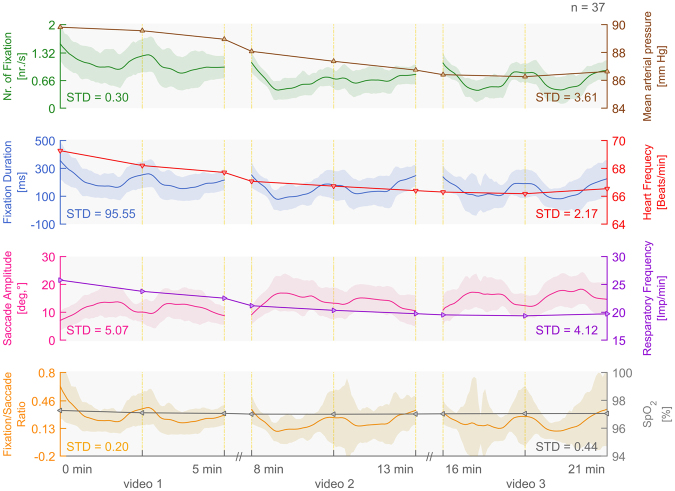
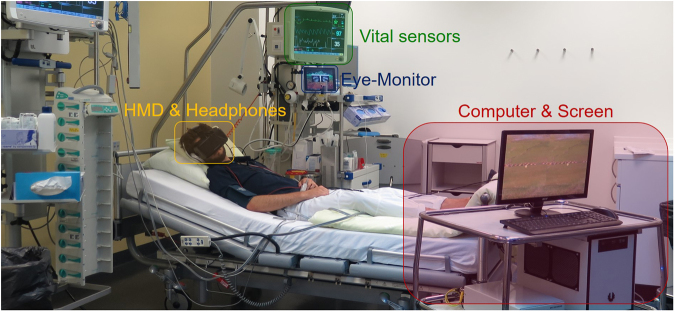
After prolonged stay in an intensive care unit (ICU) patients often complain about cognitive impairments that affect health-related quality of life after discharge. The aim of this proof-of-concept study was to test the feasibility and effects of controlled visual and acoustic stimulation in a virtual reality (VR) setup in the ICU. The VR setup consisted of a head-mounted display in combination with an eye tracker and sensors to assess vital signs. The stimulation consisted of videos featuring natural scenes and was tested in 37 healthy participants in the ICU. The VR stimulation led to a reduction of heart rate (p = 0. 049) and blood pressure (p = 0.044). Fixation/saccade ratio (p < 0.001) was increased when a visual target was presented superimposed on the videos (reduced search activity), reflecting enhanced visual processing. Overall, the VR stimulation had a relaxing effect as shown in vital markers of physical stress and participants explored less when attending the target. Our study indicates that VR stimulation in ICU settings is feasible and beneficial for critically ill patients.
Overview
The claims and statistics of this paper haven’t been checked yet.
Free: it reads the open-access text and checks the first 5 claims that cite a source we can check. Create a free account to check every claim.
Integrity signals
Registry
Cites
Statistics
Figures
Verification
Claims the paper makes
The claims and statistics of this paper haven’t been checked yet.
Free: it reads the open-access text and checks the first 5 claims that cite a source we can check. Create a free account to check every claim.
Claims other papers make about this one
Each is checked against this paper’s own text: does it say what the citing paper says it does?
The source backs part of the claim, not all of it — or backs it for a different population, condition or comparison.
In the citing paper
“We used a natural VR landscape experience since previous research studies have suggested that visual exposure to natural environments has a relaxing effect on patients and can protect against environmental stressors.13, 31”
From Feasibility of a virtual reality intervention in the intensive care unit (2021) · cites this paper as [31]
Experimental — accuracy not yet measuredThe source backs part of the claim, not all of it — or backs it for a different population, condition or comparison.
In the citing paper
“In our review of the literature for various studies, the risk of cybersickness and major adverse events reported is minimal and is in line with the findings of our study.7, 31”
From Feasibility of a virtual reality intervention in the intensive care unit (2021) · cites this paper as [31]
Experimental — accuracy not yet measuredThe cited source says what the claim attributes to it.
In the citing paper
“Contrary to the desktop screen, HMD provides a more natural visual exploration and allows for greater immersion.31”
From Feasibility of a virtual reality intervention in the intensive care unit (2021) · cites this paper as [31]
Self-check
Percentages, sums and reported differences re-computed from the paper’s own numbers.
The self-check needs the paper’s full text.
Citations
Cites
A general and simple method for obtaining R 2 from generalized linear mixed‐effects models
Nakagawa, S., & Schielzeth, H. (2013) · Methods in Ecology and Evolution · doi:10.1111/j.2041-210x.2012.00261.x · Cited by 10,356
SUS: A 'Quick and Dirty' Usability Scale
(1996) · Usability Evaluation In Industry · doi:10.1201/9781498710411-35 · Cited by 8,989
Measuring Presence in Virtual Environments: A Presence Questionnaire
Witmer, B. G., & Singer, M. J. (1998) · Presence: Teleoperators and Virtual Environments · doi:10.1162/105474698565686 · Cited by 6,371
Stress recovery during exposure to natural and urban environments
Ulrich, R. S., Simons, R. F., Losito, B. D., Fiorito, E., Miles, M. A., & Zelson, M. (1991) · Journal of Environmental Psychology · doi:10.1016/s0272-4944(05)80184-7 · Cited by 5,990
Simulator Sickness Questionnaire: An Enhanced Method for Quantifying Simulator Sickness
Kennedy, R. S., Lane, N. E., Berbaum, K. S., & Lilienthal, M. G. (1993) · The International Journal of Aviation Psychology · doi:10.1207/s15327108ijap0303_3 · Cited by 5,457
Physiology and neurobiology of stress and adaptation: central role of the brain
McEwen, B. S. (2007) · Physiological Reviews · doi:10.1152/physrev.00041.2006 · Cited by 5,429
Usability Evaluation In Industry
(1996) · CRC Press eBooks · doi:10.1201/9781498710411 · Cited by 4,354
Long-term cognitive impairment after critical illness
Pandharipande, P. P., Girard, T. D., Jackson, J. C., Morandi, A., Thompson, J. L., Pun, B. T., Brummel, N. E., Hughes, C. G., Vasilevskis, E. E., Shintani, A. K., et al. (2013) · New England Journal of Medicine · doi:10.1056/nejmoa1301372 · Cited by 2,842
The cognitive benefits of interacting with nature.
Berman, M. G., Jonides, J., & Kaplan, S. (2008) · Psychological Science · doi:10.1111/j.1467-9280.2008.02225.x · Cited by 2,535
Ely, E. W., Truman, B., Shintani, A., Thomason, J. W. W., Wheeler, A. P., Gordon, S., Francis, J., Speroff, T., Gautam, S., Margolin, R., et al. (2003) · JAMA · doi:10.1001/jama.289.22.2983 · Cited by 1,707
Cited by
Reduction of physiological stress by urban green space in a multisensory virtual experiment
Hedblom, M., Gunnarsson, B., Iravani, B., Knez, I., Schaefer, M., Thorsson, P., & Lundström, J. N. (2019) · Scientific Reports · doi:10.1038/s41598-019-46099-7 · Cited by 498
Browning, M. H. E. M., Mimnaugh, K. J., van Riper, C. J., Laurent, H. K., & LaValle, S. M. (2020) · Frontiers in Psychology · doi:10.3389/fpsyg.2019.02667 · Cited by 488
The Metaverse: A new digital frontier for consumer behavior
Hadi, R., Melumad, S., & Park, E. S. (2024) · Journal of Consumer Psychology · doi:10.1002/jcpy.1356 · Cited by 393
Yeo, N. L., White, M. P., Alcock, I., Garside, R., Dean, S. G., Smalley, A. J., & Gatersleben, B. (2020) · Journal of Environmental Psychology · doi:10.1016/j.jenvp.2020.101500 · Cited by 253
“…settings such as offices (Yin, Zhu, MacNaughton, Allen, & Spengler, 2018), dental surgeries (Tanja-Dijk-stra et al., 2018), intensive care units (Gerber et al., 2017) and other care settings, where their ability to mask the external environment may allow individuals a brief ‘escape ’ from these…”
BackgroundBruno, R. R., Wolff, G., Wernly, B., Masyuk, M., Piayda, K., Leaver, S., Erkens, R., Oehler, D., Afzal, S., Heidari, H., et al. (2022) · Critical Care · doi:10.1186/s13054-022-04202-x · Cited by 242
“These results were supported by a decrease in respiratory rate during VR sessions [12, 13].”
ResultVirtual Reality for Emotion Elicitation – A Review
Somarathna, R., Bednarz, T., & Mohammadi, G. (2023) · IEEE Transactions on Affective Computing · doi:10.1109/taffc.2022.3181053 · Cited by 171
“…[115], [127], [129], [130], [132], [133], [134], [135], [136], [137], [138], [139], [140], [141], [142], [143], [144], [145], [146], [147], [148], [149], [150], [151], [152], [153], [154], [155], [156], [157], [158], [159], [160], [161], [162], [163], [164], [165], [166], [167], [168], [169],…”
Wenk, N., Penalver-Andres, J., Buetler, K. A., Nef, T., Müri, R. M., & Marchal-Crespo, L. (2023) · Virtual Reality · doi:10.1007/s10055-021-00565-8 · Cited by 167
“However, based on our own experience (Gerber et al. 2017) and recent research with older adults (Huygelier et al. 2019) and stroke patients (Borrego et al. 2019), we are confident that stroke patients’ attitudes towards a more immersive VR would be positive and would embody the virtual avatar.”
BackgroundMethodSelf-citationBrowning, M. H. E. M., Saeidi-Rizi, F., McAnirlin, O., Yoon, H., & Pei, Y. (2020) · Environment and Behavior · doi:10.1177/0013916520906481 · Cited by 185
“More recent discussions of nature simulations have highlighted their potential to improve the health and cognitive performance of those who lack access to nature (Calogiuri et al., 2018; Depledge et al., 2011; Gerber et al., 2017; Keeler et al., 2019).”
BackgroundBibri, S. E., & Allam, Z. (2022) · Computational Urban Science · doi:10.1007/s43762-022-00050-1 · Cited by 184
“…sustainable urbanism (e.g., Bibri 2021e, 2021f), so have immersive technologies to have beneficial psychological effects and to enhance wellbeing with reference to ecological virtual urbanism (e.g., Browning et al. 2020, de Kort et al. 2006, Gerber et al. 2017, Pasca et al. 2021, Yeo et al. 2020).”
BackgroundVirtual and Augmented Reality in Cardiovascular Care
Jung, C., Wolff, G., Wernly, B., Bruno, R. R., Franz, M., Schulze, P. C., Silva, J. N. A., Silva, J. R., Bhatt, D. L., & Kelm, M. (2021) · JACC. Cardiovascular imaging · doi:10.1016/j.jcmg.2021.08.017 · Cited by 169
Iqbal, A., Aamir, A., Hammad, A., Hafsa, H., Basit, A., Oduoye, M. O., Anis, M. W., Ahmed, S., Younus, M. I., & Jabeen, S. (2024) · Journal of Primary Care & Community Health · doi:10.1177/21501319241293311 · Cited by 194
“39 Gerber et al 40,41 obtained comparable outcomes in their study, where they utilized VR featuring immersive nature scenes with 33 critically ill patients’ post-cardiac surgery.”
BackgroundReese, G., Stahlberg, J., & Menzel, C. (2022) · Virtual Reality · doi:10.1007/s10055-022-00631-9 · Cited by 164
Li, H., Dong, W., Wang, Z., Chen, N., Wu, J., Wang, G., & Jiang, T. (2021) · International Journal of Environmental Research and Public Health · doi:10.3390/ijerph18179053 · Cited by 119
“VR technology has also been applied in mental health education [69]; the prevention, assessment, and intervention of mental illness [70–72]; in the medical field [73,74].”
MethodLee, S. Y., & Kang, J. (2020) · Intensive and Critical Care Nursing · doi:10.1016/j.iccn.2020.102849 · Cited by 114
Virtual and augmented reality in intensive care medicine: a systematic review
Kanschik, D., Bruno, R. R., Wolff, G., Kelm, M., & Jung, C. (2023) · Annals of Intensive Care · doi:10.1186/s13613-023-01176-z · Cited by 152
“Furthermore, the use of VR can lower the stress level and reduce anxiety during the stay in the ICU [36, 72].”
BackgroundImmersive Virtual Reality in Health Care: Systematic Review of Technology and Disease States
Snoswell, A. J., & Snoswell, C. L. (2019) · JMIR Biomedical Engineering · doi:10.2196/15025 · Cited by 99
“…virtual reality system Author, year (country) 20-8537Cognitive stimulation for patients in the intensive care unit EfficacyOculus Developer Kit 2 Gerber et al, 2017 (Switzerland) [23] 15-2617Social ability in autism spectrum disorder FeasibilityOculus Developer Kit 2 Amaral et al, 2017…”
BackgroundMethodInfluentialMeasures and modalities in restorative virtual natural environments: An integrative narrative review
Nukarinen, T., Rantala, J., Korpela, K., Browning, M. H. E. M., Istance, H. O., Surakka, V., & Raisamo, R. (2021) · Computers in Human Behavior · doi:10.1016/j.chb.2021.107008 · Cited by 113
Nijland, J. W. H. M., Veling, W., Lestestuiver, B. P., & Van Driel, C. M. G. (2021) · Frontiers in Psychology · doi:10.3389/fpsyg.2021.706527 · Cited by 88
The use of virtual reality head-mounted displays within applied sport psychology
Bird, J. M. (2019) · Journal of Sport Psychology in Action · doi:10.1080/21520704.2018.1563573 · Cited by 101
“Superior perceptual-cognitive skills allow individuals to effectively use their vision to identify critical environmental information, in order to anticipate the behaviors of others (i.e., teammates and opponents) and to select and execute the most appropriate cause of action (Broadbent, Ford, O’Hara, Williams, & Caus…”
BackgroundInfluentialHsieh, C.-H., Yang, J.-Y., Huang, C., & Chin, W. C. B. (2023) · Journal of Environmental Psychology · doi:10.1016/j.jenvp.2023.102012 · Cited by 108
Innovative ICU Solutions to Prevent and Reduce Delirium and Post–Intensive Care Unit Syndrome
Luetz, A., Grunow, J. J., Mörgeli, R., Rosenthal, M., Weber‐Carstens, S., Weiß, B., & Spies, C. (2019) · Seminars in Respiratory and Critical Care Medicine · doi:10.1055/s-0039-1698404 · Cited by 103
Application of Virtual Environments for Biophilic Design: A Critical Review
Mollazadeh, M., & Zhu, Y. (2021) · Buildings · doi:10.3390/buildings11040148 · Cited by 101
“It is noteworthy that although Gerber et al. [134] studied healthy patients in an intensive care unit (ICU), he proposed that VR stimulation in ICU can also be possible and beneficial for critically ill patients.”
BackgroundKim, S., Park, H., & Choo, S. (2021) · International Journal of Environmental Research and Public Health · doi:10.3390/ijerph18084305 · Cited by 84
Flexible and wearable healthcare sensors for visual reality health-monitoring
Li, Y., Zheng, L., & Wang, X. (2019) · Virtual Reality & Intelligent Hardware · doi:10.1016/j.vrih.2019.08.001 · Cited by 84
Wang, T.-C., Sit, C. H.-P., Tang, T.-W., & Tsai, C.-L. (2020) · International Journal of Environmental Research and Public Health · doi:10.3390/ijerph17134855 · Cited by 69
“Stress reduction theory is an important framework explaining why contact with nature might foster stress reduction [13,14] through a relaxing effect on the parasympathetic nervous system [15,16].”
BackgroundVlake, J. H., van Genderen, M. E., Schut, A., Verkade, M., Wils, E.-J., Gommers, D., & van Bommel, J. (2020) · Journal of Intensive Care · doi:10.1186/s40560-019-0422-0 · Cited by 67
Reese, G., Kohler, E., & Menzel, C. (2021) · Sustainability · doi:10.3390/su13041995 · Cited by 83
“Previous studies suggest that VR nature experiences are useful to reduce pain [16], to increase restorativeness, vitality, mood, and relaxation ([11,17–19], or to reduce blood pressure and heart rate [20,21].”
BackgroundBibri, S. E. (2021) · Land Use Policy · doi:10.1016/j.landusepol.2021.105830 · Cited by 80
Feasibility of a virtual reality intervention in the intensive care unit
Jawed, Y. T., Golovyan, D., Lopez, D., Khan, S. H., Wang, S., Freund, C., Imran, S., Hameed, U. B., Smith, J. P., Kok, L., et al. (2021) · Heart & Lung · doi:10.1016/j.hrtlng.2021.05.007 · Cited by 65
Jóźwik, S., Cieślik, B., Gajda, R., & Szczepańska-Gieracha, J. (2021) · Journal of Clinical Medicine · doi:10.3390/jcm10102148 · Cited by 60
“Vieria et al. (2018), in their study using a less immersive Kinect system, did not demonstrate its effect on stress levels [20], whereas Gerber et al. (2017), who used an HMD VR system, stated that it had a relaxing effect, as shown by the vital markers of physical stress in patients staying in an…”
MethodGerber, S. M., Jeitziner, M.-M., Knobel, S. E. J., Mosimann, U. P., Müri, R. M., Jakob, S. M., & Nef, T. (2019) · Frontiers in Medicine · doi:10.3389/fmed.2019.00287 · Cited by 59
Self-citationImmersive 3D Virtual Reality Cancellation Task for Visual Neglect Assessment: A Pilot Study
Knobel, S. E. J., Kaufmann, B. C., Gerber, S. M., Cazzoli, D., Müri, R. M., Nyffeler, T., & Nef, T. (2020) · Frontiers in Human Neuroscience · doi:10.3389/fnhum.2020.00180 · Cited by 65
Self-citationGerber, S. M., Jeitziner, M., Sänger, S. D., Knobel, S. E. J., Marchal–Crespo, L., Müri, R. M., Schefold, J. C., Jakob, S. M., & Nef, T. (2019) · JMIR Perioperative Medicine · doi:10.2196/15579 · Cited by 58
“Overall, physiological parameters showed that nature VR stimulation by using head-mounted displays revealed the greatest effect on the parasympathetic nervous system and thus was in line with the stress reduction theory suggestion that natural environments are the most restorative environment [15,16,27].”
BackgroundSelf-citationMerliot‐Gailhoustet, L., Raimbert, C., Garnier, O., Carr, J., JONG, A. D., Molinari, N., Jaber, S., & Chanques, G. (2022) · Critical Care · doi:10.1186/s13054-022-04136-4 · Cited by 57
Hernandez, R., Burrows, B., Browning, M. H. E. M., Solai, K., Fast, D., Litbarg, N. O., Wilund, K. R., & Moskowitz, J. T. (2021) · Kidney360 · doi:10.34067/kid.0005522020 · Cited by 44
“Noise creates a unique environmental exposure that might lead to sensory overload and adverse effects when combined with VR (16).”
BackgroundPhysiological and Psychological Restoration in Matched Real and Virtual Natural Environments
Nukarinen, T., Istance, H. O., Rantala, J., Mäkelä, J., Korpela, K., Ronkainen, K., Surakka, V., & Raisamo, R. (2020) · CHI Conference Extended Abstracts on Human Factors in Computing Systems (CHI EA) · doi:10.1145/3334480.3382956 · Cited by 53
“Previous Work Spending time in virtual environments with natural elements has been shown to produce physiological restorative benefits, in terms of reduced heart rate [2, 7, 19, 22], blood pressure [7, 22], skin conductance [1, 20, 19], and psychological benefits in terms of improved mood [1, 12, 19, 22].”
BackgroundVirtual Reality Customized 360-Degree Experiences for Stress Relief
Vaquero‐Blasco, M. A., Perez‐Valero, E., Morillas, C. A., & López-Gordo, M. A. (2021) · Sensors · doi:10.3390/s21062219 · Cited by 49
Fouks, Y., Kern, G., Cohen, A., Reicher, L., Shapira, Z., Many, A., Yogev, Y., & Rattan, G. (2021) · European Journal of Pain · doi:10.1002/ejp.1882 · Cited by 50
“These patterns have been successfully implemented in treatments for anxiety and phobia stress inoculation (Gerber et al., 2017).”
MethodScoping review of the use of virtual reality in intensive care units
Hill, J. E., Twamley, J., Breed, H., Kenyon, R., Casey, R., Zhang, J., & Clegg, A. J. (2021) · Nursing in Critical Care · doi:10.1111/nicc.12732 · Cited by 44
Wilson, K., & Scorsone, G. (2021) · Frontiers in Virtual Reality · doi:10.3389/frvir.2021.695449 · Cited by 46
A systematic review of wearable biosensor usage in immersive virtual reality experiences
Guillen-Sanz, H., Checa, D., Miguel-Alonso, I., & Bustillo, A. (2024) · Virtual Reality · doi:10.1007/s10055-024-00970-9 · Cited by 52
“They were therefore ideally suited for medical treatments such as surgery ( e.g. , Alaterre et al. 2020) and ICU recovery ( e.g. , Gerber et al. 2017).”
Cheng, Y., Chen, C.-M., Huang, W.-C., Chiang, S., Hsieh, P.-C., Lin, K., Chen, Y., Fu, T., Huang, S.-C., Chen, S., et al. (2020) · Journal of the Formosan Medical Association · doi:10.1016/j.jfma.2020.08.015 · Cited by 47
“Telerehabilitation, computer-assisted rehabilitation, and virtual reality technology might be useful for ventilated patients in intensive care units.(38,39) However, rehabilitation should be abandoned when patients exhibit decreased oxygen saturation despite inhaled oxygen >50% and positive end expiratory pressure (PE…”
BackgroundVaquero‐Blasco, M. A., Perez‐Valero, E., López-Gordo, M. A., & Morillas, C. A. (2020) · Sensors · doi:10.3390/s20216211 · Cited by 39
Development of a Search Task Using Immersive Virtual Reality: Proof-of-Concept Study
Knobel, S. E. J., Kaufmann, B. C., Gerber, S. M., Urwyler, P., Cazzoli, D., Müri, R. M., Nef, T., & Nyffeler, T. (2021) · JMIR Serious Games · doi:10.2196/29182 · Cited by 42
“The question subset was already used in another iVR study by Gerber et al [50] and was answered on a 5-point Likert-scale.”
MethodSelf-citationBio-physiological-signals-based VR cybersickness detection
Qu, C., Che, X., Ma, S., & Zhu, S. (2022) · CCF Transactions on Pervasive Computing and Interaction · doi:10.1007/s42486-022-00103-8 · Cited by 42
“The nature scene could help the participant to relax before the next steps (Gerber et al. 2017) The participant could see a virtual avatar and its mirrored image in the virtual environment.”
Backgroundde Zambotti, M., Yüksel, D., Kiss, O., Barresi, G., Arra, N., Volpe, L., King, C. D., & Baker, F. C. (2022) · Digital Health · doi:10.1177/20552076221107887 · Cited by 46
Physical Versus Virtual Reality–Based Calm Rooms for Psychiatric Inpatients: Quasi-Randomized Trial
Ilioudi, M., Lindner, P., Ali, L., Wallström, S., Thunström, A. O., Ioannou, M., Anving, N., Johansson, V., Hamilton, W., Falk, Ö., et al. (2023) · Journal of Medical Internet Research · doi:10.2196/42365 · Cited by 32
“Although most literature has focused on VR exposure therapy [20,26-28], VR-based relaxation is gaining increased research interest [21,23,29-31].”
Bolouki, A. (2022) · International Journal of Environmental Health Research · doi:10.1080/09603123.2022.2130881 · Cited by 37
“…al. 2018; Mattila et al. 2020; Seabrook et al. 2020), environmental concern (Ahn et al. 2014; Breves and Heber 2020), blood pressure and heart rate (Gerber et al. 2017; Yu et al. 2018), cognitive performance (Yin et al. 2018), creativity (Palanica et al. 2019), green exercise (Calogiuri et al.…”
BackgroundNature imagery in user interface design: the influence on user perceptions of trust and aesthetics
Rendell, A., Adam, M. T. P., Eidels, A., & Teubner, T. (2021) · Behaviour and Information Technology · doi:10.1080/0144929x.2021.1946592 · Cited by 35
“…example, one recent study found that VR simulated o ffi ce spaces may be a useful intervention for decreasing physiological stress and increasing creativity (Yin et al. 2019), while another used VR simulations of natural environments to improve patient outcomes in ICU settings (Gerber et al. 2017).”
BackgroundBenchimol-Elkaim, B., Khoury, B., & Tsimicalis, A. (2024) · Frontiers in Pediatrics · doi:10.3389/fped.2024.1334221 · Cited by 36
Exploring the potential of virtual reality (VR) in mental healthcare: a systematic literature review
Pedram, S., & Piatkowski, T. M. (2025) · Virtual Reality · doi:10.1007/s10055-025-01181-6 · Cited by 40
“In the ICU setting, GERBER et al. ( 2017) used immersive VR to deliver controlled visual and acoustic stimuli.”
Piga, B. E. A., Stancato, G., Rainisio, N., & Boffi, M. (2021) · Sustainability · doi:10.3390/su132313388 · Cited by 38
“The results suggest that the positive effects of natural elements [57,87] should be explored more in detail in the future.”
BackgroundThe Effectiveness of Virtual Reality on Anxiety and Performance in Female Soccer Players
Harrison, K., Potts, E., King, A. C., & Braun-Trocchio, R. (2021) · Sports · doi:10.3390/sports9120167 · Cited by 46
What place for virtual reality in the intensive care unit during medical procedures?
Puel, F., Minville, V., & Bounes, F. V. (2021) · Journal of Intensive Care · doi:10.1186/s40560-021-00545-9 · Cited by 28
Yeşilot, S. B., Yeşilkuş, R., & Beyaz, F. (2022) · Pain Management Nursing · doi:10.1016/j.pmn.2022.07.001 · Cited by 26
Naef, A. C., Jeitziner, M., Gerber, S. M., Jenni‐Moser, B., Müri, R. M., Jakob, S. M., Nef, T., & Hænggi, M. (2021) · Trials · doi:10.1186/s13063-021-05090-2 · Cited by 29
Self-citationVisual and auditory stimulation for patients in the intensive care unit: A mixed-method study
Naef, A. C., Erne, K., Exl, M. T., Nef, T., & Jeitziner, M. (2022) · Intensive and Critical Care Nursing · doi:10.1016/j.iccn.2022.103306 · Cited by 27
Self-citationThe Role of Virtual Reality in the Management of Football Injuries
Demeco, A., Salerno, A., Gusai, M., Vignali, B., Gramigna, V., Palumbo, A., Corradi, A., Mickeviciute, G., & Costantino, C. (2024) · Medicina · doi:10.3390/medicina60061000 · Cited by 32
A Personalised Emotion-Based Model for Relaxation in Virtual Reality
Heyse, J., Vega, M. T., Jonge, T. D., Backere, F. D., & Turck, F. D. (2020) · Applied Sciences · doi:10.3390/app10176124 · Cited by 31
“Shah et al. [19], Soyka et al. [20], Gerber et al. [21] and Anderson et al. [22] performed studies providing empirical evidence for the effect of using VR for reducing stress in various domains of application.”
BackgroundSadowski, I., & Khoury, B. (2022) · Frontiers in Virtual Reality · doi:10.3389/frvir.2022.892905 · Cited by 23
“physiological measures of stress in intensive care unit (ICU) settings, based on findings from 37 healthy younger and older adults with ages ranging from 20 to 85 (Gerber et al., 2017).”
BackgroundMethodHaley, A. C., & Wacker, D. A. (2022) · Acute and Critical Care · doi:10.4266/acc.2021.00843 · Cited by 22
“Feasibility and effectiveness of VR interventions in the ICU setting have been explored using healthy volunteers emulating ICU patients [23,24], and using actual ICU patients who are not intubated or otherwise mechanically ventilated [25].”
Immersive interfaces for clinical applications: current status and future perspective
Chenais, N. A. L., & Görgen, A. (2024) · Frontiers in Neurorobotics · doi:10.3389/fnbot.2024.1362444 · Cited by 26
Haghedooren, E., Haghedooren, R., Langer, D., & Gosselink, R. (2024) · Australian Critical Care · doi:10.1016/j.aucc.2024.06.004 · Cited by 22
Ma, H., Bian, Y., Wang, Y., Zhou, C., Geng, W., Zhang, F., Liu, J., & Yang, C. (2021) · Journal of Biomedical Informatics · doi:10.1016/j.jbi.2021.103721 · Cited by 17
Crosswell, L. H., & Yun, G. W. (2020) · Behaviour and Information Technology · doi:10.1080/0144929x.2020.1838609 · Cited by 23
“More recent research has successfully demonstrated the use of virtual environments to decrease anxiety, blood pressure (BP) and heart rate (HR) (Annerstedt et al. 2013; Gerber et al. 2017).”
BackgroundLemmens, J. S. (2023) · Psychology of sport and exercise · doi:10.1016/j.psychsport.2023.102494 · Cited by 23
Pawełczyk, W., Olejarz, D., Gaweł, Z., Merta, M., Nowakowska, A., Nowak, M., Rutkowska, A., Baťalík, L., & Rutkowski, S. (2025) · Journal of Clinical Medicine · doi:10.3390/jcm14082718 · Cited by 22
“This is particularly relevant for bedridden individuals, as demon-J strated in a study by Gerber et al., where the use of VR technology was found to have a beneficial impact on users, helping them reduce stress and achieve relaxation [47].”
Polymer-based wearable nano-composite sensors: a review
Tuli, A., & Singh, A. P. (2023) · International Journal of Polymer Analysis and Characterization · doi:10.1080/1023666x.2022.2161737 · Cited by 17
Effect of Virtual Reality on Sleep-Deprived Individuals
Chitra, J., & Eremita, M. D. S. (2023) · Indian Journal of Psychological Medicine · doi:10.1177/02537176231177388 · Cited by 16
“20 Nature-based environments can activate particular psychophysiological parasympathetic patterns and elicit strong emotions, leading to the release of GABA, which is necessary for inducing sleep.”
BackgroundUsage of immersive virtual reality as a relaxation method in an intensive care unit
Martí-Hereu, L., Navarra‐Ventura, G., Navas, A., Fernández‐Gonzalo, S., Pérez-López, F. R., de Haro, C., & Gomà, G. (2023) · Enfermería Intensiva (English ed ) · doi:10.1016/j.enfie.2023.08.005 · Cited by 18
Naef, A. C., Gerber, S. M., Single, M., Müri, R. M., Hænggi, M., Jakob, S. M., Jeitziner, M., & Nef, T. (2023) · Frontiers in Medicine · doi:10.3389/fmed.2023.1268659 · Cited by 16
Self-citationVlake, J. H., Wils, E., van Bommel, J., Korevaar, T. I. M., Gommers, D. A. M. P. J., & van Genderen, M. E. (2021) · Critical Care Explorations · doi:10.1097/cce.0000000000000388 · Cited by 19
“A recent study by Gerber et al (32) demonstrated that HMD-VR using nature environments might reduce physical stress and can be safely used in healthy volunteers in an ICU environment.”
BackgroundThe use of virtual technologies with music in rehabilitation: a scoping systematic review
Tuominen, P. P. A., & Saarni, L. A. (2024) · Frontiers in Virtual Reality · doi:10.3389/frvir.2024.1290396 · Cited by 17
Yeşilot, S. B., Çiftçi, H., & Özçelik, Z. (2021) · International Journal of Nursing Practice · doi:10.1111/ijn.12906 · Cited by 18
Kazzi, C., Blackmore, C., Shirbani, F., Tan, I., Butlin, M., Avolio, A. P., & Barin, E. S. (2018) · Annual International Conference of the IEEE Engineering in Medicine and Biology Society (EMBC) · doi:10.1109/embc.2018.8512816 · Cited by 16
“and heart rate (HR) [6]–[8].”
Knobel, S. E. J., Kaufmann, B. C., Geiser, N., Gerber, S. M., Müri, R. M., Nef, T., Nyffeler, T., & Cazzoli, D. (2022) · JMIR Serious Games · doi:10.2196/34884 · Cited by 16
“Moreover, similar levels of usability have been reported by healthy participants using new VR tools including visual and auditory stimulation, but without tactile stimulation [36,50,51].”
BackgroundMethodSelf-citationPochwatko, G., Kopeć, W., Świdrak, J., Jaskulska, A., Skorupska, K., Karpowicz, B., Masłyk, R., Grzeszczuk, M., Barnes, S., Borkiewicz, P., et al. (2023) · Proceedings - International Symposium on Mixed and Augmented Reality, ISMAR · doi:10.1109/ismar59233.2023.00033 · Cited by 17
“For instance, VR nature experiences have been used in healthcare settings to alleviate anxiety and improve patient outcomes [19,20].”
BackgroundReale, G., Fusco, A., Calciano, R., Vallario, N., Vagnarelli, G., Caliandro, P., Castelli, L., Moci, M., Tieri, G., Iasevoli, L., et al. (2023) · Journal of Clinical Medicine · doi:10.3390/jcm12247639 · Cited by 13
“In another study, a VR intervention with naturalistic scenes had a relaxing effect on healthy subjects in an experimental setting similar to ours, using head-mounted displays while lying in bed, with a reduction in heart rate variability and improved visual processing [44].”
ResultCorvin, J., Hoskinson, Z., Mozolic‐Staunton, B., Hattingh, L., & Plumbridge-Jones, R. (2024) · Palliative & Supportive Care · doi:10.1017/s1478951524000245 · Cited by 15
“The VR headsets provided a portable and customizable environment that, when administered, had a beneficial effect of reducing the impacts of the clinical environment and aiding patients with limited cognitive capacity for interactions (Gerber et al. 2017).”
A personalized Virtual Reality Experience for Relaxation Therapy
Heyse, J., Jonge, T. D., Vega, M. T., Backere, F. D., & Turck, F. D. (2019) · International Conference on Quality of Multimedia Experience (QoMEX) · doi:10.1109/qomex.2019.8743335 · Cited by 11
“[5] explored the effects of a visio-acoustic stimulation by means of VR for critically ill patients in the intensive care unit of a hospital.”
BackgroundPromoting Functional Recovery in Critically Ill Children
Sinha, A., Rubin, S., & Jarvis, J. M. (2023) · Pediatric Clinics of North America · doi:10.1016/j.pcl.2023.01.008 · Cited by 14
Ju, X., Li, J., Yang, J., Zheng, Q., & Liu, X. (2024) · Heart & Lung · doi:10.1016/j.hrtlng.2024.11.014 · Cited by 11
He, Y., Yang, Q., Dai, X., Chen, T., Wu, H., Li, K., Shiqiong, Z., Liu, Y., & Lei, H. (2025) · Frontiers in Neurology · doi:10.3389/fneur.2024.1469079 · Cited by 12
Effects of video-based natural restorative environments on mental health: a systematic review
Han, D., & Sabran, K. (2025) · BMC Public Health · doi:10.1186/s12889-025-21730-7 · Cited by 10
“However, other research showed that simulated nature could also benefit groups such as the elderly [123], children [124], and patients [125].”
Martí-Hereu, L., Navarra‐Ventura, G., Navas, A., Fernández‐Gonzalo, S., Pérez-López, F. R., de Haro, C., & Gomà, G. (2023) · Enfermería Intensiva · doi:10.1016/j.enfi.2023.05.004 · Cited by 8
Virtual Reality-Based Sensory Stimulation for Pediatric Disorders of Consciousness: A Pilot Study
Liang, P., Xu, H. M., Li, S., Ren, L., & Zhao, X. (2022) · Frontiers in Pediatrics · doi:10.3389/fped.2022.879422 · Cited by 9
Development of a Virtual Reality Tool for the Treatment of Pediatric Patients in the ICU
Raya, L., Ruiz, J. J., Fabián, M., Ron, A., García, J., & Verdú-Sánchez, C. (2023) · IEEE Computer Graphics and Applications · doi:10.1109/mcg.2023.3239676 · Cited by 8
Creating Custom Immersive 360-Degree Videos for Use in Clinical and Nonclinical Settings: Tutorial
Naef, A. C., Jeitziner, M., Jakob, S. M., Müri, R. M., & Nef, T. (2023) · JMIR Medical Education · doi:10.2196/42154 · Cited by 11
Self-citationHousand, J., Cornelius, A. E., & Shackleford, K. E. (2024) · Frontiers in Psychology · doi:10.3389/fpsyg.2024.1278207 · Cited by 7
Alhasani, M., & Orji, R. (2024) · International Journal of Human-Computer Interaction · doi:10.1080/10447318.2024.2434172 · Cited by 8
Zou, J., Chen, Q., Wang, J., Gu, M., Jiang, X., & Mao, M. (2023) · BMJ Open · doi:10.1136/bmjopen-2023-073660 · Cited by 9
Shchory, S., Nitzan, K., Harpaz, G., & Doron, R. (2024) · Virtual Reality · doi:10.1007/s10055-023-00925-6 · Cited by 18
“Because this media has such an immediate and powerful impact, even a brief VR experience which lasts for only a few minutes could have a significant effect on the user and could enable a genuine shift of their state of mind (Furman et al. 2009; Gerber et al. 2017; Lind-ner 2021).”
Azurdia, D., Acuña, S. M., Narasaki‐Jara, M., Furtado, O., & Jung, T. (2022) · Games for Health Journal · doi:10.1089/g4h.2021.0151 · Cited by 9
“35 The researchers determined that VR is an effective tool for relaxing individuals in pain and distress.”
Effects of Immersive Virtual Reality on the Heart Rate of Athlete’s Warm-Up
Aldás, J. V., Palacios-Navarro, G., García‐Magariño, I., & Fuentes, E. M. (2019) · Lecture notes in computer science · doi:10.1007/978-3-030-25965-5_14 · Cited by 6
Solar Energy Systems Design in 2D and 3D: A Comparison of User Vital Signs
AlQallaf, N., Ayaz, F., Bhatti, S., Hussain, S., Zoha, A., & Ghannam, R. (2022) · IEEE International Conference on Electronics, Circuits and Systems (ICECS) · doi:10.1109/icecs202256217.2022.9971065 · Cited by 5
Yu, H., Lu, X. B., & Kim, S. J. (2025) · Frontiers in Psychology · doi:10.3389/fpsyg.2025.1532925 · Cited by 7
Oliveira, I., Afonso, A., Oliveira, E., Coimbra, J., & Rodrigues, N. F. (2022) · SeGAH ... IEEE ... International Conference on Serious Games and Applications for Health/IEEE International Conference on Serious Games and Applications for Health · doi:10.1109/segah54908.2022.9978575 · Cited by 4
“In addition to all cognitive benefits, like the reduction of delirium, anxiety and depression and the improvement of everyday functions, VR can also promote early mobility for critically ill patients and can be a tool to help prevent developments of neurocognitive late effects [1, 7].”
InfluentialKnobel, S. E. J., Oberson, R., Räber, J., Schütz, N., Egloff, N., Botros, A., Gerber, S. M., Nef, T., & Heydrich, L. (2024) · JMIR Serious Games · doi:10.2196/52340 · Cited by 4
“The results are comparable with the findings of Gerber and colleagues [37].”
Self-citationYang, Z., Liu, P., Luo, Y., Chai, Z., & Yang, B. X. (2024) · Journal of Dentistry · doi:10.1016/j.jdent.2024.105544 · Cited by 7
Linking ecosystems to public health based on combination of social and ecological systems
Mashizi, A. K., & Sharafatmandrad, M. (2024) · Scientific Reports · doi:10.1038/s41598-024-60814-z · Cited by 7
Metadata
- Authors
- Gerber, S. M., Jeitziner, M.-M., Wyss, P., Chesham, A., Urwyler, P., Müri, R. M., Jakob, S. M., & Nef, T.
- Affiliations
- University of Bern (CH)
- Corresponding author
- Nef, Tobias
- ORCID
- Venue
- Scientific Reports
- Published
- 2017-10-16
- Volume
- 7
- Issue
- 1
- Pages
- 13228-13228
- ISSN
- 2045-2322 (ISSN-L)
- PMC
- PMC5643433
- OpenAlex
- W2762490179
- Cited by
- 151
- References
- 66
- Citations by year
- 2026: 14 · 2025: 16 · 2024: 23 · 2023: 24 · 2022: 21 · 2021: 27 · 2020: 14 · 2019: 11 · 2018: 1
- FWCI
- 8.80
- Type
- journal article
- Language
- en
- Open access
- gold
- doi.org
- Licence
- cc-by
- creativecommons.org/licenses/by/4.0 (tdm)
- creativecommons.org/licenses/by/4.0 (vor)
- Locations
- Scientific Reports (publishedVersion, cc-by)
- Europe PMC (PubMed Central) (publishedVersion, cc-by)
- PubMed Central (publishedVersion, cc-by)
- PubMed (publishedVersion)
- BORIS (University Library Bern) (submittedVersion, cc-by)
- DOAJ (DOAJ: Directory of Open Access Journals) (submittedVersion, cc-by-sa)
- Open Access CRIS of the University of Bern
- Funders
- University of Bern
- Inselspital, Universitätsspital Bern
- Topics
- Physical Sciences › Computer Science › Human-Computer Interaction › Virtual Reality Applications and Impacts
- Health Sciences › Medicine › Critical Care and Intensive Care Medicine › Intensive Care Unit Cognitive Disorders
- Social Sciences › Psychology › Social Psychology › Music Therapy and Health
- Keywords
- virtual reality, intensive care unit, relaxation, head-mounted displays, eye tracking, heart rate, blood pressure, vital signs, visual processing, cognitive impairment, critically ill patients, stress reduction
- MeSH terms
- Virtual Reality, Acoustic Stimulation, Adult, Aged, Aged, 80 and over, Critical Care, Feasibility Studies, Female, Humans, Intensive Care Units, Male, Middle Aged, Photic Stimulation, Surveys and Questionnaires, Relaxation Therapy, Time Factors, Young Adult, Vital Signs
About these checks
Registry, retraction, Cites and statistics results are computed, not judged, with one exception: a printed reference that no index lists is read once by a model before it counts as a citation error. Claims are extracted by a model and kept only when their quote appears verbatim in the text; each cited source is then checked, with a model’s help, for whether it says what the claim relies on. Those verdicts can be wrong — read the claim’s quote and the cited source before relying on one.
Statistics and arithmetic are recomputed, not judged.
Confidence bands are shown only for fields calibrated on our annotated test set. None is calibrated yet, so no band is shown.
What counts as a claim ›How we measure confidence ›How we check this ›
Are you an author, or do you see a problem with this page? Request a review
Data sources
Bibliographic data: Semantic Scholar, OpenAlex, Crossref.
Contains information from the Semantic Scholar Academic Graph Datasets, made available under the ODC Attribution License (ODC-BY 1.0).
Semantic Scholar’s data is described in: Kinney, R., et al. (2023). The Semantic Scholar Open Data Platform. arXiv:2301.10140.
