

The DOI matches its Crossref record; 83 of the 83 references it cites were found in a registry or an index.
Gut microbiome alterations in Alzheimer’s disease
Open accessAbstract
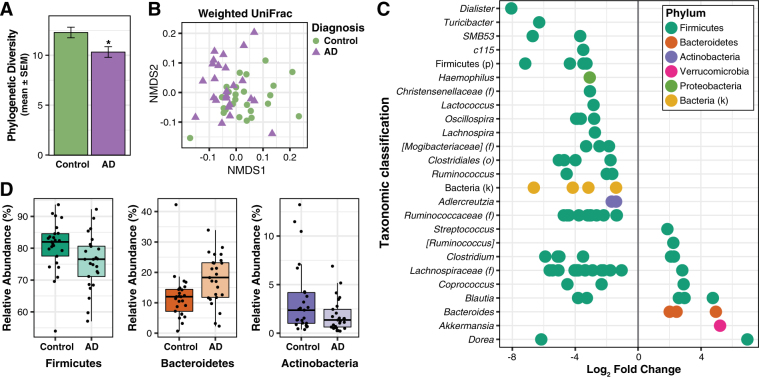
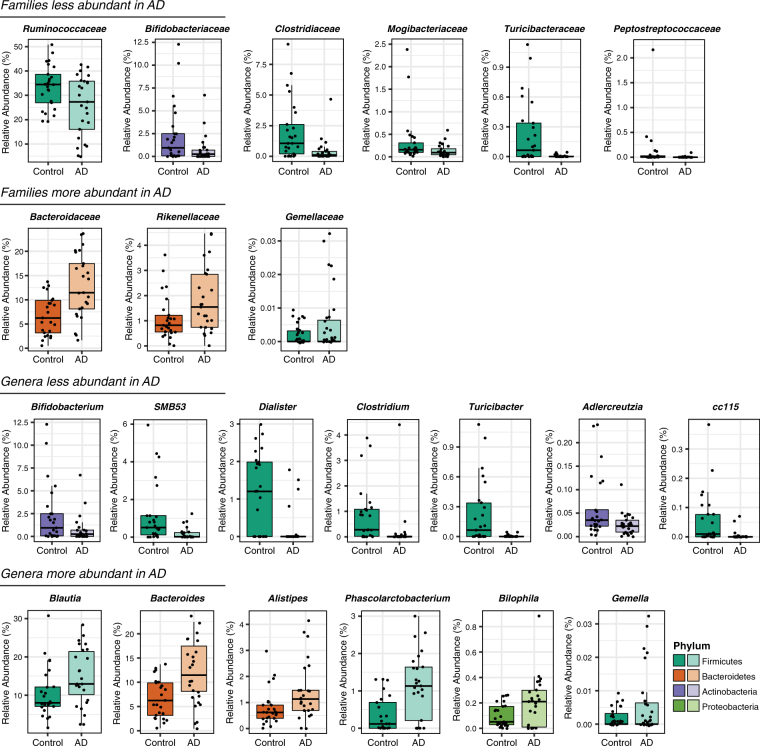
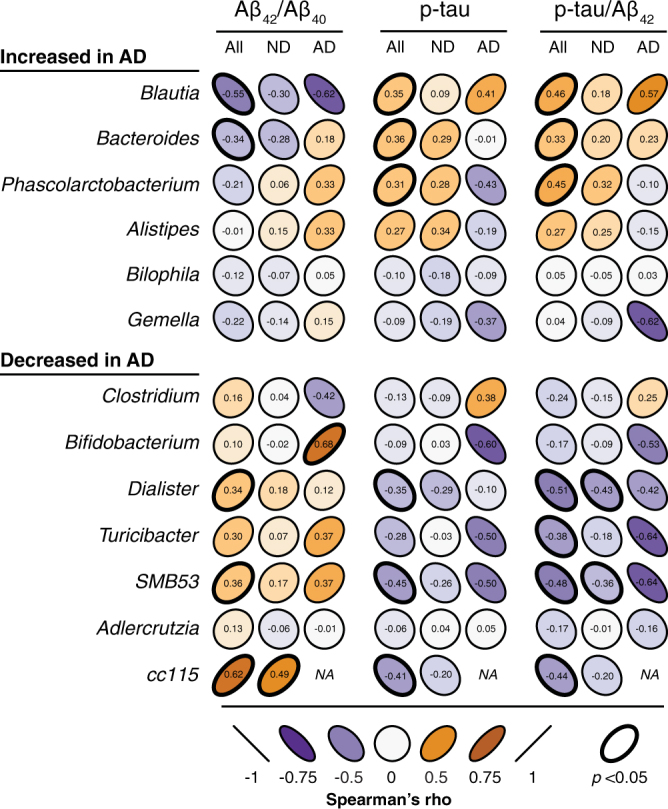
Alzheimer’s disease (AD) is the most common form of dementia. However, the etiopathogenesis of this devastating disease is not fully understood. Recent studies in rodents suggest that alterations in the gut microbiome may contribute to amyloid deposition, yet the microbial communities associated with AD have not been characterized in humans. Towards this end, we characterized the bacterial taxonomic composition of fecal samples from participants with and without a diagnosis of dementia due to AD. Our analyses revealed that the gut microbiome of AD participants has decreased microbial diversity and is compositionally distinct from control age- and sex-matched individuals. We identified phylum- through genus-wide differences in bacterial abundance including decreased Firmicutes, increased Bacteroidetes, and decreased Bifidobacterium in the microbiome of AD participants. Furthermore, we observed correlations between levels of differentially abundant genera and cerebrospinal fluid (CSF) biomarkers of AD. These findings add AD to the growing list of diseases associated with gut microbial alterations, as well as suggest that gut bacterial communities may be a target for therapeutic intervention.
Overview
The claims and statistics of this paper haven’t been checked yet.
Run the check — free, no account needed. It reads the open-access text and checks the sources it cites.
Integrity signals
Registry
Cites
Statistics
Figures
Verification
Claims the paper makes
The claims and statistics of this paper haven’t been checked yet.
Run the check — free, no account needed. It reads the open-access text and checks the sources it cites.
Claims other papers make about this one
Each is checked against this paper’s own text: does it say what the citing paper says it does?
The source backs part of the claim, not all of it — or backs it for a different population, condition or comparison.
In the citing paper
“A variety of genetic and environmental factors have been implicated in AD etiopathogenesis, including contributions from gut microbiota [13–15].”
From The gut microbiota-derived metabolite trimethylamine N-oxide is elevated in Alzheimer’s disease (2018) · cites this paper as [15]
Experimental — accuracy not yet measuredThe source backs part of the claim, not all of it — or backs it for a different population, condition or comparison.
In the citing paper
“Diseases of cognitive decline, such as Alzheimer's disease and vascular dementia, are associated with aberrant microbial compositions when compared with healthy controls (297).”
From Diet and the Microbiota–Gut–Brain Axis: Sowing the Seeds of Good Mental Health (2021) · cites this paper as [297]
Experimental — accuracy not yet measuredThe source backs part of the claim, not all of it — or backs it for a different population, condition or comparison.
In the citing paper
“These include reductions in beneficial genera such as Lactobacillus and Bifidobacterium, alongside increases in pro-inflammatory taxa like Enterobacteriaceae64.”
From Artificial intelligence-driven multi-omics approaches in Alzheimer's disease: Progress, challenges, and future directions (2025) · cites this paper as [64]
Experimental — accuracy not yet measuredThe source backs part of the claim, not all of it — or backs it for a different population, condition or comparison.
In the citing paper
“Studies using 16S rRNA gene sequencing and shotgun metagenomic sequencing have consistently identified significant changes in the gut microbiota composition of individuals with AD.”
From Artificial intelligence-driven multi-omics approaches in Alzheimer's disease: Progress, challenges, and future directions (2025) · cites this paper as [64]
Experimental — accuracy not yet measuredIn the citing paper
“Human studies show associations between gut microbiota and neurodegenerative diseases148.”
From Microglia in neurodegeneration (2018) · cites this paper as [148]
In the citing paper
“Human studies comparing the composition of the GM of elderly participants suffering from cognitive impairment with healthy individuals indicate significant changes in GM composition. Specifically, there is an increase in pro-inflammatory taxa and a reduction in anti-inflammatory taxa (104–109).”
From Signalling cognition: The gut microbiota and hypothalamic-pituitary-adrenal axis (2023) · cites this paper as [105]
In the citing paper
“Within the Firmicutes, the families Ruminococcaceae, Turicibacteraceae, and Clostridiaceae were all less abundant in AD patient (160).”
From The gut-brain axis: how microbiota and host inflammasome influence brain physiology and pathology (2020) · cites this paper as [160]
Self-check
Percentages, sums and reported differences re-computed from the paper’s own numbers.
The self-check needs the paper’s full text.
Citations
Cites
Moderated estimation of fold change and dispersion for RNA-seq data with DESeq2
Love, M. I., Huber, W., & Anders, S. (2014) · Genome Biology · doi:10.1186/s13059-014-0550-8 · Cited by 95,106
Schloss, P. D., Westcott, S. L., Ryabin, T., Hall, J. R., Hartmann, M., Hollister, E. B., Lesniewski, R. A., Oakley, B. B., Parks, D. H., Robinson, C. J., et al. (2009) · Applied and Environmental Microbiology · doi:10.1128/aem.01541-09 · Cited by 19,549
McKhann, G. M., Knopman, D. S., Chertkow, H., Hyman, B. T., Jack, C. R., Kawas, C. H., Klunk, W. E., Koroshetz, W. J., Manly, J. J., Mayeux, R., et al. (2011) · Alzheimer's & Dementia · doi:10.1016/j.jalz.2011.03.005 · Cited by 18,657
Metagenomic biomarker discovery and explanation
Segata, N., Izard, J., Waldron, L., Gevers, D., Miropolsky, L., Garrett, W. S., & Huttenhower, C. (2011) · Genome Biology · doi:10.1186/gb-2011-12-6-r60 · Cited by 16,192
Structure, function and diversity of the healthy human microbiome
The Human Microbiome Project Consortium (2012) · Nature · doi:10.1038/nature11234 · Cited by 11,726
Predictive functional profiling of microbial communities using 16S rRNA marker gene sequences
Langille, M. G. I., Zaneveld, J., Caporaso, J. G., McDonald, D., Knights, D., Reyes, J. A., Clemente, J. C., Burkepile, D. E., Vega Thurber, R. L., Knight, R., et al. (2013) · Nature Biotechnology · doi:10.1038/nbt.2676 · Cited by 9,116
A core gut microbiome in obese and lean twins
Turnbaugh, P. J., Hamady, M., Yatsunenko, T., Cantarel, B. L., Duncan, A., Ley, R. E., Sogin, M. L., Jones, W. J., Roe, B. A., Affourtit, J. P., et al. (2009) · Nature · doi:10.1038/nature07540 · Cited by 7,823
Kozich, J. J., Westcott, S. L., Baxter, N. T., Highlander, S. K., & Schloss, P. D. (2013) · Applied and Environmental Microbiology · doi:10.1128/aem.01043-13 · Cited by 7,246
Metabolic Endotoxemia Initiates Obesity and Insulin Resistance
Cani, P. D., Amar, J., Iglesias, M. A., Poggi, M., Knauf, C., Bastelica, D., Neyrinck, A. M., Fava, F., Tuohy, K. M., Chabo, C., et al. (2007) · Diabetes · doi:10.2337/db06-1491 · Cited by 6,638
Obesity alters gut microbial ecology
Ley, R. E., Bäckhed, F., Turnbaugh, P., Lozupone, C. A., Knight, R. D., & Gordon, J. I. (2005) · Proceedings of the National Academy of Sciences · doi:10.1073/pnas.0504978102 · Cited by 6,176
Cited by
Sorted by citations
Items 401–500 of 1,007
Wanapaisan, P., Chuansangeam, M., Nopnipa, S., Mathuranyanon, R., Nonthabenjawan, N., Ngamsombat, C., Thientunyakit, T., & Muangpaisan, W. (2022) · Neurodegenerative Diseases · doi:10.1159/000526947 · Cited by 67
Cuciniello, R., Meo, F. D., Filosa, S., Crispi, S., & Bergamo, P. (2023) · Antioxidants · doi:10.3390/antiox12051073 · Cited by 69
Alzheimer's disease and symbiotic microbiota: an evolutionary medicine perspective
Fox, M. M., Knorr, D. A., & Haptonstall, K. P. (2019) · Annals of the New York Academy of Sciences · doi:10.1111/nyas.14129 · Cited by 67
Functional Foods: An Approach to Modulate Molecular Mechanisms of Alzheimer’s Disease
Atlante, A., Amadoro, G., Bobba, A., & Latina, V. (2020) · Cells · doi:10.3390/cells9112347 · Cited by 67
Nagu, P., Parashar, A., Behl, T., & Mehta, V. (2021) · Journal of Molecular Neuroscience · doi:10.1007/s12031-021-01829-3 · Cited by 68
Koblinsky, N. D., Power, K. A., Middleton, L. E., Ferland, G., & Anderson, N. D. (2022) · The Journals of Gerontology Series A · doi:10.1093/gerona/glac166 · Cited by 66
Kim, Y., Lim, J., & Oh, J. (2024) · Biomedicine & Pharmacotherapy · doi:10.1016/j.biopha.2024.117277 · Cited by 67
Kim, H., Lee, E., Park, M. K., Min, K., Diep, Y. N., Kim, J., Ahn, H., Lee, E., Kim, S., Kim, Y., et al. (2024) · Brain Behavior and Immunity · doi:10.1016/j.bbi.2024.08.051 · Cited by 66
Good Bug, Bad Bug: Breaking through Microbial Stereotypes
Cirstea, M. S., Radisavljevic, N., & Finlay, B. B. (2018) · Cell Host & Microbe · doi:10.1016/j.chom.2017.12.008 · Cited by 66
Rosário, D., Borén, J., Uhlén, M., Proctor, G., Aarsland, D., Mardinoğlu, A., & Shoaie, S. (2020) · Frontiers in Neuroscience · doi:10.3389/fnins.2020.00716 · Cited by 66
Oba, S., Sunagawa, T., Tanihiro, R., Awashima, K., Sugiyama, H., Odani, T., Nakamura, Y., Kondo, A., Sasaki, D., & Sasaki, K. (2020) · Scientific Reports · doi:10.1038/s41598-020-74379-0 · Cited by 66
Gut microbiota and epilepsy: a systematic review on their relationship and possible therapeutics
Arulsamy, A., Tan, Q. Y., Balasubramaniam, V., O’Brien, T. J., & Shaikh, M. F. (2020) · ACS Chemical Neuroscience · doi:10.1021/acschemneuro.0c00431 · Cited by 65
Improving causality in microbiome research: can human genetic epidemiology help?
Wade, K. H., & Hall, L. J. (2019) · Wellcome Open Research · doi:10.12688/wellcomeopenres.15628.3 · Cited by 65
Liu, Q. F., Xie, T., Xi, Y., Li, L., Mo, F., Liu, X., Liu, Z., Gao, J., & Yuan, T. (2021) · Journal of Agricultural and Food Chemistry · doi:10.1021/acs.jafc.1c04687 · Cited by 66
Taraskina, A. N., Ignatyeva, O. A., Lisovaya, D., Ivanov, M., Ivanova, L. G., Golovicheva, V., Baydakova, G., Silachev, D. N., Popkov, V. A., Ivanets, T. Y., et al. (2022) · Cells · doi:10.3390/cells11091409 · Cited by 66
What Are the Key Gut Microbiota Involved in Neurological Diseases? A Systematic Review
Bonnechère, B., Amin, N., & van Duijn, C. M. (2022) · International Journal of Molecular Sciences · doi:10.3390/ijms232213665 · Cited by 68
Li, H., Cui, X., Lin, Y., Huang, F., Tian, A., & Zhang, R. (2024) · Frontiers in Aging Neuroscience · doi:10.3389/fnagi.2024.1422350 · Cited by 65
Park, M. J., Pilla, R., Panta, A., Pandey, S., Sarawichitr, B., Suchodolski, J. S., & Sohrabji, F. (2019) · Translational Stroke Research · doi:10.1007/s12975-019-00760-5 · Cited by 65
Matsushita, K., Yamada-Furukawa, M., Kurosawa, M., & Shikama, Y. (2020) · Journal of Inflammation Research · doi:10.2147/jir.s255309 · Cited by 64
Human Gut Microbiota Plasticity throughout the Life Course
Thriene, K., & Michels, K. B. (2023) · International Journal of Environmental Research and Public Health · doi:10.3390/ijerph20021463 · Cited by 65
Sun, C., Dong, S., Chen, W., Li, S., Luo, E., & Ji, J. (2024) · Phytomedicine · doi:10.1016/j.phymed.2024.155624 · Cited by 64
Warren, A., Nyavor, Y., Zarabian, N., Mahoney, A., & Frame, L. A. (2024) · Frontiers in Immunology · doi:10.3389/fimmu.2024.1365673 · Cited by 64
Protection of Alzheimer’s disease progression by a human-origin probiotics cocktail
Prajapati, S. K., Wang, S., Mishra, S. P., Jain, S., & Yadav, H. (2025) · Scientific Reports · doi:10.1038/s41598-024-84780-8 · Cited by 64
Synergistic effects of APOE and sex on the gut microbiome of young EFAD transgenic mice
Weng, J. M., Parikh, I. J., Naqib, A. D., York, J. M., Green, S. J., Estus, S., & LaDu, M. J. (2019) · Molecular Neurodegeneration · doi:10.1186/s13024-019-0352-2 · Cited by 65
Giovannini, M. G., Lana, D., Traini, C., & Vannucchi, M. G. (2021) · Journal of Clinical Medicine · doi:10.3390/jcm10112358 · Cited by 64
Can We Treat Neuroinflammation in Alzheimer’s Disease?
Sánchez‐Sarasúa, S., Fernández-Pérez, I., Espinosa‐Fernández, V., Sánchez‐Pérez, A. M., & Ledesma, J. C. (2020) · International Journal of Molecular Sciences · doi:10.3390/ijms21228751 · Cited by 64
Gut microbiome alterations in preclinical Alzheimer’s disease
Jung, J. H., Kim, G., Byun, M. S., Lee, J. H., Yi, D., Park, H., & Lee, D. Y. (2022) · PLoS ONE · doi:10.1371/journal.pone.0278276 · Cited by 63
Gut microbiome predicts cognitive function and depressive symptoms in late life
Kolobaric, A., Andreescu, C., Jašarević, E., Hong, C. H., Roh, H., Cheong, J. Y., Kim, Y., Shin, T. S., Kang, C. S., Kwon, C. O., et al. (2024) · Molecular Psychiatry · doi:10.1038/s41380-024-02551-3 · Cited by 63
Does the microbiome and virome contribute to myalgic encephalomyelitis/chronic fatigue syndrome?
Newberry, F., Hsieh, S.-Y., Wileman, T., & Carding, S. R. (2018) · Clinical Science · doi:10.1042/cs20171330 · Cited by 63
The Impact of Chronic Intestinal Inflammation on Brain Disorders: the Microbiota-Gut-Brain Axis
Serra, D., Almeida, L. M., & Dinis, T. C. P. (2019) · Molecular Neurobiology · doi:10.1007/s12035-019-1572-8 · Cited by 63
Gut microbiome: An intermediary to neurotoxicity
Dempsey, J. L., Little, M., & Cui, J. Y. (2019) · NeuroToxicology · doi:10.1016/j.neuro.2019.08.005 · Cited by 63
Profiling the oral microbiomes in patients with Alzheimer's disease
Guo, H., Li, B., Yao, H., Liu, D., Chen, R., Zhou, S., Ji, Y., Zeng, L., & Du, M. (2021) · Oral Diseases · doi:10.1111/odi.14110 · Cited by 62
Yıldırım, S., Nalbantoğlu, Ö. U., Bayraktar, A., Ercan, F. B., Gündoğdu, A., Velioğlu, H. A., Göl, M. F., Ekinci, A., Koç, F., Aslan-Gülpınar, E., et al. (2022) · mSystems · doi:10.1128/msystems.00004-22 · Cited by 62
Zhang, W., Guo, Y., Cheng, Y., Yao, W., & Qian, H. (2022) · International Journal of Biological Macromolecules · doi:10.1016/j.ijbiomac.2022.11.160 · Cited by 62
Al-Khafaji, A. H., Jepsen, S. D., Christensen, K. R., & Vigsnæs, L. K. (2020) · Journal of Functional Foods · doi:10.1016/j.jff.2020.104176 · Cited by 62
Cuervo-Zanatta, D., Garcı́a-Mena, J., & Perez‐Cruz, C. (2021) · Journal of Alzheimer s Disease · doi:10.3233/jad-201367 · Cited by 62
Dietary Regulation of Gut-Brain Axis in Alzheimer’s Disease: Importance of Microbiota Metabolites
Frausto, D. M., Forsyth, C. B., Keshavarzian, A., & Voigt, R. M. (2021) · Frontiers in Neuroscience · doi:10.3389/fnins.2021.736814 · Cited by 61
Rawat, K., Singh, N., Kumari, P., & Saha, L. (2020) · Reviews in the Neurosciences · doi:10.1515/revneuro-2020-0078 · Cited by 61
Dissecting the Relationship Between Neuropsychiatric and Neurodegenerative Disorders
Gupta, R. V., Advani, D., Yadav, D., Ambasta, R. K., & Kumar, P. (2023) · Molecular Neurobiology · doi:10.1007/s12035-023-03502-9 · Cited by 61
The contribution of age-related changes in the gut-brain axis to neurological disorders
Khan, R., Gesù, C. M. D., Lee, J., & McCullough, L. D. (2024) · Gut Microbes · doi:10.1080/19490976.2024.2302801 · Cited by 62
Pellanda, P., Ghosh, T. S., & O’Toole, P. W. (2020) · Current Opinion in Biotechnology · doi:10.1016/j.copbio.2020.11.001 · Cited by 60
Ribó, S., Sánchez‐Infantes, D., Martínez-Guinó, L., García‐Mantrana, I., Ramon‐Krauel, M., Tondo, M., Arning, E., Nofrarías, M., Osorio-Conles, Ó., Fernández-Pérez, A., et al. (2021) · Science Translational Medicine · doi:10.1126/scitranslmed.abb0322 · Cited by 60
The Gut Microbiome–Brain Crosstalk in Neurodegenerative Diseases
Ghezzi, L., Cantoni, C., Rotondo, E., & Galimberti, D. (2022) · Biomedicines · doi:10.3390/biomedicines10071486 · Cited by 61
Pei, Y., Yan, L., Li, H., Jiang, C., & Wang, L. (2023) · Frontiers in Aging Neuroscience · doi:10.3389/fnagi.2023.1174599 · Cited by 60
Liao, J.-F., Cheng, Y.-F., Li, S.-W., Lee, W., Hsu, C.-C., Wu, C.-C., Jeng, O.-J., Wang, S. Z., & Tsai, Y.-C. (2019) · Brain Research Bulletin · doi:10.1016/j.brainresbull.2019.07.027 · Cited by 60
Dunham, S. J. B., McNair, K., Adams, E. D., Avelar‐Barragan, J., Forner, S., Mapstone, M. E., & Whiteson, K. (2022) · mBio · doi:10.1128/mbio.01794-22 · Cited by 59
Gut microbiota in dementia with Lewy bodies
Nishiwaki, H., Ueyama, J., Kashihara, K., Ito, M., Hamaguchi, T., Maeda, T., Tsuboi, Y., Katsuno, M., Hirayama, M., & Ohno, K. (2022) · npj Parkinson s Disease · doi:10.1038/s41531-022-00428-2 · Cited by 59
Gut Microbiota and Alzheimer’s Disease: How to Study and Apply Their Relationship
Nguyen, N. M., Cho, J., & Lee, C.-H. (2023) · International Journal of Molecular Sciences · doi:10.3390/ijms24044047 · Cited by 60
Cutuli, D., Decandia, D., Giacovazzo, G., & Coccurello, R. (2023) · International Journal of Molecular Sciences · doi:10.3390/ijms241914686 · Cited by 61
A review on the use of prebiotics in ulcerative colitis
Kennedy, J. M., Silva, A. D., Walton, G., & Gibson, G. R. (2023) · Trends in Microbiology · doi:10.1016/j.tim.2023.11.007 · Cited by 60
Chandra, S., Di Meco, A., Dodiya, H. B., Popovic, J., Cuddy, L. K., Weigle, I. Q., Zhang, X., Sadleir, K., Sisodia, S. S., & Vassar, R. (2023) · Molecular Neurodegeneration · doi:10.1186/s13024-023-00635-2 · Cited by 58
The Role of the Microbiota-Gut-Brain Axis in the Development of Alzheimer’s Disease
Wiatrak, B., Balon, K., Jawień, P., Bednarz, D., Jęśkowiak, I., & Szeląg, A. (2022) · International Journal of Molecular Sciences · doi:10.3390/ijms23094862 · Cited by 58
Polyphenols, the new frontiers of prebiotics
Nazzaro, F., Fratianni, F., Feo, V. D., Battistelli, A., da Cruz, A. G., & Coppola, R. (2020) · Advances in food and nutrition research · doi:10.1016/bs.afnr.2020.06.002 · Cited by 58
Gut microbiome alpha-diversity is not a marker of Parkinson’s disease and multiple sclerosis
Plassais, J., Gbikpi‐Benissan, G., Figarol, M., Scheperjans, F., Gorochov, G., Derkinderen, P., & Cervino, A. (2021) · Brain Communications · doi:10.1093/braincomms/fcab113 · Cited by 58
Liu, S., Gao, J., Liu, K., & Zhang, H. (2021) · Mechanisms of Ageing and Development · doi:10.1016/j.mad.2021.111560 · Cited by 59
Cheon, S. Y., & Song, J. (2022) · Cell & Bioscience · doi:10.1186/s13578-022-00836-0 · Cited by 58
Novelties on Neuroinflammation in Alzheimer’s Disease–Focus on Gut and Oral Microbiota Involvement
Popescu, C., Munteanu, C., Anghelescu, A., Ciobanu, V., Spînu, A., Andone, I., Mandu, M., Bistriceanu, R., Băilă, M., Postoiu, R.-L., et al. (2024) · International Journal of Molecular Sciences · doi:10.3390/ijms252011272 · Cited by 61
The gut microbiome, immune modulation, and cognitive decline: insights on the gut-brain axis
Zhang, R., Ding, N., Feng, X., & Liao, W. (2025) · Frontiers in Immunology · doi:10.3389/fimmu.2025.1529958 · Cited by 61
Differences in Gut Microbiota Profiles between Autoimmune Pancreatitis and Chronic Pancreatitis
Hamada, S., Masamune, A., Nabeshima, T., & Shimosegawa, T. (2018) · The Tohoku Journal of Experimental Medicine · doi:10.1620/tjem.244.113 · Cited by 58
Ceppa, F., Izzo, L., Sardelli, L., Raimondi, I., Tunesi, M., Albani, D., & Giordano, C. (2020) · Frontiers in Cellular and Infection Microbiology · doi:10.3389/fcimb.2020.00297 · Cited by 58
Gentile, F., Doneddu, P. E., Riva, N., Nobile‐Orazio, E., & Quattrini, A. (2020) · International Journal of Molecular Sciences · doi:10.3390/ijms21207471 · Cited by 58
Target Dysbiosis of Gut Microbes as a Future Therapeutic Manipulation in Alzheimer’s Disease
Zhu, F., Li, C., Chu, F., Tian, X., & Zhu, J. (2020) · Frontiers in Aging Neuroscience · doi:10.3389/fnagi.2020.544235 · Cited by 59
The gut microbiota is an emerging target for improving brain health during ageing
Boehme, M., Guzzetta, K. E., Wasén, C., & Cox, L. M. (2022) · Gut Microbiome · doi:10.1017/gmb.2022.11 · Cited by 57
Melatonin as a Mediator of the Gut Microbiota–Host Interaction: Implications for Health and Disease
Bonmatí‐Carrión, M., & Rol, M. A. (2023) · Antioxidants · doi:10.3390/antiox13010034 · Cited by 57
Zhao, Y., Jia, M., Ding, C., Bao, B., Li, H., Ma, J., Dong, W., Gao, R., Chen, X., Chen, J., et al. (2025) · iMeta · doi:10.1002/imt2.70006 · Cited by 57
Jayasudha, R., Chakravarthy, S. K., Prashanthi, G. S., Sharma, S., Garg, P., Murthy, S. I., & Shivaji, S. (2018) · Journal of Biosciences · doi:10.1007/s12038-018-9798-6 · Cited by 57
Evidences for a Role of Gut Microbiota in Pathogenesis and Management of Epilepsy
Amlerová, J., Šroubek, J., Angelucci, F., & Hort, J. (2021) · International Journal of Molecular Sciences · doi:10.3390/ijms22115576 · Cited by 57
Zeibich, L., Koebele, S. V., Bernaud, V. E., Ilhan, Z. E., Dirks, B., Northup-Smith, S. N., Neeley, R., Maldonado, J., Nirmalkar, K., Files, J. A., et al. (2021) · Frontiers in Cellular and Infection Microbiology · doi:10.3389/fcimb.2021.702628 · Cited by 57
Nutrition, gut microbiota, and alzheimer’s disease
Romanenko, M., Kholin, V., Koliada, A., & Vaiserman, A. (2021) · Frontiers in Psychiatry · doi:10.3389/fpsyt.2021.712673 · Cited by 56
The microbiome: A target for Alzheimer disease?
Seo, D.-O., Boros, B. D., & Holtzman, D. M. (2019) · Cell Research · doi:10.1038/s41422-019-0227-7 · Cited by 56
Vitamin K2 Holds Promise for Alzheimer’s Prevention and Treatment
Popescu, A., & German, M. (2021) · Nutrients · doi:10.3390/nu13072206 · Cited by 57
Sheng, K., Yang, J., Xu, Y., Kong, X., Wang, J., & Wang, Y. (2022) · Food & Function · doi:10.1039/d1fo03396d · Cited by 56
To rarefy or not to rarefy: robustness and efficiency trade-offs of rarefying microbiome data
Hong, J., Karaöz, U., de Valpine, P., & Fithian, W. (2022) · Bioinformatics · doi:10.1093/bioinformatics/btac127 · Cited by 57
Hajjo, R., Sabbah, D. A., Abusara, O. H., & Bawab, A. Q. A. (2022) · Diagnostics · doi:10.3390/diagnostics12122975 · Cited by 57
The association between gut microbiota and postoperative delirium in patients
Zhang, Y., Baldyga, K., Dong, Y., Song, W., Villanueva, M., Deng, H., Mueller, A., Houle, T. T., Marcantonio, E. R., & Xie, Z. (2023) · Translational Psychiatry · doi:10.1038/s41398-023-02450-1 · Cited by 56
Liang, P., Shan, W., & Zuo, Z. (2018) · Journal of Neuroinflammation · doi:10.1186/s12974-018-1274-6 · Cited by 56
Wang, S., Jiang, W., Ouyang, T., Shen, X., Wang, F., Qu, Y., Zhang, M., Luo, T., & Wang, H. (2019) · Scientific Reports · doi:10.1038/s41598-019-56149-9 · Cited by 56
Deng, L., Ou, Z., Huang, D., Li, C., Lü, Z., Liu, W., Wu, F., Nong, C., Gao, J., & Peng, Y. (2020) · Microbial Pathogenesis · doi:10.1016/j.micpath.2020.104353 · Cited by 56
Borsom, E. M., Lee, K., & Cope, E. K. (2020) · Brain Sciences · doi:10.3390/brainsci10110814 · Cited by 56
The Oral and Fecal Microbiota in a Canadian Cohort of Alzheimer’s Disease
Cirstea, M. S., Kliger, D., MacLellan, A. D., Yu, A. C., Langlois, J., Fan, M., Boroomand, S., Kharazyan, F., Hsiung, R. G. Y., MacVicar, B. A., et al. (2022) · Journal of Alzheimer s Disease · doi:10.3233/jad-215520 · Cited by 56
Age-related metabolic and neurodegenerative changes in SAMP8 mice
Pačesová, A., Holubová, M., Hrubá, L., Strnadová, V., Neprašová, B., Pelantová, H., Kuzma, M., Železná, B., Kuneš, J., & Maletı́nská, L. (2022) · Aging · doi:10.18632/aging.204284 · Cited by 55
Chen, G., Zhou, X., Zhu, Y., Shi, W., & Kong, L. (2023) · European Journal of Neurology · doi:10.1111/ene.15961 · Cited by 55
Systemic determinants of brain health in ageing
Smith, E. E., Biessels, G. J., Gao, V., Gottesman, R. F., Liesz, A., Parikh, N. S., & Iadecola, C. (2024) · Nature Reviews Neurology · doi:10.1038/s41582-024-01016-z · Cited by 57
Amyotrophic lateral sclerosis and intestinal microbiota—toward establishing cause and effect
Gotkine, M., Kviatcovsky, D., & Elinav, E. (2020) · Gut Microbes · doi:10.1080/19490976.2020.1767464 · Cited by 55
Dynamic Changes in the Gut Microbiome at the Acute Stage of Ischemic Stroke in a Pig Model
Jeon, J. H., Lourenco, J. M., Kaiser, E. E., Waters, E. S., Scheulin, K. M., Fang, X., Kinder, H. A., Platt, S. R., Rothrock, M. J., Callaway, T. R., et al. (2020) · Frontiers in Neuroscience · doi:10.3389/fnins.2020.587986 · Cited by 55
Čierniková, S., Mego, M., & Chovanec, M. (2021) · Cancers · doi:10.3390/cancers13040782 · Cited by 55
Zhong, S.-R., Kuang, Q., Zhang, F., Chen, B., & Zhong, Z.-G. (2021) · Translational Neuroscience · doi:10.1515/tnsci-2020-0206 · Cited by 56
Ortega, V. A., Mercer, E. M., Giesbrecht, G. F., & Arrieta, M. (2021) · Frontiers in Microbiology · doi:10.3389/fmicb.2021.634539 · Cited by 55
Elderly Patients with Mild Cognitive Impairment Exhibit Altered Gut Microbiota Profiles
Pan, Q., Li, Y., Guo, K., Xue, M., Gan, Y., Wang, K., Xu, D., & Tu, Q. (2021) · Journal of Immunology Research · doi:10.1155/2021/5578958 · Cited by 54
Wang, N., Feng, B., Hu, B., Cheng, Y., Guo, Y., & Qian, H. (2021) · Food & Function · doi:10.1039/d1fo02216d · Cited by 55
Kim, H. S., Son, J. L., Lee, D., Tsai, J., Wang, D., Chocrón, E. S., Jeong, S., Kittrell, P., Murchison, C., Kennedy, R., et al. (2022) · BMC Neurology · doi:10.1186/s12883-022-02586-5 · Cited by 54
Qu, Y., Su, C., Zhao, Q., Shi, A., Zhao, F., Tang, L., Xu, D., Xiang, Z., Wang, Y., Wang, Y., et al. (2022) · Frontiers in Pharmacology · doi:10.3389/fphar.2022.837543 · Cited by 55
Hallmarks of neurodegenerative disease: A systems pharmacology perspective
Bloomingdale, P., Karelina, T., Ramakrishnan, V., Bakshi, S., Véronneau‐Veilleux, F., Moye, M., Sekiguchi, K., Meno‐Tetang, G. M. L., Mohan, A., Maithreye, R., et al. (2022) · CPT Pharmacometrics & Systems Pharmacology · doi:10.1002/psp4.12852 · Cited by 54
Labarre, A., Guitard, E., Tossing, G., Forest, A., Bareke, E., Labrecque, M., Tétreault, M., Ruiz, M., & Parker, J. A. (2022) · Communications Biology · doi:10.1038/s42003-022-04295-8 · Cited by 55
Gut Microbiome and Modulation of CNS Function
Osadchiy, V., Martin, C. R., & Mayer, E. A. (2019) · Comprehensive Physiology · doi:10.1002/cphy.c180031 · Cited by 53
Huang, Z., Hamblin, M. R., & Zhang, Q. (2024) · Alzheimer s Research & Therapy · doi:10.1186/s13195-024-01484-x · Cited by 54
The complex relationship between gut microbiota and Alzheimer’s disease: A systematic review
Zhou, X.-P., Sun, L.-B., Liu, W., Zhu, W.-M., Li, L.-C., Song, X., Xing, J.-P., & Gao, S. (2024) · Ageing Research Reviews · doi:10.1016/j.arr.2024.102637 · Cited by 54
Arora, H., Ramesh, M., Rajasekhar, K., & Govindaraju, T. (2020) · Bulletin of the Chemical Society of Japan · doi:10.1246/bcsj.20190356 · Cited by 53
The gut microbiome: implications for neurogenesis and neurological diseases
Zhou, F., Liu, C., Yang, S., & Wang, L. (2021) · Neural Regeneration Research · doi:10.4103/1673-5374.315227 · Cited by 52
Targeting gut microbiota to alleviate neuroinflammation in Alzheimer’s disease
Nguyen, V. T. T., & Endres, K. (2022) · Advanced Drug Delivery Reviews · doi:10.1016/j.addr.2022.114418 · Cited by 52
Metadata
- Authors
- Vogt, N. M., Kerby, R. L., Dill-McFarland, K. A., Harding, S. J., Merluzzi, A. P., Johnson, S. C., Carlsson, C. M., Asthana, S., Zetterberg, H., Blennow, K., Bendlin, B. B., & Rey, F. E.
- Affiliations
- University of Wisconsin–Madison (US)
- Sahlgrenska University Hospital (SE)
- Corresponding author
- Bendlin, Barbara B.
- Rey, Federico E.
- ORCID
- Venue
- Scientific Reports
- Published
- 2017-10-19
- Volume
- 7
- Issue
- 1
- Pages
- 13537-13537
- ISSN
- 2045-2322 (ISSN-L)
- PMC
- PMC5648830
- OpenAlex
- W2761210275
- Cited by
- 2,137
- References
- 83
- Citations by year
- 2026: 205 · 2025: 322 · 2024: 328 · 2023: 269 · 2022: 339 · 2021: 283 · 2020: 205 · 2019: 119 · 2018: 64 · 2017: 1
- FWCI
- 43.23
- Type
- journal article
- Language
- en
- Open access
- gold
- doi.org
- Locations
- Scientific Reports (publishedVersion, cc-by)
- PubMed Central (publishedVersion, cc-by)
- PubMed (publishedVersion)
- UCL Discovery (University College London) (submittedVersion, cc-by)
- DOAJ (DOAJ: Directory of Open Access Journals) (submittedVersion)
- Funders
- Alzheimer's Association (R01 AG027161, R01 AG037639, R01 AG021155)
- Torsten Söderbergs Stiftelse
- Rush University
- Georgia Clinical and Translational Science Alliance (UL1TR000427)
- Royal Swedish Academy of Sciences
- Vetenskapsrådet
- National Institutes of Health (UL1TR000427, NIH P50, AG027161, AG037639, NIH P50 AG033514, AG033514)
- Institute for Clinical and Translational Research, University of Wisconsin, Madison (UL1TR000427)
- National Institute on Aging (RF1AG027161, R01AG037639, P50AG033514, R01AG021155, R01AG027161, R56AG037639)
- National Institute of General Medical Sciences (T32GM008692)
- National Center for Advancing Translational Sciences
- Topics
- Life Sciences › Biochemistry, Genetics and Molecular Biology › Molecular Biology › Gut microbiota and health
- Life Sciences › Neuroscience › Cellular and Molecular Neuroscience › Alzheimer's disease research and treatments
- Health Sciences › Medicine › Psychiatry and Mental health › Dementia and Cognitive Impairment Research
- Keywords
- Alzheimer's disease, gut microbiota, dementia, fecal microbiota, microbial diversity, Firmicutes, Bacteroidetes, Bifidobacterium, cerebrospinal fluid biomarkers, amyloid deposition, gut-brain axis, therapeutic target
- MeSH terms
- Bacillota, Gastrointestinal Microbiome, Aged, Alzheimer Disease, Bifidobacterium, Feces, Female, Humans, Male, Biomarkers, Case-Control Studies, tau Proteins, Bacteroidetes
About these checks
Registry, retraction, Cites and statistics results are computed, not judged, with one exception: a printed reference that no index lists is read once by a model before it counts as a citation error. Claims are extracted by a model and kept only when their quote appears verbatim in the text; each cited source is then checked, with a model’s help, for whether it says what the claim relies on. Those verdicts can be wrong — read the claim’s quote and the cited source before relying on one.
Statistics and arithmetic are recomputed, not judged.
Confidence bands are shown only for fields calibrated on our annotated test set. None is calibrated yet, so no band is shown.
What counts as a claim ›How we measure confidence ›How we check this ›
Are you an author, or do you see a problem with this page? Request a review
