

The DOI matches its Crossref record; 83 of the 83 references it cites were found in a registry or an index.
Gut microbiome alterations in Alzheimer’s disease
Open accessAbstract
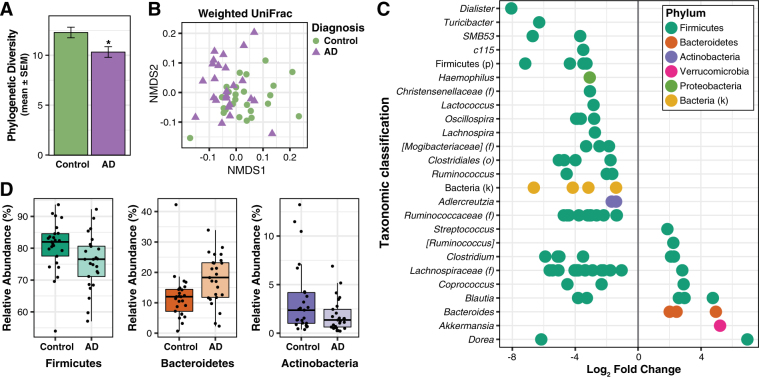
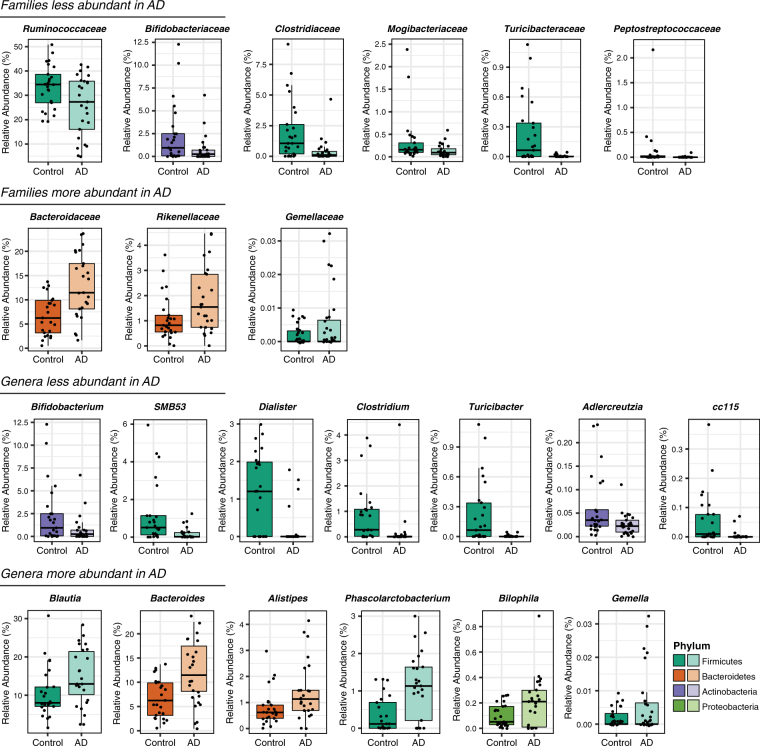
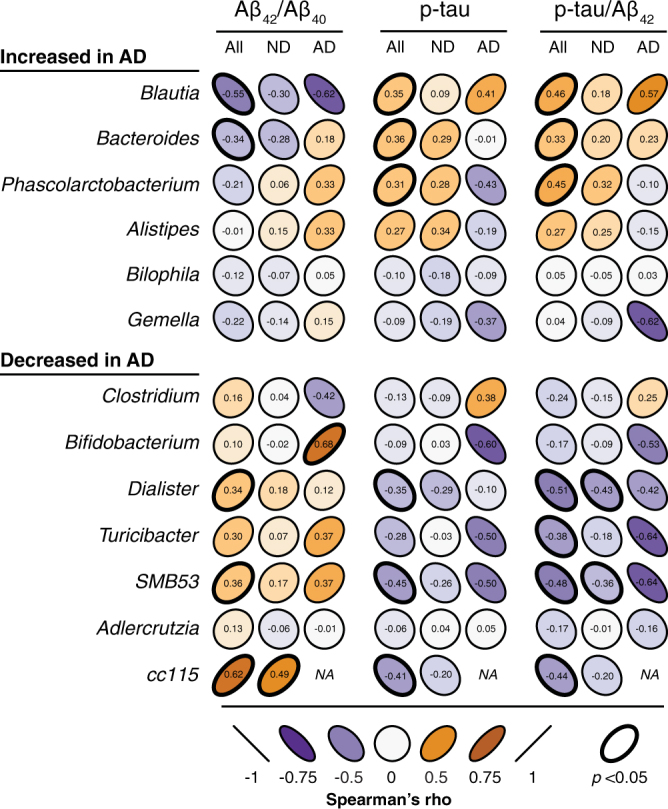
Alzheimer’s disease (AD) is the most common form of dementia. However, the etiopathogenesis of this devastating disease is not fully understood. Recent studies in rodents suggest that alterations in the gut microbiome may contribute to amyloid deposition, yet the microbial communities associated with AD have not been characterized in humans. Towards this end, we characterized the bacterial taxonomic composition of fecal samples from participants with and without a diagnosis of dementia due to AD. Our analyses revealed that the gut microbiome of AD participants has decreased microbial diversity and is compositionally distinct from control age- and sex-matched individuals. We identified phylum- through genus-wide differences in bacterial abundance including decreased Firmicutes, increased Bacteroidetes, and decreased Bifidobacterium in the microbiome of AD participants. Furthermore, we observed correlations between levels of differentially abundant genera and cerebrospinal fluid (CSF) biomarkers of AD. These findings add AD to the growing list of diseases associated with gut microbial alterations, as well as suggest that gut bacterial communities may be a target for therapeutic intervention.
Overview
The claims and statistics of this paper haven’t been checked yet.
Run the check — free, no account needed. It reads the open-access text and checks the sources it cites.
Integrity signals
Registry
Cites
Statistics
Figures
Verification
Claims the paper makes
The claims and statistics of this paper haven’t been checked yet.
Run the check — free, no account needed. It reads the open-access text and checks the sources it cites.
Claims other papers make about this one
Each is checked against this paper’s own text: does it say what the citing paper says it does?
The source backs part of the claim, not all of it — or backs it for a different population, condition or comparison.
In the citing paper
“A variety of genetic and environmental factors have been implicated in AD etiopathogenesis, including contributions from gut microbiota [13–15].”
From The gut microbiota-derived metabolite trimethylamine N-oxide is elevated in Alzheimer’s disease (2018) · cites this paper as [15]
Experimental — accuracy not yet measuredThe source backs part of the claim, not all of it — or backs it for a different population, condition or comparison.
In the citing paper
“Diseases of cognitive decline, such as Alzheimer's disease and vascular dementia, are associated with aberrant microbial compositions when compared with healthy controls (297).”
From Diet and the Microbiota–Gut–Brain Axis: Sowing the Seeds of Good Mental Health (2021) · cites this paper as [297]
Experimental — accuracy not yet measuredThe source backs part of the claim, not all of it — or backs it for a different population, condition or comparison.
In the citing paper
“These include reductions in beneficial genera such as Lactobacillus and Bifidobacterium, alongside increases in pro-inflammatory taxa like Enterobacteriaceae64.”
From Artificial intelligence-driven multi-omics approaches in Alzheimer's disease: Progress, challenges, and future directions (2025) · cites this paper as [64]
Experimental — accuracy not yet measuredThe source backs part of the claim, not all of it — or backs it for a different population, condition or comparison.
In the citing paper
“Studies using 16S rRNA gene sequencing and shotgun metagenomic sequencing have consistently identified significant changes in the gut microbiota composition of individuals with AD.”
From Artificial intelligence-driven multi-omics approaches in Alzheimer's disease: Progress, challenges, and future directions (2025) · cites this paper as [64]
Experimental — accuracy not yet measuredIn the citing paper
“Human studies show associations between gut microbiota and neurodegenerative diseases148.”
From Microglia in neurodegeneration (2018) · cites this paper as [148]
In the citing paper
“Human studies comparing the composition of the GM of elderly participants suffering from cognitive impairment with healthy individuals indicate significant changes in GM composition. Specifically, there is an increase in pro-inflammatory taxa and a reduction in anti-inflammatory taxa (104–109).”
From Signalling cognition: The gut microbiota and hypothalamic-pituitary-adrenal axis (2023) · cites this paper as [105]
In the citing paper
“Within the Firmicutes, the families Ruminococcaceae, Turicibacteraceae, and Clostridiaceae were all less abundant in AD patient (160).”
From The gut-brain axis: how microbiota and host inflammasome influence brain physiology and pathology (2020) · cites this paper as [160]
Self-check
Percentages, sums and reported differences re-computed from the paper’s own numbers.
The self-check needs the paper’s full text.
Citations
Cites
Moderated estimation of fold change and dispersion for RNA-seq data with DESeq2
Love, M. I., Huber, W., & Anders, S. (2014) · Genome Biology · doi:10.1186/s13059-014-0550-8 · Cited by 95,106
Schloss, P. D., Westcott, S. L., Ryabin, T., Hall, J. R., Hartmann, M., Hollister, E. B., Lesniewski, R. A., Oakley, B. B., Parks, D. H., Robinson, C. J., et al. (2009) · Applied and Environmental Microbiology · doi:10.1128/aem.01541-09 · Cited by 19,549
McKhann, G. M., Knopman, D. S., Chertkow, H., Hyman, B. T., Jack, C. R., Kawas, C. H., Klunk, W. E., Koroshetz, W. J., Manly, J. J., Mayeux, R., et al. (2011) · Alzheimer's & Dementia · doi:10.1016/j.jalz.2011.03.005 · Cited by 18,657
Metagenomic biomarker discovery and explanation
Segata, N., Izard, J., Waldron, L., Gevers, D., Miropolsky, L., Garrett, W. S., & Huttenhower, C. (2011) · Genome Biology · doi:10.1186/gb-2011-12-6-r60 · Cited by 16,192
Structure, function and diversity of the healthy human microbiome
The Human Microbiome Project Consortium (2012) · Nature · doi:10.1038/nature11234 · Cited by 11,726
Predictive functional profiling of microbial communities using 16S rRNA marker gene sequences
Langille, M. G. I., Zaneveld, J., Caporaso, J. G., McDonald, D., Knights, D., Reyes, J. A., Clemente, J. C., Burkepile, D. E., Vega Thurber, R. L., Knight, R., et al. (2013) · Nature Biotechnology · doi:10.1038/nbt.2676 · Cited by 9,116
A core gut microbiome in obese and lean twins
Turnbaugh, P. J., Hamady, M., Yatsunenko, T., Cantarel, B. L., Duncan, A., Ley, R. E., Sogin, M. L., Jones, W. J., Roe, B. A., Affourtit, J. P., et al. (2009) · Nature · doi:10.1038/nature07540 · Cited by 7,823
Kozich, J. J., Westcott, S. L., Baxter, N. T., Highlander, S. K., & Schloss, P. D. (2013) · Applied and Environmental Microbiology · doi:10.1128/aem.01043-13 · Cited by 7,246
Metabolic Endotoxemia Initiates Obesity and Insulin Resistance
Cani, P. D., Amar, J., Iglesias, M. A., Poggi, M., Knauf, C., Bastelica, D., Neyrinck, A. M., Fava, F., Tuohy, K. M., Chabo, C., et al. (2007) · Diabetes · doi:10.2337/db06-1491 · Cited by 6,638
Obesity alters gut microbial ecology
Ley, R. E., Bäckhed, F., Turnbaugh, P., Lozupone, C. A., Knight, R. D., & Gordon, J. I. (2005) · Proceedings of the National Academy of Sciences · doi:10.1073/pnas.0504978102 · Cited by 6,176
Cited by
Sorted by citations
Cryan, J. F., O'Riordan, K. J., Cowan, C. S. M., Sandhu, K. V., Bastiaanssen, T. F. S., Boehme, M., Codagnone, M. G., Cussotto, S., Fulling, C., Golubeva, A. V., et al. (2019) · Physiological Reviews · doi:10.1152/physrev.00018.2018 · Cited by 5,286
Rinninella, E., Raoul, P., Cintoni, M., Franceschi, F., Miggiano, G. A. D., Gasbarrini, A., & Mele, M. C. (2019) · Microorganisms · doi:10.3390/microorganisms7010014 · Cited by 3,462
Alzheimer Disease: An Update on Pathobiology and Treatment Strategies
Long, J. M., & Holtzman, D. M. (2019) · Cell · doi:10.1016/j.cell.2019.09.001 · Cited by 3,204
Microbiota in health and diseases
Hou, K., Wu, Z.-X., Chen, X.-Y., Wang, J.-Q., Zhang, D., Xiao, C., Zhu, D., Koya, J. B., Wei, L., Li, J., et al. (2022) · Signal Transduction and Targeted Therapy · doi:10.1038/s41392-022-00974-4 · Cited by 3,171
The gut microbiota–brain axis in behaviour and brain disorders
Morais, L. H., Schreiber, H. L., & Mazmanian, S. K. (2021) · Nature Reviews Microbiology · doi:10.1038/s41579-020-00460-0 · Cited by 2,149
Microglia in neurodegeneration
Hickman, S., Izzy, S., Sen, P., Morsett, L., & El Khoury, J. (2018) · Nature Neuroscience · doi:10.1038/s41593-018-0242-x · Cited by 1,710
The gut microbiome in neurological disorders
Cryan, J. F., O'Riordan, K. J., Sandhu, K., Peterson, V., & Dinan, T. G. (2020) · The Lancet Neurology · doi:10.1016/s1474-4422(19)30356-4 · Cited by 1,336
Akkermansia muciniphila: paradigm for next-generation beneficial microorganisms
Cani, P. D., Depommier, C., Derrien, M., Everard, A., & de Vos, W. M. (2022) · Nature Reviews Gastroenterology & Hepatology · doi:10.1038/s41575-022-00631-9 · Cited by 1,192
Wang, X., Sun, G., Feng, T., Zhang, J., Huang, X., Wang, T., Xie, Z., Chu, X., Yang, J., Wang, H., et al. (2019) · Cell Research · doi:10.1038/s41422-019-0216-x · Cited by 1,144
Microglial signatures and their role in health and disease
Butovsky, O., & Weiner, H. L. (2018) · Nature Reviews Neuroscience · doi:10.1038/s41583-018-0057-5 · Cited by 1,046
Chen, Y., Xu, J., & Chen, Y. (2021) · Nutrients · doi:10.3390/nu13062099 · Cited by 917
Gut Microbiota is Altered in Patients with Alzheimer’s Disease
Zhuang, Z.-Q., Shen, L.-L., Li, W.-W., Fu, X., Zeng, F., Gui, L., Lü, Y., Cai, M., Zhu, C., Tan, Y.-L., et al. (2018) · Journal of Alzheimer's Disease · doi:10.3233/jad-180176 · Cited by 885
Brain-Gut-Microbiota Axis in Alzheimer’s Disease
Kowalski, K., & Mulak, A. (2019) · Journal of Neurogastroenterology and Motility · doi:10.5056/jnm18087 · Cited by 826
The gut-brain axis: how microbiota and host inflammasome influence brain physiology and pathology
Rutsch, A., Kantsjö, J. B., & Ronchi, F. (2020) · Frontiers in Immunology · doi:10.3389/fimmu.2020.604179 · Cited by 821
Liu, P., Wu, L., Peng, G., Han, Y., Tang, R., Ge, J., Zhang, L., Jia, L., Yue, S., Zhou, K., et al. (2019) · Brain, Behavior, and Immunity · doi:10.1016/j.bbi.2019.05.008 · Cited by 669
Nagpal, R., Neth, B. J., Wang, S., Craft, S., & Yadav, H. (2019) · EBioMedicine · doi:10.1016/j.ebiom.2019.08.032 · Cited by 653
Kim, M.-S., Kim, Y., Choi, H., Kim, W., Park, S., Lee, D., Kim, D. K., Kim, H. J., Choi, H., Hyun, D.-W., et al. (2020) · Gut · doi:10.1136/gutjnl-2018-317431 · Cited by 614
Brain-Derived Neurotrophic Factor in Alzheimer’s Disease and Its Pharmaceutical Potential
Gao, L., Zhang, Y., Sterling, K., & Song, W. (2022) · Translational Neurodegeneration · doi:10.1186/s40035-022-00279-0 · Cited by 606
A Comprehensive Review on the Role of the Gut Microbiome in Human Neurological Disorders
Sorboni, S. G., Moghaddam, H. S., Esfehani, R. J., & Soleimanpour, S. (2022) · Clinical Microbiology Reviews · doi:10.1128/cmr.00338-20 · Cited by 586
The Gut–Brain Axis and the Microbiome: Mechanisms and Clinical Implications
Osadchiy, V., Martin, C. R., & Mayer, E. A. (2019) · Clinical Gastroenterology and Hepatology · doi:10.1016/j.cgh.2018.10.002 · Cited by 555
Sun, J., Xu, J., Ling, Y., Wang, F., Gong, T., Yang, C., Ye, S., Ye, K., Wei, D., Song, Z., et al. (2019) · Translational Psychiatry · doi:10.1038/s41398-019-0525-3 · Cited by 532
Inflammation: the link between comorbidities, genetics, and Alzheimer’s disease
Newcombe, E. A., Camats-Perna, J., Silva, M. L., Valmas, N., Huat, T. J., & Medeiros, R. (2018) · Journal of Neuroinflammation · doi:10.1186/s12974-018-1313-3 · Cited by 532
Tryptophan metabolism and gut-brain homeostasis
Roth, W., Zadeh, K., Vekariya, R., Ge, Y., & Mohamadzadeh, M. (2021) · International Journal of Molecular Sciences · doi:10.3390/ijms22062973 · Cited by 519
Gut microbiota and dysbiosis in Alzheimer's disease: Implications for pathogenesis and treatment
Liu, S., Gao, J., Zhu, M., Liu, K., & Zhang, H.-L. (2020) · Molecular Neurobiology · doi:10.1007/s12035-020-02073-3 · Cited by 516
“AD patients 16S rRNA sequencing Firmicutes and Bifidobacterium↓, Bacteroidetes↑ [65]”
BackgroundSurgery, neuroinflammation and cognitive impairment
Alam, A., Hana, Z., Jin, Z., Suen, K. C., & Ma, D. (2018) · EBioMedicine · doi:10.1016/j.ebiom.2018.10.021 · Cited by 495
Chen, C., Liao, J., Xia, Y., Liu, X., Jones, R., Haran, J., McCormick, B., Sampson, T. R., Alam, A., & Ye, K. (2022) · Gut · doi:10.1136/gutjnl-2021-326269 · Cited by 491
Mild cognitive impairment has similar alterations as Alzheimer's disease in gut microbiota
Li, B., He, Y., Ma, J., Huang, P., Du, J., Cao, L. H., Wang, Y., Xiao, Q., Tang, H., & Chen, S. (2019) · Alzheimer s & Dementia · doi:10.1016/j.jalz.2019.07.002 · Cited by 484
Role of gut-brain axis, gut microbial composition, and probiotic intervention in Alzheimer's disease
Kesika, P., Suganthy, N., Sivamaruthi, B. S., & Chaiyasut, C. (2021) · Life Sciences · doi:10.1016/j.lfs.2020.118627 · Cited by 479
Erny, D., Dokalis, N., Mezö, C., Castoldi, A., Mossad, O., Staszewski, O., Frosch, M., Villa, M., Fuchs, V., Mayer, A., et al. (2021) · Cell Metabolism · doi:10.1016/j.cmet.2021.10.010 · Cited by 478
The gut microbiota-derived metabolite trimethylamine N-oxide is elevated in Alzheimer’s disease
Vogt, N. M., Romano, K. A., Darst, B. F., Engelman, C. D., Johnson, S. C., Carlsson, C. M., Asthana, S., Blennow, K., Zetterberg, H., Bendlin, B. B., et al. (2018) · Alzheimer's Research & Therapy · doi:10.1186/s13195-018-0451-2 · Cited by 471
Self-citationDiet and the Microbiota–Gut–Brain Axis: Sowing the Seeds of Good Mental Health
Berding, K., Vlckova, K., Marx, W., Schellekens, H., Stanton, C., Clarke, G., Jacka, F., Dinan, T. G., & Cryan, J. F. (2021) · Advances in Nutrition · doi:10.1093/advances/nmaa181 · Cited by 451
(BIOHAZ), E. P. O. B. H., Koutsoumanis, K., Allende, A., Álvarez‐Ordóñez, A., Bolton, D., Bover‐Cid, S., Chemaly, M., Davies, R., Cesare, A. D., Hilbert, F., et al. (2021) · EFSA Journal · doi:10.2903/j.efsa.2021.6377 · Cited by 446
Dysbiosis of gut microbiota and microbial metabolites in Parkinson's disease
Sun, M.-F., & Shen, Y.-Q. (2018) · Ageing Research Reviews · doi:10.1016/j.arr.2018.04.004 · Cited by 445
Probiotics, prebiotics, and postbiotics in health and disease
Ji, J., Jin, W., Liu, S., Jiao, Z., & Li, X. (2023) · MedComm · doi:10.1002/mco2.420 · Cited by 449
Peripheral and central immune system crosstalk in Alzheimer disease — a research prospectus
Bettcher, B. M., Tansey, M. G., Dorothée, G., & Heneka, M. T. (2021) · Nature Reviews Neurology · doi:10.1038/s41582-021-00549-x · Cited by 427
Microbiota-Gut-Brain Axis: New Therapeutic Opportunities
Long-Smith, C., O'Riordan, K. J., Clarke, G., Stanton, C., Dinan, T. G., & Cryan, J. F. (2020) · Annual Review of Pharmacology and Toxicology · doi:10.1146/annurev-pharmtox-010919-023628 · Cited by 419
Signalling cognition: The gut microbiota and hypothalamic-pituitary-adrenal axis
Rusch, J. A., Layden, B. T., & Dugas, L. R. (2023) · Frontiers in Endocrinology · doi:10.3389/fendo.2023.1130689 · Cited by 415
Fecal Microbiota Transplantation in Neurological Disorders
Vendrik, K. E. W., Ooijevaar, R. E., de Jong, P. R. C., Laman, J. D., van Oosten, B. W., van Hilten, J. J., Ducarmon, Q. R., Keller, J. J., Kuijper, E. J., & Contarino, M. F. (2020) · Frontiers in Cellular and Infection Microbiology · doi:10.3389/fcimb.2020.00098 · Cited by 413
Haran, J. P., Bhattarai, S. K., Foley, S. E., Dutta, P., Ward, D. V., Bucci, V., & McCormick, B. A. (2019) · mBio · doi:10.1128/mbio.00632-19 · Cited by 412
Kanmani, S., & Koo, B. (2020) · International Journal of Molecular Sciences · doi:10.3390/ijms21207551 · Cited by 392
Gut microbial molecules in behavioural and neurodegenerative conditions
Needham, B. D., Kaddurah-Daouk, R., & Mazmanian, S. K. (2020) · Nature Reviews Neuroscience · doi:10.1038/s41583-020-00381-0 · Cited by 379
Mechanisms of sex differences in Alzheimer’s disease
Lopez-Lee, C., Torres, E. R. S., Carling, G., & Gan, L. (2024) · Neuron · doi:10.1016/j.neuron.2024.01.024 · Cited by 376
Ling, Z., Liu, X., Cheng, Y., Yan, X., & Wu, S. (2020) · Critical Reviews in Food Science and Nutrition · doi:10.1080/10408398.2020.1867054 · Cited by 378
Gut microbiome composition may be an indicator of preclinical Alzheimer’s disease
Ferreiro, A. L., Choi, J., Ryou, J., Newcomer, E. P., Thompson, R., Bollinger, R. M., Hall-Moore, C. M., Ndao, I. M., Sax, L., Benzinger, T. L. S., et al. (2023) · Science Translational Medicine · doi:10.1126/scitranslmed.abo2984 · Cited by 384
Gut–organ axis: a microbial outreach and networking
Ahlawat, S., Asha, A., & Sharma, K. K. (2020) · Letters in Applied Microbiology · doi:10.1111/lam.13333 · Cited by 372
The Association between Early-Life Gut Microbiota and Long-Term Health and Diseases
Sarkar, A., Yoo, J. Y., Dutra, S. V. O., Morgan, K. H., & Groer, M. E. (2021) · Journal of Clinical Medicine · doi:10.3390/jcm10030459 · Cited by 371
Zhan, X., Stamova, B. S., & Sharp, F. R. (2018) · Frontiers in Aging Neuroscience · doi:10.3389/fnagi.2018.00042 · Cited by 361
Microbiota-derived short chain fatty acids modulate microglia and promote Aβ plaque deposition
Colombo, A. V., Sadler, R. K., Llovera, G., Singh, V., Roth, S., Heindl, S., Sebastian Monasor, L., Verhoeven, A., Peters, F., Parhizkar, S., et al. (2021) · eLife · doi:10.7554/elife.59826 · Cited by 354
The impact of the microbiota-gut-brain axis on Alzheimer’s disease pathophysiology
Doifode, T., Giridharan, V. V., Generoso, J. S., Bhatti, G., Collodel, A., Schulz, P. E., Forlenza, O. V., & Barichello, T. (2021) · Pharmacological Research · doi:10.1016/j.phrs.2020.105314 · Cited by 347
Marizzoni, M., Cattaneo, A., Mirabelli, P., Festari, C., Lopizzo, N., Nicolosi, V., Mombelli, E., Mazzelli, M., Luongo, D., Naviglio, D., et al. (2020) · Journal of Alzheimer s Disease · doi:10.3233/jad-200306 · Cited by 351
Więckowska-Gacek, A., Mietelska-Porowska, A., Wydrych, M., & Wojda, U. (2021) · Ageing Research Reviews · doi:10.1016/j.arr.2021.101397 · Cited by 343
Nho, K., Kueider‐Paisley, A., MahmoudianDehkordi, S., Arnold, M., Risacher, S. L., Louie, G., Blach, C., Baillie, R., Han, X., Kastenmüller, G., et al. (2019) · Alzheimer's & Dementia · doi:10.1016/j.jalz.2018.08.012 · Cited by 343
A predictive index for health status using species-level gut microbiome profiling
Gupta, V. K., Kim, M., Bakshi, U., Cunningham, K. Y., Davis, J. M., Lazaridis, K. N., Nelson, H., Chia, N., & Sung, J. (2020) · Nature Communications · doi:10.1038/s41467-020-18476-8 · Cited by 338
Advancing human gut microbiota research by considering gut transit time
Procházková, N., Falony, G., Dragsted, L. O., Licht, T. R., Raes, J., & Roager, H. M. (2022) · Gut · doi:10.1136/gutjnl-2022-328166 · Cited by 349
Microbiota in neuroinflammation and synaptic dysfunction: a focus on Alzheimer’s disease
Bairamian, D., Sha, S., Rolhion, N., Sokol, H., Dorothée, G., Lemere, C. A., & Krantic, S. M. (2022) · Molecular Neurodegeneration · doi:10.1186/s13024-022-00522-2 · Cited by 326
The Microbiota–Gut–Brain Axis and Alzheimer’s Disease: Neuroinflammation Is to Blame?
Megur, A., Baltriukienė, D., Bukelskienė, V., & Burokas, A. (2020) · Nutrients · doi:10.3390/nu13010037 · Cited by 323
Psychobiotics in mental health, neurodegenerative and neurodevelopmental disorders
Cheng, L.-H., Liu, Y.-W., Wu, C.-C., Wang, S. Z., & Tsai, Y.-C. (2019) · Journal of Food and Drug Analysis · doi:10.1016/j.jfda.2019.01.002 · Cited by 312
Shou, Y., Huang, Y., Zhu, X., Liu, C., Hu, Y., & Wang, H. (2019) · Ecotoxicology and Environmental Safety · doi:10.1016/j.ecoenv.2019.02.086 · Cited by 310
Shandilya, S., Kumar, S., Jha, N. K., Kesari, K. K., & Ruokolainen, J. (2021) · Journal of Advanced Research · doi:10.1016/j.jare.2021.09.005 · Cited by 310
Heiss, C. N., & Olofsson, L. E. (2019) · Journal of Neuroendocrinology · doi:10.1111/jne.12684 · Cited by 304
Sun, J., Xu, J., Yang, B., Chen, K., Kong, Y., Fang, N., Gong, T., Wang, F., Ling, Z., & Liu, J. (2020) · Molecular Nutrition & Food Research · doi:10.1002/mnfr.201900636 · Cited by 302
Changes of colonic bacterial composition in Parkinson's disease and other neurodegenerative diseases
Gerhardt, S., & Mohajeri, M. H. (2018) · Nutrients · doi:10.3390/nu10060708 · Cited by 298
Inflammatory bowel disease is associated with higher dementia risk: a nationwide longitudinal study
Zhang, B., Wang, H. E., Bai, Y.-M., Tsai, S.-J., Su, T.-P., Chen, T.-J., Wang, Y.-P., & Chen, M.-H. (2021) · Gut · doi:10.1136/gutjnl-2020-320789 · Cited by 292
The gut microbiota–brain axis in neurological disorder
Ullah, H., Arbab, S., Tian, Y., Liu, C., Chen, Y., Li, Q., Khan, M. I. U., Hassan, I. U., & Li, K. (2023) · Frontiers in Neuroscience · doi:10.3389/fnins.2023.1225875 · Cited by 292
Sex-specific effects of microbiome perturbations on cerebral Aβ amyloidosis and microglia phenotypes
Dodiya, H. B., Kuntz, T., Shaik, S. M., Baufeld, C., Leibowitz, J., Zhang, X., Gottel, N., Zhang, X., Butovsky, O., Gilbert, J. A., et al. (2019) · Journal of Experimental Medicine · doi:10.1084/jem.20182386 · Cited by 288
Communication of gut microbiota and brain via immune and neuroendocrine signaling
Kasarełło, K., Cudnoch‐Jędrzejewska, A., & Czarzasta, K. (2023) · Frontiers in Microbiology · doi:10.3389/fmicb.2023.1118529 · Cited by 283
The gut microbiome in Alzheimer’s disease: what we know and what remains to be explored
Chandra, S., Sisodia, S. S., & Vassar, R. J. (2023) · Molecular Neurodegeneration · doi:10.1186/s13024-023-00595-7 · Cited by 278
Pellegrini, C., Antonioli, L., Colucci, R., Blandizzi, C., & Fornai, M. (2018) · Acta Neuropathologica · doi:10.1007/s00401-018-1856-5 · Cited by 270
D’Amato, A., Di Cesare Mannelli, L., Lucarini, E., Man, A. L., Le Gall, G., Branca, J. J. V., Ghelardini, C., Amedei, A., Bertelli, E., Regoli, M., et al. (2020) · Microbiome · doi:10.1186/s40168-020-00914-w · Cited by 269
Immunotherapy for Alzheimer’s disease: targeting β-amyloid and beyond
Song, C., Shi, J., Zhang, P., Zhang, Y., Xu, J., Zhao, L., Zhang, R., Wang, H., & Chen, H. (2022) · Translational Neurodegeneration · doi:10.1186/s40035-022-00292-3 · Cited by 266
Current understanding of the Alzheimer’s disease-associated microbiome and therapeutic strategies
Seo, D.-O., & Holtzman, D. M. (2024) · Experimental & Molecular Medicine · doi:10.1038/s12276-023-01146-2 · Cited by 259
Sun, J., Zhang, Y., Kong, Y., Ye, T., Yu, Q., Kumaran Satyanarayanan, S., Su, K.-P., & Liu, J. (2022) · Brain, Behavior, and Immunity · doi:10.1016/j.bbi.2022.08.003 · Cited by 255
Xiao, W., Su, J., Gao, X., Yang, H., Weng, R., Ni, W., & Gu, Y. (2022) · Microbiome · doi:10.1186/s40168-022-01255-6 · Cited by 252
Mitrea, L., Nemeș, S. A., Szabo, K., Teleky, B., & Vodnar, D. C. (2022) · Frontiers in Medicine · doi:10.3389/fmed.2022.813204 · Cited by 253
Structural and Functional Dysbiosis of Fecal Microbiota in Chinese Patients With Alzheimer's Disease
Ling, Z., Zhu, M., Yan, X., Cheng, Y., Shao, L., Liu, X., Jiang, R., & Wu, S. (2021) · Frontiers in Cell and Developmental Biology · doi:10.3389/fcell.2020.634069 · Cited by 252
The human microbiome in disease and pathology
Manos, J. (2022) · Apmis · doi:10.1111/apm.13225 · Cited by 252
Liu, Q., Xi, Y., Wang, Q., Liu, J., Li, P., Meng, X., Liu, K., Chen, W., Liu, X., & Liu, Z. (2021) · Brain, Behavior, and Immunity · doi:10.1016/j.bbi.2021.04.005 · Cited by 241
Gut Microbiota Composition Is Related to AD Pathology
Verhaar, B. J. H., Hendriksen, H. M. A., de Leeuw, F. A., Doorduijn, A. S., van Leeuwenstijn, M. S. S. A., Teunissen, C. E., Barkhof, F., Scheltens, P., Kraaij, R., van Duijn, C. M., et al. (2022) · Frontiers in Immunology · doi:10.3389/fimmu.2021.794519 · Cited by 242
Den, H., Dong, X., Chen, M., & Zou, Z. (2020) · Aging · doi:10.18632/aging.102810 · Cited by 238
Microbiota from Alzheimer’s patients induce deficits in cognition and hippocampal neurogenesis
Grabrucker, S., Marizzoni, M., Silajdžić, E., Lopizzo, N., Mombelli, E., Nicolas, S., Dohm-Hansen, S., Scassellati, C., Moretti, D. V., Rosa, M., et al. (2023) · Brain · doi:10.1093/brain/awad303 · Cited by 236
The Role of Microglia and the Nlrp3 Inflammasome in Alzheimer's Disease
Hanslik, K. L., & Ulland, T. K. (2020) · Frontiers in Neurology · doi:10.3389/fneur.2020.570711 · Cited by 236
Herath, M., Hosie, S., Bornstein, J. C., Franks, A. E., & Hill‐Yardin, E. L. (2020) · Frontiers in Cellular and Infection Microbiology · doi:10.3389/fcimb.2020.00248 · Cited by 236
Making Sense of … the Microbiome in Psychiatry
Bastiaanssen, T. F. S., Cowan, C. S. M., Claesson, M. J., Dinan, T. G., & Cryan, J. F. (2018) · The International Journal of Neuropsychopharmacology · doi:10.1093/ijnp/pyy067 · Cited by 234
Polyphenols-gut microbiota interplay and brain neuromodulation
Filosa, S., Meo, F. D., & Crispi, S. (2018) · Neural Regeneration Research · doi:10.4103/1673-5374.241429 · Cited by 236
Tran, T. T. T., Corsini, S., Kellingray, L., Hegarty, C., Le Gall, G., Narbad, A., Müller, M., Tejera, N., O'Toole, P. W., Minihane, A.-M., et al. (2019) · The FASEB Journal · doi:10.1096/fj.201900071r · Cited by 233
The microbiota-immune axis as a central mediator of gut-brain communication
Fung, T. C. (2019) · Neurobiology of Disease · doi:10.1016/j.nbd.2019.104714 · Cited by 234
Kim, N., Jeon, S. H., Ju, I. G., Gee, M. S., Do, J., Oh, M. S., & Lee, J. K. (2021) · Brain, Behavior, and Immunity · doi:10.1016/j.bbi.2021.09.002 · Cited by 231
Wu, L., Han, Y., Zheng, Z., Peng, G., Liu, P., Yue, S., Zhu, S., Chen, J., Lv, H., Shao, L., et al. (2021) · Nutrients · doi:10.3390/nu13010228 · Cited by 227
Sasso, J. M., Ammar, R. M., Tenchov, R., Lemmel, S. A., Kelber, O., Grieswelle, M., & Zhou, Q. A. (2023) · ACS Chemical Neuroscience · doi:10.1021/acschemneuro.3c00127 · Cited by 229
The Microbiome as a Modifier of Neurodegenerative Disease Risk
Fang, P., Kazmi, S. A., Jameson, K. G., & Hsiao, E. Y. (2020) · Cell Host & Microbe · doi:10.1016/j.chom.2020.06.008 · Cited by 226
The Potential Role of Gut Microbiota in Alzheimer’s Disease: From Diagnosis to Treatment
Varesi, A., Pierella, E., Romeo, M., Piccini, G. B., Alfano, C., Bjørklund, G., Oppong, A., Ricevuti, G., Esposito, C., Chirumbolo, S., et al. (2022) · Nutrients · doi:10.3390/nu14030668 · Cited by 225
Saji, N., Niida, S., Murotani, K., Hisada, T., Tsuduki, T., Sugimoto, T., Kimura, A., Toba, K., & Sakurai, T. (2019) · Scientific Reports · doi:10.1038/s41598-018-38218-7 · Cited by 224
Homeostasis and dysbiosis of the gut microbiome in health and disease
Das, B., & Nair, G. B. (2019) · Journal of Biosciences · doi:10.1007/s12038-019-9926-y · Cited by 225
Aging, Frailty, and the Microbiome—How Dysbiosis Influences Human Aging and Disease
Haran, J. P., & McCormick, B. A. (2020) · Gastroenterology · doi:10.1053/j.gastro.2020.09.060 · Cited by 225
The function of gut microbiota in immune-related neurological disorders: a review
Sittipo, P., Choi, J., Lee, S., & Lee, Y. K. (2022) · Journal of Neuroinflammation · doi:10.1186/s12974-022-02510-1 · Cited by 221
Zhuang, Z., Yang, R., Wang, W., Qi, L., & Huang, T. (2020) · Journal of Neuroinflammation · doi:10.1186/s12974-020-01961-8 · Cited by 220
Gut microbiota in patients with Alzheimer’s disease spectrum: a systematic review and meta-analysis
Hung, C.-C., Chang, C., Huang, C.-W., Nouchi, R., & Cheng, C. (2022) · Aging · doi:10.18632/aging.203826 · Cited by 220
Gut microbiota, cognitive frailty and dementia in older individuals: A systematic review
Ticinesi, A., Tana, C., Nouvenne, A., Prati, B., Lauretani, F., & Meschi, T. (2018) · Clinical Interventions in Aging · doi:10.2147/cia.s139163 · Cited by 215
Peripheral immune system in aging and Alzheimer’s disease
Cao, W., & Zheng, H. (2018) · Molecular Neurodegeneration · doi:10.1186/s13024-018-0284-2 · Cited by 214
Microbiome profiling reveals gut dysbiosis in a transgenic mouse model of Huntington's disease
Kong, G., Cao, K.-A. L., Judd, L. M., Li, S., Renoir, T., & Hannan, A. J. (2020) · Neurobiology of Disease · doi:10.1016/j.nbd.2018.09.001 · Cited by 212
Metadata
- Authors
- Vogt, N. M., Kerby, R. L., Dill-McFarland, K. A., Harding, S. J., Merluzzi, A. P., Johnson, S. C., Carlsson, C. M., Asthana, S., Zetterberg, H., Blennow, K., Bendlin, B. B., & Rey, F. E.
- Affiliations
- University of Wisconsin–Madison (US)
- Sahlgrenska University Hospital (SE)
- Corresponding author
- Bendlin, Barbara B.
- Rey, Federico E.
- ORCID
- Venue
- Scientific Reports
- Published
- 2017-10-19
- Volume
- 7
- Issue
- 1
- Pages
- 13537-13537
- ISSN
- 2045-2322 (ISSN-L)
- PMC
- PMC5648830
- OpenAlex
- W2761210275
- Cited by
- 2,137
- References
- 83
- Citations by year
- 2026: 205 · 2025: 322 · 2024: 328 · 2023: 269 · 2022: 339 · 2021: 283 · 2020: 205 · 2019: 119 · 2018: 64 · 2017: 1
- FWCI
- 43.23
- Type
- journal article
- Language
- en
- Open access
- gold
- doi.org
- Locations
- Scientific Reports (publishedVersion, cc-by)
- PubMed Central (publishedVersion, cc-by)
- PubMed (publishedVersion)
- UCL Discovery (University College London) (submittedVersion, cc-by)
- DOAJ (DOAJ: Directory of Open Access Journals) (submittedVersion)
- Funders
- Alzheimer's Association (R01 AG027161, R01 AG037639, R01 AG021155)
- Torsten Söderbergs Stiftelse
- Rush University
- Georgia Clinical and Translational Science Alliance (UL1TR000427)
- Royal Swedish Academy of Sciences
- Vetenskapsrådet
- National Institutes of Health (UL1TR000427, NIH P50, AG027161, AG037639, NIH P50 AG033514, AG033514)
- Institute for Clinical and Translational Research, University of Wisconsin, Madison (UL1TR000427)
- National Institute on Aging (RF1AG027161, R01AG037639, P50AG033514, R01AG021155, R01AG027161, R56AG037639)
- National Institute of General Medical Sciences (T32GM008692)
- National Center for Advancing Translational Sciences
- Topics
- Life Sciences › Biochemistry, Genetics and Molecular Biology › Molecular Biology › Gut microbiota and health
- Life Sciences › Neuroscience › Cellular and Molecular Neuroscience › Alzheimer's disease research and treatments
- Health Sciences › Medicine › Psychiatry and Mental health › Dementia and Cognitive Impairment Research
- Keywords
- Alzheimer's disease, gut microbiota, dementia, fecal microbiota, microbial diversity, Firmicutes, Bacteroidetes, Bifidobacterium, cerebrospinal fluid biomarkers, amyloid deposition, gut-brain axis, therapeutic target
- MeSH terms
- Bacillota, Gastrointestinal Microbiome, Aged, Alzheimer Disease, Bifidobacterium, Feces, Female, Humans, Male, Biomarkers, Case-Control Studies, tau Proteins, Bacteroidetes
About these checks
Registry, retraction, Cites and statistics results are computed, not judged, with one exception: a printed reference that no index lists is read once by a model before it counts as a citation error. Claims are extracted by a model and kept only when their quote appears verbatim in the text; each cited source is then checked, with a model’s help, for whether it says what the claim relies on. Those verdicts can be wrong — read the claim’s quote and the cited source before relying on one.
Statistics and arithmetic are recomputed, not judged.
Confidence bands are shown only for fields calibrated on our annotated test set. None is calibrated yet, so no band is shown.
What counts as a claim ›How we measure confidence ›How we check this ›
Are you an author, or do you see a problem with this page? Request a review
