

Development of a primary human Small Intestine-on-a-Chip using biopsy-derived organoids
Open accessThe DOI matches its Crossref record; 56 of the 56 references it cites were found in a registry or an index.
Abstract
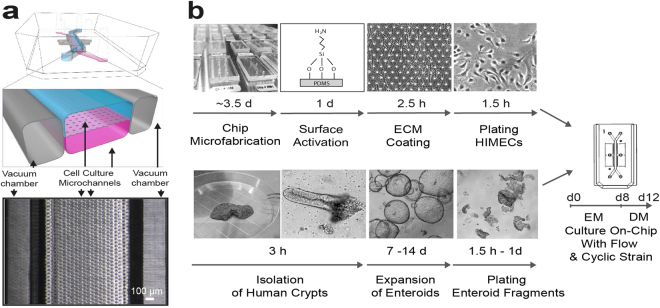
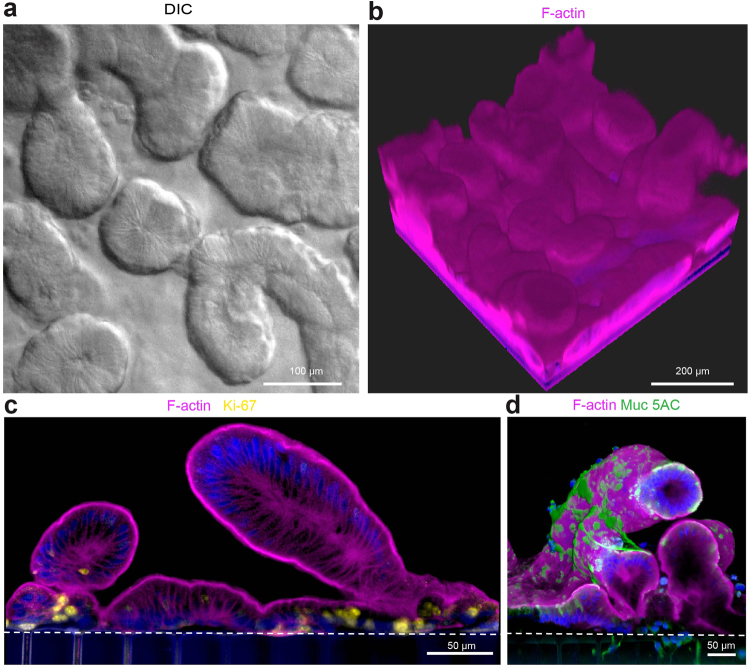
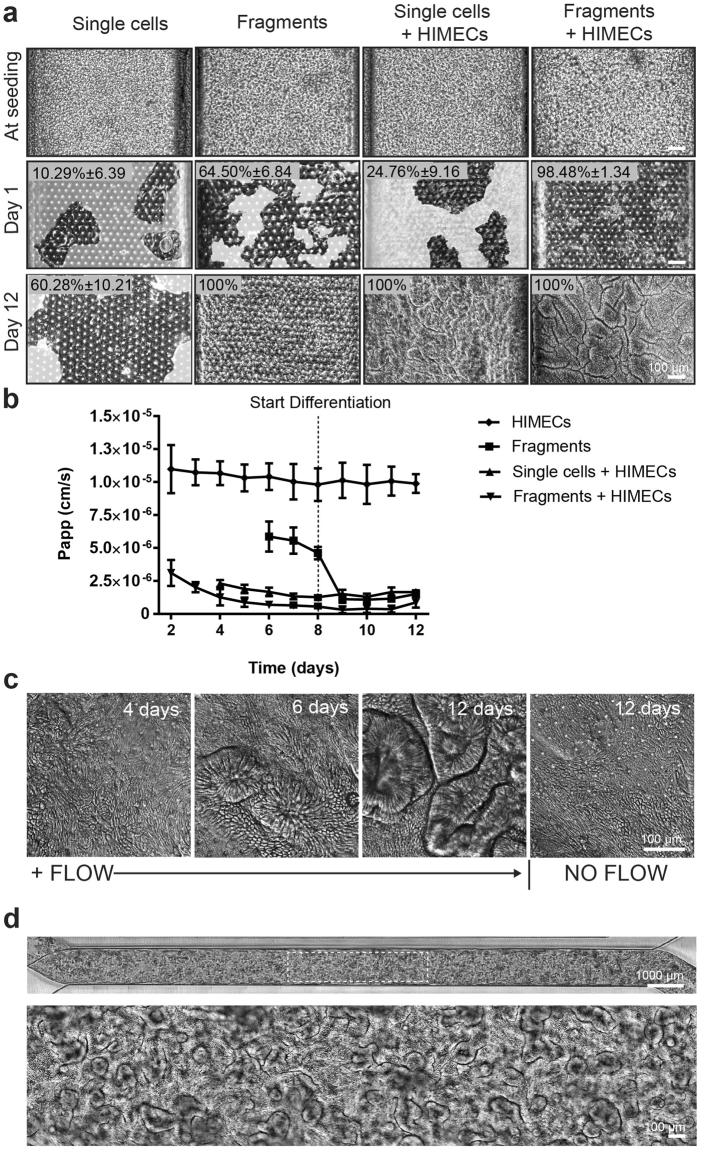
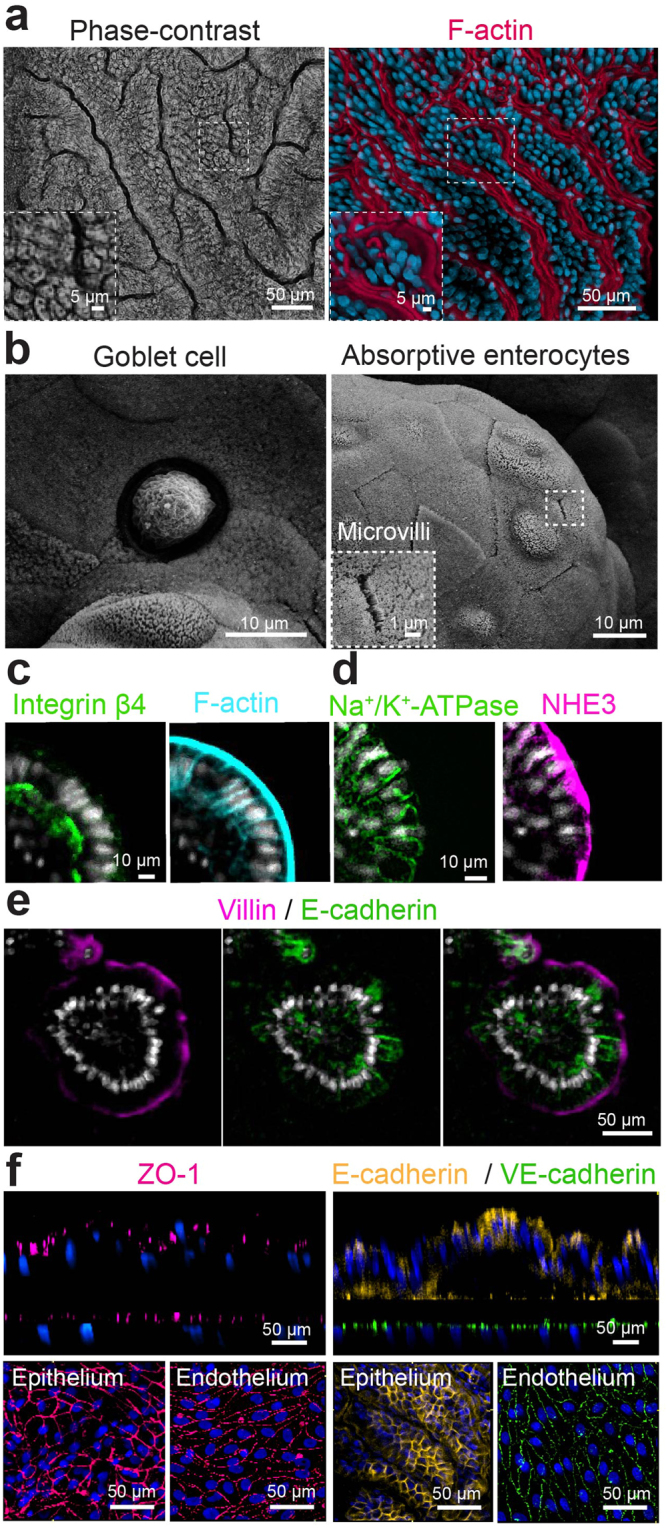
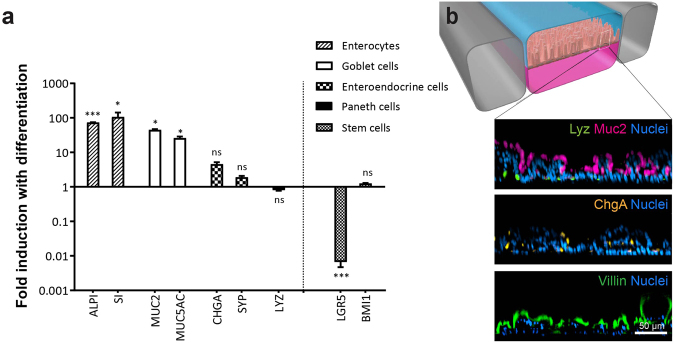
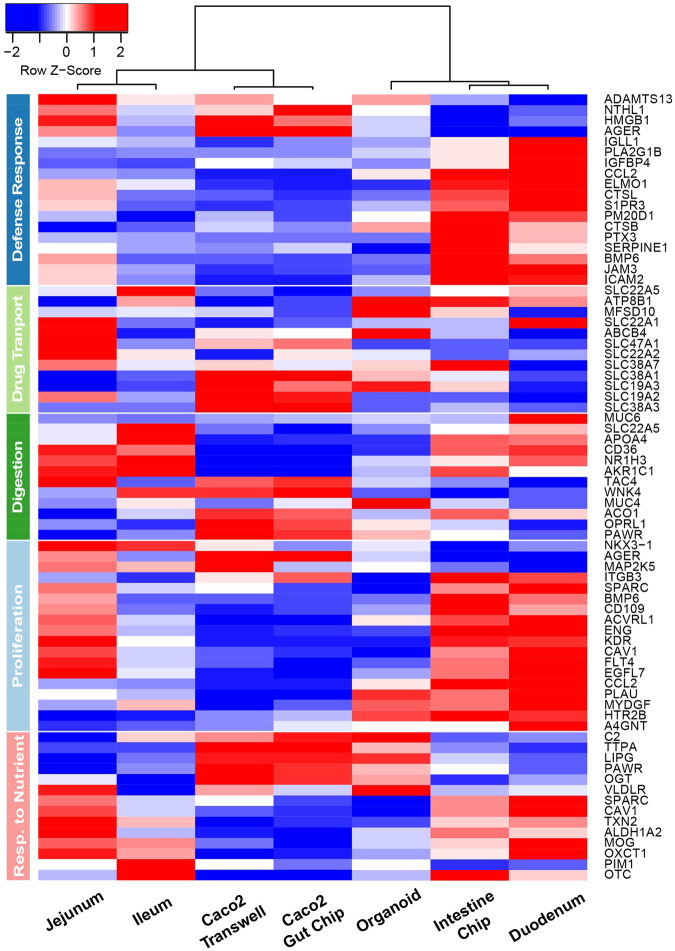
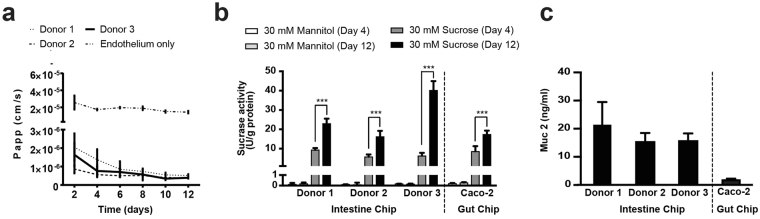
Here we describe a method for fabricating a primary human Small Intestine-on-a-Chip (Intestine Chip) containing epithelial cells isolated from healthy regions of intestinal biopsies. The primary epithelial cells are expanded as 3D organoids, dissociated, and cultured on a porous membrane within a microfluidic device with human intestinal microvascular endothelium cultured in a parallel microchannel under flow and cyclic deformation. In the Intestine Chip, the epithelium forms villi-like projections lined by polarized epithelial cells that undergo multi-lineage differentiation similar to that of intestinal organoids, however, these cells expose their apical surfaces to an open lumen and interface with endothelium. Transcriptomic analysis also indicates that the Intestine Chip more closely mimics whole human duodenum in vivo when compared to the duodenal organoids used to create the chips. Because fluids flowing through the lumen of the Intestine Chip can be collected continuously, sequential analysis of fluid samples can be used to quantify nutrient digestion, mucus secretion and establishment of intestinal barrier function over a period of multiple days in vitro . The Intestine Chip therefore may be useful as a research tool for applications where normal intestinal function is crucial, including studies of metabolism, nutrition, infection, and drug pharmacokinetics, as well as personalized medicine.
Overview
The claims and statistics of this paper haven’t been checked yet.
Free: it reads the open-access text and checks the first 5 claims that cite a source we can check. Create a free account to check every claim.
Integrity signals
Registry
Cites
Statistics
Figures
Verification
Claims the paper makes
The claims and statistics of this paper haven’t been checked yet.
Free: it reads the open-access text and checks the first 5 claims that cite a source we can check. Create a free account to check every claim.
Claims other papers make about this one
Each is checked against this paper’s own text: does it say what the citing paper says it does?
The source backs part of the claim, not all of it — or backs it for a different population, condition or comparison.
In the citing paper
“In recent years, significant advances have been made in organ-on-chip microfluidic systems that enable investigators to study the effects of engineered microbes on various human tissues, including the permeability of microbial effectors across epithelial barriers and effects on tissue viability78.”
From Developing a new class of engineered live bacterial therapeutics to treat human diseases (2020) · cites this paper as [78]
Experimental — accuracy not yet measuredThe source backs part of the claim, not all of it — or backs it for a different population, condition or comparison.
In the citing paper
“Organoids derived from these stem cells can be integrated into tumor chips, and because of the combination of the two technologies, organ-specific structures and gene expression signatures in vivo could be mimicked better than in either model alone172.”
From Tumor-on-a-chip: from bioinspired design to biomedical application (2021) · cites this paper as [172]
Experimental — accuracy not yet measuredThe cited source says what the claim attributes to it.
In the citing paper
“Interestingly, although this differentiation process is similar to that observed within the intestinal organoids, transcriptomic analysis revealed that the mechanically active Intestine Chip more closely mimics the proliferation and host defense response to infection functions of the human duodenum from which the organoids were originally isolated.”
From Microfluidic Organ-on-a-Chip Models of Human Intestine (2018) · cites this paper as [52]
The cited source says what the claim attributes to it.
In the citing paper
“Most recently, organoid and organ chip approaches have been combined to develop a microfluidic primary human Intestine Chip model.”
From Microfluidic Organ-on-a-Chip Models of Human Intestine (2018) · cites this paper as [52]
The cited source says what the claim attributes to it.
In the citing paper
“Much like the Caco-2 cell-lined Gut Chip, with application of fluid flow and peristalsis-like deformations, the intestinal epithelial cells undergo villus histogenesis with multilineage differentiation.”
From Microfluidic Organ-on-a-Chip Models of Human Intestine (2018) · cites this paper as [52]
Self-check
Percentages, sums and reported differences re-computed from the paper’s own numbers.
The self-check needs the paper’s full text.
Citations
Cites
Fiji: an open-source platform for biological-image analysis
Schindelin, J., Arganda-Carreras, I., Frise, E., Kaynig, V., Longair, M., Pietzsch, T., Preibisch, S., Rueden, C., Saalfeld, S., Schmid, B., et al. (2012) · Nature Methods · doi:10.1038/nmeth.2019 · Cited by 66,890
NIH Image to ImageJ: 25 years of image analysis
Schneider, C. A., Rasband, W. S., & Eliceiri, K. W. (2012) · Nature Methods · doi:10.1038/nmeth.2089 · Cited by 64,638
limma powers differential expression analyses for RNA-sequencing and microarray studies
Ritchie, M. E., Phipson, B., Wu, D., Hu, Y., Law, C. W., Shi, W., & Smyth, G. K. (2015) · Nucleic Acids Research · doi:10.1093/nar/gkv007 · Cited by 40,458
Gene Expression Omnibus: NCBI gene expression and hybridization array data repository
Edgar, R. (2002) · Nucleic Acids Research · doi:10.1093/nar/30.1.207 · Cited by 13,288
NCBI GEO: archive for functional genomics data sets—update
Barrett, T., Wilhite, S. E., Ledoux, P., Evangelista, C., Kim, I. F., Tomashevsky, M., Marshall, K. A., Phillippy, K. H., Sherman, P. M., Holko, M., et al. (2012) · Nucleic Acids Research · doi:10.1093/nar/gks1193 · Cited by 10,418
Single Lgr5 stem cells build crypt-villus structures in vitro without a mesenchymal niche
Sato, T., Vries, R. G., Snippert, H. J., van de Wetering, M., Barker, N., Stange, D. E., van Es, J. H., Abo, A., Kujala, P., Peters, P. J., et al. (2009) · Nature · doi:10.1038/nature07935 · Cited by 7,204
ImageJ2: ImageJ for the next generation of scientific image data
Rueden, C. T., Schindelin, J., Hiner, M. C., DeZonia, B. E., Walter, A. E., Arena, E. T., & Eliceiri, K. W. (2017) · BMC Bioinformatics · doi:10.1186/s12859-017-1934-z · Cited by 5,980
Identification of stem cells in small intestine and colon by marker gene Lgr5
Barker, N., van Es, J. H., Kuipers, J., Kujala, P., van den Born, M., Cozijnsen, M., Haegebarth, A., Korving, J., Begthel, H., Peters, P. J., et al. (2007) · Nature · doi:10.1038/nature06196 · Cited by 5,687
Reconstituting organ-level lung functions on a chip
Huh, D., Matthews, B. D., Mammoto, A., Montoya-Zavala, M., Hsin, H. Y., & Ingber, D. E. (2010) · Science · doi:10.1126/science.1188302 · Cited by 4,250
Self-citationSato, T., Stange, D. E., Ferrante, M., Vries, R. G. J., van Es, J. H., van den Brink, S., van Houdt, W. J., Pronk, A., van Gorp, J., Siersema, P. D., et al. (2011) · Gastroenterology · doi:10.1053/j.gastro.2011.07.050 · Cited by 3,753
Organoid Models and Applications in Biomedical Research
Xinaris, C., Brizi, V., & Remuzzi, G. (2015) · Nephron · doi:10.1159/000433566 · Cited by 3,515
Bhatia, S. N., & Ingber, D. E. (2014) · Nature Biotechnology · doi:10.1038/nbt.2989 · Cited by 3,305
Self-citationKim, H. J., Huh, D., Hamilton, G., & Ingber, D. E. (2012) · Lab on a Chip · doi:10.1039/c2lc40074j · Cited by 1,734
Self-citationOrganoids as an in vitro model of human development and disease
Fatehullah, A., Tan, S. H., & Barker, N. (2016) · Nature Cell Biology · doi:10.1038/ncb3312 · Cited by 1,508
Growing Self-Organizing Mini-Guts from a Single Intestinal Stem Cell: Mechanism and Applications
Sato, T., & Clevers, H. (2013) · Science · doi:10.1126/science.1234852 · Cited by 1,170
A Human Disease Model of Drug Toxicity–Induced Pulmonary Edema in a Lung-on-a-Chip Microdevice
Huh, D., Leslie, D. C., Matthews, B. D., Fraser, J. P., Jurek, S., Hamilton, G. A., Thorneloe, K. S., McAlexander, M. A., & Ingber, D. E. (2012) · Science Translational Medicine · doi:10.1126/scitranslmed.3004249 · Cited by 993
Self-citationKim, H. J., Li, H., Collins, J. J., & Ingber, D. E. (2016) · Proceedings of the National Academy of Sciences · doi:10.1073/pnas.1522193112 · Cited by 922
Self-citationHuman kidney proximal tubule-on-a-chip for drug transport and nephrotoxicity assessment
Jang, K.-J., Mehr, A. P., Hamilton, G. A., McPartlin, L. A., Chung, S., Suh, K.-Y., & Ingber, D. E. (2013) · Integrative Biology · doi:10.1039/c3ib40049b · Cited by 849
Self-citationThe intestinal stem cell markers Bmi1 and Lgr5 identify two functionally distinct populations
Yan, K. S., Chia, L. A., Li, X., Ootani, A., Su, J., Lee, J. Y., Su, N., Luo, Y., Heilshorn, S. C., Amieva, M. R., et al. (2012) · Proceedings of the National Academy of Sciences · doi:10.1073/pnas.1118857109 · Cited by 828
Gut-on-a-Chip microenvironment induces human intestinal cells to undergo villus differentiation
Kim, H. J., & Ingber, D. E. (2013) · Integrative Biology · doi:10.1039/c3ib40126j · Cited by 750
Self-citationAre animal models predictive for humans?
Shanks, N., Greek, R., & Greek, J. (2009) · Philosophy, Ethics, and Humanities in Medicine · doi:10.1186/1747-5341-4-2 · Cited by 677
A microfluidics-based in vitro model of the gastrointestinal human–microbe interface
Shah, P., Fritz, J. V., Glaab, E., Desai, M. S., Greenhalgh, K., Frachet, A., Niegowska, M., Estes, M., Jäger, C., Seguin-Devaux, C., et al. (2016) · Nature Communications · doi:10.1038/ncomms11535 · Cited by 660
Ensembles of engineered cardiac tissues for physiological and pharmacological study: Heart on a chip
Grosberg, A., Alford, P. W., McCain, M. L., & Parker, K. K. (2011) · Lab on a Chip · doi:10.1039/c1lc20557a · Cited by 544
VanDussen, K. L., Marinshaw, J. M., Shaikh, N., Miyoshi, H., Moon, C., Tarr, P. I., Ciorba, M. A., & Stappenbeck, T. S. (2015) · Gut · doi:10.1136/gutjnl-2013-306651 · Cited by 525
Mixed-Data Classificatory Programs I - Agglomerative Systems.
Lance, G. N., & Williams, W. T. (1967) · Australian Computer Journal · Cited by 475
A microfabricated array bioreactor for perfused 3D liver culture
Powers, M. J., Domansky, K., Kaazempur‐Mofrad, M. R., Kalezi, A., Capitano, A., Upadhyaya, A., Kurzawski, P., Wack, K. E., Stolz, D. B., Kamm, R., et al. (2002) · Biotechnology and Bioengineering · doi:10.1002/bit.10143 · Cited by 462
Wang, Y., Gunasekara, D. B., Reed, M. I., DiSalvo, M., Bultman, S. J., Sims, C. E., Magness, S. T., & Allbritton, N. L. (2017) · Biomaterials · doi:10.1016/j.biomaterials.2017.03.005 · Cited by 373
Park, J., Lee, B. K., Jeong, G. S., Hyun, J. K., Lee, C. J., & Lee, S.-H. (2015) · Lab on a Chip · doi:10.1039/c4lc00962b · Cited by 350
Tilles, A. W., Baskaran, H., Roy, P., Yarmush, M. L., & Toner, M. (2001) · Biotechnology and Bioengineering · doi:10.1002/bit.1071 · Cited by 330
Umar, S. (2010) · Current Gastroenterology Reports · doi:10.1007/s11894-010-0130-3 · Cited by 323
Stzepourginski, I., Nigro, G., Jacob, J.-M., Dulauroy, S., Sansonetti, P. J., Eberl, G., & Peduto, L. (2017) · Proceedings of the National Academy of Sciences · doi:10.1073/pnas.1620059114 · Cited by 315
Analysis of strain and regional variation in gene expression in mouse brain
Pavlidis, P., & Noble, W. S. (2001) · Genome Biology · doi:10.1186/gb-2001-2-10-research0042 · Cited by 296
Kimura, H., Yamamoto, T., Sakai, H., Sakai, Y., & Fujii, T. (2008) · Lab on a Chip · doi:10.1039/b717091b · Cited by 290
Valenta, T., Degirmenci, B., Moor, A. E., Herr, P., Zimmerli, D., Moor, M. B., Hausmann, G., Cantù, C., Aguet, M., & Basler, K. (2016) · Cell Reports · doi:10.1016/j.celrep.2016.03.088 · Cited by 256
Workman, M. J., Gleeson, J. P., Troisi, E. J., Estrada, H. Q., Kerns, S. J., Hinojosa, C. D., Hamilton, G. A., Targan, S. R., Svendsen, C. N., & Barrett, R. J. (2018) · Cellular and Molecular Gastroenterology and Hepatology · doi:10.1016/j.jcmgh.2017.12.008 · Cited by 246
A single-sample microarray normalization method to facilitate personalized-medicine workflows
Piccolo, S. R., Sun, Y., Campbell, J. D., Lenburg, M. E., Bild, A. H., & Johnson, W. E. (2012) · Genomics · doi:10.1016/j.ygeno.2012.08.003 · Cited by 243
Yissachar, N., Zhou, Y., Ung, L., Lai, N. Y., Mohan, J. F., Ehrlicher, A., Weitz, D. A., Kasper, D. L., Chiu, I. M., Mathis, D., et al. (2017) · Cell · doi:10.1016/j.cell.2017.02.009 · Cited by 242
Microfluidic PDMS (Polydimethylsiloxane) Bioreactor for Large-Scale Culture of Hepatocytes
Leclerc, E., Sakai, Y., & Fujii, T. (2004) · Biotechnology Progress · doi:10.1021/bp0300568 · Cited by 234
Microfluidic gut-on-a-chip with three-dimensional villi structure
Shim, K.-Y., Lee, D., Han, J., Nguyen, N.-T., Park, S., & Sung, J. H. (2017) · Biomedical Microdevices · doi:10.1007/s10544-017-0179-y · Cited by 229
Reverse engineering human pathophysiology with organs-on-chips
Ingber, D. E. (2016) · Cell · doi:10.1016/j.cell.2016.02.049 · Cited by 212
Self-citationMeta-Analysis of the Turnover of Intestinal Epithelia in Preclinical Animal Species and Humans
Darwich, A. S., Aslam, U., Ashcroft, D. M., & Rostami-Hodjegan, A. (2014) · Drug Metabolism and Disposition · doi:10.1124/dmd.114.058404 · Cited by 206
In vitro organogenesis in three dimensions: self-organising stem cells
Sasai, Y., Eiraku, M., & Suga, H. (2012) · Development · doi:10.1242/dev.079590 · Cited by 204
Pathophysiology of Short Bowel Syndrome: Considerations of Resected and Residual Anatomy
Tappenden, K. A. (2014) · Journal of Parenteral and Enteral Nutrition · doi:10.1177/0148607113520005 · Cited by 188
Gene Expression Dynamics Inspector (GEDI): for integrative analysis of expression profiles
Eichler, G. S., Huang, S., & Ingber, D. E. (2003) · Bioinformatics · doi:10.1093/bioinformatics/btg307 · Cited by 180
Self-citationWells, J. M., & Spence, J. R. (2014) · Development · doi:10.1242/dev.097386 · Cited by 174
Intestinal organoids for assessing nutrient transport, sensing and incretin secretion
Zietek, T., Rath, E., Haller, D., & Daniel, H. (2015) · Scientific Reports · doi:10.1038/srep16831 · Cited by 171
A microfluidic system to evaluate intestinal absorption
Imura, Y., Asano, Y., Sato, K., & Yoshimura, E. (2009) · Analytical Sciences · doi:10.2116/analsci.25.1403 · Cited by 159
Development of a Renal Microchip for In Vitro Distal Tubule Models
Baudoin, R., Griscom, L., Monge, M., Legallais, C., & Leclerc, E. (2007) · Biotechnology Progress · doi:10.1021/bp0603513 · Cited by 128
Multiplatform single-sample estimates of transcriptional activation
Piccolo, S. R., Withers, M. R., Francis, O. E., Bild, A. H., & Johnson, W. E. (2013) · Proceedings of the National Academy of Sciences · doi:10.1073/pnas.1305823110 · Cited by 97
GATA4 Is Essential for Jejunal Function in Mice
Battle, M. A., Bondow, B. J., Iverson, M. A., Adams, S. J., Jandacek, R. J., Tso, P., & Duncan, S. A. (2008) · Gastroenterology · doi:10.1053/j.gastro.2008.07.074 · Cited by 96
A protocol for in situ enzyme assays to assess the differentiation of human intestinal Caco-2 cells
Ferruzza, S., Rossi, C., Scarino, M. L., & Sambuy, Y. (2011) · Toxicology in Vitro · doi:10.1016/j.tiv.2011.11.007 · Cited by 85
Skrzypek, T., PIEDRA, J. L. V., Skrzypek, H. W., Woliński, J., Kazimierczak, W., Szymańczyk, S., Pawłowska, M., & Zabielski, R. (2005) · PubMed · Cited by 63
Functional significance of intestinal Na+-K+-ATPase: in vivo ouabain inhibition.
Charney, A. N., & Donowitz, M. (1978) · American Journal of Physiology-Endocrinology and Metabolism · doi:10.1152/ajpendo.1978.234.6.e629 · Cited by 41
A Novel Method for the Culture and Polarized Stimulation of Human Intestinal Mucosa Explants
Tsilingiri, K., Sonzogni, A., Caprioli, F., & Rescigno, M. (2013) · Journal of Visualized Experiments · doi:10.3791/4368 · Cited by 17
Light and scanning electron microscopy of the small intestine of goat (Capra hircus)
Said, A. H., & Eid, A. H. M. S. (2015) · Journal of Cell and Animal Biology · doi:10.5897/jcab2015.0425 · Cited by 8
Mucosal- Submucosal Changes in Rabbit Duodenum during Development
Elnasharty, M., & Abou-Ghanema, I. I. (2013) · doi:10.13140/2.1.2788.0967 · Cited by 6
Research works printed but not linked: 2
- Sato T Single Lgr5 stem cells build crypt – villus structures in vitro without a mesenchymal niche Nature 2009 459 262 265 10.1038/nature07935 19329995 · DOI · Paper page
- Kim, H. J. Human gut-on-a-chip inhabited by microbial flora that experiences intestinal peristalsis-like motions and flow. Lab Chip Lab on a Chip. 10.1039/c2lc40074j (2015). 22434367 · DOI · Paper page
Cited by
Is it time to start transitioning from 2D to 3D cell culture?
Jensen, C., & Teng, Y. (2020) · Frontiers in Molecular Biosciences · doi:10.3389/fmolb.2020.00033 · Cited by 1,640
“, 2015), small intestine (Kasendra et al., 2018), bronchioles (Benam et al.”
BackgroundHuman organs-on-chips for disease modelling, drug development and personalized medicine
Ingber, D. E. (2022) · Nature Reviews Genetics · doi:10.1038/s41576-022-00466-9 · Cited by 1,589
Self-citationHofer, M., & Lutolf, M. P. (2021) · Nature Reviews Materials · doi:10.1038/s41578-021-00279-y · Cited by 1,184
Organs-on-chips: into the next decade
Low, L. A., Mummery, C., Berridge, B. R., Austin, C. P., & Tagle, D. A. (2021) · Nature Reviews Drug Discovery · doi:10.1038/s41573-020-0079-3 · Cited by 1,029
Modelling cancer in microfluidic human organs-on-chips
Sontheimer-Phelps, A., Hassell, B. A., & Ingber, D. E. (2019) · Nature Reviews Cancer · doi:10.1038/s41568-018-0104-6 · Cited by 906
Self-citation
Metadata
- Authors
- Kasendra, M., Tovaglieri, A., Sontheimer-Phelps, A., Jalili-Firoozinezhad, S., Bein, A., Chalkiadaki, A., Scholl, W., Zhang, C., Rickner, H., Richmond, C. A., Li, H., Breault, D. T., & Ingber, D. E.
- Affiliations
- Harvard University (US)
- Mayo Clinic (US)
- Boston Children's Hospital (US)
- Corresponding author
- Breault, David T.
- Ingber, Donald E.
- ORCID
- Venue
- Scientific Reports
- Published
- 2018-02-13
- Volume
- 8
- Issue
- 1
- Pages
- 2871-2871
- ISSN
- 2045-2322 (ISSN-L)
- PMC
- PMC5811607
- OpenAlex
- W2794369551
- Cited by
- 754
- References
- 56
- Citations by year
- 2026: 77 · 2025: 81 · 2024: 81 · 2023: 89 · 2022: 108 · 2021: 125 · 2020: 99 · 2019: 66 · 2018: 27
- FWCI
- 31.68
- Type
- journal article
- Language
- en
- Open access
- gold
- doi.org
- Licence
- cc-by
- creativecommons.org/licenses/by/4.0 (tdm)
- creativecommons.org/licenses/by/4.0 (vor)
- Locations
- Scientific Reports (publishedVersion, cc-by)
- Europe PMC (PubMed Central) (publishedVersion, cc-by)
- PubMed Central (publishedVersion, cc-by)
- PubMed (publishedVersion)
- Digital Access to Scholarship at Harvard (DASH) (Harvard University) (submittedVersion, cc-by)
- DOAJ (DOAJ: Directory of Open Access Journals) (submittedVersion)
- FreiDok plus (Universitätsbibliothek Freiburg) (submittedVersion)
- Repository for Publications and Research Data (ETH Zurich) (submittedVersion, cc-by)
- ETH Zürich Research Collection (cc-by)
- Funders
- Bill and Melinda Gates Foundation
- Harvard University
- North American Society for Pediatric Gastroenterology, Hepatology and Nutrition
- Ragon Institute of MGH, MIT and Harvard
- Hamilton Health Sciences Foundation
- National Institutes of Health (5K12HD5289610, HDDC P30DK034854)
- U.S. Food and Drug Administration (HHSF223201310079C)
- Defense Advanced Research Projects Agency (W911NF-12-2-0036)
- Intellectual and Developmental Disabilities Research Center (P30DK034854, P30HD18655, HDDC P30DK034854)
- Hansjörg Wyss Institute for Biologically Inspired Engineering, Harvard University
- Harvard Digestive Diseases Center, Harvard University (P30DK034854)
- National Institute of Diabetes and Digestive and Kidney Diseases (R01DK084056, F32DK091995, K08DK106562, T32DK007477, P30DK034854)
- Eunice Kennedy Shriver National Institute of Child Health and Human Development (P30HD018655)
- Topics
- Physical Sciences › Engineering › Biomedical Engineering › 3D Printing in Biomedical Research
- Health Sciences › Medicine › Surgery › Tissue Engineering and Regenerative Medicine
- Physical Sciences › Engineering › Biomedical Engineering › Microfluidic and Capillary Electrophoresis Applications
- Keywords
- intestinal organoids, microfluidics, cyclic deformation, epithelial polarization, multilineage differentiation, intestinal barrier function, mucus secretion, nutrient digestion, personalized medicine
- MeSH terms
- Biopsy, Epithelial Cells, Humans, Intestine, Small, Organoids, Cell Proliferation, Lab-On-A-Chip Devices
About these checks
Registry, retraction, Cites and statistics results are computed, not judged, with one exception: a printed reference that no index lists is read once by a model before it counts as a citation error. Claims are extracted by a model and kept only when their quote appears verbatim in the text; each cited source is then checked, with a model’s help, for whether it says what the claim relies on. Those verdicts can be wrong — read the claim’s quote and the cited source before relying on one.
Statistics and arithmetic are recomputed, not judged.
Confidence bands are shown only for fields calibrated on our annotated test set. None is calibrated yet, so no band is shown.
What counts as a claim ›How we measure confidence ›How we check this ›
Are you an author, or do you see a problem with this page? Request a review
Data sources
Bibliographic data: Semantic Scholar, OpenAlex, Crossref.
Contains information from the Semantic Scholar Academic Graph Datasets, made available under the ODC Attribution License (ODC-BY 1.0).
Semantic Scholar’s data is described in: Kinney, R., et al. (2023). The Semantic Scholar Open Data Platform. arXiv:2301.10140.
