

Development of a primary human Small Intestine-on-a-Chip using biopsy-derived organoids
Open accessThe DOI matches its Crossref record; 56 of the 56 references it cites were found in a registry or an index.
Abstract
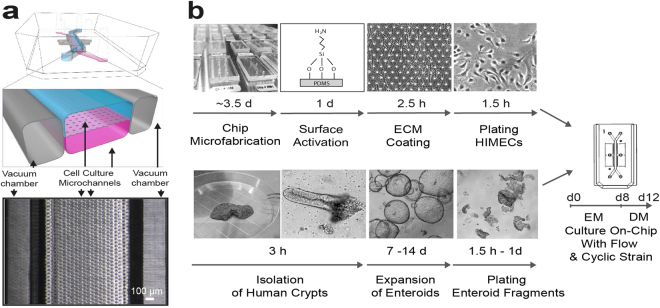
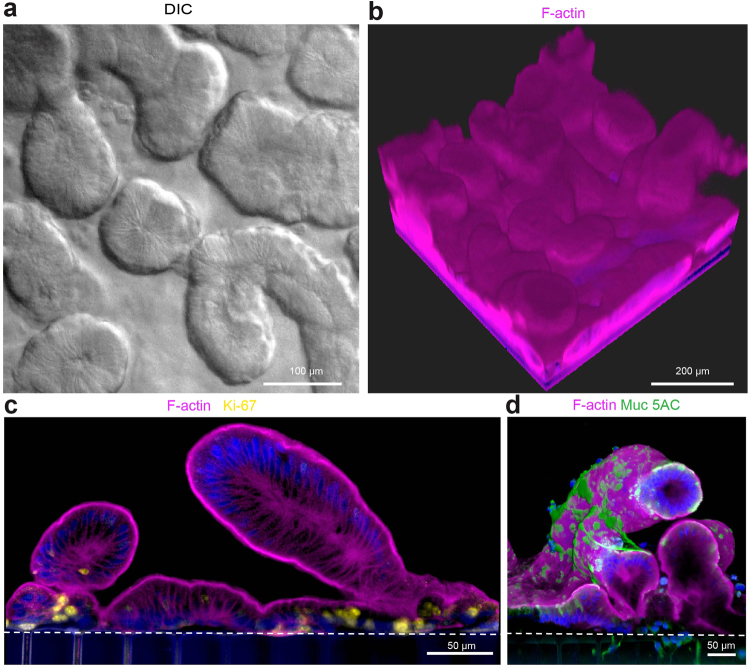
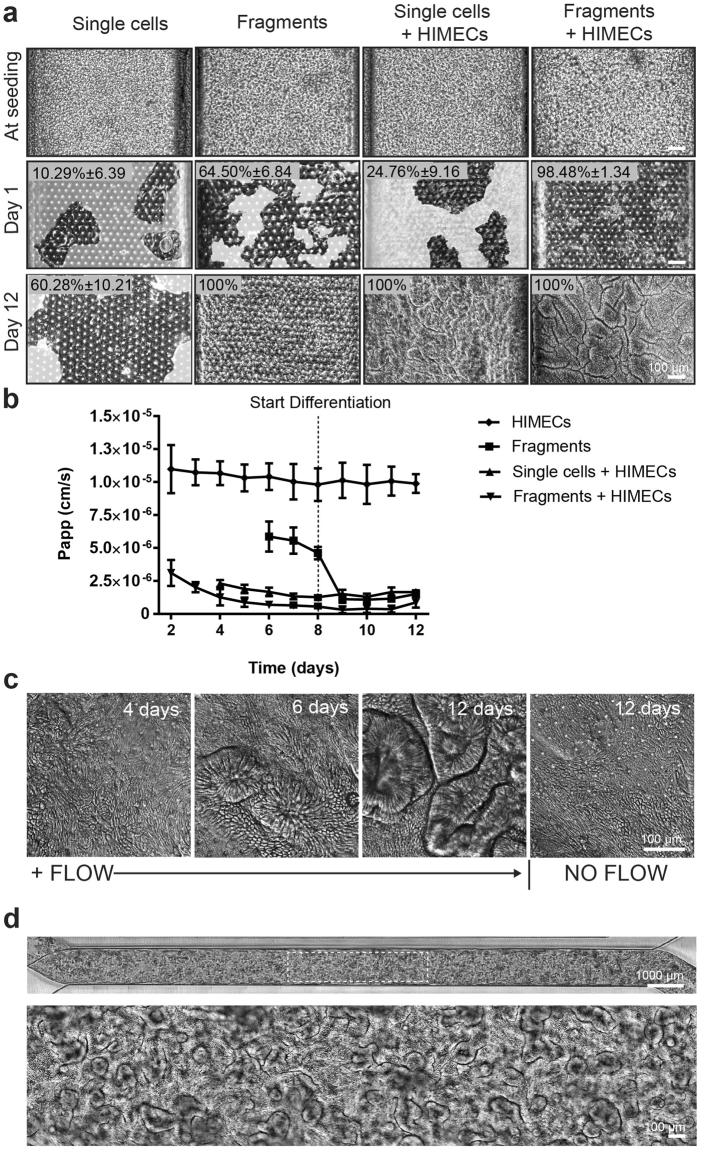
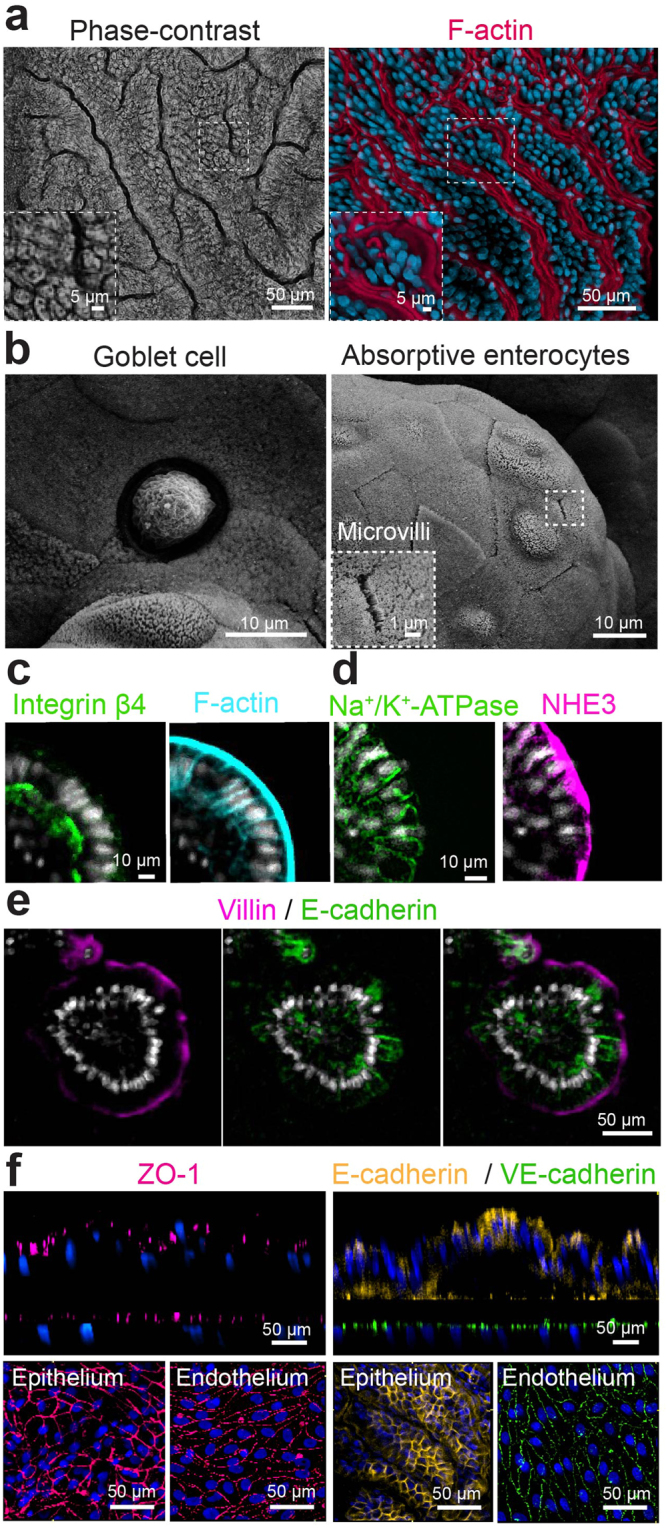
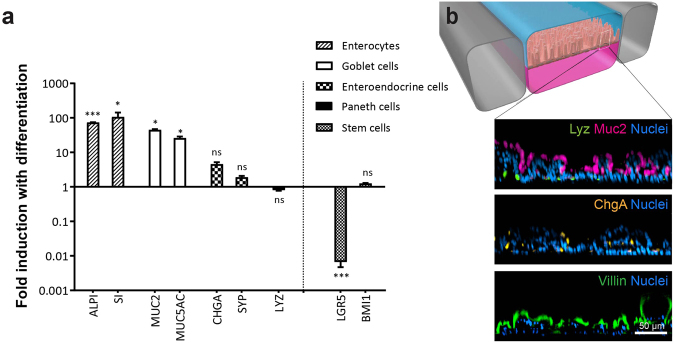
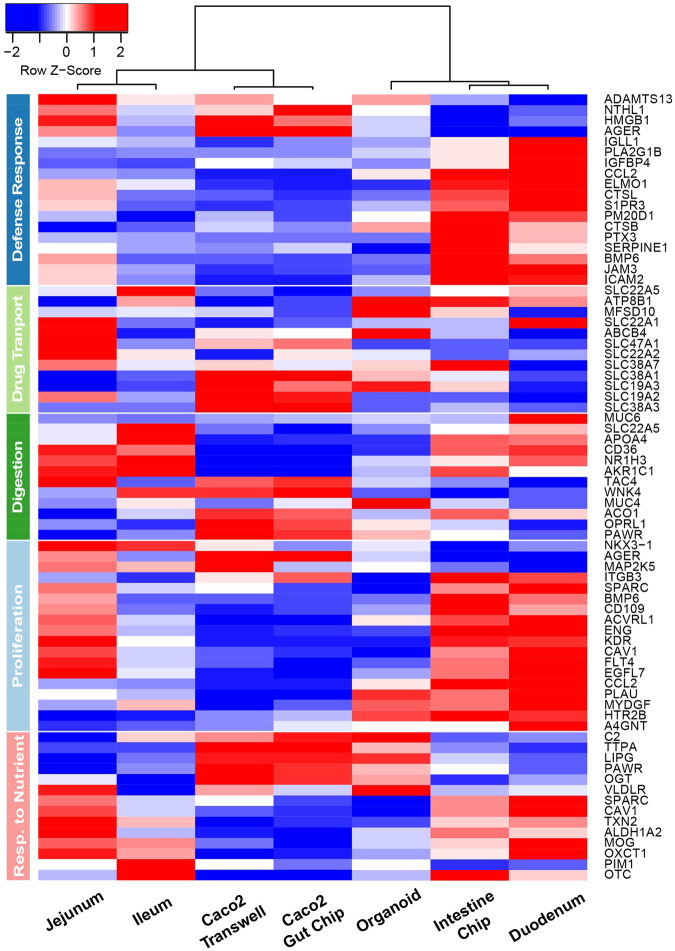
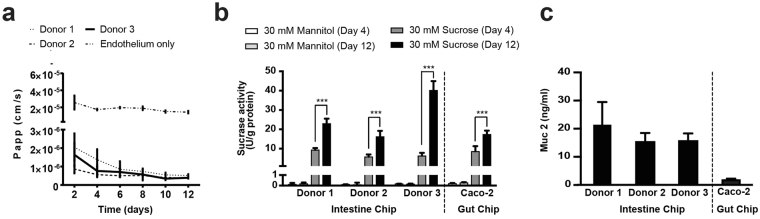
Here we describe a method for fabricating a primary human Small Intestine-on-a-Chip (Intestine Chip) containing epithelial cells isolated from healthy regions of intestinal biopsies. The primary epithelial cells are expanded as 3D organoids, dissociated, and cultured on a porous membrane within a microfluidic device with human intestinal microvascular endothelium cultured in a parallel microchannel under flow and cyclic deformation. In the Intestine Chip, the epithelium forms villi-like projections lined by polarized epithelial cells that undergo multi-lineage differentiation similar to that of intestinal organoids, however, these cells expose their apical surfaces to an open lumen and interface with endothelium. Transcriptomic analysis also indicates that the Intestine Chip more closely mimics whole human duodenum in vivo when compared to the duodenal organoids used to create the chips. Because fluids flowing through the lumen of the Intestine Chip can be collected continuously, sequential analysis of fluid samples can be used to quantify nutrient digestion, mucus secretion and establishment of intestinal barrier function over a period of multiple days in vitro . The Intestine Chip therefore may be useful as a research tool for applications where normal intestinal function is crucial, including studies of metabolism, nutrition, infection, and drug pharmacokinetics, as well as personalized medicine.
Overview
The claims and statistics of this paper haven’t been checked yet.
Free: it reads the open-access text and checks the first 5 claims that cite a source we can check. Create a free account to check every claim.
Integrity signals
Registry
Cites
Statistics
Figures
Verification
Claims the paper makes
The claims and statistics of this paper haven’t been checked yet.
Free: it reads the open-access text and checks the first 5 claims that cite a source we can check. Create a free account to check every claim.
Claims other papers make about this one
Each is checked against this paper’s own text: does it say what the citing paper says it does?
The source backs part of the claim, not all of it — or backs it for a different population, condition or comparison.
In the citing paper
“In recent years, significant advances have been made in organ-on-chip microfluidic systems that enable investigators to study the effects of engineered microbes on various human tissues, including the permeability of microbial effectors across epithelial barriers and effects on tissue viability78.”
From Developing a new class of engineered live bacterial therapeutics to treat human diseases (2020) · cites this paper as [78]
Experimental — accuracy not yet measuredThe source backs part of the claim, not all of it — or backs it for a different population, condition or comparison.
In the citing paper
“Organoids derived from these stem cells can be integrated into tumor chips, and because of the combination of the two technologies, organ-specific structures and gene expression signatures in vivo could be mimicked better than in either model alone172.”
From Tumor-on-a-chip: from bioinspired design to biomedical application (2021) · cites this paper as [172]
Experimental — accuracy not yet measuredThe cited source says what the claim attributes to it.
In the citing paper
“Interestingly, although this differentiation process is similar to that observed within the intestinal organoids, transcriptomic analysis revealed that the mechanically active Intestine Chip more closely mimics the proliferation and host defense response to infection functions of the human duodenum from which the organoids were originally isolated.”
From Microfluidic Organ-on-a-Chip Models of Human Intestine (2018) · cites this paper as [52]
The cited source says what the claim attributes to it.
In the citing paper
“Most recently, organoid and organ chip approaches have been combined to develop a microfluidic primary human Intestine Chip model.”
From Microfluidic Organ-on-a-Chip Models of Human Intestine (2018) · cites this paper as [52]
The cited source says what the claim attributes to it.
In the citing paper
“Much like the Caco-2 cell-lined Gut Chip, with application of fluid flow and peristalsis-like deformations, the intestinal epithelial cells undergo villus histogenesis with multilineage differentiation.”
From Microfluidic Organ-on-a-Chip Models of Human Intestine (2018) · cites this paper as [52]
Self-check
Percentages, sums and reported differences re-computed from the paper’s own numbers.
The self-check needs the paper’s full text.
Citations
Cites
Fiji: an open-source platform for biological-image analysis
Schindelin, J., Arganda-Carreras, I., Frise, E., Kaynig, V., Longair, M., Pietzsch, T., Preibisch, S., Rueden, C., Saalfeld, S., Schmid, B., et al. (2012) · Nature Methods · doi:10.1038/nmeth.2019 · Cited by 66,890
NIH Image to ImageJ: 25 years of image analysis
Schneider, C. A., Rasband, W. S., & Eliceiri, K. W. (2012) · Nature Methods · doi:10.1038/nmeth.2089 · Cited by 64,638
limma powers differential expression analyses for RNA-sequencing and microarray studies
Ritchie, M. E., Phipson, B., Wu, D., Hu, Y., Law, C. W., Shi, W., & Smyth, G. K. (2015) · Nucleic Acids Research · doi:10.1093/nar/gkv007 · Cited by 40,458
Gene Expression Omnibus: NCBI gene expression and hybridization array data repository
Edgar, R. (2002) · Nucleic Acids Research · doi:10.1093/nar/30.1.207 · Cited by 13,288
NCBI GEO: archive for functional genomics data sets—update
Barrett, T., Wilhite, S. E., Ledoux, P., Evangelista, C., Kim, I. F., Tomashevsky, M., Marshall, K. A., Phillippy, K. H., Sherman, P. M., Holko, M., et al. (2012) · Nucleic Acids Research · doi:10.1093/nar/gks1193 · Cited by 10,418
Single Lgr5 stem cells build crypt-villus structures in vitro without a mesenchymal niche
Sato, T., Vries, R. G., Snippert, H. J., van de Wetering, M., Barker, N., Stange, D. E., van Es, J. H., Abo, A., Kujala, P., Peters, P. J., et al. (2009) · Nature · doi:10.1038/nature07935 · Cited by 7,204
ImageJ2: ImageJ for the next generation of scientific image data
Rueden, C. T., Schindelin, J., Hiner, M. C., DeZonia, B. E., Walter, A. E., Arena, E. T., & Eliceiri, K. W. (2017) · BMC Bioinformatics · doi:10.1186/s12859-017-1934-z · Cited by 5,980
Identification of stem cells in small intestine and colon by marker gene Lgr5
Barker, N., van Es, J. H., Kuipers, J., Kujala, P., van den Born, M., Cozijnsen, M., Haegebarth, A., Korving, J., Begthel, H., Peters, P. J., et al. (2007) · Nature · doi:10.1038/nature06196 · Cited by 5,687
Reconstituting organ-level lung functions on a chip
Huh, D., Matthews, B. D., Mammoto, A., Montoya-Zavala, M., Hsin, H. Y., & Ingber, D. E. (2010) · Science · doi:10.1126/science.1188302 · Cited by 4,250
Self-citationSato, T., Stange, D. E., Ferrante, M., Vries, R. G. J., van Es, J. H., van den Brink, S., van Houdt, W. J., Pronk, A., van Gorp, J., Siersema, P. D., et al. (2011) · Gastroenterology · doi:10.1053/j.gastro.2011.07.050 · Cited by 3,753
Research works printed but not linked: 2
- Sato T Single Lgr5 stem cells build crypt – villus structures in vitro without a mesenchymal niche Nature 2009 459 262 265 10.1038/nature07935 19329995 · DOI · Paper page
- Kim, H. J. Human gut-on-a-chip inhabited by microbial flora that experiences intestinal peristalsis-like motions and flow. Lab Chip Lab on a Chip. 10.1039/c2lc40074j (2015). 22434367 · DOI · Paper page
Cited by
Is it time to start transitioning from 2D to 3D cell culture?
Jensen, C., & Teng, Y. (2020) · Frontiers in Molecular Biosciences · doi:10.3389/fmolb.2020.00033 · Cited by 1,640
“, 2015), small intestine (Kasendra et al., 2018), bronchioles (Benam et al.”
BackgroundHuman organs-on-chips for disease modelling, drug development and personalized medicine
Ingber, D. E. (2022) · Nature Reviews Genetics · doi:10.1038/s41576-022-00466-9 · Cited by 1,589
Self-citationHofer, M., & Lutolf, M. P. (2021) · Nature Reviews Materials · doi:10.1038/s41578-021-00279-y · Cited by 1,184
Organs-on-chips: into the next decade
Low, L. A., Mummery, C., Berridge, B. R., Austin, C. P., & Tagle, D. A. (2021) · Nature Reviews Drug Discovery · doi:10.1038/s41573-020-0079-3 · Cited by 1,029
Modelling cancer in microfluidic human organs-on-chips
Sontheimer-Phelps, A., Hassell, B. A., & Ingber, D. E. (2019) · Nature Reviews Cancer · doi:10.1038/s41568-018-0104-6 · Cited by 906
Self-citationA complex human gut microbiome cultured in an anaerobic intestine-on-a-chip
Jalili-Firoozinezhad, S., Gazzaniga, F. S., Calamari, E. L., Camacho, D. M., Fadel, C. W., Bein, A., Swenor, B., Nestor, B., Cronce, M. J., Tovaglieri, A., et al. (2019) · Nature Biomedical Engineering · doi:10.1038/s41551-019-0397-0 · Cited by 855
Self-citationHomeostatic mini-intestines through scaffold-guided organoid morphogenesis
Nikolaev, M., Mitrofanova, O., Broguiere, N., Geraldo, S., Dutta, D., Tabata, Y., Elci, B., Brandenberg, N., Kolotuev, I., Gjorevski, N., et al. (2020) · Nature · doi:10.1038/s41586-020-2724-8 · Cited by 755
Organ-on-a-chip: recent breakthroughs and future prospects
Wu, Q., Liu, J., Wang, X., Feng, L., Wu, J., Zhu, X., Wen, W., & Gong, X. (2020) · BioMedical Engineering OnLine · doi:10.1186/s12938-020-0752-0 · Cited by 701
Microfluidic Organ-on-a-Chip Models of Human Intestine
Bein, A., Shin, W., Jalili-Firoozinezhad, S., Park, M. H., Sontheimer-Phelps, A., Tovaglieri, A., Chalkiadaki, A., Kim, H. J., & Ingber, D. E. (2018) · Cellular and Molecular Gastroenterology and Hepatology · doi:10.1016/j.jcmgh.2017.12.010 · Cited by 625
Self-citationDeveloping a new class of engineered live bacterial therapeutics to treat human diseases
Charbonneau, M. R., Isabella, V. M., Li, N., & Kurtz, C. B. (2020) · Nature Communications · doi:10.1038/s41467-020-15508-1 · Cited by 523
Reproducing human and cross-species drug toxicities using a liver-chip
Jang, K.-J., Otieno, M. A., Ronxhi, J., Lim, H.-K., Ewart, L., Kodella, K. R., Petropolis, D. B., Kulkarni, G., Rubins, J. E., Conegliano, D., et al. (2019) · Science Translational Medicine · doi:10.1126/scitranslmed.aax5516 · Cited by 511
Self-citationHerland, A., Maoz, B. M., Das, D., Somayaji, M. R., Prantil-Baun, R., Novak, R., Cronce, M., Huffstater, T., Jeanty, S. S. F., Ingram, M., et al. (2020) · Nature Biomedical Engineering · doi:10.1038/s41551-019-0498-9 · Cited by 500
Self-citationRobotic fluidic coupling and interrogation of multiple vascularized organ chips
Novak, R., Ingram, M., Marquez, S., Das, D., Delahanty, A., Herland, A., Maoz, B. M., Jeanty, S. S. F., Somayaji, M. R., Burt, M., et al. (2020) · Nature Biomedical Engineering · doi:10.1038/s41551-019-0497-x · Cited by 427
Self-citationEngineered materials for organoid systems
Kratochvil, M. J., Seymour, A. J., Li, T. L., Paşca, S. P., Kuo, C. J., & Heilshorn, S. C. (2019) · Nature Reviews Materials · doi:10.1038/s41578-019-0129-9 · Cited by 414
Engineering Stem Cell Self-organization to Build Better Organoids
Brassard, J. A., & Lutolf, M. P. (2019) · Cell Stem Cell · doi:10.1016/j.stem.2019.05.005 · Cited by 373
Foundations of gastrointestinal-based drug delivery and future developments
Chu, J. N., & Traverso, G. (2022) · Nature Reviews Gastroenterology & Hepatology · doi:10.1038/s41575-021-00539-w · Cited by 289
Ingber, D. E. (2020) · Advanced Science · doi:10.1002/advs.202002030 · Cited by 277
Self-citationPersonalised organs-on-chips: functional testing for precision medicine
van den Berg, A., Mummery, C. L., Passier, R., & van der Meer, A. D. (2019) · Lab on a Chip · doi:10.1039/c8lc00827b · Cited by 270
Micro and nanoscale technologies in oral drug delivery
Ahadian, S., Finbloom, J. A., Mofidfar, M., Diltemiz, S. E., Nasrollahi, F., Davoodi, E., Hosseini, V., Mylonaki, I., Sangabathuni, S., Montazerian, H., et al. (2020) · Advanced Drug Delivery Reviews · doi:10.1016/j.addr.2020.07.012 · Cited by 268
Microtechnology-based methods for organoid models
Velasco, V., Shariati, S. A., & Esfandyarpour, R. (2020) · Microsystems & Nanoengineering · doi:10.1038/s41378-020-00185-3 · Cited by 250
Tumor-on-a-chip: from bioinspired design to biomedical application
Liu, X., Fang, J., Huang, S., Wu, X., Xie, X., Wang, J., Liu, F., Zhang, M., Peng, Z., & Hu, N. (2021) · Microsystems & Nanoengineering · doi:10.1038/s41378-021-00277-8 · Cited by 246
Sontheimer-Phelps, A., Chou, D. B., Tovaglieri, A., Ferrante, T. C., Duckworth, T., Fadel, C., Frismantas, V., Sutherland, A. D., Jalili-Firoozinezhad, S., Kasendra, M., et al. (2020) · Cellular and Molecular Gastroenterology and Hepatology · doi:10.1016/j.jcmgh.2019.11.008 · Cited by 239
Self-citationGut-on-a-chip: Current progress and future opportunities
Ashammakhi, N., Nasiri, R., Barros, N. R. D., Tebon, P., Thakor, J., Goudie, M., Shamloo, A., Martin, M. G., & Khademhosseini, A. (2020) · Biomaterials · doi:10.1016/j.biomaterials.2020.120196 · Cited by 235
Schistosoma “Eggs-Iting” the Host: Granuloma Formation and Egg Excretion
Schwartz, C., & Fallon, P. G. (2018) · Frontiers in Immunology · doi:10.3389/fimmu.2018.02492 · Cited by 235
“Using the lentiviral knockdown model or schistosome egg-antigen coated beads (177, 178) either in vivo or in in vitro models, such as intestine-on-achip (179), intestinal organoid cultures (180), or other novel models (181, 182), are potential approaches to provide new insights.”
BackgroundOrgan‐on‐chip models: Implications in drug discovery and clinical applications
Mittal, R., Woo, F. W., Castro, C. S., Cohen, M. A., Karanxha, J., Mittal, J., Chhibber, T., & Jhaveri, V. M. (2019) · Journal of Cellular Physiology · doi:10.1002/jcp.27729 · Cited by 234
Fedi, A., Vitale, C., Ponschin, G., Ayehunie, S., Fato, M., & Scaglione, S. (2021) · Journal of Controlled Release · doi:10.1016/j.jconrel.2021.05.028 · Cited by 229
Pérez-González, C., Ceada, G., Greco, F., Matejčić, M., Gómez-González, M., Castro, N., Menendez, A., Kale, S., Krndija, D., Clark, A. G., et al. (2021) · Nature Cell Biology · doi:10.1038/s41556-021-00699-6 · Cited by 225
Duodenum Intestine-Chip for preclinical drug assessment in a human relevant model
Kasendra, M., Luc, R., Yin, J., Manatakis, D. V., Kulkarni, G., Lucchesi, C., Sliz, J., Apostolou, A., Sunuwar, L., Obrigewitch, J., et al. (2020) · eLife · doi:10.7554/elife.50135 · Cited by 222
“…a human primary Intestine-Chip, referred at the time as the ‘Small Intestine-on-a-Chip’, which combined the use of intestinal organoids isolated from pediatric donors and Organ-Chips (Kasendra et al., 2018) to recapitulate critical features of intestinal morphology and associated functions.”
BackgroundMethodResultInfluentialSelf-citationMarx, U. (2020) · ALTEX · doi:10.14573/altex.2001241 · Cited by 218
“The Wyss team also created human Intestine Chips lined with cells from patient-derived organoids (Kasendra et al., 2018) and cultured”
BackgroundEngineering Microfluidic Organoid-on-a-Chip Platforms
Yu, F., Hunziker, W., & Choudhury, D. (2019) · Micromachines · doi:10.3390/mi10030165 · Cited by 218
“(b) Procedure to establish the microfluidic co-cultures of the primary human intestinal epit elium and intestinal microvascular endothelium in t e intestine chip [62].”
BackgroundInfluentialTrapecar, M., Communal, C., Velazquez, J., Maass, C. A., Huang, Y.-J., Schneider, K., Wright, C. W., Butty, V., Eng, G., Yilmaz, O., et al. (2020) · Cell Systems · doi:10.1016/j.cels.2020.02.008 · Cited by 218
Molecular networks in Network Medicine: Development and applications
Silverman, E. K., Schmidt, H. H. H. W., Anastasiadou, E., Altucci, L., Angelini, M., Badimon, L., Balligand, J., Benincasa, G., Capasso, G., Conte, F., et al. (2020) · WIREs Systems Biology and Medicine · doi:10.1002/wsbm.1489 · Cited by 211
“…2015) Organ-chips (cid:129) Human breathing lung alveolus chip, blood – brain barrier, kidney, skin, placenta, intestine, and so on (Huh et al., 2010; Kasendra et al., 2018; Sances et Abbreviations: PCL, poly-e-caprolactone; PEG: polyethylene glycol; PLA, polylactic acid. exist, in the form of…”
BackgroundMicrofluidic organoids-on-a-chip: The future of human models
Saorin, G., Caligiuri, I., & Rizzolio, F. (2023) · Seminars in Cell & Developmental Biology · doi:10.1016/j.semcdb.2022.10.001 · Cited by 196
Engineering Vascularized Organoid-on-a-Chip Models
Shirure, V. S., Hughes, C. C. W., & George, S. C. (2021) · Annual Review of Biomedical Engineering · doi:10.1146/annurev-bioeng-090120-094330 · Cited by 193
Advances and Current Challenges in Intestinal in vitro Model Engineering: A Digest
Costa, J., & Ahluwalia, A. (2019) · Frontiers in Bioengineering and Biotechnology · doi:10.3389/fbioe.2019.00144 · Cited by 193
Integrating organoids and organ-on-a-chip devices
Zhao, Y., Landau, S., Okhovatian, S., Liu, C., Lu, R. X. Z., Lai, B. F. L., Wu, Q., Kieda, J., Cheung, K., Rajasekar, S., et al. (2024) · Nature Reviews Bioengineering · doi:10.1038/s44222-024-00207-z · Cited by 185
“To overcome this issue, a perfusable device with an intestinal-specific vascular compartment and an epithelial compartment separated by a porous polydimethylsiloxane (PDMS) membrane was used with intestinal biopsy duodenum organoids 56 , mimicking peristalsis motion by stretching (Table 1).”
Shin, W., Hinojosa, C. D., Ingber, D. E., & Kim, H. J. (2019) · iScience · doi:10.1016/j.isci.2019.04.037 · Cited by 186
Self-citationShin, W., & Kim, H. J. (2022) · Nature Protocols · doi:10.1038/s41596-021-00674-3 · Cited by 185
Development of a Gut-on-a-Chip Model for High Throughput Disease Modeling and Drug Discovery
Beaurivage, C., Naumovska, E., Chang, Y., Elstak, E., Nicolas, A., Wouters, H., van Moolenbroek, G., Lanz, H., Trietsch, S., Joore, J., et al. (2019) · International Journal of Molecular Sciences · doi:10.3390/ijms20225661 · Cited by 185
“such primary cells in order to develop gut-on-a-chip models [22,59], but they are of limited throughput and their application to disease modeling and drug screening has yet to be performed.”
BackgroundAdvances in Engineering Human Tissue Models
Moysidou, C.-M., Barberio, C., & Owens, R. M. (2021) · Frontiers in Bioengineering and Biotechnology · doi:10.3389/fbioe.2020.620962 · Cited by 179
“can be used as a single cellular input for tissue-engineered equivalents, allowing them to better capture the cellular diversity of the living counterparts (Kasendra et al., 2018).”
BackgroundXu, Y., Shrestha, N., Préat, V., & Beloqui, A. (2021) · Advanced Drug Delivery Reviews · doi:10.1016/j.addr.2021.05.005 · Cited by 176
Experimental models to study intestinal microbes–mucus interactions in health and disease
Etienne-Mesmin, L., Chassaing, B., Desvaux, M., De Paepe, K., Gresse, R., Sauvaitre, T., Forano, E., de Wiele, T. V., Schüller, S., Juge, N., et al. (2019) · FEMS Microbiology Reviews · doi:10.1093/femsre/fuz013 · Cited by 178
An organoid-based organ-repurposing approach to treat short bowel syndrome
Sugimoto, S., Kobayashi, E., Fujii, M., Ohta, Y., Arai, K., Matano, M., Ishikawa, K., Miyamoto, K., Toshimitsu, K., Takahashi, S., et al. (2021) · Nature · doi:10.1038/s41586-021-03247-2 · Cited by 175
Hernandez-Gordillo, V., Kassis, T., Lampejo, A., Choi, G., Gamboa, M. E., Gnecco, J. S., Brown, A., Breault, D. T., Carrier, R., & Griffith, L. G. (2020) · Biomaterials · doi:10.1016/j.biomaterials.2020.120125 · Cited by 173
“Intestinal organoids in the synthetic matrix were differentiated using L-WRN conditioned medium (25% L-WRN) diluted in Adv DMEM/F12, HEPES (10 mM, Gibco), Pen/Strep (100 U/mL, 100 mg/mL, Invitrogen), N2 supplement (1X, Gibco), B27 supplement (1X, Gibco), human [Leu15]-gastrin I (10 nM, BACHEM), N-acetyl cysteine (1 mM…”
MethodResultInfluentialSelf-citationDevelopment of a human primary gut-on-a-chip to model inflammatory processes
Beaurivage, C., Kanapeckaite, A., Loomans, C., Erdmann, K. S., Stallen, J., & Janssen, R. A. J. (2020) · Scientific Reports · doi:10.1038/s41598-020-78359-2 · Cited by 171
Lai, Y., Chu, X., Di, L., Gao, W., Guo, Y., Liu, X., Lu, C., Mao, J., Shen, H., Tang, H., et al. (2022) · Acta Pharmaceutica Sinica B · doi:10.1016/j.apsb.2022.03.009 · Cited by 168
IFlowPlate—A Customized 384‐Well Plate for the Culture of Perfusable Vascularized Colon Organoids
Rajasekar, S., Lin, D. S. Y., Abdul, L., Liu, A., Sotra, A., Zhang, F., & Zhang, B. (2020) · Advanced Materials · doi:10.1002/adma.202002974 · Cited by 164
Intestinal in vitro and ex vivo Models to Study Host-Microbiome Interactions and Acute Stressors
Pearce, S. C., Coia, H. G., Karl, J. P., Pantoja-Feliciano, I. G., Zachos, N. C., & Racicot, K. (2018) · Frontiers in Physiology · doi:10.3389/fphys.2018.01584 · Cited by 162
“A recent more comprehensive review on these models was recently published (Kasendra et al., 2018).”
BackgroundCurrent understanding of the gut microbiota shaping mechanisms
Chang, C.-S., & Kao, C.-Y. (2019) · Journal of Biomedical Science · doi:10.1186/s12929-019-0554-5 · Cited by 161
Barrila, J., Crabbé, A., Yang, J., Franco, K., Nydam, S. D., Forsyth, R. J., Davis, R. R., Gangaraju, S., Ott, C. M., Coyne, C. B., et al. (2018) · Infection and Immunity · doi:10.1128/iai.00282-18 · Cited by 154
“developed using the RWV bioreactor (202) and organ-on-a-chip (OAC) (334), are further”
MethodInfluentialMechanical Stimulation: A Crucial Element of Organ-on-Chip Models
Thompson, C. L., Fu, S., Heywood, H. K., Knight, M. M., & Thorpe, S. D. (2020) · Frontiers in Bioengineering and Biotechnology · doi:10.3389/fbioe.2020.602646 · Cited by 178
“Moreover, it is compatible with human organoid culture such that organ chips representing small intestine (Kasendra et al., 2018), adult duodenum (Kasendra et al.”
BackgroundA Comprehensive Review of Organ-on-a-Chip Technology and Its Applications
Doost, N. F., & Srivastava, S. K. (2024) · Biosensors · doi:10.3390/bios14050225 · Cited by 187
“Kasendral et al. [102] developed a model of the human duodenum, the first part of the human small intestine, on a microchip to enhance the knowledge of the microbiome environment within the gut and intestinal morphology.”
BackgroundOrganoids in gastrointestinal diseases: From experimental models to clinical translation
Günther, C., Winner, B., Neurath, M. F., & Stappenbeck, T. S. (2022) · Gut · doi:10.1136/gutjnl-2021-326560 · Cited by 145
Gastrointestinal tract modeling using organoids engineered with cellular and microbiota niches
Min, S., Kim, S., & Cho, S.-W. (2020) · Experimental & Molecular Medicine · doi:10.1038/s12276-020-0386-0 · Cited by 139
Tovaglieri, A., Sontheimer-Phelps, A., Geirnaert, A., Prantil-Baun, R., Camacho, D. M., Chou, D. B., Jalili-Firoozinezhad, S., de Wouters, T., Kasendra, M., Super, M., et al. (2019) · Microbiome · doi:10.1186/s40168-019-0650-5 · Cited by 140
Self-citationRecurrent Urinary Tract Infection: A Mystery in Search of Better Model Systems
Murray, B. O., Flores, C., Williams, C., Flusberg, D. A., Marr, E. E., Kwiatkowska, K. M., Charest, J. L., Isenberg, B. C., & Rohn, J. L. (2021) · Frontiers in Cellular and Infection Microbiology · doi:10.3389/fcimb.2021.691210 · Cited by 186
Human organoids-on-chips for biomedical research and applications
Wang, H., Ning, X., Zhao, F. H., Zhao, H., & Li, D. (2024) · Theranostics · doi:10.7150/thno.90492 · Cited by 159
“Ingber’s group has recreated many features of the living human intestine by culturing patient-derived organoids on physiological gut chips [253].”
BackgroundPrimary Cell-Derived Intestinal Models: Recapitulating Physiology
Dutton, J. S., Hinman, S. S., Kim, R., Wang, Y., & Allbritton, N. L. (2018) · Trends in biotechnology · doi:10.1016/j.tibtech.2018.12.001 · Cited by 151
Bioengineering methods for vascularizing organoids
Nwokoye, P. N., & Abilez, O. J. (2024) · Cell Reports Methods · doi:10.1016/j.crmeth.2024.100779 · Cited by 189
Gut-on-a-chip: Mimicking and monitoring the human intestine
Marrero, D., Pujol‐Vila, F., Vera, D., Gabriel, G., Illa, X., Elizalde‐Torrent, A., Álvarez, M., & Villa, R. (2021) · Biosensors and Bioelectronics · doi:10.1016/j.bios.2021.113156 · Cited by 140
Design and Fabrication of Organ-on-Chips: Promises and Challenges
Tajeddin, A., & Mustafaoğlu, N. (2021) · Micromachines · doi:10.3390/mi12121443 · Cited by 160
Applications of tumor chip technology
Hachey, S. J., & Hughes, C. C. W. (2018) · Lab on a Chip · doi:10.1039/c8lc00330k · Cited by 128
New Insights and Enhanced Human Norovirus Cultivation in Human Intestinal Enteroids
Ettayebi, K., Tenge, V. R., Cortes-Penfield, N. W., Crawford, S. E., Neill, F. H., Zeng, X., Yu, X., Ayyar, B. V., Burrin, D. G., Ramani, S., et al. (2021) · mSphere · doi:10.1128/msphere.01136-20 · Cited by 141
“studies comparing HuNoV 283 replication in BCM and INT 284 media, an ATCC L-WRN cell line 285 (ATCC CRL3276) engineered to 286 co-express and secrete the 287 three growth factors (Wnt-3A, R288 Spondin, and Noggin) became 289 available (30, 31).”
BackgroundGut-on-chip: Recreating human intestine in vitro
Xiang, Y., Wen, H., Yu, Y., Li, M., Fu, X., & Huang, S. (2020) · Journal of Tissue Engineering · doi:10.1177/2041731420965318 · Cited by 127
Human Organs-on-Chips for Virology
Tang, H., Abouleila, Y., Si, L., Ortega-Prieto, A. M., Mummery, C. L., Ingber, D. E., & Mashaghi, A. (2020) · Trends in Microbiology · doi:10.1016/j.tim.2020.06.005 · Cited by 113
“However, models of small-intestine [41] and large-intestine [42,43] on chips have been successful in studying associated physiological and pathological processes (i.”
BackgroundSelf-citationDevelopmentally inspired human ‘organs on chips’
Ingber, D. E. (2018) · Development · doi:10.1242/dev.156125 · Cited by 126
“…epithelium (Huh et al., 2010), ciliated pseudostratified airway epithelium (Benam et al., 2016a), 3D finger-like intestinal villi (Kim et al., 2012; Kasendra et al., 2018; Workman et al., 2018) and reconstitution of podocyte-ECMendothelial contacts of the kidney glomerulus (Musah et al., 2017).”
BackgroundMethodInfluentialSelf-citationGut-on-a-chip models for dissecting the gut microbiology and physiology
Valiei, A., Aminian-Dehkordi, J., & Mofrad, M. R. K. (2023) · APL Bioengineering · doi:10.1063/5.0126541 · Cited by 128
Microfluidic Tissue Engineering and Bio‐Actuation
Filippi, M., Buchner, T., Yaşa, Ö., Weirich, S., & Katzschmann, R. K. (2022) · Advanced Materials · doi:10.1002/adma.202108427 · Cited by 133
Bioengineered human colon organoids with in vivo-like cellular complexity and function
Mitrofanova, O., Nikolaev, M., Xu, Q., Broguière, N., Cubela, I., Camp, J. G., Bscheider, M., & Lütolf, M. P. (2024) · Cell stem cell · doi:10.1016/j.stem.2024.05.007 · Cited by 132
Human Organoids for Predictive Toxicology Research and Drug Development
Matsui, T., & Shinozawa, T. (2021) · Frontiers in Genetics · doi:10.3389/fgene.2021.767621 · Cited by 109
Human Intestinal Organoids: Promise and Challenge
Taelman, J., Díaz, M., & Guiu, J. (2022) · Frontiers in Cell and Developmental Biology · doi:10.3389/fcell.2022.854740 · Cited by 122
Fowler, S., Chen, W. L. K., Duignan, D. B., Gupta, A., Hariparsad, N., Kenny, J. R., Lai, W. G., Liras, J., Phillips, J. A., & Gan, J. (2020) · Lab on a Chip · doi:10.1039/c9lc00857h · Cited by 109
Organ-on-a-chip platforms for accelerating the evaluation of nanomedicine
Chen, X., Zhang, Y. S., Zhang, X., & Liu, C. (2021) · Bioactive Materials · doi:10.1016/j.bioactmat.2020.09.022 · Cited by 107
“stomach-on-a-chip (Stomach Chip) [112], small-intestine-on-a-chip (Intestine Chip) [113] or gut-on-a-chip (Gut Chip) [74,114], and pancreas-on-a-chip (Pancreas Chip) [115], only the liver-on-a-chip (Liver Chip) integrated with Intestine Chip has been specifically used for the”
MethodOrgan-on-a-chip engineering: Toward bridging the gap between lab and industry
Ramadan, Q., & Zourob, M. M. (2020) · Biomicrofluidics · doi:10.1063/5.0011583 · Cited by 113
Verhulsel, M., Simon, A., Bernheim-Dennery, M., Gannavarapu, V. R., Gérémie, L., Ferraro, D., Krndija, D., Talini, L., Viovy, J., Vignjevic, D. M., et al. (2021) · Lab on a Chip · doi:10.1039/d0lc00672f · Cited by 111
Modeling the Human Body on Microfluidic Chips
Jalili-Firoozinezhad, S., Miranda, C. C., & Cabral, J. M. S. (2021) · Trends in Biotechnology · doi:10.1016/j.tibtech.2021.01.004 · Cited by 101
Self-citationThe Use of Defined Microbial Communities To Model Host-Microbe Interactions in the Human Gut
Elzinga, J., John van der, O. O. S. T., de Vos, W. M., & Smidt, H. (2019) · Microbiology and Molecular Biology Reviews · doi:10.1128/mmbr.00054-18 · Cited by 111
The Gut–Organ-Axis Concept: Advances the Application of Gut-on-Chip Technology
Guo, Y., Chen, X., Gong, P., Li, G., Yao, W., & Yang, W. (2023) · International Journal of Molecular Sciences · doi:10.3390/ijms24044089 · Cited by 115
“, oxygen, pH, growth factors, bacteria) [64,65], such that functional readouts (e.”
BackgroundControllable fusion of human brain organoids using acoustofluidics
Ao, Z., Cai, H., Wu, Z., Ott, J., Wang, H., Mackie, K., & Guo, F. (2021) · Lab on a Chip · doi:10.1039/d0lc01141j · Cited by 99
Intestinal organoids: A new paradigm for engineering intestinal epithelium in vitro
Rahmani, S., Breyner, N. M., Su, H.-M., Verdu, E. F., & Didar, T. F. (2019) · Biomaterials · doi:10.1016/j.biomaterials.2018.12.006 · Cited by 98
The emergence of 3D bioprinting in organ-on-chip systems
Fetah, K., Tebon, P., Goudie, M. J., Eichenbaum, J., Ren, L., Barros, N., Nasiri, R., Ahadian, S., Ashammakhi, N., Dokmeci, M. R., et al. (2019) · Progress in Biomedical Engineering · doi:10.1088/2516-1091/ab23df · Cited by 98
The Past, Present and Future of Intestinal In Vitro Cell Systems for Drug Absorption Studies
Youhanna, S. C., & Lauschke, V. M. (2020) · Journal of Pharmaceutical Sciences · doi:10.1016/j.xphs.2020.07.001 · Cited by 116
An Intestine-on-a-Chip Model of Plug-and-Play Modularity to Study Inflammatory Processes
Gijzen, L., Marescotti, D., Raineri, E. J. M., Nicolas, A., Lanz, H. L., Guerrera, D., van Vught, R., Joore, J., Vulto, P., Peitsch, M. C., et al. (2020) · SLAS TECHNOLOGY · doi:10.1177/2472630320924999 · Cited by 108
Liu, S., Kumari, S., He, H., Mishra, P., Singh, B. N., Singh, D., Liu, S., Srivastava, P., & Li, C. (2023) · Biosensors and Bioelectronics · doi:10.1016/j.bios.2023.115285 · Cited by 112
Human organoid cultures: transformative new tools for human virus studies
Ramani, S., Crawford, S. E., Blutt, S. E., & Estes, M. K. (2018) · Current Opinion in Virology · doi:10.1016/j.coviro.2018.04.001 · Cited by 102
Stem cell bioengineering: building from stem cell biology
Tewary, M., Shakiba, N., & Zandstra, P. W. (2018) · Nature Reviews Genetics · doi:10.1038/s41576-018-0040-z · Cited by 108
Oral delivery of non-viral nucleic acid-based therapeutics - do we have the guts for this?
O’Driscoll, C. M., Bernkop‐Schnürch, A., Friedl, J. D., Préat, V., & Jannin, V. (2019) · European Journal of Pharmaceutical Sciences · doi:10.1016/j.ejps.2019.03.027 · Cited by 100
Organ-on-a-chip technology for nanoparticle research
Kang, S., Park, S. E., & Huh, D. (2021) · Nano Convergence · doi:10.1186/s40580-021-00270-x · Cited by 108
Organs-on-a-chip: a union of tissue engineering and microfabrication
Zhao, Y., Wang, E. Y., Lai, F. B. L., Cheung, K., & Radisic, M. (2023) · Trends in Biotechnology · doi:10.1016/j.tibtech.2022.12.018 · Cited by 93
Organ-on-Chip Approaches for Intestinal 3D In Vitro Modeling
Pimenta, J. M., Ribeiro, R. D. C., Almeida, R., Costa, P. F., da Silva, M. A., & Pereira, B. (2021) · Cellular and Molecular Gastroenterology and Hepatology · doi:10.1016/j.jcmgh.2021.08.015 · Cited by 101
“Endothelial Cells Several models of intestine-on-chip also have recapitulated the epithelial–endothelial interface by culturing an endothelial monolayer on the opposite side of the membrane where epithelial cells are seeded.(11,15,16,32) In this configuration, when both compartments are perfused simultaneously, the sy…”
BackgroundInfluential3D cancer models: One step closer to in vitro human studies
Manduca, N., Maccafeo, E., Maria, R. D., Sistigu, A., & Musella, M. (2023) · Frontiers in Immunology · doi:10.3389/fimmu.2023.1175503 · Cited by 111
Landscape of human organoids: Ideal model in clinics and research
Han, X., Cai, C., Deng, W., Shi, Y., Li, L., Wang, C., Zhang, J., Rong, M., Liu, J., Fang, B., et al. (2024) · The Innovation · doi:10.1016/j.xinn.2024.100620 · Cited by 163
“241 Another study by Campisi et al. presents a three-dimensional self-organized microvascular model of the blood-brain barrier using human iPSC-derived endothelial cells, brain pericytes, and astrocytes in a fi brin gel.”
BackgroundPolymeric and biological membranes for organ-on-a-chip devices
Corral-Nájera, K., Chauhan, G., Serna-Saldivar, S. O., Martinez-Chapa, S. O., & Aeinehvand, M. M. (2023) · Microsystems & Nanoengineering · doi:10.1038/s41378-023-00579-z · Cited by 106
Shin, Y. C., Shin, W., Koh, D., Wu, A., Ambrosini, Y. M., Min, S., Eckhardt, S., Fleming, R., Kim, S., Park, S., et al. (2020) · Micromachines · doi:10.3390/mi11070663 · Cited by 93
Zheng, F., Xiao, Y., Liu, H., Fan, Y., & Dao, M. (2021) · Advanced Biology · doi:10.1002/adbi.202000024 · Cited by 108
Modeling alcohol-associated liver disease in a human Liver-Chip
Nawroth, J. C., Petropolis, D. B., Manatakis, D. V., Maulana, T. I., Burchett, G., Schlünder, K., Witt, A., Shukla, A., Kodella, K., Ronxhi, J., et al. (2021) · Cell Reports · doi:10.1016/j.celrep.2021.109393 · Cited by 88
“5 million cells/mL) from two healthy donors, Donors G and Q, were cultured on one side of a porous membrane (pore size ~7 microns) in the Emulate dual-channel microfluidic chip (Kasendra et al., 2018).”
Organoid-based Models to Study the Role of Host-microbiota Interactions in IBD
Poletti, M., Arnauts, K., Ferrante, M., & Korcsmáros, T. (2020) · Journal of Crohn s and Colitis · doi:10.1093/ecco-jcc/jjaa257 · Cited by 110
iPSC-derived organ-on-a-chip models for personalized human genetics and pharmacogenomics studies
Palasantzas, V. E. J. M., Tamargo-Rubio, I., Le, K., Slager, J., Wijmenga, C., Jonkers, I. H., Kumar, V., Fu, J., & Withoff, S. (2023) · Trends in Genetics · doi:10.1016/j.tig.2023.01.002 · Cited by 86
Organ-on-chip models for infectious disease research
Alonso‐Román, R., Mosig, A. S., Figge, M. T., Papenfort, K., Eggeling, C., Schacher, F. H., Hube, B., & Gresnigt, M. S. (2024) · Nature Microbiology · doi:10.1038/s41564-024-01645-6 · Cited by 101
“To circumvent these drawbacks, OoCs can be built with primary cells and cells derived from organoids 39,55,79 , combining the advantages of OoCs with organoids and primary cells (Table 1).”
Microphysiological Systems: Design, Fabrication, and Applications
Wang, K., Man, K., Liu, J., Liu, Y., Chen, Q., Zhou, Y., & Yang, Y. S. (2020) · ACS Biomaterials Science & Engineering · doi:10.1021/acsbiomaterials.9b01667 · Cited by 90
Metadata
- Authors
- Kasendra, M., Tovaglieri, A., Sontheimer-Phelps, A., Jalili-Firoozinezhad, S., Bein, A., Chalkiadaki, A., Scholl, W., Zhang, C., Rickner, H., Richmond, C. A., Li, H., Breault, D. T., & Ingber, D. E.
- Affiliations
- Harvard University (US)
- Mayo Clinic (US)
- Boston Children's Hospital (US)
- Corresponding author
- Breault, David T.
- Ingber, Donald E.
- ORCID
- Venue
- Scientific Reports
- Published
- 2018-02-13
- Volume
- 8
- Issue
- 1
- Pages
- 2871-2871
- ISSN
- 2045-2322 (ISSN-L)
- PMC
- PMC5811607
- OpenAlex
- W2794369551
- Cited by
- 754
- References
- 56
- Citations by year
- 2026: 77 · 2025: 81 · 2024: 81 · 2023: 89 · 2022: 108 · 2021: 125 · 2020: 99 · 2019: 66 · 2018: 27
- FWCI
- 31.68
- Type
- journal article
- Language
- en
- Open access
- gold
- doi.org
- Licence
- cc-by
- creativecommons.org/licenses/by/4.0 (tdm)
- creativecommons.org/licenses/by/4.0 (vor)
- Locations
- Scientific Reports (publishedVersion, cc-by)
- Europe PMC (PubMed Central) (publishedVersion, cc-by)
- PubMed Central (publishedVersion, cc-by)
- PubMed (publishedVersion)
- Digital Access to Scholarship at Harvard (DASH) (Harvard University) (submittedVersion, cc-by)
- DOAJ (DOAJ: Directory of Open Access Journals) (submittedVersion)
- FreiDok plus (Universitätsbibliothek Freiburg) (submittedVersion)
- Repository for Publications and Research Data (ETH Zurich) (submittedVersion, cc-by)
- ETH Zürich Research Collection (cc-by)
- Funders
- Bill and Melinda Gates Foundation
- Harvard University
- North American Society for Pediatric Gastroenterology, Hepatology and Nutrition
- Ragon Institute of MGH, MIT and Harvard
- Hamilton Health Sciences Foundation
- National Institutes of Health (5K12HD5289610, HDDC P30DK034854)
- U.S. Food and Drug Administration (HHSF223201310079C)
- Defense Advanced Research Projects Agency (W911NF-12-2-0036)
- Intellectual and Developmental Disabilities Research Center (P30DK034854, P30HD18655, HDDC P30DK034854)
- Hansjörg Wyss Institute for Biologically Inspired Engineering, Harvard University
- Harvard Digestive Diseases Center, Harvard University (P30DK034854)
- National Institute of Diabetes and Digestive and Kidney Diseases (R01DK084056, F32DK091995, K08DK106562, T32DK007477, P30DK034854)
- Eunice Kennedy Shriver National Institute of Child Health and Human Development (P30HD018655)
- Topics
- Physical Sciences › Engineering › Biomedical Engineering › 3D Printing in Biomedical Research
- Health Sciences › Medicine › Surgery › Tissue Engineering and Regenerative Medicine
- Physical Sciences › Engineering › Biomedical Engineering › Microfluidic and Capillary Electrophoresis Applications
- Keywords
- intestinal organoids, microfluidics, cyclic deformation, epithelial polarization, multilineage differentiation, intestinal barrier function, mucus secretion, nutrient digestion, personalized medicine
- MeSH terms
- Biopsy, Epithelial Cells, Humans, Intestine, Small, Organoids, Cell Proliferation, Lab-On-A-Chip Devices
About these checks
Registry, retraction, Cites and statistics results are computed, not judged, with one exception: a printed reference that no index lists is read once by a model before it counts as a citation error. Claims are extracted by a model and kept only when their quote appears verbatim in the text; each cited source is then checked, with a model’s help, for whether it says what the claim relies on. Those verdicts can be wrong — read the claim’s quote and the cited source before relying on one.
Statistics and arithmetic are recomputed, not judged.
Confidence bands are shown only for fields calibrated on our annotated test set. None is calibrated yet, so no band is shown.
What counts as a claim ›How we measure confidence ›How we check this ›
Are you an author, or do you see a problem with this page? Request a review
Data sources
Bibliographic data: Semantic Scholar, OpenAlex, Crossref.
Contains information from the Semantic Scholar Academic Graph Datasets, made available under the ODC Attribution License (ODC-BY 1.0).
Semantic Scholar’s data is described in: Kinney, R., et al. (2023). The Semantic Scholar Open Data Platform. arXiv:2301.10140.
