

Experimentally induced metamorphosis in highly regenerative axolotl (ambystoma mexicanum) under constant diet restructures microbiota
Open accessPublished version of a preprint
The DOI matches its Crossref record; 85 of the 85 references it cites were found in a registry or an index.
Abstract
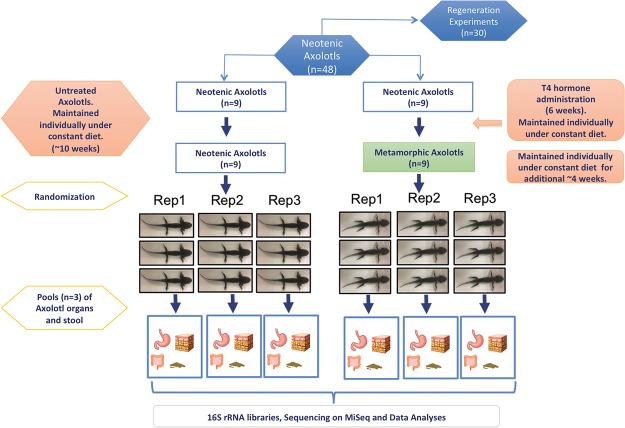
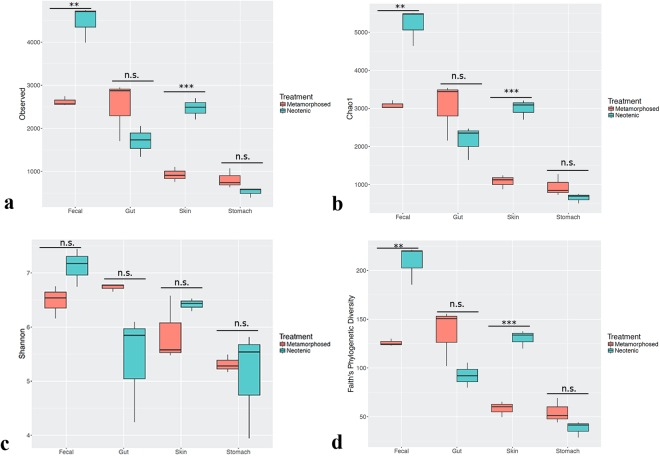
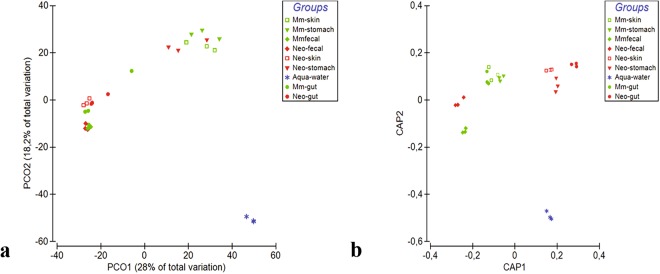
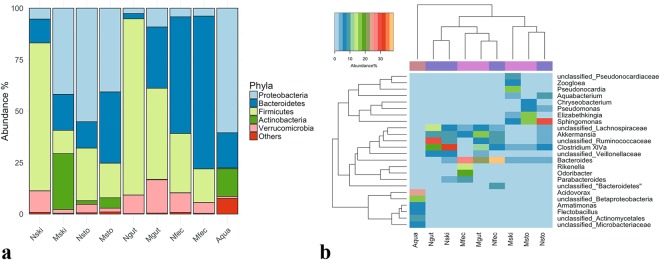
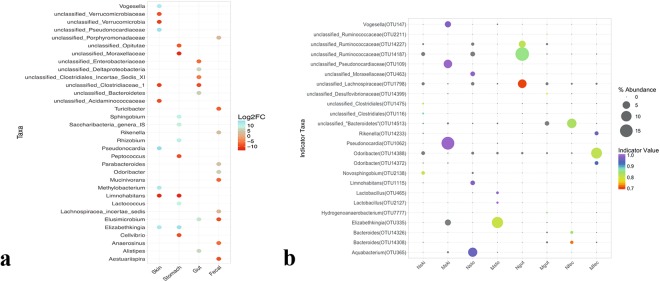
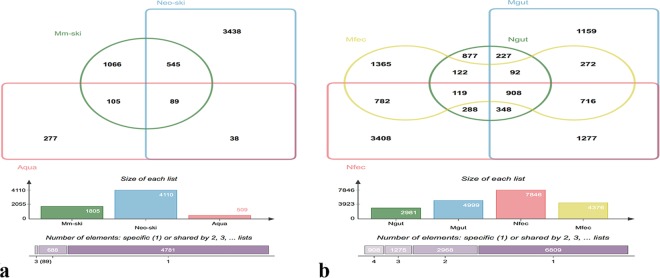
Axolotl ( Ambystoma mexicanum ) is a critically endangered salamander species and a model organism for regenerative and developmental biology. Despite life-long neoteny in nature and in captive-bred colonies, metamorphosis of these animals can be experimentally induced by administering Thyroid hormones (THs). However, microbiological consequences of this experimental procedure, such as host microbiota response, remain largely unknown. Here, we systematically compared host bacterial microbiota associated with skin, stomach, gut tissues and fecal samples, between neotenic and metamorphic axolotls based on 16S rRNA gene sequences. Our results show that distinct bacterial communities inhabit individual organs of axolotl and undergo substantial restructuring through metamorphosis. Skin microbiota among others, shifted sharply, as highlighted by a major transition from Firmicutes -enriched to Proteobacteria -enriched relative abundance and precipitously decreased diversity. Fecal microbiota of neotenic and metamorphic axolotl shared relatively higher similarity, suggesting that diet continues to shape microbiota despite fundamental transformations in the host digestive organs. We also reproduced the previous finding on reduction in regenerative capacity in limbs of axolotl following metamorphosis, highlighting the need to investigate whether shifts in microbiota is causally linked to regenerative capacity of axolotl. The initial results on axolotl microbiota provide novel insights into microbiological aspects of axolotl metamorphosis and will establish a baseline for future in-depth studies.
Overview
The claims and statistics of this paper haven’t been checked yet.
Free: it reads the open-access text and checks the first 5 claims that cite a source we can check. Create a free account to check every claim.
Integrity signals
Registry
Cites
Statistics
Figures
Verification
Claims the paper makes
The claims and statistics of this paper haven’t been checked yet.
Free: it reads the open-access text and checks the first 5 claims that cite a source we can check. Create a free account to check every claim.
Self-check
Percentages, sums and reported differences re-computed from the paper’s own numbers.
The self-check needs the paper’s full text.
Citations
Cites
Moderated estimation of fold change and dispersion for RNA-seq data with DESeq2
Love, M. I., Huber, W., & Anders, S. (2014) · Genome Biology · doi:10.1186/s13059-014-0550-8 · Cited by 95,106
QIIME allows analysis of high-throughput community sequencing data
Caporaso, J. G., Kuczynski, J., Stombaugh, J., Bittinger, K., Bushman, F. D., Costello, E. K., Fierer, N., Peña, A. G., Goodrich, J. K., Gordon, J. I., et al. (2010) · Nature Methods · doi:10.1038/nmeth.f.303 · Cited by 34,887
Cutadapt removes adapter sequences from high-throughput sequencing reads
Martin, M. (2011) · EMBnet.journal · doi:10.14806/ej.17.1.200 · Cited by 33,889
The SILVA ribosomal RNA gene database project: improved data processing and web-based tools
Quast, C., Pruesse, E., Yilmaz, P., Gerken, J., Schweer, T., Yarza, P., Peplies, J., & Glöckner, F. O. (2012) · Nucleic Acids Research · doi:10.1093/nar/gks1219 · Cited by 33,055
Naïve Bayesian Classifier for Rapid Assignment of rRNA Sequences into the New Bacterial Taxonomy
Wang, Q., Garrity, G. M., Tiedje, J. M., & Cole, J. R. (2007) · Applied and Environmental Microbiology · doi:10.1128/aem.00062-07 · Cited by 19,885
Schloss, P. D., Westcott, S. L., Ryabin, T., Hall, J. R., Hartmann, M., Hollister, E. B., Lesniewski, R. A., Oakley, B. B., Parks, D. H., Robinson, C. J., et al. (2009) · Applied and Environmental Microbiology · doi:10.1128/aem.01541-09 · Cited by 19,549
An Ordination of the Upland Forest Communities of Southern Wisconsin
Bray, J. R., & Curtis, J. T. (1957) · Ecological Monographs · doi:10.2307/1942268 · Cited by 11,716
Database resources of the National Center for Biotechnology Information: update
Wheeler, D. L. (2004) · Nucleic Acids Research · doi:10.1093/nar/gkh073 · Cited by 10,641
Predictive functional profiling of microbial communities using 16S rRNA marker gene sequences
Langille, M. G. I., Zaneveld, J., Caporaso, J. G., McDonald, D., Knights, D., Reyes, J. A., Clemente, J. C., Burkepile, D. E., Vega Thurber, R. L., Knight, R., et al. (2013) · Nature Biotechnology · doi:10.1038/nbt.2676 · Cited by 9,116
SPECIES ASSEMBLAGES AND INDICATOR SPECIES:THE NEED FOR A FLEXIBLE ASYMMETRICAL APPROACH
Dufrêne, M., & Legendre, P. (1997) · Ecological Monographs · doi:10.1890/0012-9615(1997)067[0345:saaist]2.0.co;2 · Cited by 7,431
den Besten, G., van Eunen, K., Groen, A. K., Venema, K., Reijngoud, D.-J., & Bakker, B. M. (2013) · Journal of Lipid Research · doi:10.1194/jlr.r036012 · Cited by 5,048
Species Assemblages and Indicator Species: The Need for a Flexible Asymmetrical Approach
Dufrene, M., & Legendre, P. (1997) · Ecological Monographs · doi:10.2307/2963459 · Cited by 4,081
The gut microbiota--masters of host development and physiology
Sommer, F., & Bäckhed, F. (2013) · Nature Reviews Microbiology · doi:10.1038/nrmicro2974 · Cited by 3,681
Nouvelles recherches sur la distribution florale
Jaccard, P. (1908) · E-Periodica · doi:10.5169/seals-268384 · Cited by 3,316
Distance‐Based Tests for Homogeneity of Multivariate Dispersions
Anderson, M. J. (2006) · Biometrics · doi:10.1111/j.1541-0420.2005.00440.x · Cited by 3,304
Hsiao, E. Y., McBride, S. W., Hsien, S., Sharon, G., Hyde, E. R., McCue, T., Codelli, J. A., Chow, J., Reisman, S. E., Petrosino, J. F., et al. (2013) · Cell · doi:10.1016/j.cell.2013.11.024 · Cited by 3,283
Normal gut microbiota modulates brain development and behavior
Heijtz, R. D., Wang, S., Anuar, F., Qian, Y., Björkholm, B., Samuelsson, A., Hibberd, M. L., Forssberg, H., & Pettersson, S. (2011) · Proceedings of the National Academy of Sciences · doi:10.1073/pnas.1010529108 · Cited by 3,228
Waste Not, Want Not: Why Rarefying Microbiome Data Is Inadmissible
McMurdie, P. J., & Holmes, S. (2014) · PLoS Computational Biology · doi:10.1371/journal.pcbi.1003531 · Cited by 2,921
Animals in a bacterial world, a new imperative for the life sciences
McFall-Ngai, M., Hadfield, M. G., Bosch, T. C. G., Carey, H. V., Domazet-Lošo, T., Douglas, A. E., Dubilier, N., Eberl, G., Fukami, T., Gilbert, S. F., et al. (2013) · Proceedings of the National Academy of Sciences · doi:10.1073/pnas.1218525110 · Cited by 2,782
Gut biogeography of the bacterial microbiota
Donaldson, G. P., Lee, S. M., & Mazmanian, S. K. (2016) · Nature Reviews Microbiology · doi:10.1038/nrmicro3552 · Cited by 2,535
jvenn: an interactive Venn diagram viewer
Bardou, P., Mariette, J., Escudié, F., Djemiel, C., & Klopp, C. (2014) · BMC Bioinformatics · doi:10.1186/1471-2105-15-293 · Cited by 2,489
CANONICAL ANALYSIS OF PRINCIPAL COORDINATES: A USEFUL METHOD OF CONSTRAINED ORDINATION FOR ECOLOGY
Anderson, M. J., & Willis, T. J. (2003) · Ecology · doi:10.1890/0012-9658(2003)084[0511:caopca]2.0.co;2 · Cited by 2,476
Walters, W., Hyde, E. R., Berg-Lyons, D., Ackermann, G., Humphrey, G., Parada, A., Gilbert, J. A., Jansson, J. K., Caporaso, J. G., Fuhrman, J. A., et al. (2016) · mSystems · doi:10.1128/msystems.00009-15 · Cited by 2,191
Dhariwal, A., Chong, J., Habib, S., King, I. L., Agellon, L. B., & Xia, J. (2017) · Nucleic Acids Research · doi:10.1093/nar/gkx295 · Cited by 1,885
Unravelling the effects of the environment and host genotype on the gut microbiome
Spor, A., Koren, O., & Ley, R. (2011) · Nature Reviews Microbiology · doi:10.1038/nrmicro2540 · Cited by 1,509
Impact of the gut microbiota on inflammation, obesity, and metabolic disease
Boulangé, C. L., Neves, A. L., Chilloux, J., Nicholson, J. K., & Dumas, M.-E. (2016) · Genome Medicine · doi:10.1186/s13073-016-0303-2 · Cited by 1,438
The role of gut microbiota in immune homeostasis and autoimmunity
Wu, H.-J., & Wu, E. (2012) · Gut Microbes · doi:10.4161/gmic.19320 · Cited by 1,426
Interactions between the microbiota and pathogenic bacteria in the gut
Bäumler, A. J., & Sperandio, V. (2016) · Nature · doi:10.1038/nature18849 · Cited by 1,420
Ecology and exploration of the rare biosphere
Lynch, M. D. J., & Neufeld, J. D. (2015) · Nature Reviews Microbiology · doi:10.1038/nrmicro3400 · Cited by 1,268
Habitat degradation impacts black howler monkey ( Alouatta pigra ) gastrointestinal microbiomes
Amato, K. R., Yeoman, C. J., Kent, A., Righini, N., Carbonero, F., Estrada, A., Rex Gaskins, H., Stumpf, R. M., Yildirim, S., Torralba, M., et al. (2013) · The ISME Journal · doi:10.1038/ismej.2013.16 · Cited by 1,238
Self-citationDiet dominates host genotype in shaping the murine gut microbiota
Carmody, R. N., Gerber, G. K., Luevano, J. M., Gatti, D. M., Somes, L., Svenson, K. L., & Turnbaugh, P. J. (2015) · Cell Host & Microbe · doi:10.1016/j.chom.2014.11.010 · Cited by 1,103
A Tissue-Mapped Axolotl De Novo Transcriptome Enables Identification of Limb Regeneration Factors
Bryant, D. M., Johnson, K., DiTommaso, T., Tickle, T., Couger, M. B., Payzin-Dogru, D., Lee, T. J., Leigh, N. D., Kuo, T.-H., Davis, F. G., et al. (2017) · Cell Reports · doi:10.1016/j.celrep.2016.12.063 · Cited by 979
Macrophages are required for adult salamander limb regeneration
Godwin, J. W., Pinto, A. R., & Rosenthal, N. A. (2013) · Proceedings of the National Academy of Sciences · doi:10.1073/pnas.1300290110 · Cited by 829
A Catalog of Reference Genomes from the Human Microbiome
The Human Microbiome Jumpstart Reference Strains Consortium, Nelson, K. E., Weinstock, G. M., Highlander, S. K., Worley, K. C., Creasy, H. H., Wortman, J. R., Rusch, D. B., Mitreva, M., Sodergren, E., et al. (2010) · Science · doi:10.1126/science.1183605 · Cited by 702
Batrachochytrium salamandrivorans sp. nov. causes lethal chytridiomycosis in amphibians
Martel, A., Spitzen-van der Sluijs, A., Blooi, M., Bert, W., Ducatelle, R., Fisher, M. C., Woeltjes, A., Bosman, W., Chiers, K., Bossuyt, F., et al. (2013) · Proceedings of the National Academy of Sciences · doi:10.1073/pnas.1307356110 · Cited by 632
Comparative physiology of the vertebrate digestive system
(1991) · Comparative Biochemistry and Physiology Part A: Physiology · doi:10.1016/0300-9629(91)90507-9 · Cited by 604
Interactions Between Gut Microbiota and Host Metabolism Predisposing to Obesity and Diabetes
Musso, G., Gambino, R., & Cassader, M. (2011) · Annual Review of Medicine · doi:10.1146/annurev-med-012510-175505 · Cited by 598
The axolotl genome and the evolution of key tissue formation regulators
Nowoshilow, S., Schloissnig, S., Fei, J.-F., Dahl, A., Pang, A. W. C., Pippel, M., Winkler, S., Hastie, A. R., Young, G., Roscito, J. G., et al. (2018) · Nature · doi:10.1038/nature25458 · Cited by 550
Rideout, J. R., He, Y., Navas-Molina, J. A., Walters, W. A., Ursell, L. K., Gibbons, S. M., Chase, J., McDonald, D., Gonzalez, A., Robbins-Pianka, A., et al. (2014) · PeerJ · doi:10.7717/peerj.545 · Cited by 548
Hadfield, M. G. (2011) · Annual Review of Marine Science · doi:10.1146/annurev-marine-120709-142753 · Cited by 524
Brown, D. D., & Cai, L. (2007) · Developmental Biology · doi:10.1016/j.ydbio.2007.03.021 · Cited by 498
Exploring host–microbiota interactions in animal models and humans
Kostic, A. D., Howitt, M. R., & Garrett, W. S. (2013) · Genes & Development · doi:10.1101/gad.212522.112 · Cited by 494
Sekirov, I., Tam, N. M., Jogova, M., Robertson, M. L., Li, Y., Lupp, C., & Finlay, B. B. (2008) · Infection and Immunity · doi:10.1128/iai.00319-08 · Cited by 490
Database resources of the National Center for Biotechnology Information
Coordinators, N. R. (2015) · Nucleic Acids Research · doi:10.1093/nar/gku1130 · Cited by 397
The amphibian skin‐associated microbiome across species, space and life history stages
Kueneman, J. G., Parfrey, L. W., Woodhams, D. C., Archer, H. M., Knight, R., & McKenzie, V. J. (2014) · Molecular Ecology · doi:10.1111/mec.12510 · Cited by 380
The tragedy of the uncommon: understanding limitations in the analysis of microbial diversity
Bent, S. J., & Forney, L. J. (2008) · The ISME Journal · doi:10.1038/ismej.2008.44 · Cited by 314
Co-habiting amphibian species harbor unique skin bacterial communities in wild populations
McKenzie, V. J., Bowers, R. M., Fierer, N., Knight, R., & Lauber, C. L. (2012) · The ISME Journal · doi:10.1038/ismej.2011.129 · Cited by 291
Aspects of Amphibian Metamorphosis: Hormonal Control
Kikuyama, S., Kawamura, K., Tanaka, S., & Yamamoto, K. (1993) · International Review of Cytology · doi:10.1016/s0074-7696(08)60426-x · Cited by 276
Amphibian metamorphosis as a model for the developmental actions of thyroid hormone
Tata, J. R. (2006) · Molecular and Cellular Endocrinology · doi:10.1016/j.mce.2005.11.024 · Cited by 271
Amphibian skin may select for rare environmental microbes
Walke, J. B., Becker, M. H., Loftus, S. C., House, L. L., Cormier, G., Jensen, R. V., & Belden, L. K. (2014) · The ISME Journal · doi:10.1038/ismej.2014.77 · Cited by 266
Skin Regeneration in Adult Axolotls: A Blueprint for Scar-Free Healing in Vertebrates
Seifert, A. W., Monaghan, J. R., Voss, S. R., & Maden, M. (2012) · PLoS ONE · doi:10.1371/journal.pone.0032875 · Cited by 259
The Inflammation–Fibrosis Link? A Jekyll and Hyde Role for Blood Cells during Wound Repair
Stramer, B. M., Mori, R., & Martin, P. (2007) · Journal of Investigative Dermatology · doi:10.1038/sj.jid.5700811 · Cited by 251
Longitudinal shift in diabetic wound microbiota correlates with prolonged skin defense response
Grice, E. A., Snitkin, E. S., Yockey, L. J., Bermudez, D. M., Program, N. C. S., Liechty, K. W., Segre, J. A., Mullikin, J., Blakesley, R., Young, A., et al. (2010) · Proceedings of the National Academy of Sciences · doi:10.1073/pnas.1004204107 · Cited by 227
Macrophages and fibroblasts during inflammation and tissue repair in models of organ regeneration
Mescher, A. L. (2017) · Regeneration · doi:10.1002/reg2.77 · Cited by 224
Sen, R., Ishak, H. D., Estrada, D., Dowd, S. E., Hong, E., & Mueller, U. G. (2009) · Proceedings of the National Academy of Sciences · doi:10.1073/pnas.0904827106 · Cited by 215
Open-Source Sequence Clustering Methods Improve the State Of the Art
Kopylova, E., Navas-Molina, J. A., Mercier, C., Xu, Z. Z., Mahé, F., He, Y., Zhou, H.-W., Rognes, T., Caporaso, J. G., & Knight, R. (2016) · mSystems · doi:10.1128/msystems.00003-15 · Cited by 204
Bletz, M. C., Goedbloed, D. J., Sanchez, E., Reinhardt, T., Tebbe, C. C., Bhuju, S., Geffers, R., Jarek, M., Vences, M., & Steinfartz, S. (2016) · Nature Communications · doi:10.1038/ncomms13699 · Cited by 189
Host and Symbiont Jointly Control Gut Microbiota during Complete Metamorphosis
Johnston, P. R., & Rolff, J. (2015) · PLOS Pathogens · doi:10.1371/journal.ppat.1005246 · Cited by 179
Diversity of cutaneous bacteria with antifungal activity isolated from female four-toed salamanders
Lauer, A., Simon, M. A., Banning, J. L., Lam, B. A., & Harris, R. N. (2008) · The ISME Journal · doi:10.1038/ismej.2007.110 · Cited by 157
Restructuring of the amphibian gut microbiota through metamorphosis
Kohl, K. D., Cary, T. L., Karasov, W. H., & Dearing, M. D. (2013) · Environmental Microbiology Reports · doi:10.1111/1758-2229.12092 · Cited by 151
Bletz, M. C., Archer, H. M., Harris, R. N., McKenzie, V. J., Rabemananjara, F. C. E., Rakotoarison, A., & Vences, M. (2017) · Frontiers in Microbiology · doi:10.3389/fmicb.2017.01530 · Cited by 149
A longitudinal study of the diabetic skin and wound microbiome
Gardiner, M., Vicaretti, M., Sparks, J., Bansal, S., Bush, S., Liu, M., Darling, A., Harry, E., & Burke, C. M. (2017) · PeerJ · doi:10.7717/peerj.3543 · Cited by 144
Proteomic analysis of blastema formation in regenerating axolotl limbs
Rao, N., Jhamb, D., Milner, D. J., Li, B., Song, F., Wang, M., Voss, S. R., Palakal, M., King, M. W., Saranjami, B., et al. (2009) · BMC Biology · doi:10.1186/1741-7007-7-83 · Cited by 142
Regeneration: The origin of cancer or a possible cure?
Oviedo, N. J., & Beane, W. S. (2009) · Seminars in Cell & Developmental Biology · doi:10.1016/j.semcdb.2009.04.005 · Cited by 135
Naito, T., Mulet, C., De Castro, C., Molinaro, A., Saffarian, A., Nigro, G., Bérard, M., Clerc, M., Pedersen, A. B., Sansonetti, P. J., et al. (2017) · mBio · doi:10.1128/mbio.01680-17 · Cited by 114
Shikuma, N. J., Antoshechkin, I. A., Medeiros, J. M., Pilhofer, M., & Newman, D. K. (2016) · Proceedings of the National Academy of Sciences · doi:10.1073/pnas.1603142113 · Cited by 108
Arnold, C. P., Merryman, M. S., Harris-Arnold, A., McKinney, S. A., Seidel, C. W., Loethen, S., Proctor, K. N., Guo, L., & Sánchez Alvarado, A. (2016) · eLife · doi:10.7554/elife.16793 · Cited by 105
Changes in the Digestive Tract and Feeding Behavior of Anuran Amphibians during Metamorphosis
Hourdry, J., L'Hermite, A., & Ferrand, R. (1996) · Physiological Zoology · doi:10.1086/physzool.69.2.30164181 · Cited by 104
Keinath, M. C., Timoshevskiy, V. A., Timoshevskaya, N. Y., Tsonis, P. A., Voss, S. R., & Smith, J. J. (2015) · Scientific Reports · doi:10.1038/srep16413 · Cited by 93
Experimentally induced metamorphosis in axolotls reduces regenerative rate and fidelity
Monaghan, J. R., Stier, A. C., Michonneau, F., Smith, M. D., Pasch, B., Maden, M., & Seifert, A. W. (2014) · Regeneration · doi:10.1002/reg2.8 · Cited by 87
Voss, S. R., Epperlein, H. H., & Tanaka, E. M. (2009) · Cold Spring Harbor Protocols · doi:10.1101/pdb.emo128 · Cited by 87
Regeneration in axolotls: a model to aim for!
Roy, S., & Gatien, S. (2008) · Experimental Gerontology · doi:10.1016/j.exger.2008.09.003 · Cited by 82
Wu, X., Sun, R., Chen, Y., Zheng, X., Bai, L., Lian, Z., Wei, H., & Tian, Z. (2015) · Hepatology · doi:10.1002/hep.27791 · Cited by 71
Weng, F. C.-H., Yang, Y.-J., & Wang, D. (2016) · BMC Genomics · doi:10.1186/s12864-016-3318-6 · Cited by 71
King, B. L., & Yin, V. P. (2016) · PLoS ONE · doi:10.1371/journal.pone.0157106 · Cited by 62
Denis, J.-F., Lévesque, M., Tran, S. D., Camarda, A.-J., & Roy, S. (2013) · Advances in Wound Care · doi:10.1089/wound.2012.0371 · Cited by 56
Warne, R. W., Kirschman, L. J., & Zeglin, L. H. (2017) · Integrative and Comparative Biology · doi:10.1093/icb/icx100 · Cited by 56
Skin microbiota differs drastically between co-occurring frogs and newts
Bletz, M. C., Perl, R. G. B., & Vences, M. (2017) · Royal Society Open Science · doi:10.1098/rsos.170107 · Cited by 44
A histological atlas of the tissues and organs of neotenic and metamorphosed axolotl
Demircan, T., İlhan, A. E., Aytürk, N., Yıldırım, B., Öztürk, G., & Keskin, İ. (2016) · Acta Histochemica · doi:10.1016/j.acthis.2016.07.006 · Cited by 43
Self-citationSanchez, E., Bletz, M. C., Duntsch, L., Bhuju, S., Geffers, R., Jarek, M., Dohrmann, A. B., Tebbe, C. C., Steinfartz, S., & Vences, M. (2016) · Microbial Ecology · doi:10.1007/s00248-016-0863-0 · Cited by 42
Bales, E. K., Hyman, O. J., Loudon, A. H., Harris, R. N., Lipps, G. J., Chapman, E., Roblee, K. J., Kleopfer, J. D., & Terrell, K. A. (2015) · PLoS ONE · doi:10.1371/journal.pone.0116405 · Cited by 41
Effect of Induced Metamorphosis on the Immune System of the Axolotl, Ambystoma mexicanum
Ussing, A. P., & Rosenkilde, P. (1995) · General and Comparative Endocrinology · doi:10.1006/gcen.1995.1031 · Cited by 36
Jiang, P., Nelson, J. D., Leng, N., Collins, M., Swanson, S. A., Dewey, C. N., Thomson, J. A., & Stewart, R. M. (2016) · Developmental Biology · doi:10.1016/j.ydbio.2016.05.024 · Cited by 35
Induction of Metamorphosis in Axolotls (Ambystoma mexicanum)
Page, R. B., & Voss, S. R. (2009) · Cold Spring Harbor Protocols · doi:10.1101/pdb.prot5268 · Cited by 28
Demircan, T., Keskin, İ., Dumlu, S. N., Aytürk, N., Avşaroğlu, M. E., Akgün, E., Öztürk, G., & Baykal, A. T. (2016) · PROTEOMICS · doi:10.1002/pmic.201600338 · Cited by 19
Self-citation
Cited by
Sibai, M., Altuntaş, E., Yıldırım, B., Öztürk, G., Yıldırım, S., & Demircan, T. (2020) · OMICS A Journal of Integrative Biology · doi:10.1089/omi.2020.0116 · Cited by 123
“Amplicon and index PCR conditions and the protocol for purification of PCR products were described elsewhere (Demircan et al., 2018, 2019).”
Self-citationAdvancements to the Axolotl Model for Regeneration and Aging
Vieira, W. A., Wells, K. M., & McCusker, C. (2019) · Gerontology · doi:10.1159/000504294 · Cited by 110
Yıldırım, S., Nalbantoğlu, Ö. U., Bayraktar, A., Ercan, F. B., Gündoğdu, A., Velioğlu, H. A., Göl, M. F., Ekinci, A., Koç, F., Aslan-Gülpınar, E., et al. (2022) · mSystems · doi:10.1128/msystems.00004-22 · Cited by 70
“16S rRNA gene sequencing and PCR were performed as previously described (70), with minor modifications.”
MethodSelf-citationSanders, R. D., Segóvia, B. T., Forbes, C., Hessing-Lewis, M. L., Morien, E., Lemay, M. A., O’Connor, M. I., & Parfrey, L. W. (2020) · Frontiers in Ecology and Evolution · doi:10.3389/fevo.2020.605304 · Cited by 46
“7) (Demircan et al., 2018; Kruger, 2020), present in over 50% of the samples from that sample type, and present in all regions.”
BackgroundA comparison of nonlethal sampling methods for amphibian gut microbiome analyses
Zhou, J., Nelson, T. M., Lopez, C. M. R., Sarma, R. R., Zhou, S. J., & Rollins, L. A. (2020) · Molecular Ecology Resources · doi:10.1111/1755-0998.13139 · Cited by 47
“However, further work is needed to identify the effect of metamorphic transition in cane toad gut microbiomes given that previous studies have shown that this is a factor regulating the composition of the microbiome in amphibians (Demircan et al., 2018).”
Background
Metadata
- Authors
- Demircan, T., Ovezmyradov, G., Yıldırım, B., Keskin, İ., İlhan, A. E., Fesçioğlu, E. C., Öztürk, G., & Yıldırım, S.
- Affiliations
- Istanbul Medipol University (TR)
- Corresponding author
- Demircan, Turan
- Yıldırım, Süleyman
- Venue
- Scientific Reports
- Published
- 2018-07-20
- Volume
- 8
- Issue
- 1
- Pages
- 10974-10974
- ISSN
- 2045-2322 (ISSN-L)
- PMC
- PMC6054665
- OpenAlex
- W2883510896
- Cited by
- 45
- References
- 85
- Citations by year
- 2026: 7 · 2025: 3 · 2024: 4 · 2023: 4 · 2022: 8 · 2021: 3 · 2020: 9 · 2019: 7
- FWCI
- 1.69
- Type
- journal article
- Language
- en
- Open access
- gold
- doi.org
- Licence
- cc-by
- creativecommons.org/licenses/by/4.0 (tdm)
- creativecommons.org/licenses/by/4.0 (vor)
- Locations
- Scientific Reports (publishedVersion, cc-by)
- bioRxiv (Cold Spring Harbor Laboratory) (acceptedVersion)
- Europe PMC (PubMed Central) (publishedVersion, cc-by)
- PubMed Central (publishedVersion, cc-by)
- PubMed (publishedVersion)
- DOAJ (DOAJ: Directory of Open Access Journals) (submittedVersion)
- Funders
- National Institute of Allergy and Infectious Diseases
- Topics
- Life Sciences › Biochemistry, Genetics and Molecular Biology › Molecular Biology › Gut microbiota and health
- Life Sciences › Immunology and Microbiology › Immunology › Aquaculture disease management and microbiota
- Life Sciences › Agricultural and Biological Sciences › Ecology, Evolution, Behavior and Systematics › Amphibian and Reptile Biology
- Keywords
- axolotl, metamorphosis, neoteny, thyroid hormones, gut microbiota, skin microbiome, fecal microbiota, diet, regenerative capacity, limb regeneration
- MeSH terms
- Ambystoma mexicanum, Animals, Diet, Metamorphosis, Biological, Regeneration, Endangered Species, Microbiota
About these checks
Registry, retraction, Cites and statistics results are computed, not judged, with one exception: a printed reference that no index lists is read once by a model before it counts as a citation error. Claims are extracted by a model and kept only when their quote appears verbatim in the text; each cited source is then checked, with a model’s help, for whether it says what the claim relies on. Those verdicts can be wrong — read the claim’s quote and the cited source before relying on one.
Statistics and arithmetic are recomputed, not judged.
Confidence bands are shown only for fields calibrated on our annotated test set. None is calibrated yet, so no band is shown.
What counts as a claim ›How we measure confidence ›How we check this ›
Are you an author, or do you see a problem with this page? Request a review
Data sources
Bibliographic data: Semantic Scholar, OpenAlex, Crossref.
Contains information from the Semantic Scholar Academic Graph Datasets, made available under the ODC Attribution License (ODC-BY 1.0).
Semantic Scholar’s data is described in: Kinney, R., et al. (2023). The Semantic Scholar Open Data Platform. arXiv:2301.10140.
