

From Louvain to Leiden: guaranteeing well-connected communities
Open accessThe DOI matches its Crossref record; 30 of the 30 references it cites were found in a registry or an index; 1 of the 26 sources its claims cite were checked for support.
Abstract
Community detection is often used to understand the structure of large and complex networks. One of the most popular algorithms for uncovering community structure is the so-called Louvain algorithm. We show that this algorithm has a major defect that largely went unnoticed until now: the Louvain algorithm may yield arbitrarily badly connected communities. In the worst case, communities may even be disconnected, especially when running the algorithm iteratively. In our experimental analysis, we observe that up to 25% of the communities are badly connected and up to 16% are disconnected. To address this problem, we introduce the Leiden algorithm. We prove that the Leiden algorithm yields communities that are guaranteed to be connected. In addition, we prove that, when the Leiden algorithm is applied iteratively, it converges to a partition in which all subsets of all communities are locally optimally assigned. Furthermore, by relying on a fast local move approach, the Leiden algorithm runs faster than the Louvain algorithm. We demonstrate the performance of the Leiden algorithm for several benchmark and real-world networks. We find that the Leiden algorithm is faster than the Louvain algorithm and uncovers better partitions, in addition to providing explicit guarantees.
Overview
CoChat Summary
TL;DR
The Louvain algorithm can yield arbitrarily badly connected communities, including disconnected ones, especially when iterated. The Leiden algorithm guarantees connected communities and, under iteration, converges to subset-optimal partitions while running faster and finding higher-quality partitions.
Key findings
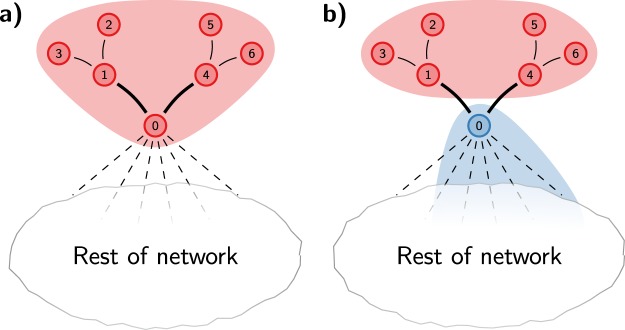
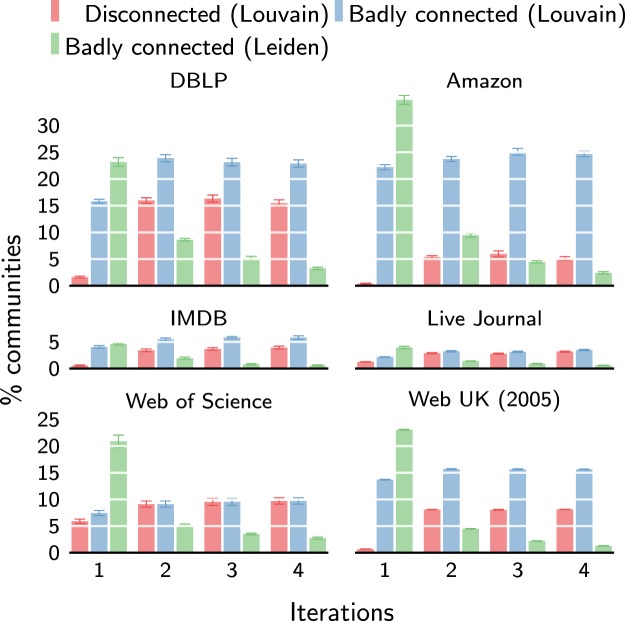
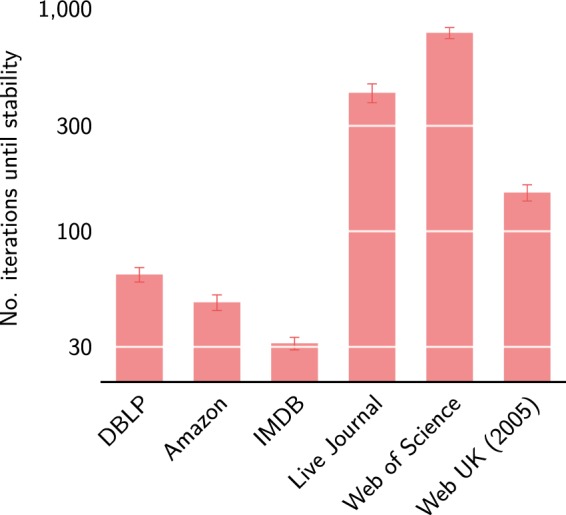
- Louvain may produce arbitrarily badly connected communities; in experiments up to 25% of communities were badly connected and up to 16% were disconnected. First-iteration badly connected percentages included Amazon 23%, DBLP 16%, and Web UK 14%; disconnected communities were usually around 1%, but exceeded 5% for Web of Science in the first iteration and jumped to 16% for DBLP in later iterations. After four iterations, Amazon had 5% disconnected but 25% badly connected communities.
- Leiden guarantees all communities are connected after each iteration, and also γ-separated and γ-connected. After a stable iteration, all nodes are locally optimally assigned and all communities are subpartition γ-dense; asymptotically, all communities are uniformly γ-dense and subset optimal.
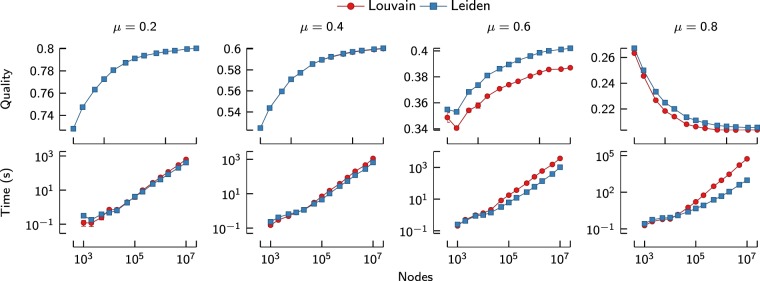
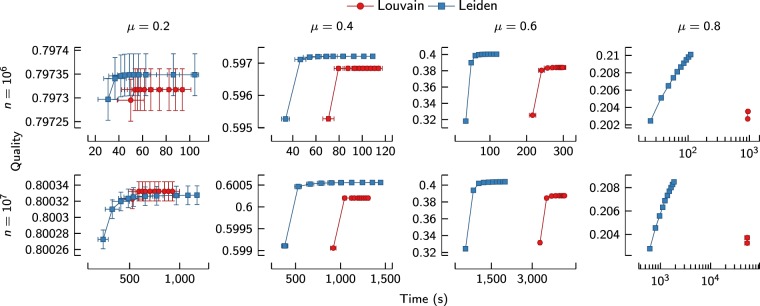
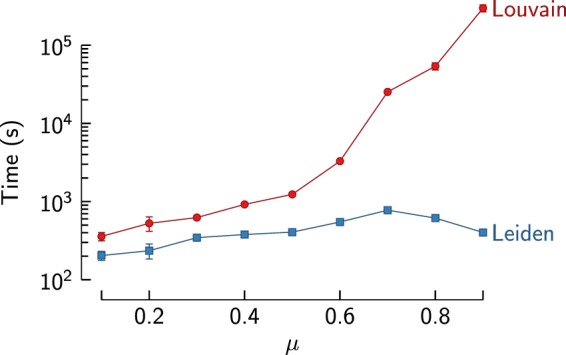
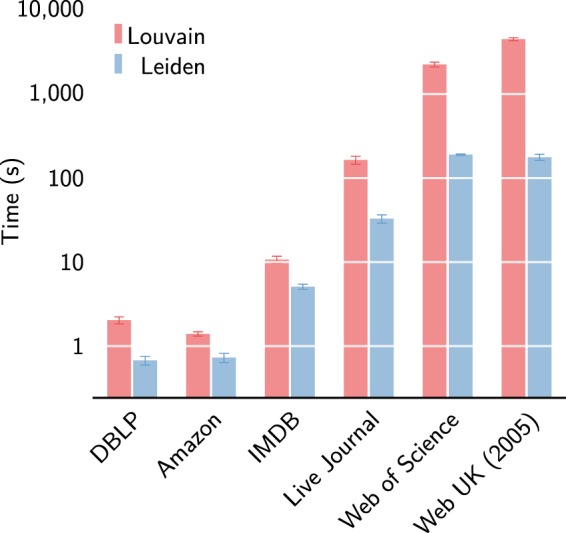
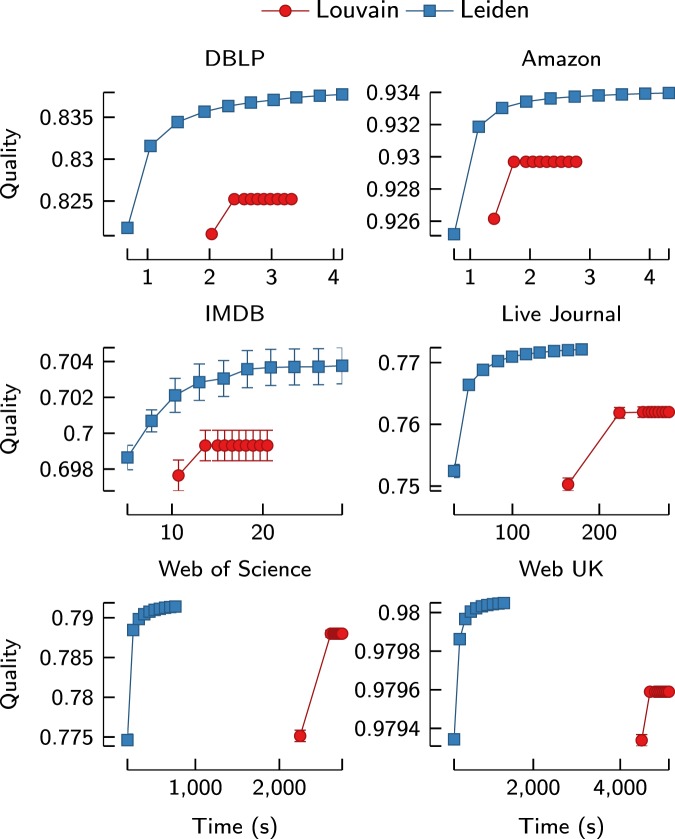
- Leiden was faster than Louvain: first iteration roughly 2–20 times faster on empirical networks, including more than 7× faster for Live Journal, more than 11× for Web of Science, and more than 20× for Web UK. On benchmark networks with difficult partitions (μ = 0.9), Louvain required almost 2.5 days while Leiden needed fewer than 10 minutes; for largest networks Leiden reached 10–100 times faster runtimes.
- Leiden found higher modularity on all six empirical networks: DBLP 0.8387 vs 0.8262, Amazon 0.9341 vs 0.9301, IMDB 0.7069 vs 0.7062, Live Journal 0.7739 vs 0.7653, Web of Science 0.7951 vs 0.7911, and Web UK 0.9801 vs 0.9796.
Methods
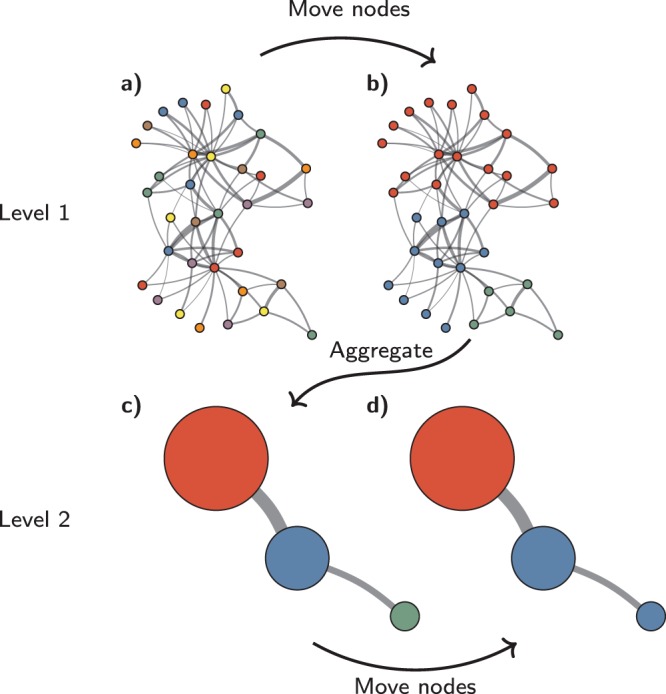
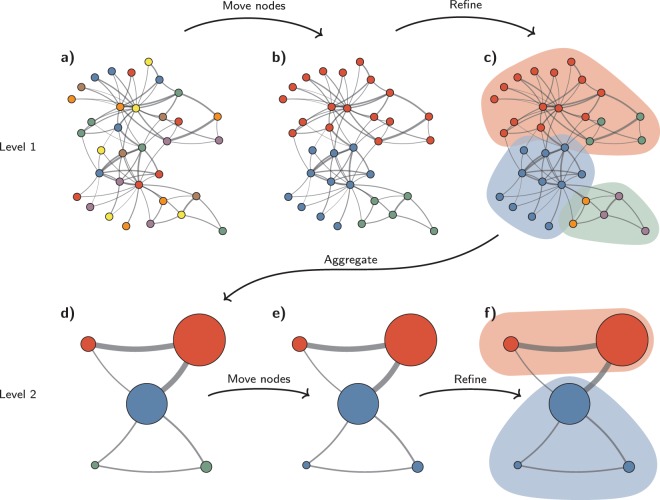
- The paper introduces the Leiden algorithm, which combines local moving, refinement of the partition, and aggregation; proofs of guarantees are relegated to Supplementary Information. It compares Leiden with Louvain on six empirical networks and on benchmark networks.
- Empirical networks: DBLP (317,080 nodes, degree 6.6), Amazon (334,863, 5.6), IMDB (374,511, 80.2), Live Journal (3,997,962, 17.4), Web of Science (9,811,130, 21.2), and Web UK (39,252,879, 39.8). Modularity was used with γ = 1; Table 2 reports maximal modularity after 10 replications of 10 iterations each. Badly connected community analysis was repeated 10 times, with Leiden run on each community’s subnetwork until a stable iteration.
- Benchmark networks ranged from n = 10^3 to n = 10^7 nodes, with community size 50 and CPM as the quality function; the mixing parameter μ varied, 10 iterations were performed, and each parameter set was repeated 10 times. The refinement randomness parameter was θ = 0.01.
Limitations
- The paper states that benchmark networks have only limited value because they are not representative of empirical real-world networks and have a rather simple structure.
- The paper states that counting communities split by Leiden gives only a lower bound on the number of badly connected communities; if Leiden does not find subcommunities, there is no guarantee that modularity cannot be increased by splitting the community.
- Evident from the text: there is no dedicated limitations section; technical details and proofs are relegated to Supplementary Information, and the experimental analysis fixes θ = 0.01 although values roughly in [0.0005, 0.1] are said to provide reasonable results.
Model-written summary. Check it against the paper before relying on it.
Integrity signals
Registry
Cites
Statistics
Figures
Verification
Claims the paper makes
1 Valid · 2 Not valid · 17 Not checked · 142 Own results and interpretations
The cited sources support only part of this claim — read each source’s verdict below.
In the paper
“Hence, the problem of Louvain outlined above is independent from the issue of the resolution limit.”
§ From Louvain to Leiden: guaranteeing well-connected communities > Louvain Algorithm > Badly connected communities
What the sources say
- Partly supportedcites [14] Fortunato S Barthélemy M Resolution Limit in Community Detection Proc. Natl. Acad. Sci. USA 2007 104 36 10.1073/pnas.0605965104 17190818 PMC1765466 sourceExperimental — accuracy not yet measured
Our copy supports the resolution-limit side of the sentence: the Conclusions (VI, p. 7) state that 'the resolution limit of modularity does not rely on particular network structures, but only on the comparison between the sizes of interconnected communities and that of the whole network', the Introduction (p. 1) calls it an 'intrinsic scale' of modularity, and Section V (pp. 5-6) shows the failure persists with simulated annealing, i.e. it is a property of the quality function rather than of one particular optimizer. What the source does not contain is the other term of the comparison: Louvain is never mentioned anywhere in the paper (the Introduction, p. 1, lists only generic greedy procedures [19,20], extremal optimization [21] and simulated annealing [22,23]), and no passage contrasts the resolution limit with an algorithm-specific defect. The independence claim is therefore the citing authors' own inference built on this paper's characterization of the resolution limit. (LLM, conf=0.70)
plain- Asserted: passes — The authors put it forward as true.
- Checkable: passes — It can be checked against evidence.
- Load-bearing: passes — The paper’s conclusions depend on it.
- Based: passes — The paper gives a reason why it holds.
- Partly supported
A result the paper states — it cites no source for it, so there is none to check. The quote shows it is in the paper.
In the paper
“The percentage of badly connected communities is less affected by the number of iterations of the Louvain algorithm.”
§ From Louvain to Leiden: guaranteeing well-connected communities > Experimental Analysis > Badly connected communities
plain- Asserted: passes — The authors put it forward as true.
- Checkable: passes — It can be checked against evidence.
- Load-bearing: unclear — It is unclear whether the paper’s conclusions depend on it.
- Based: passes — The paper gives a reason why it holds.
A result the paper states — it cites no source for it, so there is none to check. The quote shows it is in the paper.
In the paper
“In addition, we prove that, when the Leiden algorithm is applied iteratively, it converges to a partition in which all subsets of all communities are locally optimally assigned.”
- Also stated in: § Introduction · boosted
“In addition, we prove that the algorithm converges to an asymptotically stable partition in which all subsets of all communities are locally optimally assigned.”
§ From Louvain to Leiden: guaranteeing well-connected communities > Abstract
boostedstates a cause- Asserted: passes — The authors put it forward as true.
- Checkable: passes — It can be checked against evidence.
- Load-bearing: passes — The paper’s conclusions depend on it.
- Based: passes — The paper gives a reason why it holds.
- Also stated in: § Introduction · boosted
A result the paper reports from its own data — it cites no other source for it, so there is none to check. The quote shows it is in the paper.
In the paper
“The second iteration of Louvain shows a large increase in the percentage of disconnected communities.”
§ From Louvain to Leiden: guaranteeing well-connected communities > Experimental Analysis > Badly connected communities
plainstates a cause- Asserted: passes — The authors put it forward as true.
- Checkable: passes — It can be checked against evidence.
- Load-bearing: passes — The paper’s conclusions depend on it.
- Based: passes — The paper gives a reason why it holds.
A result the paper reports from its own data — it cites no other source for it, so there is none to check. The quote shows it is in the paper.
In the paper
“In terms of the percentage of badly connected communities in the first iteration, Leiden performs even worse than Louvain, as can be seen in Fig. 4.”
§ From Louvain to Leiden: guaranteeing well-connected communities > Experimental Analysis > Badly connected communities
plain- Asserted: passes — The authors put it forward as true.
- Checkable: passes — It can be checked against evidence.
- Load-bearing: unclear — It is unclear whether the paper’s conclusions depend on it.
- Based: passes — The paper gives a reason why it holds.
115 more claims
Create a free account to see all 162 claims and to verify the 24 references still open.
- Probably not a substantial claim. 23
- It may state two separate claims as one. 23
- The quote only partly states this claim. 1
Claims other papers make about this one
Each is checked against this paper’s own text: does it say what the citing paper says it does?
The cited source says what the claim attributes to it.
In the citing paper
“When compared to six common clustering algorithms, including Leiden25 and CellHarmony26, VFC was the top performing algorithm on every simulation on the T cell data and best performing, on average, on the zebrafish dataset, with a 57% increase in average performance over Louvain, which was the next best algorithm”
From Quantifying the effect of experimental perturbations at single-cell resolution (2021) · cites this paper as [25]
The cited source says what the claim attributes to it.
In the citing paper
“Louvain’s successor Leiden circumvents this issue by yielding guaranteed connected communities and is computationally more efficient52.”
From Best practices for single-cell analysis across modalities (2023) · cites this paper as [52]
The cited source says what the claim attributes to it.
In the citing paper
“However, the Louvain algorithm can lead to arbitrarily poorly connected communities52.”
From Best practices for single-cell analysis across modalities (2023) · cites this paper as [52]
The cited source says what the claim attributes to it.
In the citing paper
“We found that many t-types had total variance substantially above the variances of the k-means clusters (Fig. 5b) and an alternative analysis using entropies of Leiden clustering35 often highlighted the same t-types as variable (Extended Data Fig. 8).”
From Phenotypic variation of transcriptomic cell types in mouse motor cortex (2021) · cites this paper as [35]
The cited source says what the claim attributes to it.
In the citing paper
“Community detection uses the Leiden algorithm [28] with ModularityVertexPartition, producing hierarchical subclustering to depth 3.”
From SuperLocalMemory: Privacy-Preserving Multi-Agent Memory with Bayesian Trust Defense Against Memory Poisoning (2026) · cites this paper as [28]
6 more claims about this paper
Create a free account to see every claim other papers make about this one.
Citations
Cites
Fast unfolding of communities in large networks
Blondel, V. D., Guillaume, J.-L., Lambiotte, R., & Lefebvre, E. (2008) · Journal of Statistical Mechanics: Theory and Experiment · doi:10.1088/1742-5468/2008/10/p10008 · Cited by 21,424 · cited 3×
“The Louvain algorithm 10 is very simple and elegant.”
MethodFinding and evaluating community structure in networks
Newman, M. E. J., & Girvan, M. (2004) · Physical Review E · doi:10.1103/physreve.69.026113 · Cited by 13,931 · cited 2×
“The Leiden algorithm consists of three phases: (1) local moving of nodes, (2) refinement of the partition and (3) aggregation of the network based on the refined partition, using the non-refined partition to create an initial partition for the aggregate network.”
BackgroundMethodComplex brain networks: graph theoretical analysis of structural and functional systems
Bullmore, E., & Sporns, O. (2009) · Nature Reviews Neuroscience · doi:10.1038/nrn2575 · Cited by 11,820
Fortunato, S. (2010) · Physics Reports · doi:10.1016/j.physrep.2009.11.002 · Cited by 11,293 · cited 4×
“The Leiden algorithm consists of three phases: (1) local moving of nodes, (2) refinement of the partition and (3) aggregation of the network based on the refined partition, using the non-refined partition to create an initial partition for the aggregate network.”
BackgroundMethodInfluentialFinding community structure in very large networks
Clauset, A., Newman, M. E. J., & Moore, C. (2004) · Physical Review E · doi:10.1103/physreve.70.066111 · Cited by 7,390 · cited 1×
“Optimising modularity is NP-hard 5 , and consequentially many heuristic algorithms have been proposed, such as hierarchical agglomeration 6 , extremal optimisation 7 , simulated annealing 4,8 and spectral 9 algorithms.”
MethodFinding community structure in networks using the eigenvectors of matrices
Newman, M. E. J. (2006) · Physical Review E · doi:10.1103/physreve.74.036104 · Cited by 4,761
Functional cartography of complex metabolic networks
Guimerà, R., & Nunes Amaral, L. A. (2005) · Nature · doi:10.1038/nature03288 · Cited by 3,983 · cited 2×
“Optimising modularity is NP-hard 5 , and consequentially many heuristic algorithms have been proposed, such as hierarchical agglomeration 6 , extremal optimisation 7 , simulated annealing 4,8 and spectral 9 algorithms.”
MethodNear linear time algorithm to detect community structures in large-scale networks
Raghavan, U. N., Albert, R., & Kumara, S. (2007) · Physical Review E · doi:10.1103/physreve.76.036106 · Cited by 3,502 · cited 2×
“Trying to fix the problem by simply considering the connected components of communities 19–21 is unsatisfactory because it addresses only the most extreme case and does not resolve the more fundamental problem.”
BackgroundBenchmark graphs for testing community detection algorithms
Lancichinetti, A., Fortunato, S., & Radicchi, F. (2008) · Physical Review E · doi:10.1103/physreve.78.046110 · Cited by 3,051 · cited 1×
“To study the scaling of the Louvain and the Leiden algorithm, we rely on a variant of a well-known approach for constructing benchmark networks 28 .”
MethodResolution limit in community detection
Fortunato, S., & Barthélemy, M. (2007) · Proceedings of the National Academy of Sciences · doi:10.1073/pnas.0605965104 · Cited by 3,024 · cited 2×
“The algorithm may yield arbitrarily badly connected communities, over and above the well-known issue of the resolution limit 14 .”
Background
Research works printed but not linked: 2
- Porter MA Onnela J-P Mucha PJ Communities in Networks Not. AMS 2009 56 1082 1097
- Luecken, M. D. Application of multi-resolution partitioning of interaction networks to the study of complex disease. Ph.D. thesis, (University of Oxford, 2016).
Cited by
Items 601–700 of 7,288
Spatial and molecular profiling of the mononuclear phagocyte network in Classic Hodgkin lymphoma
Stewart, B. J., Fergie, M., Young, M. D., Jones, C., Sachdeva, A., Blain, A. E., Bacon, C. M., Rand, V., Ferdinand, J. R., James, K. R., et al. (2023) · Blood · doi:10.1182/blood.2022015575 · Cited by 56
Deep generative modeling of sample-level heterogeneity in single-cell genomics
Boyeau, P., Hong, J., Gayoso, A., Kim, M., McFaline-Figueroa, J. L., Jordan, M. I., Azizi, E., Ergen, C., & Yosef, N. (2025) · Nature Methods · doi:10.1038/s41592-025-02808-x · Cited by 55
“To do so, we embed each flattened distance matrix using PCA before clustering cells using the Leiden algorithm 58 .”
The transcriptional profile of keloidal Schwann cells
Direder, M., Wielscher, M., Weiss, T., Laggner, M., Copic, D., Klas, K., Bormann, D., Vorstandlechner, V., Tschachler, E., Ankersmit, H. J., et al. (2022) · Experimental & Molecular Medicine · doi:10.1038/s12276-022-00874-1 · Cited by 55
Progenitor potential of lung epithelial organoid cells in a transplantation model
Louie, S. M., Moye, A. L., Wong, I. G., Lu, E., Shehaj, A., de Alba, C. G., Ararat, E., Raby, B. A., Lu, B., Paschini, M., et al. (2022) · Cell Reports · doi:10.1016/j.celrep.2022.110662 · Cited by 55
Kang, X., Wang, M., Wang, T., Luo, F., Lin, J., & Li, X. (2022) · Resources Policy · doi:10.1016/j.resourpol.2022.103060 · Cited by 55
Advances in the Application of Single-Cell Transcriptomics in Plant Systems and Synthetic Biology
Islam, M. T., Liu, Y., Hassan, M. M., Abraham, P. E., Merlet, J., Townsend, A., Jacobson, D., Buell, C. R., Tuskan, G. A., & Yang, X. (2024) · BioDesign Research · doi:10.34133/bdr.0029 · Cited by 55
“There are numerous commonly used graph clustering methods, among which k-means, hierarchical clustering [72], the Leiden algorithm [73], and Markov Clustering [74] are some of the most common ones.”
MethodArif, M., Klevstig, M., Benfeitas, R., Doran, S. F., Türkez, H., Uhlén, M., Clausen, M., Wikström, J., Etal, D., Zhang, C., et al. (2021) · eLife · doi:10.7554/elife.66921 · Cited by 54
“To better define the structure of the networks, we used the Leiden clustering algorithm (Traag et al., 2019) by maximizing the modularity scores (Figure 3A–D) and selected the clusters that include more than 30 genes.”
MethodAmbikan, A. T., Yang, H., Krishnan, S., Akusjärvi, S. S., Gupta, S., Lourda, M., Sperk, M., Arif, M., Zhang, C., Nordqvist, H., et al. (2022) · Cell Systems · doi:10.1016/j.cels.2022.06.006 · Cited by 55
“Communities were identified using the Leiden algorithm (Traag et al., 2019).”
InfluentialLiang, Y., Shi, G., Cai, R., Yuan, Y., Xie, Z., Yu, L., Huang, Y., Shi, Q., Wang, L., Li, J., et al. (2024) · Nature Communications · doi:10.1038/s41467-024-44835-w · Cited by 55
Understanding Horizontal Gene Transfer network in human gut microbiota
Li, C., Chen, J., & Li, S. C. (2020) · Gut Pathogens · doi:10.1186/s13099-020-00370-9 · Cited by 55
Designing realistic regulatory DNA with autoregressive language models
Lal, A., Garfield, D., Biancalani, T., & Eraslan, G. (2024) · Genome Research · doi:10.1101/gr.279142.124 · Cited by 55
“To assess whether larger combinations of co-occurring motifs are shared between real and synthetic promoters, we performed graph-based clustering of real and synthetic strong promoters (Traag et al. 2019) based on their TF motif content.”
BackgroundInfluentialEnhancer-driven cell type comparison reveals similarities between the mammalian and bird pallium
Hecker, N., Kempynck, N., Mauduit, D., Abaffyová, D., Vandepoel, R., Dieltiens, S., Borm, L. E., Sarropoulos, I., González‐Blas, C. B., Man, J. D., et al. (2025) · Science · doi:10.1126/science.adp3957 · Cited by 54
Influential Factors of Intercity Patient Mobility and its Network Structure in China
Ding, J., Yang, C., Wang, Y., Li, P., Wang, F., Kang, Y., Wang, H., Liang, Z., Zhang, J., Han, P., et al. (2022) · Cities · doi:10.1016/j.cities.2022.103975 · Cited by 54
Benaglio, P., Newsome, J. M., Han, J. Y., Chiou, J., Aylward, A., Corban, S., Miller, M., Okino, M.-L., Kaur, J., Preißl, S., et al. (2023) · PLoS Genetics · doi:10.1371/journal.pgen.1010759 · Cited by 54
“3’, and Leiden clustering [40] (resolution = 1.”
AlphaBridge: Tools for the analysis of predicted biomolecular complexes
Salmoral, D. Á., Borza, R., Maiella, C., Kwee, B. P. Y., Xie, R., Joosten, R. P., Hekkelman, M. L., & Perrakis, A. (2026) · Structure · doi:10.1016/j.str.2026.08.011 · Cited by 54
Xu, K., Wang, H., Zou, Y., Zhang, H., Wang, Y., Ren, X., Wang, H., Xu, Y., Li, J., Tang, H., et al. (2024) · Clinical and Translational Medicine · doi:10.1002/ctm2.1605 · Cited by 54
Spatiotemporal transcriptomic maps of mouse intracerebral hemorrhage at single-cell resolution
Xiang, R., Wang, J., Chen, Z., Tao, J. Z., Peng, Q., Ding, R., Zhou, T., Tu, Z., Wang, S., Yang, T., et al. (2025) · Neuron · doi:10.1016/j.neuron.2025.04.026 · Cited by 54
Thayaparan, D., Emoto, T., Khan, A. B., Besla, R., Hamidzada, H., El-Maklizi, M., Sivasubramaniyam, T., Vohra, S., Hagerman, A., Nejat, S., et al. (2025) · Nature Immunology · doi:10.1038/s41590-025-02132-8 · Cited by 54
“P values were adjusted for multiple comparisons using the Benjamini–Hochberg FDR procedure. followed by Leiden clustering 60 .”
Whole-organism eQTL mapping at cellular resolution with single-cell sequencing
Ben‐David, E., Boocock, J., Guo, L., Zdraljevic, S., Bloom, J. S., & Kruglyak, L. (2021) · eLife · doi:10.7554/elife.65857 · Cited by 54
“We identified clusters in a Uniform Manifold Approximation and Projection (UMAP) of the dataset (McInnes et al., 2018; Traag et al., 2019; Trapnell et al., 2014) and”
stDiff: a diffusion model for imputing spatial transcriptomics through single-cell transcriptomics
Li, K., Li, J., Tao, Y., & Wang, F. (2024) · Briefings in Bioinformatics · doi:10.1093/bib/bbae171 · Cited by 54
“Subsequently, Leiden clustering [32] was applied to the imputed ST data at the whole-genome level.”
MethodFlynn, E., Almonte-Loya, A., & Fragiadakis, G. K. (2023) · Annual Review of Biomedical Data Science · doi:10.1146/annurev-biodatasci-020422-050645 · Cited by 54
Anoctamin-2-specific T cells link Epstein-Barr virus to multiple sclerosis
Thomas, O. G., Rykaczewska, U., Galesic, M., van der Burgt, R. T. M., Hallen, N., Ferro, F., Bronge, M., Marti, Z., Li, Y., Rique, A. H., et al. (2026) · Cell · doi:10.1016/j.cell.2025.12.032 · Cited by 54
Tang, J., Wang, J., Li, J., Zhao, P., Lyu, W., Zhai, W., Li, Y., Wan, L., & Yang, C. (2024) · Computers Environment and Urban Systems · doi:10.1016/j.compenvurbsys.2024.102160 · Cited by 54
Detecting anomalous citation groups in journal networks
Kojaku, S., Livan, G., & Masuda, N. (2021) · Scientific Reports · doi:10.1038/s41598-021-93572-3 · Cited by 53
Storrs, E. P., Chati, P., Usmani, A., Sloan, I. H., Krasnick, B. A., Babbra, R. K., Harris, P. K. W., Sachs, C. M., Qaium, F., Chatterjee, D., et al. (2023) · npj Precision Oncology · doi:10.1038/s41698-023-00455-z · Cited by 53
“Clustering was done using the Leiden algorithm 44 .”
MethodAlmet, A. A., Liu, Y., Nie, Q. H., & Plikus, M. V. (2024) · Journal of Investigative Dermatology · doi:10.1016/j.jid.2024.06.1281 · Cited by 53
Hess, A., Gentile, S. D., Ben Saad, A., Rahman, R., Habboub, T., Pratt, D. S., & Mullen, A. C. (2023) · The EMBO Journal · doi:10.15252/embj.2023113898 · Cited by 52
“Clusters were identified with the Leiden algorithm (Traag et al , 2019) at resolution 0.1.”
MethodInfluentialCooley, S. M., Hamilton, T., Aragones, S. D., Ray, J. C. J., & Deeds, E. J. (2019) · bioRxiv (Cold Spring Harbor Laboratory) · doi:10.1101/689851 · Cited by 52
“Clique detection algorithms like Louvain and Leiden are then used to cluster the resulting graph structure and determine the cell-type clusters in the data 2,3,5,22,23 .”
Song, X., Chang, S., Seminario‐Vidal, L., Pulido, Á. D. M., Tordesillas, L., Song, X., Reed, R. A., Harkins, A., Whiddon, S., Nguyen, J. V., et al. (2022) · Cancer Discovery · doi:10.1158/2159-8290.cd-21-1207 · Cited by 52
Cuomo, A. S. E., Heinen, T., Vagiaki, D., Horta, D., Marioni, J. C., & Stegle, O. (2022) · Molecular Systems Biology · doi:10.15252/msb.202110663 · Cited by 52
How to Get Started with Single Cell RNA Sequencing Data Analysis
Balzer, M. S., Ma, Z., Zhou, J., Abedini, A., & Suszták, K. (2021) · Journal of the American Society of Nephrology · doi:10.1681/asn.2020121742 · Cited by 52
Pan, L., Cho, K.-S., Wei, X., Xu, F., Lennikov, A., Hu, G., Tang, J., Guo, S., Chen, J., Kriukov, E., et al. (2023) · Cell Reports · doi:10.1016/j.celrep.2023.112889 · Cited by 52
Ualiyeva, S., Lemire, E., Wong, C., Perniss, A., Boyd, A. A., Avilés, E. C., Minichetti, D. G., Maxfield, A. Z., Roditi, R. E., Matsumoto, I., et al. (2024) · Science Immunology · doi:10.1126/sciimmunol.abq4341 · Cited by 52
Paraxial mesoderm organoids model development of human somites
Budjan, C., Liu, S., Ranga, A., Gayen, S., Pourquié, O., & Hormoz, S. (2022) · eLife · doi:10.7554/elife.68925 · Cited by 52
“We first combined all the cells across the time-points and clustered them using the Leiden clustering algorithm (Traag et al., 2019).”
MethodSovereign risk spillovers: A network approach
Le, C. H. A., Dickinson, D., & Le, H. A. (2022) · Journal of Financial Stability · doi:10.1016/j.jfs.2022.101006 · Cited by 52
Osaki, M., & Sakaguchi, S. (2025) · Immunity · doi:10.1016/j.immuni.2025.03.004 · Cited by 52
Rarely categorical, highly separable representations along the cortical hierarchy
Posani, L., Wang, S., Muscinelli, S. P., Paninski, L., & Fusi, S. (2026) · Nature · doi:10.1038/s41586-026-10668-4 · Cited by 52
Uncovering the Dark Side of Telegram: Fakes, Clones, Scams, and Conspiracy MovementsPreprint
Morgia, M. L., Mei, A., Mongardini, A. M., & Wu, J. (2021) · arXiv (Cornell University) · doi:10.48550/arxiv.2111.13530 · Cited by 52
Decoding manipulative narratives in cognitive warfare: a case study of the Russia-Ukraine conflict
Paziuk, A., Lande, D., Shnurko-Tabakova, E., & Kingston, P. (2025) · Frontiers in Artificial Intelligence · doi:10.3389/frai.2025.1566022 · Cited by 52
“In this study, various modularity methods were considered (Traag et al., 2019), and the Potts model (Wu, 1982) was specifically applied.”
Event-Based Control: A Bibliometric Analysis of Twenty Years of Research
Aranda‐Escolástico, E., Guinaldo, M., Heradio, R., Chacón, J., Vargas, H., Sánchez, J., & Dormido, S. (2020) · IEEE Access · doi:10.1109/access.2020.2978174 · Cited by 52
“Colors distinguish the authors’ collaboration networks identified with the Leiden clustering algorithm [116].”
MethodAmerican Stories: A Large-Scale Structured Text Dataset of Historical U.S. Newspapers
Dell, M., Carlson, J., Bryan, T., Silcock, E., Arora, A., Shen, Z., D’Amico-Wong, L., Le, Q., Querubín, P., & Heldring, L. (2023) · neural information processing systems · doi:10.52202/075280-3540 · Cited by 52
Gut microbiome strain-sharing within isolated village social networks
Beghini, F., Pullman, J., Alexander, M., Shridhar, S. V., Prinster, D., Singh, A., Matute Juárez, R., Airoldi, E. M., Brito, I. L., & Christakis, N. A. (2025) · Nature · doi:10.1038/s41586-024-08222-1 · Cited by 51
Giotto, a toolbox for integrative analysis and visualization of spatial expression data
Dries, R., Zhu, Q., Dong, R., Linus Eng, C.-H., Li, H., Liu, K., Fu, Y., Zhao, T., Sarkar, A., Bao, F., et al. (2019) · bioRxiv (Cold Spring Harbor Laboratory) · doi:10.1101/701680 · Cited by 51
“…sequence of steps including normalization and quality control of raw counts, adjustment for batch effects or technical variations, feature selection, dimensionality reduction (such as PCA, tSNE 14 , and UMAP 15 ), clustering (such as Louvain 16 and Leiden algorithms 17 ), and marker gene detection.”
MethodHaas, B. J., Dobin, A., Ghandi, M., Arsdale, A. V., Tickle, T. L., Robinson, J., Gillani, R., Kasif, S., & Regev, A. (2023) · Cell Reports Methods · doi:10.1016/j.crmeth.2023.100467 · Cited by 51
Han, H., Wang, Z., & Zhu, S. (2025) · Nature Communications · doi:10.1038/s41467-025-57957-6 · Cited by 51
“More recently, COMEBin 20 introduces data augmentation to generate multiple views for each contig, combines them with contrastive learning to obtain high-quality (HQ) embeddings,and then applies a Leiden-based 21 method for clustering.”
DynaMorph: self-supervised learning of morphodynamic states of live cells
Wu, Z., Chhun, B. B., Popova, G., Guo, S.-M., Kim, C. N., Yeh, L.-H., Nowakowski, T. J., Zou, J., & Mehta, S. B. (2022) · Molecular Biology of the Cell · doi:10.1091/mbc.e21-11-0561 · Cited by 51
A Multi-View Framework for Bgp Anomaly Detection Via Graph Attention Network
Peng, S., Nie, J., Shu, X., Ruan, Z., Wang, L., Sheng, Y., & Xuan, Q. (2022) · Computer Networks · doi:10.1016/j.comnet.2022.109129 · Cited by 51
Sato, T., Sugiyama, D., Koseki, J., Kojima, Y., Hattori, S., Sone, K., Nishinakamura, H., Ishikawa, T., Ishikawa, Y., Kato, T., et al. (2025) · JCI Insight · doi:10.1172/jci.insight.178146 · Cited by 51
Daniel, C., Walsh, I., & Mesmer‐Magnus, J. (2022) · International Journal of Management Reviews · doi:10.1111/ijmr.12296 · Cited by 51
Deep-learning-based virtual screening of antibacterial compounds
Scalia, G., Rutherford, S. T., Lu, Z., Buchholz, K. R., Skelton, N. J., Chuang, K. V., Diamant, N., Hütter, J.-C., Luescher, J.-M., Miu, A., et al. (2025) · Nature Biotechnology · doi:10.1038/s41587-025-02814-6 · Cited by 51
“Clusters of scaffolds are computed on the k -NN graph using the Leiden algorithm 80 .”
Glitch Tokens in Large Language Models: Categorization Taxonomy and Effective Detection
Li, Y., Liu, Y., Deng, G., Zhang, Y., Song, W., Shi, L., Wang, K., Li, Y., Liu, Y., & Wang, H. (2024) · Proceedings of the ACM on software engineering. · doi:10.1145/3660799 · Cited by 51
“We employ the Leiden algorithm [34], renowned for its efficiency, to amplify the glitch token density in our matrix, as outlined in Algo 1.”
Spage2vec: Unsupervised representation of localized spatial gene expression signatures
Partel, G., & Wählby, C. (2021) · The FEBS Journal · doi:10.1111/febs.15572 · Cited by 50
Molecular insights into the Darwin paradox of coral reefs from the sea anemone Aiptasia
Cui, G., Konciute, M. K., Ling, L., Esau, L. E., Raina, J., Han, B., Salazar, O. R., Presnell, J. S., Rädecker, N., Zhong, H., et al. (2023) · Science Advances · doi:10.1126/sciadv.adf7108 · Cited by 50
Deep thermal profiling for detection of functional proteoform groups
Kurzawa, N., Leo, I. R., Stahl, M. M. S., Kunold, E., Becher, I., Audrey, A., Mermelekas, G., Huber, W. K., Mateus, A., Savitski, M. M., et al. (2023) · Nature Chemical Biology · doi:10.1038/s41589-023-01284-8 · Cited by 50
Wilkerson, B. A., Zebroski, H. L., Finkbeiner, C., Chitsazan, A., Beach, K. E., Sen, N., Zhang, R. C., & Bermingham‐McDonogh, O. (2021) · eLife · doi:10.7554/elife.60108 · Cited by 47
Zhang, M., Huang, Y., Pan, J., Sang, C., Lin, Y., Dong, L., Shen, X., Wu, Y. C., Song, G., Ji, S., et al. (2023) · Cancer Discovery · doi:10.1158/2159-8290.cd-23-0282 · Cited by 50
Salcher, S., Heidegger, I. M., Untergasser, G., Fotakis, G., Scheiber, A., Martowicz, A., Noureen, A., Krogsdam, A., Schatz, C., Schäfer, G., et al. (2024) · Heliyon · doi:10.1016/j.heliyon.2024.e28358 · Cited by 50
Recruitment of highly cytotoxic CD8+ T cell receptors in mild SARS-CoV-2 infection
Wagner, K. I., Mateyka, L. M., Jarosch, S., Grass, V., Weber, S., Schober, K., Hammel, M., Burrell, T., Kalali, B. N., Poppert, H., et al. (2021) · Cell Reports · doi:10.1016/j.celrep.2021.110214 · Cited by 50
Single‐cell multiome reveals root hair‐specific responses to salt stress
Liu, Q., Kang, J., Du, L., Liu, Z., Liang, H., Wang, K., He, H., Zhang, X., Wang, Q., Hong, Y., et al. (2025) · New Phytologist · doi:10.1111/nph.70160 · Cited by 50
“Principal component analysis (PCA) was executed using the ‘RunPCA’ function in Seurat, selecting 30 principal components, while graph-based clustering utilized the ‘FindClusters’ function, employing the Leiden algorithm (Traag et al ., 2019) with a resolution of 0.4.”
InfluentialSivanandan, S., Leitmann, B., Lubeck, E., Sultan, M. M., Stanitsas, P., Ranu, N., Ewer, A., Mancuso, J. E., Phillips, Z. F., Kim, A. M., et al. (2025) · Nature Communications · doi:10.1038/s41467-025-66778-6 · Cited by 50
“4e) 48 .”
A single cell transcriptional atlas of early synovial joint development
Bian, Q., Cheng, Y., Wilson, J. P., Su, E. Y., Kim, D. W., Wang, H., Yoo, S., Blackshaw, S., & Cahan, P. (2020) · Development · doi:10.1242/dev.185777 · Cited by 50
Multi-omics analysis of a pig-to-human decedent kidney xenotransplant
Schmauch, E., Piening, B., Dowdell, A. K., Mohebnasab, M., Williams, S. H., Stukalov, A., Robinson, F. L., Bombardi, R. G., Jaffe, I. S., Khalil, K., et al. (2025) · Nature · doi:10.1038/s41586-025-09846-7 · Cited by 50
Licsandru, T. C., Meliou, E., Steccolini, I., & Chang, S. (2025) · Public Administration · doi:10.1111/padm.13049 · Cited by 50
“To run the analyses, we used the Leiden clustering al-gorithm, which is recognized for its accurate partitioning and approximation of connected communities (Traag, Waltman, and Van Eck 2019).”
DRAWER: Digital Reconstruction and Articulation With Environment Realism
Xia, H., Su, E., Memmel, M., Jain, A., Yu, R., Mbiziwo-Tiapo, N., Farhadi, A., Gupta, A., Wang, S., & Ma, W.-C. (2025) · IEEE Computer Society Conference on Computer Vision and Pattern Recognition/Proceedings - IEEE Computer Society Conference on Computer Vision and Pattern Recognition/Proceedings · doi:10.1109/cvpr52734.2025.02028 · Cited by 50
Courtland, J. L., Bradshaw, T. W., Waitt, G., Soderblom, E. J., Ho, T., Rajab, A., Vancini, R., Kim, I. H., & Soderling, S. H. (2021) · eLife · doi:10.7554/elife.61590 · Cited by 49
“The enhanced adjacency matrix was clustered in Python using the Leiden algorithm (Traag et al., 2019), a recent extension and improvement of the well-known Louvain algorithm (Mucha et al.”
MethodLow-dose IL-2 enhances the generation of IL-10-producing immunoregulatory B cells
Inaba, A., Tuong, Z. K., Zhao, T. X., Stewart, A. P., Mathews, R. J., Truman, L. A., Sriranjan, R., Kennet, J., Saeb‐Parsy, K., Wicker, L. S., et al. (2023) · Nature Communications · doi:10.1038/s41467-023-37424-w · Cited by 49
Systematic benchmarking of computational methods to identify spatially variable genes
Li, Z., M.Patel, Z., Song, D., Yasa, S. N., Cannoodt, R., Yan, G., Li, J. J., & Pinello, L. (2025) · Genome biology · doi:10.1186/s13059-025-03731-2 · Cited by 49
Koskeridis, F., Fancy, N. N., Tan, P. F., Meena, D., Εvangelou, Ε., Elliott, P., Wang, D. Y. Q., Matthews, P. M., Dehghan, A., & Tzoulaki, I. (2024) · Nature Communications · doi:10.1038/s41467-024-53452-6 · Cited by 49
Xu, H., Sun, H., Dong, J., Ma, C., Li, J., Li, Z., Wang, Y., Ji, J., Hu, X., Wu, M., et al. (2022) · Theoretical and Applied Genetics · doi:10.1007/s00122-022-04158-0 · Cited by 49
Reconstruction of the cell pseudo-space from single-cell RNA sequencing data with scSpace
Qian, J., Liao, J., Liu, Z., G, Y., Yin, F., Zheng, Y., Shao, X., Liu, B.-Q., Cui, Y., Guo, W., et al. (2023) · Nature Communications · doi:10.1038/s41467-023-38121-4 · Cited by 49
“Finally, scSpace applies unsupervised clustering on space-weighted gene expression graph using Leiden algorithm 33 .”
Spatially variant immune infiltration scoring in human cancer tissues
Allam, M., Hu, T., Lee, J., Aldrich, J. D., Badve, S., Gökmen‐Polar, Y., Bhave, M. A., Ramalingam, S. S., Schneider, F., & Coskun, A. F. (2022) · npj Precision Oncology · doi:10.1038/s41698-022-00305-4 · Cited by 49
Lost in space: what single-cell RNA sequencing cannot tell you
Adema, K., Schon, M. A., Nodine, M. D., & Kohlen, W. (2024) · Trends in Plant Science · doi:10.1016/j.tplants.2024.03.010 · Cited by 49
B-cells are abnormal in psychosocial stress and regulate meningeal myeloid cell activation
Lynall, M.-E., Kigar, S. L., Lehmann, M. L., DePuyt, A. E., Tuong, Z. K., Listwak, S. J., ELKAHLOUN, A. G., Bullmore, E. T., Herkenham, M. A., & Clatworthy, M. R. (2021) · Brain Behavior and Immunity · doi:10.1016/j.bbi.2021.08.002 · Cited by 49
Scalable community detection via parallel correlation clustering
Shi, J., Dhulipala, L., Eisenstat, D., Łącki, J., & Mirrokni, V. (2021) · Proceedings of the VLDB Endowment · doi:10.14778/3476249.3476282 · Cited by 50
“In-deed, the Louvain method has been well-studied for use in modularity clustering, with highly optimized heuristics and parallelizations that allow them to scale to large real-world networks [27, 39–41].”
MethodFancy, N. N., Smith, A. M., Caramello, A., Tsartsalis, S., Davey, K., Muirhead, R. C. J., McGarry, A., Jenkyns, M. H., Schneegans, E., Chau, V., et al. (2024) · Acta Neuropathologica · doi:10.1007/s00401-024-02727-9 · Cited by 48
FlowKit: A Python Toolkit for Integrated Manual and Automated Cytometry Analysis Workflows
White, S., Quinn, J., Enzor, J., Staats, J., Mosier, S. M., Almarode, J., Denny, T. N., Weinhold, K. J., Ferrari, G., & Chan, C. (2021) · Frontiers in Immunology · doi:10.3389/fimmu.2021.768541 · Cited by 48
The cytoskeletal regulator HEM1 governs B cell development and prevents autoimmunity
Salzer, E., Zoghi, S., Kiss, M. G., Kage, F., Rashkova, C., Stahnke, S., Haimel, M., Platzer, R., Caldera, M., Ardy, R. C., et al. (2020) · Science Immunology · doi:10.1126/sciimmunol.abc3979 · Cited by 48
“L. McInnes, J. Healy, J. Melville, UMAP: Uniform manifold approximation and projection for dimension reduction. arXiv:1802.03426 [stat.”
MethodInfluentialKoupourtidou, C., Schwarz, V., Aliee, H., Frerich, S., Fischer-Sternjak, J., Bocchi, R., Simon-Ebert, T., Bai, X., Sirko, S., Kirchhoff, F., et al. (2024) · Nature Communications · doi:10.1038/s41467-024-46625-w · Cited by 48
Desanlis, I., Kherdjemil, Y., Mayran, A., Bouklouch, Y. C., Gentile, C., Sheth, R., Zeller, R., Drouin, J., & Kmita, M. (2020) · Nature Communications · doi:10.1038/s41467-020-16317-2 · Cited by 48
A cellular and molecular basis of leptin resistance
Tan, B., Hedbacker, K., Kelly, L., Zhang, Z., Moura‐Assis, A., Luo, J., Rabinowitz, J. D., & Friedman, J. M. (2025) · Cell Metabolism · doi:10.1016/j.cmet.2025.01.001 · Cited by 48
iNetModels 2.0: an interactive visualization and database of multi-omics data
Arif, M., Zhang, C., Li, X., Güngör, C., Çakmak, B., Arslantürk, M., Tebani, A., Özcan, B., Subaş, O., Zhou, W., et al. (2021) · Nucleic Acids Research · doi:10.1093/nar/gkab254 · Cited by 48
“Furthermore, we performed community detection analysis using the Leiden algorithm (15) in the iGraph package to identify sub-network clusters for downstream analysis.”
MethodBuilding the mega single-cell transcriptome ocular meta-atlas
Swamy, V. S., Fufa, T., Hufnagel, R. B., & McGaughey, D. M. (2021) · GigaScience · doi:10.1093/gigascience/giab061 · Cited by 48
Interferon-γ orchestrates leptomeningeal anti-tumour response
Remšík, J., Tong, X., Kunes, R., Li, M., Estrera, R., Snyder, J., Thomson, C., Osman, A. M., Chabot, K., Sener, U. T., et al. (2025) · Nature · doi:10.1038/s41586-025-09012-z · Cited by 48
Landscape and age dynamics of immune cells in the Egyptian rousette bat
Friedrichs, V., Toussaint, C., Schäfer, A., Rissmann, M., Dietrich, O., Mettenleiter, T. C., Pei, G., Balkema‐Buschmann, A., Saliba, A., & Dorhoi, A. (2022) · Cell Reports · doi:10.1016/j.celrep.2022.111305 · Cited by 48
Keuchenius, A., & Mügge, L. M. (2021) · British Journal of Sociology · doi:10.1111/1468-4446.12816 · Cited by 48
“For the analysis of the community structure of this network—the degree to which the network can be split into communities of scholars that predominantly reference each other—we use the Leiden algorithm (Traag et al., 2019).”
Zheng, Y., Schupp, J. C., Adams, T. S., Clair, G., Justet, A., Ahangari, F., Yan, X., Hansen, P., Carlon, M. S., Cortesi, E. E., et al. (2025) · Nature Biomedical Engineering · doi:10.1038/s41551-025-01423-7 · Cited by 49
“We applied Leiden clustering 152 on the latent embeddings, generated by graph VAE-GAN, to identify distinct cell populations at each disease grade (see Supplementary Note 5 for the clustering parameters optimization strategy).”
Immunotherapy and senolytics in head and neck squamous cell carcinoma: phase 2 trial results
Liu, N., Wu, J., Deng, E., Zhong, J., Wei, B., Cai, T., Xie, Z., Duan, X., Fu, S., Osei-Hwedieh, D. O., et al. (2025) · Nature Medicine · doi:10.1038/s41591-025-03873-7 · Cited by 48
“The Leiden algorithm is then applied to such nearestneighbor graphs to detect communities and find cell clusters 72 .”
SPACEc: a streamlined, interactive Python workflow for multiplexed image processing and analysis
Tan, Y., Kempchen, T. N., Becker, M., Haist, M., Feyaerts, D., Liu, J., Toma, M. I., Xiao, Y., Su, G., Rech, A. J., et al. (2025) · Nature Communications · doi:10.1038/s41467-025-65658-3 · Cited by 48
“Even though prior literature has shown that Leiden clustering is an improved version of Louvain clustering 37 , we decided to provide both options.”
The impact of package selection and versioning on single-cell RNA-seq analysis
Rich, J. M., Moses, L., Einarsson, P. H., Jackson, K. C., Luebbert, L., Booeshaghi, A. S., Antonsson, S. E., Sullivan, D. K., Bray, N., Melsted, P., et al. (2026) · Cell Systems · doi:10.1016/j.cels.2026.101560 · Cited by 48
Hoffman, E. T., Shah, A., Barboza, W. R., Rodríguez, L. R., Dherwani, R., Dooley, P. E., Minakin, K., Tomer, Y., Ayers, L. J., Jones, D. L., et al. (2025) · Nature Communications · doi:10.1038/s41467-025-63735-1 · Cited by 48
“Clustering was performed using the Leiden algorithm with scanpy.tl.leiden 63 .”
CSGCL: Community-Strength-Enhanced Graph Contrastive Learning
Chen, H., Zhao, Z., Li, Y., Zou, Y., Li, R., & Zhang, R. (2023) · International Joint Conference on Artificial Intelligence · doi:10.24963/ijcai.2023/229 · Cited by 48
Retrieval-Augmented Generation with Hierarchical Knowledge
Huang, H., Huang, Y., Junjie, Y., Pan, Z. Q., Chen, Y., Ma, K., Chen, H., & Cheng, J. S.-C. (2025) · Findings of the Association for Computational Linguistics: EMNLP (Findings of EMNLP) · doi:10.18653/v1/2025.findings-emnlp.321 · Cited by 48
Developmental effects of oxytocin neurons on social affiliation and processing of social information
Nunes, A. R., Gliksberg, M., Varela, S. A. M., Teles, M., Wircer, E., Blechman, J., Petri, G., Levkowitz, G., & Oliveira, R. F. (2021) · The Journal of Neuroscience · doi:10.1523/jneurosci.2939-20.2021 · Cited by 47
Hamey, F. K., & Göttgens, B. (2019) · Experimental Hematology · doi:10.1016/j.exphem.2019.08.009 · Cited by 47
“Comparison of hscScore with a graph-based clustering approach [30] revealed that whilst clustering could identify a broad stem cell region, it nevertheless struggled to separate out the highest-HSC-score cells even with increased clustering resolution (Supplementary Figure E4A,B, online only…”
MethodResultInfluentialMyonuclear transcriptional dynamics in response to exercise following satellite cell depletion
Wen, Y., Englund, D. A., Peck, B. D., Murach, K. A., McCarthy, J. J., & Peterson, C. A. (2021) · iScience · doi:10.1016/j.isci.2021.102838 · Cited by 47
“Unbiased clustering was performed on the combined and corrected dataset after integration using the Leiden algorithm (Traag et al., 2019).”
MethodImputing single-cell RNA-seq data by considering cell heterogeneity and prior expression of dropouts
Zhang, L., & Zhang, S. (2020) · Journal of Molecular Cell Biology · doi:10.1093/jmcb/mjaa052 · Cited by 47
“PBLR then builds a consensus matrix by employing either symmetric non-negative matrix factorization (SymNMF) and incomplete NMF (INMF) on several affinity matrices or Leiden algorithm (Traag et al., 2019 ) on shared nearest neighbor (SNN) graph with various resolution values.”
Aquila: a spatial omics database and analysis platform
Zheng, Y., Chen, Y., Ding, X., Wong, K. H., & Cheung, E. C. W. (2022) · Nucleic Acids Research · doi:10.1093/nar/gkac874 · Cited by 47
“The Leiden method requires users to input a resolution parameter that affects the size of each community.”
MethodDDoS family: A novel perspective for massive types of DDoS attacks
Zhao, Z., Li, Z., Zhou, Z., Yu, J., Song, Z., Xie, X., Zhang, F., & Zhang, R. (2023) · Computers & Security · doi:10.1016/j.cose.2023.103663 · Cited by 47
Berkhout, J. B., Poormoghadam, D., Yi, C., Kalsbeek, A., Meijer, O. C., & Mahfouz, A. E. (2024) · Journal of Neuroendocrinology · doi:10.1111/jne.13367 · Cited by 47
“This subset was clustered using the Leiden algorithm [29] with n neighbors = 30 and 258 resolution = 1.”
MethodHahn, W. O., Parks, K. R., Shen, M., Ozorowski, G., Janes, H., Ballweber-Fleming, L., Davis, A. S. W., Duplessis, C. A., Tomai, M. A., Dey, A., et al. (2024) · The Journal of Experimental Medicine · doi:10.1084/jem.20240604 · Cited by 47
“…ICS dataset assays included (1) clustering identification using the Leiden algorithm (the Leiden R package with n_iterations = 10 ) (Traag et al., 2019) and (2) determining the frequency of antigen-stimulated cells in comparison to the negative control-stimulated cells using…”
Metadata
- Authors
- Traag, V. A., Waltman, L., & van Eck, N. J.
- Affiliations
- Leiden University (NL)
- Corresponding author
- Traag, V. A.
- Venue
- Scientific Reports
- Published
- 2019-03-26
- Volume
- 9
- Issue
- 1
- Pages
- 5233-5233
- ISSN
- 2045-2322 (ISSN-L)
- PMC
- PMC6435756
- OpenAlex
- W2897249806
- Semantic Scholar
- 79cdbabb22ef80074f5659430fe6fc97932798f5
- Cited by
- 5,635
- References
- 27
- Citations by year
- 2026: 1250 · 2025: 1281 · 2024: 980 · 2023: 757 · 2022: 639 · 2021: 466 · 2020: 213 · 2019: 46
- FWCI
- 158.78
- Type
- journal article
- Language
- en
- Open access
- gold
- doi.org
- Licence
- cc-by
- creativecommons.org/licenses/by/4.0 (tdm)
- creativecommons.org/licenses/by/4.0 (vor)
- Locations
- Scientific Reports (publishedVersion, cc-by)
- Europe PMC (PubMed Central) (publishedVersion, other-oa)
- PubMed Central (publishedVersion, cc-by)
- PubMed (publishedVersion)
- arXiv (Cornell University) (submittedVersion)
- Leiden Repository (Leiden University) (submittedVersion, cc-by)
- Data Archiving and Networked Services (DANS) (submittedVersion, cc-by)
- DOAJ (DOAJ: Directory of Open Access Journals) (submittedVersion)
- Leiden Repository (Leiden University) (submittedVersion)
- arXiv (Cornell University)
- Topics
- Physical Sciences › Physics and Astronomy › Statistical and Nonlinear Physics › Complex Network Analysis Techniques
- Physical Sciences › Computer Science › Artificial Intelligence › Advanced Clustering Algorithms Research
- Life Sciences › Biochemistry, Genetics and Molecular Biology › Molecular Biology › Bioinformatics and Genomic Networks
- Keywords
- community detection, Louvain algorithm, Leiden algorithm, network partitioning, community connectivity, complex networks
About these checks
Registry, retraction, Cites and statistics results are computed, not judged, with one exception: a printed reference that no index lists is read once by a model before it counts as a citation error. Claims are extracted by a model and kept only when their quote appears verbatim in the text; each cited source is then checked, with a model’s help, for whether it says what the claim relies on. Those verdicts can be wrong — read the claim’s quote and the cited source before relying on one.
The claim verdicts this report counts are experimental: their accuracy is not yet measured.
A language model drew the claims from the paper on 2026-11-23, under version 3 of the claim definition (model deepseek-v4.1-flash, prompt extract-v3).
A second model labelled each claim on 2026-11-23 (model jev-1.13-20260917, definition revision gold-guideline-v0.2).
Cited sources are checked with a language model’s help (qwen3.8-omni-flash).
Statistics and arithmetic are recomputed, not judged.
Confidence bands are shown only for fields calibrated on our annotated test set. None is calibrated yet, so no band is shown.
What counts as a claim ›How we measure confidence ›How we check this ›
Are you an author, or do you see a problem with this page? Request a review
Data sources
Bibliographic data: Semantic Scholar, OpenAlex, Crossref.
Contains information from the Semantic Scholar Academic Graph Datasets, made available under the ODC Attribution License (ODC-BY 1.0).
Semantic Scholar’s data is described in: Kinney, R., et al. (2023). The Semantic Scholar Open Data Platform. arXiv:2301.10140.
