

Effect of grinding, extraction time and type of coffee on the physicochemical and flavour characteristics of cold brew coffee
Open accessThe DOI matches its Crossref record; 55 of the 59 references it cites were found in a registry or an index; 4 of the 16 sources its claims cite were checked for support.
Abstract
The effects of grinding (medium-coarse) and extraction time (14-22 h) on the physicochemical and sensorial properties of cold brew coffee produced using two types of Colombian specialty coffees (Huila and Nariño) were evaluated. Cold coffee brewed under coarse grinding and 22 h of extraction exhibited the highest values of total dissolved solids, extraction yield, pH, titratable acidity (TA), and total phenolic content. The type of coffee used mainly affected the TA and pH. All cold brew coffee samples had lower TA values than their hot counterparts. Nariño cold brew samples had higher TA values than those of Huila in all treatments evaluated. Higher scores were reported in the sensorial evaluation of cold brew coffee when prepared using the shortest time (14 h) and coarse grinding for both coffee types. These coffees were characterized by strong sweetness, fruity and floral flavours, medium bitterness and acidity, and a creamy body. Furans, pyrazines, ketones, aldehydes, pyrroles, esters, lactones, furanones, and phenols were detected as odour-active compounds. The findings of this study demonstrate that the particle size, contact time, and coffee type affect the physicochemical and sensorial characteristics of cold brew coffee, leading to cold brew coffees with different flavour profiles.
Overview
CoChat Summary
## TL;DR
This study tested how grind size, extraction time, and Colombian coffee origin affect cold brew chemistry and flavor. Coarser grinding and longer extraction generally increased extraction yield, total dissolved solids, phenolics, pH/TA, while the best sensory scores came from coarse grinding with the shorter 14 h extraction.
## Key findings
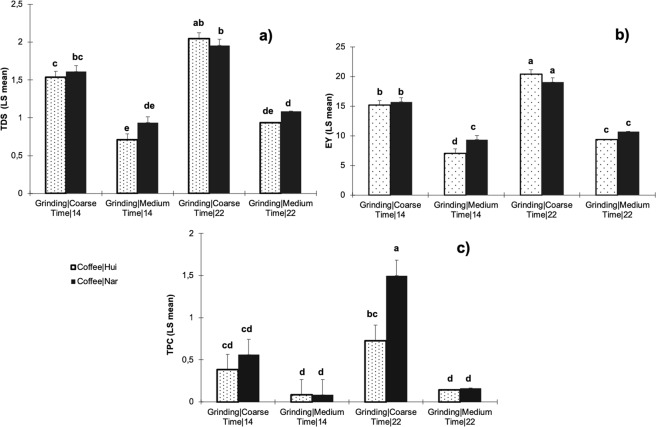
- Cold brew coffees made with coarse grinding and 22 h extraction had the highest extraction yield (EY), total dissolved solids (TDS), pH, titratable acidity (TA), and total phenolic content (TPC).
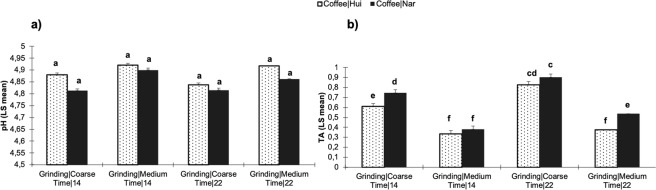
- The coffee type mainly affected pH and TA; Nariño cold brew had higher TA than Huila in all treatments, and all cold brews had lower TA than hot brews.
- The best sensory scores for cold brew were reported for coarse grinding and 14 h extraction for both coffees; these samples were described as having strong sweetness, fruity and floral flavours, medium bitterness and acidity, and a creamy body.
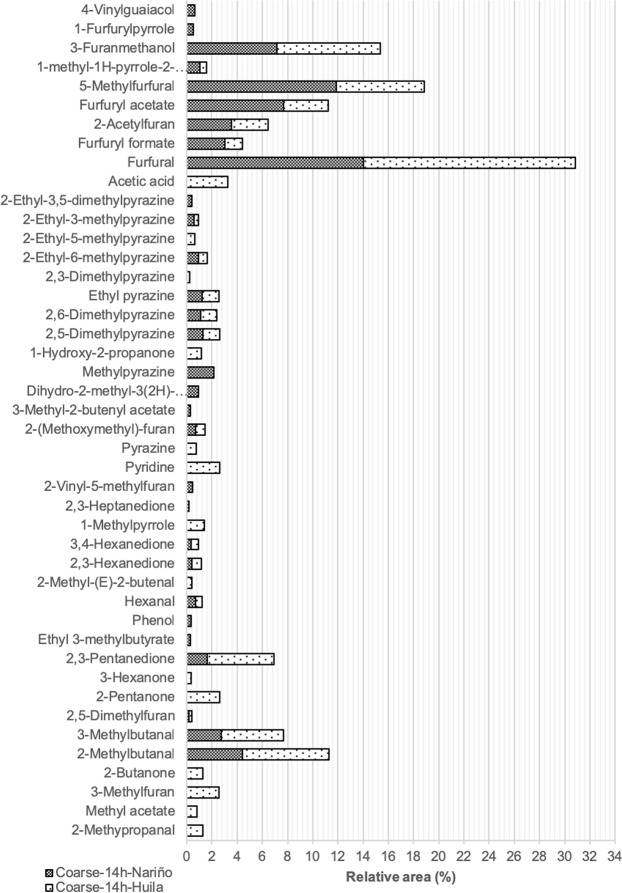
- Volatile analysis of the best-rated cold brews identified 30 volatile compounds in Nariño and 34 in Huila; the main classes were furans, pyrazines, ketones, aldehydes, pyrroles, esters, lactones, furanones, and phenols.
## Methods
- Design: Randomized factorial design (2 × 2 × 2) in duplicate, with measurements in triplicate; factors were grinding level (coarse, medium), extraction time (14, 22 h), and coffee origin (Huila, Nariño).
- Sample and brewing: Medium-roasted Arabica coffee (Coffea arabica var. caturra) from two Colombian origins; cold brew used 60 g coffee per 700 g water by indirect immersion at 20 °C, and hot brew was prepared for comparison.
- Analysis: Measured TDS, EY, pH, TA, TPC, sensory attributes by a trained panel of 3 tasters, and volatile compounds by HS-SPME GC–MS; treatment differences were tested using one-way ANOVA with LSD at 95%.
## Limitations
- The paper states that few scientific studies on cold brew physicochemical and sensory attributes were available for comparison, limiting benchmarking against prior work.
- The volatile analysis was performed only on the cold brew samples with the best global sensory scores, not on all treatments, so the chemical-flavor comparison is incomplete. *(inferred from the text)*
- Sensory testing used a small panel of 3 trained tasters, which limits generalizability of the sensory results. *(evident from the text)*
Model-written summary. Check it against the paper before relying on it.
Integrity signals
Registry
Cites
Statistics
Figures
Verification
Claims the paper makes
2 Valid · 1 Not valid · 9 Not checked · 88 Own results and interpretations
Every source the paper cites for this claim was checked and supports it.
In the paper
“Furthermore, the particle size distribution also affects the permeability and, therefore, the diffusion and mass transfer phenomena51.”
§ Effect of grinding, extraction time and type of coffee on the physicochemical and flavour characteristics of cold brew coffee > Discussion In cold extraction, the grinding level had a significant effect on the physicochemical properties of the resulting coffee brews. The results showed that coarse grinding increased the TDS, EY and TPC values. However, it is well known that in a solid-liquid extraction, finer grinds enhance the extraction of compounds, while coarser grinds reduce the extraction due to the reduced contact area. These counter-intuitive results can be explained because the indirect immersion method was used in the cold extraction trials. In this method, the coffee grounds were placed inside a filter bag that was then placed in a vessel with water for the established extraction time. At the end of the trials, a greater caking effect was evidenced in the filter bags with medium ground coffee in comparison with those where coarsely ground coffee was used. During the extraction, this caking effect could have affected the diffusivity, lowering the detected values of TDS, EY and TPC in the brewed coffee. Recent studies have established that particle size, size distribution, and the coffee packing bed are parameters that affect and determine the diffusion of solids during the coffee extraction process48–50. Furthermore, the particle size distribution also affects the permeability and, therefore, the diffusion and mass transfer phenomena51. Given that the particle size distribution is a factor that affects the permeability and diffusion of chemical compounds during the extraction process, this phenomenon will be studied in futures investigations of the cold brew methods. The long extraction times (22 h) that are applied in cold extraction tended to increase the values of TDS, EY and TPC, which were even higher when coarse grinding was used. In the extraction process, temperature can be considered as the driving force that favours the extraction of the chemical compounds present in the coffee grounds. At higher temperatures, the kinetic energy of the water molecules is higher, leading to a faster removal of the numerous compounds present in the roasted coffee. Conversely, during cold coffee brewing, the temperature is low (less than room temperature); therefore, the extraction and diffusion of several compounds requires more time to compensate for the low temperature. This could explain the fact that the cold brewed coffee with longer extraction times exhibited EY, TDS, and TPC values close to or even higher than their hot counterparts. In addition to the effect of grinding and extraction time, the type of coffee also had a significant effect on the pH and titratable acidity (TA). Measurements of pH quantify the concentration of aqueous hydrogen ions at the time of analysis, providing a metric for the quantity of deprotonated acid molecules in a sample. Total titratable acidity is a measure of all acidic protons in a sample, including non-dissociated protons27. All cold brew samples evaluated in this study showed lower TA values than their hot counterparts. Recently, similar results have been reported by Rao & Fuller27 in cold brewing with coffees from different countries. These differences suggest that the cold and hot brew coffees are similar in their total concentrations of deprotonated acid compounds, but differ in the concentration, and possibly in the complexity, of protonated acids at the pH of extraction27. Several acids such as acetic, formic, malic, lactic and phosphoric, along with quinic and chlorogenic acids, have been detected in coffee brews52. Some of these can be extracted very efficiently in the initial seconds because their solubility increases with temperature, which could be why the hot brews exhibited higher TA values than the cold brews. Although the coarse grinding and longest extraction time were identified as the optimal conditions for the physicochemical properties, higher scores in the global sensorial evaluation were reported for samples processed using coarse grinding and the lowest extraction time (14 h). This may be because lengthy extraction times can lead to over-extraction of the compounds associated with undesirable sensory notes. Likewise, lengthy extraction times may lead to the degradation of compounds in the beverage, and off-flavour compounds may be formed in the cold brew coffees. Illy and Viani52 found that in hot coffee brewing, over-extraction incorporated undesirable and less soluble aromatic compounds into the drink. Several coffee vendors have marketed cold brew coffee with claims related to tasting smoother and less bitter and having a sweet taste and low acidity27. However, there are few published scientific studies that have carried out a cold brew flavour analysis. The results of this work revealed that cold brew coffees present global flavour profiles with less intensity in the aroma, taste, aftertaste, acidity, and body than their hot counterparts. The global perception or overall impact indicated that the assessors found that cold brew coffees had an acceptable flavour. The complexity of the cold brew coffee flavour also showed that there are specific attributes that are different from a hot brew. Cold brews presented the highest or similar values when compared to their hot counterparts for the flavour attribute scores of malt, pepper, almond, cocoa, chocolate, floral, bitterness, sweetness, and smooth and creamy body. Many of these had higher scores when a 14 h cold extraction was employed. According to volatile profile results, both coffees presented differences in the number of compounds identified. As yet, there are no studies regarding the volatile compounds of cold brew coffees that allow making a rigorous comparison. In general, the high relative concentration of furans, pyrazines, and ketones in both samples (Nariño and Huila) could be associated with sweetness, malty and fruity, which was also described by the assessors in the sensorial analysis. Previous studies have indicated that the aroma of the filtered beverage is associated with the aromas of the alkylpyrazines, phenols, furanones and some thiols. These volatile compounds have been generally associated with sweet, caramel, herbal, fruity, malty, and nutty flavors38.
What the sources say
- Supportedcites [51] Corrochano BR Melrose JR Bentley AC Fryer PJ Bakalis S A new methodology to estimate the steady-state permeability of roast and ground coffee in packed beds J. Food Eng. 2015 150 106 116 10.1016/j.jfoodeng.2014.11.006 source
The Introduction states that 'Permeability is an exclusive function of particle size distribution of the solids forming the bed and packing structure', and §4.4 (Steady-state permeability) quantifies this (coarse distribution D 4.4x the permeability of fine A at 360 kg m-3, largest-to-smallest ratio 17 across the data). The same §4.4 passage and the Conclusions draw the attributed consequence: permeability alters flow rate and hence brewing/residence time 'and thus mass transfer', with implications for under/over-extraction. The source frames the link as permeability affecting mass transfer in extraction generally rather than naming diffusion as a separate mechanism, but it clearly treats the claim's substance. (LLM, conf=0.82)
plainstates a cause- Asserted: passes — The authors put it forward as true.
- Checkable: passes — It can be checked against evidence.
- Load-bearing: passes — The paper’s conclusions depend on it.
- Based: passes — The paper gives a reason why it holds.
- Supported
A result the paper reports from its own data — it cites no other source for it, so there is none to check. The quote shows it is in the paper.
In the paper
“The current results showed that most of the volatile compounds detected in both of the cold coffee samples belonged to these chemical classes.”
§ Effect of grinding, extraction time and type of coffee on the physicochemical and flavour characteristics of cold brew coffee > Results > Organic volatile compounds in cold brew coffee
plain- Asserted: passes — The authors put it forward as true.
- Checkable: passes — It can be checked against evidence.
- Load-bearing: unclear — It is unclear whether the paper’s conclusions depend on it.
- Based: passes — The paper gives a reason why it holds.
A result the paper reports from its own data — it cites no other source for it, so there is none to check. The quote shows it is in the paper.
In the paper
“Cold coffee brewed under coarse grinding and 22 h of extraction exhibited the highest values of total dissolved solids, extraction yield, pH, titratable acidity (TA), and total phenolic content.”
§ Effect of grinding, extraction time and type of coffee on the physicochemical and flavour characteristics of cold brew coffee > Abstract
plainstates a cause- Asserted: passes — The authors put it forward as true.
- Checkable: passes — It can be checked against evidence.
- Load-bearing: passes — The paper’s conclusions depend on it.
- Based: passes — The paper gives a reason why it holds.
A result the paper reports from its own data — it cites no other source for it, so there is none to check. The quote shows it is in the paper.
In the paper
“Acids and pyridines were only found in the cold brew from Huila coffee.”
§ Effect of grinding, extraction time and type of coffee on the physicochemical and flavour characteristics of cold brew coffee > Results > Organic volatile compounds in cold brew coffee
plain- Asserted: passes — The authors put it forward as true.
- Checkable: passes — It can be checked against evidence.
- Load-bearing: unclear — It is unclear whether the paper’s conclusions depend on it.
- Based: passes — The paper gives a reason why it holds.
A result the paper reports from its own data — it cites no other source for it, so there is none to check. The quote shows it is in the paper.
In the paper
“A higher TPC was found when using coarse grinding and 22 h of extraction with Nariño coffee (1.50 ± 0.37 g/L gallic acid).”
- Also stated in: § Comparison of physicochemical characteristics between cold and hot coffee brews · plain
“In cold brew coffee, the highest TPC values were found in treatments that used Nariño coffee, coarse grinding and 22 h of extraction (1.50 ± 0.37 g/L gallic acid).”
§ Effect of grinding, extraction time and type of coffee on the physicochemical and flavour characteristics of cold brew coffee > Results > Physicochemical characteristics of cold brew coffee under different extraction conditions The physicochemical characteristic results of cold brewed coffee under different extraction condition (grinding, time and type of coffee) are shown in Figs 1 and 2. The process variables of grinding and contact time were statistically significant (p < 0.05) for extraction yield (EY), total dissolved solids (TDS), total phenolic content (TPC), pH and total titratable acidity (TA), while the type of specialty coffee used was only statistically significant (p < 0.05) for pH and TA. According to the coefficients of the statistical analysis, grinding was the factor with the greatest impact on the physicochemical parameters of the cold brew coffee, followed by the extraction time. A coarse grinding and a long extraction time (22 h) increased of the EY percentage and TDS for both coffees evaluated (Fig. 1a,b). Grinding and time were statistically significant (p < 0.05) for the phenolic content (TPC) of the cold brew coffee. A higher TPC was found when using coarse grinding and 22 h of extraction with Nariño coffee (1.50 ± 0.37 g/L gallic acid). Although the type of coffee was not statistically significant for the TPC (p > 0.05), Nariño cold brew samples showed higher values than Huila samples, mainly under coarse grinding (Fig. 1c). Polyphenols are present in coffee and have been related to human health. They have been recognized for their strong antioxidant properties28. Publications regarding cold brew coffee and their phenolic content are scarce. Although chlorogenic acids and their related molecules have been associated primarily with the functional properties of coffee, recent studies in cold brewing using different origins of coffee have reported low total caffeoylquinic acid (CQA) concentrations and total antioxidant activities compared with their hot brew counterparts27. Although the grinding level and time had a significant effect (p < 0.05) on the pH and TA, these parameters were also influenced by the type of coffee used for cold brewing. The lowest pH values (more acidic) for Nariño and Huila coffees were 4.81 ± 0.01 and 4.88 ± 0.0, respectively, which were obtained under coarse grinding and 14 h of extraction for both coffees. Overall, higher pH values (less acidic) were reported for Huila coffee (4.92 ± 0.02), while the higher pH value from Nariño cold brew was 4.90 ± 0.0. Recently, Fuller and Rao17 reported pH values between 5.40 and 5.63 for cold brew Coffea arabica (Kona Typica)17. In addition, Rao and Fuller27 found that the pH values of cold brew coffees of different coffee types (origin countries) ranged between 4.96 and 5.1327. Regarding total titratable acidity, the highest values (0.90 ± 0.04 mg/g chlorogenic acid) were found in the coarse ground and 22 h cold brew samples using Nariño coffee. Lower TA values (0.33 ± 0.03 mg/g chlorogenic acid) were identified in cold brew coffee with medium grinding and 14 h of extraction; these values were lower when Huila coffee was used.
plainstates an association- Asserted: passes — The authors put it forward as true.
- Checkable: passes — It can be checked against evidence.
- Load-bearing: passes — The paper’s conclusions depend on it.
- Based: passes — The paper gives a reason why it holds.
- Also stated in: § Comparison of physicochemical characteristics between cold and hot coffee brews · plain
50 more claims
Create a free account to see all 100 claims and every source verdict.
- Probably not a substantial claim. 22
- It may state two separate claims as one. 27
Claims other papers make about this one
Each is checked against this paper’s own text: does it say what the citing paper says it does?
The source backs part of the claim, not all of it — or backs it for a different population, condition or comparison.
In the citing paper
“The current general practice of cold brew falls between 12 to 24 h12,28,32,33.”
From Sensory analysis of the flavor profile of full immersion hot, room temperature, and cold brewed coffee over time (2024) · cites this paper as [12]
Experimental — accuracy not yet measuredThe source backs part of the claim, not all of it — or backs it for a different population, condition or comparison.
In the citing paper
“the definition by Fuller and Rao (2017) is well accepted and used by various researchers [7,8,9,10].”
From Optimization of Cold Brew Coffee Using Central Composite Design and Its Properties Compared with Hot Brew Coffee (2023) · cites this paper as [7]
Experimental — accuracy not yet measuredThe cited source says what the claim attributes to it.
In the citing paper
“While most coffee sensory studies of brewed coffee focused on pressurized espresso brew or flow-based drip brew2,4,6–10, there are comparatively less sensory studies on full immersion brewing methods other than a few recent ones focused on cold brew10–14.”
From Sensory analysis of the flavor profile of full immersion hot, room temperature, and cold brewed coffee over time (2024) · cites this paper as [12]
Citations
Cites
Colorimetry of Total Phenolics with Phosphomolybdic-Phosphotungstic Acid Reagents
Singleton, V. L., & Rossi, J. A. (1965) · American Journal of Enology and Viticulture · doi:10.5344/ajev.1965.16.3.144 · Cited by 24,852
Azevedo, R. S. S., de Sousa, J. R., Araujo, M. T. F., Martins Filho, A. J., de Alcantara, B. N., Araujo, F. M. C., Queiroz, M. G. L., Cruz, A. C. R., Vasconcelos, B. H. B., Chiang, J. O., et al. (2018) · Scientific Reports · doi:10.1038/s41598-017-17765-5 · Cited by 3,478
The `Latte Revolution'? Regulation, Markets and Consumption in the Global Coffee Chain
Ponte, S. (2002) · World Development · doi:10.1016/s0305-750x(02)00032-3 · Cited by 691
Complexity of coffee flavor: A compositional and sensory perspective
Sunarharum, W. B., Williams, D. J., & Smyth, H. E. (2014) · Food Research International · doi:10.1016/j.foodres.2014.02.030 · Cited by 620
Coffee: Biochemistry and Potential Impact on Health
Ludwig, I. A., Clifford, M. N., Lean, M. E. J., Ashihara, H., & Crozier, A. (2014) · Food Funct. · doi:10.1039/c4fo00042k · Cited by 537
Gao, J., Nutter, J., Liu, X., Guan, D., Huang, Y., Dye, D., & Rainforth, W. M. (2018) · Scientific Reports · doi:10.1038/s41598-018-25899-3 · Cited by 426
Flament, I., & BESSIERE‐CHRETIEN, Y. (2001) · Cited by 348
Farah, A. (2012) · Coffee · doi:10.1002/9781119949893.ch2 · Cited by 330
Coffee fermentation and flavor – An intricate and delicate relationship
Lee, L. W., Cheong, M. W., Curran, P., Yu, B., & Liu, S. Q. (2015) · Food Chemistry · doi:10.1016/j.foodchem.2015.03.124 · Cited by 323
Comparison of nine common coffee extraction methods: Instrumental and sensory analysis
Gloess, A. N., Schönbächler, B., Klopprogge, B., D`Ambrosio, L., Chatelain, K., Bongartz, A., Strittmatter, A., Rast, M., & Yeretzian, C. (2013) · European Food Research and Technology · doi:10.1007/s00217-013-1917-x · Cited by 311
Research works printed but not linked: 1
- Kim AR Kim JS Flavor Contributing Nonvolatile Chemical and Sensory Characterization of Cold Water Extraction-based Coffee by Different ExtractionMethods (Dripping vs Steeping) and Time J. Korea Soc. Coffee Ind. 2014 3 1 9
Cited by
Cordoba, N., Fernandez-Alduenda, M., Moreno, F. L., & Ruiz, Y. (2020) · Trends in Food Science & Technology · doi:10.1016/j.tifs.2019.12.004 · Cited by 271
Self-citationSeninde, D. R., & Chambers, E. (2020) · Beverages · doi:10.3390/beverages6030044 · Cited by 173
From Plantation to Cup: Changes in Bioactive Compounds during Coffee Processing
Bastian, F., Hutabarat, O. S., Dirpan, A., Nainu, F., Harapan, H., Emran, T. B., & Simal-Gandara, J. (2021) · Foods · doi:10.3390/foods10112827 · Cited by 167
Coffee: A comprehensive overview of origin, market, and the quality process
Freitas, V. V., Borges, L. L. R., Vidigal, M. C. T. R., dos Santos, M. H., & Stringheta, P. C. (2024) · Trends in Food Science & Technology · doi:10.1016/j.tifs.2024.104411 · Cited by 160
Rao, N. Z., Fuller, M., & Grim, M. D. (2020) · Foods · doi:10.3390/foods9070902 · Cited by 113
“As was found in previous studies [8,26], TDS was higher for hot brew coffees than cold brew coffees at all roast levels.”
BackgroundResultAcrylamide in coffee: formation and possible mitigation strategies – a review
Schouten, M. A., Tappi, S., & Romani, S. (2020) · Critical Reviews in Food Science and Nutrition · doi:10.1080/10408398.2019.1708264 · Cited by 125
Córdoba, N., Moreno, F. L., Osorio, C., Velásquez, S., & Ruiz, Y. (2021) · Food Research International · doi:10.1016/j.foodres.2021.110141 · Cited by 101
Self-citationThe Potential of Spent Coffee Grounds in Functional Food Development
Bevilacqua, E., Cruzat, V. F., Singh, I., Rose’Meyer, R. B., Panchal, S. K., & Brown, L. (2023) · Nutrients · doi:10.3390/nu15040994 · Cited by 134
Review on factors affecting coffee volatiles: from seed to cup
Wang, X., Wang, Y., Hu, G., Hong, D., Guo, T., Li, J., Li, Z., & Qiu, M. (2021) · Journal of the Science of Food and Agriculture · doi:10.1002/jsfa.11647 · Cited by 121
Heo, J., Adhikari, K., Choi, K. S., & Lee, J. (2020) · Foods · doi:10.3390/foods9121746 · Cited by 93
“[11] also showed that the grinding and extraction time influenced the sensory perception of Colombia (Huila and Narino) coffee samples.”
BackgroundHejna, A. (2021) · Waste Management · doi:10.1016/j.wasman.2020.12.018 · Cited by 110
Várady, M., Tauchen, J., Fraňková, A., Klouček, P., & Popelka, P. (2022) · LWT · doi:10.1016/j.lwt.2022.114245 · Cited by 86
Stanek, N., Zarębska, M., Biłos, Ł., Barabosz, K., Nowakowska‐Bogdan, E., Semeniuk, I., Błaszkiewicz, J., Kulesza, R., Matejuk, R., & Szkutnik, K. (2021) · Scientific Reports · doi:10.1038/s41598-021-01001-2 · Cited by 89
Muzykiewicz-Szymańska, A., Nowak, A., Wira, D., & Klimowicz, A. (2021) · Molecules · doi:10.3390/molecules26123681 · Cited by 86
“[11] confirmed our observation: extending the brewing time from 14 to 22 h (cold brewing method) increased the polyphenol content in coffee infusions.”
BackgroundMethodCórdoba, N., Moreno, F. L., Osorio, C., Velásquez, S., Fernandez-Alduenda, M., & Ruiz-Pardo, Y. (2021) · LWT · doi:10.1016/j.lwt.2021.111363 · Cited by 62
Self-citationFarag, M. A., Zayed, A., Sallam, I. E., Abdelwareth, A., & Wessjohann, L. A. (2022) · Foods · doi:10.3390/foods11060864 · Cited by 69
“floral flavors, in addition to medium bitterness and acidity, with a creamy consistency [62].”
BackgroundSeninde, D. R., Chambers, E., & Chambers, D. (2020) · Food Research International · doi:10.1016/j.foodres.2020.109667 · Cited by 51
Titratable Acidity, Perceived Sourness, and Liking of Acidity in Drip Brewed Coffee
Batali, M. E., Cotter, A. R., Frost, S. C., Ristenpart, W. D., & Guinard, J.-X. (2021) · ACS Food Science & Technology · doi:10.1021/acsfoodscitech.0c00078 · Cited by 49
Zhai, X., Yang, M., Zhang, J., Zhang, L., Tian, Y., Li, C., Bao, L., Ma, C., & El‐Aty, A. M. A. (2022) · Frontiers in Nutrition · doi:10.3389/fnut.2022.849811 · Cited by 54
“Twenty-nine compounds were determined in five kinds of coffees at concentrations higher than their corresponding odor threshold value, including pyrazines (6), furans (5), phenols (5), aldehydes (4), ketones (2), alcohols (2), pyrroles (2), pyridines (2), and ester (1), which possibly contributed to the overall coffee…”
BackgroundMethodInfluentialAmalia, F., Aditiawati, P., Yusianto, Putri, S. P., & Fukusaki, E. (2021) · Metabolomics · doi:10.1007/s11306-021-01817-z · Cited by 53
Portela, C. D. S., Almeida, I. F. D., Mori, A. L. B., Yamashita, F., & Benassi, M. D. T. (2021) · LWT · doi:10.1016/j.lwt.2021.111090 · Cited by 47
Batali, M. E., Ristenpart, W. D., & Guinard, J.-X. (2020) · Scientific Reports · doi:10.1038/s41598-020-73341-4 · Cited by 41
Bellumori, M., Angeloni, G., Guerrini, L., Masella, P., Calamai, L., Mulinacci, N., Parenti, A., & Innocenti, M. (2021) · LWT · doi:10.1016/j.lwt.2021.111043 · Cited by 47
Claassen, L., Rinderknecht, M., Porth, T., Röhnisch, J., Seren, H. Y., Scharinger, A., Gottstein, V., Noack, D., Schwarz, S., Winkler, G., et al. (2021) · Foods · doi:10.3390/foods10040865 · Cited by 47
“In this work, no changes are apparent after more than 7 h, but several studies report changes at longer extraction times [18,19].”
BackgroundSantanatoglia, A., Caprioli, G., Cespi, M., Ciarlantini, D., Cognigni, L., Fioretti, L., Maggi, F., Mustafa, A. M., Nzekoue, F. K., & Vittori, S. (2023) · LWT · doi:10.1016/j.lwt.2023.114471 · Cited by 46
Bilge, G. (2020) · Journal of Food Science and Technology · doi:10.1007/s13197-020-04367-9 · Cited by 33
Green Extraction Methods for Isolation of Bioactive Substances from Coffee Seed and Spent
Mediani, A., Kamal, N., Lee, S. Y., Abas, F., & Farag, M. A. (2022) · Separation and Purification Reviews · doi:10.1080/15422119.2022.2027444 · Cited by 38
Does Coffee Have Terroir and How Should It Be Assessed?
Williams, S. D., Barkla, B. J., Rose, T. J., & Liu, L. (2022) · Foods · doi:10.3390/foods11131907 · Cited by 37
Wang, X., & Lim, L. (2023) · Applied Food Research · doi:10.1016/j.afres.2023.100334 · Cited by 38
Lopes, G. R., Passos, C. P., Petronilho, S., Rodrigues, C., Teixeira, J. A., & Coimbra, M. A. (2020) · Food Chemistry · doi:10.1016/j.foodchem.2020.128613 · Cited by 28
Vatansever, S., Xu, M., López, A. M. M., Chen, B., & Hall, C. (2021) · Processes · doi:10.3390/pr9030489 · Cited by 33
Extraction and physicochemical characteristics of high pressure-assisted cold brew coffee
Zhang, L., Wang, X., Manickavasagan, A., & Lim, L. (2022) · Future Foods · doi:10.1016/j.fufo.2022.100113 · Cited by 30
Wu, H., Viejo, C. G., Fuentes, S., Dunshea, F. R., & Suleria, H. A. R. (2023) · Fermentation · doi:10.3390/fermentation9010068 · Cited by 40
Portela, C. D. S., de Almeida, I. F., dos Reis, T. A. D., BÖGER, B. R., & Benassi, M. D. T. (2021) · Food Research International · doi:10.1016/j.foodres.2021.110860 · Cited by 33
Kwok, R., Lee, K. W. T., Schwarz, S., Claassen, L., & Lachenmeier, D. W. (2020) · Challenges · doi:10.3390/challe11020026 · Cited by 27
Várady, M., Tauchen, J., Klouček, P., & Popelka, P. (2022) · Fermentation · doi:10.3390/fermentation8080375 · Cited by 37
Comparison of Characterization of Cold Brew and Hot Brew Coffee Prepared at Various Roasting Degrees
Pan, L., Xiao, Y., Jiang, F., Jiang, T., Zhu, J. F., Tang, W., Liu, X., Zhou, Y., & Yu, L. M. (2023) · Journal of Food Processing and Preservation · doi:10.1155/2023/3175570 · Cited by 32
Yang, A., Zhang, Z., Jiang, K., Xu, K., Meng, F., Wu, W., Li, Z., & Wang, B. (2024) · Food Bioscience · doi:10.1016/j.fbio.2024.104455 · Cited by 27
Han, J.-W., Boo, H., & Chung, M.-S. (2020) · Food Science and Biotechnology · doi:10.1007/s10068-020-00747-1 · Cited by 24
“The highest overall rank (3.8 points) was obtained for the sample brewed for 3 h. Cordoba et al. (2019) conducted sensory evaluation of cold brew coffees extracted for 14 h and 22 h. Higher scores were reported in the sensorial evaluation of cold brew coffee when prepared using the shortest time…”
InfluentialWang, X., & Lim, L. (2021) · Journal of Food Process Engineering · doi:10.1111/jfpe.13748 · Cited by 22
Machado, J. L., Tomaz, M. A., da Luz, J. M. R., Osório, V. M., Costa, A. V., Colodetti, T. V., Debona, D. G., & Pereira, L. L. (2021) · Journal of Food Science · doi:10.1111/1750-3841.15986 · Cited by 22
Amalia, F., Irifune, T., Takegami, T., Yusianto, Sumirat, U., Putri, S. P., & Fukusaki, E. (2023) · Metabolomics · doi:10.1007/s11306-023-02051-5 · Cited by 30
“The sugar compounds found in roasted beans might have resulted from the degradation of carbohydrates in green coffee beans through pyrolysis and caramelization during the roasting process (Buffo, 2018; Cordoba et al., 2019).”
BackgroundKyroglou, S., Thanasouli, K., & Vareltzis, P. K. (2021) · Journal of the Science of Food and Agriculture · doi:10.1002/jsfa.11125 · Cited by 24
Chongsrimsirisakhol, O., & Pirak, T. (2022) · International Journal of Food Properties · doi:10.1080/10942912.2022.2056197 · Cited by 21
“The principle of the espresso extraction process was the pressure, which forced the hot water through the compressed finely ground coffee.([5,7]) Instead of pressure, the filter or drip brewing principle depended on the water pressure and gravity force in the extraction chamber.”
BackgroundBi, X., Yu, H., Hu, F., Fu, X., Li, Y., Li, Y., Yang, Y., Liu, D., Li, G., Shi, R., et al. (2023) · Molecules · doi:10.3390/molecules29010180 · Cited by 22
“Coffee beverages are popular all over the world for their unique flavor and delightful aroma [4].”
BackgroundCastañeda-Rodríguez, R., Mulík, S., & Ozuna, C. (2022) · Journal of Culinary Science & Technology · doi:10.1080/15428052.2020.1848683 · Cited by 19
“The accelerated mass transfer between coffee particles and water for MG in comparison to FG at both brewing temperatures was probably caused by the initial caking of the coffee powder which is typical of FG coffee extraction at low temperatures (Cordoba et al., 2019).”
BackgroundMethodResultInfluentialSantanatoglia, A., Alessandroni, L., Fioretti, L., Sagratini, G., Vittori, S., Maggi, F., & Caprioli, G. (2023) · Foods · doi:10.3390/foods12173199 · Cited by 25
“Since then [1,20,21] have deepened this concept, but using different approaches, extraction methodologies, and coffee compared with this study.”
ResultBan, Y., Park, H., Hong, S. J., Yu, S. Y., Moon, H. S., & Shin, E. (2025) · Food Chemistry · doi:10.1016/j.foodchem.2025.143407 · Cited by 19
Kyroglou, S., Laskari, R., & Vareltzis, P. K. (2022) · Molecules · doi:10.3390/molecules27092971 · Cited by 21
“Similar conclusions about pH were reached by Cordoba et al. (2019) and Rao and Fuller (2018), where cold brew coffees exhibited higher pH values (less acidic) than their hot counterparts [2,13].”
BackgroundResultInfluentialYust, B. G., Rao, N. Z., Schwarzmann, E. T., & Peoples, M. (2022) · Molecules · doi:10.3390/molecules27165124 · Cited by 21
Chongsrimsirisakhol, O., & Pirak, T. (2023) · Foods · doi:10.3390/foods12051000 · Cited by 22
“A similar swelling result in both SGF and SIF has been reported by many researchers [17,30,39].”
ResultWang, Y., Wang, W., Zhou, Q., Cheng, C., Xing, Z., Zhou, Y., Liu, X., Hua, S., Wei, W., Tan, J., et al. (2024) · LWT · doi:10.1016/j.lwt.2024.115919 · Cited by 16
Advancements in Coffee Manufacturing: From Dehydration Techniques to Quality Control
Al‐Ghamdi, S., Alfaifi, B., Elamin, W. M., & Lateef, M. A. (2024) · Food Engineering Reviews · doi:10.1007/s12393-024-09383-5 · Cited by 35
“Cordoba et al. [45] found that finer grind sizes resulted in faster extraction rates.”
Liberica Coffee (Coffea liberica L.) from Three Different Regions: In Vitro Antioxidant Activities
(2021) · Biointerface Research in Applied Chemistry · doi:10.33263/briac115.1303113041 · Cited by 28
“com/ 13032 the green beans had during the harvesting process or the metabolites created after a roasting process [3-5].”
BackgroundVariables Affecting the Extraction of Antioxidants in Cold and Hot Brew Coffee: A Review
Yust, B. G., Wilkinson, F. H., & Rao, N. Z. (2023) · Antioxidants · doi:10.3390/antiox13010029 · Cited by 24
“Therefore, concentrations of caffeine tend to be higher in cold brew coffee prepared using longer extraction times [59,126] and smaller grind particle sizes [107].”
BackgroundAntioxidant Activity of Coffee Components Influenced by Roast Degree and Preparation Method
Wołosiak, R., Pakosz, P., Drużyńska, B., & Janowicz, M. (2023) · Applied Sciences · doi:10.3390/app13042057 · Cited by 23
Production and Inhibition of Acrylamide during Coffee Processing: A Literature Review
Li, Z., Zhao, C., & Cao, C. (2023) · Molecules · doi:10.3390/molecules28083476 · Cited by 22
“Various factors, such as the fineness of coffee grinding, the ratio of powder to water, pressure, extraction temperature, and time, can greatly affect the dissolved level of AA during brewing, depending on regional culture, consumption habits, brewing methods, and technologies [98].”
BackgroundJeong, H., Yoon, S., Jo, S. M., Hong, S. J., Kim, Y. J., Kim, J. K., & Shin, E. (2023) · Journal of Food Science · doi:10.1111/1750-3841.16470 · Cited by 18
Uneven extraction in coffee brewing
Lee, W. T., Smith, A. P., & Arshad, A. (2023) · Physics of Fluids · doi:10.1063/5.0138998 · Cited by 16
Production of instant coffee from cold brewed coffee; process characteristics and optimization
Vareltzis, P. K., Ζελεσκίδου, Μ., Kiroglou, S., & Gargali, I. (2020) · Food Science and Applied Biotechnology · doi:10.30721/fsab2020.v3.i1.92 · Cited by 14
“Other researchers (Cordoba et al. 2019) suggest that the degree of grinding in combination with extraction time might lead to different flavor profiles.”
BackgroundThe Impact of Brewing Methods on the Quality of a Cup of Coffee
Genovese, A., Caporaso, N., & Baiano, A. (2025) · Beverages · doi:10.3390/beverages11050125 · Cited by 28
Ultrafast cold-brewing of coffee by picosecond-pulsed laser extraction
Ziefuß, A. R., Hupfeld, T., Meckelmann, S. W., Meyer, M., Schmitz, O. J., Kaziur-Cegla, W., Tintrop, L. K., Schmidt, T. C., Gökce, B., & Barcikowski, S. (2022) · npj Science of Food · doi:10.1038/s41538-022-00134-6 · Cited by 16
Anion–cation contrast of small molecule solvation in salt solutions
Hervø-Hansen, S., Heyda, J., Lund, M., & Matubayasi, N. (2022) · Physical Chemistry Chemical Physics · doi:10.1039/d1cp04129k · Cited by 11
Zakaria, N. H., Whanmek, K., Thangsiri, S., Chathiran, W., Srichamnong, W., Suttisansanee, U., & Santivarangkna, C. (2023) · Foods · doi:10.3390/foods12122412 · Cited by 10
“Similar results were also reported by other authors [7,28].”
BackgroundMethodResultInfluentialLipophilic and Hydrophilic Metabolites as Descriptors of Different Coffee Beverages
Ollennu-Chuasam, P., Ahmed, H., Koistinen, V., Hanhineva, K., Linderborg, K. M., & Suomela, J. (2024) · Journal of Agricultural and Food Chemistry · doi:10.1021/acs.jafc.4c03347 · Cited by 12
Liu, H., Liu, D., Wang, W., Zhang, X., Tuly, J. A., Li, H., & Ma, H. (2024) · Ultrasonics Sonochemistry · doi:10.1016/j.ultsonch.2024.107118 · Cited by 14
“Coffee grind is steeped in water at low temperature for an extended time to produce cold brew coffee [3,4].”
Barroso, L. A., Macedo, A. S., Lemos, I. L., Neves, N. D. A., Schmiele, M. M., da Silveira, J. V. W., Amaral, T. N., & Fonte, P. (2022) · JSFA reports · doi:10.1002/jsf2.33 · Cited by 11
ΒN-Alkanoyl-5-Hydroxytryptamines (Cn-5HTs) in Coffee: A Review
Brand, A. L. M., Lima, F. A., Tinoco, N. A. B., Mota, J. C. F., Moreira, I. G. S., Novaes, F. J. M., Garrett, R., Giorno, T. B. S., Fernandes, P. D., & Rezende, C. M. (2022) · Food Reviews International · doi:10.1080/87559129.2022.2059807 · Cited by 9
“25 billion cups of coffee are consumed daily worldwide and Cn-5HTs are biologically active substances present in this drink.([6,33]) Thus, the study of these substances on coffee brew is of great importance for human health.”
BackgroundSu, K., Liew, C. S. M., Huang, Y., et al. (2023) · Talanta · doi:10.1016/j.talanta.2023.124331 · Cited by 9
Nerurkar, P. V., Yokoyama, J., Ichimura, K., Kutscher, S., Wong, J., Bittenbender, H. C., & Deng, Y. (2023) · Metabolites · doi:10.3390/metabo13030412 · Cited by 11
“Metabolite variations are also influenced by temperature as in hot or cold brews [86], brewing time, or the size of ground solids [45,58].”
BackgroundEffect of Coffee on the Bioavailability of Sterols
Pires, C. L., Silva, I. M. V., Coimbra, M. A., Moreno, M. J., & Coreta-Gomes, F. M. (2022) · Foods · doi:10.3390/foods11192935 · Cited by 10
“An increase in grinding level usually enhances the extraction of compounds due to the increase of surface contact area with the extraction water solvent [21].”
BackgroundPhysicochemical Analysis of Cold Brew and Hot Brew Peaberry Coffee
Schwarzmann, E. T., Washington, M. P., & Rao, N. Z. (2022) · Processes · doi:10.3390/pr10101989 · Cited by 13
Liang, J., Batali, M. E., Routt, C., Ristenpart, W. D., & Guinard, J.-X. (2024) · Scientific Reports · doi:10.1038/s41598-024-69867-6 · Cited by 8
“The current general practice of cold brew falls between 12 to 24 h 12,28,32,33 .”
BackgroundThe role of fines in espresso extraction dynamics
Smrke, S., Eiermann, A., & Yeretzian, C. (2024) · Scientific Reports · doi:10.1038/s41598-024-55831-x · Cited by 12
Vega, A., Reyes, S. M., & Troestch, J. (2025) · ACS Omega · doi:10.1021/acsomega.4c10914 · Cited by 15
Impact of The Roast Level on Chemical Composition of Coffee from Colombia
Laukaleja, I., Krūma, Z., & Cinkmanis, I. (2022) · Proceedings of the Latvian Academy of Sciences Section B Natural Exact and Applied Sciences · doi:10.2478/prolas-2022-0022 · Cited by 9
Yildirim, S., Gök, İ., Demır, E., & Tokuşoğlu, Ö. (2022) · Journal of Food Processing and Preservation · doi:10.1111/jfpp.16626 · Cited by 12
Study on coffee flavour of various pour‐over brews
Chen, C., Kuo, Y., & Fang, M. (2022) · Flavour and Fragrance Journal · doi:10.1002/ffj.3723 · Cited by 10
Polanco-Estibález, B., García-Santa-Cruz, R., Queirós, R. P., Serment‐Moreno, V., González-Angulo, M., Tonello-Samson, C., & Rivero-Perez, M. D. (2023) · Foods · doi:10.3390/foods12234231 · Cited by 10
Kim, J., Pak, J., Choi, J., Park, S.-E., Bae, S., Cho, H., Kwak, S., & Son, H.-S. (2025) · Food Research International · doi:10.1016/j.foodres.2025.116187 · Cited by 12
Zhao, D., Li, Y., Duan, Z., Yang, J., Li, W., Yu, X., Huang, A., Li, H., & Shi, Y. (2025) · Food Chemistry · doi:10.1016/j.foodchem.2025.146038 · Cited by 7
Valorization of products from grounded-coffee beans
Gouws, S., & Muller, M. (2021) · Scientific Reports · doi:10.1038/s41598-021-99938-x · Cited by 7
Investigation of the factors affecting foamability and foam stability of cold brew coffee
Yu, D., Wang, X., & Lim, L. (2022) · Journal of the Science of Food and Agriculture · doi:10.1002/jsfa.11937 · Cited by 9
Bastian, F., Nadhifa, D. G., Mahendradatta, M., Laga, A., Salengke, S., & Payung, J. N. P. B. (2025) · Applied Food Research · doi:10.1016/j.afres.2025.101329 · Cited by 9
Baite, T. N., Mandal, B., & Purkait, M. K. (2023) · Elsevier eBooks · doi:10.1016/b978-0-12-819516-1.00008-9 · Cited by 7
Cerca, N. F., DePaula, J., Calado, V. M. D. A., Miguel, M. A. L., & Farah, A. (2023) · Food Research International · doi:10.1016/j.foodres.2023.113667 · Cited by 6
León-Inga, A. M., Velásquez, S., Quintero, M., Taborda, N., & Cala, M. P. (2024) · Food Chemistry · doi:10.1016/j.foodchem.2024.139396 · Cited by 6
Narváez, E., Zapata, E., Dereix, J. D., Lopez, C., Gutiérrez, S. A. T., & Zapata, J. (2024) · Molecules · doi:10.3390/molecules29163791 · Cited by 6
“These findings align with literature assertions describing CB with fruity, sweet, chocolatey, and vinous notes [1,5].”
MethodResultZapata, A. M. O., Arango, F. O. D., & Rojano, B. A. (2020) · Coffee Science · doi:10.25186/.v15i.1758 · Cited by 7
Yildirim, S., Demır, E., Gök, İ., & Aboul-Enein, H. Y. (2022) · Journal of Food Science and Technology · doi:10.1007/s13197-022-05460-x · Cited by 6
“Of the more than 800 volatile compounds found in roasted coffee flavors, the only 42 have been identified as phenols (Cordoba et al. 2019).”
BackgroundRetractedPackaging and the Shelf Life of Coffee
Manzocco, L., Melchior, S., Calligaris, S., & Nicoli, M. C. (2019) · Elsevier eBooks · doi:10.1016/b978-0-08-100596-5.22656-5 · Cited by 13
Barroso, L. A., Viegas, C., Stančiauskaitė, M., Macedo, A. S., Lemos, I. L., da Costa, J. M. G., Schmiele, M. M., da Silveira, J. V. W., Brandão, P., Amaral, T. N., et al. (2024) · Food and Bioprocess Technology · doi:10.1007/s11947-024-03387-z · Cited by 9
“Cordoba and co-workers (Cordoba et al., 2019) found similar results in their study.”
InfluentialAhmed, S., Al-Amro, F. S., & Alahmadi, Y. M. (2025) · Foods · doi:10.3390/foods14162811 · Cited by 4
“Conventional brewing requires prolonged boiling due to the physical characteristics of the coffee particles, leading to time-consuming and inconsistent extraction [3].”
Putro, A. W., Zulkarnaen, F. M., Sari, A., Anggrahini, S., & Setyaningsih, W. (2022) · Indonesian Food and Nutrition Progress · doi:10.22146/ifnp.65741 · Cited by 5
Larasati, I. D., Oktaviani, N. M. D., Lioe, H. N., Estiasih, T., Palma, M., & Setyaningsih, W. (2023) · Beverages · doi:10.3390/beverages9030058 · Cited by 10
“The extraction time also defines the amount of extracted phenolic compound from the roselle matrix [14].”
BackgroundAlonso, L., Costa, G. X. R., Borba, K. P., Cardoso, L. M. A. B., da Cruz, M. A. D., Pires, C. V., Bertarini, P. L. L., Gomes, M. D. S., do Amaral, L. R., Rocha, R. A. R., et al. (2025) · Food Research International · doi:10.1016/j.foodres.2025.117845 · Cited by 7
Zwicker, M., Phillips, J., & Lim, L. (2024) · Journal of Food Engineering · doi:10.1016/j.jfoodeng.2024.112242 · Cited by 7
Effect of ultraviolet irradiation on the shelf life and chemical composition of cold brew coffee
Orjuela, M. A., Moreno, F. L., Córdoba, N., Osorio, C., & Ruiz-Pardo, R. Y. (2024) · Food and Bioproducts Processing · doi:10.1016/j.fbp.2024.11.007 · Cited by 4
Self-citationDensitometric Quantification and Optimization of Polyphenols in Phyllanthus maderaspatensis by HPTLC
Ilyas, U., Elayadeth‐Meethal, M., Kuruniyan, M. S., Quadri, S. A., Rajasree, R. S., & Naseef, P. P. (2021) · Saudi Journal of Biological Sciences · doi:10.1016/j.sjbs.2021.11.019 · Cited by 7
“Polyphenols from plants such as herbs, oils, teas, and fruits have also been extracted from samples by dipping them in extraction solvents (Ilyas et al., 2015a; 2015b; Suleria et al., 2020; Cordoba et al., 2019).”
MethodWang, Z., Zhou, Y., Zong, Y., Wu, J., & Lao, F. (2025) · Foods · doi:10.3390/foods14162840 · Cited by 4
Metadata
- Authors
- Cordoba, N., Pataquiva, L., Osorio, C., Moreno, F. L. M., & Ruiz, R. Y.
- Affiliations
- Universidad de La Sabana (CO)
- Universidad Nacional de Colombia (CO)
- Venue
- Scientific Reports
- Published
- 2019-06-11
- Volume
- 9
- Issue
- 1
- Pages
- 8440-8440
- ISSN
- 2045-2322 (ISSN-L)
- PMC
- PMC6560105
- OpenAlex
- W2951335397
- Semantic Scholar
- c6d2a1eef68c2cb32ff7c7c9f481c16f8b7260bd
- Cited by
- 166
- References
- 59
- Citations by year
- 2026: 13 · 2025: 25 · 2024: 21 · 2023: 30 · 2022: 30 · 2021: 29 · 2020: 16 · 2019: 2
- FWCI
- 11.93
- Type
- journal article
- Language
- en
- Open access
- gold
- doi.org
- Licence
- cc-by
- creativecommons.org/licenses/by/4.0 (tdm)
- creativecommons.org/licenses/by/4.0 (vor)
- Locations
- Scientific Reports (publishedVersion, cc-by)
- PubMed Central (publishedVersion, cc-by)
- PubMed (publishedVersion)
- DOAJ (DOAJ: Directory of Open Access Journals) (submittedVersion)
- Intellectum (Universidad de La Sabana) (submittedVersion, cc-by)
- Greater South Information System
- Funders
- Departamento Administrativo de Ciencia, Tecnología e Innovación (COLCIENCIAS) (727, 2015.)
- Catholic Relief Services
- Universidad de La Sabana (727-2015)
- Topics
- Health Sciences › Medicine › Pharmacology (medical) › Coffee research and impacts
- Life Sciences › Agricultural and Biological Sciences › Food Science › Fermentation and Sensory Analysis
- Life Sciences › Agricultural and Biological Sciences › Food Science › Food Chemistry and Fat Analysis
- Keywords
- cold brew coffee, coffee grinding, extraction time, coffee types, physicochemical properties, sensory evaluation, flavor profile, aroma-active compounds, total phenolic content, titratable acidity, particle size
- MeSH terms
- Coffee, Cooking, Flavoring Agents, Food Handling, Humans, Odorants, Taste, Coffea
About these checks
Registry, retraction, Cites and statistics results are computed, not judged, with one exception: a printed reference that no index lists is read once by a model before it counts as a citation error. Claims are extracted by a model and kept only when their quote appears verbatim in the text; each cited source is then checked, with a model’s help, for whether it says what the claim relies on. Those verdicts can be wrong — read the claim’s quote and the cited source before relying on one.
The claim verdicts this report counts are experimental: their accuracy is not yet measured.
A language model drew the claims from the paper on 2026-10-10, under version 3 of the claim definition (model deepseek-v4.1-flash, prompt extract-v3).
A second model labelled each claim on 2026-10-10 (model jev-1.13-20260917, definition revision gold-guideline-v0.2).
Cited sources are checked with a language model’s help (qwen3.8-omni-flash).
Statistics and arithmetic are recomputed, not judged.
Confidence bands are shown only for fields calibrated on our annotated test set. None is calibrated yet, so no band is shown.
What counts as a claim ›How we measure confidence ›How we check this ›
Are you an author, or do you see a problem with this page? Request a review
Data sources
Bibliographic data: Semantic Scholar, OpenAlex, Crossref.
Contains information from the Semantic Scholar Academic Graph Datasets, made available under the ODC Attribution License (ODC-BY 1.0).
Semantic Scholar’s data is described in: Kinney, R., et al. (2023). The Semantic Scholar Open Data Platform. arXiv:2301.10140.
