

The DOI matches its Crossref record; 66 of the 66 references it cites were found in a registry or an index.
Co-stimulation with IL-1β and TNF-α induces an inflammatory reactive astrocyte phenotype with neurosupportive characteristics in a human pluripotent stem cell model system
Open accessAbstract
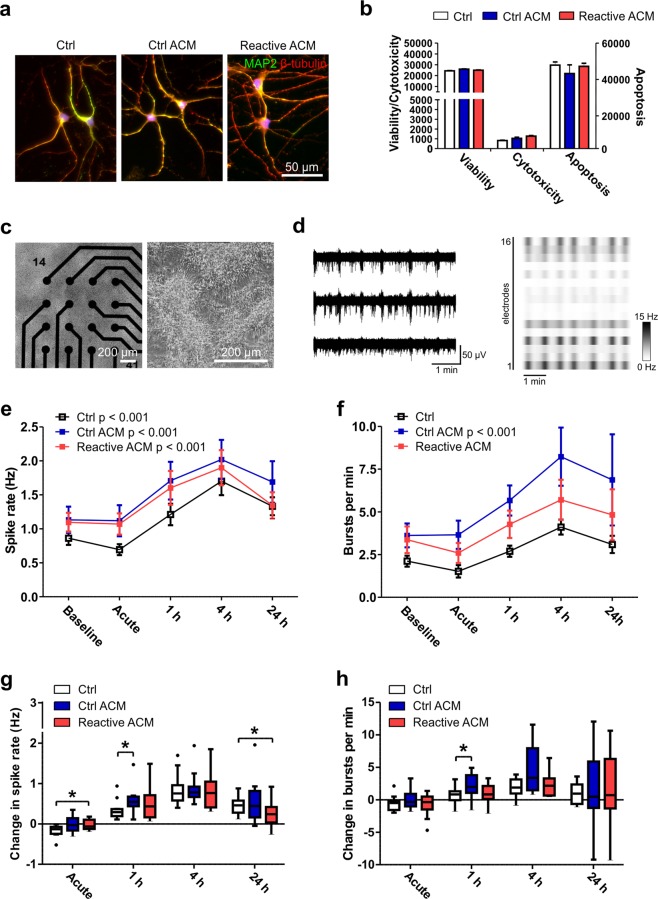
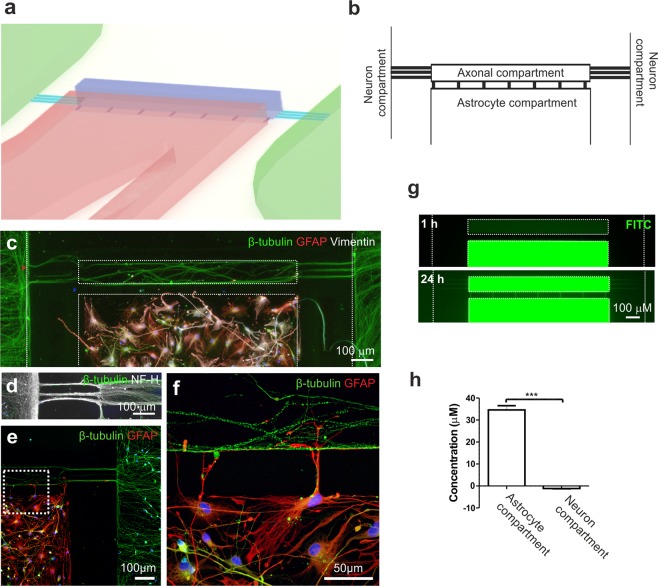
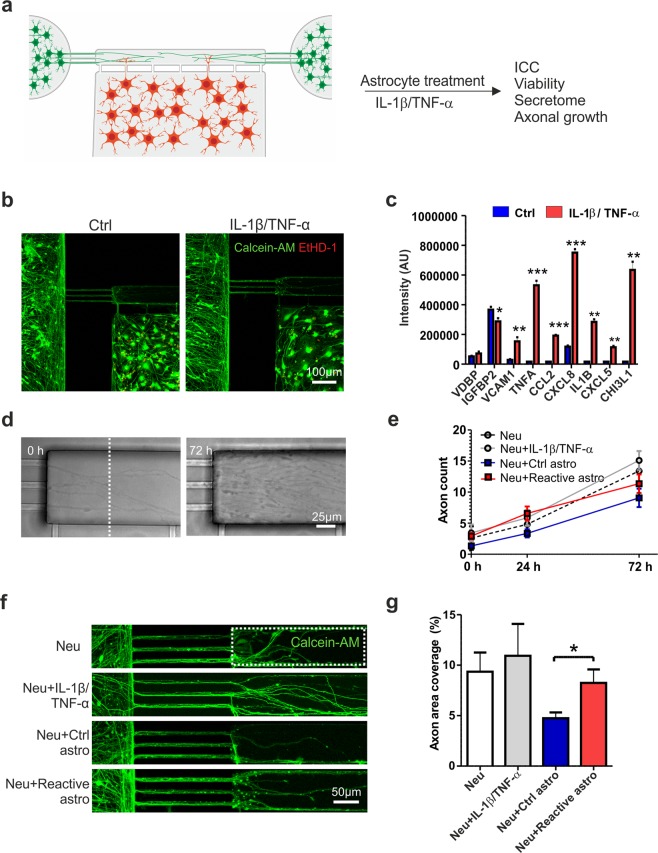
Astrocyte reactivation has been discovered to be an important contributor to several neurological diseases. In vitro models involving human astrocytes have the potential to reveal disease-specific mechanisms of these cells and to advance research on neuropathological conditions. Here, we induced a reactive phenotype in human induced pluripotent stem cell (hiPSC)-derived astrocytes and studied the inflammatory natures and effects of these cells on human neurons. Astrocytes responded to interleukin-1β (IL-1β) and tumor necrosis factor-α (TNF-α) treatment with a typical transition to polygonal morphology and a shift to an inflammatory phenotype characterized by altered gene and protein expression profiles. Astrocyte-secreted factors did not exert neurotoxic effects, whereas they transiently promoted the functional activity of neurons. Importantly, we engineered a novel microfluidic platform designed for investigating interactions between neuronal axons and reactive astrocytes that also enables the implementation of a controlled inflammatory environment. In this platform, selective stimulation of astrocytes resulted in an inflammatory niche that sustained axonal growth, further suggesting that treatment induces a reactive astrocyte phenotype with neurosupportive characteristics. Our findings show that hiPSC-derived astrocytes are suitable for modeling astrogliosis, and the developed in vitro platform provides promising novel tools for studying neuron-astrocyte crosstalk and human brain disease in a dish.
Overview
The claims and statistics of this paper haven’t been checked yet.
Run the check — free, no account needed. It reads the open-access text and checks the sources it cites.
Integrity signals
Registry
Cites
Statistics
Figures
Verification
Claims the paper makes
The claims and statistics of this paper haven’t been checked yet.
Run the check — free, no account needed. It reads the open-access text and checks the sources it cites.
Claims other papers make about this one
Each is checked against this paper’s own text: does it say what the citing paper says it does?
The source backs part of the claim, not all of it — or backs it for a different population, condition or comparison.
In the citing paper
“Conversely, the “neuroprotective” phenotype of astrocytes promotes neuronal survival and homeostasis, as these astrocytes secrete neurotrophic factors and anti-inflammatory cytokines [184, 187, 188].”
From Microglial function, INPP5D/SHIP1 signaling, and NLRP3 inflammasome activation: implications for Alzheimer’s disease (2023) · cites this paper as [184]
Experimental — accuracy not yet measuredThe cited source says what the claim attributes to it.
In the citing paper
“Microglial activation or inflammatory insults induce astrocytes into a reactive state, which can have both neuroprotective and neurotoxic effects [17, 183–185].”
From Microglial function, INPP5D/SHIP1 signaling, and NLRP3 inflammasome activation: implications for Alzheimer’s disease (2023) · cites this paper as [184]
Self-check
Percentages, sums and reported differences re-computed from the paper’s own numbers.
The self-check needs the paper’s full text.
Citations
Cites
Neurotoxic reactive astrocytes are induced by activated microglia
Liddelow, S. A., Guttenplan, K. A., Clarke, L. E., Bennett, F. C., Bohlen, C. J., Schirmer, L., Bennett, M. L., Münch, A. E., Chung, W.-S., Peterson, T. C., et al. (2017) · Nature · doi:10.1038/nature21029 · Cited by 7,971
CellProfiler: image analysis software for identifying and quantifying cell phenotypes
Carpenter, A. E., Jones, T. R., Lamprecht, M. R., Clarke, C., Kang, I. H., Friman, O., Guertin, D. A., Chang, J. H., Lindquist, R. A., Moffat, J., et al. (2006) · Genome biology · doi:10.1186/gb-2006-7-10-r100 · Cited by 5,212
Molecular dissection of reactive astrogliosis and glial scar formation
Sofroniew, M. V. (2009) · Trends in Neurosciences · doi:10.1016/j.tins.2009.08.002 · Cited by 2,594
Tripartite synapses: glia, the unacknowledged partner
Araque, A., Parpura, V., Sanzgiri, R. P., & Haydon, P. G. (1999) · Trends in Neurosciences · doi:10.1016/s0166-2236(98)01349-6 · Cited by 2,529
Genomic analysis of reactive astrogliosis
Zamanian, J. L., Xu, L., Foo, L. C., Nouri, N., Zhou, L., Giffard, R. G., & Barres, B. A. (2012) · The Journal of Neuroscience · doi:10.1523/jneurosci.6221-11.2012 · Cited by 2,404
Reactive Astrocytes: Production, Function, and Therapeutic Potential
Liddelow, S. A., & Barres, B. A. (2017) · Immunity · doi:10.1016/j.immuni.2017.06.006 · Cited by 2,336
Zhang, Y., Sloan, S. A., Clarke, L. E., Caneda, C., Plaza, C. A., Blumenthal, P. D., Vogel, H., Steinberg, G. K., Edwards, M. S. B., Li, G., et al. (2016) · Neuron · doi:10.1016/j.neuron.2015.11.013 · Cited by 2,295
Uniquely Hominid Features of Adult Human Astrocytes
Oberheim, N. A., Takano, T., Han, X., He, W., Lin, J. H. C., Wang, F., Xu, Q., Wyatt, J. D., Pilcher, W., Ojemann, J. G., et al. (2009) · The Journal of Neuroscience · doi:10.1523/jneurosci.4707-08.2009 · Cited by 1,488
A microfluidic culture platform for CNS axonal injury, regeneration and transport
Taylor, A. M., Blurton-Jones, M. M., Rhee, S. W., Cribbs, D. H., Cotman, C. W., & Jeon, N. L. (2005) · Nature Methods · doi:10.1038/nmeth777 · Cited by 1,172
Astrocytes: Key Regulators of Neuroinflammation
Colombo, E., & Farina, C. (2016) · Trends in Immunology · doi:10.1016/j.it.2016.06.006 · Cited by 936
Human cerebral cortex development from pluripotent stem cells to functional excitatory synapses
Shi, Y., Kirwan, P., Smith, J., Robinson, H. P. C., & Livesey, F. J. (2012) · Nature Neuroscience · doi:10.1038/nn.3041 · Cited by 813
A 3D human triculture system modeling neurodegeneration and neuroinflammation in Alzheimer’s disease
Park, J., Wetzel, I., Marriott, I., Dréau, D., D’Avanzo, C., Kim, D. Y., Tanzi, R. E., & Cho, H. (2018) · Nature Neuroscience · doi:10.1038/s41593-018-0175-4 · Cited by 644
Astrocyte–neuron metabolic relationships: for better and for worse
Allaman, I., Bélanger, M., & Magistretti, P. J. (2011) · Trends in Neurosciences · doi:10.1016/j.tins.2010.12.001 · Cited by 639
CellProfiler Analyst: data exploration and analysis software for complex image-based screens
Jones, T. R., Kang, I. H., Wheeler, D. B., Lindquist, R. A., Papallo, A., Sabatini, D. M., Golland, P., & Carpenter, A. E. (2008) · BMC Bioinformatics · doi:10.1186/1471-2105-9-482 · Cited by 543
Elusive roles for reactive astrocytes in neurodegenerative diseases
Ben Haim, L., Carrillo-de Sauvage, M.-A., Ceyzériat, K., & Escartin, C. (2015) · Frontiers in Cellular Neuroscience · doi:10.3389/fncel.2015.00278 · Cited by 453
An Efficient Platform for Astrocyte Differentiation from Human Induced Pluripotent Stem Cells
TCW, J., Wang, M., Pimenova, A. A., Bowles, K. R., Hartley, B. J., Lacin, E., Machlovi, S. I., Abdelaal, R., Karch, C. M., Phatnani, H., et al. (2017) · Stem Cell Reports · doi:10.1016/j.stemcr.2017.06.018 · Cited by 435
Human Astrocytes: Secretome Profiles of Cytokines and Chemokines
Choi, S. S., Lee, H. J., Lim, I., Satoh, J., & Kim, S. U. (2014) · PLoS ONE · doi:10.1371/journal.pone.0092325 · Cited by 411
Specification of transplantable astroglial subtypes from human pluripotent stem cells
Krencik, R., Weick, J. P., Liu, Y., Zhang, Z., & Zhang, S. (2011) · Nature Biotechnology · doi:10.1038/nbt.1877 · Cited by 410
The Role of Astrocytes in Multiple Sclerosis
Ponath, G. D., Park, C., & Pitt, D. (2018) · Frontiers in Immunology · doi:10.3389/fimmu.2018.00217 · Cited by 378
Shinozaki, Y., Shibata, K., Yoshida, K., Shigetomi, E., Gachet, C., Ikenaka, K., Tanaka, K. F., & Koizumi, S. (2017) · Cell Reports · doi:10.1016/j.celrep.2017.04.047 · Cited by 356
Serio, A., Bilican, B., Barmada, S. J., Ando, D. M., Zhao, C., Siller, R., Burr, K., Haghi, G., Story, D., Nishimura, A. L., et al. (2013) · Proceedings of the National Academy of Sciences · doi:10.1073/pnas.1300398110 · Cited by 345
Astrocyte regulation of synaptic behavior
Allen, N. J. (2014) · Annual Review of Cell and Developmental Biology · doi:10.1146/annurev-cellbio-100913-013053 · Cited by 343
Clausen, B. H., Lambertsen, K. L., Babcock, A. A., Holm, T. H., Dagnæs‐Hansen, F., & Finsen, B. R. (2008) · Journal of Neuroinflammation · doi:10.1186/1742-2094-5-46 · Cited by 315
Efficient Generation of Astrocytes from Human Pluripotent Stem Cells in Defined Conditions
Shaltouki, A., Peng, J., Liu, Q., Rao, M. S., & Zeng, X. (2013) · Stem Cells · doi:10.1002/stem.1334 · Cited by 273
The Role of Astrocytes in Multiple Sclerosis Progression
Correale, J. D., & Farez, M. (2015) · Frontiers in Neurology · doi:10.3389/fneur.2015.00180 · Cited by 270
Astrocytic control of synaptic function
Papouin, T., Dunphy, J. M., Tolman, M., Foley, J., & Haydon, P. G. (2017) · Philosophical Transactions of the Royal Society B Biological Sciences · doi:10.1098/rstb.2016.0154 · Cited by 243
Astrocyte activation and reactive gliosis—A new target in stroke?
Pekny, M., Wilhelmsson, U., Tatlisumak, T., & Pekna, M. (2018) · Neuroscience Letters · doi:10.1016/j.neulet.2018.07.021 · Cited by 240
IL‐1‐regulated responses in astrocytes: Relevance to injury and recovery
John, G. R., Lee, S. C., Song, X., Rivieccio, M. A., & Brosnan, C. F. (2004) · Glia · doi:10.1002/glia.20109 · Cited by 224
LPS and IL‐1 differentially activate mouse and human astrocytes: Role of CD14
Tarassishin, L., Suh, H.-S., & Lee, S. C. (2014) · Glia · doi:10.1002/glia.22657 · Cited by 209
Virlogeux, A., Moutaux, E., Christaller, W., Genoux, A., Bruyère, J., Fino, É., Charlot, B., Cazorla, M., & Saudou, F. (2018) · Cell Reports · doi:10.1016/j.celrep.2017.12.013 · Cited by 209
Human Stem Cell-Derived Spinal Cord Astrocytes with Defined Mature or Reactive Phenotypes
Roybon, L., Lamas, N. J., Garcia-Diaz, A., Yang, E. J., Sattler, R., Jackson-Lewis, V., Kim, Y. A., Kachel, C. A., Rothstein, J. D., Przedborski, S., et al. (2013) · Cell Reports · doi:10.1016/j.celrep.2013.06.021 · Cited by 208
Russo, F. B., de Freitas, B. C. G., Pignatari, G. C., Fernandes, I. R., Sebat, J. L., Muotri, A. R., & Beltrão-Braga, P. C. B. (2017) · Biological Psychiatry · doi:10.1016/j.biopsych.2017.09.021 · Cited by 203
Croitoru‐Lamoury, J., Guillemin, G. J., Boussin, F. D., Mognetti, B., Gigout, L. I., Chéret, A., Vaslin, B., Grand, R. L., Brew, B. J., & Dormont, D. (2003) · Glia · doi:10.1002/glia.10181 · Cited by 177
Perriot, S., Mathias, A., Perriard, G., Canales, M., Jonkmans, N., Merienne, N., Meunier, C., El Kassar, L., Perrier, A. L., Laplaud, D.-A., et al. (2018) · Stem Cell Reports · doi:10.1016/j.stemcr.2018.09.015 · Cited by 171
Axonal transport and secretion of fibrillar forms of α-synuclein, Aβ42 peptide and HTTExon 1
Brahic, M., Bousset, L., Bieri, G., Melki, R., & Gitler, A. D. (2016) · Acta Neuropathologica · doi:10.1007/s00401-016-1538-0 · Cited by 169
Odawara, A., Saitoh, Y., Alhebshi, A., Gotoh, M., & Suzuki, I. (2014) · Biochemical and Biophysical Research Communications · doi:10.1016/j.bbrc.2013.12.142 · Cited by 163
Sarkar, A., Mei, A., Paquola, A. C. M., Stern, S., Bardy, C., Klug, J. R., Kim, S. L., Neshat, N., Kim, H. J., Ku, M., et al. (2018) · Cell stem cell · doi:10.1016/j.stem.2018.04.009 · Cited by 147
Santos, R., Vadodaria, K. C., Jaeger, B. N., Mei, A., Lefcochilos-Fogelquist, S., Mendes, A. P. D., Erikson, G. A., Shokhirev, M. N., Randolph‐Moore, L., Fredlender, C., et al. (2017) · Stem Cell Reports · doi:10.1016/j.stemcr.2017.05.011 · Cited by 142
Neto, E., Leitão, L., Sousa, D. M., Alves, C. J., Alencastre, I. S., Aguiar, P., & Lamghari, M. (2016) · Journal of Neuroscience · doi:10.1523/jneurosci.1748-16.2016 · Cited by 129
Lundin, A., Delsing, L., Clausen, M., Ricchiuto, P., Sánchez, J., Sabirsh, A., Ding, M., Synnergren, J., Zetterberg, H., Brolén, G., et al. (2018) · Stem Cell Reports · doi:10.1016/j.stemcr.2018.01.021 · Cited by 128
Derivation and characterization of three new human embryonic stem cell lines in Finland
Skottman, H. (2010) · In Vitro Cellular & Developmental Biology - Animal · doi:10.1007/s11626-010-9286-2 · Cited by 126
Hongisto, H., Ilmarinen, T., Vattulainen, M., Mikhailova, A., & Skottman, H. (2017) · Stem Cell Research & Therapy · doi:10.1186/s13287-017-0738-4 · Cited by 115
Ojala, M., Prajapati, C., Pölönen, R.-P., Rajala, K., Pekkanen-Mattila, M., Rasku, J., Larsson, K., & Aalto‐Setälä, K. (2015) · Stem Cells International · doi:10.1155/2016/1684792 · Cited by 107
Interleukin-6 expression in human multiple sclerosis lesions
Schönrock, L. M., Gawlowski, G., & Brück, W. (2000) · Neuroscience Letters · doi:10.1016/s0304-3940(00)01543-3 · Cited by 95
Agah, E., Zardoui, A., Saghazadeh, A., Ahmadi, M., Tafakhori, A., & Rezaei, N. (2018) · PLoS ONE · doi:10.1371/journal.pone.0190252 · Cited by 91
Differential deregulation of astrocytic calcium signalling by amyloid-β, TNFα, IL-1β and LPS
Ronco, V., Grolla, A. A., Glasnov, T. N., Canonico, P. L., Verkhratsky, A., Genazzani, A. A., & Lim, D. (2014) · Cell Calcium · doi:10.1016/j.ceca.2014.02.016 · Cited by 89
Enhanced astrocyte responses are driven by a genetic risk allele associated with multiple sclerosis
Ponath, G. D., Lincoln, M. R., Levine-Ritterman, M., Park, C., Dahlawi, S., Mubarak, M., Sumida, T. S., Airas, L. M., Zhang, S., Isitan, C., et al. (2018) · Nature Communications · doi:10.1038/s41467-018-07785-8 · Cited by 83
Fingolimod induces neuroprotective factors in human astrocytes
Hoffmann, F. S., Hofereiter, J., Rübsamen, H., Melms, J. C., Schwarz, S. C., Faber, H., Weber, P. C., Pütz, B., Loleit, V., Weber, F., et al. (2015) · Journal of Neuroinflammation · doi:10.1186/s12974-015-0393-6 · Cited by 83
Human cell-based micro electrode array platform for studying neurotoxicity
Ylä‐Outinen, L. (2010) · Frontiers in Neuroengineering · doi:10.3389/fneng.2010.00111 · Cited by 78
van Kralingen, C., Kho, D. T., Costa, J. L., Angel, C. E., & Graham, E. S. (2013) · PLoS ONE · doi:10.1371/journal.pone.0084269 · Cited by 78
Lappalainen, R. S., Salomäki, M., Ylä‐Outinen, L., Heikkilä, T. J., Hyttinen, J., PIHLAJAMÄKI, H. K., Suuronen, R., Skottman, H., & Narkilahti, S. (2010) · Regenerative Medicine · doi:10.2217/rme.10.58 · Cited by 68
Self-citationYang, I. H., Gary, D. S., Malone, M. L., Dria, S. J., Houdayer, T., Belegu, V., McDonald, J. W., & Thakor, N. V. (2012) · NeuroMolecular Medicine · doi:10.1007/s12017-012-8170-5 · Cited by 62
Neuronal activity promotes myelination via a cAMP pathway
Malone, M. L., Gary, D. S., Yang, I. H., Miglioretti, A., Houdayer, T., Thakor, N. V., & McDonald, J. W. (2013) · Glia · doi:10.1002/glia.22476 · Cited by 62
Precision medicine in multiple sclerosis
Comabella, M., Sastre‐Garriga, J., & Montalbán, X. (2016) · Current Opinion in Neurology · doi:10.1097/wco.0000000000000336 · Cited by 60
The Cytokine IL-1β Activates IFN Response Factor 3 in Human Fetal Astrocytes in Culture
Rivieccio, M. A., John, G. R., Song, X., Suh, H.-S., Zhao, Y., Lee, S. C., & Brosnan, C. F. (2005) · The Journal of Immunology · doi:10.4049/jimmunol.174.6.3719 · Cited by 59
Hyysalo, A., Ristola, M., Mäkinen, M., Häyrynen, S., Nykter, M., & Narkilahti, S. (2017) · Stem Cell Research · doi:10.1016/j.scr.2017.09.002 · Cited by 53
Self-citationMessenger RNAs localized to distal projections of human stem cell derived neurons
Bigler, R. L., Kamande, J. W., Dumitru, ., Niedringhaus, M. S., & Taylor, A. M. (2017) · Scientific Reports · doi:10.1038/s41598-017-00676-w · Cited by 50
Teh, D. B. L., Prasad, A., Jiang, W., Ariffin, M. Z., Khanna, S., Belorkar, A., Wong, L., Liu, X., & All, A. H. (2017) · Scientific Reports · doi:10.1038/s41598-017-13174-w · Cited by 50
A microdevice platform for visualizing mitochondrial transport in aligned dopaminergic axons
Lu, X., Kim‐Han, J. S., O’Malley, K. L., & Sakiyama‐Elbert, S. E. (2012) · Journal of Neuroscience Methods · doi:10.1016/j.jneumeth.2012.05.021 · Cited by 49
Kiamehr, M., Klettner, A., Richert, E., Koskela, A. K. J., Koistinen, A. P., Skottman, H., Kaarniranta, K., Aalto‐Setälä, K., & Juuti‐Uusitalo, K. (2019) · International Journal of Molecular Sciences · doi:10.3390/ijms20153773 · Cited by 42
Ristola, M., Sukki, L., Azevedo, M. M., Seixas, A. I., Relvas, J. B., Narkilahti, S., & Kallio, P. J. (2019) · Journal of Micromechanics and Microengineering · doi:10.1088/1361-6439/ab16a7 · Cited by 37
Self-citationA new method for quantifying mitochondrial axonal transport
Chen, M., Li, Y., Yang, M., Chen, X., Chen, Y., Yang, F., Lu, S., Yao, S.-Y., Zhou, T., Liu, J., et al. (2016) · Protein & Cell · doi:10.1007/s13238-016-0268-3 · Cited by 35
mi R 147b: A novel key regulator of interleukin 1 beta‐mediated inflammation in human astrocytes
van Scheppingen, J., Mills, J. D., Zimmer, T. S., Broekaart, D. W. M., Iori, V., Bongaarts, A., Anink, J. J., Iyer, A. M., Korotkov, A., Jansen, F. E., et al. (2018) · Glia · doi:10.1002/glia.23302 · Cited by 35
Hagman, S., Mäkinen, A., Ylä-Outinen, L., Huhtala, H., Elovaara, I., & Narkilahti, S. (2019) · Journal of Neuroimmunology · doi:10.1016/j.jneuroim.2018.07.010 · Cited by 31
Self-citationFukushima, K., Miura, Y., Sawada, K., Yamazaki, K., & Ito, M. (2015) · SLAS DISCOVERY · doi:10.1177/1087057115610055 · Cited by 29
μNeurocircuitry: Establishing in vitro models of neurocircuits with human neurons
Fantuzzo, J. A., Filippis, L. D., McGowan, H., Yang, N., Ng, Y. H., Halikere, A., Liu, J., Hart, R. P., Wernig, M., Zahn, J. D., et al. (2017) · TECHNOLOGY · doi:10.1142/s2339547817500054 · Cited by 25
Cited by
Sorted by citations
Cerebral Hemorrhage: Pathophysiology, Treatment, and Future Directions
Magid-Bernstein, J. R., Girard, R., Polster, S. P., Srinath, A., Romanos, S. G., Awad, I. A., & Sansing, L. H. (2022) · Circulation Research · doi:10.1161/circresaha.121.319949 · Cited by 740
The Role of Astrocytes in CNS Inflammation
Giovannoni, F., & Quintana, F. J. (2020) · Trends in Immunology · doi:10.1016/j.it.2020.07.007 · Cited by 681
Beyond the GFAP-Astrocyte Protein Markers in the Brain
Jurga, A. M., Paleczna, M., Kadluczka, J., & Kuter, K. Z. (2021) · Biomolecules · doi:10.3390/biom11091361 · Cited by 319
The duality of amyloid-β: its role in normal and Alzheimer’s disease states
Azargoonjahromi, A. (2024) · Molecular Brain · doi:10.1186/s13041-024-01118-1 · Cited by 214
Microglia and Astrocyte Function and Communication: What Do We Know in Humans?
Garland, E. F., Hartnell, I. J., & Boche, D. (2022) · Frontiers in Neuroscience · doi:10.3389/fnins.2022.824888 · Cited by 165
Metadata
- Authors
- Hyvärinen, T., Hagman, S., Ristola, M., Sukki, L., Veijula, K., Kreutzer, J., Kallio, P., & Narkilahti, S.
- Affiliations
- Tampere University (FI)
- Corresponding author
- Narkilahti, Susanna
- ORCID
- Venue
- Scientific Reports
- Published
- 2019-11-15
- Volume
- 9
- Issue
- 1
- Pages
- 16944-16944
- ISSN
- 2045-2322 (ISSN-L)
- PMC
- PMC6858358
- OpenAlex
- W2987198483
- Cited by
- 168
- References
- 66
- Citations by year
- 2026: 18 · 2025: 23 · 2024: 39 · 2023: 16 · 2022: 26 · 2021: 31 · 2020: 14
- FWCI
- 7.81
- Type
- journal article
- Language
- en
- Open access
- gold
- doi.org
- Locations
- Scientific Reports (publishedVersion, cc-by)
- Europe PMC (PubMed Central) (publishedVersion, cc-by)
- PubMed Central (publishedVersion, cc-by)
- PubMed (publishedVersion)
- DOAJ (DOAJ: Directory of Open Access Journals) (submittedVersion)
- Tampere University Institutional Repository (Tampere University) (submittedVersion, cc-by)
- Funders
- Academy of Finland (312411, 312414, 50191927, 296415)
- Suomen Kulttuurirahasto (00170805, 312414, 50191927, 312411)
- Business Finland (50191927, 312414)
- Topics
- Life Sciences › Neuroscience › Neurology › Neuroinflammation and Neurodegeneration Mechanisms
- Life Sciences › Neuroscience › Developmental Neuroscience › Neurogenesis and neuroplasticity mechanisms
- Life Sciences › Neuroscience › Cellular and Molecular Neuroscience › Neuroscience and Neuropharmacology Research
- Keywords
- reactive astrocytes, astrocyte activation, IL-1β, TNF-α, neuroinflammation, microfluidic platform, axon growth
- MeSH terms
- Astrocytes, Cell Communication, Cell Differentiation, Cell Survival, Cells, Cultured, Humans, Neurons, Phenotype, Tumor Necrosis Factor-alpha, Cytokines, Coculture Techniques, Pluripotent Stem Cells, Microfluidic Analytical Techniques, Cell Proliferation, Interleukin-1beta, Induced Pluripotent Stem Cells, Cellular Microenvironment
About these checks
Registry, retraction, Cites and statistics results are computed, not judged, with one exception: a printed reference that no index lists is read once by a model before it counts as a citation error. Claims are extracted by a model and kept only when their quote appears verbatim in the text; each cited source is then checked, with a model’s help, for whether it says what the claim relies on. Those verdicts can be wrong — read the claim’s quote and the cited source before relying on one.
Statistics and arithmetic are recomputed, not judged.
Confidence bands are shown only for fields calibrated on our annotated test set. None is calibrated yet, so no band is shown.
What counts as a claim ›How we measure confidence ›How we check this ›
Are you an author, or do you see a problem with this page? Request a review
