

Sleep improvements on days with later school starts persist after 1 year in a flexible start system
Open accessPublished version of a preprint
The DOI matches its Crossref record; 64 of the 64 references it cites were found in a registry or an index.
Abstract
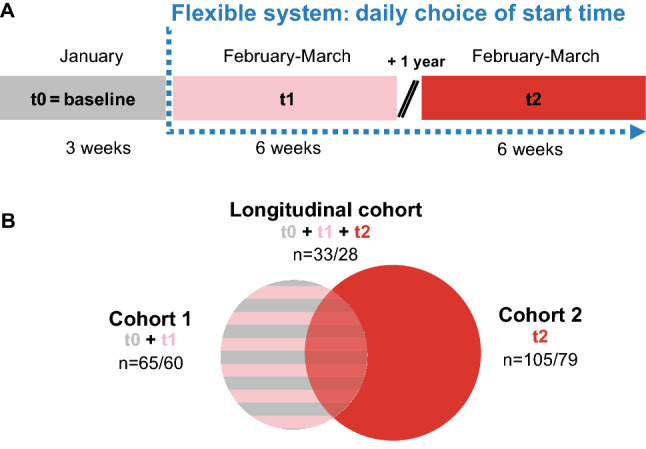
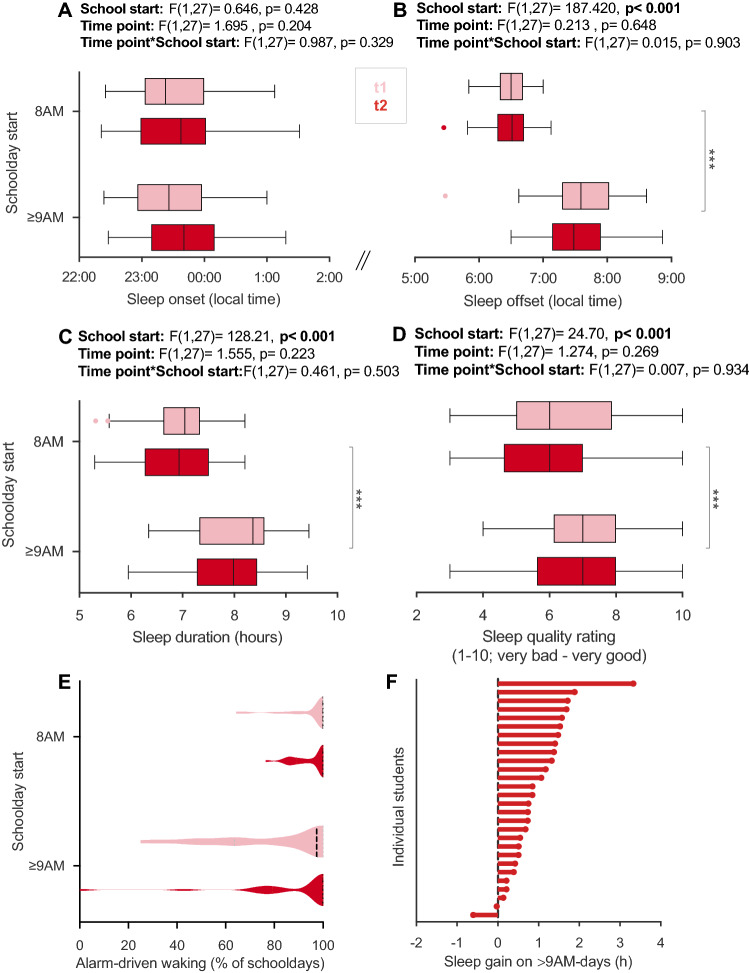
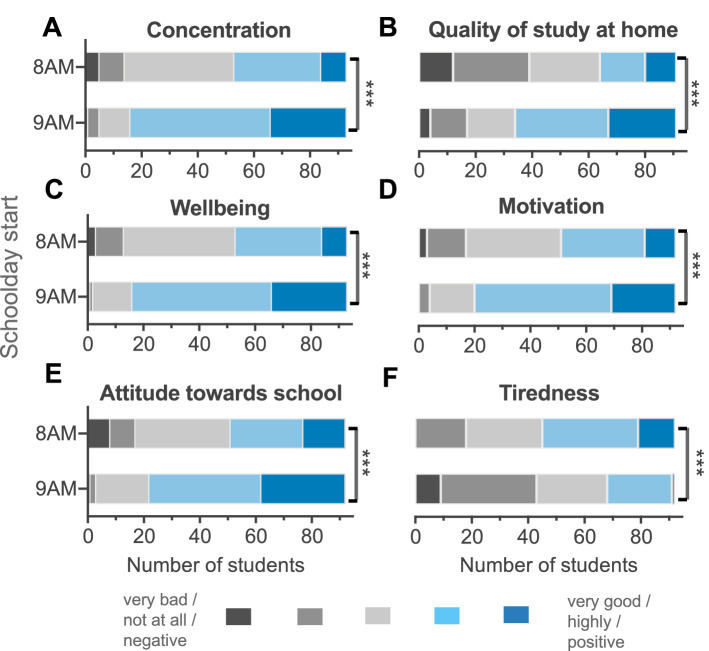
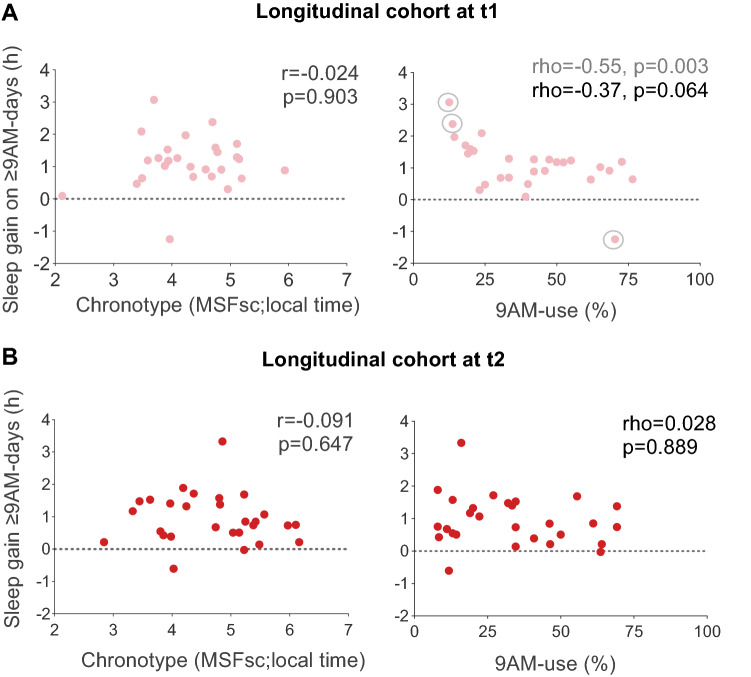
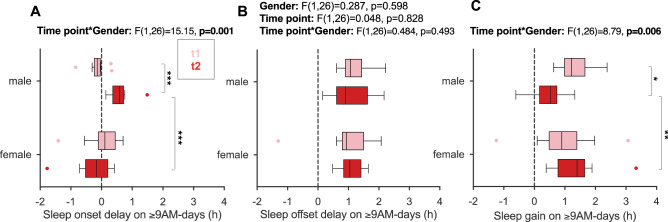
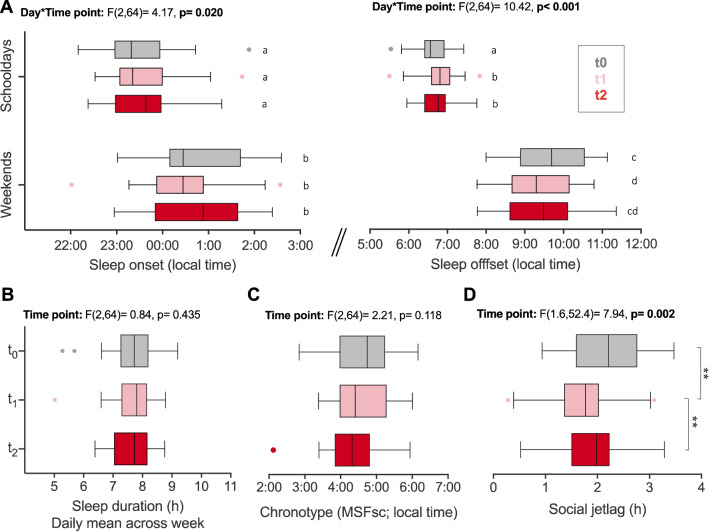
Early school times fundamentally clash with the late sleep of teenagers. This mismatch results in chronic sleep deprivation posing acute and long-term health risks and impairing students' learning. Despite immediate short-term benefits for sleep, the long-term effects of later starts remain unresolved. In a pre-post design over 1 year, we studied a unique flexible school start system, in which 10–12th grade students chose daily between an 8:00 or 8:50AM-start. Missed study time (8:00–8:50) was compensated for during gap periods or after classes. Based on 2 waves (6–9 weeks of sleep diary each), we found that students maintained their ~ 1-h-sleep gain on later days, longitudinally (n = 28) and cross-sectionally (n = 79). This gain was independent of chronotype and frequency of later starts but attenuated for boys after 1 year. Students showed persistently better sleep quality and reduced alarm-driven waking and reported psychological benefits (n = 93) like improved motivation, concentration, and study quality on later days. Nonetheless, students chose later starts only infrequently (median 2 days/week), precluding detectable sleep extensions in the flexible system overall. Reasons for not choosing late starts were the need to make up lost study time, preference for extra study time and transport issues. Whether flexible systems constitute an appealing alternative to fixed delays given possible circadian and psychological advantages warrants further investigation.
Overview
The claims and statistics of this paper haven’t been checked yet.
Free: it reads the open-access text and checks the first 5 claims that cite a source we can check. Create a free account to check every claim.
Integrity signals
Registry
Cites
Statistics
Figures
Verification
Claims the paper makes
The claims and statistics of this paper haven’t been checked yet.
Free: it reads the open-access text and checks the first 5 claims that cite a source we can check. Create a free account to check every claim.
Claims other papers make about this one
Each is checked against this paper’s own text: does it say what the citing paper says it does?
The cited source says what the claim attributes to it.
In the citing paper
“However, on days on which students chose to skip the first lesson, they slept about 1 hour longer and reported subjective benefits in measures such as concentration, well-being, and motivation [21,22].”
From The Power of Flexible School Start Times: (2026) · cites this paper as [22]
Self-check
Percentages, sums and reported differences re-computed from the paper’s own numbers.
The self-check needs the paper’s full text.
Citations
Cites
National Sleep Foundation's sleep time duration recommendations: methodology and results summary.
Hirshkowitz, M., Whiton, K., Albert, S. M., Alessi, C., Bruni, O., DonCarlos, L., Hazen, N., Herman, J., Katz, E. S., Kheirandish-Gozal, L., et al. (2015) · Sleep Health · doi:10.1016/j.sleh.2014.12.010 · Cited by 4,404
Social Jetlag: Misalignment of Biological and Social Time
Wittmann, M., Dinich, J., Merrow, M., & Roenneberg, T. (2006) · Chronobiology International · doi:10.1080/07420520500545979 · Cited by 2,625
Self-citationLimb proportions show developmental plasticity in response to embryo movement
Pollard, A. S., Charlton, B. G., Hutchinson, J. R., Gustafsson, T., McGonnell, I. M., Timmons, J. A., & Pitsillides, A. A. (2017) · Scientific Reports · doi:10.1038/srep41926 · Cited by 2,364
Paruthi, S., Brooks, L. J., D’Ambrosio, C., Hall, W. A., Kotagal, S., Lloyd, R. M., Malow, B. A., Maski, K., Nichols, C., Quan, S. F., et al. (2016) · Journal of Clinical Sleep Medicine · doi:10.5664/jcsm.5866 · Cited by 1,562
Insufficient Sleep in Adolescents and Young Adults: An Update on Causes and Consequences
Owens, J., ADOLESCENT SLEEP WORKING GROUP, COMMITTEE ON ADOLESCENCE, Au, R., Carskadon, M., Millman, R., Wolfson, A., Braverman, P. K., Adelman, W. P., Breuner, C. C., et al. (2014) · Pediatrics · doi:10.1542/peds.2014-1696 · Cited by 1,413
Study design III: Cross-sectional studies
Levin, K. A. (2006) · Evidence-Based Dentistry · doi:10.1038/sj.ebd.6400375 · Cited by 1,131
Regulation of adolescent sleep: Implications for behavior
CARSKADON, M. A., ACEBO, C., & JENNI, O. G. (2004) · Annals of the New York Academy of Sciences · doi:10.1196/annals.1308.032 · Cited by 792
Cardiovascular, inflammatory, and metabolic consequences of sleep deprivation
Mullington, J. M., Haack, M., Toth, M., Serrador, J. M., & Meier-Ewert, H. K. (2009) · Progress in Cardiovascular Diseases · doi:10.1016/j.pcad.2008.10.003 · Cited by 783
Adolescent Sleep Patterns, Circadian Timing, and Sleepiness at a Transition to Early School Days
Carskadon, M. A., Wolfson, A. R., Acebo, C., Tzischinsky, O., & Seifer, R. (1998) · Sleep · doi:10.1093/sleep/21.8.871 · Cited by 769
Chronotype and Social Jetlag: A (Self-) Critical Review
Roenneberg, T., Pilz, L. K., Zerbini, G., & Winnebeck, E. C. (2019) · Biology · doi:10.3390/biology8030054 · Cited by 733
Self-citationAn update on adolescent sleep: New evidence informing the perfect storm model ☆
Crowley, S. J., Wolfson, A. R., Tarokh, L., & Carskadon, M. A. (2018) · Journal of Adolescence · doi:10.1016/j.adolescence.2018.06.001 · Cited by 684
Cajochen, C. (2007) · Sleep Medicine Reviews · doi:10.1016/j.smrv.2007.07.009 · Cited by 652
Sleep restriction worsens mood and emotion regulation in adolescents
Baum, K. T., Desai, A., Field, J., Miller, L. E., Rausch, J., & Beebe, D. W. (2014) · Journal of Child Psychology and Psychiatry · doi:10.1111/jcpp.12125 · Cited by 629
Van den Bulck, J. (2004) · Sleep · doi:10.1093/sleep/27.1.101 · Cited by 599
Depression scores associate with chronotype and social jetlag in a rural population
Levandovski, R., Dantas, G., Fernandes, L. C., Caumo, W., Torres, I., Roenneberg, T., Hidalgo, M. P. L., & Allebrandt, K. V. (2011) · Chronobiology International · doi:10.3109/07420528.2011.602445 · Cited by 527
Self-citationHomeostatic sleep regulation in adolescents
Jenni, O. G., Achermann, P., & Carskadon, M. A. (2005) · Sleep · doi:10.1093/sleep/28.11.1446 · Cited by 469
Impact of Delaying School Start Time on Adolescent Sleep, Mood, and Behavior
Owens, J. A., Belon, K., & Moss, P. (2010) · Archives of Pediatrics & Adolescent Medicine · doi:10.1001/archpediatrics.2010.96 · Cited by 430
Social jetlag, obesity and metabolic disorder: investigation in a cohort study
Parsons, M. J., Moffitt, T. E., Gregory, A. M., Goldman-Mellor, S., Nolan, P. M., Poulton, R., & Caspi, A. (2015) · International Journal of Obesity · doi:10.1038/ijo.2014.201 · Cited by 426
Garaulet, M., Ortega, F. B., Ruiz, J. R., Rey-López, J. P., Béghin, L., Manios, Y., Cuenca-García, M., Plada, M., Diethelm, K., Kafatos, A., et al. (2011) · International Journal of Obesity · doi:10.1038/ijo.2011.149 · Cited by 422
Munezawa, T., Kaneita, Y., Osaki, Y., Kanda, H., Minowa, M., Suzuki, K., Higuchi, S., Mori, J., Yamamoto, R., & Ohida, T. (2011) · Sleep · doi:10.5665/sleep.1152 · Cited by 338
Delayed school start times and adolescent sleep: A systematic review of the experimental evidence
Minges, K. E., & Redeker, N. S. (2016) · Sleep Medicine Reviews · doi:10.1016/j.smrv.2015.06.002 · Cited by 338
School Start Times, Sleep, Behavioral, Health, and Academic Outcomes: a Review of the Literature
Wheaton, A. G., Chapman, D. P., & Croft, J. B. (2016) · Journal of School Health · doi:10.1111/josh.12388 · Cited by 311
An Approach to Studying Circadian Rhythms of Adolescent Humans
Carskadon, M. A., Acebo, C., Richardson, G. S., Tate, B. A., & Seifer, R. (1997) · Journal of Biological Rhythms · doi:10.1177/074873049701200309 · Cited by 301
Acute alerting effects of light: A systematic literature review
Souman, J. L., Tinga, A. M., te Pas, S. F., van Ee, R., & Vlaskamp, B. N. S. (2018) · Behavioural Brain Research · doi:10.1016/j.bbr.2017.09.016 · Cited by 293
Crowley, S. J., Van Reen, E., LeBourgeois, M. K., Acebo, C., Tarokh, L., Seifer, R., Barker, D. H., & Carskadon, M. A. (2014) · PLoS ONE · doi:10.1371/journal.pone.0112199 · Cited by 273 · cited 4×
“(1-10; very bad - very good) School start: F(1,27)= 24.”
BackgroundInfluentialSleep tendency during extended wakefulness: Insights into adolescent sleep regulation and behavior
TAYLOR, D. J., JENNI, O. G., ACEBO, C., & CARSKADON, M. A. (2005) · Journal of Sleep Research · doi:10.1111/j.1365-2869.2005.00467.x · Cited by 264
Changing Times: Findings From the First Longitudinal Study of Later High School Start Times
Wahistrom, K. (2002) · NASSP Bulletin · doi:10.1177/019263650208663302 · Cited by 237
The impact of sleep on adolescent depressed mood, alertness and academic performance
Short, M. A., Gradisar, M., Lack, L. C., & Wright, H. R. (2013) · Journal of Adolescence · doi:10.1016/j.adolescence.2013.08.007 · Cited by 234
Later School Start Time Is Associated with Improved Sleep and Daytime Functioning in Adolescents
Boergers, J., Gable, C. J., & Owens, J. A. (2014) · Journal of Developmental & Behavioral Pediatrics · doi:10.1097/dbp.0000000000000018 · Cited by 212
Wittmann, M., Paulus, M., & Roenneberg, T. (2010) · Substance Use & Misuse · doi:10.3109/10826080903498952 · Cited by 171
Self-citationLongitudinal Bi-directional Relationships Between Sleep and Youth Substance Use
Pasch, K. E., Latimer, L. A., Cance, J. D., Moe, S. G., & Lytle, L. A. (2012) · Journal of Youth and Adolescence · doi:10.1007/s10964-012-9784-5 · Cited by 168
Dunster, G. P., de la Iglesia, L., Ben-Hamo, M., Nave, C., Fleischer, J. G., Panda, S., & de la Iglesia, H. O. (2018) · Science Advances · doi:10.1126/sciadv.aau6200 · Cited by 168
The µMCTQ: An Ultra-Short Version of the Munich ChronoType Questionnaire
Ghotbi, N., Pilz, L. K., Winnebeck, E. C., Vetter, C., Zerbini, G., Lenssen, D., Frighetto, G., Salamanca, M., Costa, R., Montagnese, S., et al. (2020) · Journal of Biological Rhythms · doi:10.1177/0748730419886986 · Cited by 161
Self-citationBowers, J. M., & Moyer, A. (2017) · Sleep Health · doi:10.1016/j.sleh.2017.08.004 · Cited by 156
Delaying school starting time by one hour: some effects on attention levels in adolescents
Lufi, D., Tzischinsky, O., & Hadar, S. (2011) · Journal of Clinical Sleep Medicine · doi:10.5664/jcsm.28100 · Cited by 151
Interplay of chronotype and school timing predicts school performance
Goldin, A. P., Sigman, M., Braier, G., Golombek, D. A., & Leone, M. J. (2020) · Nature Human Behaviour · doi:10.1038/s41562-020-0820-2 · Cited by 142
What do people do before going to bed? A study of bedtime procrastination using time use surveys
Chung, S. J., An, H., & Suh, S. (2020) · Sleep · doi:10.1093/sleep/zsz267 · Cited by 135
Short, M. A., Gradisar, M., Lack, L. C., Wright, H. R., Dewald, J. F., Wolfson, A. R., & Carskadon, M. A. (2013) · Health Education & Behavior · doi:10.1177/1090198112451266 · Cited by 121
Sleep Duration and Sleep Quality: Associations With Depressive Symptoms Across Adolescence
Raniti, M. B., Allen, N. B., Schwartz, O., Waloszek, J. M., Byrne, M. L., Woods, M. J., Bei, B., Nicholas, C. L., & Trinder, J. (2017) · Behavioral Sleep Medicine · doi:10.1080/15402002.2015.1120198 · Cited by 117
Sustained benefits of delaying school start time on adolescent sleep and well-being
Lo, J. C., Lee, S. M., Lee, X. K., Sasmita, K., Chee, N. I. Y. N., Tandi, J., Cher, W. S., Gooley, J. J., & Chee, M. W. L. (2018) · Sleep · doi:10.1093/sleep/zsy052 · Cited by 114
TYNJÄLÄ, J., KANNAS, L., & LEVÄLAHTI, E. (1997) · Journal of Sleep Research · doi:10.1046/j.1365-2869.1997.00048.x · Cited by 113
TREMAINE, R. B., DORRIAN, J., & BLUNDEN, S. (2010) · Sleep and Biological Rhythms · doi:10.1111/j.1479-8425.2010.00452.x · Cited by 111
Fischer, D. R., McHill, A. W., Sano, A., Picard, R. W., Barger, L. K., Czeisler, C. A., Klerman, E. B., & Phillips, A. J. K. (2019) · SLEEP · doi:10.1093/sleep/zsz300 · Cited by 109
Chellappa, S. L., Steiner, R., Oelhafen, P., & Cajochen, C. (2017) · Scientific Reports · doi:10.1038/s41598-017-13973-1 · Cited by 105
Association of Delaying School Start Time With Sleep Duration, Timing, and Quality Among Adolescents
Widome, R., Berger, A. T., Iber, C., Wahlstrom, K., Laska, M. N., Kilian, G., Redline, S., & Erickson, D. J. (2020) · JAMA Pediatrics · doi:10.1001/jamapediatrics.2020.0344 · Cited by 95
Marx, R., Tanner-Smith, E. E., Davison, C. M., Ufholz, L.-A., Freeman, J., Shankar, R., Newton, L., Brown, R. S., Parpia, A. S., Cozma, I., et al. (2017) · Cochrane Database of Systematic Reviews · doi:10.1002/14651858.cd009467.pub2 · Cited by 84
Longitudinal Outcomes of Start Time Delay on Sleep, Behavior, and Achievement in High School
Thacher, P. V., & Onyper, S. V. (2016) · Sleep · doi:10.5665/sleep.5426 · Cited by 83
Later high school start times associated with longer actigraphic sleep duration in adolescents
Nahmod, N. G., Lee, S., Master, L., Chang, A.-M., Hale, L., & Buxton, O. M. (2019) · Sleep · doi:10.1093/sleep/zsy212 · Cited by 81
Changing school start times: impact on sleep in primary and secondary school students
Meltzer, L. J., Wahlstrom, K. L., Plog, A. E., & Strand, M. J. (2021) · SLEEP · doi:10.1093/sleep/zsab048 · Cited by 76
Impact of sleep behavior on glycemic control in type 1 diabetes: the role of social jetlag
Larcher, S., Gauchez, A.-S., Lablanche, S., Pépin, J.-L., Benhamou, P.-Y., & Borel, A.-L. (2016) · European Journal of Endocrinology · doi:10.1530/eje-16-0188 · Cited by 72
Agreement between sleep diary and actigraphy in a highly educated Brazilian population
Campanini, M. Z., Lopez-Garcia, E., Rodríguez-Artalejo, F., González, A. D., Andrade, S. M., & Mesas, A. E. (2017) · Sleep Medicine · doi:10.1016/j.sleep.2017.04.004 · Cited by 67
Development of Late Circadian Preference: Sleep Timing From Childhood to Late Adolescence
Kuula, L., Pesonen, A., Merikanto, I., Gradisar, M., Lahti, J. M. T., Heinonen, K., Kajantie, E., & Räikkönen, K. (2017) · The Journal of Pediatrics · doi:10.1016/j.jpeds.2017.10.068 · Cited by 66
Relationships between school start time, sleep duration, and adolescent behaviors
Wahlstrom, K. L., Berger, A. T., & Widome, R. (2017) · Sleep Health · doi:10.1016/j.sleh.2017.03.002 · Cited by 59
Molecular genetic overlap between posttraumatic stress disorder and sleep phenotypes
Lind, M. J., Brick, L. A. D., Gehrman, P., Duncan, L. E., Gelaye, B., Maihofer, A. X., Nievergelt, C. M., Nugent, N. R., Stein, M. B., Amstadter, A. B., et al. (2019) · SLEEP · doi:10.1093/sleep/zsz257 · Cited by 52
Estevan, I., Silva, A., Vetter, C., & Tassino, B. (2020) · Journal of Biological Rhythms · doi:10.1177/0748730420927601 · Cited by 51
Yang, M., Ma, N., Zhu, Y., Su, Y.-C., Chen, Q., Hsiao, F., Ji, Y., Yang, C., & Zhou, G. (2018) · International Journal of Environmental Research and Public Health · doi:10.3390/ijerph15030524 · Cited by 40
Troxel, W., & Wolfson, A. R. (2017) · Sleep Health · doi:10.1016/j.sleh.2017.10.001 · Cited by 31
Later school start times in a flexible system improve teenage sleep
Winnebeck, E. C., Vuori-Brodowski, M. T., Biller, A. M., Molenda, C., Fischer, D., Zerbini, G., & Roenneberg, T. (2020) · Sleep · doi:10.1093/sleep/zsz307 · Cited by 30
Self-citationIllingworth, G., Sharman, R., Jowett, A., Harvey, C.-J., Foster, R. G., & Espie, C. A. (2019) · Sleep Medicine · doi:10.1016/j.sleep.2018.10.021 · Cited by 26
Bai, S., Karan, M., Gonzales, N. A., & Fuligni, A. J. (2020) · Development and Psychopathology · doi:10.1017/s0954579419001780 · Cited by 19
A 4-year longitudinal study investigating the relationship between flexible school starts and grades
Biller, A. M., Molenda, C., Obster, F., Zerbini, G., Förtsch, C., Roenneberg, T., & Winnebeck, E. C. (2022) · Scientific Reports · doi:10.1038/s41598-022-06804-5 · Cited by 10
Self-citationDas-Friebel, A., Gkiouleka, A., Grob, A., & Lemola, S. (2020) · Sleep Medicine · doi:10.1016/j.sleep.2019.07.025 · Cited by 9
Biller, A., Molenda, C., Zerbini, G., Roenneberg, T., & Winnebeck, E. C. (2021) · bioRxiv · doi:10.1101/2021.07.27.453940 · Cited by 4
Self-citationAre flexible school start times associated with higher academic grades? A 4-year longitudinal studyPreprint
Biller, A., Molenda, C., Obster, F., Zerbini, G., Förtsch, C., Roenneberg, T., & Winnebeck, E. C. (2021) · bioRxiv · doi:10.1101/2021.07.29.452310 · Cited by 3
Self-citation
Research works printed but not linked: 3
- 55. Wolfson, A. et al. Sleep, behavior, and stress at the transition to senior high school. Sleep Res. 24, 115 (1995).
- 61. Estevan, I., Silva, A., Vetter, C. & Tassino, B. Short sleep duration and extremely delayed chronotypes in Uruguayan youth: The role of school start times and social constraints. J. Biol. Rhythms 35, 391-404 (2020). · DOI · Paper page
- 62. Goldin, A. P., Sigman, M., Braier, G., Golombek, D. A. & Leone, M. J. Interplay of chronotype and school timing predicts school performance. Nat. Hum. Behav. 4, 387-396 (2020). · DOI
Cited by
The circadian system, sleep, and the health/disease balance: a conceptual review
Roenneberg, T., Foster, F., & Klerman, E. B. (2022) · Journal of Sleep Research · doi:10.1111/jsr.13621 · Cited by 95
“, some adults and almost all adolescents) (Biller et al., 2022; van der Vinne et al., 2014; Winnebeck et al., 2019; Zerbini et al., 2017) or may”
BackgroundSelf-citationBacaro, V., Carpentier, L., & Crocetti, E. (2023) · International Journal of Environmental Research and Public Health · doi:10.3390/ijerph20064829 · Cited by 53
Effects of sleep deprivation on the mental health of adolescents: a systematic review
Johri, K., Pillai, R., Kulkarni, A., & Balkrishnan, R. (2025) · Sleep Science and Practice · doi:10.1186/s41606-025-00127-w · Cited by 45
“These concerns can be addressed by solutions like flexible start times where students can choose a daily start between 8:00 to 8:50 AM and missed study time in that period can be compensated for during gap periods or after (Biller et al. 2022).”
Evanger, L. N., Bjorvatn, B., Pallesen, S., Hysing, M., Sivertsen, B., & Saxvig, I. W. (2023) · Journal of Sleep Research · doi:10.1111/jsr.13840 · Cited by 22
Borisenkov, M. F., Popov, S. V., Смирнов, В. В., Dorogina, O. I., Pecherkina, A. A., & Symaniuk, E. E. (2022) · Chronobiology International · doi:10.1080/07420528.2022.2117050 · Cited by 21
“Encouraging results were obtained in a longitudinal study of the effectiveness of a flexible SST with a daily choice of start times at 08:00 or 08:50 (Biller et al. 2022a, 2022; Winnebeck et al. 2020).”
Metadata
- Authors
- Biller, A. M., Molenda, C., Zerbini, G., Roenneberg, T., & Winnebeck, E. C.
- Affiliations
- Universität der Bundeswehr München (DE)
- Institut für Medizinische Psychologie (DE)
- University of Augsburg (DE)
- Helmholtz Munich (DE)
- Corresponding author
- Winnebeck, Eva C.
- Venue
- Scientific Reports
- Published
- 2022-02-18
- Volume
- 12
- Issue
- 1
- Pages
- 2787-2787
- ISSN
- 2045-2322 (ISSN-L)
- PMC
- PMC8857191
- OpenAlex
- W4212879057
- Semantic Scholar
- c0ad89756ecfc77b020027d34f21f0156ab7b55a
- Cited by
- 17
- References
- 63
- Citations by year
- 2026: 4 · 2025: 1 · 2024: 3 · 2023: 3 · 2022: 6
- FWCI
- 2.99
- Type
- journal article
- Language
- en
- Open access
- gold
- doi.org
- Licence
- cc-by
- creativecommons.org/licenses/by/4.0 (tdm)
- creativecommons.org/licenses/by/4.0 (vor)
- Locations
- Scientific Reports (publishedVersion, cc-by)
- bioRxiv (Cold Spring Harbor Laboratory) (acceptedVersion, cc-by-nc-nd)
- PubMed Central (publishedVersion, cc-by)
- PubMed (publishedVersion)
- DOAJ (DOAJ: Directory of Open Access Journals) (submittedVersion, cc-by-sa)
- Open access LMU (Ludwid Maxmilian's Universitat Munchen) (submittedVersion)
- Open access LMU (Ludwid Maxmilian's Universitat Munchen) (submittedVersion, cc-by)
- mediaTUM – the media and publications repository of the Technical University Munich (Technical University Munich) (submittedVersion, other-oa)
- mediaTUM (Technical University of Munich) (submittedVersion, other-oa)
- PuSH - Publication Server of Helmholtz Zentrum München (submittedVersion, cc-by)
- OPUS (Augsburg University) (submittedVersion, cc-by-nc)
- Funders
- Graduate School of Systemic Neurosciences Munich, Germany
- Ludwig-Maximilians-Universität München
- Topics
- Social Sciences › Psychology › Experimental and Cognitive Psychology › Sleep and related disorders
- Life Sciences › Neuroscience › Endocrine and Autonomic Systems › Circadian rhythm and melatonin
- Social Sciences › Psychology › Experimental and Cognitive Psychology › Sleep and Work-Related Fatigue
- Keywords
- adolescent sleep, sleep duration, chronotype, circadian rhythm, sleep quality, student motivation
- MeSH terms
- Adolescent, Adult, Circadian Rhythm, Educational Status, Female, Germany, Humans, Male, Risk Factors, Schools, Sleep, Sleep Deprivation, Students, Time Factors, Young Adult
About these checks
Registry, retraction, Cites and statistics results are computed, not judged, with one exception: a printed reference that no index lists is read once by a model before it counts as a citation error. Claims are extracted by a model and kept only when their quote appears verbatim in the text; each cited source is then checked, with a model’s help, for whether it says what the claim relies on. Those verdicts can be wrong — read the claim’s quote and the cited source before relying on one.
Statistics and arithmetic are recomputed, not judged.
Confidence bands are shown only for fields calibrated on our annotated test set. None is calibrated yet, so no band is shown.
What counts as a claim ›How we measure confidence ›How we check this ›
Are you an author, or do you see a problem with this page? Request a review
Data sources
Bibliographic data: Semantic Scholar, OpenAlex, Crossref.
Contains information from the Semantic Scholar Academic Graph Datasets, made available under the ODC Attribution License (ODC-BY 1.0).
Semantic Scholar’s data is described in: Kinney, R., et al. (2023). The Semantic Scholar Open Data Platform. arXiv:2301.10140.
