

Deep learning versus human graders for classifying diabetic retinopathy severity in a nationwide screening program
Open accessThe DOI matches its Crossref record; 20 of the 21 references it cites were found in a registry or an index.
Abstract
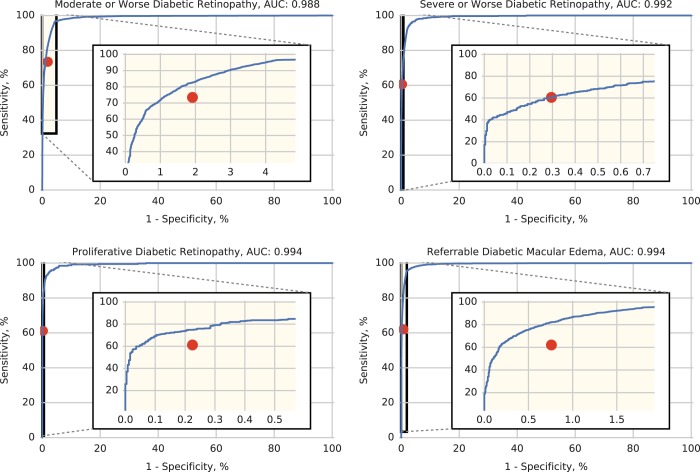
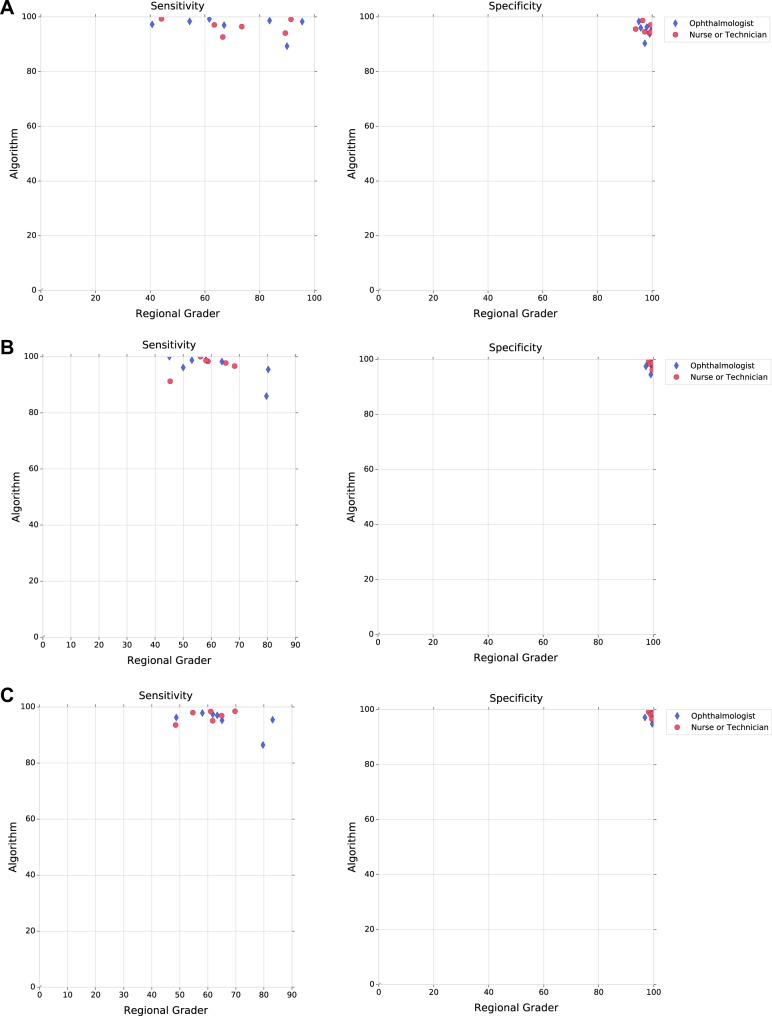
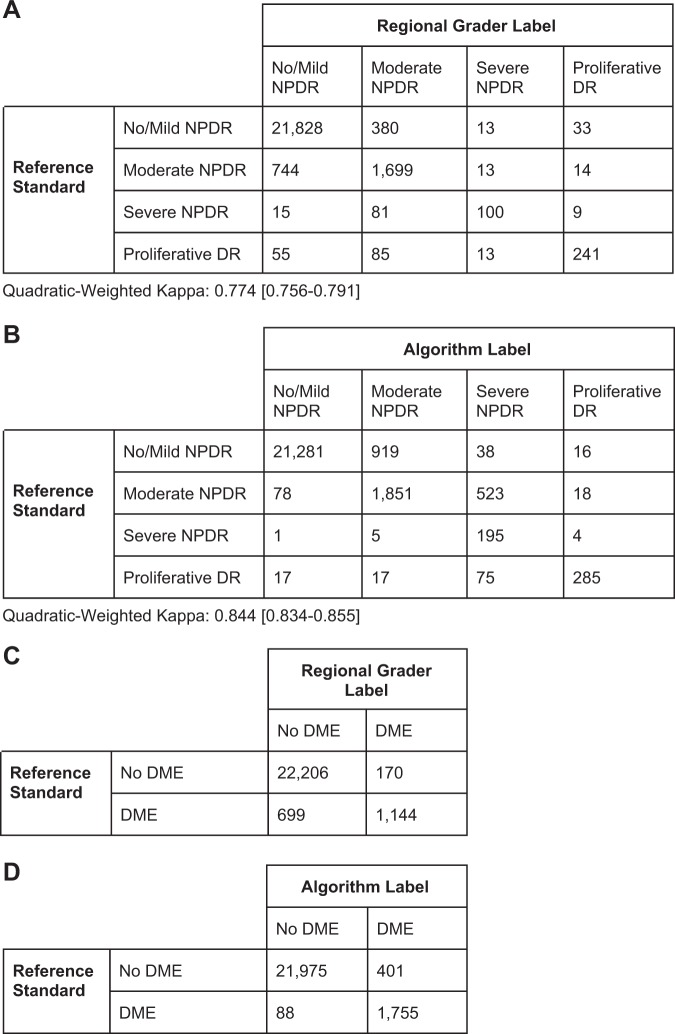
Deep learning algorithms have been used to detect diabetic retinopathy (DR) with specialist-level accuracy. This study aims to validate one such algorithm on a large-scale clinical population, and compare the algorithm performance with that of human graders. A total of 25,326 gradable retinal images of patients with diabetes from the community-based, nationwide screening program of DR in Thailand were analyzed for DR severity and referable diabetic macular edema (DME). Grades adjudicated by a panel of international retinal specialists served as the reference standard. Relative to human graders, for detecting referable DR (moderate NPDR or worse), the deep learning algorithm had significantly higher sensitivity (0.97 vs. 0.74, p < 0.001), and a slightly lower specificity (0.96 vs. 0.98, p < 0.001). Higher sensitivity of the algorithm was also observed for each of the categories of severe or worse NPDR, PDR, and DME ( p < 0.001 for all comparisons). The quadratic-weighted kappa for determination of DR severity levels by the algorithm and human graders was 0.85 and 0.78 respectively ( p < 0.001 for the difference). Across different severity levels of DR for determining referable disease, deep learning significantly reduced the false negative rate (by 23%) at the cost of slightly higher false positive rates (2%). Deep learning algorithms may serve as a valuable tool for DR screening.
Overview
The claims and statistics of this paper haven’t been checked yet.
Free: it reads the open-access text and checks the first 5 claims that cite a source we can check. Create a free account to check every claim.
Integrity signals
Registry
Cites
Statistics
Figures
Verification
Claims the paper makes
The claims and statistics of this paper haven’t been checked yet.
Free: it reads the open-access text and checks the first 5 claims that cite a source we can check. Create a free account to check every claim.
Claims other papers make about this one
Each is checked against this paper’s own text: does it say what the citing paper says it does?
The cited source says what the claim attributes to it.
In the citing paper
“Twenty-five studies17,28,29,35,37,39,40,44–61 compared algorithm performance against healthcare professionals.”
From Diagnostic accuracy of deep learning in medical imaging: a systematic review and meta-analysis (2021) · cites this paper as [39]
In the citing paper
“CNNs consistently demonstrate physician-level grading from fundus photographs [104][105][106][107] , which has led to a recent US FDA-cleared system 108 .”
From Deep learning-enabled medical computer vision (2021) · cites this paper as [105]
Self-check
Percentages, sums and reported differences re-computed from the paper’s own numbers.
The self-check needs the paper’s full text.
Citations
Cites
Gulshan, V., Peng, L., Coram, M., Stumpe, M. C., Wu, D., Narayanaswamy, A., Venugopalan, S., Widner, K., Madams, T., Cuadros, J., et al. (2016) · JAMA · doi:10.1001/jama.2016.17216 · Cited by 7,697
Self-citationInception-v4, Inception-ResNet and the Impact of Residual Connections on Learning
Szegedy, C., Ioffe, S., Vanhoucke, V., & Alemi, A. (2017) · Proceedings of the AAAI Conference on Artificial Intelligence · doi:10.1609/aaai.v31i1.11231 · Cited by 4,636
Ting, D. S. W., Cheung, C. Y.-L., Lim, G., Tan, G. S. W., Quang, N. D., Gan, A., Hamzah, H., Garcia-Franco, R., San Yeo, I. Y., Lee, S. Y., et al. (2017) · JAMA · doi:10.1001/jama.2017.18152 · Cited by 2,402
Guidelines on Diabetic Eye Care
Wong, T. Y., Sun, J., Kawasaki, R., Ruamviboonsuk, P., Gupta, N., Lansingh, V. C., Maia, M., Mathenge, W., Moreker, S., Muqit, M. M. K., et al. (2018) · Ophthalmology · doi:10.1016/j.ophtha.2018.04.007 · Cited by 839
Self-citationKrause, J., Gulshan, V., Rahimy, E., Karth, P., Widner, K., Corrado, G. S., Peng, L., & Webster, D. R. (2018) · Ophthalmology · doi:10.1016/j.ophtha.2018.01.034 · Cited by 564
Self-citationVirgili, G., Menchini, F., Casazza, G., Hogg, R., Das, R. R., Wang, X., & Michelessi, M. (2015) · Cochrane Database of Systematic Reviews · doi:10.1002/14651858.cd008081.pub3 · Cited by 265 · cited 1×
“be ideal.(22) Lastly, DR screening programs generally also refer patients at high suspicion for other non-DR eye diseases such as AMD or glaucoma.”
BackgroundCost-effectiveness of a National Telemedicine Diabetic Retinopathy Screening Program in Singapore
Nguyen, H. V., Tan, G. S. W., Tapp, R. J., Mital, S., Ting, D. S. W., Wong, H. T., Tan, C. S., Laude, A., Tai, E. S., Tan, N. C., et al. (2016) · Ophthalmology · doi:10.1016/j.ophtha.2016.08.021 · Cited by 218
Bresnick, G. H., Mukamel, D. B., Dickinson, J. C., & Cole, D. R. (2000) · Ophthalmology · doi:10.1016/s0161-6420(99)00010-x · Cited by 163
Telehealth Practice Recommendations for Diabetic Retinopathy, Second Edition
Li, H. K., Horton, M., Bursell, S.-E., Cavallerano, J., Zimmer-Galler, I., Tennant, M., Abramoff, M., Chaum, E., DeBuc, D. C., Leonard-Martin, T., et al. (2011) · Telemedicine and e-Health · doi:10.1089/tmj.2011.0075 · Cited by 121
Diabetic retinopathy management guidelines
Chakrabarti, R., Harper, C. A., & Keeffe, J. E. (2012) · Expert Review of Ophthalmology · doi:10.1586/eop.12.52 · Cited by 112
Research works printed but not linked: 1
- Jenchitr, W. et al. The national survey of blindness low vision and visual impairment in thailand 2006-2007. Thai. J. Pub. Hlth. Ophthalmol. 21, 10 (2007).
Cited by
Liu, X., Faes, L., Kale, A. U., Wagner, S. K., Fu, D. J., Bruynseels, A., Mahendiran, T., Moraes, G., Shamdas, M., Kern, C., et al. (2019) · The Lancet Digital Health · doi:10.1016/s2589-7500(19)30123-2 · Cited by 1,883
Artificial intelligence in healthcare: transforming the practice of medicine
Bajwa, J., Munir, U., Nori, A., & Williams, B. (2021) · Future Healthcare Journal · doi:10.7861/fhj.2021-0095 · Cited by 1,856
Artificial intelligence and deep learning in ophthalmology
Ting, D. S. W., Pasquale, L. R., Peng, L., Campbell, J. P., Lee, A. Y., Raman, R., Tan, G. S. W., Schmetterer, L., Keane, P. A., & Wong, T. Y. (2019) · British Journal of Ophthalmology · doi:10.1136/bjophthalmol-2018-313173 · Cited by 1,554
Self-citationArtificial Intelligence and Deep Learning in Ophthalmology
Wang, Z., Keane, P. A., Chiang, M., Cheung, C. Y., Wong, T. Y., & Ting, D. S. W. (2022) · Artificial Intelligence in Medicine · doi:10.1007/978-3-030-64573-1_200 · Cited by 1,524
Self-citationDeep learning-enabled medical computer vision
Esteva, A., Chou, K., Yeung, S., Naik, N., Madani, A., Mottaghi, A., Liu, Y., Topol, E., Dean, J., & Socher, R. (2021) · npj Digital Medicine · doi:10.1038/s41746-020-00376-2 · Cited by 1,406
Diagnostic accuracy of deep learning in medical imaging: a systematic review and meta-analysis
Aggarwal, R., Sounderajah, V., Martin, G., Ting, D. S. W., Karthikesalingam, A., King, D., Ashrafian, H., & Darzi, A. (2021) · npj Digital Medicine · doi:10.1038/s41746-021-00438-z · Cited by 946
Digital technology, tele-medicine and artificial intelligence in ophthalmology: A global perspective
Li, J.-P. O., Liu, H., Ting, D. S. J., Jeon, S., Chan, R. V. P., Kim, J. E., Sim, D. A., Thomas, P. B. M., Lin, H., Chen, Y., et al. (2021) · Progress in Retinal and Eye Research · doi:10.1016/j.preteyeres.2020.100900 · Cited by 626
“…screening and diagnosis of common vision-threatening diseases, including diabetic retinopathy (DR) (Abramoff et al., 2016; Gulshan et al., 2016; Raumviboonsuk et al., 2019; Ting et al., 2017), glaucoma (Liu et al., 2019; Li et al., 2018; Masumoto et al., 2018a; Asaoka et al., 2016),…”
Beede, E., Baylor, E., Hersch, F., Iurchenko, A., Wilcox, L., Ruamviboonsuk, P., & Vardoulakis, L. M. (2020) · Proceedings of the 2020 CHI Conference on Human Factors in Computing Systems · doi:10.1145/3313831.3376718 · Cited by 614
Self-citationDeep learning in ophthalmology: The technical and clinical considerations
Ting, D. S. W., Peng, L., Varadarajan, A. V., Keane, P. A., Burlina, P. M., Chiang, M. F., Schmetterer, L., Pasquale, L. R., Bressler, N. M., Webster, D. R., et al. (2019) · Progress in Retinal and Eye Research · doi:10.1016/j.preteyeres.2019.04.003 · Cited by 534
Self-citationHow to Read Articles That Use Machine Learning: Users’ Guides to the Medical Literature
Liu, Y., Chen, P.-H. C., Krause, J., & Peng, L. (2019) · JAMA · doi:10.1001/jama.2019.16489 · Cited by 516
Self-citationArtificial intelligence for diabetic retinopathy screening: a review
Grzybowski, A., Brona, P., Lim, G., Ruamviboonsuk, P., Tan, G. S. W., Abramoff, M., & Ting, D. S. W. (2020) · Eye · doi:10.1038/s41433-019-0566-0 · Cited by 376
“In addition, this study used adjudication gradings among international retinal specialists from Thailand, India, and the United States as the reference standard.”
MethodSelf-citationDeep learning for diabetic retinopathy detection and classification based on fundus images: A review
Tsiknakis, N., Theodoropoulos, D., Manikis, G., Ktistakis, E., Boutsora, O., Berto, A., Scarpa, F., Scarpa, A., Fotiadis, D. I., & Marias, K. (2021) · Computers in Biology and Medicine · doi:10.1016/j.compbiomed.2021.104599 · Cited by 328
Xie, Y., Nguyen, Q. D., Hamzah, H., Lim, G., Bellemo, V., Gunasekeran, D. V., Yip, M. Y. T., Qi Lee, X., Hsu, W., Li Lee, M., et al. (2020) · The Lancet Digital Health · doi:10.1016/s2589-7500(20)30060-1 · Cited by 288
Machine learning in clinical decision making
Adlung, L., Cohen, Y., Mor, U., & Elinav, E. (2021) · Med · doi:10.1016/j.medj.2021.04.006 · Cited by 282
Predicting the risk of developing diabetic retinopathy using deep learning
Bora, A., Balasubramanian, S., Babenko, B., Virmani, S., Venugopalan, S., Mitani, A., de Oliveira Marinho, G., Cuadros, J., Ruamviboonsuk, P., Corrado, G. S., et al. (2021) · The Lancet Digital Health · doi:10.1016/s2589-7500(20)30250-8 · Cited by 270
Self-citationDeep Learning for Diabetes: A Systematic Review
Zhu, T., Li, K., Herrero, P., & Georgiou, P. (2021) · IEEE Journal of Biomedical and Health Informatics · doi:10.1109/jbhi.2020.3040225 · Cited by 264
“Ruamviboonsuk et al. conducted a nationwide experiment to validate an Inception-based model [99].”
BackgroundApplications of artificial intelligence in dentistry: A comprehensive review
Carrillo‐Perez, F., Pecho, O. E., Morales, J. C., Paravina, R. D., Della Bona, A., Ghinea, R., Pulgar, R., Pérez, M. D. M., & Herrera, L. J. (2022) · Journal of Esthetic and Restorative Dentistry · doi:10.1111/jerd.12844 · Cited by 251
Ruamviboonsuk, P., Tiwari, R., Sayres, R., Nganthavee, V., Hemarat, K., Kongprayoon, A., Raman, R., Levinstein, B., Liu, Y., Schaekermann, M., et al. (2022) · The Lancet Digital Health · doi:10.1016/s2589-7500(22)00017-6 · Cited by 250
Self-citationArtificial intelligence for precision medicine in neurodevelopmental disorders
Uddin, M., Wang, Y., & Woodbury-Smith, M. (2019) · npj Digital Medicine · doi:10.1038/s41746-019-0191-0 · Cited by 248
Wenderott, K., Krups, J., Zaruchas, F., & Weigl, M. (2024) · npj Digital Medicine · doi:10.1038/s41746-024-01248-9 · Cited by 201
Rajesh, A. E., Davidson, O. Q., Lee, C. S., & Lee, A. Y. (2023) · Diabetes Care · doi:10.2337/dci23-0032 · Cited by 150
Artificial Intelligence Screening for Diabetic Retinopathy: the Real-World Emerging Application
Bellemo, V., Lim, G., Rim, T. H., Tan, G. S. W., Cheung, C. Y., Sadda, S., He, M.-G., Tufail, A., Lee, M. L., Hsu, W., et al. (2019) · Current Diabetes Reports · doi:10.1007/s11892-019-1189-3 · Cited by 176
Transfer Learning based Detection of Diabetic Retinopathy from Small DatasetPreprint
Hagos, M. T., & Kant, S. (2019) · arXiv (Cornell University) · doi:10.48550/arxiv.1905.07203 · Cited by 169
Sungheetha, A., & Sharma R, R. (2021) · Journal of Trends in Computer Science and Smart Technology · doi:10.36548/jtcsst.2021.2.002 · Cited by 168
“The image of diabetes in the retinal fundus is commonly found [3, 4].”
BackgroundArtificial intelligence for diabetic retinopathy screening, prediction and management
Gunasekeran, D. V., Ting, D. S. W., Tan, G. S. W., & Wong, T. Y. (2020) · Current Opinion in Ophthalmology · doi:10.1097/icu.0000000000000693 · Cited by 133
“2019 [43] Inception-V4 1665151 Images EyePACS-2: 1958 images 98.”
A survey on medical image analysis in diabetic retinopathy
Stolte, S. E., & Fang, R. (2020) · Medical Image Analysis · doi:10.1016/j.media.2020.101742 · Cited by 143
Nadeem, M. W., Goh, H. G., Hussain, M., Liew, S., Andonović, I., & Khan, M. A. (2022) · Sensors · doi:10.3390/s22186780 · Cited by 141
“[”
Assertiveness-based Agent Communication for a Personalized Medicine on Medical Imaging Diagnosis
Calisto, F. M., Fernandes, J., Morais, M., Santiago, C., Abrantes, J. M., Nunes, N., & Nascimento, J. C. (2023) · Proceedings of the 2023 CHI Conference on Human Factors in Computing Systems · doi:10.1145/3544548.3580682 · Cited by 93
“performance in several clinical domains [26, 45, 88, 107].”
ResNet Based Deep Features and Random Forest Classifier for Diabetic Retinopathy Detection
Yaqoob, M. K., Ali, S. F., Bilal, M., Hanif, M. S., & Al-Saggaf, U. M. (2021) · Sensors · doi:10.3390/s21113883 · Cited by 136
“In 2019, Raumviboonsuk et al. compared how the deep learning algorithm Inception-v4 performed against human graders in Thailand [37].”
ResultZhang, Y., Shi, J., Peng, Y., Zhao, Z., Zheng, Q., Wang, Z., Liu, K., Jiao, S., Qiu, K., Zhou, Z., et al. (2020) · BMJ Open Diabetes Research & Care · doi:10.1136/bmjdrc-2020-001596 · Cited by 109
“23 However, the evidence to confirm the clinical value of DL for DR screening in large-scale healthcare settings is insufficient and most studies have been performed on high-quality image datasets that could hardly represent the variety of image quality and other operational limitations of…”
BackgroundDvijotham, K., Winkens, J., Barsbey, M., Ghaisas, S., Stanforth, R., Pawlowski, N., Strachan, P., Ahmed, Z., Azizi, S., Bachrach, Y., et al. (2023) · Nature Medicine · doi:10.1038/s41591-023-02437-x · Cited by 120
Self-citationAntes, A. L., Burrous, S., Sisk, B. A., Schuelke, M. J., Keune, J. D., & DuBois, J. M. (2021) · BMC Medical Informatics and Decision Making · doi:10.1186/s12911-021-01586-8 · Cited by 99
Analysis of Raman Spectra by Using Deep Learning Methods in the Identification of Marine Pathogens
Yu, S., Li, X., Lu, W., Li, H., Fu, Y. V., & Liu, F. (2021) · Analytical Chemistry · doi:10.1021/acs.analchem.1c00431 · Cited by 113
Salwei, M. E., & Carayon, P. (2022) · Journal of Cognitive Engineering and Decision Making · doi:10.1177/15553434221097357 · Cited by 112
“For instance, AI-based clinical decision support (CDS) technologies have been developed for the diagnosis of der-matological diseases (Pangti et al., 2021) and diabetic retinopathy (Ruamviboonsuk et al., 2019).”
BackgroundMethodWu, J.-H., Liu, T. Y. A., Hsu, W.-T., Ho, J. H.-C., & Lee, C.-C. (2021) · Journal of Medical Internet Research · doi:10.2196/23863 · Cited by 108
“The third stage of the literature search was performed in June 2020, and 28 out of 651 studies were retrieved after literature selection [47-74], resulting in a total of 60 (N=32+28) included studies for final analysis.”
BackgroundRyu, G., Lee, K., Park, D., Park, S. H., & Sagong, M. (2021) · Scientific Reports · doi:10.1038/s41598-021-02479-6 · Cited by 87
“In this study, a deep CNN algorithm using OCTA achieved comparable accuracy to previous CNN-based DR grading algorithms using fundus photographs with less than 250 samples 11–15 .”
MethodGonzález-Gonzalo, C., Thee, E. F., Klaver, C. C. W., Lee, A. Y., Schlingemann, R. O., Tufail, A., Verbraak, F., & Sánchez, C. I. (2022) · Progress in Retinal and Eye Research · doi:10.1016/j.preteyeres.2021.101034 · Cited by 103
“A large observer study by Ruamviboonsuk et al. (2019) applied a protocol where observers were only assigned images from their own region, which allowed to evaluate the robustness of an AI system in different regions in Thailand.”
“Who goes first? Influences of human-AI workflow on decision making in clinical imaging,”
Fogliato, R., Chappidi, S., Lungren, M., Fisher, P., Wilson, D., Fitzke, M., Parkinson, M., Horvitz, E., Inkpen, K., & Nushi, B. (2022) · 2022 ACM Conference on Fairness Accountability and Transparency · doi:10.1145/3531146.3533193 · Cited by 103
“The hope is that these tools will produce sizable gains in efficiency of human decision-making processes [5, 52, 55, 57, 64, 75, 88].”
BackgroundCustom Hardware Architectures for Deep Learning on Portable Devices: A Review
Zaman, K. S., Reaz, M. B. I., Ali, S. H. M., Bakar, A. A. A., & Chowdhury, M. E. H. (2021) · IEEE Transactions on Neural Networks and Learning Systems · doi:10.1109/tnnls.2021.3082304 · Cited by 103
Holmberg, O. G., Köhler, N. D., Martins, T., Siedlecki, J., Herold, T., Keidel, L., Asani, B., Schiefelbein, J., Priglinger, S., Kortuem, K. U., et al. (2020) · Nature Machine Intelligence · doi:10.1038/s42256-020-00247-1 · Cited by 88
Grzybowski, A. E., Singhanetr, P., Nanegrungsunk, O., & Ruamviboonsuk, P. (2023) · Ophthalmology and Therapy · doi:10.1007/s40123-023-00691-3 · Cited by 98
“[31].”
Self-citationLim, G., Bellemo, V., Xie, Y., Lee, X. Q., Yip, M. Y. T., & Ting, D. S. W. (2020) · Eye and Vision · doi:10.1186/s40662-020-00182-7 · Cited by 96
Deployment of Artificial Intelligence in Real-World Practice: Opportunity and Challenge
He, M., Li, Z., Liu, C., Shi, D., & Tan, Z. (2020) · Asia-Pacific Journal of Ophthalmology · doi:10.1097/apo.0000000000000301 · Cited by 75
“These are comparable, if not better than, trained human graders where unanimous consensus grading by specialist experts was set as the benchmark.(43) Second, almost all the studies used CNNs that are publicly available.”
ResultSisk, B. A., Antes, A. L., Burrous, S., & DuBois, J. M. (2020) · Children · doi:10.3390/children7090145 · Cited by 70
Grzybowski, A., & Brona, P. (2021) · Journal of Clinical Medicine · doi:10.3390/jcm10112352 · Cited by 66
“The introduction of machine-learning techniques, even for already established lesion-based screening systems, allowed for greater accuracy [5,10].”
BackgroundPredicting risk of late age-related macular degeneration using deep learning
Peng, Y., Keenan, T. D. L., Chen, Q., Agrón, E., Allot, A., Wong, W. T., Chew, E. Y., & Lu, Z. (2020) · npj Digital Medicine · doi:10.1038/s41746-020-00317-z · Cited by 87
Understanding inherent image features in CNN-based assessment of diabetic retinopathy
Reguant, R., Brunak, S., & Saha, S. (2021) · Scientific Reports · doi:10.1038/s41598-021-89225-0 · Cited by 88
Artificial intelligence to classify ear disease from otoscopy: A systematic review and meta‐analysis
Habib, A.-R. R., Kajbafzadeh, M., Hasan, Z., Wong, E. H., Gunasekera, H., Perry, C., Sacks, R., Kumar, A., & Singh, N. P. (2022) · Clinical Otolaryngology · doi:10.1111/coa.13925 · Cited by 87
Using generative AI to investigate medical imagery models and datasets
Lang, O., Stupp, D., Traynis, I., Cole-Lewis, H. J., Bennett, C. R., Lyles, C. R., Lau, C., Irani, M., Semturs, C., Webster, D. R., et al. (2024) · EBioMedicine · doi:10.1016/j.ebiom.2024.105075 · Cited by 79
Self-citationIlan, Y. (2020) · Frontiers in Digital Health · doi:10.3389/fdgth.2020.569178 · Cited by 77
Lessons learned from translating AI from development to deployment in healthcare
Widner, K., Virmani, S., Krause, J., Nayar, J., Tiwari, R., Pedersen, E. R., Jeji, D., Hammel, N., Matias, Y., Corrado, G. S., et al. (2023) · Nature Medicine · doi:10.1038/s41591-023-02293-9 · Cited by 75
Self-citationCleland, C. R., Rwiza, J., Evans, J. R., Gordon, I., Macleod, D., Burton, M. J., & Bascarán, C. (2023) · BMJ Open Diabetes Research & Care · doi:10.1136/bmjdrc-2023-003424 · Cited by 75
Klement, W., & El Emam, K. (2023) · Journal of Medical Internet Research · doi:10.2196/48763 · Cited by 59
Dolar-Szczasny, J., Barańska, A., & Ręjdak, R. (2023) · Journal of Clinical Medicine · doi:10.3390/jcm12093161 · Cited by 72
“DL is a sub-branch of machine learning (ML), and its real-world applications to ophthalmic images, for instance visual fields and digital fundus photography, have been documented for automated screening of glaucoma [79], DR [80], retinopathy of prematurity (ROP) [81], and age-related macular degeneration (AMD) [82] wi…”
BackgroundImpact of Artificial Intelligence on Medical Education in Ophthalmology
Valikodath, N. G., Cole, E., Ting, D. S. W., Campbell, J. P., Pasquale, L. R., Chiang, M. F., Chan, R. V. P., & on behalf of the American Academy of Ophthalmology Task Force on Artificial Intelligence (2021) · Translational Vision Science & Technology · doi:10.1167/tvst.10.7.14 · Cited by 59
Deep Learning to Detect OCT-derived Diabetic Macular Edema from Color Retinal Photographs
Liu, X., Ali, T. K., Singh, P., Shah, A., McKinney, S. M., Ruamviboonsuk, P., Turner, A. W., Keane, P. A., Chotcomwongse, P., Nganthavee, V., et al. (2022) · Ophthalmology Retina · doi:10.1016/j.oret.2021.12.021 · Cited by 72
Self-citationUncertainty-Aware Deep Learning Methods for Robust Diabetic Retinopathy Classification
Jaskari, J., Sahlsten, J., Damoulas, T., Knoblauch, J., Särkkä, S., Kärkkäinen, L., Hietala, K., & Kaski, K. K. (2022) · IEEE Access · doi:10.1109/access.2022.3192024 · Cited by 70
A novel approach for intelligent diagnosis and grading of diabetic retinopathy
Hai, Z., Zou, B., Xiao, X., Peng, Q., Yan, J., Zhang, W., & Yue, K. (2024) · Computers in Biology and Medicine · doi:10.1016/j.compbiomed.2024.108246 · Cited by 64
Multimodal imaging in diabetic retinopathy and macular edema: An update about biomarkers
Parravano, M., Cennamo, G., Antonio, L. D., Grassi, M. O., Lupidi, M., Rispoli, M., Savastano, M. C., Veritti, D., & Vujosevic, S. (2024) · Survey of Ophthalmology · doi:10.1016/j.survophthal.2024.06.006 · Cited by 63
Farooq, M. S., Arooj, A., Alroobaea, R., Baqasah, A. M., Jabarulla, M. Y., Singh, D., & Sardar, R. (2022) · Sensors · doi:10.3390/s22051803 · Cited by 61
Xie, Y., Gunasekeran, D. V., Balaskas, K., Keane, P. A., Sim, D. A., Bachmann, L. M., Macrae, C., & Ting, D. S. W. (2020) · Translational Vision Science & Technology · doi:10.1167/tvst.9.2.22 · Cited by 59
Updates in deep learning research in ophthalmology
Ng, W. Y., Zhang, S., Wang, Z., Ong, C., Gunasekeran, D. V., Lim, G. Y. S., Zheng, F., Tan, S. C. Y., Tan, G. S. W., Rim, T. H., et al. (2021) · Clinical Science · doi:10.1042/cs20210207 · Cited by 56
Gao, Z., Jin, K., Yan, Y., Liu, X., Shi, Y., Ge, Y., Pan, X., Lu, Y., Wu, J., Wang, Y., et al. (2022) · Graefe s Archive for Clinical and Experimental Ophthalmology · doi:10.1007/s00417-021-05503-7 · Cited by 53
“Their study involved one of the largest clinical validations of a deep learning algorithm [35].”
BackgroundWewetzer, L., Held, L. A., & Steinhäuser, J. (2021) · PLoS ONE · doi:10.1371/journal.pone.0255034 · Cited by 52
Calisto, F. M., Abrantes, J. M., Santiago, C., Nunes, N. J., & Nascimento, J. C. (2025) · International Journal of Human-Computer Studies · doi:10.1016/j.ijhcs.2025.103444 · Cited by 40
Srisubat, A., Kittrongsiri, K., Sangroongruangsri, S., Khemvaranan, C., Shreibati, J. B., Ching, J., Hernandez, J., Tiwari, R., Hersch, F. B., Liu, Y., et al. (2023) · Ophthalmology and Therapy · doi:10.1007/s40123-023-00688-y · Cited by 52
“Using a dataset of [ 10,000 CFPs from those in the Thai diabetes registry, we found the model to have a high sensitivity (0.97) and specificity (0.96) for the detection of referrable DR [6].”
MethodInfluentialSelf-citationLeveraging physiology and artificial intelligence to deliver advancements in health care
Zhang, A., Wu, Z., Wu, E., Wu, M. A., Snyder, M. P., Zou, J., & Wu, J. C. (2023) · Physiological Reviews · doi:10.1152/physrev.00033.2022 · Cited by 51
Deep learning‐based detection and stage grading for optimising diagnosis of diabetic retinopathy
Wang, Y., Yu, M., Hu, B., Jin, X., Li, Y., Zhang, X., Zhang, Y., Gong, D., Wu, C., Zhang, B., et al. (2021) · Diabetes/Metabolism Research and Reviews · doi:10.1002/dmrr.3445 · Cited by 43
Hu, W., Yii, F. S. L., Chen, R., Zhang, X., Shang, X., Kiburg, K., Woods, E., Vingrys, A. J., Zhang, L., Zhu, Z., et al. (2023) · Translational Vision Science & Technology · doi:10.1167/tvst.12.7.14 · Cited by 47
“15 With all these resources, it is an emerging area of research to investigate the application of DL to predict the risk of CVD using retinal images.”
Hopkins, J. J., Keane, P. A., & Balaskas, K. (2020) · Current Opinion in Ophthalmology · doi:10.1097/icu.0000000000000677 · Cited by 42
“Although recent advances in artificial intelli-gence-enabled health care in retinal disease have been rapid, with some demonstrating clinical and real-world applicability [5 && ,6], several hurdles has not yet led to patient benefits at scale.”
BackgroundOphthalmology Going Greener: A Narrative Review
Wong, Y. L., Noor, M., James, K. L., & Aslam, T. M. (2021) · Ophthalmology and Therapy · doi:10.1007/s40123-021-00404-8 · Cited by 41
Artificial intelligence for early detection of diabetes mellitus complications via retinal imaging
Sobhi, N., Sadeghi-Bazargani, Y., Mirzaei, M., Abdollahi, M., Jafarizadeh, A., Pedrammehr, S., Alizadehsani, R., Tan, R.-S., Islam, S. M. S., & Acharya, U. R. (2025) · Journal of Diabetes & Metabolic Disorders · doi:10.1007/s40200-025-01596-7 · Cited by 39
Impact and Trends in Global Ophthalmology
Williams, L. B., Prakalapakorn, S. G., Ansari, Z., & Goldhardt, R. (2020) · Current Ophthalmology Reports · doi:10.1007/s40135-020-00245-x · Cited by 38
“In the Thailand study, the AI system was better or equal to regional graders for severe or worse non-proliferative diabetic retinopathy [23].”
BackgroundAutomated diabetic retinopathy severity grading using novel DR-ResNet + deep learning model
Baba, S. M., Bala, I., Dhiman, G., Sharma, A., & Viriyasitavat, W. (2024) · Multimedia Tools and Applications · doi:10.1007/s11042-024-18434-2 · Cited by 39
Sujan, M. A., Pickup, L., Bowie, P., Hignett, S. M., Ives, F., Vosper, H., & Rashid, N. (2021) · Future Healthcare Journal · doi:10.7861/fhj.2021-0112 · Cited by 37
Artificial Intelligence in Ophthalmology: Evolutions in Asia
Ruamviboonsuk, P., Cheung, C. Y.-L., Zhang, X., Raman, R., Park, S. J., & Ting, D. S. W. (2020) · Asia-Pacific Journal of Ophthalmology · doi:10.1097/01.apo.0000656980.41190.bf · Cited by 37
Self-citationPour, E. K., Rezaee, K., Azimi, H., Mirshahvalad, S. A., Jafari, B., Fadakar, K., Faghihi, H., Mirshahi, A., Ghassemi, F., Ebrahimiadib, N., et al. (2022) · Graefe s Archive for Clinical and Experimental Ophthalmology · doi:10.1007/s00417-022-05818-z · Cited by 37
Zhelev, Z., Peters, J., Rogers, M., Allen, M. J., Kijauskaite, G., Seedat, F., Wilkinson, E. C., & Hyde, C. (2023) · Journal of Medical Screening · doi:10.1177/09691413221144382 · Cited by 39
“33 Across all studies ARIASs had higher sensitivity but lower speci fi city for RDR.”
BackgroundDoğan, M. E., Bilgin, A. B., Sarı, R., Akar, Y., Bulut, M., Aydemir, M., & Karaçorlu, M. (2024) · Eye · doi:10.1038/s41433-024-03000-9 · Cited by 37
“[16])).”
Yoo, T. K., Ryu, I. H., Kim, J. K., Lee, I. S., Kim, J. S., Kim, H. K., & Choi, J. Y. (2020) · Computer Methods and Programs in Biomedicine · doi:10.1016/j.cmpb.2020.105761 · Cited by 36
Accelerating ophthalmic artificial intelligence research: the role of an open access data repository
Kras, A., Celi, L. A., & Miller, J. B. (2020) · Current Opinion in Ophthalmology · doi:10.1097/icu.0000000000000678 · Cited by 35
Ullah, N., Mohmand, M. I., Ullah, K., Gismalla, M. S. M., Ali, L., Khan, S. U., & Ullah, N. (2022) · Wireless Communications and Mobile Computing · doi:10.1155/2022/7095528 · Cited by 35
“In [20], the authors compared the Inception V4 deep learning system’s performance to human graders.”
BackgroundHeld, L. A., Wewetzer, L., & Steinhäuser, J. (2022) · Health Informatics Journal · doi:10.1177/14604582221112816 · Cited by 34
“20 Especially in a screening situation, the sensitivity and prevalence are important because it determines the degree of false negative results.”
BackgroundWanichwecharungruang, B., Kaothanthong, N., Pattanapongpaiboon, W., Chantangphol, P., Seresirikachorn, K., Srisuwanporn, C., Parivisutt, N., Grzybowski, A. E., Theeramunkong, T., & Ruamviboonsuk, P. (2021) · Translational Vision Science & Technology · doi:10.1167/tvst.10.1.7 · Cited by 33
Self-citationRecent trends and techniques of blood glucose level prediction for diabetes control
Ahmed, B. M., Ali, M. E., Masud, M. M., & Naznin, M. (2024) · Smart Health · doi:10.1016/j.smhl.2024.100457 · Cited by 34
Riotto, E., Gasser, S., Potić, J., Sherif, M. M., Stappler, T., Schlingemann, R. O., Wolfensberger, T. J., & Konstantinidis, L. (2024) · Journal of Clinical Medicine · doi:10.3390/jcm13164776 · Cited by 32
“The IDX-DR machine represents a cutting-edge diagnostic tool that combines advanced imaging techniques, AI algorithms, and deep learning methodologies to identify and classify diabetic retinopathy [3–5].”
MethodKatada, Y., Ozawa, N., Masayoshi, K., Ofuji, Y., Tsubota, K., & Kurihara, T. (2020) · Intelligence-Based Medicine · doi:10.1016/j.ibmed.2020.100024 · Cited by 35
Ryu, G., Lee, K., Park, D.-G., Kim, I., Park, S. H., & Sagong, M. (2022) · Translational Vision Science & Technology · doi:10.1167/tvst.11.2.39 · Cited by 32
Noriega-Campero, A., Meizner, D., Camacho‐García‐Formentí, D., Enciso, J., Quiroz-Mercado, H., Morales-Cantón, V., Almaatouq, A., & Pentland, A. (2021) · JMIR Formative Research · doi:10.2196/25290 · Cited by 30
“However, it has been shown that acceptance of the human factors involved in the field processes are critical for the effective implementation of screening systems [42,43].”
BackgroundArtificial Intelligence and Deep Learning in Ophthalmology
Wang, Z., Keane, P. A., Chiang, M. F., Cheung, C. Y.-L., Wong, T. Y., & Ting, D. S. W. (2021) · Springer eBooks · doi:10.1007/978-3-030-58080-3_200-1 · Cited by 32
Computer aided diagnosis of diabetic macular edema in retinal fundus and OCT images: A review
Chakrapani, P. K., Kumar, P., Geetha, M. K., & Bhandary, S. V. (2023) · Journal of Applied Biomedicine · doi:10.1016/j.bbe.2022.12.005 · Cited by 30
Rodríguez, A., Arruabarrena, C., Allendes, G., Olivera, M., Zarranz‐Ventura, J., & Teus, M. A. (2024) · Scientific Reports · doi:10.1038/s41598-024-68489-2 · Cited by 29
Zhao, J., Lu, Y., Zhu, S., Li, K., Jiang, Q., & Yang, W. (2022) · Frontiers in Pharmacology · doi:10.3389/fphar.2022.930520 · Cited by 31
“For example, the collection of ophthalmic examination data from different races, countries, or regions (Bellemo et al., 2019; Raumviboonsuk et al., 2019; Al Turk et al., 2020).”
BackgroundExpert Discussions Improve Comprehension of Difficult Cases in Medical Image Assessment
Schaekermann, M., Cai, C. J., Huang, A. E., & Sayres, R. (2020) · Proceedings of the 2020 CHI Conference on Human Factors in Computing Systems · doi:10.1145/3313831.3376290 · Cited by 28
“A common way to produce these reference standards is to generate expensive gold standard consensus labels from panels of experts, rather than relying on noisy assessments from individual experts alone [16, 29, 30, 42].”
BackgroundSelf-citationWhat is the Optimal Attribution Method for Explainable Ophthalmic Disease Classification?
Singh, A., Sengupta, S., Balaji, J. J., Mohammed, A. R., Faruq, I., Jayakumar, V., Zelek, J., & Lakshminarayanan, V. (2020) · Lecture notes in computer science · doi:10.1007/978-3-030-63419-3_3 · Cited by 27
Chia, M. A., Hersch, F. B., Sayres, R., Bavishi, P., Tiwari, R., Keane, P. A., & Turner, A. W. (2023) · British Journal of Ophthalmology · doi:10.1136/bjo-2022-322237 · Cited by 28
Self-citationWang, T.-W., Luo, W.-T., Tu, Y.-K., Chou, Y.-B., & Wu, Y.-T. (2025) · npj Digital Medicine · doi:10.1038/s41746-025-02223-8 · Cited by 26
Mathews, M. R., & Anzar, S. M. (2021) · International Journal of Imaging Systems and Technology · doi:10.1002/ima.22574 · Cited by 24
“Studies undertaken in screening programs to evaluate the efficacy of these algorithms in assisting clinicians and their acceptability among patients 107 – 110 demonstrate the relevance of research on DR / DME grading.”
BackgroundThe impact of artificial intelligence in screening for diabetic retinopathy in India
Rajalakshmi, R. (2019) · Eye · doi:10.1038/s41433-019-0626-5 · Cited by 25
Kaur, J., & Kaur, P. (2022) · Concurrency and Computation Practice and Experience · doi:10.1002/cpe.7138 · Cited by 23
Metadata
- Authors
- Ruamviboonsuk, P., Krause, J., Chotcomwongse, P., Sayres, R., Raman, R., Widner, K., Campana, B. J. L., Phene, S., Hemarat, K., Tadarati, M., Silpa-Archa, S., Limwattanayingyong, J., Rao, C., Kuruvilla, O., Jung, J., Tan, J., Orprayoon, S., Kangwanwongpaisan, C., Sukumalpaiboon, R., Luengchaichawang, C., Fuangkaew, J., Kongsap, P., Chualinpha, L., Saree, S., Kawinpanitan, S., Mitvongsa, K., Lawanasakol, S., Thepchatri, C., Wongpichedchai, L., Corrado, G. S., Peng, L., & Webster, D. R.
- Affiliations
- Rajavithi Hospital (TH)
- Google (United States) (US)
- Sankara Nethralaya (IN)
- Vajira Hospital (TH)
- University of California, San Francisco (US)
- University of Southern California (US)
- Lamphun Hospital (TH)
- Somdejphrajaotaksin Maharaj Hospital (TH)
- Sawanpracharak Hospital (TH)
- Photharam Hospital (TH)
- Prapokklao Hospital (TH)
- Mahasarakham Hospital (TH)
- Suratthani Hospital (TH)
- Bangkok Metropolitan Administration (TH)
- Corresponding author
- Peng, Lily
- ORCID
- Venue
- npj Digital Medicine
- Published
- 2019-04-10
- Volume
- 2
- Issue
- 1
- Pages
- 25-25
- ISSN
- 2398-6352 (ISSN-L)
- PMC
- PMC6550283
- OpenAlex
- W2935900679
- Cited by
- 233
- References
- 21
- Citations by year
- 2026: 25 · 2025: 25 · 2024: 32 · 2023: 36 · 2022: 29 · 2021: 46 · 2020: 30 · 2019: 9
- FWCI
- 18.81
- Type
- journal article
- Language
- en
- Update notices
- correction (2019-07-23)
- Open access
- gold
- doi.org
- Licence
- cc-by
- creativecommons.org/licenses/by/4.0 (tdm)
- creativecommons.org/licenses/by/4.0 (vor)
- Locations
- npj Digital Medicine (publishedVersion, cc-by)
- Europe PMC (PubMed Central) (publishedVersion, cc-by)
- PubMed Central (publishedVersion, cc-by)
- PubMed (publishedVersion)
- DOAJ (DOAJ: Directory of Open Access Journals) (submittedVersion)
- Greater South Information System
- Topics
- Health Sciences › Medicine › Radiology, Nuclear Medicine and Imaging › Retinal Imaging and Analysis
- Health Sciences › Medicine › Ophthalmology › Retinal Diseases and Treatments
- Health Sciences › Medicine › Ophthalmology › Ophthalmology and Visual Health Research
- Keywords
- diabetic retinopathy, diabetic macular edema, deep learning, diabetic retinopathy grading, referable diabetic retinopathy, diabetic retinopathy screening, fundus images, sensitivity and specificity
About these checks
Registry, retraction, Cites and statistics results are computed, not judged, with one exception: a printed reference that no index lists is read once by a model before it counts as a citation error. Claims are extracted by a model and kept only when their quote appears verbatim in the text; each cited source is then checked, with a model’s help, for whether it says what the claim relies on. Those verdicts can be wrong — read the claim’s quote and the cited source before relying on one.
Statistics and arithmetic are recomputed, not judged.
Confidence bands are shown only for fields calibrated on our annotated test set. None is calibrated yet, so no band is shown.
What counts as a claim ›How we measure confidence ›How we check this ›
Are you an author, or do you see a problem with this page? Request a review
Data sources
Bibliographic data: Semantic Scholar, OpenAlex, Crossref.
Contains information from the Semantic Scholar Academic Graph Datasets, made available under the ODC Attribution License (ODC-BY 1.0).
Semantic Scholar’s data is described in: Kinney, R., et al. (2023). The Semantic Scholar Open Data Platform. arXiv:2301.10140.
