

The imperative for regulatory oversight of large language models (or generative AI) in healthcare
Open accessThe DOI matches its Crossref record; 16 of the 16 references it cites were found in a registry or an index.
Abstract
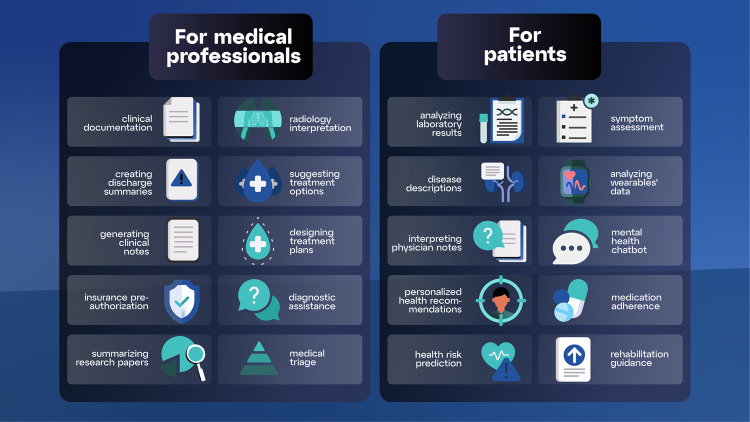
The rapid advancements in artificial intelligence (AI) have led to the development of sophisticated large language models (LLMs) such as GPT-4 and Bard. The potential implementation of LLMs in healthcare settings has already garnered considerable attention because of their diverse applications that include facilitating clinical documentation, obtaining insurance pre-authorization, summarizing research papers, or working as a chatbot to answer questions for patients about their specific data and concerns. While offering transformative potential, LLMs warrant a very cautious approach since these models are trained differently from AI-based medical technologies that are regulated already, especially within the critical context of caring for patients. The newest version, GPT-4, that was released in March, 2023, brings the potentials of this technology to support multiple medical tasks; and risks from mishandling results it provides to varying reliability to a new level. Besides being an advanced LLM, it will be able to read texts on images and analyze the context of those images. The regulation of GPT-4 and generative AI in medicine and healthcare without damaging their exciting and transformative potential is a timely and critical challenge to ensure safety, maintain ethical standards, and protect patient privacy. We argue that regulatory oversight should assure medical professionals and patients can use LLMs without causing harm or compromising their data or privacy. This paper summarizes our practical recommendations for what we can expect from regulators to bring this vision to reality.
Overview
The claims and statistics of this paper haven’t been checked yet.
Free: it reads the open-access text and checks the first 5 claims that cite a source we can check. Create a free account to check every claim.
Integrity signals
Registry
Cites
Statistics
Figures
Verification
Claims the paper makes
The claims and statistics of this paper haven’t been checked yet.
Free: it reads the open-access text and checks the first 5 claims that cite a source we can check. Create a free account to check every claim.
Claims other papers make about this one
Each is checked against this paper’s own text: does it say what the citing paper says it does?
The source backs part of the claim, not all of it — or backs it for a different population, condition or comparison.
In the citing paper
“the integration of AI and large language models (LLMs) into hospital EHR systems currently lacks a defined oversight framework (Table 1)2.”
From Preventing unrestricted and unmonitored AI experimentation in healthcare through transparency and accountability (2025) · cites this paper as [2]
Experimental — accuracy not yet measuredThe source backs part of the claim, not all of it — or backs it for a different population, condition or comparison.
In the citing paper
“The addition of large language models (LLM) into healthcare operations, including electronic health record (EHR) systems represents a transformative level of adoption and integration, changing how enterprise systems interact with algorithms; permitting the largely unconsented collection and utilization of previously unmined private data originating from the care of patients1,2.”
From Preventing unrestricted and unmonitored AI experimentation in healthcare through transparency and accountability (2025) · cites this paper as [2]
Experimental — accuracy not yet measuredThe source backs part of the claim, not all of it — or backs it for a different population, condition or comparison.
In the citing paper
“Given the unique risks faced by adolescents and young adults, such as disclosure of self-harm intent to chatbots, or the reinforcement of harmful thought patterns by algorithms, it is crucial that research efforts should prioritize the establishment of clear safety protocols and robust evaluation frameworks to ensure their ethical and responsible deployment [69].”
From The Effectiveness of AI Chatbots in Alleviating Mental Distress and Promoting Health Behaviors Among Adolescents and Young Adults: Systematic Review and Meta-Analysis (2025) · cites this paper as [69]
Experimental — accuracy not yet measuredThe cited source says what the claim attributes to it.
In the citing paper
“The real-time adaptation of LLMs and the adaptive and autodidactic functions of deep learning algorithms call for regulatory frameworks capable of addressing these systems' adaptability and self-teaching nature.”
From Balancing Privacy and Progress: A Review of Privacy Challenges, Systemic Oversight, and Patient Perceptions in AI-Driven Healthcare (2024) · cites this paper as [27]
The cited source says what the claim attributes to it.
In the citing paper
“Despite these upsides, leveraging LLMs in healthcare is complicated due to complex regulations, including data security and patient privacy.1”
From Development of secure infrastructure for advancing generative artificial intelligence research in healthcare at an academic medical center (2025) · cites this paper as [1]
10 more claims about this paper
Create a free account to see every claim other papers make about this one.
Self-check
Percentages, sums and reported differences re-computed from the paper’s own numbers.
The self-check needs the paper’s full text.
Citations
Cites
High-performance medicine: the convergence of human and artificial intelligence
Topol, E. J. (2019) · Nature Medicine · doi:10.1038/s41591-018-0300-7 · Cited by 10,450
Self-citationLarge Language Models Encode Clinical Knowledge
Singhal, K., Azizi, S., Tu, T., Mahdavi, S. S., Wei, J., Chung, H. W., Scales, N., Tanwani, A., Cole-Lewis, H., Pfohl, S., et al. (2022) · arXiv · doi:10.48550/arxiv.2212.13138 · Cited by 4,083
Large language models encode clinical knowledge
Singhal, K., Azizi, S., Tu, T., Mahdavi, S. S., Wei, J., Chung, H. W., Scales, N., Tanwani, A., Cole-Lewis, H., Pfohl, S., et al. (2023) · Nature · doi:10.1038/s41586-023-06291-2 · Cited by 4,083 · cited 1×
“Since then, GPT-4 could achieve an accuracy over 85% on the same exam 14 .”
Sallam, M. (2023) · Healthcare · doi:10.3390/healthcare11060887 · Cited by 3,126
Sallam, M. (2023) · doi:10.1101/2023.02.19.23286155 · Cited by 3,123 · cited 1×
“Systematic reviews highlighted other potential bene fi ts too such as improved scienti fi c writing, enhancing research equity, streamlining the healthcare work fl ow, cost saving, and improved personalized learning in medical education 3,4 .”
Benefits, Limits, and Risks of GPT-4 as an AI Chatbot for Medicine
Lee, P., Bubeck, S., & Petro, J. (2023) · New England Journal of Medicine · doi:10.1056/nejmsr2214184 · Cited by 1,738
Benjamens, S., Dhunnoo, P., & Meskó, B. (2020) · npj Digital Medicine · doi:10.1038/s41746-020-00324-0 · Cited by 1,215
Self-citationNagendran, M., Chen, Y., Lovejoy, C. A., Gordon, A. C., Komorowski, M., Harvey, H., Topol, E. J., Ioannidis, J. P. A., Collins, G. S., & Maruthappu, M. (2020) · BMJ · doi:10.1136/bmj.m689 · Cited by 1,152
Self-citationRegulating ChatGPT and other Large Generative AI Models
Hacker, P., Engel, A., & Mauer, M. (2023) · 2023 ACM Conference on Fairness Accountability and Transparency · doi:10.1145/3593013.3594067 · Cited by 466 · cited 1×
“In details, regulation should focus on concrete high-risk applications, and not the pre-trained model itself, and should include (i) obligations regarding transparency, (ii) risk management, (iii) non-discrimination provisions, and (iv) content moderation rules 15 .”
ChatGPT in healthcare: A taxonomy and systematic review
Li, J., Dada, A., Puladi, B., Kleesiek, J., & Egger, J. (2024) · Computer Methods and Programs in Biomedicine · doi:10.1016/j.cmpb.2024.108013 · Cited by 452
Cited by
Items 901–1,000 of 1,005
On-premises open-source large language models for privacy-preserving multimodal depression screening
Kwon, S., Kim, Y., Jhon, M., Park, J.-H., Lim, B., Jeon, E., Kim, J.-M., Kim, J.-W., & Lee, H. (2026) · International Journal of Medical Informatics · doi:10.1016/j.ijmedinf.2026.106577 · Cited by 1
Xu, S. (2026) · Frontiers in Digital Health · doi:10.3389/fdgth.2026.1849190 · Cited by 2
Kang, T., Yuan, C., Hu, X., & Huang, W. (2026) · Journal of Medical Internet Research · doi:10.2196/93393 · Cited by 1
Zhang, H., Han, C., Hu, R., Zhou, X., Li, X. C., & Tan, J. (2026) · Clinical and Experimental Obstetrics & Gynecology · doi:10.31083/ceog50327 · Cited by 1
Agarwal, R., Kumar, A., Agarwal, V., Brahma, L. M., & ., S. (2026) · Cureus · doi:10.7759/cureus.112519 · Cited by 1
Privacy-preserving AI in healthcare: a comprehensive survey of techniques and challenges
Bejaoui, C., Hadded, M., Ghazzai, H., Khalil, O. K., Touati, H., & Laouiti, A. (2026) · Cluster Computing · doi:10.1007/s10586-026-06284-6 · Cited by 1
Artificial Intelligence and Healthcare Policy: A Bibliometric Analysis of Global Research Trends
Rashidian, P., Heidarzad-Pahlaviani, F., Moghimnejadhosseini, S., Chellapuram, N., Somu, K. P., Jala, S. R. A., Jeanty, H., Sahu, S., Mahapatro, A., Talebzadeh, M., et al. (2026) · Healthcare · doi:10.3390/healthcare14142103 · Cited by 1
Affective Computing in the Age of GenAI: Balancing Risks and Rewards
Latif, S., Shoukat, M., Pervez, F., Shamshad, F., Usama, M., Sandhu, M. M., & Schuller, B. W. (2026) · IEEE Computational Intelligence Magazine · doi:10.1109/mci.2026.3678879 · Cited by 1
Altan, B., & ÇINAR, Ş. (2026) · BMC Oral Health · doi:10.1186/s12903-026-09438-5 · Cited by 1
Integrating AI Into Emergency Radiology: Promises, Pitfalls, and Practical Approaches
Miller, Z. D., King, W. E., Cross, N. M., Singh, S., Linnau, K. F., Medverd, J. R., Sahani, D., & Mastrodicasa, D. (2026) · Seminars in Roentgenology · doi:10.1016/j.ro.2026.151009 · Cited by 1
A primer on artificial intelligence for palliative care educators
Simoni, J., & Simoni, D. A. (2026) · Palliative Care and Social Practice · doi:10.1177/26323524261474075 · Cited by 1
Artificial intelligence in medical education: a narrative review across four functional domains
Zarei, M., Mozaffari, M., & Hajiani, Y. (2026) · Currents in Pharmacy Teaching and Learning · doi:10.1016/j.cptl.2026.102752 · Cited by 1
Zavaleta‐Monestel, E., Herrera-Jiménez, L. G., Suárez-Sánchez, S., Arguedas‐Chacón, S., Mora-Jiménez, J., & Millán-González, R. (2026) · Psychiatric Research and Clinical Practice · doi:10.1176/appi.prcp.20260059 · Cited by 1
Triantafyllidis, A. K., Segkouli, S., Lithoxoidou, E. E., Alexiadis, A., Votis, K., Koutra, K., Kilintzis, V., Kondylakis, H., Arana‐Arri, E., Haug, S., et al. (2026) · Information · doi:10.3390/info17080770 · Cited by 1
Fan, B., Fang, Y., Wang, Z., & Ma, F. (2026) · Frontiers in Pharmacology · doi:10.3389/fphar.2026.1884526 · Cited by 1
Kanyongo, W., & Phahlane, M. M. (2026) · Computers · doi:10.3390/computers15080539 · Cited by 1
Chen, F., Yang, C., & Zhu, X. (2026) · BMC Medical Education · doi:10.1186/s12909-026-10223-9 · Cited by 1
Gong, M., Ma, Y., Pan, H., Bai, H., Dai, H., Chen, W., Liu, H., Gong, K., Zeng, Z., Wu, H., et al. (2026) · JME Practical Bioethics · doi:10.1136/jmepb-2026-000136 · Cited by 1
LipoAssist: a structured GPT-4–based clinical workflow for preliminary lipedema assessment
Yukselmis, O., Demirulus, S., Gökmen, İ. G., & Coşkun, H. (2026) · Frontiers in Medicine · doi:10.3389/fmed.2026.1909592 · Cited by 1
Posta, M., Figler, A., Dobolyi, Z., & Győrffy, B. (2026) · Journal of Medical Internet Research · doi:10.2196/95780 · Cited by 1
Zhang, J., Tian, L., Lin, Q., Song, L., Meng, D., Shen, C., & Yu, D. (2026) · Nurse Education Today · doi:10.1016/j.nedt.2026.107397 · Cited by 1
AI-Driven and Autonomous Development & Testing
Subbaiah, E., Vaitinadin, M., & Kesavan, E. (2024) · International Journal of Scientific Research and Modern Technology. · doi:10.38124/ijsrmt.v3i6.1636 · Cited by 1
Fu, X., Chen, Z., & Lu, W. (2026) · PLoS ONE · doi:10.1371/journal.pone.0343858 · Cited by 1
Tang, Z., He, G., & Pan, X. (2026) · BMC Health Services Research · doi:10.1186/s12913-026-15613-9 · Cited by 1
López, J. F., Polanco, J. G. C., & Trujillo, E. R. (2026) · Nutrients · doi:10.3390/nu18193233 · Cited by 1
Manski-Nankervis, J.-A. E., Cheungpasitporn, W., Garg, A. X., Graham-Brown, M. P. M., Griva, K., Samal, L., Stevens, P. E., Tangri, N., Spall, H. G. C. V., Cheung, M., et al. (2026) · Kidney International · doi:10.1016/j.kint.2026.09.015 · Cited by 1
Heydari, S., & Alavi, Z. S. (2026) · Medical Education Online · doi:10.1080/10872981.2026.2756806 · Cited by 1
Rajwal, S., Fain, M. E., Guglani, L., & Sarker, A. (2026) · doi:10.1145/3806096.3844864 · Cited by 1
Ali, M., Abdullah, A., Jije, Z., Karim, H. E. A., Smet, M., Basheer, E., Ghatabahr, A., & Alqahtani, F. (2026) · Education + Training · doi:10.1108/et-06-2026-0889 · Cited by 1
Coşkun, B., Bayrak, Ö., Ocakoğlu, G., Acar, H. M., & Kaygısız, O. (2023) · European Journal of Human Health · doi:10.29228/ejhh.71797 · Cited by 1
Khoury, C. J., Enver, N., Paderno, A., Ratti, E., & Rameau, A. (2023) · Otolaryngology · doi:10.1002/ohn.601 · Cited by 1
Sharma, M. K., Farough, S., Burkett, A., Prasanth, J., Elshafeey, N. A., Zygadlo, D., Dunn, C., & Korn, R. L. (2024) · SPIE Medical Imaging: Imaging Informatics for Healthcare, Research, and Applications · doi:10.1117/12.3011602 · Cited by 1
What Comes Next for Large Language Models in Medicine?
Laynor, G. (2024) · Journal of Electronic Resources in Medical Libraries · doi:10.1080/15424065.2024.2320227 · Cited by 1
Implementing Generative AI in U.S. Hospital Systems
Armstrong, B., Kellogg, K. C., Levi, R., Shah, J., & Wiesenfeld, B. M. (2024) · doi:10.21428/e4baedd9.1729053f · Cited by 1
Künstliche Intelligenz in der Medizin: Wo stehen wir heute, und was liegt vor uns?
García-Agúndez, A., & Eickhoff, C. (2024) · Zeitschrift für Herz- Thorax- und Gefäßchirurgie · doi:10.1007/s00398-024-00664-z · Cited by 1
Šķilters, J., Pokrotnieks, J., & Derovs, A. (2024) · Proceedings of the Latvian Academy of Sciences Section B Natural Exact and Applied Sciences · doi:10.2478/prolas-2024-0032 · Cited by 1
The power and perils of large language models in haematology
Glass, J. L., & Elemento, O. (2024) · British Journal of Haematology · doi:10.1111/bjh.19742 · Cited by 1
INVOLVEMENT OF ARTIFICIAL INTELLIGENCE IN HEALTHCARE
Mankar, V. D. (2024) · International Journal of Engineering Applied Sciences and Technology · doi:10.33564/ijeast.2024.v09i04.009 · Cited by 1
Sloss, E. A., Austin, R., & Kennedy, R. (2024) · CIN Computers Informatics Nursing · doi:10.1097/cin.0000000000001201 · Cited by 1
Can Generative Artificial Intelligence Enable Equitable Access to Social Determinants of Health?
Qureshi, S., Oladokun, B., & Nadendla, K. (2025) · Hawaii International Conference on System Sciences (HICSS) · doi:10.24251/hicss.2025.803 · Cited by 1
Alabbas, F., Alharbi, I., Ahmad, N., Ballourah, W., Alnajashi, K. S., Elyamany, G., Alkhayat, N., Borai, Y., Alsharif, O., Hamzi, H., et al. (2025) · Health Services Insights · doi:10.1177/11786329241299317 · Cited by 1
Next-Generation Medical Devices: Pioneering Healthcare Solutions
Talib, R. B., Abbas, A. K., Mishaal, D. A., Abbas, A. O. O., & Al-Bassam, A. M. S. (2025) · Bright Sky Publications eBooks · doi:10.62906/bs.book.327 · Cited by 1
Ding, D., Wang, H., Yao, T., Luo, R., & Sun, X. (2025) · IEEE Access · doi:10.1109/access.2025.3565920 · Cited by 1
Wang, S.-S., Gao, H., Lin, P., Qian, T.-C., Du, Y., & Xu, L. (2025) · World Journal of Gastrointestinal Oncology · doi:10.4251/wjgo.v17.i10.109792 · Cited by 1
Generative Artificial Intelligence in Healthcare: Systems Governance, Safety, and Accountability
Silva, M., & Pereira, J. D. (2025) · Journal of Artificial Intelligence for Healthcare Systems · doi:10.68159/o683295214 · Cited by 1
Morandé, S., & Gul, K. (2023) · Qeios · doi:10.32388/7ovvw2 · Cited by 1
The Future of Medicine: Large Language Models Redefining Healthcare DynamicsPreprint
Haque, A., & Chowdhury, M. N.-U.-R. (2023) · TechRxiv · doi:10.36227/techrxiv.24354451 · Cited by 1
New Restrictions on AI from Physics: The Most Reliable Way to Predict AGI future?Preprint
Sinitskiy, A. V. (2023) · doi:10.36227/techrxiv.170326661.10274372/v1 · Cited by 1
Formulation as Representation - Modelling the Cognitive Space of Mental Health Clinical ReasoningPreprint
Hider, A., & Sim, S. H. (2024) · PsyArXiv (OSF Preprints) · doi:10.31234/osf.io/b4j39 · Cited by 1
Lopez-Martinez, D. (2024) · arXiv (Cornell University) · doi:10.48550/arxiv.2406.16455 · Cited by 1
Zhang, S., Xing, H., Yi, X., & Li, H. (2024) · arXiv (Cornell University) · doi:10.48550/arxiv.2406.18100 · Cited by 1
Primary Care Diagnoses as a Reliable Predictor for Orthopedic Surgical InterventionsPreprint
Verma, K., Michels, A., Gumusaneli, E., Chitnis, S., Kumar, S. S., Thompson, C. M., Esmail, L., Srinivasan, G., Panchada, C., Guha, S., et al. (2025) · arXiv (Cornell University) · doi:10.48550/arxiv.2502.04423 · Cited by 1
Min, D., Kim, S. Y., Hwang, S., Jin, K. N., Bang, S., Jeong, W. G., Choi, J., Chang, J. M., & Park, C. M. (2025) · Research Square · doi:10.21203/rs.3.rs-6267208/v1 · Cited by 1
A novel framework for uncertainty qantification via proper scores for classification and beyond
Gruber, S. (2025) · Publication Server of Goethe University Frankfurt am Main (Goethe University Frankfurt) · doi:10.21248/gups.93204 · Cited by 1
Tiffet, T., Beltramin, D., Trombert‐Paviot, B., & Bousquet, C. (2025) · Drug Safety · doi:10.1007/s40264-025-01592-z · Cited by 1
Revisiting the MIMIC-IV Benchmark: Experiments Using Language Models for Electronic Health RecordsPreprint
Lovón-Melgarejo, J., Ben-Haddi, T., Scala, J. D., Moreno, J. G., & Tamine, L. (2025) · arXiv (Cornell University) · doi:10.48550/arxiv.2504.20547 · Cited by 1
Essays on Responsible Artificial Intelligence
Xiong, M. (2024) · White Rose eTheses Online (University of Leeds, The University of Sheffield, University of York) · Cited by 1
Epistemic Control and the Normativity of Machine Learning-Based SciencePreprint
Ratti, E. (2025) · PhilSci-Archive (University of Pittsburgh) · Cited by 1
Visualizing token importance for black-box language modelsPreprint
Rauba, P., Wei, Q., & van der Schaar, M. (2025) · arXiv (Cornell University) · doi:10.48550/arxiv.2512.11573 · Cited by 1
MultiRisk: Multiple Risk Control via Iterative Score ThresholdingPreprint
Joshi, S., Sun, Y., Hassani, H., & Dobriban, E. (2025) · arXiv (Cornell University) · doi:10.48550/arxiv.2512.24587 · Cited by 1
Rojas-Mezarina, L., & Villarreal‐Zegarra, D. (2026) · Interacciones Revista de Avances en Psicología · doi:10.24016/2026.v12.497 · Cited by 1
Large language model research: Knowledge structure, thematic evolution, and future research agendaPreprint
Cao, X., Yang, B., Yang, X., Wang, Q., & Cao, N. (2026) · Research Square · doi:10.21203/rs.3.rs-8876513/v1 · Cited by 1
Xu, L., Guo, Y. B., Chen, M., Dun, Z., Qian, Y., Lu, A.-Y., Li, S., & Liu, L. (2026) · arXiv (Cornell University) · doi:10.48550/arxiv.2603.08321 · Cited by 1
Álvarez-López, A., & Matabuena, M. (2026) · arXiv (Cornell University) · doi:10.48550/arxiv.2603.24427 · Cited by 1
Lee, H., & Calvo, R. A. (2026) · arXiv (Cornell University) · doi:10.48550/arxiv.2604.06203 · Cited by 1
Toward Measuring Structural Drift in LLM Communication LoopsPreprint
Hafez, W., Nazeri, A., & Wei, C. (2026) · arXiv (Cornell University) · doi:10.48550/arxiv.2604.13061 · Cited by 1
Çelik, A. (2026) · European Cardiology Review · doi:10.15420/ecr.2026.46 · Cited by 1
Mies-Padilla, S., Rodríguez-Suárez, C.-A., & González-de la Torre, H. (2026) · Information · doi:10.3390/info17090914 · Cited by 1
Diagnostic accuracy and citation integrity of four large language models on otolaryngology vignettes
Pennington-FitzGerald, W., Warrier, A., Durant, S., Sharaf, I., Carlino, F., Pamula, S. D., Eloy, J. A., & Levi, J. (2026) · European Archives of Oto-Rhino-Laryngology · doi:10.1007/s00405-026-10253-5
Lim, E., He, Y. V., Joselowitz, J., Preston, K., Chowdhury, M., Williams, L., Higham, A., Mason, K., Melo, M., Lawton, T., et al. (2025) · arXiv · doi:10.48550/arxiv.2508.19163
“Yet this promise is shadowed by risk: unlike generic task-oriented dialogue systems, often evaluated on surface-level metrics such as fluency or task success[9, 37], clinical agents operate in safety-critical contexts where conversational errors can cause real harm [28].”
Xu, W., Xiao, J., Wang, X., Li, B., Fang, G., Chen, Z., & Fan, J. (2023) · doi:10.2196/preprints.52409
Chung, S., Lee, C. H., & Zheng, E. (2023) · SSRN Electronic Journal · doi:10.2139/ssrn.4548973
Nasarian, E., Alizadehsani, R., Acharya, U. R., & Tsui, K. (2023) · Research Square · doi:10.21203/rs.3.rs-3626164/v1
Der Aufbruch generativer KI in der Medizin: Empathie durch Emulation
Amr, A., & Meder, B. (2023) · Aktuelle Kardiologie · doi:10.1055/a-2182-9643
AI's Potential for Management and Business in the Healthcare Industry
Gupta, A., & Gupta, A. (2023) · International Journal of Research Publication and Reviews · doi:10.55248/gengpi.4.1223.123434
Sharma, E. A. R. (2023) · International Journal on Recent and Innovation Trends in Computing and Communication · doi:10.17762/ijritcc.v11i9.9328
ChatGPT is beginning to change medicine
Collecchia, G., & Gobbi, R. D. (2024) · Elsevier eBooks · doi:10.1016/b978-0-443-14054-9.00031-4
Assessing the efficacy of large language models in spinal health information dissemination
McLean, A. L., & Senft, C. (2024) · Brain and Spine · doi:10.1016/j.bas.2024.102815
Şan, H., Bayrakcı, Ö., Çağdaş, B., Serdengeçti, M. T., & Alagöz, E. (2024) · Revista Española de Medicina Nuclear e Imagen Molecular · doi:10.1016/j.remn.2024.500021
Promises and Perils of Generative AI in the Healthcare Sector
Garg, P. (2024) · Advances in medical technologies and clinical practice book series · doi:10.4018/979-8-3693-3731-8.ch015
Exploring the Influence of Chatbots in Healthcare: Systematic Review
Bocanegra, C. B., Peña, D., Yapuchura, E. R., & Villena-Reyes, D. (2024) · LACCEI International Multi-Conference for Engineering, Education and Technology (LACCEI) · doi:10.18687/laccei2024.1.1.1671
García-López, I. M., Ramírez-Montoya, M. S., & Espinosa, J. M. M. (2024) · Proceedings/Memorias · doi:10.54808/cisci2024.01.1
Musunuri, R. L., & Bhatt, A. (2024) · Advances in healthcare information systems and administration book series · doi:10.4018/979-8-3693-8552-4.ch003
NLP and GPT Integration for Drug Information Analysis and Health Advice
Zhang, S., & Wong, K. H. (2024) · International Conference on Smart Computing and Communications (ICSCC) · doi:10.1109/icscc62041.2024.10690331
INVOLVEMENT OF ARTIFICIAL INTELLIGENCE IN HEALTHCARE
Mankar, V. D. (2024) · International Journal of Engineering Applied Sciences and Technology · doi:10.33564/ijeast.2024.v09i04.026
Analysis of the B5G/6G Communication Power Entropy Patterns Based on Generative AI Methods
Talbi, D., & Gál, Z. (2024) · IEEE Conference on Information Technology and Data Science (CITDS) · doi:10.1109/citds62610.2024.10791377
A Quantum Leap in Dermatology & Cosmetology Through AI Powered Personalized Solutions
-, S. S. B. (2024) · International Journal For Multidisciplinary Research · doi:10.36948/ijfmr.2024.v06i06.32916
Analysis of Received Power Entropy Interdependence in B5G/6G Radio Cell
Gál, Z., & Talbi, D. (2024) · IEEE International Conference on Cloud Networking · doi:10.1109/cloudnet62863.2024.10815901
Report to the President: A Transformational Effort on Patient Safety
USDOE, Arnold, F. H., White House Office of Science and Technology Policy (OSTP), W., Prabhakar, A., Zuber, M. T., Arvizu, D., Assanis, D., Banovetz, J., Colón, F., Cooper, L. A., et al. (2023) · OSTI OAI (U.S. Department of Energy Office of Scientific and Technical Information) · doi:10.2172/2482277
Künstliche Intelligenz in der Radiologie: Literaturübersicht und Leseempfehlungen
Halfmann, M. C., Mildenberger, P., & Jorg, T. (2025) · Die Radiologie · doi:10.1007/s00117-025-01419-z
Pasfield, W. (2025) · arXiv (Cornell University) · doi:10.48550/arxiv.2502.03472
On-Device Input Analysis to Proactively Enhance Data Security in Large Language Models
Akilesh, S., Abinaya, R., Sekar, R., & Ganesan, R. (2024) · International Conference on Artificial Intelligence and Signal Processing (AISP) · doi:10.1109/aisp61711.2024.10870695
Emerging Role of Blockchain in Generative AI for Healthcare Management
Khanna, S., Ghosh, N., & Kumar, S. (2024) · Studies in systems, decision and control · doi:10.1007/978-3-031-75771-6_21
Behavioral Implications and Emerging Legal Issues in Innovative and Digital Product Design
Schmidt, R. (2025) · Cambridge University Press eBooks · doi:10.1017/9781009279079.016
The Implications of Emerging Product Design and Business Models
Elvy, S.-A., & Kim, N. S. (2025) · Cambridge University Press eBooks · doi:10.1017/9781009279079.010
The Potential for Large Language Models to Transform Cardiovascular Medicine (Russian Translation)
Quer, G., & Topol, E. J. (2023) · Juvenis scientia · doi:10.32415/jscientia_2025_11_1_25-35
Self-citationThe Impact of Generative AI on Education: A Review of Applications and Challenges
Bahri, N. E., Itahriouan, Z., & Abtoy, A. (2025) · Advances in educational technologies and instructional design book series · doi:10.4018/979-8-3373-2262-9.ch002
Revolutionizing Healthcare: Innovations in Medical Devices for Diagnosis and Treatment
Habo, A. S., Al-Shwekhi, M. M. L., Hussein, M. M., Jawad, R. A., Shamkhi, A. N., & Ardanel, A. M. (2025) · Bright Sky Publications eBooks · doi:10.62906/bs.book.312
Metadata
- Authors
- Meskó, B., & Topol, E. J.
- Affiliations
- Semmelweis University (HU)
- Scripps Research Institute (US)
- Corresponding author
- Meskó, Bertalan
- Venue
- npj Digital Medicine
- Published
- 2023-07-06
- Volume
- 6
- Issue
- 1
- Pages
- 120-120
- ISSN
- 2398-6352 (ISSN-L)
- PMC
- PMC10326069
- OpenAlex
- W4383346782
- Cited by
- 1,047
- References
- 11
- Citations by year
- 2026: 300 · 2025: 336 · 2024: 336 · 2023: 75
- FWCI
- 41.69
- Type
- journal article
- Language
- en
- Open access
- gold
- doi.org
- Licence
- cc-by
- creativecommons.org/licenses/by/4.0 (tdm)
- creativecommons.org/licenses/by/4.0 (vor)
- Locations
- npj Digital Medicine (publishedVersion, cc-by)
- PubMed Central (publishedVersion, cc-by)
- PubMed (publishedVersion)
- DOAJ (DOAJ: Directory of Open Access Journals) (submittedVersion, cc-by-sa)
- Topics
- Health Sciences › Medicine › Health Informatics › Artificial Intelligence in Healthcare and Education
- Physical Sciences › Computer Science › Artificial Intelligence › Ethics and Social Impacts of AI
- Social Sciences › Law › Digitalization, Law, and Regulation
- Keywords
- large language models, generative AI, health care regulation, regulatory oversight, GPT-4, AI safety, patient privacy, medical ethics, clinical documentation, AI chatbots, image analysis
About these checks
Registry, retraction, Cites and statistics results are computed, not judged, with one exception: a printed reference that no index lists is read once by a model before it counts as a citation error. Claims are extracted by a model and kept only when their quote appears verbatim in the text; each cited source is then checked, with a model’s help, for whether it says what the claim relies on. Those verdicts can be wrong — read the claim’s quote and the cited source before relying on one.
Statistics and arithmetic are recomputed, not judged.
Confidence bands are shown only for fields calibrated on our annotated test set. None is calibrated yet, so no band is shown.
What counts as a claim ›How we measure confidence ›How we check this ›
Are you an author, or do you see a problem with this page? Request a review
Data sources
Bibliographic data: Semantic Scholar, OpenAlex, Crossref.
Contains information from the Semantic Scholar Academic Graph Datasets, made available under the ODC Attribution License (ODC-BY 1.0).
Semantic Scholar’s data is described in: Kinney, R., et al. (2023). The Semantic Scholar Open Data Platform. arXiv:2301.10140.
