

The imperative for regulatory oversight of large language models (or generative AI) in healthcare
Open accessThe DOI matches its Crossref record; 16 of the 16 references it cites were found in a registry or an index.
Abstract
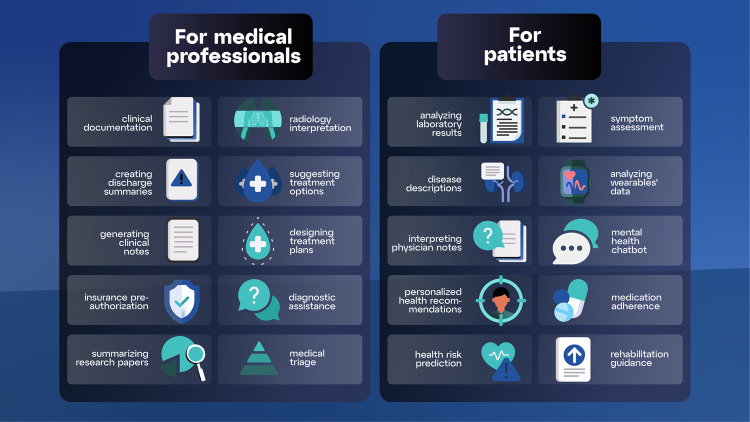
The rapid advancements in artificial intelligence (AI) have led to the development of sophisticated large language models (LLMs) such as GPT-4 and Bard. The potential implementation of LLMs in healthcare settings has already garnered considerable attention because of their diverse applications that include facilitating clinical documentation, obtaining insurance pre-authorization, summarizing research papers, or working as a chatbot to answer questions for patients about their specific data and concerns. While offering transformative potential, LLMs warrant a very cautious approach since these models are trained differently from AI-based medical technologies that are regulated already, especially within the critical context of caring for patients. The newest version, GPT-4, that was released in March, 2023, brings the potentials of this technology to support multiple medical tasks; and risks from mishandling results it provides to varying reliability to a new level. Besides being an advanced LLM, it will be able to read texts on images and analyze the context of those images. The regulation of GPT-4 and generative AI in medicine and healthcare without damaging their exciting and transformative potential is a timely and critical challenge to ensure safety, maintain ethical standards, and protect patient privacy. We argue that regulatory oversight should assure medical professionals and patients can use LLMs without causing harm or compromising their data or privacy. This paper summarizes our practical recommendations for what we can expect from regulators to bring this vision to reality.
Overview
The claims and statistics of this paper haven’t been checked yet.
Free: it reads the open-access text and checks the first 5 claims that cite a source we can check. Create a free account to check every claim.
Integrity signals
Registry
Cites
Statistics
Figures
Verification
Claims the paper makes
The claims and statistics of this paper haven’t been checked yet.
Free: it reads the open-access text and checks the first 5 claims that cite a source we can check. Create a free account to check every claim.
Claims other papers make about this one
Each is checked against this paper’s own text: does it say what the citing paper says it does?
The source backs part of the claim, not all of it — or backs it for a different population, condition or comparison.
In the citing paper
“the integration of AI and large language models (LLMs) into hospital EHR systems currently lacks a defined oversight framework (Table 1)2.”
From Preventing unrestricted and unmonitored AI experimentation in healthcare through transparency and accountability (2025) · cites this paper as [2]
Experimental — accuracy not yet measuredThe source backs part of the claim, not all of it — or backs it for a different population, condition or comparison.
In the citing paper
“The addition of large language models (LLM) into healthcare operations, including electronic health record (EHR) systems represents a transformative level of adoption and integration, changing how enterprise systems interact with algorithms; permitting the largely unconsented collection and utilization of previously unmined private data originating from the care of patients1,2.”
From Preventing unrestricted and unmonitored AI experimentation in healthcare through transparency and accountability (2025) · cites this paper as [2]
Experimental — accuracy not yet measuredThe source backs part of the claim, not all of it — or backs it for a different population, condition or comparison.
In the citing paper
“Given the unique risks faced by adolescents and young adults, such as disclosure of self-harm intent to chatbots, or the reinforcement of harmful thought patterns by algorithms, it is crucial that research efforts should prioritize the establishment of clear safety protocols and robust evaluation frameworks to ensure their ethical and responsible deployment [69].”
From The Effectiveness of AI Chatbots in Alleviating Mental Distress and Promoting Health Behaviors Among Adolescents and Young Adults: Systematic Review and Meta-Analysis (2025) · cites this paper as [69]
Experimental — accuracy not yet measuredThe cited source says what the claim attributes to it.
In the citing paper
“The real-time adaptation of LLMs and the adaptive and autodidactic functions of deep learning algorithms call for regulatory frameworks capable of addressing these systems' adaptability and self-teaching nature.”
From Balancing Privacy and Progress: A Review of Privacy Challenges, Systemic Oversight, and Patient Perceptions in AI-Driven Healthcare (2024) · cites this paper as [27]
The cited source says what the claim attributes to it.
In the citing paper
“Despite these upsides, leveraging LLMs in healthcare is complicated due to complex regulations, including data security and patient privacy.1”
From Development of secure infrastructure for advancing generative artificial intelligence research in healthcare at an academic medical center (2025) · cites this paper as [1]
10 more claims about this paper
Create a free account to see every claim other papers make about this one.
Self-check
Percentages, sums and reported differences re-computed from the paper’s own numbers.
The self-check needs the paper’s full text.
Citations
Cites
High-performance medicine: the convergence of human and artificial intelligence
Topol, E. J. (2019) · Nature Medicine · doi:10.1038/s41591-018-0300-7 · Cited by 10,450
Self-citationLarge Language Models Encode Clinical Knowledge
Singhal, K., Azizi, S., Tu, T., Mahdavi, S. S., Wei, J., Chung, H. W., Scales, N., Tanwani, A., Cole-Lewis, H., Pfohl, S., et al. (2022) · arXiv · doi:10.48550/arxiv.2212.13138 · Cited by 4,083
Large language models encode clinical knowledge
Singhal, K., Azizi, S., Tu, T., Mahdavi, S. S., Wei, J., Chung, H. W., Scales, N., Tanwani, A., Cole-Lewis, H., Pfohl, S., et al. (2023) · Nature · doi:10.1038/s41586-023-06291-2 · Cited by 4,083 · cited 1×
“Since then, GPT-4 could achieve an accuracy over 85% on the same exam 14 .”
Sallam, M. (2023) · Healthcare · doi:10.3390/healthcare11060887 · Cited by 3,126
Sallam, M. (2023) · doi:10.1101/2023.02.19.23286155 · Cited by 3,123 · cited 1×
“Systematic reviews highlighted other potential bene fi ts too such as improved scienti fi c writing, enhancing research equity, streamlining the healthcare work fl ow, cost saving, and improved personalized learning in medical education 3,4 .”
Benefits, Limits, and Risks of GPT-4 as an AI Chatbot for Medicine
Lee, P., Bubeck, S., & Petro, J. (2023) · New England Journal of Medicine · doi:10.1056/nejmsr2214184 · Cited by 1,738
Benjamens, S., Dhunnoo, P., & Meskó, B. (2020) · npj Digital Medicine · doi:10.1038/s41746-020-00324-0 · Cited by 1,215
Self-citationNagendran, M., Chen, Y., Lovejoy, C. A., Gordon, A. C., Komorowski, M., Harvey, H., Topol, E. J., Ioannidis, J. P. A., Collins, G. S., & Maruthappu, M. (2020) · BMJ · doi:10.1136/bmj.m689 · Cited by 1,152
Self-citationRegulating ChatGPT and other Large Generative AI Models
Hacker, P., Engel, A., & Mauer, M. (2023) · 2023 ACM Conference on Fairness Accountability and Transparency · doi:10.1145/3593013.3594067 · Cited by 466 · cited 1×
“In details, regulation should focus on concrete high-risk applications, and not the pre-trained model itself, and should include (i) obligations regarding transparency, (ii) risk management, (iii) non-discrimination provisions, and (iv) content moderation rules 15 .”
ChatGPT in healthcare: A taxonomy and systematic review
Li, J., Dada, A., Puladi, B., Kleesiek, J., & Egger, J. (2024) · Computer Methods and Programs in Biomedicine · doi:10.1016/j.cmpb.2024.108013 · Cited by 452
Cited by
Items 801–900 of 1,005
Workum, J. D., Krijgsman, S., Vajda, I., van Stokkum, R., van den Brand, J., Gommers, D. A. M. P. J., Ercole, A., & van Genderen, M. E. (2026) · BMJ Digital Health & AI · doi:10.1136/bmjdh-2026-000003 · Cited by 2
Yin, J., Wang, W., Wu, L., Li, Z., Wang, W., He, T., Wang, Y., Li, G., Tang, L., Zhao, X., et al. (2026) · Stroke · doi:10.1161/strokeaha.126.055189 · Cited by 2
Liu, Y., Li, R., Yu, P., Zhang, Y., Zhao, A., Xiao, X., Li, Z., Liang, R., Peng, L., & Dong, Z. (2026) · Journal of Robotic Surgery · doi:10.1007/s11701-026-03698-7 · Cited by 2
Decision authority in health AI
池谷, 裕., & Topol, E. J. (2026) · Nature Health · doi:10.1038/s44360-026-00185-z · Cited by 2
Self-citationTan, Q., Ma, Y., Zhao, J., & Hu, H. (2026) · Frontiers in Medicine · doi:10.3389/fmed.2026.1901004 · Cited by 2
Corso, F., Zec, A., Favali, M., Ligero, M., Hilgers, L., Invernizzi, L. M., Mazzeo, L., Morales, A. M., Müller‐Franzes, G. A., Machado, I. P., et al. (2026) · Cell Reports Medicine · doi:10.1016/j.xcrm.2026.102966 · Cited by 3
Conversational AI should fill the white space in mental health care, not replace humans
Kabrel, M., Stade, E. C., Stirman, S. W., Aru, J., & Eichstaedt, J. C. (2026) · npj Digital Medicine · doi:10.1038/s41746-026-03088-1 · Cited by 2
Dığış, M., Kaya, K., Demir, B., Cicek, I. N., Akdağ, D., & Akdağ, Ş. (2026) · Cutaneous and Ocular Toxicology · doi:10.1080/15569527.2026.2711643 · Cited by 3
Ma, Y., Liu, S., Song, J., Song, X., Yang, X., Zhao, Q., Xiao, M., & Wang, J. (2026) · Journal of Nursing Management · doi:10.1155/jonm/9524014 · Cited by 2
Wang, Y., Ornelas, M. D., Studenski, M. T., Bossart, E. L., Nejad‐Davarani, S. P., & Yang, Y. (2026) · PLOS Digital Health · doi:10.1371/journal.pdig.0001740 · Cited by 2
Toward reviewable medical evidence synthesis for care delivery
Yao, Z., & Yu, H. (2026) · npj Digital Medicine · doi:10.1038/s41746-026-03195-z · Cited by 2
Steinacker, J. M., van Mechelen, W., Engebretsen, L., Verhagen, E. A. L. M., Börjesson, M., González‐Gross, M., Hutchinson, M. R., Zupet, P., Löllgen, H., van Rensburg, D. C. J., et al. (2026) · Sports Medicine · doi:10.1007/s40279-026-02495-4 · Cited by 2
Bharti, I., Chauhan, K., & Aggarwal, P. (2024) · Advances in healthcare information systems and administration book series · doi:10.4018/979-8-3693-5523-7.ch006 · Cited by 2
Technology Update in Management of Multi-Ligament Knee Injuries
Sidharthan, S., & Bhattacharya, R. (2024) · Indian Journal of Orthopaedics · doi:10.1007/s43465-024-01281-6 · Cited by 2
Case Study to Role of Large Language Models in Prediction of the Future Illness
Thakar, H. A., Pradhan, V., Sarda, J. S., Brahma, B., & Bhoi, A. K. (2025) · Studies in computational intelligence · doi:10.1007/978-3-031-82516-3_13 · Cited by 2
ВИКОРИСТАННЯ ІНСТРУМЕНТІВ ШТУЧНОГО ІНТЕЛЕКТУ В СУЧАСНІЙ ДИПЛОМАТІЇ
Троян, П. (2025) · Міжнародні відносини суспільні комунікації та регіональні студії · doi:10.29038/2524-2679-2025-01-94-115 · Cited by 2
ChatGPT: Hilfe bei der medizinethischen Entscheidungsfindung?
Schmidt, K. W., & Lechner, F. (2024) · Die Anaesthesiologie · doi:10.1007/s00101-024-01385-6 · Cited by 2
Leveraging Generative AI for Personalized Recommendation System
Bedi, P., Das, S., Goyal, S. B., Shaw, R. N., & Ghosh, A. (2024) · Lecture notes in networks and systems · doi:10.1007/978-981-97-1961-7_40 · Cited by 2
The Most Disruptive Near-Term Use of AI in Cancer Care: Patient Empowerment Through Software Agents
Nothaft, F. A., & Power, B. (2024) · AI in Precision Oncology · doi:10.1089/aipo.2024.0027 · Cited by 2
Machine Learning and Human Expertise in the Balance: Generative AI in Healthcare Settings
Montalvo, F. L., Pavlov, K., Thai, P., Devkota, B., & Takahashi, B. (2024) · Proceedings of the International Symposium on Human Factors and Ergonomics in Health Care · doi:10.1177/2327857924131010 · Cited by 2
Islam, M. N., & Aziz, M. T. B. (2024) · Lecture notes in electrical engineering · doi:10.1007/978-981-97-8031-0_37 · Cited by 2
Medical AI in the EU: Regulatory Considerations and Future Outlook
Ranttila, P., Sahebi, G., Kontio, E., & Salmi, J. (2024) · Artificial intelligence · doi:10.5772/intechopen.1007443 · Cited by 2
Bamgboje‐Ayodele, A., Makeham, M., Kancijanic, D., Newton, N., Shah, K. M., Shaw, M., Johnston, A., Robinson, F., Hutchings, O., Norris, S. D., et al. (2024) · BMC Family Practice · doi:10.1186/s12875-024-02649-1 · Cited by 2
Monitoring and Managing Endocrine Disrupter Pesticides (EPDS) for Environmental Sustainability
Chintada, V., Veraiah, K., & Golla, N. (2025) · Interdisciplinary biotechnological advances · doi:10.1007/978-981-97-7221-6_4 · Cited by 2
Evaluation of Large Language Models' Concordance With Guidelines on Olfaction
Shaari, A. L., Saad, A. M., Patil, D. P., Yanik, J., Hsueh, W. D., Eloy, J. A., & Filimonov, A. (2025) · Laryngoscope Investigative Otolaryngology · doi:10.1002/lio2.70130 · Cited by 2
Narrative Machines: The Evolution of Storytelling in the Age of Generative AI
Asrifan, A., Hasa, M. F., Syafryadin, S., & Pelu, H. (2025) · Advances in computational intelligence and robotics book series · doi:10.4018/979-8-3693-6255-6.ch004 · Cited by 2
Medical Diagnosis Through Conversational Intelligence Using Large Language Models
Akilesh, S., Suganya, R., Ravi, S., Raman, R. T., Srinivasakumar, V., & Subramanian, G. H. (2025) · Lecture notes in electrical engineering · doi:10.1007/978-981-97-4711-5_23 · Cited by 2
Multi-Prompting Scenario-based Movie Recommendation with Large Language Models: Real User Case Study
Sun, R., Li, X., Akella, A., & Konstan, J. A. (2025) · CHI Conference Extended Abstracts on Human Factors in Computing Systems (CHI EA) · doi:10.1145/3706599.3706682 · Cited by 2
Chellamuthu, G., Muthu, S., Siddamanickam, S., Sathiyaseelan, N., Viswanathan, V. K., Rudraraju, R., & Rangabashyam, R. (2025) · Indian Journal of Orthopaedics · doi:10.1007/s43465-025-01430-5 · Cited by 2
Kalinin, P., & Fedorov, D. (2025) · Ural Symposium on Biomedical Engineering, Radioelectronics and Information Technology (USBEREIT) · doi:10.1109/usbereit65494.2025.11054192 · Cited by 2
Evaluating the Performance of Large Language Models on Multispecialty FRCS Section 1 Questions
Ahmed, H. S. (2025) · Journal of Surgical Research · doi:10.1016/j.jss.2025.06.026 · Cited by 2
Pérez, A. S. C., Valencia, C. E. N., & Ordóñez, H. (2025) · Tecnura · doi:10.14483/22487638.22808 · Cited by 2
AI-Driven DevOps Practices for Healthcare Data Security and Compliance
Vemuri, N. V. N. (2024) · International Journal of Intelligent Systems and Applications in Engineering · Cited by 2
Konda, S., & Singh, S. P. (2023) · International Conference on Artificial Intelligence for Innovations in Healthcare Industries (ICAIIHI) · doi:10.1109/icaiihi57871.2023.10489226 · Cited by 2
Hwang, H., Lee, T., Kim, H., & Kang, J. (2024) · Clinical Natural Language Processing Workshop (ClinicalNLP) · doi:10.18653/v1/2024.clinicalnlp-1.51 · Cited by 2
AI usage in HealthcarePreprint
Ali, R. (2023) · OSF Preprints (OSF Preprints) · doi:10.31219/osf.io/b36y5 · Cited by 2
Solving the multiplication problem of a large language model system using a graph-based methodPreprint
Tuncer, T., Doğan, Ş., Bayğın, M., Barua, P. D., Hafeez‐Baig, A., Tan, R., Chakraborty, S., & Acharya, U. R. (2023) · arXiv (Cornell University) · doi:10.48550/arxiv.2310.13016 · Cited by 2
The Future of Medicine: Large Language Models Redefining Healthcare DynamicsPreprint
Haque, A., Chowdhury, M. N.-U.-R., & Neha, F. F. (2023) · doi:10.36227/techrxiv.24354451.v1 · Cited by 2
Generating Synthetic Single Cell Data from Bulk RNA-seq Using a Pretrained Variational AutoencoderPreprint
Cho, H. J., Xie, E., Zhang, A., & Bekiranov, S. (2024) · bioRxiv (Cold Spring Harbor Laboratory) · doi:10.1101/2024.05.18.594837 · Cited by 2
Adibi, S. (2024) · doi:10.2196/preprints.62784 · Cited by 2
Ojeda, L. A. M., Montero, S., & Mehta, A. (2024) · Annals of Plastic Surgery · doi:10.1097/sap.0000000000003935 · Cited by 2
Zhang, Y., Yang, D., Shi, Y., & Liu, Y. (2025) · Cureus · doi:10.7759/cureus.99026 · Cited by 2
Personal Care Utility (PCU): Building the Health Infrastructure for Everyday Insight and GuidancePreprint
Abbasian, M., & Jain, R. (2025) · arXiv (Cornell University) · doi:10.48550/arxiv.2510.22602 · Cited by 2
Bi-Predictability: A Real-Time Signal for Monitoring LLM Interaction IntegrityPreprint
Hafez, W., & Nazeri, A. (2026) · Research Square · doi:10.21203/rs.3.rs-9182401/v1 · Cited by 2
Haidar, A. (2024) · theses.fr (ABES) · doi:10.70675/bee40239z04e9z4bedz9dafz562ce0fcc4c1 · Cited by 2
Adaş, M., Çörekci, A. M., DEMİRKALE, İ., Berber, T., Uysal, E., AKDEMİR, E., BARIŞ, F., & Yıldırım, B. A. (2026) · Research Square · doi:10.21203/rs.3.rs-9628103/v1 · Cited by 2
Barki, C., Chouchen, M., Sediri, A., Ceylan, H. İ., Rahmouni, H. B., Muntean, R. I., El-Seedi, H. R., Bragazzi, N. L., & Dergaa, I. (2026) · Frontiers in Systems Biology · doi:10.3389/fsysb.2026.1892418 · Cited by 1
“…innovation in governance frameworks specifically designed for non-deterministic, broadly functional LLM-based medical devices (Ong et al., 2026; Armoundas and Singh, 2026; Meskó and Topol, 2023) provides the regulatory science context within which this framework is offered as a design contribution.”
Clean & Clear: Feasibility of Safe LLM Clinical Guidance
Ive, J., Jozsa, F., Jackson, N., Bondaronek, P., Hill, C. S., & Dobson, R. (2025) · arXiv · doi:10.48550/arxiv.2503.20953 · Cited by 1
Ethical Design Framework for Artificial Intelligence Healthcare Technologies
Martínez-Villaseñor, L., & Ponce-Espinosa, H. (2024) · Studies in big data · doi:10.1007/978-3-031-54277-0_9 · Cited by 1
The Socio-Ethical Dynamics of Artificial Intelligence in Healthcare
Lahoti, R. (2024) · Significances of Bioengineering & Biosciences · doi:10.31031/sbb.2024.07.000651 · Cited by 1
Towards Responsible AI: Understanding and Mitigating Ethical Concerns of Large Language Models
Upadhye, A. (2024) · Journal of Artificial Intelligence & Cloud Computing · doi:10.47363/jaicc/2024(3)289 · Cited by 1
Leveraging Foundational Models in Computational Biology: Validation, Understanding, and Innovation
Beaulieu‐Jones, B. K., & Brenner, S. E. (2024) · Pacific Symposium on Biocomputing (PSB) · doi:10.1142/9789819807024_0051 · Cited by 1
Use of Artificial Intelligence for Health Insurance: A Bibliometric Exploration
Bhatt, S., Tiwari, R., Prakash, C., Dhyani, B., Sharma, B., & Ahalawat, K. (2024) · Advances in human services and public health (AHSPH) book series · doi:10.4018/979-8-3373-0240-9.ch022 · Cited by 1
Managing Ethical Challenges in Nursing Practice and Policy
Alotaiby, B. A., Alshareef, T. B., Alhazmi, R. H., Albshri, M. S., Ageeli, A. I., Almzmomi, B. F., Asiri, S. M. A., Alqarni, E. F. S., ALMUTAIRI, Y. J., Mahmoodi, A. H., et al. (2024) · Journal of Ecohumanism · doi:10.62754/joe.v3i8.5531 · Cited by 1
Introduction: AI Tools for Sustainable Public Administration
Önder, M., & Akküçük, U. (2025) · Advances in public policy and administration (APPA) book series · doi:10.4018/979-8-3693-8372-8.ch001 · Cited by 1
Ignashina, M., Bondaronek, P., Shams, P., Osuchukwu, J., Santel, D., Pestian, J. P., & Ive, J. (2026) · JMIR Formative Research · doi:10.2196/preprints.71614 · Cited by 1
PQHealthcare: An efficient cloud data sharing system via Functional Encryption from lattices
Lai, Q., Chen, C., Liu, M., Yang, Y., & Yu, Y. (2025) · Computer Standards & Interfaces · doi:10.1016/j.csi.2025.103993 · Cited by 1
Xiao, L., Wang, Q., Gao, H., & Jiang, S. (2025) · Frontiers in Public Health · doi:10.3389/fpubh.2025.1594684 · Cited by 1
Should LLMs be over empowered for high-stake regulatory research?
Ray, P. P. (2025) · Briefings in Bioinformatics · doi:10.1093/bib/bbaf299 · Cited by 1
Privacy-Preserving Analysis of Wearable Device Data for Monitoring Health Risks
Xu, Y., Nallamothu, S., Culbertson, C., & Wang, H. (2025) · IEEE International Conference on Healthcare Informatics (ICHI) · doi:10.1109/ichi64645.2025.00108 · Cited by 1
Regulating Artificial Intelligence for Social Impact
Lytras, M. D., & Șerban, A. C. (2025) · Emerald Group Publishing Limited eBooks · doi:10.1108/978-1-83708-432-620251001 · Cited by 1
Chaudhari, Y. A. (2025) · International Journal for Research in Applied Science and Engineering Technology · doi:10.22214/ijraset.2025.74553 · Cited by 1
Ahmad, H. F., Sajid, J., Rasool, R. U., & Malik, A. W. (2025) · Cluster Computing · doi:10.1007/s10586-025-05793-0 · Cited by 1
Enhancing Perioperative Documentation With Artificial Intelligence Scribes in Anesthesiology
Almeida, V. F. A., Dantas, M., Phuyal, D., & Shen, F. (2025) · Anesthesia & Analgesia · doi:10.1213/ane.0000000000007863 · Cited by 1
MulMed: Addressing Multiple Medical Tasks Utilizing LLMS
Cheng, N., Li, F., & Huang, L. (2025) · Academic Journal of Computing & Information Science · doi:10.25236/ajcis.2025.080904 · Cited by 1
Zhou, Z., & Yang, Q. (2025) · European Heart Journal - Digital Health · doi:10.1093/ehjdh/ztaf141 · Cited by 1
Huang, R., Cecil, J., Freedman, M., & Chattopadhyay, S. (2026) · Journal of Medical Internet Research · doi:10.2196/88126 · Cited by 1
Artificial Intelligence-Enabled Devices in Neurology: Mapping the Present and Future
Amurthur, A., McCarthy, D. J., Schwamm, L. H., & Hillis, J. M. (2025) · Seminars in Neurology · doi:10.1055/a-2772-7189 · Cited by 1
Large language models for pattern recognition in text data
Kosayakova, A., Gusmanovich, K. I., Spada, L. L., Zeeshan, N., Bakyt, M., Moldamurat, K., & Abdirashev, O. (2025) · IAES International Journal of Artificial Intelligence · doi:10.11591/ijai.v14.i6.pp5311-5332 · Cited by 1
Padovano, M., Longo, F., Padovano, A., Frascio, M., & Nardo, B. (2025) · Procedia Computer Science · doi:10.1016/j.procs.2025.12.117 · Cited by 1
Dejband, E., Tan, T.-H., Manie, Y. C., Yao, C.-K., Lin, T.-C., Chen, H.-M., Hsu, W.-Y., Peng, C.-H., Huang, P.-Y., & Peng, P. (2026) · IEEE Sensors Journal · doi:10.1109/jsen.2026.3651301 · Cited by 1
A RAG-Driven Conversational System for Citizen Information Requests at Ecuador's Tax Authority
Camino-Moreno, S. (2026) · Journal of Emerging & Sustainable Smart Engineering · doi:10.31243/jesse.uta.v2i1.2998.2026 · Cited by 1
Introduction to Generative Artificial Intelligence
Ramesh, C. R., Muralidhar, P., Kumar, K. M. V. M., Srinu, B., Vikram, G. R., & Nayak, R. (2026) · Wiley eBooks · doi:10.1002/9781394305698.ch1 · Cited by 1
Large Language Models (LLMs) in Medical Error Detection and Correction: A Comprehensive Review
Chandru, R., Kadusabe, P., Qureshi, A. M., Sharma, S., & Kaushik, A. (2025) · Springer eBooks · doi:10.1007/978-3-032-07267-2_6 · Cited by 1
Yangı, K., Gok, E., Chen, J., Yangi, D. D. D., Goyal, M., Puppalla, P., Kupanoff, K., Li, B., Köktekir, E., Emmez, O. H., et al. (2026) · Turkish Neurosurgery · doi:10.5137/1019-5149.jtn.50196-25.3 · Cited by 1
Kanganga, R., & Mtotywa, M. M. (2026) · Cogent Business & Management · doi:10.1080/23311975.2026.2620163 · Cited by 1
Armeni, P., Polat, I., Rossi, L. M. D., Diaferia, L., Padova, S. D., Gatti, A., & Meregalli, S. (2026) · Frontiers in Aging · doi:10.3389/fragi.2026.1687784 · Cited by 1
Revolutionizing sentiment analysis with generative AI: techniques, trends, and challenges
Mamun, R., Sadman, S., Nabil, H. R., Mridha, M. F., & Kabir, M. (2026) · Multimedia tools and applications · doi:10.1007/s11042-026-21390-8
Applications and Challenges of Artificial Intelligence and Big Data in Drug Regulation
liu, Z., Zheng, Y., Fang, J., & Yuan, L. (2026) · Therapeutic Innovation & Regulatory Science · doi:10.1007/s43441-026-00946-8 · Cited by 1
Lin, A., Zeng, M., Gan, W., Jiang, A., Liu, Y., Qi, C., Zhu, L., Mou, W., Zeng, D., Xiao, M., et al. (2026) · Journal of Translational Medicine · doi:10.1186/s12967-026-07912-w · Cited by 2
Castano-Villegas, N., Villa, M. C., Barrientos, K. M., Llano, I., Velásquez, L., & Zea, J. (2026) · Mayo Clinic Proceedings Digital Health · doi:10.1016/j.mcpdig.2026.100356 · Cited by 1
Monsalve-Alamá, A., Ortigosa-Blanch, A., & Martí-Sánchez, M. (2026) · ESIC MARKET Economic and Business Journal · doi:10.7200/esicm.57.397 · Cited by 1
AI of Oz: Enhancing Wizard of Oz Studies in HCI with AI Assistance for Human Moderation
Wen, R., Gupta, K., Nanthakumar, K., Han, B., Hoermann, S., Billinghurst, M., Nassani, A., Allan, D. D., & Piumsomboon, T. (2026) · CHI Conference on Human Factors in Computing Systems · doi:10.1145/3772318.3791324 · Cited by 1
Хуррамов, Ф., & Нурмаматов, Д. (2026) · Eurasian Journal of Medical and Natural Sciences · doi:10.70413/ejmns-v06-i04-s48850 · Cited by 1
Schievelkamp, A., Ufton, D., Heilinger, J., van Eimeren, T., & Drzezga, A. E. (2026) · European Journal of Radiology Artificial Intelligence · doi:10.1016/j.ejrai.2026.100101 · Cited by 1
Current Topics in Learning and Development in Radiology: AJR Expert Panel Narrative Review
Moriarity, A. K., Goldberg-Stein, S. A., Cook, T. S., Giess, C. S., Sharpe, R. E., Shinagare, A. B., & Khorasani, R. (2026) · American Journal of Roentgenology · doi:10.2214/ajr.24.31798 · Cited by 1
Bednarczyk, L., Zaghir, J., Ehrsam, J., Tcherepanova, M., Skalafouris, C., Gariani, K., Geslin, C., Rivara, C., Bonnabry, P., Goldman, J.-P., et al. (2026) · BMC Medical Informatics and Decision Making · doi:10.1186/s12911-026-03969-1 · Cited by 1
Future of AI in Cognitive Disease Diagnosis and Healthcare
Jain, K., Singh, A., Pandey, A., Garg, K., Rathore, S., Bhatele, K. R., Tiwari, D., & Bhargava, A. (2026) · Cognitive systems monographs · doi:10.1007/978-3-032-18782-6_10 · Cited by 1
Hum, R. S. F. S. M., & Rajkumar, S. R. (2024) · Zakariya Journal of Social Science · doi:10.59075/zjss.v3i2.502 · Cited by 1
Artificial Intelligence in Applied Cognitive Psychology: A Commentary
Sharpe, B. T., Rod, M., & Horne, G. (2026) · International Journal of Cognitive Research in Science Engineering and Education · doi:10.23947/2334-8496-2026-14-1-115-124 · Cited by 1
Riffat, H., Akram, W., Tariq, M. S., Zaid, M., Iqbal, M. H., & Akhtar, A. (2026) · Journal of Health Wellness and Community Research · doi:10.61919/7f6yn302 · Cited by 1
Chow, J., & Patlas, M. N. (2026) · Japanese Journal of Radiology · doi:10.1007/s11604-026-02009-2 · Cited by 1
The invisible risks of AI-generated health information
DeVerna, M., Yan, H. Y., Yang, K.-C., & Menczer, F. (2026) · Nature Health · doi:10.1038/s44360-026-00206-x · Cited by 1
Emerging applications of traditional and generative artificial intelligence in liver transplantation
Ge, W. H., Bishara, A. M., Braun, H. J., Simonetto, D. A., & Ge, J. (2026) · Liver Transplantation · doi:10.1097/lvt.0000000000000914 · Cited by 1
Kim, E. J., & Kim, J. (2026) · International Neurourology Journal · doi:10.5213/inj.2651122.061 · Cited by 1
The HALO Model: A Learning Health System Framework for Artificial Intelligence
Zai, A., Adibuzzaman, M., McManus, D. D., & Walkey, A. J. (2026) · Learning Health Systems · doi:10.1002/lrh2.70100 · Cited by 1
Wu, D., Chen, K., Wu, X., Jin, J., & Xu, F. (2026) · Infection and Drug Resistance · doi:10.2147/idr.s593763 · Cited by 1
Uttley, L. (2026) · White Rose Research Online (University of Leeds, The University of Sheffield, University of York) · Cited by 1
Ohi, S., Iwamoto, T., Ikeda, D., KAWANISHI, Y., Kitajima, K., & Ohyanagi, H. (2026) · Global Health & Medicine · doi:10.35772/ghm.2026.01051 · Cited by 1
Reddy, S. R. H., Krishna, Y. S., Garg, S., & Shukla, V. (2026) · International Symposium of Systems, Advanced Technologies and Knowledge (ISSATK) · doi:10.1109/issatk69667.2026.11566932 · Cited by 1
Metadata
- Authors
- Meskó, B., & Topol, E. J.
- Affiliations
- Semmelweis University (HU)
- Scripps Research Institute (US)
- Corresponding author
- Meskó, Bertalan
- Venue
- npj Digital Medicine
- Published
- 2023-07-06
- Volume
- 6
- Issue
- 1
- Pages
- 120-120
- ISSN
- 2398-6352 (ISSN-L)
- PMC
- PMC10326069
- OpenAlex
- W4383346782
- Cited by
- 1,047
- References
- 11
- Citations by year
- 2026: 300 · 2025: 336 · 2024: 336 · 2023: 75
- FWCI
- 41.69
- Type
- journal article
- Language
- en
- Open access
- gold
- doi.org
- Licence
- cc-by
- creativecommons.org/licenses/by/4.0 (tdm)
- creativecommons.org/licenses/by/4.0 (vor)
- Locations
- npj Digital Medicine (publishedVersion, cc-by)
- PubMed Central (publishedVersion, cc-by)
- PubMed (publishedVersion)
- DOAJ (DOAJ: Directory of Open Access Journals) (submittedVersion, cc-by-sa)
- Topics
- Health Sciences › Medicine › Health Informatics › Artificial Intelligence in Healthcare and Education
- Physical Sciences › Computer Science › Artificial Intelligence › Ethics and Social Impacts of AI
- Social Sciences › Law › Digitalization, Law, and Regulation
- Keywords
- large language models, generative AI, health care regulation, regulatory oversight, GPT-4, AI safety, patient privacy, medical ethics, clinical documentation, AI chatbots, image analysis
About these checks
Registry, retraction, Cites and statistics results are computed, not judged, with one exception: a printed reference that no index lists is read once by a model before it counts as a citation error. Claims are extracted by a model and kept only when their quote appears verbatim in the text; each cited source is then checked, with a model’s help, for whether it says what the claim relies on. Those verdicts can be wrong — read the claim’s quote and the cited source before relying on one.
Statistics and arithmetic are recomputed, not judged.
Confidence bands are shown only for fields calibrated on our annotated test set. None is calibrated yet, so no band is shown.
What counts as a claim ›How we measure confidence ›How we check this ›
Are you an author, or do you see a problem with this page? Request a review
Data sources
Bibliographic data: Semantic Scholar, OpenAlex, Crossref.
Contains information from the Semantic Scholar Academic Graph Datasets, made available under the ODC Attribution License (ODC-BY 1.0).
Semantic Scholar’s data is described in: Kinney, R., et al. (2023). The Semantic Scholar Open Data Platform. arXiv:2301.10140.
