

The imperative for regulatory oversight of large language models (or generative AI) in healthcare
Open accessThe DOI matches its Crossref record; 16 of the 16 references it cites were found in a registry or an index.
Abstract
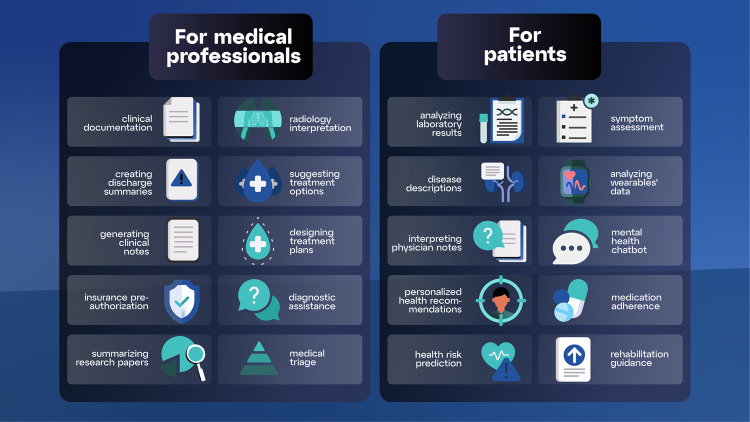
The rapid advancements in artificial intelligence (AI) have led to the development of sophisticated large language models (LLMs) such as GPT-4 and Bard. The potential implementation of LLMs in healthcare settings has already garnered considerable attention because of their diverse applications that include facilitating clinical documentation, obtaining insurance pre-authorization, summarizing research papers, or working as a chatbot to answer questions for patients about their specific data and concerns. While offering transformative potential, LLMs warrant a very cautious approach since these models are trained differently from AI-based medical technologies that are regulated already, especially within the critical context of caring for patients. The newest version, GPT-4, that was released in March, 2023, brings the potentials of this technology to support multiple medical tasks; and risks from mishandling results it provides to varying reliability to a new level. Besides being an advanced LLM, it will be able to read texts on images and analyze the context of those images. The regulation of GPT-4 and generative AI in medicine and healthcare without damaging their exciting and transformative potential is a timely and critical challenge to ensure safety, maintain ethical standards, and protect patient privacy. We argue that regulatory oversight should assure medical professionals and patients can use LLMs without causing harm or compromising their data or privacy. This paper summarizes our practical recommendations for what we can expect from regulators to bring this vision to reality.
Overview
The claims and statistics of this paper haven’t been checked yet.
Free: it reads the open-access text and checks the first 5 claims that cite a source we can check. Create a free account to check every claim.
Integrity signals
Registry
Cites
Statistics
Figures
Verification
Claims the paper makes
The claims and statistics of this paper haven’t been checked yet.
Free: it reads the open-access text and checks the first 5 claims that cite a source we can check. Create a free account to check every claim.
Claims other papers make about this one
Each is checked against this paper’s own text: does it say what the citing paper says it does?
The source backs part of the claim, not all of it — or backs it for a different population, condition or comparison.
In the citing paper
“the integration of AI and large language models (LLMs) into hospital EHR systems currently lacks a defined oversight framework (Table 1)2.”
From Preventing unrestricted and unmonitored AI experimentation in healthcare through transparency and accountability (2025) · cites this paper as [2]
Experimental — accuracy not yet measuredThe source backs part of the claim, not all of it — or backs it for a different population, condition or comparison.
In the citing paper
“The addition of large language models (LLM) into healthcare operations, including electronic health record (EHR) systems represents a transformative level of adoption and integration, changing how enterprise systems interact with algorithms; permitting the largely unconsented collection and utilization of previously unmined private data originating from the care of patients1,2.”
From Preventing unrestricted and unmonitored AI experimentation in healthcare through transparency and accountability (2025) · cites this paper as [2]
Experimental — accuracy not yet measuredThe source backs part of the claim, not all of it — or backs it for a different population, condition or comparison.
In the citing paper
“Given the unique risks faced by adolescents and young adults, such as disclosure of self-harm intent to chatbots, or the reinforcement of harmful thought patterns by algorithms, it is crucial that research efforts should prioritize the establishment of clear safety protocols and robust evaluation frameworks to ensure their ethical and responsible deployment [69].”
From The Effectiveness of AI Chatbots in Alleviating Mental Distress and Promoting Health Behaviors Among Adolescents and Young Adults: Systematic Review and Meta-Analysis (2025) · cites this paper as [69]
Experimental — accuracy not yet measuredThe cited source says what the claim attributes to it.
In the citing paper
“The real-time adaptation of LLMs and the adaptive and autodidactic functions of deep learning algorithms call for regulatory frameworks capable of addressing these systems' adaptability and self-teaching nature.”
From Balancing Privacy and Progress: A Review of Privacy Challenges, Systemic Oversight, and Patient Perceptions in AI-Driven Healthcare (2024) · cites this paper as [27]
The cited source says what the claim attributes to it.
In the citing paper
“Despite these upsides, leveraging LLMs in healthcare is complicated due to complex regulations, including data security and patient privacy.1”
From Development of secure infrastructure for advancing generative artificial intelligence research in healthcare at an academic medical center (2025) · cites this paper as [1]
10 more claims about this paper
Create a free account to see every claim other papers make about this one.
Self-check
Percentages, sums and reported differences re-computed from the paper’s own numbers.
The self-check needs the paper’s full text.
Citations
Cites
High-performance medicine: the convergence of human and artificial intelligence
Topol, E. J. (2019) · Nature Medicine · doi:10.1038/s41591-018-0300-7 · Cited by 10,450
Self-citationLarge Language Models Encode Clinical Knowledge
Singhal, K., Azizi, S., Tu, T., Mahdavi, S. S., Wei, J., Chung, H. W., Scales, N., Tanwani, A., Cole-Lewis, H., Pfohl, S., et al. (2022) · arXiv · doi:10.48550/arxiv.2212.13138 · Cited by 4,083
Large language models encode clinical knowledge
Singhal, K., Azizi, S., Tu, T., Mahdavi, S. S., Wei, J., Chung, H. W., Scales, N., Tanwani, A., Cole-Lewis, H., Pfohl, S., et al. (2023) · Nature · doi:10.1038/s41586-023-06291-2 · Cited by 4,083 · cited 1×
“Since then, GPT-4 could achieve an accuracy over 85% on the same exam 14 .”
Sallam, M. (2023) · Healthcare · doi:10.3390/healthcare11060887 · Cited by 3,126
Sallam, M. (2023) · doi:10.1101/2023.02.19.23286155 · Cited by 3,123 · cited 1×
“Systematic reviews highlighted other potential bene fi ts too such as improved scienti fi c writing, enhancing research equity, streamlining the healthcare work fl ow, cost saving, and improved personalized learning in medical education 3,4 .”
Benefits, Limits, and Risks of GPT-4 as an AI Chatbot for Medicine
Lee, P., Bubeck, S., & Petro, J. (2023) · New England Journal of Medicine · doi:10.1056/nejmsr2214184 · Cited by 1,738
Benjamens, S., Dhunnoo, P., & Meskó, B. (2020) · npj Digital Medicine · doi:10.1038/s41746-020-00324-0 · Cited by 1,215
Self-citationNagendran, M., Chen, Y., Lovejoy, C. A., Gordon, A. C., Komorowski, M., Harvey, H., Topol, E. J., Ioannidis, J. P. A., Collins, G. S., & Maruthappu, M. (2020) · BMJ · doi:10.1136/bmj.m689 · Cited by 1,152
Self-citationRegulating ChatGPT and other Large Generative AI Models
Hacker, P., Engel, A., & Mauer, M. (2023) · 2023 ACM Conference on Fairness Accountability and Transparency · doi:10.1145/3593013.3594067 · Cited by 466 · cited 1×
“In details, regulation should focus on concrete high-risk applications, and not the pre-trained model itself, and should include (i) obligations regarding transparency, (ii) risk management, (iii) non-discrimination provisions, and (iv) content moderation rules 15 .”
ChatGPT in healthcare: A taxonomy and systematic review
Li, J., Dada, A., Puladi, B., Kleesiek, J., & Egger, J. (2024) · Computer Methods and Programs in Biomedicine · doi:10.1016/j.cmpb.2024.108013 · Cited by 452
Cited by
Items 101–200 of 1,005
Harnessing EHR data for health research
Tang, A. S., Woldemariam, S. R., Miramontes, S., Norgeot, B., Oskotsky, T. T., & Sirota, M. (2024) · Nature Medicine · doi:10.1038/s41591-024-03074-8 · Cited by 87
“Nevertheless, we are at the cusp of unlocking the potential of EHRs and AI to facilitate advances in health and healthcare in the coming decades 59,60 .”
Applications of Artificial Intelligence in Medical Education: A Systematic Review
Hallquist, E., Gupta, I., Montalbano, M. J., & Loukas, M. (2025) · Cureus · doi:10.7759/cureus.79878 · Cited by 87
Chow, J. C. L., & Li, K. (2025) · Information · doi:10.3390/info16070549 · Cited by 84
McIntosh, T. R., Susnjak, T., Liu, T., Watters, P., Xu, D., Liu, D., Nowrozy, R., & Halgamuge, M. N. (2024) · Computers & Security · doi:10.1016/j.cose.2024.103964 · Cited by 84
Creating Trustworthy LLMs: Dealing with Hallucinations in Healthcare AI
Ahmad, M., Yaramic, I., & Roy, T. D. (2023) · Preprints.org · doi:10.20944/preprints202310.1662.v1 · Cited by 84
Deng, C., Duan, Y., Jin, X., Chang, H., Tian, Y., Liu, H., Wang, Y., Gao, K., Zou, H. P., Jin, Y., et al. (2025) · AI and Ethics · doi:10.1007/s43681-025-00797-3 · Cited by 82
Scientific evidence for clinical text summarization using large language models: scoping review
Bednarczyk, L., Reichenpfader, D., Gaudet-Blavignac, C., Ette, A. K., Zaghir, J., Zheng, Y., Bensahla, A., Bjelogrlic, M., & Lovis, C. (2025) · Journal of Medical Internet Research · doi:10.2196/68998 · Cited by 83
“LLMs can process significant volumes of input data and produce coherent output text [4,5].”
Chu, C. P. (2024) · Frontiers in Veterinary Science · doi:10.3389/fvets.2024.1395934 · Cited by 83
Hughes, L., Mavi, R. K., Aghajani, M., Fitzpatrick, K., Senali, M. G., Shekarabi, S. A. H., Hughes, R., Khanfar, A. A. A., Khatavakhotan, A. S., Mavi, N. K., et al. (2025) · Journal of Innovation & Knowledge · doi:10.1016/j.jik.2025.100772 · Cited by 88
The transition from genomics to phenomics in personalized population health
Yurkovich, J. T., Evans, S. J., Rappaport, N., Boore, J. L., Lovejoy, J. C., Price, N. D., & Hood, L. (2023) · Nature Reviews Genetics · doi:10.1038/s41576-023-00674-x · Cited by 82
Markowitz, D. M. (2024) · PNAS Nexus · doi:10.1093/pnasnexus/pgae387 · Cited by 81
Transparency of medical artificial intelligence systems
Kim, C., Gadgil, S. U., & Lee, S. (2025) · Nature Reviews Bioengineering · doi:10.1038/s44222-025-00363-w · Cited by 83
Academic journals’ AI policies fail to curb the surge in AI-assisted academic writing
He, Y., & Bu, Y. (2026) · Proceedings of the National Academy of Sciences · doi:10.1073/pnas.2526734123 · Cited by 87
LLMs and generative agent-based models for complex systems research
Lu, Y., Aleta, A., Du, C., Shi, L., & Moreno, Y. (2024) · Physics of Life Reviews · doi:10.1016/j.plrev.2024.10.013 · Cited by 80
Unregulated large language models produce medical device-like output
Weissman, G. E., Mankowitz, T., & Kanter, G. P. (2025) · npj Digital Medicine · doi:10.1038/s41746-025-01544-y · Cited by 80
Opportunities and risks of large language models in psychiatry
Obradovich, N., Khalsa, S. S., Khan, W. U., Suh, J., Perlis, R. H., Ajilore, O., & Paulus, M. P. (2024) · NPP—Digital Psychiatry and Neuroscience · doi:10.1038/s44277-024-00010-z · Cited by 79
Large Language Models in Neurology Research and Future Practice
Romano, M. F., Shih, L. C., Paschalidis, I. C., Au, R., & Kolachalama, V. B. (2023) · Neurology · doi:10.1212/wnl.0000000000207967 · Cited by 73
Comparing GPT-4 and Human Researchers in Health Care Data Analysis: Qualitative Description Study
Li, K. D., Fernandez, A., Schwartz, R., Ríos, N., Carlisle, M., Amend, G., Patel, H. V., & Breyer, B. N. (2024) · Journal of Medical Internet Research · doi:10.2196/56500 · Cited by 82
Benefits and Harms of Large Language Models in Digital Mental Health
De Choudhury, M., Pendse, S. R., & Kumar, N. (2023) · doi:10.31234/osf.io/y8ax9 · Cited by 78
Innovative applications of artificial intelligence in zoonotic disease management
Guo, W., Lv, C., Guo, M., Zhao, Q. C., Yin, X., & Zhang, L. (2023) · Science in One Health · doi:10.1016/j.soh.2023.100045 · Cited by 79
Enam, M. A., Murmu, C., & Dixon, E. (2025) · International Journal of Human-Computer Interaction · doi:10.1080/10447318.2025.2476710 · Cited by 80
A five-layer framework for AI governance: integrating regulation, standards, and certification
Agarwal, A., & Nene, M. J. (2025) · Transforming Government People Process and Policy · doi:10.1108/tg-03-2025-0065 · Cited by 78
Park, S. H., Suh, C. H., Lee, J. H., Kahn, C. E., & Moy, L. P. (2024) · Korean Journal of Radiology · doi:10.3348/kjr.2024.0843 · Cited by 78
Cognitive bias in clinical large language models
Mahajan, A., Obermeyer, Z., Daneshjou, R., Lester, J., & Powell, D. (2025) · npj Digital Medicine · doi:10.1038/s41746-025-01790-0 · Cited by 79
Benefits and Harms of Large Language Models in Digital Mental Health
De Choudhury, M., Pendse, S. R., & Kumar, N. (2023) · arXiv · doi:10.48550/arxiv.2311.14693 · Cited by 78
Data-Centric Foundation Models in Computational Healthcare: A Survey
Zhang, Y., Gao, J. G., Tan, Z., Zhou, L., Ding, K., Zhou, M., Zhang, S., & Wang, D. (2026) · ACM Computing Surveys · doi:10.1145/3800677 · Cited by 75
See Widely, Think Wisely: Toward Designing a Generative Multi-agent System to Burst Filter Bubbles
Zhang, Y., Sun, J., Feng, L., Yao, C., Fan, M., Zhang, L., Wang, Q., Geng, X., & Rui, Y. (2024) · CHI Conference on Human Factors in Computing Systems · doi:10.1145/3613904.3642545 · Cited by 73
A scoping review and expert consensus on digital determinants of health
van Kessel, R., Seghers, L.-E., Anderson, M., Schutte, N. M., Monti, G., Haig, M., Schmidt, J., Wharton, G., Román-Urrestarazu, A., Larrain, B., et al. (2025) · Bulletin of the World Health Organization · doi:10.2471/blt.24.292057 · Cited by 73
Baig, M. M., Hobson, C., GholamHosseini, H., Ullah, E., & Afifi, S. M. (2024) · Applied Sciences · doi:10.3390/app142310899 · Cited by 72
Tran, M., Balasooriya, C. D., Jonnagaddala, J., Leung, G., Mahboobani, N. R., Ramani, S., Rhee, J., Schuwirth, L., Najafzadeh-Tabrizi, N. S., Semmler, C., et al. (2025) · npj Digital Medicine · doi:10.1038/s41746-025-01721-z · Cited by 72
Understanding the Ethics of Generative AI: Established and New Ethical Principles
Laine, J., Minkkinen, M., & Mäntymäki, M. (2025) · Communications of the Association for Information Systems · doi:10.17705/1cais.05601 · Cited by 71
Development and Evaluation of a Retrieval-Augmented Large Language Model Framework for Ophthalmology
Luo, M.-J., Pang, J., Bi, S., Lai, Y., Zhao, J., Shang, Y., Cui, T., Yang, Y., Lin, Z., Zhao, L., et al. (2024) · JAMA Ophthalmology · doi:10.1001/jamaophthalmol.2024.2513 · Cited by 70
Song, Z., Qin, J., Jin, F., Cheung, W. M., & Lin, C. (2025) · Teaching and Teacher Education · doi:10.1016/j.tate.2025.105157 · Cited by 70
Xu, R., Cui, H., Yu, Y., Kan, X., Shi, W., Zhuang, Y., Wang, M. D., Jin, W., Ho, J. C., & Yang, C. (2024) · Findings of the Association for Computational Linguistics: ACL (Findings of ACL) · doi:10.18653/v1/2024.findings-acl.916 · Cited by 71
Applied artificial intelligence in dentistry: emerging data modalities and modeling approaches
Fehér, B., Tussie, C., & Giannobile, W. V. (2024) · Frontiers in Artificial Intelligence · doi:10.3389/frai.2024.1427517 · Cited by 68
Fairness and Bias in Multimodal AI: A SurveyPreprint
Adewumi, T. P., Alkhaled, L., Gurung, N., van Boven, G., & Pagliai, I. (2024) · arXiv.org · doi:10.48550/arxiv.2406.19097 · Cited by 35
Caño-Marín, E. (2024) · ESIC MARKET Economic and Business Journal · doi:10.7200/esicm.55.333 · Cited by 68
Waldock, W. J., Zhang, J., Guni, A., Nabeel, A., Darzi, A. W., & Ashrafian, H. (2024) · Journal of Medical Internet Research · doi:10.2196/56532 · Cited by 65
Ochi, M., Komura, D., & Ishikawa, S. (2025) · JMA Journal · doi:10.31662/jmaj.2024-0206 · Cited by 66
Position:TrustLLM: Trustworthiness in Large Language Models
Huang, Y., Sun, L., & Vanschoren, J. (2024) · TU/e Research Portal · Cited by 66
Ke, Y., Yang, R., Lie, S. A., Lim, T. X. Y., Ning, Y., Li, I., Abdullah, H. R., Ting, D. S. W., & Liu, N. (2024) · Journal of Medical Internet Research · doi:10.2196/59439 · Cited by 64
Foroughi, B., Naghmeh‐Abbaspour, B., Wen, J., Ghobakhloo, M., Al‐Emran, M., & Al-Sharafi, M. A. (2025) · Business Strategy and the Environment · doi:10.1002/bse.4186 · Cited by 65
Show and tell: A critical review on robustness and uncertainty for a more responsible medical AI
Marconi, L., & Cabitza, F. (2025) · International Journal of Medical Informatics · doi:10.1016/j.ijmedinf.2025.105970 · Cited by 66
Introduction to large language models (LLMs) for dementia care and research
Treder, M. S., Lee, S., & Tsvetanov, K. A. (2024) · Frontiers in Dementia · doi:10.3389/frdem.2024.1385303 · Cited by 63
“Regulators also need to implement ongoing monitoring and validation mechanisms to maintain the reliability and safety of AI tools in healthcare, adapting to different populations over time (Meskó and Topol, 2023).”
BackgroundMethodInfluentialPal, A., Wangmo, T., Bharadia, T., Ahmed-Richards, M., Bhanderi, M., Kachhadiya, R., Allemann, S. S., & Elger, B. S. (2025) · Patient Preference and Adherence · doi:10.2147/ppa.s527922 · Cited by 63
Ferrario, A., Sedlakova, J., & Trachsel, M. (2024) · JMIR Mental Health · doi:10.2196/56569 · Cited by 61
Hillmann, H. A. K., Angelini, E., Karfoul, N., Feickert, S., Müller‐Leisse, J., & Duncker, D. (2023) · EP Europace · doi:10.1093/europace/euad369 · Cited by 61
Unleashing the Power of Generative AI in Agriculture 4.0 for Smart and Sustainable Farming
Sai, S., Kumar, S., Gaur, A., Goyal, S., Chamola, V., & Hussain, A. (2025) · Cognitive Computation · doi:10.1007/s12559-025-10420-6 · Cited by 61
Generative Artificial Intelligence for Software Engineering—A Research Agenda
Nguyen‐Duc, A., Cabrero‐Daniel, B., Przybylek, A., Arora, C., Khanna, D., Herda, T., Rafiq, U., Melegati, J., Guerra, E., Kemell, K., et al. (2025) · Software: Practice and Experience · doi:10.1002/spe.70005 · Cited by 60
“On the other hand, there have been some calls for action regarding the regulation of GenAI, for example, in the healthcare sector [237].”
Equity in Digital Mental Health Interventions in the United States: Where to Next?
Robinson, A. H., Flom, M., Forman‐Hoffman, V. L., Histon, T., Levy, M., Darcy, A. M., Ajayi, T., Mohr, D. C., Wicks, P. J., Greene, C. J., et al. (2024) · Journal of Medical Internet Research · doi:10.2196/59939 · Cited by 61
Large language models and synthetic health data: progress and prospects
Smolyak, D., Bjarnadóttir, M. V., Crowley, K., & Agarwal, R. (2024) · JAMIA Open · doi:10.1093/jamiaopen/ooae114 · Cited by 60
You, J. G., Hernandez-Boussard, T., Pfeffer, M. A., Landman, A., & Mishuris, R. G. (2025) · npj Digital Medicine · doi:10.1038/s41746-025-01506-4 · Cited by 59
Small language models learn enhanced reasoning skills from medical textbooks
Kim, H., Hwang, H., Lee, J., Park, S., Kim, D., Lee, T., Yoon, C., Sohn, J., Park, J., Reykhart, O., et al. (2025) · npj Digital Medicine · doi:10.1038/s41746-025-01653-8 · Cited by 59
Nahm, W. J., Sohail, N., Burshtein, J. G., Goldust, M., & Tsoukas, M. M. (2025) · International Journal of Dermatology · doi:10.1111/ijd.17847 · Cited by 59
Abbas, A., Rehman, M. S., & Rehman, S. S. (2024) · Cureus · doi:10.7759/cureus.55991 · Cited by 58
Medical Ethics of Large Language Models in Medicine
Ong, J. C. L., Chang, S. Y.-H., William, W., Butte, A. J., Shah, N. H., Chew, L. S. T., Liu, N., Doshi-Velez, F., Lu, W., Savulescu, J., et al. (2024) · NEJM AI · doi:10.1056/aira2400038 · Cited by 58
Machine learning in toxicological sciences: opportunities for assessing drug toxicity
Tonoyan, L., & Siraki, A. G. (2024) · Frontiers in Drug Discovery · doi:10.3389/fddsv.2024.1336025 · Cited by 58
Gupta, N., Khatri, K., Malik, Y., Lakhani, A., Kanwal, A., Aggarwal, S., & Dahuja, A. (2024) · BMC Medical Education · doi:10.1186/s12909-024-06592-8 · Cited by 58
Ng, M. Y., Helzer, J., Pfeffer, M. A., Seto, T., & Hernandez-Boussard, T. (2025) · Journal of the American Medical Informatics Association · doi:10.1093/jamia/ocaf005 · Cited by 57
Altamimi, A., Alarfaj, A. A., Umer, M., Alabdulqader, E. A., Alsubai, S., Kim, T.-H., & Ashraf, I. (2024) · BMC Medical Research Methodology · doi:10.1186/s12874-024-02324-0 · Cited by 58
Wahidur, R. S. M., Kim, S., Choi, H., Bhatti, D. S., & Lee, H.-N. (2025) · IEEE Access · doi:10.1109/access.2025.3542125 · Cited by 57
PaperQA: Retrieval-Augmented Generative Agent for Scientific Research
Lála, J., O'Donoghue, O., Shtedritski, A., Cox, S., Rodriques, S. G., & White, A. D. (2023) · arXiv · doi:10.48550/arxiv.2312.07559 · Cited by 55
“While LLMs can produce answers faster and encompass a broader, deeper scope than manual searching, there is a high risk of hallucination in responses, which can lead to potentially dangerous outcomes [16, 17].”
BackgroundLarge language model for knowledge synthesis and AI-enhanced biomanufacturing.
Li, W.-Y., Mao, Z.-T., Xiao, Z.-Y., Liao, X.-P., Koffas, M., Chen, Y.-X., Ma, H.-W., & Tang, Y.-J. J. (2025) · Trends in Biotechnology · doi:10.1016/j.tibtech.2025.02.008 · Cited by 44
Explainability in the age of large language models for healthcare
Mesinovic, M., Watkinson, P., & Zhu, T. (2025) · Communications Engineering · doi:10.1038/s44172-025-00453-y · Cited by 54
Yaseen, I., & Rather, R. A. (2024) · International Journal of Women s Health · doi:10.2147/ijwh.s454127 · Cited by 54
Bhattacharya, M., Pal, S., Chatterjee, S., Lee, S., & Chakraborty, C. (2024) · Molecular Therapy — Nucleic Acids · doi:10.1016/j.omtn.2024.102255 · Cited by 54
Large Action Models: From Inception to Implementation
Wang, L., Yang, F., Zhang, C., Lu, J., Qian, J., He, S., Zhao, P., Qiao, B., Huang, R., Qin, S., et al. (2025) · Transactions on machine learning research · doi:10.48550/arxiv.2412.10047 · Cited by 55
Quality and safety of artificial intelligence generated health information
Sorich, M. J., Menz, B. D., & Hopkins, A. M. (2024) · BMJ · doi:10.1136/bmj.q596 · Cited by 52
Assessing GPT-4’s Performance in Delivering Medical Advice: Comparative Analysis With Human Experts
Jo, E., Song, S., Kim, J.-H., Lim, S., Kim, J. H., Cha, J.-J., Kim, Y.-M., & Joo, H. J. (2024) · JMIR Medical Education · doi:10.2196/51282 · Cited by 39
Feng, X., Tian, L., Ho, G. W. K., Yorke, J., & Hui, V. (2025) · Journal of Medical Internet Research · doi:10.2196/79850 · Cited by 51
Comparison of Large Language Models in Answering Immuno-Oncology Questions: A Cross-Sectional Study
Iannantuono, G. M., Bracken-Clarke, D., Karzai, F., Choo-Wosoba, H., Gulley, J. L., & Floudas, C. S. (2024) · The Oncologist · doi:10.1093/oncolo/oyae009 · Cited by 51
Lee, J. E., Park, K. S., Kim, Y., Song, H.-C., Park, B., & Jeong, Y. J. (2024) · American Journal of Roentgenology · doi:10.2214/ajr.24.31696 · Cited by 50
Ethical Application of Generative Artificial Intelligence in Medicine
Hasan, S. S., Fury, M. S., Woo, J. J., Kunze, K. N., & Ramkumar, P. N. (2024) · Arthroscopy The Journal of Arthroscopic and Related Surgery · doi:10.1016/j.arthro.2024.12.011 · Cited by 52
Large Language Models in Healthcare: A Bibliometric Analysis and Examination of Research Trends
Gencer, G., & Gencer, K. (2025) · Journal of Multidisciplinary Healthcare · doi:10.2147/jmdh.s502351 · Cited by 51
WordGame: Efficient & Effective LLM Jailbreak via Simultaneous Obfuscation in Query and Response
Zhang, T., Cao, B., Cao, Y., Lu, L., Mitra, P., & Chen, J. (2025) · Findings of the Association for Computational Linguistics: NAACL · doi:10.18653/v1/2025.findings-naacl.269 · Cited by 51
Ha, E., Choon-Kon-Yune, I., Murray, L., Luan, S., Montague, E. N. H., Bhattacharyya, O. K., & Agarwal, P. (2025) · JMIR Human Factors · doi:10.2196/71434 · Cited by 50
Wang, X., Hong, Y., & He, X. (2024) · IET Blockchain · doi:10.1049/blc2.12076 · Cited by 51
Generative AI: driving productivity and scientific breakthroughs in pharmaceutical R&D
Doron, G., Genway, S., Roberts, M., & Jasti, S. (2024) · Drug Discovery Today · doi:10.1016/j.drudis.2024.104272 · Cited by 49
Esmailpour, H., Rasaie, V., Hemmati, Y. B., & Falahchai, M. (2025) · BMC Oral Health · doi:10.1186/s12903-025-05965-9 · Cited by 49
Medical accuracy of artificial intelligence chatbots in oncology: a scoping review
Chen, D. J., Avison, K., Alnassar, S., Huang, R. S., & Raman, S. (2025) · The Oncologist · doi:10.1093/oncolo/oyaf038 · Cited by 50
Generative Artificial Intelligence in Anatomic Pathology
Brodsky, V., Ullah, E., Bychkov, A., Song, A. H., Walk, E. E., Louis, P., Rasool, G., Singh, R. S., Mahmood, F., Bui, M. M., et al. (2025) · Archives of Pathology & Laboratory Medicine · doi:10.5858/arpa.2024-0215-ra · Cited by 48
Čartolovni, A., Malešević, A., & Poslon, L. (2023) · DIGITAL HEALTH · doi:10.1177/20552076231220833 · Cited by 48
Large language models: a primer and gastroenterology applications
Shahab, O., Kurdi, B. E., Shaukat, A., Nadkarni, G. N., & Soroush, A. (2024) · Therapeutic Advances in Gastroenterology · doi:10.1177/17562848241227031 · Cited by 48
Vision-Enabled Large Language and Deep Learning Models for Image-Based Emotion Recognition
Nadeem, M., Sohail, S. S., Javed, L., Anwer, F., Saudagar, A. K. J., & Muhammad, K. (2024) · Cognitive Computation · doi:10.1007/s12559-024-10281-5 · Cited by 48
Traylor, D., Kern, K. V., Anderson, E. E., & Henderson, R. (2025) · Cureus · doi:10.7759/cureus.76825 · Cited by 48
Evaluating Large Language Models in Ophthalmology: Systematic Review
Zhang, Z., Zhang, H., Pan, Z., Bi, Z., Wan, Y., Song, X., & Fan, X. (2025) · Journal of Medical Internet Research · doi:10.2196/76947 · Cited by 50
Redefining Virtual Assistants in Health Care: The Future With Large Language Models
Sezgin, E. (2024) · Journal of Medical Internet Research · doi:10.2196/53225 · Cited by 47
Empathy and Equity: Key Considerations for Large Language Model Adoption in Health Care
Koranteng, E., Rao, A. S., Flores, E. J., Lev, M. H., Landman, A., Dreyer, K. J., & Succi, M. D. (2023) · JMIR Medical Education · doi:10.2196/51199 · Cited by 47
Sevgi, M., Antaki, F., & Keane, P. A. (2024) · British Journal of Ophthalmology · doi:10.1136/bjo-2023-325046 · Cited by 47
Generative AI in Undergraduate Medical Education: A Rapid Review
Hale, J., Alexander, S., Wright, S. T., & Gilliland, K. (2024) · Journal of Medical Education and Curricular Development · doi:10.1177/23821205241266697 · Cited by 46
AI maturity in health care: An overview of 10 OECD countries
Castonguay, A., Wagner, G., Motulsky, A., & Paré, G. (2023) · Health Policy · doi:10.1016/j.healthpol.2023.104938 · Cited by 46
Adams, L. L., Fontaine, E., Lin, S., Crowell, T., Chung, V. C., & Gonzalez, A. A. (2024) · NAM Perspectives · doi:10.31478/202403a · Cited by 46
A comparative evaluation of ChatGPT 3.5 and ChatGPT 4 in responses to selected genetics questions
McGrath, S., Kozel, B. A., Graceffo, S., Sutherland, N., Danford, C. J., & Walton, N. (2024) · Journal of the American Medical Informatics Association · doi:10.1093/jamia/ocae128 · Cited by 46
Meskó, B., Kristóf, T., Dhunnoo, P., Árvai, N., & Katonai, G. (2024) · Journal of Medical Internet Research · doi:10.2196/57148 · Cited by 46
Self-citationExploring the potential of digital therapeutics: An assessment of progress and promise
Armeni, P., Polat, I., Rossi, L. M. D., Diaferia, L., Meregalli, S., & Gatti, A. M. (2024) · Digital Health · doi:10.1177/20552076241277441 · Cited by 46
UI/UX for Generative AI: Taxonomy, Trend, and Challenge
Kim, T.-S., Ignacio, M. J., Yu, S., Jin, H., & Kim, Y.-G. (2024) · IEEE Access · doi:10.1109/access.2024.3502628 · Cited by 46
ChatGPT Versus Consultants: Blinded Evaluation on Answering Otorhinolaryngology Case–Based Questions
Buhr, C. R., Smith, H., Huppertz, T., Bahr-Hamm, K., Matthias, C., Blaikie, A., Kelsey, T., Kuhn, S., & Eckrich, J. (2023) · JMIR Medical Education · doi:10.2196/49183 · Cited by 45
Marchi, F., Bellini, E., Iandelli, A., Sampieri, C., & Peretti, G. (2024) · European Archives of Oto-Rhino-Laryngology · doi:10.1007/s00405-024-08525-z · Cited by 46
Zhou, S., Xie, Y., Feng, X., Li, Y., Shen, L., & Chen, Y. (2025) · Cancer Letters · doi:10.1016/j.canlet.2025.217555 · Cited by 45
Kim, T., Makutonin, M., Sirous, R., & Javan, R. (2025) · Radiographics · doi:10.1148/rg.240073 · Cited by 45
Metadata
- Authors
- Meskó, B., & Topol, E. J.
- Affiliations
- Semmelweis University (HU)
- Scripps Research Institute (US)
- Corresponding author
- Meskó, Bertalan
- Venue
- npj Digital Medicine
- Published
- 2023-07-06
- Volume
- 6
- Issue
- 1
- Pages
- 120-120
- ISSN
- 2398-6352 (ISSN-L)
- PMC
- PMC10326069
- OpenAlex
- W4383346782
- Cited by
- 1,047
- References
- 11
- Citations by year
- 2026: 300 · 2025: 336 · 2024: 336 · 2023: 75
- FWCI
- 41.69
- Type
- journal article
- Language
- en
- Open access
- gold
- doi.org
- Licence
- cc-by
- creativecommons.org/licenses/by/4.0 (tdm)
- creativecommons.org/licenses/by/4.0 (vor)
- Locations
- npj Digital Medicine (publishedVersion, cc-by)
- PubMed Central (publishedVersion, cc-by)
- PubMed (publishedVersion)
- DOAJ (DOAJ: Directory of Open Access Journals) (submittedVersion, cc-by-sa)
- Topics
- Health Sciences › Medicine › Health Informatics › Artificial Intelligence in Healthcare and Education
- Physical Sciences › Computer Science › Artificial Intelligence › Ethics and Social Impacts of AI
- Social Sciences › Law › Digitalization, Law, and Regulation
- Keywords
- large language models, generative AI, health care regulation, regulatory oversight, GPT-4, AI safety, patient privacy, medical ethics, clinical documentation, AI chatbots, image analysis
About these checks
Registry, retraction, Cites and statistics results are computed, not judged, with one exception: a printed reference that no index lists is read once by a model before it counts as a citation error. Claims are extracted by a model and kept only when their quote appears verbatim in the text; each cited source is then checked, with a model’s help, for whether it says what the claim relies on. Those verdicts can be wrong — read the claim’s quote and the cited source before relying on one.
Statistics and arithmetic are recomputed, not judged.
Confidence bands are shown only for fields calibrated on our annotated test set. None is calibrated yet, so no band is shown.
What counts as a claim ›How we measure confidence ›How we check this ›
Are you an author, or do you see a problem with this page? Request a review
Data sources
Bibliographic data: Semantic Scholar, OpenAlex, Crossref.
Contains information from the Semantic Scholar Academic Graph Datasets, made available under the ODC Attribution License (ODC-BY 1.0).
Semantic Scholar’s data is described in: Kinney, R., et al. (2023). The Semantic Scholar Open Data Platform. arXiv:2301.10140.
