

The imperative for regulatory oversight of large language models (or generative AI) in healthcare
Open accessThe DOI matches its Crossref record; 16 of the 16 references it cites were found in a registry or an index.
Abstract
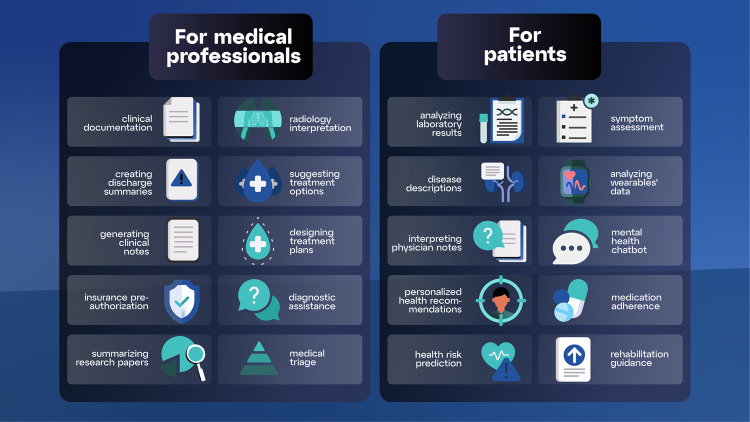
The rapid advancements in artificial intelligence (AI) have led to the development of sophisticated large language models (LLMs) such as GPT-4 and Bard. The potential implementation of LLMs in healthcare settings has already garnered considerable attention because of their diverse applications that include facilitating clinical documentation, obtaining insurance pre-authorization, summarizing research papers, or working as a chatbot to answer questions for patients about their specific data and concerns. While offering transformative potential, LLMs warrant a very cautious approach since these models are trained differently from AI-based medical technologies that are regulated already, especially within the critical context of caring for patients. The newest version, GPT-4, that was released in March, 2023, brings the potentials of this technology to support multiple medical tasks; and risks from mishandling results it provides to varying reliability to a new level. Besides being an advanced LLM, it will be able to read texts on images and analyze the context of those images. The regulation of GPT-4 and generative AI in medicine and healthcare without damaging their exciting and transformative potential is a timely and critical challenge to ensure safety, maintain ethical standards, and protect patient privacy. We argue that regulatory oversight should assure medical professionals and patients can use LLMs without causing harm or compromising their data or privacy. This paper summarizes our practical recommendations for what we can expect from regulators to bring this vision to reality.
Overview
The claims and statistics of this paper haven’t been checked yet.
Free: it reads the open-access text and checks the first 5 claims that cite a source we can check. Create a free account to check every claim.
Integrity signals
Registry
Cites
Statistics
Figures
Verification
Claims the paper makes
The claims and statistics of this paper haven’t been checked yet.
Free: it reads the open-access text and checks the first 5 claims that cite a source we can check. Create a free account to check every claim.
Claims other papers make about this one
Each is checked against this paper’s own text: does it say what the citing paper says it does?
The source backs part of the claim, not all of it — or backs it for a different population, condition or comparison.
In the citing paper
“the integration of AI and large language models (LLMs) into hospital EHR systems currently lacks a defined oversight framework (Table 1)2.”
From Preventing unrestricted and unmonitored AI experimentation in healthcare through transparency and accountability (2025) · cites this paper as [2]
Experimental — accuracy not yet measuredThe source backs part of the claim, not all of it — or backs it for a different population, condition or comparison.
In the citing paper
“The addition of large language models (LLM) into healthcare operations, including electronic health record (EHR) systems represents a transformative level of adoption and integration, changing how enterprise systems interact with algorithms; permitting the largely unconsented collection and utilization of previously unmined private data originating from the care of patients1,2.”
From Preventing unrestricted and unmonitored AI experimentation in healthcare through transparency and accountability (2025) · cites this paper as [2]
Experimental — accuracy not yet measuredThe source backs part of the claim, not all of it — or backs it for a different population, condition or comparison.
In the citing paper
“Given the unique risks faced by adolescents and young adults, such as disclosure of self-harm intent to chatbots, or the reinforcement of harmful thought patterns by algorithms, it is crucial that research efforts should prioritize the establishment of clear safety protocols and robust evaluation frameworks to ensure their ethical and responsible deployment [69].”
From The Effectiveness of AI Chatbots in Alleviating Mental Distress and Promoting Health Behaviors Among Adolescents and Young Adults: Systematic Review and Meta-Analysis (2025) · cites this paper as [69]
Experimental — accuracy not yet measuredThe cited source says what the claim attributes to it.
In the citing paper
“The real-time adaptation of LLMs and the adaptive and autodidactic functions of deep learning algorithms call for regulatory frameworks capable of addressing these systems' adaptability and self-teaching nature.”
From Balancing Privacy and Progress: A Review of Privacy Challenges, Systemic Oversight, and Patient Perceptions in AI-Driven Healthcare (2024) · cites this paper as [27]
The cited source says what the claim attributes to it.
In the citing paper
“Despite these upsides, leveraging LLMs in healthcare is complicated due to complex regulations, including data security and patient privacy.1”
From Development of secure infrastructure for advancing generative artificial intelligence research in healthcare at an academic medical center (2025) · cites this paper as [1]
10 more claims about this paper
Create a free account to see every claim other papers make about this one.
Self-check
Percentages, sums and reported differences re-computed from the paper’s own numbers.
The self-check needs the paper’s full text.
Citations
Cites
High-performance medicine: the convergence of human and artificial intelligence
Topol, E. J. (2019) · Nature Medicine · doi:10.1038/s41591-018-0300-7 · Cited by 10,450
Self-citationLarge Language Models Encode Clinical Knowledge
Singhal, K., Azizi, S., Tu, T., Mahdavi, S. S., Wei, J., Chung, H. W., Scales, N., Tanwani, A., Cole-Lewis, H., Pfohl, S., et al. (2022) · arXiv · doi:10.48550/arxiv.2212.13138 · Cited by 4,083
Large language models encode clinical knowledge
Singhal, K., Azizi, S., Tu, T., Mahdavi, S. S., Wei, J., Chung, H. W., Scales, N., Tanwani, A., Cole-Lewis, H., Pfohl, S., et al. (2023) · Nature · doi:10.1038/s41586-023-06291-2 · Cited by 4,083 · cited 1×
“Since then, GPT-4 could achieve an accuracy over 85% on the same exam 14 .”
Sallam, M. (2023) · Healthcare · doi:10.3390/healthcare11060887 · Cited by 3,126
Sallam, M. (2023) · doi:10.1101/2023.02.19.23286155 · Cited by 3,123 · cited 1×
“Systematic reviews highlighted other potential bene fi ts too such as improved scienti fi c writing, enhancing research equity, streamlining the healthcare work fl ow, cost saving, and improved personalized learning in medical education 3,4 .”
Benefits, Limits, and Risks of GPT-4 as an AI Chatbot for Medicine
Lee, P., Bubeck, S., & Petro, J. (2023) · New England Journal of Medicine · doi:10.1056/nejmsr2214184 · Cited by 1,738
Benjamens, S., Dhunnoo, P., & Meskó, B. (2020) · npj Digital Medicine · doi:10.1038/s41746-020-00324-0 · Cited by 1,215
Self-citationNagendran, M., Chen, Y., Lovejoy, C. A., Gordon, A. C., Komorowski, M., Harvey, H., Topol, E. J., Ioannidis, J. P. A., Collins, G. S., & Maruthappu, M. (2020) · BMJ · doi:10.1136/bmj.m689 · Cited by 1,152
Self-citationRegulating ChatGPT and other Large Generative AI Models
Hacker, P., Engel, A., & Mauer, M. (2023) · 2023 ACM Conference on Fairness Accountability and Transparency · doi:10.1145/3593013.3594067 · Cited by 466 · cited 1×
“In details, regulation should focus on concrete high-risk applications, and not the pre-trained model itself, and should include (i) obligations regarding transparency, (ii) risk management, (iii) non-discrimination provisions, and (iv) content moderation rules 15 .”
ChatGPT in healthcare: A taxonomy and systematic review
Li, J., Dada, A., Puladi, B., Kleesiek, J., & Egger, J. (2024) · Computer Methods and Programs in Biomedicine · doi:10.1016/j.cmpb.2024.108013 · Cited by 452
Cited by
Items 301–400 of 1,005
Monroe, C. L., Abdelhafez, Y. G., Atsina, K. B.-T., Aman, E. A., Nardo, L., & Madani, M. H. (2024) · Clinical Imaging · doi:10.1016/j.clinimag.2024.110193 · Cited by 27
Geantă, M., Bădescu, D., Chirca, N., Nechita, O. C., Radu, C. G., Rașcu, Ș., Radavoi, D. G., Sima, C., Toma, C. V., & Jinga, V. (2024) · Healthcare · doi:10.3390/healthcare12151548 · Cited by 27
Guo, Y., & Wan, Z. (2024) · IEEE International Conference on Healthcare Informatics (ICHI) · doi:10.1109/ichi61247.2024.00080 · Cited by 27
Zou, X., He, W., Huang, Y., Ouyang, Y., Zhang, Z., Wu, Y., Wu, Y., Feng, L., Wu, S., Yang, M., et al. (2024) · Journal of Medical Internet Research · doi:10.2196/54616 · Cited by 27
Mudrik, A., Nadkarni, G. N., Efros, O., Glicksberg, B. S., Klang, E., & Soffer, S. (2024) · British Journal of Haematology · doi:10.1111/bjh.19738 · Cited by 27
Global AI Governance in Healthcare: A Cross-Jurisdictional Regulatory AnalysisPreprint
Chakraborty, A., & Karhade, M. (2024) · arXiv (Cornell University) · doi:10.48550/arxiv.2406.08695 · Cited by 28
Esmaeilzadeh, P. (2025) · BMC Medical Informatics and Decision Making · doi:10.1186/s12911-025-03182-6 · Cited by 26
Buhr, C. R., Ernst, B. P., Blaikie, A. J., Smith, H., Kelsey, T., Matthias, C., Fleischmann, M., Jungmann, F., Alt, J., Brandts, C., et al. (2025) · European Archives of Oto-Rhino-Laryngology · doi:10.1007/s00405-024-09153-3 · Cited by 26
Using Large Language Models for Chronic Disease Management Tasks: Scoping Review
Mukalazi, S. H., Ouyang, J., Namatovu, H. K., Ssemaluulu, P. M., Kimbugwe, N., Orach, C. G., & Waiswa, P. (2025) · JMIR Medical Informatics · doi:10.2196/66905 · Cited by 27
Perception of Race and Sex Diversity in Ophthalmology by Artificial Intelligence: A DALL E-2 Study
Choudhry, H. S., Toor, U., Sanchez, A. J., & Mian, S. (2023) · Clinical ophthalmology · doi:10.2147/opth.s427296 · Cited by 26
Eckrich, J., Ellinger, J., Cox, A., Stein, J., Ritter, M., Blaikie, A. J., Kühn, S., & Buhr, C. R. (2024) · BJUI Compass · doi:10.1002/bco2.359 · Cited by 26
TRUSTLLM:Trustworthiness in Large Language Models
Huang, Y., & Vanschoren, J. (2024) · TU/e Research Portal · Cited by 27
Zheng, N. S., Keloth, V. K., You, K., Kats, D., Li, D. K., Deshpande, O., Sachar, H., Xu, H., Laine, L., & Shung, D. L. (2024) · Gastroenterology · doi:10.1053/j.gastro.2024.09.014 · Cited by 25
Choi, H., Lee, D., Kang, Y.-K., & Suh, M. (2025) · European Journal of Nuclear Medicine and Molecular Imaging · doi:10.1007/s00259-025-07101-9 · Cited by 25
Nguyen, O. N., Amin, D., Bennett, J. P., Hetlevik, Ø., Malik, S., Tout, A., Vornhagen, H., & Vellinga, A. (2025) · Journal of Antimicrobial Chemotherapy · doi:10.1093/jac/dkaf077 · Cited by 25
Wei, J., Wang, X., Huang, M., Xu, Y., & Yang, W. (2025) · Journal of Medical Systems · doi:10.1007/s10916-025-02227-7 · Cited by 25
Best Practices for the Safe Use of Large Language Models and Other Generative AI in Radiology
Yi, P. H., Haver, H. L., Jeudy, J. J., Kim, W., Kitamura, F., Oluyemi, E. T., Smith, A. D., Moy, L. P., & Parekh, V. S. (2025) · Radiology · doi:10.1148/radiol.241516 · Cited by 25
Bayesian Concept Bottleneck Models with LLM Priors
Feng, J., Kothari, A., Zier, L. S., Singh, C., & Tan, Y. S. (2025) · neural information processing systems · doi:10.52202/085713-3141 · Cited by 24
Responsible and Ethical Use of AI in Education: Are We Forcing a Square Peg into a Round Hole?
Amigud, A., & Pell, D. J. (2025) · World · doi:10.3390/world6020081 · Cited by 24
Haque, M. A., & Siddique, H. R. (2025) · Computational Biology and Chemistry · doi:10.1016/j.compbiolchem.2025.108611 · Cited by 24
Chopra, S., Juarez, K., Fogarty, J. A., & Munson, S. A. (2025) · Proceedings of the ACM on Interactive Mobile Wearable and Ubiquitous Technologies · doi:10.1145/3749503 · Cited by 25
Healthcare: A Growing Role for Large Language Models and Generative AI
Pahune, S. A., & Rewatkar, N. (2023) · International Journal for Research in Applied Science and Engineering Technology · doi:10.22214/ijraset.2023.55573 · Cited by 24
Large language modeling and classical AI methods for the future of healthcare
Banerjee, S. K., Dunn, P. J., Conard, S. E., & Ng, R. (2023) · Journal of Medicine Surgery and Public Health · doi:10.1016/j.glmedi.2023.100026 · Cited by 24
Artificial Intelligence in the Paradigm Shift of Pharmaceutical Sciences: A Review
Tade, R. S., Jain, S. N., Satyavijay, J. T., Shah, P. N., Bari, T. D., Patil, T. M., & Shah, R. P. (2023) · Nano Biomedicine and Engineering · doi:10.26599/nbe.2023.9290043 · Cited by 24
Langford, B. J., Branch‐Elliman, W., Nori, P., Marra, A. R., & Bearman, G. M. (2024) · Open Forum Infectious Diseases · doi:10.1093/ofid/ofae053 · Cited by 25
Uncertainty in Visual Generative AI
Combs, K., Moyer, A., & Bihl, T. (2024) · Algorithms · doi:10.3390/a17040136 · Cited by 24
Iqbal, U., Lee, L. T., Rahmanti, A. R., Celi, L. A., & Li, Y. (2024) · Journal of the American Medical Informatics Association · doi:10.1093/jamia/ocae067 · Cited by 24
Take a shot! Natural language control of intelligent robotic X-ray systems in surgery
Killeen, B. D., Chaudhary, S., Osgood, G. M., & Unberath, M. (2024) · International Journal of Computer Assisted Radiology and Surgery · doi:10.1007/s11548-024-03120-3 · Cited by 24
Kaya, K., Gietzen, C., Hahnfeldt, R., Zoubi, M. S. A., Emrich, T., Halfmann, M. C., Sieren, M. M., Elser, Y., Krumm, P., Brendel, J. M., et al. (2024) · Journal of Cardiovascular Magnetic Resonance · doi:10.1016/j.jocmr.2024.101068 · Cited by 25
Suh, C. H., Yi, J., Shim, W. H., & Heo, H. (2024) · Korean Journal of Radiology · doi:10.3348/kjr.2024.0788 · Cited by 23
Assessment of Artificial Intelligence Chatbot Responses to Common Patient Questions on Bone Sarcoma
Khabaz, K., Newman‐Hung, N. J., Kallini, J. R., Kendal, J. K., Christ, A. B., Bernthal, N. M., & Wessel, L. E. (2024) · Journal of Surgical Oncology · doi:10.1002/jso.27966 · Cited by 23
Using Large Language Models to Retrieve Critical Data from Clinical Processes and Business Rules
Yu, Y., Gomez-Cabello, C. A., Makarova, S., Parte, Y., Borna, S., Haider, S. A., Genovese, A., Prabha, S., & Forte, A. J. (2024) · Bioengineering · doi:10.3390/bioengineering12010017 · Cited by 23
Siepmann, R. M., Baldini, G., Schmidt, C. S., Truhn, D., Müller‐Franzes, G. A., Dada, A., Kleesiek, J., Nensa, F., & Hosch, R. (2025) · Healthcare Analytics · doi:10.1016/j.health.2024.100378 · Cited by 23
Winkler, P. W., Zsidai, B., Senorski, E. H., Pruneski, J. A., Hirschmann, M. T., Ley, C., Tischer, T., Herbst, E., Pareek, A., Musahl, V., et al. (2025) · Journal of Experimental Orthopaedics · doi:10.1002/jeo2.70247 · Cited by 23
Chen, R.-J., Wu, M.-S., Tsai, L.-W., Chang, S.-S., Hsiao, S. S., & Lo, Y. S. (2026) · Journal of Medical Internet Research · doi:10.2196/81604 · Cited by 23
Marra, A. R., Langford, B. J., Nori, P., & Bearman, G. M. (2023) · Antimicrobial Stewardship & Healthcare Epidemiology · doi:10.1017/ash.2023.494 · Cited by 23
Large language models and rheumatology: are we there yet?
Benavent, D., & Madrid-García, A. (2024) · Rheumatology Advances in Practice · doi:10.1093/rap/rkae119 · Cited by 23
Exploring the Impact of Large Language Models on Disease Diagnosis
Almubark, I. (2025) · IEEE Access · doi:10.1109/access.2025.3527025 · Cited by 23
The dawn of a new era: can machine learning and large language models reshape QSP modeling?
Androulakis, I. P., Cucurull-Sanchez, L., Kondic, A., Mehta, K., Pichardo, C., Pryor, M., & Renardy, M. (2025) · Journal of Pharmacokinetics and Pharmacodynamics · doi:10.1007/s10928-025-09984-5 · Cited by 22
Akbasli, I. T., Bırbılen, A. Z., & Tekşam, Ö. (2025) · BMC Medical Informatics and Decision Making · doi:10.1186/s12911-025-02871-6 · Cited by 22
Emerging Data Practices: Data Work in the Era of Large Language Models
Garcia, A. A., Candello, H. C. D. S. P., Badillo-Urquiola, K. A., & Wong-Villacrés, M. (2025) · CHI Conference on Human Factors in Computing Systems · doi:10.1145/3706598.3714069 · Cited by 24
Casino, F. (2025) · Technology in Society · doi:10.1016/j.techsoc.2025.102956 · Cited by 24
Zhang, W., Zhang, Q., Wang, P., Zhou, X., & Wu, Y. (2025) · Asian Journal of Psychiatry · doi:10.1016/j.ajp.2025.104596 · Cited by 22
Martina, S., Cannatà, D., Paduano, T., Schettino, V., Giordano, F., & Galdi, M. (2025) · Dentistry Journal · doi:10.3390/dj13080343 · Cited by 22
Waldock, W. J., Guni, A., Darzi, A. W., & Ashrafian, H. (2026) · PLOS Digital Health · doi:10.1371/journal.pdig.0001310 · Cited by 23
Abbas, K., Santis, F. D., & Kolbjørnsrud, V. (2026) · Journal of Accounting and Public Policy · doi:10.1016/j.jaccpubpol.2026.107433 · Cited by 22
Meduri, K., Gonaygunta, H., Nadella, G. S., Pawar, P. P., & Kumar, D. (2024) · IJARCCE · doi:10.17148/ijarcce.2024.13114 · Cited by 22
Enhancing Medical Diagnostics: Integrating AI for precise Brain Tumour Detection
Sinha, A., & Kumar, T. (2024) · Procedia Computer Science · doi:10.1016/j.procs.2024.04.045 · Cited by 23
Rise of the Machines - Artificial Intelligence in Healthcare Epidemiology
Non, L. R., Marra, A. R., & İnce, D. (2024) · Current Infectious Disease Reports · doi:10.1007/s11908-024-00854-8 · Cited by 23
Forecasting the impact of artificial intelligence on clinical pharmacy practice
Wong, A., Flanagan, T., Covington, E. W., Nguyen, E., Linn, D. D., Brummel, G. L., Hoffmaster, B. S., Isaacs, D. M., & Kane‐Gill, S. L. (2025) · JACCP JOURNAL OF THE AMERICAN COLLEGE OF CLINICAL PHARMACY · doi:10.1002/jac5.70004 · Cited by 22
Kaiser, K. N., Hughes, A. J., Yang, A. D., Mohanty, S., Maatman, T. K., Gonzalez, A. A., Patzer, R. E., Bilimoria, K. Y., & Ellis, R. J. (2025) · Surgery · doi:10.1016/j.surg.2025.109267 · Cited by 22
Revolutionizing Healthcare with Generative Artificial Intelligence Technologies
Rashidieranjbar, F., Farhadi, A., & Zamanifar, A. (2025) · Information systems engineering and management · doi:10.1007/978-3-031-76710-4_10 · Cited by 21
Ranisch, R., & Haltaufderheide, J. (2025) · Digital Society · doi:10.1007/s44206-025-00161-2 · Cited by 21
Rutecka, P., Cicha, K., Rizun, M., & Strzelecki, A. (2025) · IEEE Transactions on Learning Technologies · doi:10.1109/tlt.2025.3587081 · Cited by 22
Artificial Intelligence in Astronomical Optical Telescopes: Present Status and Future Perspectives
Huang, K., Hu, T., Cai, J., Pan, X.-S., Hou, Y., Xu, L., Wang, H., Zhang, Y., & Cui, X. (2024) · Universe · doi:10.3390/universe10050210 · Cited by 21
Impact of high-quality, mixed-domain data on the performance of medical language models
Griot, M., Hemptinne, C., Vanderdonckt, J. M., & Yüksel, D. (2024) · Journal of the American Medical Informatics Association · doi:10.1093/jamia/ocae120 · Cited by 21
Large Language Models in Orthopaedics: Definitions, Uses, and Limitations
Yao, J. J., Aggarwal, M., Lopez, R. D., & Namdari, S. (2024) · Journal of Bone and Joint Surgery · doi:10.2106/jbjs.23.01417 · Cited by 22
Schoch, J., Schmelz, H. U., Strauch, A., Borgmann, H., & Nestler, T. (2024) · World Journal of Urology · doi:10.1007/s00345-024-05137-4 · Cited by 21
Nowrozy, R., Ahmed, K. E. U., & Wang, H. (2025) · PLoS ONE · doi:10.1371/journal.pone.0310553 · Cited by 21
Comparative Performance of Transformer Models for Cultural Heritage in NLP Tasks
Suryanto, T. L. M., Wibawa, A. P., Hariyono, H., & Nafalski, A. (2025) · Advance Sustainable Science Engineering and Technology · doi:10.26877/asset.v7i1.1211 · Cited by 21
Finzel, B. (2025) · Pflügers Archiv - European Journal of Physiology · doi:10.1007/s00424-025-03067-7 · Cited by 21
Zohny, H., Allen, J. W., Wilkinson, D. J. C., & Savulescu, J. (2025) · Journal of Medical Ethics · doi:10.1136/jme-2024-110256 · Cited by 21
Large Language Models as Conversational Movie Recommenders: A User StudyPreprint
Sun, R., Li, X., Akella, A., & Konstan, J. A. (2024) · arXiv · doi:10.48550/arxiv.2404.19093 · Cited by 22
ChatGPT as a Tool for Biostatisticians: A Tutorial on Applications, Opportunities, and Limitations
Dobler, D., Binder, H., Boulesteix, A., Igelmann, J., Köhler, D., Mansmann, U., Pauly, M., Scherag, A., Schmid, M., Al Tawil, A., et al. (2025) · Statistics in Medicine · doi:10.1002/sim.70263 · Cited by 20
Digital Dialogue—How Youth Are Interacting With Chatbots
Pratt, N., Madhavan, R., & Weleff, J. (2024) · JAMA Pediatrics · doi:10.1001/jamapediatrics.2024.0084 · Cited by 20
Ayanwale, M. A., Adelana, O. P., Bamiro, N. B., Olatunbosun, S. O., Idowu, K. O., & Adewale, K. A. (2025) · F1000Research · doi:10.12688/f1000research.161637.1 · Cited by 21
Salybekov, A. A., Wolfien, M., Hahn, W., Hidaka, S., & Kobayashi, S. (2024) · Biomedicines · doi:10.3390/biomedicines12030606 · Cited by 20
Buhr, C. R., Smith, H., Huppertz, T., Bahr‐Hamm, K., Matthias, C., Cuny, C., Snijders, J. P., Ernst, B. P., Blaikie, A. J., Kelsey, T., et al. (2024) · Acta Oto-Laryngologica · doi:10.1080/00016489.2024.2352843 · Cited by 20
Singh, B., & Kaunert, C. (2024) · Engineering cyber-physical systems and critical infrastructures · doi:10.1007/978-3-031-65434-3_7 · Cited by 27
Generating colloquial radiology reports with large language models
Tang, C. C., Nagesh, S., Fussell, D. A., Glavis‐Bloom, J., Mishra, N., Li, C. H., Cortes, G., Hill, R., Zhao, J., Gordon, A., et al. (2024) · Journal of the American Medical Informatics Association · doi:10.1093/jamia/ocae223 · Cited by 20
Foundation models in medicine are a social experiment: time for an ethical framework
Ranisch, R., & Haltaufderheide, J. (2025) · npj Digital Medicine · doi:10.1038/s41746-025-01924-4 · Cited by 19
Scott, I. A., Reddy, S., Kelly, T., Miller, T., & van der Vegt, A. H. (2025) · The Medical Journal of Australia · doi:10.5694/mja2.70057 · Cited by 20
Kim, R., Margolis, A., Barile, J., Han, K., Kalash, S., Papaioannou, H., Krevskaya, A., & Milanaik, R. L. (2024) · Journal of Developmental & Behavioral Pediatrics · doi:10.1097/dbp.0000000000001255 · Cited by 19
Hanai, A., Ishikawa, T., Kawauchi, S., Iida, Y., & Kawakami, E. (2024) · BMJ Health & Care Informatics · doi:10.1136/bmjhci-2023-100924 · Cited by 19
Integrating Vision‐Language Models for Accelerated High‐Throughput Nutrition Screening
Ma, P., Wu, Y., Yu, N., Jia, X., He, Y., Zhang, Y., Backes, M., Wang, Q., & Wei, C. (2024) · Advanced Science · doi:10.1002/advs.202403578 · Cited by 19
Chasing sleep physicians: ChatGPT-4o on the interpretation of polysomnographic results
Seifen, C., Huppertz, T., Gouveris, H. T., Bahr‐Hamm, K., Pordzik, J., Eckrich, J., Smith, H., Kelsey, T., Blaikie, A. J., Matthias, C., et al. (2024) · European Archives of Oto-Rhino-Laryngology · doi:10.1007/s00405-024-08985-3 · Cited by 19
Montagna, M., Chiabrando, F., LORENZO, R. D., & Rovere, P. Q. (2025) · JMIR Medical Education · doi:10.2196/55709 · Cited by 19
Sallam, M., Al-Mahzoum, K., & Sallam, M. (2024) · Mesopotamian Journal of Artificial Intelligence in Healthcare · doi:10.58496/mjaih/2024/019 · Cited by 19
Generative AI Under Scrutiny: Assessing the Risks and Challenges in Diverse Domains
Nidhisree, C., Paul, A., Venunadh, A., & Bhowmick, R. S. (2024) · IEEE International Conference on Cybernetics, Cognition and Machine Learning Applications (ICCCMLA) · doi:10.1109/icccmla63077.2024.10871350 · Cited by 19
Shi, B., Chen, L., Pang, S., Wang, Y., Wang, S., Li, F., Zhao, W., Guo, P., Zhang, L., Fan, C., et al. (2025) · Journal of Medical Internet Research · doi:10.2196/67253 · Cited by 19
Generative AI poses ethical challenges for open science
Ación, L., Rajngewerc, M., Randall, G., & Etcheverry, L. (2023) · Nature Human Behaviour · doi:10.1038/s41562-023-01740-4 · Cited by 19
Liu, C., Zheng, J., Liu, Y., Wang, X., Zhang, Y., Fu, Q., Yu, W., Yu, T., Jiang, W., Wang, D., et al. (2025) · International Journal for Equity in Health · doi:10.1186/s12939-025-02581-5 · Cited by 18
Jiang, P., Han, J., & Ahmed‐Kristensen, S. (2025) · Sustainable Futures · doi:10.1016/j.sftr.2025.101094 · Cited by 18
Perspectives on the application of large language models in healthcare
Андрейченко, А. Е., & Gusev, A. V. (2024) · National Health Care (Russia) · doi:10.47093/2713-069x.2023.4.4.48-55 · Cited by 18
Ye, C. (2024) · Informatics and Health · doi:10.1016/j.infoh.2024.07.001 · Cited by 18
Malik, S., Kharel, H., Dahiya, D. S., Ali, H., Blaney, H. L., Singh, A. D., Dhar, J., Perisetti, A., Facciorusso, A., Chandan, S., et al. (2024) · Annals of Gastroenterology · doi:10.20524/aog.2024.0907 · Cited by 19
Assessing the possibility of using large language models in ocular surface diseases
Ling, Q., Zeng, Y.-M., Qi, H., Qian, X.-Z., Hu, J., Pei, C.-G., Wei, H., Zou, J., Chen, C., Wang, X., et al. (2024) · International Journal of Ophthalmology · doi:10.18240/ijo.2025.01.01 · Cited by 18
Kopka, M., Napierala, H., Privoznik, M., Sapunova, D., Zhang, S., & Feufel, M. A. (2024) · Scientific Reports · doi:10.1038/s41598-024-83844-z · Cited by 18
ChemLit-QA: a human evaluated dataset for chemistry RAG tasks
Wellawatte, G. P., Guo, H., Lederbauer, M., Borisova, A., Hart, M., Brucka, M., & Schwaller, P. (2025) · Machine Learning Science and Technology · doi:10.1088/2632-2153/adc2d6 · Cited by 18
Guiding responsible AI in healthcare in the Philippines
Sarmiento, R. F., Overgaard, S. M., Gai, C., Overgaard, J. D., & Ohde, J. W. (2025) · npj Digital Medicine · doi:10.1038/s41746-025-01755-3 · Cited by 18
In Generative AI we Trust: Can Chatbots Effectively Verify Political Information?Preprint
Kuznetsova, E., Makhortykh, M., Vziatysheva, V., Stolze, M., Baghumyan, A., & Urman, A. (2023) · Weizenbaum Library (Weizenbaum Institute) · doi:10.48550/arxiv.2312.13096 · Cited by 18
Evolving AI Collectives to Enhance Human Diversity and Enable Self-Regulation
Lai, S., Potter, Y., Kim, J., Zhuang, R., Song, D. X., & Evans, J. A. (2024) · International Conference on Machine Learning · doi:10.48550/arxiv.2402.12590 · Cited by 19
Chu, B., Modi, N. D., Menz, B. D., Bacchi, S., Kichenadasse, G., Paterson, C. C., Kovoor, J. G., Ramsey, I., Logan, J. M., Wiese, M. D., et al. (2025) · Frontiers in Public Health · doi:10.3389/fpubh.2025.1584348 · Cited by 17
Long-Term Follow-Up Care After Treatment for Primary Breast Cancer: Strategies and Considerations
Franzoi, M. A., Janni, W. J., Erdmann-Sager, J., Kline‐Quiroz, C. M., Schäffler, H., Pfister, K., Fazzalari, A., & Vaz-Luís, I. (2025) · American Society of Clinical Oncology Educational Book · doi:10.1200/edbk-25-473472 · Cited by 18
Technosolutionism and the empathetic medical chatbot
Sharon, T. (2025) · AI & Society · doi:10.1007/s00146-025-02441-4 · Cited by 17
A Case Study on the Generative AI Project Life Cycle Using Large Language Models
Bandi, A., & Kagitha, H. (2024) · EPiC series in computing · doi:10.29007/hvzc · Cited by 18
Using large language model (LLM) to identify high-burden informal caregivers in long-term care
Chien, S.-C., Yen, C.-M., Chang, Y.-H., Chen, Y., Liu, C.-C., Hsiao, Y.-P., Yang, P.-Y., Lin, H.-M., Yang, T.-E., Lu, X., et al. (2024) · Computer Methods and Programs in Biomedicine · doi:10.1016/j.cmpb.2024.108329 · Cited by 17
Navigating the integration of ChatGPT in UAE’s government sector: challenges and opportunities
Goher, G. (2024) · Digital Transformation and Society · doi:10.1108/dts-03-2024-0024 · Cited by 17
Ahmed, A. A., & Ali, M. K. (2024) · International Journal of Engineering Trends and Technology · doi:10.14445/22315381/ijett-v72i9p107 · Cited by 18
Unlocking the Potentials of Large Language Models in Orthodontics: A Scoping Review
Zheng, J., Ding, X., Pu, J. J., Chung, S. M., Ai, Q. Y. H., Hung, K. F., & Shan, Z. (2024) · Bioengineering · doi:10.3390/bioengineering11111145 · Cited by 18
Metadata
- Authors
- Meskó, B., & Topol, E. J.
- Affiliations
- Semmelweis University (HU)
- Scripps Research Institute (US)
- Corresponding author
- Meskó, Bertalan
- Venue
- npj Digital Medicine
- Published
- 2023-07-06
- Volume
- 6
- Issue
- 1
- Pages
- 120-120
- ISSN
- 2398-6352 (ISSN-L)
- PMC
- PMC10326069
- OpenAlex
- W4383346782
- Semantic Scholar
- 0893549771094fac547432cb4f84e9605c911a86
- Cited by
- 1,047
- References
- 11
- Citations by year
- 2026: 300 · 2025: 336 · 2024: 336 · 2023: 75
- FWCI
- 41.69
- Type
- journal article
- Language
- en
- Open access
- gold
- doi.org
- Licence
- cc-by
- creativecommons.org/licenses/by/4.0 (tdm)
- creativecommons.org/licenses/by/4.0 (vor)
- Locations
- npj Digital Medicine (publishedVersion, cc-by)
- PubMed Central (publishedVersion, cc-by)
- PubMed (publishedVersion)
- DOAJ (DOAJ: Directory of Open Access Journals) (submittedVersion, cc-by-sa)
- Topics
- Health Sciences › Medicine › Health Informatics › Artificial Intelligence in Healthcare and Education
- Physical Sciences › Computer Science › Artificial Intelligence › Ethics and Social Impacts of AI
- Social Sciences › Law › Digitalization, Law, and Regulation
- Keywords
- large language models, generative AI, health care regulation, regulatory oversight, GPT-4, AI safety, patient privacy, medical ethics, clinical documentation, AI chatbots, image analysis
About these checks
Registry, retraction, Cites and statistics results are computed, not judged, with one exception: a printed reference that no index lists is read once by a model before it counts as a citation error. Claims are extracted by a model and kept only when their quote appears verbatim in the text; each cited source is then checked, with a model’s help, for whether it says what the claim relies on. Those verdicts can be wrong — read the claim’s quote and the cited source before relying on one.
Statistics and arithmetic are recomputed, not judged.
Confidence bands are shown only for fields calibrated on our annotated test set. None is calibrated yet, so no band is shown.
What counts as a claim ›How we measure confidence ›How we check this ›
Are you an author, or do you see a problem with this page? Request a review
Data sources
Bibliographic data: Semantic Scholar, OpenAlex, Crossref.
Contains information from the Semantic Scholar Academic Graph Datasets, made available under the ODC Attribution License (ODC-BY 1.0).
Semantic Scholar’s data is described in: Kinney, R., et al. (2023). The Semantic Scholar Open Data Platform. arXiv:2301.10140.
