

The imperative for regulatory oversight of large language models (or generative AI) in healthcare
Open accessThe DOI matches its Crossref record; 16 of the 16 references it cites were found in a registry or an index.
Abstract
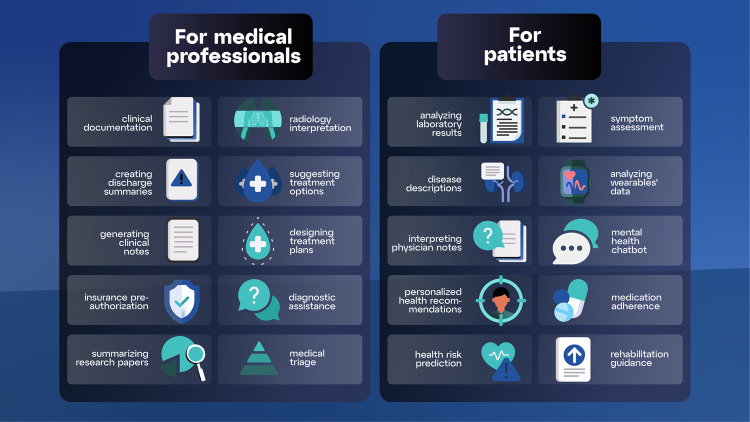
The rapid advancements in artificial intelligence (AI) have led to the development of sophisticated large language models (LLMs) such as GPT-4 and Bard. The potential implementation of LLMs in healthcare settings has already garnered considerable attention because of their diverse applications that include facilitating clinical documentation, obtaining insurance pre-authorization, summarizing research papers, or working as a chatbot to answer questions for patients about their specific data and concerns. While offering transformative potential, LLMs warrant a very cautious approach since these models are trained differently from AI-based medical technologies that are regulated already, especially within the critical context of caring for patients. The newest version, GPT-4, that was released in March, 2023, brings the potentials of this technology to support multiple medical tasks; and risks from mishandling results it provides to varying reliability to a new level. Besides being an advanced LLM, it will be able to read texts on images and analyze the context of those images. The regulation of GPT-4 and generative AI in medicine and healthcare without damaging their exciting and transformative potential is a timely and critical challenge to ensure safety, maintain ethical standards, and protect patient privacy. We argue that regulatory oversight should assure medical professionals and patients can use LLMs without causing harm or compromising their data or privacy. This paper summarizes our practical recommendations for what we can expect from regulators to bring this vision to reality.
Overview
The claims and statistics of this paper haven’t been checked yet.
Free: it reads the open-access text and checks the first 5 claims that cite a source we can check. Create a free account to check every claim.
Integrity signals
Registry
Cites
Statistics
Figures
Verification
Claims the paper makes
The claims and statistics of this paper haven’t been checked yet.
Free: it reads the open-access text and checks the first 5 claims that cite a source we can check. Create a free account to check every claim.
Claims other papers make about this one
Each is checked against this paper’s own text: does it say what the citing paper says it does?
The source backs part of the claim, not all of it — or backs it for a different population, condition or comparison.
In the citing paper
“the integration of AI and large language models (LLMs) into hospital EHR systems currently lacks a defined oversight framework (Table 1)2.”
From Preventing unrestricted and unmonitored AI experimentation in healthcare through transparency and accountability (2025) · cites this paper as [2]
Experimental — accuracy not yet measuredThe source backs part of the claim, not all of it — or backs it for a different population, condition or comparison.
In the citing paper
“The addition of large language models (LLM) into healthcare operations, including electronic health record (EHR) systems represents a transformative level of adoption and integration, changing how enterprise systems interact with algorithms; permitting the largely unconsented collection and utilization of previously unmined private data originating from the care of patients1,2.”
From Preventing unrestricted and unmonitored AI experimentation in healthcare through transparency and accountability (2025) · cites this paper as [2]
Experimental — accuracy not yet measuredThe source backs part of the claim, not all of it — or backs it for a different population, condition or comparison.
In the citing paper
“Given the unique risks faced by adolescents and young adults, such as disclosure of self-harm intent to chatbots, or the reinforcement of harmful thought patterns by algorithms, it is crucial that research efforts should prioritize the establishment of clear safety protocols and robust evaluation frameworks to ensure their ethical and responsible deployment [69].”
From The Effectiveness of AI Chatbots in Alleviating Mental Distress and Promoting Health Behaviors Among Adolescents and Young Adults: Systematic Review and Meta-Analysis (2025) · cites this paper as [69]
Experimental — accuracy not yet measuredThe cited source says what the claim attributes to it.
In the citing paper
“The real-time adaptation of LLMs and the adaptive and autodidactic functions of deep learning algorithms call for regulatory frameworks capable of addressing these systems' adaptability and self-teaching nature.”
From Balancing Privacy and Progress: A Review of Privacy Challenges, Systemic Oversight, and Patient Perceptions in AI-Driven Healthcare (2024) · cites this paper as [27]
The cited source says what the claim attributes to it.
In the citing paper
“Despite these upsides, leveraging LLMs in healthcare is complicated due to complex regulations, including data security and patient privacy.1”
From Development of secure infrastructure for advancing generative artificial intelligence research in healthcare at an academic medical center (2025) · cites this paper as [1]
10 more claims about this paper
Create a free account to see every claim other papers make about this one.
Self-check
Percentages, sums and reported differences re-computed from the paper’s own numbers.
The self-check needs the paper’s full text.
Citations
Cites
High-performance medicine: the convergence of human and artificial intelligence
Topol, E. J. (2019) · Nature Medicine · doi:10.1038/s41591-018-0300-7 · Cited by 10,450
Self-citationLarge Language Models Encode Clinical Knowledge
Singhal, K., Azizi, S., Tu, T., Mahdavi, S. S., Wei, J., Chung, H. W., Scales, N., Tanwani, A., Cole-Lewis, H., Pfohl, S., et al. (2022) · arXiv · doi:10.48550/arxiv.2212.13138 · Cited by 4,083
Large language models encode clinical knowledge
Singhal, K., Azizi, S., Tu, T., Mahdavi, S. S., Wei, J., Chung, H. W., Scales, N., Tanwani, A., Cole-Lewis, H., Pfohl, S., et al. (2023) · Nature · doi:10.1038/s41586-023-06291-2 · Cited by 4,083 · cited 1×
“Since then, GPT-4 could achieve an accuracy over 85% on the same exam 14 .”
Sallam, M. (2023) · Healthcare · doi:10.3390/healthcare11060887 · Cited by 3,126
Sallam, M. (2023) · doi:10.1101/2023.02.19.23286155 · Cited by 3,123 · cited 1×
“Systematic reviews highlighted other potential bene fi ts too such as improved scienti fi c writing, enhancing research equity, streamlining the healthcare work fl ow, cost saving, and improved personalized learning in medical education 3,4 .”
Benefits, Limits, and Risks of GPT-4 as an AI Chatbot for Medicine
Lee, P., Bubeck, S., & Petro, J. (2023) · New England Journal of Medicine · doi:10.1056/nejmsr2214184 · Cited by 1,738
Benjamens, S., Dhunnoo, P., & Meskó, B. (2020) · npj Digital Medicine · doi:10.1038/s41746-020-00324-0 · Cited by 1,215
Self-citationNagendran, M., Chen, Y., Lovejoy, C. A., Gordon, A. C., Komorowski, M., Harvey, H., Topol, E. J., Ioannidis, J. P. A., Collins, G. S., & Maruthappu, M. (2020) · BMJ · doi:10.1136/bmj.m689 · Cited by 1,152
Self-citationRegulating ChatGPT and other Large Generative AI Models
Hacker, P., Engel, A., & Mauer, M. (2023) · 2023 ACM Conference on Fairness Accountability and Transparency · doi:10.1145/3593013.3594067 · Cited by 466 · cited 1×
“In details, regulation should focus on concrete high-risk applications, and not the pre-trained model itself, and should include (i) obligations regarding transparency, (ii) risk management, (iii) non-discrimination provisions, and (iv) content moderation rules 15 .”
ChatGPT in healthcare: A taxonomy and systematic review
Li, J., Dada, A., Puladi, B., Kleesiek, J., & Egger, J. (2024) · Computer Methods and Programs in Biomedicine · doi:10.1016/j.cmpb.2024.108013 · Cited by 452
Cited by
Items 601–700 of 1,005
Ni, W., & Li, J. (2026) · Frontiers in Psychology · doi:10.3389/fpsyg.2026.1856854 · Cited by 6
Arnaout, A., Gill, P., Virani, A., Flatt, A., Prodan‐Bhalla, N., Byres, D., Stowe, M., Saremi, A., Coss, M., Tatto, M., et al. (2024) · Healthcare Management Forum · doi:10.1177/08404704241264819 · Cited by 6
Naldi, L., Bettoli, V., Santoro, E., Valetto, M. R., Bolzon, A., Cassalia, F., Cazzaniga, S., Cima, S., Danese, A., Emendi, S., et al. (2024) · Dermatology Reports · doi:10.4081/dr.2024.10138 · Cited by 6
Harnessing Generative AI for Engineering and Product Design
Sakshi, Sharma, C. B., Verma, G., & Chanana, N. (2025) · Wiley eBooks · doi:10.1002/9781394271078.ch22 · Cited by 6
Epilepsy surgery candidate identification with artificial intelligence: An implementation study
Tan, S., Goh, R., Wright, A., Ng, J. S., Hains, L. R., Kovoor, J. J., Stretton, B., Booth, A. E. C., Satheakeerthy, S., Howson, S. A., et al. (2025) · Journal of Clinical Neuroscience · doi:10.1016/j.jocn.2025.111144 · Cited by 6
AI Gym Trainer and Fitness Tracker using GPT- LLM and Prompting Techniques
Bhattacharya, H., Kalia, R., & Yadav, S. S. (2024) · International Conference on Advances in Computing, Communication and Networking (ICAC2N) · doi:10.1109/icac2n63387.2024.10895114 · Cited by 6
Modise, L. M., Avanaki, M. A., Ameen, S., Celi, L. A., Chen, V. X. Y., Cordes, A., Elmore, M., Fiske, A., Gallifant, J., Hayes, M., et al. (2025) · PLOS Digital Health · doi:10.1371/journal.pdig.0000495 · Cited by 6
SEISMIC-HF 1: key findings from AHA24 and implications for remote cardiac monitoring
Cheema, B. S., & Tibrewala, A. (2025) · Heart Failure Reviews · doi:10.1007/s10741-025-10514-1 · Cited by 6
Reichenpfader, D., Affolter, L., Gabarron, E., & Denecke, K. (2025) · Studies in Health Technology and Informatics · doi:10.3233/shti250221 · Cited by 3
Artificial Intelligence: How It Changes the Landscape for Work Design Research and Practice
Bienefeld, N., & Grote, G. (2025) · Oxford University Press eBooks · doi:10.1093/oso/9780197692554.003.0019 · Cited by 6
Seifen, C., Huppertz, T., Bahr‐Hamm, K., Gouveris, H. T., Pordzik, J., Eckrich, J., Matthias, C., Smith, H., Kelsey, T., Blaikie, A. J., et al. (2025) · Nature and Science of Sleep · doi:10.2147/nss.s536823 · Cited by 6
Natural Language Processing and Large Language Models
Wong, G. C., & Chung, K. C. (2025) · Hand Clinics · doi:10.1016/j.hcl.2025.08.004 · Cited by 6
Mudumbai, S. C., Chung, P., Chen, J., Litake, O., Regala, S., Madhok, J., Krause, M., Pearl, R. G., Boateng, A., & Gabriel, R. A. (2025) · A&A Practice · doi:10.1213/xaa.0000000000002057 · Cited by 6
Individualized Medicine in the Era of Artificial Intelligence
Lazaridis, K. N., Klee, E. W., Curry, T. B., Ortega, V. E., Bobo, W. V., Athreya, A. P., & Samsonraj, R. M. (2025) · Mayo Clinic Proceedings · doi:10.1016/j.mayocp.2025.07.028 · Cited by 6
Papneja, H., & Devaraj, S. (2025) · Journal of Operations Management · doi:10.1002/joom.70026 · Cited by 8
Generative AI Use and Its Impact on Nurses' Decision-Making: A Systematic Review
Kwon, M., & Kim, S. G. (2026) · Journal of Korean Academy of Nursing Administration · doi:10.11111/jkana.2025.0078 · Cited by 6
KOÇ, A., Ataş, A. E., Yosunkaya, Ş., & Vatansev, H. (2026) · Frontiers in Medicine · doi:10.3389/fmed.2026.1761025 · Cited by 6
Bokan, R. R., Malhotra, R., Vatsa, M., Bisht, K., Singla, M., & Choudhary, R. (2026) · Cureus · doi:10.7759/cureus.105503 · Cited by 6
Artificial Intelligence in Diabetes Care
Dubský, M., Liegertová, M., Bém, R., Sojáková, D., Fejfarová, V., & Jude, E. B. (2026) · Diabetes Obesity and Metabolism · doi:10.1111/dom.70720 · Cited by 7
Kara, A. V., HARMANCI, H., & Yılmaz, Y. (2026) · BMC Medical Education · doi:10.1186/s12909-026-09108-8 · Cited by 6
Vázquez, S. J., Sampedro, F. J. S., & Ruíz, N. H. (2026) · RIED Revista Iberoamericana de Educación a Distancia · doi:10.5944/ried.47225 · Cited by 6
Renney, H., Nethercott, M., Renney, N., & Hayes, P. (2026) · Journal on artificial intelligence · doi:10.32604/jai.2026.078487 · Cited by 6
Komalasari, R. (2024) · Advances in healthcare information systems and administration book series · doi:10.4018/979-8-3693-1874-4.ch018 · Cited by 6
Advantages and Disadvantages of Using AI in Dermatology
Gholizadeh, N., Rokni, G. R., & Babaei, M. (2024) · Dermatological Reviews · doi:10.1002/der2.248 · Cited by 6
An Evaluation on the Potential of Large Language Models for Use in Trauma Triage
Le, K., Chen, J., Mai, D., & Le, K. D. R. (2024) · Emergency Care and Medicine · doi:10.3390/ecm1040035 · Cited by 6
Kim, J.-H. (2024) · Journal of Musculoskeletal Science and Technology · doi:10.29273/jmst.2024.8.2.65 · Cited by 6
Regulatory Complexities in MDSAP: Challenges and Pathways for Implantable Medical Device Approval
Kumbhar, S. T., Khadtare, S., Zoman, S., Rane, D., Patel, V. P., & Bhinge, S. (2025) · Biomedical Materials & Devices · doi:10.1007/s44174-025-00367-5 · Cited by 6
Areas of research focus and trends in the research on the application of AIGC in healthcare
Wang, C., Zhu, Y., Zhang, X., Chen, X., Li, Y., Tan, Y., & Qi, H. (2025) · Journal of Health Population and Nutrition · doi:10.1186/s41043-025-00947-7 · Cited by 6
Alvina, A., Markoni, M., Kanthika, I. M., & Asri, D. P. B. (2025) · Eduvest - Journal Of Universal Studies · doi:10.59188/eduvest.v5i9.52126 · Cited by 6
Demonization of virtual reality in modern media culture
Bukina, N., Ostapchuk, S., Sydorchuk, N., Melnyk, О. Y., & Semenets-Orlova, I. A. (2023) · Research Journal in Advanced Humanities · doi:10.58256/rjah.v4i3.1242 · Cited by 6
Comment on: Assessing ChatGPT’s ability to answer questions pertaining to erectile dysfunction
Hershenhouse, J. S., & Cacciamani, G. E. (2024) · International Journal of Impotence Research · doi:10.1038/s41443-023-00821-2 · Cited by 6
Stawicki, S. P., Martinez-Baladejo, M. T., & Ng-Pellegrino, A. (2023) · International Journal of Academic Medicine · doi:10.4103/ijam.ijam_63_23 · Cited by 6
RuleAlign: Making Large Language Models Better Physicians with Diagnostic Rule AlignmentPreprint
Wang, X., Yang, X., Zhu, Y. S., Shen, Y., Wang, J., Wei, P., Liang, L., Gu, J., Chen, H., & Zhang, N. (2024) · arXiv (Cornell University) · doi:10.48550/arxiv.2408.12579 · Cited by 6
Parikh, R. B., Iasonos, A. E., Ko, A. H., Warner, J. L., Miller, K. D., & Friedberg, J. W. (2025) · Journal of Clinical Oncology · doi:10.1200/jco-25-01939 · Cited by 6
Large Language Models in Spine Surgery: A Promising Technology
Shah, R., & Schwab, J. H. (2025) · HSS Journal®: The Musculoskeletal Journal of Hospital for Special Surgery · doi:10.1177/15563316251340696 · Cited by 5
Amer, M., Gittins, R., Millana, A. M., Scheibein, F., Ferri, M., Tofighi, B., Sullivan, F., Handley, M., Ghosh, M., Baldacchino, A., et al. (2025) · Journal of Medical Internet Research · doi:10.2196/58723 · Cited by 5
Xia, T., Zhang, S., Zhao, B., Lei, Y., Xiao, Z., Chen, B., Zha, J., Yu, Y., Wu, Z., Lu, C., et al. (2025) · Insights into Imaging · doi:10.1186/s13244-025-01908-8 · Cited by 5
Comparison of triage performance among DRP tool, ChatGPT, and outpatient rehabilitation doctors
Zou, Y., Ye, R., Gao, Y., Zhou, J., Li, Y., Chen, W., Zha, F., & Wang, Y. (2025) · Scientific Reports · doi:10.1038/s41598-025-99216-0 · Cited by 5
Lee, N. S., Richards, N., Grandominico, J. M., Cronin, R. M., Hendricks, A. K., Tripathi, R. S., & Jonas, D. E. (2025) · JMIR Formative Research · doi:10.2196/71966 · Cited by 5
Current Perspectives on the Artificial Intelligence in Critical Care Medicine
Lee, J., & Yoon, J. H. (2025) · Anesthesiology Clinics · doi:10.1016/j.anclin.2025.05.005 · Cited by 5
Duan, L., Li, T., Li, B., Li, X., Fu, D., Yang, X., Cao, K., & Cai, H. (2025) · Intelligent Medicine · doi:10.1016/j.imed.2025.08.004 · Cited by 5
Khazanchi, R., Chen, A. R., Desai, P., Herrera, D. E., Staub, J. R., Follett, M. A., Krushelnytskyy, M. D., Kemeny, H. R., Hsu, W. K., Patel, A. A., et al. (2025) · Skeletal Radiology · doi:10.1007/s00256-025-05027-9 · Cited by 5
Penteado, B. E., Fornazin, M., Castro, L., Rachid, R., Gonçalves, L. H. D. N., & Falcão, M. Z. (2025) · Health and Technology · doi:10.1007/s12553-025-01015-0 · Cited by 5
Özmen, B. B., Berber, İ., Dang, J. T., Schwarz, G. S., & Kroh, M. (2025) · Surgical Innovation · doi:10.1177/15533506251400130 · Cited by 5
Regulatory Compliance and Data Governance in AI‐Driven Healthcare
Rahul, S. S., & Kakade, S. V. (2026) · Wiley eBooks · doi:10.1002/9781394389131.ch4 · Cited by 5
Olukanni, E. O., Akanmu, A. A., & Jebelli, H. (2026) · ASCE OPEN Multidisciplinary Journal of Civil Engineering · doi:10.1061/aomjah.aoeng-0102 · Cited by 5
Tan, C. C. T., Gunasekeran, D. V., Low, C. O., Sim, G. S. Y., Foo, D. Y., Morris, R. J. T., & Wong, T. Y. (2026) · npj Digital Medicine · doi:10.1038/s41746-026-02420-z · Cited by 5
Wu, X., & Chen, S. F. (2026) · International Journal of Human-Computer Interaction · doi:10.1080/10447318.2026.2668041 · Cited by 5
Strengthening ethical guardrails for emerging technology businesses
Chari, M. D. R. (2023) · Journal of Ethics in Entrepreneurship and Technology · doi:10.1108/jeet-06-2023-0009 · Cited by 5
Farmer, H., Kreiner, K., Schuetz, T., Pölzl, G., Puelacher, C., & Schreier, G. (2024) · Studies in health technology and informatics · doi:10.3233/shti240042 · Cited by 5
Gnatzy, R., Lacher, M., Berger, M., Boettcher, M., Deffaa, O. J., Kübler, J. F., Madadi‐Sanjani, O., Martynov, I., Mayer, S., Pakarinen, M. P., et al. (2025) · European Journal of Pediatric Surgery · doi:10.1055/a-2551-2131 · Cited by 5
Tran, H. H.-V., Thu, A., Twayana, A. R., Fuertes, A., Gonzalez, M., Basta, M., James, M., Frishman, W. H., & Aronow, W. S. (2025) · Cardiology in Review · doi:10.1097/crd.0000000000001042 · Cited by 5
AI AND PERSONAL DATA PRIVACY IN THE U.S: BALANCING CUSTOMER CONVENIENCE WITH PRIVACY COMPLIANCE.
Ijaiya, H., & Adeniyi, I. A. (2024) · ABUAD Law Journal · doi:10.53982/alj.2024.1201.03-j · Cited by 5
Gumilar, K. E., & Tan, M. (2024) · Majalah Obstetri & Ginekologi · doi:10.20473/mog.v32i22024.128-135 · Cited by 5
Revolutionizing Digital Health with Generative AI: User Experiences and Healthcare Performance
Deng, K., Liu, X., Xu, D., & Sengupta, A. (2024) · IEEE International Conference on Medical Artificial Intelligence (MedAI) · doi:10.1109/medai62885.2024.00055 · Cited by 5
Towards Conditioning Clinical Text Generation for User Control
Koraş, O. A., Bahnan, R., Kleesiek, J., & Dada, A. (2025) · Findings of the Association for Computational Linguistics: ACL (Findings of ACL) · doi:10.18653/v1/2025.findings-acl.549 · Cited by 5
Lothery, E. J. (2024) · ScholarWorks@BGSU (Bowling Green State University) · Cited by 5
Letter to the Editor: ChatGPT's contribution to cancer study
Faraji, N., Aali, S., Motiei, M., & Mansouri, S. S. (2023) · Journal of Cancer Research and Clinical Oncology · doi:10.1007/s00432-023-05183-2 · Cited by 5
ZzzGPT: An Interactive GPT Approach to Enhance Sleep QualityPreprint
Khaokaew, Y., Ji, K., Nguyen, T. H., Kegalle, H., Alaofi, M., Xue, H., & Salim, F. D. (2023) · arXiv · doi:10.48550/arxiv.2310.16242 · Cited by 6
Did GPT-4 really perform electrocardiography assessment?
Niset, A., Hadwe, S. E., & Barrit, S. (2024) · The American Journal of Emergency Medicine · doi:10.1016/j.ajem.2024.04.008 · Cited by 5
Li, N., Shi, Y., Zhao, Y., & Zhan, S. (2025) · Intelligent Medicine · doi:10.1016/j.imed.2025.07.002 · Cited by 6
Artificial intelligence for autoimmune diseases
Mahajan, A., LaChance, A., Rodman, A. M., Chung, L. S., & Powell, D. (2025) · npj Digital Medicine · doi:10.1038/s41746-025-02015-0 · Cited by 5
Statistical Hypothesis Testing for Auditing Robustness in Language ModelsPreprint
Rauba, P., Wei, Q., & van der Schaar, M. (2025) · arXiv (Cornell University) · doi:10.48550/arxiv.2506.07947 · Cited by 5
Rule-Guided Feedback: Enhancing Reasoning by Enforcing Rule Adherence in Large Language ModelsPreprint
Diallo, A., Bikakis, A., Dickens, L., Hunter, A., & Miller, R. (2025) · arXiv (Cornell University) · doi:10.48550/arxiv.2503.11336 · Cited by 5
Liang, P., Chen, J., Gong, X., Huang, H., & Pu, B. (2025) · SSRN Electronic Journal · doi:10.2139/ssrn.5394129 · Cited by 5
Reimagining cancer treatments in the era of generative AI
Derbal, Y. (2025) · DIGITAL HEALTH · doi:10.1177/20552076251394631 · Cited by 4
Generative Neural Networks for Addressing the Bioequivalence of Highly Variable Drugs
Nikolopoulos, A., & Karalis, V. D. (2025) · Algorithms · doi:10.3390/a18050266 · Cited by 4
Russe, M. F., Reisert, M., Fink, A., Hohenhaus, M., Nakagawa, J. M., Wilpert, C., Simon, C. P., Kotter, E., Urbach, H., & Rau, A. (2025) · La radiologia medica · doi:10.1007/s11547-025-02096-7 · Cited by 4
Choudhury, R. R., & Roy, P. (2025) · Elsevier eBooks · doi:10.1016/b978-0-443-36434-1.00008-2 · Cited by 4
Dietrich, N. T., Bradbury, N., & Loh, C. (2025) · American Journal of Roentgenology · doi:10.2214/ajr.25.33947 · Cited by 4
Su, F., Liu, C., Sun, H., Li, Y., Lv, Z., Wu, X., Wang, Y., Shi, K., Lin, S., Zhao, P., et al. (2025) · Archives of cardiovascular diseases · doi:10.1016/j.acvd.2025.10.328 · Cited by 4
Ethical and equitable approaches in AI for vector-borne disease management
Williams, J. J., Angelidou, I. A., Cholvi-Simó, M., Kadriaj, P., Martinou, A. F., Nadejda, M., Ong, S., Sadak, F., Skuhrovec, J., Velo, E., et al. (2025) · AI and Ethics · doi:10.1007/s43681-025-00933-z · Cited by 5
Artificial Intelligence in Hair Disorders: A Narrative Review
Lecumberri, A., Vaño-Galvan, S., Asz‐Sigall, D., & Saceda‐Corralo, D. (2026) · Dermatology and Therapy · doi:10.1007/s13555-026-01677-2 · Cited by 4
Deng, L., Liu, W., Sun, Y., Zhao, Z., Cai, Q., Bai, B., Jia, A., Zhang, C., Chang, S., & Jiang, Y. (2026) · BMC Emergency Medicine · doi:10.1186/s12873-026-01511-0 · Cited by 4
Reprogramming healthcare digitally – a longitudinal case study of organisational transformation
Fritzsche, A., & Bohnert, A. (2026) · Journal of Organizational Change Management · doi:10.1108/jocm-01-2026-0033 · Cited by 4
Mahdi, S., Akram, W., Mumtaz, Z., Tariq, A., Abdul-Majid, & Akhtar, A. (2026) · Journal of Health Wellness and Community Research · doi:10.61919/txzsca54 · Cited by 6
Toward an AI-integrated nursing curriculum: A Kano model analysis of generative AI competency needs
Xia, Y., Liu, J., Wang, K., Chen, T., Gong, X., Wu, L., & Zhuang, Y. (2026) · Nurse Education Today · doi:10.1016/j.nedt.2026.107133 · Cited by 5
ChatGPT and Large Language Models in Contemporary Nursing
Uchmanowicz, I., Aldossary, H. M., Lee, C. S., Figura, M., Jędrzejczyk, M., Maria, M. D., Pucciarelli, G., Molka, E., Straiton, N., & Kołtuniuk, A. (2026) · Journal of Clinical Nursing · doi:10.1111/jocn.70490 · Cited by 4
ChatGPT: Hilfe bei der medizinethischen Entscheidungsfindung?
Schmidt, K. W., & Lechner, F. (2023) · Die Innere Medizin · doi:10.1007/s00108-023-01601-2 · Cited by 4
Introduction to Generative AI in Web Engineering: Concepts and Applications
Mahadevappa, P., Muzammal, S. M., & Tayyab, M. A. (2024) · Advances in web technologies and engineering book series · doi:10.4018/979-8-3693-3703-5.ch015 · Cited by 4
Generative artificial intelligence (AI): a key innovation or just hype in primary care settings?
Rahmanti, A. R., Iqbal, U., Reddy, S., Gao, X. W., Nguyen, H. X., & Li, Y. (2024) · BMJ Health & Care Informatics · doi:10.1136/bmjhci-2024-101367 · Cited by 4
Reichenpfader, D., Knupp, J., von Däniken, S. U., Gaio, R., Dennstädt, F., Cereghetti, G. M., Sander, A., Hiltbrunner, H., Nairz, K., & Denecke, K. (2025) · Journal of Medical Internet Research · doi:10.2196/68427 · Cited by 4
Hajikarimloo, B., Tos, S. M., Kooshki, A., Alvani, M. S., Eftekhar, M. S., Hasanzade, A., Tavanaei, R., Akhlaghpasand, M., Hashemi, R., Ghaffarzadeh-Esfahani, M., et al. (2025) · Neuroradiology · doi:10.1007/s00234-025-03597-y · Cited by 4
The potential of artificial intelligence to transform medicine
Liberatore, G., Brenner, J., Franco, J., & Milanaik, R. L. (2025) · Current Opinion in Pediatrics · doi:10.1097/mop.0000000000001452 · Cited by 4
AliceBot: Designing AI-Driven Applications for Mental Health Management
Zhao, M., Bai, Y., Zhong, W., Cun, W., Li, Y., Zhu, M., Feng, Y., & Chen, D. (2025) · Lecture notes in computer science · doi:10.1007/978-3-031-93712-5_16 · Cited by 4
Gowda, V., Bizzo, B. C., & Dreyer, K. J. (2025) · Academic Radiology · doi:10.1016/j.acra.2025.05.032 · Cited by 4
Miller, A. S., Tyagi, A., Sudah, S. Y., Rompala, A., Nicholson, A. D., Srikumaran, U., & Menendez, M. E. (2025) · JSES International · doi:10.1016/j.jseint.2025.05.027 · Cited by 4
Surfacing citizens’ policy perspectives at scale in the age of large language models
Lopez-Lopez, E., & Herzog, S. M. (2025) · Behavioral Science & Policy · doi:10.1177/23794607251346311 · Cited by 4
Domain‐Specific AI Algorithms and Models in Decision‐Making
Priya, P. K., Reethika, A., Sathyamoorthy, M., & Dhanaraj, R. K. (2025) · Wiley eBooks · doi:10.1002/9781394275311.ch2 · Cited by 4
The Current State and Future Prospects for Artificial Intelligence in Dermatology
Thang, C. J., Duffy, C., Khattab, S., & Semenov, Y. R. (2025) · Dermatologic Clinics · doi:10.1016/j.det.2025.05.001 · Cited by 4
Retrieval-Augmented Generation: A Practical Guide for Radiologists
Dietrich, N. T., & Loh, C. (2026) · Roentgen Ray Review · doi:10.2214/r3j.25.01106 · Cited by 4
Tessler, I., Yamin, T., Peeri, H., Alon, E. E., Zimlichman, E., Glicksberg, B. S., & Klang, E. (2024) · Future Medicine AI · doi:10.2217/fmai-2024-0001 · Cited by 4
Zakreuskaya, A., Buschek, D., Mackay, W. E., Avellino, I., Dove, G., & Eskofier, B. M. (2024) · Mensch und Computer (MuC) · doi:10.1145/3670653.3670665 · Cited by 4
Navigating the Frontier of Finance
Haidar, A., & Abbass, A. (2025) · Wiley eBooks · doi:10.1002/9781394271078.ch12 · Cited by 4
How Does Memorization Impact LLMs' Social Reasoning? An Assessment using Seen and Unseen Queries
Amirizaniani, M., Sivachenko, M., Lavergne, A., Shah, C. S., & Mashhadi, A. (2025) · ACM International Conference on Web Search and Data Mining (WSDM) · doi:10.1145/3701551.3703576 · Cited by 4
Striking a Balance: Innovation, Equity, and Consistency in AI Health Technologies
Perakslis, E. D., Nolen, K., Fricklas, E., & Tubb, T. (2025) · JMIR AI · doi:10.2196/57421 · Cited by 4
The Current Landscape of AI Application in Healthcare: A Review
Ajimatanrareje, G. A., Ekeh, C., Igwilo, S. O. M. A. C. I., & Osunkwo, C. (2025) · American Journal of Innovation in Science and Engineering · doi:10.54536/ajise.v4i2.4432 · Cited by 4
Kushala, K., Induru, V., Radhakrishnan, P., Ramar, V. A., & Pushpakumar, R. (2024) · International Journal of Future Engineering Innovations · doi:10.54660/ijfei.2024.1.5.19-25 · Cited by 4
The TRIPOD-LLM reporting guideline for studies using large language models: a Korean translation
Gallifant, J., Afshar, M., Ameen, S., Aphinyanaphongs, Y., Chen, S., Cacciamani, G. E., Demner‐Fushman, D., Dligach, D., Daneshjou, R., Fernandes, C. O., et al. (2025) · Ewha Medical Journal · doi:10.12771/emj.2025.00661 · Cited by 4
Artificial intelligence and the end of justice
Razmetaeva, Y. (2024) · BioLaw Journal - Rivista di BioDiritto · doi:10.15168/2284-4503-3001 · Cited by 4
Metadata
- Authors
- Meskó, B., & Topol, E. J.
- Affiliations
- Semmelweis University (HU)
- Scripps Research Institute (US)
- Corresponding author
- Meskó, Bertalan
- Venue
- npj Digital Medicine
- Published
- 2023-07-06
- Volume
- 6
- Issue
- 1
- Pages
- 120-120
- ISSN
- 2398-6352 (ISSN-L)
- PMC
- PMC10326069
- OpenAlex
- W4383346782
- Semantic Scholar
- 0893549771094fac547432cb4f84e9605c911a86
- Cited by
- 1,047
- References
- 11
- Citations by year
- 2026: 300 · 2025: 336 · 2024: 336 · 2023: 75
- FWCI
- 41.69
- Type
- journal article
- Language
- en
- Open access
- gold
- doi.org
- Licence
- cc-by
- creativecommons.org/licenses/by/4.0 (tdm)
- creativecommons.org/licenses/by/4.0 (vor)
- Locations
- npj Digital Medicine (publishedVersion, cc-by)
- PubMed Central (publishedVersion, cc-by)
- PubMed (publishedVersion)
- DOAJ (DOAJ: Directory of Open Access Journals) (submittedVersion, cc-by-sa)
- Topics
- Health Sciences › Medicine › Health Informatics › Artificial Intelligence in Healthcare and Education
- Physical Sciences › Computer Science › Artificial Intelligence › Ethics and Social Impacts of AI
- Social Sciences › Law › Digitalization, Law, and Regulation
- Keywords
- large language models, generative AI, health care regulation, regulatory oversight, GPT-4, AI safety, patient privacy, medical ethics, clinical documentation, AI chatbots, image analysis
About these checks
Registry, retraction, Cites and statistics results are computed, not judged, with one exception: a printed reference that no index lists is read once by a model before it counts as a citation error. Claims are extracted by a model and kept only when their quote appears verbatim in the text; each cited source is then checked, with a model’s help, for whether it says what the claim relies on. Those verdicts can be wrong — read the claim’s quote and the cited source before relying on one.
Statistics and arithmetic are recomputed, not judged.
Confidence bands are shown only for fields calibrated on our annotated test set. None is calibrated yet, so no band is shown.
What counts as a claim ›How we measure confidence ›How we check this ›
Are you an author, or do you see a problem with this page? Request a review
Data sources
Bibliographic data: Semantic Scholar, OpenAlex, Crossref.
Contains information from the Semantic Scholar Academic Graph Datasets, made available under the ODC Attribution License (ODC-BY 1.0).
Semantic Scholar’s data is described in: Kinney, R., et al. (2023). The Semantic Scholar Open Data Platform. arXiv:2301.10140.
