

The imperative for regulatory oversight of large language models (or generative AI) in healthcare
Open accessThe DOI matches its Crossref record; 16 of the 16 references it cites were found in a registry or an index.
Abstract
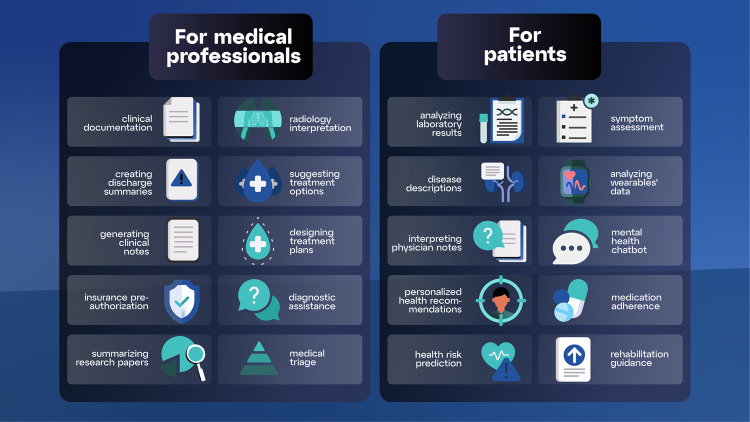
The rapid advancements in artificial intelligence (AI) have led to the development of sophisticated large language models (LLMs) such as GPT-4 and Bard. The potential implementation of LLMs in healthcare settings has already garnered considerable attention because of their diverse applications that include facilitating clinical documentation, obtaining insurance pre-authorization, summarizing research papers, or working as a chatbot to answer questions for patients about their specific data and concerns. While offering transformative potential, LLMs warrant a very cautious approach since these models are trained differently from AI-based medical technologies that are regulated already, especially within the critical context of caring for patients. The newest version, GPT-4, that was released in March, 2023, brings the potentials of this technology to support multiple medical tasks; and risks from mishandling results it provides to varying reliability to a new level. Besides being an advanced LLM, it will be able to read texts on images and analyze the context of those images. The regulation of GPT-4 and generative AI in medicine and healthcare without damaging their exciting and transformative potential is a timely and critical challenge to ensure safety, maintain ethical standards, and protect patient privacy. We argue that regulatory oversight should assure medical professionals and patients can use LLMs without causing harm or compromising their data or privacy. This paper summarizes our practical recommendations for what we can expect from regulators to bring this vision to reality.
Overview
The claims and statistics of this paper haven’t been checked yet.
Free: it reads the open-access text and checks the first 5 claims that cite a source we can check. Create a free account to check every claim.
Integrity signals
Registry
Cites
Statistics
Figures
Verification
Claims the paper makes
The claims and statistics of this paper haven’t been checked yet.
Free: it reads the open-access text and checks the first 5 claims that cite a source we can check. Create a free account to check every claim.
Claims other papers make about this one
Each is checked against this paper’s own text: does it say what the citing paper says it does?
The source backs part of the claim, not all of it — or backs it for a different population, condition or comparison.
In the citing paper
“the integration of AI and large language models (LLMs) into hospital EHR systems currently lacks a defined oversight framework (Table 1)2.”
From Preventing unrestricted and unmonitored AI experimentation in healthcare through transparency and accountability (2025) · cites this paper as [2]
Experimental — accuracy not yet measuredThe source backs part of the claim, not all of it — or backs it for a different population, condition or comparison.
In the citing paper
“The addition of large language models (LLM) into healthcare operations, including electronic health record (EHR) systems represents a transformative level of adoption and integration, changing how enterprise systems interact with algorithms; permitting the largely unconsented collection and utilization of previously unmined private data originating from the care of patients1,2.”
From Preventing unrestricted and unmonitored AI experimentation in healthcare through transparency and accountability (2025) · cites this paper as [2]
Experimental — accuracy not yet measuredThe source backs part of the claim, not all of it — or backs it for a different population, condition or comparison.
In the citing paper
“Given the unique risks faced by adolescents and young adults, such as disclosure of self-harm intent to chatbots, or the reinforcement of harmful thought patterns by algorithms, it is crucial that research efforts should prioritize the establishment of clear safety protocols and robust evaluation frameworks to ensure their ethical and responsible deployment [69].”
From The Effectiveness of AI Chatbots in Alleviating Mental Distress and Promoting Health Behaviors Among Adolescents and Young Adults: Systematic Review and Meta-Analysis (2025) · cites this paper as [69]
Experimental — accuracy not yet measuredThe cited source says what the claim attributes to it.
In the citing paper
“The real-time adaptation of LLMs and the adaptive and autodidactic functions of deep learning algorithms call for regulatory frameworks capable of addressing these systems' adaptability and self-teaching nature.”
From Balancing Privacy and Progress: A Review of Privacy Challenges, Systemic Oversight, and Patient Perceptions in AI-Driven Healthcare (2024) · cites this paper as [27]
The cited source says what the claim attributes to it.
In the citing paper
“Despite these upsides, leveraging LLMs in healthcare is complicated due to complex regulations, including data security and patient privacy.1”
From Development of secure infrastructure for advancing generative artificial intelligence research in healthcare at an academic medical center (2025) · cites this paper as [1]
10 more claims about this paper
Create a free account to see every claim other papers make about this one.
Self-check
Percentages, sums and reported differences re-computed from the paper’s own numbers.
The self-check needs the paper’s full text.
Citations
Cites
High-performance medicine: the convergence of human and artificial intelligence
Topol, E. J. (2019) · Nature Medicine · doi:10.1038/s41591-018-0300-7 · Cited by 10,450
Self-citationLarge Language Models Encode Clinical Knowledge
Singhal, K., Azizi, S., Tu, T., Mahdavi, S. S., Wei, J., Chung, H. W., Scales, N., Tanwani, A., Cole-Lewis, H., Pfohl, S., et al. (2022) · arXiv · doi:10.48550/arxiv.2212.13138 · Cited by 4,083
Large language models encode clinical knowledge
Singhal, K., Azizi, S., Tu, T., Mahdavi, S. S., Wei, J., Chung, H. W., Scales, N., Tanwani, A., Cole-Lewis, H., Pfohl, S., et al. (2023) · Nature · doi:10.1038/s41586-023-06291-2 · Cited by 4,083 · cited 1×
“Since then, GPT-4 could achieve an accuracy over 85% on the same exam 14 .”
Sallam, M. (2023) · Healthcare · doi:10.3390/healthcare11060887 · Cited by 3,126
Sallam, M. (2023) · doi:10.1101/2023.02.19.23286155 · Cited by 3,123 · cited 1×
“Systematic reviews highlighted other potential bene fi ts too such as improved scienti fi c writing, enhancing research equity, streamlining the healthcare work fl ow, cost saving, and improved personalized learning in medical education 3,4 .”
Benefits, Limits, and Risks of GPT-4 as an AI Chatbot for Medicine
Lee, P., Bubeck, S., & Petro, J. (2023) · New England Journal of Medicine · doi:10.1056/nejmsr2214184 · Cited by 1,738
Benjamens, S., Dhunnoo, P., & Meskó, B. (2020) · npj Digital Medicine · doi:10.1038/s41746-020-00324-0 · Cited by 1,215
Self-citationNagendran, M., Chen, Y., Lovejoy, C. A., Gordon, A. C., Komorowski, M., Harvey, H., Topol, E. J., Ioannidis, J. P. A., Collins, G. S., & Maruthappu, M. (2020) · BMJ · doi:10.1136/bmj.m689 · Cited by 1,152
Self-citationRegulating ChatGPT and other Large Generative AI Models
Hacker, P., Engel, A., & Mauer, M. (2023) · 2023 ACM Conference on Fairness Accountability and Transparency · doi:10.1145/3593013.3594067 · Cited by 466 · cited 1×
“In details, regulation should focus on concrete high-risk applications, and not the pre-trained model itself, and should include (i) obligations regarding transparency, (ii) risk management, (iii) non-discrimination provisions, and (iv) content moderation rules 15 .”
ChatGPT in healthcare: A taxonomy and systematic review
Li, J., Dada, A., Puladi, B., Kleesiek, J., & Egger, J. (2024) · Computer Methods and Programs in Biomedicine · doi:10.1016/j.cmpb.2024.108013 · Cited by 452
Cited by
A Comprehensive Overview of Large Language Models
Naveed, H., Khan, A. U., Qiu, S., Saqib, M., Anwar, S., Usman, M., Akhtar, N., Barnes, N., & Mian, A. (2023) · arXiv · doi:10.48550/arxiv.2307.06435 · Cited by 1,259
A Comprehensive Overview of Large Language Models
Naveed, H., Khan, A. U., Qiu, S., Saqib, M., Anwar, S., Usman, M., Akhtar, N., Barnes, N., & Mian, A. (2025) · ACM Transactions on Intelligent Systems and Technology · doi:10.1145/3744746 · Cited by 1,257
“These developments underscore the imperative for regulatory oversight to manage the ethical and social challenges accompanying LLMs’ widespread use [427].”
Prompt Engineering as an Important Emerging Skill for Medical Professionals: Tutorial
Meskó, B. (2023) · Journal of Medical Internet Research · doi:10.2196/50638 · Cited by 709
Self-citationThe TRIPOD-LLM reporting guideline for studies using large language models
Gallifant, J., Afshar, M., Ameen, S., Aphinyanaphongs, Y., Chen, S., Cacciamani, G., Demner-Fushman, D., Dligach, D., Daneshjou, R., Fernandes, C., et al. (2025) · Nature Medicine · doi:10.1038/s41591-024-03425-5 · Cited by 615
“Furthermore, growing partnerships between electronic health record (EHR) vendors, technology companies and healthcare providers have led to deployment horizons that far outpace current regulatory timelines 8,27 .”
Williamson, S. M., & Prybutok, V. (2024) · Applied Sciences · doi:10.3390/app14020675 · Cited by 567
Serrano, D. R., Luciano, F. C., Anaya, B. J., Ongoren, B., Kara, A., Molina, G., Ramirez, B. I., Sánchez-Guirales, S. A., Simon, J. A., Tomietto, G., et al. (2024) · Pharmaceutics · doi:10.3390/pharmaceutics16101328 · Cited by 488
Generative AI in Medicine and Healthcare: Promises, Opportunities and Challenges
Zhang, P., & Kamel Boulos, M. N. (2023) · Future Internet · doi:10.3390/fi15090286 · Cited by 411
“However, LLMs bring new challenges compared with already regulated AI-based technologies and will therefore require additional regulatory adaptations [63].”
BackgroundBengesi, S., El-Sayed, H., Sarker, M. K., Houkpati, Y., Irungu, J., & Oladunni, T. (2024) · IEEE Access · doi:10.1109/access.2024.3397775 · Cited by 362
Large Language Models in Medicine: The Potentials and Pitfalls: A Narrative Review
Omiye, J. A., Gui, H., Rezaei, S. J., Zou, J., & Daneshjou, R. (2024) · Annals of Internal Medicine · doi:10.7326/m23-2772 · Cited by 361
Ethical and regulatory challenges of large language models in medicine
Ong, J. C. L., Chang, S. Y.-H., William, W., Butte, A. J., Shah, N. H., Chew, L. S. T., Liu, N., Doshi-Velez, F., Lu, W., Savulescu, J., et al. (2024) · The Lancet Digital Health · doi:10.1016/s2589-7500(24)00061-x · Cited by 342
Generative AI Literacy: Twelve Defining Competencies
Annapureddy, R., Fornaroli, A., & Gatica-Perez, D. (2025) · Digital Government: Research and Practice · doi:10.1145/3685680 · Cited by 333
“Additionally, the competencies identified open up applications across various domains, some of which are discussed next.”
Ethical challenges and solutions of generative AI: an interdisciplinary perspective
Al-kfairy, M., Mustafa, D., Kshetri, N., Insiew, M., & Alfandi, O. (2024) · Informatics · doi:10.3390/informatics11030058 · Cited by 328
“Their involvement ensures that the outcomes of AI systems align with societal values and ethical standards, addressing potential concerns before they escalate [29].”
BackgroundInfluentialPalaniappan, K., Lin, E. Y. T., & Vogel, S. (2024) · Healthcare · doi:10.3390/healthcare12050562 · Cited by 301
“…role in redefining and revolutionising the existing healthcare landscape, from the automation of administrative functions supporting diagnosis through evidence-based clinical decision making to suggesting suitable treatments by analysing massive quantities of health data at a rapid speed [8].”
BackgroundLarge Language Models for Chatbot Health Advice Studies: A Systematic Review
Huo, B., Boyle, A., Marfo, N., Tangamornsuksan, W., Steen, J. P., McKechnie, T., Lee, Y., Mayol, J., Antoniou, S. A., Thirunavukarasu, A. J., et al. (2025) · JAMA Network Open · doi:10.1001/jamanetworkopen.2024.57879 · Cited by 283
A Complete Survey on LLM-based AI ChatbotsPreprint
Dam, S. K., Hong, C. S., Qiao, Y., & Zhang, C. (2024) · arXiv (Cornell University) · doi:10.13140/rg.2.2.19901.27368 · Cited by 286
BioMedLM: A 2.7B Parameter Language Model Trained On Biomedical TextPreprint
Bolton, E., Venigalla, A., Yasunaga, M., Hall, D., Xiong, B., Lee, T., Daneshjou, R., Frankle, J., Liang, P., Carbin, M., et al. (2024) · arXiv (Cornell University) · doi:10.48550/arxiv.2403.18421 · Cited by 280
Sai, S., Gaur, A., Sai, R., Chamola, V., Guizani, M., & Rodrigues, J. J. P. C. (2024) · IEEE Access · doi:10.1109/access.2024.3367715 · Cited by 268
Walter, Y. (2024) · Discover Artificial Intelligence · doi:10.1007/s44163-024-00109-4 · Cited by 261
TrustLLM: Trustworthiness in Large Language Models
Huang, Y., Sun, L., Wang, H., Wu, S., Zhang, Q., Li, Y., Gao, C., Huang, Y., Lyu, W., Zhang, Y., et al. (2024) · arXiv · doi:10.48550/arxiv.2401.05561 · Cited by 256
Exploring the role of large language models in the scientific method: from hypothesis to discovery
Zhang, Y., Khan, S., Mahmud, A., Yang, H., Lavin, A., Levin, M., Frey, J., Dunnmon, J. A., Evans, J., Bundy, A., et al. (2025) · npj Artificial Intelligence · doi:10.1038/s44387-025-00019-5 · Cited by 186
A Survey of Large Language Models in Medicine: Progress, Application, and Challenge
Zhou, H., Liu, F., Gu, B., Zou, X., Huang, J., Wu, J., Li, Y., Chen, S. S., Zhou, P., Liu, J., et al. (2023) · arXiv · doi:10.48550/arxiv.2311.05112 · Cited by 240
Malatji, M., & Tolah, A. (2024) · AI and Ethics · doi:10.1007/s43681-024-00427-4 · Cited by 243
The Opportunities and Risks of Large Language Models in Mental Health
Lawrence, H. R., Schneider, R. A., Rubin, S. B., Matarić, M. J., McDuff, D. J., & Jones Bell, M. (2024) · JMIR Mental Health · doi:10.2196/59479 · Cited by 235
Akinci D’Antonoli, T., Stanzione, A., Bluethgen, C., Vernuccio, F., Ugga, L., Klontzas, M. E., Cuocolo, R., Cannella, R., & Koçak, B. (2024) · Diagnostic and Interventional Radiology · doi:10.4274/dir.2023.232417 · Cited by 227
“83 As with other machine learning models, especially deep learning models, LLMs are highly sensitive to bias embedded within their training data.”
BackgroundFrom Words to Watts: Benchmarking the Energy Costs of Large Language Model Inference
Samsi, S., Zhao, D., McDonald, J., Li, B., Michaleas, A., Jones, M., Bergeron, W., Kepner, J., Tiwari, D., & Gadepally, V. (2023) · 2023 IEEE High Performance Extreme Computing Conference (HPEC) · doi:10.1109/hpec58863.2023.10363447 · Cited by 225
Navigating the EU AI Act: implications for regulated digital medical products
Aboy, M., Minssen, T., & Vayena, E. (2024) · npj Digital Medicine · doi:10.1038/s41746-024-01232-3 · Cited by 217
“Forexample,amedical AIdevicethat augmented with a separate general AI, such as a large language model (LLM) in order to enhance the “ reasoning ” of the medical AI at the front end, as well as to extend its output capabilities (e.g., deliver the diagnosis results in natural language) 20 .”
MethodNing, Y., Teixayavong, S., Shang, Y., Savulescu, J., Nagaraj, V., Miao, D., Mertens, M., Ting, D. S. W., Ong, J. C. L., Liu, M., et al. (2024) · The Lancet Digital Health · doi:10.1016/s2589-7500(24)00143-2 · Cited by 212
Self-citationNasarian, E., Alizadehsani, R., Acharya, U. R., & Tsui, K.-L. (2024) · Information Fusion · doi:10.1016/j.inffus.2024.102412 · Cited by 207
Kresevic, S., Giuffrè, M., Ajcevic, M., Accardo, A., Crocè, L. S., & Shung, D. L. (2024) · npj Digital Medicine · doi:10.1038/s41746-024-01091-y · Cited by 207
A Survey on Large Language Models for Critical Societal Domains: Finance, Healthcare, and Law
Chen, Z. Z., Ma, J., Zhang, X., Hao, N., Yan, A., Nourbakhsh, A., Yang, X., McAuley, J., Petzold, L. R., & Wang, W. Y. (2024) · Transactions on machine learning research · doi:10.48550/arxiv.2405.01769 · Cited by 205
Artificial Intelligence in Oncology: Current Landscape, Challenges, and Future Directions
Lotter, W., Hassett, M. J., Schultz, N., Kehl, K. L., Van Allen, E. M., & Cerami, E. (2024) · Cancer Discovery · doi:10.1158/2159-8290.cd-23-1199 · Cited by 196
Assessing the research landscape and clinical utility of large language models: a scoping review
Park, Y.-J., Pillai, A., Deng, J., Guo, E., Gupta, M., Paget, M., & Naugler, C. (2024) · BMC Medical Informatics and Decision Making · doi:10.1186/s12911-024-02459-6 · Cited by 187
“Overall, recent guidelines made to address the logistical and ethical concerns of medical LLMs include the draft guidance issued by the FDA on predetermined change control plans for artificial intelligence/machine learning models [74].”
BackgroundThree Epochs of Artificial Intelligence in Health Care
Howell, M. D., Corrado, G. S., & DeSalvo, K. B. (2024) · JAMA · doi:10.1001/jama.2023.25057 · Cited by 185
Will Generative Artificial Intelligence Deliver on Its Promise in Health Care?
Wachter, R. M., & Brynjolfsson, E. (2024) · JAMA · doi:10.1001/jama.2023.25054 · Cited by 185
The Impact of Multimodal Large Language Models on Health Care’s Future
Meskó, B. (2023) · Journal of Medical Internet Research · doi:10.2196/52865 · Cited by 182
“This process includes defining what constitutes acceptable accuracy for different AI apps, ensuring transparency in AI algorithms, and protecting patient data privacy [10].”
Self-citationA comprehensive review of large language models: issues and solutions in learning environments
Shahzad, T., Mazhar, T., Tariq, M., Ahmad, W., Ouahada, K., & Hamam, H. (2025) · Discover Sustainability · doi:10.1007/s43621-025-00815-8 · Cited by 134
Ghimire, P., Kim, K., & Acharya, M. (2024) · Buildings · doi:10.3390/buildings14010220 · Cited by 175
PRIVACY LAW CHALLENGES IN THE DIGITAL AGE: A GLOBAL REVIEW OF LEGISLATION AND ENFORCEMENT
Reis, O., Eneh, N. E., Ehimuan, B., Anyanwu, A. C., Olorunsogo, T., & Abrahams, T. O. (2024) · International Journal of Applied Research in Social Sciences · doi:10.51594/ijarss.v6i1.733 · Cited by 175
Foundation Models in Radiology: What, How, Why, and Why Not
Paschali, M., Chen, Z., Blankemeier, L., Varma, M., Youssef, A., Blüthgen, C., Langlotz, C. P., Gatidis, S., & Chaudhari, A. S. (2025) · Radiology · doi:10.1148/radiol.240597 · Cited by 168
Wang, L., Wan, Z., Ni, C., Song, Q., Li, Y., Clayton, E., Malin, B., & Yin, Z. (2024) · Journal of Medical Internet Research · doi:10.2196/22769 · Cited by 165
“To solve the privacy issues, legal, social, and technical protection approaches need to be implemented together to ensure the privacy and security of the whole process of training and using LLMs for health care applications [87].”
LLM-Based Agents for Tool Learning: A Survey
Xu, W., Huang, C., Gao, S., & Shang, S. (2025) · Data Science and Engineering · doi:10.1007/s41019-025-00296-9 · Cited by 74
Artificial Intelligence for Surface‐Enhanced Raman Spectroscopy
Bi, X., Lin, L. L., Chen, Z., & Ye, J. (2023) · Small Methods · doi:10.1002/smtd.202301243 · Cited by 164
Guo, S., Liu, D., Fang, X., Meng, Y. G., Zhou, Z.-Z., Li, J., Li, M., Luo, L. Q., Li, H.-L., Cai, X.-Y., et al. (2025) · International Journal of Surgery · doi:10.1097/js9.0000000000003668 · Cited by 165
Javaid, M., Haleem, A., & Singh, R. P. (2024) · Informatics and Health · doi:10.1016/j.infoh.2024.05.001 · Cited by 167
Shaping the future of AI in healthcare through ethics and governance
Bouderhem, R. (2024) · Humanities and Social Sciences Communications · doi:10.1057/s41599-024-02894-w · Cited by 162
“Research (Lau et al. 2023) and recent regulatory challenges such as the surge of ChatGPT-4 as a chatbot (Meskó and Topol, 2023) potentially used in medicine (Lee et al. 2023) that may threaten (Loh 2023).”
Comparing the Efficacy and Efficiency of Human and Generative AI: Qualitative Thematic Analyses
Prescott, M., Yeager, S., Ham, L., Saldana, C. D. R., Serrano, V. B., Narez, J., Paltin, D., Delgado, J., Moore, D. J., & Montoya, J. L. (2024) · JMIR AI · doi:10.2196/54482 · Cited by 162
Freyer, O., Wiest, I. C., Kather, J. N., & Gilbert, S. (2024) · The Lancet Digital Health · doi:10.1016/s2589-7500(24)00124-9 · Cited by 157
Multimodal Large Language Models in Medical Imaging: Current State and Future Directions
Nam, Y., Kim, D., Kyung, S., Seo, J., Song, J. M., Kwon, J., Kim, J., Jo, W., Park, H. J., Sung, J., et al. (2025) · Korean Journal of Radiology · doi:10.3348/kjr.2025.0599 · Cited by 154
Medical Artificial Intelligence and Human Values
Yu, K.-H., Healey, E., Leong, T.-Y., Kohane, I. S., & Manrai, A. K. (2024) · New England Journal of Medicine · doi:10.1056/nejmra2214183 · Cited by 149
The effect of using a large language model to respond to patient messages
Chen, S., Guevara, M., Moningi, S., Hoebers, F., Elhalawani, H., Kann, B. H., Chipidza, F. E., Leeman, J., Aerts, H. J. W. L., Miller, T., et al. (2024) · The Lancet Digital Health · doi:10.1016/s2589-7500(24)00060-8 · Cited by 147
“10 Physicians and institutions must exercise caution as the health-care industry embraces these advanced technologies, because it is imperative to balance their innovative potential with a commitment to patient safety and care quality.”
Privacy-preserving large language models for structured medical information retrieval
Wiest, I. C., Ferber, D., Zhu, J., van Treeck, M., Meyer, S. K., Juglan, R., Carrero, Z. I., Paech, D., Kleesiek, J., Ebert, M. P., et al. (2024) · npj Digital Medicine · doi:10.1038/s41746-024-01233-2 · Cited by 138
Addressing 6 challenges in generative AI for digital health: A scoping review
Templin, T., Perez, M. W., Sylvia, S., Leek, J. T., & Sinnott-Armstrong, N. (2024) · PLOS Digital Health · doi:10.1371/journal.pdig.0000503 · Cited by 139
Rony, M. K. K., Parvin, M. R., Wahiduzzaman, M., Debnath, M., Bala, S. D., & Kayesh, I. (2024) · SAGE Open Nursing · doi:10.1177/23779608241245220 · Cited by 89
Privacy preserving strategies for electronic health records in the era of large language models
Jonnagaddala, J., & Wong, Z. S.-Y. (2025) · npj Digital Medicine · doi:10.1038/s41746-025-01429-0 · Cited by 134
Recent Advances in Large Language Models for Healthcare
Nassiri, K., & Akhloufi, M. A. (2024) · BioMedInformatics · doi:10.3390/biomedinformatics4020062 · Cited by 136
An AI Agent for Fully Automated Multi‐Omic Analyses
Zhou, J., Zhang, B., Li, G., Chen, X., Li, H., Xu, X., Chen, S., He, W., Xu, C., Liu, L., et al. (2024) · Advanced Science · doi:10.1002/advs.202407094 · Cited by 138
Menz, B. D., Kuderer, N. M., Bacchi, S., Modi, N. D., Chin-Yee, B., Hu, T., Rickard, C., Haseloff, M., Vitry, A., McKinnon, R. A., et al. (2024) · BMJ · doi:10.1136/bmj-2023-078538 · Cited by 132
“7 Notably, LLMs that lack adequate guardrails and safety measures (ie, safeguards) may facilitate malicious actors to generate and propagate highly convincing health disinformation—that is, the intentional dissemination of misleading narratives about health topics for ill intent.”
BackgroundBest Practices for Using AI Tools as an Author, Peer Reviewer, or Editor
Leung, T. I., de Azevedo Cardoso, T., Mavragani, A., & Eysenbach, G. (2023) · Journal of Medical Internet Research · doi:10.2196/51584 · Cited by 127
“More generally, there are already broader calls for the regulation of AI, and LLMs in particular, in general public use [4,5].”
Uses and Limitations of Artificial Intelligence for Oncology
Kolla, L., & Parikh, R. B. (2024) · Cancer · doi:10.1002/cncr.35307 · Cited by 126
The prospect of artificial intelligence to personalize assisted reproductive technology
Hanassab, S., Abbara, A., Yeung, A. C., Voliotis, M., Tsaneva-Atanasova, K. T., Kelsey, T., Trew, G. H., Nelson, S. M., Heinis, T., & Dhillo, W. S. (2024) · npj Digital Medicine · doi:10.1038/s41746-024-01006-x · Cited by 130
Hershenhouse, J. S., Mokhtar, D., Eppler, M., Rodler, S., Ramacciotti, L. S., Ganjavi, C., Hom, B. M., Davis, R. J., Tran, J., Russo, G. I., et al. (2024) · Prostate Cancer and Prostatic Diseases · doi:10.1038/s41391-024-00826-y · Cited by 126
Masanneck, L., Schmidt, L., Seifert, A., Kölsche, T., Huntemann, N., Jansen, R., Mehsin, M., Bernhard, M., Meuth, S. G., Böhm, L., et al. (2024) · Journal of Medical Internet Research · doi:10.2196/53297 · Cited by 124
Harnessing large vision and language models in agriculture: a review
Zhu, H.-Y., Qin, S., Su, M., Lin, C.-Z., Li, A., & Gao, J. (2025) · Frontiers in Plant Science · doi:10.3389/fpls.2025.1579355 · Cited by 94
Artificial intelligence tools expand scientists' impact but contract science's focus
Hao, Q., Xu, F., Li, Y., & Evans, J. (2026) · Nature · doi:10.1038/s41586-025-09922-y · Cited by 117
On the Challenges and Opportunities in Generative AI
Manduchi, L., Meister, C., Pandey, K., Bamler, R., Cotterell, R., Däubener, S., Fellenz, S., Fischer, A., Gärtner, T., Kirchler, M., et al. (2025) · Transactions on machine learning research · doi:10.48550/arxiv.2403.00025 · Cited by 118
Chow, J. C. L., Wong, V., & Li, K. (2024) · BioMedInformatics · doi:10.3390/biomedinformatics4010047 · Cited by 117
Large language models for preventing medication direction errors in online pharmacies
Pais, C., Liu, J., Voigt, R., Gupta, V., Wade, E., & Bayati, M. (2024) · Nature Medicine · doi:10.1038/s41591-024-02933-8 · Cited by 89
Guizani, S., Mazhar, T., Shahzad, T., Ahmad, W., Bibi, A., & Hamam, H. (2025) · Discover Education · doi:10.1007/s44217-025-00424-7 · Cited by 115
Large Language Model‐Based Chatbots in Higher Education
Yigci, D., Eryilmaz, M., Yetisen, A. K., Tasoglu, S., & Ozcan, A. (2025) · Advanced Intelligent Systems · doi:10.1002/aisy.202400429 · Cited by 113
Large Language Model Prompting Techniques for Advancement in Clinical Medicine
Shah, K., Xu, A. Y., Sharma, Y. K., Daher, M., McDonald, C. L., Diebo, B. G., & Daniels, A. H. (2024) · Journal of Clinical Medicine · doi:10.3390/jcm13175101 · Cited by 111
BI-RADS Category Assignments by GPT-3.5, GPT-4, and Google Bard: A Multilanguage Study
Cozzi, A., Pinker, K., Hidber, A., Zhang, T., Bonomo, L., Gullo, R. L., Christianson, B., Curti, M., Rizzo, S., Grande, F. D., et al. (2024) · Radiology · doi:10.1148/radiol.232133 · Cited by 109
Generative AI and large language models in health care: pathways to implementation
Raza, M. M., Venkatesh, K. P., & Kvedar, J. C. (2024) · npj Digital Medicine · doi:10.1038/s41746-023-00988-4 · Cited by 107
Denecke, K., May, R., & Rivera-Romero, O. (2024) · Journal of Medical Systems · doi:10.1007/s10916-024-02043-5 · Cited by 109
Evaluating multimodal AI in medical diagnostics
Kaczmarczyk, R., Wilhelm, T. I., Martin, R., & Roos, J. (2024) · npj Digital Medicine · doi:10.1038/s41746-024-01208-3 · Cited by 107
Large Language Model–Based Responses to Patients’ In-Basket Messages
Small, W. R., Wiesenfeld, B., Brandfield-Harvey, B., Jonassen, Z., Mandal, S., Stevens, E. R., Major, V. J., Lostraglio, E., Szerencsy, A., Jones, S., et al. (2024) · JAMA Network Open · doi:10.1001/jamanetworkopen.2024.22399 · Cited by 106
Jung, K.-H. (2025) · Healthcare Informatics Research · doi:10.4258/hir.2025.31.2.114 · Cited by 106
Singh, V., Cheng, S. C., Kwan, A. C., & Ebinger, J. E. (2025) · Mayo Clinic Proceedings Digital Health · doi:10.1016/j.mcpdig.2025.100231 · Cited by 105
Principles, applications, and future of artificial intelligence in dermatology
Omiye, J. A., Gui, H., Daneshjou, R., Cai, Z. R., & Muralidharan, V. (2023) · Frontiers in Medicine · doi:10.3389/fmed.2023.1278232 · Cited by 104
Characterizing the clinical adoption of medical AI devices through U.S. insurance claims
Wu, K., Wu, E., Theodorou, B., Liang, W., Mack, C., Glass, L., Sun, J., & Zou, J. (2024) · NEJM AI · doi:10.1056/aioa2300030 · Cited by 103
“82 As CPT codes are developed by the AMA for use within the United States, our analysis of AI adoption does not provide direct insight into other countries.”
BackgroundAn analysis of large language models: their impact and potential applications
Bharathi Mohan, G., Prasanna Kumar, R., Vishal Krishh, P., Keerthinathan, A., Lavanya, G., Meghana, M. K. U., Sulthana, S., & Doss, S. (2024) · Knowledge and Information Systems · doi:10.1007/s10115-024-02120-8 · Cited by 99
Cheong, R. C. T., Unadkat, S. N., Mcneillis, V., Williamson, A., Joseph, J., Randhawa, P. S., Andrews, P. J., & Paleri, V. (2023) · European Archives of Oto-Rhino-Laryngology · doi:10.1007/s00405-023-08319-9 · Cited by 100
Deng, L., Wang, T., Yangzhang, Zhai, Z., Tao, W., Li, J., Zhao, Y., Luo, S., & Xu, J. (2024) · International Journal of Surgery · doi:10.1097/js9.0000000000001066 · Cited by 100
Huang, G., Li, Y., Jameel, S., Long, Y., & Papanastasiou, G. (2024) · Computational and Structural Biotechnology Journal · doi:10.1016/j.csbj.2024.05.004 · Cited by 100
Mess, S. A., Mackey, A., & Yarowsky, D. (2025) · Plastic & Reconstructive Surgery Global Open · doi:10.1097/gox.0000000000006450 · Cited by 99
Palaniappan, K., Lin, E. Y. T., Vogel, S., & Lim, J. C. W. (2024) · Healthcare · doi:10.3390/healthcare12171730 · Cited by 98
A scoping review of ChatGPT's role in healthcare education and research
Shorey, S., Mattar, C., Pereira, T. L.-B., & Choolani, M. (2024) · Nurse Education Today · doi:10.1016/j.nedt.2024.106121 · Cited by 96
Coordinated AI agents for advancing healthcare
Moritz, M., Topol, E. J., & Rajpurkar, P. (2025) · Nature Biomedical Engineering · doi:10.1038/s41551-025-01363-2 · Cited by 96
Self-citationLeadership for AI Transformation in Health Care Organization: Scoping Review
Sriharan, A., Sekercioglu, N., Mitchell, C., Senkaiahliyan, S., Hertelendy, A. J., Porter, T. H., & Banaszak‐Holl, J. (2024) · Journal of Medical Internet Research · doi:10.2196/54556 · Cited by 97
Derraz, B., Breda, G., Kaempf, C., Baenke, F., Cotte, F., Reiche, K., Köhl, U., Kather, J. N., Eskenazy, D., & Gilbert, S. (2024) · npj Precision Oncology · doi:10.1038/s41698-024-00517-w · Cited by 94
Application of large language models in medicine
Liu, F., Zhou, H., Gu, B., Zou, X., Huang, J., Wu, J., Li, Y., Chen, S. S., Hua, Y., Zhou, P., et al. (2025) · Nature Reviews Bioengineering · doi:10.1038/s44222-025-00279-5 · Cited by 94
Performance of ChatGPT and Google Translate for Pediatric Discharge Instruction Translation
Brewster, R., Gonzalez, P., Khazanchi, R., Butler, A., Selcer, R., Chu, D., Aires, B. P., Luercio, M., & Hron, J. D. (2024) · PEDIATRICS · doi:10.1542/peds.2023-065573 · Cited by 94
Exploring the generative AI adoption in service industry: A mixed-method analysis
Gupta, R., & Rathore, B. (2024) · Journal of Retailing and Consumer Services · doi:10.1016/j.jretconser.2024.103997 · Cited by 98
The potential for large language models to transform cardiovascular medicine
Quer, G., & Topol, E. J. (2024) · The Lancet Digital Health · doi:10.1016/s2589-7500(24)00151-1 · Cited by 93
Self-citationTriola, M. M., & Rodman, A. (2025) · Academic Medicine · doi:10.1097/acm.0000000000005963 · Cited by 92
Pushpanathan, K., Lim, Z. W., Er Yew, S. M., Chen, D. Z., Hui'En Lin, H. A., Lin Goh, J. H., Wong, W. M., Wang, X., Jin Tan, M. C., Chang Koh, V. T., et al. (2023) · iScience · doi:10.1016/j.isci.2023.108163 · Cited by 77
A Survey on Privacy in Graph Neural Networks: Attacks, Preservation, and Applications
Zhang, Y., Zhao, Y., Li, Z., Cheng, X., Wang, Y., Kotevska, O., Yu, P. S., & Derr, T. (2024) · IEEE Transactions on Knowledge and Data Engineering · doi:10.1109/tkde.2024.3454328 · Cited by 93
Beyond Discrimination: Generative AI Applications and Ethical Challenges in Forensic Psychiatry
Tortora, L. (2024) · Frontiers in Psychiatry · doi:10.3389/fpsyt.2024.1346059 · Cited by 91
Thirunavukarasu, A. J., Mahmood, S., Malem, A., Foster, W. P., Sanghera, R., Hassan, R., Zhou, S., Wong, S. W., Wong, Y. L., Chong, Y. J., et al. (2024) · PLOS Digital Health · doi:10.1371/journal.pdig.0000341 · Cited by 88
Shaw, J., Ali, J., Atuire, C., Cheah, P. Y., Español, A. G., Gichoya, J. W., Hunt, A., Jjingo, D., Littler, K., Paolotti, D., et al. (2024) · BMC Medical Ethics · doi:10.1186/s12910-024-01044-w · Cited by 89
Generative artificial intelligence, patient safety and healthcare quality: a review
Howell, M. D. (2024) · BMJ Quality & Safety · doi:10.1136/bmjqs-2023-016690 · Cited by 88
Metadata
- Authors
- Meskó, B., & Topol, E. J.
- Affiliations
- Semmelweis University (HU)
- Scripps Research Institute (US)
- Corresponding author
- Meskó, Bertalan
- Venue
- npj Digital Medicine
- Published
- 2023-07-06
- Volume
- 6
- Issue
- 1
- Pages
- 120-120
- ISSN
- 2398-6352 (ISSN-L)
- PMC
- PMC10326069
- OpenAlex
- W4383346782
- Semantic Scholar
- 0893549771094fac547432cb4f84e9605c911a86
- Cited by
- 1,047
- References
- 11
- Citations by year
- 2026: 300 · 2025: 336 · 2024: 336 · 2023: 75
- FWCI
- 41.69
- Type
- journal article
- Language
- en
- Open access
- gold
- doi.org
- Licence
- cc-by
- creativecommons.org/licenses/by/4.0 (tdm)
- creativecommons.org/licenses/by/4.0 (vor)
- Locations
- npj Digital Medicine (publishedVersion, cc-by)
- PubMed Central (publishedVersion, cc-by)
- PubMed (publishedVersion)
- DOAJ (DOAJ: Directory of Open Access Journals) (submittedVersion, cc-by-sa)
- Topics
- Health Sciences › Medicine › Health Informatics › Artificial Intelligence in Healthcare and Education
- Physical Sciences › Computer Science › Artificial Intelligence › Ethics and Social Impacts of AI
- Social Sciences › Law › Digitalization, Law, and Regulation
- Keywords
- large language models, generative AI, health care regulation, regulatory oversight, GPT-4, AI safety, patient privacy, medical ethics, clinical documentation, AI chatbots, image analysis
About these checks
Registry, retraction, Cites and statistics results are computed, not judged, with one exception: a printed reference that no index lists is read once by a model before it counts as a citation error. Claims are extracted by a model and kept only when their quote appears verbatim in the text; each cited source is then checked, with a model’s help, for whether it says what the claim relies on. Those verdicts can be wrong — read the claim’s quote and the cited source before relying on one.
Statistics and arithmetic are recomputed, not judged.
Confidence bands are shown only for fields calibrated on our annotated test set. None is calibrated yet, so no band is shown.
What counts as a claim ›How we measure confidence ›How we check this ›
Are you an author, or do you see a problem with this page? Request a review
Data sources
Bibliographic data: Semantic Scholar, OpenAlex, Crossref.
Contains information from the Semantic Scholar Academic Graph Datasets, made available under the ODC Attribution License (ODC-BY 1.0).
Semantic Scholar’s data is described in: Kinney, R., et al. (2023). The Semantic Scholar Open Data Platform. arXiv:2301.10140.
