

The imperative for regulatory oversight of large language models (or generative AI) in healthcare
Open accessThe DOI matches its Crossref record; 16 of the 16 references it cites were found in a registry or an index.
Abstract
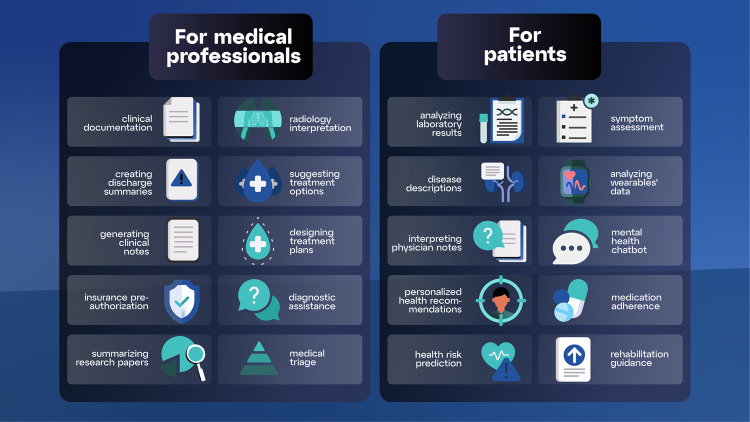
The rapid advancements in artificial intelligence (AI) have led to the development of sophisticated large language models (LLMs) such as GPT-4 and Bard. The potential implementation of LLMs in healthcare settings has already garnered considerable attention because of their diverse applications that include facilitating clinical documentation, obtaining insurance pre-authorization, summarizing research papers, or working as a chatbot to answer questions for patients about their specific data and concerns. While offering transformative potential, LLMs warrant a very cautious approach since these models are trained differently from AI-based medical technologies that are regulated already, especially within the critical context of caring for patients. The newest version, GPT-4, that was released in March, 2023, brings the potentials of this technology to support multiple medical tasks; and risks from mishandling results it provides to varying reliability to a new level. Besides being an advanced LLM, it will be able to read texts on images and analyze the context of those images. The regulation of GPT-4 and generative AI in medicine and healthcare without damaging their exciting and transformative potential is a timely and critical challenge to ensure safety, maintain ethical standards, and protect patient privacy. We argue that regulatory oversight should assure medical professionals and patients can use LLMs without causing harm or compromising their data or privacy. This paper summarizes our practical recommendations for what we can expect from regulators to bring this vision to reality.
Overview
The claims and statistics of this paper haven’t been checked yet.
Free: it reads the open-access text and checks the first 5 claims that cite a source we can check. Create a free account to check every claim.
Integrity signals
Registry
Cites
Statistics
Figures
Verification
Claims the paper makes
The claims and statistics of this paper haven’t been checked yet.
Free: it reads the open-access text and checks the first 5 claims that cite a source we can check. Create a free account to check every claim.
Claims other papers make about this one
Each is checked against this paper’s own text: does it say what the citing paper says it does?
The source backs part of the claim, not all of it — or backs it for a different population, condition or comparison.
In the citing paper
“the integration of AI and large language models (LLMs) into hospital EHR systems currently lacks a defined oversight framework (Table 1)2.”
From Preventing unrestricted and unmonitored AI experimentation in healthcare through transparency and accountability (2025) · cites this paper as [2]
Experimental — accuracy not yet measuredThe source backs part of the claim, not all of it — or backs it for a different population, condition or comparison.
In the citing paper
“The addition of large language models (LLM) into healthcare operations, including electronic health record (EHR) systems represents a transformative level of adoption and integration, changing how enterprise systems interact with algorithms; permitting the largely unconsented collection and utilization of previously unmined private data originating from the care of patients1,2.”
From Preventing unrestricted and unmonitored AI experimentation in healthcare through transparency and accountability (2025) · cites this paper as [2]
Experimental — accuracy not yet measuredThe source backs part of the claim, not all of it — or backs it for a different population, condition or comparison.
In the citing paper
“Given the unique risks faced by adolescents and young adults, such as disclosure of self-harm intent to chatbots, or the reinforcement of harmful thought patterns by algorithms, it is crucial that research efforts should prioritize the establishment of clear safety protocols and robust evaluation frameworks to ensure their ethical and responsible deployment [69].”
From The Effectiveness of AI Chatbots in Alleviating Mental Distress and Promoting Health Behaviors Among Adolescents and Young Adults: Systematic Review and Meta-Analysis (2025) · cites this paper as [69]
Experimental — accuracy not yet measuredThe cited source says what the claim attributes to it.
In the citing paper
“The real-time adaptation of LLMs and the adaptive and autodidactic functions of deep learning algorithms call for regulatory frameworks capable of addressing these systems' adaptability and self-teaching nature.”
From Balancing Privacy and Progress: A Review of Privacy Challenges, Systemic Oversight, and Patient Perceptions in AI-Driven Healthcare (2024) · cites this paper as [27]
The cited source says what the claim attributes to it.
In the citing paper
“Despite these upsides, leveraging LLMs in healthcare is complicated due to complex regulations, including data security and patient privacy.1”
From Development of secure infrastructure for advancing generative artificial intelligence research in healthcare at an academic medical center (2025) · cites this paper as [1]
10 more claims about this paper
Create a free account to see every claim other papers make about this one.
Self-check
Percentages, sums and reported differences re-computed from the paper’s own numbers.
The self-check needs the paper’s full text.
Citations
Cites
High-performance medicine: the convergence of human and artificial intelligence
Topol, E. J. (2019) · Nature Medicine · doi:10.1038/s41591-018-0300-7 · Cited by 10,450
Self-citationLarge Language Models Encode Clinical Knowledge
Singhal, K., Azizi, S., Tu, T., Mahdavi, S. S., Wei, J., Chung, H. W., Scales, N., Tanwani, A., Cole-Lewis, H., Pfohl, S., et al. (2022) · arXiv · doi:10.48550/arxiv.2212.13138 · Cited by 4,083
Large language models encode clinical knowledge
Singhal, K., Azizi, S., Tu, T., Mahdavi, S. S., Wei, J., Chung, H. W., Scales, N., Tanwani, A., Cole-Lewis, H., Pfohl, S., et al. (2023) · Nature · doi:10.1038/s41586-023-06291-2 · Cited by 4,083 · cited 1×
“Since then, GPT-4 could achieve an accuracy over 85% on the same exam 14 .”
Sallam, M. (2023) · Healthcare · doi:10.3390/healthcare11060887 · Cited by 3,126
Sallam, M. (2023) · doi:10.1101/2023.02.19.23286155 · Cited by 3,123 · cited 1×
“Systematic reviews highlighted other potential bene fi ts too such as improved scienti fi c writing, enhancing research equity, streamlining the healthcare work fl ow, cost saving, and improved personalized learning in medical education 3,4 .”
Benefits, Limits, and Risks of GPT-4 as an AI Chatbot for Medicine
Lee, P., Bubeck, S., & Petro, J. (2023) · New England Journal of Medicine · doi:10.1056/nejmsr2214184 · Cited by 1,738
Benjamens, S., Dhunnoo, P., & Meskó, B. (2020) · npj Digital Medicine · doi:10.1038/s41746-020-00324-0 · Cited by 1,215
Self-citationNagendran, M., Chen, Y., Lovejoy, C. A., Gordon, A. C., Komorowski, M., Harvey, H., Topol, E. J., Ioannidis, J. P. A., Collins, G. S., & Maruthappu, M. (2020) · BMJ · doi:10.1136/bmj.m689 · Cited by 1,152
Self-citationRegulating ChatGPT and other Large Generative AI Models
Hacker, P., Engel, A., & Mauer, M. (2023) · 2023 ACM Conference on Fairness Accountability and Transparency · doi:10.1145/3593013.3594067 · Cited by 466 · cited 1×
“In details, regulation should focus on concrete high-risk applications, and not the pre-trained model itself, and should include (i) obligations regarding transparency, (ii) risk management, (iii) non-discrimination provisions, and (iv) content moderation rules 15 .”
ChatGPT in healthcare: A taxonomy and systematic review
Li, J., Dada, A., Puladi, B., Kleesiek, J., & Egger, J. (2024) · Computer Methods and Programs in Biomedicine · doi:10.1016/j.cmpb.2024.108013 · Cited by 452
Cited by
Items 701–800 of 1,005
Framework for Monitoring Peruvian Patients with Hypertension using a Smartwatch and GPT
Rosales, M., Huacacolque, E., Castillo, J. L., & Wong, L. (2024) · Conference of Open Innovations Association (FRUCT) · doi:10.23919/fruct61870.2024.10516393 · Cited by 4
Baskwill, A. (2023) · International Journal of Therapeutic Massage & Bodywork Research Education & Practice · doi:10.3822/ijtmb.v16i4.949 · Cited by 4
Artificial Intelligence in Diabetes Management and Research
Lakhani, O. (2024) · Chronicle of Diabetes Research and Practice · doi:10.4103/cdrp.cdrp_14_23 · Cited by 4
Evaluating LLMs in Medicine: A Call for Rigor, TransparencyPreprint
Alwakeel, M., Nagori, A., Krishnamoorthy, V., & Kamaleswaran, R. (2025) · arXiv (Cornell University) · doi:10.48550/arxiv.2507.08916 · Cited by 4
Aligning Large Language Models with Healthcare Stakeholders: A Pathway to Trustworthy AI IntegrationPreprint
Ding, K., Zhou, M., Chaudhari, A. S., Zhang, S., & Metaxas, D. (2025) · arXiv (Cornell University) · doi:10.48550/arxiv.2505.02848 · Cited by 4
Health Systems Govern Only the Tip of the AI Iceberg
Ötleş, E., Murray, S. G., Beecy, A., Khalessi, A. A., & Singh, K. (2026) · NEJM AI · doi:10.1056/aie2600236 · Cited by 4
A brief review on benchmarking for large language models evaluation in healthcare
Budler, L. C., Chen, H., Chen, A., Topaz, M., Tam, W., Bian, J., & Štiglic, G. (2025) · University of Maribor digital library (University of Maribor) · Cited by 4
GENERATIVE AI: A TOOL FOR ADDRESSING DATA SCARCITY IN SCIENTIFIC RESEARCH
Miller, T. I., Durlik, I., Łobodzińska, A., & Kostecka, E. (2024) · ГРААЛЬ НАУКИ · doi:10.36074/grail-of-science.06.09.2024.039 · Cited by 3
The Study of Ethical Aspects of Implementing Large Language Models in Business and Society
Nithish, K. K., Karthikeyan, P., Nithil, K. D., Reshma, P., Vaishnavi, V., & Prakash, N. (2025) · Lecture notes in networks and systems · doi:10.1007/978-3-031-81083-1_15 · Cited by 3
Wee, A. K. J., Lin, M., Jenkins, M. A., & Lee, S. E. (2025) · Advances in computational intelligence and robotics book series · doi:10.4018/979-8-3693-5837-5.ch004 · Cited by 3
Wang, C., Liu, Z., Hao, L., Chen, S., Guo, R., Wei, L., Ji, K., Wang, F., & Xu, B. (2025) · Displays · doi:10.1016/j.displa.2025.103144 · Cited by 3
Enhancing Work-Integrated Learning with Generative AI: Opportunities, Challenges, and Frameworks
Sharma, A., & Sharma, A. (2025) · Lecture notes in networks and systems · doi:10.1007/978-981-96-0201-8_35 · Cited by 3
Massey, C., Latif, U., Deer, T. R., Kalia, H., Guirguis, M. N., Bicket, M. C., Khatri, N., Tolba, R., Chakravarthy, K. V., Budwany, R. R., et al. (2025) · Journal of Pain Research · doi:10.2147/jpr.s529465 · Cited by 3
Limitations of broadly trained LLMs in interpreting orthopedic Walch glenoid classifications
ElSayed, A., & Updegrove, G. F. (2025) · Frontiers in Artificial Intelligence · doi:10.3389/frai.2025.1644093 · Cited by 3
Generative AI for Simulating Rare Disease Scenarios in Training Robots
Bhattad, A., Gulhane, M., Gavhale, K. R., Revatkar, A., Patil, D., & Singh, U. P. (2024) · International Conference on Information Management & Machine Intelligence (ICIMMI) · doi:10.1145/3745812.3745858 · Cited by 3
Mehraeen, E., Attarian, N., Afra, A., Parsakian, S., SeyedAlinaghi, S., & Bondareva, I. (2025) · Shiraz E-Medical Journal · doi:10.5812/semj-161280 · Cited by 3
Future Perspective Insights: Healthcare and Medical Sciences
Sargsyan, K. (2026) · Springer eBooks · doi:10.1007/978-3-032-10532-5_5 · Cited by 3
A new era of efficiency: artificial intelligence scribes and the future of ophthalmology
Wang, A., & Almeida, V. F. A. (2026) · Eye · doi:10.1038/s41433-026-04346-y · Cited by 3
Building The Health Chatbot Users’ Guide
Khair, D. O., Kale, A. U., Agbakoba, R., Goh, E., Mateen, B. A., Ong, A. Y., McAteer, S.-J., Shelmerdine, S. C., Mackintosh, M. E., Liu, X., et al. (2026) · Nature Health · doi:10.1038/s44360-026-00074-5 · Cited by 3
Koç, L. Z., Gülşen, S., İnci, A., Buldukoğlu, O. Ç., Köker, G., & Lerma, E. V. (2026) · BMC Nephrology · doi:10.1186/s12882-026-04814-3 · Cited by 3
Huan, O., & Wang, Z. (2026) · Archives of Gynecology and Obstetrics · doi:10.1007/s00404-026-08358-7 · Cited by 3
Xiang, B., Yan, Z., Wei, H., & Shi, J. (2026) · Expert Systems with Applications · doi:10.1016/j.eswa.2026.132026 · Cited by 3
Benchmark evaluation of large language models for clinical decision support in headache management
Chen, S. (2026) · Journal of Oral & Facial Pain and Headache · doi:10.22514/jofph.2026.029 · Cited by 3
Ahn, S. H., & Kim, J. (2026) · JMIR Formative Research · doi:10.2196/90273 · Cited by 3
Zhang, T., Bae, S. W., Chung, T., & Dey, A. K. (2026) · JMIR Human Factors · doi:10.2196/89005 · Cited by 3
Huang, G., Li, L.-J., Li, P.-S., Fan, Z., & Lu, B.-Q. (2026) · European Archives of Oto-Rhino-Laryngology · doi:10.1007/s00405-026-10133-y · Cited by 3
How Does Generative AI Reshape Chinese Patients’ Perceptions of Medical Authority?
Yuan, X., Jin, Q., Tang, Y., & Xu, J. (2026) · Media and Communication · doi:10.17645/mac.11485 · Cited by 3
Cao, Y., Wang, J., Wang, J., Chen, Z., Li, Y., Zhang, Y., 钟光珍, Song, P., & Liu, X. (2026) · Intelligent Medicine · doi:10.1016/j.imed.2026.05.001 · Cited by 3
Kumar, A., Shankar, A., Behl, A., & Zhang, Z. (2026) · International Marketing Review · doi:10.1108/imr-10-2024-0375 · Cited by 3
Weapon, wonder or both? Political framings of AI in global north and south media
Mota, B. M. F. (2026) · Information Communication & Society · doi:10.1080/1369118x.2026.2691775 · Cited by 3
Yang, Y., Liu, J., & Liu, S. (2026) · Journal of Medical Internet Research · doi:10.2196/96152 · Cited by 3
Corso, F., Peppoloni, V., Mazzeo, L., Leone, G., Passos, L., Miskovic, V., Armanini, J., Ferrarin, A., Wiest, I. C., Wolf, F., et al. (2026) · Communications Medicine · doi:10.1038/s43856-026-01790-5 · Cited by 4
Pujol, O., Ferrer, R., Coelho, A., Oettl, F. C., Zsidai, B., Leal‐Blanquet, J., Hirschmann, M. T., & Samuelsson, K. (2026) · Knee Surgery Sports Traumatology Arthroscopy · doi:10.1002/ksa.70544 · Cited by 3
The Continuity Trap in Data Science Health Research
Adebamowo, C., Adebamowo, S. N., Akintola, A., Ikhane, P. A., Akintola, S., Ogundiran, T. O., Jegede, A. S., Adeyemo, O., Callier, S., Imam-Tamim, M. K., et al. (2026) · Journal of Medical Internet Research · doi:10.2196/98699 · Cited by 3
Shadow AI in Swedish Health Care: Qualitative Analysis of Physicians’ Free-Text Answers
Petersson, L., Irgang, L., Mauritzon, I., & Holmén, M. (2026) · Journal of Medical Internet Research · doi:10.2196/93484 · Cited by 3
Qi, X., Wang, Y., Yang, X.-F., Ren, L., Liu, W., Benedict, S., Xiao, Y., Xing, L., & Naqa, I. E. (2026) · Medical Physics (Lancaster) · doi:10.1002/mp.70616 · Cited by 3
Gong, Z., Na, Y., Guo, Y., Zhu, X., & Ma, X. (2026) · Frontiers in Public Health · doi:10.3389/fpubh.2026.1924162 · Cited by 3
Wójcik, S., Rulkiewicz, A., & Domienik‐Karłowicz, J. (2026) · Frontiers in Digital Health · doi:10.3389/fdgth.2026.1933451 · Cited by 3
Auswirkungen der Medizinprodukteverordnung auf ML-Lösungen in Schweizer Spitälern
Ruß, C., Stalder, P., Rufinatscha, S., Pimentel, T., & Geissmann, L. (2024) · HMD Praxis der Wirtschaftsinformatik · doi:10.1365/s40702-024-01048-5 · Cited by 3
Gould, J. A., Stawicki, S. P., Lee, R. Y., & Ng-Pellegrino, A. (2024) · Artificial intelligence · doi:10.5772/intechopen.115397 · Cited by 3
Reimagining the Data Landscape: A Multi-Agent Paradigm for Data Interfacing
Renney, H., Nethercott, M., Williams, O., Evetts, J., & Lang, J. (2025) · International Conference on Data Science and Machine Learning Applications (CDMA) · doi:10.1109/cdma61895.2025.00025 · Cited by 3
Hosen, M. S., Fakir, M. S. I., Hawlader, S. C., Rahman, F., Karim, T., & Uddin, M. H. (2025) · European Journal of Medical and Health Research · doi:10.59324/ejmhr.2025.3(2).11 · Cited by 3
Patil, M. K., Chaudhari, H. S., Pawar, S. P., Chaudhari, R. M., Lovhare, R. B., & Patil, M. B. (2025) · Asian Journal of Research in Pharmaceutical Sciences · doi:10.52711/2231-5659.2025.00024 · Cited by 3
Thellefsen, M., & Friedman, A. (2025) · Information Research · doi:10.47989/ir30colis52339 · Cited by 3
A PESTEL analysis of generative AI in the digital economy
Shao, D. D., Ishengoma, F., & Marwa, N. W. (2025) · Global Knowledge, Memory and Communication · doi:10.1108/gkmc-08-2024-0499 · Cited by 3
The role of Artificial Intelligence in energy efficiency optimization
-, T. R. M., & -, D. T. M. (2025) · International Journal on Science and Technology · doi:10.71097/ijsat.v16.i2.6125 · Cited by 3
Human vs. AI: Assessing the Quality of Weight Loss Dietary Information Published on the Web
Fappa, E., Micheli, M., Panaretos, D., Skordis, M., Tsirpanli, P., & Panoutsopoulos, G. I. (2025) · Information · doi:10.3390/info16070526 · Cited by 3
A systematic literature review on AI governance platforms: ensuring responsible AI deployment
Ozman, F. M. (2025) · World Journal of Advanced Engineering Technology and Sciences · doi:10.30574/wjaets.2025.16.2.1259 · Cited by 3
da Rocha, U. N., Bonidia, R. P., Kong, J. D., Dauhajre, M., Struchiner, C. J., Goedert, G. T., Stadler, P. F., Sanches, D. S., Day, T., Castro, M. C., et al. (2025) · Microbial Biotechnology · doi:10.1111/1751-7915.70256 · Cited by 3
Advancing the science of qualitative patient preference assessment using large language models
Grover, T., Krebs, E., Weymann, D., Ehman, M., & Regier, D. A. (2026) · PLOS Digital Health · doi:10.1371/journal.pdig.0001263 · Cited by 3
The fundamentals of AI ethics in medical imaging
Amann, J., Bürger, V. K., Livne, M., Bui, C. K. T., & Madai, V. I. (2025) · Elsevier eBooks · doi:10.1016/b978-0-44-323761-4.00010-9 · Cited by 3
A Bias-Variance-Covariance Decomposition of Kernel Scores for Generative ModelsPreprint
Gruber, S., & Buettner, F. (2023) · arXiv (Cornell University) · doi:10.48550/arxiv.2310.05833 · Cited by 3
The Future of Medicine: Large Language Models Redefining Healthcare DynamicsPreprint
Haque, A., Chowdhury, M. N.-U.-R., & Neha, F. F. (2023) · doi:10.36227/techrxiv.24354451.v2 · Cited by 3
Guo, X., Li, Y., Peng, Y., & Wei, X. (2024) · arXiv (Cornell University) · doi:10.48550/arxiv.2402.12216 · Cited by 3
Ai-Driven Decision-Making in Healthcare Information Systems: A Comprehensive ReviewPreprint
Amiri, Z. (2024) · SSRN Electronic Journal · doi:10.2139/ssrn.4756316 · Cited by 3
A Distinct Approach to Clinical GenAI OversightPreprint
Thiers, F. A., & Lucy, K. (2024) · OSF Preprints (OSF Preprints) · doi:10.31219/osf.io/vm6zy · Cited by 3
Generative Artificial Intelligence Applications in Reproductive Health: Opportunities and ChallengesPreprint
Zelinschi, D. O., Ursache, A., Mihoci, E. C., Anton, E., Navolan, D. B., & Nemescu, D. (2025) · Preprints.org · doi:10.20944/preprints202507.2446.v1 · Cited by 3
PGxRAG: A Retrieval Augmented Generation supported Pharmacogenomics AssistantPreprint
Borishetty, D., Banda, P., Andhi, N., Desai, A. P., Uppili, B., Samudrala, N. M., Palanki, S. S., Bobbili, D. R., & Iyer, G. R. (2025) · medRxiv · doi:10.1101/2025.09.24.25336524 · Cited by 3
Sarri, A., & Sjölund, J. (2024) · DiVA (Luleå University of Technology) · Cited by 3
Artificial Intelligence (AI) as a Catalyst for Orthopedic Residency Training.
Ebrahimpour, A., Dolikhani, M., & Shakibamaram, G. (2025) · PubMed Central · doi:10.22038/abjs.2025.91837.4159 · Cited by 3
DriveSafe: A Hierarchical Risk Taxonomy for Safety-Critical LLM-Based Driving AssistantsPreprint
Kumar, A., Tapwal, R., & Maple, C. (2026) · arXiv (Cornell University) · doi:10.48550/arxiv.2601.12138 · Cited by 3
Medical students’ perception of the role of artificial intelligence in healthcare
Mikić, D., Glomazić, H., & Mikić, A. (2023) · Medicinski pregled · doi:10.2298/mpns2310269m · Cited by 2
Tseng, F.-P., Ko, H.-C., Hou, X.-Y., Wijaya, D., Chang, C., & Tsai, R. T. (2025) · Communications in computer and information science · doi:10.1007/978-981-97-7966-6_11 · Cited by 2
Reading With Care: A Distributed Perspective on Reading Digitally Mediated Text in Healthcare
Simonsen, L. M. (2025) · Digital Society · doi:10.1007/s44206-025-00165-y · Cited by 2
A Hands-On Introduction to Data Analytics for Biomedical Research
Pickard, J., Sturgess, V. E., McDonald, K. O., Rossiter, N. J., Arnold, K. B., Shah, Y. M., Rajapakse, I., & Beard, D. A. (2025) · Function · doi:10.1093/function/zqaf015 · Cited by 2
The Intersection of Generative AI and Wearable Health Devices: A Privacy-Focused Analysis
Thaker, H., & Thaker, B. (2024) · International Conference on Data, Computation and Communication (ICDCC) · doi:10.1109/icdcc62744.2024.10961527 · Cited by 2
U.S. and Global Regulatory Frameworks For AI in Healthcare
Adirim, T. A., & Rao, R. (2025) · Springer eBooks · doi:10.1007/978-3-031-83526-1_14 · Cited by 2
The Dawn of AI in Pharmaceutical Research: AI Transforming Pharma - Ethics, Trials, and Beyond
Saeed, A., & Alajlan, S. A. (2025) · Advances in computational intelligence and robotics book series · doi:10.4018/979-8-3693-6270-9.ch001 · Cited by 2
Leveraging Artificial Intelligence for Healthcare Data Analytics: A Comprehensive Survey
Priyanka, P., & Prasad, S. (2024) · International Conference on Communication, Computing and Energy Efficient Technologies (I3CEET) · doi:10.1109/i3ceet61722.2024.10993965 · Cited by 2
Artificial Intelligence Chatbots and Narcolepsy: Friend or Foe for Patient Information?
Henriques, F., Costa, C. B., Oliveiros, B., Melo, J. B., dos Santos, C. N., & Jesus‐Ribeiro, J. (2025) · European Neurology · doi:10.1159/000547034 · Cited by 2
Michael, R., Kutza, J.-O., Werth, P., Liebe, J.-D., & Schöning, J. (2025) · IEEE International Symposium on Ethics in Engineering, Science, and Technology (ETHICS) · doi:10.1109/ethics65148.2025.11098302 · Cited by 2
Artificial intelligence in reproductive medicine and surgery
Adamyan, L. V., Kotova, E. G., Pivazyan, L. G., Seregina, V. Y., Avetisyan, J. S., Mailova, K. S., & Osipova, A. A. (2025) · Russian Journal of Human Reproduction · doi:10.17116/repro20253104110 · Cited by 2
Tao, Z., Qifeng, Z., Yaxin, D., Wu, M., Yujia, Z., Le, X., Gu, X. F., Lin, J., & Wu, C. (2025) · China CDC Weekly · doi:10.46234/ccdcw2025.220 · Cited by 2
Li, Y., Shen, T. H., Yang, S., & Chen, X. (2025) · Journal of theoretical and applied electronic commerce research · doi:10.3390/jtaer20040287 · Cited by 3
Holst, C., Wiegräbe, F., Redecker, C., & Lohweg, V. (2025) · Springer eBooks · doi:10.1007/978-3-658-48573-3_11 · Cited by 2
Li, J., & Zhang, P. (2025) · Sustainability · doi:10.3390/su17209051 · Cited by 2
Sun, Y., Chen, Z., Cai, H., & Lü, X. (2025) · International Journal of Medical Informatics · doi:10.1016/j.ijmedinf.2025.106171 · Cited by 2
Châm, N. T. P. (2025) · Journal of Cultural Analysis and Social Change · doi:10.64753/jcasc.v10i2.1894 · Cited by 2
Wang, C.-H., Lin, P.-C., Shih, S. L., Tsai, P.-S., & Huang, W.-H. (2026) · Diagnostics · doi:10.3390/diagnostics16020232 · Cited by 2
Wang, Y., Jiang, Y., Jin, W., Xu, Y., Lin, W., Wang, J., Song, Q., & Fang, Z. (2026) · Frontiers in Medicine · doi:10.3389/fmed.2025.1716122 · Cited by 2
From ChatGPT to UroGPT: A guideline-trained artificial intelligence model for male infertility
Kaplan-Marans, E., Katlowitz, Y. E., West, M. A., Leelani, N., Edwards, C., Silver, D. A., & Khurgin, J. L. (2026) · Current Urology · doi:10.1097/cu9.0000000000000328 · Cited by 2
RAG in Specialized Domains: A Survey of QA Chatbots
Rajanidi, S., Mahadevan, A., & Ramya, G. R. (2026) · Lecture notes in networks and systems · doi:10.1007/978-3-032-15404-0_30 · Cited by 3
МЕДИЧНІ ФЕЙКИ В ЗАСОБАХ МАСОВОЇ ІНФОРМАЦІЇ: АНАЛІЗ ПРИЧИН, НАСЛІДКІВ ТА СТРАТЕГІЙ ПРОТИДІЇ
Чорномидз, А. В. (2025) · Вісник соціальної гігієни та організації охорони здоров я України · doi:10.11603/1681-2786.2025.4.15896 · Cited by 2
Logits-Level Balanced Machine Unlearning for LLM-Based Recommendation System
Tan, C., Li, X., Qu, Y., Chen, C., Cui, S., & Gao, L. (2026) · IEEE Transactions on Neural Networks and Learning Systems · doi:10.1109/tnnls.2026.3660137 · Cited by 2
Chakraborty, I., & Kumar, N. (2026) · Technological Forecasting and Social Change · doi:10.1016/j.techfore.2026.124615 · Cited by 2
Saripudin, M., Hamdan, A. H., & Asiah, N. (2026) · International journal of osteopathic medicine · doi:10.1016/j.ijosm.2026.100824 · Cited by 2
Cai, J., Chen, J., Yu, T., He, L., Chen, L., Qi, H., Zhan, X., Yu, W., Huang, X., & Huang, P. (2026) · Scientific Reports · doi:10.1038/s41598-026-46766-6 · Cited by 2
Ferdowsi, M., Moustafa, N., Keshk, M., & Turnbull, B. (2026) · Electronics · doi:10.3390/electronics15071519 · Cited by 4
Physicians’ attitudes toward artificial intelligence and ChatGPT: a cross-sectional study
Tosun, N., Tosun, M., & Güner, A. (2026) · Journal of Health Organization and Management · doi:10.1108/jhom-12-2025-0889 · Cited by 2
Mirahadi, S. S., Rostami, M. T., Taherkhani, S., & Mostofi, S. (2026) · Bratislavské lekárske listy/Bratislava medical journal · doi:10.1007/s44411-026-00545-x · Cited by 2
Rodríguez, F. A. B., Marín, J. V. G., & Cabrera-Lozada, C. (2026) · doi:10.59542/cranm.2026.xxxv.8 · Cited by 2
May, P., Brookman-May, S. D., Garrahy, E., & von Büren, J. (2026) · Journal of Medical Internet Research · doi:10.2196/92642 · Cited by 2
Dong, A., Zhang, L., Ma, J., Li, W., & Hong, G. (2026) · Endocrine · doi:10.1007/s12020-026-04622-7 · Cited by 2
MACHINE LEARNING APPLICATIONS IN TOXICOLOGY: CURRENT APPROACHES AND FUTURE PERSPECTIVES
Yaşar, S., Çetin, R., & Kızılkaya, M. B. (2026) · Ankara Universitesi Eczacilik Fakultesi Dergisi · doi:10.33483/jfpau.1655343 · Cited by 2
AI companions and synthetic intimacy: An emerging blind spot in psychiatric risk assessment
Škudar, S. (2026) · Psychiatry and Clinical Neurosciences · doi:10.1111/pcn.70078 · Cited by 2
Bednarczyk, L., Bjelogrlic, M., Zaghir, J., Tcherepanova, M., Ehrsam, J., Bensahla, A., Lovis, C., & Gaudet-Blavignac, C. (2026) · Studies in health technology and informatics · doi:10.3233/shti260243 · Cited by 2
Ferreira, J. M. A., Тукаєв, С., & Giannouli, V. (2026) · Healthcare · doi:10.3390/healthcare14121660 · Cited by 2
Yang, Y., Qi, J., & Ji, X. (2026) · International Journal of Human-Computer Interaction · doi:10.1080/10447318.2026.2683905 · Cited by 2
Ethical Considerations in Personal Health Large Language Models
Liu, J., & Liu, S. (2026) · Journal of Medical Internet Research · doi:10.2196/92240 · Cited by 2
Devanand, N. A., Verghese, S., Bacchi, S., Bain, C., Subramaniam, A., & Sundararajan, K. (2026) · Critical Care and Resuscitation · doi:10.1016/j.ccrj.2026.100194 · Cited by 3
Metadata
- Authors
- Meskó, B., & Topol, E. J.
- Affiliations
- Semmelweis University (HU)
- Scripps Research Institute (US)
- Corresponding author
- Meskó, Bertalan
- Venue
- npj Digital Medicine
- Published
- 2023-07-06
- Volume
- 6
- Issue
- 1
- Pages
- 120-120
- ISSN
- 2398-6352 (ISSN-L)
- PMC
- PMC10326069
- OpenAlex
- W4383346782
- Semantic Scholar
- 0893549771094fac547432cb4f84e9605c911a86
- Cited by
- 1,047
- References
- 11
- Citations by year
- 2026: 300 · 2025: 336 · 2024: 336 · 2023: 75
- FWCI
- 41.69
- Type
- journal article
- Language
- en
- Open access
- gold
- doi.org
- Licence
- cc-by
- creativecommons.org/licenses/by/4.0 (tdm)
- creativecommons.org/licenses/by/4.0 (vor)
- Locations
- npj Digital Medicine (publishedVersion, cc-by)
- PubMed Central (publishedVersion, cc-by)
- PubMed (publishedVersion)
- DOAJ (DOAJ: Directory of Open Access Journals) (submittedVersion, cc-by-sa)
- Topics
- Health Sciences › Medicine › Health Informatics › Artificial Intelligence in Healthcare and Education
- Physical Sciences › Computer Science › Artificial Intelligence › Ethics and Social Impacts of AI
- Social Sciences › Law › Digitalization, Law, and Regulation
- Keywords
- large language models, generative AI, health care regulation, regulatory oversight, GPT-4, AI safety, patient privacy, medical ethics, clinical documentation, AI chatbots, image analysis
About these checks
Registry, retraction, Cites and statistics results are computed, not judged, with one exception: a printed reference that no index lists is read once by a model before it counts as a citation error. Claims are extracted by a model and kept only when their quote appears verbatim in the text; each cited source is then checked, with a model’s help, for whether it says what the claim relies on. Those verdicts can be wrong — read the claim’s quote and the cited source before relying on one.
Statistics and arithmetic are recomputed, not judged.
Confidence bands are shown only for fields calibrated on our annotated test set. None is calibrated yet, so no band is shown.
What counts as a claim ›How we measure confidence ›How we check this ›
Are you an author, or do you see a problem with this page? Request a review
Data sources
Bibliographic data: Semantic Scholar, OpenAlex, Crossref.
Contains information from the Semantic Scholar Academic Graph Datasets, made available under the ODC Attribution License (ODC-BY 1.0).
Semantic Scholar’s data is described in: Kinney, R., et al. (2023). The Semantic Scholar Open Data Platform. arXiv:2301.10140.
