

The imperative for regulatory oversight of large language models (or generative AI) in healthcare
Open accessThe DOI matches its Crossref record; 16 of the 16 references it cites were found in a registry or an index.
Abstract
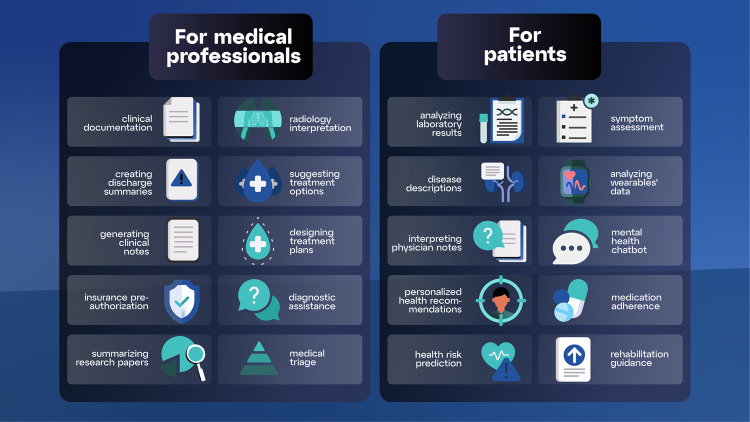
The rapid advancements in artificial intelligence (AI) have led to the development of sophisticated large language models (LLMs) such as GPT-4 and Bard. The potential implementation of LLMs in healthcare settings has already garnered considerable attention because of their diverse applications that include facilitating clinical documentation, obtaining insurance pre-authorization, summarizing research papers, or working as a chatbot to answer questions for patients about their specific data and concerns. While offering transformative potential, LLMs warrant a very cautious approach since these models are trained differently from AI-based medical technologies that are regulated already, especially within the critical context of caring for patients. The newest version, GPT-4, that was released in March, 2023, brings the potentials of this technology to support multiple medical tasks; and risks from mishandling results it provides to varying reliability to a new level. Besides being an advanced LLM, it will be able to read texts on images and analyze the context of those images. The regulation of GPT-4 and generative AI in medicine and healthcare without damaging their exciting and transformative potential is a timely and critical challenge to ensure safety, maintain ethical standards, and protect patient privacy. We argue that regulatory oversight should assure medical professionals and patients can use LLMs without causing harm or compromising their data or privacy. This paper summarizes our practical recommendations for what we can expect from regulators to bring this vision to reality.
Overview
The claims and statistics of this paper haven’t been checked yet.
Free: it reads the open-access text and checks the first 5 claims that cite a source we can check. Create a free account to check every claim.
Integrity signals
Registry
Cites
Statistics
Figures
Verification
Claims the paper makes
The claims and statistics of this paper haven’t been checked yet.
Free: it reads the open-access text and checks the first 5 claims that cite a source we can check. Create a free account to check every claim.
Claims other papers make about this one
Each is checked against this paper’s own text: does it say what the citing paper says it does?
The source backs part of the claim, not all of it — or backs it for a different population, condition or comparison.
In the citing paper
“the integration of AI and large language models (LLMs) into hospital EHR systems currently lacks a defined oversight framework (Table 1)2.”
From Preventing unrestricted and unmonitored AI experimentation in healthcare through transparency and accountability (2025) · cites this paper as [2]
Experimental — accuracy not yet measuredThe source backs part of the claim, not all of it — or backs it for a different population, condition or comparison.
In the citing paper
“The addition of large language models (LLM) into healthcare operations, including electronic health record (EHR) systems represents a transformative level of adoption and integration, changing how enterprise systems interact with algorithms; permitting the largely unconsented collection and utilization of previously unmined private data originating from the care of patients1,2.”
From Preventing unrestricted and unmonitored AI experimentation in healthcare through transparency and accountability (2025) · cites this paper as [2]
Experimental — accuracy not yet measuredThe source backs part of the claim, not all of it — or backs it for a different population, condition or comparison.
In the citing paper
“Given the unique risks faced by adolescents and young adults, such as disclosure of self-harm intent to chatbots, or the reinforcement of harmful thought patterns by algorithms, it is crucial that research efforts should prioritize the establishment of clear safety protocols and robust evaluation frameworks to ensure their ethical and responsible deployment [69].”
From The Effectiveness of AI Chatbots in Alleviating Mental Distress and Promoting Health Behaviors Among Adolescents and Young Adults: Systematic Review and Meta-Analysis (2025) · cites this paper as [69]
Experimental — accuracy not yet measuredThe cited source says what the claim attributes to it.
In the citing paper
“The real-time adaptation of LLMs and the adaptive and autodidactic functions of deep learning algorithms call for regulatory frameworks capable of addressing these systems' adaptability and self-teaching nature.”
From Balancing Privacy and Progress: A Review of Privacy Challenges, Systemic Oversight, and Patient Perceptions in AI-Driven Healthcare (2024) · cites this paper as [27]
The cited source says what the claim attributes to it.
In the citing paper
“Despite these upsides, leveraging LLMs in healthcare is complicated due to complex regulations, including data security and patient privacy.1”
From Development of secure infrastructure for advancing generative artificial intelligence research in healthcare at an academic medical center (2025) · cites this paper as [1]
10 more claims about this paper
Create a free account to see every claim other papers make about this one.
Self-check
Percentages, sums and reported differences re-computed from the paper’s own numbers.
The self-check needs the paper’s full text.
Citations
Cites
High-performance medicine: the convergence of human and artificial intelligence
Topol, E. J. (2019) · Nature Medicine · doi:10.1038/s41591-018-0300-7 · Cited by 10,450
Self-citationLarge Language Models Encode Clinical Knowledge
Singhal, K., Azizi, S., Tu, T., Mahdavi, S. S., Wei, J., Chung, H. W., Scales, N., Tanwani, A., Cole-Lewis, H., Pfohl, S., et al. (2022) · arXiv · doi:10.48550/arxiv.2212.13138 · Cited by 4,083
Large language models encode clinical knowledge
Singhal, K., Azizi, S., Tu, T., Mahdavi, S. S., Wei, J., Chung, H. W., Scales, N., Tanwani, A., Cole-Lewis, H., Pfohl, S., et al. (2023) · Nature · doi:10.1038/s41586-023-06291-2 · Cited by 4,083 · cited 1×
“Since then, GPT-4 could achieve an accuracy over 85% on the same exam 14 .”
Sallam, M. (2023) · Healthcare · doi:10.3390/healthcare11060887 · Cited by 3,126
Sallam, M. (2023) · doi:10.1101/2023.02.19.23286155 · Cited by 3,123 · cited 1×
“Systematic reviews highlighted other potential bene fi ts too such as improved scienti fi c writing, enhancing research equity, streamlining the healthcare work fl ow, cost saving, and improved personalized learning in medical education 3,4 .”
Benefits, Limits, and Risks of GPT-4 as an AI Chatbot for Medicine
Lee, P., Bubeck, S., & Petro, J. (2023) · New England Journal of Medicine · doi:10.1056/nejmsr2214184 · Cited by 1,738
Benjamens, S., Dhunnoo, P., & Meskó, B. (2020) · npj Digital Medicine · doi:10.1038/s41746-020-00324-0 · Cited by 1,215
Self-citationNagendran, M., Chen, Y., Lovejoy, C. A., Gordon, A. C., Komorowski, M., Harvey, H., Topol, E. J., Ioannidis, J. P. A., Collins, G. S., & Maruthappu, M. (2020) · BMJ · doi:10.1136/bmj.m689 · Cited by 1,152
Self-citationRegulating ChatGPT and other Large Generative AI Models
Hacker, P., Engel, A., & Mauer, M. (2023) · 2023 ACM Conference on Fairness Accountability and Transparency · doi:10.1145/3593013.3594067 · Cited by 466 · cited 1×
“In details, regulation should focus on concrete high-risk applications, and not the pre-trained model itself, and should include (i) obligations regarding transparency, (ii) risk management, (iii) non-discrimination provisions, and (iv) content moderation rules 15 .”
ChatGPT in healthcare: A taxonomy and systematic review
Li, J., Dada, A., Puladi, B., Kleesiek, J., & Egger, J. (2024) · Computer Methods and Programs in Biomedicine · doi:10.1016/j.cmpb.2024.108013 · Cited by 452
Cited by
Items 501–600 of 1,005
What’s wrong with medical black box AI?
Gordijn, B., & ten Have, H. (2023) · Medicine Health Care and Philosophy · doi:10.1007/s11019-023-10168-6 · Cited by 11
Non, L. R. (2023) · Antimicrobial Stewardship & Healthcare Epidemiology · doi:10.1017/ash.2023.512 · Cited by 11
Mudrik, A., Tsur, A., Nadkarni, G. N., Efros, O., Glicksberg, B. S., Soffer, S., & Klang, E. (2024) · medRxiv · doi:10.1101/2024.08.08.24311699 · Cited by 11
From Words to Workflows: Automating Business ProcessesPreprint
Minkova, L., Espejel, J. L., Djaidja, T. E. T., Dahhane, W., & Ettifouri, E. H. (2024) · arXiv (Cornell University) · doi:10.48550/arxiv.2412.03446 · Cited by 11
The transformative impact of large language models in healthcare
Шалько, М. Н., Domina, O., Korobko, I., Melnyk, D., & Andriushchenko, A. (2024) · Technology audit and production reserves · doi:10.15587/2706-5448.2024.319006 · Cited by 13
Wang, J., Min, H., Li, T., Li, J., Jiang, Y., Zhang, J., Wu, Y., & Sun, X. (2025) · Journal of Medical Internet Research · doi:10.2196/67303 · Cited by 10
Generative AI for Supporting Cultural Learning and Reflection: A Study on Technology User Acceptance
Iddamalgoda, C., Ng, K. H., & Koleva, B. N. (2025) · International Journal of Human-Computer Interaction · doi:10.1080/10447318.2025.2505777 · Cited by 10
Hong, E. K., Kim, H. W., Song, O. K., Lee, K.-C., Kim, D. K., Cho, J.-B., Kim, J., Lee, S., Bae, W., & Roh, B. (2025) · American Journal of Roentgenology · doi:10.2214/ajr.25.33059 · Cited by 10
Foundation Model for Medical Imaging: A Comprehensive Review
Jiao, L., Yang, J., Li, R., Liu, F., Liu, X., Chen, P., Guo, Y., Li, L., Shang, R., & Ma, W. (2025) · IEEE Transactions on Artificial Intelligence · doi:10.1109/tai.2025.3618796 · Cited by 11
Oyelade, O. N., Wang, H., & Rafferty, K. J. (2025) · ACM Computing Surveys · doi:10.1145/3774628 · Cited by 10
Goh, S. S. N., Mariappan, R., Tan, G. S. W., Yao, J., Hew, F. M., Yeo, Y., Ow, S. G. W., Koh, W. Y., Kumarakulasinghe, N. B., Tan, T. H., et al. (2025) · JCO Clinical Cancer Informatics · doi:10.1200/cci-24-00243 · Cited by 10
Will large language models transform clinical prediction?
Yildiz, Y., Nenadić, G., Jani, M., & Jenkins, D. A. (2025) · Diagnostic and Prognostic Research · doi:10.1186/s41512-025-00211-w · Cited by 10
Radeva, M. N., Hristova, E. G., Georgiev, R. T., & Zlatarova, Z. I. (2026) · PLOS Digital Health · doi:10.1371/journal.pdig.0001199 · Cited by 10
Reis, F., Agha-Mir-Salim, L., Hickstein, R., Reis, M., Piper, S. K., Balzer, F., & Boie, S. D. (2026) · Journal of Medical Internet Research · doi:10.2196/84668 · Cited by 10
Evaluating the accuracy of ChatGPT model versions for giving care-seeking advice
Kopka, M., He, L., & Feufel, M. A. (2026) · Communications Medicine · doi:10.1038/s43856-026-01466-0 · Cited by 10
Chen, B., & Qiu, X. (2026) · Analytical Methods · doi:10.1039/d6ay00224b · Cited by 10
Benchmarking large language models for de-identification of electronic health record notes
Panchal, O., Chang, N., Zhao, Z., Nadar, D. R., Dai, H.-J., & Jonnagaddala, J. (2026) · BMJ Health & Care Informatics · doi:10.1136/bmjhci-2025-101894 · Cited by 10
Voice - Driven Panoramic Imagery: Real-Time Generative AI for Immersive Experiences
Venkatachalam, N., Rayana, M., Bala Vignesh, S., & Prathamesh, S. (2024) · International Conference on Intelligent Data Communication Technologies and Internet of Things (IDCIoT) · doi:10.1109/idciot59759.2024.10467441 · Cited by 10
Investigating the diagnostic accuracy of GPT ‐4's novel image analytics feature in dermatology
Mackenzie, E., Sanabria, B., Tchack, M., Khan, S., & Rao, B. K. (2024) · Journal of the European Academy of Dermatology and Venereology · doi:10.1111/jdv.20006 · Cited by 10
Luo, S., Canavese, F., Aroojis, A. J., Andreacchio, A., Antičević, D., Bouchard, M. L., Castañeda, P. G., Rosa, V. D., Fiogbe, M. A., Frick, S. L., et al. (2024) · Journal of Pediatric Orthopaedics · doi:10.1097/bpo.0000000000002682 · Cited by 10
Bertrand, A., Eagan, J., Maxwell, W., & Brand, J. L. M. (2024) · CHI Conference on Human Factors in Computing Systems · doi:10.1145/3613904.3642326 · Cited by 10
Addressing the Productivity Paradox in Healthcare with Retrieval Augmented Generative AI Chatbots
Ranasinghe, S., Silva, D. D., Mills, N., Alahakoon, D., Manic, M., Lim, Y., & Ranasinghe, W. K. B. (2024) · IEEE International Conference on Industrial Technology (ICIT) · doi:10.1109/icit58233.2024.10540818 · Cited by 10
Generative artificial intelligence powered chatbots in urology
Khawaja, Z., Adhoni, M. Z. U., & Byrnes, K. G. (2025) · Current Opinion in Urology · doi:10.1097/mou.0000000000001280 · Cited by 10
Making the invisible visible: what can we do about biased AI in medical devices?
Whitehead, M. M., Carrol, E. D., Kee, F., & Holmes, C. C. (2023) · BMJ · doi:10.1136/bmj.p1893 · Cited by 10
Engineering and public health: converging disciplines for resilient solutions
Cummings, C. L., Wells, E., & Trump, B. D. (2024) · Environment Systems & Decisions · doi:10.1007/s10669-024-09981-y · Cited by 10
Roy, E., Malafa, S., Adwer, L. M., Tabache, H., Sheth, T., Mishra, V., Abouelmagd, M. E., Cuschieri, A., Khan, S. A., Găman, M., et al. (2025) · International Journal of Medical Students · doi:10.5195/ijms.2025.3344 · Cited by 11
Large Language Models (LLMs): A systematic study in Administration and Business
Pessanha, G. R. G., Vieira, A. G., & Brandão, W. C. (2024) · RAM. Revista de Administração Mackenzie · doi:10.1590/1678-6971/eramd240059 · Cited by 9
HFL-GAN: scalable hierarchical federated learning GAN for high quantity heterogeneous clients
Petch, L., Moustafa, A., Ma, X., & Yasser, M. (2024) · Applied Intelligence · doi:10.1007/s10489-024-05924-x · Cited by 9
The Role of Generative AI in Personalized Medicine and Treatment Recommendations
Garg, S. (2025) · Clinical Medicine And Health Research Journal · doi:10.18535/cmhrj.v5i02.463 · Cited by 9
Maslinski, J., Grasfield, R. H., Awasthi, R., Mishra, S. V., Mahapatra, D., & Mathur, P. (2025) · Cureus · doi:10.7759/cureus.82397 · Cited by 9
The Role of Large Language Models ( LLMs ) in Breast Imaging Today and in the Near Future
Schiaffino, S., Zhang, T., Mann, R. M., & Pinker, K. (2025) · Journal of Magnetic Resonance Imaging · doi:10.1002/jmri.29807 · Cited by 9
Xu, J., Wang, J., Li, J., Zhu, Z., Xiao, F., Cai, W., Song, R., Wang, T. F., & Li, H. (2025) · Journal of Medical Systems · doi:10.1007/s10916-025-02192-1 · Cited by 9
Hart, S. N., Day, P. L., & Garcia, C. A. (2025) · BMC Medical Informatics and Decision Making · doi:10.1186/s12911-025-03099-0 · Cited by 9
Zhao, W., Lai, H., Pan, B., Huang, J., Xia, D., Bai, C. B., Liu, J., Liu, J., Jin, Y., Shang, H., et al. (2025) · Frontiers in Pharmacology · doi:10.3389/fphar.2025.1649041 · Cited by 9
Large Language Models: A Paradigm Shift for Dementia Diagnosis and Care
Harrison, J. R., Tang, S. L., Burston, B., Robertson, A., Liang, H., & Taylor, J. (2025) · British Journal of Hospital Medicine · doi:10.12968/hmed.2024.0666 · Cited by 9
Grolleau, F., Alsentzer, E., Keyes, T., Chung, P., Swaminathan, A., Aali, A., Hom, J., Huynh, T., Lew, T., Liang, A. S., et al. (2025) · Pacific Symposium on Biocomputing (PSB) · doi:10.1142/9789819824755_0027 · Cited by 9
Li, P., Xu, Y., Liu, X., Shen, Z., Wang, Y., Lv, X., Lu, Z., Wu, H., Zhuang, J., & Chen, Y. (2026) · JMIR Medical Informatics · doi:10.2196/81422 · Cited by 9
The Ethics of Applying Artificial Intelligence (AI) for Communication Governance
Abokhoza, R., AL-Tkhayneh, K. M., Qaruty, R. A., Hadi, S. A. A., & Ellala, Z. K. (2024) · International Conference on Intelligent Computing, Communication, Networking and Services (ICCNS) · doi:10.1109/iccns62192.2024.10776312 · Cited by 9
Pinard, C. J., Poon, A. C., Lagree, A., Wu, K., Li, J., & Tran, W. T. (2024) · Veterinary and Comparative Oncology · doi:10.1111/vco.13035 · Cited by 9
A Narrative Review on the Application of Large Language Models to Support Cancer Care and Research
Benson, R., Elia, M., Hyams, B., Chang, J. H., & Hong, J. C. (2024) · Yearbook of Medical Informatics · doi:10.1055/s-0044-1800726 · Cited by 9
Optimizing theranostics chatbots with context-augmented large language models
Koller, P., Clement, C., van Eijk, A., Seifert, R., Zhang, J., Prenosil, G., Sathekge, M. M., Herrmann, K., Baum, R. P., Weber, W., et al. (2025) · Theranostics · doi:10.7150/thno.107757 · Cited by 9
Chatbots vs andrologists: Testing 25 clinical cases
Perrot, O., Schirmann, A., Vidart, A., Guillot‐Tantay, C., Izard, V., Lebrét, T., Boillot, B., Mesnard, B., Lebacle, C. M., & Madec, F.-X. (2024) · The French Journal of Urology · doi:10.1016/j.fjurol.2024.102636 · Cited by 9
Lupton, D. A., & Butler, E. (2024) · SSRN Electronic Journal · doi:10.2139/ssrn.4871308 · Cited by 9
Zhang, Z., Jin, R., Liu, J., Xu, G., Wang, X., Žitnik, M., Zhao, H., Cong, L., & Wang, M. (2024) · bioRxiv (Cold Spring Harbor Laboratory) · doi:10.1101/2024.10.23.619960 · Cited by 9
EvalCards: A Framework for Standardized Evaluation ReportingPreprint
Dhar, R., Villegas, D. S., Karamolegkou, A., Schiavone, A., Yuan, Y., Chen, X., Li, J., Frank, S., Grazia, L. D., Swain, M., et al. (2025) · arXiv (Cornell University) · doi:10.48550/arxiv.2511.21695 · Cited by 10
Foundation model embeddings for multimodal oncology data integration
Menon, T. P., Mahajan, A., & Powell, D. (2026) · npj Digital Medicine · doi:10.1038/s41746-025-02312-8 · Cited by 9
Macieira, T. G. R., Bjarnadóttir, R. I., Salgado, P. D. O., Baranwal, A., Semenov, A., Priola, K., Pestana, P., Okafor, S., Mena, N., Montoya, N., et al. (2025) · Nursing Outlook · doi:10.1016/j.outlook.2025.102494 · Cited by 8
Liu, X., Chen, Y., Guan, W., Jiang, P., Yan, L., Fan, M., & Zhou, Q. (2025) · Journal of Advanced Nursing · doi:10.1111/jan.70250 · Cited by 9
On Guardrail Models’ Robustness to Mutations and Adversarial Attacks
Bassani, E., & Sanchez, I. (2025) · Findings of the Association for Computational Linguistics: EMNLP (Findings of EMNLP) · doi:10.18653/v1/2025.findings-emnlp.922 · Cited by 8
Zitu, M. M., Manne, A., Zhu, Y., Rahat, W. B., & Binkheder, S. (2025) · Pharmacy · doi:10.3390/pharmacy13060176 · Cited by 8
Dundas, N. E., Law, T. J., Brender, T. D., Mills, H., Espejo, E., Heintz, T. A., Wallace, A. W., & Cobert, J. M. (2025) · Anesthesiology · doi:10.1097/aln.0000000000005795 · Cited by 8
An Affordance Perspective on Generative AI in Enterprise Architecture
Banh, L., Tran, T. K., & Strobel, G. (2025) · IEEE Access · doi:10.1109/access.2025.3631323 · Cited by 8
AI-Powered Physiotherapy: Evaluating LLMs Against Students in Clinical Rehabilitation Scenarios
Michou, I., Fouras, A., Chrysanthakopoulou, D., Theodoritsi, M., Stellatou, S., Mariettou, S., & Koutsojannis, C. M. (2026) · Applied Sciences · doi:10.3390/app16031165 · Cited by 8
Plass, M., Holzinger, A., Reihs, R., & Müller, H. (2026) · Computerized Medical Imaging and Graphics · doi:10.1016/j.compmedimag.2026.102758 · Cited by 8
The Lancet HIV Commission on ageing and HIV: a global perspective
Justice, A. C., Althoff, K. N., Clarfield, A. M., Ramírez, B. E. C., Ford, N. P., Hartley, M., Kiplagat, J., Lui, G. C.-Y., Semeere, A., Vitória, M., et al. (2026) · The Lancet HIV · doi:10.1016/s2352-3018(26)00058-5 · Cited by 9
Saccon, E., Tikna, A., Martini, D. D., Lamon, E., Palopoli, L., & Roveri, M. (2024) · Proceedings - IEEE International Conference on Robotics and Automation/Proceedings · doi:10.1109/icra57147.2024.10610800 · Cited by 8
Král, J., Hradiš, M., Bužga, M., & Kunovský, L. (2024) · Biomedical Papers · doi:10.5507/bp.2024.027 · Cited by 9
Park, S. H., & Kim, N. (2024) · Radiology · doi:10.1148/radiol.241703 · Cited by 8
Is Artificial Intelligence a Useful Tool for Clinical Practice of Oral and Maxillofacial Surgery?
Işık, G., Gürbüz, İ. A. K., Elgün, F., Kara, R. U., Berber, B., Özgül, S., & Günbay, T. (2024) · Journal of Craniofacial Surgery · doi:10.1097/scs.0000000000010686 · Cited by 8
Manoj, R., & Nandhini, G. (2024) · IEEE Region Humanitarian Technology Conference · doi:10.1109/r10-htc59322.2024.10778845 · Cited by 8
Artificial intelligence in scientific writing: opportunities and ethical considerations
Sharma, A. K., Rao, P., Ahmed, M. Z., & Chaturvedi, K. K. (2024) · International Journal of Research in Medical Sciences · doi:10.18203/2320-6012.ijrms20244167 · Cited by 8
Meter, A. V., Wheaton, M. G., Cosgrove, V. E., Andreadis, K., & Robertson, R. E. (2025) · PLOS Digital Health · doi:10.1371/journal.pdig.0000711 · Cited by 8
Neurological history both twinned and queried by generative artificial intelligence
Lee, J.-H., Choi, E., Angulo, S. L., McDougal, R. A., & Lytton, W. W. (2025) · Frontiers in Medicine · doi:10.3389/fmed.2024.1496866 · Cited by 8
Artificial Intelligence‐Based Virtual Assistant for the Diagnostic Approach of Chronic Ataxias
Alessandro, L., Bianciotti, N., Salama, L., Volmaro, S., Navarrine, V., Ameghino, L., Arena, J., Bestoso, S., Bruno, V. A., Castillo‐Torres, S. A., et al. (2025) · Movement Disorders · doi:10.1002/mds.30168 · Cited by 8
Liu, H., Peng, J., Li, L., Deng, A., Huang, X., Yin, G., & Luo, H. (2025) · JMIR Medical Informatics · doi:10.2196/66429 · Cited by 8
Breaking Down Bias: On The Limits of Generalizable Pruning Strategies
Ma, S., Salinas, A., Henderson, P., & Nyarko, J. (2025) · ACM Conference on Fairness, Accountability, and Transparency (FAccT) · doi:10.1145/3715275.3732161 · Cited by 8
ArtPerception: ASCII art-based jailbreak on LLMs with recognition pre-test
Yang, G.-Y., Cheng, T.-Y., Teng, Y.-W., Wang, F., & Yeh, K. (2025) · Journal of Network and Computer Applications · doi:10.1016/j.jnca.2025.104356 · Cited by 8
The potential of LLMs in generating questions and answers with EHRs
Zhu, Y., Tang, W., Yang, H., Niu, J., Dou, L., Gu, Y., Wu, Y., Zhang, W., Sun, Y., & Yang, X. (2026) · Frontiers in Digital Health · doi:10.3389/fdgth.2026.1799629 · Cited by 8
Artificial intelligence governance in smart cities: A European regulatory perspective
Fabrègue, B. F. G. (2023) · Journal of Autonomous Intelligence · doi:10.32629/jai.v7i2.672 · Cited by 8
Assessing the research landscape and clinical utility of large language models: A scoping reviewPreprint
Park, Y., Pillai, A., Deng, J., Guo, E., Gupta, M., Paget, M., & Naugler, C. T. (2023) · Research Square · doi:10.21203/rs.3.rs-3472000/v1 · Cited by 8
Thiers, F. A., & Harned, Z. (2024) · OSF Preprints (OSF Preprints) · doi:10.31219/osf.io/5ks37 · Cited by 8
Bertrand, A. (2024) · theses.fr (ABES) · doi:10.70675/216d3647z78bcz4c68z9ba9z2d0a029cf1b4 · Cited by 8
Exploring the Applications of Artificial Intelligence in Marketing: A Topic Modelling Analysis
NOVA Information Management School (NOVA IMS), L., Rita, P., Omran, W., University of Minho, F. O. E. A. M., Ramos, R. F., Instituto Politécnico de Coimbra, E., Costa, T., & NOVA Information Management School (NOVA IMS), L. (2025) · Tourism & Management Studies · doi:10.18089/tms.20250103 · Cited by 7
Zhu, W., Zheng, Q., Xu, X., Xia, Y., Xu, X., Tu, H., Yu, Y., Ying, W., Xie, J., Sheng, G., et al. (2025) · Journal of Clinical and Translational Hepatology · doi:10.14218/jcth.2025.00406 · Cited by 7
Generative AI Health Assistants in Modern Healthcare: Drivers and Barriers to Adoption
Al-Lataifeh, Z., Harris, M. A., Smith, J., & Chin, A. G. (2025) · Information Systems Frontiers · doi:10.1007/s10796-025-10681-4 · Cited by 8
Govathson, C., Chetty-Makkan, C. M., Greener, R., Frade, S., Rech, D., Morris, S., Richard, Y., Mendonca, R., Maricich, N., Long, L. C., et al. (2026) · Frontiers in Digital Health · doi:10.3389/fdgth.2025.1731002 · Cited by 8
Williams, J., Jones, G., Berg, T., Birt, L., Stowe, A., & Li, X. (2026) · Computers & Industrial Engineering · doi:10.1016/j.cie.2026.111914 · Cited by 7
Cloud-Based Quad Deep Ensemble Framework for the Detection of COVID-19 Omicron and Delta Variants
Tiwari, R. S., Lakshmi, D., Das, T. K., Bhatia, S., Basheer, S., & Alqahtani, M. S. (2023) · Diagnostics · doi:10.3390/diagnostics13223419 · Cited by 7
Chat GPT-4: Potentials, barriers, and future directions for newer medical researchers
Garg, S., & Chauhan, A. (2024) · The American Journal of the Medical Sciences · doi:10.1016/j.amjms.2024.03.016 · Cited by 7
Gusev, A. V., Рашитовна, А. О., Андрейченко, А. Е., & Ivanov, I. V. (2024) · National Health Care (Russia) · doi:10.47093/2713-069x.2024.5.3.53-61 · Cited by 7
Lee, J. J., Zepeda, A., Arbour, G., Isaac, K. V., Ng, R. T., & Nichol, A. (2024) · JCO Clinical Cancer Informatics · doi:10.1200/cci.24.00107 · Cited by 7
Generative AI in sport and exercise psychology: Exploring opportunities and overcoming challenges
Oliver, A., & Guiller, J. (2024) · Sport & Exercise Psychology Review · doi:10.53841/bpssepr.2024.19.2.36 · Cited by 7
Mapping the Scholarly Landscape on AI and Diplomacy
Bano, M., Chaudhri, Z. H., & Zowghi, D. (2025) · The Hague Journal of Diplomacy · doi:10.1163/1871191x-bja10204 · Cited by 7
Linking Symptom Inventories Using Semantic Textual Similarity
Kennedy, E., Vadlamani, S., Lindsey, H. M., Peterson, K., Dams-O’Connor, K., Agarwal, R., Amiri, H., Andersen, R. K., Babikian, T., Baron, D. A., et al. (2025) · Journal of Neurotrauma · doi:10.1089/neu.2024.0301 · Cited by 7
Armitage, R. C. (2025) · Journal of Evaluation in Clinical Practice · doi:10.1111/jep.70129 · Cited by 7
Vega-Huerta, H., Gutierrez-Mejía, F., Calcina-Aguilar, B., Benito-Pacheco, O., De-la-Cruz-VdV, P., Maquen-Niño, G. L. E., & Guillermo, J. (2025) · Ingénierie des systèmes d information · doi:10.18280/isi.300411 · Cited by 7
Generative artificial intelligence policies: information governance
Wang, X., Liu, B., & Bao, L. (2025) · Management Decision · doi:10.1108/md-06-2024-1422 · Cited by 7
Walking Backward to Ensure Risk Management of Large Language Models in Medicine
Onitiu, D., Wachter, S., & Mittelstadt, B. (2025) · The Journal of Law Medicine & Ethics · doi:10.1017/jme.2025.10132 · Cited by 7
The application of large language models in qualitative nursing research: A scoping review
Zhou, T., Xing, M., Hu, Y., Liang, J., Ren, Q., Yang, Y., & Ye, L. (2025) · Nursing Outlook · doi:10.1016/j.outlook.2025.102544 · Cited by 7
Giuffrè, M., Pugliese, N., Kresevic, S., Ajčević, M., Negro, F., Puoti, M., Forns, X., Pawlotsky, J., Shung, D. L., & Aghemo, A. (2025) · Liver International · doi:10.1111/liv.70349 · Cited by 7
Albahri, A. S., Zahid, I. A., Yaseen, M. G., Aljanabi, M., Ali, A. H., & Kaleel, A. (2024) · Applied Data Science and Analysis · doi:10.58496/adsa/2024/001 · Cited by 7
Evaluation of ChatGPT as a Multiple-Choice Question Generator in Dental Traumatology
Özbay, Y. (2024) · Medical Records · doi:10.37990/medr.1446396 · Cited by 7
Machine-Learning Applications in Thrombosis and Hemostasis
Nilius, H., & Nagler, M. (2024) · Hämostaseologie · doi:10.1055/a-2407-7994 · Cited by 7
Evaluating ChatGPT for neurocognitive disorder diagnosis: a multicenter study
Dimmick, A. A., Su, C. C., Rafiuddin, H. S., & Cicero, D. C. (2025) · The Clinical Neuropsychologist · doi:10.1080/13854046.2025.2475567 · Cited by 7
Nasarian, E., Alizadehsani, R., Acharya, U. R., & Tsui, K. (2023) · Research Square · doi:10.21203/rs.3.rs-3626164/v2 · Cited by 7
Evaluation of Language Models in the Medical Context Under Resource-Constrained SettingsPreprint
Posada, A., Rueckert, D., Meissen, F., & Müller, P. (2024) · arXiv (Cornell University) · doi:10.48550/arxiv.2406.16611 · Cited by 7
FoldMark: Protecting Protein Generative Models with WatermarkingPreprint
Zhang, Z., Jin, R., Fu, K., Cong, L., Žitnik, M., & Wang, M. (2024) · arXiv (Cornell University) · doi:10.48550/arxiv.2410.20354 · Cited by 7
LLM Assistance for Pediatric DepressionPreprint
Ignashina, M., Bondaronek, P., Santel, D., Pestian, J. P., & Ive, J. (2025) · arXiv (Cornell University) · doi:10.48550/arxiv.2501.17510 · Cited by 7
Bian, M., Zhang, R., Ding, C., Peng, X., & Xu, J.-F. (2025) · arXiv (Cornell University) · doi:10.48550/arxiv.2505.07205 · Cited by 7
Kumar, A., Baijal, A., & Kharat, M. (2025) · Journal of International Education in Business · doi:10.1108/jieb-07-2024-0086 · Cited by 6
Metadata
- Authors
- Meskó, B., & Topol, E. J.
- Affiliations
- Semmelweis University (HU)
- Scripps Research Institute (US)
- Corresponding author
- Meskó, Bertalan
- Venue
- npj Digital Medicine
- Published
- 2023-07-06
- Volume
- 6
- Issue
- 1
- Pages
- 120-120
- ISSN
- 2398-6352 (ISSN-L)
- PMC
- PMC10326069
- OpenAlex
- W4383346782
- Semantic Scholar
- 0893549771094fac547432cb4f84e9605c911a86
- Cited by
- 1,047
- References
- 11
- Citations by year
- 2026: 300 · 2025: 336 · 2024: 336 · 2023: 75
- FWCI
- 41.69
- Type
- journal article
- Language
- en
- Open access
- gold
- doi.org
- Licence
- cc-by
- creativecommons.org/licenses/by/4.0 (tdm)
- creativecommons.org/licenses/by/4.0 (vor)
- Locations
- npj Digital Medicine (publishedVersion, cc-by)
- PubMed Central (publishedVersion, cc-by)
- PubMed (publishedVersion)
- DOAJ (DOAJ: Directory of Open Access Journals) (submittedVersion, cc-by-sa)
- Topics
- Health Sciences › Medicine › Health Informatics › Artificial Intelligence in Healthcare and Education
- Physical Sciences › Computer Science › Artificial Intelligence › Ethics and Social Impacts of AI
- Social Sciences › Law › Digitalization, Law, and Regulation
- Keywords
- large language models, generative AI, health care regulation, regulatory oversight, GPT-4, AI safety, patient privacy, medical ethics, clinical documentation, AI chatbots, image analysis
About these checks
Registry, retraction, Cites and statistics results are computed, not judged, with one exception: a printed reference that no index lists is read once by a model before it counts as a citation error. Claims are extracted by a model and kept only when their quote appears verbatim in the text; each cited source is then checked, with a model’s help, for whether it says what the claim relies on. Those verdicts can be wrong — read the claim’s quote and the cited source before relying on one.
Statistics and arithmetic are recomputed, not judged.
Confidence bands are shown only for fields calibrated on our annotated test set. None is calibrated yet, so no band is shown.
What counts as a claim ›How we measure confidence ›How we check this ›
Are you an author, or do you see a problem with this page? Request a review
Data sources
Bibliographic data: Semantic Scholar, OpenAlex, Crossref.
Contains information from the Semantic Scholar Academic Graph Datasets, made available under the ODC Attribution License (ODC-BY 1.0).
Semantic Scholar’s data is described in: Kinney, R., et al. (2023). The Semantic Scholar Open Data Platform. arXiv:2301.10140.
