

The imperative for regulatory oversight of large language models (or generative AI) in healthcare
Open accessThe DOI matches its Crossref record; 16 of the 16 references it cites were found in a registry or an index.
Abstract
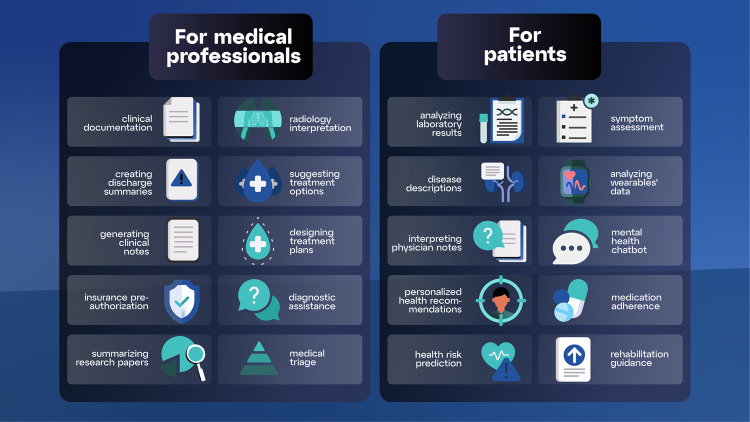
The rapid advancements in artificial intelligence (AI) have led to the development of sophisticated large language models (LLMs) such as GPT-4 and Bard. The potential implementation of LLMs in healthcare settings has already garnered considerable attention because of their diverse applications that include facilitating clinical documentation, obtaining insurance pre-authorization, summarizing research papers, or working as a chatbot to answer questions for patients about their specific data and concerns. While offering transformative potential, LLMs warrant a very cautious approach since these models are trained differently from AI-based medical technologies that are regulated already, especially within the critical context of caring for patients. The newest version, GPT-4, that was released in March, 2023, brings the potentials of this technology to support multiple medical tasks; and risks from mishandling results it provides to varying reliability to a new level. Besides being an advanced LLM, it will be able to read texts on images and analyze the context of those images. The regulation of GPT-4 and generative AI in medicine and healthcare without damaging their exciting and transformative potential is a timely and critical challenge to ensure safety, maintain ethical standards, and protect patient privacy. We argue that regulatory oversight should assure medical professionals and patients can use LLMs without causing harm or compromising their data or privacy. This paper summarizes our practical recommendations for what we can expect from regulators to bring this vision to reality.
Overview
The claims and statistics of this paper haven’t been checked yet.
Free: it reads the open-access text and checks the first 5 claims that cite a source we can check. Create a free account to check every claim.
Integrity signals
Registry
Cites
Statistics
Figures
Verification
Claims the paper makes
The claims and statistics of this paper haven’t been checked yet.
Free: it reads the open-access text and checks the first 5 claims that cite a source we can check. Create a free account to check every claim.
Claims other papers make about this one
Each is checked against this paper’s own text: does it say what the citing paper says it does?
The source backs part of the claim, not all of it — or backs it for a different population, condition or comparison.
In the citing paper
“the integration of AI and large language models (LLMs) into hospital EHR systems currently lacks a defined oversight framework (Table 1)2.”
From Preventing unrestricted and unmonitored AI experimentation in healthcare through transparency and accountability (2025) · cites this paper as [2]
Experimental — accuracy not yet measuredThe source backs part of the claim, not all of it — or backs it for a different population, condition or comparison.
In the citing paper
“The addition of large language models (LLM) into healthcare operations, including electronic health record (EHR) systems represents a transformative level of adoption and integration, changing how enterprise systems interact with algorithms; permitting the largely unconsented collection and utilization of previously unmined private data originating from the care of patients1,2.”
From Preventing unrestricted and unmonitored AI experimentation in healthcare through transparency and accountability (2025) · cites this paper as [2]
Experimental — accuracy not yet measuredThe source backs part of the claim, not all of it — or backs it for a different population, condition or comparison.
In the citing paper
“Given the unique risks faced by adolescents and young adults, such as disclosure of self-harm intent to chatbots, or the reinforcement of harmful thought patterns by algorithms, it is crucial that research efforts should prioritize the establishment of clear safety protocols and robust evaluation frameworks to ensure their ethical and responsible deployment [69].”
From The Effectiveness of AI Chatbots in Alleviating Mental Distress and Promoting Health Behaviors Among Adolescents and Young Adults: Systematic Review and Meta-Analysis (2025) · cites this paper as [69]
Experimental — accuracy not yet measuredThe cited source says what the claim attributes to it.
In the citing paper
“The real-time adaptation of LLMs and the adaptive and autodidactic functions of deep learning algorithms call for regulatory frameworks capable of addressing these systems' adaptability and self-teaching nature.”
From Balancing Privacy and Progress: A Review of Privacy Challenges, Systemic Oversight, and Patient Perceptions in AI-Driven Healthcare (2024) · cites this paper as [27]
The cited source says what the claim attributes to it.
In the citing paper
“Despite these upsides, leveraging LLMs in healthcare is complicated due to complex regulations, including data security and patient privacy.1”
From Development of secure infrastructure for advancing generative artificial intelligence research in healthcare at an academic medical center (2025) · cites this paper as [1]
10 more claims about this paper
Create a free account to see every claim other papers make about this one.
Self-check
Percentages, sums and reported differences re-computed from the paper’s own numbers.
The self-check needs the paper’s full text.
Citations
Cites
High-performance medicine: the convergence of human and artificial intelligence
Topol, E. J. (2019) · Nature Medicine · doi:10.1038/s41591-018-0300-7 · Cited by 10,450
Self-citationLarge Language Models Encode Clinical Knowledge
Singhal, K., Azizi, S., Tu, T., Mahdavi, S. S., Wei, J., Chung, H. W., Scales, N., Tanwani, A., Cole-Lewis, H., Pfohl, S., et al. (2022) · arXiv · doi:10.48550/arxiv.2212.13138 · Cited by 4,083
Large language models encode clinical knowledge
Singhal, K., Azizi, S., Tu, T., Mahdavi, S. S., Wei, J., Chung, H. W., Scales, N., Tanwani, A., Cole-Lewis, H., Pfohl, S., et al. (2023) · Nature · doi:10.1038/s41586-023-06291-2 · Cited by 4,083 · cited 1×
“Since then, GPT-4 could achieve an accuracy over 85% on the same exam 14 .”
Sallam, M. (2023) · Healthcare · doi:10.3390/healthcare11060887 · Cited by 3,126
Sallam, M. (2023) · doi:10.1101/2023.02.19.23286155 · Cited by 3,123 · cited 1×
“Systematic reviews highlighted other potential bene fi ts too such as improved scienti fi c writing, enhancing research equity, streamlining the healthcare work fl ow, cost saving, and improved personalized learning in medical education 3,4 .”
Benefits, Limits, and Risks of GPT-4 as an AI Chatbot for Medicine
Lee, P., Bubeck, S., & Petro, J. (2023) · New England Journal of Medicine · doi:10.1056/nejmsr2214184 · Cited by 1,738
Benjamens, S., Dhunnoo, P., & Meskó, B. (2020) · npj Digital Medicine · doi:10.1038/s41746-020-00324-0 · Cited by 1,215
Self-citationNagendran, M., Chen, Y., Lovejoy, C. A., Gordon, A. C., Komorowski, M., Harvey, H., Topol, E. J., Ioannidis, J. P. A., Collins, G. S., & Maruthappu, M. (2020) · BMJ · doi:10.1136/bmj.m689 · Cited by 1,152
Self-citationRegulating ChatGPT and other Large Generative AI Models
Hacker, P., Engel, A., & Mauer, M. (2023) · 2023 ACM Conference on Fairness Accountability and Transparency · doi:10.1145/3593013.3594067 · Cited by 466 · cited 1×
“In details, regulation should focus on concrete high-risk applications, and not the pre-trained model itself, and should include (i) obligations regarding transparency, (ii) risk management, (iii) non-discrimination provisions, and (iv) content moderation rules 15 .”
ChatGPT in healthcare: A taxonomy and systematic review
Li, J., Dada, A., Puladi, B., Kleesiek, J., & Egger, J. (2024) · Computer Methods and Programs in Biomedicine · doi:10.1016/j.cmpb.2024.108013 · Cited by 452
Cited by
Items 201–300 of 1,005
Xu, R., Zhuang, Y., Zhong, Y., Yu, Y., Wang, Z., Tang, X., Wu, H., Wang, M. D., Ruan, P., Yang, D. M., et al. (2026) · International Conference on Learning Representations · doi:10.48550/arxiv.2506.04405 · Cited by 45
Has It All Been Solved? Open NLP Research Questions Not Solved by Large Language Models
Ignat, O., Jin, Z., Abzaliev, A., Biester, L., Castro, S., Deng, N., Gao, X., Gunal, A. E., He, J., Kazemi, A., et al. (2024) · Language Resources and Evaluation Conference (LREC) · doi:10.63317/2bw7xfcwyeq3 · Cited by 45
Comeau, D. S., Bitterman, D. S., & Celi, L. A. (2025) · npj Digital Medicine · doi:10.1038/s41746-025-01443-2 · Cited by 44
GastroBot: a Chinese gastrointestinal disease chatbot based on the retrieval-augmented generation
Zhou, Q., Liu, C., Duan, Y., Sun, K., Li, Y., Kan, H., Gu, Z., Shu, J., & Hu, J. (2024) · Frontiers in Medicine · doi:10.3389/fmed.2024.1392555 · Cited by 44
“…datasets, lack specific optimizations for clinical applications and encounter issues in question generation characterized by “perceptual illusions” and “unrealistic” features (5–7), potentially resulting in the provision of incomplete or inaccurate information and posing inherent risks (8, 9).”
BackgroundGuardBench: A Large-Scale Benchmark for Guardrail Models
Bassani, E., & Sanchez, I. (2024) · Conference on Empirical Methods in Natural Language Processing (EMNLP) · doi:10.18653/v1/2024.emnlp-main.1022 · Cited by 44
Generative AI in Medicine and Healthcare: Moving Beyond the ‘Peak of Inflated Expectations’
Zhang, P., Shi, J., & Boulos, M. N. K. (2024) · Future Internet · doi:10.3390/fi16120462 · Cited by 44
Eacersall, D. C. F., Pretorius, L., Smirnov, I., Spray, E., Illingworth, S., Chugh, R., Strydom, S. C., Stratton-Maher, D., Simmons, J. S., Jennings, I., et al. (2025) · Journal of Applied Learning & Teaching · doi:10.37074/jalt.2025.8.2.9 · Cited by 44
Cerchione, R., Liccardo, G., & Passaro, R. (2025) · Journal of Innovation & Knowledge · doi:10.1016/j.jik.2025.100866 · Cited by 44
Karim, M. R., Nordin, N. B., Yusof, M. F., Amin, M. B., Islam, M. A., & Hassan, M. S. (2023) · Cogent Business & Management · doi:10.1080/23311975.2023.2275869 · Cited by 44
Responsible AI Integration in Mental Health Research: Issues, Guidelines, and Best Practices
Beg, M. J. (2024) · Indian Journal of Psychological Medicine · doi:10.1177/02537176241302898 · Cited by 44
A strategy for cost-effective large language model use at health system-scale
Klang, E., Apakama, D., Abbott, E. E., Vaid, A., Lampert, J., Sakhuja, A., Freeman, R., Charney, A. W., Reich, D., Kraft, M., et al. (2024) · npj Digital Medicine · doi:10.1038/s41746-024-01315-1 · Cited by 43
The role of IT in sustainable environmental management: A global perspective review
Abatan, A., Adeyinka, M. A., Sodiya, E. O., Jacks, B. S., Ugwuanyi, E. D., Daraojimba, O. H., & Lottu, O. A. (2024) · International Journal of Science and Research Archive · doi:10.30574/ijsra.2024.11.1.0288 · Cited by 43
Federico, C. A., & Trotsyuk, A. A. (2024) · Annual Review of Biomedical Data Science · doi:10.1146/annurev-biodatasci-102623-104553 · Cited by 43
Economics and Equity of Large Language Models: Health Care Perspective
Nagarajan, R., Kondo, M., Salas, F., Sezgın, E., Yao, Y., Klotzman, V., Godambe, S. A., Khan, N., Limon, A., Stephenson, G. S., et al. (2024) · Journal of Medical Internet Research · doi:10.2196/64226 · Cited by 43
Generative AI Models in Time-Varying Biomedical Data: Scoping Review
He, R., Sarwal, V., Qiu, X., Zhuang, Y., Zhang, L., Liu, Y., & Chiang, J. N. (2025) · Journal of Medical Internet Research · doi:10.2196/59792 · Cited by 43
The use of large language models in clinical documentation: A scoping review
Woo, B., Cato, K., Cho, H., You, S. B., & Song, J. (2025) · International Journal of Nursing Studies · doi:10.1016/j.ijnurstu.2025.105322 · Cited by 43
Prompt engineering when using generative AI in nursing education
O’Connor, S., Peltonen, L.-M., Topaz, M., Chen, L.-Y. A., Michalowski, M., Ronquillo, C., Stiglic, G., Chu, C. H., Hui, V., & Denis-Lalonde, D. (2024) · Nurse Education in Practice · doi:10.1016/j.nepr.2023.103825 · Cited by 42
PAIGE: A generative AI-based framework for promoting assignment integrity in higher education
Shanto, S. S., Ahmed, Z., & Jony, A. I. (2023) · STEM Education · doi:10.3934/steme.2023018 · Cited by 42
Aiumtrakul, N., Thongprayoon, C., Arayangkool, C., Vo, K. B., Wannaphut, C., Suppadungsuk, S., Krisanapan, P., Garcia Valencia, O. A., Qureshi, F., Miao, J., et al. (2024) · Journal of Personalized Medicine · doi:10.3390/jpm14010107 · Cited by 42
Chamola, V., Sai, S., Sai, R. V., Hussain, A., & Sikdar, B. (2024) · IEEE Consumer Electronics Magazine · doi:10.1109/mce.2024.3387049 · Cited by 42
Embracing Generative Artificial Intelligence in Clinical Research and Beyond
Foote, H. P., Hong, C., Anwar, M. M., Borentain, M., Bugin, K., Dreyer, N. A., Fessel, J. P., Goyal, N., Hanger, M., Hernandez, A. F., et al. (2025) · JACC Advances · doi:10.1016/j.jacadv.2025.101593 · Cited by 42
An outline of Prognostics and health management Large Model: Concepts, Paradigms, and challenges
Tao, L., Li, S., Liu, H., Huang, Q., Ma, L., Ning, G., Chen, Y., Wu, Y., Li, B., Zhang, W., et al. (2025) · Mechanical Systems and Signal Processing · doi:10.1016/j.ymssp.2025.112683 · Cited by 44
Reza, M., Anastasopoulos, I., Bhandari, S., & Pardos, Z. A. (2025) · CHI Conference on Human Factors in Computing Systems · doi:10.1145/3706598.3714051 · Cited by 43
Wu, J., Liu, X., Li, M., Li, W., Su, Z., Lin, S., Garay, L., Zhang, Z., Zhang, Y., Zeng, Q., et al. (2024) · NEJM AI · doi:10.1056/aira2400012 · Cited by 41
Clay, B., Bergman, H. I., Salim, S., Pergola, G., Shalhoub, J., & Davies, A. H. (2025) · Computers in Biology and Medicine · doi:10.1016/j.compbiomed.2025.109808 · Cited by 41
Performance of ChatGPT in Board Examinations for Specialists in the Japanese Ophthalmology Society
Sakai, D., Maeda, T., Ozaki, A., Kanda, G. N., Kurimoto, Y., & Takahashi, M. (2023) · Cureus · doi:10.7759/cureus.49903 · Cited by 41
Lee, K. H., Lee, R. W., & Kwon, Y. E. (2023) · Diagnostics · doi:10.3390/diagnostics14010090 · Cited by 41
Multi-modal large language models in radiology: principles, applications, and potential
Shen, Y.-Q., Xu, Y.-Q., Ma, J.-J., Rui, W.-S., Zhao, C., Heacock, L., & Huang, C.-C. (2024) · Abdominal Radiology · doi:10.1007/s00261-024-04708-8 · Cited by 34
Balas, M., Wadden, J. J., Hébert, P. C., Mathison, E., Warren, M. D., Seavilleklein, V., Wyzynski, D., Callahan, A., Crawford, S. A., Arjmand, P., et al. (2024) · Journal of Medical Ethics · doi:10.1136/jme-2023-109549 · Cited by 40
Generative Artificial Intelligence in Medicine
Shanmugam, D., Agrawal, M., Movva, R., Chen, I. Y., Ghassemi, M., Jacobs, M. L., & Pierson, E. (2025) · Annual Review of Biomedical Data Science · doi:10.1146/annurev-biodatasci-103123-095332 · Cited by 42
McLean, A. L., Wu, Y., McLean, A. C. L., & Hristidis, V. (2024) · Journal of Cancer Research and Clinical Oncology · doi:10.1007/s00432-024-05673-x · Cited by 39
Maximising Large Language Model Utility in Cardiovascular Care: A Practical Guide
Nolin-Lapalme, A., Thériault-Lauzier, P., Corbin, D., Tastet, O., Sharma, A., Hussin, J., Kadoury, S., Jiang, R., Krahn, A. D., Gallo, R., et al. (2024) · Canadian Journal of Cardiology · doi:10.1016/j.cjca.2024.05.024 · Cited by 39
Is Generative AI Increasing the Risk for Technology‐Mediated Trauma Among Vulnerable Populations?
Abdulai, A. (2024) · Nursing Inquiry · doi:10.1111/nin.12686 · Cited by 41
Open-source small language models for personal medical assistant chatbots
Magnini, M., Aguzzi, G., & Montagna, S. (2025) · Intelligence-Based Medicine · doi:10.1016/j.ibmed.2024.100197 · Cited by 40
Natural Language Processing for Digital Health in the Era of Large Language Models
Sarker, A., Zhang, R., Wang, Y., Xiao, Y., Das, S., Schutte, D., Oniani, D., Xie, Q., & Xu, H. (2024) · Yearbook of Medical Informatics · doi:10.1055/s-0044-1800750 · Cited by 39
A Brief Review on Benchmarking for Large Language Models Evaluation in Healthcare
Cilar, L., Chen, H., Chen, A., Topaz, M., Tam, W., Bian, J., & Štiglic, G. (2025) · Wiley Interdisciplinary Reviews Data Mining and Knowledge Discovery · doi:10.1002/widm.70010 · Cited by 39
Safety challenges of AI in medicine in the era of large language modelsPreprint
Wang, X., Zhang, N. X., He, H., Nguyen, T. T. H., Yu, K., Deng, H., Brandt, C., Bitterman, D. S., Pan, L., Cheng, C., et al. (2024) · arXiv (Cornell University) · doi:10.48550/arxiv.2409.18968 · Cited by 38
Scott, I. A., & Zuccon, G. (2024) · Internal Medicine Journal · doi:10.1111/imj.16393 · Cited by 39
Ashraf, A. R., Mackey, T. K., & Fittler, A. (2024) · JMIR Public Health and Surveillance · doi:10.2196/53086 · Cited by 38
Nedbal, C., Naik, N., Castellani, D., Gauhar, V., Geraghty, R., & Somani, B. K. (2024) · Current Opinion in Urology · doi:10.1097/mou.0000000000001151 · Cited by 36
van Genderen, M. E., van de Sande, D., Hooft, L., Reis, A. A., Cornet, A. D., Oosterhoff, J. H. F., van der Ster, B. J. P., Huiskens, J., Townsend, R., van Bommel, J., et al. (2024) · npj Digital Medicine · doi:10.1038/s41746-024-01104-w · Cited by 36
Cheong, K. X., Zhang, C., Tan, T., Fenner, B. J., Wong, W., Teo, K. Y. C., Wang, Y. X., Sivaprasad, S., Keane, P. A., Lee, C. S., et al. (2024) · British Journal of Ophthalmology · doi:10.1136/bjo-2023-324533 · Cited by 36
How GPT models perform on the United States medical licensing examination: a systematic review
Brin, D., Sorin, V., Konen, E., Nadkarni, G. N., Glicksberg, B. S., & Klang, E. (2024) · Discover Applied Sciences · doi:10.1007/s42452-024-06194-5 · Cited by 36
The effects of generative AI’s human-like competencies on clinical decision-making
Spatscheck, N., Schaschek, M., & Winkelmann, A. (2024) · Journal of Decision System · doi:10.1080/12460125.2024.2430731 · Cited by 37
Gadekallu, T. R., Yenduri, G., Kaluri, R., Rajput, D. S., Lakshmanna, K., Fang, K., Chen, J., & Wang, W. W. (2025) · PeerJ Computer Science · doi:10.7717/peerj-cs.2400 · Cited by 36
From Bench to Bedside With Large Language Models: AJR Expert Panel Narrative Review
Bhayana, R., Biswas, S. S., Cook, T. S., Kim, W. J., Kitamura, F., Gichoya, J. W., & Yi, P. H. (2024) · American Journal of Roentgenology · doi:10.2214/ajr.24.30928 · Cited by 35
Ozkan, E., Tekin, A., Ozkan, M. C., Cabrera, D., Niven, A. S., & Dong, Y. (2025) · JMIR Medical Education · doi:10.2196/58801 · Cited by 36
Xu, X., Liu, S., Zhu, L., Long, Y., Yin, Z., Lü, X., Li, J., & Dong, Y. (2025) · International Journal of Medical Informatics · doi:10.1016/j.ijmedinf.2025.106006 · Cited by 35
Chervonski, E., Harish, K. B., Rockman, C. R., Sadek, M., Teter, K., Jacobowitz, G. R., Berland, T. L., Lohr, J. M., Moore, C. M., & Maldonado, T. S. (2024) · Vascular · doi:10.1177/17085381241240550 · Cited by 35
Zsidai, B., Kaarre, J., Narup, E., Senorski, E. H., Pareek, A., Grassi, A., Ley, C., Longo, U. G., Herbst, E., Hirschmann, M. T., et al. (2024) · Journal of Experimental Orthopaedics · doi:10.1002/jeo2.12025 · Cited by 35
A Survey of Language-Based Communication in RoboticsPreprint
Hunt, W., Ramchurn, S. D., & Soorati, M. D. (2024) · arXiv (Cornell University) · doi:10.48550/arxiv.2406.04086 · Cited by 36
Artificial intelligence-enhanced patient evaluation: bridging art and science
Oikonomou, E. K., & Khera, R. (2024) · European Heart Journal · doi:10.1093/eurheartj/ehae415 · Cited by 34
Foundation Models, Generative AI, and Large Language Models: Essentials for Nursing
Ross, A., McGrow, K., Zhi, D., & Rasmy, L. (2024) · CIN Computers Informatics Nursing · doi:10.1097/cin.0000000000001149 · Cited by 34
Foundation models in ophthalmology: opportunities and challenges
Sevgi, M., Ruffell, E., Antaki, F., Chia, M. A., & Keane, P. A. (2024) · Current Opinion in Ophthalmology · doi:10.1097/icu.0000000000001091 · Cited by 35
Uptake of Generative AI Integrated With Electronic Health Records in US Hospitals
Everson, J., Nong, P., & Richwine, C. (2025) · JAMA Network Open · doi:10.1001/jamanetworkopen.2025.49463 · Cited by 33
Regulatory and Ethical Considerations on Artificial Intelligence for Occupational Medicine
Baldassarre, A., & Padovan, M. (2024) · La Medicina del Lavoro · doi:10.23749/mdl.v115i2.15881 · Cited by 33
Public comfort with the use of ChatGPT and expectations for healthcare
Platt, J. E., Nong, P., Smiddy, R., Hamasha, R., Clavijo, G. M. C., Richardson, J. E., & Kardia, S. L. R. (2024) · Journal of the American Medical Informatics Association · doi:10.1093/jamia/ocae164 · Cited by 33
Privacy-preserving LLM-based chatbots for hypertensive patient self-management
Montagna, S., Ferretti, S., Klopfenstein, L. C., Ungolo, M., Pengo, M. F., Aguzzi, G., & Magnini, M. (2025) · Smart Health · doi:10.1016/j.smhl.2025.100552 · Cited by 33
Transforming nursing with large language models: from concept to practice
Woo, B., Huynh, T., Tang, A., Bui, N., Nguyen, G., & Tam, W. (2024) · European Journal of Cardiovascular Nursing · doi:10.1093/eurjcn/zvad120 · Cited by 33
In generative AI we trust: can chatbots effectively verify political information?
Kuznetsova, E., Makhortykh, M., Vziatysheva, V., Stolze, M., Baghumyan, A., & Urman, A. (2025) · Journal of Computational Social Science · doi:10.1007/s42001-024-00338-8 · Cited by 32
Shusterman, R., Waters, A. C., O’Neill, S. K., Bangs, M., Luu, P., & Tucker, D. M. (2025) · npj Digital Medicine · doi:10.1038/s41746-025-01516-2 · Cited by 34
(19448503), J. H., Hitchen, G., & Dogan, S. (2025) · Convergence The International Journal of Research into New Media Technologies · doi:10.1177/13548565251383409 · Cited by 33
A Review of Large Language Models in Healthcare: Taxonomy, Threats, Vulnerabilities, and Framework
Hamid, R., & Brohi, S. N. (2024) · Big Data and Cognitive Computing · doi:10.3390/bdcc8110161 · Cited by 32
Conversational Medical AI: Ready for PracticePreprint
Lizée, A., Beaucoté, P.-A., Whitbeck, J., Doumeingts, M., Beaugnon, A., & Feldhaus, I. (2024) · arXiv (Cornell University) · doi:10.48550/arxiv.2411.12808 · Cited by 33
Liu, L., Yang, X., Lei, J., Shen, Y., Wang, J., Wei, P., Chu, Z., Qin, Z., & Ren, K. (2026) · IEEE Transactions on Knowledge and Data Engineering · doi:10.1109/tkde.2026.3709941 · Cited by 31
Large Language Models in Psychiatry: Current Applications, Limitations, and Future Scope
Liu, Z., Bao, Y., Zeng, S., Qian, R., Deng, M., Gu, A., Li, J., Wang, W., Cai, W., Li, W., et al. (2024) · Big Data Mining and Analytics · doi:10.26599/bdma.2024.9020046 · Cited by 32
Consideration of Cybersecurity Risks in the Benefit-Risk Analysis of Medical Devices: Scoping Review
Freyer, O., Jahed, F., Ostermann, M., Rosenzweig, C., Werner, P., & Gilbert, S. (2024) · Journal of Medical Internet Research · doi:10.2196/65528 · Cited by 31
Multimodal Wearable Biosensing Meets Multidomain AI: A Pathway to Decentralized Healthcare
Liu, C., Fan, H., Kim, M., Zhou, T., Yang, P., Zhao, L., Wang, Y., Che, Z., Liu, C., Li, B., et al. (2026) · Advanced Science · doi:10.1002/advs.202522900 · Cited by 32
Promise and Perils of Large Language Models for Cancer Survivorship and Supportive Care
Bitterman, D. S., Downing, A., Maués, J., & Lustberg, M. B. (2024) · Journal of Clinical Oncology · doi:10.1200/jco.23.02439 · Cited by 31
Sallam, M., Al-Mahzoum, K., Almutairi, Y. M., Alaqeel, O., Abu Salami, A., Almutairi, Z. E., Alsarraf, A. N., & Barakat, M. (2024) · International Medical Education · doi:10.3390/ime3040031 · Cited by 30
Özenbaş, C., Engin, D., Altınok, T., Akçay, E., Aktas, U., & Tabanlı, A. (2025) · Academic Radiology · doi:10.1016/j.acra.2025.01.033 · Cited by 30
Jabal, M. S., Warman, P. I., Zhang, J., Gupta, K., Jain, A., Mazurowski, M. A., Wiggins, W. F., Magudia, K. A., & Calabrese, E. (2025) · Radiology Artificial Intelligence · doi:10.1148/ryai.240551 · Cited by 30
Rust, P., Frings, J., Meister, S., & Fehring, L. (2025) · Communications Medicine · doi:10.1038/s43856-025-00927-2 · Cited by 30
Kaiser, K. N., Hughes, A. J., Yang, A. D., Turk, A. A., Mohanty, S., Gonzalez, A. A., Patzer, R. E., Bilimoria, K. Y., & Ellis, R. J. (2024) · Journal of Surgical Oncology · doi:10.1002/jso.27821 · Cited by 29
“29,30 34 The Office of the National Coordinator for Health Information Technology (ONC), Department of Health and Human Services (HHS) identified and addressed that transparency of how a model was designed, developed, trained, and evaluated to establish and improve provider trust with use of these…”
Integrating large language models in care, research, and education in multiple sclerosis management
Inojosa, H., Voigt, I., Wenk, J., Ferber, D., Wiest, I. C., Antweiler, D., Weicken, E., Gilbert, S., Kather, J. N., Akgün, K., et al. (2024) · Multiple Sclerosis Journal · doi:10.1177/13524585241277376 · Cited by 29
Utilizing large language models for gastroenterology research: a conceptual framework
Berry, P., Dhanakshirur, R. R., & Khanna, S. (2025) · Therapeutic Advances in Gastroenterology · doi:10.1177/17562848251328577 · Cited by 29
Prompt Engineering for Large Language Models in Interventional Radiology
Dietrich, N. T., Bradbury, N., & Loh, C. (2025) · American Journal of Roentgenology · doi:10.2214/ajr.25.32956 · Cited by 29
Cybersecurity Threats and Mitigation Strategies for Large Language Models in Health Care
D’Antonoli, T. A., Tejani, A. S., Khosravi, B., Blüthgen, C., Busch, F., Bressem, K. K., Adams, L. C., Moassefi, M., Faghani, S., & Gichoya, J. W. (2025) · Radiology Artificial Intelligence · doi:10.1148/ryai.240739 · Cited by 28
Ethical Considerations for Generative Artificial Intelligence in Plastic Surgery
Dhawan, R., Brooks, K. D., Shauly, O., Shay, D., & Losken, A. (2025) · Plastic & Reconstructive Surgery Global Open · doi:10.1097/gox.0000000000006825 · Cited by 29
The Promises and Perils of Foundation Models in Dermatology
Gui, H., Omiye, J. A., Chang, C. T., & Daneshjou, R. (2024) · Journal of Investigative Dermatology · doi:10.1016/j.jid.2023.12.019 · Cited by 30
LLM-based Solutions for Healthcare Chatbots: a Comparative Analysis
Montagna, S., Aguzzi, G., Ferretti, S., Pengo, M. F., Klopfenstein, L. C., Ungolo, M., & Magnini, M. (2024) · IEEE International Conference on Pervasive Computing and Communications Workshops (PerCom Workshops) · doi:10.1109/percomworkshops59983.2024.10503257 · Cited by 29
Aspects of 6th generation sensing technology: from sensing to sense
Mazumdar, H., Khondakar, K. R., Das, S., & Kaushik, A. K. (2024) · Frontiers in Nanotechnology · doi:10.3389/fnano.2024.1434014 · Cited by 29
Towards a World Wide Web powered by generative AI
AlDahoul, N., Hong, J., Varvello, M., & Zaki, Y. (2025) · Scientific Reports · doi:10.1038/s41598-024-77301-0 · Cited by 29
The Role of Generative AI in Global Diplomatic Practices: A Strategic FrameworkPreprint
Bano, M., Chaudhri, Z. H., & Zowghi, D. (2023) · arXiv (Cornell University) · doi:10.13140/rg.2.2.20426.34249 · Cited by 29
Multimodal Artificial Intelligence in Medicine
Judge, C. S., Krewer, F., O'Donnell, M. J., Kiely, L., Sexton, D. J., Taylor, G. W., Skorburg, J. A., & Tripp, B. (2024) · Kidney360 · doi:10.34067/kid.0000000000000556 · Cited by 28
Gender Representation of Health Care Professionals in Large Language Model–Generated Stories
Menz, B. D., Kuderer, N. M., Chin-Yee, B. H., Logan, J. M., Rowland, A., Sorich, M. J., & Hopkins, A. M. (2024) · JAMA Network Open · doi:10.1001/jamanetworkopen.2024.34997 · Cited by 28
Lee, R. W., Lee, K. H., Yun, J. S., Kim, M. S., & Choi, H. S. (2024) · Journal of Clinical Medicine · doi:10.3390/jcm13237057 · Cited by 28
Gangwar, H., Shameem, M., Patel, S., Koohang, A. A., & Sharma, A. (2025) · Industrial Management & Data Systems · doi:10.1108/imds-08-2024-0773 · Cited by 28
Governance of High-Risk AI Systems in Healthcare and Credit Scoring
Bartsch, S. C., Behn, O., Benlian, A., Brownsword, R., Bücker, S., Düwell, M., Formánek, N., Jungtäubl, M., Leyer, M., Richter, A., et al. (2025) · Business & Information Systems Engineering · doi:10.1007/s12599-025-00944-4 · Cited by 30
ChatGPT: Opportunities, risks and priorities for psychiatry
Wei, Y., Guo, L., Lian, C., & Chen, J. (2023) · Asian Journal of Psychiatry · doi:10.1016/j.ajp.2023.103808 · Cited by 28
Kambhamettu, H., Metaxa, D., Johnson, K. B., & Head, A. (2024) · CHI Conference on Human Factors in Computing Systems · doi:10.1145/3613904.3642573 · Cited by 27
Towards regulatory generative AI in ophthalmology healthcare: a security and privacy perspective
Wang, Y., Liu, C., Zhou, K., Zhu, T., & Han, X. (2024) · British Journal of Ophthalmology · doi:10.1136/bjo-2024-325167 · Cited by 28
Generative Artificial Intelligence in Health Care
Cacciamani, G. E., Siemens, D. R., & Gill, I. S. (2023) · The Journal of Urology · doi:10.1097/ju.0000000000003703 · Cited by 28
The Impact of LLM Hallucinations on Motor Skill Learning: A Case Study in Badminton
Qiu, Y. (2024) · IEEE Access · doi:10.1109/access.2024.3444783 · Cited by 27
Guleria, S., Guptill, J., Kumar, I., McClintic, M., & Rojas, J. C. (2024) · BMC Digital Health · doi:10.1186/s44247-024-00135-3 · Cited by 27
Stroud, A. M., Anzabi, M. D., Wise, J. L., Barry, B. A., Malik, M. M., McGowan, M. L., & Sharp, R. R. (2024) · Mayo Clinic Proceedings Digital Health · doi:10.1016/j.mcpdig.2024.100189 · Cited by 27
Generative Artificial Intelligence in Clinical Medicine and Impact on Gastroenterology
Soroush, A., Giuffrè, M., Chung, S., & Shung, D. L. (2025) · Gastroenterology · doi:10.1053/j.gastro.2025.03.038 · Cited by 27
A survey on biomedical automatic text summarization with large language models
Huang, Z., Chen, X., Wang, Y., Huang, J., & Zhao, X. (2025) · Information Processing & Management · doi:10.1016/j.ipm.2025.104216 · Cited by 27
Augmented Intelligence Framework for Human–Artificial Intelligence Teaming in Cybersecurity
Malatji, M. (2025) · Human-Centric Intelligent Systems · doi:10.1007/s44230-025-00103-8 · Cited by 28
Artificial Intelligence for Risk Assessment on Primary Prevention of Coronary Artery Disease
Chen, S., Loguercio, S., Chen, K., Lee, S. E., Park, J., Liu, S., Sadaei, H. J., & Torkamani, A. (2023) · Current Cardiovascular Risk Reports · doi:10.1007/s12170-023-00731-4 · Cited by 27
Metadata
- Authors
- Meskó, B., & Topol, E. J.
- Affiliations
- Semmelweis University (HU)
- Scripps Research Institute (US)
- Corresponding author
- Meskó, Bertalan
- Venue
- npj Digital Medicine
- Published
- 2023-07-06
- Volume
- 6
- Issue
- 1
- Pages
- 120-120
- ISSN
- 2398-6352 (ISSN-L)
- PMC
- PMC10326069
- OpenAlex
- W4383346782
- Cited by
- 1,047
- References
- 11
- Citations by year
- 2026: 300 · 2025: 336 · 2024: 336 · 2023: 75
- FWCI
- 41.69
- Type
- journal article
- Language
- en
- Open access
- gold
- doi.org
- Licence
- cc-by
- creativecommons.org/licenses/by/4.0 (tdm)
- creativecommons.org/licenses/by/4.0 (vor)
- Locations
- npj Digital Medicine (publishedVersion, cc-by)
- PubMed Central (publishedVersion, cc-by)
- PubMed (publishedVersion)
- DOAJ (DOAJ: Directory of Open Access Journals) (submittedVersion, cc-by-sa)
- Topics
- Health Sciences › Medicine › Health Informatics › Artificial Intelligence in Healthcare and Education
- Physical Sciences › Computer Science › Artificial Intelligence › Ethics and Social Impacts of AI
- Social Sciences › Law › Digitalization, Law, and Regulation
- Keywords
- large language models, generative AI, health care regulation, regulatory oversight, GPT-4, AI safety, patient privacy, medical ethics, clinical documentation, AI chatbots, image analysis
About these checks
Registry, retraction, Cites and statistics results are computed, not judged, with one exception: a printed reference that no index lists is read once by a model before it counts as a citation error. Claims are extracted by a model and kept only when their quote appears verbatim in the text; each cited source is then checked, with a model’s help, for whether it says what the claim relies on. Those verdicts can be wrong — read the claim’s quote and the cited source before relying on one.
Statistics and arithmetic are recomputed, not judged.
Confidence bands are shown only for fields calibrated on our annotated test set. None is calibrated yet, so no band is shown.
What counts as a claim ›How we measure confidence ›How we check this ›
Are you an author, or do you see a problem with this page? Request a review
Data sources
Bibliographic data: Semantic Scholar, OpenAlex, Crossref.
Contains information from the Semantic Scholar Academic Graph Datasets, made available under the ODC Attribution License (ODC-BY 1.0).
Semantic Scholar’s data is described in: Kinney, R., et al. (2023). The Semantic Scholar Open Data Platform. arXiv:2301.10140.
