

Gut microbiome diversity is an independent predictor of survival in cervical cancer patients receiving chemoradiation
Open accessThe DOI matches its Crossref record; 60 of the 62 references it cites were found in a registry or an index, and 2 are not checked yet; 13 of the 34 sources its claims cite were checked for support.
Abstract
Diversity of the gut microbiome is associated with higher response rates for cancer patients receiving immunotherapy but has not been investigated in patients receiving radiation therapy. Additionally, current studies investigating the gut microbiome and outcomes in cancer patients may not have adjusted for established risk factors. Here, we sought to determine if diversity and composition of the gut microbiome was independently associated with survival in cervical cancer patients receiving chemoradiation. Our study demonstrates that the diversity of gut microbiota is associated with a favorable response to chemoradiation. Additionally, compositional variation among patients correlated with short term and long-term survival. Short term survivor fecal samples were significantly enriched in Porphyromonas , Porphyromonadaceae , and Dialister , whereas long term survivor samples were significantly enriched in Escherichia Shigella, Enterobacteriaceae , and Enterobacteriales . Moreover, analysis of immune cells from cervical tumor brush samples by flow cytometry revealed that patients with a high microbiome diversity had increased tumor infiltration of CD4+ lymphocytes as well as activated subsets of CD4 cells expressing ki67+ and CD69+ over the course of radiation therapy. Modulation of the gut microbiota before chemoradiation might provide an alternative way to enhance treatment efficacy and improve treatment outcomes in cervical cancer patients.
Verified 2026-10-05 · 2 references not checked yet
Overview
CoChat Summary
TL;DR
In a prospective cohort of 55 cervical cancer patients receiving definitive chemoradiation, baseline gut microbiome diversity was independently associated with recurrence-free and overall survival after adjusting for BMI. Higher diversity also correlated with increased tumor infiltration of activated CD4+ T-cell subsets.
Key findings
- Baseline Shannon diversity index (SDI) was an independent predictor of recurrence-free survival (multivariate HR 0.36, 95% CI 0.15–0.84, P = 0.018) and overall survival (multivariate HR 0.19, 95% CI 0.043–0.83, P = 0.028); BMI was also independently prognostic for RFS (HR 0.87, 95% CI 0.77–0.98, P = 0.02) and OS (HR 0.78, 95% CI 0.623–0.97, P = 0.025).
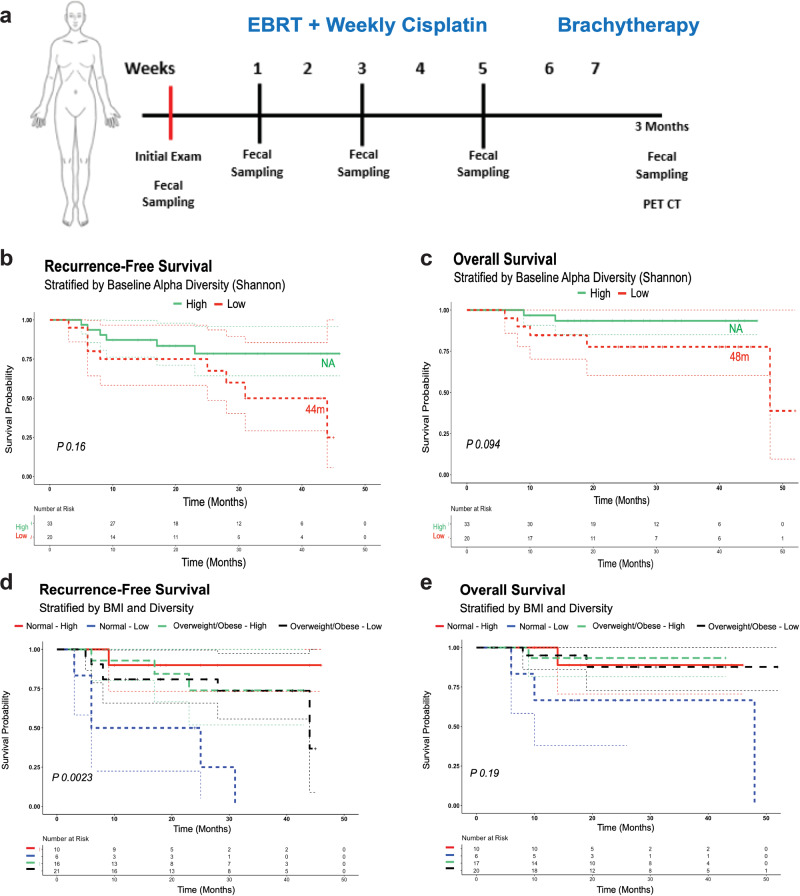
- During median follow-up of 24.5 months, 7 patients died (12.7%). Median RFS was 44 months for low baseline alpha diversity versus not reached for high diversity (P = 0.16); median OS was 48 months versus not reached (P = 0.094). Patients with normal BMI and higher SDI had longer median RFS (P = 0.0023) and OS (P = 0.19).
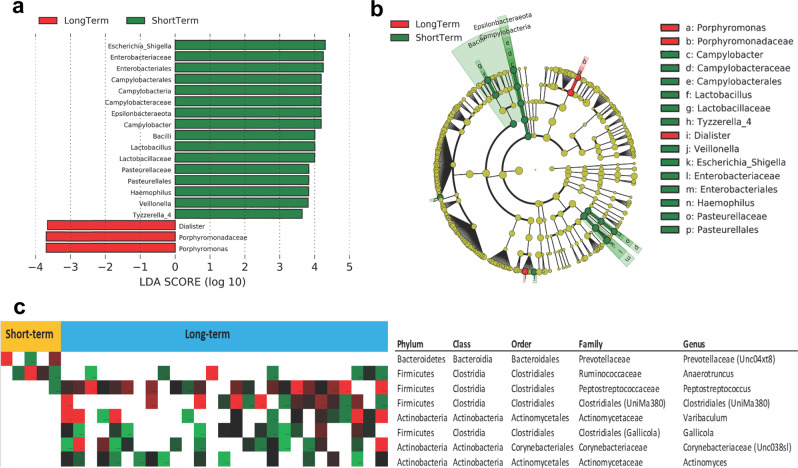
- Short-term survivor fecal samples were enriched in Porphyromonas, Porphyromonadaceae, and Dialister, whereas long-term survivor samples were enriched in Escherichia Shigella, Enterobacteriaceae, and Enterobacteriales (P < 0.05; LDA score > 3.5). Low baseline Veillonella was associated with median OS of 48 months versus not reached for high abundance (P = 0.054).
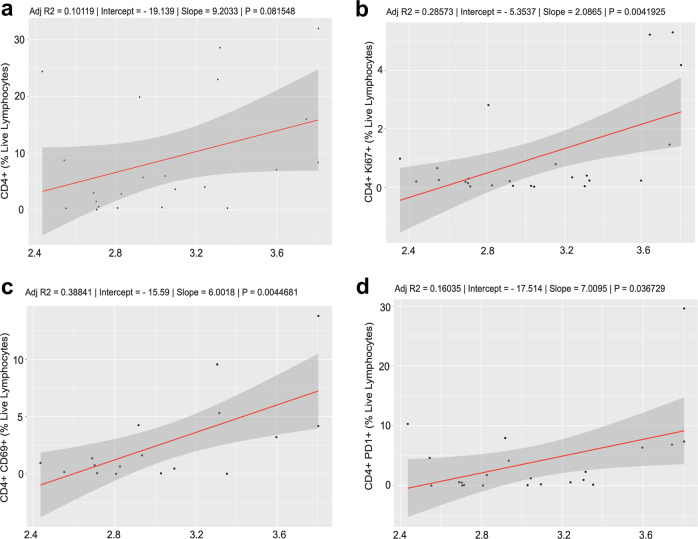
- High SDI correlated with tumor infiltration of CD4+ CD69+ and CD4+ PD1+ T cells at week 3 and CD4+ ki67+ T cells at week 5 (P = 0.004, Q = 0.14; P = 0.036, Q = 0.21; P = 0.004, Q = 0.07, respectively).
Methods
- Prospective study of 55 patients with newly diagnosed locally advanced, nonmetastatic cervical carcinoma treated with definitive chemoradiation (external-beam radiotherapy plus weekly cisplatin followed by brachytherapy) at MD Anderson and Lyndon B. Johnson Hospital from 22 September 2015 to 11 January 2019. Rectal swabs were collected at baseline, weeks 1, 3, and 5 of radiotherapy, and 3 months after completion; cervical tumor brushings were collected before week 1 and at weeks 3 and 5 for flow cytometry.
- 16S rRNA V4 sequencing was performed, with operational taxonomic units clustered at 97% similarity; alpha diversity was assessed by SDI and beta diversity by unweighted UniFrac principal coordinates analysis. An SDI cutoff of 2.69 was identified by ROC curve.
- Survival analyses used univariate and multivariate Cox proportional hazards models for RFS and OS, with covariates at P ≤ 0.1 in univariate analysis entered into multivariate models; Kaplan–Meier curves and log-rank tests were used. Differential taxa were identified by LEfSe (P < 0.05; logarithmic LDA score > 3.5), and immune correlations used linear regression and Spearman correlation.
Limitations
- The paper states that the small sample size limited statistical power; place of residence, lifestyle, and diet were not known; and racial variation could have impacted outcomes.
- The text makes evident that several survival subgroup comparisons were not statistically significant (e.g., RFS P = 0.16 and OS P = 0.094 by high/low SDI), and immune correlation Q values were above 0.05 despite significant P values.
- The study is observational and does not establish causality; the authors call for additional studies to understand the role of gut diversity in cervical cancer treatment.
Model-written summary. Check it against the paper before relying on it.
Integrity signals
Registry
Cites
Statistics
Figures
Verification
Claims the paper makes
8 Valid · 0 Not valid · 11 Not checked · 49 Own results and interpretations
Every source the paper cites for this claim was checked and supports it.
In the paper
“we identified compositional characteristics associated with members of the Clostridiales order in patients who experienced less toxicity.”
§ Gut microbiome diversity is an independent predictor of survival in cervical cancer patients receiving chemoradiation > Discussion
What the sources say
- Supportedcites [30] Mitra A Microbial diversity and composition is associated with patient-reported toxicity during chemoradiation therapy for cervical cancer Int J. Radiat. Oncol. 2020 107 163 171 10.1016/j.ijrobp.2019.12.040 PMC7932475 31987960 source
The Discussion states verbatim that the authors 'identified global changes in the composition of the gut microbiome associated with chemoradiation, and protective characteristics associated with members of the Clostridiales order in patients with less toxicity,' which is exactly what the citing sentence paraphrases. The Results (Association of Gut Microbiome Beta Diversity and GI toxicity) corroborate this: Clostridiales had higher abundance in low-toxicity patients at baseline and week 5, with individual families within the order also higher in low-toxicity patients, and the Discussion adds that patients without considerable decline in GI function maintained Clostridiales expression through treatment. The citing wording omits the word 'protective' but does not overstate the source. (LLM, conf=0.92)
plainstates an associationn = 5- Asserted: passes — The authors put it forward as true.
- Checkable: passes — It can be checked against evidence.
- Load-bearing: unclear — It is unclear whether the paper’s conclusions depend on it.
- Based: passes — The paper gives a reason why it holds.
- Supported
Every source the paper cites for this claim was checked and supports it.
In the paper
“although baseline gut diversity was not predictive of end-of-treatment bowel toxicity”
§ Gut microbiome diversity is an independent predictor of survival in cervical cancer patients receiving chemoradiation > Discussion
What the sources say
- Supportedcites [30] Mitra A Microbial diversity and composition is associated with patient-reported toxicity during chemoradiation therapy for cervical cancer Int J. Radiat. Oncol. 2020 107 163 171 10.1016/j.ijrobp.2019.12.040 PMC7932475 31987960 source
The Conclusions state that baseline diversity was not predictive of end-of-treatment bowel toxicity. The Results section, “Association of Gut Microbiome Alpha Diversity and GI toxicity,” likewise reports no significant baseline diversity difference between patients who later developed high versus low toxicity. (LLM, conf=0.95)
plainn = 5- Asserted: passes — The authors put it forward as true.
- Checkable: passes — It can be checked against evidence.
- Load-bearing: unclear — It is unclear whether the paper’s conclusions depend on it.
- Based: passes — The paper gives a reason why it holds.
- Supported
Every source the paper cites for this claim was checked and supports it.
In the paper
“Our analysis found that CRT induces a decline in gut diversity by the fifth week of treatment.”
§ Gut microbiome diversity is an independent predictor of survival in cervical cancer patients receiving chemoradiation > Introduction
What the sources say
- Supportedcites [19] El Alam, Molly Blue, et al. Adaptive changes in the gut microbiome during standard-of-care chemoradiotherapy for gynecologic cancers. bioRxiv. 2020. 10.1101/2020.04.10.036426 PMC7932122 33662003 source
The Principal Findings state that gut microbial diversity declined significantly over the first five weeks of CRT. The reported results also show significantly lower diversity metrics at week 5 than at baseline. The citing sentence’s reference to “our analysis” describes the citing authors’ own work, not a finding attributed to this source. (LLM, conf=0.94)
plainstates a cause- Asserted: passes — The authors put it forward as true.
- Checkable: passes — It can be checked against evidence.
- Load-bearing: passes — The paper’s conclusions depend on it.
- Based: passes — The paper gives a reason why it holds.
- Supported
Every source the paper cites for this claim was checked and supports it.
In the paper
“We found increased radiation toxicity to be associated with a decrease in gut microbiome diversity.”
§ Gut microbiome diversity is an independent predictor of survival in cervical cancer patients receiving chemoradiation > Discussion
What the sources say
- Supportedcites [30] Mitra A Microbial diversity and composition is associated with patient-reported toxicity during chemoradiation therapy for cervical cancer Int J. Radiat. Oncol. 2020 107 163 171 10.1016/j.ijrobp.2019.12.040 PMC7932475 31987960 source
The Abstract Conclusions (p.1) state verbatim the attributed point: 'Over time, increased radiation toxicity is associated with decreased gut microbiome diversity.' The Discussion reinforces it ('diversity of gut microbiome declines over the course of radiation and is greater in patients experiencing relatively low toxicity'), and the Results ('Association of Gut Microbiome Alpha Diversity and GI toxicity', plus Abstract Results) report higher diversity linearly correlated with better patient-reported GI function at all individual time points, with alpha diversity falling over CRT (2.9±0.5 to 2.49±0.7, p=0.012). The claim carries only the association, not prediction, so the paper's caveat that baseline diversity was not predictive does not undercut it. (LLM, conf=0.92)
plainstates an associationn = 5- Asserted: passes — The authors put it forward as true.
- Checkable: passes — It can be checked against evidence.
- Load-bearing: passes — The paper’s conclusions depend on it.
- Based: passes — The paper gives a reason why it holds.
- Supported
The cited sources support only part of this claim — read each source’s verdict below.
In the paper
“CRT has also been shown to alter overall richness and diversity of the gut microbiome in cancer patients20,21.”
§ Gut microbiome diversity is an independent predictor of survival in cervical cancer patients receiving chemoradiation > Introduction
What the sources say
- Partly supportedcites [20] Nam Y-D Kim HJ Seo J-G Kang SW Bae J-W Impact of pelvic radiotherapy on gut microbiota of gynecological cancer patients revealed by massive pyrosequencing PLoS One 2013 8 e82659 10.1371/journal.pone.0082659 24367534 PMC3867375 sourceExperimental — accuracy not yet measured
The Results section (“Impact of radiation therapy on gut microbiota of gynecologic cancer patients”; page unavailable) reports a significant reduction in estimated richness and a decreasing trend in Shannon diversity during pelvic radiotherapy. The paper does not establish that combined chemoradiotherapy (CRT) caused both changes: two patients received no chemotherapy, and the chemotherapy subgroup comparison was not statistically analyzed. (LLM, conf=0.84)
- Not checked yetcites [21] Manichanh C The gut microbiota predispose to the pathophysiology of acute postradiotherapy diarrhea Am. J. Gastroenterol. 2008 103 1754 1761 10.1111/j.1572-0241.2008.01868.x 18564125 source
plainstates a cause- Asserted: passes — The authors put it forward as true.
- Checkable: passes — It can be checked against evidence.
- Load-bearing: passes — The paper’s conclusions depend on it.
- Based: passes — The paper gives a reason why it holds.
- Partly supported
28 more claims
Create a free account to see all 68 claims and to verify the 21 references still open.
- Probably not a substantial claim. 25
- It may state two separate claims as one. 17
Claims other papers make about this one
Each is checked against this paper’s own text: does it say what the citing paper says it does?
The cited source says what the claim attributes to it.
In the citing paper
“Associations between alpha diversity and cancer patient outcomes have been found in the setting of patients receiving hematopoietic cell transplant 29 or cervical cancer chemoradiation 30 but not in anti-PD-1 recipients with metastatic melanoma 16,18 ; thus, such associations may be treatment regimen specific.”
From A gut microbial signature for combination immune checkpoint blockade across cancer types (2024) · cites this paper as [30]
Self-check
Percentages, sums and reported differences re-computed from the paper’s own numbers.
Each contradiction between two passages listed here was confirmed by an independent check.
Rated major: it would touch a result — a value a result rests on, reported and recomputed p-values on opposite sides of the significance level, two passages that conflict with no sign which is right, or a cited work retracted before this paper was published.
In the paper
§ Gut microbiome diversity is an independent predictor of survival in cervical cancer patients receiving chemoradiation > Results > Association between gut microbiota profile and immune signatures
“Testing for a correlation between SDI and CD4+ showed no significant associations (Fig. 3a).”
§ Gut microbiome diversity is an independent predictor of survival in cervical cancer patients receiving chemoradiation > Discussion
“analysis of immune cells from cervical tumor brush samples by flow cytometry revealed an association between high microbial diversity, increased tumor infiltration of CD4+ lymphocytes and the activation of CD4 cells over the course of radiation therapy.”
Rated minor: it would not touch a result — a value no result rests on, a p-value that stays on the same side of the significance level, or a conflict that is clerical, resolved elsewhere in the paper, or outside its own findings.
In the paper
§ Gut microbiome diversity is an independent predictor of survival in cervical cancer patients receiving chemoradiation > Results > Baseline gut microbiota diversity is associated with favorable responses
“The median RFS was 44 months for patients with low fecal alpha diversity at baseline, and not reached for patients with high fecal alpha diversity at baseline (P = 0.16) (Fig. 1a).”
§ Gut microbiome diversity is an independent predictor of survival in cervical cancer patients receiving chemoradiation > Results > Patient Characteristics
“a Schema of the sample collection, treatment, and analyses used in the present study. Kaplan–Meier curves for b recurrence-free survival, c overall survival stratified by high and low gut diversity (SDI).”
Rated minor: it would not touch a result — a value no result rests on, a p-value that stays on the same side of the significance level, or a conflict that is clerical, resolved elsewhere in the paper, or outside its own findings.
In the paper
§ Gut microbiome diversity is an independent predictor of survival in cervical cancer patients receiving chemoradiation > Results > Baseline gut microbiota diversity is associated with favorable responses
“The median OS was 48 months for patients with low fecal alpha diversity at baseline, and again not reached for patients with high fecal alpha diversity at baseline (P = 0.094) (Fig. 1b, Supplemental Fig. 3).”
§ Gut microbiome diversity is an independent predictor of survival in cervical cancer patients receiving chemoradiation > Results > Patient Characteristics
“Kaplan–Meier curves for b recurrence-free survival, c overall survival stratified by high and low gut diversity (SDI).”
Citations
Cites
Siegel, R. L., Miller, K. D., & Jemal, A. (2019) · CA: A Cancer Journal for Clinicians · doi:10.3322/caac.21551 · Cited by 20,160
UPARSE: highly accurate OTU sequences from microbial amplicon reads
Edgar, R. C. (2013) · Nature Methods · doi:10.1038/nmeth.2604 · Cited by 16,707
Metagenomic biomarker discovery and explanation
Segata, N., Izard, J., Waldron, L., Gevers, D., Miropolsky, L., Garrett, W. S., & Huttenhower, C. (2011) · Genome Biology · doi:10.1186/gb-2011-12-6-r60 · Cited by 16,192
Structure, function and diversity of the healthy human microbiome
The Human Microbiome Project Consortium (2012) · Nature · doi:10.1038/nature11234 · Cited by 11,726
The metabolic phenotype in obesity: Fat mass, body fat distribution, and adipose tissue function
Goossens, G. H. (2017) · Obesity Facts · doi:10.1159/000471488 · Cited by 8,481
The measurement of diversity in different types of biological collections
Pielou, E. C. (1966) · Journal of Theoretical Biology · doi:10.1016/0022-5193(66)90013-0 · Cited by 5,903
Gut microbiome modulates response to anti-PD-1 immunotherapy in melanoma patients
Gopalakrishnan, V., Spencer, C. N., Nezi, L., Reuben, A., Andrews, M. C., Karpinets, T. V., Prieto, P. A., Vicente, D., Hoffman, K., Wei, S. C., et al. (2018) · Science · doi:10.1126/science.aan4236 · Cited by 4,812
Self-citationInteractions Between the Microbiota and the Immune System
Hooper, L. V., Littman, D. R., & Macpherson, A. J. (2012) · Science · doi:10.1126/science.1223490 · Cited by 4,173
Commensal Bifidobacterium promotes antitumor immunity and facilitates anti–PD-L1 efficacy
Sivan, A., Corrales, L., Hubert, N., Williams, J. B., Aquino-Michaels, K., Earley, Z. M., Benyamin, F. W., Man Lei, Y., Jabri, B., Alegre, M.-L., et al. (2015) · Science · doi:10.1126/science.aac4255 · Cited by 3,888
A framework for human microbiome research
The Human Microbiome Project Consortium (2012) · Nature · doi:10.1038/nature11209 · Cited by 2,650
Cited by
Lung microbiome: new insights into the pathogenesis of respiratory diseases
Li, R., Li, J., & Zhou, X. (2024) · Signal Transduction and Targeted Therapy · doi:10.1038/s41392-023-01722-y · Cited by 434
A gut microbial signature for combination immune checkpoint blockade across cancer types
Gunjur, A., Shao, Y., Rozday, T., Klein, O., Mu, A., Haak, B. W., Markman, B., Kee, D., Carlino, M. S., Underhill, C., et al. (2024) · Nature Medicine · doi:10.1038/s41591-024-02823-z · Cited by 165
“…between alpha diversity and cancer patient outcomes have been found in the setting of patients receiving hematopoietic cell transplant 29 or cervical cancer chemoradiation 30 but not in anti-PD-1 recipients with metastatic melanoma 16,18 ; thus, such associations may be treatment regimen specific.”
Gut Microbiota-Derived Short-Chain Fatty Acids: Impact on Cancer Treatment Response and Toxicities
Al-Qadami, G. H., Secombe, K. R., Subramaniam, C. B., Wardill, H. R., & Bowen, J. M. (2022) · Microorganisms · doi:10.3390/microorganisms10102048 · Cited by 162
“The richness of the microbiome has also been investigated, with higher microbial diversity shown to be a key predictor of survival in people having chemoradiation for cervical cancer [4].”
BackgroundHealth Effects of Ionizing Radiation on the Human Body
Talapko, J., Talapko, D., Katalinić, D., Kotris, I., Erić, I., Belić, D., Mihaljević, M. V., Vasilj, A., Erić, S., Flam, J., et al. (2024) · Medicina · doi:10.3390/medicina60040653 · Cited by 204
“Numerous disorders now focus on gut microbiota; studies have also linked it to radiation sensitivity [117].”
BackgroundRole of the microbiota in response to and recovery from cancer therapy
Blake, S. J., Wolf, Y., Boursi, B., & Lynn, D. J. (2023) · Nature reviews. Immunology · doi:10.1038/s41577-023-00951-0 · Cited by 158
“Increased gut microbiota diversity at baseline and during treatment has been associated with reduced gastrointestinal mucositis following radiotherapy 44,73 .”
Huang, R., Liu, Z., Sun, T., & Zhu, L. (2024) · Microbiological Research · doi:10.1016/j.micres.2024.127857 · Cited by 118
Aghamajidi, A., & Vareki, S. M. (2022) · Cancers · doi:10.3390/cancers14153563 · Cited by 110
Host-Microbiome Interaction in Lung Cancer
Dong, Q., Chen, E. S., Zhao, C. N., & Jin, C. (2021) · Frontiers in Immunology · doi:10.3389/fimmu.2021.679829 · Cited by 102
“While the specific consequences of altered bacterial diversity in lung cancer have yet to be elucidated, previous studies have shown that increased alpha diversity tends to be associated with better survival and treatment response outcomes in certain cancers, such as cervical cancer and resected pancreatic adenocarcin…”
BackgroundGut microbiota as a new target for anticancer therapy: from mechanism to means of regulation
Sun, J., Song, S., Liu, J., Chen, F., Li, X., & Wu, G. (2025) · npj Biofilms and Microbiomes · doi:10.1038/s41522-025-00678-x · Cited by 89
“…gut microbiota also plays a unique biomarker value in the early diagnosis, treatment guidance, and prognosis prediction of pancreatic cancer, prostate cancer, melanoma, cervical cancer, and other cancers, which may be another exploration direction to overcome cancer problems in the future 28 – 31 .”
Gut microbiome in pediatric acute leukemia: from predisposition to cure
Masetti, R., Muratore, E., Leardini, D., Zama, D., Turroni, S., Brigidi, P., Esposito, S., & Pession, A. (2021) · Blood Advances · doi:10.1182/bloodadvances.2021005129 · Cited by 74
“In particular, alpha diversity (to be understood as richness, evenness, or both, depending on the metrics used) is recognized as an index of stability and functioning of microbial ecosystems, with higher values generally indicative of a healthier GM (and therefore host) and potentially predictive of better health outc…”
BackgroundOh, B., Boyle, F. M., Pavlakis, N., Clarke, S. J., Eade, T., Hruby, G., Lamoury, G., Carroll, S. L., Morgia, M., Kneebone, A. B., et al. (2021) · Cancers · doi:10.3390/cancers13194824 · Cited by 78
“These studies suggested that the gut microbiome prior to cancer treatment can be used as a predictor of clinical response and AEs and recommended that assessment of the microbiome in cancer therapy could improve patient care [15,34].”
BackgroundGreathouse, K. L., Wyatt, M., Johnson, A. J., Toy, E. P., Khan, J., Dunn, K., Clegg, D. J., & Reddy, S. (2022) · Neoplasia · doi:10.1016/j.neo.2022.100800 · Cited by 73
The Impact of Gut Microbiota-Derived Metabolites on the Tumor Immune Microenvironment
Luu, M., Schütz, B., Lauth, M., & Visekruna, A. (2023) · Cancers · doi:10.3390/cancers15051588 · Cited by 70
“For example, the diversity of the microbial community is an independent predictor of survival in cervical cancer [47].”
BackgroundChen, W., Altshuler, R. D., Daschner, P., Salvador-Morales, C., Germain, D. S., Guida, J., Prasanna, P. G. S., & Buchsbaum, J. C. (2024) · JNCI Journal of the National Cancer Institute · doi:10.1093/jnci/djae163 · Cited by 70
Emerging clinical relevance of microbiome in cancer: promising biomarkers and therapeutic targets
Dai, J.-H., Tan, X.-R., Qiao, H., & Liu, N. (2023) · Protein & Cell · doi:10.1093/procel/pwad052 · Cited by 59
“Additionally, for cancer patients who received standardized treat-ment, the microbial diversity, and composition in fecal samples show a predictive ability for outcome (Sims et al., 2021; Terrisse et al., 2021).”
BackgroundRadiotherapy-Induced Digestive Injury: Diagnosis, Treatment and Mechanisms
Chen, G., Han, Y., Zhang, H., Tu, W., & Zhang, S. (2021) · Frontiers in Oncology · doi:10.3389/fonc.2021.757973 · Cited by 72
Potential links between the microbiota and T cell immunity determine the tumor cell fate
Mohseni, A. H., Taghinezhad‐S, S., Casolaro, V., Lv, Z., & Li, D. (2023) · Cell Death and Disease · doi:10.1038/s41419-023-05560-2 · Cited by 55
“, who demonstrated that distinct gut microbiome compositions, as well as higher diversity, could be seen in patients with prolonged clinical survival [41].”
BackgroundHarness the functions of gut microbiome in tumorigenesis for cancer treatment
Lee, M. (2021) · Cancer Communications · doi:10.1002/cac2.12200 · Cited by 50
The neglected brothers come of age: B cells and cancer
Shalapour, S., & Karin, M. (2021) · Seminars in Immunology · doi:10.1016/j.smim.2021.101479 · Cited by 54
Hilmi, M., Kamal, M. T., Vacher, S., Dupain, C., Ibadioune, S., Halladjian, M., Sablin, M. P., Marret, G., Ajgal, Z. C., Nijnikoff, M., et al. (2023) · European Journal of Cancer · doi:10.1016/j.ejca.2023.01.024 · Cited by 45
Then, C. K., Paillas, S., Moomin, A., Misheva, M., Moir, R., Hay, S. M., Bremner, D. M., Roberts, K. S., Smith, E. E., Heidari, Z., et al. (2024) · Microbiome · doi:10.1186/s40168-024-01804-1 · Cited by 53
“Studies also found a similar association between higher alpha diversity and chemoradiation response in cervical cancer patients [7] and in colorectal patients [8].”
ResultExploiting dietary fibre and the gut microbiota in pelvic radiotherapy patients
Eaton, S. E., Kaczmarek, J., Mahmood, D., McDiarmid, A. M., Norarfan, A. N., Scott, E. G., Then, C. K., Tsui, H. Y., & Kiltie, A. E. (2022) · British Journal of Cancer · doi:10.1038/s41416-022-01980-7 · Cited by 45
“Patients harbouring a higher α-diversity at baseline had more favourable outcomes, as seen in patients with improved tumour responses to chemoradiation, thus leading to improved patient survival [8].”
BackgroundInfluentialInterplay between Phytochemicals and the Colonic Microbiota
Kwon, C., Ediriweera, M. K., & Cho, S. K. (2023) · Nutrients · doi:10.3390/nu15081989 · Cited by 48
Dey, P., & Chaudhuri, S. R. (2022) · Biology · doi:10.3390/biology11050757 · Cited by 46
Molecular Markers to Predict Prognosis and Treatment Response in Uterine Cervical Cancer
Fleischmann, M., Chatzikonstantinou, G., Fokas, E., Wichmann, J., Christiansen, H., Strebhardt, K., Rödel, C. M., Tselis, N., & Rödel, F. (2021) · Cancers · doi:10.3390/cancers13225748 · Cited by 44
Wekking, D., van den Ende, T., Bijlsma, M. F., Vidal-Itriago, A., Nieuwdorp, M., & van Laarhoven, H. W. M. (2025) · Cancer Treatment Reviews · doi:10.1016/j.ctrv.2025.103025 · Cited by 46
Alam, M. B. E., Sims, T. T., Kouzy, R., Biegert, G. W. G., Jaoude, J. A., Karpinets, T. V., Yoshida-Court, K., Wu, X., Medrano, A. Y. D., Mezzari, M. P., et al. (2021) · PLoS ONE · doi:10.1371/journal.pone.0247905 · Cited by 43
Self-citationZheng, L., Zhang, L., Tang, L., Huang, D., Pan, D., Guo, W., He, S., Huang, Y., Chen, Y., Xiao, X., et al. (2022) · European Journal of Nuclear Medicine and Molecular Imaging · doi:10.1007/s00259-022-06072-5 · Cited by 41
Dissecting microbial communities with single-cell transcriptome analysis
Pountain, A. W., & Yanai, I. (2025) · Science · doi:10.1126/science.adp6252 · Cited by 43
Pro- and Anti- Effects of Immunoglobulin A- Producing B Cell in Tumors and Its Triggers
Zhong, Z., Nan, K., Weng, M., Yue, Y., Zhou, W., Wang, Z., Chu, Y., Liu, R., & Miao, C. (2021) · Frontiers in Immunology · doi:10.3389/fimmu.2021.765044 · Cited by 42
Sharma, N., Yadav, M. C., Tripathi, G., Mathew, B., Bindal, V., Falari, S., Pamecha, V., & Maras, J. S. (2022) · Hepatology · doi:10.1002/hep.32496 · Cited by 39
“Increase in microbiome diversity is linked to the development of carcinoma.[27] The microbiome diversity was similar in CAGB with and without GS but significantly higher compared to patients with only GS or healthy controls.”
ResultVariations in oral microbiome and its predictive functions between tumorous and healthy individuals
Yang, J., He, P., Zhou, M., Li, S., Zhang, J., Tao, X., Wang, A., & Wu, X. (2022) · Journal of Medical Microbiology · doi:10.1099/jmm.0.001568 · Cited by 36
Self-citationMicrobiota as the unifying factor behind the hallmarks of cancer
Benešová, I., Křížová, Ľ., & Kverka, M. (2023) · Journal of Cancer Research and Clinical Oncology · doi:10.1007/s00432-023-05244-6 · Cited by 35
“…indirectly driven by the immune system, as high diversity of the gut microbiota correlates with CD69 + , Ki-67 + , or PD-1 + tumor-infiltrating CD4 + T lymphocytes (Sims et al. 2021), which are also associated with longer survival in head and neck squamous cell carcinoma (Badoual et al. 2006).”
BackgroundGłowienka, M., Bagińska, K., Szubert, S., Hennig, E. E., Horała, A., Dąbrowska, M., Micek, M., Ciebiera, M., & Żeber‐Lubecka, N. (2024) · Cancers · doi:10.3390/cancers16020399 · Cited by 38
“Moreover, in a subsequent study, Sims et al. [58] linked gut microbiota diversity and a positive response to chemoradiation in CC patients.”
BackgroundThe Gut Microbiome and Gastrointestinal Toxicities in Pelvic Radiation Therapy: A Clinical Review
Oh, B., Eade, T., Lamoury, G., Carroll, S. L., Morgia, M., Kneebone, A. B., Hruby, G., Stevens, M. J., Boyle, F. M., Clarke, S. J., et al. (2021) · Cancers · doi:10.3390/cancers13102353 · Cited by 36
Sepich‐Poore, G. D., Guccione, C., Laplane, L., Pradeu, T., Curtius, K., & Knight, R. (2022) · BioEssays · doi:10.1002/bies.202100252 · Cited by 33
Skin Microbiome and Treatment-Related Skin Toxicities in Patients With Cancer: A Mini-Review
Richardson, B. N., Lin, J. Y., Buchwald, Z. S., & Bai, J. (2022) · Frontiers in Oncology · doi:10.3389/fonc.2022.924849 · Cited by 37
Chen, Z., Shi, W., Chen, K., Lu, C., Li, X., & Li, Q. (2023) · Frontiers in Microbiology · doi:10.3389/fmicb.2023.1288525 · Cited by 31
Bird, B., Nally, K., Ronan, K. E., Clarke, G. A., Amu, S., Almeida, A. S., Flavin, R., & Finn, S. P. (2022) · Diagnostics · doi:10.3390/diagnostics12010124 · Cited by 31
Microbiome in Cancer Development and Treatment
Čierniková, S., Ševčíková, A., Mladosievičová, B., & Mego, M. (2023) · Microorganisms · doi:10.3390/microorganisms12010024 · Cited by 33
“Porphyromonas , Porphyromonadaceae , and Dialister were over-represented in fecal samples from short-term survivors, whereas Escherichia/Shigella , Enter-obacteriaceae , and Enterobacteriales dominated in long-term survivors [126].”
BackgroundMicrobiome modulation of tumorigenesis and immune responses
Chen, Y., Fang, Y., Lyu, Z., Tian, Y., Niu, S., Li, Y.-R., & Yang, L. (2026) · Journal of Biomedical Science · doi:10.1186/s12929-025-01208-9 · Cited by 30
“Notably, dysbiosis can skew this IgA-microbiota axis and thereby affect cancer risk and immunity [54, 192, 200].”
Microbiota-Derived Short-Chain Fatty Acids Boost Antitumoral Natural Killer Cell Activity
Pérez, M., Buey, B., Sánchez‐Corral, P., Giraldos, D., & Latorre, E. (2024) · Journal of Clinical Medicine · doi:10.3390/jcm13133885 · Cited by 30
“Recently, microbial community diversity has been described as an independent predictor of survival in cervical cancer [5].”
Biegert, G., El Alam, M. B., Karpinets, T., Wu, X., Sims, T. T., Yoshida-Court, K., Lynn, E. J., Yue, J., Medrano, A. D., Petrosino, J., et al. (2021) · Journal of Microbiological Methods · doi:10.1016/j.mimet.2021.106213 · Cited by 24
Self-citationThe microbiome and gynecologic cancer: cellular mechanisms and clinical applications
Chalif, J., Wang, H., Spakowicz, D. J., Quick, A. M., Arthur, E. K., O’Malley, D. M., & Chambers, L. (2023) · International Journal of Gynecological Cancer · doi:10.1136/ijgc-2023-004894 · Cited by 28
Personal diet–microbiota interactions and weight loss
Roager, H. M., & Christensen, L. H. (2022) · Proceedings of The Nutrition Society · doi:10.1017/s0029665122000805 · Cited by 27
The Microbiome-Immune Axis Therapeutic Effects in Cancer Treatments
Son, Y. M., & Kim, J. (2022) · Journal of Microbiology and Biotechnology · doi:10.4014/jmb.2208.08002 · Cited by 26
“Although the effects of an altered bacterial diversity in lung cancer patients have not been elucidated yet, a recent article showed that an enhanced alpha diversity has a positive correlation with the survival ratio of patients as well as with better effects of treatments on both cervical cancer and resected pancreat…”
BackgroundLi, S., Wang, T., Ren, Y., Liu, Z., Gao, J., & Guo, Z. (2024) · Systematic Reviews · doi:10.1186/s13643-023-02419-7 · Cited by 23
“Sims et al. found that the microbiome diversity index was an independent predictor of overall survival and recurrence-free survival after chemotherapy in cervical cancer cases [31].”
BackgroundChang, J. W., Hsieh, J., Tsai, C.-Y., Chiu, H.-Y., Lin, Y.-F., Wu, C., Shen, Y., Hou, M., Chang, C.-Y., Chen, J.-A., et al. (2024) · Biomedical Journal · doi:10.1016/j.bj.2024.100698 · Cited by 27
“Gut microbiome diversity was identified as an independent predictor of survival in cervical cancer patients who received chemoradiation [18].”
BackgroundMethodSpecific vaginal and gut microbiome and the anti-tumor effect of butyrate in cervical cancer women
Han, M., Wang, N., Han, W., Liu, X., Sun, T., & Xu, J. (2024) · Translational Oncology · doi:10.1016/j.tranon.2024.101902 · Cited by 26
“…using the identifiers: PRJNA518153 for Zehra et al. [19], PRJNA687644 for Li et al. [20], PRJNA524816 for Wang et al. [21], PRJNA415526 for Chen et al. [22], PRJEB7756 for Mitra et al. [23], PRJNA685389 for Travis et al. [24], PRJNA636012 for Li et al. [25] and PRJNA637228 for Zhou et al. [26].”
MethodBukavina, L., Ginwala, R., Sindhani, M., Prunty, M. C., Geynisman, D. M., Ghatalia, P., Valentine, H., Calaway, A. C., Brown, J. R., Correa, A. F., et al. (2024) · Cancer Research Communications · doi:10.1158/2767-9764.crc-23-0479 · Cited by 23
Microbiome Dynamics During Chemoradiation Therapy for Anal Cancer
Lin, D., Alam, M. B. E., Jaoude, J. A., Kouzy, R., Phan, J. L., Elnaggar, J. H., Resendiz, B., Medrano, A. Y. D., Lynn, E. J., Nguyen, N. D., et al. (2022) · International Journal of Radiation Oncology*Biology*Physics · doi:10.1016/j.ijrobp.2022.04.037 · Cited by 26
Self-citationAldriwesh, M. G., Alotibi, R. S., Alqurainy, N., Alrabiah, S., Arafah, A. M., Alghoribi, M. F., & Ajina, R. (2025) · Gut Microbes · doi:10.1080/19490976.2025.2607076 · Cited by 24
“191 166-171,192 ,193”
Bahig, H., Fuller, C. D., Mitra, A., Yoshida-Court, K., Solley, T. N., Ng, S. P., Abu-Gheida, I. H., Elgohari, B., Delgado, A., Rosenthal, D. I., et al. (2020) · Clinical and Translational Radiation Oncology · doi:10.1016/j.ctro.2020.11.007 · Cited by 20
Self-citationCheng, X., Wang, J., Gong, L., Dong, Y., Shou, J., Pan, H., Yu, Z., & Fang, Y. (2022) · Journal of Clinical Medicine · doi:10.3390/jcm11185479 · Cited by 20
“These studies suggested that the gut microbiome prior to cancer treatment could be used as a predictor of the clinical response and recommended that assessment of the gut microbiome in cancer immunotherapy could improve patient care [15,16].”
BackgroundMarkovina, S. T., Rendle, K. A. S., Cohen, A. C., Kuroki, L. M., Grover, S., & Schwarz, J. K. (2022) · Cancer · doi:10.1002/cncr.34485 · Cited by 22
Leigh, S., Lynch, C. M. K., Bird, B., Griffin, B. T., Cryan, J. F., & Clarke, G. A. (2022) · Expert Opinion on Drug Metabolism & Toxicology · doi:10.1080/17425255.2022.2043849 · Cited by 19
“Similarly, differences in baseline microbiota composition has been observed between responders and non-responders to chemoradiotherapy [92,93], where increased diversity is also associated with increased tumor infiltration and more favor-”
BackgroundBuilding up a clinical microbiota profiling: a quality framework proposal
Scherz, V., Greub, G., & Bertelli, C. (2021) · Critical Reviews in Microbiology · doi:10.1080/1040841x.2021.1975642 · Cited by 19
Qin, X., Zhou, J., Wang, Z., Feng, C., Fan, J., Huang, J. M., Hu, D., Baban, B., Wang, S., Ma, D., et al. (2022) · The EPMA Journal · doi:10.1007/s13167-022-00286-1 · Cited by 22
“Specific microbial colonies may enhance the therapeutic effect during the adjuvant treatment of tumors [14, 15, 38].”
BackgroundT cell subsets in cervical cancer tumor microenvironment: advances and therapeutic opportunities
Guo, W.-X., Dai, L., & Qiu, L. (2025) · Frontiers in Immunology · doi:10.3389/fimmu.2025.1612032 · Cited by 18
The microbiota in radiotherapy-induced cancer immunosurveillance
Chen, J., Deutsch, É., Kroemer, G., Galluzzi, L., & Zitvogel, L. (2025) · Nature Reviews Clinical Oncology · doi:10.1038/s41571-025-01052-8 · Cited by 19
“…of Lactobacillaceae (in those with oesophageal squamous cell carcinoma) 136 or Lachnospiraceae (in those with NSCLC or cervical cancer) 135,137 , whereas bacteria associated with inflammation (Bacteroidales, Bacteroides and Streptococcus spp.) or immunosuppression ( Fusobacterium spp.)…”
Gut microbiota: A novel and potential target for radioimmunotherapy in colorectal cancer
Yuan, H., Gui, R., Wang, Z., Fang, F., & Zhao, H. (2023) · Frontiers in Immunology · doi:10.3389/fimmu.2023.1128774 · Cited by 18
“Interestingly, in the same year there was new evidence that patients with abundant microbial diversity had increased activation of CD4+ lymphocytes infiltrating cervical tumors as well as CD4 cell subpopulation expressing ki67 and CD69+ during radiotherapy (88).”
BackgroundGut Microbiota Richness and Diversity Track With T Cell Aging in Healthy Adults
Madison, A. A., Burd, C. E., Andridge, R., Wilson, S. J., Bailey, M. T., Belury, M. A., Spakowicz, D. J., Malarkey, W. B., & Kiecolt‐Glaser, J. K. (2023) · The Journals of Gerontology Series A · doi:10.1093/gerona/glad276 · Cited by 16
Screening of potential microbial markers for lung cancer using metagenomic sequencing
Chen, Q., Hou, K., Tang, M., Ying, S., Zhao, X., Li, G., Pan, J., He, X., Xia, H., Li, Y., et al. (2022) · Cancer Medicine · doi:10.1002/cam4.5513 · Cited by 21
Pai, H. D., Baid, R., Palshetkar, N., Pai, R., Pai, A., & Palshetkar, R. (2025) · Cureus · doi:10.7759/cureus.85880 · Cited by 22
“Most studies focused on the vaginal microbiome, and only three studies assessed rectal samples [15-17].”
Karpinets, T. V., Wu, X., Solley, T. N., Alam, M. B. E., Sims, T. T., Yoshida-Court, K., Lynn, E. J., Ahmed-Kaddar, M., Biegert, G. W. G., Yue, J., et al. (2022) · BMC Cancer · doi:10.1186/s12885-022-09997-0 · Cited by 14
Self-citationDu, Y., Feng, R., Chang, E. T., Debelius, J. W., Yin, L., Xu, M., Huang, T., Zhou, X., Xiao, X., Li, Y., et al. (2022) · Frontiers in Cellular and Infection Microbiology · doi:10.3389/fcimb.2022.831409 · Cited by 15
Targeting gut microbiota and metabolites in cancer radiotherapy
Ma, S., Li, X., Shang, S., Zhai, Z., Wu, M., Song, Q., & Chen, D. (2025) · Clinical and Translational Medicine · doi:10.1002/ctm2.70481 · Cited by 17
“183 Likewise, in patients with NSCLC, changes in gut microbiota composition post-CRT correlate with progression-free survival (PFS).”
Caulobacter and Novosphingobium in tumor tissues are associated with colorectal cancer outcomes
Zhou, B., Shi, L., Jin, M., Cheng, M., Yu, D., Zhao, L., Zhang, J., Yu, C., Zhang, T., & Liu, H. (2023) · Frontiers in Oncology · doi:10.3389/fonc.2022.1078296 · Cited by 14
“The short-term survival fecal samples were significantly enriched in porphyrinomonas, porphyrinomonaceae, and dialysis bacteria, while the long-term survival fecal samples were significantly enriched in Shigella, Enterobacteriaceae, and Enterobacteriaceae (12).”
BackgroundChen, J., Zhang, M., Gong, Y., Gu, Z., Zhou, H., Gu, Y., Shen, F., Zhou, G., & Ding, J. (2025) · Clinical Medicine Insights Oncology · doi:10.1177/11795549251380470 · Cited by 14
“109 Elevated gut microbiota diversity was correlated with enhanced survival outcomes for among cervical cancer patients.”
Exploring micronutrients and microbiome synergy: pioneering new paths in cancer therapy
Bhatnagar, K., Jha, K., Dalal, N., Patki, N., Gupta, G., Kumar, A., Kumar, A., & Chaudhary, S. (2024) · Frontiers in Immunology · doi:10.3389/fimmu.2024.1442788 · Cited by 12
Jaeghere, E. A. D., Hamerlinck, H., Tuyaerts, S., Lippens, L., Nuffel, A. M. T. V., Baiden-Amissah, R. E. M., Vuylsteke, P., Henry, S., Trinh, X. B., van Dam, P. A., et al. (2024) · Gynecologic Oncology · doi:10.1016/j.ygyno.2024.10.020 · Cited by 13
Gardiner, B., Wardill, H. R., O’Connor, G., Hargrave, D. R., & Lett, A. M. (2024) · Clinical Nutrition · doi:10.1016/j.clnu.2024.11.022 · Cited by 10
Factors Affecting Survival of Patients with Cervical Cancer
Hasankhani, M. B., Jahani, Y., Bazrafshan, A., Yazdizadeh, A., & Karamoozian, A. (2023) · Iranian Journal of Public Health · doi:10.18502/ijph.v52i10.13860 · Cited by 10
“Similarly, body mass index is a predictive factor for survival in American patients with cervical cancer with HR=0.78 (15).”
BackgroundInfluentialKlimov‐Kravtchenko, K., Baltazar-Díaz, T. A., Haramati, J., Castaño-Jiménez, P. A., Ibarra, F. S., Rojas‐Díaz, J. M., García-Barrientos, N. T., Cruz-Ramos, J. A., Facundo-Medina, C. G., del Toro‐Arreola, S., et al. (2025) · Frontiers in Immunology · doi:10.3389/fimmu.2025.1637098 · Cited by 10
Microbiota and Radiotherapy: Unlocking the Potential for Improved Gastrointestinal Cancer Treatment
Vučinić, D., Redžović, A., Hauser, G., & Mikolašević, I. (2025) · Biomedicines · doi:10.3390/biomedicines13020526 · Cited by 9
“It was shown that abundant microbial diversity had increased activation of CD4+ lymphocytes infiltrating cervical tumors and CD4 cell subpopulations expressing Ki67 and CD69+ during radiotherapy [53].”
Zwart, E. S., Jeleniewski, S., Boyd, L. N. C., Meijer, L. L., Puik, J. R., Zonderhuis, B. M., Daams, F. D., Budding, A. E., Mebius, R. E., & Kazemier, G. (2022) · PLoS ONE · doi:10.1371/journal.pone.0278377 · Cited by 8
Interaction of microbiota, mucosal malignancies, and immunotherapy—Mechanistic insights
Mager, L. F., Krause, T., & McCoy, K. D. (2024) · Mucosal Immunology · doi:10.1016/j.mucimm.2024.03.007 · Cited by 8
Schupfer, E., Ooi, S. L., Jeffries, T. C., Wang, S., Micalos, P. S., & Pak, S. C. (2023) · Molecules · doi:10.3390/molecules28145400 · Cited by 10
Dynamic causal effects of gut microbiota on cervical Cancer lesion progression
Zhu, F., Li, L., Zhang, H., Liu, J., Wu, D., & Xu, Q. (2025) · Scientific Reports · doi:10.1038/s41598-025-00483-8 · Cited by 8
“Particularly, the family Porphyromonadaceae was significantly enriched in fecal samples from short-term survivors 57 .”
Assessment of probiotic and prebiotic use in gynecologic cancer patients: a systematic review
Chalif, J., Morton, M. A., Haight, P. J., Mehra, Y., O’Malley, D. M., Spakowicz, D. J., & Chambers, L. (2025) · American Journal of Obstetrics and Gynecology · doi:10.1016/j.ajog.2025.09.042 · Cited by 12
Microbiome Sex-Related Diversity in Non-Muscle-Invasive Urothelial Bladder Cancer
Bilski, K., Żeber‐Lubecka, N., Kulecka, M., Dąbrowska, M., Bałabas, A., Ostrowski, J., Dobruch, A., & Dobruch, J. T. (2024) · Current Issues in Molecular Biology · doi:10.3390/cimb46040225 · Cited by 6
“Furthermore, it has been demonstrated that lower diversity of gut microbiota is associated with a poorer response to chemoradiation [69].”
BackgroundLiu, L., Xing, L., Li, S., & Zhang, P. (2024) · Journal of Functional Foods · doi:10.1016/j.jff.2024.106395 · Cited by 6
Cervical cancer pathology and vaginal and gut microbiota: conception of the association
Mazinani, S., Aghazadeh, M. H., Poortahmasebi, V., Arafi, V., & Hasani, A. (2025) · Letters in Applied Microbiology · doi:10.1093/lambio/ovaf088 · Cited by 7
Zenati, F. A., Djoudi, F., Mehelleb, D., & Madaoui, M. (2023) · Bulletin du Cancer · doi:10.1016/j.bulcan.2023.01.022 · Cited by 7
Microbiome in gynecologic malignancies: a bibliometric analysis from 2012 to 2022
Lin, X., Zheng, W., Zhao, X., Zeng, M., Li, S., Peng, S., Song, T., & Sun, Y. (2024) · Translational Cancer Research · doi:10.21037/tcr-23-1769 · Cited by 7
“Within Adebamowo CA [3], Adebamowo SN [3], Famooto A [3], Ravel J [3] Ravel J [26] Mycoplasma hominis & HPV persistence (33); a cohort study profile on HPV and CC with environmental, microbiomic, genetic and epigenetic factors considered (34); vaginal microbiota and persistent HR-HPV underlying HIV…”
Microbiome landscapes of the bladder, intestine, and vagina in bladder cancer: a systematic review
Surber, J., Semmler, M., Enderlin, D., Affentranger, A., Scherer, T. P., Sigg, S., Kaufmann, E., Gadient, J., Truscello, L., Scharl, M. M., et al. (2025) · Discover Oncology · doi:10.1007/s12672-025-02165-3 · Cited by 5
“The high alpha diversity in the intestinal microbiome was associated with a better response to chemo radiotherapy for cervical cancer patients [43].”
Respiratory microbiota, host immunity, respiratory viral infections and malignant tumors
Jiang, X., & Zhang, S. (2025) · Frontiers in Microbiology · doi:10.3389/fmicb.2025.1626077 · Cited by 9
How do tumours outside the gastrointestinal tract respond to dietary fibre supplementation?
Asim, F., Clarke, L., Donnelly, E., Jamal, F. R., Piccicacchi, L. M., Qadir, M., Raja, N. T., Samadi, C., Then, C. K., & Kiltie, A. E. (2023) · BMJ Oncology · doi:10.1136/bmjonc-2023-000107 · Cited by 5
“…enriched in patients with CRC. 2 Furthermore, the baseline gut microbiota has been shown to play a crucial role in influencing the response to immuno-therapy 4 and chemotherapy drugs, including cyclophosphamide, 5 chemoradiation 6 and radiotherapy 7 in both preclinical models and human studies.”
Preventive effects of kefir on colon tumor development in Wistar rats: gut microbiota critical role
Brasiel, P. G. D. A., Medeiros, J. D., de Almeida, T. C., de Souza, C. T., Alpino, G. D. C. Á., Machado, A. B. F., & Luquetti, S. C. P. D. (2025) · Journal of Developmental Origins of Health and Disease · doi:10.1017/s2040174424000461 · Cited by 5
“Alterations in the gut microbiota confer a predisposition to certain malignancies and influence the response to a variety of cancer therapies 43 .”
Chakrawarti, A., Cromarty, R. T., Basting, C. M., Anderson, J., Schroeder, T. A., Escandón-Vargas, K., Shields‐Cutler, R. R., Langat, R., Swanson, E., Soon‐Shiong, P., et al. (2026) · Clinical Infectious Diseases · doi:10.1093/cid/ciag369 · Cited by 6
Zhu, Y., Mei, Y., Baby, N., Teo, H. Y., Hanafi, Z. B., Salleh, S. N. M., Sajikumar, S., & Liu, H. (2023) · Communications Biology · doi:10.1038/s42003-023-05036-1 · Cited by 5
“Gut microbiota diversity has been identi fi ed as an independent predictor of survival in cervical cancer patients receiving chemoradiation 62 .”
Lim, E. S. Y., Ong, Y., Chou, Y., & Then, C. K. (2024) · Critical Reviews in Oncology/Hematology · doi:10.1016/j.critrevonc.2024.104468 · Cited by 6
The Role of the Microbiome in Cancer Therapies
Chalif, J., Goldstein, N. E. S., Mehra, Y., Spakowicz, D. J., & Chambers, L. (2025) · Hematology/Oncology Clinics of North America · doi:10.1016/j.hoc.2024.12.005 · Cited by 7
Lin, S. M., Le, P., Chen, C., Yeh, Y., Liao, H.-L., & Chiu, C.-H. (2025) · Journal of Global Antimicrobial Resistance · doi:10.1016/j.jgar.2025.03.011 · Cited by 5
Primary Cutaneous Melanoma Microbiome Is Associated with Overall Survival and Recurrence
Chan, A. A., Noguti, J., Ramirez, N. M., Navarrete, M. S., & Lee, D. J. (2025) · Journal of Investigative Dermatology · doi:10.1016/j.jid.2025.07.028 · Cited by 4
Xu, Y., Gao, H. Y., & Li, H. (2023) · Annals of Hematology · doi:10.1007/s00277-023-05480-3 · Cited by 5
“Thus, the composition of the GM in patients with pediatric ALL is unique, in that it is characterized by considerable inter-individual variability in beta diversity, low richness, and little alpha diversity (Table 1) [6–8].”
Fibre, microbes and radiotherapy: unravelling the gut’s impact on radiotherapy in cancer
Twhigg, L., Ng, H. M., Glyn, T., Wall, C., & Purcell, R. V. (2025) · ESMO Gastrointestinal Oncology · doi:10.1016/j.esmogo.2025.100174 · Cited by 5
“35 Furthermore, patients with greater abundance of Bacteroidales at baseline were found to respond better to preoperative chemoradiation for rectal tumours.”
Meng, Q., Xu, L., Xu, F., Shen, X., & Yue, J. (2025) · Frontiers in Oncology · doi:10.3389/fonc.2025.1634388 · Cited by 4
Gut microbiota and chemoradiotherapy response in rectal cancer: Biomarker opportunities
Taoum, C., Devaux, A., Rouanet, P., Colombo, P., Boucher, D., & Bonnet, M. (2025) · Critical Reviews in Oncology/Hematology · doi:10.1016/j.critrevonc.2025.104974 · Cited by 4
Interplay between the abdominopelvic radiotherapy and gut microbiota
Ding, C., Jing, Z., Xiaojian, Y., Xie, H. Q., & Xi, Y. (2025) · Frontiers in Microbiology · doi:10.3389/fmicb.2025.1692179 · Cited by 4
Metadata
- Authors
- Sims, T. T., El Alam, M. B., Karpinets, T. V., Dorta-Estremera, S., Hegde, V. L., Nookala, S., Yoshida-Court, K., Wu, X., Biegert, G. W. G., Delgado Medrano, A. Y., Solley, T., Ahmed-Kaddar, M., Chapman, B. V., Sastry, K. J., Mezzari, M. P., Petrosino, J. F., Lin, L. L., Ramondetta, L., Jhingran, A., Schmeler, K. M., Ajami, N. J., Wargo, J., Colbert, L. E., & Klopp, A. H.
- Affiliations
- The University of Texas MD Anderson Cancer Center (US)
- Baylor College of Medicine (US)
- Corresponding author
- Colbert, Lauren E.
- Klopp, Ann H.
- ORCID
- Sims, Travis T.
- El Alam, Molly B.
- Karpinets, Tatiana V.
- Dorta-Estremera, Stephanie
- Hegde, Venkatesh L.
- Yoshida-Court, Kyoko
- Wu, Xiaogang
- Biegert, Greyson W. G.
- Chapman, Bhavana V.
- Sastry, K. Jagannadha
- Mezzari, Melissa P.
- Petrosino, Joseph F.
- Lin, Lilie L.
- Ramondetta, Lois
- Jhingran, Anuja
- Schmeler, Kathleen M.
- Ajami, Nadim J.
- Wargo, Jennifer
- Colbert, Lauren E.
- Klopp, Ann H.
- Venue
- Communications Biology
- Published
- 2021-02-22
- Volume
- 4
- Issue
- 1
- Pages
- 237-237
- ISSN
- 2399-3642 (ISSN-L)
- PMC
- PMC7900251
- OpenAlex
- W3133213560
- Cited by
- 135
- References
- 60
- Citations by year
- 2026: 17 · 2025: 31 · 2024: 25 · 2023: 24 · 2022: 24 · 2021: 13
- FWCI
- 6.79
- Type
- journal article
- Language
- en
- Open access
- gold
- doi.org
- Licence
- cc-by
- creativecommons.org/licenses/by/4.0 (tdm)
- creativecommons.org/licenses/by/4.0 (vor)
- Locations
- Communications Biology (publishedVersion, cc-by)
- medRxiv (acceptedVersion)
- PubMed Central (publishedVersion, cc-by)
- PubMed (publishedVersion)
- DOAJ (DOAJ: Directory of Open Access Journals) (submittedVersion, cc-by-sa)
- Funders
- Radiological Society of North America
- Emerson Collective
- National Institutes of Health (T32 grant)
- University of Texas MD Anderson Cancer Center (CA101642, P30-CA-016672)
- National Cancer Institute (P30CA016672, T32CA101642)
- National Institute of Environmental Health Sciences (P30ES030285)
- Moonshot Research and Development Program
- Topics
- Life Sciences › Biochemistry, Genetics and Molecular Biology › Molecular Biology › Gut microbiota and health
- Health Sciences › Medicine › Oncology › Cancer Immunotherapy and Biomarkers
- Life Sciences › Immunology and Microbiology › Microbiology › Reproductive tract infections research
- Keywords
- gut microbiota, microbiome diversity, cervical cancer, chemoradiotherapy, survival, treatment response, Porphyromonas, Dialister, Escherichia-Shigella, Enterobacteriaceae, tumor-infiltrating lymphocytes, CD4+ T cells, radiotherapy, microbiota modulation
- MeSH terms
- Gastrointestinal Microbiome, CD69 Antigens, Adult, Aged, Antigens, Differentiation, T-Lymphocyte, Uterine Cervical Neoplasms, Female, Humans, Intestines, Middle Aged, Prospective Studies, Time Factors, CD4-Positive T-Lymphocytes, Antigens, CD, Lymphocytes, Tumor-Infiltrating, Treatment Outcome, Ki-67 Antigen, Lectins, C-Type, Tumor Microenvironment, Chemoradiotherapy
About these checks
Registry, retraction, Cites and statistics results are computed, not judged, with one exception: a printed reference that no index lists is read once by a model before it counts as a citation error. Claims are extracted by a model and kept only when their quote appears verbatim in the text; each cited source is then checked, with a model’s help, for whether it says what the claim relies on. Those verdicts can be wrong — read the claim’s quote and the cited source before relying on one.
The claim verdicts this report counts are experimental: their accuracy is not yet measured.
A language model drew the claims from the paper on 2026-10-05, under version 3 of the claim definition (model deepseek-v4.1-flash, prompt extract-v3).
A second model labelled each claim on 2026-10-05 (model jev-1.13-20260917, definition revision gold-guideline-v0.2).
Cited sources are checked with a language model’s help (qwen3.8-omni-flash and gpt-6-sol).
Statistics and arithmetic are recomputed, not judged.
Confidence bands are shown only for fields calibrated on our annotated test set. None is calibrated yet, so no band is shown.
What counts as a claim ›How we measure confidence ›How we check this ›
Are you an author, or do you see a problem with this page? Request a review
Data sources
Bibliographic data: Semantic Scholar, OpenAlex, Crossref.
Contains information from the Semantic Scholar Academic Graph Datasets, made available under the ODC Attribution License (ODC-BY 1.0).
Semantic Scholar’s data is described in: Kinney, R., et al. (2023). The Semantic Scholar Open Data Platform. arXiv:2301.10140.
