

Gut microbiome diversity is an independent predictor of survival in cervical cancer patients receiving chemoradiation
Open accessThe DOI matches its Crossref record; 60 of the 62 references it cites were found in a registry or an index, and 2 are not checked yet; 13 of the 34 sources its claims cite were checked for support.
Abstract
Diversity of the gut microbiome is associated with higher response rates for cancer patients receiving immunotherapy but has not been investigated in patients receiving radiation therapy. Additionally, current studies investigating the gut microbiome and outcomes in cancer patients may not have adjusted for established risk factors. Here, we sought to determine if diversity and composition of the gut microbiome was independently associated with survival in cervical cancer patients receiving chemoradiation. Our study demonstrates that the diversity of gut microbiota is associated with a favorable response to chemoradiation. Additionally, compositional variation among patients correlated with short term and long-term survival. Short term survivor fecal samples were significantly enriched in Porphyromonas , Porphyromonadaceae , and Dialister , whereas long term survivor samples were significantly enriched in Escherichia Shigella, Enterobacteriaceae , and Enterobacteriales . Moreover, analysis of immune cells from cervical tumor brush samples by flow cytometry revealed that patients with a high microbiome diversity had increased tumor infiltration of CD4+ lymphocytes as well as activated subsets of CD4 cells expressing ki67+ and CD69+ over the course of radiation therapy. Modulation of the gut microbiota before chemoradiation might provide an alternative way to enhance treatment efficacy and improve treatment outcomes in cervical cancer patients.
Verified 2026-10-05 · 2 references not checked yet
Overview
CoChat Summary
TL;DR
In a prospective cohort of 55 cervical cancer patients receiving definitive chemoradiation, baseline gut microbiome diversity was independently associated with recurrence-free and overall survival after adjusting for BMI. Higher diversity also correlated with increased tumor infiltration of activated CD4+ T-cell subsets.
Key findings
- Baseline Shannon diversity index (SDI) was an independent predictor of recurrence-free survival (multivariate HR 0.36, 95% CI 0.15–0.84, P = 0.018) and overall survival (multivariate HR 0.19, 95% CI 0.043–0.83, P = 0.028); BMI was also independently prognostic for RFS (HR 0.87, 95% CI 0.77–0.98, P = 0.02) and OS (HR 0.78, 95% CI 0.623–0.97, P = 0.025).
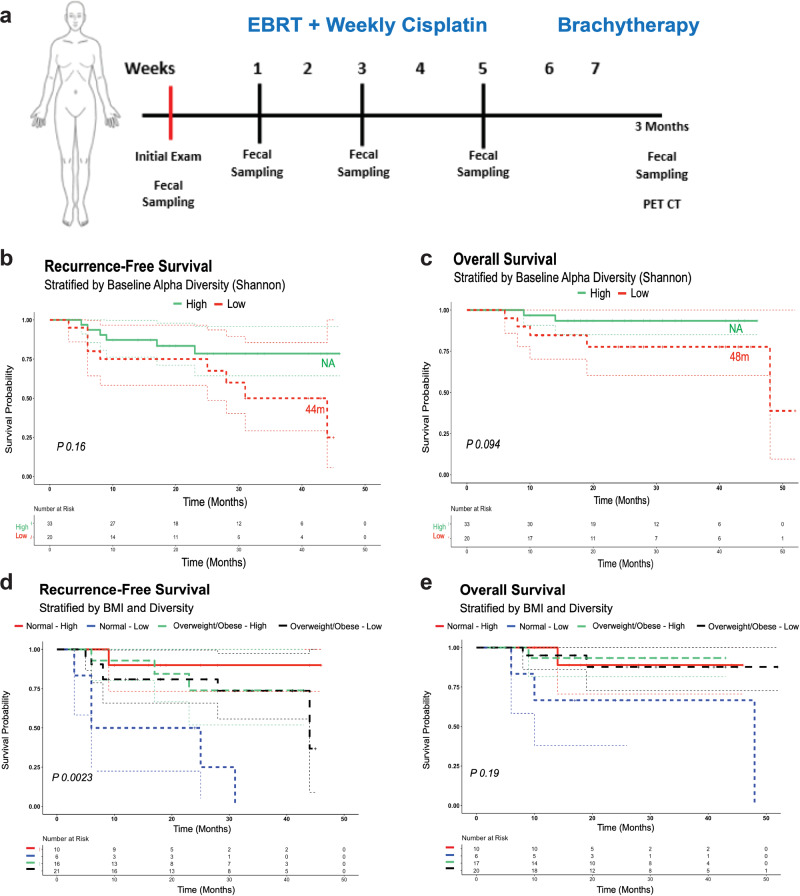
- During median follow-up of 24.5 months, 7 patients died (12.7%). Median RFS was 44 months for low baseline alpha diversity versus not reached for high diversity (P = 0.16); median OS was 48 months versus not reached (P = 0.094). Patients with normal BMI and higher SDI had longer median RFS (P = 0.0023) and OS (P = 0.19).
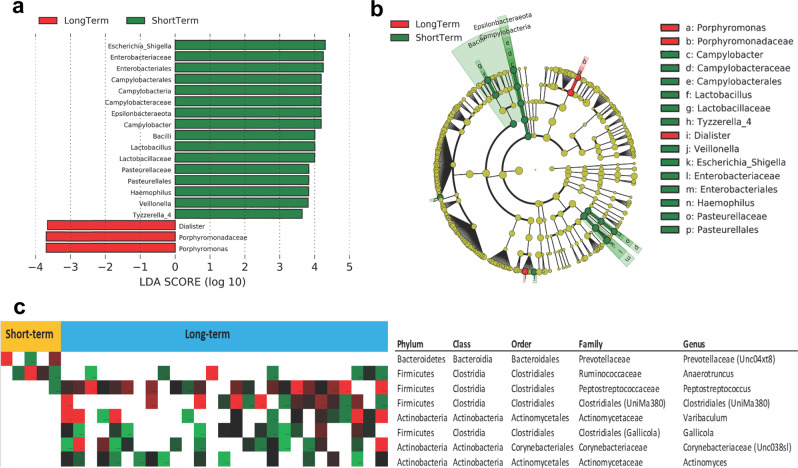
- Short-term survivor fecal samples were enriched in Porphyromonas, Porphyromonadaceae, and Dialister, whereas long-term survivor samples were enriched in Escherichia Shigella, Enterobacteriaceae, and Enterobacteriales (P < 0.05; LDA score > 3.5). Low baseline Veillonella was associated with median OS of 48 months versus not reached for high abundance (P = 0.054).
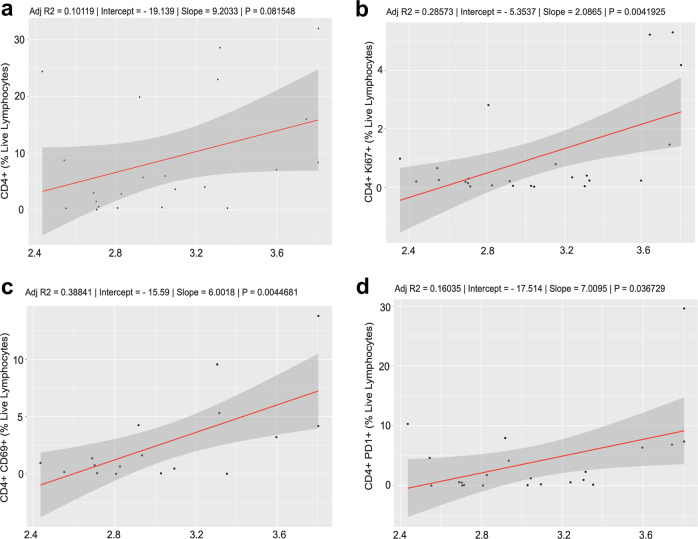
- High SDI correlated with tumor infiltration of CD4+ CD69+ and CD4+ PD1+ T cells at week 3 and CD4+ ki67+ T cells at week 5 (P = 0.004, Q = 0.14; P = 0.036, Q = 0.21; P = 0.004, Q = 0.07, respectively).
Methods
- Prospective study of 55 patients with newly diagnosed locally advanced, nonmetastatic cervical carcinoma treated with definitive chemoradiation (external-beam radiotherapy plus weekly cisplatin followed by brachytherapy) at MD Anderson and Lyndon B. Johnson Hospital from 22 September 2015 to 11 January 2019. Rectal swabs were collected at baseline, weeks 1, 3, and 5 of radiotherapy, and 3 months after completion; cervical tumor brushings were collected before week 1 and at weeks 3 and 5 for flow cytometry.
- 16S rRNA V4 sequencing was performed, with operational taxonomic units clustered at 97% similarity; alpha diversity was assessed by SDI and beta diversity by unweighted UniFrac principal coordinates analysis. An SDI cutoff of 2.69 was identified by ROC curve.
- Survival analyses used univariate and multivariate Cox proportional hazards models for RFS and OS, with covariates at P ≤ 0.1 in univariate analysis entered into multivariate models; Kaplan–Meier curves and log-rank tests were used. Differential taxa were identified by LEfSe (P < 0.05; logarithmic LDA score > 3.5), and immune correlations used linear regression and Spearman correlation.
Limitations
- The paper states that the small sample size limited statistical power; place of residence, lifestyle, and diet were not known; and racial variation could have impacted outcomes.
- The text makes evident that several survival subgroup comparisons were not statistically significant (e.g., RFS P = 0.16 and OS P = 0.094 by high/low SDI), and immune correlation Q values were above 0.05 despite significant P values.
- The study is observational and does not establish causality; the authors call for additional studies to understand the role of gut diversity in cervical cancer treatment.
Model-written summary. Check it against the paper before relying on it.
Integrity signals
Registry
Cites
Statistics
Figures
Verification
Claims the paper makes
8 Valid · 0 Not valid · 11 Not checked · 49 Own results and interpretations
Every source the paper cites for this claim was checked and supports it.
In the paper
“we identified compositional characteristics associated with members of the Clostridiales order in patients who experienced less toxicity.”
§ Gut microbiome diversity is an independent predictor of survival in cervical cancer patients receiving chemoradiation > Discussion
What the sources say
- Supportedcites [30] Mitra A Microbial diversity and composition is associated with patient-reported toxicity during chemoradiation therapy for cervical cancer Int J. Radiat. Oncol. 2020 107 163 171 10.1016/j.ijrobp.2019.12.040 PMC7932475 31987960 source
The Discussion states verbatim that the authors 'identified global changes in the composition of the gut microbiome associated with chemoradiation, and protective characteristics associated with members of the Clostridiales order in patients with less toxicity,' which is exactly what the citing sentence paraphrases. The Results (Association of Gut Microbiome Beta Diversity and GI toxicity) corroborate this: Clostridiales had higher abundance in low-toxicity patients at baseline and week 5, with individual families within the order also higher in low-toxicity patients, and the Discussion adds that patients without considerable decline in GI function maintained Clostridiales expression through treatment. The citing wording omits the word 'protective' but does not overstate the source. (LLM, conf=0.92)
plainstates an associationn = 5- Asserted: passes — The authors put it forward as true.
- Checkable: passes — It can be checked against evidence.
- Load-bearing: unclear — It is unclear whether the paper’s conclusions depend on it.
- Based: passes — The paper gives a reason why it holds.
- Supported
Every source the paper cites for this claim was checked and supports it.
In the paper
“although baseline gut diversity was not predictive of end-of-treatment bowel toxicity”
§ Gut microbiome diversity is an independent predictor of survival in cervical cancer patients receiving chemoradiation > Discussion
What the sources say
- Supportedcites [30] Mitra A Microbial diversity and composition is associated with patient-reported toxicity during chemoradiation therapy for cervical cancer Int J. Radiat. Oncol. 2020 107 163 171 10.1016/j.ijrobp.2019.12.040 PMC7932475 31987960 source
The Conclusions state that baseline diversity was not predictive of end-of-treatment bowel toxicity. The Results section, “Association of Gut Microbiome Alpha Diversity and GI toxicity,” likewise reports no significant baseline diversity difference between patients who later developed high versus low toxicity. (LLM, conf=0.95)
plainn = 5- Asserted: passes — The authors put it forward as true.
- Checkable: passes — It can be checked against evidence.
- Load-bearing: unclear — It is unclear whether the paper’s conclusions depend on it.
- Based: passes — The paper gives a reason why it holds.
- Supported
Every source the paper cites for this claim was checked and supports it.
In the paper
“Our analysis found that CRT induces a decline in gut diversity by the fifth week of treatment.”
§ Gut microbiome diversity is an independent predictor of survival in cervical cancer patients receiving chemoradiation > Introduction
What the sources say
- Supportedcites [19] El Alam, Molly Blue, et al. Adaptive changes in the gut microbiome during standard-of-care chemoradiotherapy for gynecologic cancers. bioRxiv. 2020. 10.1101/2020.04.10.036426 PMC7932122 33662003 source
The Principal Findings state that gut microbial diversity declined significantly over the first five weeks of CRT. The reported results also show significantly lower diversity metrics at week 5 than at baseline. The citing sentence’s reference to “our analysis” describes the citing authors’ own work, not a finding attributed to this source. (LLM, conf=0.94)
plainstates a cause- Asserted: passes — The authors put it forward as true.
- Checkable: passes — It can be checked against evidence.
- Load-bearing: passes — The paper’s conclusions depend on it.
- Based: passes — The paper gives a reason why it holds.
- Supported
Every source the paper cites for this claim was checked and supports it.
In the paper
“We found increased radiation toxicity to be associated with a decrease in gut microbiome diversity.”
§ Gut microbiome diversity is an independent predictor of survival in cervical cancer patients receiving chemoradiation > Discussion
What the sources say
- Supportedcites [30] Mitra A Microbial diversity and composition is associated with patient-reported toxicity during chemoradiation therapy for cervical cancer Int J. Radiat. Oncol. 2020 107 163 171 10.1016/j.ijrobp.2019.12.040 PMC7932475 31987960 source
The Abstract Conclusions (p.1) state verbatim the attributed point: 'Over time, increased radiation toxicity is associated with decreased gut microbiome diversity.' The Discussion reinforces it ('diversity of gut microbiome declines over the course of radiation and is greater in patients experiencing relatively low toxicity'), and the Results ('Association of Gut Microbiome Alpha Diversity and GI toxicity', plus Abstract Results) report higher diversity linearly correlated with better patient-reported GI function at all individual time points, with alpha diversity falling over CRT (2.9±0.5 to 2.49±0.7, p=0.012). The claim carries only the association, not prediction, so the paper's caveat that baseline diversity was not predictive does not undercut it. (LLM, conf=0.92)
plainstates an associationn = 5- Asserted: passes — The authors put it forward as true.
- Checkable: passes — It can be checked against evidence.
- Load-bearing: passes — The paper’s conclusions depend on it.
- Based: passes — The paper gives a reason why it holds.
- Supported
The cited sources support only part of this claim — read each source’s verdict below.
In the paper
“CRT has also been shown to alter overall richness and diversity of the gut microbiome in cancer patients20,21.”
§ Gut microbiome diversity is an independent predictor of survival in cervical cancer patients receiving chemoradiation > Introduction
What the sources say
- Partly supportedcites [20] Nam Y-D Kim HJ Seo J-G Kang SW Bae J-W Impact of pelvic radiotherapy on gut microbiota of gynecological cancer patients revealed by massive pyrosequencing PLoS One 2013 8 e82659 10.1371/journal.pone.0082659 24367534 PMC3867375 sourceExperimental — accuracy not yet measured
The Results section (“Impact of radiation therapy on gut microbiota of gynecologic cancer patients”; page unavailable) reports a significant reduction in estimated richness and a decreasing trend in Shannon diversity during pelvic radiotherapy. The paper does not establish that combined chemoradiotherapy (CRT) caused both changes: two patients received no chemotherapy, and the chemotherapy subgroup comparison was not statistically analyzed. (LLM, conf=0.84)
- Not checked yetcites [21] Manichanh C The gut microbiota predispose to the pathophysiology of acute postradiotherapy diarrhea Am. J. Gastroenterol. 2008 103 1754 1761 10.1111/j.1572-0241.2008.01868.x 18564125 source
plainstates a cause- Asserted: passes — The authors put it forward as true.
- Checkable: passes — It can be checked against evidence.
- Load-bearing: passes — The paper’s conclusions depend on it.
- Based: passes — The paper gives a reason why it holds.
- Partly supported
28 more claims
Create a free account to see all 68 claims and to verify the 21 references still open.
- Probably not a substantial claim. 25
- It may state two separate claims as one. 17
Claims other papers make about this one
Each is checked against this paper’s own text: does it say what the citing paper says it does?
The cited source says what the claim attributes to it.
In the citing paper
“Associations between alpha diversity and cancer patient outcomes have been found in the setting of patients receiving hematopoietic cell transplant 29 or cervical cancer chemoradiation 30 but not in anti-PD-1 recipients with metastatic melanoma 16,18 ; thus, such associations may be treatment regimen specific.”
From A gut microbial signature for combination immune checkpoint blockade across cancer types (2024) · cites this paper as [30]
Self-check
Percentages, sums and reported differences re-computed from the paper’s own numbers.
Each contradiction between two passages listed here was confirmed by an independent check.
Rated major: it would touch a result — a value a result rests on, reported and recomputed p-values on opposite sides of the significance level, two passages that conflict with no sign which is right, or a cited work retracted before this paper was published.
In the paper
§ Gut microbiome diversity is an independent predictor of survival in cervical cancer patients receiving chemoradiation > Results > Association between gut microbiota profile and immune signatures
“Testing for a correlation between SDI and CD4+ showed no significant associations (Fig. 3a).”
§ Gut microbiome diversity is an independent predictor of survival in cervical cancer patients receiving chemoradiation > Discussion
“analysis of immune cells from cervical tumor brush samples by flow cytometry revealed an association between high microbial diversity, increased tumor infiltration of CD4+ lymphocytes and the activation of CD4 cells over the course of radiation therapy.”
Rated minor: it would not touch a result — a value no result rests on, a p-value that stays on the same side of the significance level, or a conflict that is clerical, resolved elsewhere in the paper, or outside its own findings.
In the paper
§ Gut microbiome diversity is an independent predictor of survival in cervical cancer patients receiving chemoradiation > Results > Baseline gut microbiota diversity is associated with favorable responses
“The median RFS was 44 months for patients with low fecal alpha diversity at baseline, and not reached for patients with high fecal alpha diversity at baseline (P = 0.16) (Fig. 1a).”
§ Gut microbiome diversity is an independent predictor of survival in cervical cancer patients receiving chemoradiation > Results > Patient Characteristics
“a Schema of the sample collection, treatment, and analyses used in the present study. Kaplan–Meier curves for b recurrence-free survival, c overall survival stratified by high and low gut diversity (SDI).”
Rated minor: it would not touch a result — a value no result rests on, a p-value that stays on the same side of the significance level, or a conflict that is clerical, resolved elsewhere in the paper, or outside its own findings.
In the paper
§ Gut microbiome diversity is an independent predictor of survival in cervical cancer patients receiving chemoradiation > Results > Baseline gut microbiota diversity is associated with favorable responses
“The median OS was 48 months for patients with low fecal alpha diversity at baseline, and again not reached for patients with high fecal alpha diversity at baseline (P = 0.094) (Fig. 1b, Supplemental Fig. 3).”
§ Gut microbiome diversity is an independent predictor of survival in cervical cancer patients receiving chemoradiation > Results > Patient Characteristics
“Kaplan–Meier curves for b recurrence-free survival, c overall survival stratified by high and low gut diversity (SDI).”
Citations
Cites
Siegel, R. L., Miller, K. D., & Jemal, A. (2019) · CA: A Cancer Journal for Clinicians · doi:10.3322/caac.21551 · Cited by 20,160
UPARSE: highly accurate OTU sequences from microbial amplicon reads
Edgar, R. C. (2013) · Nature Methods · doi:10.1038/nmeth.2604 · Cited by 16,707
Metagenomic biomarker discovery and explanation
Segata, N., Izard, J., Waldron, L., Gevers, D., Miropolsky, L., Garrett, W. S., & Huttenhower, C. (2011) · Genome Biology · doi:10.1186/gb-2011-12-6-r60 · Cited by 16,192
Structure, function and diversity of the healthy human microbiome
The Human Microbiome Project Consortium (2012) · Nature · doi:10.1038/nature11234 · Cited by 11,726
The metabolic phenotype in obesity: Fat mass, body fat distribution, and adipose tissue function
Goossens, G. H. (2017) · Obesity Facts · doi:10.1159/000471488 · Cited by 8,481
The measurement of diversity in different types of biological collections
Pielou, E. C. (1966) · Journal of Theoretical Biology · doi:10.1016/0022-5193(66)90013-0 · Cited by 5,903
Gut microbiome modulates response to anti-PD-1 immunotherapy in melanoma patients
Gopalakrishnan, V., Spencer, C. N., Nezi, L., Reuben, A., Andrews, M. C., Karpinets, T. V., Prieto, P. A., Vicente, D., Hoffman, K., Wei, S. C., et al. (2018) · Science · doi:10.1126/science.aan4236 · Cited by 4,812
Self-citationInteractions Between the Microbiota and the Immune System
Hooper, L. V., Littman, D. R., & Macpherson, A. J. (2012) · Science · doi:10.1126/science.1223490 · Cited by 4,173
Commensal Bifidobacterium promotes antitumor immunity and facilitates anti–PD-L1 efficacy
Sivan, A., Corrales, L., Hubert, N., Williams, J. B., Aquino-Michaels, K., Earley, Z. M., Benyamin, F. W., Man Lei, Y., Jabri, B., Alegre, M.-L., et al. (2015) · Science · doi:10.1126/science.aac4255 · Cited by 3,888
A framework for human microbiome research
The Human Microbiome Project Consortium (2012) · Nature · doi:10.1038/nature11209 · Cited by 2,650
Temporal development of the gut microbiome in early childhood from the TEDDY study
Stewart, C. J., Ajami, N. J., O’Brien, J. L., Hutchinson, D. S., Smith, D. P., Wong, M. C., Ross, M. C., Lloyd, R. E., Doddapaneni, H., Metcalf, G. A., et al. (2018) · Nature · doi:10.1038/s41586-018-0617-x · Cited by 2,014
Self-citationDewan, M. Z., Galloway, A. E., Kawashima, N., Dewyngaert, J. K., Babb, J. S., Formenti, S. C., & Demaria, S. (2009) · Clinical Cancer Research · doi:10.1158/1078-0432.ccr-09-0265 · Cited by 1,678
Lee, Y., Auh, S. L., Wang, Y., Burnette, B., Wang, Y., Meng, Y., Beckett, M., Sharma, R., Chin, R., Tu, T., et al. (2009) · Blood · doi:10.1182/blood-2009-02-206870 · Cited by 1,324
Walker, J. L., Piedmonte, M. R., Spirtos, N. M., Eisenkop, S. M., Schlaerth, J. B., Mannel, R. S., Spiegel, G., Barakat, R., Pearl, M. L., & Sharma, S. K. (2009) · Journal of Clinical Oncology · doi:10.1200/jco.2009.22.3248 · Cited by 1,288
Using immunotherapy to boost the abscopal effect
Ngwa, W., Irabor, O. C., Schoenfeld, J. D., Hesser, J., Demaria, S., & Formenti, S. C. (2018) · Nature Reviews Cancer · doi:10.1038/nrc.2018.6 · Cited by 1,260
The microbiome, cancer, and cancer therapy
Helmink, B. A., Khan, M. A. W., Hermann, A., Gopalakrishnan, V., & Wargo, J. A. (2019) · Nature Medicine · doi:10.1038/s41591-019-0377-7 · Cited by 1,200
Self-citationGut microbiota modulation of chemotherapy efficacy and toxicity
Alexander, J. L., Wilson, I. D., Teare, J., Marchesi, J. R., Nicholson, J. K., & Kinross, J. M. (2017) · Nature Reviews Gastroenterology & Hepatology · doi:10.1038/nrgastro.2017.20 · Cited by 970
Lugade, A. A., Moran, J. P., Gerber, S. A., Rose, R. C., Frelinger, J. G., & Lord, E. M. (2005) · The Journal of Immunology · doi:10.4049/jimmunol.174.12.7516 · Cited by 966
Principles and Practice of Gynecologic Oncology
Hoskins, W. J., Pérez, C. A., & Young, R. C. (1992) · Cited by 945
Microbiota: a key orchestrator of cancer therapy
Roy, S., & Trinchieri, G. (2017) · Nature Reviews Cancer · doi:10.1038/nrc.2017.13 · Cited by 883
Principles and Practice of Gynecologic Oncology
Moore, W. (1997) · International Journal of Gynecological Pathology · doi:10.1097/00004347-199707000-00022 · Cited by 838
Calle, E. E., & Thun, M. J. (2004) · Oncogene · doi:10.1038/sj.onc.1207751 · Cited by 769
The immune system and the gut microbiota: friends or foes?
Cerf-Bensussan, N., & Gaboriau-Routhiau, V. (2010) · Nature Reviews Immunology · doi:10.1038/nri2850 · Cited by 704
The Microbiome Quality Control Project Consortium, Sinha, R., Abu-Ali, G., Vogtmann, E., Fodor, A. A., Ren, B., Amir, A., Schwager, E., Crabtree, J., Ma, S., et al. (2017) · Nature Biotechnology · doi:10.1038/nbt.3981 · Cited by 587
Jin, Y., Dong, H., Xia, L., Yang, Y., Zhu, Y., Shen, Y., Zheng, H., Yao, C., Wang, Y., & Lu, S. (2019) · Journal of Thoracic Oncology · doi:10.1016/j.jtho.2019.04.007 · Cited by 573 · cited 1×
“The diversity of the gut microbiome is defined as the number and relative abundance distribution of these distinct types of microorganisms colonizing within the gut 7 .”
BackgroundBody composition and prognosis in chronic systolic heart failure: the obesity paradox
Lavie, C. J., Osman, A. F., Milani, R. V., & Mehra, M. R. (2003) · The American Journal of Cardiology · doi:10.1016/s0002-9149(03)00031-6 · Cited by 486
Composition and temporal stability of the gut microbiota in older persons
Jeffery, I. B., Lynch, D. B., & O’Toole, P. W. (2016) · The ISME Journal · doi:10.1038/ismej.2015.88 · Cited by 421
Modulating the microbiome to improve therapeutic response in cancer
McQuade, J. L., Daniel, C. R., Helmink, B. A., & Wargo, J. A. (2019) · The Lancet Oncology · doi:10.1016/s1470-2045(18)30952-5 · Cited by 376
Self-citationGut microbes of mammalian herbivores facilitate intake of plant toxins
Kohl, K. D., Weiss, R. B., Cox, J., Dale, C., & Denise Dearing, M. (2014) · Ecology Letters · doi:10.1111/ele.12329 · Cited by 356
Gerassy-Vainberg, S., Blatt, A., Danin-Poleg, Y., Gershovich, K., Sabo, E., Nevelsky, A., Daniel, S., Dahan, A., Ziv, O., Dheer, R., et al. (2018) · Gut · doi:10.1136/gutjnl-2017-313789 · Cited by 318
Radiation therapy and anti-tumor immunity: exposing immunogenic mutations to the immune system
Lhuillier, C., Rudqvist, N.-P., Elemento, O., Formenti, S. C., & Demaria, S. (2019) · Genome Medicine · doi:10.1186/s13073-019-0653-7 · Cited by 276
Healthy obese versus unhealthy lean: the obesity paradox
Lavie, C. J., De Schutter, A., & Milani, R. V. (2015) · Nature Reviews Endocrinology · doi:10.1038/nrendo.2014.165 · Cited by 266
Monk, B. J., Tewari, K. S., & Koh, W.-J. (2007) · Journal of Clinical Oncology · doi:10.1200/jco.2007.10.8324 · Cited by 261
Assessing the interactions between radiotherapy and antitumour immunity
Grassberger, C., Ellsworth, S. G., Wilks, M. Q., Keane, F. K., & Loeffler, J. S. (2019) · Nature Reviews Clinical Oncology · doi:10.1038/s41571-019-0238-9 · Cited by 244
Jordanova, E. S., Gorter, A., Ayachi, O., Prins, F., Durrant, L. G., Kenter, G. G., van der Burg, S. H., & Fleuren, G. J. (2008) · Clinical Cancer Research · doi:10.1158/1078-0432.ccr-07-4554 · Cited by 233
Nam, Y.-D., Kim, H. J., Seo, J.-G., Kang, S. W., & Bae, J.-W. (2013) · PLoS ONE · doi:10.1371/journal.pone.0082659 · Cited by 230
The Gut Microbiota Predispose to the Pathophysiology of Acute Postradiotherapy Diarrhea
Manichanh, C., Varela, E., Martinez, C., Antolin, M., Llopis, M., Dor, J., Giralt, J., Guarner, F., & Malagelada, J.-R. (2008) · The American Journal of Gastroenterology · doi:10.1111/j.1572-0241.2008.01868.x · Cited by 201
Islami, F., Fedewa, S. A., & Jemal, A. (2019) · Preventive Medicine · doi:10.1016/j.ypmed.2019.04.010 · Cited by 145
Impact of (chemo)radiotherapy on immune cell composition and function in cervical cancer patients
van Meir, H., Nout, R. A., Welters, M. J. P., Loof, N. M., de Kam, M. L., van Ham, J. J., Samuels, S., Kenter, G. G., Cohen, A. F., Melief, C. J. M., et al. (2017) · OncoImmunology · doi:10.1080/2162402x.2016.1267095 · Cited by 143
Gunderson, C. C., Java, J., Moore, K. N., & Walker, J. L. (2014) · Gynecologic Oncology · doi:10.1016/j.ygyno.2014.01.041 · Cited by 140
Törnberg, S., & Carstensen, J. (1994) · British Journal of Cancer · doi:10.1038/bjc.1994.65 · Cited by 133
Lacey, J. V., Swanson, C. A., Brinton, L. A., Altekruse, S. F., Barnes, W. A., Gravitt, P. E., Greenberg, M. D., Hadjimichael, O. C., McGowan, L., Mortel, R., et al. (2003) · Cancer · doi:10.1002/cncr.11567 · Cited by 129
Chen, H., Chen, X., Zhang, W., Yang, K., Chen, X., Zhang, B., Chen, Z., Chen, J.-P., Zhou, Z., & Hu, J. (2015) · Medicine · doi:10.1097/md.0000000000001769 · Cited by 117
Sims, T. T., Colbert, L. E., Zheng, J., Delgado Medrano, A. Y., Hoffman, K. L., Ramondetta, L., Jazaeri, A., Jhingran, A., Schmeler, K. M., Daniel, C. R., et al. (2019) · Gynecologic Oncology · doi:10.1016/j.ygyno.2019.09.002 · Cited by 100
Self-citationThe association between BMI and cervical cancer risk: a meta-analysis
Poorolajal, J., & Jenabi, E. (2016) · European Journal of Cancer Prevention · doi:10.1097/cej.0000000000000164 · Cited by 99
Abu-Abid, S., Szold, A., & Klausner, J. M. (2002) · PubMed · Cited by 97
Mitra, A., Grossman Biegert, G. W., Delgado, A. Y., Karpinets, T. V., Solley, T. N., Mezzari, M. P., Yoshida-Court, K., Petrosino, J. F., Mikkelson, M. D., Lin, L., et al. (2020) · International Journal of Radiation Oncology*Biology*Physics · doi:10.1016/j.ijrobp.2019.12.040 · Cited by 90
Self-citationRisk Factors for Cervical Cancer by Histology
Brinton, L. A., Herrero, R., Reeves, W. C., de Britton, R. C., Gaitán, E., & Tenorio, F. (1993) · Gynecologic Oncology · doi:10.1006/gyno.1993.1294 · Cited by 79
The role of adiponectin in obesity-associated female-specific carcinogenesis
Nagaraju, G. P., Rajitha, B., Aliya, S., Kotipatruni, R. P., Santharam, M. A., Hammond, A. L., Park, D., Chigurupati, S., Alam, A., & Pattnaik, S. (2016) · Cytokine & Growth Factor Reviews · doi:10.1016/j.cytogfr.2016.03.014 · Cited by 64
Breast and cervical cancer screening in Spain and predictors of adherence
Martín-López, R., Hernández-Barrera, V., De Andres, A. L., Garrido, P. C., De Miguel, A. G., & García, R. J. (2010) · European Journal of Cancer Prevention · doi:10.1097/cej.0b013e3283372125 · Cited by 61
The microbiota: An underestimated actor in radiation-induced lesions?
Sokol, H., & Adolph, T. E. (2018) · Gut · doi:10.1136/gutjnl-2017-314279 · Cited by 52
Muls, A., Andreyev, J., Lalondrelle, S., Taylor, A., Norton, C., & Hart, A. (2017) · International Journal of Gynecological Cancer · doi:10.1097/igc.0000000000000999 · Cited by 51
Kinetics of Intratumoral Immune Cell Activation During Chemoradiation for Cervical Cancer
Dorta-Estremera, S., Colbert, L. E., Nookala, S. S., Yanamandra, A. V., Yang, G., Delgado, A., Mikkelson, M., Eifel, P., Jhingran, A., Lilie, L. L., et al. (2018) · International Journal of Radiation Oncology*Biology*Physics · doi:10.1016/j.ijrobp.2018.06.404 · Cited by 48
Self-citationAlam, M. B. E., Sims, T. T., Kouzy, R., Biegert, G. W. G., Jaoude, J. A., Karpinets, T. V., Yoshida-Court, K., Wu, X., Medrano, A. Y. D., Mezzari, M. P., et al. (2021) · PLoS ONE · doi:10.1371/journal.pone.0247905 · Cited by 43
Self-citationEl Alam, M. B., Sims, T. T., Kouzy, R., Biegert, G. W. G., Abi Jaoude, J., Karpinets, T. V., Yoshida-Court, K., Wu, X., Delgado Medrano, A. Y., Mezzari, M. P., et al. (2020) · doi:10.1101/2020.04.10.036426 · Cited by 41
Self-citationNew diversity index for assessing structural alterations in aquatic communities
Camargo, J. A. (1992) · Bulletin of Environmental Contamination and Toxicology · doi:10.1007/bf00195643 · Cited by 39
Biegert, G., El Alam, M. B., Karpinets, T., Wu, X., Sims, T. T., Yoshida-Court, K., Lynn, E. J., Yue, J., Medrano, A. D., Petrosino, J., et al. (2021) · Journal of Microbiological Methods · doi:10.1016/j.mimet.2021.106213 · Cited by 24
Self-citationObesity and gynaecological cancer
Lane, G. K. (2008) · Menopause international · doi:10.1258/mi.2007.007036 · Cited by 23
Targeting friend and foe: Emerging therapeutics in the age of gut microbiome and disease
Cho, J. A., & Chinnapen, D. J. F. (2018) · Journal of Microbiology · doi:10.1007/s12275-018-8037-z · Cited by 19
Principles and practice of gynecologic oncology
Chi, D. S., Dizon, D. S., Yashar, C. M., & Khabele, D. (n.d.) · Cited by 15
Biegert, G. W. G., Karpinets, T. V., Wu, X., Alam, M. B. E., Sims, T. T., Yoshida-Court, K., Lynn, E. J., Yue, J., Medrano, A. Y. D., Petrosino, J. F., et al. (2020) · doi:10.21203/rs.3.rs-30541/v1 · Cited by 2
Self-citationBiegert, G., Karpinets, T., Wu, X., Alam, M. B. E., Sims, T. T., Yoshida-Court, K., Lynn, E. J., Yue, J., Medrano, A. D., Petrosino, J., et al. (2020) · doi:10.1101/2020.05.05.080002 · Cited by 1
Self-citation
Cited by
Lung microbiome: new insights into the pathogenesis of respiratory diseases
Li, R., Li, J., & Zhou, X. (2024) · Signal Transduction and Targeted Therapy · doi:10.1038/s41392-023-01722-y · Cited by 434
A gut microbial signature for combination immune checkpoint blockade across cancer types
Gunjur, A., Shao, Y., Rozday, T., Klein, O., Mu, A., Haak, B. W., Markman, B., Kee, D., Carlino, M. S., Underhill, C., et al. (2024) · Nature Medicine · doi:10.1038/s41591-024-02823-z · Cited by 165
“…between alpha diversity and cancer patient outcomes have been found in the setting of patients receiving hematopoietic cell transplant 29 or cervical cancer chemoradiation 30 but not in anti-PD-1 recipients with metastatic melanoma 16,18 ; thus, such associations may be treatment regimen specific.”
Gut Microbiota-Derived Short-Chain Fatty Acids: Impact on Cancer Treatment Response and Toxicities
Al-Qadami, G. H., Secombe, K. R., Subramaniam, C. B., Wardill, H. R., & Bowen, J. M. (2022) · Microorganisms · doi:10.3390/microorganisms10102048 · Cited by 162
“The richness of the microbiome has also been investigated, with higher microbial diversity shown to be a key predictor of survival in people having chemoradiation for cervical cancer [4].”
BackgroundHealth Effects of Ionizing Radiation on the Human Body
Talapko, J., Talapko, D., Katalinić, D., Kotris, I., Erić, I., Belić, D., Mihaljević, M. V., Vasilj, A., Erić, S., Flam, J., et al. (2024) · Medicina · doi:10.3390/medicina60040653 · Cited by 204
“Numerous disorders now focus on gut microbiota; studies have also linked it to radiation sensitivity [117].”
BackgroundRole of the microbiota in response to and recovery from cancer therapy
Blake, S. J., Wolf, Y., Boursi, B., & Lynn, D. J. (2023) · Nature reviews. Immunology · doi:10.1038/s41577-023-00951-0 · Cited by 158
“Increased gut microbiota diversity at baseline and during treatment has been associated with reduced gastrointestinal mucositis following radiotherapy 44,73 .”
Metadata
- Authors
- Sims, T. T., El Alam, M. B., Karpinets, T. V., Dorta-Estremera, S., Hegde, V. L., Nookala, S., Yoshida-Court, K., Wu, X., Biegert, G. W. G., Delgado Medrano, A. Y., Solley, T., Ahmed-Kaddar, M., Chapman, B. V., Sastry, K. J., Mezzari, M. P., Petrosino, J. F., Lin, L. L., Ramondetta, L., Jhingran, A., Schmeler, K. M., Ajami, N. J., Wargo, J., Colbert, L. E., & Klopp, A. H.
- Affiliations
- The University of Texas MD Anderson Cancer Center (US)
- Baylor College of Medicine (US)
- Corresponding author
- Colbert, Lauren E.
- Klopp, Ann H.
- ORCID
- Sims, Travis T.
- El Alam, Molly B.
- Karpinets, Tatiana V.
- Dorta-Estremera, Stephanie
- Hegde, Venkatesh L.
- Yoshida-Court, Kyoko
- Wu, Xiaogang
- Biegert, Greyson W. G.
- Chapman, Bhavana V.
- Sastry, K. Jagannadha
- Mezzari, Melissa P.
- Petrosino, Joseph F.
- Lin, Lilie L.
- Ramondetta, Lois
- Jhingran, Anuja
- Schmeler, Kathleen M.
- Ajami, Nadim J.
- Wargo, Jennifer
- Colbert, Lauren E.
- Klopp, Ann H.
- Venue
- Communications Biology
- Published
- 2021-02-22
- Volume
- 4
- Issue
- 1
- Pages
- 237-237
- ISSN
- 2399-3642 (ISSN-L)
- PMC
- PMC7900251
- OpenAlex
- W3133213560
- Cited by
- 135
- References
- 60
- Citations by year
- 2026: 17 · 2025: 31 · 2024: 25 · 2023: 24 · 2022: 24 · 2021: 13
- FWCI
- 6.79
- Type
- journal article
- Language
- en
- Open access
- gold
- doi.org
- Licence
- cc-by
- creativecommons.org/licenses/by/4.0 (tdm)
- creativecommons.org/licenses/by/4.0 (vor)
- Locations
- Communications Biology (publishedVersion, cc-by)
- medRxiv (acceptedVersion)
- PubMed Central (publishedVersion, cc-by)
- PubMed (publishedVersion)
- DOAJ (DOAJ: Directory of Open Access Journals) (submittedVersion, cc-by-sa)
- Funders
- Radiological Society of North America
- Emerson Collective
- National Institutes of Health (T32 grant)
- University of Texas MD Anderson Cancer Center (CA101642, P30-CA-016672)
- National Cancer Institute (P30CA016672, T32CA101642)
- National Institute of Environmental Health Sciences (P30ES030285)
- Moonshot Research and Development Program
- Topics
- Life Sciences › Biochemistry, Genetics and Molecular Biology › Molecular Biology › Gut microbiota and health
- Health Sciences › Medicine › Oncology › Cancer Immunotherapy and Biomarkers
- Life Sciences › Immunology and Microbiology › Microbiology › Reproductive tract infections research
- Keywords
- gut microbiota, microbiome diversity, cervical cancer, chemoradiotherapy, survival, treatment response, Porphyromonas, Dialister, Escherichia-Shigella, Enterobacteriaceae, tumor-infiltrating lymphocytes, CD4+ T cells, radiotherapy, microbiota modulation
- MeSH terms
- Gastrointestinal Microbiome, CD69 Antigens, Adult, Aged, Antigens, Differentiation, T-Lymphocyte, Uterine Cervical Neoplasms, Female, Humans, Intestines, Middle Aged, Prospective Studies, Time Factors, CD4-Positive T-Lymphocytes, Antigens, CD, Lymphocytes, Tumor-Infiltrating, Treatment Outcome, Ki-67 Antigen, Lectins, C-Type, Tumor Microenvironment, Chemoradiotherapy
About these checks
Registry, retraction, Cites and statistics results are computed, not judged, with one exception: a printed reference that no index lists is read once by a model before it counts as a citation error. Claims are extracted by a model and kept only when their quote appears verbatim in the text; each cited source is then checked, with a model’s help, for whether it says what the claim relies on. Those verdicts can be wrong — read the claim’s quote and the cited source before relying on one.
The claim verdicts this report counts are experimental: their accuracy is not yet measured.
A language model drew the claims from the paper on 2026-10-05, under version 3 of the claim definition (model deepseek-v4.1-flash, prompt extract-v3).
A second model labelled each claim on 2026-10-05 (model jev-1.13-20260917, definition revision gold-guideline-v0.2).
Cited sources are checked with a language model’s help (qwen3.8-omni-flash and gpt-6-sol).
Statistics and arithmetic are recomputed, not judged.
Confidence bands are shown only for fields calibrated on our annotated test set. None is calibrated yet, so no band is shown.
What counts as a claim ›How we measure confidence ›How we check this ›
Are you an author, or do you see a problem with this page? Request a review
Data sources
Bibliographic data: Semantic Scholar, OpenAlex, Crossref.
Contains information from the Semantic Scholar Academic Graph Datasets, made available under the ODC Attribution License (ODC-BY 1.0).
Semantic Scholar’s data is described in: Kinney, R., et al. (2023). The Semantic Scholar Open Data Platform. arXiv:2301.10140.
