

Leveraging large language models for predictive chemistry
Open accessPublished version of a preprint
The DOI matches its Crossref record; 83 of the 83 references it cites were found in a registry or an index.
Abstract
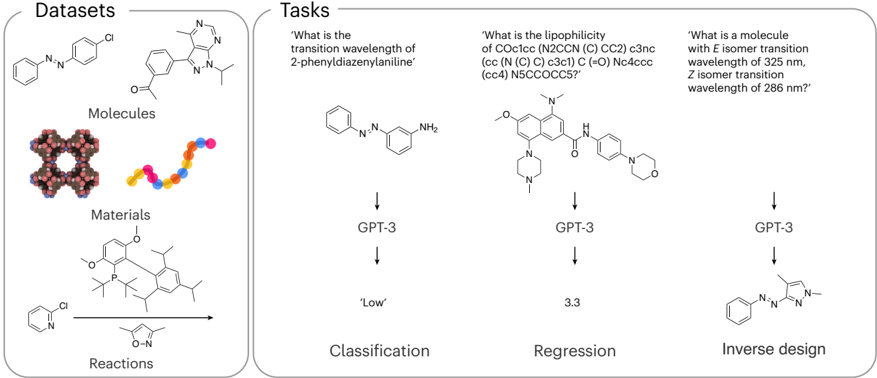
Machine learning has transformed many fields and has recently found applications in chemistry and materials science. The small datasets commonly found in chemistry sparked the development of sophisticated machine learning approaches that incorporate chemical knowledge for each application and, therefore, require specialized expertise to develop. Here we show that GPT-3, a large language model trained on vast amounts of text extracted from the Internet, can easily be adapted to solve various tasks in chemistry and materials science by fine-tuning it to answer chemical questions in natural language with the correct answer. We compared this approach with dedicated machine learning models for many applications spanning the properties of molecules and materials to the yield of chemical reactions. Surprisingly, our fine-tuned version of GPT-3 can perform comparably to or even outperform conventional machine learning techniques, in particular in the low-data limit. In addition, we can perform inverse design by simply inverting the questions. The ease of use and high performance, especially for small datasets, can impact the fundamental approach to using machine learning in the chemical and material sciences. In addition to a literature search, querying a pre-trained large language model might become a routine way to bootstrap a project by leveraging the collective knowledge encoded in these foundation models, or to provide a baseline for predictive tasks.
Overview
The claims and statistics of this paper haven’t been checked yet.
Free: it reads the open-access text and checks the first 5 claims that cite a source we can check. Create a free account to check every claim.
Integrity signals
Registry
Cites
Statistics
Figures
Verification
Claims the paper makes
The claims and statistics of this paper haven’t been checked yet.
Free: it reads the open-access text and checks the first 5 claims that cite a source we can check. Create a free account to check every claim.
Claims other papers make about this one
Each is checked against this paper’s own text: does it say what the citing paper says it does?
The source backs part of the claim, not all of it — or backs it for a different population, condition or comparison.
In the citing paper
“In parallel, chemistry-oriented reviews have shown that large language models can move beyond text generation toward tool use, retrieval, planning, code execution, and multi-agent coordination [5-10].”
From From Scientific Copilots to Tool-Grounded Autonomy: AI Agents in Simulation-Driven Materials Discovery (2026) · cites this paper as [9]
Experimental — accuracy not yet measuredThe source backs part of the claim, not all of it — or backs it for a different population, condition or comparison.
In the citing paper
“The central challenge is not only to predict a property, but to manage the sequence of reasoning and action that connects a scientific objective to executable computational or experimental steps [2-10].”
From From Scientific Copilots to Tool-Grounded Autonomy: AI Agents in Simulation-Driven Materials Discovery (2026) · cites this paper as [9]
Experimental — accuracy not yet measuredThe check wasn’t confident either way, so it gives no verdict — never disputed.
In the citing paper
“The broader literature on autonomous scientific systems has already argued for more rigorous evaluation protocols and transparent tool interfaces [3,5,7-12].”
From From Scientific Copilots to Tool-Grounded Autonomy: AI Agents in Simulation-Driven Materials Discovery (2026) · cites this paper as [9]
Experimental — accuracy not yet measuredThe check wasn’t confident either way, so it gives no verdict — never disputed.
In the citing paper
“To the best of our knowledge, no prior review has isolated simulation-driven, toolorchestrating AI agent workflows for materials discovery as a distinct evidence base with study-level extraction of autonomy, validation, and reproducibility [3-14].”
From From Scientific Copilots to Tool-Grounded Autonomy: AI Agents in Simulation-Driven Materials Discovery (2026) · cites this paper as [9]
Experimental — accuracy not yet measured
Self-check
Percentages, sums and reported differences re-computed from the paper’s own numbers.
The self-check needs the paper’s full text.
Citations
Cites
Vaswani, A., Shazeer, N., Parmar, N., Uszkoreit, J., Jones, L., Gomez, A. N., Kaiser, L., & Polosukhin, I. (2017) · arXiv · doi:10.48550/arxiv.1706.03762 · Cited by 120,404
XGBoost: A Scalable Tree Boosting System
Chen, T., & Guestrin, C. (2016) · Proceedings of the 22nd ACM SIGKDD International Conference on Knowledge Discovery and Data Mining · doi:10.1145/2939672.2939785 · Cited by 54,569
Exploring the Limits of Transfer Learning with a Unified Text-to-Text Transformer
Raffel, C., Shazeer, N., Roberts, A., Lee, K., Narang, S., Matena, M., Zhou, Y., Li, W., & Liu, P. J. (2019) · arXiv · doi:10.48550/arxiv.1910.10683 · Cited by 31,859
Language Models are Few-Shot Learners
Brown, T. B., Mann, B., Ryder, N., Subbiah, M., Kaplan, J., Dhariwal, P., Neelakantan, A., Shyam, P., Sastry, G., Askell, A., et al. (2020) · arXiv · doi:10.48550/arxiv.2005.14165 · Cited by 23,372 · cited 3×
“However, as these models were not explicitly trained on these tasks, it is a remarkable result 5 .”
Weininger, D. (1988) · Journal of Chemical Information and Computer Sciences · doi:10.1021/ci00057a005 · Cited by 7,436 · cited 8×
“For machine learning applications, there has been a lot of effort to represent a chemical with unique line encodings (for example, simplified molecular-input line-entry system (SMILES) 30 or self-referencing embedded strings (SELFIES) 31,32 ).”
InfluentialBannwarth, C., Ehlert, S., & Grimme, S. (2019) · Journal of Chemical Theory and Computation · doi:10.1021/acs.jctc.8b01176 · Cited by 4,399 · cited 1×
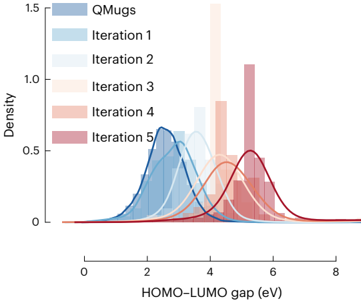
“This HOMO–LUMO gap can be predicted accurately using semi-empirical quantum mechanics (GFN2-xTB 46 ), which is computationally affordable enough for us to compute for all generated molecules (Supplementary Note 77).”
ChEMBL: a large-scale bioactivity database for drug discovery
Gaulton, A., Bellis, L. J., Bento, A. P., Chambers, J., Davies, M., Hersey, A., Light, Y., McGlinchey, S., Michalovich, D., Al-Lazikani, B., et al. (2012) · Nucleic Acids Research · doi:10.1093/nar/gkr777 · Cited by 4,382
Universal Language Model Fine-tuning for Text Classification
Howard, J., & Ruder, S. (2018) · Proceedings of the 56th Annual Meeting of the Association for Computational Linguistics (Volume 1: Long Papers) · doi:10.18653/v1/p18-1031 · Cited by 4,100 · cited 1×
“Before discussing the different applications in detail, let us first discuss how we fine-tune 23 the GPT-3 model in practice for a simple but highly non-trivial example.”
Automatic Chemical Design Using a Data-Driven Continuous Representation of Molecules
Gómez-Bombarelli, R., Wei, J. N., Duvenaud, D., Hernández-Lobato, J. M., Sánchez-Lengeling, B., Sheberla, D., Aguilera-Iparraguirre, J., Hirzel, T. D., Adams, R. P., & Aspuru-Guzik, A. (2018) · ACS Central Science · doi:10.1021/acscentsci.7b00572 · Cited by 3,106 · cited 1×
“If we have large datasets, we can train generative models such as variational autoencoders 34,35 or generative adversarial neural networks 36,37 .”
On the Opportunities and Risks of Foundation Models
Bommasani, R., Hudson, D. A., Adeli, E., Altman, R., Arora, S., von Arx, S., Bernstein, M. S., Bohg, J., Bosselut, A., Brunskill, E., et al. (2021) · arXiv · doi:10.48550/arxiv.2108.07258 · Cited by 2,676 · cited 1×
“One of the fascinating advances in machine learning has been the development of large language models (LLMs), so-called foundation models 1–6 .”
PaLM: Scaling Language Modeling with Pathways
Chowdhery, A., Narang, S., Devlin, J., Bosma, M., Mishra, G., Roberts, A., Barham, P., Chung, H. W., Sutton, C., Gehrmann, S., et al. (2022) · arXiv · doi:10.48550/arxiv.2204.02311 · Cited by 2,590
Inverse molecular design using machine learning: Generative models for matter engineering
Sanchez-Lengeling, B., & Aspuru-Guzik, A. (2018) · Science · doi:10.1126/science.aat2663 · Cited by 2,050 · cited 1×
“This is also known as inverse design 33 .”
Ertl, P., & Schuffenhauer, A. (2009) · Journal of Cheminformatics · doi:10.1186/1758-2946-1-8 · Cited by 1,939 · cited 1×
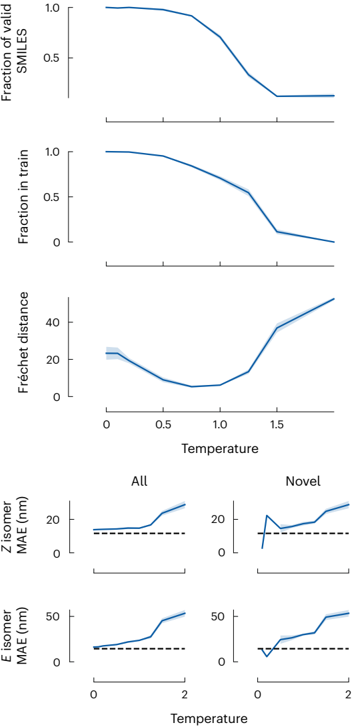
“Across all temperatures, the generated molecules seem synthesizable, as judged by a low synthetic accessibility (SA) score 44 .”
The ChEMBL bioactivity database: an update
Bento, A. P., Gaulton, A., Hersey, A., Bellis, L. J., Chambers, J., Davies, M., Krüger, F. A., Light, Y., Mak, L., McGlinchey, S., et al. (2014) · Nucleic Acids Research · doi:10.1093/nar/gkt1031 · Cited by 1,492
TabPFN: A Transformer That Solves Small Tabular Classification Problems in a SecondPreprint
Hollmann, N., Müller, S., Eggensperger, K., & Hutter, F. (2022) · arXiv · doi:10.48550/arxiv.2207.01848 · Cited by 1,263
Unsupervised word embeddings capture latent knowledge from materials science literature
Tshitoyan, V., Dagdelen, J., Weston, L., Dunn, A., Rong, Z., Kononova, O., Persson, K. A., Ceder, G., & Jain, A. (2019) · Nature · doi:10.1038/s41586-019-1335-8 · Cited by 1,123 · cited 1×
“The fact that we get good results independent of the chemical representation illustrates that these language models are very apt at extracting correlations from any text 15 .”
ESOL: Estimating Aqueous Solubility Directly from Molecular Structure
Delaney, J. S. (2004) · Journal of Chemical Information and Computer Sciences · doi:10.1021/ci034243x · Cited by 1,091
Predicting reaction performance in C–N cross-coupling using machine learning
Ahneman, D. T., Estrada, J. G., Lin, S., Dreher, S. D., & Doyle, A. G. (2018) · Science · doi:10.1126/science.aar5169 · Cited by 1,058
Training Compute-Optimal Large Language Models
Hoffmann, J., Borgeaud, S., Mensch, A., Buchatskaya, E., Cai, T., Rutherford, E., Casas, D. D. L., Hendricks, L. A., Welbl, J., Clark, A., et al. (2022) · arXiv · doi:10.48550/arxiv.2203.15556 · Cited by 929
Molecular Transformer: A Model for Uncertainty-Calibrated Chemical Reaction Prediction
Schwaller, P., Laino, T., Gaudin, T., Bolgar, P., Hunter, C. A., Bekas, C., & Lee, A. A. (2019) · ACS Central Science · doi:10.1021/acscentsci.9b00576 · Cited by 928 · cited 1×
“We have to mention that we did not optimize the fine-tuning of the GPT-3 model, that is, we did not try to optimize how a sentence is presented to the model; one can envision that specific tokenization can have better results for chemical sentences 9,16,27,28 .”
Self-citationGuacaMol: Benchmarking Models for de Novo Molecular Design
Brown, N., Fiscato, M., Segler, M. H. S., & Vaucher, A. C. (2019) · Journal of Chemical Information and Modeling · doi:10.1021/acs.jcim.8b00839 · Cited by 895
Molecular contrastive learning of representations via graph neural networks
Wang, Y., Wang, J., Cao, Z., & Barati Farimani, A. (2022) · Nature Machine Intelligence · doi:10.1038/s42256-022-00447-x · Cited by 851
Structured information extraction from scientific text with large language models
Dagdelen, J., Dunn, A., Lee, S., Walker, N., Rosen, A. S., Ceder, G., Persson, K. A., & Jain, A. (2024) · Nature Communications · doi:10.1038/s41467-024-45563-x · Cited by 771
Self-referencing embedded strings (SELFIES): A 100% robust molecular string representation
Krenn, M., Häse, F., Nigam, A., Friederich, P., & Aspuru-Guzik, A. (2020) · Machine Learning: Science and Technology · doi:10.1088/2632-2153/aba947 · Cited by 660 · cited 3×
“For machine learning applications, there has been a lot of effort to represent a chemical with unique line encodings (for example, simplified molecular-input line-entry system (SMILES) 30 or self-referencing embedded strings (SELFIES) 31,32 ).”
Understanding the diversity of the metal-organic framework ecosystem
Moosavi, S. M., Nandy, A., Jablonka, K. M., Ongari, D., Janet, J. P., Boyd, P. G., Lee, Y., Smit, B., & Kulik, H. J. (2020) · Nature Communications · doi:10.1038/s41467-020-17755-8 · Cited by 622
Self-citationSelf-referencing embedded strings (SELFIES): A 100% robust molecular string representation
Krenn, M., Häse, F., Nigam, A., Friederich, P., & Aspuru‐Guzik, A. (2020) · Repository KITopen (Karlsruhe Institute of Technology) · doi:10.5445/ir/1000128111 · Cited by 618
Galactica: A Large Language Model for Science
Taylor, R., Kardas, M., Cucurull, G., Scialom, T., Hartshorn, A., Saravia, E., Poulton, A., Kerkez, V., & Stojnic, R. (2022) · arXiv · doi:10.48550/arxiv.2211.09085 · Cited by 605
FreeSolv: a database of experimental and calculated hydration free energies, with input files
Mobley, D. L., & Guthrie, J. P. (2014) · Journal of Computer-Aided Molecular Design · doi:10.1007/s10822-014-9747-x · Cited by 517
The Pile: An 800GB Dataset of Diverse Text for Language Modeling
Gao, L., Biderman, S., Black, S., Golding, L., Hoppe, T., Foster, C., Phang, J., He, H., Thite, A., Nabeshima, N., et al. (2021) · arXiv · doi:10.48550/arxiv.2101.00027 · Cited by 492 · cited 1×
“We also performed some of our experiments by fine-tuning the GPT-J-6B model 52,53 (which has been trained on the Pile dataset 54 ) on consumer hardware using 8-bit quantization 55 and 8-bit optimizers 56 in addition to the low-rank adaptation (LoRA) technique 57 .”
A platform for automated nanomole-scale reaction screening and micromole-scale synthesis in flow
Perera, D., Tucker, J. W., Brahmbhatt, S., Helal, C. J., Chong, A., Farrell, W., Richardson, P., & Sach, N. W. (2018) · Science · doi:10.1126/science.aap9112 · Cited by 465
Scaling tree-based automated machine learning to biomedical big data with a feature set selector
Le, T. T., Fu, W., & Moore, J. H. (2020) · Bioinformatics · doi:10.1093/bioinformatics/btz470 · Cited by 460 · cited 1×
“The Automatminer then returns the best featurization and model among those that are implemented using automated machine learning with genetic programming (as implemented in the TPOT package 61 ).”
Predicting the Band Gaps of Inorganic Solids by Machine Learning
Zhuo, Y., Mansouri Tehrani, A., & Brgoch, J. (2018) · The Journal of Physical Chemistry Letters · doi:10.1021/acs.jpclett.8b00124 · Cited by 455
Dunn, A., Wang, Q., Ganose, A., Dopp, D., & Jain, A. (2020) · npj Computational Materials · doi:10.1038/s41524-020-00406-3 · Cited by 411 · cited 2×
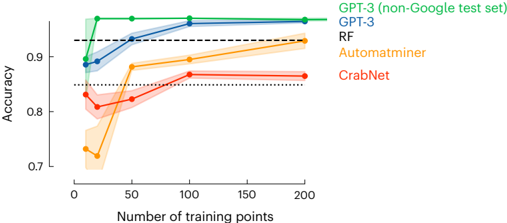
“The yellow line we obtained using the Automatminer 25 , which uses as input the chemical composition.”
Inverse design of nanoporous crystalline reticular materials with deep generative models
Yao, Z., Sánchez-Lengeling, B., Bobbitt, N. S., Bucior, B. J., Kumar, S. G. H., Collins, S. P., Burns, T., Woo, T. K., Farha, O. K., Snurr, R. Q., et al. (2021) · Nature Machine Intelligence · doi:10.1038/s42256-020-00271-1 · Cited by 400 · cited 1×
“If we have large datasets, we can train generative models such as variational autoencoders 34,35 or generative adversarial neural networks 36,37 .”
Inverse design of porous materials using artificial neural networks
Kim, B., Lee, S., & Kim, J. (2020) · Science Advances · doi:10.1126/sciadv.aax9324 · Cited by 354 · cited 1×
“If we have large datasets, we can train generative models such as variational autoencoders 34,35 or generative adversarial neural networks 36,37 .”
Fréchet ChemNet Distance: A Metric for Generative Models for Molecules in Drug Discovery
Preuer, K., Renz, P., Unterthiner, T., Hochreiter, S., & Klambauer, G. (2018) · Journal of Chemical Information and Modeling · doi:10.1021/acs.jcim.8b00234 · Cited by 343 · cited 1×
“To quantitatively capture the similarity of the distribution of the generated molecules to the ones from the training set, we compute the Fréchet ChemNet distance 64 , which quantifies both diversity and distribution match 51 and goes through a minimum at intermediate temperatures.”
Chung, Y. G., Gómez-Gualdrón, D. A., Li, P., Leperi, K. T., Deria, P., Zhang, H., Vermeulen, N. A., Stoddart, J. F., You, F., Hupp, J. T., et al. (2016) · Science Advances · doi:10.1126/sciadv.1600909 · Cited by 321
Visualization of very large high-dimensional data sets as minimum spanning trees
Probst, D., & Reymond, J.-L. (2020) · Journal of Cheminformatics · doi:10.1186/s13321-020-0416-x · Cited by 295
Transformer-CNN: Swiss knife for QSAR modeling and interpretation
Karpov, P., Godin, G., & Tetko, I. V. (2020) · Journal of Cheminformatics · doi:10.1186/s13321-020-00423-w · Cited by 262 · cited 1×
“It is important to realize that while language models have been used in chemistry before to predict properties 14–17 or design molecules 18–20 , they have conventionally been pre-trained on chemistry-specific tasks.”
SELFIES and the future of molecular string representations
Krenn, M., Ai, Q., Barthel, S., Carson, N., Frei, A., Frey, N. C., Friederich, P., Gaudin, T., Gayle, A. A., Jablonka, K. M., et al. (2022) · Patterns · doi:10.1016/j.patter.2022.100588 · Cited by 261 · cited 1×
“For machine learning applications, there has been a lot of effort to represent a chemical with unique line encodings (for example, simplified molecular-input line-entry system (SMILES) 30 or self-referencing embedded strings (SELFIES) 31,32 ).”
Self-citationCompositionally restricted attention-based network for materials property predictions
Wang, A. Y.-T., Kauwe, S. K., Murdock, R. J., & Sparks, T. D. (2021) · npj Computational Materials · doi:10.1038/s41524-021-00545-1 · Cited by 260 · cited 1×
“We additionally tested a neural network, CrabNet (red line, default settings) 62 , that performs well using compositions as input.”
Dunn, A., Wang, Q., Ganose, A. M., Dopp, D., & Jain, A. (2020) · eScholarship (California Digital Library) · Cited by 257
Nagasawa, S., Al-Naamani, E., & Saeki, A. (2018) · The Journal of Physical Chemistry Letters · doi:10.1021/acs.jpclett.8b00635 · Cited by 236
Pei, Z., Yin, J., Hawk, J. A., Alman, D. E., & Gao, M. C. (2020) · npj Computational Materials · doi:10.1038/s41524-020-0308-7 · Cited by 221
Born, J., & Manica, M. (2023) · Nature Machine Intelligence · doi:10.1038/s42256-023-00639-z · Cited by 220 · cited 1×
“We have to mention that we did not optimize the fine-tuning of the GPT-3 model, that is, we did not try to optimize how a sentence is presented to the model; one can envision that specific tokenization can have better results for chemical sentences 9,16,27,28 .”
Jablonka, K. M., Ai, Q., Al-Feghali, A., Badhwar, S., Bocarsly, J. D., Bran, A. M., Bringuier, S., Brinson, L. C., Choudhary, K., Circi, D., et al. (2023) · Digital Discovery · doi:10.1039/d3dd00113j · Cited by 218 · cited 1×
“From a scientific point of view, the most striking examples are that these foundation models can write sensible abstracts for scientific articles or even code for particular programming tasks 7–12 .”
Self-citationLee, S., Kim, B., Cho, H., Lee, H., Lee, S. Y., Cho, E. S., & Kim, J. (2021) · ACS Applied Materials & Interfaces · doi:10.1021/acsami.1c02471 · Cited by 213 · cited 1×
“Without large datasets, evolutionary techniques such as genetic algorithms can generate novel, potentially interesting molecules 38–41 .”
Bias free multiobjective active learning for materials design and discovery
Jablonka, K. M., Jothiappan, G. M., Wang, S., Smit, B., & Yoo, B. (2021) · Nature Communications · doi:10.1038/s41467-021-22437-0 · Cited by 198 · cited 2×
“45.”
Self-citationA probabilistic molecular fingerprint for big data settings
Probst, D., & Reymond, J.-L. (2018) · Journal of Cheminformatics · doi:10.1186/s13321-018-0321-8 · Cited by 186 · cited 1×
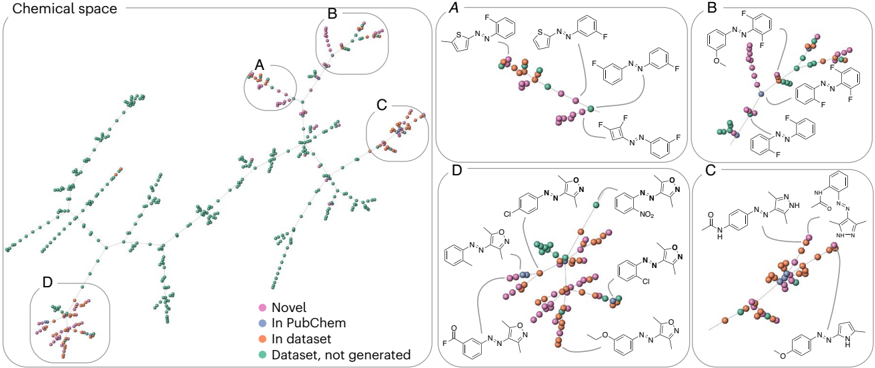
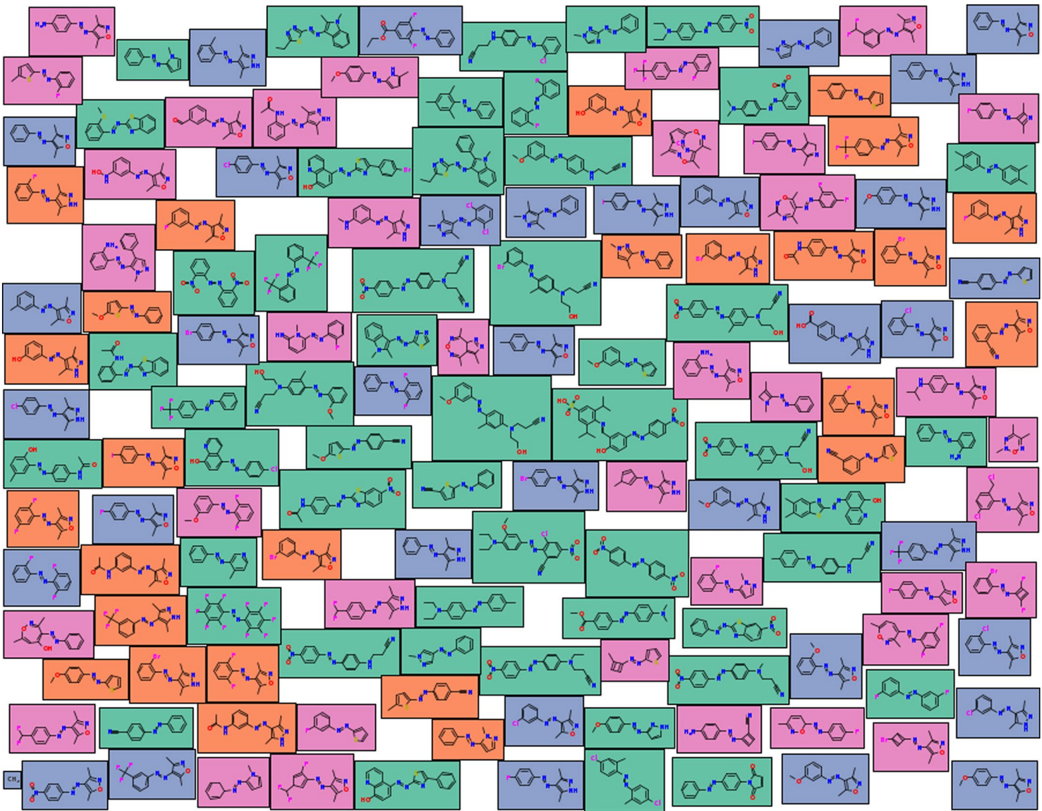
“For this visualization, we used the TMAP 65 algorithm on photoswitch molecules described using MinHash fingerprint with 2,048 permutations 66 .”
Augmenting Genetic Algorithms with Deep Neural Networks for Exploring the Chemical SpacePreprint
Nigam, A., Friederich, P., Krenn, M., & Aspuru‐Guzik, A. (2019) · arXiv (Cornell University) · doi:10.48550/arxiv.1909.11655 · Cited by 180 · cited 1×
“Without large datasets, evolutionary techniques such as genetic algorithms can generate novel, potentially interesting molecules 38–41 .”
iRASPA: GPU-accelerated visualization software for materials scientists
Dubbeldam, D., Calero, S., & Vlugt, T. J. H. (2018) · Molecular Simulation · doi:10.1080/08927022.2018.1426855 · Cited by 178
Reaction classification and yield prediction using the differential reaction fingerprint DRFP
Probst, D., Schwaller, P., & Reymond, J.-L. (2022) · Digital Discovery · doi:10.1039/d1dd00006c · Cited by 178
Self-citationLanguage models can learn complex molecular distributions
Flam-Shepherd, D., Zhu, K., & Aspuru-Guzik, A. (2022) · Nature Communications · doi:10.1038/s41467-022-30839-x · Cited by 173
Translation between Molecules and Natural Language
Edwards, C., Lai, T., Ros, K., Honke, G., Cho, K., & Ji, H. (2022) · Proceedings of the 2022 Conference on Empirical Methods in Natural Language Processing · doi:10.18653/v1/2022.emnlp-main.26 · Cited by 165
Why Can GPT Learn In-Context? Language Models Secretly Perform Gradient Descent as Meta-Optimizers
Dai, D., Sun, Y., Dong, L., Hao, Y., Ma, S., Sui, Z., & Wei, F. (2023) · Findings of the Association for Computational Linguistics: ACL 2023 · doi:10.18653/v1/2023.findings-acl.247 · Cited by 154
QMugs, quantum mechanical properties of drug-like molecules
Isert, C., Atz, K., Jiménez-Luna, J., & Schneider, G. (2022) · Scientific Data · doi:10.1038/s41597-022-01390-7 · Cited by 144 · cited 1×
“Moreover, the QMugs dataset 47,48 has listed these HOMO–LUMO calculations for 665,000 molecules.”
A data-science approach to predict the heat capacity of nanoporous materials
Moosavi, S. M., Novotny, B. Á., Ongari, D., Moubarak, E., Asgari, M., Kadioglu, Ö., Charalambous, C., Ortega‐Guerrero, A., Farmahini, A. H., Sarkisov, L., et al. (2022) · Nature Materials · doi:10.1038/s41563-022-01374-3 · Cited by 133
Self-citationChemical language models for de novo drug design: Challenges and opportunities
Grisoni, F. (2023) · Current Opinion in Structural Biology · doi:10.1016/j.sbi.2023.102527 · Cited by 126 · cited 1×
“It is important to realize that while language models have been used in chemistry before to predict properties 14–17 or design molecules 18–20 , they have conventionally been pre-trained on chemistry-specific tasks.”
Assessment of chemistry knowledge in large language models that generate code
White, A. D., Hocky, G. M., Gandhi, H. A., Ansari, M., Cox, S., Wellawatte, G. P., Sasmal, S., Yang, Z., Liu, K., Singh, Y., et al. (2023) · Digital Discovery · doi:10.1039/d2dd00087c · Cited by 108 · cited 2×
“We obtain a similar conclusion for other regression problems (see Supplementary Note 10) and imbalanced classification cases (Supplementary Note 6.8).”
InfluentialMaterials design by evolutionary optimization of functional groups in metal-organic frameworks
Collins, S. P., Daff, T. D., Piotrkowski, S. S., & Woo, T. K. (2016) · Science Advances · doi:10.1126/sciadv.1600954 · Cited by 107 · cited 1×
“Those evolutionary methods work best if one can limit the underlying chemistry; for example, finding the optimal functional group on a material with a well-defined backbone 42 .”
Winter, B., Winter, C., Schilling, J., & Bardow, A. (2022) · Digital Discovery · doi:10.1039/d2dd00058j · Cited by 93 · cited 1×
“We have to mention that we did not optimize the fine-tuning of the GPT-3 model, that is, we did not try to optimize how a sentence is presented to the model; one can envision that specific tokenization can have better results for chemical sentences 9,16,27,28 .”
High-throughput property-driven generative design of functional organic molecules
Westermayr, J., Gilkes, J., Barrett, R., & Maurer, R. J. (2023) · Nature Computational Science · doi:10.1038/s43588-022-00391-1 · Cited by 92 · cited 1×
“These findings inspired us to do an inverse design experiment to design molecules with properties that take us far from the training set 49 .”
Making the collective knowledge of chemistry open and machine actionable
Jablonka, K. M., Patiny, L., & Smit, B. (2022) · Nature Chemistry · doi:10.1038/s41557-022-00910-7 · Cited by 85 · cited 1×
“It is also important to mention that while the training corpus contains chemistry information, many, if not most, scientific articles and results (including all failed or partially successful experiments 50 ) have not been seen by GPT-3.”
Self-citationSELFormer: molecular representation learning via SELFIES language models
Yüksel, A., Ulusoy, E., Ünlü, A., & Doğan, T. (2023) · Machine Learning: Science and Technology · doi:10.1088/2632-2153/acdb30 · Cited by 81 · cited 1×
“It is important to realize that while language models have been used in chemistry before to predict properties 14–17 or design molecules 18–20 , they have conventionally been pre-trained on chemistry-specific tasks.”
Data-driven discovery of molecular photoswitches with multioutput Gaussian processes
Griffiths, R., Greenfield, J. L., Thawani, A. R., Jamasb, A. R., Moss, H. B., Bourached, A., Jones, P., McCorkindale, W., Aldrick, A. A., Fuchter, M. J., et al. (2022) · Chemical Science · doi:10.1039/d2sc04306h · Cited by 80 · cited 3×
“43 way the GPT-3 model knows about the properties or representations of the coarse-grained polymers, it is interesting to see if we can get any sensible result if we ask the question ‘What is the adsorption free energy of coarse-grained dispersant AAAABBBBDDDDAAAACCCC’ or as inverse design, ‘Give…”
InfluentialBreuck, P.-P. D., Evans, M. L., & Rignanese, G. (2021) · Journal of Physics Condensed Matter · doi:10.1088/1361-648x/ac1280 · Cited by 67
LIFT: Language-Interfaced Fine-Tuning for Non-Language Machine Learning Tasks
Dinh, T., Zeng, Y., Zhang, R., Lin, Z., Gira, M., Rajput, S., Sohn, J.-Y., Papailiopoulos, D., & Lee, K. (2022) · arXiv · doi:10.48550/arxiv.2206.06565 · Cited by 67 · cited 1×
“Recently, it has been shown that these models can also solve relatively simple tabular regression and classification tasks 13 .”
Structured information extraction from complex scientific text with fine-tuned large language models
Dunn, A., Dagdelen, J., Walker, N., Lee, S., Rosen, A. S., Ceder, G., Persson, K., & Jain, A. (2022) · arXiv · doi:10.48550/arxiv.2212.05238 · Cited by 67 · cited 2×
“For example, for the Henry coefficient of a material, an accuracy of 1% (or a certain number of decimal points) is sufficient for most applications (see Supplementary Note 10 for discussion on this error source).”
InfluentialChemNLP: A Natural Language-Processing-Based Library for Materials Chemistry Text Data
Choudhary, K. K., & Kelley, M. L. (2023) · The Journal of Physical Chemistry C · doi:10.1021/acs.jpcc.3c03106 · Cited by 65
The Molecule Cloud - compact visualization of large collections of molecules
Ertl, P., & Rohde, B. (2012) · Journal of Cheminformatics · doi:10.1186/1758-2946-4-12 · Cited by 64
Hocky, G. M., & White, A. D. (2022) · Digital Discovery · doi:10.1039/d1dd00009h · Cited by 59 · cited 2×
“From a scientific point of view, the most striking examples are that these foundation models can write sensible abstracts for scientific articles or even code for particular programming tasks 7–12 .”
GEN: highly efficient SMILES explorer using autodidactic generative examination networks
van Deursen, R., Ertl, P., Tetko, I. V., & Godin, G. (2020) · Journal of Cheminformatics · doi:10.1186/s13321-020-00425-8 · Cited by 56 · cited 1×
“It is important to realize that while language models have been used in chemistry before to predict properties 14–17 or design molecules 18–20 , they have conventionally been pre-trained on chemistry-specific tasks.”
LIFT: Language-Interfaced Fine-Tuning for Non-Language Machine Learning Tasks
Dinh, T., Zeng, Y., Zhang, R., Lin, Z., Gira, M., Rajput, S., Sohn, J.-Y., Papailiopoulos, D., & Lee, K. (2022) · neural information processing systems · doi:10.52202/068431-0855 · Cited by 53
Predicting performance limits of methane gas storage in zeolites with an artificial neural network
Lee, S., Kim, B., & Kim, J. (2019) · Journal of Materials Chemistry A · doi:10.1039/c8ta12208c · Cited by 40 · cited 1×
“If we have large datasets, we can train generative models such as variational autoencoders 34,35 or generative adversarial neural networks 36,37 .”
Bayesian Optimization of Catalysis With In-Context LearningPreprint
Ramos, M. C., Michtavy, S. S., Porosoff, M. D., et al. (2023) · arXiv (Cornell University) · doi:10.48550/arxiv.2304.05341 · Cited by 33 · cited 1×
“Note that this task-specific fine-tuning makes the models less dependent on the prompt structure than in-context learning 21,22 .”
Why Can GPT Learn In-Context? Language Models Implicitly Perform Gradient Descent as Meta-Optimizers
Dai, D., Sun, Y., Dong, L., Hao, Y., Ma, S., Sui, Z., & Wei, F. (2022) · arXiv · doi:10.48550/arxiv.2212.10559 · Cited by 31 · cited 1×
“Importantly, we are also not limited to fine-tuning; in Supplementary Note 5, we show that we can even achieve good performance without fine-tuning by incorporating examples directly into the prompt (so-called in-context learning 5,29 , that is, learning during inference time).”
Jablonka, K. M., Ai, Q., Al‐Feghali, A., Badhwar, S., Bocarsly, J. D., Bran, A. M., Bringuier, S. A., Brinson, L. C., Choudhary, K. K., Çırcı, D., et al. (2023) · PubMed · doi:10.25418/crick.24297949.v1 · Cited by 29
Self-citationSELFIES and the future of molecular string representations
Krenn, M., Ai, Q., Barthel, S., Carson, N., Frei, A., Frey, N. C., Friederich, P., Gaudin, T., Gayle, A. A., Jablonka, K. M., et al. (2022) · White Rose Research Online (University of Leeds, The University of Sheffield, University of York) · doi:10.48550/arxiv.2204.00056 · Cited by 22 · cited 1×
“For machine learning applications, there has been a lot of effort to represent a chemical with unique line encodings (for example, simplified molecular-input line-entry system (SMILES) 30 or self-referencing embedded strings (SELFIES) 31,32 ).”
Self-citationQMugs: Quantum Mechanical Properties of Drug-like MoleculesPreprint
Isert, C., Atz, K., Jiménez-Luna, J., & Schneider, G. (2021) · arXiv (Cornell University) · doi:10.3929/ethz-b-000482129 · Cited by 7
Jablonka, K. M., Mcilwaine, F., Garcia, S., Smit, B., & Yoo, B. (2021) · arXiv (Cornell University) · doi:10.48550/arxiv.2102.00700 · Cited by 3
Self-citationJablonka, K. M. (2023) · Zenodo (CERN European Organization for Nuclear Research) · doi:10.5281/zenodo.10233421 · Cited by 1
Self-citationkjappelbaum/gptchem: initial release
Jablonka, K. M., & Ben (2023) · Zenodo (CERN European Organization for Nuclear Research) · doi:10.5281/zenodo.7806671 · Cited by 1
Self-citationWhat can Large Language Models do in chemistry? A comprehensive benchmark on eight tasks
Guo, T., Guo, K., Nan, B., Liang, Z., Guo, Z., Chawla, N. V., Wiest, O., & Zhang, X. (2023) · arXiv · doi:10.48550/arxiv.2305.18365 · cited 1×
“Note that this task-specific fine-tuning makes the models less dependent on the prompt structure than in-context learning 21,22 .”
Research works printed but not linked: 7
- Goldblum, M., Finzi, M., Rowan, K. & Wilson, A. The no free lunch theorem, Kolmogorov complexity, and the role of inductive biases in machine learning. ICLR 2024 Conference, OpenReview https://openreview.net/forum?id=X7nz6ljg9Y (2023).
- Dettmers, T., Lewis, M., Belkada, Y. & Zettlemoyer, L. GPT3.int8(): 8-bit matrix multiplication for transformers at scale. Adv. Neural Inf. Process. Syst. 35, 30318-30332 (2022).
- Dettmers, T., Lewis, M., Shleifer, S. & Zettlemoyer, L. 8-bit optimizers via block-wise quantization. in The Tenth International Conference on Learning Representations (2022).
- Hu, E. J. et al. LoRA: low-rank adaptation of large language models. in International Conference On Learning Representations (2021).
- Griffiths, R.-R. et al. Gauche: a library for Gaussian processes in chemistry. in ICML 2022 2nd AI for Science Workshop https:// openreview.net/forum?id=i9MKI7zrWal (2022)
- Radford, A. et al. Language models are unsupervised multitask learners. OpenAI blog 1, 9 (2019).
- Kawazoe, Y., Yu, J.-Z., Tsai, A.-P. & Masumoto, T. (eds) Nonequilibrium Phase Diagrams of Ternary Amorphous Alloys Landolt-Börnstein: Numerical Data and Functional Relationships in Science and Technology-New Series (Springer, 2006).
Cited by
Autonomous chemical research with large language models
Boiko, D. A., MacKnight, R., Kline, B., & Gomes, G. (2023) · Nature · doi:10.1038/s41586-023-06792-0 · Cited by 1,050
“These models have been successfully applied to various domains, including natural language 1–5 , biological 6,7 and chemical research 8–10 as well as code generation 11,12 .”
Augmenting large language models with chemistry tools
M. Bran, A., Cox, S., Schilter, O., Baldassari, C., White, A. D., & Schwaller, P. (2024) · Nature Machine Intelligence · doi:10.1038/s42256-024-00832-8 · Cited by 794
“Although most tools are developed by the open-source community or made accessible through application programming interfaces (API), their integration and interoperability pose considerable challenges for experimental chemists, mainly due to their lack of computational skill set and the diversity of…”
BackgroundMethodSelf-citationArtificial intelligence in drug development
Zhang, K., Yang, X., Wang, Y., Yu, Y., Huang, N., Li, G., Li, X., Wu, J. C., & Yang, S. (2025) · Nature Medicine · doi:10.1038/s41591-024-03434-4 · Cited by 498
A Comprehensive Survey on Deep Graph Representation Learning
Ju, W., Fang, Z., Gu, Y., Liu, Z., Long, Q., Qiao, Z., Qin, Y., Shen, J., Sun, F., Xiao, Z., et al. (2024) · Neural Networks · doi:10.1016/j.neunet.2024.106207 · Cited by 341
Empowering biomedical discovery with AI agents
Gao, S., Fang, A., Huang, Y., Giunchiglia, V., Noori, A., Schwarz, J. R., Ektefaie, Y., Kondic, J., & Zitnik, M. (2024) · Cell · doi:10.1016/j.cell.2024.09.022 · Cited by 315
Metadata
- Authors
- Jablonka, K. M., Schwaller, P., Ortega-Guerrero, A., & Smit, B.
- Affiliations
- Helmholtz Institute Jena (DE)
- École Polytechnique Fédérale de Lausanne (CH)
- Corresponding author
- Smit, Berend
- Venue
- Nature Machine Intelligence
- Published
- 2024-02-06
- Volume
- 6
- Issue
- 2
- Pages
- 161-169
- ISSN
- 2522-5839 (ISSN-L)
- OpenAlex
- W4391561379
- Cited by
- 378
- References
- 75
- Citations by year
- 2026: 121 · 2025: 178 · 2024: 77
- FWCI
- 36.62
- Type
- journal article
- Language
- en
- Open access
- hybrid
- doi.org
- Licence
- cc-by
- creativecommons.org/licenses/by/4.0 (tdm)
- creativecommons.org/licenses/by/4.0 (vor)
- Locations
- Nature Machine Intelligence (publishedVersion, cc-by)
- ChemRxiv (acceptedVersion, cc-by)
- HZB Repository (Helmholtz-Zentrum Berlin für Materialien und Energie GmbH (HZB)) (submittedVersion, other-oa)
- Infoscience (Ecole Polytechnique Fédérale de Lausanne) (submittedVersion, cc-by-nc-nd)
- Funders
- National Science Foundation
- Carl-Zeiss-Stiftung
- Grantham Foundation for the Protection of the Environment
- École Polytechnique Fédérale de Lausanne
- Schweizerischer Nationalfonds zur Förderung der Wissenschaftlichen Forschung (180544, 51NF40, 182892, (51NF40-182892).)
- NCCR Catalysis
- Topics
- Physical Sciences › Materials Science › Materials Chemistry › Machine Learning in Materials Science
- Life Sciences › Pharmacology, Toxicology and Pharmaceutics › Drug Discovery › Computational Drug Discovery Methods
- Social Sciences › Arts and Humanities › History and Philosophy of Science › History and advancements in chemistry
- Keywords
- large language models, GPT-3, fine-tuning, inverse design, molecular property prediction, reaction yield prediction, foundation models, literature searching
About these checks
Registry, retraction, Cites and statistics results are computed, not judged, with one exception: a printed reference that no index lists is read once by a model before it counts as a citation error. Claims are extracted by a model and kept only when their quote appears verbatim in the text; each cited source is then checked, with a model’s help, for whether it says what the claim relies on. Those verdicts can be wrong — read the claim’s quote and the cited source before relying on one.
Statistics and arithmetic are recomputed, not judged.
Confidence bands are shown only for fields calibrated on our annotated test set. None is calibrated yet, so no band is shown.
What counts as a claim ›How we measure confidence ›How we check this ›
Are you an author, or do you see a problem with this page? Request a review
Data sources
Bibliographic data: Semantic Scholar, OpenAlex, Crossref.
Contains information from the Semantic Scholar Academic Graph Datasets, made available under the ODC Attribution License (ODC-BY 1.0).
Semantic Scholar’s data is described in: Kinney, R., et al. (2023). The Semantic Scholar Open Data Platform. arXiv:2301.10140.
