

Augmenting large language models with chemistry tools
Open accessThe DOI matches its Crossref record; 91 of the 91 references it cites were found in a registry or an index.
Abstract
Large language models (LLMs) have shown strong performance in tasks across domains but struggle with chemistry-related problems. These models also lack access to external knowledge sources, limiting their usefulness in scientific applications. We introduce ChemCrow, an LLM chemistry agent designed to accomplish tasks across organic synthesis, drug discovery and materials design. By integrating 18 expert-designed tools and using GPT-4 as the LLM, ChemCrow augments the LLM performance in chemistry, and new capabilities emerge. Our agent autonomously planned and executed the syntheses of an insect repellent and three organocatalysts and guided the discovery of a novel chromophore. Our evaluation, including both LLM and expert assessments, demonstrates ChemCrow’s effectiveness in automating a diverse set of chemical tasks. Our work not only aids expert chemists and lowers barriers for non-experts but also fosters scientific advancement by bridging the gap between experimental and computational chemistry.
Overview
The claims and statistics of this paper haven’t been checked yet.
Free: it reads the open-access text and checks the first 5 claims that cite a source we can check. Create a free account to check every claim.
Integrity signals
Registry
Cites
Statistics
Figures
Verification
Claims the paper makes
The claims and statistics of this paper haven’t been checked yet.
Free: it reads the open-access text and checks the first 5 claims that cite a source we can check. Create a free account to check every claim.
Claims other papers make about this one
Each is checked against this paper’s own text: does it say what the citing paper says it does?
The source backs part of the claim, not all of it — or backs it for a different population, condition or comparison.
In the citing paper
“In parallel, chemistry-oriented reviews have shown that large language models can move beyond text generation toward tool use, retrieval, planning, code execution, and multi-agent coordination [5-10].”
From From Scientific Copilots to Tool-Grounded Autonomy: AI Agents in Simulation-Driven Materials Discovery (2026) · cites this paper as [7]
Experimental — accuracy not yet measuredThe source backs part of the claim, not all of it — or backs it for a different population, condition or comparison.
In the citing paper
“The broader literature on autonomous scientific systems has already argued for more rigorous evaluation protocols and transparent tool interfaces [3,5,7-12].”
From From Scientific Copilots to Tool-Grounded Autonomy: AI Agents in Simulation-Driven Materials Discovery (2026) · cites this paper as [7]
Experimental — accuracy not yet measuredThe source backs part of the claim, not all of it — or backs it for a different population, condition or comparison.
In the citing paper
“In scientific discovery, agents dynamically compose and execute hypothesis-testing pipelines spanning simulations, lab protocols, and data analysis [61, 62, 63, 64].”
From Code as Agent Harness (2026) · cites this paper as [61]
Experimental — accuracy not yet measuredThe source backs part of the claim, not all of it — or backs it for a different population, condition or comparison.
In the citing paper
“ChemCrow [61] similarly integrates RDKit, retrosynthesis engines, and reaction predictors so that an agent can 'execute' a candidate synthesis virtually before committing to a wet-lab run.”
From Code as Agent Harness (2026) · cites this paper as [61]
Experimental — accuracy not yet measuredThe source backs part of the claim, not all of it — or backs it for a different population, condition or comparison.
In the citing paper
“In chemistry, language-model tools, yield predictors, Bayesian optimization, and robotic laboratories provide complementary components for selecting and testing reactions [28, 42-46].”
From RSI-Anything: Unlocking Recursive Self-Improvement with World Models (2026) · cites this paper as [43]
Experimental — accuracy not yet measured
5 more claims about this paper
Create a free account to see every claim other papers make about this one.
Self-check
Percentages, sums and reported differences re-computed from the paper’s own numbers.
The self-check needs the paper’s full text.
Citations
Cites
Vaswani, A., Shazeer, N., Parmar, N., Uszkoreit, J., Jones, L., Gomez, A. N., Kaiser, L., & Polosukhin, I. (2017) · arXiv · doi:10.48550/arxiv.1706.03762 · Cited by 120,404 · cited 1×
“These specialized tools provide exact answers, thereby compensating for the inherent deficiencies of LLMs in specific domains and enhancing their overall performance and applicability.”
BackgroundLanguage Models are Few-Shot Learners
Brown, T. B., Mann, B., Ryder, N., Subbiah, M., Kaplan, J., Dhariwal, P., Neelakantan, A., Shyam, P., Sastry, G., Askell, A., et al. (2020) · arXiv · doi:10.48550/arxiv.2005.14165 · Cited by 23,372 · cited 1×
“…as a field, has been impacted through expert-designed artificial intelligence (AI) systems that tackle specific problems, such as reaction prediction 16–20 , retrosynthesis planning 21–27 , molecular property prediction 28–32 , de-novo molecular generation 33,34 , materials design 35,36 and,…”
BackgroundExtended-Connectivity Fingerprints
Rogers, D., & Hahn, M. (2010) · Journal of Chemical Information and Modeling · doi:10.1021/ci100050t · Cited by 7,524 · cited 1×
“Similarity The primary function of this tool is to evaluate the similarity between two molecules, utilizing the Tanimoto similarity measure 90 based on the ECFP2 molecular fingerprints 91 of the input molecules.”
MethodThe National Center for Biotechnology Information
Benson, D., Boguski, M., Lipman, D. J., & Ostell, J. (1990) · Genomics · doi:10.1016/0888-7543(90)90583-g · Cited by 5,126
LLaMA: Open and Efficient Foundation Language Models
Touvron, H., Lavril, T., Izacard, G., Martinet, X., Lachaux, M.-A., Lacroix, T., Rozière, B., Goyal, N., Hambro, E., Azhar, F., et al. (2023) · arXiv · doi:10.48550/arxiv.2302.13971 · Cited by 4,602 · cited 1×
“…is the lack of reproducibility of individual results under the current API-based approach to LLMs, as closed-source models provide limited control, see Appendix E. Recent open-source models 76–78 offer a potential solution to this issue, albeit with a possible trade-off in reasoning power.”
BackgroundChain-Of-Thought Prompting Elicits Reasoning in Large Language Models
Wei, J., Wang, X., Schuurmans, D., Bosma, M., Ichter, B., Xia, F., Chi, E., Le, Q. V., & Zhou, D. (2022) · Advances in Neural Information Processing Systems 35 · doi:10.52202/068431-1800 · Cited by 4,505
Chain-of-Thought Prompting Elicits Reasoning in Large Language Models
Wei, J., Wang, X., Schuurmans, D., Bosma, M., Ichter, B., Xia, F., Chi, E., Le, Q., & Zhou, D. (2022) · arXiv · doi:10.48550/arxiv.2201.11903 · Cited by 4,263 · cited 1×
“The tools used can be classified into general tools, molecular tools, and chemical reaction tools.”
MethodBillion-scale similarity search with GPUs
Johnson, J., Douze, M., & Jegou, H. (2021) · IEEE Transactions on Big Data · doi:10.1109/tbdata.2019.2921572 · Cited by 4,228
Training language models to follow instructions with human feedback
Ouyang, L., Wu, J., Jiang, X., Almeida, D., Wainwright, C. L., Mishkin, P., Zhang, C., Agarwal, S., Slama, K., Ray, A., et al. (2022) · arXiv · doi:10.48550/arxiv.2203.02155 · Cited by 4,208 · cited 2×
“5 13 cannot consistently and accurately multiply 12345*98765 or convert IUPAC names into the corresponding molecular graph 14 .”
BackgroundBillion-scale similarity search with GPUs
Johnson, J., Douze, M., & Jégou, H. (2017) · arXiv · doi:10.48550/arxiv.1702.08734 · Cited by 4,140 · cited 1×
“The CAS number serves as a precise and universally recognized chemical identifier, enabling researchers to access relevant data and resources with ease, and ensuring that they obtain accurate and consistent information about the target molecule 89 .”
BackgroundMoleculeNet: a benchmark for molecular machine learning
Wu, Z., Ramsundar, B., Feinberg, E. N., Gomes, J., Geniesse, C., Pappu, A. S., Leswing, K., & Pande, V. (2018) · Chemical Science · doi:10.1039/c7sc02664a · Cited by 3,107 · cited 1×
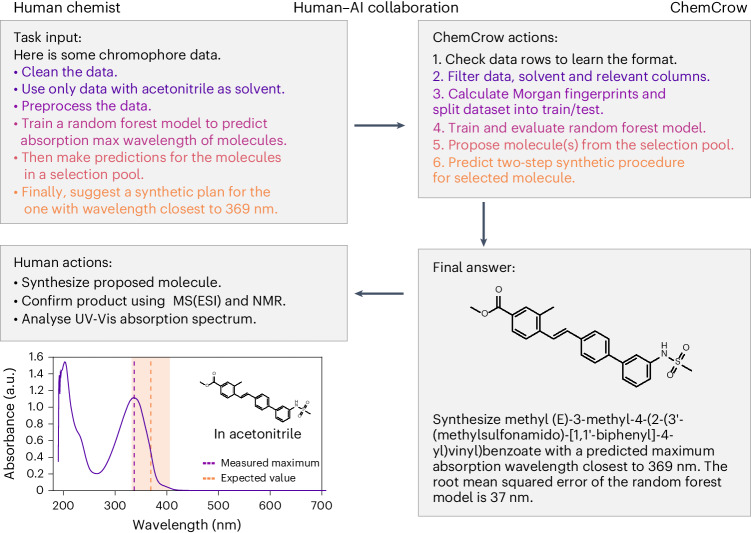
“• Train a random forest model to predict absorption max wavelength of molecules.”
MethodAutomatic Chemical Design Using a Data-Driven Continuous Representation of Molecules
Gómez-Bombarelli, R., Wei, J. N., Duvenaud, D., Hernández-Lobato, J. M., Sánchez-Lengeling, B., Sheberla, D., Aguilera-Iparraguirre, J., Hirzel, T. D., Adams, R. P., & Aspuru-Guzik, A. (2018) · ACS Central Science · doi:10.1021/acscentsci.7b00572 · Cited by 3,106 · cited 1×
“…expert-designed artificial intelligence (AI) systems that tackle specific problems, such as reaction prediction 16–20 , retrosynthesis planning 21–27 , molecular property prediction 28–32 , de-novo molecular generation 33,34 , materials design 35,36 and, more recently, Bayesian Optimization 37–39 .”
BackgroundOn the Opportunities and Risks of Foundation Models
Bommasani, R., Hudson, D. A., Adeli, E., Altman, R., Arora, S., von Arx, S., Bernstein, M. S., Bohg, J., Bosselut, A., Brunskill, E., et al. (2021) · arXiv · doi:10.48550/arxiv.2108.07258 · Cited by 2,676
PaLM: Scaling Language Modeling with Pathways
Chowdhery, A., Narang, S., Devlin, J., Bosma, M., Mishra, G., Roberts, A., Barham, P., Chung, H. W., Sutton, C., Gehrmann, S., et al. (2022) · arXiv · doi:10.48550/arxiv.2204.02311 · Cited by 2,590
GPTs are GPTs: An Early Look at the Labor Market Impact Potential of Large Language Models
Eloundou, T., Manning, S., Mishkin, P., & Rock, D. (2023) · arXiv · doi:10.48550/arxiv.2303.10130 · Cited by 2,330 · cited 1×
“• Then make predictions for the molecules in a selection pool.”
BackgroundAnalyzing Learned Molecular Representations for Property Prediction
Yang, K., Swanson, K., Jin, W., Coley, C., Eiden, P., Gao, H., Guzman-Perez, A., Hopper, T., Kelley, B., Mathea, M., et al. (2019) · Journal of Chemical Information and Modeling · doi:10.1021/acs.jcim.9b00237 · Cited by 1,923
Analysis of the reactions used for the preparation of drug candidate molecules
Carey, J. S., Laffan, D., Thomson, C., & Williams, M. T. (2006) · Organic & Biomolecular Chemistry · doi:10.1039/b602413k · Cited by 1,915 · cited 1×
“The classification code corresponds to a position in the hierarchy proposed by Carey, Laffan, Thomson, and Williams 101 .”
BackgroundPlanning chemical syntheses with deep neural networks and symbolic AI
Segler, M. H. S., Preuss, M., & Waller, M. P. (2018) · Nature · doi:10.1038/nature25978 · Cited by 1,847
Automatic Chemical Design Using a Data-Driven Continuous Representation of Molecules.
Gómez‐Bombarelli, R., Wei, J. N., Duvenaud, D., Hernández-Lobato, J. M., Sánchez-Lengeling, B., Sheberla, D., Aguilera‐Iparraguirre, J., Hirzel, T. D., Adams, R. P., & Aspuru‐Guzik, A. (2018) · Cambridge University Engineering Department Publications Database · doi:10.17863/cam.34134 · Cited by 1,703
Sparks of Artificial General Intelligence: Early experiments with GPT-4
Bubeck, S., Chandrasekaran, V., Eldan, R., Gehrke, J., Horvitz, E., Kamar, E., Lee, P., Lee, Y. T., Li, Y., Lundberg, S., et al. (2023) · arXiv · doi:10.48550/arxiv.2303.12712 · Cited by 1,526 · cited 3×
“GPT-4 has been recently presented and used as a self-evaluation method 5,62 , but these results indicate that when it lacks the required understanding to answer a prompt, it also lacks information to evaluate the prompt completions and thus fails to provide a trustworthy assessment, rendering it…”
BackgroundMethodOkino, T., Hoashi, Y., & Takemoto, Y. (2003) · Journal of the American Chemical Society · doi:10.1021/ja036972z · Cited by 1,430 · cited 5×
“React (1R,2R)-(-)-2-isothiocyanato-4,4-dimethyl-3-oxasilinane with N-Boc-3,5-bis(trifluoromethyl)phenyl thiourea in the presence of a suitable base, such as triethylamine, in anhydrous DCM to yield the protected Takemoto’s organocatalyst.”
MethodInfluentialToolformer: Language Models Can Teach Themselves to Use Tools
Schick, T., Dwivedi-Yu, J., Dessì, R., Raileanu, R., Lomeli, M., Zettlemoyer, L., Cancedda, N., & Scialom, T. (2023) · arXiv · doi:10.48550/arxiv.2302.04761 · Cited by 1,150 · cited 5×
“Chemistry, as a field, has been impacted through expert-designed artificial intelligence (AI) systems that tackle specific problems, such as reaction prediction 16–20 , retrosynthesis planning 21–27 , molecular property prediction 28–32 , de-novo molecular generation 33,34 , materials design 35,36 and, more recently,…”
BackgroundMethodInfluentialDeepTox: toxicity prediction using deep learning
Mayr, A., Klambauer, G., Unterthiner, T., & Hochreiter, S. (2016) · Frontiers in Environmental Science · doi:10.3389/fenvs.2015.00080 · Cited by 1,081 · cited 1×
“…expert-designed artificial intelligence (AI) systems that tackle specific problems, such as reaction prediction 16–20 , retrosynthesis planning 21–27 , molecular property prediction 28–32 , de-novo molecular generation 33,34 , materials design 35,36 and, more recently, Bayesian Optimization 37–39 .”
BackgroundBayesian reaction optimization as a tool for chemical synthesis
Shields, B. J., Stevens, J., Li, J., Parasram, M., Damani, F., Alvarado, J. I. M., Janey, J. M., Adams, R. P., & Doyle, A. G. (2021) · Nature · doi:10.1038/s41586-021-03213-y · Cited by 1,063 · cited 2×
“Chemistry, as a field, has been impacted through expert-designed artificial intelligence (AI) systems that tackle specific problems, such as reaction prediction 16–20 , retrosynthesis planning 21–27 , molecular property prediction 28–32 , de-novo molecular generation 33,34 , materials design 35,36 and, more recently,…”
BackgroundGómez-Bombarelli, R., Aguilera-Iparraguirre, J., Hirzel, T. D., Duvenaud, D., Maclaurin, D., Blood-Forsythe, M. A., Chae, H. S., Einzinger, M., Ha, D.-G., Wu, T., et al. (2016) · Nature Materials · doi:10.1038/nmat4717 · Cited by 1,060 · cited 1×
“…expert-designed artificial intelligence (AI) systems that tackle specific problems, such as reaction prediction 16–20 , retrosynthesis planning 21–27 , molecular property prediction 28–32 , de-novo molecular generation 33,34 , materials design 35,36 and, more recently, Bayesian Optimization 37–39 .”
BackgroundA robotic platform for flow synthesis of organic compounds informed by AI planning
Coley, C. W., Thomas, D. A., Lummiss, J. A. M., Jaworski, J. N., Breen, C. P., Schultz, V., Hart, T., Fishman, J. S., Rogers, L., Gao, H., et al. (2019) · Science · doi:10.1126/science.aax1566 · Cited by 1,052 · cited 1×
“For instance, synthetic planning capabilities can benefit from an improved underlying synthesis engine, an active area of research 23,64,65 .”
BackgroundAutonomous chemical research with large language models
Boiko, D. A., MacKnight, R., Kline, B., & Gomes, G. (2023) · Nature · doi:10.1038/s41586-023-06792-0 · Cited by 1,050
ZINC20—A Free Ultralarge-Scale Chemical Database for Ligand Discovery
Irwin, J. J., Tang, K. G., Young, J., Dandarchuluun, C., Wong, B. R., Khurelbaatar, M., Moroz, Y. S., Mayfield, J., & Sayle, R. A. (2020) · Journal of Chemical Information and Modeling · doi:10.1021/acs.jcim.0c00675 · Cited by 1,026 · cited 1×
“By taking a molecule’s SMILES representation as input, the patent checker tool informs the LLM if a patent exists for that particular molecule, thus helping it avoid potential intellectual property conflicts and determine whether a given compound is novel.”
MethodG-Eval: NLG Evaluation using Gpt-4 with Better Human Alignment
Liu, Y., Iter, D., Xu, Y., Wang, S., Xu, R., & Zhu, C. (2023) · Proceedings of the 2023 Conference on Empirical Methods in Natural Language Processing · doi:10.18653/v1/2023.emnlp-main.153 · Cited by 948 · cited 2×
“GPT-4 has been recently presented and used as a self-evaluation method 5,62 , but these results indicate that when it lacks the required understanding to answer a prompt, it also lacks information to evaluate the prompt completions and thus fails to provide a trustworthy assessment, rendering it…”
MethodG-Eval: NLG Evaluation using GPT-4 with Better Human Alignment
Liu, Y., Iter, D., Xu, Y., Wang, S., Xu, R., & Zhu, C. (2023) · arXiv · doi:10.48550/arxiv.2303.16634 · Cited by 948 · cited 2×
“GPT-4 has been recently presented and used as a self-evaluation method 5,62 , but these results indicate that when it lacks the required understanding to answer a prompt, it also lacks information to evaluate the prompt completions and thus fails to provide a trustworthy assessment, rendering it…”
MethodMolecular Transformer: A Model for Uncertainty-Calibrated Chemical Reaction Prediction
Schwaller, P., Laino, T., Gaudin, T., Bolgar, P., Hunter, C. A., Bekas, C., & Lee, A. A. (2019) · ACS Central Science · doi:10.1021/acscentsci.9b00576 · Cited by 928 · cited 8×
“Chemistry, as a field, has been impacted through expert-designed artificial intelligence (AI) systems that tackle specific problems, such as reaction prediction 16–20 , retrosynthesis planning 21–27 , molecular property prediction 28–32 , de-novo molecular generation 33,34 , materials design 35,36 and, more recently,…”
BackgroundMethodInfluentialSelf-citationOrca: Progressive Learning from Complex Explanation Traces of GPT-4Preprint
Mukherjee, S., Mitra, A., Jawahar, G., Agarwal, S., Palangi, H., & Awadallah, A. H. (2023) · arXiv (Cornell University) · doi:10.48550/arxiv.2306.02707 · Cited by 849 · cited 1×
“1 .”
Prediction of Organic Reaction Outcomes Using Machine Learning
Coley, C. W., Barzilay, R., Jaakkola, T. S., Green, W. H., & Jensen, K. F. (2017) · ACS Central Science · doi:10.1021/acscentsci.7b00064 · Cited by 751 · cited 1×
“…a field, has been impacted through expert-designed artificial intelligence (AI) systems that tackle specific problems, such as reaction prediction 16–20 , retrosynthesis planning 21–27 , molecular property prediction 28–32 , de-novo molecular generation 33,34 , materials design 35,36 and, more…”
BackgroundA graph-convolutional neural network model for the prediction of chemical reactivity
Coley, C. W., Jin, W., Rogers, L., Jamison, T. F., Jaakkola, T. S., Green, W. H., Barzilay, R., & Jensen, K. F. (2019) · Chemical Science · doi:10.1039/c8sc04228d · Cited by 679
Trustworthy AI: From Principles to Practices
Li, B., Qi, P., Liu, B., Di, S., Liu, J., Pei, J., Yi, J., & Zhou, B. (2023) · ACM Computing Surveys · doi:10.1145/3555803 · Cited by 612 · cited 1×
“Although the current results are limited by the amount and quality of the chosen tools, the space of possibilities is vast, particularly as potential tools are not restricted to the chemistry domain.”
BackgroundComputer‐Assisted Synthetic Planning: The End of the Beginning
Szymkuć, S., Gajewska, E. P., Klucznik, T., Molga, K., Dittwald, P., Startek, M., Bajczyk, M., & Grzybowski, B. A. (2016) · Angewandte Chemie International Edition · doi:10.1002/anie.201506101 · Cited by 611
ReAct: Synergizing Reasoning and Acting in Language Models
Yao, S., Zhao, J., Yu, D., Du, N., Shafran, I., Narasimhan, K., & Cao, Y. (2022) · arXiv · doi:10.48550/arxiv.2210.03629 · Cited by 608 · cited 2×
“The proposed molecule (see Figure 3) was subsequently synthesized and analyzed, confirming the discovery of a new chromophore with approximately the desired property (measured absorption maximum wavelength of 336nm).”
MethodMachine learning for perovskite materials design and discovery
Tao, Q., Xu, P., Li, M., & Lu, W. (2021) · npj Computational Materials · doi:10.1038/s41524-021-00495-8 · Cited by 542 · cited 1×
“…expert-designed artificial intelligence (AI) systems that tackle specific problems, such as reaction prediction 16–20 , retrosynthesis planning 21–27 , molecular property prediction 28–32 , de-novo molecular generation 33,34 , materials design 35,36 and, more recently, Bayesian Optimization 37–39 .”
BackgroundREINVENT 2.0: An AI Tool for De Novo Drug Design
Blaschke, T., Arús-Pous, J., Chen, H., Margreitter, C., Tyrchan, C., Engkvist, O., Papadopoulos, K., & Patronov, A. (2020) · Journal of Chemical Information and Modeling · doi:10.1021/acs.jcim.0c00915 · Cited by 496 · cited 1×
“…expert-designed artificial intelligence (AI) systems that tackle specific problems, such as reaction prediction 16–20 , retrosynthesis planning 21–27 , molecular property prediction 28–32 , de-novo molecular generation 33,34 , materials design 35,36 and, more recently, Bayesian Optimization 37–39 .”
BackgroundHuggingGPT: Solving AI Tasks with ChatGPT and its Friends in Hugging Face
Shen, Y., Song, K., Tan, X., Li, D., Lu, W., & Zhuang, Y. (2023) · arXiv · doi:10.48550/arxiv.2303.17580 · Cited by 477 · cited 1×
“The proposed molecule (see Figure 3) was subsequently synthesized and analyzed, confirming the discovery of a new chromophore with approximately the desired property (measured absorption maximum wavelength of 336nm).”
MethodH-Bonding Additives Act Like Lewis Acid Catalysts
Schreiner, P. R., & Wittkopp, A. (2002) · Organic Letters · doi:10.1021/ol017117s · Cited by 475 · cited 1×
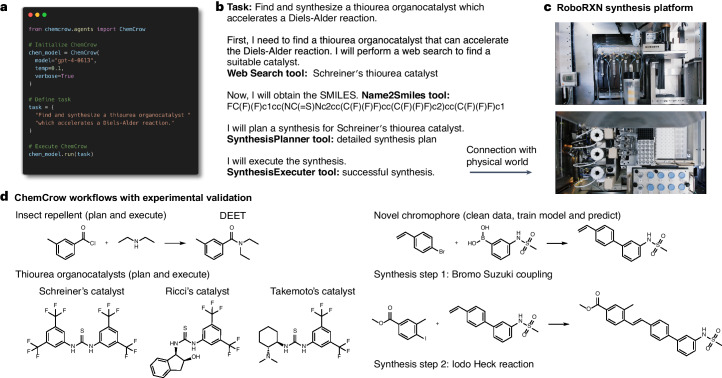
“Using RoboRXN, ChemCrow autonomously ran the syntheses of an insect repellent (DEET) and three known thiourea organocatalysts (Schreiner’s 56,57 , Ricci’s 58 and Takemoto’s 59 ).”
MethodHuggingGPT: Solving AI Tasks with ChatGPT and its Friends in Hugging Face
Shen, Y., Song, K., Tan, X., Li, D., Lu, W., & Zhuang, Y. (2023) · Advances in Neural Information Processing Systems 36 · doi:10.52202/075280-1657 · Cited by 475
Herrera, R. P., Sgarzani, V., Bernardi, L., & Ricci, A. (2005) · Angewandte Chemie International Edition · doi:10.1002/anie.200500227 · Cited by 465 · cited 2×
“G.8 Task 8 - Synthesis Planning of Riccis’s Organocatalyst G.9 Task 9 - Predict Success of Reaction G.12 Task 12 - Synthesis and Cost of Atorvastatin”
MethodWittkopp, A., & Schreiner, P. R. (2003) · Chemistry – A European Journal · doi:10.1002/chem.200390042 · Cited by 414
Schwaller, P., Petraglia, R., Zullo, V., Nair, V. H., Haeuselmann, R. A., Pisoni, R., Bekas, C., Iuliano, A., & Laino, T. (2020) · Chemical Science · doi:10.1039/c9sc05704h · Cited by 403 · cited 3×
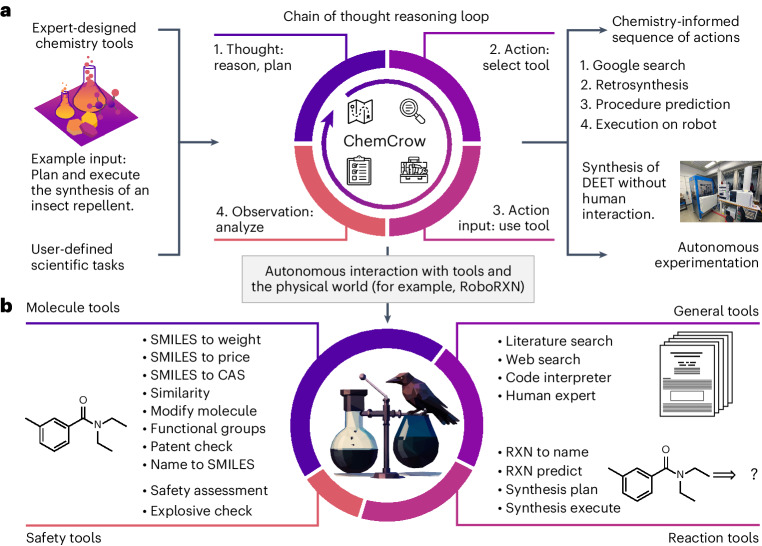
“The example shows the synthesis of DEET, a common insect repellent. b) Toolsets implemented in ChemCrow: reaction, molecule, safety, search, and standard tools.”
MethodSelf-citationChemBERTa: Large-Scale Self-Supervised Pretraining for Molecular Property Prediction
Chithrananda, S., Grand, G., & Ramsundar, B. (2020) · arXiv (Cornell University) · doi:10.48550/arxiv.2010.09885 · Cited by 379
AiZynthFinder: a fast, robust and flexible open-source software for retrosynthetic planning
Genheden, S., Thakkar, A., Chadimová, V., Reymond, J.-L., Engkvist, O., & Bjerrum, E. (2020) · Journal of Cheminformatics · doi:10.1186/s13321-020-00472-1 · Cited by 378 · cited 1×
“Integrating such tools tends to occur within isolated environments, such as RXN for Chemistry 18,24,46–48 and AIZynthFinder 25,49,50 , facilitated by corporate directives that promote integrability.”
BackgroundLeveraging large language models for predictive chemistry
Jablonka, K. M., Schwaller, P., Ortega-Guerrero, A., & Smit, B. (2024) · Nature Machine Intelligence · doi:10.1038/s42256-023-00788-1 · Cited by 378 · cited 2×
“Although most tools are developed by the open-source community or made accessible through application programming interfaces (API), their integration and interoperability pose considerable challenges for experimental chemists, mainly due to their lack of computational skill set and the diversity of…”
BackgroundMethodSelf-citationMapping the space of chemical reactions using attention-based neural networks
Schwaller, P., Probst, D., Vaucher, A. C., Nair, V. H., Kreutter, D., Laino, T., & Reymond, J.-L. (2021) · Nature Machine Intelligence · doi:10.1038/s42256-020-00284-w · Cited by 356
Self-citationDual use of artificial-intelligence-powered drug discovery
Urbina, F., Lentzos, F., Invernizzi, C., & Ekins, S. (2022) · Nature Machine Intelligence · doi:10.1038/s42256-022-00465-9 · Cited by 346 · cited 1×
“Nevertheless, it is crucial to ensure responsible development and use of LLM agents 66–68 .”
BackgroundChemformer: a pre-trained transformer for computational chemistry
Irwin, R., Dimitriadis, S., He, J., & Bjerrum, E. J. (2022) · Machine Learning: Science and Technology · doi:10.1088/2632-2153/ac3ffb · Cited by 343 · cited 1×
“…field, has been impacted through expert-designed artificial intelligence (AI) systems that tackle specific problems, such as reaction prediction 16–20 , retrosynthesis planning 21–27 , molecular property prediction 28–32 , de-novo molecular generation 33,34 , materials design 35,36 and, more…”
BackgroundExposing the Limitations of Molecular Machine Learning with Activity Cliffs
van Tilborg, D., Alenicheva, A., & Grisoni, F. (2022) · Journal of Chemical Information and Modeling · doi:10.1021/acs.jcim.2c01073 · Cited by 337
Measuring and Narrowing the Compositionality Gap in Language Models
Press, O., Zhang, M., Min, S., Schmidt, L., Smith, N., & Lewis, M. (2023) · Findings of the Association for Computational Linguistics: EMNLP 2023 · doi:10.18653/v1/2023.findings-emnlp.378 · Cited by 303
Measuring and Narrowing the Compositionality Gap in Language Models
Press, O., Zhang, M., Min, S., Schmidt, L., Smith, N. A., & Lewis, M. (2022) · arXiv · doi:10.48550/arxiv.2210.03350 · Cited by 294 · cited 1×
“In our implementation, we integrate external tools through LangChain, as LLMs have been shown to perform better with tools 10,32,80 .”
MethodChemical Name to Structure: OPSIN, an Open Source Solution
Lowe, D. M., Corbett, P. T., Murray-Rust, P., & Glen, R. C. (2011) · Journal of Chemical Information and Modeling · doi:10.1021/ci100384d · Cited by 236 · cited 3×
“Our implementation queries chem-space 84 as a primary source, and upon failure queries PubChem 85 and the IUPAC to SMILES converter OPSIN 86 as a last option.”
MethodPesciullesi, G., Schwaller, P., Laino, T., & Reymond, J.-L. (2020) · Nature Communications · doi:10.1038/s41467-020-18671-7 · Cited by 206
Self-citationA Multi-Objective Active Learning Platform and Web App for Reaction Optimization
Torres, J. A. G., Lau, S. H., Anchuri, P., Stevens, J. M., Tabora, J. E., Li, J., Borovika, A., Adams, R. P., & Doyle, A. G. (2022) · Journal of the American Chemical Society · doi:10.1021/jacs.2c08592 · Cited by 201
Productivity Assessment of Neural Code Completion
Ziegler, A., Kalliamvakou, E., Li, X. A., Rice, A., Rifkin, D., Simister, S., Sittampalam, G., & Aftandilian, E. (2022) · Proceedings of the 6th ACM SIGPLAN International Symposium on Machine Programming · doi:10.1145/3520312.3534864 · Cited by 200 · cited 1×
“These specialized tools provide exact answers, thereby compensating for the inherent deficiencies of LLMs in specific domains and enhancing their overall performance and applicability.”
BackgroundProductivity Assessment of Neural Code Completion
Ziegler, A., Kalliamvakou, E., Simister, S., Sittampalam, G., Li, A., Rice, A., Rifkin, D., & Aftandilian, E. (2022) · arXiv · doi:10.48550/arxiv.2205.06537 · Cited by 200 · cited 1×
“These specialized tools provide exact answers, thereby compensating for the inherent deficiencies of LLMs in specific domains and enhancing their overall performance and applicability.”
BackgroundMachine intelligence for chemical reaction space
Schwaller, P., Vaucher, A. C., Laplaza, R., Bunne, C., Krause, A., Corminbœuf, C., & Laino, T. (2022) · Wiley Interdisciplinary Reviews Computational Molecular Science · doi:10.1002/wcms.1604 · Cited by 169 · cited 1×
“…expert-designed artificial intelligence (AI) systems that tackle specific problems, such as reaction prediction 16–20 , retrosynthesis planning 21–27 , molecular property prediction 28–32 , de-novo molecular generation 33,34 , materials design 35,36 and, more recently, Bayesian Optimization…”
BackgroundSelf-citationThakkar, A., Kogej, T., Reymond, J.-L., Engkvist, O., & Bjerrum, E. J. (2020) · Chemical Science · doi:10.1039/c9sc04944d · Cited by 163 · cited 1×
“The example shows the synthesis of DEET, a common insect repellent. b) Toolsets implemented in ChemCrow: reaction, molecule, safety, search, and standard tools.”
MethodDo Large Language Models Understand Chemistry? A Conversation with ChatGPT
Castro Nascimento, C. M., & Pimentel, A. S. (2023) · Journal of Chemical Information and Modeling · doi:10.1021/acs.jcim.3c00285 · Cited by 147 · cited 1×
“Nevertheless, it is crucial to recognize the limitations of LLMs, which often struggle with seemingly simple tasks like basic mathematics and chemistry operations 10,11 .”
BackgroundText and Code Embeddings by Contrastive Pre-Training
Neelakantan, A., Xu, T., Puri, R., Radford, A., Han, J. M., Tworek, J., Yuan, Q., Tezak, N., Kim, J. W., Hallacy, C., et al. (2022) · arXiv (Cornell University) · doi:10.48550/arxiv.2201.10005 · Cited by 145 · cited 1×
“The CAS number serves as a precise and universally recognized chemical identifier, enabling researchers to access relevant data and resources with ease, and ensuring that they obtain accurate and consistent information about the target molecule 89 .”
BackgroundModel agnostic generation of counterfactual explanations for molecules
Wellawatte, G. P., Seshadri, A., & White, A. D. (2022) · Chemical Science · doi:10.1039/d1sc05259d · Cited by 143 · cited 1×
“By providing a comprehensive overview of a molecule’s functional groups, the LLM can make informed decisions when designing experiments, synthesizing compounds, or exploring new molecular candidates.”
BackgroundSelf-citationMolecular Transformer unifies reaction prediction and retrosynthesis across pharma chemical space
Lee, A. A., Yang, Q., Sresht, V., Bolgar, P., Hou, X., Klug-McLeod, J. L., & Butler, C. R. (2019) · Chemical Communications · doi:10.1039/c9cc05122h · Cited by 128 · cited 1×
“By providing a comprehensive overview of a molecule’s functional groups, the LLM can make informed decisions when designing experiments, synthesizing compounds, or exploring new molecular candidates.”
BackgroundLarge Language Models Are Reasoning Teachers
Ho, N., Schmid, L., & Yun, S.-Y. (2023) · Proceedings of the 61st Annual Meeting of the Association for Computational Linguistics (Volume 1: Long Papers) · doi:10.18653/v1/2023.acl-long.830 · Cited by 127
A Collection of Robust Organic Synthesis Reactions for In Silico Molecule Design
Hartenfeller, M., Eberle, M., Meier, P., Nieto-Oberhuber, C., Altmann, K.-H., Schneider, G., Jacoby, E., & Renner, S. (2011) · Journal of Chemical Information and Modeling · doi:10.1021/ci200379p · Cited by 123 · cited 1×
“By providing a comprehensive overview of a molecule’s functional groups, the LLM can make informed decisions when designing experiments, synthesizing compounds, or exploring new molecular candidates.”
BackgroundAssessment of chemistry knowledge in large language models that generate code
White, A. D., Hocky, G. M., Gandhi, H. A., Ansari, M., Cox, S., Wellawatte, G. P., Sasmal, S., Yang, Z., Liu, K., Singh, Y., et al. (2023) · Digital Discovery · doi:10.1039/d2dd00087c · Cited by 108 · cited 2×
“…programming interfaces (API), their integration and interoperability pose considerable challenges for experimental chemists, mainly due to their lack of computational skill set and the diversity of tools with steep learning curves, thereby preventing the full exploitation of their potential.”
BackgroundSelf-citationInferring experimental procedures from text-based representations of chemical reactions
Vaucher, A. C., Schwaller, P., Geluykens, J., Nair, V. H., Iuliano, A., & Laino, T. (2021) · Nature Communications · doi:10.1038/s41467-021-22951-1 · Cited by 100 · cited 1×
“…approach for translation tasks as the reaction prediction tool, but adding search algorithms to handle multi-step synthesis, and an action prediction algorithm that converts a reaction sequence into actionable steps in machine-readable format, including conditions, additives, and solvents 102 .”
MethodSelf-citationArtificial intelligence and automation in computer aided synthesis planning
Thakkar, A., Johansson, S., Jorner, K., Buttar, D., Reymond, J.-L., & Engkvist, O. (2021) · Reaction Chemistry & Engineering · doi:10.1039/d0re00340a · Cited by 88 · cited 1×
“• Then make predictions for the molecules in a selection pool.”
BackgroundMM-REACT: Prompting ChatGPT for Multimodal Reasoning and Action
Yang, Z., Li, L., Wang, J., Lin, K., Azarnasab, E., Ahmed, F., Liu, Z., Liu, C., Zeng, M., & Wang, L. (2023) · arXiv (Cornell University) · doi:10.48550/arxiv.2303.11381 · Cited by 78 · cited 1×
“The proposed molecule (see Figure 3) was subsequently synthesized and analyzed, confirming the discovery of a new chromophore with approximately the desired property (measured absorption maximum wavelength of 336nm).”
MethodEmergent autonomous scientific research capabilities of large language models
Boiko, D. A., MacKnight, R., & Gomes, G. (2023) · arXiv · doi:10.48550/arxiv.2304.05332 · Cited by 72
Integrating Learning and Reasoning with Deep Logic Models
Marra, G., Giannini, F., Diligenti, M., & Gori, M. (2020) · Lecture Notes in Computer Science · doi:10.1007/978-3-030-46147-8_31 · Cited by 71
Scaling Laws for Reward Model Overoptimization
Gao, L., Schulman, J., & Hilton, J. (2022) · arXiv · doi:10.48550/arxiv.2210.10760 · Cited by 62 · cited 1×
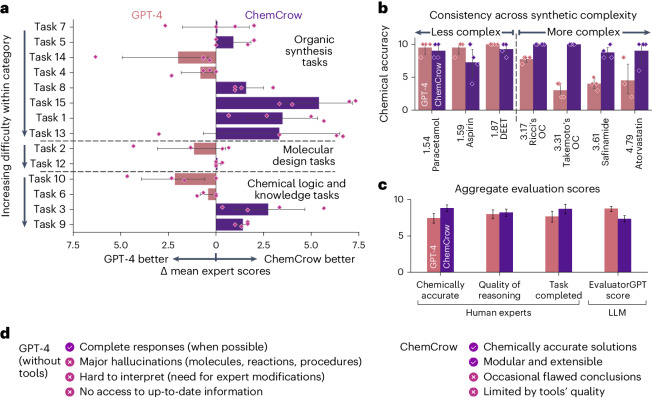
“Furthermore, ChemCrow is capable of independently solving reasoning tasks in chemistry, ranging from simple drug discovery loops to synthesis planning of substances across a wide range of molecular complexity, indicating its potential as a future chemical assistant à la ChatGPT .”
BackgroundHocky, G. M., & White, A. D. (2022) · Digital Discovery · doi:10.1039/d1dd00009h · Cited by 59 · cited 1×
“Additionally, while the selected evaluation tasks are limited, further research and development can expand and diversify these tasks to truly push the limits of what these systems can achieve.”
BackgroundSelf-citationFoundation Models and Fair Use
Henderson, P., Li, X., Jurafsky, D., Hashimoto, T., Lemley, M. A., & Liang, P. (2023) · doi:10.2139/ssrn.4404340 · Cited by 57
Karpas, E., Abend, O., Belinkov, Y., Lenz, B., Lieber, O., Ratner, N., Shoham, Y., Bata, H., Levine, Y., Leyton-Brown, K., et al. (2022) · arXiv · doi:10.48550/arxiv.2205.00445 · Cited by 49 · cited 1×
“The tools used can be classified into general tools, molecular tools, and chemical reaction tools.”
MethodChemist Ex Machina: Advanced Synthesis Planning by Computers
Molga, K., Szymkuć, S., & Grzybowski, B. A. (2021) · Accounts of Chemical Research · doi:10.1021/acs.accounts.0c00714 · Cited by 46
Collective action on artificial intelligence: A primer and review
de Neufville, R., & Baum, S. D. (2021) · Technology in Society · doi:10.1016/j.techsoc.2021.101649 · Cited by 46
Zhao, Z., del Cueto, M., & Troisi, A. (2022) · Digital Discovery · doi:10.1039/d2dd00004k · Cited by 46 · cited 1×
“The example shows the synthesis of DEET, a common insect repellent. b) Toolsets implemented in ChemCrow: reaction, molecule, safety, search, and standard tools.”
Method“Ring Breaker”: Neural Network Driven Synthesis Prediction of the Ring System Chemical Space
Thakkar, A., Selmi, N., Reymond, J., Engkvist, O., & Bjerrum, E. J. (2020) · Journal of Medicinal Chemistry · doi:10.1021/acs.jmedchem.9b01919 · Cited by 45
The Role of Cooperation in Responsible AI Development
Askell, A., Brundage, M., & Hadfield, G. K. (2019) · arXiv (Cornell University) · doi:10.48550/arxiv.1907.04534 · Cited by 44 · cited 1×
“One major challenge is the lack of reproducibility of individual results under the current API-based approach to LLMs, as closed-source models provide limited control, see Appendix E. Recent open-source models 76–78 offer a potential solution to this issue, albeit with a possible trade-off in…”
BackgroundBayesian Optimization of Catalysis with In-Context Learning
Ramos, M. C., Michtavy, S. S., White, A. D., & Porosoff, M. D. (2026) · ACS Central Science · doi:10.1021/acscentsci.5c02418 · Cited by 37 · cited 1×
“…programming interfaces (API), their integration and interoperability pose considerable challenges for experimental chemists, mainly due to their lack of computational skill set and the diversity of tools with steep learning curves, thereby preventing the full exploitation of their potential.”
BackgroundSelf-citationNetwork search algorithms and scoring functions for advanced‐level computerized synthesis planning
Grzybowski, B. A., Badowski, T., Molga, K., & Szymkuć, S. (2022) · Wiley Interdisciplinary Reviews Computational Molecular Science · doi:10.1002/wcms.1630 · Cited by 25 · cited 1×
“For instance, synthetic planning capabilities can benefit from an improved underlying synthesis engine, an active area of research 23,64,65 .”
BackgroundA teachable moment for dual-use
Urbina, F., Lentzos, F., Invernizzi, C. F., & Ekins, S. (2022) · Nature Machine Intelligence · doi:10.1038/s42256-022-00511-6 · Cited by 21
Censoring chemical data to mitigate dual use risk
Campbell, Q., Herington, J., & White, A. D. (2026) · Digital Discovery · doi:10.1039/d5dd00512d · Cited by 10
Self-citationMedina, J., & White, A. D. (2023) · Journal of Cheminformatics · doi:10.1186/s13321-023-00765-1 · Cited by 7 · cited 1×
“It utilizes molbloom 87 , a C library to check strings against a bloom filter, making it an efficient tool to assess compounds against known databases.”
MethodSelf-citationur-whitelab/chemcrow-public: v0.3.24
Bran, A. M., Cox, S., & White, A. (2024) · Zenodo (CERN European Organization for Nuclear Research) · doi:10.5281/zenodo.10884638 · Cited by 1
Self-citationur-whitelab/chemcrow-runs: Zendo Release
Bran, A. M., & Cox, S. (2024) · Zenodo (CERN European Organization for Nuclear Research) · doi:10.5281/zenodo.10884644 · Cited by 1
Self-citationOpenAI, Achiam, J., Adler, S., Agarwal, S., Ahmad, L., Akkaya, I., Aleman, F. L., Almeida, D., Altenschmidt, J., Altman, S., et al. (2023) · arXiv · doi:10.48550/arxiv.2303.08774
Foundation Models and Fair Use
Henderson, P., Li, X., Jurafsky, D., Hashimoto, T., Lemley, M. A., & Liang, P. (2023) · arXiv · doi:10.48550/arxiv.2303.15715 · cited 1×
“Addressing intellectual property issues is crucial for the responsible development and use of generative AI models 73 , like ChemCrow.”
Method
Research works printed but not linked: 4
- Devlin, J., Chang, M.-W., Lee, K. & Toutanova, K. Bert: pre-training of deep bidirectional transformers for language understanding. In Proc. Conference of the North American Chapter of the Association for Computational Linguistics: Human Language Technologies (eds Burstein, J. et al.) 4171–4186 (Association for Computational Linguistics, 2019).
- Li, R. et al. Starcoder: may the source be with you! Trans. Mach. Learn. Res. https://openreview.net/pdf?id=KoFOg41haE (2023).
- Zelikman E Wu Y Mu J Goodman N Star: bootstrapping reasoning with reasoning Adv. Neural Inf. Process. Syst. 2022 35 15476 15488
- Lowe, D. M. Extraction of Chemical Structures and Reactions from the Literature. PhD thesis, Univ. of Cambridge (2012).
Cited by
A survey on large language model based autonomous agents
Wang, L., Ma, C., Feng, X., Zhang, Z., Yang, H., Zhang, J., Chen, Z., Tang, J., Chen, X., Lin, Y., et al. (2024) · Frontiers of Computer Science · doi:10.1007/s11704-024-40231-1 · Cited by 1,941
Autonomous chemical research with large language models
Boiko, D. A., MacKnight, R., Kline, B., & Gomes, G. (2023) · Nature · doi:10.1038/s41586-023-06792-0 · Cited by 1,050
The Rise and Potential of Large Language Model Based Agents: A Survey
Xi, Z., Chen, W., Guo, X., He, W., Ding, Y., Hong, B., Zhang, M., Wang, J., Jin, S., Zhou, E., et al. (2023) · arXiv · doi:10.48550/arxiv.2309.07864 · Cited by 972
The rise and potential of large language model based agents: a survey
Xi, Z., Chen, W., Guo, X., He, W., Ding, Y., Hong, B., Zhang, M., Wang, J., Jin, S., Zhou, E., et al. (2025) · Science China Information Sciences · doi:10.1007/s11432-024-4222-0 · Cited by 970
Self-Driving Laboratories for Chemistry and Materials Science
Tom, G., Schmid, S. P., Baird, S. G., Cao, Y., Darvish, K., Hao, H., Lo, S., Pablo-García, S., Rajaonson, E. M., Skreta, M., et al. (2024) · Chemical Reviews · doi:10.1021/acs.chemrev.4c00055 · Cited by 707
Metadata
- Authors
- M. Bran, A., Cox, S., Schilter, O., Baldassari, C., White, A. D., & Schwaller, P.
- Affiliations
- Future House, Inc. (US)
- IBM Research - Zurich (CH)
- NCCR Catalysis (CH)
- Corresponding author
- White, Andrew D.
- Schwaller, Philippe
- Venue
- Nature Machine Intelligence
- Published
- 2024-05-08
- Volume
- 6
- Issue
- 5
- Pages
- 525-535
- ISSN
- 2522-5839 (ISSN-L)
- PMC
- PMC11116106
- OpenAlex
- W4396723768
- Cited by
- 794
- References
- 76
- Citations by year
- 2026: 395 · 2025: 305 · 2024: 83
- FWCI
- 76.42
- Type
- journal article
- Language
- en
- Open access
- hybrid
- doi.org
- Licence
- cc-by
- creativecommons.org/licenses/by/4.0 (tdm)
- creativecommons.org/licenses/by/4.0 (vor)
- Locations
- Nature Machine Intelligence (publishedVersion, cc-by)
- PubMed Central (publishedVersion, cc-by-nd)
- PubMed (publishedVersion)
- Infoscience (Ecole Polytechnique Fédérale de Lausanne) (submittedVersion, cc-by-nc-nd)
- Funders
- Schweizerischer Nationalfonds zur Förderung der Wissenschaftlichen Forschung (180544)
- National Science Foundation (1751471)
- Topics
- Physical Sciences › Materials Science › Materials Chemistry › Machine Learning in Materials Science
- Life Sciences › Pharmacology, Toxicology and Pharmaceutics › Drug Discovery › Computational Drug Discovery Methods
- Physical Sciences › Computer Science › Artificial Intelligence › Artificial Intelligence Applications
- Keywords
- large language models, GPT-4, organic synthesis planning, drug discovery, materials design, organocatalysts
About these checks
Registry, retraction, Cites and statistics results are computed, not judged, with one exception: a printed reference that no index lists is read once by a model before it counts as a citation error. Claims are extracted by a model and kept only when their quote appears verbatim in the text; each cited source is then checked, with a model’s help, for whether it says what the claim relies on. Those verdicts can be wrong — read the claim’s quote and the cited source before relying on one.
Statistics and arithmetic are recomputed, not judged.
Confidence bands are shown only for fields calibrated on our annotated test set. None is calibrated yet, so no band is shown.
What counts as a claim ›How we measure confidence ›How we check this ›
Are you an author, or do you see a problem with this page? Request a review
Data sources
Bibliographic data: Semantic Scholar, OpenAlex, Crossref.
Contains information from the Semantic Scholar Academic Graph Datasets, made available under the ODC Attribution License (ODC-BY 1.0).
Semantic Scholar’s data is described in: Kinney, R., et al. (2023). The Semantic Scholar Open Data Platform. arXiv:2301.10140.
