

Nanoemulsions: formation, properties and applications
Open accessThe DOI matches its Crossref record; 119 of the 120 references it cites were found in a registry or an index.
Abstract
Nanoemulsions are kinetically stable liquid-in-liquid dispersions with droplet sizes on the order of 100 nm.
Overview
The claims and statistics of this paper haven’t been checked yet.
Free: it reads the open-access text and checks the first 5 claims that cite a source we can check. Create a free account to check every claim.
Integrity signals
Registry
Cites
Statistics
Figures




Verification
Claims the paper makes
The claims and statistics of this paper haven’t been checked yet.
Free: it reads the open-access text and checks the first 5 claims that cite a source we can check. Create a free account to check every claim.
Claims other papers make about this one
Each is checked against this paper’s own text: does it say what the citing paper says it does?
The cited source says what the claim attributes to it.
In the citing paper
“The low-energy methods involve specific physico-chemical processes such as phase inversion temperature and emulsion inversion points to make small droplets without consuming significant energy. In the low-energy methods, the droplets are constituted when the system undergoes an inversion of phase in response to changes, such as composition or temperature, and consequently passes through a low”
From Nanoemulsions for “Nose-to-Brain” Drug Delivery (2019) · cites this paper as [32]
The cited source says what the claim attributes to it.
In the citing paper
“Important differences can be found between classical macroemulsions (classical emulsions), NEs and microemulsions in droplet size range and stability characteristics [32,47].”
From Nanoemulsions for “Nose-to-Brain” Drug Delivery (2019) · cites this paper as [32]
Self-check
Percentages, sums and reported differences re-computed from the paper’s own numbers.
The self-check needs the paper’s full text.
Citations
Cites
The kinetics of precipitation from supersaturated solid solutions
Lifshitz, I. M., & Slyozov, V. V. (1961) · Journal of Physics and Chemistry of Solids · doi:10.1016/0022-3697(61)90054-3 · Cited by 8,433
Fundamentals of the hydrodynamic mechanism of splitting in dispersion processes
Hinze, J. O. (1955) · AIChE Journal · doi:10.1002/aic.690010303 · Cited by 2,641
Nanoemulsions versus microemulsions: terminology, differences, and similarities
McClements, D. J. (2012) · Soft Matter · doi:10.1039/c2sm06903b · Cited by 1,778
McClements, D. J., & Rao, J. (2011) · Critical Reviews in Food Science and Nutrition · doi:10.1080/10408398.2011.559558 · Cited by 1,630
Solans, C., Izquierdo, P., Nolla, J., Azemar, N., & Garcia-Celma, M. J. (2005) · Current Opinion in Colloid & Interface Science · doi:10.1016/j.cocis.2005.06.004 · Cited by 1,384
Encyclopedia of emulsion technology
Becher, P. (1983) · M. Dekker eBooks · Cited by 1,226
High-Resolution EM of Colloidal Nanocrystal Growth Using Graphene Liquid Cells
Yuk, J. M., Park, J., Ercius, P., Kim, K., Hellebusch, D. J., Crommie, M. F., Lee, J. Y., Zettl, A., & Alivisatos, A. P. (2012) · Science · doi:10.1126/science.1217654 · Cited by 1,153
Mewis, J., & Wagner, N. J. (2011) · Cambridge University Press eBooks · doi:10.1017/cbo9780511977978 · Cited by 1,142
Edible nanoemulsions: fabrication, properties, and functional performance
McClements, D. J. (2011) · Soft Matter · doi:10.1039/c0sm00549e · Cited by 1,031
Asua, J. M. (2002) · Progress in Polymer Science · doi:10.1016/s0079-6700(02)00010-2 · Cited by 952
Research works printed but not linked: 6
- 1. T. G. Mason, J. Wilking, K. Meleson, C. Chang and S. Graves, J. Phys.: Condens. Matter, 2006, 18, R635.
- 13. T. Tadros, P. Izquierdo, J. Esquena and C. Solans, Adv. Colloid Interface Sci., 2004, 108, 303-318. · doi:10.1016/j.cis.2003.10.023 · Paper page
- 31. N. Dixit, K. Kohli and S. Baboota, PDA J. Pharm. Sci. Technol., 2008, 62, 46-55.
- 35. P. Alves, A. Pohlmann and S. Guterres, Pharmazie, 2005, 60, 900-904.
- 51. M. Ahmed, W. Ramadan, D. Rambhu and F. Shakeel, Pharmazie, 2008, 63, 806-811.
- 63. L. Mao, D. Xu, J. Yang, F. Yuan, Y. Gao and J. Zhao, Food Technol. Biotechnol., 2009, 47, 336-342.
Cited by
Items 101–200 of 1,000
Saverina, E. A., Frolov, N. A., Kamanina, O. A., Arlyapov, V. A., Vereshchagin, A. N., & Ananikov, V. P. (2023) · ACS Infectious Diseases · doi:10.1021/acsinfecdis.2c00469 · Cited by 125
Vortex-assisted liquid-liquid microextraction revisited
Psillakis, E. (2019) · TrAC Trends in Analytical Chemistry · doi:10.1016/j.trac.2018.11.007 · Cited by 120
Nanostructured delivery systems with improved leishmanicidal activity: a critical review
Bruni, N., Stella, B., Giraudo, L., Pepa, C. D., Gastaldi, D., & Dosio, F. (2017) · International Journal of Nanomedicine · doi:10.2147/ijn.s140363 · Cited by 127
“74 Lipid AmpB formulations potentially suited to oral administration have been developed based on mono-and diglycerides with or without a lipophilic derivative of vitamin E, d - α -tocopheryl polyethylene glycol 1000 succinate (TPGS), as an alternative to the less temperature-stable monoglyceride.”
Ophthalmic Nanoemulsions: From Composition to Technological Processes and Quality Control
Gawin-Mikołajewicz, A., Nartowski, K. P., Dyba, A. J., Gołkowska, A. M., Malec, K., & Karolewicz, B. (2021) · Molecular Pharmaceutics · doi:10.1021/acs.molpharmaceut.1c00650 · Cited by 119
“47, 58,59 Droplet size reduction in the micro fl uidizer is achieved via combined use of a hydraulic shear, impact, attrition, impingement, intense turbulence, and cavitation.”
InfluentialNanomedicine Approaches for Corneal Diseases
Chaurasia, S. S., Lim, R. R., Lakshminarayanan, R., & Mohan, R. R. (2015) · Journal of Functional Biomaterials · doi:10.3390/jfb6020277 · Cited by 126
Huang, H., Yarmush, M. L., & Usta, O. B. (2018) · Nature Communications · doi:10.1038/s41467-018-05636-0 · Cited by 117
Polymeric nanocapsules: A review on design and production methods for pharmaceutical purpose
Lima, A. L., Gratieri, T., Filho, M. C., & Gelfuso, G. M. (2021) · Methods · doi:10.1016/j.ymeth.2021.07.009 · Cited by 124
El-Sayed, S. M., & El-Sayed, H. S. (2020) · Journal of Materials Research and Technology · doi:10.1016/j.jmrt.2020.12.073 · Cited by 129
Encapsulation by nanoemulsions
Jafari, S. M., Paximada, P., Mandala, I. G., Assadpour, E., & Mehrnia, M. A. (2017) · Elsevier eBooks · doi:10.1016/b978-0-12-809436-5.00002-1 · Cited by 121
Costa, M., Bayındır, Z. S., Losada‐Barreiro, S., Paiva‐Martins, F., Saso, L., & Bravo‐Díaz, C. (2021) · Biomedicines · doi:10.3390/biomedicines9121909 · Cited by 124
“Several strategies can be used to prevent the low stability of nanoemulsions, and the interested reader is referred to some reports [201,209].”
BackgroundLipid-Based Nanoformulations for Drug Delivery: An Ongoing Perspective
Rehman, M., Tahir, N., Sohail, M. F., Qadri, M. U., Duarte, S. O. D., Brandão, P., Esteves, T., Javed, I., & Fonte, P. (2024) · Pharmaceutics · doi:10.3390/pharmaceutics16111376 · Cited by 132
Das, A. K., Nanda, P. K., Bandyopadhyay, S., Banerjee, R., Biswas, S., & McClements, D. J. (2020) · Comprehensive Reviews in Food Science and Food Safety · doi:10.1111/1541-4337.12604 · Cited by 120
Tayeb, H. H., Felimban, R. I., Almaghrabi, S. A., & Hasaballah, N. H. (2021) · Colloids and Interface Science Communications · doi:10.1016/j.colcom.2021.100533 · Cited by 129
Akel, H., Ismail, R., & Csóka, I. (2020) · European Journal of Pharmaceutics and Biopharmaceutics · doi:10.1016/j.ejpb.2019.12.014 · Cited by 107
Gericke, M., SCHULZE, P. C., & Heinze, T. J. (2020) · Macromolecular Bioscience · doi:10.1002/mabi.201900415 · Cited by 118
Demisli, S., Mitsou, E., Pletsa, V., Xenakis, A., & Papadimitriou, V. (2020) · Nanomaterials · doi:10.3390/nano10122464 · Cited by 118
“droplet size of nanoemulsions (generally in the size range 20–500 nm) makes them resistant to physical destabilization, flocculation and creaming [10,11].”
BackgroundIsmail, A., Nasr, M., & Sammour, O. A. (2020) · International Journal of Pharmaceutics · doi:10.1016/j.ijpharm.2020.119402 · Cited by 112
Biomedical Applications of Multifunctional Polymeric Nanocarriers: A Review of Current Literature
Karabasz, A., Bzowska, M., & Szczepanowicz, K. (2020) · International Journal of Nanomedicine · doi:10.2147/ijn.s231477 · Cited by 117
Algahtani, M. S., Ahmad, M. Z., & Ahmad, J. (2022) · Bioengineering · doi:10.3390/bioengineering9080384 · Cited by 112
“Co-surfactant further aids in causing the turbulence, lowering the interfacial tension between the two immiscible phases and easing the formation of dispersion by lodging in the unoccupied places around dispersed oil droplets that are left unguarded by surfactant molecules [12,13].”
BackgroundNano-Agrochemicals as Substitutes for Pesticides: Prospects and Risks
Ali, S., Ahmad, N., Dar, M. A., Manan, S., Rani, A., Alghanem, S. M. S., Khan, K. A., Sethupathy, S., Elboughdiri, N. A., Mostafa, Y. S., et al. (2023) · Plants · doi:10.3390/plants13010109 · Cited by 125
“[17,123,152,162] Clay-based NCs NCs composed of clay minerals like bentonite, smectite, chaolite, and montmorillonite Enhanced efficacy, safety, and stability of agrochemicals for longer durations.”
BackgroundKhater, D., Nsairat, H., Odeh, F., Saleh, M. M., Jaber, A. M., Alshaer, W., Bawab, A. F. A., & Mubarak, M. S. (2021) · Cosmetics · doi:10.3390/cosmetics8020039 · Cited by 126
“They are defined as dispersion made of oil, water, and surfactant(s) made of an isotropic and thermodynamically stable system with dispersed domain diameter and droplet sizes formed at the nano scale (within the range 20–200 nm) by means of mechanical forces [85,95,96].”
BackgroundMahmoud, K. Y., Swidan, S. A., El-Nabarawi, M. A., & Teaima, M. H. M. (2022) · Journal of Nanobiotechnology · doi:10.1186/s12951-022-01309-9 · Cited by 113
Gharehbeglou, P., Jafari, S. M., Rad, A. H., Hamishekar, H., & Mirzaei, H. O. (2018) · Food Hydrocolloids · doi:10.1016/j.foodhyd.2018.10.020 · Cited by 107
Ephrem, E., Najjar, A., Charcosset, C., & Greige‐Gerges, H. (2018) · Journal of Functional Foods · doi:10.1016/j.jff.2018.06.021 · Cited by 106
Luca, I. D., Pedram, P., Moeini, A., Cerruti, P., Peluso, G., Salle, A. D., & Germann, N. (2021) · Applied Sciences · doi:10.3390/app11041713 · Cited by 124
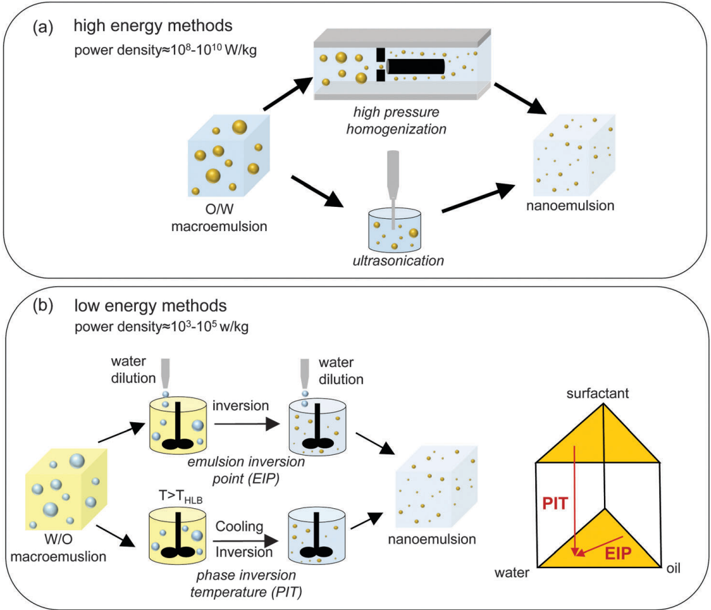
“The preparation of nanoemulsions starts with the successive conversion of a macroemulsion into a nanometric form by applying ultrasonic emulsification, high-pressure homogenization and microfluidization as highenergy methods, phase inversion and self-emulsification as low-energy techniques [97].”
MethodMamusa, M., Resta, C., Sofroniou, C., & Baglioni, P. (2021) · Advances in Colloid and Interface Science · doi:10.1016/j.cis.2021.102544 · Cited by 110
J, R. J. P., Oluwafemi, O. S., Thomas, S., & Oyedeji, A. O. (2022) · Journal of Drug Delivery Science and Technology · doi:10.1016/j.jddst.2022.103390 · Cited by 124
Rather, L. J., Mir, S. S., Ganie, S. A., Shahid‐ul‐Islam, & Li, Q. (2022) · Dyes and Pigments · doi:10.1016/j.dyepig.2022.110989 · Cited by 110
Tang, S. Y., Manickam, S., Ng, A. M.-H., & Parthasarathy, S. (2012) · International Journal of Pharmaceutics · doi:10.1016/j.ijpharm.2012.03.055 · Cited by 103
Carpenter, J., George, S., & Saharan, V. K. (2017) · Chemical Engineering and Processing - Process Intensification · doi:10.1016/j.cep.2017.02.013 · Cited by 103
Advances and future perspectives in epithelial drug delivery
Mohammed, Y., Holmes, A., Kwok, P. C. L., Kumeria, T., Namjoshi, S., Imran, M., Matteucci, L., Ali, M., Tai, W., Benson, H. A. E., et al. (2022) · Advanced Drug Delivery Reviews · doi:10.1016/j.addr.2022.114293 · Cited by 99
Nanoemulsions and Nanolatexes Stabilized by Hydrophobically Functionalized Cellulose Nanocrystals
Zhang, Y., Karimkhani, V., Makowski, B. T., Samaranayake, G., & Rowan, S. J. (2017) · Macromolecules · doi:10.1021/acs.macromol.7b00982 · Cited by 99
Pal, N., & Mandal, A. K. (2020) · Chemical Engineering Science · doi:10.1016/j.ces.2020.115887 · Cited by 99
Elshamy, S., Kubra, K., Uemura, K., Nakajima, M., & Neves, M. A. (2021) · Journal of Food Science and Technology · doi:10.1007/s13197-020-04888-3 · Cited by 108
Mudassir, M. A., Aslam, H. Z., Ansari, T. M., Zhang, H., & Hussaın, I. (2021) · Advanced Science · doi:10.1002/advs.202102540 · Cited by 109
NOVEL NANOMATERIALS FOR HEPATOBILIARY DISEASES TREATMENT AND FUTURE PERSPECTIVES
Huseynov, E. (2024) · Advances in Biology & Earth Sciences · doi:10.62476/abes9s81 · Cited by 104
Gonçalves, A., Nikmaram, N., Roohinejad, S., Estevinho, B. N., Rocha, F. A., Greiner, R., & McClements, D. J. (2017) · Colloids and Surfaces A Physicochemical and Engineering Aspects · doi:10.1016/j.colsurfa.2017.10.076 · Cited by 107
Hidajat, M. J., Jo, W., Kim, H., & Noh, J. (2020) · Colloids and Interfaces · doi:10.3390/colloids4010005 · Cited by 101
“There are two ways in order to produce nanoemulsion, low-energy and high-energy methods [13].”
MethodRecent developments in encapsulation and release of functional food ingredients: delivery by design
McClements, D. J. (2018) · Current Opinion in Food Science · doi:10.1016/j.cofs.2018.06.008 · Cited by 94
Influence of nanotechnology in polymeric textiles, applications, and fight against COVID-19
Idumah, C. I. (2020) · Journal of the Textile Institute · doi:10.1080/00405000.2020.1858600 · Cited by 100
“…imaging, surgical tooling, and in diagnosis (Bratov ci c et al., 2015; Bradley et al., 2011; Cheng et al., 2006; Duncan, 2011; Garcia et al., 2006; Gupta et al., 2016; Helmke & Minerick, 2006; Inbaraj & Chen, 2015; Jianrong et al., 2004; Joshi & Viswanathan, 2006; Mihindukulasuriya & Lim, 2014;…”
Zhang, C., Ma, Y., Zhang, J., Kuo, J. C., Zhang, Z., Xie, H., Zhu, J., & Liu, T. (2022) · Molecules · doi:10.3390/molecules27061943 · Cited by 112
“Lipid nanoemulsions (LNE) are colloidal droplet systems composed of oil, phospholipids, and an emulsifier, such as medium-chain triglycerides, which can reduce the interfacial tension on the droplet surface [117].”
BackgroundKaur, G., Panigrahi, C., Agarwal, S., Khuntia, A., & Sahoo, M. (2024) · Food Physics · doi:10.1016/j.foodp.2024.100024 · Cited by 104
“In high-energy emulsification methods, nanoemulsions can be prepared using mechanical devices, such as, high-pressure homogenizer, microfluidizer or ultrasound generator [47] (Fig.”
InfluentialRecent Advances in Nanoencapsulation of Phytochemicals to Combat Obesity and Its Comorbidities
Göktaş, Z., Zu, Y., Abbasi, M., Galyean, S., Wu, D., Fan, Z., & Wang, S. F. (2020) · Journal of Agricultural and Food Chemistry · doi:10.1021/acs.jafc.0c00131 · Cited by 102
Al-Sakkaf, M. K., & Onaizi, S. A. (2023) · Fuel · doi:10.1016/j.fuel.2023.130604 · Cited by 99
Pal, N., Kumar, N., Saw, R. K., & Mandal, A. (2019) · Journal of Petroleum Science and Engineering · doi:10.1016/j.petrol.2019.106464 · Cited by 96
Developing a Highly Stable Carlina acaulis Essential Oil Nanoemulsion for Managing Lobesia botrana
Benelli, G., Pavoni, L., Zeni, V., Ricciardi, R., Cosci, F., Cacopardo, G., Gendusa, S., Spinozzi, E., Petrelli, R., Cappellacci, L., et al. (2020) · Nanomaterials · doi:10.3390/nano10091867 · Cited by 101
“During the flow, the emulsion is exposed to shear stress able to give rise to nanometric oily droplets [84].”
BackgroundKumar, S., Singh, N., Devi, L. S., Kumar, S., Kamle, M., Kumar, P., & Mukherjee, A. (2021) · Journal of Agriculture and Food Research · doi:10.1016/j.jafr.2021.100254 · Cited by 115
Novel nano therapeutic materials for the effective treatment of rheumatoid arthritis-recent insights
Janakiraman, K., Krishnaswami, V., Rajendran, V., Natesan, S., & Kandasamy, R. (2018) · Materials Today Communications · doi:10.1016/j.mtcomm.2018.09.011 · Cited by 93
Ultrasound-assisted oil-in-water nanoemulsion produced from Pereskia aculeata Miller mucilage
Lago, A. M. T., Neves, I. C. O., Oliveira, N. L., Botrel, D. A., Minim, L. A., & de Resende, J. V. (2018) · Ultrasonics Sonochemistry · doi:10.1016/j.ultsonch.2018.09.036 · Cited by 97
Du, Z., Li, Q., Li, J., Su, E., Liu, X., Wan, Z., & Yang, X. (2019) · Journal of Agricultural and Food Chemistry · doi:10.1021/acs.jafc.9b04595 · Cited by 93
Fragmentation in turbulence by small eddies
Qi, Y., Tan, S., Corbitt, N., Urbanik, C., Salibindla, A. K. R., & Ni, R. (2022) · Nature Communications · doi:10.1038/s41467-022-28092-3 · Cited by 93
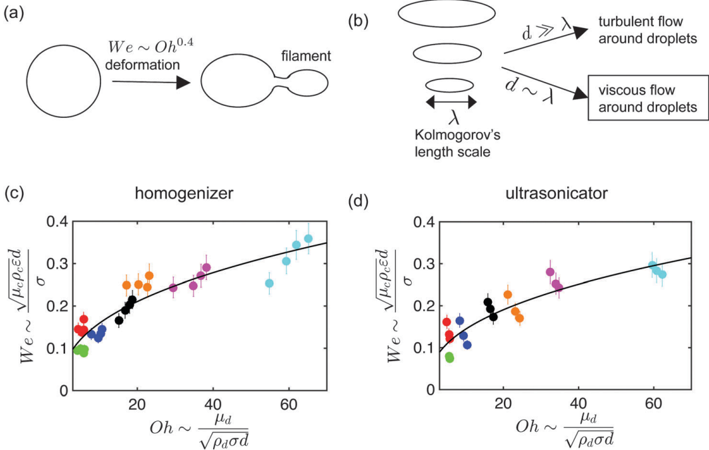
“In 1955, Hinze [5] extended Kolmogorov’s original idea [6], and this Kolmogorov-Hinze (KH) framework has since posed deep and lasting impacts on modelling turbulent bubble/drop fragmentation in various flow configurations [10, 19, 20] and applications, including emulsion [4], spray formation [3], and raindrop dynamics…”
MethodAcevedo-Fani, A., Soliva‐Fortuny, R., & Martín‐Belloso, O. (2016) · Trends in Food Science & Technology · doi:10.1016/j.tifs.2016.10.027 · Cited by 99
Nie, X., Chen, Z., Pang, L., Wang, L., Jiang, H., Chen, Y., Zhang, Z., Fu, C., Ren, B., & Zhang, J. (2020) · International Journal of Nanomedicine · doi:10.2147/ijn.s285134 · Cited by 109
Hou, L., Liu, Q., Shen, L., Liu, Y., Zhang, X., Chen, F., & Huang, L. (2018) · Theranostics · doi:10.7150/thno.24821 · Cited by 94
“As a result, Frax was formulated in the NE [26, 27], the preparation process of which is shown in Figure S1B.”
MethodNanotechnological breakthroughs in the development of topical phytocompounds-based formulations
Paiva‐Santos, A. C., Rodrigues, D., Sequeira, J. A. D., Pereira, I., Simões, A., Costa, D., Peixoto, D., Costa, G., & Veiga, F. (2019) · International Journal of Pharmaceutics · doi:10.1016/j.ijpharm.2019.118787 · Cited by 100
An overview of nanoemulsion characterization via atomic force microscopy
Ho, T. M., Abik, F., & Mikkonen, K. S. (2021) · Critical Reviews in Food Science and Nutrition · doi:10.1080/10408398.2021.1879727 · Cited by 108
Onaizi, S. A. (2021) · Separation and Purification Technology · doi:10.1016/j.seppur.2021.119956 · Cited by 91
A General Route for Nanoemulsion Synthesis Using Low-Energy Methods at Constant Temperature
Gupta, A., Badruddoza, A. Z. M., & Doyle, P. S. (2017) · Langmuir · doi:10.1021/acs.langmuir.7b01104 · Cited by 95
Self-citationTran, V. V., Nguyen, T. L., Moon, J., & Lee, Y. (2019) · Chemical Engineering Journal · doi:10.1016/j.cej.2019.02.168 · Cited by 103
A comprehensive review on nanoemulsion as an ophthalmic drug delivery system
Choradiya, B. R., & Patil, S. B. (2021) · Journal of Molecular Liquids · doi:10.1016/j.molliq.2021.116751 · Cited by 90
Innovative formulation strategies for botanical- and essential oil-based insecticides
Sarmah, K. C., Anbalagan, T., Murugan, M., Mariappan, P., Suganthi, A., & Vaithiyanathan, S. (2024) · Journal of Pest Science · doi:10.1007/s10340-024-01846-2 · Cited by 98
“NEs are generated using two meth-ods: high-energy emulsification methods, which include mechanical energy, and low-energy emulsification meth-ods which depend on chemical energy from the emulsion system (Gupta et al. 2016; Mushtaq et al. 2023) (Table 2).”
Lowering side effects of NSAID usage in osteoarthritis: recent attempts at minimizing dosage
Maniar, K. H., Jones, I. A., Gopalakrishna, R., & Vangsness, C. T. (2017) · Expert Opinion on Pharmacotherapy · doi:10.1080/14656566.2017.1414802 · Cited by 93
“Nanoemulsions are similar to microemulsions in that they are also made from water, oil, and surfactant [89].”
BackgroundSchreiner, T. B., Santamaria‐Echart, A., Ribeiro, A. M., Peres, A. M., Dias, M. M., Pinho, S. P., & Barreiro, M. F. (2020) · Molecules · doi:10.3390/molecules25071538 · Cited by 99
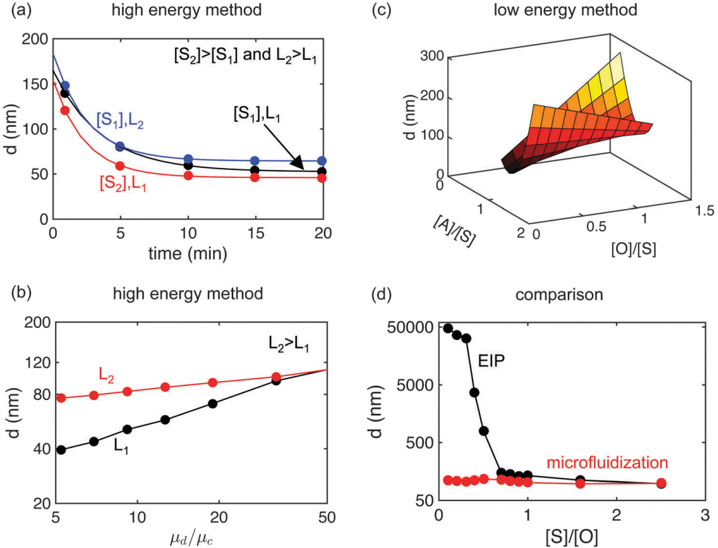
“Regarding operational conditions, there is strong evidence that the droplet size approaches a constant value as the number of cycles increases [35].”
BackgroundDoxorubicin nanoformulations on therapy against cancer: An overview from the last 10 years
D'Angelo, N. A., Noronha, M. A., Câmara, M. C. C., Kurnik, I. S., Feng, C., Araújo, V. H. S., Santos, J. H. P. M., Feitosa, V. A., Molino, J. V. D., Rangel‐Yagui, C. D. O., et al. (2021) · Biomaterials Advances · doi:10.1016/j.msec.2021.112623 · Cited by 97
Sharma, S., & Bhende, M. S. (2024) · Polymer Bulletin · doi:10.1007/s00289-024-05307-9 · Cited by 98
“As per Singh et al. [81] and Gupta et al. [82], nanomaterials are distinguished by three primary properties: unique characteristics, notably a high surface-to-volume ratio; physicochemical attributes encompassing solubility, optical properties, and magnetism; and thermodynamic characteristics.”
Zhang, X., Chan, H. W., Shao, Z., Wang, Q., Chow, S., & Chow, S. F. (2025) · International Journal of Pharmaceutics · doi:10.1016/j.ijpharm.2025.125202 · Cited by 104
Rabelo, C. A. S., Taarji, N., Khalid, N., Kobayashi, I., Nakajima, M., & Neves, M. A. (2018) · Food Research International · doi:10.1016/j.foodres.2018.01.017 · Cited by 88
Water-in-oil emulsion stability and demulsification via surface-active compounds: A review
Abdulredha, M. M., Hussain, S. A., Abdullah, L. C., & Tee, L. H. (2021) · Journal of Petroleum Science and Engineering · doi:10.1016/j.petrol.2021.109848 · Cited by 87
A review of FDA approved drugs and their formulations for the treatment of breast cancer
Chaurasia, M., Singh, R., Sur, S., & Flora, S. J. S. (2023) · Frontiers in Pharmacology · doi:10.3389/fphar.2023.1184472 · Cited by 93
“Functionalized nanoparticles with ability of targeting complementary receptors are considered very effective in reducing side effects and enhancing efficacy of treatment (Gupta et al., 2016; Migotto et al., 2018; Elena et al., 2019; Kashyap et al., 2021; Kaur et al., 2022).”
BackgroundLuo, X., Zhou, Y., Bai, L., Liu, F., Zhang, R., Zhang, Z., Zheng, B., Deng, Y., & McClements, D. J. (2017) · Food Research International · doi:10.1016/j.foodres.2017.03.013 · Cited by 91
Indiarto, R., Indriana, L. P. A., Andoyo, R., Subroto, E., & Nurhadi, B. (2021) · European Food Research and Technology · doi:10.1007/s00217-021-03867-y · Cited by 97
Chaudhuri, A., Kumar, D. N., Shaik, R. A., Eid, B. G., Abdel‐Naim, A. B., Md, S., Ahmad, A., & Agrawal, A. K. (2022) · International Journal of Molecular Sciences · doi:10.3390/ijms231710068 · Cited by 92
Assessing and Predicting Physical Stability of Emulsion-Based Topical Semisolid Products: A Review
Badruddoza, A. Z. M., Yeoh, T., Shah, J. C., & Walsh, T. (2023) · Journal of Pharmaceutical Sciences · doi:10.1016/j.xphs.2023.03.014 · Cited by 104
Nanoemulsions in food: market demand
Dasgupta, N., Ranjan, S., & Gandhi, M. (2019) · Environmental Chemistry Letters · doi:10.1007/s10311-019-00856-2 · Cited by 89
The Realm of Microbial Pigments in the Food Color Market
Rana, B., Bhattacharyya, M., Patni, B., Arya, M., & Joshi, G. K. (2021) · Frontiers in Sustainable Food Systems · doi:10.3389/fsufs.2021.603892 · Cited by 90
Garzoli, S., Petralito, S., Ovidi, E., Turchetti, G., Masci, V. L., Tiezzi, A., Trilli, J., Cesa, S., Casadei, M. A., Giacomello, P., et al. (2020) · Industrial Crops and Products · doi:10.1016/j.indcrop.2019.112068 · Cited by 84
Cabaleiro, D., Agresti, F., Fedele, L., Barison, S., Hermida-Merino, C., Losada‐Barreiro, S., Bobbo, S., & Piñeiro, M. M. (2022) · Renewable and Sustainable Energy Reviews · doi:10.1016/j.rser.2022.112238 · Cited by 88
Food grade nanoemulsions: promising delivery systems for functional ingredients
Islam, F., Saeed, F., Afzaal, M., Hussain, M., Ikram, A., & Khalid, M. A. (2022) · Journal of Food Science and Technology · doi:10.1007/s13197-022-05387-3 · Cited by 85
“…food products may include tiny particles of surfactants (Tweens and Spans), amphiphilic carbohydrates (resin Arabic and improved starch), phospholipids (soybean, eggs, and dairy lecithin’s), and amphiphilic polypeptides (casein or whey protein extract) (Wilson et al. 2021; Gupta et al. 2016).”
BackgroundEssential Oil Nanoemulsion Edible Coating in Food Industry: a Review
Sharma, K., Babaei, A., Oberoi, K., Aayush, K., Sharma, R., & Sharma, S. (2022) · Food and Bioprocess Technology · doi:10.1007/s11947-022-02811-6 · Cited by 71
Preparation of nanoemulsions by phase inversion temperature (PIT)
Jintapattanakit, A. (2018) · Pharmaceutical Sciences Asia · doi:10.29090/psa.2018.01.001 · Cited by 102
Smail, S. S., Ghareeb, M. M., Omer, H. K., Al-Kinani, A. A., & Alany, R. G. (2021) · Pharmaceutics · doi:10.3390/pharmaceutics13040467 · Cited by 95
“They are characterized by a transparent/translucent appearance and long-term stability which is mainly due to their extremely small droplet size [5,6].”
BackgroundLing, J. K. U., Sam, J. H., Jeevanandam, J., Chan, Y. S., & Nandong, J. (2022) · Food and Bioprocess Technology · doi:10.1007/s11947-022-02797-1 · Cited by 91
Li, Y., Li, M., Qi, Y., Li, Z., Wu, C., Wang, Z., & Teng, F. (2019) · Food Hydrocolloids · doi:10.1016/j.foodhyd.2019.105310 · Cited by 81
The effect of surfactant on the physical properties of coconut oil nanoemulsions
Pengon, S., Chinatangkul, N., Limmatvapirat, C., & Limmatvapirat, S. (2018) · Asian Journal of Pharmaceutical Sciences · doi:10.1016/j.ajps.2018.02.005 · Cited by 80
Azami, S. J., Teimouri, A., Keshavarz, H., Amani, A., Esmaeili, F., Hasanpour, H., Elikaee, S., Salehiniya, H., & Shojaee, S. (2018) · International Journal of Nanomedicine · doi:10.2147/ijn.s181896 · Cited by 85
“27 Up-to-date Up-to-date, only two “letters to editor” have described the effects of methanolic and ethanolic extracts of C. longa on tachyzoites of T. gondii ; both reported a significant anti-Toxoplasma activity.”
Encapsulation of Vitamins A and E as Spray-Dried Additives for the Feed Industry
Mujica, J., Gil-Castell, O., Barra, P. A., Ribes-Greus, A., Bustos, R. O., Faccini, M., & Matiacevich, S. (2020) · Molecules · doi:10.3390/molecules25061357 · Cited by 87
“to their superior physical stability in comparison to conventional emulsions [8,18,21,35,36].”
BackgroundVerma, R., Kaushik, A. K., Almeer, R., Rahman, M. H., Abdel‐Daim, M. M., & Kaushik, D. K. (2021) · International Journal of Nanomedicine · doi:10.2147/ijn.s287665 · Cited by 84
Nanoemulsions based edible coatings with potential food applications
Tripathi, A. D., Sharma, R., Agarwal, A., & Haleem, R. (2021) · International Journal of Biobased Plastics · doi:10.1080/24759651.2021.1875615 · Cited by 79
Extracellular vesicles for the treatment of central nervous system diseases
Gratpain, V., Mwema, A., Labrak, Y., Muccioli, G. G., Pesch, V. V., & Rieux, A. D. (2021) · Advanced Drug Delivery Reviews · doi:10.1016/j.addr.2021.05.006 · Cited by 82
Nash, J. J., & Erk, K. A. (2016) · Colloids and Surfaces A Physicochemical and Engineering Aspects · doi:10.1016/j.colsurfa.2016.12.056 · Cited by 86
Molecular characterization of water and surfactant AOT at nanoemulsion surfaces
Hensel, J. K., Carpenter, A. P., Ciszewski, R. K., Schabes, B. K., Kittredge, C. T., Moore, F. G., & Richmond, G. L. (2017) · Proceedings of the National Academy of Sciences · doi:10.1073/pnas.1700099114 · Cited by 78
Ultrasonic Nanoemulsification of Cuminum cyminum Essential Oil and Its Applications in Medicine
Nirmala, M. J., Durai, L., Rao, K. A., & Nagarajan, R. (2020) · International Journal of Nanomedicine · doi:10.2147/ijn.s230893 · Cited by 77
“Nanoemulsion applications populate diverse fields by virtue of their kinetic stability, high surface area per unit volume, tuneable rheology and many more positive attributes.(12) As nanocarriers, they improve therapeutic efficacy, reduce adverse toxic effects and are biocompatible.”
BackgroundNext generation chemical priming: with a little help from our nanocarrier friends
Gohari, G., Jiang, M., Manganaris, G. Α., Zhou, J., & Fotopoulos, V. (2024) · Trends in Plant Science · doi:10.1016/j.tplants.2023.11.024 · Cited by 78
Nanocarriers for resveratrol delivery: Impact on stability and solubility concerns
Paiva‐Santos, A. C., Pereira, I., Pereira‐Silva, M., Ferreira, L., Caldas, M., Magalhães, M., Figueiras, A., Ribeiro, A. J., & Veiga, F. (2019) · Trends in Food Science & Technology · doi:10.1016/j.tifs.2019.07.048 · Cited by 77
Ueda, K., & Taylor, L. S. (2020) · Molecular Pharmaceutics · doi:10.1021/acs.molpharmaceut.0c00061 · Cited by 76
Essential oils and their chemical constituents against Aedes aegypti L. (Diptera: Culicidae) larvae
Luz, T. R. S. A., de Mesquita, L. S. S., do Amaral, F. M. M., & Coutinho, D. F. (2020) · Acta Tropica · doi:10.1016/j.actatropica.2020.105705 · Cited by 79
Hou, X., & Sheng, J. J. (2022) · Geoenergy Science and Engineering · doi:10.1016/j.geoen.2022.211360 · Cited by 82
Understanding Microemulsions and Nanoemulsions in (Trans)Dermal Delivery
Musakhanian, J., & Osborne, D. W. (2025) · AAPS PharmSciTech · doi:10.1208/s12249-024-02997-2 · Cited by 82
Environmental application of nanomaterials: A promise to sustainable future
Sohail, M. I., Waris, A. A., Ayub, M. A., Usman, M., Zia‐ur‐Rehman, M., Ṣābir, M., & Faiz, T. (2019) · Comprehensive analytical chemistry · doi:10.1016/bs.coac.2019.10.002 · Cited by 89
Nanoemulsions as Ophthalmic Drug Delivery Systems
Dhahir, R. K., Al-Nima, A. M., & Al-bazzaz, F. Y. (2020) · Turkish Journal of Pharmaceutical Sciences · doi:10.4274/tjps.galenos.2020.59319 · Cited by 75
Metadata
- Authors
- Gupta, A., Eral, H. B., Hatton, T. A., & Doyle, P. S.
- Affiliations
- Massachusetts Institute of Technology (US)
- Utrecht University (NL)
- Corresponding author
- Doyle, Patrick S.
- Venue
- Soft Matter
- Publisher
- Royal Society of Chemistry (RSC)
- Published
- 2016
- Volume
- 12
- Issue
- 11
- Pages
- 2826-2841
- ISSN
- 1744-683X (ISSN-L)
- 1744-6848
- OpenAlex
- W2276073028
- Cited by
- 1,633
- References
- 120
- Citations by year
- 2026: 188 · 2025: 193 · 2024: 200 · 2023: 191 · 2022: 188 · 2021: 182 · 2020: 172 · 2019: 135 · 2018: 97 · 2017: 61 · 2016: 14
- FWCI
- 4.89
- Type
- journal article
- Language
- en
- Open access
- hybrid
- doi.org
- Licence
- cc-by-nc
- Locations
- Soft Matter (publishedVersion, cc-by-nc)
- PubMed (publishedVersion)
- DSpace@MIT (Massachusetts Institute of Technology) (submittedVersion, cc-by-nc)
- Research Repository (Delft University of Technology) (submittedVersion)
- Data Archiving and Networked Services (DANS) (submittedVersion, cc-by-nc)
- Funders
- Eni
- Topics
- Physical Sciences › Chemistry › Physical and Theoretical Chemistry › Surfactants and Colloidal Systems
- Life Sciences › Agricultural and Biological Sciences › Food Science › Proteins in Food Systems
- Physical Sciences › Materials Science › Materials Chemistry › Pickering emulsions and particle stabilization
- Keywords
- nanoemulsions, droplet size, droplet stability, emulsion preparation, high-pressure homogenization, sonication, phase inversion temperature, bubble bursting, rheology, drug delivery, food emulsions, cosmetics, colloidal dispersions
About these checks
Registry, retraction, Cites and statistics results are computed, not judged, with one exception: a printed reference that no index lists is read once by a model before it counts as a citation error. Claims are extracted by a model and kept only when their quote appears verbatim in the text; each cited source is then checked, with a model’s help, for whether it says what the claim relies on. Those verdicts can be wrong — read the claim’s quote and the cited source before relying on one.
Statistics and arithmetic are recomputed, not judged.
Confidence bands are shown only for fields calibrated on our annotated test set. None is calibrated yet, so no band is shown.
What counts as a claim ›How we measure confidence ›How we check this ›
Are you an author, or do you see a problem with this page? Request a review
Data sources
Bibliographic data: Semantic Scholar, OpenAlex, Crossref.
Contains information from the Semantic Scholar Academic Graph Datasets, made available under the ODC Attribution License (ODC-BY 1.0).
Semantic Scholar’s data is described in: Kinney, R., et al. (2023). The Semantic Scholar Open Data Platform. arXiv:2301.10140.
