

Nanoemulsions: formation, properties and applications
Open accessThe DOI matches its Crossref record; 119 of the 120 references it cites were found in a registry or an index.
Abstract
Nanoemulsions are kinetically stable liquid-in-liquid dispersions with droplet sizes on the order of 100 nm.
Overview
The claims and statistics of this paper haven’t been checked yet.
Free: it reads the open-access text and checks the first 5 claims that cite a source we can check. Create a free account to check every claim.
Integrity signals
Registry
Cites
Statistics
Figures




Verification
Claims the paper makes
The claims and statistics of this paper haven’t been checked yet.
Free: it reads the open-access text and checks the first 5 claims that cite a source we can check. Create a free account to check every claim.
Claims other papers make about this one
Each is checked against this paper’s own text: does it say what the citing paper says it does?
The cited source says what the claim attributes to it.
In the citing paper
“The low-energy methods involve specific physico-chemical processes such as phase inversion temperature and emulsion inversion points to make small droplets without consuming significant energy. In the low-energy methods, the droplets are constituted when the system undergoes an inversion of phase in response to changes, such as composition or temperature, and consequently passes through a low”
From Nanoemulsions for “Nose-to-Brain” Drug Delivery (2019) · cites this paper as [32]
The cited source says what the claim attributes to it.
In the citing paper
“Important differences can be found between classical macroemulsions (classical emulsions), NEs and microemulsions in droplet size range and stability characteristics [32,47].”
From Nanoemulsions for “Nose-to-Brain” Drug Delivery (2019) · cites this paper as [32]
Self-check
Percentages, sums and reported differences re-computed from the paper’s own numbers.
The self-check needs the paper’s full text.
Citations
Cites
The kinetics of precipitation from supersaturated solid solutions
Lifshitz, I. M., & Slyozov, V. V. (1961) · Journal of Physics and Chemistry of Solids · doi:10.1016/0022-3697(61)90054-3 · Cited by 8,433
Fundamentals of the hydrodynamic mechanism of splitting in dispersion processes
Hinze, J. O. (1955) · AIChE Journal · doi:10.1002/aic.690010303 · Cited by 2,641
Nanoemulsions versus microemulsions: terminology, differences, and similarities
McClements, D. J. (2012) · Soft Matter · doi:10.1039/c2sm06903b · Cited by 1,778
McClements, D. J., & Rao, J. (2011) · Critical Reviews in Food Science and Nutrition · doi:10.1080/10408398.2011.559558 · Cited by 1,630
Solans, C., Izquierdo, P., Nolla, J., Azemar, N., & Garcia-Celma, M. J. (2005) · Current Opinion in Colloid & Interface Science · doi:10.1016/j.cocis.2005.06.004 · Cited by 1,384
Encyclopedia of emulsion technology
Becher, P. (1983) · M. Dekker eBooks · Cited by 1,226
High-Resolution EM of Colloidal Nanocrystal Growth Using Graphene Liquid Cells
Yuk, J. M., Park, J., Ercius, P., Kim, K., Hellebusch, D. J., Crommie, M. F., Lee, J. Y., Zettl, A., & Alivisatos, A. P. (2012) · Science · doi:10.1126/science.1217654 · Cited by 1,153
Mewis, J., & Wagner, N. J. (2011) · Cambridge University Press eBooks · doi:10.1017/cbo9780511977978 · Cited by 1,142
Edible nanoemulsions: fabrication, properties, and functional performance
McClements, D. J. (2011) · Soft Matter · doi:10.1039/c0sm00549e · Cited by 1,031
Asua, J. M. (2002) · Progress in Polymer Science · doi:10.1016/s0079-6700(02)00010-2 · Cited by 952
Research works printed but not linked: 6
- 1. T. G. Mason, J. Wilking, K. Meleson, C. Chang and S. Graves, J. Phys.: Condens. Matter, 2006, 18, R635.
- 13. T. Tadros, P. Izquierdo, J. Esquena and C. Solans, Adv. Colloid Interface Sci., 2004, 108, 303-318. · doi:10.1016/j.cis.2003.10.023 · Paper page
- 31. N. Dixit, K. Kohli and S. Baboota, PDA J. Pharm. Sci. Technol., 2008, 62, 46-55.
- 35. P. Alves, A. Pohlmann and S. Guterres, Pharmazie, 2005, 60, 900-904.
- 51. M. Ahmed, W. Ramadan, D. Rambhu and F. Shakeel, Pharmazie, 2008, 63, 806-811.
- 63. L. Mao, D. Xu, J. Yang, F. Yuan, Y. Gao and J. Zhao, Food Technol. Biotechnol., 2009, 47, 336-342.
Cited by
Items 401–500 of 1,000
Tan, T. B., Yussof, N. S., Abas, F., Mirhosseini, H., Nehdi, I. A., & Tan, C. P. (2016) · Food Chemistry · doi:10.1016/j.foodchem.2016.03.008 · Cited by 36
Demisli, S., Theochari, I., Christodoulou, P., Zervoú, M., Xenakis, A., & Papadimitriou, V. (2020) · Journal of Molecular Liquids · doi:10.1016/j.molliq.2020.112908 · Cited by 40
“The observed close size distribution of the droplets could provide good stability to the systems as low polydispersity represent a smaller difference in chemical potential between droplets and reduce the Ostwald ripening rate [10,33].”
Pickering emulsions stabilized by metal-organic framework nanoparticles
Fonseca, J., Broto‐Ribas, A., Jiao, L., & Pei, X. (2025) · Advances in Colloid and Interface Science · doi:10.1016/j.cis.2025.103532 · Cited by 36
Thermally and pH-responsive gelation of nanoemulsions stabilized by weak acid surfactants
Cheng, L., Hashemnejad, S. M., Zarket, B. C., Muthukrishnan, S., & Doyle, P. S. (2019) · Journal of Colloid and Interface Science · doi:10.1016/j.jcis.2019.12.054 · Cited by 37
Self-citationSystematic Study of Perfluorocarbon Nanoemulsions Stabilized by Polymer Amphiphiles
Day, R. A., Estabrook, D. A., Wu, C., Chapman, J. O., Togle, A. J., & Sletten, E. M. (2020) · ACS Applied Materials & Interfaces · doi:10.1021/acsami.0c07206 · Cited by 38
Drop breakage in a single‐pass through vortex‐based cavitation device: Experiments and modeling
Thaker, A. H., & Ranade, V. V. (2021) · AIChE Journal · doi:10.1002/aic.17512 · Cited by 38
Continuous-flow syntheses of alloy nanoparticles
Kusada, K., & Kitagawa, H. (2021) · Materials Horizons · doi:10.1039/d1mh01413g · Cited by 35
Targeting foodborne pathogens via surface-functionalized nano-antimicrobials
Bahrami, A., Delshadi, R., Cacciotti, I., Esfanjani, A. F., Rezaei, A., Tarhan, Ö., Lee, C., Assadpour, E., Tomaş, M., Sarıcaoğlu, B., et al. (2022) · Advances in Colloid and Interface Science · doi:10.1016/j.cis.2022.102622 · Cited by 35
Lohmann, V., Rolland, M., Truong, N. P., & Anastasaki, A. (2022) · European Polymer Journal · doi:10.1016/j.eurpolymj.2022.111417 · Cited by 37
Asmawi, A. A., Salim, N., Abdulmalek, E., & Rahman, M. B. A. (2023) · Pharmaceutics · doi:10.3390/pharmaceutics15020652 · Cited by 35
Oliveira, C. N. P., Leite, M. N., de Paula, N. A., Martins, Y. A., Figueiredo, S. A., Frade, M. A. C., & Lopez, R. F. V. (2023) · Pharmaceutics · doi:10.3390/pharmaceutics15030999 · Cited by 34
“In addition to increasing the apparent solubility of lipophilic active compounds, nanoemulsions have good thermodynamic stability, ease of manufacture, and excellent kinetic stability [11].”
BackgroundBeyond aromatherapy: can essential oil loaded nanocarriers revolutionize cancer treatment?
Alabrahim, O. A. A., Lababidi, J. M., Fritzsche, W., & Azzazy, H. M. E.-S. (2024) · Nanoscale Advances · doi:10.1039/d4na00678j · Cited by 35
Jacob, S., & Nair, A. B. (2026) · Pharmaceuticals · doi:10.3390/ph19020247 · Cited by 43
Milhomem–Paixão, S. S. R., Fascineli, M. L., Muehlmann, L. A., Melo, K. M., Salgado, H. L. C., Joanitti, G. A., Pieczarka, J. C., Azevedo, R. B., Santos, A. S., & Grisólia, C. K. (2017) · Journal of Nanomaterials · doi:10.1155/2017/4362046 · Cited by 34
“In the food industry, products have been developed with ingredients that are difficult to absorb, due to their low solubility in water [10].”
BackgroundElsherif, W. M., & Shrief, L. M. T. A. (2021) · International Journal of Food Microbiology · doi:10.1016/j.ijfoodmicro.2021.109334 · Cited by 35
Shelf life extension of muffins coated with cinnamon and clove oil nanoemulsions
Prastuty, Kaur, G., & Singh, A. (2021) · Journal of Food Science and Technology · doi:10.1007/s13197-021-05202-5 · Cited by 35
Complex nanoemulsion for vitamin delivery: droplet organization and interaction with skin membranes
Machado, N., Bruininks, B. M. H., Singh, P., dos Santos, L., Pizzol, C. D., Dieamant, G., Kruger, O., Martin, A. A., Marrink, . J., Souza, P. C. T., et al. (2021) · Nanoscale · doi:10.1039/d1nr04610a · Cited by 34
Asfour, M. H., El-Alim, S. H. A., Kassem, A. A., Salama, A., Gouda, A. S., Nazim, W. S., Nashaat, N. H., Hemimi, M., & Meguid, N. A. (2023) · AAPS PharmSciTech · doi:10.1208/s12249-023-02501-2 · Cited by 35
“In fact, PDI is potentially correlated to the Ostwald ripening, where a higher PDI indicates a higher difference in chemical potential between droplets [72].”
BackgroundInfluentialEnhancement of bacterial growth with the help of immiscible oxygenated oils
Sklodowska, K., & Jakieła, S. (2017) · RSC Advances · doi:10.1039/c7ra07095k · Cited by 39
Cappellani, M. R., Perinelli, D. R., Pescosolido, L., Schoubben, A., Cespi, M., Cossi, R., & Blasi, P. (2018) · Applied Nanoscience · doi:10.1007/s13204-018-0829-2 · Cited by 35
Chlorin e6-Loaded PEG-PCL Nanoemulsion for Photodynamic Therapy and In Vivo Drug Delivery
Park, C., Yoo, J., Lee, D., Jang, S.-Y., Kwon, S., & Koo, H. (2019) · International Journal of Molecular Sciences · doi:10.3390/ijms20163958 · Cited by 37
“It is a biphasic dispersion composed of two liquids, oil and water, which are stabilized by a surfactant [15].”
BackgroundHerneisey, M., Liu, L., Lambert, E., Schmitz, N., Loftus, S. N., & Janjic, J. M. (2019) · AAPS PharmSciTech · doi:10.1208/s12249-018-1287-6 · Cited by 33
Cow milk enriched with nanoencapsulated phenolic extract of jaboticaba (Plinia peruviana)
Maio, G. D., Pittia, P., Mazzarino, L., Maraschin, M., & Kuhnen, S. (2019) · Journal of Food Science and Technology · doi:10.1007/s13197-019-03579-y · Cited by 34
Nanopesticide: Future Application of Nanomaterials in Plant Protection
Djiwanti, S. R., & Kaushik, S. (2019) · Nanotechnology in the life sciences · doi:10.1007/978-3-030-16379-2_10 · Cited by 38
Prakash, A., Baskaran, R., Nithyanand, P., & Vadivel, V. (2019) · Journal of Cluster Science · doi:10.1007/s10876-019-01720-7 · Cited by 35
Tiwari, U., Ganesan, N. G., Junnarkar, J., & Rangarajan, V. (2020) · Journal of Dispersion Science and Technology · doi:10.1080/01932691.2020.1847664 · Cited by 37
“Some potential applications are in the field of targeted drug delivery, food processing industries and most pertinently in skin-care products.([9]) Skin-care products often contain active compounds with therapeutic properties that repair and regenerate skin cells, curing common skin problems like Xerosis and many skin…”
BackgroundRevamping the pharmacokinetics of poorly soluble drugs using different formulations
Polaka, S., Desai, N., Kshirsagar, B., Rajpoot, K., & Tekade, R. K. (2021) · Elsevier eBooks · doi:10.1016/b978-0-12-814425-1.00005-x · Cited by 34
Shape-Controlled Nanoparticles from a Low-Energy Nanoemulsion
Rolland, M., Truong, N. P., Parkatzidis, K., Pilkington, E. H., Torzynski, A. L., Style, R. W., Dufresne, E. R., & Anastasaki, A. (2021) · JACS Au · doi:10.1021/jacsau.1c00321 · Cited by 33
Liu, L., Niu, J., & Wu, J. (2021) · Materials · doi:10.3390/ma15010121 · Cited by 40
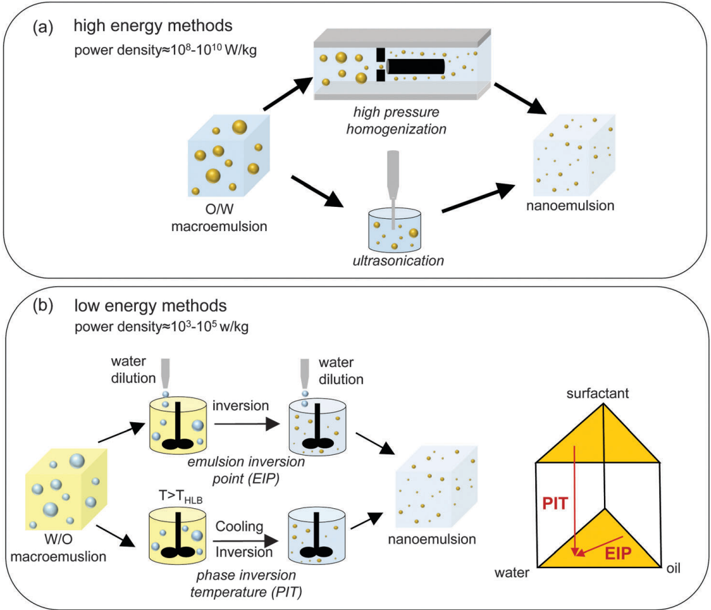
“For example, the low-energy shaking with hand is sufficient to produce oil in water emulsions with a droplet size of 40–100 µm, but a huge amount of energy approximately in the order of 108–1010 W/kg [37] would be required to produce nano-sized droplets.”
BackgroundEmulsions prepared by ultrahigh methoxylated pectin through the phase inversion method
Hua, X., Ding, P., Wang, M., Chi, K., Yang, R., & Cao, Y. (2019) · International Journal of Biological Macromolecules · doi:10.1016/j.ijbiomac.2019.01.111 · Cited by 32
Theochari, I., Γιατρόπουλος, Α., Papadimitriou, V., Karras, V., Balatsos, G., Papachristos, D., & Michaelakis, Α. (2020) · Insects · doi:10.3390/insects11110740 · Cited by 32
“When the short-chain alcohol (ethanol) was removed (System 4), spontaneous emulsification was not possible and, therefore, mechanical stirring and homogenization under pressure were applied to provide the necessary disruptive forces for the production of nanoscale oil droplets [6,7,35].”
BackgroundMethodBlack pepper essential oil nanoemulsions formulation using EPI and PIT methods
Hiền, L. T. M., & Dao, D. T. A. (2020) · Journal of Food Processing and Preservation · doi:10.1111/jfpp.15216 · Cited by 32
Reyes, Y., Hamzehlou, S., & Leiza, J. R. (2021) · Journal of Molecular Liquids · doi:10.1016/j.molliq.2021.116152 · Cited by 32
Wang, Y., Xie, Y., Jiang, Q., Chen, H., Ma, R., Wang, Z., Yin, M., Shen, J., & Yan, S. (2022) · Insect Science · doi:10.1111/1744-7917.13033 · Cited by 32
Thaker, A. H., & Ranade, V. V. (2022) · Industrial & Engineering Chemistry Research · doi:10.1021/acs.iecr.2c03714 · Cited by 32
Lomustine’s nanoemulsion as nose-to-brain drug delivery system for CNS tumor treatment
Alaayedi, M. H., & Maraie, N. K. (2023) · Saudi Pharmaceutical Journal · doi:10.1016/j.jsps.2023.06.025 · Cited by 40
“Same observation was found with lidocaine NE where the variation in oil amount as well as surfactant affect the penetration in to the hydrophobic zone of the surfactant hence influencing surface curvature and subsequently the droplet size (Gupta et al., 2016; Sarheed et al., 2020).”
Nanoemulsion-based active packaging for food products
Prasad, J., Dixit, A., Sharma, S. P., Mwakosya, A. W., Petkoska, A. T., Upadhyay, A., & Kumar, N. (2023) · Foods and raw materials · doi:10.21603/2308-4057-2024-1-585 · Cited by 35
Ashagrie, Y. N., Tadesse, M. G., Bachheti, R. K., Nijhawan, G., Tyagi, S., & Bachheti, A. (2025) · Scientific Reports · doi:10.1038/s41598-025-87732-y · Cited by 31
“According to Gupta et al. (2016); nanoemulsions with a diameter of approximately 100 nm are kinetically stable droplets of one liquid phase distributed in another immiscible phase 8 .”
Gledović, A., Ležaić, A. J., Krstonosic, V. S., Djoković, J., Nikolić, I., Bajuk‐Bogdanović, D., Antić‐Stanković, J., Randjelovic, D. V., Savic, S. M., Filipović, M., et al. (2020) · PLoS ONE · doi:10.1371/journal.pone.0230993 · Cited by 32
“Nanoemulsions are defined as kinetically stable mixtures of two immiscible liquids, with one liquid phase dispersed in the other, forming spherical droplets of 10 to 300 nm in diameter [12,15,16].”
BackgroundMethodInfluentialLi, M., Kang, W., Li, Z., Yang, H., Jia, R., He, Y., Kang, X., Zheng, Z., Wang, Y., Сарсенбекулы, Б., et al. (2021) · Physics of Fluids · doi:10.1063/5.0058759 · Cited by 31
Lemos, J. D. A., Oliveira, A. E. M. D. F. M., Araújo, R. S., Townsend, D. M., Ferreira, L. A. M., & de Barros, A. L. B. (2021) · Biomedicine & Pharmacotherapy · doi:10.1016/j.biopha.2021.112137 · Cited by 32
Nanoemulsion-based approach to preserve muscle food: A review with current knowledge
Rathod, N. B., Meral, R., Siddiqui, S. A., Nirmal, N. P., & Özoğul, F. (2023) · Critical Reviews in Food Science and Nutrition · doi:10.1080/10408398.2023.2175347 · Cited by 32
“…edible coatings have a number of advantages, including the ability to reduce the prolonged transmission of active components and interaction with food matrix (Gupta et al. 2016a), improving the antimicrobial, antioxidant, and homogeneity of edible coatings (Al-Tayyar, Youssef, and Al-Hindi 2020).”
BackgroundInfluentialRecent advances in food-derived nanomaterials applied to biosensing
Zhou, R., Zhao, L., Wang, Y., Hameed, S. F., Ping, J. F., Xie, L., & Ying, Y. B. (2020) · TrAC Trends in Analytical Chemistry · doi:10.1016/j.trac.2020.115884 · Cited by 31
Stimuli‐Responsive and Multifunctional Nanogels in Drug Delivery
Ashwani, P. V., Gopika, G., Krishna, K. V. A., Jose, J., John, F., & George, J. (2023) · Chemistry & Biodiversity · doi:10.1002/cbdv.202301009 · Cited by 33
Malik, P., Inwati, G. K., Mukherjee, T. K., Singh, S., & Singh, M. (2019) · Journal of Molecular Liquids · doi:10.1016/j.molliq.2019.111252 · Cited by 30
Silva, P. D. C. E., Pereira, L. A. S., de Rezende, É. M., dos Reis, M. V., Lago, A. M. T., Carvalho, G. R., Paiva, R., de Oliveira, J. E., & Marconcini, J. M. (2019) · European Journal of Plant Pathology · doi:10.1007/s10658-019-01838-4 · Cited by 31
“In this context, the steric effect plays an important role in the nanoemulsion stabilization (Gupta et al. 2016).”
BackgroundMa, H. L., Varanda, L. C., Perussi, J. R., & Carrilho, E. (2021) · Journal of Photochemistry and Photobiology B Biology · doi:10.1016/j.jphotobiol.2021.112303 · Cited by 30
Global regulations and legislations on nanoparticles usage and application in diverse horizons
Mishra, A. K., Das, R., Sahoo, S., & Biswal, B. (2022) · Comprehensive analytical chemistry · doi:10.1016/bs.coac.2021.12.004 · Cited by 35
Anti-rheumatic activity of topical nanoemulsion containing bee venom in rats
Yousefpoor, Y., Amani, A., Divsalar, A., Mousavi, S. E., Shakeri, A., & Sabzevari, J. T. (2022) · European Journal of Pharmaceutics and Biopharmaceutics · doi:10.1016/j.ejpb.2022.02.005 · Cited by 30
Nanoemulsion polymerization and templating: Potentials and perspectives
Chaleshtari, Z. A., Zhou, M., & Foudazi, R. (2022) · Journal of Applied Physics · doi:10.1063/5.0081303 · Cited by 34
Marena, G. D., Ramos, M. A. D. S., Carvalho, G. C., de Lima, L. C., do Nascimento, A. L. C. S., Sábio, R. M., Rodero, C. F., Spósito, L., Bauab, T. M., & Chorilli, M. (2022) · Journal of Drug Delivery Science and Technology · doi:10.1016/j.jddst.2022.103566 · Cited by 33
Bérard, C., Desgranges, S., Dumas, N., Novell, A., Larrat, B., Hamimed, M., Taulier, N., Estève, M., Corréard, F., & Contino-Pepin, C. (2022) · Pharmaceutics · doi:10.3390/pharmaceutics14071498 · Cited by 32
“Several factors can influence the emulsion properties, such as the nature and concentration of surfactants, the nature of dispersed and continuous phases and the level of applied power [40,41].”
BackgroundFuture Nanotechnology‐Based Strategies for Improved Management of Helicobacter pylori Infection
Kamankesh, M., Yadegar, A., Llopis‐Lorente, A., Liu, C., Haririan, I., Aghdaei, H. A., Shokrgozar, M. A., Zali, M. R., Miri, A. H., Rad‐Malekshahi, M., et al. (2023) · Small · doi:10.1002/smll.202302532 · Cited by 33
Biopesticides: Formulations and Delivery Techniques
Kala, S., Sogan, N., Agarwal, A., Naik, S. N., Patanjali, P. K., & Kumar, J. (2020) · Elsevier eBooks · doi:10.1016/b978-0-12-819304-4.00018-x · Cited by 30
Nanoemulsion Formulation Strategies for Enhanced Drug Delivery
Tanuku, S., Velisila, D., Thatraju, D., & Vadaga, A. K. (2024) · Journal of Pharma Insights and Research. · doi:10.69613/3f8m9151 · Cited by 30
“They are characterized as small, transparent, and smooth emulsions, with droplet sizes usually falling between 10 - 200 nm [3].”
BackgroundNanoemulsion edible coating for shelf-life improvement and quality control in perishable products
Thakur, D., Rana, P., SINGH, S. K., Bakshi, M., Kumar, S., & Singh, S. (2024) · Plant Nano Biology · doi:10.1016/j.plana.2024.100114 · Cited by 33
Versatile Emulsion-Based Encapsulation System Production Processes: A Review
Bufalini, C., & Campardelli, R. (2025) · Processes · doi:10.3390/pr13051409 · Cited by 32
QbD Based Optimization of Curcumin Nanoemulsion: DoE and Cytotoxicity Studies
Acharya, S. D., Tamane, P., Khante, S. N., & Pokharkar, V. (2020) · Indian Journal of Pharmaceutical Education and Research · doi:10.5530/ijper.54.2.38 · Cited by 32
Nanomedicine Approaches to Negotiate Local Biobarriers for Topical Drug Delivery
Mustfa, S. A., Maurizi, E., McGrath, J. A., & Chiappini, C. (2020) · Advanced Therapeutics · doi:10.1002/adtp.202000160 · Cited by 33
Aslam, S., Akhtar, A., Nirmal, N. P., Khalid, N., & Maqsood, S. (2022) · Food Engineering Reviews · doi:10.1007/s12393-022-09311-5 · Cited by 32
Chen, L., & Doyle, P. S. (2022) · Chemistry of Materials · doi:10.1021/acs.chemmater.2c00801 · Cited by 29
Self-citationÇiçek, S., & Özoğul, F. (2022) · Critical Reviews in Food Science and Nutrition · doi:10.1080/10408398.2022.2096563 · Cited by 31
Guan, S., Hua, X., Wang, Z., Yuan, Y., & Yang, R. (2022) · Food Hydrocolloids · doi:10.1016/j.foodhyd.2022.108086 · Cited by 29
Gostyńska, A., Czerniel, J., Kuźmińska, J., Brzozowski, J., Majchrzak‐Celińska, A., Krajka‐Kuźniak, V., & Stawny, M. (2023) · Pharmaceutics · doi:10.3390/pharmaceutics15020448 · Cited by 32
“The addition of other substances, pH changes, temperature, and light exposure may affect the physical stability of lipid nanoemulsion [51].”
BackgroundPrabha, J., Kumar, M., Kumar, D., Chopra, S., & Bhatia, A. (2023) · Current Drug Delivery · doi:10.2174/1567201821666230825102748 · Cited by 36
Gu, T., Zheng, C., He, F., Zhang, Y., Khan, S. A., & Hatton, T. A. (2018) · Lab on a Chip · doi:10.1039/c8lc00114f · Cited by 29
Self-citationCoccaro, N., Ferrari, G., & Donsì, F. (2018) · Journal of Food Engineering · doi:10.1016/j.jfoodeng.2018.05.011 · Cited by 29
Importance of Surface Energy in Nanoemulsion
Bhattacharjee, K. (2019) · IntechOpen eBooks · doi:10.5772/intechopen.84201 · Cited by 35
Bharti, S., Mukherji, S., & Mukherji, S. (2019) · The Science of The Total Environment · doi:10.1016/j.scitotenv.2019.06.482 · Cited by 29
Vinh, T. D. T., Hiền, L. T. M., & Dao, D. T. A. (2020) · Food Science & Nutrition · doi:10.1002/fsn3.1422 · Cited by 29
Nanoemulsion application in meat product and its functionality: review
Ujilestari, T., Febrisiantosa, A., Sholikin, M. M., Wahyuningsih, R., & Wahyono, T. (2022) · Journal of Animal Science and Technology · doi:10.5187/jast.2022.e120 · Cited by 28
“The small particle size of NE enhances the surface area and imparts a transparent appearance [9].”
BackgroundInfluentialPugazhendhi, A., Alshehri, M. A., Kandasamy, S., Sarangi, P. K., & Sharma, A. K. (2024) · Food Chemistry · doi:10.1016/j.foodchem.2024.141762 · Cited by 34
Li, W., Yalçın, M., Bharali, D. J., Lin, Q., Godugu, K., Fujioka, K., Keating, K. A., & Mousa, S. A. (2019) · Scientific Reports · doi:10.1038/s41598-019-44979-6 · Cited by 28
RetractedProspects and application of nanobiotechnology in food preservation: molecular perspectives
Bhuyan, D., Greene, G. W., & Das, R. K. (2019) · Critical Reviews in Biotechnology · doi:10.1080/07388551.2019.1616668 · Cited by 31
“Encapsulation of functional food ingredient in individual phases of a multilayer emulsion [8,9]”
BackgroundDomenech, T., & Doyle, P. S. (2019) · Chemistry of Materials · doi:10.1021/acs.chemmater.9b04241 · Cited by 28
Self-citationMagnetic nanoparticles mediated cancer hyperthermia
Ahmed, S., Rajak, B. L., Gogoi, M., & Sarma, H. D. (2020) · Elsevier eBooks · doi:10.1016/b978-0-12-817913-0.00016-x · Cited by 28
Nanoemulsions as Optimized Vehicles for Essential Oils
Barradas, T. N., & Silva, K. G. D. H. E. (2020) · Sustainable agriculture reviews · doi:10.1007/978-3-030-41842-7_4 · Cited by 32
Mu, B., Ying, X., Petropoulos, E. A., & He, S. (2020) · Materials Letters · doi:10.1016/j.matlet.2020.129143 · Cited by 28
Physical, morphological and storage stability of clove oil nanoemulsion based delivery system
Singh, P., Kaur, G., & Singh, A. (2021) · Food Science and Technology International · doi:10.1177/10820132211069470 · Cited by 32
Insecticidal effects of natural products in free and encapsulated forms: an overview
Hammoud, Z., Abada, M. B., Greige‐Gerges, H., Elaïssari, A., & Jemâa, J. M. B. (2022) · Journal of Natural Pesticide Research · doi:10.1016/j.napere.2022.100007 · Cited by 29
Perrin, L., Desobry-Banon, S., Gillet, G., & Desobry, S. (2022) · Foods · doi:10.3390/foods11152194 · Cited by 29
“Droplets aggregation depends on surface electric charge, which is fluently determined by its ζpotential [5,6].”
BackgroundInfluentialSaponin-based natural nanoemulsions as alpha-tocopherol delivery systems for dermal applications
Schreiner, T. B., Santamaria‐Echart, A., Colucci, G., Plasencia, P., Costa, P., Dias, M. M., Pinho, S. P., & Barreiro, M. F. (2023) · Journal of Molecular Liquids · doi:10.1016/j.molliq.2023.123371 · Cited by 32
Jamir, Y., Bhushan, M., Sanjukta, R., & Singh, L. R. (2023) · Biotechnology and Bioengineering · doi:10.1002/bit.28590 · Cited by 31
Lu, W. J., Kelly, A. L., & Miao, S. (2017) · Nanomaterials · doi:10.3390/nano7090282 · Cited by 31
“Emulsions showed a reduced droplet size with increasing homogenization pressure (HP) used during their preparation (Table 1), which was as observed in many previous studies [15], and no significant difference in droplet size of emulsions stabilized by whey protein isolate (WPI), sodium caseinate (SCN) and Tween® 80 (T…”
ResultGodfrin, P. D., Lee, H., Lee, J. H., & Doyle, P. S. (2019) · Small · doi:10.1002/smll.201803372 · Cited by 28
Self-citationAssessment of potential toxicity of foodborne fluorescent nanoparticles from roasted pork
Zhao, X. Y., Shan, S., Li, J., Cao, L., Lv, J., & Tan, M. (2019) · Nanotoxicology · doi:10.1080/17435390.2019.1652943 · Cited by 28
“Nanoparticles (NPs) with size ranging from 1 to 100 nm have exhibited distinct properties, such as small size, high surface-to-area ratio, catalytic capability, and quantum effects (Gupta et al. 2016).”
BackgroundDevelopment and incorporation of nanoemulsions in food
Cenobio-Galindo, A. D. J., Campos-Montiel, R. G., Jiménez-Alvarado, R., Almaraz‐Buendía, I., Medina‐Pérez, G., & Fernández-Luqueño, F. (2019) · International Journal of Food Studies · doi:10.7455/ijfs.v8i2.614 · Cited by 30
Kumar, S., Bhuvaneshwari, R., Jain, S., Nirwan, S., Fatima, Z., Kumar, D., Chhikara, B. S., Rathi, B., & Poonam, P. (2023) · Current Nanoscience · doi:10.2174/1573413719666230417103517 · Cited by 27
Upadhyay, M., Ravi, A., & Ranade, V. V. (2024) · Industrial & Engineering Chemistry Research · doi:10.1021/acs.iecr.3c04555 · Cited by 27
Anion amphiphilic random copolymers and their performance as stabilizers for O/W nanoemulsions
Peng, F., Ke, Y., Lu, S., Zhao, Y. M., Hu, X., & Deng, Q. (2019) · RSC Advances · doi:10.1039/c9ra01383k · Cited by 27
Meng, R., Wang, C., & Shen, Z. (2020) · SPE Journal · doi:10.2118/199904-pa · Cited by 27
Huang, Y., Wang, Z., Zhang, G., Ren, J., Li, Y., Liu, X., Yang, Y., Ravindran, A., Wong, C., & Chen, R. (2021) · Journal of Materials Chemistry B · doi:10.1039/d0tb02442b · Cited by 28
Flavonoid-based nanomedicines to target tumor microenvironment
Talib, W. H., Abuawad, A., Thiab, S. H., Alshweiat, A., & Mahmod, A. I. (2022) · OpenNano · doi:10.1016/j.onano.2022.100081 · Cited by 30
Current Applications of Plant-Based Drug Delivery Nano Systems for Leishmaniasis Treatment
dos Santos, D. B., Lemos, J. D. A., Miranda, S. E. M., Filippo, L. D. D., Duarte, J. L., Ferreira, L. A. M., de Barros, A. L. B., & Oliveira, A. E. M. D. F. M. (2022) · Pharmaceutics · doi:10.3390/pharmaceutics14112339 · Cited by 28
“Nanoemulsions (NEs) are systems consisting of immiscible liquids where one of them is dispersed in the other in the form of small droplets with particle sizes ranging from 20 to 500 nm [48,49].”
BackgroundJemaa, M. B., Rahali, F. Z., Falleh, H., Beji, R. S., Megdiche-Ksouri, W., Sellami, I. H., Hammami, M., Nehme, R., Pereira, R. B., Andrés, S., et al. (2022) · Molecules · doi:10.3390/molecules27217330 · Cited by 29
“Cheng, L.-C.; Hashemnejad, S.M.; Zarket, B.; Muthukrishnan, S.; Doyle, P.S. Thermally and pH-responsive gelation of nanoemulsions stabilized by weak acid surfactants.”
BackgroundInfluentialZhao, D., Ma, Y., Wang, W., & Xiang, Q. (2023) · Heliyon · doi:10.1016/j.heliyon.2023.e19582 · Cited by 33
“The incorporation of EOs in nanoemulsions can greatly improve their dispersibility in aqueous solutions, physico-chemical stability, bioactivity, sustained release, absorption, and bioavailability [10,15].”
BackgroundHunter, S. J., Penfold, N. J. W., Chan, D. H. H., Mykhaylyk, O. O., & Armes, S. P. (2020) · Langmuir · doi:10.1021/acs.langmuir.9b03389 · Cited by 27
Suram, D., Narala, A., & Veerabrahma, K. (2020) · Drug Development and Industrial Pharmacy · doi:10.1080/03639045.2020.1742142 · Cited by 30
“This enhances drug dissolution and rapid absorption from the gastrointestinal tract [16].”
BackgroundRinaldi, F., Maurizi, L., Conte, A. L., Marazzato, M., Maccelli, A., Crestoni, M. E., Hanieh, P. N., Forte, J., Conte, M. P., Zagaglia, C., et al. (2021) · Pharmaceutics · doi:10.3390/pharmaceutics13020134 · Cited by 31
“Typically NEs contain oil, water, and an emulsifier [28], and may offer higher solubilization and improved bioavailability of poorly soluble active substances, and also a system to preserve the volatile compounds of essential oils.”
BackgroundYadav, V. K., Gupta, R., Assiri, A. A., Uddin, J., Ishaqui, A. A., Kumar, P., Orayj, K. M., Tahira, S., Patel, A., & Choudhary, N. (2025) · Journal of Functional Biomaterials · doi:10.3390/jfb16010008 · Cited by 28
“So , NE of sizes between 200 and 400 nm has gained huge popularity for intravenous applications [142].”
Metadata
- Authors
- Gupta, A., Eral, H. B., Hatton, T. A., & Doyle, P. S.
- Affiliations
- Massachusetts Institute of Technology (US)
- Utrecht University (NL)
- Corresponding author
- Doyle, Patrick S.
- Venue
- Soft Matter
- Publisher
- Royal Society of Chemistry (RSC)
- Published
- 2016
- Volume
- 12
- Issue
- 11
- Pages
- 2826-2841
- ISSN
- 1744-683X (ISSN-L)
- 1744-6848
- OpenAlex
- W2276073028
- Cited by
- 1,633
- References
- 120
- Citations by year
- 2026: 188 · 2025: 193 · 2024: 200 · 2023: 191 · 2022: 188 · 2021: 182 · 2020: 172 · 2019: 135 · 2018: 97 · 2017: 61 · 2016: 14
- FWCI
- 4.89
- Type
- journal article
- Language
- en
- Open access
- hybrid
- doi.org
- Licence
- cc-by-nc
- Locations
- Soft Matter (publishedVersion, cc-by-nc)
- PubMed (publishedVersion)
- DSpace@MIT (Massachusetts Institute of Technology) (submittedVersion, cc-by-nc)
- Research Repository (Delft University of Technology) (submittedVersion)
- Data Archiving and Networked Services (DANS) (submittedVersion, cc-by-nc)
- Funders
- Eni
- Topics
- Physical Sciences › Chemistry › Physical and Theoretical Chemistry › Surfactants and Colloidal Systems
- Life Sciences › Agricultural and Biological Sciences › Food Science › Proteins in Food Systems
- Physical Sciences › Materials Science › Materials Chemistry › Pickering emulsions and particle stabilization
- Keywords
- nanoemulsions, droplet size, droplet stability, emulsion preparation, high-pressure homogenization, sonication, phase inversion temperature, bubble bursting, rheology, drug delivery, food emulsions, cosmetics, colloidal dispersions
About these checks
Registry, retraction, Cites and statistics results are computed, not judged, with one exception: a printed reference that no index lists is read once by a model before it counts as a citation error. Claims are extracted by a model and kept only when their quote appears verbatim in the text; each cited source is then checked, with a model’s help, for whether it says what the claim relies on. Those verdicts can be wrong — read the claim’s quote and the cited source before relying on one.
Statistics and arithmetic are recomputed, not judged.
Confidence bands are shown only for fields calibrated on our annotated test set. None is calibrated yet, so no band is shown.
What counts as a claim ›How we measure confidence ›How we check this ›
Are you an author, or do you see a problem with this page? Request a review
Data sources
Bibliographic data: Semantic Scholar, OpenAlex, Crossref.
Contains information from the Semantic Scholar Academic Graph Datasets, made available under the ODC Attribution License (ODC-BY 1.0).
Semantic Scholar’s data is described in: Kinney, R., et al. (2023). The Semantic Scholar Open Data Platform. arXiv:2301.10140.
