

Nanoemulsions: formation, properties and applications
Open accessThe DOI matches its Crossref record; 119 of the 120 references it cites were found in a registry or an index.
Abstract
Nanoemulsions are kinetically stable liquid-in-liquid dispersions with droplet sizes on the order of 100 nm.
Overview
The claims and statistics of this paper haven’t been checked yet.
Free: it reads the open-access text and checks the first 5 claims that cite a source we can check. Create a free account to check every claim.
Integrity signals
Registry
Cites
Statistics
Figures




Verification
Claims the paper makes
The claims and statistics of this paper haven’t been checked yet.
Free: it reads the open-access text and checks the first 5 claims that cite a source we can check. Create a free account to check every claim.
Claims other papers make about this one
Each is checked against this paper’s own text: does it say what the citing paper says it does?
The cited source says what the claim attributes to it.
In the citing paper
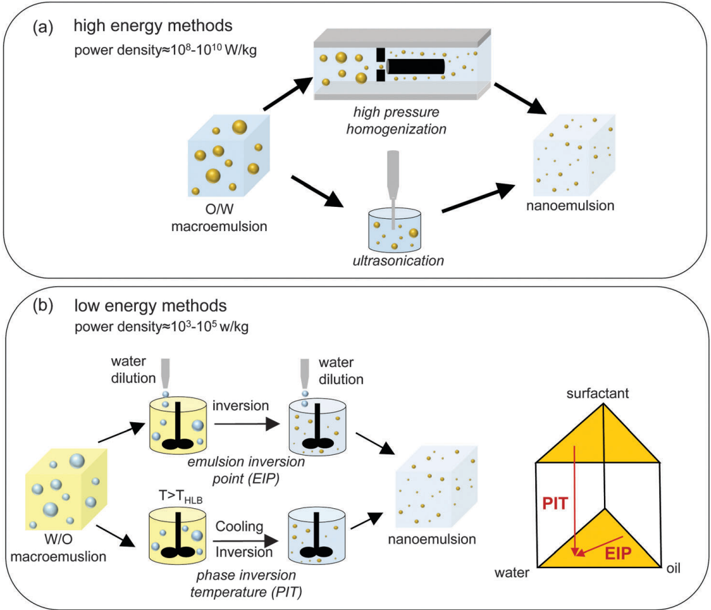
“The low-energy methods involve specific physico-chemical processes such as phase inversion temperature and emulsion inversion points to make small droplets without consuming significant energy. In the low-energy methods, the droplets are constituted when the system undergoes an inversion of phase in response to changes, such as composition or temperature, and consequently passes through a low”
From Nanoemulsions for “Nose-to-Brain” Drug Delivery (2019) · cites this paper as [32]
The cited source says what the claim attributes to it.
In the citing paper
“Important differences can be found between classical macroemulsions (classical emulsions), NEs and microemulsions in droplet size range and stability characteristics [32,47].”
From Nanoemulsions for “Nose-to-Brain” Drug Delivery (2019) · cites this paper as [32]
Self-check
Percentages, sums and reported differences re-computed from the paper’s own numbers.
The self-check needs the paper’s full text.
Citations
Cites
The kinetics of precipitation from supersaturated solid solutions
Lifshitz, I. M., & Slyozov, V. V. (1961) · Journal of Physics and Chemistry of Solids · doi:10.1016/0022-3697(61)90054-3 · Cited by 8,433
Fundamentals of the hydrodynamic mechanism of splitting in dispersion processes
Hinze, J. O. (1955) · AIChE Journal · doi:10.1002/aic.690010303 · Cited by 2,641
Nanoemulsions versus microemulsions: terminology, differences, and similarities
McClements, D. J. (2012) · Soft Matter · doi:10.1039/c2sm06903b · Cited by 1,778
McClements, D. J., & Rao, J. (2011) · Critical Reviews in Food Science and Nutrition · doi:10.1080/10408398.2011.559558 · Cited by 1,630
Solans, C., Izquierdo, P., Nolla, J., Azemar, N., & Garcia-Celma, M. J. (2005) · Current Opinion in Colloid & Interface Science · doi:10.1016/j.cocis.2005.06.004 · Cited by 1,384
Encyclopedia of emulsion technology
Becher, P. (1983) · M. Dekker eBooks · Cited by 1,226
High-Resolution EM of Colloidal Nanocrystal Growth Using Graphene Liquid Cells
Yuk, J. M., Park, J., Ercius, P., Kim, K., Hellebusch, D. J., Crommie, M. F., Lee, J. Y., Zettl, A., & Alivisatos, A. P. (2012) · Science · doi:10.1126/science.1217654 · Cited by 1,153
Mewis, J., & Wagner, N. J. (2011) · Cambridge University Press eBooks · doi:10.1017/cbo9780511977978 · Cited by 1,142
Edible nanoemulsions: fabrication, properties, and functional performance
McClements, D. J. (2011) · Soft Matter · doi:10.1039/c0sm00549e · Cited by 1,031
Asua, J. M. (2002) · Progress in Polymer Science · doi:10.1016/s0079-6700(02)00010-2 · Cited by 952
Research works printed but not linked: 6
- 1. T. G. Mason, J. Wilking, K. Meleson, C. Chang and S. Graves, J. Phys.: Condens. Matter, 2006, 18, R635.
- 13. T. Tadros, P. Izquierdo, J. Esquena and C. Solans, Adv. Colloid Interface Sci., 2004, 108, 303-318. · doi:10.1016/j.cis.2003.10.023 · Paper page
- 31. N. Dixit, K. Kohli and S. Baboota, PDA J. Pharm. Sci. Technol., 2008, 62, 46-55.
- 35. P. Alves, A. Pohlmann and S. Guterres, Pharmazie, 2005, 60, 900-904.
- 51. M. Ahmed, W. Ramadan, D. Rambhu and F. Shakeel, Pharmazie, 2008, 63, 806-811.
- 63. L. Mao, D. Xu, J. Yang, F. Yuan, Y. Gao and J. Zhao, Food Technol. Biotechnol., 2009, 47, 336-342.
Cited by
Items 701–800 of 1,000
Advancements and prospects for emulsion collectors in low-rank/oxidized coal flotation separation
Li, Z., Zhou, B., Kong, Y., Ma, Z., Yang, X., Wang, L., Xia, Y., Zhao, X., Xing, Y., & Gui, X. (2025) · Advances in Colloid and Interface Science · doi:10.1016/j.cis.2025.103735 · Cited by 15
Electrokinetic spectra of dilute surfactant-stabilized nano-emulsions
Hill, R. J. (2020) · Journal of Fluid Mechanics · doi:10.1017/jfm.2020.579 · Cited by 15
“The large surface-to-volume ratio is advantageous for purifying and releasing oil-soluble drugs (Gupta et al. 2016; Hashemnejad et al. 2019), and there has been a resurgence in efforts to understand the interfacial surface charge, which plays a pivotal role in maintaining a small drop size: by…”
BackgroundAlderees, F., Akter, S., Mereddy, R., & Sultanbawa, Y. F. (2022) · Journal of Food Safety · doi:10.1111/jfs.13001 · Cited by 17
Synthesis and characterization of emulsion fuels –Implications to spray and engine studies
Gowrishankar, S., Rastogi, P., Krishnasamy, A., Basavaraj, M. G., Kaisare, N. S., & Aidhen, I. S. (2024) · Progress in Energy and Combustion Science · doi:10.1016/j.pecs.2023.101133 · Cited by 16
Saleh, M. N., Salam, M. A., & Çapanoğlu, E. (2024) · ACS Omega · doi:10.1021/acsomega.3c07060 · Cited by 15
Li, J., Campardelli, R., Firpo, G., Zhang, J., & Perego, P. (2024) · Chinese Journal of Chemical Engineering · doi:10.1016/j.cjche.2024.03.002 · Cited by 15
Lin, Y., Tsai, W.-C., Lu, H.-Y., Fang, S.-Y., Chan, H.-W., & Huang, C. (2024) · International Journal of Nanomedicine · doi:10.2147/ijn.s458593 · Cited by 15
Boček, Ž., Petkovšek, M., Clark, S. J., Fezzaa, K., & Dular, M. (2024) · Ultrasonics Sonochemistry · doi:10.1016/j.ultsonch.2024.106970 · Cited by 15
“8a, frames 18 – 21, size estimated from these frames), classifying this as a macro-emulsion [34,37,47,48].”
BackgroundEnhanced Pathogen Control Through Thymol and Carvacrol Nanoemulsions: A Microfluidization Approach
Özoğul, Y., Karslı, G. T., Yazgan, H., Küley, E., Öztop, M. H., Özoğul, F., & Esatbeyoglu, T. (2025) · Food and Bioprocess Technology · doi:10.1007/s11947-025-03759-z · Cited by 19
“It was reported that droplet size is highly dependent on concentration, solubility, and viscosity of the phases (Gupta et al., 2016).”
Abd, E.-W. H., Attia, M. T., Hassan, W. A., & Nasser, A. M. B. (2019) · International Journal of Nanoparticles and Nanotechnology · doi:10.35840/2631-5084/5522 · Cited by 15
Low-energy formation of in-situ nanoemulsion at constant temperature for oil removal
Meng, R., Wang, C., Shen, Z., Wang, R., Kuru, E., & Jin, J. (2020) · Journal of Molecular Liquids · doi:10.1016/j.molliq.2020.113663 · Cited by 15
Huang, H., Sun, Y., Cui, L., Ni, Y., Li, S., Xing, W., & Jing, W. (2020) · Industrial & Engineering Chemistry Research · doi:10.1021/acs.iecr.0c03837 · Cited by 15
Advanced applications of green materials in agriculture
Merino, D., & Álvarez, V. A. (2021) · Elsevier eBooks · doi:10.1016/b978-0-12-820484-9.00008-8 · Cited by 17
Chen, Z., Wang, X., Shi, L., Liu, Q., Gao, Y., Chen, W., Yang, J., Yuan, X., & Feng, J. (2021) · Langmuir · doi:10.1021/acs.langmuir.1c02528 · Cited by 15
Tran, N. B., Bhattacharyya, S., Yao, Y., Agarwal, V., & Zetterlund, P. B. (2021) · ACS Applied Nano Materials · doi:10.1021/acsanm.1c02950 · Cited by 15
Chrastina, A., Welsh, J., Borgström, P., & Baron, V. T. (2022) · BioMed Research International · doi:10.1155/2022/3549061 · Cited by 15
“Nanoemulsions are biphasic dispersions of oil in water stabilized by amphiphilic surfactant/cosurfactant interfacial film exhibiting optical isotropy and kinetic stability [13].”
Martínez-Razo, G., Pires, P. C., Domínguez‐López, M. L., Veiga, F., Vega‐López, A., & Paiva‐Santos, A. C. (2023) · Pharmaceuticals · doi:10.3390/ph16040501 · Cited by 15
“Furthermore, the characteristics of nanoemulsions highly depend on their components, therefore desirable formulation qualities can be acquired by carefully selecting ingredients and determining the amount and weight ratio of oil and surfactants [23].”
BackgroundVilanculos, J. R. Z., de Farias, B. S., Engelmann, J. I., Ribeiro, E. S., de Oliveira, P. D., Cadaval, T. R. S., & Pinto, L. A. D. A. (2023) · Journal of Molecular Liquids · doi:10.1016/j.molliq.2023.122533 · Cited by 19
Li, P., Huang, H., Fang, Y., Wang, Y., No, D. S., Bhatnagar, R. S., & Abbaspourrad, A. (2023) · Colloids and Surfaces A Physicochemical and Engineering Aspects · doi:10.1016/j.colsurfa.2023.132242 · Cited by 15
Bursting dynamics of viscous film without circular symmetry: The effect of confinement
Murano, M., & Okumura, K. (2018) · Physical Review Fluids · doi:10.1103/physrevfluids.3.031601 · Cited by 15
Agame-Lagunes, B., Grube-Pagola, P., García‐Varela, R., Alexander-Aguilera, A., & Garcia, H. S. (2021) · Pharmaceutics · doi:10.3390/pharmaceutics13040509 · Cited by 20
Resurrection of Nalidixic Acid: Evaluation of Water-Based Nanoformulations as Potential Nanomedicine
Pandey, A., Aggarwal, N., Adholeya, A., & Kochar, M. (2018) · Nanoscale Research Letters · doi:10.1186/s11671-018-2718-8 · Cited by 17
Applicability of Nanoemulsions for the Incorporation of Bioactive Compounds in Cosmetics: A Review
de Souza, A. C., Sípoli, C. C., Aranha, A. C. R., Samulewski, R. B., da Silva, G. N., Defendi, R. O., Gomes, M. C. S., & Suzuki, R. M. (2026) · ACS Omega · doi:10.1021/acsomega.5c08224 · Cited by 18
“86”
Krisanti, E. A., Kirana, D. P., & Mulia, K. (2021) · PLoS ONE · doi:10.1371/journal.pone.0261792 · Cited by 18
“The droplet size measurement is used as a stability parameter because emulsion destabilization is associated with droplet coalescence, coagulation, flocculation, and Otswald ripening [38].”
MethodA Comprehensive Review of Nanoemulsion Applications and their Recent Advancements
Das, P., Panda, J. R., Patro, C. N., Sahu, B., & Patnaik, S. S. (2022) · Current Nanomaterials · doi:10.2174/2405461508666221103121439 · Cited by 14
Protoscolicidal effects of curcumin nanoemulsion against protoscoleces of Echinococcus granulosus
Teimouri, A., Azami, S. J., Hashemi-Hafshejani, S., Ghanimatdan, M., Bahreini, M. S., Alimi, R., & Sadjjadi, S. M. (2023) · BMC Complementary Medicine and Therapies · doi:10.1186/s12906-023-03927-8 · Cited by 18
“Thus, NEs seem clear despite their opaque appearance [37].”
BackgroundAnti-Inflammatory Activity of Pequi Oil (Caryocar brasiliense): A Systematic Review
da Silva, V. R. P., Pinheiro, A. C., Ombredane, A. S., Martins, N. O., Luz, G. V. D. S., Carneiro, M. L. B., & Joanitti, G. A. (2023) · Pharmaceuticals · doi:10.3390/ph17010011 · Cited by 15
“Nanoemulsions are characterized by having a diameter ranging between 50 and 200 nm, and are constituted by an oil phase, an aqueous phase, and a surfactant agent [62,63].”
BackgroundMiranda, S. E. M., Lemos, J. D. A., Ottoni, F. M., Cassali, G. D., Townsend, D. M., Ferreira, C. D. A., Alves, R. J., Ferreira, L. A. M., & de Barros, A. L. B. (2023) · Biomedicine & Pharmacotherapy · doi:10.1016/j.biopha.2023.116054 · Cited by 14
“The choice of Tween 80 as the surfactant in our formulation aligns with a well-established trend in the field of nanoemulsions for delivering poorly water-soluble drugs [20,31,55,67].”
Mapile, A. N., & Scatena, L. F. (2024) · Colloids and Surfaces A Physicochemical and Engineering Aspects · doi:10.1016/j.colsurfa.2024.134414 · Cited by 14
Salama, A., Soliman, G. M., Elsherbiny, N. M., & Safwat, M. A. (2024) · Journal of Drug Delivery Science and Technology · doi:10.1016/j.jddst.2024.105842 · Cited by 15
Jirandehi, A. K., Asgari, R., Shahbaz, S. K., & Rezaei, N. (2024) · Nanoscale Advances · doi:10.1039/d4na00808a · Cited by 17
“115 In cancer treatment, nano-emulsions are especially suitable for topical and localized therapies, such as those used in skin cancer or intratumoral injections.”
Nano-based drug delivery systems for the treatment of non-infectious uveitis
Wu, X., Hu, M., Cai, Y., Jia, F., Yang, Y., Yu, N., Chen, M., & Wang, K. (2024) · Advances in Ophthalmology Practice and Research · doi:10.1016/j.aopr.2024.11.003 · Cited by 14
Preparation and evaluation of oral insulin nanocapsule delivery systems
Zhang, M., Wang, C., Pan, J., Wang, M., Cui, H., & Zhao, X. (2024) · International Journal of Biological Macromolecules · doi:10.1016/j.ijbiomac.2024.138727 · Cited by 14
Eco-nanotechnology: phyto essential oil-based pest control for stored products
Sakthiyavathi, S. S. K., Kannan, M., Kamalakannan, M., Murugesan, V., Soundararajan, R. P., Anand, T., Raghu, R., & Govindaraju, K. (2025) · Environmental Science Nano · doi:10.1039/d5en00397k · Cited by 19
Viscosity‐concentration relationships for nanodispersions based on glass transition point
Pal, R. (2017) · The Canadian Journal of Chemical Engineering · doi:10.1002/cjce.22810 · Cited by 14
Magnetic nanoparticles: applications in biomedical processes as synergic drug-delivery systems
de Jesus, P. D. C. C., Pellosi, D. S., & Tedesco, A. C. (2019) · Elsevier eBooks · doi:10.1016/b978-0-12-816913-1.00012-x · Cited by 16
Nanoencapsulation of Phytochemicals and in-vitro Applications
Ling, J. K. U., Hii, Y. S., Jeevanandam, J., Chan, Y. S., & Danquah, M. K. (2019) · Springer eBooks · doi:10.1007/978-981-13-6920-9_17 · Cited by 19
Orange Peel Essential Oil Nanoemulsions Supported by Nanosilver for Antibacterial Application
Doan, V., Cuong, N. V., Pham, H. A. L., Anh, T. T. L., Viet, P. T., & Hương, N. T. L. (2020) · Indonesian Journal of Chemistry · doi:10.22146/ijc.46042 · Cited by 14
“Therefore, they have been used widely in the cosmetic, pharmaceutical industries, food, and drug delivery, and antimicrobial applications [5-8].”
BackgroundNanomaterials in detergents and cosmetics products: the mechanisms and implications
Ibrahim, N. A., & Zaini, M. A. A. (2020) · Elsevier eBooks · doi:10.1016/b978-0-12-821381-0.00002-8 · Cited by 16
Ting, T. C., Rahim, N. F. A., Zaudin, N. A. C., Abdullah, N. H., Mohamad, M., Shoparwe, N. F., Ramle, S. F. M., Aimi, Z., Hamid, Z. A. A., & Yusof, A. H. (2020) · IOP Conference Series Earth and Environmental Science · doi:10.1088/1755-1315/596/1/012032 · Cited by 14
“The emulsifier plays a vital role in creating small-sized droplets as it decreases the interfacial tension between the water phases and the oil phase of the nanoemulsion [3].”
BackgroundMolecular Brush Surfactants: Versatile Emulsifiers for Stabilizing and Structuring Liquids
Wang, B., Liu, T., Chen, H., Yin, B., Zhang, Z., Russell, T. P., & Shi, S. (2021) · Angewandte Chemie · doi:10.1002/ange.202104653 · Cited by 14
Saha, S., D'souza, D., & Londhe, V. Y. (2021) · Journal of Drug Delivery Science and Technology · doi:10.1016/j.jddst.2021.102865 · Cited by 14
Fernandes, A. R., dos Santos, T., Granja, P. L., Sánchez‐López, E., Santini, A., García, M. L., Silva, A. M., & Souto, E. B. (2021) · Pharmaceutics · doi:10.3390/pharmaceutics13101652 · Cited by 14
“Nanoemulsions are composed of two immiscible liquids in which the droplets of one liquid (dispersed phase or inner phase) are dispersed in another liquid (continuous phase or external phase) and can be classified into two types, namely, oil-inwater (o/w) and water-in-oil (w/o) [1].”
BackgroundMorikawa, C., Ueda, K., Omori, M., Higashi, K., & Moribe, K. (2021) · International Journal of Pharmaceutics · doi:10.1016/j.ijpharm.2021.121210 · Cited by 14
Kuropakornpong, P., Itharat, A., Ooraikul, B., Löebenberg, R., & Davies, N. M. (2022) · Research in Pharmaceutical Sciences · doi:10.4103/1735-5362.335170 · Cited by 14
“Research has demonstrated that the use of such technology can increase drug absorption through the skin, enhance drug stability, and thus produce better treatment outcomes (5,6).”
BackgroundSupramolecular Polymer Emulsifiers for One-step Complex Emulsions
Wang, Z., Liao, S., & Wang, Y. (2017) · Chinese Journal of Polymer Science · doi:10.1007/s10118-018-2084-0 · Cited by 14
Franklyne, J. S., Nadarajan, A., Ebenazer, A., Tiwari, N., Mukherjee, A., & Chandrasekaran, N. (2018) · International Journal of Applied Pharmaceutics · doi:10.22159/ijap.2018v10i6.28726 · Cited by 16
Design and Fabrication of Brain-Targeted Drug Delivery
Soni, V., Pandey, V., Asati, S., Jain, P., & Tekade, R. K. (2019) · Elsevier eBooks · doi:10.1016/b978-0-12-817909-3.00014-5 · Cited by 18
Sulkhan, A. A. R., Artanti, A. N., Ermawati, D. E., & Prihapsara, F. (2019) · IOP Conference Series Materials Science and Engineering · doi:10.1088/1757-899x/578/1/012046 · Cited by 14
Nam, S. H., Choi, Y., Kim, Y.-W., Jun, K., Jeong, N., Oh, S., & Kang, H. (2020) · Journal of Industrial and Engineering Chemistry · doi:10.1016/j.jiec.2020.07.013 · Cited by 14
The multifaceted dimensions of potent nanostructures: a comprehensive review
Jamwal, D., Sharma, A., Kanwar, R., & Mehta, S. K. (2021) · Materials Chemistry Frontiers · doi:10.1039/d0qm00950d · Cited by 14
Preparation of symbiotic whey protein gel as a carrier of free and encapsulated probiotic bacteria
Mabrouk, A., Salama, H. H., El-Sayed, H. S., & El-Sayed, S. M. (2021) · Journal of Food Processing and Preservation · doi:10.1111/jfpp.15612 · Cited by 17
Saratale, R. G., Lee, H., Koo, Y. E., Saratale, G. D., Kim, Y. J., Imm, J. Y., & Park, Y. (2017) · Food Research International · doi:10.1016/j.foodres.2017.12.076 · Cited by 14
Influence of Sample Mixing Techniques on Engine Oil Contamination Analysis by Infrared Spectroscopy
Holland, T. E., Abdul-Munaim, A. M., Watson, D. G., & Sivakumar, P. (2019) · Lubricants · doi:10.3390/lubricants7010004 · Cited by 14
Kunadu, A. P., Arcot, Y., Cisneros‐Zevallos, L., Barouei, J., Akbulut, M. E. S., & Taylor, T. M. (2025) · Journal of Food Protection · doi:10.1016/j.jfp.2025.100517 · Cited by 13
Alarjani, K. M., Yehia, H. M., Badr, A. N., Ali, H., AL-MASOUD, A. H., Alhaqbani, S. M., Alkhatib, S. A., & Rady, A. M. (2023) · Pharmaceutics · doi:10.3390/pharmaceutics15102386 · Cited by 15
“Nanoemulsions received much attention in various areas, like medicine, food, makeup, and health applications [25,26].”
BackgroundInmuangkham, N., Sukjarernchaikul, P., Thepwatee, S., & Iemsam-arng, J. (2024) · Industrial Crops and Products · doi:10.1016/j.indcrop.2024.118052 · Cited by 13
Qin, G., Jan, A., An, Q., Zhou, H., Rietveld, L. C., & Heijman, S. G. J. (2024) · Desalination · doi:10.1016/j.desal.2024.117655 · Cited by 13
“These emulsions are predominantly thermodynamically stable “ micro-emulsions ” with sizes ranging from 10 to 100 nm [16,17].”
Novel strategies to control the biofilm formation by Pseudomonas aeruginosa in the food industry
Sadeghzadeh, R., Rafieian, F., Keshani, M., Salehi, Z., & Jafari, S. M. (2024) · Future Foods · doi:10.1016/j.fufo.2024.100481 · Cited by 14
Sampieri-Morán, J. M., Bravo‐Alfaro, D. A., Uribe-Lam, E., Luna‐Bárcenas, G., Montiel-Sánchez, M., Velasco‐Rodríguez, L. D. C., Acosta-Osorio, A. A., Ferrer, M., & Garcia, H. S. (2025) · European Journal of Pharmaceutics and Biopharmaceutics · doi:10.1016/j.ejpb.2025.114627 · Cited by 13
Processing and inspection of high-pressure microfluidics systems: A review
Song, J., Meng, S., Liu, J., & Chen, N. (2025) · Biomicrofluidics · doi:10.1063/5.0235201 · Cited by 13
Nanopatterned protein-polysaccharide thin films by humidity regulated phase separation
Banta, R. A., Collins, T. W., Curley, R., Young, P. W., Holmes, J. D., & Flynn, E. J. (2018) · Journal of Colloid and Interface Science · doi:10.1016/j.jcis.2018.07.109 · Cited by 13
Arrabito, G. D., Cavaleri, F., Porchetta, A., Ricci, F., Vetri, V., Leone, M., & Pignataro, B. (2019) · Advanced Biosystems · doi:10.1002/adbi.201900023 · Cited by 14
Hessien, M. A., Khattab, R. M., Taha, M. A., & Sadek, H. E. H. (2020) · Journal of the European Ceramic Society · doi:10.1016/j.jeurceramsoc.2020.09.056 · Cited by 13
Carpenter, A. P., Christoffersen, E. L., Mapile, A. N., & Richmond, G. L. (2021) · The Journal of Physical Chemistry B · doi:10.1021/acs.jpcb.1c00188 · Cited by 13
Alshraiedeh, N., Alzoubi, K. H., Ammar, O. F., Masadeh, M. M., Al-Fandi, M. G., Oweis, R. J., Alsharedeh, R., Al-Abed, R., & Hayajneh, R. H. (2022) · Current Nanoscience · doi:10.2174/1573413718666220303153123 · Cited by 13
Singh, A., Rajput, V. D., Rawat, S., Sharma, R., Singh, A. K., Kumar, P., Singh, A. K., Minkina, T., Singh, R. P., & Singh, S. K. (2022) · Wiley eBooks · doi:10.1002/9781119808565.ch17 · Cited by 14
Katekar, R. A., Sen, S., Riyazuddin, M., Husain, A., Garg, R., Verma, S., Mitra, K., & Gayen, J. R. (2022) · Journal of Liposome Research · doi:10.1080/08982104.2022.2069811 · Cited by 13
Oo, Y. M., Thawornprasert, J., Intaprom, N., Rodniem, K., & Somnuk, K. (2022) · ACS Omega · doi:10.1021/acsomega.2c03553 · Cited by 14
Gledović, A., Ležaić, A. J., Tamburić, S., & Savic, S. D. (2022) · Antioxidants · doi:10.3390/antiox11101898 · Cited by 14
“, antioxidants) can significantly influence NE properties and their stability [18,36].”
BackgroundMethodInfluentialKaur, K., Tandon, R., Kalia, A., & Babu, J. N. (2023) · Journal of Food Measurement & Characterization · doi:10.1007/s11694-023-01821-y · Cited by 13
Raman Spectroscopy of Emulsions and Emulsion Chemistry
Jin, H., Ma, Q., Dou, T., Jin, S., & Jiang, L. (2023) · Critical Reviews in Analytical Chemistry · doi:10.1080/10408347.2023.2228411 · Cited by 13
“[9] Emulsions are thermodynamically unstable due to high interfacial energy, and thus need to be stabilized by emulsifiers, which decrease the interfacial tension of the interfacial film.”
Cao, W., Guan, S., Tristanto, N. A., Yuan, Y., Li, Z., Tong, Y., & Hua, X. (2023) · Food Hydrocolloids · doi:10.1016/j.foodhyd.2023.109505 · Cited by 13
Arrested Coalescence of Viscoelastic Droplets: Ellipsoid Shape Effects and Reorientation
Hao, C., Xie, Z., Atherton, T. J., & Spicer, P. T. (2018) · Langmuir · doi:10.1021/acs.langmuir.8b02136 · Cited by 13
Gao, S., Decker, E. A., & McClements, D. J. (2019) · Journal of Food Engineering · doi:10.1016/j.jfoodeng.2019.01.017 · Cited by 13
Nanoparticles of lactoferrin for encapsulation of food ingredients
Bourbon, A. I., Martins, J. T., Pinheiro, A. C., Madalena, D. A., Marques, A. M. L., Nunes, R., & Vicente, A. A. (2019) · Elsevier eBooks · doi:10.1016/b978-0-12-815663-6.00006-9 · Cited by 16
Nano-Emulsion and Nano-Encapsulation of Fruit Flavor: Review
Suyanto, A., Noor, E. E. M., Rusli, M. S., & Fahma, F. (2019) · IOP Conference Series Earth and Environmental Science · doi:10.1088/1755-1315/292/1/012025 · Cited by 13
Hiền, L. T. M., Khoa, T. D., & Dao, D. T. A. (2021) · Journal of Food Processing and Preservation · doi:10.1111/jfpp.16207 · Cited by 16
Triggered and controlled release of bioactives in food applications
Zaitoon, A., & Lim, L. (2022) · Advances in food and nutrition research · doi:10.1016/bs.afnr.2022.03.002 · Cited by 16
Zhang, C., Zhang, Y., Fang, Q., Li, R., Yuan, Y., & Zhuang, H. (2023) · International Journal of Food Science & Technology · doi:10.1111/ijfs.16258 · Cited by 13
Akram, S., Wang, X., Vandamme, T., Collot, M., Rehman, A. U., Messaddeq, N., Mély, Y., & Anton, N. (2019) · Langmuir · doi:10.1021/acs.langmuir.8b03919 · Cited by 13
Development and Assessment of Lipidic Nanoemulsions Containing Sodium Hyaluronate and Indomethacin
Guermech, I., Lassoued, M. A., Abdelhamid, A., & Sfar, S. (2019) · AAPS PharmSciTech · doi:10.1208/s12249-019-1543-4 · Cited by 13
NANOEMULGEL AS A RECENT DRUG DELIVERY SYSTEM
Azeez, A. R., & Alkotaji, M. M. (2021) · Military Medical Science Letters · doi:10.31482/mmsl.2021.035 · Cited by 16
“Surfactants are molecules that can improve permeation across the skin, by reversibly attaching to keratin filaments, causing corneocyte destruction and thereby changing the stratum corneum (SC) diffusion coefficient (18, 19).”
BackgroundChitosan and sodium alginate nanoparticles synthesis and its application in food preservation
Mohammed, A. E., Abd-Alhalim, L. R., Atalla, K. M., Mohdaly, A. A. A., Ramadan, M. F., & Abdelaliem, Y. F. (2023) · RENDICONTI LINCEI · doi:10.1007/s12210-023-01154-4 · Cited by 12
Toltrazuril Polymorphs and the Effect on Hygroscopicity and Dissolution Rate
Zhang, D.-J., Chen, Q.-X., Lin, H., Miao, R.-J., Li, S., & Zhang, L. (2024) · Crystal Growth & Design · doi:10.1021/acs.cgd.3c01301 · Cited by 12
Devadiga, S., Sermasekaran, A., Singh, A. D., Agrawal, S. S., Sharma, S., & Choudhary, D. K. (2024) · Journal of Drug Delivery Science and Technology · doi:10.1016/j.jddst.2024.105422 · Cited by 13
Pandey, D. K., Thaker, A. H., & Ranade, V. V. (2024) · Chemical Engineering Research and Design · doi:10.1016/j.cherd.2024.04.038 · Cited by 12
Mishra, M., Barkat, M. A., Misra, C., Alanezi, A. A., Ali, A., Chaurawal, N., Ali, A., Preet, S., Barkat, H. A., & Raza, K. (2024) · Archives of Dermatological Research · doi:10.1007/s00403-024-03140-8 · Cited by 12
“The main difference between emulsions, including nanoemulsions and microemulsions, lies in stability, as the former are kinetically stable, whereas the latter are thermodynamically stable [8, 9, 12].”
Hadi, N. B. A., Ashaari, A., Matos, M., & Rasdi, N. W. (2024) · International Journal of Food Science & Technology · doi:10.1111/ijfs.17478 · Cited by 12
Koch, P., Dhua, S., & Mishra, P. (2024) · Journal of Essential Oil Research · doi:10.1080/10412905.2024.2397700 · Cited by 12
“Generally, high energy approaches consume 10 8 to 10 10 W/kg energy, whereas low energy approaches consume 10 3 –10 5 W/kg energy for formation of small droplets (23).”
Rocha‐Filho, P. A., & Maruno, M. (2025) · Cosmetics · doi:10.3390/cosmetics12020032 · Cited by 14
Fidelis, J., Bernardo, Y. A. D. A., de Souza, H. C. A., Conte‐Júnior, C. A., & Paschoalin, V. M. F. (2025) · International Journal of Food Microbiology · doi:10.1016/j.ijfoodmicro.2025.111382 · Cited by 14
Nanomaterials for Sensory Systems—A Review
Ivanov, A., Buruiană, D. L., Truş, C., Ghisman, V., & Antoniac, I. (2025) · Biosensors · doi:10.3390/bios15110754 · Cited by 15
“Additionally, the food industry has begun to utilize nanotechnology in the form of nano-encapsulation systems (nanoemulsions, nanoliposomes, etc.), which, while not sensors per se, can improve the delivery of bioactive ingredients and indicators in foods and packaging [11,13].”
Kassem, M. A., Ghalwash, M. M., & Abdou, E. M. (2020) · Journal of Microencapsulation · doi:10.1080/02652048.2020.1771446 · Cited by 12
“In addition to their penetration-enhancing ability, nanoemulsions have also been described to increase skin hydration since water is considered as an enhancer (Mishra et al. 2014, Gupta et al. 2016).”
BackgroundPreparation and Characterization of Topical Letrozole Nanoemulsion for Breast Cancer
Hammoodi, I. D., & Alhammid, S. N. A. (2020) · Iraqi Journal of Pharmaceutical Sciences · doi:10.31351/vol29iss1pp195-206 · Cited by 13
Effects of Emulsion Droplet Size on the Distribution and Efficiency of Antioxidants
Costa, M., Losada‐Barreiro, S., Bravo‐Díaz, C., & Paiva‐Martins, F. (2022) · Springer eBooks · doi:10.1007/978-3-030-87222-9_10 · Cited by 17
Ribeiro, C. M., de Souza, M., Pelegrini, B. L., Palacios, R. S., Lima, S. M., Sato, F., Bento, A. C., Baesso, M. L., & Lima, M. M. D. S. (2022) · Journal of Photochemistry and Photobiology B Biology · doi:10.1016/j.jphotobiol.2022.112587 · Cited by 14
Bartman, M., Balicki, S. J., Hołysz, L., & Wilk, K. A. (2022) · Colloids and Surfaces A Physicochemical and Engineering Aspects · doi:10.1016/j.colsurfa.2022.130792 · Cited by 12
Structure Formation in Tailor‐Made Buriti Oil Emulsion During Simulated Digestion
Freire, R. V. M., Hong, L., Peterek, M., Canarelli, S., Rezzi, S., & Salentinig, S. (2023) · Advanced Functional Materials · doi:10.1002/adfm.202303854 · Cited by 12
Qamar, Z., Sartaj, A., Iqubal, M. K., Qizilbash, F. F., Sabir, S., Ali, J., Ali, A., & Baboota, S. (2023) · Journal of Drug Delivery Science and Technology · doi:10.1016/j.jddst.2023.104800 · Cited by 12
Metadata
- Authors
- Gupta, A., Eral, H. B., Hatton, T. A., & Doyle, P. S.
- Affiliations
- Massachusetts Institute of Technology (US)
- Utrecht University (NL)
- Corresponding author
- Doyle, Patrick S.
- Venue
- Soft Matter
- Publisher
- Royal Society of Chemistry (RSC)
- Published
- 2016
- Volume
- 12
- Issue
- 11
- Pages
- 2826-2841
- ISSN
- 1744-683X (ISSN-L)
- 1744-6848
- OpenAlex
- W2276073028
- Cited by
- 1,633
- References
- 120
- Citations by year
- 2026: 188 · 2025: 193 · 2024: 200 · 2023: 191 · 2022: 188 · 2021: 182 · 2020: 172 · 2019: 135 · 2018: 97 · 2017: 61 · 2016: 14
- FWCI
- 4.89
- Type
- journal article
- Language
- en
- Open access
- hybrid
- doi.org
- Licence
- cc-by-nc
- Locations
- Soft Matter (publishedVersion, cc-by-nc)
- PubMed (publishedVersion)
- DSpace@MIT (Massachusetts Institute of Technology) (submittedVersion, cc-by-nc)
- Research Repository (Delft University of Technology) (submittedVersion)
- Data Archiving and Networked Services (DANS) (submittedVersion, cc-by-nc)
- Funders
- Eni
- Topics
- Physical Sciences › Chemistry › Physical and Theoretical Chemistry › Surfactants and Colloidal Systems
- Life Sciences › Agricultural and Biological Sciences › Food Science › Proteins in Food Systems
- Physical Sciences › Materials Science › Materials Chemistry › Pickering emulsions and particle stabilization
- Keywords
- nanoemulsions, droplet size, droplet stability, emulsion preparation, high-pressure homogenization, sonication, phase inversion temperature, bubble bursting, rheology, drug delivery, food emulsions, cosmetics, colloidal dispersions
About these checks
Registry, retraction, Cites and statistics results are computed, not judged, with one exception: a printed reference that no index lists is read once by a model before it counts as a citation error. Claims are extracted by a model and kept only when their quote appears verbatim in the text; each cited source is then checked, with a model’s help, for whether it says what the claim relies on. Those verdicts can be wrong — read the claim’s quote and the cited source before relying on one.
Statistics and arithmetic are recomputed, not judged.
Confidence bands are shown only for fields calibrated on our annotated test set. None is calibrated yet, so no band is shown.
What counts as a claim ›How we measure confidence ›How we check this ›
Are you an author, or do you see a problem with this page? Request a review
Data sources
Bibliographic data: Semantic Scholar, OpenAlex, Crossref.
Contains information from the Semantic Scholar Academic Graph Datasets, made available under the ODC Attribution License (ODC-BY 1.0).
Semantic Scholar’s data is described in: Kinney, R., et al. (2023). The Semantic Scholar Open Data Platform. arXiv:2301.10140.
