

Nanoemulsions: formation, properties and applications
Open accessThe DOI matches its Crossref record; 119 of the 120 references it cites were found in a registry or an index.
Abstract
Nanoemulsions are kinetically stable liquid-in-liquid dispersions with droplet sizes on the order of 100 nm.
Overview
The claims and statistics of this paper haven’t been checked yet.
Free: it reads the open-access text and checks the first 5 claims that cite a source we can check. Create a free account to check every claim.
Integrity signals
Registry
Cites
Statistics
Figures




Verification
Claims the paper makes
The claims and statistics of this paper haven’t been checked yet.
Free: it reads the open-access text and checks the first 5 claims that cite a source we can check. Create a free account to check every claim.
Claims other papers make about this one
Each is checked against this paper’s own text: does it say what the citing paper says it does?
The cited source says what the claim attributes to it.
In the citing paper
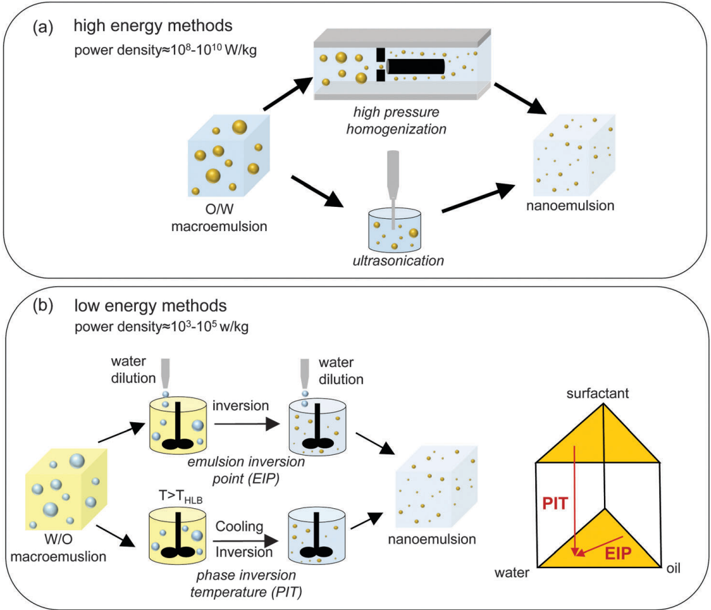
“The low-energy methods involve specific physico-chemical processes such as phase inversion temperature and emulsion inversion points to make small droplets without consuming significant energy. In the low-energy methods, the droplets are constituted when the system undergoes an inversion of phase in response to changes, such as composition or temperature, and consequently passes through a low”
From Nanoemulsions for “Nose-to-Brain” Drug Delivery (2019) · cites this paper as [32]
The cited source says what the claim attributes to it.
In the citing paper
“Important differences can be found between classical macroemulsions (classical emulsions), NEs and microemulsions in droplet size range and stability characteristics [32,47].”
From Nanoemulsions for “Nose-to-Brain” Drug Delivery (2019) · cites this paper as [32]
Self-check
Percentages, sums and reported differences re-computed from the paper’s own numbers.
The self-check needs the paper’s full text.
Citations
Cites
The kinetics of precipitation from supersaturated solid solutions
Lifshitz, I. M., & Slyozov, V. V. (1961) · Journal of Physics and Chemistry of Solids · doi:10.1016/0022-3697(61)90054-3 · Cited by 8,433
Fundamentals of the hydrodynamic mechanism of splitting in dispersion processes
Hinze, J. O. (1955) · AIChE Journal · doi:10.1002/aic.690010303 · Cited by 2,641
Nanoemulsions versus microemulsions: terminology, differences, and similarities
McClements, D. J. (2012) · Soft Matter · doi:10.1039/c2sm06903b · Cited by 1,778
McClements, D. J., & Rao, J. (2011) · Critical Reviews in Food Science and Nutrition · doi:10.1080/10408398.2011.559558 · Cited by 1,630
Solans, C., Izquierdo, P., Nolla, J., Azemar, N., & Garcia-Celma, M. J. (2005) · Current Opinion in Colloid & Interface Science · doi:10.1016/j.cocis.2005.06.004 · Cited by 1,384
Encyclopedia of emulsion technology
Becher, P. (1983) · M. Dekker eBooks · Cited by 1,226
High-Resolution EM of Colloidal Nanocrystal Growth Using Graphene Liquid Cells
Yuk, J. M., Park, J., Ercius, P., Kim, K., Hellebusch, D. J., Crommie, M. F., Lee, J. Y., Zettl, A., & Alivisatos, A. P. (2012) · Science · doi:10.1126/science.1217654 · Cited by 1,153
Mewis, J., & Wagner, N. J. (2011) · Cambridge University Press eBooks · doi:10.1017/cbo9780511977978 · Cited by 1,142
Edible nanoemulsions: fabrication, properties, and functional performance
McClements, D. J. (2011) · Soft Matter · doi:10.1039/c0sm00549e · Cited by 1,031
Asua, J. M. (2002) · Progress in Polymer Science · doi:10.1016/s0079-6700(02)00010-2 · Cited by 952
Research works printed but not linked: 6
- 1. T. G. Mason, J. Wilking, K. Meleson, C. Chang and S. Graves, J. Phys.: Condens. Matter, 2006, 18, R635.
- 13. T. Tadros, P. Izquierdo, J. Esquena and C. Solans, Adv. Colloid Interface Sci., 2004, 108, 303-318. · doi:10.1016/j.cis.2003.10.023 · Paper page
- 31. N. Dixit, K. Kohli and S. Baboota, PDA J. Pharm. Sci. Technol., 2008, 62, 46-55.
- 35. P. Alves, A. Pohlmann and S. Guterres, Pharmazie, 2005, 60, 900-904.
- 51. M. Ahmed, W. Ramadan, D. Rambhu and F. Shakeel, Pharmazie, 2008, 63, 806-811.
- 63. L. Mao, D. Xu, J. Yang, F. Yuan, Y. Gao and J. Zhao, Food Technol. Biotechnol., 2009, 47, 336-342.
Cited by
Items 801–900 of 1,000
Roger, E., Franconi, F., Thu, T. A., Simonsson, C., Siegler, B., Perrot, R., Saulnier, P., & Gimel, J.-C. (2023) · Journal of Controlled Release · doi:10.1016/j.jconrel.2023.10.054 · Cited by 12
Nurfauziyah, Yulizar, Y., & Meliana, Y. (2024) · E3S Web of Conferences · doi:10.1051/e3sconf/202450307008 · Cited by 12
Suriyaamporn, P., Kansom, T., Charoenying, T., Ngawhirunpat, T., Rojanarata, T., Patrojanasophon, P., Opanasopit, P., & Pamornpathomkul, B. (2024) · Journal of Drug Delivery Science and Technology · doi:10.1016/j.jddst.2024.105646 · Cited by 12
Zhong, S., & Ni, R. (2023) · International Journal of Multiphase Flow · doi:10.1016/j.ijmultiphaseflow.2024.104842 · Cited by 17
“The turbulent breakup of bubbles and droplets gives rise to a dispersed phase characterized by a diverse spectrum of scales, which increases the interfacial area between the two phases and can find its application in various industries, such as food [13], pharmaceuticals [12], and ocean engineering [46].”
BackgroundAlkrad, J. A., & Talhouni, A. (2017) · Journal of Drug Delivery Science and Technology · doi:10.1016/j.jddst.2017.08.015 · Cited by 12
Peng, F., Ke, Y., Zhao, Y. M., Hu, X., & Zhao, X. (2019) · RSC Advances · doi:10.1039/c8ra10595b · Cited by 12
How an organogelator can gelate water: gelation transfer from oil to water induced by a nanoemulsion
Nouri, V., Siqueira-Moura, M. P., Payré, B., de Almeida, O., Déjugnat, C., Franceschi, S., & Pérez, E. (2020) · Soft Matter · doi:10.1039/d0sm00128g · Cited by 12
Novel Prospective of N. sativa Essential Oil Analysis, Culinary and Medicinal Uses
Abo‐Atya, D. M., El-Mallah, M. F., El-Seedi, H. R., & Farag, M. A. (2020) · Food bioactive ingredients · doi:10.1007/978-3-030-48798-0_9 · Cited by 15
Hanifah, N., Achmad, Y. F., Humaira, A., & Salasia, S. I. O. (2021) · Veterinary World · doi:10.14202/vetworld.2021.176-181 · Cited by 12
Chitosan nanoemulsion: A sustainable approach for quality preservation of fish and fishery foods
Chaudhary, S. (2023) · Food Control · doi:10.1016/j.foodcont.2023.109790 · Cited by 12
Marinho, V. H. S., Holanda, F. H., Araújo, I. F., Jimenez, D. E. Q., Pereira, R. R., Porto, A. L. M., Ferreira, A. M., Carvalho, J. C. T., de Freitas, A. C. G. A., Fernandes, C. P., et al. (2023) · Industrial Crops and Products · doi:10.1016/j.indcrop.2023.117133 · Cited by 12
Renggli, D., & Doyle, P. S. (2025) · Soft Matter · doi:10.1039/d4sm00687a · Cited by 11
Self-citationSpontaneous emulsification techniques of green/food grade nanoemulsions
Thirumalaisamy, R., Jayanthi, B., Rathika, R., & Selvankumar, T. (2022) · Elsevier eBooks · doi:10.1016/b978-0-323-89846-1.00001-2 · Cited by 11
Rigorous Accounting for Dependent Scattering in Thick and Concentrated Nanoemulsions
Martinez, R., Bhanawat, A., Yalçın, R. A., & Pilon, L. (2024) · The Journal of Physical Chemistry C · doi:10.1021/acs.jpcc.3c08072 · Cited by 12
Mehta, S., Shah, V., Patel, G. M., Conte‐Júnior, C. A., & Joshi, N. (2024) · Journal of Nanoparticle Research · doi:10.1007/s11051-024-06000-8 · Cited by 11
Formulation of a Novel Hesperetin-Loaded Nanoemulsion and Its Promising Effect on Osteogenesis
Imbriani, M. J. M., Duarte, J. L., Filippo, L. D. D., Durão, L. P. L., Chorilli, M., Spolidório, D. M. P., & Maquera-Huacho, P. M. (2024) · Pharmaceutics · doi:10.3390/pharmaceutics16060698 · Cited by 11
“Although more in vitro and in vivo studies are necessary.”
BackgroundRamzan, M., Khan, T., Siddique, M. U. M., Khuroo, T., & Shahid, M. (2024) · International Journal of Pharmaceutics · doi:10.1016/j.ijpharm.2024.124611 · Cited by 11
Application of emulgel in muscle-based foods: a review
Oppong, D., Abdullah, Kaburi, S. A., Lamptey, F. P., Chaijan, M., Panpipat, W., Mussa, N. J., Lyimo, C. M., & Bawa, N. M. (2024) · Discover Food · doi:10.1007/s44187-024-00210-8 · Cited by 12
“Typically, a water-in-oil emulgel requires a hydrophobic emulsifier for stability, while an oil-in-water emulgel requires a hydrophilic emulsifier [22].”
Sudarshan, G., Preetika, R., Krishnasamy, A., Basavaraja, M. G., & Indrapal, S. A. (2025) · Fuel · doi:10.1016/j.fuel.2025.135124 · Cited by 12
Ma, S., Li, L., Qu, J., Yang, Y., Yang, Q., & Tian, Y. (2025) · Food Bioscience · doi:10.1016/j.fbio.2025.106662 · Cited by 11
Vu, G. M., Tran, N. H., Tran, M., Dam, A. N., Lieu, N. N., Nguyen, N. M., Ngo, N. Y. L., Dinh, T. N. N., & Nguyen, D. Q. (2025) · Journal of Molecular Liquids · doi:10.1016/j.molliq.2025.128495 · Cited by 14
Singh, K., Gupta, A., Buchner, A.-J., İbiş, F., Pronk, J. W., Tam, D. S. W., & Eral, H. B. (2019) · Journal of Colloid and Interface Science · doi:10.1016/j.jcis.2019.03.036 · Cited by 11
Self-citationFormulation, Characterization, and Potential Application of Nanoemulsions in Food and Medicine
Bahuguna, A., Ramalingam, S., & Kim, M. (2020) · Nanotechnology in the life sciences · doi:10.1007/978-3-030-31938-0_3 · Cited by 14
Shanmugam, H. (2022) · Elsevier eBooks · doi:10.1016/b978-0-323-90568-8.00013-4 · Cited by 13
Hussein, A. (2022) · Elsevier eBooks · doi:10.1016/b978-0-323-99118-6.00015-0 · Cited by 11
Physicochemical Properties Predict Retention of Antibiotics in Water-in-Oil Droplets
Ruszczak, A., Jankowski, P., Vasantham, S. K., Scheler, O., & Garstecki, P. (2023) · Analytical Chemistry · doi:10.1021/acs.analchem.2c04644 · Cited by 11
Arroyo-Urea, E. M., Muñoz-Hernando, M., Leo-Barriga, M., Herranz, F., & González-Paredes, A. (2023) · Drug Delivery · doi:10.1080/10717544.2023.2179128 · Cited by 11
“Discussion As previously described, the rational selection of lipids and surfactants/co-surfactants plays a critical role in the formation of small and stable NE (Gupta et al., 2016).”
BackgroundDrug Delivery by Micro, Nanoemulsions in Tuberculosis
Khunt, D., Prajapati, B. G., Prajapti, M., Misra, M., Salave, S., Patel, J. K., & Patel, R. J. (2023) · Springer eBooks · doi:10.1007/978-3-031-14100-3_9 · Cited by 11
Extraction of β-chitin using deep eutectic solvents for biomedical applications
Sulthan, R., Sambhudevan, S., Greeshma, S., Gayathri, S., Anagha, D. A., Niranjan, B., Gayathri, K., & Unni, V. V. (2023) · Materials Today Proceedings · doi:10.1016/j.matpr.2023.05.521 · Cited by 12
Pequi Pulp (Caryocar brasiliense) Oil-Loaded Emulsions as Cosmetic Products for Topical Use
Pereira, T. F., Borchardt, H., Wanderley, W. F., Vasconcelos, U., & Leite, I. F. (2025) · Polymers · doi:10.3390/polym17020226 · Cited by 11
“This behavior can be explained when adequate amounts of surfactants are used, leading to lower interfacial tensions during the homogenization process, facilitating the formation of smaller and more homogeneous nanodroplets [147,148].”
Pentyl Gallate Nanoemulsions as Potential Topical Treatment of Herpes Labialis
Kelmann, R. G., Colombo, M., Lopes, S. C. D. A., Nunes, R. J., Pistore, M., Agnol, D. D., Rigotto, C., Silva, I. T., Roman, S. S., Teixeira, H. F., et al. (2016) · Journal of Pharmaceutical Sciences · doi:10.1016/j.xphs.2016.04.028 · Cited by 11
Evaluation of hetero-multivalent lectin binding using a turbidity-based emulsion agglutination assay
Worstell, N. C., Singla, A., & Wu, H. (2018) · Colloids and Surfaces B Biointerfaces · doi:10.1016/j.colsurfb.2018.11.069 · Cited by 11
Enzyme stabilization for biotechnological applications
Martins, M., Silva, C., & Cavaco-Paulo, A. M. (2019) · Elsevier eBooks · doi:10.1016/b978-0-08-102632-8.00006-2 · Cited by 11
Emerging of bio-nano composite gelatine-based film as bio-degradable food packaging: a review
Chilek, T. Z. T., Ahmad, F., Giap, S. G. E., Sulaiman, N. F. C., & Sarbon, N. M. (2020) · Food Research · doi:10.26656/fr.2017.4(4).365 · Cited by 12
Hernández‐Carrión, M., Moyano-Molano, M., Ricaurte, L., Clavijo-Romero, A., & Quintanilla‐Carvajal, M. X. (2021) · Scientific Reports · doi:10.1038/s41598-021-88381-7 · Cited by 11
Bio-Surfactant Assisted Aqueous Exfoliation of High-Quality Few-Layered Graphene
Akter, N., Ayob, M., Radiman, S., Khandaker, M. U., Osman, H., & Alamri, S. (2021) · Crystals · doi:10.3390/cryst11080944 · Cited by 11
Felipe, L. D. O., Bicas, J. L., Bouhoute, M., Nakajima, M., & Neves, M. A. (2021) · npj Science of Food · doi:10.1038/s41538-021-00113-3 · Cited by 12
Lipid‐Based Drug Delivery Systems and Their Role in Infection and Inflammation Imaging
Karpuz, M., & Silindir‐Gunay, M. (2021) · Wiley eBooks · doi:10.1002/9783527832095.ch15 · Cited by 13
Multi-elemental analysis of oil renewable fuel feedstock
Martínez, S., Sánchez, R., Lefevre, J., & Todolí, J.-L. (2022) · Spectrochimica Acta Part B Atomic Spectroscopy · doi:10.1016/j.sab.2021.106356 · Cited by 13
Tea saponin, a natural emulsifier, performs better in preparation of cinnamaldehyde nanoemulsion
Gao, X., Yuan, M., Cao, Y., Tang, J., Zhao, J., Zheng, H., Zhu, L., Cai, Z., Chen, M., Wang, J., et al. (2024) · Journal of Dispersion Science and Technology · doi:10.1080/01932691.2024.2318445 · Cited by 10
“[8] Different emulsifiers can affect the physical or chemical properties of nanoemulsion to some extent.”
Yun, S., Kim, G. W., Jang, J., Lee, J. B., & Kim, S. Y. (2024) · Colloids and Surfaces A Physicochemical and Engineering Aspects · doi:10.1016/j.colsurfa.2024.133845 · Cited by 10
Nutraceutical delivery vehicles: enhanced stability, bioavailability
Ghoshal, G. (2024) · Food Science and Biotechnology · doi:10.1007/s10068-024-01687-w · Cited by 11
“Nanoemulsions are gathered during numerous advancement, such as small or high energy technique based on dormant attitude (Gupta et al., 2016).”
Shah, T., Zhu, C., Shah, C., Upadhyaya, I., & Upadhyay, A. (2025) · Poultry Science · doi:10.1016/j.psj.2025.105086 · Cited by 12
“Additionally, nano-emulsions have a higher surface area-to-volume ratio compared to bulk oils, facilitating more effective interactions with target sites and leading to increased biological activity (Gupta et al., 2016).”
Liakopoulou, A., Letsiou, S., Avgoustakis, K., & Hatziantoniou, S. (2025) · Cosmetics · doi:10.3390/cosmetics12030102 · Cited by 11
“Of note, nanoemulsions exhibit greater stability than conventional emulsions at re-frigerated and room temperatures primarily due to their small droplet size (typically 20–200 nm), which promotes Brownian motion and minimizes gravitational separation, such as creaming or sedimentation [26,27].”
Li, J., Fang, Z., Tang, H., Liu, L., Shang, W., Huang, X., Zhu, X., Cravotto, G., Dong, Z., & Wu, Z. (2025) · Food and Bioproducts Processing · doi:10.1016/j.fbp.2025.07.010 · Cited by 10
Yu, L., Chao, C., Li, Q., Ye, S., Lin, J., Zhong, S.-L., Xuan, Q., Xu, K., & Zhao, S. (2022) · Current Drug Delivery · doi:10.2174/1567201819666220630122755 · Cited by 10
Plant essential oil-based nanoemulsions: A novel asset in the crop protection arsenal
Mondal, P., Laishram, R., Sarkar, P., Kumar, R., Karmakar, R., Hazra, D. K., Banerjee, K., Pal, K., & Choudhury, A. (2022) · Elsevier eBooks · doi:10.1016/b978-0-323-91908-1.00007-9 · Cited by 10
Adem, A. A., Belete, A., Lai, K. K., Hage, C., Neubert, R. H. H., & Gebre‐Mariam, T. (2022) · Journal of Drug Delivery Science and Technology · doi:10.1016/j.jddst.2022.104056 · Cited by 10
Escobar-Chaves, E., Acín, S., Muñoz, D. L., Fernández, M., Echeverri, A., Echeverri, F., Orozco, J., & Balcázar, N. (2023) · Journal of Drug Delivery Science and Technology · doi:10.1016/j.jddst.2023.104264 · Cited by 10
Vega-Fernández, L., Quesada-Grosso, R., Viñas, M., Irías-Mata, A., de Oca-Vásquez, G. M., Vega‐Baudrit, J. R., & Jiménez, V. M. (2023) · Smart nanomaterials technology · doi:10.1007/978-981-99-2874-3_10 · Cited by 10
Exploring polymeric nanotextile devices: progress and outlook
Idumah, C. I., Odera, R. S., & Ezeani, E. O. (2024) · International Journal of Clothing Science and Technology · doi:10.1108/ijcst-06-2023-0087 · Cited by 11
Simhadri, A., Dommeti, M. D., & Sana, J. (2024) · Journal of Pharma Insights and Research. · doi:10.69613/fjsep132 · Cited by 12
“[45]Particularly for lipophilic medications, nanoemulsions can increase the drug’s stability and bioavailability while increasing drug absorption through a larger surface area from nano-sized droplets [46].”
BackgroundNuryanti, N. S. P., Martono, E., Ratna, E. S., & DADANG, D. (2018) · JURNAL HAMA DAN PENYAKIT TUMBUHAN TROPIKA · doi:10.23960/j.hptt.1181-11 · Cited by 10
“According to Gupta et al. (2016), one interesting physical characteristic of a nanoemulsion is its transparent properties compared to the nonnanoemulsion one. As stated by Hazra (2017), the nanoemulsion has a particle size less than 200 nm,”
BackgroundComposite double network hydrogels with thermoresponsive colloidal nanoemulsions
Kass, L., Cárdenas‐Vásquez, E. D., & Hsiao, L. C. (2019) · AIChE Journal · doi:10.1002/aic.16817 · Cited by 10
Deformability and solvent penetration in soft nanoparticles at liquid-liquid interfaces
Arismendi‐Arrieta, D. J., & Moreno, A. J. (2020) · Journal of Colloid and Interface Science · doi:10.1016/j.jcis.2020.02.102 · Cited by 10
Shear-Induced Microstructural Variations in Nanoemulsion-Laden Organohydrogel Fibers
Cárdenas‐Vásquez, E. D., Smith, K. M., Doolan, T. J., & Hsiao, L. C. (2019) · ACS Applied Polymer Materials · doi:10.1021/acsapm.9b00979 · Cited by 10
Nanocosmetics: an introduction
Morganti, P. (2020) · Elsevier eBooks · doi:10.1016/b978-0-12-822286-7.00001-2 · Cited by 12
Hexadecane-Nanoemulsion-Doped Polyacrylamide Hydrogels
Afuwape, G., & Hill, R. J. (2021) · ACS Applied Polymer Materials · doi:10.1021/acsapm.0c01225 · Cited by 10
Prashar, S., Sharma, S., Kumar, N., Kaushik, R., & Chawla, P. (2021) · Journal of the American Nutrition Association · doi:10.1080/07315724.2021.1879693 · Cited by 10
Gum arabic-based nanocarriers for drug and bioactive compounds delivery
Aliabbasi, N., Fathi, M., & Emam‐Djomeh, Z. (2022) · Elsevier eBooks · doi:10.1016/b978-0-323-90986-0.00017-0 · Cited by 10
Bio-Based Nanoemulsions: An Eco-Safe Approach Towards the Eco-Toxicity Problem
Mishra, P., Balaji, A. P. B., Mukherjee, A., & Chandrasekaran, N. (2018) · Springer eBooks · doi:10.1007/978-3-319-48281-1_94-1 · Cited by 12
Real‐Time Monitoring of Nanoparticle Formation by FRET Imaging
Sánchez-Gaytán, B. L., Fay, F., Hak, S., Alaarg, A., Fayad, Z. A., Pérez‐Medina, C., Mulder, W. J. M., & Zhao, Y. (2017) · Angewandte Chemie · doi:10.1002/ange.201611288 · Cited by 10
Wang, D., Park, J. H., Zheng, J., Cai, B., Keire, D. A., & Chen, K. (2022) · Molecular Pharmaceutics · doi:10.1021/acs.molpharmaceut.2c00025 · Cited by 11
Baicalein—A review on its molecular mechanism against breast cancer and delivery strategies
Srivastava, S., Mathew, J., & Pandey, A. C. (2023) · Medicinal Chemistry Research · doi:10.1007/s00044-023-03037-7 · Cited by 10
Herneisey, M., & Janjic, J. M. (2023) · Pharmaceutics · doi:10.3390/pharmaceutics15041103 · Cited by 10
“Increasing diameter with minimal change in PDI is consistent with Ostwald ripening, which is the most common mechanism of nanoemulsion destabilization [18].”
BackgroundOptimization of vitamin B12 nano-emulsification and encapsulation using spontaneous emulsification
Karbalaei-Saleh, S., Yousefi, S., & Honarvar, M. (2023) · Food Science and Biotechnology · doi:10.1007/s10068-023-01357-3 · Cited by 13
“High-energy methods employ mechanical tools such as high-pressure valve homogenizers, microfluidizers, or sonication, which can create severe destructive shear forces that result in the oil phase disintegrating and mixing with the aqueous phase in very fine droplets (Gupta et al., 2016).”
Improving Drug Delivery on Candida Albicans Using Geraniol Nanoemulsion
Pontes, C. S., de Carvalho, G. G., Leite, A. R. P., Chorilli, M., & Spolidório, D. M. P. (2023) · Pharmaceutics · doi:10.3390/pharmaceutics15102475 · Cited by 13
“White or milky colors indicate larger particles [35,36]. of 19 White or milky colors indicate larger particles [35,36]. were not observed in organoleptic characteristics and signs of instability.”
BackgroundSavitharani, M., Kumar, V., Manjunatha, T., Ruksana, F., Vishala, E., & Prathap, H. M. (2024) · Journal of Natural Pesticide Research · doi:10.1016/j.napere.2024.100075 · Cited by 15
Ravensdale, J. T., Coorey, R., & Dykes, G. A. (2018) · Comprehensive Reviews in Food Science and Food Safety · doi:10.1111/1541-4337.12339 · Cited by 11
Encapsulation of food ingredients by single O/W and W/O nanoemulsions
Donsì, F., & Velikov, K. P. (2019) · Elsevier eBooks · doi:10.1016/b978-0-12-815673-5.00002-7 · Cited by 12
Feng, S.-S., Zhao, Y., Xu, Q., Li, H., Huang, Y., Liu, H., & Xu, C. (2020) · International Journal of Nanomedicine · doi:10.2147/ijn.s251113 · Cited by 10
Role of triclosan microemulsion against triclosan resistant clones of bacterial pathogens
Franklyne, J. S., Ebenazer, A., Mukherjee, A., & Chandrasekaran, N. (2020) · Journal of Drug Delivery Science and Technology · doi:10.1016/j.jddst.2020.102158 · Cited by 10
Application of hydrodynamic cavitation in food processing
Khaire, R. A., & Gogate, P. R. (2020) · Elsevier eBooks · doi:10.1016/b978-0-12-818275-8.00003-9 · Cited by 10
Formulation and Characterization of Kaffir Lime Oil Nanoemulsion
Cristy, G. P., Arimurni, D. A., Wahyudi, M. D. P., Martien, R., & Tunjung, W. A. S. (2017) · Biosciences Biotechnology Research Asia · doi:10.13005/bbra/2525 · Cited by 10
Thermal processing of thermogelling nanoemulsions as a route to tune material properties
Cheng, L., Godfrin, P. D., Swan, J. W., & Doyle, P. S. (2018) · Soft Matter · doi:10.1039/c8sm00814k · Cited by 10
Self-citationRao, Y. M., Tariq, M., Wang, M., Yu, X., Liang, H., & Yuan, Q. (2024) · Food Chemistry · doi:10.1016/j.foodchem.2024.140181 · Cited by 11
Zhang, J., Fan, M., Tang, J., Lin, X., Liu, G., Wen, C., & Xu, X. (2024) · International Journal of Biological Macromolecules · doi:10.1016/j.ijbiomac.2024.133579 · Cited by 11
Nanotherapeutics for Meningitis: Enhancing Drug Delivery Across the Blood-Brain Barrier
Sharma, H., Narayanan, K. B., Ghosh, S., Singh, K. K., Rehan, P., Amist, A. D., Bhaskar, R., & Sinha, J. K. (2025) · Biomimetics · doi:10.3390/biomimetics10010025 · Cited by 11
“NEs are thermodynamically stable and possess a high surface area, making them suitable for various applications in drug delivery, cosmetics, and the food industry [43].”
pH-Responsive Shape-Changing Molecular Bottlebrush Emulsifier
Zhao, B., Kelly, M. T., Dayarathne, S. H., Yu, S., Ojima, K. O., & Li, C. Y. (2025) · Macromolecules · doi:10.1021/acs.macromol.4c03034 · Cited by 9
Xiong, Q., Zhang, H., Fang, Y., Feng, H., Cheng, J., Li, Z., Zhang, D., Yu, B., & Zhao, J. (2025) · Advanced Functional Materials · doi:10.1002/adfm.202511596 · Cited by 9
Zeng, T., Fei, S. O. N. G., Yang, Z., Yan, X., Jiang, L., Li, D., & Huang, Z. (2026) · Foods · doi:10.3390/foods15010156 · Cited by 9
“Comparative Analysis of Properties Between Conventional Emulsions and Nanoemul-sions [18,19].”
Study and optimization of oil‐in‐water emulsions formulated by low‐ and high‐frequency ultrasounds
Perrin, L., Desobry‐Banon, S., Gillet, G., & Desobry, S. (2022) · International Journal of Cosmetic Science · doi:10.1111/ics.12831 · Cited by 9
“Thus, if droplet size distribution is polydisperse, Ostwald ripening rate is higher, whereas if droplet size tends towards monodisperse distribution, Ostwald ripening would be less important [34].”
BackgroundLi, G., Zhou, Q., Liu, S., Qian, C., Han, J., Zhou, T., Li, P., & Gu, Q. (2022) · Food Bioscience · doi:10.1016/j.fbio.2022.102322 · Cited by 9
Smoleński, M., Muschert, S., Haznar-Garbacz, D., & Małolepsza-Jarmołowska, K. (2023) · Pharmaceutics · doi:10.3390/pharmaceutics15051437 · Cited by 10
Hunter, S. J., & Armes, S. P. (2023) · Langmuir · doi:10.1021/acs.langmuir.3c00464 · Cited by 9
Omar, A. A. A.-H., Gad, M., Refaie, A. A., Abdelhafez, H., & Mossa, A.-T. H. (2023) · Toxics · doi:10.3390/toxics11070569 · Cited by 11
“It may be beneficial to use nanoemulsions to increase the bioavailability and absorption of beneficial compounds [37,38].”
BackgroundHeaton, A. R., Lechuga, L. M., Tangsangasaksri, M., Ludwig, K. D., Fain, S. B., & Mecozzi, S. (2024) · NMR in Biomedicine · doi:10.1002/nbm.5100 · Cited by 9
“29,30 In this work, we present the formulation of a highly concentrated PFCE-loaded NE using our amphiphilic polymer M2F8H18 and its in vivo application (Figure 1).”
MethodKotwiski, F. O., Paulo, Í. S., Carneiro, P. Y. S., Barbosa, R. D. M., Viseras, C., Rangel, A. L., Villarreal, C. F., Albuquerque, E. C. D. M. C., & Lucchese, A. M. (2024) · Journal of Drug Delivery Science and Technology · doi:10.1016/j.jddst.2024.106392 · Cited by 12
Neto, P. S., de Oliveira, J. B., Alvarenga, F. B. M., Rosa, C. A., Patricio, P. S. D. O., & de Souza, P. P. (2025) · Food Control · doi:10.1016/j.foodcont.2025.111187 · Cited by 11
Hamad, A., Suriyarak, S., Devahastin, S., Chiewchan, N., & Borompichaichartkul, C. (2025) · Journal of Food Science · doi:10.1111/1750-3841.70085 · Cited by 9
Simultaneous penetration monitoring of oil component and active drug from fluorinated nanoemulsions
Binder, L., Jatschka, J., Kulovits, E. M., Seeböck, S., Kählig, H., & Valenta, C. (2018) · International Journal of Pharmaceutics · doi:10.1016/j.ijpharm.2018.10.012 · Cited by 9
Effects of a curcumin nanoemulsion on the physico‐chemical properties of chitosan‐based films
Luangapai, F., Peanparkdee, M., & Iwamoto, S. (2021) · International Journal of Food Science & Technology · doi:10.1111/ijfs.15337 · Cited by 10
Afzal, S., Lone, M. S., Kaur, P., Ahanger, F. A., Nazir, N., & Dar, A. A. (2022) · Wiley eBooks · doi:10.1002/9781119746843.ch16 · Cited by 9
Geng, Z., Zhou, L., Zhang, L., & Hu, J. (2022) · Colloids and Surfaces A Physicochemical and Engineering Aspects · doi:10.1016/j.colsurfa.2022.130288 · Cited by 9
Restu, W. K., Septiyanti, M., Triwulandari, E., Aryana, N., Sampora, Y., Devy, Y. A., Ghozali, M., Muryanto, M., Meliana, Y., Sondari, D., et al. (2023) · Journal of The Institution of Engineers (India) Series E · doi:10.1007/s40034-023-00272-w · Cited by 9
“The emulsion destabilization might be caused by the droplets merging and becoming more considerable drops, called coalescence [31].”
Arief, I. I., Abidin, Z., Wulandari, Z., Budiman, C., Adiyoga, R., & Kamila, E. A. (2023) · Food Science and Technology · doi:10.5327/fst.13123 · Cited by 9
“Nanomaterials with a size of approximately 1–100 nm have unique properties compared with their macroscale counterparts due to the high difference in surface-to-volume ratio and other physiochemical properties such as color, solubility, strength, diffusivity, toxicity, magnetic, optical, and thermodynamic, which in tur…”
BackgroundRheology and Its Implications on Performance of Liquid Dosage Forms
Acharya, P. C., Suares, D., Shetty, S. R., Fernandes, C., & Tekade, R. K. (2018) · Elsevier eBooks · doi:10.1016/b978-0-12-814423-7.00016-2 · Cited by 10
Gnanadesigan, M., Nandagopalan, V., Kapildev, G., & Gundappa, M. (2018) · Elsevier eBooks · doi:10.1016/b978-0-12-814029-1.00016-8 · Cited by 10
Coelho, D. S., Campos, V. E. B., de Freitas, Z. M. F., Ricci‐Júnior, E., Caarls, M. B., Diaz, B. L., dos Santos, E. P., & Monteiro, M. S. D. S. D. B. (2018) · Macromolecular Symposia · doi:10.1002/masy.201800121 · Cited by 10
Nanotechnology Based Delivery of Nutraceuticals
Surve, D. H., Paul, A. T., & Jindal, A. B. (2018) · Environmental chemistry for a sustainable world · doi:10.1007/978-3-319-98708-8_3 · Cited by 10
Metadata
- Authors
- Gupta, A., Eral, H. B., Hatton, T. A., & Doyle, P. S.
- Affiliations
- Massachusetts Institute of Technology (US)
- Utrecht University (NL)
- Corresponding author
- Doyle, Patrick S.
- Venue
- Soft Matter
- Publisher
- Royal Society of Chemistry (RSC)
- Published
- 2016
- Volume
- 12
- Issue
- 11
- Pages
- 2826-2841
- ISSN
- 1744-683X (ISSN-L)
- 1744-6848
- OpenAlex
- W2276073028
- Cited by
- 1,633
- References
- 120
- Citations by year
- 2026: 188 · 2025: 193 · 2024: 200 · 2023: 191 · 2022: 188 · 2021: 182 · 2020: 172 · 2019: 135 · 2018: 97 · 2017: 61 · 2016: 14
- FWCI
- 4.89
- Type
- journal article
- Language
- en
- Open access
- hybrid
- doi.org
- Licence
- cc-by-nc
- Locations
- Soft Matter (publishedVersion, cc-by-nc)
- PubMed (publishedVersion)
- DSpace@MIT (Massachusetts Institute of Technology) (submittedVersion, cc-by-nc)
- Research Repository (Delft University of Technology) (submittedVersion)
- Data Archiving and Networked Services (DANS) (submittedVersion, cc-by-nc)
- Funders
- Eni
- Topics
- Physical Sciences › Chemistry › Physical and Theoretical Chemistry › Surfactants and Colloidal Systems
- Life Sciences › Agricultural and Biological Sciences › Food Science › Proteins in Food Systems
- Physical Sciences › Materials Science › Materials Chemistry › Pickering emulsions and particle stabilization
- Keywords
- nanoemulsions, droplet size, droplet stability, emulsion preparation, high-pressure homogenization, sonication, phase inversion temperature, bubble bursting, rheology, drug delivery, food emulsions, cosmetics, colloidal dispersions
About these checks
Registry, retraction, Cites and statistics results are computed, not judged, with one exception: a printed reference that no index lists is read once by a model before it counts as a citation error. Claims are extracted by a model and kept only when their quote appears verbatim in the text; each cited source is then checked, with a model’s help, for whether it says what the claim relies on. Those verdicts can be wrong — read the claim’s quote and the cited source before relying on one.
Statistics and arithmetic are recomputed, not judged.
Confidence bands are shown only for fields calibrated on our annotated test set. None is calibrated yet, so no band is shown.
What counts as a claim ›How we measure confidence ›How we check this ›
Are you an author, or do you see a problem with this page? Request a review
Data sources
Bibliographic data: Semantic Scholar, OpenAlex, Crossref.
Contains information from the Semantic Scholar Academic Graph Datasets, made available under the ODC Attribution License (ODC-BY 1.0).
Semantic Scholar’s data is described in: Kinney, R., et al. (2023). The Semantic Scholar Open Data Platform. arXiv:2301.10140.
