

Nanoemulsions: formation, properties and applications
Open accessThe DOI matches its Crossref record; 119 of the 120 references it cites were found in a registry or an index.
Abstract
Nanoemulsions are kinetically stable liquid-in-liquid dispersions with droplet sizes on the order of 100 nm.
Overview
The claims and statistics of this paper haven’t been checked yet.
Free: it reads the open-access text and checks the first 5 claims that cite a source we can check. Create a free account to check every claim.
Integrity signals
Registry
Cites
Statistics
Figures




Verification
Claims the paper makes
The claims and statistics of this paper haven’t been checked yet.
Free: it reads the open-access text and checks the first 5 claims that cite a source we can check. Create a free account to check every claim.
Claims other papers make about this one
Each is checked against this paper’s own text: does it say what the citing paper says it does?
The cited source says what the claim attributes to it.
In the citing paper
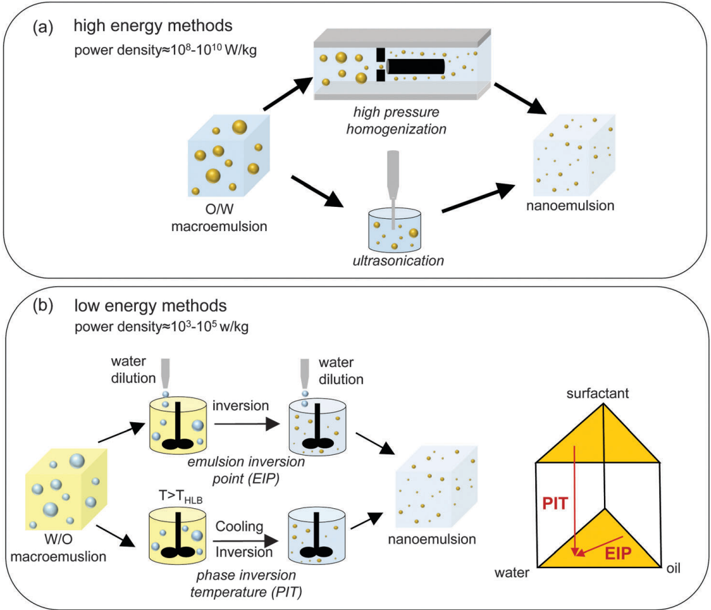
“The low-energy methods involve specific physico-chemical processes such as phase inversion temperature and emulsion inversion points to make small droplets without consuming significant energy. In the low-energy methods, the droplets are constituted when the system undergoes an inversion of phase in response to changes, such as composition or temperature, and consequently passes through a low”
From Nanoemulsions for “Nose-to-Brain” Drug Delivery (2019) · cites this paper as [32]
The cited source says what the claim attributes to it.
In the citing paper
“Important differences can be found between classical macroemulsions (classical emulsions), NEs and microemulsions in droplet size range and stability characteristics [32,47].”
From Nanoemulsions for “Nose-to-Brain” Drug Delivery (2019) · cites this paper as [32]
Self-check
Percentages, sums and reported differences re-computed from the paper’s own numbers.
The self-check needs the paper’s full text.
Citations
Cites
The kinetics of precipitation from supersaturated solid solutions
Lifshitz, I. M., & Slyozov, V. V. (1961) · Journal of Physics and Chemistry of Solids · doi:10.1016/0022-3697(61)90054-3 · Cited by 8,433
Fundamentals of the hydrodynamic mechanism of splitting in dispersion processes
Hinze, J. O. (1955) · AIChE Journal · doi:10.1002/aic.690010303 · Cited by 2,641
Nanoemulsions versus microemulsions: terminology, differences, and similarities
McClements, D. J. (2012) · Soft Matter · doi:10.1039/c2sm06903b · Cited by 1,778
McClements, D. J., & Rao, J. (2011) · Critical Reviews in Food Science and Nutrition · doi:10.1080/10408398.2011.559558 · Cited by 1,630
Solans, C., Izquierdo, P., Nolla, J., Azemar, N., & Garcia-Celma, M. J. (2005) · Current Opinion in Colloid & Interface Science · doi:10.1016/j.cocis.2005.06.004 · Cited by 1,384
Encyclopedia of emulsion technology
Becher, P. (1983) · M. Dekker eBooks · Cited by 1,226
High-Resolution EM of Colloidal Nanocrystal Growth Using Graphene Liquid Cells
Yuk, J. M., Park, J., Ercius, P., Kim, K., Hellebusch, D. J., Crommie, M. F., Lee, J. Y., Zettl, A., & Alivisatos, A. P. (2012) · Science · doi:10.1126/science.1217654 · Cited by 1,153
Mewis, J., & Wagner, N. J. (2011) · Cambridge University Press eBooks · doi:10.1017/cbo9780511977978 · Cited by 1,142
Edible nanoemulsions: fabrication, properties, and functional performance
McClements, D. J. (2011) · Soft Matter · doi:10.1039/c0sm00549e · Cited by 1,031
Asua, J. M. (2002) · Progress in Polymer Science · doi:10.1016/s0079-6700(02)00010-2 · Cited by 952
Research works printed but not linked: 6
- 1. T. G. Mason, J. Wilking, K. Meleson, C. Chang and S. Graves, J. Phys.: Condens. Matter, 2006, 18, R635.
- 13. T. Tadros, P. Izquierdo, J. Esquena and C. Solans, Adv. Colloid Interface Sci., 2004, 108, 303-318. · doi:10.1016/j.cis.2003.10.023 · Paper page
- 31. N. Dixit, K. Kohli and S. Baboota, PDA J. Pharm. Sci. Technol., 2008, 62, 46-55.
- 35. P. Alves, A. Pohlmann and S. Guterres, Pharmazie, 2005, 60, 900-904.
- 51. M. Ahmed, W. Ramadan, D. Rambhu and F. Shakeel, Pharmazie, 2008, 63, 806-811.
- 63. L. Mao, D. Xu, J. Yang, F. Yuan, Y. Gao and J. Zhao, Food Technol. Biotechnol., 2009, 47, 336-342.
Cited by
Items 601–700 of 1,000
Lee, J., Kwak, E., Kim, H.-T., Jo, Y., & Choi, M. (2023) · Food Science and Biotechnology · doi:10.1007/s10068-023-01282-5 · Cited by 20
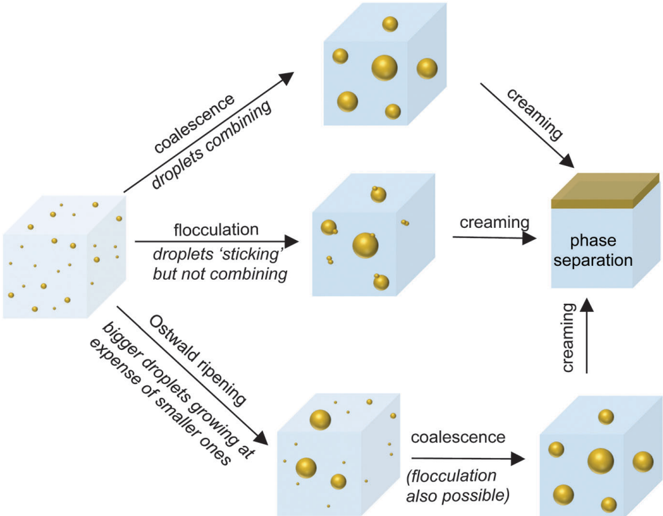
“Coalescence is caused by combining droplets, flocculation is caused by droplets sticking together (but not combining), Ostwald ripening is caused by larger droplets growing at the expense of smaller droplets, and creaming is where droplets rise due to buoyancy, leading to phase separation, while droplets settle in sed…”
BackgroundVladisavljević, G. T. (2023) · Particuology · doi:10.1016/j.partic.2023.03.003 · Cited by 20
Ge, Y., Liu, H., Peng, S., Zhou, L., McClements, D. J., Liu, W., & Luo, J. H. (2024) · Food Chemistry · doi:10.1016/j.foodchem.2024.139689 · Cited by 22
Gill, R., Al‐Badr, M., Al-Ghouti, M. A., Mohamed, N. A., Abou-Saleh, H., & Rahman, M. M. (2024) · Marine Drugs · doi:10.3390/md22060256 · Cited by 21
Rambharose, S., Kalhapure, R. S., & Govender, T. (2017) · Colloids and Surfaces B Biointerfaces · doi:10.1016/j.colsurfb.2017.03.040 · Cited by 20
Do oil-in-water (O/W) nano-emulsions have an effect on survival and growth of bacteria?
Kadri, H. E., Devanthi, P. V. P., Overton, T. W., & Gkatzionis, K. (2017) · Food Research International · doi:10.1016/j.foodres.2017.08.064 · Cited by 20
Nanoemulsions with All Ionic Liquid Components as Recyclable Nanoreactors
Damarla, K., Rachuri, Y., Suresh, E., & Kumar, A. (2018) · Langmuir · doi:10.1021/acs.langmuir.8b01909 · Cited by 20
Can high-pressure homogenization cause thermal degradation to nutrients?
Håkansson, A. (2018) · Journal of Food Engineering · doi:10.1016/j.jfoodeng.2018.07.024 · Cited by 20
Improved food additive analysis by ever-increasing nanotechnology
Zhang, J., Hu, S., Du, Y. P., Cao, D., Wang, G., & Yuan, Z. (2020) · Journal of Food and Drug Analysis · doi:10.38212/2224-6614.1152 · Cited by 20
Resveratrol-Loaded Nanoemulsions: In Vitro Activity on Human T24 Bladder Cancer Cells
Rinaldi, F., Maurizi, L., Forte, J., Marazzato, M., Hanieh, P. N., Conte, A. L., Ammendolia, M. G., Marianecci, C., Carafa, M., & Longhi, C. (2021) · Nanomaterials · doi:10.3390/nano11061569 · Cited by 20
“Typically, NEs contain oil, water, and an emulsifier, and may offer higher solubilization and improved bioavailability of poorly soluble active substances, and also a system to preserve the volatile compounds of essential oils [20].”
BackgroundHunter, S. J., & Armes, S. P. (2022) · Langmuir · doi:10.1021/acs.langmuir.2c00821 · Cited by 20
“3,6,10,13,14 15 − 17 The upper limit droplet diameter for a genuine nanoemulsion is a matter of some debate in the literature, with values ranging from 200 to 500 nm. 15,18 However, it is generally agreed that, like conventional emulsions, nano-emulsions are only kinetically stable.”
Shin, K., Gong, G., Cuadrado, J., Jeon, S., Seo, M., Choi, H. S., Hwang, J. S., Lee, Y., Fernández‐Nieves, A., & Kim, J. W. (2017) · Chemistry - A European Journal · doi:10.1002/chem.201604722 · Cited by 20
Soft Confinement-Induced Morphologies of the Blends of AB Diblock Copolymers and C Homopolymers
Zhang, J., Kong, W., & Duan, H. (2017) · Langmuir · doi:10.1021/acs.langmuir.7b00181 · Cited by 20
Towards the antioxidant therapy in Osteoarthritis: Contribution of nanotechnology
González-Rodríguez, M. L., Fernández-Romero, A.-M., & Rabasco, A. M. (2017) · Journal of Drug Delivery Science and Technology · doi:10.1016/j.jddst.2017.04.032 · Cited by 20
Laosinwattana, C., Somala, N., Dimak, J., Teerarak, M., & Chotsaeng, N. (2025) · Scientific Reports · doi:10.1038/s41598-025-87810-1 · Cited by 19
Gandhi, J., Shah, V., Pandya, R., Shah, M., McClements, D. J., & Shah, D. O. (2026) · Advances in Colloid and Interface Science · doi:10.1016/j.cis.2026.103881 · Cited by 22
Minakov, A. V., Mikhienkova, E. I., Pryazhnikov, M. I., Voronenkova, Y. O., & Skorobogatova, A. D. (2021) · Journal of Molecular Liquids · doi:10.1016/j.molliq.2021.118125 · Cited by 19
Nanoemulsions for drug delivery
Atanase, L. I. (2022) · Elsevier eBooks · doi:10.1016/b978-0-323-91864-0.00009-7 · Cited by 19
Srivastava, V., Pardhi, E. R., Yadav, R., Singh, V., Khatri, D. K., & Mehra, N. K. (2024) · Journal of Drug Delivery Science and Technology · doi:10.1016/j.jddst.2024.105493 · Cited by 23
Aioub, A. A. A., Abdelnour, S. A., Hashem, A. S., Maher, M., Abdel-Wahab, S. I. Z., Al‐Keridis, L. A., Shukry, M., Sayed, S. M. H., & El-Sobki, A. (2024) · BMC Veterinary Research · doi:10.1186/s12917-024-04084-x · Cited by 19
“A type of emulsion known as nanoemulsions has droplet sizes ranging from 20 to 500 nm [25].”
BackgroundByrnes, S. A., Phillips, E. A., Huynh, T., Weigl, B. H., & Nichols, K. P. (2018) · The Analyst · doi:10.1039/c8an00029h · Cited by 20
Sinsuebpol, C., & Changsan, N. (2020) · Journal of Oleo Science · doi:10.5650/jos.ess19193 · Cited by 19
Wilson, A. M. M., Balandrán‐Quintana, R. R., Valdéz-Covarrubias, M. A., & Cabellos, J. L. (2022) · Journal of Molecular Structure · doi:10.1016/j.molstruc.2022.132372 · Cited by 19
Formulation and Characterization of Gum Arabic Stabilized Red Rice Extract Nanoemulsion
Bains, A., Najda, A., Chawla, P., Klepacka, J., Dhull, S. B., Sadh, P. K., Khan, M. A., & Kaushik, R. (2022) · Polymers · doi:10.3390/polym14101938 · Cited by 19
“Hence, the RRE10 n noemulsion did not exert smaller drople s due to weak attractive forces than that of the repulsive forces [19].”
BackgroundMannose-based surfactant as biofunctional nanoemulsion stabilizer
Argudo, P. G., Spitzer, L., Ibarboure, E., Jérôme, F., Cramail, H., & Lecommandoux, S. (2022) · Colloids and Surfaces B Biointerfaces · doi:10.1016/j.colsurfb.2022.112877 · Cited by 19
Droplet microfluidics with a nanoemulsion continuous phase
Gu, T., Yeap, E. W. Q., Somasundar, A., Chen, R., Hatton, T. A., & Khan, S. A. (2016) · Lab on a Chip · doi:10.1039/c6lc00601a · Cited by 19
Self-citationNakaura, H., Kawamura, A., & Miyata, T. (2018) · Langmuir · doi:10.1021/acs.langmuir.8b01608 · Cited by 19
Utility of Nanomaterials in Food Safety
Singh, R. P. (2019) · Elsevier eBooks · doi:10.1016/b978-0-12-816333-7.00011-4 · Cited by 21
Lorenzett, A. K. P., de Lima, V. A., da Fonseca, C. O. P., & Mainardes, R. M. (2025) · Pharmaceutics · doi:10.3390/pharmaceutics17091104 · Cited by 21
“…due to their ability to enhance the absorption of poorly soluble drugs, protect active compounds from chemical and enzymatic degradation, and facilitate tissue penetration and the crossing of physiological barriers, such as the nasal mucosa and, in certain cases, the blood–brain barrier [2–4].”
Exploring Nanoemulsions for Prostate Cancer Therapy
Srivastava, S., Haider, M. F., Ahmad, A., Ahmad, U., Arif, M., & Ali, A. (2021) · Drug Research · doi:10.1055/a-1518-6606 · Cited by 19
“High energy requires a power input of 107 to 109 W/kg and low energy methods require power input of 103 to 105 W/kg [72].”
MethodKelly, M. T., Chen, Z., Russell, T. P., & Zhao, B. (2023) · Angewandte Chemie International Edition · doi:10.1002/anie.202315424 · Cited by 18
Chen, Y., Mo, S., Chen, J., Yu, Y., Jia, L., & Chen, Y. (2024) · Solar Energy Materials and Solar Cells · doi:10.1016/j.solmat.2024.112855 · Cited by 19
de Oliveira, T. S., Costa, A. M. M., Cabral, L. M. C., Freitas‐Silva, O., & Tonon, R. V. (2024) · International Journal of Biological Macromolecules · doi:10.1016/j.ijbiomac.2024.133627 · Cited by 18
Natural product-loaded lipid-based nanocarriers for skin cancer treatment: An overview
Chaurasiya, M., Kumar, G., Paul, S., Verma, S. S., & Rawal, R. K. (2024) · Life Sciences · doi:10.1016/j.lfs.2024.123043 · Cited by 18
Characterization and antibacterial application of peppermint essential oil nanoemulsions in broiler
Jabbar, M., Baboo, I., Majeed, H., Farooq, Z., & Palangı, V. (2024) · Poultry Science · doi:10.1016/j.psj.2024.104432 · Cited by 18
Nanoemulsion mediated approaches for wound healing
Tohamy, H. S. (2025) · Elsevier eBooks · doi:10.1016/b978-0-443-22027-2.00025-7 · Cited by 21
A Green Nano-Synthesis to Explore the Plant Microbe Interactions
Pandey, S., Mishra, A., Giri, V. P., Kumari, M., & Soni, S. K. (2019) · Elsevier eBooks · doi:10.1016/b978-0-444-64191-5.00007-9 · Cited by 18
Lee, W., Kim, S., Xu, R., & Kang, Y. T. (2019) · International Journal of Heat and Mass Transfer · doi:10.1016/j.ijheatmasstransfer.2019.07.061 · Cited by 18
Lipid nanocarriers: Formulation, properties, and applications
Rehman, A. U., Akram, S., Seralin, A., Vandamme, T., & Anton, N. (2020) · Elsevier eBooks · doi:10.1016/b978-0-12-816770-0.00021-6 · Cited by 23
Targeted release of nanoencapsulated food ingredients
Emam‐Djomeh, Z., & Rezvankhah, A. (2020) · Elsevier eBooks · doi:10.1016/b978-0-12-815665-0.00003-5 · Cited by 20
Inhibiting Ostwald Ripening by Scaffolding Droplets
Zhang, H., Chen, S., Zhang, B., & Zhang, X. (2020) · Langmuir · doi:10.1021/acs.langmuir.0c02602 · Cited by 18
Interdroplet Interactions and Rheology of Concentrated Nanoemulsions for Templating Porous Polymers
Chaleshtari, Z. A., Kenari, H. S., & Foudazi, R. (2020) · Langmuir · doi:10.1021/acs.langmuir.0c02366 · Cited by 18
Elsewedy, H. S., Al‐Dhubiab, B. E., Mahdy, M. A., & El-Nahas, H. M. (2021) · Research Journal of Pharmacy and Technology · doi:10.52711/0974-360x.2021.00684 · Cited by 18
Akhtar, A., Aslam, S., Khan, S., McClements, D. J., Khalid, N., & Maqsood, S. (2021) · Critical Reviews in Food Science and Nutrition · doi:10.1080/10408398.2021.1980370 · Cited by 18
Fallah, B., & Falamaki, C. (2009) · AIChE Journal · doi:10.1002/aic.12018 · Cited by 20
Håkansson, A., Andersson, R., Mortensen, H. H., & Innings, F. (2017) · Chemical Engineering Science · doi:10.1016/j.ces.2017.06.038 · Cited by 19
Rosiles-Pérez, C., Serrano-Estrada, M. A., Sidhik, S., Ordaz, A. A., Torres-Castro, A., Hernández, M. Á. V., González, A. E., & López–Luke, T. (2020) · Journal of Solid State Chemistry · doi:10.1016/j.jssc.2020.121720 · Cited by 18
Iacona, M. L., Scavo, A., Lombardo, S., & Mauromicale, G. (2025) · Agronomy · doi:10.3390/agronomy15010228 · Cited by 20
“…dynamic stability, transparent or translucent appearance and capacity to improve the active ingredient penetration, solubility and stability [62]. dynamic stability, transparent or translucent appearance and capacity to improve the active ingredient penetration solubility and stability [62].”
Zhou, Y., Wu, L., Zhang, Y., Hu, J., Fardous, J., Ikegami, Y., & Ijima, H. (2025) · Biomolecules · doi:10.3390/biom15050608 · Cited by 18
“They are colloidal dispersions of oil droplets in water, typically with a droplet size range of 20–200 nm. Owing to their small particle size and large surface area, nanoemulsions exhibit enhanced solubility for lipophilic drugs, increased permeability, and improved bioavailability [16,17].”
Multiple particle tracking study of thermally-gelling nanoemulsions
Cheng, L., Hsiao, L. C., & Doyle, P. S. (2017) · Soft Matter · doi:10.1039/c7sm01191a · Cited by 17
Self-citationAfshari, H. S. T., Tabrizi, M. H., Ardalan, T., Anoushirvani, N. J., & Mahdizadeh, R. (2021) · Nutrition and Cancer · doi:10.1080/01635581.2021.1952450 · Cited by 17
“able transporters for drug delivery systems (48, 49).”
BackgroundThymine-Modified Nanocarrier for Doxorubicin Delivery in Glioblastoma Cells
Ziganshinа, A. Y., Mansurova, E. E., Voloshina, A. D., Lyubina, A. P., Amerhanova, S. K., Shulaeva, M. M., Nizameev, I. R., Kadirov, M. K., Bakhtiozina, L. R., Semenov, V. E., et al. (2023) · Molecules · doi:10.3390/molecules28020551 · Cited by 17
“Nanoemulsions, which are stable liquid-in-liquid dispersions with a droplet size of roughly 100 nm, are one of the prospective nanocarriers [25].”
BackgroundLiu, J., Xu, J., Jia, L., Yanjun, Z., Fu, Q., Wang, Y., Mu, D., Wang, D., Li, N., & Hou, Y. (2024) · International Journal of Pharmaceutics · doi:10.1016/j.ijpharm.2024.124002 · Cited by 17
Ueda, K., Takemoto, S., Higashi, K., & Moribe, K. (2024) · Journal of Pharmaceutical Sciences · doi:10.1016/j.xphs.2024.06.017 · Cited by 17
Nahanji, M. K., Mahboobian, M. M., Harchegani, A. L., Mohebali, M., Fallah, M., Nourian, A., Motavallihaghi, S., & Maghsood, A. H. (2024) · Biomedicine & Pharmacotherapy · doi:10.1016/j.biopha.2024.117109 · Cited by 17
Pereira, R. C., Bourbon, A. I., Azevedo, A. G., Figueira, D., Castelo-Branco, D., Rocha, C., Lima, R. C., Cunha, L. M., Pastrana, L. M., & Cerqueira, M. Â. (2024) · Food Bioscience · doi:10.1016/j.fbio.2024.104847 · Cited by 17
Nanobiopesticide perspectives for protection and nutrition of plants
Deshpande, M. V. (2019) · Elsevier eBooks · doi:10.1016/b978-0-12-815829-6.00003-6 · Cited by 17
Saito, A., Yamamoto, S., Ochi, R., Inoue, K., Hadano, S., Watanabe, S., Nakayama, T., & Niko, Y. (2020) · Bulletin of the Chemical Society of Japan · doi:10.1246/bcsj.20200014 · Cited by 17
Purkait, A., Worede, R. E., Baral, D., Hazra, D. K., Panja, B. N., Biswas, P. K., & Kole, R. K. (2020) · Indian Phytopathology · doi:10.1007/s42360-020-00237-8 · Cited by 18
Nauman, N., Zaquen, N., Boyer, C. A., & Zetterlund, P. B. (2020) · Polymer Chemistry · doi:10.1039/d0py00654h · Cited by 17
Tran, E., Mapile, A. N., & Richmond, G. L. (2021) · Journal of Colloid and Interface Science · doi:10.1016/j.jcis.2021.04.115 · Cited by 17
Hsieh, I.-T., Chang, J., & Chou, T. (2022) · Journal of the Taiwan Institute of Chemical Engineers · doi:10.1016/j.jtice.2022.104217 · Cited by 17
Nogueira, C. A., Lemos‐Senna, E., Vieira, E. D. S., Sampaio, T. B., Mallmann, M. P., Oliveira, M. S., Bernardi, L. S., & de Oliveira, P. R. (2023) · Journal of Nanoparticle Research · doi:10.1007/s11051-023-05668-8 · Cited by 18
Microfluidic Methods for Generation of Submicron Droplets: A Review
Huang, B., Xie, H., & Li, Z. (2023) · Micromachines · doi:10.3390/mi14030638 · Cited by 19
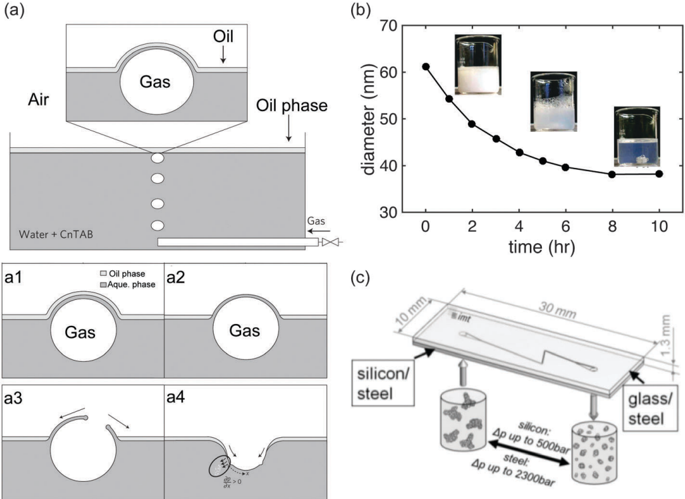
“High-pressure homogenization (HPH) forms submicron droplets by forcing the macrodroplets through a channel with high pressure, as sketched in [1].”
BackgroundMethodInfluentialRathee, S., Ojha, A., Upadhyay, A., Xiao, J., Bajpai, V. K., Ali, S., & Shukla̽, S. (2023) · Food & Function · doi:10.1039/d3fo02473c · Cited by 17
Food Nanoemulsions: Stability, Benefits and Applications
Dasgupta, N., & Ranjan, S. (2018) · Environmental chemistry for a sustainable world · doi:10.1007/978-981-10-6986-4_2 · Cited by 21
Investigating the Fluid–Solid Interaction of Acid Nonionic Nanoemulsion with Carbonate Porous Media
Lucas, C. R. D. S., Aum, Y. K. P. G., Araújo, E. D. A., Dantas, T. N. D. C., Araújo, E. A., Sousa, T. N., & Aum, P. T. P. (2020) · Molecules · doi:10.3390/molecules25061475 · Cited by 17
A review of nanotechnology in food industry with implication for viable outlook and safety issues
Ahmad, K., Ahmad, R., Faizan, M., Farah, Ali, F., Yousaf, M. M., Ali, F., Niaz, W., Khan, T. U., Khan, S., et al. (2025) · Hybrid Advances · doi:10.1016/j.hybadv.2025.100487 · Cited by 19
Revolutionizing rheumatoid arthritis therapy: the potential of lipid nanocarriers
Alarcón, J. F., Karusan, N. R., Presciutti, C., Miras, J., Magaña, J. R., Guerra‐Rebollo, M., Borrós, S., Ahmad, N., & Fornaguera, C. (2025) · RSC Advances · doi:10.1039/d5ra04258e · Cited by 17
Modern Strategies of Drug Therapy: Multi-Target Drug Delivery, Bioimaging, Diagnostics
Fedorova, O. V., Ovchinnikova, I. G., Rusinov, G. L., Avdeeva, V. V., Zhdanov, А. P., Zhizhin, K. Y., Kuznetsov, N. T., Zakharova, L. Y., Kuznetsova, D. A., Razuvayeva, Y. S., et al. (2025) · Russian Journal of General Chemistry · doi:10.1134/s1070363225606726 · Cited by 18
Tran, E., Carpenter, A. P., & Richmond, G. L. (2020) · Langmuir · doi:10.1021/acs.langmuir.0c01095 · Cited by 16
Najda, A., Bains, A., Klepacka, J., & Chawla, P. (2022) · Frontiers in Nutrition · doi:10.3389/fnut.2022.944856 · Cited by 16
Gas-assisted microfluidic step-emulsification for generating micron- and submicron-sized droplets
Huang, B., Ge, X., RUBINSTEIN, B. Y., Chen, X., Wang, L., Xie, H., Leshansky, A. M., & Li, Z. (2023) · Microsystems & Nanoengineering · doi:10.1038/s41378-023-00558-4 · Cited by 16
Trichinella spiralis: A new parasitic target for curcumin nanoformulas in mice models
Khedr, S. I., Gomaa, M. M., Mogahed, N. M. F. H., Gamea, G. A., Khodear, G. A. M., Sheta, E., Soliman, N. A. H., Saadany, A. A. E., & Salama, A. M. (2023) · Parasitology International · doi:10.1016/j.parint.2023.102810 · Cited by 16
Neto, L. T., Monteiro, M. L. G., Mutz, Y. S., Tonon, R. V., & Conte‐Júnior, C. A. (2023) · Food and Bioprocess Technology · doi:10.1007/s11947-023-03297-6 · Cited by 16
Prajapat, V. M., Aalhate, M., Sriram, A., Mahajan, S., Maji, I., Gupta, U., Kumari, D., Singh, K., Kalia, N. P., Dua, K., et al. (2023) · Parasitology International · doi:10.1016/j.parint.2023.102848 · Cited by 16
Largani, S. P. H., Kenari, H. S., Nabavi, S. R., & Darzi, A. A. R. (2024) · Journal of Energy Storage · doi:10.1016/j.est.2023.110351 · Cited by 16
Hunter, S. J., Chohan, P., Varlas, S., & Armes, S. P. (2024) · Langmuir · doi:10.1021/acs.langmuir.3c03423 · Cited by 16
Padrilah, S. N., Samsudin, N. I. P., Shukor, M. Y., & Masdor, N. A. (2024) · Green Chemistry Letters and Reviews · doi:10.1080/17518253.2024.2315138 · Cited by 18
“In the formation of nanoemulsion, two-step processes are involved, where the fi rst step is forming the macroemul-sion, and then this is converted to nanoemulsion ( 86 ).”
Gode, A., Thaker, A. H., & Ranade, V. V. (2024) · Chemical Engineering and Processing - Process Intensification · doi:10.1016/j.cep.2024.109881 · Cited by 16
Yadav, B. K., Patel, R., Prajapati, B. G., & Patel, G. (2024) · Current Pharmaceutical Biotechnology · doi:10.2174/0113892010312939240704141630 · Cited by 17
Biosurfactants as an alternative eco-friendly solution for water-in-diesel emulsions-A review paper
Ali, A., Aziz, A. R. A., Ismael, M. A., & Alqaed, S. (2024) · Heliyon · doi:10.1016/j.heliyon.2024.e37485 · Cited by 16
Last Fifteen Years of Nanotechnology Application with Our Contribute
Alfei, S., & Zuccari, G. (2025) · Nanomaterials · doi:10.3390/nano15040265 · Cited by 19
Sun, G., Wang, L., Dong, Z., Zhang, Y., Yang, Y., Hu, M., & Fang, H. (2025) · International Journal of Nanomedicine · doi:10.2147/ijn.s502490 · Cited by 19
Advanced Oral Delivery Systems for Nutraceuticals
Yang, X., Zhang, L., Zheng, Z., Langer, R., & Jaklenec, A. (2025) · Advanced Healthcare Materials · doi:10.1002/adhm.202500271 · Cited by 18
Zhao, Y., Liu, J., Guan, L., Zhang, Y., Dong, P., Li, J., Liang, X., & Komiyama, M. (2018) · International Journal of Biological Macromolecules · doi:10.1016/j.ijbiomac.2018.05.054 · Cited by 16
da Silva, J. D., Gomes, M. V. D. S., Cabral, L. M., & de Sousa, V. P. (2019) · Journal of Drug Delivery Science and Technology · doi:10.1016/j.jddst.2019.101173 · Cited by 16
Che, K., Zhang, M.-Z., He, J., & Ni, P. (2020) · Chinese Journal of Polymer Science · doi:10.1007/s10118-020-2404-z · Cited by 16
He, B., He, J., Zou, H., Lao, T., & Bi, E. (2020) · The Science of The Total Environment · doi:10.1016/j.scitotenv.2020.143015 · Cited by 16
Waglewska, E., & Bazylińska, U. (2021) · International Journal of Molecular Sciences · doi:10.3390/ijms222111776 · Cited by 16
“Consequently, the NE fabrication method is critical to the final product, so its selection depends on the formulation’s composition and physicochemical properties required [10,14].”
BackgroundMethodAgarwal, H., Polaske, T. J., Sánchez-Velázquez, G., Blackwell, H. E., & Lynn, D. M. (2021) · Chemical Communications · doi:10.1039/d1cc04645d · Cited by 16
Green nanoemulsions: Components, formulation, techniques of characterization, and applications
Nirmala, M. J., Dhas, S. P., Saikrishna, N., Raj, U. S., Sai, P. S., & Nagarajan, R. (2022) · Elsevier eBooks · doi:10.1016/b978-0-323-89846-1.00013-9 · Cited by 20
Polymer nanoparticles from low-energy nanoemulsions for biomedical applications
Grijalvo, S., & Rodríguez‐Abreu, C. (2023) · Beilstein Journal of Nanotechnology · doi:10.3762/bjnano.14.29 · Cited by 18
Abla, K. K., Hijazi, S. M., & Mehanna, M. M. (2023) · Journal of Drug Delivery Science and Technology · doi:10.1016/j.jddst.2023.104764 · Cited by 17
ME_expert 2.0: a heuristic decision support system for microemulsions formulation development
Mendyk, A., Szlęk, J., & Jachowicz, R. (2013) · Elsevier eBooks · doi:10.1533/9781908818508.39 · Cited by 18
Microemulsions and nanoemulsions applied to iron ore flotation
Moura, M. C. P. A., Neto, A. A. D., Peres, A. E. C., Neitzke, P. R. D. M. C., & Dantas, T. N. D. C. (2019) · Journal of Materials Research and Technology · doi:10.1016/j.jmrt.2019.05.005 · Cited by 16
“[17] reported the major differences between nanoemulsions and microemulsions.”
BackgroundApplication of Gum Arabic in Nanoemulsion for Safe Conveyance of Bioactive Components
Dhull, S. B., Anju, M., Punia, S., Kaushik, R., & Chawla, P. (2019) · Nanotechnology in the life sciences · doi:10.1007/978-3-030-17061-5_3 · Cited by 16
DNA-Coated Functional Oil Droplets
Caciagli, A., Zupkauskas, M., Levin, A., Knowles, T. P. J., Mugemana, C., Bruns, N., O’Neill, T., Frith, W. J., & Eiser, E. (2018) · Langmuir · doi:10.1021/acs.langmuir.8b01828 · Cited by 16
Rheology and Structure of Emulsions
Goodarzi, B. V., & Foudazi, R. (2025) · Langmuir · doi:10.1021/acs.langmuir.5c00211 · Cited by 15
Saha, M., Gupta, A., Kunkalienkar, S., Dhas, N. L., Shetty, S., Gupta, A., Mutalik, S., Nandakumar, K., Hariharapura, R. C., Narasimhaswamy, N., et al. (2025) · Drug Delivery and Translational Research · doi:10.1007/s13346-025-01986-7 · Cited by 18
Self-citation
Metadata
- Authors
- Gupta, A., Eral, H. B., Hatton, T. A., & Doyle, P. S.
- Affiliations
- Massachusetts Institute of Technology (US)
- Utrecht University (NL)
- Corresponding author
- Doyle, Patrick S.
- Venue
- Soft Matter
- Publisher
- Royal Society of Chemistry (RSC)
- Published
- 2016
- Volume
- 12
- Issue
- 11
- Pages
- 2826-2841
- ISSN
- 1744-683X (ISSN-L)
- 1744-6848
- OpenAlex
- W2276073028
- Cited by
- 1,633
- References
- 120
- Citations by year
- 2026: 188 · 2025: 193 · 2024: 200 · 2023: 191 · 2022: 188 · 2021: 182 · 2020: 172 · 2019: 135 · 2018: 97 · 2017: 61 · 2016: 14
- FWCI
- 4.89
- Type
- journal article
- Language
- en
- Open access
- hybrid
- doi.org
- Licence
- cc-by-nc
- Locations
- Soft Matter (publishedVersion, cc-by-nc)
- PubMed (publishedVersion)
- DSpace@MIT (Massachusetts Institute of Technology) (submittedVersion, cc-by-nc)
- Research Repository (Delft University of Technology) (submittedVersion)
- Data Archiving and Networked Services (DANS) (submittedVersion, cc-by-nc)
- Funders
- Eni
- Topics
- Physical Sciences › Chemistry › Physical and Theoretical Chemistry › Surfactants and Colloidal Systems
- Life Sciences › Agricultural and Biological Sciences › Food Science › Proteins in Food Systems
- Physical Sciences › Materials Science › Materials Chemistry › Pickering emulsions and particle stabilization
- Keywords
- nanoemulsions, droplet size, droplet stability, emulsion preparation, high-pressure homogenization, sonication, phase inversion temperature, bubble bursting, rheology, drug delivery, food emulsions, cosmetics, colloidal dispersions
About these checks
Registry, retraction, Cites and statistics results are computed, not judged, with one exception: a printed reference that no index lists is read once by a model before it counts as a citation error. Claims are extracted by a model and kept only when their quote appears verbatim in the text; each cited source is then checked, with a model’s help, for whether it says what the claim relies on. Those verdicts can be wrong — read the claim’s quote and the cited source before relying on one.
Statistics and arithmetic are recomputed, not judged.
Confidence bands are shown only for fields calibrated on our annotated test set. None is calibrated yet, so no band is shown.
What counts as a claim ›How we measure confidence ›How we check this ›
Are you an author, or do you see a problem with this page? Request a review
Data sources
Bibliographic data: Semantic Scholar, OpenAlex, Crossref.
Contains information from the Semantic Scholar Academic Graph Datasets, made available under the ODC Attribution License (ODC-BY 1.0).
Semantic Scholar’s data is described in: Kinney, R., et al. (2023). The Semantic Scholar Open Data Platform. arXiv:2301.10140.
