

There is no such thing as conscious artificial intelligence
Open accessThe DOI matches its Crossref record; 79 of the 79 references it cites were found in a registry or an index; 30 of the 74 sources its claims cite were checked for support.
Abstract
The claim that so-called artificial intelligence (AI) can gain consciousness is on the verge of becoming mainstream. The thesis of this conceptual study is simple: There is no such thing as conscious AI. We argue that the association between consciousness and the computer algorithms used today (primarily large language models, LLMs), as well as those that would be invented in the foreseeable future, is deeply flawed. We believe that these flawed associations arise from a lack of technical knowledge and the way several new technologies (especially LLMs) work, which can create the illusion of consciousness. Moreover, we argue that the public discourse about AI is skewed by “sci-fitisation”, which involves the unsubstantiated influence of fictional content on perceptions of this technology. To justify our claim, we reveal the incoherence in the argument that several computer algorithms are treated differently from other computer algorithms despite congruent modes of operation and a reliance on binary code and semiconductors. We believe that mathematical algorithms implemented on graphics cards cannot become conscious because they lack a complex biological substrate. We emphasise that the recognition of the consciousness of LLMs on the basis of their assertions is flawed because the language usage of LLMs is strictly probabilistic. Unfortunately, because the remarkable linguistic abilities of LLMs are increasingly capable of misleading people, people may attribute imaginary qualities to LLMs. Thus, a socially dangerous phenomenon referred to as “semantic pareidolia” is reinforcing.
Overview
CoChat Summary
TL;DR
This conceptual paper argues that there is no such thing as conscious AI, including current and foreseeable LLMs, because AI lacks a complex biological substrate and its language use is probabilistic. It attributes beliefs in AI consciousness to sci-fitisation, semantic pareidolia, and misunderstandings of how algorithms work.
Key findings
- The paper’s central thesis is that conscious AI does not exist; every subsequent GPT version and other advanced AI in the foreseeable future will be “as conscious as GPT-3 (that is, as conscious as an old typewriter).” It aligns with Gams and Kramar (2024) and Andrews (2024).
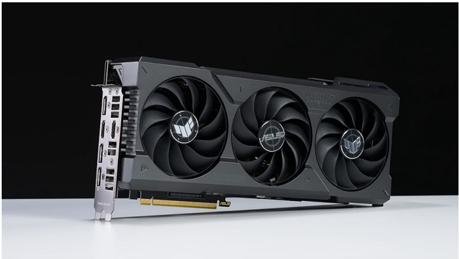
- The biological argument holds that AI computations run on GPUs using binary code and semiconductors; mathematical algorithms implemented on graphics cards cannot become conscious because they lack a complex biological substrate. Human consciousness is grounded in the nervous system, biochemical processes, and embodied cognition.
- LLM linguistic ability does not indicate consciousness: LLMs generate probable wording, not truth; self-claims of consciousness are side effects of probabilistic sentence generation and context; passing the Turing test only shows successful imitation. In Huckle and Williams’ benchmark, average human accuracy was approximately 85%, versus approximately 75% for advanced models such as Gemini 2.5 Pro or OpenAI o3, approximately 40% for GPT-4o, and approximately 60% for Gemini 2.5 Flash.
- Public-belief figures cited include: only one-third of US adults (n = 300, July 2023) firmly rule out any form of LLM consciousness; approximately 20% of US adults (n = 2268, April–July 2023) said sentient AI systems currently exist; and a 2024 survey found approximately 17% of AI researchers and 18% of US adults believe at least one AI system has subjective experience, while approximately 8% and 10%, respectively, believe at least one has self-awareness (n AI = 582; n adults = 838).
Methods
- Conceptual/philosophical study; no datasets were generated or analysed. It clarifies the concepts of AI and consciousness, sets boundary conditions for consciousness and a general definition of AI, then presents a biological argument against AI consciousness and critical remarks on arguments for LLM consciousness.
- The analysis is argumentative, drawing on literature, popular-culture examples, survey findings, and technical descriptions of LLMs and GPUs. It also addresses potential limitations—black-box complexity and anthropocentrism—and discusses practical implications for education and regulation.
Limitations
- Stated: the authors do not precisely know what consciousness is, and the concepts of “AI” and “consciousness” do not lend themselves to comprehensive and precise representation; “AI” is vague and open-textured. They limit claims to actual AI in 2025 and the foreseeable future, not to purely philosophical possibilities or unknown future technologies such as biological mechanisms or new forms of computation.
- Stated: they address potential limitations/objections—algorithmic black-box complexity and anthropocentrism—and argue these do not undermine the thesis; they also note that their energy analysis focuses on task performance and does not analyse training and fine-tuning energy in detail.
- Evident: no empirical data were generated or analysed; the argument is conceptual and depends on a biological-substrate criterion and definitions that critics may dispute; the cited survey figures concern public and researcher beliefs, not direct evidence about AI consciousness.
Model-written summary. Check it against the paper before relying on it.
Integrity signals
Registry
Cites
Statistics
Figures
Verification
Claims the paper makes
27 Valid · 1 Not valid · 29 Not checked · 44 Own results and interpretations
The cited sources support only part of this claim — read each source’s verdict below.
In the paper
“A 2024 survey revealed that among AI researchers and adults in the US, approximately 17% and 18%, respectively, believe that at least one AI system has subjective experience and approximately 8% and 10%, respectively, believe that at least one AI system has selfawareness (data collection in May 2024; n AI = 582; n adults = 838; Dreksler et al., 2025).”
§ There is no such thing as conscious artificial intelligence > Abstract
What the sources say
- Partly supportedcites Dreksler et al., 2025 matched to “Subjective Experience in AI Systems: What Do AI Researchers and the Public Believe?” (2025) sourceExperimental — accuracy not yet measured
Section 1.2 (p. 8) confirms a May 2024 survey of 582 AI researchers and 838 US participants. Section 2.1 reports probabilities respondents assigned to AI systems having subjective experience in 2024, but the available passages do not report that 17% of researchers and 18% of US adults believed at least one system had it. Searches for those percentages and the 'at least one' formulation did not verify that part of the claim. (LLM, conf=0.82)
plain- Asserted: passes — The authors put it forward as true.
- Checkable: passes — It can be checked against evidence.
- Load-bearing: unclear — It is unclear whether the paper’s conclusions depend on it.
- Based: passes — The paper gives a reason why it holds.
- Partly supported
The cited sources support only part of this claim — read each source’s verdict below.
In the paper
“In a large-scale 2023 survey, approximately 20% of respondents (adults in the US) declared that sentient AI systems currently exist (data collection from April to July 2023, n = 2268; Anthis et al., 2025).”
§ There is no such thing as conscious artificial intelligence > Abstract
What the sources say
- Partly supportedcites Anthis et al., 2025 matched to “Perceptions of Sentient AI and Other Digital Minds: Evidence from the AI, Morality, and Sentience (AIMS) Survey” (2025) sourceExperimental — accuracy not yet measured
Section 4.4 (p. 11) reports that 20.0% of Main 2023 participants said AI is already sentient, and Section 3.1 (p. 5) identifies the samples as U.S. adults. The sample-size and date parenthetical conflates two waves: the methodology (p. 2) gives Main 2023 as n = 1,169, collected April–May, while the additional n = 1,099 was a supplemental wave collected May–July. The paper does not attribute the 20.0% result to all 2,268 respondents. (LLM, conf=0.92)
plainn = 2,268- Asserted: passes — The authors put it forward as true.
- Checkable: passes — It can be checked against evidence.
- Load-bearing: unclear — It is unclear whether the paper’s conclusions depend on it.
- Based: passes — The paper gives a reason why it holds.
- Partly supported
Every source the paper cites for this claim was checked and supports it.
In the paper
“First, they hallucinate, i.e., produce plausiblesounding but false or fallacious statements (Kalai and Vempala, 2024;Maleki et al., 2024).”
§ There is no such thing as conscious artificial intelligence > Sci-fitisation.
What the sources say
- Supportedcites Kalai and Vempala, 2024 matched to “Calibrated Language Models Must Hallucinate” (2024) source
The Introduction says language models generate false information and defines hallucination as a plausible but false or misleading AI-generated response. That supports the citing sentence’s description of hallucinations as plausible-sounding but false or fallacious statements. (LLM, conf=0.93)
- Supportedcites Maleki et al., 2024 matched to “AI Hallucinations: A Misnomer Worth Clarifying” (2024) source
In the paper’s Additional information table (page not available in our copy), a reviewed definition describes LLM output that appears plausible but is fictional. The appendix also includes fallacious assertions among the reviewed descriptions of AI hallucination. These passages support the citing sentence’s paraphrase. (LLM, conf=0.91)
plain- Asserted: passes — The authors put it forward as true.
- Checkable: passes — It can be checked against evidence.
- Load-bearing: unclear — It is unclear whether the paper’s conclusions depend on it.
- Based: passes — The paper gives a reason why it holds.
- Supported
The sources with a verdict support this claim; the rest weren’t checked yet, have no full text we could read, or their verdicts aren’t rated yet.
In the paper
“Second, they struggle with many aspects of reasoning (Shwartz, 2024;Zhou et al., 2024;Huckle and Williams, 2025).”
§ There is no such thing as conscious artificial intelligence > Sci-fitisation.
What the sources say
- Not matchedcites Shwartz, 2024
An author–year citation the paper’s reference list doesn’t settle. We don’t search these by name.
- Supportedcites Zhou et al., 2024 matched to “Larger and more instructable language models become less reliable” (2024) source
The Methods section describes benchmarks spanning numerical, linguistic, geographical, scientific and information-transformation tasks, including tasks requiring problem-solving or reasoning. The Results report that correctness decreases as difficulty increases across these benchmarks, supporting the broad claim that LLMs struggle with many aspects of reasoning. (LLM, conf=0.88)
- Not checked — no full text of the sourcecites Huckle and Williams, 2025 matched to “Easy Problems that LLMs Get Wrong” (2025) source
plain- Asserted: passes — The authors put it forward as true.
- Checkable: passes — It can be checked against evidence.
- Load-bearing: unclear — It is unclear whether the paper’s conclusions depend on it.
- Based: passes — The paper gives a reason why it holds.
- Not matched
The cited sources support only part of this claim — read each source’s verdict below.
In the paper
“We fear that because of the prevalent sci-fitisation, as well as anthropomorphism (Placani, 2024;Salles et al., 2020) and hyping (Sloane et al., 2024) in the discourse on AI (the three categories are not mutually exclusive; on the contrary, they can be considered complementary), the”
§ There is no such thing as conscious artificial intelligence > Sci-fitisation.
What the sources say
- Partly supportedcites Placani, 2024 matched to “Anthropomorphism in AI: hype and fallacy” (2024) sourceExperimental — accuracy not yet measured
Split into 2 atoms — 1 confirmed, 1 partially supported, 0 disputed, 0 misattributed, 0 unverifiable. Expand the claim to see per-atom verdicts.
- Not checked yetcites Salles et al., 2020 matched to “Anthropomorphism in AI” (2020) source
Checked before — its earlier verdict is held back until a new check runs.
- Partly supportedcites Sloane et al., 2024 matched to “Tackling AI Hyping” (2024) sourceExperimental — accuracy not yet measured
Split into 2 atoms — 1 confirmed, 1 partially supported, 0 disputed, 0 misattributed, 0 unverifiable. Expand the claim to see per-atom verdicts.
hedgedstates a cause- Asserted: passes — The authors put it forward as true.
- Checkable: passes — It can be checked against evidence.
- Load-bearing: passes — The paper’s conclusions depend on it.
- Based: passes — The paper gives a reason why it holds.
- Partly supported
38 more claims · 9 with their cited sources checked
Create a free account to see all 101 claims and to verify the 4 references still open.
- It may state two separate claims as one. 23
- Probably not a substantial claim. 48
- The quote only partly states this claim. 2
Self-check
Percentages, sums and reported differences re-computed from the paper’s own numbers.
Each contradiction between two passages listed here was confirmed by an independent check.
Rated minor: it would not touch a result — a value no result rests on, a p-value that stays on the same side of the significance level, or a conflict that is clerical, resolved elsewhere in the paper, or outside its own findings.
In the paper
§ There is no such thing as conscious artificial intelligence > Final remarks
“Floridi (2020) refers to as "semantic pareidolia"”
§ There is no such thing as conscious artificial intelligence > References
“29. Floridi L (2025) AI and semantic pareidolia: when we see consciousness where there is none.”
Citations
Cites
LeCun, Y., Bengio, Y., & Hinton, G. (2015) · Nature · doi:10.1038/nature14539 · Cited by 84,126
BERT: Pre-training of Deep Bidirectional Transformers for Language Understanding
Devlin, J., Chang, M.-W., Lee, K., & Toutanova, K. (2019) · Proceedings of the 2019 Conference of the North American Chapter of the Association for Computational Linguistics: Human Language Technologies, Volume 1 (Long and Short Papers) · doi:10.18653/v1/n19-1423 · Cited by 54,325 · cited 1×
“For example, bidirectional encoder representations from transformers (BERT) model, which is based almost only on encoders, cannot generate new text but is rather used for text classi fi cation and language understanding tasks (Devlin et. al.”
I.—COMPUTING MACHINERY AND INTELLIGENCE
TURING, A. M. (1950) · Mind · doi:10.1093/mind/lix.236.433 · Cited by 10,290 · cited 2×
“” (1968); (2) the Terminator from the fi lm “ The Terminator ” (1984); (3) superintelligent robots from the fi lm “ I, Robot ” (2004), partly inspired by the works of Isaac Asimov, as compiled in “ I, Robot ” anthology (1950).”
On the Dangers of Stochastic Parrots: Can Language Models Be Too Big? 🦜
Bender, E. M., Gebru, T., McMillan-Major, A., & Shmitchell, S. (2021) · Proceedings of the 2021 ACM Conference on Fairness, Accountability, and Transparency · doi:10.1145/3442188.3445922 · Cited by 6,988 · cited 2×
“Lacking intention and embeddedness in a communicative community, their language use is stripped of reference to meanings (those existing in the world rather than represented numerically in the vectors), making them comparable to stochastic parrots (Bender et al., 2021).”
Searle, J. R. (1980) · Behavioral and Brain Sciences · doi:10.1017/s0140525x00005756 · Cited by 6,954 · cited 2×
“2 The term “ strong AI ” was introduced by Searle (1980) in his famous paper presenting the “ Chinese Room ” argument.”
LLaMA: Open and Efficient Foundation Language Models
Touvron, H., Lavril, T., Izacard, G., Martinet, X., Lachaux, M.-A., Lacroix, T., Rozière, B., Goyal, N., Hambro, E., Azhar, F., et al. (2023) · arXiv · doi:10.48550/arxiv.2302.13971 · Cited by 4,602 · cited 1×
“Since we mention ChatGPT, we should also mention other related AI systems, such as Gemini by Google (Pichai and Hassabis, 2023), Llama by Meta (Touvron et al., 2023; Gratta fi ori et al., 2024), and Claude by Anthropic (Anthropic, 2024).”
ELIZA—a computer program for the study of natural language communication between man and machine
Weizenbaum, J. (1966) · Communications of the ACM · doi:10.1145/365153.365168 · Cited by 4,452 · cited 3×
“…in the discourse for decades and has manifested itself in, for example, in the attribution of human-like qualities to the simple chatbot ELIZA (Weizenbaum, 1966; Berry, 2023) or in the anthropomorphisation of the language used to describe AI algorithms, which McDermott (1976) warned against…”
InfluentialMachine learning and deep learning
Janiesch, C., Zschech, P., & Heinrich, K. (2021) · Electronic Markets · doi:10.1007/s12525-021-00475-2 · Cited by 2,959 · cited 1×
“…can (and even should) replace “ AI ” with more precise terms that describe speci fi c classes of technology such as machine learning (Por ę bski, 2023) or deep learning (Goodfellow et al., 2016; for an introduction, see LeCun et al., 2015; for a less technical overview, see Janiesch et al., 2021).”
GPT-3: Its Nature, Scope, Limits, and Consequences
Floridi, L., & Chiriatti, M. (2020) · Minds and Machines · doi:10.1007/s11023-020-09548-1 · Cited by 2,519 · cited 3×
“However, according to our conclusions, Floridi and Chiriatti ’ s (2020) paper remains highly relevant because one thing has not changed.”
InfluentialAzevedo, F. A. C., Carvalho, L. R. B., Grinberg, L. T., Farfel, J. M., Ferretti, R. E. L., Leite, R. E. P., Filho, W. J., Lent, R., & Herculano‐Houzel, S. (2009) · Journal of Comparative Neurology · doi:10.1002/cne.21974 · Cited by 2,337 · cited 1×
“It is estimated that the brain has 86 billion neurons (Azevedo et al., 2009; Ray, 2024).”
What computers still can't do: a critique of artificial reason
Penny, S., & Dreyfus, H. (1994) · Leonardo · doi:10.2307/1575958 · Cited by 1,637
Wason, P. C. (1968) · Quarterly Journal of Experimental Psychology · doi:10.1080/14640746808400161 · Cited by 1,476 · cited 2×
“However, people often make mistakes when abstract implications are considered (Wason, 1968; Ragni et al., 2017).”
A Comprehensive Overview of Large Language Models
Naveed, H., Khan, A. U., Qiu, S., Saqib, M., Anwar, S., Usman, M., Akhtar, N., Barnes, N., & Mian, A. (2023) · arXiv · doi:10.48550/arxiv.2307.06435 · Cited by 1,259
A Comprehensive Overview of Large Language Models
Naveed, H., Khan, A. U., Qiu, S., Saqib, M., Anwar, S., Usman, M., Akhtar, N., Barnes, N., & Mian, A. (2025) · ACM Transactions on Intelligent Systems and Technology · doi:10.1145/3744746 · Cited by 1,257 · cited 2×
“…US, n = 300, data collection in July 2023) fi rmly rule out any form of consciousness of large language models (LLMs; for a comprehensive overview, see Naveed et al., 2025; for an accessible introduction, see Cho et al., 2025, and the accompanying web application; see also Chollet, 2023), i.e.,…”
Handbook of Argumentation Theory
van Eemeren, F. H., Garssen, B., Krabbe, E. C. W., Snoeck Henkemans, A. F., Verheij, B., & Wagemans, J. H. M. (2014) · Springer eBooks · doi:10.1007/978-90-481-9473-5 · Cited by 675
The growing energy footprint of artificial intelligence
de Vries, A. (2023) · Joule · doi:10.1016/j.joule.2023.09.004 · Cited by 597 · cited 1×
“…during the training of BLOOM — an LLM with 176 billion parameters — as 433,196kWh (such an amount is enough for an estimated 500 years of functioning of one human being); the training of GPT-3 — an LLM with 175 billion parameters (or greater) — used approximately 1,287,000kWh (de Vries, 2023).”
Exploring relationship development with social chatbots: A mixed-method study of replika
Pentina, I., Hancock, T., & Xie, T. (2023) · Computers in Human Behavior · doi:10.1016/j.chb.2022.107600 · Cited by 522 · cited 1×
“…careful observers, however, may overlook that AI-based solutions are successfully penetrating even those fi elds of human activity that were once associated only with dystopian science fi ction, such as social, romantic, and even sexual relationships (Pentina et al., 2023; Alonso, 2023; Cole, 2023).”
Grattafiori, A., Dubey, A., Jauhri, A., Pandey, A., Kadian, A., Al-Dahle, A., Letman, A., Mathur, A., Schelten, A., Vaughan, A., et al. (2024) · arXiv · doi:10.48550/arxiv.2407.21783 · Cited by 505 · cited 1×
“Since we mention ChatGPT, we should also mention other related AI systems, such as Gemini by Google (Pichai and Hassabis, 2023), Llama by Meta (Touvron et al., 2023; Gratta fi ori et al., 2024), and Claude by Anthropic (Anthropic, 2024).”
Estimating the Carbon Footprint of BLOOM, a 176B Parameter Language Model
Luccioni, A. S., Viguier, S., & Ligozat, A.-L. (2022) · arXiv · doi:10.48550/arxiv.2211.02001 · Cited by 378
Salles, A., Evers, K., & Farisco, M. (2020) · AJOB Neuroscience · doi:10.1080/21507740.2020.1740350 · Cited by 335 · cited 1×
“We fear that because of the prevalent sci-fi tisation , as well as anthropomorphism (Placani, 2024; Salles et al., 2020) and hyping (Sloane et al., 2024) in the discourse on AI (the three categories are not mutually exclusive; on the contrary, they can be considered complementary), the “ real AI ”…”
Artificial intelligence meets natural stupidity
McDermott, D. (1976) · ACM SIGART Bulletin · doi:10.1145/1045339.1045340 · Cited by 323 · cited 1×
“…in the attribution of human-like qualities to the simple chatbot ELIZA (Weizenbaum, 1966; Berry, 2023) or in the anthropomorphisation of the language used to describe AI algorithms, which McDermott (1976) warned against half a century ago, and which remains problematic today (Shwartz, 2020).”
Larger and more instructable language models become less reliable
Zhou, L., Schellaert, W., Martínez-Plumed, F., Moros-Daval, Y., Ferri, C., & Hernández-Orallo, J. (2024) · Nature · doi:10.1038/s41586-024-07930-y · Cited by 203 · cited 2×
“Second, they struggle with many aspects of reasoning (Shwartz, 2024; Zhou et al., 2024; Huckle and Williams, 2025).”
AI Hallucinations: A Misnomer Worth Clarifying
Maleki, N., Padmanabhan, B., & Dutta, K. (2024) · 2024 IEEE Conference on Artificial Intelligence (CAI) · doi:10.1109/cai59869.2024.00033 · Cited by 194 · cited 1×
“First, they hallucinate, i.e., produce plausible-sounding but false or fallacious statements (Kalai and Vempala, 2024; Maleki et al., 2024).”
Anthropomorphism in AI: hype and fallacy
Placani, A. (2024) · AI and Ethics · doi:10.1007/s43681-024-00419-4 · Cited by 170 · cited 1×
“We fear that because of the prevalent sci-fi tisation , as well as anthropomorphism (Placani, 2024; Salles et al., 2020) and hyping (Sloane et al., 2024) in the discourse on AI (the three categories are not mutually exclusive; on the contrary, they can be considered complementary), the “ real AI ”…”
Parviainen, J., & Coeckelbergh, M. (2021) · AI & SOCIETY · doi:10.1007/s00146-020-01104-w · Cited by 164 · cited 1×
“● Humanoid robots such as Sophia (Parviainen and Coeckelbergh, 2021; Hanson Robotics, 2024), which is a chatbot with a case and output devices that resemble a human body.”
A landscape of consciousness: Toward a taxonomy of explanations and implications
Kuhn, R. L. (2024) · Progress in Biophysics and Molecular Biology · doi:10.1016/j.pbiomolbio.2023.12.003 · Cited by 135 · cited 4×
“Although the current consensus is that language is not a necessary condition of consciousness, with respect to humans, consciousness is closely linked with language (Kuhn, 2024, p. 79).”
InfluentialArtificial intelligence in fiction: between narratives and metaphors
Hermann, I. (2023) · AI & SOCIETY · doi:10.1007/s00146-021-01299-6 · Cited by 134
Responses to catastrophic AGI risk: a survey
Sotala, K., & Yampolskiy, R. V. (2015) · Physica Scripta · doi:10.1088/0031-8949/90/1/018001 · Cited by 121 · cited 1×
“Therefore, one can argue that we are wrong to exclude AI consciousness on the basis of the criterion of no biological substrate, because we do not have objective criteria for such an evaluation (Sotala and Yampolskiy, 2015).”
Paying the brain's energy bill
Padamsey, Z., & Rochefort, N. L. (2023) · Current Opinion in Neurobiology · doi:10.1016/j.conb.2022.102668 · Cited by 114 · cited 1×
“The brain itself uses approximately 400 kCal per day, which is less than 0.5 kWh, and its energy processes appear to be optimised for low energy consumption (Balasubramanian, 2021; Padamsey and Rochefort, 2023).”
InfluentialBalasubramanian, V. (2021) · Proceedings of the National Academy of Sciences · doi:10.1073/pnas.2107022118 · Cited by 113 · cited 1×
“The brain itself uses approximately 400 kCal per day, which is less than 0.5 kWh, and its energy processes appear to be optimised for low energy consumption (Balasubramanian, 2021; Padamsey and Rochefort, 2023).”
InfluentialWang, F., Zhang, Z., Zhang, X., Wu, Z., Mo, T., Lu, Q., Wang, W., Li, R., Xu, J., Tang, X., et al. (2025) · ACM Transactions on Intelligent Systems and Technology · doi:10.1145/3768165 · Cited by 106 · cited 1×
“If R were, e.g., a very large number of parameters in a neural network, this person should remember that a scaled-down version of this model (so-called small LLMs or small language models, SLMs, see Wang et al., 2025) will lose consciousness.”
Greco, C. M., & Tagarelli, A. (2023) · Artificial Intelligence and Law · doi:10.1007/s10506-023-09374-7 · Cited by 104
Folk psychological attributions of consciousness to large language models
Colombatto, C., & Fleming, S. M. (2024) · Neuroscience of Consciousness · doi:10.1093/nc/niae013 · Cited by 96 · cited 2×
“Colombatto and Fleming (2024) reported that only one-third of respondents (adults in the US, n = 300, data collection in July 2023) fi rmly rule out any form of consciousness of large language models (LLMs; for a comprehensive overview, see Naveed et al., 2025; for an accessible introduction, see…”
Folk Psychological Attributions of Consciousness to Large Language Models
Colombatto, C., & Fleming, S. M. (2023) · doi:10.31234/osf.io/5cnrv · Cited by 96
Calibrated Language Models Must Hallucinate
Kalai, A. T., & Vempala, S. S. (2024) · Proceedings of the 56th Annual ACM Symposium on Theory of Computing · doi:10.1145/3618260.3649777 · Cited by 91 · cited 1×
“First, they hallucinate, i.e., produce plausible-sounding but false or fallacious statements (Kalai and Vempala, 2024; Maleki et al., 2024).”
Neurobiological Basis of Consciousness
Young, G. B., & Pigott, S. E. (1999) · Archives of Neurology · doi:10.1001/archneur.56.2.153 · Cited by 80 · cited 1×
“…nervous system, especially the brain, has an important role in making us conscious and that consciousness is grounded in complicated biochemical processes, including the release of various neurotransmitters and mediation by hormones, and the embodied nature of cognition (Young and Pigott, 1999).”
, A. (1955) · Digital Loeb Classical Library · doi:10.4159/dlcl.aristotle-sophistical_refutations.1955 · Cited by 79
How much energy will AI really consume? The good, the bad and the unknown
Chen, S. (2025) · Nature · doi:10.1038/d41586-025-00616-z · Cited by 78 · cited 1×
“As Chen (2025) reported, a lower bound estimate of energy consumption during image captioning by an LLM is 105 Wh per 1000 tasks performed.”
People cannot distinguish GPT-4 from a human in a Turing test
Jones, C. R., Rathi, I., Taylor, S., & Bergen, B. K. (2025) · Proceedings of the 2025 ACM Conference on Fairness, Accountability, and Transparency · doi:10.1145/3715275.3732108 · Cited by 76 · cited 1×
“Indeed, according to the initial fi ndings, some LLMs passed this test (Jones et al., 2025; Jones and Bergen, 2025).”
People cannot distinguish GPT-4 from a human in a Turing test
Jones, C. R., & Bergen, B. K. (2024) · arXiv · doi:10.48550/arxiv.2405.08007 · Cited by 76
Legal framework for the coexistence of humans and conscious AI
Kiškis, M. (2023) · Frontiers in Artificial Intelligence · doi:10.3389/frai.2023.1205465 · Cited by 47
Butz, M. V. (2021) · KI - Künstliche Intelligenz · doi:10.1007/s13218-021-00705-x · Cited by 42 · cited 1×
“When the discussants realise that they are discussing the strictly philosophical topic of strong AI (Butz, 2021) 2 , the problem is virtually nonexistent.”
“All animals are conscious”: Shifting the null hypothesis in consciousness science
Andrews, K. (2024) · Mind & Language · doi:10.1111/mila.12498 · Cited by 40 · cited 2×
“Humans used to believe that animals were not conscious because they lacked the ability to use language (Andrews, 2024).”
van Es, K., & Nguyen, D. (2025) · AI & SOCIETY · doi:10.1007/s00146-024-02108-6 · Cited by 37
Gubelmann, R. (2024) · Philosophy & Technology · doi:10.1007/s13347-024-00696-1 · Cited by 36 · cited 1×
“Thus, as Gubelmann (2024) points out, LLMs cannot be considered speakers.”
Vecht, J. J. (2023) · Inquiry · doi:10.1080/0020174x.2020.1787222 · Cited by 35
Llorca, D. F., Gómez, E., Sánchez, I., & Mazzini, G. (2024) · Artificial Intelligence and Law · doi:10.1007/s10506-024-09412-y · Cited by 34 · cited 1×
“After most approaches have been applied, determining which technologies can already be referred to as “ AI ” will remain challenging (Fernández-Llorca et al., 2024).”
Large Language Models Pass the Turing Test
Jones, C. R., & Bergen, B. K. (2025) · arXiv · doi:10.48550/arxiv.2503.23674 · Cited by 33 · cited 1×
“Indeed, according to the initial fi ndings, some LLMs passed this test (Jones et al., 2025; Jones and Bergen, 2025).”
A voice without a mouth no more: The neurobiology of language and consciousness
Skipper, J. I. (2022) · Neuroscience & Biobehavioral Reviews · doi:10.1016/j.neubiorev.2022.104772 · Cited by 31 · cited 1×
“For example, Skipper (2022) argues that higher-order consciousness emerges due to the linguistic abilities of humans.”
Is there a tension between AI safety and AI welfare?
Long, R., Sebo, J., & Sims, T. (2025) · Philosophical Studies · doi:10.1007/s11098-025-02302-2 · Cited by 28 · cited 1×
“Long et al. (2025) take this idea so far that they even observe a con fl ict between AI safety for humans and “ AI welfare ” (we pretend that we do not see how convenient this claim is for technology companies seeking an argument against AI regulation, which would cause data centres to fall into…”
Long, R., Sebo, J., Butlin, P., Finlinson, K., Fish, K., Harding, J., Pfau, J., Sims, T., Birch, J., & Chalmers, D. (2024) · arXiv · doi:10.48550/arxiv.2411.00986 · Cited by 27 · cited 2×
“They consider “ AI welfare ” an important issue that should be acknowledged because of “ the realistic, non-negligible chance that some near-future AI systems will be welfare subjects and moral patients ” (Long et al., 2024, p. 29).”
Anthis, J. R., Pauketat, J. V. T., Ladak, A., & Manoli, A. (2025) · Proceedings of the 2025 CHI Conference on Human Factors in Computing Systems · doi:10.1145/3706598.3713329 · Cited by 24 · cited 1×
“In a large-scale 2023 survey, approximately 20% of respondents (adults in the US) declared that sentient AI systems currently exist (data collection from April to July 2023, n = 2268; Anthis et al., 2025).”
Anthis, J. R., Pauketat, J. V. T., Ladak, A., & Manoli, A. (2024) · arXiv · doi:10.48550/arxiv.2407.08867 · Cited by 24
How to do Other Things with Words
Dennett, D. C. (1997) · Royal Institute of Philosophy Supplement · doi:10.1017/s1358246100010262 · Cited by 22
Signs of consciousness in AI: Can GPT-3 tell how smart it really is?
Bojić, L., Stojković, I., & Jolić Marjanović, Z. (2024) · Humanities and Social Sciences Communications · doi:10.1057/s41599-024-04154-3 · Cited by 19 · cited 1×
“The authors seem sensitised to the possibility of the birth of consciousness: “ It is time to conduct focused empirical inquiries to uncover the emerging capabilities of AI models as they progress towards a consciousness-like state ” (Boji ć et al., 2024, p. 11).”
Prettyman, A. (2026) · Inquiry · doi:10.1080/0020174x.2024.2439989 · Cited by 18
Easy Problems that LLMs Get Wrong
Huckle, J., & Williams, S. (2025) · Lecture Notes in Networks and Systems · doi:10.1007/978-3-031-84457-7_19 · Cited by 18
Łukowski, P. (2011) · Springer eBooks · doi:10.1007/978-94-007-1476-2 · Cited by 16
Ten Testable Properties of Consciousness
Tyler, C. W. (2020) · Frontiers in Psychology · doi:10.3389/fpsyg.2020.01144 · Cited by 15 · cited 1×
“These conditions include, for example, the feeling of separation from space (which extends beyond the ability to avoid obstacles and walls), sensory perception, intentionality, thinking in mental images, self-referentiality, and having a self-concept (Farthing, 1992, pp. 24 – 44; Tyler, 2020).”
Gams, M., & Kramar, S. (2024) · Journal of Computer and Communications · doi:10.4236/jcc.2024.123014 · Cited by 15 · cited 1×
“In this paper, we have reached the same conclusions as Gams and Kramar (2024), who argued that LLMs “ function as advanced informational tools rather than entities possessing a level of consciousness that would warrant their categorization alongside sentient beings ” (p. 234).”
Sloane, M., Danks, D., & Moss, E. (2024) · AI and Ethics · doi:10.1007/s43681-024-00481-y · Cited by 15 · cited 1×
“We fear that because of the prevalent sci-fi tisation , as well as anthropomorphism (Placani, 2024; Salles et al., 2020) and hyping (Sloane et al., 2024) in the discourse on AI (the three categories are not mutually exclusive; on the contrary, they can be considered complementary), the “ real AI ”…”
Principles for Responsible AI Consciousness Research
Butlin, P., & Lappas, T. (2025) · Journal of Artificial Intelligence Research · doi:10.1613/jair.1.17310 · Cited by 15
The Limits of Computation: Joseph Weizenbaum and the ELIZA Chatbot
Berry, D. (2023) · Weizenbaum Institute · doi:10.34669/wi.wjds/3.3.2 · Cited by 13
AI and Semantic Pareidolia: When We See Intelligent Consciousness where there is None
Floridi, L. (2026) · Philosophy & Technology · doi:10.1007/s13347-026-01052-1 · Cited by 13
The AI Double Standard: Humans Judge All AIs for the Actions of One
Manoli, A., Pauketat, J. V. T., & Anthis, J. R. (2025) · Proceedings of the ACM on Human-Computer Interaction · doi:10.1145/3711083 · Cited by 12 · cited 1×
“…the problem of treating AI as one large entity, with characteristics determined by the best existing technologies at a given time (a partially similar tendency to treat AI as a highly homogenous group rather than as a collection of diverse solutions is supported by research of Manoli et al., 2025).”
Quantifying empirical support for theories of consciousness: a tentative methodological framework
Kirkeby-Hinrup, A. (2024) · Frontiers in Psychology · doi:10.3389/fpsyg.2024.1341430 · Cited by 11 · cited 1×
“Consciousness can be understood in very different ways (Kuhn, 2024; Kirkeby-Hinrup, 2024).”
Atkinson, J. (2024) · CRC Press eBooks · doi:10.1201/9781003517245 · Cited by 11
Energy impacts of autonomous vehicles - Present and the future
Rajashekara, K. (2024) · iEnergy · doi:10.23919/ien.2024.0012 · Cited by 8 · cited 1×
“An hour of autonomous driving can result in an energy consumption of 0.5 – 2.5 kWh (Rajashekara, 2024), completely incomparable to the negligible energy effort for a human (the energy consumption of the brain is almost independent of the task performed and driving the car is not physically…”
InfluentialTRANSFORMER EXPLAINER: Interactive Learning of Text-Generative Models
Cho, A., Kim, G., Karpekov, A., et al. (2025) · Proceedings of the AAAI Conference on Artificial Intelligence · doi:10.1609/aaai.v39i28.35347 · Cited by 8
AI and Semantic Pareidolia: When We See Consciousness Where There Is NonePreprint
Floridi, L. (2025) · SSRN Electronic Journal · doi:10.2139/ssrn.5309682 · Cited by 7
Transformer Explainer: Interactive Learning of Text-Generative Models
Cho, A., Kim, G. C., Karpekov, A., Helbling, A., Wang, Z. J., Lee, S., Hoover, B., & Chau, D. H. (2025) · AAAI Conference on Artificial Intelligence · doi:10.48550/arxiv.2408.04619 · Cited by 6
Subjective Experience in AI Systems: What Do AI Researchers and the Public Believe?
Dreksler, N., Caviola, L., Chalmers, D., Allen, C., Rand, A., Lewis, J., Waggoner, P., Mays, K., & Sebo, J. (2025) · arXiv · doi:10.48550/arxiv.2506.11945 · Cited by 5 · cited 2×
“…in the US, approximately 17% and 18%, respectively, believe that at least one AI system has subjective experience and approximately 8% and 10%, respectively, believe that at least one AI system has self-awareness (data collection in May 2024; n AI = 582; n adults = 838; Dreksler et al., 2025).”
Porębski, A. (2023) · Research Handbook on Law and Technology · doi:10.4337/9781803921327.00037 · Cited by 4
Self-citationChatGPT believes it is conscious
Hintze, A. (2023) · arXiv · doi:10.48550/arxiv.2304.12898 · Cited by 3 · cited 1×
“Another example based on a conversation with a chatbot is provided in a paper by Hintze (2023), titled: “ ChatGPT believes it is conscious ” .”
Fundamentals of Brain and Behavior
Ray, W. J. (2023) · Routledge eBooks · doi:10.4324/9781003266426 · Cited by 2
Crespo, R. (2024) · Scientia et Fides · doi:10.12775/setf.2024.014 · Cited by 1 · cited 1×
“Hence, this assumption seems to be unful fi lled (Crespo, 2024).”
Institutional black boxes pose an even greater risk than algorithmic ones in a legal context
anon, A. (2024) · doi:10.2139/ssrn.4971723 · Cited by 1
Free LLMs Hallucinate and Rarely Signal Their Limitations in Solving Legal ProblemsPreprint
anon, A., & Figura, J. (2025) · SSRN Electronic Journal · doi:10.2139/ssrn.5188654 · Cited by 1
Self-citationA voice without a mouth no more: The neurobiology of language and consciousnessPreprint
Skipper, J. I. (2021) · doi:10.31234/osf.io/jfuws · Cited by 1
Research works printed but not linked: 11
- 4. Anthropic (2024) Introducing the next generation of Claude. The Anthropic Blog. Retrieved December 30, 2024, from https://www.anthropic.com/news/claude- 3-family Aristotle (1955) On sophistical refutations (E. S. Forster, Trans.). Harvard Uni- versity Press. (Original work published ca. 350 B.C.)
- 13. Chalmers D (2023) Could a large language model be conscious? Boston Review. Retrieved January 16, 2025, from https://www.bostonreview.net/articles/ could-a-large-language-model-be-conscious
- 33. Goodfellow I, Bengio Y, Courville A (2016) Deep learning (1st ed.). The MIT Press
- 42. Huckle J (2025) Code for "Easy problems that LLMs get wrong" paper. [GitHub Repository]. Retrieved August 20, 2025, from https://github.com/ JamesHuckle/easy-problems-that-llms-get-wrong · DOI · Paper page
- 61. McCarthy J (1979) Ascribing mental qualities to machines. In Ringle M (ed.), Philosophical Perspectives in Artificial Intelligence.Humanities Press
- 75. Ragni M, Kola I, Johnson-Laird PN (2017) The Wason selection task: a meta- analysis. In Proceedings of the 39th Annual Meeting of the Cognitive Science Society (pp. 980-985). Cognitive Science Society
- 80. Searle JR (2009) What is language: some preliminary remarks. Etica Politica 11(1):173-202
- 92. Vaswani A, Shazeer N, Parmar N, Uszkoreit J, Jones L, Gomez AN, Kaiser Ł, Polosukhin I (2017) Attention is all you need. In Proceedings of the 31st International Conference of Neural Information Processing Systems (pp. 6000-6010).
- 94. Volokh E (2023) Large libel models? Liability for AI output. J Free Speech Law 3(2):489-557
- 95. Waismann F (1945) Verifiability. Proc Aristotelian Soc Suppl Volumes 19:119-150
- 97. Wasiewicz A, Szuba T (1990) The idea of consciousness for intelligent machines as the frame for the future software construction. In Proceedings of the IMACS International Symposium on Mathematical and Intelligent Models in System Simulation (MIM-S 2 ), Brussels
Cited by
Exploring large language models’ responses to moral reasoning dilemmas
Nabizadeh, D., Walker, D., Han, H., & Laird, E. (2025) · Ethics & Behavior · doi:10.1080/10508422.2025.2601022 · Cited by 8
“While current LLMs lack consciousness (Porębski & Figura, 2025), exploring their capabilities to generate responses consistent with moral reasoning patterns provides the groundwork for future studies that account for such possibilities (Sebo & Long, 2025).”
How do large-language models respond to moral dilemmas? Insights from the defining issues test
Nabizadeh, D., Walker, D. I., Han, H., McNeill, L., Wind, S. A., & Scofield, J. M. (2026) · AI and Ethics · doi:10.1007/s43681-026-01104-4 · Cited by 6
AI’s mental health: A question we cannot yet answer—but must prepare for
Nayok, S. B., & Pathak, H. (2026) · Asian Journal of Psychiatry · doi:10.1016/j.ajp.2026.104953 · Cited by 3
Bao, G. C., & Gabbay, E. (2026) · Journal of Religion and Health · doi:10.1007/s10943-026-02745-9 · Cited by 3
“At present, the notion of whether AI is conscious and can experience suffering is deeply contested and far from accepted (Porębski & Figura, 2025).”
Bhargava, V., Kar, A., Gupta, S., Yadav, C., Singh, K., & Lata, P. (2026) · AI and Ethics · doi:10.1007/s43681-025-00946-8 · Cited by 1
Metadata
- Authors
- Porębski, A., & Figura, J.
- Affiliations
- Jagiellonian University (PL)
- Corresponding author
- Porębski, Andrzej
- Venue
- Humanities and Social Sciences Communications
- Published
- 2025-10-28
- Volume
- 12
- Issue
- 1
- ISSN
- 2055-1045 (ISSN-L)
- 2662-9992
- OpenAlex
- W4415619269
- Semantic Scholar
- ec2e38923ce3201ee2bba7177268effb33f52d48
- Cited by
- 20
- References
- 70
- Citations by year
- 2026: 19 · 2025: 1
- FWCI
- 21.02
- Type
- journal article
- Language
- en
- Open access
- gold
- doi.org
- Licence
- cc-by
- creativecommons.org/licenses/by/4.0 (tdm)
- creativecommons.org/licenses/by/4.0 (vor)
- Locations
- Humanities and Social Sciences Communications (publishedVersion, cc-by)
- Homo Politicus (Academy of Humanities and Economics in Lodz) (submittedVersion, cc-by-nc-nd)
- Jagiellonian University Repository (Jagiellonian University) (submittedVersion, cc-by-nc-nd)
- DOAJ (DOAJ: Directory of Open Access Journals) (submittedVersion, cc-by-sa)
- Funders
- Narodowe Centrum Nauki (2022/45/N/HS5/00871)
- Topics
- Social Sciences › Arts and Humanities › Philosophy › Philosophy and Theoretical Science
- Social Sciences › Arts and Humanities › History and Philosophy of Science › Cybernetics and Technology in Society
- Physical Sciences › Computer Science › Artificial Intelligence › Ethics and Social Impacts of AI
- Keywords
- artificial consciousness, large language models, computational algorithms, public discourse on AI
About these checks
Registry, retraction, Cites and statistics results are computed, not judged, with one exception: a printed reference that no index lists is read once by a model before it counts as a citation error. Claims are extracted by a model and kept only when their quote appears verbatim in the text; each cited source is then checked, with a model’s help, for whether it says what the claim relies on. Those verdicts can be wrong — read the claim’s quote and the cited source before relying on one.
The claim verdicts this report counts are experimental: their accuracy is not yet measured.
A language model drew the claims from the paper on 2026-10-05, under version 3 of the claim definition (model deepseek-v4.1-flash, prompt extract-v3).
A second model labelled each claim on 2026-10-05 (model jev-1.13-20260917, definition revision gold-guideline-v0.2).
Cited sources are checked with a language model’s help (gpt-6-sol).
Statistics and arithmetic are recomputed, not judged.
Confidence bands are shown only for fields calibrated on our annotated test set. None is calibrated yet, so no band is shown.
What counts as a claim ›How we measure confidence ›How we check this ›
Are you an author, or do you see a problem with this page? Request a review
Data sources
Bibliographic data: Semantic Scholar, OpenAlex, Crossref.
Contains information from the Semantic Scholar Academic Graph Datasets, made available under the ODC Attribution License (ODC-BY 1.0).
Semantic Scholar’s data is described in: Kinney, R., et al. (2023). The Semantic Scholar Open Data Platform. arXiv:2301.10140.
