

Proterozoic ocean redox and biogeochemical stasis
Open accessThe DOI matches its Crossref record; 54 of the 54 references it cites were found in a registry or an index.
Abstract
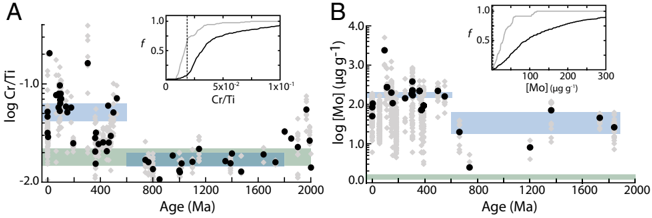
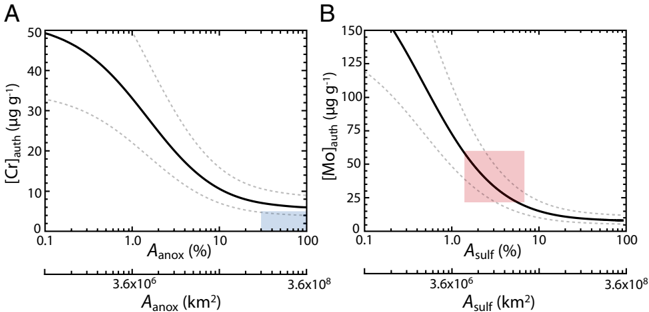
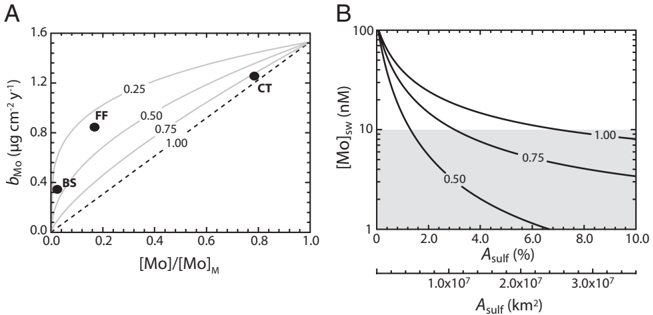
The partial pressure of oxygen in Earth’s atmosphere has increased dramatically through time, and this increase is thought to have occurred in two rapid steps at both ends of the Proterozoic Eon (∼2.5–0.543 Ga). However, the trajectory and mechanisms of Earth’s oxygenation are still poorly constrained, and little is known regarding attendant changes in ocean ventilation and seafloor redox. We have a particularly poor understanding of ocean chemistry during the mid-Proterozoic (∼1.8–0.8 Ga). Given the coupling between redox-sensitive trace element cycles and planktonic productivity, various models for mid-Proterozoic ocean chemistry imply different effects on the biogeochemical cycling of major and trace nutrients, with potential ecological constraints on emerging eukaryotic life. Here, we exploit the differing redox behavior of molybdenum and chromium to provide constraints on seafloor redox evolution by coupling a large database of sedimentary metal enrichments to a mass balance model that includes spatially variant metal burial rates. We find that the metal enrichment record implies a Proterozoic deep ocean characterized by pervasive anoxia relative to the Phanerozoic (at least ∼30–40% of modern seafloor area) but a relatively small extent of euxinic (anoxic and sulfidic) seafloor (less than ∼1–10% of modern seafloor area). Our model suggests that the oceanic Mo reservoir is extremely sensitive to perturbations in the extent of sulfidic seafloor and that the record of Mo and chromium enrichments through time is consistent with the possibility of a Mo–N colimited marine biosphere during many periods of Earth’s history.
Overview
The claims and statistics of this paper haven’t been checked yet.
Free: it reads the open-access text and checks the first 5 claims that cite a source we can check. Create a free account to check every claim.
Integrity signals
Registry
Cites
Statistics
Figures
Verification
Claims the paper makes
The claims and statistics of this paper haven’t been checked yet.
Free: it reads the open-access text and checks the first 5 claims that cite a source we can check. Create a free account to check every claim.
Claims other papers make about this one
Each is checked against this paper’s own text: does it say what the citing paper says it does?
The source backs part of the claim, not all of it — or backs it for a different population, condition or comparison.
In the citing paper
“The pervasiveness of benthic anoxia in shallow settings may also have been exacerbated by nutrient limitation of biological oxygen production in the surface ocean during much of Proterozoic time (refs. 27 and 28, Supporting Information ).”
From Earth's oxygen cycle and the evolution of animal life (2016) · cites this paper as [27]
Experimental — accuracy not yet measuredThe source backs part of the claim, not all of it — or backs it for a different population, condition or comparison.
In the citing paper
“but these fluxes are small compared to the riverine flux (i.e., ~0.60% and ~0.02% of the riverine flux respectively, Reinhard et al., 2013)”
From The chromium isotope composition of reducing and oxic marine sediments (2016) · cites this paper as Reinhard et al., 2013
Experimental — accuracy not yet measuredThe source backs part of the claim, not all of it — or backs it for a different population, condition or comparison.
In the citing paper
“The sharp rise of oxygen levels, featured by great oxidation events (GOEs) during the Proterzoic, are also recorded by the highly increasing access of trace metals like Mo and U in the ocean4, 5.”
From Heterogenous oceanic redox conditions through the Ediacaran-Cambrian boundary limited the metazoan zonation (2017) · cites this paper as [4]
Experimental — accuracy not yet measuredThe source backs part of the claim, not all of it — or backs it for a different population, condition or comparison.
In the citing paper
“Although limited in extent, euxinia then was likely two orders of magnitude more extensive than in today's oceans where it blankets much less than 1% of the seafloor (Reinhard et al., 2013).”
From Oxygenation, Life, and the Planetary System during Earth's Middle History: An Overview (2021) · cites this paper as Reinhard et al., 2013
Experimental — accuracy not yet measuredThe source backs part of the claim, not all of it — or backs it for a different population, condition or comparison.
In the citing paper
“The contrasting behaviors of molybdenum, chromium, uranium, and rhenium in organic-rich marginal sedimentary rocks deposited throughout the mid-Proterozoic qualitatively indicate widespread marine anoxia (Partin et al. 2013, Reinhard et al. 2013, Scott et al. 2008, Sheen et al. 2018)”
From The History of Ocean Oxygenation (2022) · cites this paper as Reinhard et al. 2013
Experimental — accuracy not yet measured
5 more claims about this paper
Create a free account to see every claim other papers make about this one.
Self-check
Percentages, sums and reported differences re-computed from the paper’s own numbers.
The self-check needs the paper’s full text.
Citations
Cites
Composition of the Continental Crust
Rudnick, R. L., & Gao, S. (2014) · Treatise on Geochemistry · doi:10.1016/b978-0-08-095975-7.00301-6 · Cited by 5,691
The geochemical evolution of the continental crust
Taylor, S. R., & McLennan, S. M. (1995) · Reviews of Geophysics · doi:10.1029/95rg00262 · Cited by 4,643 · cited 1×
“Proterozoic enrichments range from less than 10 to greater than 100 ppm, compared with concentrations on the order of ∼1–2 ppm in average upper crust (16).”
BackgroundComposition of the Continental Crust
Rudnick, R. L., & Gao, S. (2003) · Treatise on Geochemistry · doi:10.1016/b0-08-043751-6/03016-4 · Cited by 3,413
Relationships between the trace element composition of sedimentary rocks and upper continental crust
McLennan, S. M. (2001) · Geochemistry, Geophysics, Geosystems · doi:10.1029/2000gc000109 · Cited by 2,457
Condie, K. C. (1993) · Chemical Geology · doi:10.1016/0009-2541(93)90140-e · Cited by 2,366
Glacial‐interglacial CO2 change: The Iron Hypothesis
Martin, J. H. (1990) · Paleoceanography · doi:10.1029/pa005i001p00001 · Cited by 2,021 · cited 2×
“75 × 10 μg·cm·y, estimated by compiling Mo burial rates in oxic settings (22) and by combining Mn burial rates in oxic pelagic sediments (23) with a characteristic Mo/Mn ratio of 2 × 10 (24).”
BackgroundThe Chemical Evolution of the Atmosphere and Oceans
Holland, H. D. (1984) · doi:10.1515/9780691220239 · Cited by 1,836
Trace-element behavior and redox facies in core shales of Upper Pennsylvanian Kansas-type cyclothems
Algeo, T. J., & Maynard, J. B. (2004) · Chemical Geology · doi:10.1016/j.chemgeo.2003.12.009 · Cited by 1,694 · cited 1×
“From a mechanistic perspective, this approach builds from clear evidence that the burial in sediments of many redox sensitive metals in anoxic settings scales strongly with carbon flux to the sediments (18, 41, 42).”
BackgroundDating the rise of atmospheric oxygen
Bekker, A., Holland, H. D., Wang, P.-L., Rumble, D., Stein, H. J., Hannah, J. L., Coetzee, L. L., & Beukes, N. J. (2004) · Nature · doi:10.1038/nature02260 · Cited by 1,435 · cited 2×
“4 Ga (14), the concentration of many redox-sensitive elements in the ocean has been primarily controlled by marine redox conditions.”
BackgroundSelf-citationA new model for Proterozoic ocean chemistry
Canfield, D. E. (1998) · Nature · doi:10.1038/24839 · Cited by 1,243 · cited 1×
“For example, given that deep-sea anoxia during the mid-Proterozoic was most likely caused by gas-exchange constraints expressed in deep-water formation regions (81), rather than local reductant (i.”
Background
Research works printed but not linked: 1
- 52. Partin C, et al. (2012) Fluctuations in Precambrian atmospheric and oceanic oxygen levels: A new Precambrian paradigm emerging? Mineralogical Magazine 76(6):2207.
Cited by
Items 301–400 of 527
Lan, C., Long, X., Zhai, M., & Wang, J. (2021) · Precambrian Research · doi:10.1016/j.precamres.2021.106142 · Cited by 18
Stüeken, E. E., Viehmann, S., & Hohl, S. V. (2021) · Geobiology · doi:10.1111/gbi.12478 · Cited by 20
“…of organic matter was suppressed, base metals were trapped in sulphide minerals, phosphorus was efficiently scavenged by ferrous iron, and nitrate was more rapidly reduced to N2 gas (Derry, 2015; Kipp & Stüeken, 2017; Koehler et al., 2017; Reinhard et al., 2013, 2017; Stüeken, 2013).”
Background16 Good Golly, Why Moly? THE STABLE ISOTOPE GEOCHEMISTRY OF MOLYBDENUM
Kendall, B., Dahl, T. W., & Anbar, A. D. (2017) · De Gruyter eBooks · doi:10.1515/9783110545630-017 · Cited by 25
Mechanisms of chromium isotope fractionation and the applications in the environment
Li, Y., Huang, Y., Li, Z., Tang, X. Q., Liu, X., & Hughes, S. S. (2022) · Ecotoxicology and Environmental Safety · doi:10.1016/j.ecoenv.2022.113948 · Cited by 22
Tao, J., Zhang, J., Liu, Y., Stüeken, E. E., Dong, Z., Shi, M., Li, P., Zhang, Q., & Poulton, S. W. (2022) · Precambrian Research · doi:10.1016/j.precamres.2022.106868 · Cited by 16
Geochemical signatures of redepositional environments: The Namibian continental margin
Abshire, M. L., Owens, J. D., Cofrancesco, J., Inthorn, M., & Riedinger, N. (2020) · Marine Geology · doi:10.1016/j.margeo.2020.106316 · Cited by 17
Vanadium isotope evidence for expansive ocean euxinia during the appearance of early Ediacara biota
Fan, H., Ostrander, C. M., Auro, M. E., Wen, H., & Nielsen, S. G. (2021) · Earth and Planetary Science Letters · doi:10.1016/j.epsl.2021.117007 · Cited by 19
Hutchings, A. M., & Turchyn, A. V. (2021) · Geology · doi:10.1130/g48774.1 · Cited by 17
Chromium isotope evidence for oxygenation events in the Ediacaran ocean
Xu, D., Wang, X., Zhu, J., Jiang, G., Shi, X., Wang, X., & Sahoo, S. (2022) · Geochimica et Cosmochimica Acta · doi:10.1016/j.gca.2022.02.019 · Cited by 17
Chromium evidence for protracted oxygenation during the Paleoproterozoic
Mänd, K., Planavsky, N. J., Porter, S. M., Robbins, L. J., Wang, C., Kreitsmann, T., Paiste, K., Paiste, P., Romashkin, A. E., Deines, Y. E., et al. (2022) · Earth and Planetary Science Letters · doi:10.1016/j.epsl.2022.117501 · Cited by 17
Self-citationBinding and transport of Cr(III) by clay minerals during the Great Oxidation Event
Hao, W., Chen, N., Sun, W., Mänd, K., Kirsimäe, K., Teitler, Y., Somelar, P., Robbins, L. J., Babechuk, M. G., Planavsky, N. J., et al. (2022) · Earth and Planetary Science Letters · doi:10.1016/j.epsl.2022.117503 · Cited by 18
Self-citationMetal stable isotopes in the marine realm
Little, S., de Souza, G. F., & Xie, R. C. (2024) · Elsevier eBooks · doi:10.1016/b978-0-323-99762-1.00019-x · Cited by 23
Jia, T., Wang, R., Huang, T., Lang, X., Ma, H., & Shen, B. (2022) · Precambrian Research · doi:10.1016/j.precamres.2022.106681 · Cited by 16
Evolution of iron and oxygen biogeochemical cycles during the Precambrian
Watanabe, Y., Tajika, E., & Ozaki, K. (2023) · Geobiology · doi:10.1111/gbi.12571 · Cited by 16
“Estimates of past marine P during the Archean and Proterozoic vary from P-depleted conditions (Bjerrum & Canfield, 2002; Jones et al., 2015; Rego et al., 2023) to P-enriched conditions (Konhauser et al., 2007; Planavsky et al., 2010).”
BackgroundInfluentialRutledge, R., Gilleaudeau, G. J., Remírez, M., Kaufman, A. J., Lyons, T. W., Bates, S. M., & Algeo, T. J. (2024) · Geochimica et Cosmochimica Acta · doi:10.1016/j.gca.2024.01.007 · Cited by 15
Self-citationOxygen increase and the pacing of early animal evolution
Kaiho, K., Shizuya, A., Kikuchi, M., Komiya, T., Chen, Z., Tong, J., Tian, L., Gorjan, P., Takahashi, S., Baud, A., et al. (2024) · Global and Planetary Change · doi:10.1016/j.gloplacha.2024.104364 · Cited by 14
Emergence of an Orphan Nitrogenase Protein Following Atmospheric Oxygenation
Cuevas-Zuviría, B., Garcia, A. K., Rivier, A. J., Rucker, H. R., Carruthers, B. M., & Kaçar, B. (2024) · Molecular Biology and Evolution · doi:10.1093/molbev/msae067 · Cited by 15
“…temporal fluctuations and spatial heterogeneity in environmental redox conditions (and associated trace metal availabilities) following the rise of oxygenic phototrophs (Hazen et al. 2008; Reinhard et al. 2013; Lyons et al. 2014), one of the most significant ecological revolutions in Earth history.”
BackgroundHemmingsson, C., Pitcairn, I., & Fru, E. C. (2018) · Environmental Chemistry · doi:10.1071/en17124 · Cited by 16
Singh, A. K., Chakraborty, P. P., & Sarkar, S. (2018) · Current Science · doi:10.18520/cs/v115/i7/1334-1341 · Cited by 16
Gibson, T. M., Kunzmann, M., Poirier, A., Schumann, D., Tosca, N. J., & Halverson, G. P. (2020) · Geochimica et Cosmochimica Acta · doi:10.1016/j.gca.2020.04.013 · Cited by 14
Jin, C., Li, C., Algeo, T. J., Wang, G., Shi, W., Cheng, M., Zhang, Z., Wang, H., Li, N., & Wang, W. (2021) · Journal of the Geological Society · doi:10.1144/jgs2020-234 · Cited by 14
“The RSTE enrichments of organic-rich anoxic black shales have often been used to track changes in oceanic redox conditions through time (e.g. Algeo et al. 2007; Scott et al. 2008; Sahoo et al. 2012, 2016; Partin et al. 2013; Reinhard et al. 2013).”
BackgroundInfluentialPeng, Y., Dong, L., Ma, H., Wang, R., Lang, X., Peng, Y., Qin, S., Liu, W., & Shen, B. (2020) · Precambrian Research · doi:10.1016/j.precamres.2020.105846 · Cited by 16
Xu, L., Frank, A. B., Frei, R., Wang, G., Yuan, P., Fu, X., & Lehmann, B. (2024) · Chemical Geology · doi:10.1016/j.chemgeo.2024.122418 · Cited by 15
Loydell, D. K., & Large, R. R. (2018) · Palaeogeography Palaeoclimatology Palaeoecology · doi:10.1016/j.palaeo.2018.10.028 · Cited by 13
“Redox sensitive trace elements in marine pyrite, including Se, Mo, Sb, U, V and Co have been used as proxies for oxygen levels in the past atmosphere-ocean system (Anbar et al., 2006; Scott et al., 2008; Gill et al., 2009; Sahoo et al., 2012, Partin et al., 2013; Reinhard et al., 2013; Large et al., 2014, 2015; Mukher…”
MethodMallick, D., Wang, X., & Beebe, D. A. (2022) · Geochimica et Cosmochimica Acta · doi:10.1016/j.gca.2022.08.004 · Cited by 15
Lu, X., Edwards, C. T., & Kendall, B. (2022) · Geochimica et Cosmochimica Acta · doi:10.1016/j.gca.2022.11.028 · Cited by 12
Gilleaudeau, G. J., Chen, X., Romaniello, S. J., Akam, S., Wittkop, C. A., Katsev, S., Anbar, A. D., & Swanner, E. D. (2025) · Geochimica et Cosmochimica Acta · doi:10.1016/j.gca.2025.01.011 · Cited by 12
Yang, X., Zhang, Z., Li, C., Duan, S., & Jiang, Z. (2016) · Journal of Asian Earth Sciences · doi:10.1016/j.jseaes.2016.01.007 · Cited by 12
On the use of models in understanding the rise of complex life
Lenton, T. M. (2020) · Interface Focus · doi:10.1098/rsfs.2020.0018 · Cited by 13
“They show that complete removal of redox-sensitive metals need not imply global anoxia or euxinia, with estimates of greater than 30–40% of Proterozoic seafloor anoxic and approximately 1–10% euxinic [54].”
BackgroundZhang, F., Wang, H., Ye, Y., Deng, Y., Lyu, Y., Wang, X., Yu, Z., Lyu, D., Lu, Y., Zhou, C., et al. (2021) · Palaeogeography Palaeoclimatology Palaeoecology · doi:10.1016/j.palaeo.2021.110449 · Cited by 13
Wang, X., Shi, M., Zhang, J., Pang, Y., & Zhao, Y. (2021) · ACS Earth and Space Chemistry · doi:10.1021/acsearthspacechem.1c00280 · Cited by 13
Extant mat microbes synchronize vertical migration to a diel tempo
Biddanda, B. A., Weinke, A. D., & Stone, I. P. (2022) · Journal of Great Lakes Research · doi:10.1016/j.jglr.2022.10.006 · Cited by 12
Arsenic-induced phosphate limitation under experimental Early Proterozoic oceanic conditions
Fru, E. C., Hemmingsson, C., Holm, M., Chiu, B. K., & Iñiguez, E. (2015) · Earth and Planetary Science Letters · doi:10.1016/j.epsl.2015.11.009 · Cited by 14
Chromium isotope fractionation during black shale weathering and its environmental implications
Xia, B., Zhu, J., Wang, X., Zhang, L., & Wu, G. (2021) · The Science of The Total Environment · doi:10.1016/j.scitotenv.2021.147126 · Cited by 13
Sun, L., Lechte, M. A., Shi, X., Zhou, X., Zhou, L., Fang, H., Xie, B., Wu, M., & Tang, D. (2021) · American Mineralogist · doi:10.2138/am-2022-7981 · Cited by 14
Cole, D. B., Ozaki, K., & Reinhard, C. T. (2022) · Global Biogeochemical Cycles · doi:10.1029/2021gb007052 · Cited by 13
Self-citationSugiyama, I., & Halevy, I. (2024) · Chemical Geology · doi:10.1016/j.chemgeo.2024.122448 · Cited by 12
A shallow-water oxygen minimum zone in an oligotrophic Tonian basin
Sun, Y., Wang, W., Lang, X., Guan, C., Ouyang, Q., Pang, K., Li, G., Hu, Y., Shi, H., Zhao, X., et al. (2025) · Nature Communications · doi:10.1038/s41467-025-55881-3 · Cited by 16
Processes controlling nickel and its isotopes in anoxic sediments of a seasonally hypoxic bay
Fleischmann, S., Scholz, F., Du, J., Scholten, J. C., & Vance, D. (2025) · Geochimica et Cosmochimica Acta · doi:10.1016/j.gca.2025.01.016 · Cited by 11
Application of Cd as a paleo-environment indicator
Ye, Y., Wang, H., Wang, X., Wu, C., Canfield, D. E., & Zhang, S. (2021) · Palaeogeography Palaeoclimatology Palaeoecology · doi:10.1016/j.palaeo.2021.110749 · Cited by 11
Liu, Y., Stüeken, E. E., Wang, D., Tang, X., Nie, H., Dang, W., & Zhang, J. (2022) · Chemical Geology · doi:10.1016/j.chemgeo.2022.120864 · Cited by 12
O'Sullivan, E., Nägler, T. F., Turner, E. C., Kamber, B. S., Babechuk, M. G., & O’Hare, S. P. (2022) · Precambrian Research · doi:10.1016/j.precamres.2022.106760 · Cited by 11
Ansari, A. H., Pandey, S. K., Ahmad, S., Шарма, М., Govil, P., Chaddha, A. S., & Sharma, A. (2023) · Geological Magazine · doi:10.1017/s0016756823000614 · Cited by 11
“For example, studies have demonstrated that trace metal drawdown in the Proterozoic ocean was perhaps greater than today due to larger coverage of anoxic and euxinic sea seafloor, which would have varied over the geological time scale (Reinhard et al. 2013, 2016).”
BackgroundMurakami, T., Matsuura, K., & Kanzaki, Y. (2016) · Geochimica et Cosmochimica Acta · doi:10.1016/j.gca.2016.07.008 · Cited by 12
Mo-Ni and organic carbon isotope signatures of the mid-late Mesoproterozoic oxygenation
Ansari, A. H., Ahmad, S., Govil, P., Agrawal, S., & Mathews, R. P. (2019) · Journal of Asian Earth Sciences · doi:10.1016/j.jseaes.2019.104201 · Cited by 11
Multiple Hydrothermal Iron-Formation Upgrading Events in Southeastern São Francisco Craton
Rosière, C. A., Santos, J. O. S., Braga, F. S., Hensler, A.-S., Rolim, V. K., & Bekker, A. (2021) · The Journal of Geology · doi:10.1086/715242 · Cited by 11
Self-citationNing, G., Wei, J., Yueer, L., & Yu, K. (2025) · Palaeogeography Palaeoclimatology Palaeoecology · doi:10.1016/j.palaeo.2025.113082 · Cited by 11
Benthic redox conditions and nutrient dynamics in the ca. 2.1 Ga Franceville sub-basin
Aubineau, J., Albani, A. E., Fru, E. C., Kipp, M. A., Ikouanga, J. N., & Bekker, A. (2021) · Precambrian Research · doi:10.1016/j.precamres.2021.106234 · Cited by 11
“We cannot completely rule out the possibility of Mo limitation during deposition of the FB2 Member, since low Mo content has been inferred for the Proterozoic oceans (Reinhard et al., 2013; Scott et al., 2008).”
BackgroundSelf-citationThem, T. R., Owens, J. D., Marroquín, S., Caruthers, A. H., Trabucho‐Alexandre, J., & Gill, B. C. (2022) · AGU Advances · doi:10.1029/2022av000671 · Cited by 10
“It is important to note that these calculations are highly influenced by the modern Black Sea budget (Reinhard et al., 2013) and also presume a constant Mo burial efficiency under euxinic conditions for each time interval.”
BackgroundMethodInfluentialSelf-citationEarly diagenetic processes in an iron-dominated marine depositional system
Figueroa, M. C., van de Velde, S., Gregory, D. D., Lemieux, S., Drake, J. L., Treude, T., Kemnitz, N., Berelson, W. M., Choumiline, K., Bates, S. M., et al. (2022) · Geochimica et Cosmochimica Acta · doi:10.1016/j.gca.2022.11.026 · Cited by 11
Self-citationLechte, M. A., Halverson, G. P., Wallace, M. W., Gibson, T. M., Hood, A. V. S., Wang, C., Bui, T. H., Maloney, K. M., & Millikin, A. E. G. (2024) · Earth-Science Reviews · doi:10.1016/j.earscirev.2024.104790 · Cited by 14
Is the Neoproterozoic oxygen burst a supercontinent legacy?
Macouin, M., Roques, D., Rousse, S., Ganne, J., Dénèle, Y., & Trindade, R. I. F. (2015) · Frontiers in Earth Science · doi:10.3389/feart.2015.00044 · Cited by 11
Authigenic chromium enrichments in Proterozoic ironstones
Cole, D. B., O’Connell, B., & Planavsky, N. J. (2018) · Sedimentary Geology · doi:10.1016/j.sedgeo.2018.05.002 · Cited by 12
Self-citationNew insights into Paleoproterozoic surficial conditions revealed by 1.85 Ga corestone-rich saprolith
Sindol, G. P., Babechuk, M. G., Petrus, J. A., & Kamber, B. S. (2020) · Chemical Geology · doi:10.1016/j.chemgeo.2020.119621 · Cited by 10
The phosphorus cycle and biological pump in Earth’s middle age: Reappraisal of the “Boring Billion”
Huang, T., Wang, R., & Shen, B. (2022) · Chinese Science Bulletin (Chinese Version) · doi:10.1360/tb-2021-1168 · Cited by 11
Evolution: A Fixed-Nitrogen Fix in the Early Ocean?
Lyons, T. W., Reinhard, C. T., & Planavsky, N. J. (2014) · Current Biology · doi:10.1016/j.cub.2014.02.034 · Cited by 10
“explored the extent of sulfidic conditions required to draw the metals down to levels that may have limited N2 fixation [8].”
BackgroundSelf-citationLi, S., Friedrich, O., Nielsen, S. G., Wu, F., & Owens, J. D. (2023) · Earth and Planetary Science Letters · doi:10.1016/j.epsl.2023.118237 · Cited by 13
Song, K., Li, D., Lv, Y., Yuan, C., Qu, Y., & Liu, S. (2024) · Precambrian Research · doi:10.1016/j.precamres.2024.107398 · Cited by 9
The Global Biogeochemical Cycle of Chromium at the Earth's Surface
Janssen, D. J., Bauer, K. W., Bruggmann, S., & Crowe, S. A. (2025) · Global Biogeochemical Cycles · doi:10.1029/2025gb008525 · Cited by 11
Revised oceanic molybdenum isotope budget from deep-sea pelagic sediments
Wang, Z., Li, J., Hu, B., Zou, L., Ding, X., Zhang, L., Ma, J., & Wei, G. (2025) · Nature Communications · doi:10.1038/s41467-025-65006-5 · Cited by 13
“This produces a calculated Mo fl ux of 1.52× 10 ⁸ mol yr ⁻ ¹, substantially exceeding previous estimates of 0.09 – 0.35× 10 8 molyr ⁻ ¹ (based on authigenic Mn accumulation rates of 2.3 – 6 µ molcm ⁻ ² yr ⁻ ¹ and Mo/Mn ratio of 0.018) and 0.87× 10 ⁸ mol yr ⁻ ¹ 12,49 .”
InfluentialFuchsman, C. A., & Stüeken, E. E. (2020) · Environmental Microbiology · doi:10.1111/1462-2920.15220 · Cited by 10
Ye, M., Zhang, S., Ye, Y., Wu, M., & Wang, X. (2023) · Geophysical Research Letters · doi:10.1029/2023gl103598 · Cited by 11
“, Cd, Mo, U, Re, Cr, Fe) are depleted compared to upwelling and restricted systems, probably due to their lower concentrations in the Mesoproterozoic seawater than that of modern seawater (Algeo & Li, 2020; Partin et al., 2013; Reinhard et al., 2013; Scott et al., 2008; Sheen et al., 2018; H. Wang et al., 2020).”
BackgroundSubarkah, D., Collins, A. S., Farkaš, J., Blades, M., Gilbert, S., Jarrett, A. J. M., Bullen, M. M., & Giuliano, W. (2023) · Ore Geology Reviews · doi:10.1016/j.oregeorev.2023.105499 · Cited by 10
Ndiaye, M., Pajusaar, S., Liiv, M., Graul, S., Kallaste, T., & Hints, R. (2023) · Chemical Geology · doi:10.1016/j.chemgeo.2023.121583 · Cited by 10
Soreghan, G. S., & Cohen, A. S. (2013) · Scientific Drilling · doi:10.5194/sd-16-63-2013 · Cited by 12
“…these events – especially various redox-sensitive metal tracers and their isotope systematics (Buick, 2007; Scott et al., 2008; Partin et al., 2013; Reinhard et al., 2013) and basin-scale reconstructions of redox state (Sperling et al., 2013a, b) that enable tracking of oceanic oxygen levels.”
BackgroundZou, Y., Liu, D., Zhao, F., Kuang, H., Song, C., Sun, Y., Zhou, R., & Cheng, J. (2019) · International Geology Review · doi:10.1080/00206814.2019.1647469 · Cited by 10
“The temporal trends in the concentrations and EFs are illustrated in Figures 6(c-f), and they are mostly consistent with the shale record (c.f. Partin et al. 2013; Reinhard et al. 2013) and marine pyrite record (c.f. Large et al. 2017).”
ResultSnow, J. T., Holdship, P., & Rickaby, R. E. M. (2019) · The Science of The Total Environment · doi:10.1016/j.scitotenv.2019.134080 · Cited by 9
The marine biogeochemistry of chromium isotopes
Moos, S. B. (2018) · Woods Hole Open Access Server (WHOAS) · doi:10.1575/1912/9489 · Cited by 10
Magnall, J. M., Gleeson, S. A., Hayward, N., & Oelze, M. (2021) · Geochimica et Cosmochimica Acta · doi:10.1016/j.gca.2021.12.001 · Cited by 8
Kendall, B., Wang, S., Lillis, P. G., Xing, L., Zheng, W., & Zhu, C. (2022) · Chemical Geology · doi:10.1016/j.chemgeo.2022.121244 · Cited by 10
Ming, J., Shi, J., Fan, T., Zhao, W., Wu, Z., & Fan, J. (2023) · Geoenergy Science and Engineering · doi:10.1016/j.geoen.2023.211998 · Cited by 9
A billion years of geological drama – Boring or brilliant?
Mukherjee, I., Corkrey, R., Gregory, D. D., Large, R. R., & Poole, A. M. (2025) · Gondwana Research · doi:10.1016/j.gr.2025.02.018 · Cited by 9
Gao, B., Zhang, L., Jin, X., Li, Z., & Li, W. (2020) · Ore Geology Reviews · doi:10.1016/j.oregeorev.2020.103331 · Cited by 8
The global explosion of eukaryotic algae: The potential role of phosphorus?
Eckford-Soper, L., & Canfield, D. E. (2020) · PLoS ONE · doi:10.1371/journal.pone.0234372 · Cited by 8
“The Neoproterozoic Era was characterised by extreme biochemical and climatic volatility, which resulted in dramatic alterations in the marine redox state and fluctuating surface-ocean oxygen concentrations [4].”
BackgroundCharacterization of diverse bacteriohopanepolyols in a permanently stratified, hyper-euxinic lake
O’Beirne, M. D., Sparkes, R. B., Hamilton, T. L., van Dongen, B. E., Gilhooly, W., & Werne, J. P. (2022) · Organic Geochemistry · doi:10.1016/j.orggeochem.2022.104431 · Cited by 9
“Additionally, the sulfate and sulfide concentrations are much higher than those postulated for past ocean conditions (Gill et al., 2011; Wortmann and Paytan, 2012; Reinhard et al., 2013).”
Bernhard, J. M., Fisher, L. A., Murphy, Q., Sen, L., Yeh, H. D., Louyakis, A. S., Gomaa, F., Reilly, M., Batta‐Lona, P. G., Bucklin, A., et al. (2023) · Frontiers in Microbiology · doi:10.3389/fmicb.2023.1210781 · Cited by 8
Precambrian and early Cambrian palaeobiology of India: Quo Vadis
Шарма, М., Singh, V. K., Pandey, S. K., Ansari, A. H., Shukla, Y., Ahmad, S., Kumar, Y., & Singh, D. (2021) · Proceedings of the Indian National Science Academy · doi:10.1007/s43538-021-00029-2 · Cited by 9
Chromium stable isotope geochemistry in the Mobile Bay Estuary
Roseburrough, R., & Wang, X. (2021) · Chemical Geology · doi:10.1016/j.chemgeo.2021.120530 · Cited by 10
An expansive global oxygenation of Earth’s surface environments 1.4 billion years ago
Yan, H., Qin, Z., Xu, L., Jingwen, M., Tang, D., Huang, Q., Yang, X., Li, Z., Li, J., Li, L., et al. (2025) · Nature Communications · doi:10.1038/s41467-025-65551-z · Cited by 9
“Notably, our estimate of 80% oxygenated sea fl oor surpasses previous estimates of 50% oxygenation for mid-Proterozoic sea fl oor based on Cr and U concentrations in shales 5,55 .”
Self-citationYan, H., Xu, L., Mao, J., Tang, D., Yang, X., Bai, Y., Li, C., Konhauser, K. O., & Robbins, L. J. (2023) · American Mineralogist · doi:10.2138/am-2022-8919 · Cited by 7
Self-citationXu, Y., Yang, M., Yu, W., Du, Y., Wang, P., Liu, C., & Liu, H. (2024) · Palaeogeography Palaeoclimatology Palaeoecology · doi:10.1016/j.palaeo.2024.112125 · Cited by 8
Non-zero I/(Ca + Mg) recorded in Archean and Paleoproterozoic shallow marine Ca-carbonate sediments
Hao, F., Fralick, P. W., Ramsay, B., Tang, D., & Riding, R. (2024) · Precambrian Research · doi:10.1016/j.precamres.2024.107350 · Cited by 7
Jarvis, I., Atar, E., Gröcke, D. R., HERRINGSHAW, L. G., & Trabucho‐Alexandre, J. (2024) · Geological Magazine · doi:10.1017/s0016756824000244 · Cited by 9
Rico, K. I., Sheldon, N. D., & Kinsman‐Costello, L. (2020) · Geobiology · doi:10.1111/gbi.12388 · Cited by 7
“Our current understanding of Proterozoic ocean chemistry is largely dependent on the geochemistry of ancient sediments (e.g., Planavsky et al., 2018; Reinhard et al., 2013; Sperling, Halverson, Knoll, Macdonald, & Johnston, 2013).”
BackgroundChen, S., Zeng, M., Tian, J., Ren, K., Wang, B., Zhao, Z., Chen, X., Ettensohn, F. R., & Adatte, T. (2023) · Sedimentology · doi:10.1111/sed.13091 · Cited by 7
“Oolitic ironstones are commonly a fewmetres thick and smaller in size than GIFs (Bekker et al., 2010), potentially reflecting that Proterozoic seas were less oxygenic and ferrous iron-rich (Bekker et al., 2010; Reinhard et al., 2013; Lyons et al., 2014).”
BackgroundBiogeochemical cycling of chromium and chromium isotopes in the sub-tropical North Atlantic Ocean
Wang, W., Goring-Harford, H. J., Kunde, K., Woodward, E. M. S., Lohan, M. C., Connelly, D. P., & James, R. H. (2023) · Frontiers in Marine Science · doi:10.3389/fmars.2023.1165304 · Cited by 9
“Rivers are thought to be the main source of dissolved Cr to the ocean (Bonnand et al., 2013; Reinhard et al., 2013; McClain and Maher, 2016; Pöppelmeier et al., 2021).”
BackgroundPast and present dynamics of the iron biogeochemical cycle
Dauphas, N., Heard, A. W., Rêgo, E. S., Rouxel, O. J., Marin‐Carbonne, J., Pasquier, V., Bekker, A., & Rowley, D. B. (2024) · Elsevier eBooks · doi:10.1016/b978-0-323-99762-1.00059-0 · Cited by 10
Self-citationMechanistic Links Between the Sedimentary Redox Cycle and Marine Acid‐Base Chemistry
Reinhard, C. T., & Fischer, W. W. (2019) · Geochemistry Geophysics Geosystems · doi:10.1029/2019gc008621 · Cited by 7
Self-citationHeterogeneous redox evolution of the Meso-Neoproterozoic ocean: Insights from eastern China
Zou, Y., Webb, G. E., Zhao, F., Liu, D., Kuang, H., Zhang, J., & Yuan, C. (2021) · Palaeogeography Palaeoclimatology Palaeoecology · doi:10.1016/j.palaeo.2021.110304 · Cited by 8
Wang, X., Ye, Y., Wang, H., & Zhang, S. (2021) · Marine and Petroleum Geology · doi:10.1016/j.marpetgeo.2021.105243 · Cited by 9
Iron minerals as archives of Earth’s redox and biogeochemical evolution
Peacock, C. L., Lalonde, S. V., & Konhauser, K. O. (2017) · White Rose Research Online (University of Leeds, The University of Sheffield, University of York) · Cited by 9
Self-citationChen, J., Lu, Y., Sun, Y., Hogancamp, N. J., & Lu, M. (2024) · Chemical Geology · doi:10.1016/j.chemgeo.2024.122213 · Cited by 7
Yuan, C., Wang, X., Liu, S., Ai, J., Ye, Y., Wang, T., & Zhang, S. (2025) · Earth and Planetary Science Letters · doi:10.1016/j.epsl.2025.119367 · Cited by 6
Ni isotope cycling in sediments of highly productive upwelling systems
Sweere, T., Archer, C., Fleischmann, S., Scholz, F., Kraal, P., & Vance, D. (2025) · Earth and Planetary Science Letters · doi:10.1016/j.epsl.2025.119549 · Cited by 6
Rethinking Seawater Mo Isotope Mass‐Balance and the Sedimentary Mo Record
Ostrander, C. M., & Dellwig, O. (2026) · Paleoceanography and Paleoclimatology · doi:10.1029/2025pa005313 · Cited by 6
“The b i values used for both outputs are typically within a factor of two (Reinhard et al., 2013), and both yield broadly similar Δ 98 Mo i distributions (see Figure 1).”
张, 水., 王, 华., 王, 晓., & 叶, 云. (2021) · SCIENTIA SINICA Terrae · doi:10.1360/sste-2020-0373 · Cited by 11
Paul, P. K., Chakraborty, P. P., Shiraishi, F., Das, K., Kamei, A., & Bhattacharya, S. (2020) · Journal of Mineralogical and Petrological Sciences · doi:10.2465/jmps.191011 · Cited by 6
Rugen, E. J., Ineson, J. R., & Frei, R. (2022) · Precambrian Research · doi:10.1016/j.precamres.2022.106781 · Cited by 8
Khaled, A., Li, R., Zhao, B., Liu, F., Wu, X., Zhang, Y., Qin, X., & Yu, Q. (2024) · Precambrian Research · doi:10.1016/j.precamres.2024.107370 · Cited by 6
The History, Relevance, and Applications of the Periodic System in Geochemistry
Vance, D., & Little, S. (2019) · Structure and bonding · doi:10.1007/430_2019_44 · Cited by 8
Metadata
- Authors
- Reinhard, C. T., Planavsky, N. J., Robbins, L. J., Partin, C. A., Gill, B. C., Lalonde, S. V., Bekker, A., Konhauser, K. O., & Lyons, T. W.
- Affiliations
- University of California, Riverside (US)
- University of Alberta (CA)
- University of Manitoba (CA)
- Virginia Tech (US)
- Université de Bretagne Occidentale (FR)
- ORCID
- Venue
- Proceedings of the National Academy of Sciences
- Publisher
- National Academy of Sciences
- Published
- 2013-03-20
- Volume
- 110
- Issue
- 14
- Pages
- 5357-5362
- ISSN
- 0027-8424 (ISSN-L)
- 1091-6490
- PMC
- PMC3619314
- OpenAlex
- W2062900030
- Cited by
- 532
- References
- 54
- Citations by year
- 2026: 23 · 2025: 43 · 2024: 35 · 2023: 38 · 2022: 41 · 2021: 55 · 2020: 51 · 2019: 46 · 2018: 52 · 2017: 40 · 2016: 39 · 2015: 37 · 2014: 21 · 2013: 9
- FWCI
- 24.03
- Type
- journal article
- Language
- en
- Open access
- green
- europepmc.org
- Locations
- Proceedings of the National Academy of Sciences (publishedVersion)
- Europe PMC (PubMed Central) (publishedVersion)
- PubMed Central (publishedVersion)
- PubMed (publishedVersion)
- VTechWorks (Virginia Tech) (submittedVersion, cc-by-nc-nd)
- CaltechAUTHORS (California Institute of Technology) (submittedVersion)
- HAL (submittedVersion, other-oa)
- Funders
- National Science Foundation
- National Aeronautics and Space Administration
- Topics
- Physical Sciences › Earth and Planetary Sciences › Paleontology › Paleontology and Stratigraphy of Fossils
- Physical Sciences › Earth and Planetary Sciences › Geochemistry and Petrology › Geochemistry and Elemental Analysis
- Physical Sciences › Environmental Science › Global and Planetary Change › Earth Systems and Cosmic Evolution
- Keywords
- atmospheric oxygenation, euxinia, molybdenum, chromium, trace metal enrichment, mass balance model, ocean ventilation, marine biosphere, eukaryotic evolution
- MeSH terms
- Atmosphere, Computer Simulation, Metals, Models, Theoretical, Oceanography, Oceans and Seas, Oxidation-Reduction, Oxygen, Plankton, Geologic Sediments, History, Ancient
About these checks
Registry, retraction, Cites and statistics results are computed, not judged, with one exception: a printed reference that no index lists is read once by a model before it counts as a citation error. Claims are extracted by a model and kept only when their quote appears verbatim in the text; each cited source is then checked, with a model’s help, for whether it says what the claim relies on. Those verdicts can be wrong — read the claim’s quote and the cited source before relying on one.
Statistics and arithmetic are recomputed, not judged.
Confidence bands are shown only for fields calibrated on our annotated test set. None is calibrated yet, so no band is shown.
What counts as a claim ›How we measure confidence ›How we check this ›
Are you an author, or do you see a problem with this page? Request a review
Data sources
Bibliographic data: Semantic Scholar, OpenAlex, Crossref.
Contains information from the Semantic Scholar Academic Graph Datasets, made available under the ODC Attribution License (ODC-BY 1.0).
Semantic Scholar’s data is described in: Kinney, R., et al. (2023). The Semantic Scholar Open Data Platform. arXiv:2301.10140.
