

Proterozoic ocean redox and biogeochemical stasis
Open accessThe DOI matches its Crossref record; 54 of the 54 references it cites were found in a registry or an index.
Abstract
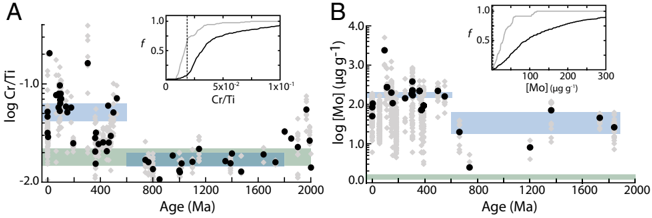
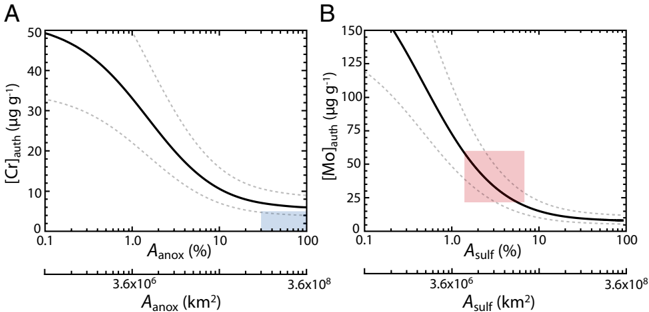
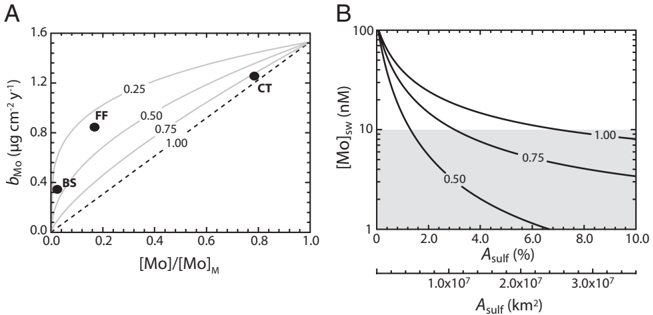
The partial pressure of oxygen in Earth’s atmosphere has increased dramatically through time, and this increase is thought to have occurred in two rapid steps at both ends of the Proterozoic Eon (∼2.5–0.543 Ga). However, the trajectory and mechanisms of Earth’s oxygenation are still poorly constrained, and little is known regarding attendant changes in ocean ventilation and seafloor redox. We have a particularly poor understanding of ocean chemistry during the mid-Proterozoic (∼1.8–0.8 Ga). Given the coupling between redox-sensitive trace element cycles and planktonic productivity, various models for mid-Proterozoic ocean chemistry imply different effects on the biogeochemical cycling of major and trace nutrients, with potential ecological constraints on emerging eukaryotic life. Here, we exploit the differing redox behavior of molybdenum and chromium to provide constraints on seafloor redox evolution by coupling a large database of sedimentary metal enrichments to a mass balance model that includes spatially variant metal burial rates. We find that the metal enrichment record implies a Proterozoic deep ocean characterized by pervasive anoxia relative to the Phanerozoic (at least ∼30–40% of modern seafloor area) but a relatively small extent of euxinic (anoxic and sulfidic) seafloor (less than ∼1–10% of modern seafloor area). Our model suggests that the oceanic Mo reservoir is extremely sensitive to perturbations in the extent of sulfidic seafloor and that the record of Mo and chromium enrichments through time is consistent with the possibility of a Mo–N colimited marine biosphere during many periods of Earth’s history.
Overview
The claims and statistics of this paper haven’t been checked yet.
Free: it reads the open-access text and checks the first 5 claims that cite a source we can check. Create a free account to check every claim.
Integrity signals
Registry
Cites
Statistics
Figures
Verification
Claims the paper makes
The claims and statistics of this paper haven’t been checked yet.
Free: it reads the open-access text and checks the first 5 claims that cite a source we can check. Create a free account to check every claim.
Claims other papers make about this one
Each is checked against this paper’s own text: does it say what the citing paper says it does?
The source backs part of the claim, not all of it — or backs it for a different population, condition or comparison.
In the citing paper
“The pervasiveness of benthic anoxia in shallow settings may also have been exacerbated by nutrient limitation of biological oxygen production in the surface ocean during much of Proterozoic time (refs. 27 and 28, Supporting Information ).”
From Earth's oxygen cycle and the evolution of animal life (2016) · cites this paper as [27]
Experimental — accuracy not yet measuredThe source backs part of the claim, not all of it — or backs it for a different population, condition or comparison.
In the citing paper
“but these fluxes are small compared to the riverine flux (i.e., ~0.60% and ~0.02% of the riverine flux respectively, Reinhard et al., 2013)”
From The chromium isotope composition of reducing and oxic marine sediments (2016) · cites this paper as Reinhard et al., 2013
Experimental — accuracy not yet measuredThe source backs part of the claim, not all of it — or backs it for a different population, condition or comparison.
In the citing paper
“The sharp rise of oxygen levels, featured by great oxidation events (GOEs) during the Proterzoic, are also recorded by the highly increasing access of trace metals like Mo and U in the ocean4, 5.”
From Heterogenous oceanic redox conditions through the Ediacaran-Cambrian boundary limited the metazoan zonation (2017) · cites this paper as [4]
Experimental — accuracy not yet measuredThe source backs part of the claim, not all of it — or backs it for a different population, condition or comparison.
In the citing paper
“Although limited in extent, euxinia then was likely two orders of magnitude more extensive than in today's oceans where it blankets much less than 1% of the seafloor (Reinhard et al., 2013).”
From Oxygenation, Life, and the Planetary System during Earth's Middle History: An Overview (2021) · cites this paper as Reinhard et al., 2013
Experimental — accuracy not yet measuredThe source backs part of the claim, not all of it — or backs it for a different population, condition or comparison.
In the citing paper
“The contrasting behaviors of molybdenum, chromium, uranium, and rhenium in organic-rich marginal sedimentary rocks deposited throughout the mid-Proterozoic qualitatively indicate widespread marine anoxia (Partin et al. 2013, Reinhard et al. 2013, Scott et al. 2008, Sheen et al. 2018)”
From The History of Ocean Oxygenation (2022) · cites this paper as Reinhard et al. 2013
Experimental — accuracy not yet measured
5 more claims about this paper
Create a free account to see every claim other papers make about this one.
Self-check
Percentages, sums and reported differences re-computed from the paper’s own numbers.
The self-check needs the paper’s full text.
Citations
Cites
Composition of the Continental Crust
Rudnick, R. L., & Gao, S. (2014) · Treatise on Geochemistry · doi:10.1016/b978-0-08-095975-7.00301-6 · Cited by 5,691
The geochemical evolution of the continental crust
Taylor, S. R., & McLennan, S. M. (1995) · Reviews of Geophysics · doi:10.1029/95rg00262 · Cited by 4,643 · cited 1×
“Proterozoic enrichments range from less than 10 to greater than 100 ppm, compared with concentrations on the order of ∼1–2 ppm in average upper crust (16).”
BackgroundComposition of the Continental Crust
Rudnick, R. L., & Gao, S. (2003) · Treatise on Geochemistry · doi:10.1016/b0-08-043751-6/03016-4 · Cited by 3,413
Relationships between the trace element composition of sedimentary rocks and upper continental crust
McLennan, S. M. (2001) · Geochemistry, Geophysics, Geosystems · doi:10.1029/2000gc000109 · Cited by 2,457
Condie, K. C. (1993) · Chemical Geology · doi:10.1016/0009-2541(93)90140-e · Cited by 2,366
Glacial‐interglacial CO2 change: The Iron Hypothesis
Martin, J. H. (1990) · Paleoceanography · doi:10.1029/pa005i001p00001 · Cited by 2,021 · cited 2×
“75 × 10 μg·cm·y, estimated by compiling Mo burial rates in oxic settings (22) and by combining Mn burial rates in oxic pelagic sediments (23) with a characteristic Mo/Mn ratio of 2 × 10 (24).”
BackgroundThe Chemical Evolution of the Atmosphere and Oceans
Holland, H. D. (1984) · doi:10.1515/9780691220239 · Cited by 1,836
Trace-element behavior and redox facies in core shales of Upper Pennsylvanian Kansas-type cyclothems
Algeo, T. J., & Maynard, J. B. (2004) · Chemical Geology · doi:10.1016/j.chemgeo.2003.12.009 · Cited by 1,694 · cited 1×
“From a mechanistic perspective, this approach builds from clear evidence that the burial in sediments of many redox sensitive metals in anoxic settings scales strongly with carbon flux to the sediments (18, 41, 42).”
BackgroundDating the rise of atmospheric oxygen
Bekker, A., Holland, H. D., Wang, P.-L., Rumble, D., Stein, H. J., Hannah, J. L., Coetzee, L. L., & Beukes, N. J. (2004) · Nature · doi:10.1038/nature02260 · Cited by 1,435 · cited 2×
“4 Ga (14), the concentration of many redox-sensitive elements in the ocean has been primarily controlled by marine redox conditions.”
BackgroundSelf-citationA new model for Proterozoic ocean chemistry
Canfield, D. E. (1998) · Nature · doi:10.1038/24839 · Cited by 1,243 · cited 1×
“For example, given that deep-sea anoxia during the mid-Proterozoic was most likely caused by gas-exchange constraints expressed in deep-water formation regions (81), rather than local reductant (i.”
Background
Research works printed but not linked: 1
- 52. Partin C, et al. (2012) Fluctuations in Precambrian atmospheric and oceanic oxygen levels: A new Precambrian paradigm emerging? Mineralogical Magazine 76(6):2207.
Cited by
Items 101–200 of 527
Luo, G., Junium, C. K., Kump, L. R., Huang, J., Li, C., Feng, Q., Shi, X., Bai, X., & Xie, S. (2014) · Earth and Planetary Science Letters · doi:10.1016/j.epsl.2014.05.020 · Cited by 90
Nitrogen isotope constraints on the early Ediacaran ocean redox structure
Wang, X., Jiang, G., Shi, X., Peng, Y., & Morales, D. C. (2018) · Geochimica et Cosmochimica Acta · doi:10.1016/j.gca.2018.08.034 · Cited by 84
Sequence stratigraphy in organic-rich marine mudstone successions using chemostratigraphic datasets
LaGrange, M. T., Konhauser, K. O., Catuneanu, O., Harris, B. S., Playter, T., & Gingras, M. K. (2020) · Earth-Science Reviews · doi:10.1016/j.earscirev.2020.103137 · Cited by 87
Self-citationKunzmann, M., Halverson, G. P., Scott, C., Minarik, W. G., & Wing, B. A. (2015) · Chemical Geology · doi:10.1016/j.chemgeo.2015.10.022 · Cited by 83
Powered by light: Phototrophy and photosynthesis in prokaryotes and its evolution
Nowicka, B., & Kruk, J. (2016) · Microbiological Research · doi:10.1016/j.micres.2016.04.001 · Cited by 86
Stockey, R. G., Cole, D. B., Farrell, U. C., Agić, H., Boag, T. H., Brocks, J. J., Canfield, D. E., Cheng, M., Crockford, P. W., Cui, H., et al. (2024) · Nature Geoscience · doi:10.1038/s41561-024-01479-1 · Cited by 78
Self-citationCheng, M., Li, C., Chen, X., Zhou, L., Algeo, T. J., Ling, H.-F., Feng, L.-J., & Jin, C.-S. (2018) · Precambrian Research · doi:10.1016/j.precamres.2017.12.007 · Cited by 77
Thomson, D., Rainbird, R. H., Planavsky, N., Lyons, T. W., & Bekker, A. (2015) · Precambrian Research · doi:10.1016/j.precamres.2015.02.007 · Cited by 76
Self-citationFried, S. D., Fujishima, K., Makarov, M., Cherepashuk, I., & Hlouchová, K. (2022) · Journal of The Royal Society Interface · doi:10.1098/rsif.2021.0641 · Cited by 90
Chromium‐isotope signatures in scleractinian corals from the Rocas Atoll, Tropical South Atlantic
Pereira, N. S., Voegelin, A. R., Paulukat, C., Sial, A. N., Ferreira, V. P., & Frei, R. (2016) · Geobiology · doi:10.1111/gbi.12155 · Cited by 77
“The main sinks are ‘suboxic’ and anoxic marine sediments (Reinhard et al., 2013, 2014).”
Gregory, D. D., Lyons, T. W., Large, R. R., Jiang, G., Stepanov, A. S., Diamond, C. W., Figueroa, M. C., & Olin, P. (2017) · Geochimica et Cosmochimica Acta · doi:10.1016/j.gca.2017.05.042 · Cited by 77
Self-citationA sluggish mid‐Proterozoic biosphere and its effect on Earth's redox balance
Ozaki, K., Reinhard, C. T., & Tajika, E. (2019) · Geobiology · doi:10.1111/gbi.12317 · Cited by 77
“organic matter to the abyssal ocean (Reinhard et al., 2013; Scott et al., 2008).”
Self-citationCole, D. B., Planavsky, N. J., Longley, M., Böning, P., Wilkes, D., Wang, X., Swanner, E. D., Wittkop, C., Loydell, D. K., Busigny, V., et al. (2020) · Global Biogeochemical Cycles · doi:10.1029/2020gb006649 · Cited by 76
“Indeed, near modern values through the Proterozoic—an interval expected to be dominated by ferruginous environments (e.g., Planavsky et al., 2011; Poulton & Canfield, 2011)—may confirm that euxinia was very rare (Reinhard et al., 2013).”
BackgroundSelf-citationDong, L., Shen, B., Lee, C. A., Shu, X.-J., Peng, Y., Sun, Y., Tang, Z., Rong, H., Lang, X., Ma, H., et al. (2015) · Geochemistry Geophysics Geosystems · doi:10.1002/2014gc005595 · Cited by 78
Luo, G., Junium, C. K., Izon, G., Ono, S., Beukes, N. J., Algeo, T. J., Cui, Y., Xie, S., & Summons, R. E. (2018) · Nature Communications · doi:10.1038/s41467-018-03361-2 · Cited by 75
Behaviour of chromium isotopes in the eastern sub-tropical Atlantic Oxygen Minimum Zone
Goring-Harford, H. J., Klar, J. K., Pearce, C. R., Connelly, D. P., Achterberg, E. P., & James, R. H. (2018) · Geochimica et Cosmochimica Acta · doi:10.1016/j.gca.2018.03.004 · Cited by 79
The evolution of the global selenium cycle: Secular trends in Se isotopes and abundances
Stüeken, E. E., Buick, R., Bekker, A., Catling, D. C., Foriel, J., Guy, B. M., Kah, L. C., Machel, H. G., Montañez, I. P., & Poulton, S. W. (2015) · Geochimica et Cosmochimica Acta · doi:10.1016/j.gca.2015.04.033 · Cited by 81
Self-citationBehavior of marine sulfur in the Ordovician
Kah, L. C., Thompson, C. K., Henderson, M. A., & Zhan, R. (2015) · Palaeogeography Palaeoclimatology Palaeoecology · doi:10.1016/j.palaeo.2015.12.028 · Cited by 78
Ostrander, C. M., Sahoo, S., Kendall, B., Jiang, G., Planavsky, N. J., Lyons, T. W., Nielsen, S. G., Owens, J. D., Gordon, G. W., Romaniello, S. J., et al. (2019) · Geochimica et Cosmochimica Acta · doi:10.1016/j.gca.2019.07.016 · Cited by 77
Self-citationLau, K. V., Lyons, T. W., & Maher, K. (2020) · Geochimica et Cosmochimica Acta · doi:10.1016/j.gca.2020.01.021 · Cited by 70
Self-citationWei, W., Klaebe, R., Ling, H., Huang, F., & Frei, R. (2020) · Chemical Geology · doi:10.1016/j.chemgeo.2020.119570 · Cited by 75
A tectonically driven Ediacaran oxygenation event
Williams, J., Mills, B. J. W., & Lenton, T. M. (2019) · Nature Communications · doi:10.1038/s41467-019-10286-x · Cited by 71
Havig, J. R., McCormick, M. L., Hamilton, T. L., & Kump, L. R. (2015) · Geochimica et Cosmochimica Acta · doi:10.1016/j.gca.2015.06.024 · Cited by 84
Berg, J. S., Jézéquel, D., Duverger, A., Lamy, D., Laberty‐Robert, C., & Miot, J. (2019) · PLoS ONE · doi:10.1371/journal.pone.0212787 · Cited by 79
Palaeoproterozoic oxygenated oceans following the Lomagundi–Jatuli Event
Mänd, K., Lalonde, S. V., Robbins, L. J., Thoby, M., Paiste, K., Kreitsmann, T., Paiste, P., Reinhard, C. T., Romashkin, A. E., Planavsky, N. J., et al. (2020) · Nature Geoscience · doi:10.1038/s41561-020-0558-5 · Cited by 72
Self-citationDahl, T. W., Hammarlund, E. U., Rasmussen, C. M. Ø., Bond, D. P. G., & Canfield, D. E. (2021) · Earth-Science Reviews · doi:10.1016/j.earscirev.2021.103748 · Cited by 72
“Mass balance models suggest that the oceans could have been homogeneous with respect to the Mo isotope composition since at least the Neoproterozoic (Dahl et al., 2011; Reinhard et al., 2013).”
BackgroundInfluentialMarine biogeochemical nitrogen cycling through Earth’s history
Stüeken, E. E., Pellerin, A., Thomazo, C., Johnson, B., Duncanson, S. P., & Schoepfer, S. D. (2024) · Nature Reviews Earth & Environment · doi:10.1038/s43017-024-00591-5 · Cited by 74
“Modelling estimates suggest dissolved Mo levels of 10 nM compared to 107 nM today 109 .”
Evidence for local and global redox conditions at an Early Ordovician (Tremadocian) mass extinction
Edwards, C. T., Fike, D. A., Saltzman, M. R., Lu, W., & Lu, Z. (2017) · Earth and Planetary Science Letters · doi:10.1016/j.epsl.2017.10.002 · Cited by 73
“, 2010), U, Mo, Cr and other trace metal isotopes and concentrations (Gill et al., 2011; Jin et al., 2016; Owens et al., 2017, 2016; Reinhard et al., 2013), and I/Ca (Lu et al.”
BackgroundWang, H., Zhang, Z., Li, C., Algeo, T. J., Cheng, M., & Wang, W. (2019) · Geochimica et Cosmochimica Acta · doi:10.1016/j.gca.2019.11.028 · Cited by 74
Schopf, J. W., Kudryavtsev, A. B., Walter, M. R., Kranendonk, M. J. V., Williford, K. H., Kozdon, R., Valley, J. W., Gallardo, V. A., Espinoza, C., & Flannery, D. T. (2015) · Proceedings of the National Academy of Sciences · doi:10.1073/pnas.1419241112 · Cited by 72
“The increase of atmospheric oxygen at the GOE would have increased the abundance not only of seawater sulfate (5, 25)— precursor of the bacterially generated H2S that, despite competition for reaction with dissolved ferrous iron, would have produced local sulfidic regions (38, 39) that may have promoted the spread of…”
BackgroundWei, W., Frei, R., Gilleaudeau, G. J., Li, D., Wei, G., Chen, X., & Ling, H. (2018) · Precambrian Research · doi:10.1016/j.precamres.2018.05.009 · Cited by 66
Reconciling evidence of oxidative weathering and atmospheric anoxia on Archean Earth
Johnson, A. C., Ostrander, C. M., Romaniello, S. J., Reinhard, C. T., Greaney, A. T., Lyons, T. W., & Anbar, A. D. (2021) · Science Advances · doi:10.1126/sciadv.abj0108 · Cited by 71
Self-citationPulsed oxygenation events drove progressive oxygenation of the early Mesoproterozoic ocean
Luo, J., Long, X., Bowyer, F. T., Mills, B. J. W., Li, J., Xiong, Y., Zhu, X., Zhang, K., & Poulton, S. W. (2021) · Earth and Planetary Science Letters · doi:10.1016/j.epsl.2021.116754 · Cited by 69
Rodler, A., Frei, R., Gaucher, C., & Germs, G. J. B. (2016) · Precambrian Research · doi:10.1016/j.precamres.2016.10.007 · Cited by 65
Owens, J. D., Lyons, T. W., Hardisty, D. S., Lowery, C. M., Lu, Z., Lee, B., & Jenkyns, H. C. (2017) · Sedimentology · doi:10.1111/sed.12352 · Cited by 64
Self-citationPlayter, T., Konhauser, K. O., Owttrim, G. W., Hodgson, C., Warchola, T. J., Mloszewska, A. M., SUTHERLAND, B. R., Bekker, A., Zonneveld, J., Pemberton, S. G., et al. (2017) · Chemical Geology · doi:10.1016/j.chemgeo.2017.04.007 · Cited by 65
“This has implications regarding global mass balance and burial models related to trace element fluxes (e.g. Reinhard et al., 2013), as the reactivity of the depositing sediment (i.e. clays) is not taken into consideration.”
BackgroundResultInfluentialSelf-citationGlass, J. B., Yu, H., Steele, J. A., Dawson, K. S., Sun, S., Chourey, K., Pan, C., Hettich, R. L., & Orphan, V. J. (2013) · Environmental Microbiology · doi:10.1111/1462-2920.12314 · Cited by 75
Tang, D., Shi, X., Jiang, G., Wu, T., Ma, J., & Zhou, X. (2018) · Gondwana Research · doi:10.1016/j.gr.2018.01.013 · Cited by 62
The Mesoproterozoic Oxygenation Event
Zhang, S., Wang, H., Wang, X., & Ye, Y. (2021) · Science China Earth Sciences · doi:10.1007/s11430-020-9825-x · Cited by 75
Zhang, F., Algeo, T. J., Cui, Y., Shen, J., Song, H., Sano, H., Rowe, H., & Anbar, A. D. (2018) · Earth-Science Reviews · doi:10.1016/j.earscirev.2018.10.012 · Cited by 58
Niche expansion for phototrophic sulfur bacteria at the Proterozoic–Phanerozoic transition
Cui, X., Liu, X., Shen, G., Ma, J., Husain, F., Rocher, D., Zumberge, J. E., Bryant, D. A., & Summons, R. E. (2020) · Proceedings of the National Academy of Sciences · doi:10.1073/pnas.2006379117 · Cited by 59
“On the other hand, our observations are consistent with redox-sensitive trace element and iron speciation data and models that portray a seafloor that was pervasively anoxic and ferruginous (55, 56).”
Recent Advances in Geochemical Paleo-Oxybarometers
Kendall, B. (2021) · Annual Review of Earth and Planetary Sciences · doi:10.1146/annurev-earth-071520-051637 · Cited by 59
Laakso, T. A., & Schrag, D. P. (2018) · Global Biogeochemical Cycles · doi:10.1002/2017gb005832 · Cited by 56
“4 billion years ago (Reinhard et al., 2013), when rising oxygen levels led to complete oxidation of continental sulfide minerals, one of the primary host minerals formolybdenum.”
BackgroundInfluentialNguyen, K., Love, G. D., Zumberge, J. A., Kelly, A. E., Owens, J. D., Rohrssen, M. K., Bates, S. M., Cai, C., & Lyons, T. W. (2019) · Geobiology · doi:10.1111/gbi.12329 · Cited by 55
“We are left with the conclusion that photic zone euxinia, if present, was perhaps of relatively limited extent during deposition of the Velkerri Formation even though deeper euxinic conditions were relatively widespread compared to the modern record (Reinhard et al., 2013).”
BackgroundResultSelf-citationCoupled reductive and oxidative sulfur cycling in the phototrophic plate of a meromictic lake
Hamilton, T. L., Bovee, R. J., Thiel, V., Sattin, S. R., Mohr, W., Schaperdoth, I., Vogl, K., Gilhooly, W., Lyons, T. W., Tomsho, L. P., et al. (2014) · Geobiology · doi:10.1111/gbi.12092 · Cited by 62
“, 2005) and perhaps were common in the Mesoproterozoic (Canfield, 1998; Brocks et al., 2005; Reinhard et al., 2013).”
BackgroundSelf-citationStanton, C. L., Reinhard, C. T., Kasting, J. F., Ostrom, N. E., Haslun, J. A., Lyons, T. W., & Glass, J. B. (2018) · Geobiology · doi:10.1111/gbi.12311 · Cited by 55
“…Mesoproterozoic oceans (Poulton & Canfield, 2011), scarcity of other bioessential metals might have exerted important controls on the Proterozoic nitrogen cycle (Anbar & Knoll, 2002; Glass, Wolfe- Simon, & Anbar, 2009; Godfrey & Falkowski, 2009; Reinhard et al., 2013; Saito, Sigman, & Morel, 2003).”
BackgroundSelf-citationNo evidence for high atmospheric oxygen levels 1,400 million years ago
Planavsky, N. J., Cole, D. B., Reinhard, C. T., Diamond, C., Love, G. D., Luo, G., Zhang, S., Konhauser, K. O., & Lyons, T. W. (2016) · Proceedings of the National Academy of Sciences · doi:10.1073/pnas.1601925113 · Cited by 54
Self-citationEdwards, C. T. (2019) · Palaeoworld · doi:10.1016/j.palwor.2018.08.006 · Cited by 53
A phylogenetically novel cyanobacterium most closely related to Gloeobacter
Grettenberger, C. L., Sumner, D. Y., Wall, K., Brown, C. T., Eisen, J. A., Mackey, T., Hawes, I., Jospin, G., & Jungblut, A. D. (2020) · The ISME Journal · doi:10.1038/s41396-020-0668-5 · Cited by 60
“This Great Oxygenation Event (GOE) permanently changed Earth’s surface geochemistry, fundamentally reshaped the cycling of key elements [5] and altered the evolutionary path of life by allowing widespread oxygen respiration [6, 7].”
BackgroundA transient swing to higher oxygen levels in the atmosphere and oceans at ~1.4 Ga
Wei, W., Frei, R., Klaebe, R., Tang, D., Wei, G., Li, D., Tian, L., Huang, F., & Ling, H. (2020) · Precambrian Research · doi:10.1016/j.precamres.2020.106058 · Cited by 54
Chromium isotopic composition of core‐top planktonic foraminifera
Wang, X., Planavsky, N. J., Hull, P. M., Tripati, A., Zou, H., Elder, L. E., & Henehan, M. J. (2016) · Geobiology · doi:10.1111/gbi.12198 · Cited by 56
“Chromium in the ocean is mainly sourced from Geobiology 2016; 1–14 wileyonlinelibrary.com/gbi © 2016 John Wiley & Sons Ltd | 1 rivers and primarily buried into reducing sediments (e.g., Jeandel & Minster, 1984, 1987; Martin & Meybeck, 1979; Reinhard et al., 2013).”
BackgroundSelf-citationHighly heterogeneous “poikiloredox” conditions in the early Ediacaran Yangtze Sea
Jin, C., Li, C., Algeo, T. J., O’Connell, B., Cheng, M., Shi, W., Shen, J., & Planavsky, N. J. (2018) · Precambrian Research · doi:10.1016/j.precamres.2018.04.012 · Cited by 53
Self-citationMicrobial feedbacks optimize ocean iron availability
Lauderdale, J. M., Braakman, R., Forget, G., Dutkiewicz, S., & Follows, M. J. (2020) · Proceedings of the National Academy of Sciences · doi:10.1073/pnas.1917277117 · Cited by 61
“It has been argued that nutrients were limiting due to several intertwined factors including slow remineralization in the absence of oxygen (80, 81), phosphate scavenging by abundant Fe(II) ions (78, 82), and suppression of nitrogen supply due to scavenging of molybdenum (83, 84), an essential nitrogen cycle cofactor,…”
BackgroundYoung, S. A., Benayoun, E., Kozik, N. P., Hints, O., Martma, T. A., Bergström, S. M., & Owens, J. D. (2020) · Palaeogeography Palaeoclimatology Palaeoecology · doi:10.1016/j.palaeo.2020.109792 · Cited by 55
“Vanadium concentrations, a trace-metal proxy that requires low-oxygen to an anoxic water column, but not necessarily euxinic conditions (e.g., Algeo and Maynard, 2004; Sahoo et al., 2012, 2016; Reinhard et al., 2013; Owens et al., 2016, 2017) also show mildly enriched values in these late Hirnantian black shales.”
BackgroundEvans, S. D., Diamond, C. W., Droser, M. L., & Lyons, T. W. (2018) · Emerging Topics in Life Sciences · doi:10.1042/etls20170148 · Cited by 51
Self-citationThe impact of ionic strength on the proton reactivity of clay minerals
Hao, W., Flynn, S. L., Kashiwabara, T., Alam, M. S., Bandara, S., Swaren, L. R., Robbins, L. J., Alessi, D. S., & Konhauser, K. O. (2019) · Chemical Geology · doi:10.1016/j.chemgeo.2019.119294 · Cited by 55
Self-citationMid-Proterozoic redox evolution and the possibility of transient oxygenation events
Diamond, C. W., & Lyons, T. W. (2018) · Emerging Topics in Life Sciences · doi:10.1042/etls20170146 · Cited by 49
Self-citationGuan, C., Zhou, C., Wang, W., Wan, B., Yuan, X., & Chen, Z. (2014) · Precambrian Research · doi:10.1016/j.precamres.2014.01.003 · Cited by 51
Lu, X., Kendall, B., Stein, H. J., Li, C., Hannah, J. L., Gordon, G. W., & Ebbestad, J. O. R. (2017) · Chemical Geology · doi:10.1016/j.chemgeo.2017.03.015 · Cited by 49
“…(and the associated isotope fractionations for each redox setting) to the areal extent of seafloor covered by those sinks (Dahl et al., 2011; Reinhard et al., 2013; Chen et al., 2015; Wang et al., 2016), and we used the results of mass balance modelling shown in the tables and figures from…”
BackgroundMethodResultInfluentialYe, Y., Wang, H., Zhai, L., Wang, X., Wu, C., & Zhang, S. (2018) · Precambrian Research · doi:10.1016/j.precamres.2018.07.013 · Cited by 49
Degli Esposti, M., Mentel, M., Martin, W., & Sousa, F. L. (2019) · Frontiers in Microbiology · doi:10.3389/fmicb.2019.00499 · Cited by 51
Wörndle, S., Crockford, P. W., Kunzmann, M., Bui, T. H., & Halverson, G. P. (2019) · Chemical Geology · doi:10.1016/j.chemgeo.2019.06.015 · Cited by 53
Mesoproterozoic oxygenation event: From shallow marine to atmosphere
Xie, B., Zhu, J., Wang, X., Xu, D., Zhou, L., Zhou, X., Shi, X., & Tang, D. (2022) · Geological Society of America Bulletin · doi:10.1130/b36407.1 · Cited by 52
Sedimentary chromium isotopic compositions across the Cretaceous OAE2 at Demerara Rise Site 1258
Wang, X., Reinhard, C. T., Planavsky, N. J., Owens, J. D., Lyons, T. W., & Johnson, T. M. (2016) · Chemical Geology · doi:10.1016/j.chemgeo.2016.03.006 · Cited by 54
Self-citationEquable end Mesoproterozoic climate in the absence of high CO2
Fiorella, R. P., & Sheldon, N. D. (2017) · Geology · doi:10.1130/g38682.1 · Cited by 50
Haddad, E. E., Boyer, D. L., Droser, M. L., Lee, B. K., Lyons, T. W., & Love, G. D. (2017) · Palaeogeography Palaeoclimatology Palaeoecology · doi:10.1016/j.palaeo.2017.10.025 · Cited by 49
Self-citationDoyle, K. A., Poulton, S. W., Newton, R. J., Podkovyrov, V. N., & Bekker, A. (2018) · Precambrian Research · doi:10.1016/j.precamres.2018.09.001 · Cited by 48
Self-citationLin, Y., Tang, D., Shi, X., Zhou, X., & Huang, K. (2019) · Gondwana Research · doi:10.1016/j.gr.2019.06.004 · Cited by 54
Bistability in the redox chemistry of sediments and oceans
van de Velde, S., Reinhard, C. T., Ridgwell, A. J., & Meysman, F. J. R. (2020) · Proceedings of the National Academy of Sciences · doi:10.1073/pnas.2008235117 · Cited by 53
“In contrast, any transition induced to euxinic conditions could lead to the occurrence of iron or other trace element limitation (11, 13), eroding the stability of the euxinic state and driving the system back to ferruginous conditions.”
BackgroundSelf-citationEvidence for elevated and variable atmospheric oxygen in the Precambrian
Steadman, J. A., Large, R. R., Blamey, N. J., Mukherjee, I., Corkrey, R., Danyushevsky, L. V., Maslennikov, V., Hollings, P., Garven, G., Brand, U., et al. (2020) · Precambrian Research · doi:10.1016/j.precamres.2020.105722 · Cited by 47
Ostrander, C. M., Owens, J. D., Nielsen, S. G., Lyons, T. W., Shu, Y., Chen, X., Sperling, E. A., Jiang, G., Johnston, D. T., Sahoo, S., et al. (2020) · Chemical Geology · doi:10.1016/j.chemgeo.2020.119856 · Cited by 50
“Strong shale RSE enrichments can fingerprint widespread ocean oxygenation because accumulation of RSEs in seawater, and by extension also in coeval marine sediments worldwide, should scale to first order with levels of global ocean oxygenation (Scott et al., 2008; Partin et al., 2013; Reinhard et al., 2013; Sahoo et a…”
BackgroundSelf-citationMarine ferromanganese oxide: A potentially important sink of light chromium isotopes?
Wei, W., Frei, R., Chen, T., Klaebe, R., Liu, H., Li, D., Wei, G., & Ling, H. (2018) · Chemical Geology · doi:10.1016/j.chemgeo.2018.08.006 · Cited by 50
The uranium isotopic record of shales and carbonates through geologic time
Chen, X., Tissot, F. L. H., Jansen, M. F., Bekker, A., Liu, C. X., Nie, N. X., Halverson, G. P., Veizer, J., & Dauphas, N. (2021) · Geochimica et Cosmochimica Acta · doi:10.1016/j.gca.2021.01.040 · Cited by 51
Self-citationPossible link between Earth’s rotation rate and oxygenation
Klatt, J. M., Chennu, A., Arbic, B. K., Biddanda, B. A., & Dick, G. J. (2021) · Nature Geoscience · doi:10.1038/s41561-021-00784-3 · Cited by 45
Controls on O2Production in Cyanobacterial Mats and Implications for Earth's Oxygenation
Dick, G. J., Grim, S. L., & Klatt, J. M. (2018) · Annual Review of Earth and Planetary Sciences · doi:10.1146/annurev-earth-082517-010035 · Cited by 51
Iron and sulfur cycling in the cGENIE.muffin Earth system model (v0.9.21)
van de Velde, S., Hülse, D., Reinhard, C. T., & Ridgwell, A. J. (2021) · Geoscientific model development · doi:10.5194/gmd-14-2713-2021 · Cited by 46
“…of nutrients, with ferruginous conditions potentially leading to phosphate limitation and euxinic conditions potentially leading to depletion of key biological trace elements (Van Cappellen and Ingall, 1996; Bjerrum and Canfield, 2002; Reinhard et al., 2013, 2017; Wallmann et al., 2019).”
BackgroundSelf-citationRedox fluctuations in the Early Ordovician oceans: An insight from chromium stable isotopes
D'Arcy, J. M., Gilleaudeau, G. J., Peralta, S., Gaucher, C., & Frei, R. (2016) · Chemical Geology · doi:10.1016/j.chemgeo.2016.10.012 · Cited by 50
Miller, A. J., Strauss, J. V., Halverson, G. P., Macdonald, F. A., Johnston, D. T., & Sperling, E. A. (2017) · Chemical Geology · doi:10.1016/j.chemgeo.2017.03.010 · Cited by 44
“Fifteen samples chosen for their high FePy/FeHR ratios were tested for the presence of Acid Volatile Sulfide (AVS) using the hot acid extraction method of Rice et al. (1993), with no measureable AVS removed from any sample tested.”
MethodHamilton, T. L., Bovee, R. J., Sattin, S. R., Mohr, W., Gilhooly, W., Lyons, T. W., Pearson, A., & Macalady, J. L. (2016) · Frontiers in Microbiology · doi:10.3389/fmicb.2016.00598 · Cited by 51
“These episodes accompanied significant events such as Phanerozoic biotic crises (e.g., Pancost et al., 2004; Grice et al., 2005) and perhaps were common in the Mesoproterozoic (Canfield, 1998; Brocks et al., 2005; Reinhard et al., 2013).”
BackgroundSelf-citationRedox dynamics of later Cambrian oceans
Gill, B. C., Dahl, T. W., Hammarlund, E. U., LeRoy, M. A., Gordon, G. W., Canfield, D. E., Anbar, A. D., & Lyons, T. W. (2021) · Palaeogeography Palaeoclimatology Palaeoecology · doi:10.1016/j.palaeo.2021.110623 · Cited by 48
Self-citationA very unconventional hydrocarbon play: The Mesoproterozoic Velkerri Formation of northern Australia
Cox, G. M., Collins, A. S., Jarrett, A. J. M., Blades, M., Shannon, A., Yang, B., Farkaš, J., Hall, T., O’Hara, B., Close, D., et al. (2022) · AAPG Bulletin · doi:10.1306/12162120148 · Cited by 46
“1500 Ma Earth—marine oxia would occur only in local ‘oxygen oases’ where life blooms (Reinhard et al., 2013).”
BackgroundInfluentialThe evolution and spread of sulfur cycling enzymes reflect the redox state of the early Earth
Mateos, K., Chappell, G., Klos, A., Le, B., Boden, J., Stüeken, E., & Anderson, R. (2023) · Science Advances · doi:10.1126/sciadv.ade4847 · Cited by 43
“In particular, freely dissolved sulfide in seawater, especially during the Proterozoic eon ( 6 ), may have affected the sol-ubility of essential micronutrients such as molybdenum ( 7 ).”
Fleischmann, S., Du, J., Chatterjee, A., McManus, J., Iyer, S. D., Amonkar, A., & Vance, D. (2023) · Earth and Planetary Science Letters · doi:10.1016/j.epsl.2023.118301 · Cited by 43
Bartley, J. K., Kah, L. C., Frank, T. D., & Lyons, T. W. (2014) · Geobiology · doi:10.1111/gbi.12114 · Cited by 48
“The Mesoproterozoic oxycline was likely shallow, possibly established at the effective wave base (Gilleaudeau & Kah, 2013), beneath which lay, variably euxinic or ferruginous waters (Lyons et al., 2000; Scott et al., 2008; Planavsky et al., 2011; Gilleaudeau & Kah, 2013; Reinhard et al., 2013).”
BackgroundSelf-citationChromium isotope cycling in the water column and sediments of the Peruvian continental margin
Bruggmann, S., Scholz, F., Klaebe, R., Canfield, D. E., & Frei, R. (2019) · Geochimica et Cosmochimica Acta · doi:10.1016/j.gca.2019.05.001 · Cited by 48
Revisiting stepwise ocean oxygenation with authigenic barium enrichments in marine mudrocks
Wei, G., Ling, H., Shields, G., Hohl, S. V., Yang, T., Lin, Y., & Zhang, F. (2021) · Geology · doi:10.1130/g48825.1 · Cited by 42
Basin-scale reconstruction of euxinia and Late Devonian mass extinctions
Sahoo, S., Gilleaudeau, G. J., Wilson, K., Hart, B. S., Barnes, B. D., Faison, T., Bowman, A. R., Larson, T. E., & Kaufman, A. J. (2023) · Nature · doi:10.1038/s41586-023-05716-2 · Cited by 46
Dwindling vanadium in seawater during the early Cambrian, South China
Han, T., Fan, H., & Wen, H. (2018) · Chemical Geology · doi:10.1016/j.chemgeo.2018.05.022 · Cited by 45
Yan, H., Pi, D.-H., Jiang, S., Mao, J., Xu, L., Yang, X., Hao, W., Mänd, K., Li, L., Konhauser, K. O., et al. (2022) · Geochimica et Cosmochimica Acta · doi:10.1016/j.gca.2022.03.030 · Cited by 44
Self-citationMukherjee, I., Large, R. R., Bull, S. W., Gregory, D., Stepanov, A. S., Ávila, J. N., Ireland, T. R., & Corkrey, R. (2019) · American Mineralogist · doi:10.2138/am-2019-6873 · Cited by 47
“Bulk-rock trace-element concentrations in sedimentary rocks, particularly black shales and ironstones, have also enhanced our understanding of Proterozoic ocean biogeochemistry (Lyons et al. 2003; Tribovillard et al. 2006; Konhauser et al. 2009; Sahoo et al. 2012; Partin et al. 2013; Reinhard et al. 2013; Planavsky et…”
BackgroundKendall, B., Wang, J., Zheng, W., Romaniello, S. J., Over, D. J., Bennett, Y., Xing, L., Kunert, A., Boyes, C., & Liu, J. (2020) · Geochimica et Cosmochimica Acta · doi:10.1016/j.gca.2020.01.026 · Cited by 46
Lu, X., Dahl, T. W., Zheng, W., Wang, S., & Kendall, B. (2020) · Geochimica et Cosmochimica Acta · doi:10.1016/j.gca.2020.08.032 · Cited by 45
Philippi, M., Kitzinger, K., Berg, J. S., Tschitschko, B., Kidane, A. T., Littmann, S., Marchant, H. K., Storelli, N., Winkel, L. H. E., Schubert, C. J., et al. (2021) · Nature Communications · doi:10.1038/s41467-021-25000-z · Cited by 49
Application of Thallium Isotopes: Tracking Marine Oxygenation through Manganese Oxide Burial
Owens, J. D. (2019) · Cambridge University Press eBooks · doi:10.1017/9781108688697 · Cited by 51
“Relatively small increases in the geographical extent of reducing conditions can have profound effects on the availability of bioessential elements (i.e., Fe, Mo, V, and Zn; Scott et al., 2008; Reinhard et al., 2013; Owens et al., 2016) in the oceans, which in turn affects enzymatic processes (Anbar and Knoll, 2002; S…”
BackgroundWille, M., Babechuk, M. G., Kleinhanns, I. C., Stegmaier, J., Suhr, N., Widdowson, M., Kamber, B. S., & Schoenberg, R. (2017) · Geoderma · doi:10.1016/j.geoderma.2017.10.051 · Cited by 46
Was the Ediacaran–Cambrian radiation a unique evolutionary event?
Erwin, D. H. (2015) · Paleobiology · doi:10.1017/pab.2014.2 · Cited by 40
“Molybdenum and chromium isotopes also suggests pervasive ferruginous anoxia through the Proterozoic, with smaller regions of euxinic seafloor (Reinhard et al. 2013), and a recent model suggests that phosphorus levels may have been much lower than in modern oceans (Laakso and Schrag 2014).”
BackgroundBowman, C. N., Lindskog, A., Kozik, N. P., Richbourg, C. G., Owens, J. D., & Young, S. A. (2020) · Palaeogeography Palaeoclimatology Palaeoecology · doi:10.1016/j.palaeo.2020.109799 · Cited by 42
Qin, Z., Xu, D., Kendall, B., Zhang, X., Ou, Q., Wang, X., Li, J., & Liu, J. (2022) · Geochimica et Cosmochimica Acta · doi:10.1016/j.gca.2022.03.007 · Cited by 41
Kozik, N. P., Gill, B. C., Owens, J. D., Lyons, T. W., & Young, S. A. (2022) · AGU Advances · doi:10.1029/2021av000563 · Cited by 42
Self-citationZhang, J., Fan, T., Zhang, Y., Lash, G. G., Li, Y., & Wu, Y. (2017) · Scientific Reports · doi:10.1038/s41598-017-07904-3 · Cited by 39
Metadata
- Authors
- Reinhard, C. T., Planavsky, N. J., Robbins, L. J., Partin, C. A., Gill, B. C., Lalonde, S. V., Bekker, A., Konhauser, K. O., & Lyons, T. W.
- Affiliations
- University of California, Riverside (US)
- University of Alberta (CA)
- University of Manitoba (CA)
- Virginia Tech (US)
- Université de Bretagne Occidentale (FR)
- ORCID
- Venue
- Proceedings of the National Academy of Sciences
- Publisher
- National Academy of Sciences
- Published
- 2013-03-20
- Volume
- 110
- Issue
- 14
- Pages
- 5357-5362
- ISSN
- 0027-8424 (ISSN-L)
- 1091-6490
- PMC
- PMC3619314
- OpenAlex
- W2062900030
- Cited by
- 532
- References
- 54
- Citations by year
- 2026: 23 · 2025: 43 · 2024: 35 · 2023: 38 · 2022: 41 · 2021: 55 · 2020: 51 · 2019: 46 · 2018: 52 · 2017: 40 · 2016: 39 · 2015: 37 · 2014: 21 · 2013: 9
- FWCI
- 24.03
- Type
- journal article
- Language
- en
- Open access
- green
- europepmc.org
- Locations
- Proceedings of the National Academy of Sciences (publishedVersion)
- Europe PMC (PubMed Central) (publishedVersion)
- PubMed Central (publishedVersion)
- PubMed (publishedVersion)
- VTechWorks (Virginia Tech) (submittedVersion, cc-by-nc-nd)
- CaltechAUTHORS (California Institute of Technology) (submittedVersion)
- HAL (submittedVersion, other-oa)
- Funders
- National Science Foundation
- National Aeronautics and Space Administration
- Topics
- Physical Sciences › Earth and Planetary Sciences › Paleontology › Paleontology and Stratigraphy of Fossils
- Physical Sciences › Earth and Planetary Sciences › Geochemistry and Petrology › Geochemistry and Elemental Analysis
- Physical Sciences › Environmental Science › Global and Planetary Change › Earth Systems and Cosmic Evolution
- Keywords
- atmospheric oxygenation, euxinia, molybdenum, chromium, trace metal enrichment, mass balance model, ocean ventilation, marine biosphere, eukaryotic evolution
- MeSH terms
- Atmosphere, Computer Simulation, Metals, Models, Theoretical, Oceanography, Oceans and Seas, Oxidation-Reduction, Oxygen, Plankton, Geologic Sediments, History, Ancient
About these checks
Registry, retraction, Cites and statistics results are computed, not judged, with one exception: a printed reference that no index lists is read once by a model before it counts as a citation error. Claims are extracted by a model and kept only when their quote appears verbatim in the text; each cited source is then checked, with a model’s help, for whether it says what the claim relies on. Those verdicts can be wrong — read the claim’s quote and the cited source before relying on one.
Statistics and arithmetic are recomputed, not judged.
Confidence bands are shown only for fields calibrated on our annotated test set. None is calibrated yet, so no band is shown.
What counts as a claim ›How we measure confidence ›How we check this ›
Are you an author, or do you see a problem with this page? Request a review
Data sources
Bibliographic data: Semantic Scholar, OpenAlex, Crossref.
Contains information from the Semantic Scholar Academic Graph Datasets, made available under the ODC Attribution License (ODC-BY 1.0).
Semantic Scholar’s data is described in: Kinney, R., et al. (2023). The Semantic Scholar Open Data Platform. arXiv:2301.10140.
