

Proterozoic ocean redox and biogeochemical stasis
Open accessThe DOI matches its Crossref record; 54 of the 54 references it cites were found in a registry or an index.
Abstract
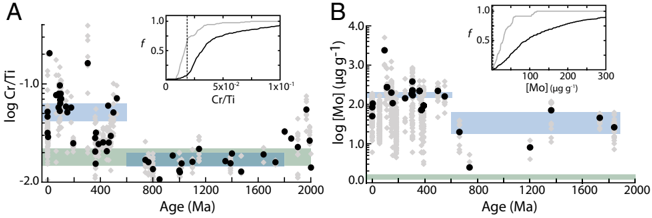
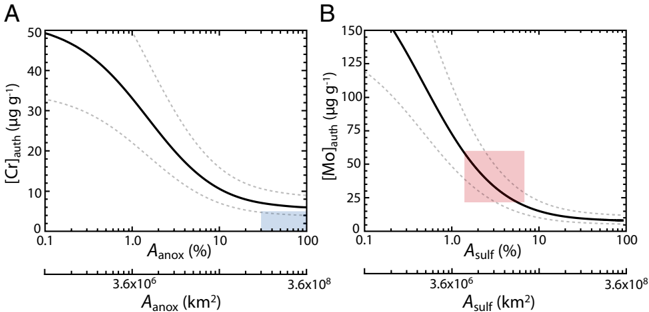
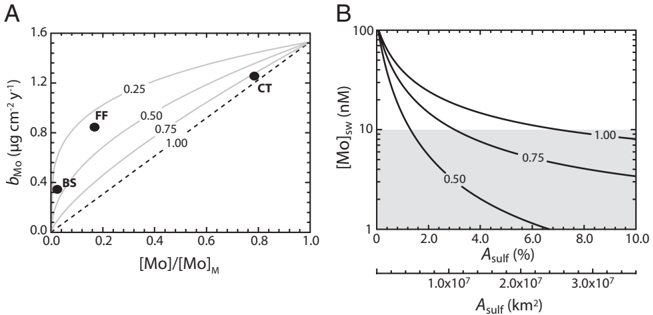
The partial pressure of oxygen in Earth’s atmosphere has increased dramatically through time, and this increase is thought to have occurred in two rapid steps at both ends of the Proterozoic Eon (∼2.5–0.543 Ga). However, the trajectory and mechanisms of Earth’s oxygenation are still poorly constrained, and little is known regarding attendant changes in ocean ventilation and seafloor redox. We have a particularly poor understanding of ocean chemistry during the mid-Proterozoic (∼1.8–0.8 Ga). Given the coupling between redox-sensitive trace element cycles and planktonic productivity, various models for mid-Proterozoic ocean chemistry imply different effects on the biogeochemical cycling of major and trace nutrients, with potential ecological constraints on emerging eukaryotic life. Here, we exploit the differing redox behavior of molybdenum and chromium to provide constraints on seafloor redox evolution by coupling a large database of sedimentary metal enrichments to a mass balance model that includes spatially variant metal burial rates. We find that the metal enrichment record implies a Proterozoic deep ocean characterized by pervasive anoxia relative to the Phanerozoic (at least ∼30–40% of modern seafloor area) but a relatively small extent of euxinic (anoxic and sulfidic) seafloor (less than ∼1–10% of modern seafloor area). Our model suggests that the oceanic Mo reservoir is extremely sensitive to perturbations in the extent of sulfidic seafloor and that the record of Mo and chromium enrichments through time is consistent with the possibility of a Mo–N colimited marine biosphere during many periods of Earth’s history.
Overview
The claims and statistics of this paper haven’t been checked yet.
Free: it reads the open-access text and checks the first 5 claims that cite a source we can check. Create a free account to check every claim.
Integrity signals
Registry
Cites
Statistics
Figures
Verification
Claims the paper makes
The claims and statistics of this paper haven’t been checked yet.
Free: it reads the open-access text and checks the first 5 claims that cite a source we can check. Create a free account to check every claim.
Claims other papers make about this one
Each is checked against this paper’s own text: does it say what the citing paper says it does?
The source backs part of the claim, not all of it — or backs it for a different population, condition or comparison.
In the citing paper
“The pervasiveness of benthic anoxia in shallow settings may also have been exacerbated by nutrient limitation of biological oxygen production in the surface ocean during much of Proterozoic time (refs. 27 and 28, Supporting Information ).”
From Earth's oxygen cycle and the evolution of animal life (2016) · cites this paper as [27]
Experimental — accuracy not yet measuredThe source backs part of the claim, not all of it — or backs it for a different population, condition or comparison.
In the citing paper
“but these fluxes are small compared to the riverine flux (i.e., ~0.60% and ~0.02% of the riverine flux respectively, Reinhard et al., 2013)”
From The chromium isotope composition of reducing and oxic marine sediments (2016) · cites this paper as Reinhard et al., 2013
Experimental — accuracy not yet measuredThe source backs part of the claim, not all of it — or backs it for a different population, condition or comparison.
In the citing paper
“The sharp rise of oxygen levels, featured by great oxidation events (GOEs) during the Proterzoic, are also recorded by the highly increasing access of trace metals like Mo and U in the ocean4, 5.”
From Heterogenous oceanic redox conditions through the Ediacaran-Cambrian boundary limited the metazoan zonation (2017) · cites this paper as [4]
Experimental — accuracy not yet measuredThe source backs part of the claim, not all of it — or backs it for a different population, condition or comparison.
In the citing paper
“Although limited in extent, euxinia then was likely two orders of magnitude more extensive than in today's oceans where it blankets much less than 1% of the seafloor (Reinhard et al., 2013).”
From Oxygenation, Life, and the Planetary System during Earth's Middle History: An Overview (2021) · cites this paper as Reinhard et al., 2013
Experimental — accuracy not yet measuredThe source backs part of the claim, not all of it — or backs it for a different population, condition or comparison.
In the citing paper
“The contrasting behaviors of molybdenum, chromium, uranium, and rhenium in organic-rich marginal sedimentary rocks deposited throughout the mid-Proterozoic qualitatively indicate widespread marine anoxia (Partin et al. 2013, Reinhard et al. 2013, Scott et al. 2008, Sheen et al. 2018)”
From The History of Ocean Oxygenation (2022) · cites this paper as Reinhard et al. 2013
Experimental — accuracy not yet measured
5 more claims about this paper
Create a free account to see every claim other papers make about this one.
Self-check
Percentages, sums and reported differences re-computed from the paper’s own numbers.
The self-check needs the paper’s full text.
Citations
Cites
Composition of the Continental Crust
Rudnick, R. L., & Gao, S. (2014) · Treatise on Geochemistry · doi:10.1016/b978-0-08-095975-7.00301-6 · Cited by 5,691
The geochemical evolution of the continental crust
Taylor, S. R., & McLennan, S. M. (1995) · Reviews of Geophysics · doi:10.1029/95rg00262 · Cited by 4,643 · cited 1×
“Proterozoic enrichments range from less than 10 to greater than 100 ppm, compared with concentrations on the order of ∼1–2 ppm in average upper crust (16).”
BackgroundComposition of the Continental Crust
Rudnick, R. L., & Gao, S. (2003) · Treatise on Geochemistry · doi:10.1016/b0-08-043751-6/03016-4 · Cited by 3,413
Relationships between the trace element composition of sedimentary rocks and upper continental crust
McLennan, S. M. (2001) · Geochemistry, Geophysics, Geosystems · doi:10.1029/2000gc000109 · Cited by 2,457
Condie, K. C. (1993) · Chemical Geology · doi:10.1016/0009-2541(93)90140-e · Cited by 2,366
Glacial‐interglacial CO2 change: The Iron Hypothesis
Martin, J. H. (1990) · Paleoceanography · doi:10.1029/pa005i001p00001 · Cited by 2,021 · cited 2×
“75 × 10 μg·cm·y, estimated by compiling Mo burial rates in oxic settings (22) and by combining Mn burial rates in oxic pelagic sediments (23) with a characteristic Mo/Mn ratio of 2 × 10 (24).”
BackgroundThe Chemical Evolution of the Atmosphere and Oceans
Holland, H. D. (1984) · doi:10.1515/9780691220239 · Cited by 1,836
Trace-element behavior and redox facies in core shales of Upper Pennsylvanian Kansas-type cyclothems
Algeo, T. J., & Maynard, J. B. (2004) · Chemical Geology · doi:10.1016/j.chemgeo.2003.12.009 · Cited by 1,694 · cited 1×
“From a mechanistic perspective, this approach builds from clear evidence that the burial in sediments of many redox sensitive metals in anoxic settings scales strongly with carbon flux to the sediments (18, 41, 42).”
BackgroundDating the rise of atmospheric oxygen
Bekker, A., Holland, H. D., Wang, P.-L., Rumble, D., Stein, H. J., Hannah, J. L., Coetzee, L. L., & Beukes, N. J. (2004) · Nature · doi:10.1038/nature02260 · Cited by 1,435 · cited 2×
“4 Ga (14), the concentration of many redox-sensitive elements in the ocean has been primarily controlled by marine redox conditions.”
BackgroundSelf-citationA new model for Proterozoic ocean chemistry
Canfield, D. E. (1998) · Nature · doi:10.1038/24839 · Cited by 1,243 · cited 1×
“For example, given that deep-sea anoxia during the mid-Proterozoic was most likely caused by gas-exchange constraints expressed in deep-water formation regions (81), rather than local reductant (i.”
Background
Research works printed but not linked: 1
- 52. Partin C, et al. (2012) Fluctuations in Precambrian atmospheric and oceanic oxygen levels: A new Precambrian paradigm emerging? Mineralogical Magazine 76(6):2207.
Cited by
Items 201–300 of 527
Molybdenum geochemistry in a seasonally dysoxic Mo-limited lacustrine ecosystem
Glass, J. B., Chappaz, A., Eustis, B., Heyvaert, A. C., Waetjen, D. P., Hartnett, H. E., & Anbar, A. D. (2013) · Geochimica et Cosmochimica Acta · doi:10.1016/j.gca.2013.03.023 · Cited by 42
Increase of seawater Mo inventory and ocean oxygenation during the early Cambrian
Wang, X., Shi, X., Zhao, X., & Tang, D. (2015) · Palaeogeography Palaeoclimatology Palaeoecology · doi:10.1016/j.palaeo.2015.09.003 · Cited by 39
Behaviour of chromium and chromium isotopes during estuarine mixing in the Beaulieu Estuary, UK
Goring-Harford, H. J., Klar, J. K., Donald, H. K., Pearce, C. R., Connelly, D. P., & James, R. H. (2020) · Earth and Planetary Science Letters · doi:10.1016/j.epsl.2020.116166 · Cited by 41
Characteristics, origins, and significance of pyrites in deep-water shales
Liang, C., Ji, S., Cao, Y., Liu, K., Wu, J., & Hao, F. (2024) · Science China Earth Sciences · doi:10.1007/s11430-022-1200-0 · Cited by 46
“In the end, except for some free states, most trace elements will be adsorbed onto organic matter or solidified in iron or manganese oxides (Wille et al., 2007; Frei et al., 2009; Reinhard et al., 2013; Planavsky et al., 2014).”
Molar tooth carbonates and benthic methane fluxes in Proterozoic oceans
Shen, B., Dong, L., Xiao, S., Lang, X., Huang, K., Peng, Y., Zhou, C., Ke, S., & Liu, P. (2016) · Nature Communications · doi:10.1038/ncomms10317 · Cited by 39
“During the early to middle Proterozoic, atmospheric oxygen level was extremely low ( o 1% present atmospheric level) and the deep ocean remained anoxic and sulphidic in places 24–27 .”
The Nickel isotope composition of the authigenic sink and the diagenetic flux in modern oceans
Gueguen, B., & Rouxel, O. (2021) · Chemical Geology · doi:10.1016/j.chemgeo.2020.120050 · Cited by 37
Arsenic stress after the Proterozoic glaciations
Fru, E. C., Arvestål, E. H. M., Callac, N., Albani, A. E., Kilias, S., Argyraki, A., & Jakobsson, M. (2015) · Scientific Reports · doi:10.1038/srep17789 · Cited by 40
High Molybdenum availability for evolution in a Mesoproterozoic lacustrine environment
Parnell, J., Spinks, S., Andrews, S. D., Thayalan, W., & Bowden, S. A. (2015) · Nature Communications · doi:10.1038/ncomms7996 · Cited by 39
Lu, X., Kendall, B., Stein, H. J., & Hannah, J. L. (2017) · Geochimica et Cosmochimica Acta · doi:10.1016/j.gca.2017.06.046 · Cited by 41
“…first-order differences in the Os data between time bins arising from other factors (such as changes in atmosphere-ocean oxygenation) may still be discernable (as was the case for the compilations of Mo and U concentrations in ORM; Scott et al., 2008; Partin et al., 2013a; Reinhard et al., 2013).”
BackgroundColwyn, D. A., Sheldon, N. D., Maynard, J. B., Gaines, R. R., Hofmann, A., Wang, X., Guéguen, B., Asael, D., Reinhard, C. T., & Planavsky, N. J. (2019) · Geobiology · doi:10.1111/gbi.12360 · Cited by 41
Self-citationMission to Planet Earth: The First Two Billion Years
Stüeken, E. E., Som, S. M., Claire, M. W., Rugheimer, S., Scherf, M., Sproß, L., Tosi, N., Ueno, Y., & Lammer, H. (2020) · Space Science Reviews · doi:10.1007/s11214-020-00652-3 · Cited by 40
Molybdenum as a Paleoredox Proxy: Past, Present, and Future
Hlohowskyj, S. R., Chappaz, A., & Dickson, A. J. (2021) · Cambridge University Press eBooks · doi:10.1017/9781108993777 · Cited by 46
Extensive sea-floor oxygenation during the early Mesoproterozoic
Xu, D., Qin, Z., Wang, X., Li, J., Shi, X., Tang, D., & Liu, J. (2023) · Geochimica et Cosmochimica Acta · doi:10.1016/j.gca.2023.06.007 · Cited by 37
Qu, Y., Zhu, S., Whitehouse, M. J., Engdahl, A., & McLoughlin, N. (2017) · Precambrian Research · doi:10.1016/j.precamres.2017.11.004 · Cited by 38
Cui, M., Mohajerin, T. J., Adebayo, S., Datta, S., & Johannesson, K. H. (2020) · Geochimica et Cosmochimica Acta · doi:10.1016/j.gca.2020.04.004 · Cited by 35
Miot, J., Jézéquel, D., Benzerara, K., Cordier, L., Rivas-Lamelo, S., Skouri‐Panet, F., Férard, C., Poinsot, M., & Duprat, É. (2016) · Minerals · doi:10.3390/min6020024 · Cited by 41
Chromium isotope fractionation in ferruginous sediments
Bauer, K. W., Guéguen, B., Cole, D. B., François, R., Kallmeyer, J., Planavsky, N. J., & Crowe, S. A. (2017) · Geochimica et Cosmochimica Acta · doi:10.1016/j.gca.2017.10.034 · Cited by 37
Self-citationSunspot cycles recorded in Mesoproterozoic carbonate biolaminites
Tang, D., Shi, X., & Jiang, G. (2014) · Precambrian Research · doi:10.1016/j.precamres.2014.04.009 · Cited by 37
Yang, X., Zhang, Z., Santosh, M., Duan, S., & Liang, T. (2018) · Precambrian Research · doi:10.1016/j.precamres.2018.01.007 · Cited by 35
Gilleaudeau, G. J., Sahoo, S., Ostrander, C. M., Owens, J. D., Poulton, S. W., Lyons, T. W., & Anbar, A. D. (2020) · Precambrian Research · doi:10.1016/j.precamres.2020.105718 · Cited by 36
Self-citationZhao, H., Algeo, T. J., Liu, Y., Chen, Z., Zhang, L., Hu, Z., & Li, Z. (2019) · Palaeogeography Palaeoclimatology Palaeoecology · doi:10.1016/j.palaeo.2019.109393 · Cited by 36
Emerging Biogeochemical Views of Earth's Ancient Microbial Worlds
Lyons, T. W., Fike, D. A., & Zerkle, A. (2015) · Elements · doi:10.2113/gselements.11.6.415 · Cited by 33
“The new estimates point to possible metal limitations in the early oceans, as might be the case for molybdenum (Reinhard et al. 2013).”
BackgroundSelf-citationKipp, M. A., & Tissot, F. L. H. (2021) · Earth and Planetary Science Letters · doi:10.1016/j.epsl.2021.117240 · Cited by 33
Yang, X., Zhang, Z., Guo, S., Chen, J., & Wang, D. (2015) · Ore Geology Reviews · doi:10.1016/j.oregeorev.2015.10.018 · Cited by 35
Late Proterozoic Transitions in Climate, Oxygen, and Tectonics, and the Rise of Complex Life
Planavsky, N. J., Tarhan, L. G., Bellefroid, E. J., Evans, D. A. D., Reinhard, C. T., Love, G. D., & Lyons, T. W. (2015) · The Paleontological Society Papers · doi:10.1017/s1089332600002965 · Cited by 32
Self-citationHeterogeneity and incorporation of chromium isotopes in recent marine molluscs (Mytilus)
Bruggmann, S., Klaebe, R., Paulukat, C., & Frei, R. (2019) · Geobiology · doi:10.1111/gbi.12336 · Cited by 33
“10‰) are usually conducted using concentrations of immobile elements such as Ti or Al (Algeo & Maynard, 2004; Gilleaudeau et al., 2016; Reinhard et al., 2013; Rodler et al., 2015; Schoenberg et al., 2008).”
BackgroundInfluentialMineral Facilitated Horizontal Gene Transfer: A New Principle for Evolution of Life?
Sand, K. K. S., & Jelavić, S. (2018) · Frontiers in Microbiology · doi:10.3389/fmicb.2018.02217 · Cited by 35
On carbon burial and net primary production through Earth's history
Planavsky, N. J., Fakhraee, M., Bolton, E. W., Reinhard, C. T., Isson, T. T., Zhang, S., & Mills, B. J. W. (2022) · American Journal of Science · doi:10.2475/03.2022.01 · Cited by 34
Self-citationStepwise oxygenation of early Cambrian ocean controls early metazoan diversification
Zhao, X., Wang, X., Shi, X., Tang, D., & Shi, Q. (2018) · Palaeogeography Palaeoclimatology Palaeoecology · doi:10.1016/j.palaeo.2018.05.009 · Cited by 33
Little, C. T. S., Johannessen, K. C., Bengtson, S., Chan, C. S., Ivarsson, M., Slack, J. F., Broman, C., Thorseth, I. H., Grenne, T., Rouxel, O. J., et al. (2021) · Geobiology · doi:10.1111/gbi.12434 · Cited by 31
Self-citationThe role of pH on Cr(VI) partitioning and isotopic fractionation during its incorporation in calcite
Füger, A., Bruggmann, S., Frei, R., Leis, A., Dietzel, M., & Mavromatis, V. (2019) · Geochimica et Cosmochimica Acta · doi:10.1016/j.gca.2019.07.047 · Cited by 33
Martindale, R. C., Strauss, J. V., Sperling, E. A., Johnson, J. E., Kranendonk, M. J. V., Flannery, D. T., French, K. L., Lepot, K., Mazumder, R., Rice, M. S., et al. (2015) · Precambrian Research · doi:10.1016/j.precamres.2015.05.021 · Cited by 33
Wang, Z., Wang, X., Shi, X., Tang, D., Stüeken, E. E., & Song, H. (2020) · Journal of Geophysical Research Biogeosciences · doi:10.1029/2019jg005487 · Cited by 33
“…low oxygen concentrations in the atmosphere‐ocean system (e.g., Lyons et al., 2014; Reinhard et al., 2016), based on several lines of geochemical evidence, including redox sensitive element (RSE) contents in sedimentary rocks (Partin et al., 2013; Reinhard et al., 2013; Robbins et al., 2016; ©2020.”
BackgroundResultXu, L., Frank, A. B., Lehmann, B., Zhu, J., Mao, J., Ju, Y., & Frei, R. (2019) · Scientific Reports · doi:10.1038/s41598-019-51495-0 · Cited by 30
Chromium isotopes in marine hydrothermal sediments
Bauer, K. W., Cole, D. B., Asael, D., François, R., Calvert, S. E., Poulton, S. W., Planavsky, N. J., & Crowe, S. A. (2019) · Chemical Geology · doi:10.1016/j.chemgeo.2019.119286 · Cited by 31
Self-citationGilhooly, W., Reinhard, C. T., & Lyons, T. W. (2016) · Geochimica et Cosmochimica Acta · doi:10.1016/j.gca.2016.05.044 · Cited by 38
Self-citationFe isotopes of a 2.4 Ga hematite-rich IF constrain marine redox conditions around the GOE
Lantink, M. L., Oonk, P. B. H., Floor, G. H., Tsikos, H., & Mason, P. R. D. (2017) · Precambrian Research · doi:10.1016/j.precamres.2017.12.025 · Cited by 34
Global ocean redox changes before and during the Toarcian Oceanic Anoxic Event
Kunert, A., & Kendall, B. (2023) · Nature Communications · doi:10.1038/s41467-023-36516-x · Cited by 30
Heard, A. W., Wang, Y., Ostrander, C. M., Auro, M. E., Canfield, D. E., Zhang, S., Wang, H., Wang, X., & Nielsen, S. G. (2023) · Earth and Planetary Science Letters · doi:10.1016/j.epsl.2023.118127 · Cited by 34
Cox, G. M., Sansjofre, P., Blades, M., Farkaš, J., & Collins, A. S. (2019) · Scientific Reports · doi:10.1038/s41598-019-40783-4 · Cited by 32
Widespread seafloor anoxia during generation of the Ediacaran Shuram carbon isotope excursion
Ostrander, C. M., Bjerrum, C. J., Ahm, A. C., Stenger, S. R., Bergmann, K., El‐Ghali, M. A. K., Harthi, A. R., Aisri, Z., & Nielsen, S. G. (2023) · Geobiology · doi:10.1111/gbi.12557 · Cited by 32
Bowyer, F. T., Krause, A. J., Song, Y., Huang, K., Fu, Y., Shen, B., Li, J., Zhu, X., Kipp, M. A., van Maldegem, L. M., et al. (2023) · Science Advances · doi:10.1126/sciadv.adf9999 · Cited by 30
Wei, B., Tang, D., Shi, X., Lechte, M. A., Zhou, L., Zhou, X., & Song, H. (2021) · Geochemistry Geophysics Geosystems · doi:10.1029/2020gc009612 · Cited by 29
“5 μmol/mol can be used as the upper limit of oxygen produced by primary productivity (<10 μM; Kasting et al., 1991; Olson et al., 2013; Reinhard et al., 2013).”
BackgroundMethodChromium Cycling in Redox‐Stratified Basins Challenges δ 53 Cr Paleoredox Proxy Applications
Janssen, D. J., Rickli, J., Wille, M., Steiner, O. S., Vogel, H., Dellwig, O., Berg, J. S., Bouffard, D., Lever, M. A., Hassler, C. S., et al. (2022) · Geophysical Research Letters · doi:10.1029/2022gl099154 · Cited by 32
“Authigenic chromium (Cr) enrichments and Cr stable isotope (δ 53Cr) composition in sedimentary deposits are widely used to trace redox conditions throughout Earth's history (Frei et al., 2009; Planavsky et al., 2014; Reinhard et al., 2013; Wei et al., 2020).”
BackgroundResultCr isotope systematics in the Connecticut River estuary
Sun, Z., Wang, X., & Planavsky, N. J. (2019) · Chemical Geology · doi:10.1016/j.chemgeo.2018.12.034 · Cited by 29
Self-citationSchad, M., Konhauser, K. O., Sánchez‐Baracaldo, P., Kappler, A. A., & Bryce, C. C. (2019) · Free Radical Biology and Medicine · doi:10.1016/j.freeradbiomed.2019.07.014 · Cited by 31
“32 Ga [16,60–65], although the potential for minerals hosting the MIF signature to be cycled through terrestrial reservoirs and during subduction and volcanic processes means that MIF-S signals could be expected to be preserved for 10–100 million years after the GOE [66].”
BackgroundSelf-citationWei, W., Chen, X., Ling, H., Wu, F., Dong, L.-H., Pan, S., Jing, Z., & Huang, F. (2022) · Earth and Planetary Science Letters · doi:10.1016/j.epsl.2022.117942 · Cited by 33
Zou, Y., Liu, D., Zhao, F., Kuang, H., Sun, Y., & Cheng, J. (2019) · Journal of Asian Earth Sciences · doi:10.1016/j.jseaes.2019.02.026 · Cited by 28
Diamond, C. W., Ernst, R. E., Zhang, S., & Lyons, T. W. (2021) · Geophysical Monograph Series · doi:10.1002/9781119507444.ch21 · Cited by 25
Self-citationAi, J., Zhong, N., Zhang, T., Zhang, Y., Wang, T., & George, S. C. (2021) · Chemical Geology · doi:10.1016/j.chemgeo.2021.120083 · Cited by 32
Not so non-marine? Revisiting the Stoer Group and the Mesoproterozoic biosphere
Stüeken, E. E., Bellefroid, E. J., Prave, A. R., Asael, D., Planavsky, N. J., & Lyons, T. W. (2017) · Geochemical Perspectives Letters · doi:10.7185/geochemlet.1725 · Cited by 26
“Although seawater probably had low Mo levels at this time (e.g., 1–10 nM, Reinhard et al., 2013), the presence of gypsum pseudomorphs implies that the water in this setting evaporated by a factor of up to 11 (assuming 100 % Mesoproterozoic seawater with modern levels of dissolved Ca2+ and ≤ 2–10 mM…”
BackgroundSelf-citationYi, Y., Xiao, M., Mostofa, K. M. G., Xu, S., & Wang, Z. (2019) · International Journal of Environmental Research and Public Health · doi:10.3390/ijerph16244919 · Cited by 23
“Dissolved Fe was much higher at inlets than the central lake region due to reduction of Fe(oxy)hydroxide under relatively anaerobic conditions [39,40] and it fluctuated around 1935 nmol·L−1 in the central lake region and outlet.”
BackgroundThe Chromium Isotope System as a Tracer of Ocean and Atmosphere Redox
Bauer, K. W., Planavsky, N. J., Reinhard, C. T., & Cole, D. B. (2021) · Cambridge University Press eBooks · doi:10.1017/9781108870443 · Cited by 28
Self-citationYin, J., Li, H., & Xiao, K. (2023) · Minerals · doi:10.3390/min13040547 · Cited by 30
Mulling and nulling the coeval rise of Ediacaran oxygen and animals
Ostrander, C. M. (2023) · Earth and Planetary Science Letters · doi:10.1016/j.epsl.2023.118187 · Cited by 25
Mo marine geochemistry and reconstruction of ancient ocean redox states
Cheng, M., Li, C., Zhou, L., & Xie, S. (2015) · Science China Earth Sciences · doi:10.1007/s11430-015-5177-4 · Cited by 23
Wang, X., Glass, J. B., Reinhard, C., & Planavsky, N. J. (2019) · Geochemistry Geophysics Geosystems · doi:10.1029/2018gc007883 · Cited by 26
Self-citationWei, W., Dong, L.-H., Xiao, S., Lin, Y.-B., Xu, L., Wei, G., Wang, W., Tian, L., Wei, H., & Huang, F. (2024) · National Science Review · doi:10.1093/nsr/nwae237 · Cited by 23
“The Ba burial rate should be controlled by a first-order kinetic with respect to the coeval Ba reservoir and thus f Ba is linearly scaled to Ba excess in sediments [36 ].”
BackgroundSperling, E. A. (2013) · The Paleontological Society Papers · doi:10.1017/s1089332600002692 · Cited by 28
“Although absolute oxygen levels are not known with certainty, most workers generally agree that Precambrian oxygen levels were ~1–10% of modern levels (see Canfield, 2005; Kump, 2008), and that seafloor anoxia was much more pervasive than in the modern oceans (Reinhard et al., 2013).”
BackgroundShi, Q., Shi, X., Tang, D., Fan, C., Wei, B., & Li, Y. (2020) · Precambrian Research · doi:10.1016/j.precamres.2020.106050 · Cited by 26
A public goods approach to major evolutionary innovations
Erwin, D. H. (2015) · Geobiology · doi:10.1111/gbi.12137 · Cited by 21
Chromium isotope fractionation during magmatic processes: Evidence from mid-ocean ridge basalts
Ma, H., Xu, L., Shen, J., Liu, S., & Li, S. (2022) · Geochimica et Cosmochimica Acta · doi:10.1016/j.gca.2022.04.018 · Cited by 23
Geochemical conditions regulating chromium preservation in marine sediments
Bruggmann, S., Severmann, S., & McManus, J. (2023) · Geochimica et Cosmochimica Acta · doi:10.1016/j.gca.2023.03.003 · Cited by 24
Partin, C. A., Bekker, A., Planavsky, N. J., & Lyons, T. W. (2015) · Chemical Geology · doi:10.1016/j.chemgeo.2015.09.004 · Cited by 25
Self-citationKlatt, J. M., Gomez‐Saez, G. V., Meyer, S., Ristova, P. P., Yilmaz, P., Granitsiotis, M. S., Macalady, J. L., Lavik, G., Polerecký, L., & Bühring, S. I. (2020) · The ISME Journal · doi:10.1038/s41396-020-0734-z · Cited by 25
Earth: Atmospheric Evolution of a Habitable Planet
Olson, S. L., Schwieterman, E. W., Reinhard, C. T., & Lyons, T. W. (2018) · Springer eBooks · doi:10.1007/978-3-319-55333-7_189 · Cited by 30
Self-citationRobinson, T. D. (2005) · University of Arizona Press eBooks · doi:10.2458/azu_uapress_9780816540068-ch015 · Cited by 28
“…2016), the iodine content (Hardisty et al. 2017) and rare Earth element systmatics (Tang et al. 2016a) of shallow marine carbonate rocks, and the enrichments of redox-sensitive metals in anoxic marine shales (Partin et al. 2013; Reinhard et al. 2013; Sheen et al. 2018) have buttressed this view.”
BackgroundInfluentialHydrothermal vents and organic ligands sustained the Precambrian copper budget
Stüeken, E. E. (2020) · Geochemical Perspectives Letters · doi:10.7185/geochemlet.2037 · Cited by 22
“For the hydrothermal flux, the global average hydrothermal water flux of today (1014 L/yr) (Reinhard et al., 2013) was multiplied by the total Cu concentration in mol/L obtained from the thermodynamic model at that point where precipitation had ceased.”
MethodLi, D., Luo, G., Yang, H., She, Z., Papineau, D., & Li, C. (2022) · Precambrian Research · doi:10.1016/j.precamres.2022.106726 · Cited by 21
Tracking the evolution of seawater Mo isotopes through the Ediacaran–Cambrian transition
Ye, Y., Wang, H., Wang, X., Zhai, L., Wu, C., Canfield, D. E., & Zhang, S. (2020) · Precambrian Research · doi:10.1016/j.precamres.2020.105929 · Cited by 22
Kunert, A., Clarke, J., & Kendall, B. (2020) · Minerals · doi:10.3390/min10121075 · Cited by 22
Janssen, D. J., Gilliard, D., Rickli, J., Nasemann, P., Koschinsky, A., Hassler, C. S., Bowie, A. R., Ellwood, M. J., Kleint, C., & Jaccard, S. L. (2022) · Geochimica et Cosmochimica Acta · doi:10.1016/j.gca.2022.12.010 · Cited by 25
Armstrong, J., Parnell, J., Bullock, L. A., Perez, M., Boyce, A. J., & Feldmann, J. (2018) · Terra Nova · doi:10.1111/ter.12331 · Cited by 21
“Fluctuations in the trace element abundances of deep marine black shales have been used to infer variations in atmospheric oxygenation levels through time (Chen et al., 2015; Johnson et al., 2017; Large et al., 2015; Pogge von Strandmann et al., 2015; Reinhard et al., 2013; St€ueken et al., 2015a).”
Cyanobacterial Diazotrophy and Earth’s Delayed Oxygenation
Olson, S. L., Reinhard, C. T., & Lyons, T. W. (2016) · Frontiers in Microbiology · doi:10.3389/fmicb.2016.01526 · Cited by 22
Self-citationMolybdenum geochemistry in salt marsh pond sediments
Hutchings, A. M., Basu, A., Dickson, A. J., & Turchyn, A. V. (2020) · Geochimica et Cosmochimica Acta · doi:10.1016/j.gca.2020.06.014 · Cited by 19
Quantifying the Seawater Sulfate Concentration in the Cambrian Ocean
Zhu, G., Li, T., Huang, T., Zhao, K., Tang, W., Wang, R., Lang, X., & Shen, B. (2021) · Frontiers in Earth Science · doi:10.3389/feart.2021.767857 · Cited by 19
“This argument is consistent with high Mo content in the lower Cambrian black shales (Sahoo et al., 2012; Reinhard et al., 2013; Sahoo et al., 2016).”
ResultGeoelectric constraints on the Precambrian assembly and architecture of southern Laurentia
Murphy, B. S., Bedrosian, P. A., & Kelbert, A. (2022) · Geological Society of America eBooks · doi:10.1130/2022.1220(13 · Cited by 22
Yuan, Y., Shi, X., Tang, D., Shi, Q., & Li, Y. (2022) · Precambrian Research · doi:10.1016/j.precamres.2022.106881 · Cited by 19
Wei, G., Ling, H., LI, D., Wei, W., Wang, D., Chen, X., Zhu, X., Zhang, F., & Yan, B. (2017) · Geological Magazine · doi:10.1017/s0016756817000115 · Cited by 20
“In euxinic seawater, molybdenum precipitates rapidly in sediments with sulphides and organic matter, decreasing the concentration of molybdenum in the local seawater significantly, especially in a restricted marine environment (Scott et al. 2008; Reinhard et al. 2013).”
BackgroundLigrone, R. (2019) · Springer eBooks · doi:10.1007/978-3-030-16057-9_5 · Cited by 27
Swanner, E. D., Bekker, A., Pecoits, E., Konhauser, K. O., Cates, N. L., & Mojzsis, S. J. (2013) · Chemical Geology · doi:10.1016/j.chemgeo.2013.07.022 · Cited by 21
Self-citationLi, Z., Cole, D. B., Newby, S. M., Owens, J. D., Kendall, B., & Reinhard, C. T. (2021) · Geochimica et Cosmochimica Acta · doi:10.1016/j.gca.2021.09.006 · Cited by 21
Self-citationKozik, N. P., Young, S. A., Ahlberg, P., Lindskog, A., & Owens, J. D. (2023) · Global and Planetary Change · doi:10.1016/j.gloplacha.2023.104183 · Cited by 20
Evolution of cellular metabolism and the rise of a globally productive biosphere
Braakman, R. (2019) · Free Radical Biology and Medicine · doi:10.1016/j.freeradbiomed.2019.05.004 · Cited by 22
Mesoproterozoic paleo-redox changes during 1500–1400 Ma in the Yanshan Basin, North China
Chen, X., Li, M., Sperling, E. A., Zhang, T., Zong, K., Liu, Y., & Shen, Y. (2020) · Precambrian Research · doi:10.1016/j.precamres.2020.105835 · Cited by 21
“, 2006) as well as significant changes in the biogeochemical cycles of carbon, sulfur and oxygen (Buick et al., 1995; Kah et al., 1999; Bartley and Kah, 2004; Parnell et al., 2010; Reinhard et al., 2013; Crockford et al., 2018, 2019).”
BackgroundYang, B., Collins, A. S., Blades, M., Munson, T. J., Payne, J. L., Glorie, S., & Farkaš, J. (2020) · Geological Magazine · doi:10.1017/s0016756820001223 · Cited by 21
Cracking the superheavy pyrite enigma: possible roles of volatile organosulfur compound emission
Lang, X., Zhao, Z., Ma, H., Huang, K., Li, S., Zhou, C., Xiao, S., Peng, Y., Liu, Y., Tang, W., et al. (2021) · National Science Review · doi:10.1093/nsr/nwab034 · Cited by 19
“H2Smethylation is expected to have been an important part of the sulfur cycle in sulfidic Proterozoic oceans [29].”
BackgroundChromium isotope heterogeneity on a modern carbonate platform
Klaebe, R., Swart, P. K., & Frei, R. (2021) · Chemical Geology · doi:10.1016/j.chemgeo.2021.120227 · Cited by 19
Ocean Redox State at 2500‒500 Ma: Modern Concepts
Maslov, A. V., & Podkovyrov, V. N. (2018) · Lithology and Mineral Resources · doi:10.1134/s0024490218030057 · Cited by 19
Zhu, B., Jiang, S., Pi, D.-H., Ge, L., & Yang, J. (2018) · Journal of Earth Science · doi:10.1007/s12583-017-0907-5 · Cited by 18
“The overall marine redox conditions are known to regulate the availabilities of redox-sensitive elements (RSE) in seawater (e.g., Reinhard et al., 2013), and would also influence the interpretation of the Mo-U data.”
BackgroundToma, J., Holmden, C., Shakotko, P., Pan, Y., & Ootes, L. (2019) · Geobiology · doi:10.1111/gbi.12342 · Cited by 19
“…oxygen levels of the “oxygen overshoot” coinci‐ dent with the Lomagundi Carbon Isotope Event between 2.32 and 2.06 Ga (Bekker & Holland, 2012) and a long period of relatively low oxygen levels of the “boring billion” between ~1.8 Ga and 0.8 Ga (Partin et al., 2013; Reinhard et al., 2013).”
BackgroundInfluentialA multi-basin redox reconstruction for the Miocene Monterey Formation, California, USA
Hancock, L. G., Hardisty, D. S., Behl, R. J., & Lyons, T. W. (2019) · Palaeogeography Palaeoclimatology Palaeoecology · doi:10.1016/j.palaeo.2019.01.031 · Cited by 17
Self-citationWang, Y., Ossa, F. O., Spangenberg, J. E., Wille, M., & Schoenberg, R. (2021) · Paleoceanography and Paleoclimatology · doi:10.1029/2020pa004207 · Cited by 17
“Given the drawdown of dissolved Mo is very fast when adequate amounts of aqueous hydrogen sulphide are present (Algeo & Maynard, 2004; Reinhard et al., 2013), the persistently high Mo enrichment throughout the entire Dotternhausen T-CIE section”
BackgroundViruses of sulfur oxidizing phototrophs encode genes for pigment, carbon, and sulfur metabolisms
Hesketh-Best, P. J., Bosco-Santos, A., Garcia, S. L., O’Beirne, M. D., Werne, J. P., Gilhooly, W. P., & Silveira, C. B. (2023) · Communications Earth & Environment · doi:10.1038/s43247-023-00796-4 · Cited by 16
“In the Proterozoic, shallow and intermediate depths along continental margins experienced the expansion of oceanic euxinia 10 , where sul fi de oxidizers catalyzed most primary production and in fl uenced the planet ’ s oxidant balance 1 – 3 , Modern euxinic lakes hosting sul fi de oxidizing…”
BackgroundStüeken, E. E., Jones, S., Raub, T. D., Prave, A. R., Rose, C. V., Linnekogel, S., & Cloutier, J. (2020) · Chemical Geology · doi:10.1016/j.chemgeo.2020.119812 · Cited by 17
Li, C., Dong, L., Ma, H., Liu, H., Li, C., Pei, H., & Shen, B. (2022) · Earth and Planetary Science Letters · doi:10.1016/j.epsl.2022.117721 · Cited by 20
Peng, J. (2022) · Science China Earth Sciences · doi:10.1007/s11430-021-9959-8 · Cited by 19
“Scott et al. (2008) and Reinhard et al. (2013) suggest that the modern U, Mo, and nutrient cycles were well established since the Latest Neoproterozoic (ca. 550 Myr), shortly after the initial oxidation of the deep ocean and subsequent radiation of structurally complex life forms (Canfield et al.,…”
BackgroundInfluentialKozik, N. P., Young, S. A., Lindskog, A., Ahlberg, P., & Owens, J. D. (2023) · Geobiology · doi:10.1111/gbi.12545 · Cited by 16
“…enrichments of V found in the Baltic Basin throughout the Paibian– Stage 10 strata are best interpreted as being due to extensive drawdown of late Cambrian V marine inventories, potentially driven by expansive oxygen minimum zones (OMZs) on continental margins (Algeo, 2004; Reinhard et al., 2013).”
BackgroundInfluentialYang, S., Lu, X., Chen, X., Zheng, W., Owens, J. D., Young, S. A., & Kendall, B. (2023) · Geochimica et Cosmochimica Acta · doi:10.1016/j.gca.2023.04.027 · Cited by 17
Tu, C., Diamond, C., Stüeken, E. E., Cao, M., Pan, W., & Lyons, T. W. (2023) · Geochimica et Cosmochimica Acta · doi:10.1016/j.gca.2023.12.005 · Cited by 17
Self-citation
Metadata
- Authors
- Reinhard, C. T., Planavsky, N. J., Robbins, L. J., Partin, C. A., Gill, B. C., Lalonde, S. V., Bekker, A., Konhauser, K. O., & Lyons, T. W.
- Affiliations
- University of California, Riverside (US)
- University of Alberta (CA)
- University of Manitoba (CA)
- Virginia Tech (US)
- Université de Bretagne Occidentale (FR)
- ORCID
- Venue
- Proceedings of the National Academy of Sciences
- Publisher
- National Academy of Sciences
- Published
- 2013-03-20
- Volume
- 110
- Issue
- 14
- Pages
- 5357-5362
- ISSN
- 0027-8424 (ISSN-L)
- 1091-6490
- PMC
- PMC3619314
- OpenAlex
- W2062900030
- Cited by
- 532
- References
- 54
- Citations by year
- 2026: 23 · 2025: 43 · 2024: 35 · 2023: 38 · 2022: 41 · 2021: 55 · 2020: 51 · 2019: 46 · 2018: 52 · 2017: 40 · 2016: 39 · 2015: 37 · 2014: 21 · 2013: 9
- FWCI
- 24.03
- Type
- journal article
- Language
- en
- Open access
- green
- europepmc.org
- Locations
- Proceedings of the National Academy of Sciences (publishedVersion)
- Europe PMC (PubMed Central) (publishedVersion)
- PubMed Central (publishedVersion)
- PubMed (publishedVersion)
- VTechWorks (Virginia Tech) (submittedVersion, cc-by-nc-nd)
- CaltechAUTHORS (California Institute of Technology) (submittedVersion)
- HAL (submittedVersion, other-oa)
- Funders
- National Science Foundation
- National Aeronautics and Space Administration
- Topics
- Physical Sciences › Earth and Planetary Sciences › Paleontology › Paleontology and Stratigraphy of Fossils
- Physical Sciences › Earth and Planetary Sciences › Geochemistry and Petrology › Geochemistry and Elemental Analysis
- Physical Sciences › Environmental Science › Global and Planetary Change › Earth Systems and Cosmic Evolution
- Keywords
- atmospheric oxygenation, euxinia, molybdenum, chromium, trace metal enrichment, mass balance model, ocean ventilation, marine biosphere, eukaryotic evolution
- MeSH terms
- Atmosphere, Computer Simulation, Metals, Models, Theoretical, Oceanography, Oceans and Seas, Oxidation-Reduction, Oxygen, Plankton, Geologic Sediments, History, Ancient
About these checks
Registry, retraction, Cites and statistics results are computed, not judged, with one exception: a printed reference that no index lists is read once by a model before it counts as a citation error. Claims are extracted by a model and kept only when their quote appears verbatim in the text; each cited source is then checked, with a model’s help, for whether it says what the claim relies on. Those verdicts can be wrong — read the claim’s quote and the cited source before relying on one.
Statistics and arithmetic are recomputed, not judged.
Confidence bands are shown only for fields calibrated on our annotated test set. None is calibrated yet, so no band is shown.
What counts as a claim ›How we measure confidence ›How we check this ›
Are you an author, or do you see a problem with this page? Request a review
Data sources
Bibliographic data: Semantic Scholar, OpenAlex, Crossref.
Contains information from the Semantic Scholar Academic Graph Datasets, made available under the ODC Attribution License (ODC-BY 1.0).
Semantic Scholar’s data is described in: Kinney, R., et al. (2023). The Semantic Scholar Open Data Platform. arXiv:2301.10140.
