

Corepressor-dependent silencing of fetal hemoglobin expression by BCL11A
Open accessThe DOI matches its Crossref record; 29 of the 29 references it cites were found in a registry or an index; 9 of the 35 sources its claims cite were checked for support.
Abstract
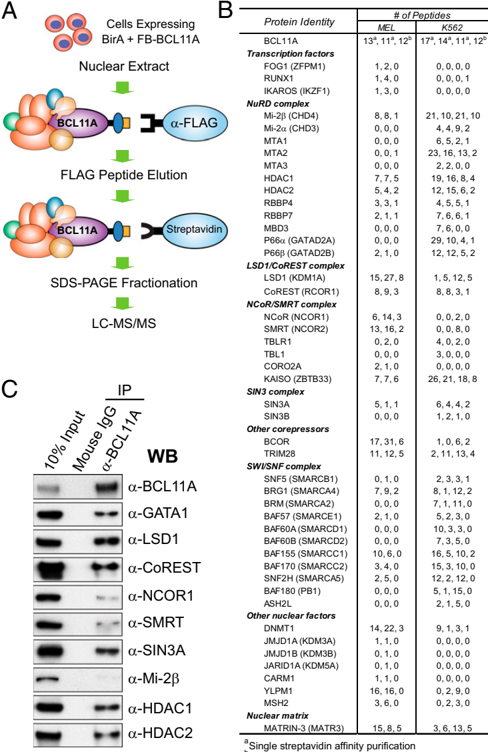
Reactivation of fetal hemoglobin (HbF) in adults ameliorates the severity of the common β-globin disorders. The transcription factor BCL11A is a critical modulator of hemoglobin switching and HbF silencing, yet the molecular mechanism through which BCL11A coordinates the developmental switch is incompletely understood. Particularly, the identities of BCL11A cooperating protein complexes and their roles in HbF expression and erythroid development remain largely unknown. Here we determine the interacting partner proteins of BCL11A in erythroid cells by a proteomic screen. BCL11A is found within multiprotein complexes consisting of erythroid transcription factors, transcriptional corepressors, and chromatin-modifying enzymes. We show that the lysine-specific demethylase 1 and repressor element-1 silencing transcription factor corepressor 1 (LSD1/CoREST) histone demethylase complex interacts with BCL11A and is required for full developmental silencing of mouse embryonic β-like globin genes and human γ-globin genes in adult erythroid cells in vivo. In addition, LSD1 is essential for normal erythroid development. Furthermore, the DNA methyltransferase 1 (DNMT1) is identified as a BCL11A-associated protein in the proteomic screen. DNMT1 is required to maintain HbF silencing in primary human adult erythroid cells. DNMT1 haploinsufficiency combined with BCL11A deficiency further enhances γ-globin expression in adult animals. Our findings provide important insights into the mechanistic roles of BCL11A in HbF silencing and clues for therapeutic targeting of BCL11A in β-hemoglobinopathies.
Overview
CoChat Summary
TL;DR
BCL11A silences fetal hemoglobin by assembling multiprotein corepressor complexes in erythroid cells, including LSD1/CoREST, NuRD, and DNMT1. Genetic and RNAi experiments show these partners contribute to γ-globin/embryonic β-like globin silencing, but LSD1 and DNMT1 also have broader roles that limit their therapeutic targeting.
Key findings
- A proteomic affinity screen in MEL and K562 erythroid cells identified BCL11A-interacting proteins including the LSD1/CoREST histone demethylase complex, NuRD complex, SIN3, NCoR/SMRT, BCOR, DNMT1, and SWI/SNF; interactions were confirmed by co-IP in primary human erythroid cells.
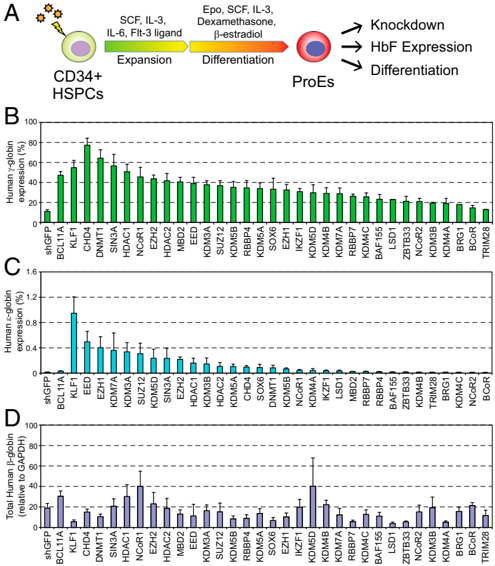
- In primary human CD34+ HSPC-derived erythroid cells, shRNA knockdown of BCL11A-interacting corepressors increased γ-globin; top-ranked genes included NuRD subunits (CHD4, HDAC1, HDAC2, MBD2), DNMT1, SIN3A, NCOR1, and PRC2 subunits (EZH2, EED, SUZ12). Depletion of KLF1, but not BCL11A, significantly increased ε-globin.
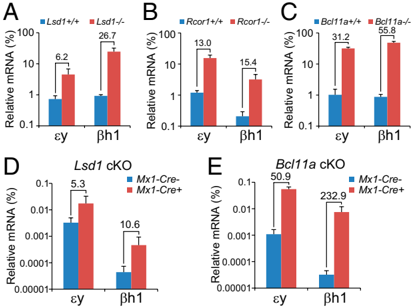
- LSD1/CoREST loss derepressed mouse embryonic β-like globins: E12.5 Lsd1 KO increased εy- and βh1-globin 6.2- and 26.7-fold; E13.5 CoREST KO increased them 13.0- and 15.4-fold; adult Mx1-Cre LSD1 cKO increased them 5.8- and 10.6-fold. BCL11A deletion caused much greater increases (31.2- to 232.9-fold).
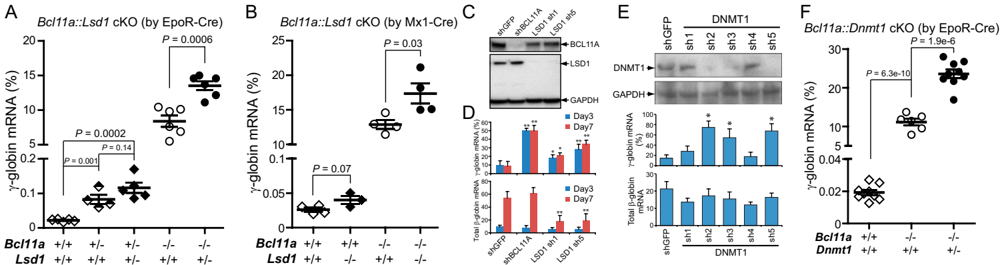
- Compound BCL11A/LSD1 loss further enhanced γ-globin: Bcl11a−/−::Lsd1+/− mice had 13.53% γ-globin versus 8.40% in Bcl11a−/− mice (P = 0.0006); Bcl11a−/−::Lsd1−/− mice had 18.19% versus 12.88% with BCL11A loss alone (P = 0.03). DNMT1 haploinsufficiency plus BCL11A deficiency increased γ-globin from 11.16% to 23.58% (2.1-fold, P = 1.9 × 10⁻⁶).
Methods
- Proteomic screen: stable MEL and K562 lines expressing BirA alone or FLAG-BirA-tagged BCL11A XL isoform; streptavidin and/or anti-FLAG affinity purification followed by LC-MS/MS, with co-IP validation in erythroid cells.
- Functional RNAi screen: lentiviral shRNAs targeting BCL11A or interacting proteins in primary adult human CD34+ HSPCs undergoing ex vivo erythroid maturation; qRT-PCR for globin expression, with shRNAs achieving >75% target mRNA knockdown selected.
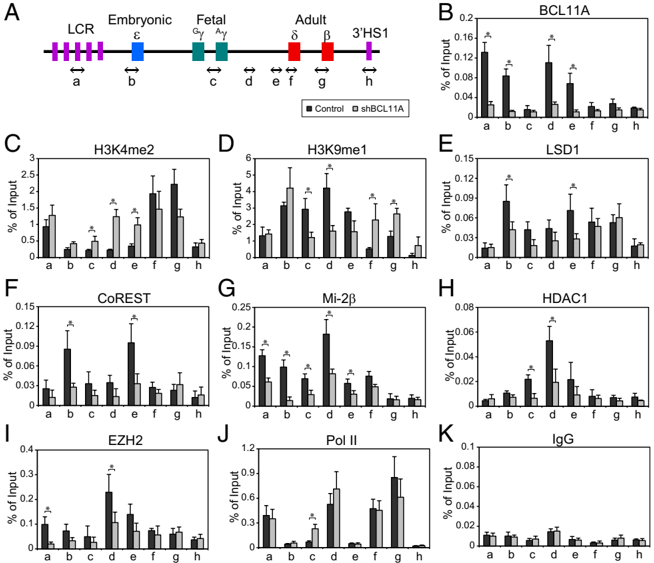
- Chromatin and mouse genetics: ChIP-qPCR in primary human adult erythroid cells with control or BCL11A knockdown; conditional floxed Lsd1, Rcor1, Bcl11a, and Dnmt1 alleles crossed with EpoR-Cre or Mx1-Cre, including β-YAC transgenic mice, analyzed by qRT-PCR and hematology.
Limitations
- Stated: primary human erythroid cultures have higher background γ-globin than normal adult erythroid cells and CD34+ HSPCs are permissive for HbF induction, making them sensitive but not necessarily specific; growth kinetics and differentiation status affect HbF. β-YAC mice have far lower baseline transgenic γ-globin than normal individuals, so interventions face a greater quantitative hurdle, and effects are small compared with BCL11A KO.
- Stated: LSD1 and DNMT1 have broad roles in hematopoiesis; LSD1 KO is embryonic lethal with severe anemia, and complete DNMT1 loss is incompatible with normal hematopoietic development, suggesting a narrow therapeutic window.
- Evident from the text: RNAi effects may reflect incomplete knockdown, and compound KO experiments used heterozygous Lsd1 or Dnmt1 in some settings because homozygous loss causes lethality, so full loss-of-function contributions were not always tested.
Model-written summary. Check it against the paper before relying on it.
Integrity signals
Registry
Cites
Statistics
Figures
Verification
Claims the paper makes
8 Valid · 1 Not valid · 15 Not checked · 97 Own results and interpretations
The sources with a verdict support this claim; the rest weren’t checked yet, have no full text we could read, or their verdicts aren’t rated yet.
In the paper
“Subsequent studies demonstrated that BCL11A, a zinc- fi nger transcription factor, is a bona fi de repressor of HbF expression (4 -7).”
What the sources say
- Not checked — no full text of the sourcecites [4] matched to “Human Fetal Hemoglobin Expression Is Regulated by the Developmental Stage-Specific Repressor BCL11A” (2008) source
- Supportedcites [5] matched to “Developmental and species-divergent globin switching are driven by BCL11A” (2009) source
The section headed “Silencing of human γ-globin expression depends on BCL11A” reports that loss of BCL11A markedly impairs developmental silencing of human γ-globin genes in mice carrying the human β-globin locus. The Concluding Remarks also state that BCL11A acts to silence γ-globin expression after birth in humans, supporting its description as a repressor of fetal hemoglobin expression. (LLM, conf=0.94)
- Supportedcites [6] matched to “Transcriptional silencing of γ-globin by BCL11A involves long-range interactions and cooperation with SOX6” (2010) source
The Abstract identifies BCL11A as a zinc-finger transcription factor and reports that reducing it in adult human erythroid precursors robustly induces HbF. The Discussion describes BCL11A’s role in silencing γ-globin genes, supporting its characterization as an HbF repressor. (LLM, conf=0.94)
- Not checked — no full text of the sourcecites [7] matched to “Binding patterns of BCL11A in the globin and GATA1 loci and characterization of the BCL11A fetal hemoglobin locus” (2010) source
boostedstates a cause- Asserted: passes — The authors put it forward as true.
- Checkable: passes — It can be checked against evidence.
- Load-bearing: passes — The paper’s conclusions depend on it.
- Based: passes — The paper gives a reason why it holds.
The sources with a verdict support this claim; the rest weren’t checked yet, have no full text we could read, or their verdicts aren’t rated yet.
In the paper
“In control cells, ChIP analysis revealed that BCL11A occupies several discrete regions within the human β -globin cluster, including the DNase I hypersensitive site 3 (HS3) within the locus control region (LCR), the e -globin promoter, and the γδ -intergenic region, consistent with previous analyses (4, 6).”
What the sources say
- Not checked — no full text of the sourcecites [4] matched to “Human Fetal Hemoglobin Expression Is Regulated by the Developmental Stage-Specific Repressor BCL11A” (2008) source
- Supportedcites [6] matched to “Transcriptional silencing of γ-globin by BCL11A involves long-range interactions and cooperation with SOX6” (2010) source
The section “BCL11A occupies the human β-globin cluster in vivo” reports ChIP-chip binding at LCR sites, embryonic ε-globin, and the Aγ–δ intergenic region in primary adult human erythroid progenitors. The section “BCL11A, SOX6, and GATA1 co-occupy the human β-globin cluster” specifically identifies HS3 and the ε-globin promoter among BCL11A-occupied sites. Page numbers are unavailable in our copy. (LLM, conf=0.94)
plainstates an association- Asserted: passes — The authors put it forward as true.
- Checkable: passes — It can be checked against evidence.
- Load-bearing: passes — The paper’s conclusions depend on it.
- Based: passes — The paper gives a reason why it holds.
The sources with a verdict support this claim; the rest weren’t checked yet, have no full text we could read, or their verdicts aren’t rated yet.
In the paper
“However, its roles in other cell lineages, including B lymphocytes and the central nervous system, may present challenges (19, 20).”
What the sources say
- Not checked — no full text of the sourcecites [19] Liu P, et al. (2003) Bcl11a is essential for normal lymphoid development. Nat Immunol 4(6):525 -532. source
- Supportedcites [20] Leid M, et al. (2004) CTIP1 and CTIP2 are differentially expressed during mouse embryogenesis. Gene Expr Patterns 4(6):733 -739. source
The Abstract identifies CTIP1 as BCL11A and reports that CTIP1-deficient mice lack B cells. It also reports CTIP1 expression in the developing and adult central nervous system and supports a contribution to CNS function. The possibility that these roles may present challenges is the citing authors’ inference. (LLM, conf=0.90)
hedgedstates a possible cause- Asserted: passes — The authors put it forward as true.
- Checkable: passes — It can be checked against evidence.
- Load-bearing: unclear — It is unclear whether the paper’s conclusions depend on it.
- Based: passes — The paper gives a reason why it holds.
The sources with a verdict support this claim; the rest weren’t checked yet, have no full text we could read, or their verdicts aren’t rated yet.
In the paper
“Consistent with a role in HbF silencing, knockdown or KO of Mi-2 β reactivates γ -globin genes in the β -YAC transgenic mice (23, 24).”
What the sources say
- Supportedcites [23] Costa FC, Fedosyuk H, Chazelle AM, Neades RY, Peterson KR (2012) Mi2 β is required for γ -globin gene silencing: Temporal assembly of a GATA-1-FOG-1-Mi2 repressor complex in β -YAC transgenic mice. PLoS Genet 8(12):e1003155. source
The Results section ('Expression of γ-globin in Mi2β conditional knockout β-YAC mice'; page not specified) reports increased human γ-globin expression after conditional Mi2β knockout in β-YAC mice. This source supports the knockout part of the citing sentence; it need not establish knockdown separately. (LLM, conf=0.93)
- Not checked — no full text of the sourcecites [24] Amaya ML, et al. (2013) Mi2 β -mediated silencing of the fetal γ -globin gene in adult erythroid cells. Blood , 10.1182/blood-2012-11-466227. source
plainstates a cause- Asserted: passes — The authors put it forward as true.
- Checkable: passes — It can be checked against evidence.
- Load-bearing: unclear — It is unclear whether the paper’s conclusions depend on it.
- Based: passes — The paper gives a reason why it holds.
- Supported
A result the paper reports from its own data — it cites no other source for it, so there is none to check. The quote shows it is in the paper.
In the paper
“Our study also shows that DNMT1 haploinsuf fi ciency augments HbF expression elicited by BCL11A de fi ciency.”
plainstates a cause- Asserted: passes — The authors put it forward as true.
- Checkable: passes — It can be checked against evidence.
- Load-bearing: passes — The paper’s conclusions depend on it.
- Based: passes — The paper gives a reason why it holds.
88 more claims
Create a free account to see all 121 claims and to verify the 1 reference still open.
- It may state two separate claims as one. 19
- Probably not a substantial claim. 11
Citations
Cites
Inducible Gene Targeting in Mice
Kühn, R., Schwenk, F., Aguet, M., & Rajewsky, K. (1995) · Science · doi:10.1126/science.7660125 · Cited by 1,641
Human Fetal Hemoglobin Expression Is Regulated by the Developmental Stage-Specific Repressor BCL11A
Sankaran, V. G., Menne, T. F., Xu, J., Akie, T. E., Lettre, G., Van Handel, B., Mikkola, H. K. A., Hirschhorn, J. N., Cantor, A. B., & Orkin, S. H. (2008) · Science · doi:10.1126/science.1165409 · Cited by 919
Self-citationMiller, I. J., & Bieker, J. J. (1993) · Molecular and Cellular Biology · doi:10.1128/mcb.13.5.2776 · Cited by 723
Loss of genomic methylation causes p53-dependent apoptosis and epigenetic deregulation
Jackson-Grusby, L., Beard, C., Possemato, R., Tudor, M., Fambrough, D., Csankovszki, G., Dausman, J., Lee, P., Wilson, C., Lander, E., et al. (2001) · Nature Genetics · doi:10.1038/83730 · Cited by 694
5-Azacytidine Selectively Increases γ-Globin Synthesis in a Patient with β+Thalassemia
Ley, T. J., DeSimone, J., Anagnou, N. P., Keller, G. H., Humphries, R. K., Turner, P. H., Young, N. S., Heller, P., & Nienhuis, A. W. (1982) · New England Journal of Medicine · doi:10.1056/nejm198212093072401 · Cited by 490 · cited 1×
“DNA methylation plays an important role in globin gene expression, and DNA demethylating agents have been shown to induce HbF expression in various model systems and patients (8, 17, 18).”
BackgroundHistone H3 Lysine 4 Demethylation Is a Target of Nonselective Antidepressive Medications
Lee, M. G., Wynder, C., Schmidt, D. M., McCafferty, D. G., & Shiekhattar, R. (2006) · Chemistry & Biology · doi:10.1016/j.chembiol.2006.05.004 · Cited by 438
Control of globin gene expression during development and erythroid differentiation
Stamatoyannopoulos, G. (2005) · Experimental Hematology · doi:10.1016/j.exphem.2004.11.007 · Cited by 393
5-Azacytidine stimulates fetal hemoglobin synthesis in anemic baboons.
DeSimone, J., Heller, P., Hall, L., & Zwiers, D. (1982) · Proceedings of the National Academy of Sciences · doi:10.1073/pnas.79.14.4428 · Cited by 384 · cited 1×
“DNA methylation plays an important role in globin gene expression, and DNA demethylating agents have been shown to induce HbF expression in various model systems and patients (8, 17, 18).”
BackgroundDevelopmental and species-divergent globin switching are driven by BCL11A
Sankaran, V. G., Xu, J., Ragoczy, T., Ippolito, G. C., Walkley, C. R., Maika, S. D., Fujiwara, Y., Ito, M., Groudine, M., Bender, M. A., et al. (2009) · Nature · doi:10.1038/nature08243 · Cited by 379
Self-citationTrowbridge, J. J., Snow, J. W., Kim, J., & Orkin, S. H. (2009) · Cell Stem Cell · doi:10.1016/j.stem.2009.08.016 · Cited by 373
Self-citation
Cited by
Items 101–200 of 233
Bhanushali, A. A., Patra, P. K., Nair, D., Verma, H. K., & Das, B. R. (2014) · Blood Cells Molecules and Diseases · doi:10.1016/j.bcmd.2014.10.003 · Cited by 26
Insight of fetal to adult hemoglobin switch: Genetic modulators and therapeutic targets
Hariharan, P., & Nadkarni, A. H. (2021) · Blood Reviews · doi:10.1016/j.blre.2021.100823 · Cited by 28
miR-142-5p Inhibits Cell Invasion and Migration by Targeting DNMT1 in Breast Cancer
Li, H., Li, H.-H., Chen, Q., Wang, Y.-Y., Fan, C.-C., Duan, Y.-Y., Huang, Y., Zhang, H.-M., Li, J.-P., Zhang, X.-Y., et al. (2021) · Oncology Research Featuring Preclinical and Clinical Cancer Therapeutics · doi:10.3727/096504021x16274672547967 · Cited by 26
Cui, S., Tanabe, O., Sierant, M. C., Shi, L., Campbell, A., Lim, K.-C., & Engel, J. D. (2015) · Blood · doi:10.1182/blood-2014-10-605022 · Cited by 25
“Similarly, loss of LSD1 or DNMT1 also impairs erythroid maturation during adult erythropoiesis (Figures 6A and 7A), which is consistent with a prior report that partial inactivation of LSD1 by shRNAs impairs the ex vivo maturation of erythroid cells derived from human adult primary CD34(1) progenitor cells.(49) Intere…”
ResultReactivation of Fetal Hemoglobin for Treating β-Thalassemia and Sickle Cell Disease
Cui, S., & Engel, J. D. (2017) · Advances in experimental medicine and biology · doi:10.1007/978-1-4939-7299-9_7 · Cited by 25
Histone H3 N-terminal mimicry drives a novel network of methyl-effector interactions
Chen, J., Horton, J. R., Sagum, C. A., Zhou, J., Cheng, X., & Bedford, M. T. (2021) · Biochemical Journal · doi:10.1042/bcj20210203 · Cited by 24
Fontana, L., Alahouzou, Z., Miccio, A., & Antoniou, P. (2023) · Genes · doi:10.3390/genes14030577 · Cited by 29
Fetal Hemoglobin Regulation in Beta-Thalassemia
Lu, H. Y., Orkin, S. H., & Sankaran, V. G. (2023) · Hematology/Oncology Clinics of North America · doi:10.1016/j.hoc.2022.12.002 · Cited by 30
Self-citationChan, C. M., Fulton, J., Montiel‐Duarte, C., Collins, H. M., Bharti, N., Wadelin, F. R., Moran, P. M., Mongan, N. P., & Heery, D. M. (2013) · Nucleic Acids Research · doi:10.1093/nar/gkt761 · Cited by 28
Ghanem, L. R., Kromer, A., Silverman, I. M., Ji, X., Gazzara, M. R., Nguyen, N., Aguilar, G., Martinelli, M., Barash, Y., & Liebhaber, S. A. (2018) · Molecular and Cellular Biology · doi:10.1128/mcb.00175-18 · Cited by 20
Therapeutic gene editing strategies using CRISPR-Cas9 for the β-hemoglobinopathies
Papizan, J. B., Porter, S. N., Sharma, A., & Pruett‐Miller, S. M. (2020) · Journal of Biomedical Research · doi:10.7555/jbr.34.20200096 · Cited by 25
Chaouch, L., Moumni, I., Ouragini, H., Darragi, I., Kalai, M., Chaouachi, D., Boudrigua, I., Hafsia, R., & Abbès, S. (2015) · Hematology · doi:10.1080/10245332.2015.1107275 · Cited by 28
BCL11A gene DNA methylation contributes to the risk of type 2 diabetes in males
Tang, L., Wang, L., Ye, H., Xu, X., Hong, Q., WANG, H., Xu, L., Bu, S., Zhang, L., Cheng, J. R., et al. (2014) · Experimental and Therapeutic Medicine · doi:10.3892/etm.2014.1783 · Cited by 27
“BCL11A deficiency is associated with decreased fetal hemoglobin (22), which is significantly associated with a decreased risk of T2D (23).”
BackgroundEfficacy and safety of long-term RN-1 treatment to increase HbF in baboons
Ibañez, V., Vaitkus, K., Rivers, A. E., Molokie, R. E., Cui, S., Engel, J. D., DeSimone, J., & Lavelle, D. (2016) · Blood · doi:10.1182/blood-2016-10-746727 · Cited by 19
Role of H3K4 monomethylation in gene regulation
Wang, Z., & Ren, B. (2024) · Current Opinion in Genetics & Development · doi:10.1016/j.gde.2024.102153 · Cited by 26
BCL11A Down-Regulation Induces γ-Globin in Human β-Thalassemia Major Erythroid Cells
Li, J., Yongrong, L., & Shi, L. (2018) · Hemoglobin · doi:10.1080/03630269.2018.1515774 · Cited by 20
“BCL11A has also been shown to bind to several other transcriptional corepressors, including the LSD1/CoREST(lysine demethylase/corepressor to repressor element 1-silencing transcription factor), SWI/SNF (mating-type switching/sucrose non-fermenting) and NCoR/SMRT (nuclear receptor corepressor/silencing mediator for re…”
BackgroundAli, G., Tariq, M. A., Shahid, K., Ahmad, F. J., & Akram, J. (2020) · Gene Therapy · doi:10.1038/s41434-020-0153-9 · Cited by 30
“Chromosome immunoprecipitation assays have confirmed the BCL11A binding sites on β-globin gene cluster, including HS3 of LCR, and a GGCCGG motif in the proximal promoter of γ-globin [26].”
BackgroundExploring epigenetic and microRNA approaches for γ-globin gene regulation
Starlard‐Davenport, A., Fitzgerald, A., & Pace, B. S. (2021) · Experimental Biology and Medicine · doi:10.1177/15353702211028195 · Cited by 22
“Supporting studies using RNA interference to silence LSD1 or the LSD1 inhibitor tranylcypromine support a role for LSD1 in c-globin regulation.(66,67) A study by Rivers et al.”
BackgroundInfluentialIn The Blood: Connecting Variant to Function In Human Hematopoiesis
Nandakumar, S. K., Liao, X., & Sankaran, V. G. (2020) · Trends in Genetics · doi:10.1016/j.tig.2020.05.006 · Cited by 19
“Recent studies have further defined the mechanisms by which BCL11A acts to silence the HbF-encoding genes, including identification of interactions with the nucleosome remodeling and histone deacetylase (NuRD) complex [39], as well as interactions with chromatin at the proximal promoters of HBG1/2 and more distal regi…”
BackgroundGenetic and Epigenetic Mechanisms of β-Globin Gene Switching
Iarovaia, O. V., Kovina, A. P., Petrova, N. V., Razin, S. V., Ioudinkova, E. S., Vassetzky, Y. S., & Ulianov, S. V. (2018) · Biochemistry (Moscow) · doi:10.1134/s0006297918040090 · Cited by 24
“SOX6 determines differentiation pathways for many cell types [4, 53].”
BackgroundInfluentialDiamantidis, M. D., Ikonomou, G., Argyrakouli, I., Pantelidou, D., & Delicou, S. (2024) · International Journal of Molecular Sciences · doi:10.3390/ijms252211886 · Cited by 25
“…and epigenetic This DNA looping facilitates the activation of particular genes through the activity of the promoters of distal enhancers [ 20] , and thus complicated genetic and epigenetic molecular systems might affect gene expression [21,22]. molecular systems might affect gene expression [21,22].”
Goodman, S. R., Pace, B. S., Hansen, K. C., D’Alessandro, A., Xia, Y., Daescu, O., & Glatt, S. J. (2016) · Experimental Biology and Medicine · doi:10.1177/1535370216640150 · Cited by 21
Small molecule therapeutics to treat the β-globinopathies
Yu, L., Myers, G., & Engel, J. D. (2020) · Current Opinion in Hematology · doi:10.1097/moh.0000000000000579 · Cited by 16
“Notably, shRNA knockdown of each of these subunits re-activates fetal globin expression in human primary HSPC culture [82], suggesting that the PRC2 complex indeed plays a role in g-globin repression.”
BackgroundInfluentialIdentification of novel γ-globin inducers among all potential erythroid druggable targets
Yu, L., Myers, G., Schneider, E., Wang, Y., Mathews, R., Lim, K. C., Siemieniak, D. R., Tang, V. T., Ginsburg, D., Balbin-Cuesta, G., et al. (2022) · Blood Advances · doi:10.1182/bloodadvances.2021006802 · Cited by 17
BCL11A expression in acute myeloid leukemia
Tao, H., Ma, X., Su, G., Yin, J., Xie, X., Hu, C., Chen, Z., Tan, D., Xu, Z., Zheng, Y., et al. (2015) · Leukemia Research · doi:10.1016/j.leukres.2015.12.001 · Cited by 21
Targeting fetal hemoglobin expression to treat β hemoglobinopathies
Steinberg, M. H. (2022) · Expert Opinion on Therapeutic Targets · doi:10.1080/14728222.2022.2066519 · Cited by 19
Haftorn, K. L., Denault, W. R. P., Lee, Y., Page, C. M., Romanowska, J., Lyle, R., Næss, Ø., Kristjansson, D., Magnus, P. M., Håberg, S. E., et al. (2023) · Communications Biology · doi:10.1038/s42003-023-04584-w · Cited by 22
Molecular basis of polycomb group protein-mediated fetal hemoglobin repression
Qin, K., Lan, X., Huang, P., Saari, M. S., Khandros, E., Keller, C. A., Giardine, B. M., Abdulmalik, O. Y., Shi, J., Hardison, R. C., et al. (2023) · Blood · doi:10.1182/blood.2022019578 · Cited by 25
Gamage, U., Warnakulasuriya, K., Hansika, S., & Silva, G. N. (2023) · Thalassemia Reports · doi:10.3390/thalassrep13010006 · Cited by 20
Epigenetic interplay at the β-globin locus
Lee, W. S., McColl, B., Maksimovic, J., & Vadolas, J. (2017) · Biochimica et Biophysica Acta (BBA) - Gene Regulatory Mechanisms · doi:10.1016/j.bbagrm.2017.01.014 · Cited by 15
“AC C EP TE D M AN U SC R IP T Although its function on globin genes is not specifically characterised, coimmunoprecipitation studies found that CoREST is associated with DRED complex [136] and BCL11A [33].”
BackgroundInfluentialWang, J., Zhang, L., Cui, X., Xu, X., Guo, R., Li, K., Zhang, L., Xu, B., Jiang, C., & Yu, Y. (2025) · Science Immunology · doi:10.1126/sciimmunol.adr2041 · Cited by 17
The Fetal-to-Adult Hemoglobin Switch — Mechanism and Therapy
Orkin, S. H. (2025) · New England Journal of Medicine · doi:10.1056/nejmra2405260 · Cited by 21
Self-citationRivers, A. E., Jagadeeswaran, R., & Lavelle, D. (2018) · American Journal of Physiology-Regulatory, Integrative and Comparative Physiology · doi:10.1152/ajpregu.00440.2017 · Cited by 14
Recent Approaches for Manipulating Globin Gene Expression in Treating Hemoglobinopathies
Mussolino, C., & Strouboulis, J. (2021) · Frontiers in Genome Editing · doi:10.3389/fgeed.2021.618111 · Cited by 19
“In agreement with these findings, DNMT1 was shown to interact with key γ-globin transcriptional repressors, including BCL11A, DRED and GATA1 (Cui et al., 2011; Xu et al., 2013; Papageorgiou et al., 2016).”
BackgroundEffective therapies for sickle cell disease: are we there yet?
Crossley, M., Christakopoulos, G. E., & Weiss, M. J. (2022) · Trends in Genetics · doi:10.1016/j.tig.2022.07.003 · Cited by 23
Genetic Modifiers in β-Thalassemia Intermedia: A Study on 102 Iraqi Arab Patients
Al-Allawi, N. A. S., Puehringer, H., Raheem, R. A., & Oberkanins, C. (2015) · Genetic Testing and Molecular Biomarkers · doi:10.1089/gtmb.2014.0310 · Cited by 17
“…transcription factor that is a critical modulator of hemoglobin switching and g -gene silencing, and appears to do so by binding to the locus controlling region as well as the intergenic region within the b -gene cluster and not to the g - gene promoter (Wilber et al. , 2011; Xu et al. , 2013).”
Gene therapy's out-of-body experience
Scott, C. T., & DeFrancesco, L. (2016) · Nature Biotechnology · doi:10.1038/nbt.3592 · Cited by 17
Adelvand, P., Hamid, M., & Sardari, S. (2017) · Expert Review of Hematology · doi:10.1080/17474086.2018.1406795 · Cited by 14
“It has also been shown that 5ʹHS3 is one of the specific regions within the LCR that is occupied by BCL11A, that is a critical silencer of the γglobin gene in human erythroid cells at adult stage [33].”
BackgroundResultInfluentialVinjamur, D. S., Alhashem, Y. N., Mohamad, S., Amin, P. H., Williams, D. C., & Lloyd, J. A. (2016) · PLoS ONE · doi:10.1371/journal.pone.0146802 · Cited by 18
“Logically, the fold-induction of γ-globin is about 2-fold lower in fetal than in adult cells [18], because γ-globin is more abundant in fetal cells.”
BackgroundRemoval of promoter CpG methylation by epigenome editing reverses HBG silencing
Bell, H. W., Feng, R., Shah, M., Yao, Y., Douglas, J., Doerfler, P. A., Mayuranathan, T., O'Dea, M. F., Li, Y., Wang, Y., et al. (2025) · Nature Communications · doi:10.1038/s41467-025-62177-z · Cited by 21
“Interestingly, localization of the HBG repressor protein BCL11A, which functions at least partly through interactions withthe NuRD co-repressorcomplex 16,20,21 ,appearedtobeincreasedat the HBG promoters upon TETv4 treatment, aligning with the effects of UHRF1 disruption (see Fig.”
Gene therapy and gene editing strategies in inherited blood disorders
Song, X., Liu, J., Chen, T., Zheng, T., Wang, X., & Guo, X. (2024) · Journal of genetics and genomics/Journal of Genetics and Genomics · doi:10.1016/j.jgg.2024.07.004 · Cited by 18
Heterogeneity of fetal hemoglobin production in adult red blood cells
Khandros, E., & Blobel, G. A. (2021) · Current Opinion in Hematology · doi:10.1097/moh.0000000000000640 · Cited by 13
Transcriptional Repressor BCL11A in Erythroid Cells
Zheng, G., & Orkin, S. H. (2024) · Advances in experimental medicine and biology · doi:10.1007/978-3-031-62731-6_9 · Cited by 15
Self-citationPGC-1α agonism induces fetal hemoglobin and exerts antisickling effects in sickle cell disease
Sun, Y., Benmhammed, H., Abdullatif, S. A., Habara, A. H., Fu, E., Brady, J., Williams, C., Ilinski, A., Sharma, A., Mahdaviani, K., et al. (2024) · Science Advances · doi:10.1126/sciadv.adn8750 · Cited by 13
Zhou, G., Zhang, H., Lin, A., Wu, Z., Li, T., Zhang, X., Chen, H., & Lu, D. (2022) · International Journal of Molecular Sciences · doi:10.3390/ijms23052807 · Cited by 11
Ibañez, V., Vaitkus, K., Zhang, X., Jagadeeswaran, R., Rivers, A. E., Saunthararajah, Y., Molokie, R. E., & Lavelle, D. (2023) · Blood Advances · doi:10.1182/bloodadvances.2022009558 · Cited by 12
“BCL11A also binds to the γ-globin promoter(12,13,18) and recruits a multiprotein corepressor complex containing HDACs, DNMT1, and LSD1 to repress γ-globin expression.(19) Recruitment of corepressor complexes also facilitates γ-globin repression by ZBTB7A.”
BackgroundPapageorgiou, D. N., Karkoulia, E., Amaral-Psarris, A., Burda, P., Kolodziej, K. E., Demmers, J., Bungert, J., Stopka, T., & Strouboulis, J. (2016) · Biochimica et Biophysica Acta (BBA) - Gene Regulatory Mechanisms · doi:10.1016/j.bbagrm.2016.09.007 · Cited by 12
Physiological and Aberrant γ-Globin Transcription During Development
Barbarani, G., Łabędź, A., Stucchi, S., Abbiati, A., & Ronchi, A. E. (2021) · Frontiers in Cell and Developmental Biology · doi:10.3389/fcell.2021.640060 · Cited by 17
“…knockout within the erythroid compartment [obtained by disrupting the erythroidspecific BCL11A enhancer (Bauer et al., 2013; Canver et al., 2015)] impairs HbF silencing in adult erythroid cells, without altering erythropoiesis in the mouse (Sankaran et al., 2008, 2010b; Xu et al., 2013).”
BackgroundTranscriptional reprogramming in neonatal hematopoietic stem and progenitor cells
Li, Y., & Magee, J. A. (2021) · Experimental Hematology · doi:10.1016/j.exphem.2021.07.004 · Cited by 14
An in vivo model for analysis of developmental erythropoiesis and globin gene regulation
McColl, B., Kao, B., Lourthai, P., Chan, K., Wardan, H., Roosjen, M., Delagneau, O., Gearing, L. J., Blewitt, M. E., Svasti, S., et al. (2014) · The FASEB Journal · doi:10.1096/fj.13-246637 · Cited by 12
Andrieu‐Soler, C., & Soler, É. (2020) · Current Opinion in Hematology · doi:10.1097/moh.0000000000000577 · Cited by 11
Transcriptional Repressors of Fetal Globin Genes as Novel Therapeutic Targets in Beta-Thalassemia
Martino, M. D., Sessa, R., Storino, M. R., Giuliano, M., Trombetti, S., Catapano, R., Bianco, A. L., Izzo, P., & Grosso, M. (2020) · IntechOpen eBooks · doi:10.5772/intechopen.90762 · Cited by 15
Genetic Factors Modifying Sickle Cell Disease Severity
Gardner, K., & Thein, S. L. (2016) · Springer eBooks · doi:10.1007/978-3-319-06713-1_15 · Cited by 14
Modelling human haemoglobin switching
Diepstraten, S. T., & Hart, A. H. (2018) · Blood Reviews · doi:10.1016/j.blre.2018.06.001 · Cited by 14
Blobel, G. A., Bodine, D., Brand, M., Crispino, J., de Bruijn, M. F. T. R., Nathan, D., Papayannopoulou, T., Porcher, C., Strouboulis, J., Zon, L., et al. (2015) · Experimental Hematology · doi:10.1016/j.exphem.2015.06.008 · Cited by 9
Habara, A. H. (2025) · Cells · doi:10.3390/cells14040312 · Cited by 9
“Additionally, LSD1 and DNMT1, which are associated with BCL11A, reinforce the γ -globin silencing by methylating the promoter region [40].”
Butt, H., Mandava, M., & Jacobsohn, D. A. (2025) · The CRISPR Journal · doi:10.1089/crispr.2024.0101 · Cited by 11
“45 Researchers conducted studies using mouse models to investigate the effects of BCL11A knockout and showed increased expression of HbF. 46 Finally, to evaluate safety, other investigators evaluated the off-target effects of BCL11A editing using CRISPR.”
Epigenetic activities in erythroid cell gene regulation
Wang, Y., Yu, L., Engel, J. D., & Singh, S. A. (2020) · Seminars in Hematology · doi:10.1053/j.seminhematol.2020.11.007 · Cited by 9
Omics Studies in Hemoglobinopathies
Katsantoni, E. Z. (2019) · Molecular Diagnosis & Therapy · doi:10.1007/s40291-019-00386-1 · Cited by 10
Roles of Nuclear Orphan Receptors TR2 and TR4 during Hematopoiesis
Myers, G., Sun, Y., Wang, Y., Benmhammed, H., & Cui, S. (2024) · Genes · doi:10.3390/genes15050563 · Cited by 10
“Interestingly, the majority of the TR2/TR4 corepressors also interact with the BCL11A or ZBTB7A (LRF) [69–72], both of which are demonstrated to be the most physiologically significant γ -globin repressors, indicating that the corepressors may be recruited by multiple DNA-binding transcription…”
BackgroundBagchi, A., Devaraju, N., Chambayil, K., Rajendiran, V., Venkatesan, V., Sayed, N., Pai, A. A., Nath, A., David, E. K., Nakamura, Y., et al. (2022) · Scientific Reports · doi:10.1038/s41598-022-13783-0 · Cited by 9
Normal hematologic parameters and fetal hemoglobin silencing with heterozygous IKZF1 mutations
Abdulhay, N. J., Fiorini, C., Kumánovics, A., Sun, A. A., Hansen-Rejali, J., Voelkerding, K. V., Rosenzweig, S. D., Hill, H. R., & Sankaran, V. G. (2016) · Blood · doi:10.1182/blood-2016-08-731943 · Cited by 8
“Importantly, a study in primary human hematopoietic cells has shown that suppressionof IKZF1doesnot alterHbFsilencing and has little effect on erythropoiesis,(16) in contrast with other earlier studies.(4,7) Thus, analysis of human IKZF1mutations in vivo would enhance our understanding of this gene’s function, similar…”
BackgroundResultHDAC6 regulates human erythroid differentiation through modulation of JAK2 signalling
Vong, P., Messaoudi, K., Jankovsky, N., Gomilla, C., Demont, Y., Caulier, A., Jedraszak, G., Demagny, J., Djordjevic, S., Boyer, T., et al. (2022) · Journal of Cellular and Molecular Medicine · doi:10.1111/jcmm.17559 · Cited by 8
A new target for fetal hemoglobin reactivation
Rivers, A. E., Molokie, R. E., & Lavelle, D. (2019) · Haematologica · doi:10.3324/haematol.2019.230904 · Cited by 10
“The Ginder laboratory previously identified MBD2 as a repressor of g-globin expression through experiments in MBD2-/- human β-globin YAC mice17 and isolated MBD2 as a component of a purified multi-protein complex that bound the methylated and developmentally silenced σ-globin gene 2326 haematologica | 2019; 104(12) in…”
BackgroundTherapeutic Strategies for the Treatment of Sickle Cell Disease
Safo, M. K., Aljahdali, A. S., Burnett, J. C., Abraham, D. J., & Abdulmalik, O. Y. (2021) · Wiley eBooks · doi:10.1002/0471266949.bmc270 · Cited by 11
Amistadi, S., Fontana, L., Magnoni, C., Félix, T., Charvin, M. K., Martinucci, P., Gautier, C., Gréau, L., Bessières, B., Antoniou, P., et al. (2025) · Nucleic Acids Research · doi:10.1093/nar/gkaf637 · Cited by 12
“…and modifier complexes is associated with HbF upregulation, but with few exceptions, such as CHD4 downregulation, this leads to impaired cell fitness, as these factors play a pleiotropic role in the establishment and maintenance of the cellular epigenetic and transcriptional profiles [ 25, 32].”
Xi, C., Palani, C. D., Takezaki, M., Shi, H., Horuzsko, A., Pace, B. S., & Zhu, X. (2024) · Antioxidants · doi:10.3390/antiox13030337 · Cited by 7
“Lastly, in vivo experiments demonstrated that SIM treatment improved phenotypic characteristics in preclinical SCD mice, suggesting potential therapeutic benefit.”
BackgroundMazzarini, M., Cherone, J. M., Nguyen, T., Martelli, F., Varricchio, L., Funnell, A. P. W., Papayannopoulou, T., & Migliaccio, A. R. (2024) · Stem Cells · doi:10.1093/stmcls/sxae049 · Cited by 6
CRISPR-based gene therapy for the induction of fetal hemoglobin in sickle cell disease
McManus, M. P., Frangoul, H., & Steinberg, M. H. (2024) · Expert Review of Hematology · doi:10.1080/17474086.2024.2429605 · Cited by 10
“Histone methylation is ‘written’ by lysine-specific methylases ( LSD1 ) and arginine methyltransferase ( PRMT ) [42–44].”
Inhibition of γ/β Globin Gene Switching in CD 34+ Derived Erythroid Cells by BCL11A RNA Silencing
Taghavi, S. A., Hosseini, K. M., Tamaddon, G., & Kasraian, L. (2019) · Indian Journal of Hematology and Blood Transfusion · doi:10.1007/s12288-019-01131-8 · Cited by 7
Wang, Y., Yu, L., Deng, K., Packiarajan, M., Aguilar, A., An, S. Y., Liu, X., Myers, G., Oh, H., Singh, S. A., et al. (2025) · Blood · doi:10.1182/blood.2024028006 · Cited by 7
Braghini, C. A., Costa, F. C., Fedosyuk, H., Neades, R. Y., Novikova, L., Parker, M. P., Winefield, R. D., & Peterson, K. R. (2016) · Experimental Biology and Medicine · doi:10.1177/1535370216636724 · Cited by 7
“The transcription factor B-cell chronic lymphocytic leukemia (CLL)/lymphoma 11A (BCL11A) was shown to function as a repressor of HbF expression, interacting with numerous co-repressors in the b-globin locus leading to reconfiguration of the chromatin in this region.(1,8) When Krüppel-like factor 1 (KLF1), an HBB-speci…”
BackgroundHeydari, N., Shariati, L., Khanahmad, H., Hejazi, Z., Shahbazi, M., & Salehi, M. (2016) · PubMed Central · doi:10.22038/ijbms.2016.7731 · Cited by 6
Genome editing for blood disorders: state of the art and recent advances
Romito, M., Rai, R., Thrasher, A. J., & Cavazza, A. (2019) · Emerging Topics in Life Sciences · doi:10.1042/etls20180147 · Cited by 7
Wongborisuth, C., Innachai, P., Saisawang, C., Tubsuwan, A., Jearawiriyapaisarn, N., Kaewprommal, P., Piriyapongsa, J., Chiangjong, W., Anurathapan, U., Songdej, D., et al. (2025) · Scientific Reports · doi:10.1038/s41598-025-10791-8 · Cited by 7
“The 2 −∆∆Ct method 46 was used to analyze the relative fold change.”
Are we ready to use precision medicine in chronic myeloid leukemia practice?
Kim, D. D. H. (2019) · Haematologica · doi:10.3324/haematol.2019.231753 · Cited by 5
Transcriptional Control of Stem and Progenitor Potential
Muench, D. E., & Grimes, H. L. (2015) · Current Stem Cell Reports · doi:10.1007/s40778-015-0019-z · Cited by 7
Listì, F., Sclafani, S., Agrigento, V., Barone, R. M. E., Maggio, A., & D’Alcamo, E. (2018) · Hemoglobin · doi:10.1080/03630269.2018.1482832 · Cited by 5
TR4 and BCL11A repress γ-globin transcription via independent mechanisms
Wang, Y., Myers, G., Yu, L., Deng, K., Balbin-Cuesta, G., Singh, S. A., Guan, Y., Khoriaty, R. N., & Engel, J. D. (2024) · Blood · doi:10.1182/blood.2024024599 · Cited by 5
ZNF410 uniquely activates the NuRD component CHD4 to silence fetal hemoglobin expressionPreprint
Lan, X., Ren, R., Feng, R., Ly, L. C., Lan, Y., Zhang, Z., Aboreden, N. G., Qin, K., Horton, J. R., Grevet, J. D., et al. (2020) · bioRxiv (Cold Spring Harbor Laboratory) · doi:10.1101/2020.08.31.274324 · Cited by 4
“, and Orkin, S.H. (1996). Isolation 686 and characterization of the cDNA encoding BKLF/TEF-2, a major CACCC-box-binding protein in 687 erythroid cells and selected other cells.”
BackgroundInfluentialIbañez, V., Vaitkus, K., Ruiz, M. A., Lei, Z., Maienschein‐Cline, M., Arbieva, Z. H., & Lavelle, D. (2023) · PLoS ONE · doi:10.1371/journal.pone.0289860 · Cited by 4
BET inhibitors enhance embryonic and fetal globin expression in erythroleukemia cell lines
Cao, J. Z., Bigelow, K. M., Wickrema, A., & Godley, L. A. (2021) · Haematologica · doi:10.3324/haematol.2021.278791 · Cited by 3
“In addition to chromatin looping, a number of TF, including GATA1, BCL11A, COUP-TF2, NuRD, and MYB, specifically repress the expression of embryonic and fetal e/g-globins.(1,3,4) Furthermore, MYB mRNA is targeted for degradation by microRNA (miR) miR-15A and miR-16-1.”
BackgroundTamaoki, J., Maeda, H., Kobayashi, I., Takeuchi, M., Ohashi, K., Gore, A. V., Bonkhofer, F., Patient, R. K., Weinstein, B. M., & Kobayashi, M. (2023) · Developmental Biology · doi:10.1016/j.ydbio.2023.06.012 · Cited by 4
Yang, J.-P., Toughiri, R., Gounder, A. P., Scheibe, D., Petrus, M. J., Fink, S. J., Vallée, S., Kenniston, J. A., Papaioannou, N., Langston, S., et al. (2024) · PLoS ONE · doi:10.1371/journal.pone.0307049 · Cited by 5
Role of B-Cell Lymphoma/Leukemia 11A in Normal and Malignant Hematopoiesis
Zhang, H., Zeng, J., Zhang, F., Liu, J., & Liang, L. (2025) · Biology · doi:10.3390/biology14010026 · Cited by 5
Exome sequencing in high and low fetal haemoglobin Arab–Indian haplotype sickle cell disease
Al-Nafie, A. N., Al-Ateeq, S., Al‐Muhanna, F., Alsulaiman, A. M., Alfarhan, M. F. A., Buali, W., Vatte, C., Cyrus, C., Keating, B. J., Al‐Ali, A. K., et al. (2021) · British Journal of Haematology · doi:10.1111/bjh.17542 · Cited by 5
Khan, F., Ali, H., & Musharraf, S. G. (2022) · European Journal of Pharmacology · doi:10.1016/j.ejphar.2022.175036 · Cited by 4
High-efficiency HDR in immortalized cell lines by crude rAAV mediated donor template deliveryPreprint
Mehta, S., Buyanbat, A., Zheng, G., Liu, N., & Orkin, S. H. (2022) · bioRxiv (Cold Spring Harbor Laboratory) · doi:10.1101/2022.05.02.490359 · Cited by 3
“The degrons were placed at the C-terminal of BCL11A-XL (Figure 1B) [31, 32].”
BackgroundSelf-citationDirect and indirect regulation of fetal globin transcript by the RNA-binding protein IGF2BP1
Coyne, S. M., Hwang, G.-H., Wu, T., Hossain, M. A., Vinjamur, D. S., Starrs, M. M., Zeng, J., Andresen, F., Gutierrez, A. M., Shimamura, A., et al. (2026) · Blood · doi:10.1182/blood.2025031840 · Cited by 6
Self-citationXue, Y., Su, J., Chao, Y., Liu, L., Lin, X., Xiang, Y., Ho, M. K., Su, Z., Chen, J., Luo, Z., et al. (2026) · Advanced Science · doi:10.1002/advs.202518084 · Cited by 5
The Novel Role of the B-Cell Lymphoma/Leukemia 11A (BCL11A) Gene in β-Thalassaemia Treatment
Lai, M. I., & Ahmed, N. H. M. (2022) · Cardiovascular & Haematological Disorders - Drug Targets · doi:10.2174/1871529x23666230123140926 · Cited by 4
Al-Allawi, N. A. S., Atroshi, S. D., Sadullah, R. K., Eissa, A. A., Kriegshäuser, G., Al-Zebari, S., Qadir, S. M. A., Khalil, D., & Oberkanins, C. (2024) · Hemoglobin · doi:10.1080/03630269.2024.2319733 · Cited by 4
“BCL11A locus is responsible for the production of a zinc-finger transcription factor, which is believed to coordinate hemoglobin switch and HbF silencing by assembling transcriptional corepressor complexes within the β-globin gene cluster [5].”
BackgroundThe epigenetic eraser LSD1 lies at the apex of a reversible erythroid to myeloid cell fate decisionPreprint
Yu, L., Myers, G., Ku, C.-J., Schneider, E., Wang, Y., Singh, S. A., Jearawiriyapaisarn, N., White, A. D., Moriguchi, T., Khoriaty, R. N., et al. (2021) · bioRxiv (Cold Spring Harbor Laboratory) · doi:10.1101/2021.01.13.426552 · Cited by 2
Epigenetic drug remedies for SCD root cause pathophysiology
Saunthararajah, Y., & Lavelle, D. (2025) · Blood · doi:10.1182/blood.2025029447 · Cited by 1
The histone methyltransferase MLL1 complex inhibits expression of fetal hemoglobin
Han, Y., Gudmundsdottir, B., Gudmundsson, K. O., Roy, K. R., Tisdale, J. F., & Du, Y. (2025) · Journal of Biological Chemistry · doi:10.1016/j.jbc.2025.110863 · Cited by 1
Fetal Hemoglobin Research and Clinical Relevance in Sickle Cell Disease
Gudmundsdóttir, B. K., & Tisdale, J. F. (2025) · Physiology · doi:10.1152/physiol.00024.2025 · Cited by 1
An intergenic silencer region regulates HBG expression
Zhu, X., Liu, L., Li, Y., Takezaki, M., Bombin, S., Yu, A., Pendergast, M. A., Sheehan, V., Kuppers, D. A., Bleris, L. G., et al. (2026) · Blood Red Cells & Iron · doi:10.1016/j.brci.2026.100046 · Cited by 1
Arcanjo, G. D. S., Silva, A. P., Diniz, M. V., Domingos, I. F., Pereira-Martins, D. A., Araújo, A. B., França, T. S. S., Anjos, A. C., Araújo, A. D. S., Belini-Junior, E., et al. (2026) · British Journal of Haematology · doi:10.1111/bjh.70489 · Cited by 1
Dissecting polycomb complexes for enhanced fetal hemoglobin production
Kaminski, P. J., Min, K., Traxler, E. A., Khandros, E., Abdulmalik, O. Y., Godfrey, B. N., Keller, C. A., Giardine, B. M., Hardison, R. C., Shi, J., et al. (2026) · Blood · doi:10.1182/blood.2026033804 · Cited by 2
Vernimmen, D. (2014) · Epigenetics and human health · doi:10.1007/978-3-642-45198-0_10 · Cited by 2
“Among these, DNMT3A/PRMT5, DRED (direct repeat erythroid definitive, comprising TR2, TR4 and DNMT1), CoREST and IKAROS have been found to be associated with BCL11A (Bottardi et al. 2009; Sankaran et al. 2008; Xu et al. 2013).”
Background
Metadata
- Authors
- Xu, J., Bauer, D. E., Kerenyi, M. A., Vo, T. D., Hou, S., Hsu, Y.-J., Yao, H., Trowbridge, J. J., Mandel, G., & Orkin, S. H.
- Affiliations
- Boston Children's Hospital (US)
- Howard Hughes Medical Institute (US)
- Corresponding author
- Orkin, Stuart H.
- Venue
- Proceedings of the National Academy of Sciences
- Publisher
- National Academy of Sciences
- Published
- 2013-04
- Volume
- 110
- Issue
- 16
- Pages
- 6518-6523
- ISSN
- 0027-8424 (ISSN-L)
- 1091-6490
- PMC
- PMC3631619
- OpenAlex
- W2161143576
- Cited by
- 233
- References
- 29
- Citations by year
- 2026: 11 · 2025: 13 · 2024: 17 · 2023: 16 · 2022: 15 · 2021: 30 · 2020: 20 · 2019: 12 · 2018: 19 · 2017: 20 · 2016: 24 · 2015: 16 · 2014: 12 · 2013: 8
- FWCI
- 9.84
- Type
- journal article
- Language
- en
- Open access
- bronze
- doi.org
- Locations
- Proceedings of the National Academy of Sciences (publishedVersion)
- Europe PMC (PubMed Central) (publishedVersion)
- PubMed Central (publishedVersion)
- PubMed (publishedVersion)
- The Mouseion at the JAXlibrary (Jackson Laboratory) (submittedVersion)
- Funders
- Howard Hughes Medical Institute
- National Institutes of Health
- National Heart, Lung, and Blood Institute (R01HL032259)
- National Institute of Diabetes and Digestive and Kidney Diseases (P30DK049216, K01DK093543, P30DK056465, K08DK093705)
- Topics
- Health Sciences › Medicine › Genetics (clinical) › Hemoglobinopathies and Related Disorders
- Life Sciences › Biochemistry, Genetics and Molecular Biology › Biochemistry › Hemoglobin structure and function
- Life Sciences › Biochemistry, Genetics and Molecular Biology › Molecular Biology › Epigenetics and DNA Methylation
- Keywords
- BCL11A, hemoglobin switching, erythroid development, histone demethylation, DNMT1, DNA methylation, corepressors, beta-globin gene, γ-globin expression, β-hemoglobinopathies, protein-protein interaction
- MeSH terms
- Animals, Carrier Proteins, Chromatin, Chromatography, Liquid, Fetal Hemoglobin, Humans, Nuclear Proteins, Repressor Proteins, Erythroid Precursor Cells, Gene Expression Regulation, Developmental, RNA Interference, Proteomics, Cell Line, Tumor, Multiprotein Complexes, Chromatin Immunoprecipitation, Mice, Tandem Mass Spectrometry, beta-Globins, Co-Repressor Proteins, Real-Time Polymerase Chain Reaction
About these checks
Registry, retraction, Cites and statistics results are computed, not judged, with one exception: a printed reference that no index lists is read once by a model before it counts as a citation error. Claims are extracted by a model and kept only when their quote appears verbatim in the text; each cited source is then checked, with a model’s help, for whether it says what the claim relies on. Those verdicts can be wrong — read the claim’s quote and the cited source before relying on one.
A language model drew the claims from the paper on 2026-10-12, under version 3 of the claim definition (model deepseek-v4.1-flash, prompt extract-v3).
A second model labelled each claim on 2026-10-12 (model jev-1.13-20260917, definition revision gold-guideline-v0.2).
Cited sources are checked with a language model’s help (gpt-6-sol).
Statistics and arithmetic are recomputed, not judged.
Confidence bands are shown only for fields calibrated on our annotated test set. None is calibrated yet, so no band is shown.
What counts as a claim ›How we measure confidence ›How we check this ›
Are you an author, or do you see a problem with this page? Request a review
Data sources
Bibliographic data: Semantic Scholar, OpenAlex, Crossref.
Contains information from the Semantic Scholar Academic Graph Datasets, made available under the ODC Attribution License (ODC-BY 1.0).
Semantic Scholar’s data is described in: Kinney, R., et al. (2023). The Semantic Scholar Open Data Platform. arXiv:2301.10140.
