

Corepressor-dependent silencing of fetal hemoglobin expression by BCL11A
Open accessThe DOI matches its Crossref record; 29 of the 29 references it cites were found in a registry or an index; 9 of the 35 sources its claims cite were checked for support.
Abstract
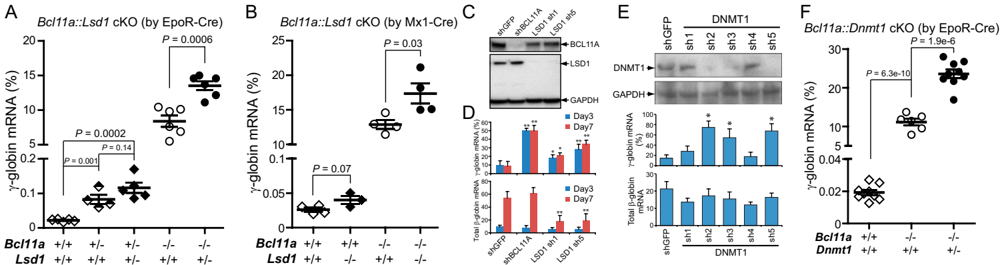
Reactivation of fetal hemoglobin (HbF) in adults ameliorates the severity of the common β-globin disorders. The transcription factor BCL11A is a critical modulator of hemoglobin switching and HbF silencing, yet the molecular mechanism through which BCL11A coordinates the developmental switch is incompletely understood. Particularly, the identities of BCL11A cooperating protein complexes and their roles in HbF expression and erythroid development remain largely unknown. Here we determine the interacting partner proteins of BCL11A in erythroid cells by a proteomic screen. BCL11A is found within multiprotein complexes consisting of erythroid transcription factors, transcriptional corepressors, and chromatin-modifying enzymes. We show that the lysine-specific demethylase 1 and repressor element-1 silencing transcription factor corepressor 1 (LSD1/CoREST) histone demethylase complex interacts with BCL11A and is required for full developmental silencing of mouse embryonic β-like globin genes and human γ-globin genes in adult erythroid cells in vivo. In addition, LSD1 is essential for normal erythroid development. Furthermore, the DNA methyltransferase 1 (DNMT1) is identified as a BCL11A-associated protein in the proteomic screen. DNMT1 is required to maintain HbF silencing in primary human adult erythroid cells. DNMT1 haploinsufficiency combined with BCL11A deficiency further enhances γ-globin expression in adult animals. Our findings provide important insights into the mechanistic roles of BCL11A in HbF silencing and clues for therapeutic targeting of BCL11A in β-hemoglobinopathies.
Overview
CoChat Summary
TL;DR
BCL11A silences fetal hemoglobin by assembling multiprotein corepressor complexes in erythroid cells, including LSD1/CoREST, NuRD, and DNMT1. Genetic and RNAi experiments show these partners contribute to γ-globin/embryonic β-like globin silencing, but LSD1 and DNMT1 also have broader roles that limit their therapeutic targeting.
Key findings
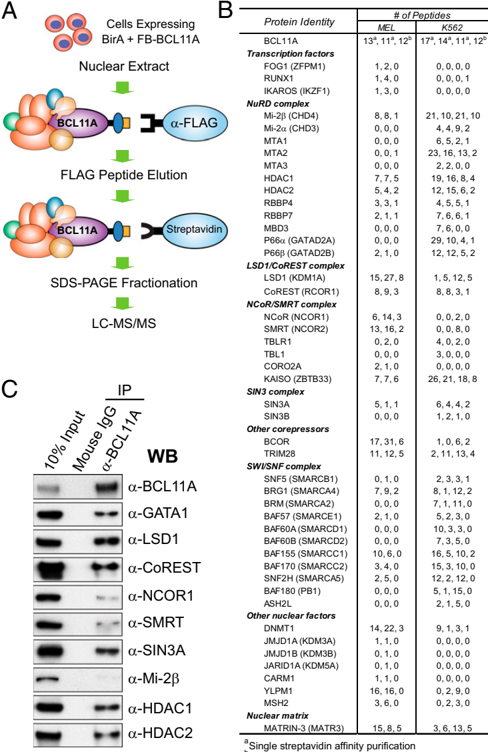
- A proteomic affinity screen in MEL and K562 erythroid cells identified BCL11A-interacting proteins including the LSD1/CoREST histone demethylase complex, NuRD complex, SIN3, NCoR/SMRT, BCOR, DNMT1, and SWI/SNF; interactions were confirmed by co-IP in primary human erythroid cells.
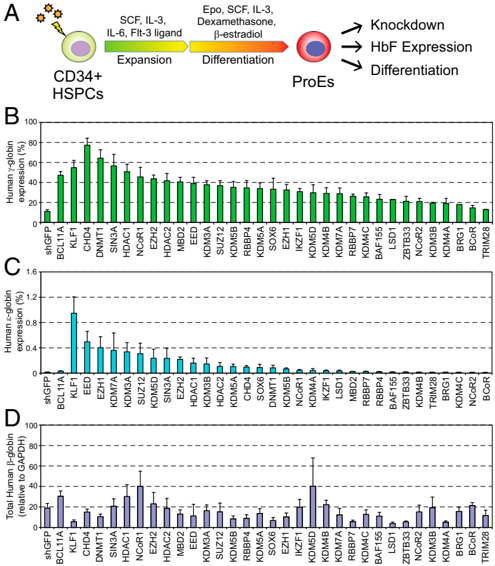
- In primary human CD34+ HSPC-derived erythroid cells, shRNA knockdown of BCL11A-interacting corepressors increased γ-globin; top-ranked genes included NuRD subunits (CHD4, HDAC1, HDAC2, MBD2), DNMT1, SIN3A, NCOR1, and PRC2 subunits (EZH2, EED, SUZ12). Depletion of KLF1, but not BCL11A, significantly increased ε-globin.
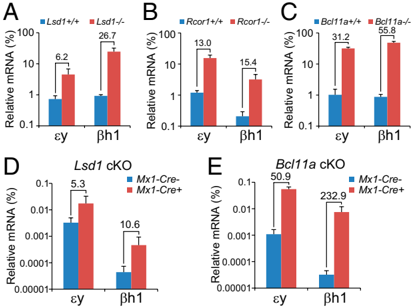
- LSD1/CoREST loss derepressed mouse embryonic β-like globins: E12.5 Lsd1 KO increased εy- and βh1-globin 6.2- and 26.7-fold; E13.5 CoREST KO increased them 13.0- and 15.4-fold; adult Mx1-Cre LSD1 cKO increased them 5.8- and 10.6-fold. BCL11A deletion caused much greater increases (31.2- to 232.9-fold).
- Compound BCL11A/LSD1 loss further enhanced γ-globin: Bcl11a−/−::Lsd1+/− mice had 13.53% γ-globin versus 8.40% in Bcl11a−/− mice (P = 0.0006); Bcl11a−/−::Lsd1−/− mice had 18.19% versus 12.88% with BCL11A loss alone (P = 0.03). DNMT1 haploinsufficiency plus BCL11A deficiency increased γ-globin from 11.16% to 23.58% (2.1-fold, P = 1.9 × 10⁻⁶).
Methods
- Proteomic screen: stable MEL and K562 lines expressing BirA alone or FLAG-BirA-tagged BCL11A XL isoform; streptavidin and/or anti-FLAG affinity purification followed by LC-MS/MS, with co-IP validation in erythroid cells.
- Functional RNAi screen: lentiviral shRNAs targeting BCL11A or interacting proteins in primary adult human CD34+ HSPCs undergoing ex vivo erythroid maturation; qRT-PCR for globin expression, with shRNAs achieving >75% target mRNA knockdown selected.
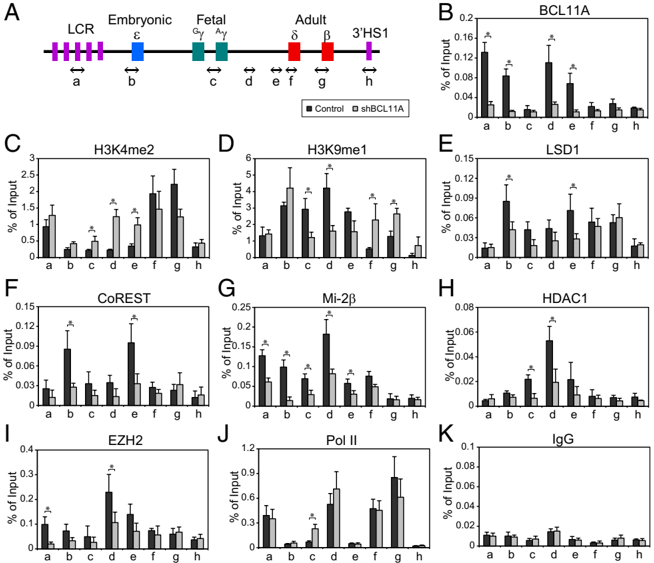
- Chromatin and mouse genetics: ChIP-qPCR in primary human adult erythroid cells with control or BCL11A knockdown; conditional floxed Lsd1, Rcor1, Bcl11a, and Dnmt1 alleles crossed with EpoR-Cre or Mx1-Cre, including β-YAC transgenic mice, analyzed by qRT-PCR and hematology.
Limitations
- Stated: primary human erythroid cultures have higher background γ-globin than normal adult erythroid cells and CD34+ HSPCs are permissive for HbF induction, making them sensitive but not necessarily specific; growth kinetics and differentiation status affect HbF. β-YAC mice have far lower baseline transgenic γ-globin than normal individuals, so interventions face a greater quantitative hurdle, and effects are small compared with BCL11A KO.
- Stated: LSD1 and DNMT1 have broad roles in hematopoiesis; LSD1 KO is embryonic lethal with severe anemia, and complete DNMT1 loss is incompatible with normal hematopoietic development, suggesting a narrow therapeutic window.
- Evident from the text: RNAi effects may reflect incomplete knockdown, and compound KO experiments used heterozygous Lsd1 or Dnmt1 in some settings because homozygous loss causes lethality, so full loss-of-function contributions were not always tested.
Model-written summary. Check it against the paper before relying on it.
Integrity signals
Registry
Cites
Statistics
Figures
Verification
Claims the paper makes
8 Valid · 1 Not valid · 15 Not checked · 97 Own results and interpretations
The sources with a verdict support this claim; the rest weren’t checked yet, have no full text we could read, or their verdicts aren’t rated yet.
In the paper
“Subsequent studies demonstrated that BCL11A, a zinc- fi nger transcription factor, is a bona fi de repressor of HbF expression (4 -7).”
What the sources say
- Not checked — no full text of the sourcecites [4] matched to “Human Fetal Hemoglobin Expression Is Regulated by the Developmental Stage-Specific Repressor BCL11A” (2008) source
- Supportedcites [5] matched to “Developmental and species-divergent globin switching are driven by BCL11A” (2009) source
The section headed “Silencing of human γ-globin expression depends on BCL11A” reports that loss of BCL11A markedly impairs developmental silencing of human γ-globin genes in mice carrying the human β-globin locus. The Concluding Remarks also state that BCL11A acts to silence γ-globin expression after birth in humans, supporting its description as a repressor of fetal hemoglobin expression. (LLM, conf=0.94)
- Supportedcites [6] matched to “Transcriptional silencing of γ-globin by BCL11A involves long-range interactions and cooperation with SOX6” (2010) source
The Abstract identifies BCL11A as a zinc-finger transcription factor and reports that reducing it in adult human erythroid precursors robustly induces HbF. The Discussion describes BCL11A’s role in silencing γ-globin genes, supporting its characterization as an HbF repressor. (LLM, conf=0.94)
- Not checked — no full text of the sourcecites [7] matched to “Binding patterns of BCL11A in the globin and GATA1 loci and characterization of the BCL11A fetal hemoglobin locus” (2010) source
boostedstates a cause- Asserted: passes — The authors put it forward as true.
- Checkable: passes — It can be checked against evidence.
- Load-bearing: passes — The paper’s conclusions depend on it.
- Based: passes — The paper gives a reason why it holds.
The sources with a verdict support this claim; the rest weren’t checked yet, have no full text we could read, or their verdicts aren’t rated yet.
In the paper
“In control cells, ChIP analysis revealed that BCL11A occupies several discrete regions within the human β -globin cluster, including the DNase I hypersensitive site 3 (HS3) within the locus control region (LCR), the e -globin promoter, and the γδ -intergenic region, consistent with previous analyses (4, 6).”
What the sources say
- Not checked — no full text of the sourcecites [4] matched to “Human Fetal Hemoglobin Expression Is Regulated by the Developmental Stage-Specific Repressor BCL11A” (2008) source
- Supportedcites [6] matched to “Transcriptional silencing of γ-globin by BCL11A involves long-range interactions and cooperation with SOX6” (2010) source
The section “BCL11A occupies the human β-globin cluster in vivo” reports ChIP-chip binding at LCR sites, embryonic ε-globin, and the Aγ–δ intergenic region in primary adult human erythroid progenitors. The section “BCL11A, SOX6, and GATA1 co-occupy the human β-globin cluster” specifically identifies HS3 and the ε-globin promoter among BCL11A-occupied sites. Page numbers are unavailable in our copy. (LLM, conf=0.94)
plainstates an association- Asserted: passes — The authors put it forward as true.
- Checkable: passes — It can be checked against evidence.
- Load-bearing: passes — The paper’s conclusions depend on it.
- Based: passes — The paper gives a reason why it holds.
The sources with a verdict support this claim; the rest weren’t checked yet, have no full text we could read, or their verdicts aren’t rated yet.
In the paper
“However, its roles in other cell lineages, including B lymphocytes and the central nervous system, may present challenges (19, 20).”
What the sources say
- Not checked — no full text of the sourcecites [19] Liu P, et al. (2003) Bcl11a is essential for normal lymphoid development. Nat Immunol 4(6):525 -532. source
- Supportedcites [20] Leid M, et al. (2004) CTIP1 and CTIP2 are differentially expressed during mouse embryogenesis. Gene Expr Patterns 4(6):733 -739. source
The Abstract identifies CTIP1 as BCL11A and reports that CTIP1-deficient mice lack B cells. It also reports CTIP1 expression in the developing and adult central nervous system and supports a contribution to CNS function. The possibility that these roles may present challenges is the citing authors’ inference. (LLM, conf=0.90)
hedgedstates a possible cause- Asserted: passes — The authors put it forward as true.
- Checkable: passes — It can be checked against evidence.
- Load-bearing: unclear — It is unclear whether the paper’s conclusions depend on it.
- Based: passes — The paper gives a reason why it holds.
The sources with a verdict support this claim; the rest weren’t checked yet, have no full text we could read, or their verdicts aren’t rated yet.
In the paper
“Consistent with a role in HbF silencing, knockdown or KO of Mi-2 β reactivates γ -globin genes in the β -YAC transgenic mice (23, 24).”
What the sources say
- Supportedcites [23] Costa FC, Fedosyuk H, Chazelle AM, Neades RY, Peterson KR (2012) Mi2 β is required for γ -globin gene silencing: Temporal assembly of a GATA-1-FOG-1-Mi2 repressor complex in β -YAC transgenic mice. PLoS Genet 8(12):e1003155. source
The Results section ('Expression of γ-globin in Mi2β conditional knockout β-YAC mice'; page not specified) reports increased human γ-globin expression after conditional Mi2β knockout in β-YAC mice. This source supports the knockout part of the citing sentence; it need not establish knockdown separately. (LLM, conf=0.93)
- Not checked — no full text of the sourcecites [24] Amaya ML, et al. (2013) Mi2 β -mediated silencing of the fetal γ -globin gene in adult erythroid cells. Blood , 10.1182/blood-2012-11-466227. source
plainstates a cause- Asserted: passes — The authors put it forward as true.
- Checkable: passes — It can be checked against evidence.
- Load-bearing: unclear — It is unclear whether the paper’s conclusions depend on it.
- Based: passes — The paper gives a reason why it holds.
- Supported
A result the paper reports from its own data — it cites no other source for it, so there is none to check. The quote shows it is in the paper.
In the paper
“Our study also shows that DNMT1 haploinsuf fi ciency augments HbF expression elicited by BCL11A de fi ciency.”
plainstates a cause- Asserted: passes — The authors put it forward as true.
- Checkable: passes — It can be checked against evidence.
- Load-bearing: passes — The paper’s conclusions depend on it.
- Based: passes — The paper gives a reason why it holds.
88 more claims
Create a free account to see all 121 claims and to verify the 1 reference still open.
- It may state two separate claims as one. 19
- Probably not a substantial claim. 11
Citations
Cites
Inducible Gene Targeting in Mice
Kühn, R., Schwenk, F., Aguet, M., & Rajewsky, K. (1995) · Science · doi:10.1126/science.7660125 · Cited by 1,641
Human Fetal Hemoglobin Expression Is Regulated by the Developmental Stage-Specific Repressor BCL11A
Sankaran, V. G., Menne, T. F., Xu, J., Akie, T. E., Lettre, G., Van Handel, B., Mikkola, H. K. A., Hirschhorn, J. N., Cantor, A. B., & Orkin, S. H. (2008) · Science · doi:10.1126/science.1165409 · Cited by 919
Self-citationMiller, I. J., & Bieker, J. J. (1993) · Molecular and Cellular Biology · doi:10.1128/mcb.13.5.2776 · Cited by 723
Loss of genomic methylation causes p53-dependent apoptosis and epigenetic deregulation
Jackson-Grusby, L., Beard, C., Possemato, R., Tudor, M., Fambrough, D., Csankovszki, G., Dausman, J., Lee, P., Wilson, C., Lander, E., et al. (2001) · Nature Genetics · doi:10.1038/83730 · Cited by 694
5-Azacytidine Selectively Increases γ-Globin Synthesis in a Patient with β+Thalassemia
Ley, T. J., DeSimone, J., Anagnou, N. P., Keller, G. H., Humphries, R. K., Turner, P. H., Young, N. S., Heller, P., & Nienhuis, A. W. (1982) · New England Journal of Medicine · doi:10.1056/nejm198212093072401 · Cited by 490 · cited 1×
“DNA methylation plays an important role in globin gene expression, and DNA demethylating agents have been shown to induce HbF expression in various model systems and patients (8, 17, 18).”
BackgroundHistone H3 Lysine 4 Demethylation Is a Target of Nonselective Antidepressive Medications
Lee, M. G., Wynder, C., Schmidt, D. M., McCafferty, D. G., & Shiekhattar, R. (2006) · Chemistry & Biology · doi:10.1016/j.chembiol.2006.05.004 · Cited by 438
Control of globin gene expression during development and erythroid differentiation
Stamatoyannopoulos, G. (2005) · Experimental Hematology · doi:10.1016/j.exphem.2004.11.007 · Cited by 393
5-Azacytidine stimulates fetal hemoglobin synthesis in anemic baboons.
DeSimone, J., Heller, P., Hall, L., & Zwiers, D. (1982) · Proceedings of the National Academy of Sciences · doi:10.1073/pnas.79.14.4428 · Cited by 384 · cited 1×
“DNA methylation plays an important role in globin gene expression, and DNA demethylating agents have been shown to induce HbF expression in various model systems and patients (8, 17, 18).”
BackgroundDevelopmental and species-divergent globin switching are driven by BCL11A
Sankaran, V. G., Xu, J., Ragoczy, T., Ippolito, G. C., Walkley, C. R., Maika, S. D., Fujiwara, Y., Ito, M., Groudine, M., Bender, M. A., et al. (2009) · Nature · doi:10.1038/nature08243 · Cited by 379
Self-citationTrowbridge, J. J., Snow, J. W., Kim, J., & Orkin, S. H. (2009) · Cell Stem Cell · doi:10.1016/j.stem.2009.08.016 · Cited by 373
Self-citation
Cited by
An Erythroid Enhancer of BCL11A Subject to Genetic Variation Determines Fetal Hemoglobin Level
Bauer, D. E., Kamran, S. C., Lessard, S., Xu, J., Fujiwara, Y., Lin, C., Shao, Z., Canver, M. C., Smith, E. C., Pinello, L., et al. (2013) · Science · doi:10.1126/science.1242088 · Cited by 653
Self-citationDirect promoter repression by BCL11A controls the fetal to adult hemoglobin switch
Liu, N., Hargreaves, V. V., Zhu, Q., Kurland, J. V., Hong, J., Kim, W., Sher, F., Macias-Trevino, C., Rogers, J. M., Kurita, R., et al. (2018) · Cell · doi:10.1016/j.cell.2018.03.016 · Cited by 478
“As the N terminus contains a canonical NuRDbinding peptide (Lejon et al., 2011), NuRD is present in protein complexes with BCL11A (Xu et al., 2013), and downregulation of NuRD subunits induces HbF expression (Gnanapragasam Cell 173, 430–442, April 5, 2018 431 (A) Heatmaps depict results of…”
BackgroundSelf-citationReactivation of developmentally silenced globin genes by forced chromatin looping
Deng, W., Rupon, J. W., Krivega, I., Breda, L., Motta, I., Jahn, K. S., Reik, A., Gregory, P. D., Rivella, S., Dean, A., et al. (2014) · Cell · doi:10.1016/j.cell.2014.05.050 · Cited by 443
Transcription factors LRF and BCL11A independently repress expression of fetal hemoglobin
Masuda, T., Wang, X., Maeda, M., Canver, M. C., Sher, F., Funnell, A. P. W., Fisher, C., Suciu, M., Martyn, G. E., Norton, L. J., et al. (2016) · Science · doi:10.1126/science.aad3312 · Cited by 373
Self-citationIn Situ Capture of Chromatin Interactions by Biotinylated dCas9
Liu, X., Zhang, Y., Chen, Y., Li, M., Zhou, F., Li, K., Cao, H., Ni, M., Liu, Y., Gu, Z., et al. (2017) · Cell · doi:10.1016/j.cell.2017.08.003 · Cited by 315
Self-citationAnemia: progress in molecular mechanisms and therapies
Sankaran, V. G., & Weiss, M. J. (2015) · Nature Medicine · doi:10.1038/nm.3814 · Cited by 281
Wang, J., Exline, C. M., DeClercq, J. J., Llewellyn, G. N., Hayward, S. B., Li, P. W.-L., Shivak, D. A., Surosky, R. T., Gregory, P. D., Holmes, M. C., et al. (2015) · Nature Biotechnology · doi:10.1038/nbt.3408 · Cited by 261
Kerenyi, M. A., Shao, Z., Hsu, Y.-J., Guo, G., Luc, S., O'Brien, K., Fujiwara, Y., Peng, C., Nguyen, M., & Orkin, S. H. (2013) · eLife · doi:10.7554/elife.00633 · Cited by 261
“…RNAi-mediated or chemical inhibition of Lsd1 enhances γ -globin expression in human erythroid cells and quite modestly in human β -locus transgenic mice ( Shi et al., 2013 ; Xu et al., 2013 ), which would alleviate symptoms of β -hemoglobinopathies such as sickle cell disease and β -thalassemia.”
BackgroundSelf-citationMolecular basis of β thalassemia and potential therapeutic targets
Thein, S. L. (2018) · Blood Cells, Molecules, and Diseases · doi:10.1016/j.bcmd.2017.06.001 · Cited by 209
“Functional studies in primary human erythroid progenitors and transgenic mice demonstrated that BCL11A represses γ globin and the silencing effect involves re-configuration of the HBB locus through interaction with GATA-1 and SOX6 that binds the proximal γ globin promoters [93,94].”
Induction of fetal hemoglobin synthesis by CRISPR/Cas9-mediated editing of the human β-globin locus
Antoniani, C., Meneghini, V., Lattanzi, A., Felix, T., Romano, O., Magrin, E., Weber, L., Pavani, G., El Hoss, S., Kurita, R., et al. (2018) · Blood · doi:10.1182/blood-2017-10-811505 · Cited by 194
Lineage-specific BCL11A knockdown circumvents toxicities and reverses sickle phenotype.
Brendel, C., Guda, S., Renella, R., Bauer, D. E., Canver, M. C., Kim, Y.-J., Heeney, M. M., Klatt, D., Fogel, J., Milsom, M. D., et al. (2016) · Journal of Clinical Investigation · doi:10.1172/jci87885 · Cited by 167
Self-citationDomain-focused CRISPR screen identifies HRI as a fetal hemoglobin regulator in human erythroid cells
Grevet, J. D., Lan, X., Hamagami, N., Edwards, C. R., Sankaranarayanan, L., Ji, X., Bhardwaj, S. K., Face, C. J., Posocco, D. F., Abdulmalik, O., et al. (2018) · Science · doi:10.1126/science.aao0932 · Cited by 153
Molokie, R. E., Lavelle, D., Gowhari, M., Pacini, M., Krauz, L., Hassan, J., Ibañez, V., Ruiz, M. A., Ng, K. P., Woost, P. G., et al. (2017) · PLoS Medicine · doi:10.1371/journal.pmed.1002382 · Cited by 156
Bauer, D. E., & Orkin, S. H. (2015) · Current Opinion in Genetics & Development · doi:10.1016/j.gde.2015.08.001 · Cited by 143
“Inhibition of many of the protein partners of BCL11A results in HbF induction, particularly when assayed by RNAi knockdown in CD34 hematopoietic stem and progenitor cells subjected to ex vivo erythroid maturation [24,25].”
BackgroundSelf-citationLarge-scale hypomethylated blocks associated with Epstein-Barr virus–induced B-cell immortalization
Hansen, K. D., Sabunciyan, S., Langmead, B., Nagy, N., Curley, R., Klein, G., Klein, E., Salamon, D., & Feinberg, A. P. (2014) · Genome Research · doi:10.1101/gr.157743.113 · Cited by 126
“The protein encoded by BCL11A (oddsratio = 1.44, P < 2 3 10 16, present in 11% of block boundaries) has been shown to interact with a complex of transcriptional corepressors (RCOR1/KDM1A) in modulating hemoglobin switching and fetal hemoglobin silencing (Xu et al. 2013).”
InfluentialGene Therapy for β-Hemoglobinopathies
Cavazzana, M., Antoniani, C., & Miccio, A. (2017) · Molecular Therapy · doi:10.1016/j.ymthe.2017.03.024 · Cited by 124
Emerging genetic therapy for sickle cell disease
Orkin, S. H., & Bauer, D. E. (2019) · Annual Review of Medicine · doi:10.1146/annurev-med-041817-125507 · Cited by 119
Self-citationRecent progress in understanding and manipulating haemoglobin switching for the haemoglobinopathies
Vinjamur, D. S., Bauer, D. E., & Orkin, S. H. (2018) · British Journal of Haematology · doi:10.1111/bjh.15038 · Cited by 114
“Both BCL11A and ZBTB7A have been shown to interact with members of the NuRD complex in erythroid cells, sug- gesting that NuRD activity may help execute gene repression by these factors (Xu et al, 2013; Masuda et al, 2016).”
BackgroundSelf-citationEffects of 5-Aza-2′-deoxycytidine (decitabine) on gene expression
Seelan, R. S., Mukhopadhyay, P., Pisano, M., & Greene, R. M. (2018) · Drug Metabolism Reviews · doi:10.1080/03602532.2018.1437446 · Cited by 126
“…andezMu~noz et al. 2005; Vir e et al. 2006); NuRD nucleosome remodeling complex (Cai et al. 2014); TR2/TR4 and BCL11A responsible for repressing b-type globin and c-globin expression, respectively (Cui et al. 2011; Xu et al. 2013); and GATA1 and ZBP-89 (Papageorgiou et al. 2016), among others.”
BackgroundRational targeting of a NuRD subcomplex guided by comprehensive in situ mutagenesis
Sher, F., Hossain, M., Seruggia, D., Schoonenberg, V. A. C., Yao, Q., Cifani, P., Dassama, L. M. K., Cole, M. A., Ren, C., Vinjamur, D. S., et al. (2019) · Nature Genetics · doi:10.1038/s41588-019-0453-4 · Cited by 111
Self-citationEHMT1 and EHMT2 inhibition induces fetal hemoglobin expression
Renneville, A., Van Galen, P., Canver, M. C., McConkey, M., Krill-Burger, J. M., Dorfman, D. M., Holson, E. B., Bernstein, B. E., Orkin, S. H., Bauer, D. E., et al. (2015) · Blood · doi:10.1182/blood-2015-06-649087 · Cited by 109
Self-citationFetal haemoglobin in sickle-cell disease: from genetic epidemiology to new therapeutic strategies
Lettre, G., & Bauer, D. E. (2016) · The Lancet · doi:10.1016/s0140-6736(15)01341-0 · Cited by 104
Self-citationDulmovits, B. M., Appiah-Kubi, A. O., Papoin, J., Hale, J., He, M., Al-Abed, Y., Didier, S., Gould, M., Husain-Krautter, S., Singh, S. A., et al. (2016) · Blood · doi:10.1182/blood-2015-09-667923 · Cited by 99
Cui, S., Lim, K.-C., Shi, L., Lee, M., Jearawiriyapaisarn, N., Myers, G., Campbell, A., Harro, D., Iwase, S., Trievel, R. C., et al. (2015) · Blood · doi:10.1182/blood-2015-02-626259 · Cited by 98
“However, because a growing number of nuclear receptors as well as other transcription factors have been shown to associate with LSD1, these effects could be mediated through any of these other DNA-binding proteins.(25,31) The ChIP analyses reported here showed that the chromatin occupancy of one LSD1 cofactor, CoREST,…”
BackgroundInfluentialEpigenetic regulation of fetal globin gene expression in adult erythroid cells
Ginder, G. D. (2014) · Translational research · doi:10.1016/j.trsl.2014.05.002 · Cited by 108
“Despite the development of more specific inhibitors of DNMT1, such as decitabine which, unlike 5-azacytidine, lacks effects on RNA metabolism, concerns about the safety of this class of agents have limited clinical application in β-hemoglobinopathies.”
BackgroundInfluentialZNF410 Uniquely Activates the NuRD Component CHD4 to Silence Fetal Hemoglobin Expression
Lan, X., Ren, R., Feng, R., Ly, L. C., Lan, Y., Zhang, Z., Aboreden, N. G., Qin, K., Horton, J. R., Grevet, J. D., et al. (2020) · Molecular Cell · doi:10.1016/j.molcel.2020.11.006 · Cited by 98
Transcription factor competition at the γ-globin promoters controls hemoglobin switching
Liu, N., Xu, S., Yao, Q., Zhu, Q., Kai, Y., Hsu, J. Y., Sakon, P., Pinello, L., Yuan, G.-C., Bauer, D. E., et al. (2021) · Nature Genetics · doi:10.1038/s41588-021-00798-y · Cited by 86
Self-citationFetal haemoglobin induction in sickle cell disease
Paikari, A., & Sheehan, V. (2017) · British Journal of Haematology · doi:10.1111/bjh.15021 · Cited by 101
“These are consistent with the findings that DNMT inhibition, either through knockdown of DNMT1 in human erythroid precursors, knockout in transgenic mice, or chemical inhibitors, results in reactivation of fetal haemoglobin expression (Charache et al, 1983; Xu et al, 2013).”
BackgroundZNF410 represses fetal globin by singular control of CHD4
Vinjamur, D. S., Yao, Q., Cole, M. A., McGuckin, C., Ren, C., Zeng, J., Hossain, M. A., Luk, K., Wolfe, S. A., Pinello, L., et al. (2021) · Nature Genetics · doi:10.1038/s41588-021-00843-w · Cited by 90
Self-citationMolecular Basis and Genetic Modifiers of Thalassemia
Tesio, N., & Bauer, D. E. (2023) · Hematology/Oncology Clinics of North America · doi:10.1016/j.hoc.2022.12.001 · Cited by 104
Self-citationBCL11A: a potential diagnostic biomarker and therapeutic target in human diseases
Yin, J., Xie, X., Ye, Y., Wang, L., & Che, F. (2019) · Bioscience Reports · doi:10.1042/bsr20190604 · Cited by 77
Wang, Z., Wang, P., Li, Y., Peng, H., Zhu, Y., Mohandas, N., & Liu, J. (2021) · Signal Transduction and Targeted Therapy · doi:10.1038/s41392-020-00422-1 · Cited by 85
“In erythropoiesis, the LSD1/ CoREST–BCL11A complex is required for full developmental silencing of mouse embryonic β-like globin genes and human γglobin genes in adult erythroid cells.(137) The TF-HDT interplay is multifaceted.”
BackgroundMoody, R. R., Lo, M.-C., Meagher, J. L., Lin, C.-C., Stevers, N. O., Tinsley, S. L., Jung, I., Matvekas, A., Stuckey, J. A., & Sun, D. (2018) · Journal of Biological Chemistry · doi:10.1074/jbc.m117.811463 · Cited by 68
“Indeed, we recognized B-cell lymphoma/leukemia 11A (BCL11A), a zinc-finger transcription factor that is necessary for hematopoiesis and regulates developmental globin switching (23), as a potential interacting partner of RBBP4/7.”
BackgroundTrakarnsanga, K., Wilson, M. C., Lau, W. W. Y., Singleton, B. K., Parsons, S. F., Sakuntanaga, P., Kurita, R., Nakamura, Y., Anstee, D. J., & Frayne, J. (2014) · Haematologica · doi:10.3324/haematol.2014.110155 · Cited by 76
“BCL11A also associates with erythroid transcription factors, transcriptional co-repressors, and chromatin-modifying enzymes in these cells.(14) Knockdown of BCL11A in human definitive erythroblasts results in increased expression of HbF(12) and reconfiguration of the 3D chromatin loop formation at the β-globin locus s…”
BackgroundLow, J. K. K., Silva, A. P. G., Sharifi Tabar, M., Torrado, M., Webb, S. R., Parker, B. L., Sana, M., Smits, C., Schmidberger, J. W., Brillault, L., et al. (2020) · Cell Reports · doi:10.1016/j.celrep.2020.108450 · Cited by 66
“Transcriptional regulators such as FOG1 (22, 39) and BCL11A (40, 41) can bind to NuRD via the RBBP subunits but this mechanism is likely to account for only a small proportion of NuRD-genome interactions.”
BackgroundAntagonistic actions of Rcor proteins regulate LSD1 activity and cellular differentiation
Upadhyay, G., Chowdhury, A. H., Vaidyanathan, B., Kim, D. S., & Saleque, S. (2014) · Proceedings of the National Academy of Sciences · doi:10.1073/pnas.1404292111 · Cited by 75
“Recent germline deletion of Rcor1 confirmed the importance of this factor in erythroid development (11, 14), although its role in other hematopoietic cells particularly megakaryocytes has not been reported.”
Fetal Globin Gene Repressors as Drug Targets for Molecular Therapies To Treat the β-Globinopathies
Suzuki, M., Yamamoto, M. P., & Engel, J. D. (2014) · Molecular and Cellular Biology · doi:10.1128/mcb.00714-14 · Cited by 72
Regulation of the fetal hemoglobin silencing factor BCL11A
Basak, A., & Sankaran, V. G. (2016) · Annals of the New York Academy of Sciences · doi:10.1111/nyas.13024 · Cited by 71
Recent trends in the gene therapy of β-thalassemia
Gambari, R., Finotti, A., Breda, L., Lederer, C. W., Bianchi, N., Zuccato, C., Klenathous, M., & Rivella, S. (2015) · Journal of Blood Medicine · doi:10.2147/jbm.s46256 · Cited by 108
Doerfler, P. A., Feng, R., Li, Y., Palmer, L. E., Porter, S. N., Bell, H. W., Crossley, M., Pruett‐Miller, S. M., Cheng, Y., & Weiss, M. J. (2021) · Nature Genetics · doi:10.1038/s41588-021-00904-0 · Cited by 69
Yu, X., Azzo, A., Bilinovich, S. M., Li, X., Dozmorov, M. G., Kurita, R., Nakamura, Y., Williams, D. C., & Ginder, G. D. (2019) · Haematologica · doi:10.3324/haematol.2018.210963 · Cited by 66
“MBD3-NuRD does not mediate g-globin gene silencing in HUDEP-2 cells MBD3-NuRD has been biochemically associated with some g-globin gene silencers.(39,40) MBD3-NuRD was also associated with g-globin gene silencing in β-YAC transgenic mice in some studies but not others.”
BackgroundSoblet, J., Dimov, I., von Kalckreuth, C. G., Cano-Chervel, J., Baijot, S., Pelc, K., Sottiaux, M., Vilain, C. N., Smits, G., & Deconinck, N. (2017) · American Journal of Medical Genetics Part A · doi:10.1002/ajmg.a.38479 · Cited by 63
“BCL11A has been shown to be a critical modulator of hemoglobin switching and HbF silencing (Basak et al., 2015; Funnell et al., 2015; Guda et al., 2015; Xu et al., 2013).”
BackgroundRivers, A. E., Vaitkus, K., Ibanez, V., Ruiz, M. A., Jagadeeswaran, R., Saunthararajah, Y., Cui, S., Engel, J. D., DeSimone, J., & Lavelle, D. (2016) · Haematologica · doi:10.3324/haematol.2015.140749 · Cited by 58
“The TR2/TR4 heterodimer and Bcl11A have been identified as γ-globin gene repressors that act by recruiting corepressor complexes that establish repressive epigenetic modifications at specific sites to inactivate gene expression.22 Recognition of the role of Direct Repeat (DR) elements in the e- and γ-globin gene promo…”
BackgroundGenetic Basis and Genetic Modifiers of β-Thalassemia and Sickle Cell Disease
Thein, S. L. (2017) · Advances in experimental medicine and biology · doi:10.1007/978-1-4939-7299-9_2 · Cited by 70
Fetal Hemoglobin Induction by Epigenetic Drugs
Lavelle, D., Engel, J. D., & Saunthararajah, Y. (2018) · Seminars in Hematology · doi:10.1053/j.seminhematol.2018.04.008 · Cited by 53
Bou‐Fakhredin, R., Franceschi, L. D., Motta, I., Cappellini, M. D., & Taher, A. T. (2022) · Pharmaceuticals · doi:10.3390/ph15060753 · Cited by 65
Reid, X. J., Low, J. K. K., & Mackay, J. P. (2022) · Trends in Biochemical Sciences · doi:10.1016/j.tibs.2022.06.002 · Cited by 62
Rujito, L., Basalamah, M., Siswandari, W., Setyono, J., Wulandari, G., Mulatsih, S., Sofro, A. S. M., Sadewa, A. H., & Sutaryo, S. (2016) · Hematology/Oncology and Stem Cell Therapy · doi:10.1016/j.hemonc.2016.02.003 · Cited by 60
“The HbE/b-thal patients, however, had HbA2 levels of 40%.”
BackgroundInfluentialThalassemias: from gene to therapy
Simone, G. D., Quattrocchi, A., Mancini, B., di Masi, A., Nervi, C., & Ascenzi, P. (2021) · Molecular Aspects of Medicine · doi:10.1016/j.mam.2021.101028 · Cited by 68
Evolution of hemoglobin loci and their regulatory elements
Philipsen, S., & Hardison, R. C. (2018) · Blood Cells, Molecules, and Diseases · doi:10.1016/j.bcmd.2017.08.001 · Cited by 51
“15 Mixed results have been reported on the fetal hemoglobin inducing activities of inhibitors of histone deacetylases [109, 110] and the histone demethylase LSD1 [111, 112].”
Targeting histone methyltransferase and demethylase in acute myeloid leukemia therapy
Castelli, G., Pelosi, E., & Testa, U. (2017) · OncoTargets and Therapy · doi:10.2147/ott.s145971 · Cited by 59
“83 In experimental mouse models, low GFi1 expression accelerates leukemia development driven by oncofusion proteins, such as MLLAF9.”
BackgroundMIR-144-mediated NRF2 gene silencing inhibits fetal hemoglobin expression in sickle cell disease
Li, Y., Zhu, X., Ward, C. M., Starlard‐Davenport, A., Takezaki, M., Berry, A., Ward, A., Wilder, C., Neunert, C. E., Kutlar, A., et al. (2018) · Experimental Hematology · doi:10.1016/j.exphem.2018.11.002 · Cited by 56
“Subsequent gene knockout confirmed a major repressor role of BCL11A in γ-globin gene silencing during hemoglobin switching [10] through KLF1 activation [11,12] and interaction with the corepressor SOX6 [13,14].”
BackgroundRivers, A. E., Vaitkus, K., Ruiz, M. A., Ibañez, V., Jagadeeswaran, R., Kouznetsova, T., DeSimone, J., & Lavelle, D. (2015) · Experimental Hematology · doi:10.1016/j.exphem.2015.04.005 · Cited by 55
CRISPR-Cas9 to induce fetal hemoglobin for the treatment of sickle cell disease
Demirci, S., Leonard, A. K., Essawi, K., & Tisdale, J. F. (2021) · Molecular Therapy — Methods & Clinical Development · doi:10.1016/j.omtm.2021.09.010 · Cited by 63
“Another known epigenetic regulator, DNA methyltransferase 1 (DNMT1), cooperates with BCL11A and Myb to repress g-globin expression by maintaining promoter CpG methylation.(69,70) A recent report demonstrated that a naturally occurring missense N-terminal regulatory domain mutation in the DNMT1 gene (S878F) diminished…”
BackgroundFetal hemoglobin regulation in β-thalassemia: heterogeneity, modifiers and therapeutic approaches
Sripichai, O., & Fucharoen, S. (2016) · Expert Review of Hematology · doi:10.1080/17474086.2016.1255142 · Cited by 54
“Complexes of BCL11A and other proteins might mediate the suppressive effects of BCL11A on HBG expression [54].”
BackgroundGong, Y., Zhang, X., Zhang, Q., Zhang, Y., Ye, Y., Yu, W., Shao, C., Yan, T., Huang, J., Zhong, J., et al. (2020) · Blood · doi:10.1182/blood.2020006425 · Cited by 49
Tang, M., Shen, H., Jin, Y., Lin, T., Cai, Q., Pinard, M. A., Biswas, S., Tran, Q., Li, G., Shenoy, A. K., et al. (2013) · Journal of Biological Chemistry · doi:10.1074/jbc.m113.482349 · Cited by 50
Hemoglobin genetics: recent contributions of GWAS and gene editing
Smith, E. C., & Orkin, S. H. (2016) · Human Molecular Genetics · doi:10.1093/hmg/ddw170 · Cited by 45
“Independent support for a critical role of NuRD has been provided by shRNA knockdown of NuRD components in primary human erythroid cells derived from CD34þ cells (31).”
BackgroundSelf-citationRoosjen, M., McColl, B., Kao, B., Gearing, L. J., Blewitt, M. E., & Vadolas, J. (2013) · The FASEB Journal · doi:10.1096/fj.13-242669 · Cited by 52
“(19), who showed that compound-knockout mice for both BCL11A and DNMT1 genes could further augment -globin gene reactivation in mice carrying the human -globin locus.”
BackgroundZhang, H., Wang, S., Liu, D., Gao, C., Han, Y., Guo, X., Qu, X., Li, W., Zhang, S., Geng, J., et al. (2021) · Blood · doi:10.1182/blood.2021011410 · Cited by 47
Takase, S., Hiroyama, T., Shirai, F., Maemoto, Y., Nakata, A., Arata, M., Matsuoka, S., Sonoda, T., Niwa, H., Sato, S., et al. (2023) · Nature Communications · doi:10.1038/s41467-022-35404-0 · Cited by 56
Shearstone, J. R., Golonzhka, O., Chonkar, A., Tamang, D., van Duzer, J. H., Jones, S. S., & Jarpe, M. B. (2016) · PLoS ONE · doi:10.1371/journal.pone.0153767 · Cited by 50
“Expression changes were not observed for other genes involved in HBG regulation, including KDM1A [13], NR2C1, NR2C2 [45], NR2F2 and nuclear factor Y subunits [46], and proteins associating with BCL11A [22] (data not shown).”
BackgroundInfluentialRegulating the Regulators: The Role of Histone Deacetylase 1 (HDAC1) in Erythropoiesis
Kim, M. Y., Yan, B., Huang, S., & Qiu, Y. (2020) · International Journal of Molecular Sciences · doi:10.3390/ijms21228460 · Cited by 52
LSD1/KDM1A promotes hematopoietic commitment of hemangioblasts through downregulation of Etv2
Takeuchi, M., Fuse, Y., Watanabe, M., Andrea, C.-S., Takeuchi, M., Nakajima, H., Ohashi, K., Kaneko, H., Kobayashi‐Osaki, M., Yamamoto, M. P., et al. (2015) · Proceedings of the National Academy of Sciences · doi:10.1073/pnas.1517326112 · Cited by 47
Nie, M., Wang, Y., Guo, C., Li, X., Wang, Y., Deng, Y., Yao, B., Gui, T., Ma, C., Liu, M., et al. (2018) · Journal of Biological Chemistry · doi:10.1074/jbc.ra118.004028 · Cited by 46
Antoniani, C., Romano, O., & Miccio, A. (2017) · Stem Cells Translational Medicine · doi:10.1002/sctm.17-0192 · Cited by 59
NRF2 mediates γ-globin gene regulation and fetal hemoglobin induction in human erythroid progenitors
Zhu, X., Li, Y., & Pace, B. S. (2017) · Haematologica · doi:10.3324/haematol.2016.160788 · Cited by 41
“Interestingly, the BGLT3 region has been associated with γ-globin gene silencing through the recruitment of repressors and co-repressors by LDB1/NL115 and BCL11A.16 Therefore, the ability of NRF2 to activate γ-globin transcription may occur through modulation of repressor complexes; however, additional experimental da…”
BackgroundSickle cell disease: progress towards combination drug therapy
Pace, B. S., Starlard‐Davenport, A., & Kutlar, A. (2021) · British Journal of Haematology · doi:10.1111/bjh.17312 · Cited by 57
“The development of DNMT inhibition, through gene silencing in human erythroid precursors, using chemicals or DNMT1 knockout in transgenic mice, results in reactivation of HBG transcription.(75,76) These observations led to investigations of DNMT1 inhibitors including cytidine 5-azacytidine and its analogue 20deoxy-5-a…”
BackgroundDual function NFI factors control fetal hemoglobin silencing in adult erythroid cells
Qin, K., Huang, P., Feng, R., Keller, C. A., Peslak, S. A., Khandros, E., Saari, M. S., Lan, X., Mayuranathan, T., Doerfler, P. A., et al. (2022) · Nature Genetics · doi:10.1038/s41588-022-01076-1 · Cited by 46
Khandros, E., Huang, P., Peslak, S. A., Sharma, M., Abdulmalik, O., Giardine, B. M., Zhang, Z., Keller, C. A., Hardison, R. C., & Blobel, G. A. (2020) · Blood · doi:10.1182/blood.2020005058 · Cited by 40
Shang, S., Li, X., Azzo, A., Truong, T., Dozmorov, M. G., Lyons, C. E., Manna, A. K., Williams, D. C., & Ginder, G. D. (2023) · Proceedings of the National Academy of Sciences · doi:10.1073/pnas.2302254120 · Cited by 47
“Studies of BCL11A have demonstrated its association with the MBD3–NuRD complex in murine erythroid cells (29).”
BackgroundBAP1 regulation of the key adaptor protein NCoR1 is critical for γ-globin gene repression
Yu, L., Jearawiriyapaisarn, N., Lee, M. P., Hosoya, T., Wu, Q., Myers, G., Lim, K.-C., Kurita, R., Nakamura, Y., Vojtek, A. B., et al. (2018) · Genes & Development · doi:10.1101/gad.318436.118 · Cited by 39
“…of the TR2/4:NCoR1 interaction derepresses γ-globin transcription The DRED complex is critical for γ-globin repression in adult RBCs (Suzuki et al. 2014), and NCoR1 knockdown by shRNA inCD34+ cell erythroid differentiation cultures has been shown to induce γ-globin mRNA synthesis (Xu et al. 2013).”
BackgroundThe transcriptional repressor BCL11A promotes breast cancer metastasis
Seachrist, D. D., Hannigan, M. M., Ingles, N. N., Webb, B. M., Weber-Bonk, K. L., Yu, P., Bebek, G., Singh, S., Sizemore, S. T., Varadan, V., et al. (2020) · Journal of Biological Chemistry · doi:10.1074/jbc.ra120.014018 · Cited by 45
Gudmundsdottir, B., Gudmundsson, K. O., Klarmann, K. D., Singh, S. K., Sun, L., Singh, S., Du, Y., Coppola, V., Stockwin, L. H., Nguyen, N., et al. (2018) · Cell Reports · doi:10.1016/j.celrep.2018.05.043 · Cited by 38
Pharmacological and molecular approaches for the treatment of β‐hemoglobin disorders
Lohani, N., Bhargava, N., Munshi, A., & Ramalingam, S. (2017) · Journal of Cellular Physiology · doi:10.1002/jcp.26292 · Cited by 40
“At the promoter region of γ-globin, it has been exhibited to physically interact with DNMT1 and two definite complexes such as (i) nuclear receptor NR2C1 (TR2) andNR2C2 (TR4) as a part ofDRED complex (Cui et al., 2011) aswell as with BCL11A (Xu et al., 2013).”
BackgroundBCL11A promotes myeloid leukemogenesis by repressing PU.1 target genes
Sunami, Y., Yokoyama, T., Yoshino, S., Takahara, T., Yamazaki, Y., Harada, H., & Nakamura, T. (2021) · Blood Advances · doi:10.1182/bloodadvances.2021004558 · Cited by 37
“A previous study indicated that LSD1 cooperates with Bcl11a in silencing the expression of globin, 11 suggesting the speci fi c interaction between Bcl11a and LSD1 in the hematopoietic system.”
Animal models of β-hemoglobinopathies: utility and limitations
McColl, B., & Vadolas, J. (2016) · Journal of Blood Medicine · doi:10.2147/jbm.s87955 · Cited by 37
The E3 ligase adaptor molecule SPOP regulates fetal hemoglobin levels in adult erythroid cells
Lan, X., Khandros, E., Huang, P., Peslak, S. A., Bhardwaj, S. K., Grevet, J. D., Abdulmalik, O. Y., Wang, H., Keller, C. A., Giardine, B. M., et al. (2019) · Blood Advances · doi:10.1182/bloodadvances.2019032318 · Cited by 34
Salem, N. A., Mahnke, A. H., Konganti, K., Hillhouse, A., & Miranda, R. C. (2021) · iScience · doi:10.1016/j.isci.2021.102439 · Cited by 73
Corepressor Rcor1 is essential for murine erythropoiesis
Yao, H., Goldman, D. C., Nechiporuk, T., Kawane, S., McWeeney, S. K., Tyner, J. W., Fan, G., Kerenyi, M. A., Orkin, S. H., Fleming, W., et al. (2014) · Blood · doi:10.1182/blood-2013-11-538678 · Cited by 34
Self-citationMolecular Medicine: Found in Translation
Orkin, S. H. (2021) · Med · doi:10.1016/j.medj.2020.12.011 · Cited by 39
Self-citationGenome Editing for β-Hemoglobinopathies: Advances and Challenges
Frati, G., & Miccio, A. (2021) · Journal of Clinical Medicine · doi:10.3390/jcm10030482 · Cited by 36
Elevating fetal hemoglobin: recently discovered regulators and mechanisms
Khandros, E., & Blobel, G. A. (2024) · Blood · doi:10.1182/blood.2023022190 · Cited by 47
Liu, L., Pertsemlidis, A., Ding, L.-H., Story, M. D., Steinberg, M. H., Sebastiani, P., Hoppe, C. C., Ballas, S. K., & Pace, B. S. (2016) · Experimental Biology and Medicine · doi:10.1177/1535370216642047 · Cited by 33
The role(s) of NF-Y in development and differentiation
Dolfini, D., Imbriano, C., & Mantovani, R. (2024) · Cell Death and Differentiation · doi:10.1038/s41418-024-01388-1 · Cited by 37
Targeting sickle cell disease root-cause pathophysiology with small molecules
Saunthararajah, Y. (2019) · Haematologica · doi:10.3324/haematol.2018.207530 · Cited by 32
“, DRED (TR2/TR4) and BCL11A, which direct epigenetic silencing of HBG.(43,53,72-82) The deoxycytidine analog decitabine and its pro-drug 5-azacytidine, FDA-approved to treat the myeloid malignancy myelodysplastic syndrome, can deplete DNMT1: a nitrogen substituted for a carbon in the decitabine pyrimidine Targeting si…”
BackgroundAn erythroid-to-myeloid cell fate conversion is elicited by LSD1 inactivation
Yu, L., Myers, G., Ku, C.-J., Schneider, E., Wang, Y., Singh, S. A., Jearawiriyapaisarn, N., White, A. D., Moriguchi, T., Khoriaty, R. N., et al. (2021) · Blood · doi:10.1182/blood.2021011682 · Cited by 33
Gene Therapy for β-Hemoglobinopathies: From Discovery to Clinical Trials
Segura, E., Ayoub, P. G., Hart, K. L., & Kohn, D. B. (2023) · Viruses · doi:10.3390/v15030713 · Cited by 35
Fanis, P., Kousiappa, I., Phylactides, M., & Kleanthous, M. (2014) · BMC Genomics · doi:10.1186/1471-2164-15-108 · Cited by 31
Chemical probes targeting epigenetic proteins: Applications beyond oncology
Ackloo, S. Z., Brown, P. J., & Müller, S. (2017) · Epigenetics · doi:10.1080/15592294.2017.1279371 · Cited by 30
Genetic modifiers of severity in sickle cell disease
Chang, A. K., Summarell, C. C. G., Birdie, P. T., & Sheehan, V. (2018) · Clinical Hemorheology and Microcirculation · doi:10.3233/ch-189004 · Cited by 32
“Elegant functional studies confirmed the association [84].”
Ruiz, M. A., Rivers, A., Ibanez, V., Vaitkus, K., Mahmud, N., DeSimone, J., & Lavelle, D. (2015) · Epigenetics · doi:10.1080/15592294.2015.1039220 · Cited by 27
“More recent studies have shown that the DRED and Bcl11ANurd co-repressor complexes, both containing the DNMT1 protein, repress the g-globin gene in adult erythroid cells.(15,16) Inhibition of the histone demethylase LSD1, another component of these co-repressor complexes, using the pharmacological agent tranylcypromin…”
BackgroundGuo, X., Plank-Bazinet, J. L., Krivega, I. V., Dale, R., & Dean, A. (2020) · Nucleic Acids Research · doi:10.1093/nar/gkaa736 · Cited by 32
“The NuRD component CHD4 was known to occupy the -globin gene and CHD4 KD upregulated -globin transcription in human progenitor cells (6,50,61,63).”
BackgroundGenome editing approaches to β-hemoglobinopathies
Brusson, M., & Miccio, A. (2021) · Progress in molecular biology and translational science · doi:10.1016/bs.pmbts.2021.01.025 · Cited by 33
Editing outside the body: Ex vivo gene-modification for β-hemoglobinopathy cellular therapy
Rosanwo, T. O., & Bauer, D. E. (2021) · Molecular Therapy · doi:10.1016/j.ymthe.2021.10.002 · Cited by 35
Self-citationPrecision Editing as a Therapeutic Approach for β-Hemoglobinopathies
Paschoudi, K., Yannaki, E., & Psatha, N. (2023) · International Journal of Molecular Sciences · doi:10.3390/ijms24119527 · Cited by 35
Nualkaew, T., Khamphikham, P., Pongpaksupasin, P., Kaewsakulthong, W., Songdej, D., Paiboonsukwong, K., Sripichai, O., Engel, J. D., Hongeng, S., Fucharoen, S., et al. (2020) · Annals of Hematology · doi:10.1007/s00277-020-04136-w · Cited by 26
Parker, W. B., & Thottassery, J. V. (2021) · Journal of Pharmacology and Experimental Therapeutics · doi:10.1124/jpet.121.000758 · Cited by 27
Correction of Beta-Thalassemia IVS-II-654 Mutation in a Mouse Model Using Prime Editing
Zhang, H., Sun, R., Fei, J., Chen, H., & Lu, D. (2022) · International Journal of Molecular Sciences · doi:10.3390/ijms23115948 · Cited by 31
Pathogenic BCL11A variants provide insights into the mechanisms of human fetal hemoglobin silencing
Shen, Y., Li, R., Teichert, K., Montbleau, K. E., Verboon, J. M., Voit, R. A., & Sankaran, V. G. (2021) · PLoS Genetics · doi:10.1371/journal.pgen.1009835 · Cited by 25
Metadata
- Authors
- Xu, J., Bauer, D. E., Kerenyi, M. A., Vo, T. D., Hou, S., Hsu, Y.-J., Yao, H., Trowbridge, J. J., Mandel, G., & Orkin, S. H.
- Affiliations
- Boston Children's Hospital (US)
- Howard Hughes Medical Institute (US)
- Corresponding author
- Orkin, Stuart H.
- Venue
- Proceedings of the National Academy of Sciences
- Publisher
- National Academy of Sciences
- Published
- 2013-04
- Volume
- 110
- Issue
- 16
- Pages
- 6518-6523
- ISSN
- 0027-8424 (ISSN-L)
- 1091-6490
- PMC
- PMC3631619
- OpenAlex
- W2161143576
- Cited by
- 233
- References
- 29
- Citations by year
- 2026: 11 · 2025: 13 · 2024: 17 · 2023: 16 · 2022: 15 · 2021: 30 · 2020: 20 · 2019: 12 · 2018: 19 · 2017: 20 · 2016: 24 · 2015: 16 · 2014: 12 · 2013: 8
- FWCI
- 9.84
- Type
- journal article
- Language
- en
- Open access
- bronze
- doi.org
- Locations
- Proceedings of the National Academy of Sciences (publishedVersion)
- Europe PMC (PubMed Central) (publishedVersion)
- PubMed Central (publishedVersion)
- PubMed (publishedVersion)
- The Mouseion at the JAXlibrary (Jackson Laboratory) (submittedVersion)
- Funders
- Howard Hughes Medical Institute
- National Institutes of Health
- National Heart, Lung, and Blood Institute (R01HL032259)
- National Institute of Diabetes and Digestive and Kidney Diseases (P30DK049216, K01DK093543, P30DK056465, K08DK093705)
- Topics
- Health Sciences › Medicine › Genetics (clinical) › Hemoglobinopathies and Related Disorders
- Life Sciences › Biochemistry, Genetics and Molecular Biology › Biochemistry › Hemoglobin structure and function
- Life Sciences › Biochemistry, Genetics and Molecular Biology › Molecular Biology › Epigenetics and DNA Methylation
- Keywords
- BCL11A, hemoglobin switching, erythroid development, histone demethylation, DNMT1, DNA methylation, corepressors, beta-globin gene, γ-globin expression, β-hemoglobinopathies, protein-protein interaction
- MeSH terms
- Animals, Carrier Proteins, Chromatin, Chromatography, Liquid, Fetal Hemoglobin, Humans, Nuclear Proteins, Repressor Proteins, Erythroid Precursor Cells, Gene Expression Regulation, Developmental, RNA Interference, Proteomics, Cell Line, Tumor, Multiprotein Complexes, Chromatin Immunoprecipitation, Mice, Tandem Mass Spectrometry, beta-Globins, Co-Repressor Proteins, Real-Time Polymerase Chain Reaction
About these checks
Registry, retraction, Cites and statistics results are computed, not judged, with one exception: a printed reference that no index lists is read once by a model before it counts as a citation error. Claims are extracted by a model and kept only when their quote appears verbatim in the text; each cited source is then checked, with a model’s help, for whether it says what the claim relies on. Those verdicts can be wrong — read the claim’s quote and the cited source before relying on one.
A language model drew the claims from the paper on 2026-10-12, under version 3 of the claim definition (model deepseek-v4.1-flash, prompt extract-v3).
A second model labelled each claim on 2026-10-12 (model jev-1.13-20260917, definition revision gold-guideline-v0.2).
Cited sources are checked with a language model’s help (gpt-6-sol).
Statistics and arithmetic are recomputed, not judged.
Confidence bands are shown only for fields calibrated on our annotated test set. None is calibrated yet, so no band is shown.
What counts as a claim ›How we measure confidence ›How we check this ›
Are you an author, or do you see a problem with this page? Request a review
Data sources
Bibliographic data: Semantic Scholar, OpenAlex, Crossref.
Contains information from the Semantic Scholar Academic Graph Datasets, made available under the ODC Attribution License (ODC-BY 1.0).
Semantic Scholar’s data is described in: Kinney, R., et al. (2023). The Semantic Scholar Open Data Platform. arXiv:2301.10140.
