

Global increase and geographic convergence in antibiotic consumption between 2000 and 2015
Open accessThe DOI matches its Crossref record; 43 of the 43 references it cites were found in a registry or an index.
Abstract
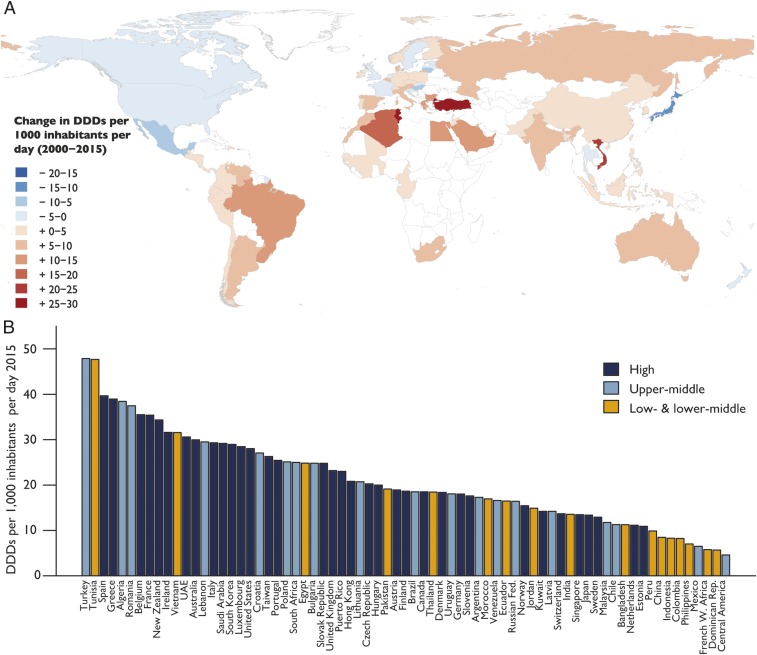
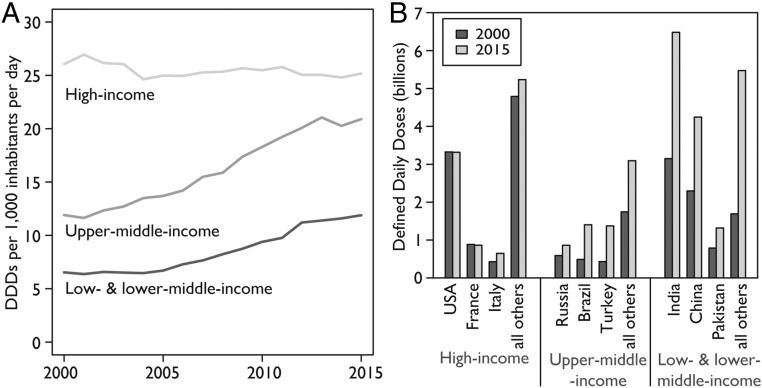
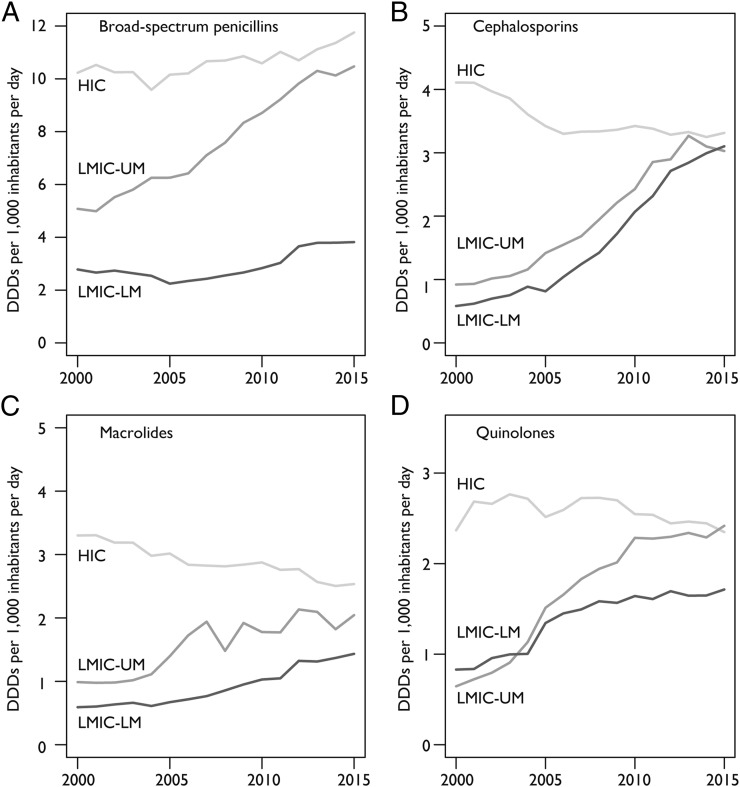
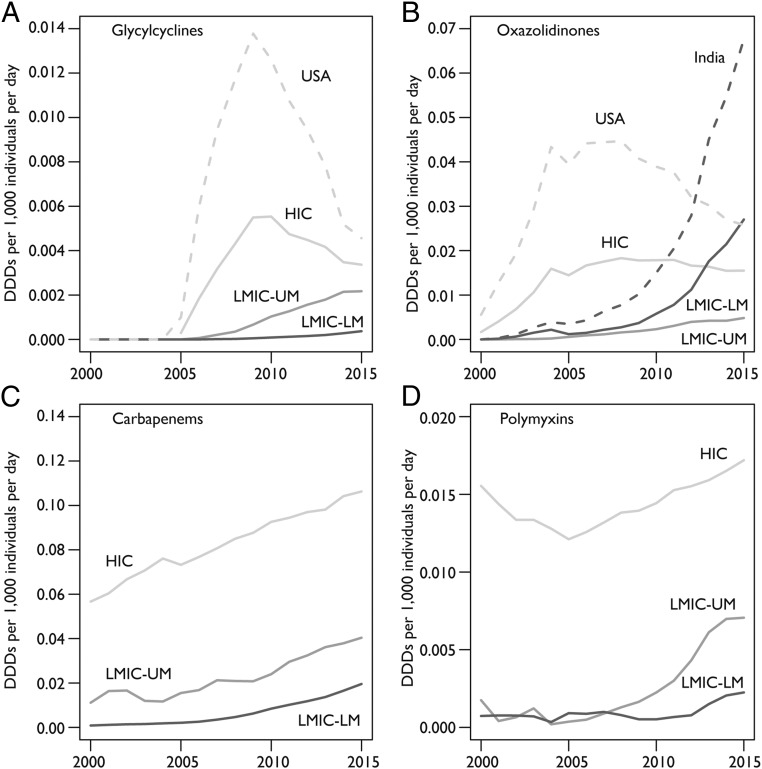
Significance: Antibiotic resistance, driven by antibiotic consumption, is a growing global health threat. Our report on antibiotic use in 76 countries over 16 years provides an up-to-date comprehensive assessment of global trends in antibiotic consumption. We find that the antibiotic consumption rate in low- and middle-income countries (LMICs) has been converging to (and in some countries surpassing) levels typically observed in high-income countries. However, inequities in drug access persist, as many LMICs continue to be burdened with high rates of infectious disease-related mortality and low rates of antibiotic consumption. Our findings emphasize the need for global surveillance of antibiotic consumption to support policies to reduce antibiotic consumption and resistance while providing access to these lifesaving drugs.
Overview
The claims and statistics of this paper haven’t been checked yet.
Free: it reads the open-access text and checks the first 5 claims that cite a source we can check. Create a free account to check every claim.
Integrity signals
Registry
Cites
Statistics
Figures
Verification
Claims the paper makes
The claims and statistics of this paper haven’t been checked yet.
Free: it reads the open-access text and checks the first 5 claims that cite a source we can check. Create a free account to check every claim.
Claims other papers make about this one
Each is checked against this paper’s own text: does it say what the citing paper says it does?
The cited source says what the claim attributes to it.
In the citing paper
“A study indicated that between 2000 and 2015, antibiotic consumption (expressed in defined daily doses [DDD]) increased by 65% worldwide, largely driven by LMICs.”
From Over-the-Counter Sale of Antibiotics in India: A Qualitative Study of Providers’ Perspectives across Two States (2021) · cites this paper as [7]
The cited source says what the claim attributes to it.
In the citing paper
“In India, it increased from 3.2 to 6.5 billion DDDs (103%) [7].”
From Over-the-Counter Sale of Antibiotics in India: A Qualitative Study of Providers’ Perspectives across Two States (2021) · cites this paper as [7]
Self-check
Percentages, sums and reported differences re-computed from the paper’s own numbers.
The self-check needs the paper’s full text.
Citations
Cites
Liu, Y.-Y., Wang, Y., Walsh, T. R., Yi, L.-X., Zhang, R., Spencer, J., Doi, Y., Tian, G., Dong, B., Huang, X., et al. (2016) · The Lancet Infectious Diseases · doi:10.1016/s1473-3099(15)00424-7 · Cited by 5,398
Antibiotic resistance-the need for global solutions
Laxminarayan, R., Duse, A., Wattal, C., Zaidi, A. K. M., Wertheim, H. F. L., Sumpradit, N., Vlieghe, E., Hara, G. L., Gould, I. M., Goossens, H., et al. (2013) · The Lancet Infectious Diseases · doi:10.1016/s1473-3099(13)70318-9 · Cited by 4,439
Self-citationTipping elements in the Earth’s climate system
Lenton, T. M., Held, H., Kriegler, E., Hall, J. W., Lucht, W., Rahmstorf, S., & Schellnhuber, H. J. (2008) · Proceedings of the National Academy of Sciences · doi:10.1073/pnas.0705414105 · Cited by 3,982 · cited 1×
“As with climate change, there may be an unknown tipping point (47), and this could herald a future without effective antibiotics.”
BackgroundExtended-Spectrum β-Lactamases: a Clinical Update
Paterson, D. L., & Bonomo, R. A. (2005) · Clinical Microbiology Reviews · doi:10.1128/cmr.18.4.657-686.2005 · Cited by 3,491
Outpatient antibiotic use in Europe and association with resistance: a cross-national database study
Goossens, H., Ferech, M., Vander Stichele, R., & Elseviers, M. (2005) · The Lancet · doi:10.1016/s0140-6736(05)17907-0 · Cited by 3,359 · cited 1×
“The association between antibiotic consumption and resistance is well documented across spatial and temporal scales at individual hospitals (5), nursing homes (6), primary care facilities (7), and communities (8), as well as across countries (9).”
BackgroundSelf-citationGlobal antibiotic consumption 2000 to 2010: an analysis of national pharmaceutical sales data
Van Boeckel, T. P., Gandra, S., Ashok, A., Caudron, Q., Grenfell, B. T., Levin, S. A., & Laxminarayan, R. (2014) · The Lancet Infectious Diseases · doi:10.1016/s1473-3099(14)70780-7 · Cited by 2,280 · cited 1×
“The largest prior study reported that antibiotic consumption increased 36% between 2000 and 2010 in 71 countries (15).”
BackgroundSelf-citationCostelloe, C., Metcalfe, C., Lovering, A., Mant, D., & Hay, A. D. (2010) · BMJ · doi:10.1136/bmj.c2096 · Cited by 1,981 · cited 1×
“The association between antibiotic consumption and resistance is well documented across spatial and temporal scales at individual hospitals (5), nursing homes (6), primary care facilities (7), and communities (8), as well as across countries (9).”
BackgroundTesting for Serial Correlation in Linear Panel-data Models
Drukker, D. M. (2003) · The Stata Journal: Promoting communications on statistics and Stata · doi:10.1177/1536867x0300300206 · Cited by 1,569 · cited 1×
“Serial correlation was assessed using the Wooldridge test (19).”
MethodAccess to effective antimicrobials: a worldwide challenge
Laxminarayan, R., Matsoso, P., Pant, S., Brower, C., Røttingen, J.-A., Klugman, K., & Davies, S. (2016) · The Lancet · doi:10.1016/s0140-6736(15)00474-2 · Cited by 1,465
Self-citationDengue, Urbanization and Globalization: The Unholy Trinity of the 21st Century
Gubler, D. J. (2011) · Tropical Medicine and Health · doi:10.2149/tmh.2011-s05 · Cited by 1,098
Research works printed but not linked: 1
- 21. Institut de veille sanitaire (InVS) et Agence nationale de sécurité du médicament et des produits de santé (ANSM) (2015) Consommation d'antibiotiques et résistance aux antibiotiques en France : Nécessité d'une mobilisation déterminée et durable. Bilan des Données de Surveillance. [Antibiotic consumption and antibiotic resistance in France: The need for a determined and sustainable mobilization. Review of Surveil- lance Data] (Institut de veille sanitaire, Saint-Maurice, France), pp 1-16. French.
Cited by
Items 901–1,000 of 1,009
Jesumirhewe, C., Springer, B., Allerberger, F. J., & Ruppitsch, W. (2020) · PLoS ONE · doi:10.1371/journal.pone.0231146 · Cited by 38
“An increasing prevalence of ESBL-Enterobacteriaceae correlates with a rise in the consumption of carbapenems [9, 10]; and this appears to have resulted in the emergence and spread of carbapenem resistance, especially in Enterobacteriaceae [11].”
BackgroundZequinão, T., Gasparetto, J., Oliveira, D. D. S., Silva, G. T., Telles, J. P., & Tuon, F. F. (2020) · The Brazilian Journal of Infectious Diseases · doi:10.1016/j.bjid.2020.05.005 · Cited by 34
Semret, M., Abebe, W., Kong, L. Y., Alemayehu, T., Beyene, T., Libman, M., Amogne, W., Johansen, Ø. H., Gebretekle, G. B., Seifu, D., et al. (2020) · JAC-Antimicrobial Resistance · doi:10.1093/jacamr/dlaa039 · Cited by 28
Janssen, A. B., van Hout, D., Bonten, M. J. M., Willems, R. J. L., & van Schaik, W. (2020) · Journal of Antimicrobial Chemotherapy · doi:10.1093/jac/dkaa305 · Cited by 30
Antimicrobial stewardship in remote primary healthcare across northern Australia
Cuningham, W., Anderson, L., Bowen, A. C., Buising, K. L., Connors, C. M., Daveson, K., Martin, J. L., McNamara, S., Patel, B. K., James, R. S., et al. (2020) · PeerJ · doi:10.7717/peerj.9409 · Cited by 28
Inhibitors of β-Lactamases. New Life of β-Lactam Antibiotics
Egorov, A. M., Ulyashova, M. M., & Rubtsova, M. Y. (2020) · Biochemistry (Moscow) · doi:10.1134/s0006297920110024 · Cited by 37
Lage, A. L. A., Marciano, A. C., Venâncio, M. F., da Silva, M. A. N., & Martins, D. C. D. S. (2020) · Chemosphere · doi:10.1016/j.chemosphere.2020.129334 · Cited by 27
Lambrou, A. S., Innes, G. K., O’Sullivan, L., Luitel, H., Bhattarai, R. K., Basnet, H. B., & Heaney, C. D. (2021) · Global Health Research and Policy · doi:10.1186/s41256-021-00187-2 · Cited by 35
“The growing LMIC health burdens from AMR infections may be due to increased antimicrobial consumption in both human and animal sectors [4, 5].”
BackgroundChen, M., Wei, D., Wang, F., Yin, J., Li, M., & Du, Y. (2021) · Journal of Hazardous Materials · doi:10.1016/j.jhazmat.2021.125495 · Cited by 28
Leveraging Marine Natural Products as a Platform to Tackle Bacterial Resistance and Persistence
Valdes-Pena, M. A., Massaro, N. P., Lin, Y.-C., & Pierce, J. G. (2021) · Accounts of Chemical Research · doi:10.1021/acs.accounts.1c00007 · Cited by 32
Progress towards antibiotic use targets in eight high-income countries
Simmons, B., Ariyoshi, K., Ohmagari, N., Pulcini, C., Huttner, B. D., Gandra, S., Satta, G., Moja, L., Sharland, M., Magrini, N., et al. (2021) · Bulletin of the World Health Organization · doi:10.2471/blt.20.270934 · Cited by 33
“Page 8 of 23 for some inferences about the appropriateness of antibiotic sales but should be interpreted with caution due to differences in burden, resistance profiles, treatment guidelines and health systems.(13,33,34)”
BackgroundSelf-citationXiong, J.-Q., Qi, X., & Qin, J. (2022) · The Science of The Total Environment · doi:10.1016/j.scitotenv.2022.154436 · Cited by 29
Daniels, B., Shah, D., Kwan, A. T., Das, R., Das, V., Puri, V., Tipre, P., Waghmare, U., Gomare, M., Keskar, P., et al. (2022) · BMJ Global Health · doi:10.1136/bmjgh-2022-009657 · Cited by 34
Khodabandeloo, F., Shahsavarifar, S., Nayebi, B., Niavol, K. P., Nayebi, B., Varma, R. S., CHA, J. H., Jang, H. W., Kim, D., & Shokouhimehr, M. (2023) · Inorganic Chemistry Communications · doi:10.1016/j.inoche.2023.111357 · Cited by 32
Kiani, Z., Aramjoo, H., Mohammadparast, P., Bahraini, F., Yousefinia, A., Nguyen, P. U., Fattahi, M., & Mortazavi‐Derazkola, S. (2023) · Journal of environmental chemical engineering · doi:10.1016/j.jece.2023.111045 · Cited by 32
Yang, J., Zhang, Z., Zhou, X., Cui, Y., Shi, C., & Shi, X. (2019) · Foodborne Pathogens and Disease · doi:10.1089/fpd.2019.2671 · Cited by 28
“The inappropriate use of antimicrobials in clinics and agriculture has resulted in the emergence and spread of anti-microbial resistance among Salmonella isolates (Klein et al. , 2018).”
Antibiotic resistance—A global crisis
Elisabeth, Z. M. (2023) · Elsevier eBooks · doi:10.1016/b978-0-323-95388-7.00013-9 · Cited by 29
Zhao, Y., Song, Y., Zhang, L., Zhao, B., Lu, M.-Q., Cui, J., & Tang, W. (2023) · Journal of Environmental Sciences · doi:10.1016/j.jes.2023.08.012 · Cited by 26
Lu, H. B., Chen, X., Cong, Q., Li, Q., Wang, X., Zhong, S. F., Deng, H., & Yan, B. (2024) · Molecules · doi:10.3390/molecules29051170 · Cited by 27
“According to the data [5,6], between 2000 and 2015, the global use of antibiotics increased by 65%.”
MethodKasse, G. E., Cosh, S., Humphries, J. H., & Islam, M. S. (2024) · Systematic Reviews · doi:10.1186/s13643-024-02649-3 · Cited by 47
“Furthermore, a study found that the inappropriate use of antimicrobials was associated with increased healthcare costs and prolonged hospital stays [4].”
BackgroundInfluentialInnovative cross-linked electrospun PVA/MOF nanocomposites for removal of cefixime antibiotic
Mirzaei, R., Tangestaninejad, S., Marandi, A., Moghadam, M., Mohammadpoor‐Baltork, I., Kardanpour, R., & Abdolvand, H. (2025) · Scientific Reports · doi:10.1038/s41598-024-84818-x · Cited by 32
Wang, Y., Zhang, P., Liao, W., Zhou, W., Peng, D., & Hu, C. (2025) · Environmental Science & Technology · doi:10.1021/acs.est.5c03405 · Cited by 28
Jeong, D., & Choi, K. (2020) · Applied Biochemistry and Microbiology · doi:10.1134/s0003683820030047 · Cited by 27
Schmidt, C. J., Wenndorf, K., Ebbers, M., Volzke, J., Müller, M., Strübing, J., Kriebel, K., Kneitz, S., Kreikemeyer, B., & Müller‐Hilke, B. (2020) · Frontiers in Immunology · doi:10.3389/fimmu.2020.571049 · Cited by 30
“org 2 One of the most common reasons for dysbiosis of the gut is the administration of antibiotics, with the global antibiotic consumption having increased by 65% between 2000 and 2015 (16).”
BackgroundGhaly, T. M., Paulsen, I. T., Sajjad, A., Tetu, S. G., & Gillings, M. R. (2020) · Frontiers in Microbiology · doi:10.3389/fmicb.2020.605952 · Cited by 29
Factors determining antibiotic use in the general population: A qualitative study in Spain
Vázquez-Cancela, O., Souto‐López, L., Vázquez-Lago, J. M., López‐Durán, A., & Figueiras, A. (2021) · PLoS ONE · doi:10.1371/journal.pone.0246506 · Cited by 27
“In terms of antibiotic consumption, Spain not only ranks highest among developed countries (in excess of 40 Define Daily Dose (DDDs) per 1,000 inhabitants per year), but its figures continue to rise [8].”
BackgroundRodríguez‐Baño, J., Gutiérrez‐Gutiérrez, B., & Pascual, Á. (2020) · JAC-Antimicrobial Resistance · doi:10.1093/jacamr/dlaa112 · Cited by 27
Léger, A., Lambraki, I. A., Graells, T., Cousins, M., Henriksson, P. J. G., Harbarth, S., Carson, C. A., Majowicz, S. E., Troell, M. F., Parmley, E. J., et al. (2021) · BMC Infectious Diseases · doi:10.1186/s12879-021-06483-z · Cited by 31
Zakrzewska, M. E., Nunes, A. V. M., Barot, A. R., Fernández‐Castané, A., Višak, Z. P., Kiatkittipong, W., & Najdanovic‐Visak, V. (2021) · Fluid Phase Equilibria · doi:10.1016/j.fluid.2021.113022 · Cited by 27
Hrbacek, J., Čermák, P., & Zachoval, R. (2021) · BMC Urology · doi:10.1186/s12894-021-00821-8 · Cited by 35
“Antibiotic consumption is a primary driver for the spread of AMR as evidenced on local and country levels [16, 17].”
BackgroundChu, L., Wang, J., Chen, C., Shen, Y., He, S., Wojnárovits, L., Takács, E., & Zhang, Y. (2021) · Journal of Cleaner Production · doi:10.1016/j.jclepro.2021.129334 · Cited by 257
Antimicrobial stewardship in Australia: the role of qualitative research in programme development
Thursky, K., Hardefeldt, L. Y., Rajkhowa, A., Ierano, C., Bishop, J. L., Hawes, L. A., Biezen, R., Saha, S. K., Dowson, L., Bailey, K. E., et al. (2021) · JAC-Antimicrobial Resistance · doi:10.1093/jacamr/dlab166 · Cited by 32
MacPherson, E. E., Reynolds, J., Sanudi, E., Nkaombe, A., Phiri, C., Mankhomwa, J., Dixon, J., & Chandler, C. (2021) · Global Public Health · doi:10.1080/17441692.2021.2015615 · Cited by 34
“Broad global trends suggest that use of antibiotics is increasing across the world, with middle-andlow-income contexts accounting for much of this increase (Klein et al., 2018; Sulis et al., 2020).”
BackgroundZhong, X., Zhang, X., Zhou, T., Lv, G., & Zhao, Q. (2022) · The Science of The Total Environment · doi:10.1016/j.scitotenv.2022.152988 · Cited by 28
Zhang, Y., Tang, W., Wang, Y., Nian, M., Jiang, F., Zhang, J., & Chen, Q. (2022) · The Science of The Total Environment · doi:10.1016/j.scitotenv.2022.153859 · Cited by 32
Zhou, M., Cai, Q., Zhang, C., Ouyang, P., Yu, L., & Xu, Y. (2022) · Ecotoxicology and Environmental Safety · doi:10.1016/j.ecoenv.2022.114247 · Cited by 31
Antibiotic profiles and their relationships with multitrophic aquatic communities in an urban river
Lyu, Y., Xu, X., Yuan, Y., Wang, Z., Hu, J., Chen, Q., & Sun, W. (2023) · The Science of The Total Environment · doi:10.1016/j.scitotenv.2023.161678 · Cited by 29
Yisa, A. G., Chia, M. A., Gadzama, I. M. K., Oniye, S. J., Sha’aba, R. I., & Gauje, B. (2023) · Environmental Toxicology and Pharmacology · doi:10.1016/j.etap.2023.104078 · Cited by 32
Antimicrobial prescription patterns in East Africa: a systematic review
Acam, J., Kuodi, P., Medhin, G., & Makonnen, E. (2023) · Systematic Reviews · doi:10.1186/s13643-022-02152-7 · Cited by 28
Li, Y., Wang, J., Lin, C., Lian, M., Wang, A., He, M., Liu, X., & Ouyang, W. (2023) · Environmental Research · doi:10.1016/j.envres.2023.115827 · Cited by 27
Singh, V. P., Jha, D., Rehman, B. U., Dhayal, V. S., Dhar, M. S., & Sharma, N. (2024) · Journal of Agriculture and Food Research · doi:10.1016/j.jafr.2024.100973 · Cited by 42
Duan, R., Zhang, C., Li, G., Li, J., & Duan, L. (2024) · Clinical Gastroenterology and Hepatology · doi:10.1016/j.cgh.2024.02.010 · Cited by 36
Maataoui, N., Langendorf, C., Berthé, F., Bayjanov, J. R., van Schaik, W., Isanaka, S., Grais, R. F., Clermont, O., Andremont, A., Armand-Lefèvre, L., et al. (2019) · Journal of Antimicrobial Chemotherapy · doi:10.1093/jac/dkz487 · Cited by 27
Khadir, A., Mollahosseini, A., M.A.Tehrani, R., & Negarestani, M. (2020) · Nanotechnology in the life sciences · doi:10.1007/978-3-030-42284-4_8 · Cited by 35
Combined toxicity of erythromycin and roxithromycin and their removal by Chlorella pyrenoidosa
Liu, K., Li, J., Zhou, Y., Li, W., Cheng, H., & Han, J. (2023) · Ecotoxicology and Environmental Safety · doi:10.1016/j.ecoenv.2023.114929 · Cited by 26
Hossain, M. S., Tarannum, S., Kawsar, M., Bahadur, N. M., & Ahmed, S. (2024) · Journal of Hazardous Materials Advances · doi:10.1016/j.hazadv.2024.100406 · Cited by 38
Soil Amoebae Are Unexpected Hotspots of Environmental Antibiotics and Antibiotic Resistance Genes
Shi, Y., Liang, M., Zeng, J., Wang, Z., Zhang, L., He, Z., Li, M., Shu, L., & Ying, G. (2024) · Environmental Science & Technology · doi:10.1021/acs.est.4c10455 · Cited by 29
Malik, F., & Figueras, A. (2019) · Antibiotics · doi:10.3390/antibiotics8040189 · Cited by 31
“However, the findings of this study are not unique to Pakistan as there have been similar findings in other LMICs where only 50% of all the newly registered products were from the WHO’s essential medicines list [21].”
BackgroundInfluentialPrevalence of macrolide resistance in Treponema pallidum is associated with macrolide consumption
Kenyon, C. R. (2018) · Journal of Medical Microbiology · doi:10.1099/jmm.0.000885 · Cited by 26
Yewale, P. P., Lokhande, K. B., Sridhar, A., Vaishnav, M., Khan, F. A., Mandal, A., Swamy, K. V., Jaß, J., & Nawani, N. N. (2019) · Environmental Science and Pollution Research · doi:10.1007/s11356-019-05738-2 · Cited by 26
Ho, J., Wong, S. H., Doddangoudar, V. C., Boost, M. V., Tse, G., & Ip, M. (2019) · American Journal of Infection Control · doi:10.1016/j.ajic.2019.07.005 · Cited by 30
Kankala, R. K., Lin, W.-Z., & Lee, C. (2020) · Nanomaterials · doi:10.3390/nano10030597 · Cited by 29
“Recently, the rapid upsurge of antibiotic resistance has become a significant clinical therapeutic burden due to numerous defense mechanisms developed by microorganisms to counteract antimicrobials [1].”
BackgroundAbuse of Antibiotics in Perinatology: Negative Impact for Health and the Economy
Sola, A. (2020) · NeoReviews · doi:10.1542/neo.21-8-e559 · Cited by 29
Public knowledge, attitudes and practices surrounding antibiotic use and resistance in Cambodia
Lim, J. M., Chhoun, P., Tuot, S., Om, C., Krang, S., Ly, S., Hsu, L. Y., Yi, S., & Tam, C. C. (2021) · JAC-Antimicrobial Resistance · doi:10.1093/jacamr/dlaa115 · Cited by 29
National Antibiotic Consumption for Human Use in Sierra Leone (2017–2019): A Cross-Sectional Study
Kanu, J. S., Khogali, M. A., Hann, K., Tao, W., Barlatt, S. H. A., Komeh, J. P., Johnson, J., Sesay, M. L., Vandi, M. A., Tweya, H. M., et al. (2021) · Tropical Medicine and Infectious Disease · doi:10.3390/tropicalmed6020077 · Cited by 32
“In Sierra Leone, Access antibiotics accounted for 65% of total consumption, comparable to 61% in the 76-country analysis [12], but less than the 90% found in Tanzania [33].”
ResultMubarak, N., Khan, A. S., Zahid, T., Ijaz, U.-E.-B., Aziz, M. M., Khan, R., Mahmood, K., Saif-ur-Rehman, N., & Zin, C. S. (2021) · Antibiotics · doi:10.3390/antibiotics10080906 · Cited by 30
“These findings are equally useful for other LMICs from an introspective point of view and urge healthcare stakeholders to encourage hospitals to implement a minimum set of ASPs.”
BackgroundInfluentialKuthyar, S., & Reese, A. T. (2021) · mSystems · doi:10.1128/msystems.00567-21 · Cited by 28
A national survey of antibacterial consumption in Sri Lanka
Ranganathan, S. S., Wanigatunge, C. A., Senadheera, G. P. S. G., & Beneragama, B. V. S. H. (2021) · PLoS ONE · doi:10.1371/journal.pone.0257424 · Cited by 34
Asad, M., Wang, S., Wang, Q., Li, L., Anwar, M. I., Younas, A., & Zang, S. (2021) · New Journal of Chemistry · doi:10.1039/d1nj04413c · Cited by 26
Jalali, S., Ardjmand, M., Ramavandi, B., & Nosratinia, F. (2021) · Journal of Environmental Management · doi:10.1016/j.jenvman.2021.114045 · Cited by 26
Almuntashiri, A., Hosseinzadeh, A., Badeti, U., Shon, H. K., Freguia, S., Dorji, U., & Phuntsho, S. (2021) · Journal of Water Process Engineering · doi:10.1016/j.jwpe.2021.102480 · Cited by 27
Medicines as an emergent contaminant: the review of microbial biodegration potential
Grignet, R. D. S., Barros, M. G. A., Panatta, A. A. S., Bernal, S. P. F., Ottoni, J. R., Passarini, M. R. Z., & Gonçalves, C. D. C. S. (2022) · Folia Microbiologica · doi:10.1007/s12223-021-00941-6 · Cited by 27
The impact of mass drug administration of antibiotics on the gut microbiota of target populations
Gough, E. K. (2022) · Infectious Diseases of Poverty · doi:10.1186/s40249-022-00999-5 · Cited by 26
“Background Greater accessibility to antimicrobials has contributed to an estimated 65% increase in human antibiotic consumption from 2000 to 2015 [1].”
BackgroundMahmoud, M. E., Elsayed, S. M., Mahmoud, S. E. M. E., Nabil, G. M., & Salam, M. A. (2022) · Polyhedron · doi:10.1016/j.poly.2022.116082 · Cited by 26
Singh, V., & Srivastava, V. C. (2022) · Biomass Conversion and Biorefinery · doi:10.1007/s13399-022-02554-6 · Cited by 30
“India is fifth-ranked, accounting for the production of pharmaceutical chemicals, having a market size of 45 billion USD per year in 2020 [17, 18].”
Murrieta, M. F., Brillas, E., Nava, J. L., & Sirés, I. (2022) · Separation and Purification Technology · doi:10.1016/j.seppur.2022.122893 · Cited by 25
Global Increase of Antibiotic Resistance Genes in Conjugative Plasmids
Wang, X., Zhang, H., Long, X., Xu, X., Ren, H., Mao, D., Alvarez, P. J. J., & Luo, Y. (2023) · Microbiology Spectrum · doi:10.1128/spectrum.04478-22 · Cited by 39
“Global data are also now available for antibiotic consumption, which differs greatly between low-income and middle-income countries versus high-income countries (13).”
BackgroundImproving Antimicrobial Use to Protect the Environment: What Is the Role of Infection Specialists?
Walpole, S. C., Eii, M. N., Lyons, T., & Aldridge, C. (2023) · Antibiotics · doi:10.3390/antibiotics12040640 · Cited by 29
Sun, J., Zhang, D., Peng, S., Wang, Y., & Lin, X. (2023) · Journal of Cleaner Production · doi:10.1016/j.jclepro.2023.138781 · Cited by 28
Bardhan, T., Chakraborty, M., & Bhattacharjee, B. (2020) · International Journal of Environmental Research and Public Health · doi:10.3390/ijerph17031007 · Cited by 30
“It is one of the three leading consumers of antibiotics among low to middle-income countries across the world, with the highest usage of broad-spectrum penicillins [4].”
BackgroundQu, X., Zhou, J., Huang, H., Wang, W., Xiao, Y., Tang, B., Liu, H., Xu, C., & Xiao, X. (2022) · Frontiers in Microbiology · doi:10.3389/fmicb.2022.952982 · Cited by 27
When the solution becomes the problem: a review on antimicrobial resistance in dairy cattle
Pires, A. J., Pereira, G., Fangueiro, D. P., Bexiga, R., & Oliveira, M. (2024) · Future Microbiology · doi:10.2217/fmb-2023-0232 · Cited by 36
Mitigation potential of antibiotic resistance genes in water and soil by clay-based adsorbents
Mukhopadhyay, R., Drigo, B., & Sarkar, B. (2024) · npj Materials Sustainability · doi:10.1038/s44296-024-00030-y · Cited by 27
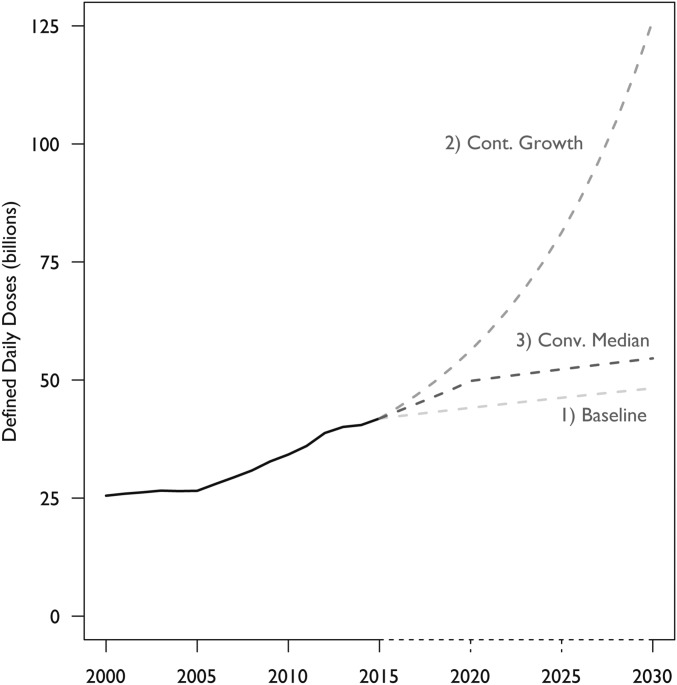
“It is estimated that in 2030 the global use of antibiotics will increase by 200% in comparison to 2015 if adequate policy measures are not taken 1 .”
Chen, Y., Xie, X., Ge, Q., He, X., Sun, Z., Li, Y., Guo, Y., Geng, C., Li, X., & Wang, C. (2024) · Journal of Global Health · doi:10.7189/jogh.14.04135 · Cited by 28
“Policymakers in different regions should find a balance among the risks of CDI, antibiotic resistance, and infectious disease treatments [32,33].”
BackgroundHidayatullah, I. M., Steven, S., Kusmayadi, A., Rahmatika, I., Reski, M., Boopathy, R., Alfatan, M. A., & Purba, P. W. G. (2025) · Current Pollution Reports · doi:10.1007/s40726-025-00369-3 · Cited by 28
“This amount is projected to escalate by up to 200% in 2030 [16].”
Kothari, D., Lee, W., Jung, E. S., Niu, K., Lee, C. H., & Kim, S. (2020) · Antibiotics · doi:10.3390/antibiotics9070386 · Cited by 25
Evaluation of the forum theatre approach for public engagement around antibiotic use in Myanmar
Swe, M. M. M., Hlaing, P. H., Phyo, A. P., Aung, H. H., Smithuis, F. M., Ashley, E. A., & Cheah, P. Y. (2020) · PLoS ONE · doi:10.1371/journal.pone.0235625 · Cited by 25
“Without intervention, it is projected that antibiotic consumption will increase 200% by 2030 compared to 2015 figures [1].”
BackgroundTreatment of COVID-19: implications for antimicrobial resistance in Africa.
Iwu, C. J., Jordan, P. J., Jaja, I. F., Iwu, C. D., & Wiysonge, C. S. (2020) · PubMed Central · doi:10.11604/pamj.supp.2020.35.23713 · Cited by 25
Francesco, A. D., Salvatore, D., Sakhria, S., Abbassi, M., Catelli, E., Lupini, C., Bessoussa, G., Yahia, S. B., & Chéhida, N. B. (2021) · Animals · doi:10.3390/ani11020377 · Cited by 28
“A recent study on the trend of antibiotic use from 2000 and 2015 in 76 countries [5] placed Tunisia in second place among the most consuming countries in 2015.”
BackgroundLiu, Y., Liu, Y., Liu, Z., Hill, J. P., Alowasheeir, A., Xu, Z., Xu, X., & Yamauchi, Y. (2021) · Journal of Materials Chemistry B · doi:10.1039/d1tb00091h · Cited by 25
Huang, Y., Zhu, G., Zou, K., Tian, F., Yadav, T. P., Xu, H. F., Yang, G., Li, H., & Qu, L. (2021) · Journal of Molecular Liquids · doi:10.1016/j.molliq.2021.116461 · Cited by 26
Cela-Dablanca, R., Nebot, C., Rodríguez-López, L., Fernández‐Calviño, D., Arias‐Estévez, M., Núñez‐Delgado, A., Fernández‐Sanjurjo, M. J., & Álvarez‐Rodríguez, E. (2021) · Processes · doi:10.3390/pr9071151 · Cited by 26
Godman, B., Haque, M., Kumar, S., Islam, S., Charan, J., Akter, F., Kurdi, A. B., Allocati, E., Bakar, M. A., Rahim, M. J., et al. (2021) · Current Medical Research and Opinion · doi:10.1080/03007995.2021.1946024 · Cited by 31
Antimicrobial Resistance in Africa—How to Relieve the Burden on Family Farmers
Ducrot, C., Hobeika, A., Lienhardt, C., Wieland, B., Dehays, C., Delabouglise, A., Bordier, M., Goutard, F. L., Patel, E. H., Figuié, M., et al. (2021) · Emerging infectious diseases · doi:10.3201/eid2710.210076 · Cited by 30
Singh, S. R., Teo, A. K. J., Prem, K., Ong, R. T., Ashley, E. A., van Doorn, H. R., Limmathurotsakul, D., Turner, P., & Hsu, L. Y. (2021) · Frontiers in Microbiology · doi:10.3389/fmicb.2021.695027 · Cited by 29
Vidović, J., Stojanović, D., Cagnardi, P., Kladar, N., Horvat, O., Cirkovic, I. B., Bijelić, K., Stojanac, N., & Kovačević, Z. (2022) · Antibiotics · doi:10.3390/antibiotics11010064 · Cited by 29
The influence of social and economic environment on health
Vidal, D. G., Oliveira, G., Pontes, M., Maia, R. L., & Ferraz, M. P. (2022) · Elsevier eBooks · doi:10.1016/b978-0-12-822794-7.00005-8 · Cited by 39
Chiemchaisri, W., Chiemchaisri, C., Hamjinda, N. S., Jeensalute, C., Buranapakdee, P., & Thamlikitkul, V. (2022) · Emerging contaminants · doi:10.1016/j.emcon.2022.07.002 · Cited by 25
Yang, L., Zhao, F., Yen, H., Feng, Q., Li, M., Wang, X., Tang, J., Bu, Q., & Chen, L. (2023) · Journal of Hazardous Materials · doi:10.1016/j.jhazmat.2023.133363 · Cited by 25
Zhang, L., Chen, H., Gao, S., Song, Y., Zhao, Y., Tang, W., & Cui, J. (2024) · The Science of The Total Environment · doi:10.1016/j.scitotenv.2024.170788 · Cited by 29
Quesne, W. J. F. L., Baker‐Austin, C., Verner–Jeffreys, D. W., Al-Sarawi, H. A., Balkhy, H. H., & Lyons, B. P. (2018) · Environment International · doi:10.1016/j.envint.2018.06.030 · Cited by 28
Antibiotics and Resistance Genes in Awash River Basin, Ethiopia
Adugna, A., Leng, Y., & Wang, J. (2019) · EcoHealth · doi:10.1007/s10393-019-01431-5 · Cited by 25
“2014), especially over the past decade, it has raised by 65% (Klein et al. 2018).”
BackgroundInfluentialHayat, K., Rosenthal, M., Zhu, S., Gillani, A. H., Chang, J., Bogale, A. A., Kabba, J. A., Yang, C., Jiang, M., Zhao, M., et al. (2019) · Expert Review of Anti-infective Therapy · doi:10.1080/14787210.2019.1647780 · Cited by 28
Woh, P. Y., Yeung, M. P. S., & Goggins, W. B. (2023) · Journal of Antimicrobial Chemotherapy · doi:10.1093/jac/dkad092 · Cited by 27
Extended-spectrum beta-lactamases in poultry in Africa: a systematic review
Ayinla, A. O., & Mateus, A. (2023) · Frontiers in Antibiotics · doi:10.3389/frabi.2023.1140750 · Cited by 33
“The rise in consumer demand for poultry products in low- and middle-income countries (LMICs), including African countries, and a transition to large-scale intensive production systems led to an increase in antibiotic use (ABU) in food-producing animals (Klein et al., 2018).”
BackgroundTetracycline and sulfadiazine toxicity in human liver cells Huh-7
Yao, X., Cheng, Z., Agathokleous, E., Wei, Y., Feng, X., Li, H., Zhang, T., Li, S., Dhawan, G., & Luo, X. (2024) · Environmental Pollution · doi:10.1016/j.envpol.2024.123454 · Cited by 27
Luo, X., Han, S., Wang, Y., Du, P., Li, X., & Thai, P. K. (2024) · Water Research · doi:10.1016/j.watres.2024.121335 · Cited by 25
Understanding the rapid spread of antimicrobial resistance genes mediated by IS 26
Tang, N., Wei, D., Zeng, Y., Zhang, G., Wang, C., Feng, J., & Song, Y. (2024) · mLife · doi:10.1002/mlf2.12114 · Cited by 26
“Consumption data for cephalosporins and carbapenems of the countries and regions involved in our study were collected from ResistanceMap (https:// resistancemap.cddep.org/AntibioticResistance.php), as previously described 28 .”
MethodThe research progress on the impact of antibiotics on the male reproductive system
Hou, L., Fu, Y., Zhao, C., Fan, L., Hu, H., & Yin, S. (2024) · Environment International · doi:10.1016/j.envint.2024.108670 · Cited by 30
Fungal Bioremediation of the β-Lactam Antibiotic Ampicillin under Laccase-Induced Conditions
Ghariani, B., Alessa, A. H., Atitallah, I. B., Louati, I., Alsaigh, A. A., Mechichi, T., & Zouari-Mechichi, H. (2024) · Antibiotics · doi:10.3390/antibiotics13050407 · Cited by 27
“In a 2015 study, despite its status as a low–middle-income country, Tunisia was found to have the highest antibiotic consumption rates, with 61% of consumers obtaining antibiotics directly from a pharmacist without a medical prescription [10].”
Background
Metadata
- Authors
- Klein, E. Y., Van Boeckel, T. P., Martinez, E. M., Pant, S., Gandra, S., Levin, S. A., Goossens, H., & Laxminarayan, R.
- Affiliations
- Center for Disease Dynamics, Economics & Policy (US)
- Institute of Integrative Biology, ETH Zürich, CH-8006 Zürich, Switzerland;
- Princeton University (US)
- University of Antwerp (BE)
- Corresponding author
- Klein, Eili Y.
- Levin, Simon A.
- ORCID
- Venue
- Proceedings of the National Academy of Sciences
- Publisher
- National Academy of Sciences
- Published
- 2018-03-26
- Volume
- 115
- Issue
- 15
- Pages
- E3463-E3470
- ISSN
- 0027-8424 (ISSN-L)
- 1091-6490
- PMC
- PMC5899442
- OpenAlex
- W2791781902
- Cited by
- 3,232
- References
- 43
- Citations by year
- 2026: 247 · 2025: 416 · 2024: 456 · 2023: 476 · 2022: 432 · 2021: 490 · 2020: 386 · 2019: 252 · 2018: 71
- FWCI
- 183.08
- Type
- journal article
- Language
- en
- Open access
- hybrid
- doi.org
- Licence
- Locations
- Proceedings of the National Academy of Sciences (publishedVersion, cc-by)
- Europe PMC (PubMed Central) (publishedVersion, cc-by)
- PubMed Central (publishedVersion, cc-by)
- PubMed (publishedVersion)
- IFPRI E-brary (International Food Policy Research Institute) (submittedVersion, other-oa)
- CGSPace A Repository of Agricultural Research Outputs (Consultative Group for International Agricultural Research) (submittedVersion, other-oa)
- International Food Policy Research Institute (International Food Policy Research Institute) (submittedVersion, other-oa)
- Repository for Publications and Research Data (ETH Zurich) (submittedVersion, cc-by)
- ETH Zürich Research Collection (cc-by)
- Funders
- Bill and Melinda Gates Foundation (OPP1112355)
- Princeton Environmental Institute, Princeton University (N/A)
- ETH Zurich's Center for Adaptation to a Changing Environment (N/A)
- HHS | Centers for Disease Control and Prevention (16IPA1609425, 16IPA1609424)
- Topics
- Health Sciences › Medicine › Infectious Diseases › Antibiotic Use and Resistance
- Health Sciences › Medicine › Microbiology (medical) › Antibiotic Resistance in Bacteria
- Physical Sciences › Environmental Science › Pollution › Pharmaceutical and Antibiotic Environmental Impacts
- Keywords
- antibiotic use, last-resort antibiotics, carbapenems, polymyxins, oxazolidinones, glycylcyclines, high-income countries, low- and middle-income countries, antibiotic resistance, consumption projections, antibiotic access
- MeSH terms
- Anti-Bacterial Agents, Bacterial Infections, Drug Resistance, Microbial, Economics, Health Services Accessibility, Humans
About these checks
Registry, retraction, Cites and statistics results are computed, not judged, with one exception: a printed reference that no index lists is read once by a model before it counts as a citation error. Claims are extracted by a model and kept only when their quote appears verbatim in the text; each cited source is then checked, with a model’s help, for whether it says what the claim relies on. Those verdicts can be wrong — read the claim’s quote and the cited source before relying on one.
Statistics and arithmetic are recomputed, not judged.
Confidence bands are shown only for fields calibrated on our annotated test set. None is calibrated yet, so no band is shown.
What counts as a claim ›How we measure confidence ›How we check this ›
Are you an author, or do you see a problem with this page? Request a review
Data sources
Bibliographic data: Semantic Scholar, OpenAlex, Crossref.
Contains information from the Semantic Scholar Academic Graph Datasets, made available under the ODC Attribution License (ODC-BY 1.0).
Semantic Scholar’s data is described in: Kinney, R., et al. (2023). The Semantic Scholar Open Data Platform. arXiv:2301.10140.
