

Global increase and geographic convergence in antibiotic consumption between 2000 and 2015
Open accessThe DOI matches its Crossref record; 43 of the 43 references it cites were found in a registry or an index.
Abstract
Significance: Antibiotic resistance, driven by antibiotic consumption, is a growing global health threat. Our report on antibiotic use in 76 countries over 16 years provides an up-to-date comprehensive assessment of global trends in antibiotic consumption. We find that the antibiotic consumption rate in low- and middle-income countries (LMICs) has been converging to (and in some countries surpassing) levels typically observed in high-income countries. However, inequities in drug access persist, as many LMICs continue to be burdened with high rates of infectious disease-related mortality and low rates of antibiotic consumption. Our findings emphasize the need for global surveillance of antibiotic consumption to support policies to reduce antibiotic consumption and resistance while providing access to these lifesaving drugs.
Overview
The claims and statistics of this paper haven’t been checked yet.
Free: it reads the open-access text and checks the first 5 claims that cite a source we can check. Create a free account to check every claim.
Integrity signals
Registry
Cites
Statistics
Figures
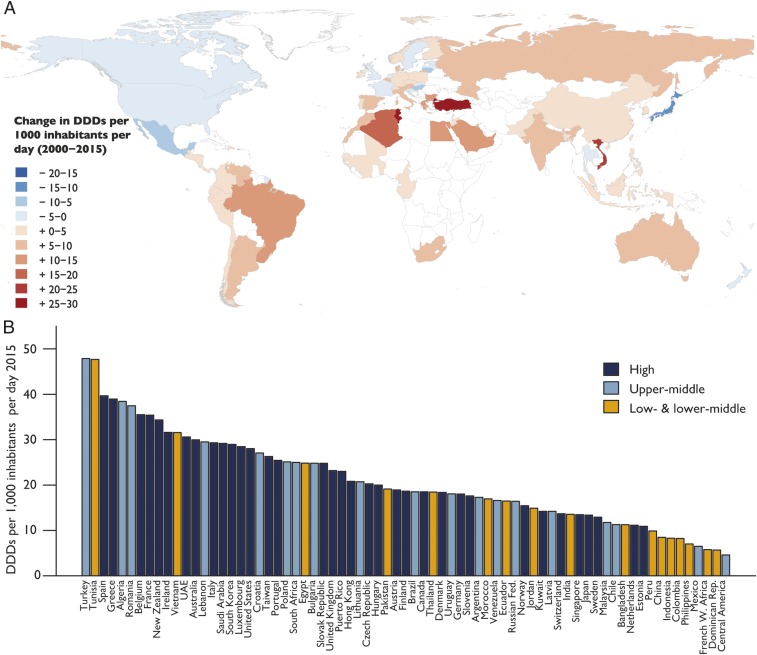
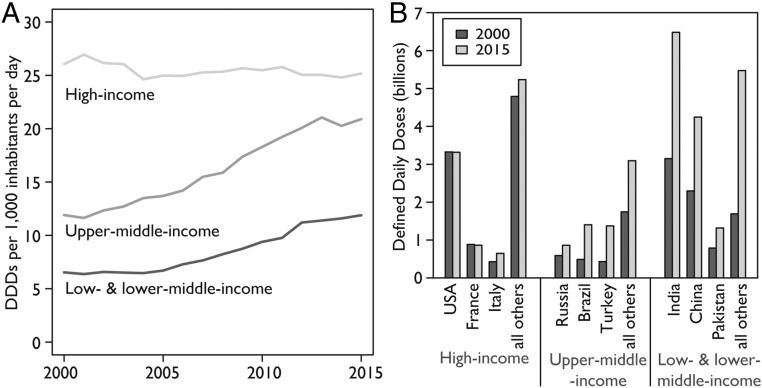
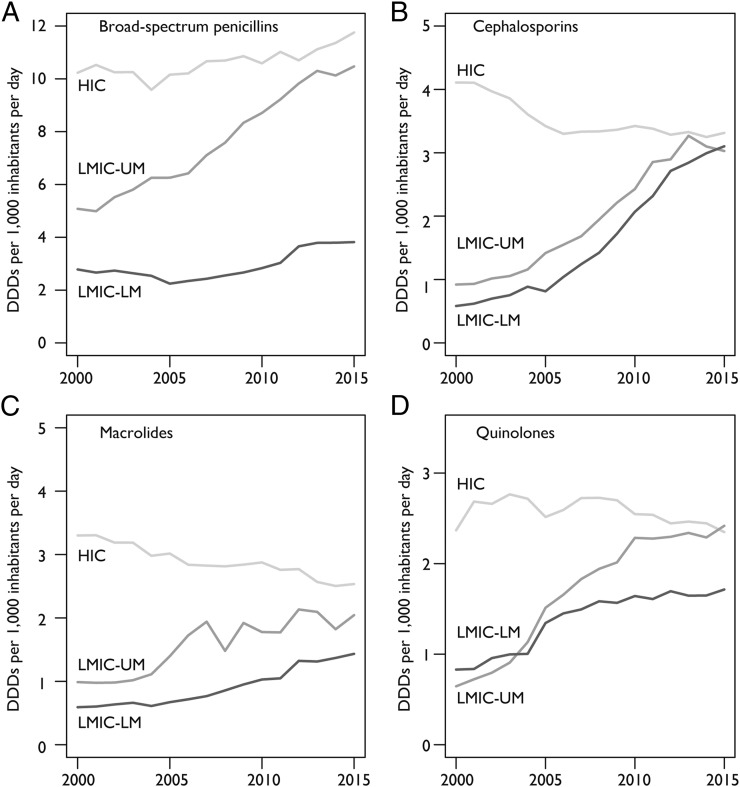
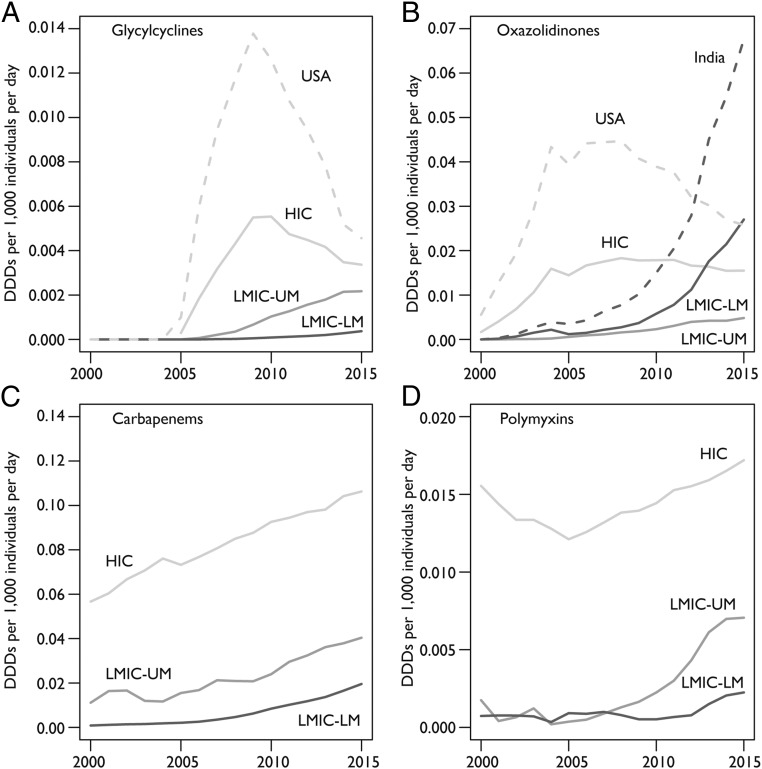
Verification
Claims the paper makes
The claims and statistics of this paper haven’t been checked yet.
Free: it reads the open-access text and checks the first 5 claims that cite a source we can check. Create a free account to check every claim.
Claims other papers make about this one
Each is checked against this paper’s own text: does it say what the citing paper says it does?
The cited source says what the claim attributes to it.
In the citing paper
“A study indicated that between 2000 and 2015, antibiotic consumption (expressed in defined daily doses [DDD]) increased by 65% worldwide, largely driven by LMICs.”
From Over-the-Counter Sale of Antibiotics in India: A Qualitative Study of Providers’ Perspectives across Two States (2021) · cites this paper as [7]
The cited source says what the claim attributes to it.
In the citing paper
“In India, it increased from 3.2 to 6.5 billion DDDs (103%) [7].”
From Over-the-Counter Sale of Antibiotics in India: A Qualitative Study of Providers’ Perspectives across Two States (2021) · cites this paper as [7]
Self-check
Percentages, sums and reported differences re-computed from the paper’s own numbers.
The self-check needs the paper’s full text.
Citations
Cites
Liu, Y.-Y., Wang, Y., Walsh, T. R., Yi, L.-X., Zhang, R., Spencer, J., Doi, Y., Tian, G., Dong, B., Huang, X., et al. (2016) · The Lancet Infectious Diseases · doi:10.1016/s1473-3099(15)00424-7 · Cited by 5,398
Antibiotic resistance-the need for global solutions
Laxminarayan, R., Duse, A., Wattal, C., Zaidi, A. K. M., Wertheim, H. F. L., Sumpradit, N., Vlieghe, E., Hara, G. L., Gould, I. M., Goossens, H., et al. (2013) · The Lancet Infectious Diseases · doi:10.1016/s1473-3099(13)70318-9 · Cited by 4,439
Self-citationTipping elements in the Earth’s climate system
Lenton, T. M., Held, H., Kriegler, E., Hall, J. W., Lucht, W., Rahmstorf, S., & Schellnhuber, H. J. (2008) · Proceedings of the National Academy of Sciences · doi:10.1073/pnas.0705414105 · Cited by 3,982 · cited 1×
“As with climate change, there may be an unknown tipping point (47), and this could herald a future without effective antibiotics.”
BackgroundExtended-Spectrum β-Lactamases: a Clinical Update
Paterson, D. L., & Bonomo, R. A. (2005) · Clinical Microbiology Reviews · doi:10.1128/cmr.18.4.657-686.2005 · Cited by 3,491
Outpatient antibiotic use in Europe and association with resistance: a cross-national database study
Goossens, H., Ferech, M., Vander Stichele, R., & Elseviers, M. (2005) · The Lancet · doi:10.1016/s0140-6736(05)17907-0 · Cited by 3,359 · cited 1×
“The association between antibiotic consumption and resistance is well documented across spatial and temporal scales at individual hospitals (5), nursing homes (6), primary care facilities (7), and communities (8), as well as across countries (9).”
BackgroundSelf-citationGlobal antibiotic consumption 2000 to 2010: an analysis of national pharmaceutical sales data
Van Boeckel, T. P., Gandra, S., Ashok, A., Caudron, Q., Grenfell, B. T., Levin, S. A., & Laxminarayan, R. (2014) · The Lancet Infectious Diseases · doi:10.1016/s1473-3099(14)70780-7 · Cited by 2,280 · cited 1×
“The largest prior study reported that antibiotic consumption increased 36% between 2000 and 2010 in 71 countries (15).”
BackgroundSelf-citationCostelloe, C., Metcalfe, C., Lovering, A., Mant, D., & Hay, A. D. (2010) · BMJ · doi:10.1136/bmj.c2096 · Cited by 1,981 · cited 1×
“The association between antibiotic consumption and resistance is well documented across spatial and temporal scales at individual hospitals (5), nursing homes (6), primary care facilities (7), and communities (8), as well as across countries (9).”
BackgroundTesting for Serial Correlation in Linear Panel-data Models
Drukker, D. M. (2003) · The Stata Journal: Promoting communications on statistics and Stata · doi:10.1177/1536867x0300300206 · Cited by 1,569 · cited 1×
“Serial correlation was assessed using the Wooldridge test (19).”
MethodAccess to effective antimicrobials: a worldwide challenge
Laxminarayan, R., Matsoso, P., Pant, S., Brower, C., Røttingen, J.-A., Klugman, K., & Davies, S. (2016) · The Lancet · doi:10.1016/s0140-6736(15)00474-2 · Cited by 1,465
Self-citationDengue, Urbanization and Globalization: The Unholy Trinity of the 21st Century
Gubler, D. J. (2011) · Tropical Medicine and Health · doi:10.2149/tmh.2011-s05 · Cited by 1,098
Research works printed but not linked: 1
- 21. Institut de veille sanitaire (InVS) et Agence nationale de sécurité du médicament et des produits de santé (ANSM) (2015) Consommation d'antibiotiques et résistance aux antibiotiques en France : Nécessité d'une mobilisation déterminée et durable. Bilan des Données de Surveillance. [Antibiotic consumption and antibiotic resistance in France: The need for a determined and sustainable mobilization. Review of Surveil- lance Data] (Institut de veille sanitaire, Saint-Maurice, France), pp 1-16. French.
Cited by
Items 601–700 of 1,009
Carbon nanomaterials for co-removal of antibiotics and heavy metals from water systems: An overview
Jiao, H., Cui, M., Yuan, S., Dong, B., & Xu, Z. (2025) · Journal of Hazardous Materials · doi:10.1016/j.jhazmat.2025.137566 · Cited by 47
Saleem, Z., Moore, C. E., Kalungia, A. C., Schellack, N., Ogunleye, O. O., Chigome, A., Chowdhury, K., Kitutu, F. E., Massele, A. Y., Ramdas, N., et al. (2025) · JAC-Antimicrobial Resistance · doi:10.1093/jacamr/dlaf033 · Cited by 73
Global perspectives on residual antibiotics: environmental challenges and trends
Thakur, R., Singh, A., Dhanwar, R. S., Kadam, S., Waghmare, U., Lodha, T. D., Lopes, B. S., & Prakash, O. (2025) · Discover Sustainability · doi:10.1007/s43621-025-01048-5 · Cited by 51
“From 2000 to 2015, the amount of antibiotics used has increased by 65% and by 2030, there is a projected 200% rise in the use of antibiotics, and they have been detected as micro-contaminants in the past 2 decades from different environmental niches [2, 3].”
Connelly, S., Fanelli, B. C., Hasan, N. A., Colwell, R. R., & Kaleko, M. (2019) · Frontiers in Microbiology · doi:10.3389/fmicb.2019.00101 · Cited by 50
Bank, W. (2019) · doi:10.1596/32552 · Cited by 6
Salah, D. M. M. A., Laffite, A., & Poté, J. W. (2019) · Scientific Reports · doi:10.1038/s41598-019-51421-4 · Cited by 49
Zhao, F., Chen, L., Yen, H., Li, G., Sun, L., & Yang, L. (2019) · Environment International · doi:10.1016/j.envint.2019.105327 · Cited by 44
Pan, G., Sun, X., & Sun, Z. (2020) · Environmental Science and Pollution Research · doi:10.1007/s11356-019-07358-2 · Cited by 45
“The consumption of antibiotics shows a global rise tendency from 2000 to 2015 (Klein et al. 2018).”
BackgroundWang, G., Deng, D., Hu, C., Lou, L., Luo, L., He, J., Tian, D., Xiao, Y., He, Y., Zhang, S., et al. (2020) · International Biodeterioration & Biodegradation · doi:10.1016/j.ibiod.2020.104920 · Cited by 45
Factors favouring the evolution of multidrug resistance in bacteria
Jacopin, E., Lehtinen, S., Débarre, F., & Blanquart, F. (2020) · Journal of The Royal Society Interface · doi:10.1098/rsif.2020.0105 · Cited by 55
Limato, R., Nelwan, E. J., Mudia, M., de Brabander, J., Guterres, H., Enty, E., Mauleti, I. Y., Mayasari, M., Firmansyah, I., Hizrani, M., et al. (2021) · JAC-Antimicrobial Resistance · doi:10.1093/jacamr/dlab047 · Cited by 63
Ahmad, A., Priyadarshini, M., Das, S., & Ghangrekar, M. M. (2021) · Separation Science and Technology · doi:10.1080/01496395.2021.1972011 · Cited by 47
“can lead to the growth of antibiotic resistant bacteria in the environment, which can reduce the therapeutic potency of antibiotics employed against human and animal pathogens.([58,59]) Additionally, the presence of antibiotics in the environment affects the growth of cyanobacteria and green algae, as well as leads to…”
BackgroundZhang, D., Peng, Y., Chan, C.-L., On, H., Wai, H. K.-F., Shekhawat, S. S., Gupta, A. B., Varshney, A. K., Chuanchuen, R., Zhou, X., et al. (2021) · Frontiers in Microbiology · doi:10.3389/fmicb.2021.712843 · Cited by 53
Oyedeji, A. O., Msagati, T. A. M., Williams, A. B., & Benson, N. U. (2021) · Heliyon · doi:10.1016/j.heliyon.2021.e08469 · Cited by 47
Balu, S., Chuaicham, C., Balakumar, V., Rajendran, S., Sasaki, K., Sekar, K., & Maruthapillai, A. (2022) · Chemosphere · doi:10.1016/j.chemosphere.2022.134311 · Cited by 47
Nampoothiri, V., Sudhir, A. S., Joseph, M. V., Mohamed, Z., Menon, V., Charani, E., & Singh, S. (2021) · Antibiotics · doi:10.3390/antibiotics10020220 · Cited by 44
“A study conducted on the use of antibiotics in 76 countries over 16 years reported that antibiotic consumption rates in low- and middle-income countries (LMICs) are on par to rates observed in highincome countries [2].”
BackgroundHerb–drug interactions: a mechanistic approach
Sharma, A. K., Kapoor, V. K., & Kaur, G. (2020) · Drug and Chemical Toxicology · doi:10.1080/01480545.2020.1738454 · Cited by 50
Ecological and Evolutionary responses to Antibiotic Treatment in the Human Gut Microbiota
Pennycook, J., & Scanlan, P. D. (2021) · FEMS Microbiology Reviews · doi:10.1093/femsre/fuab018 · Cited by 49
Mapipa, Q., Digban, T. O., Nnolim, N. E., & Nwodo, U. U. (2021) · Scientific Reports · doi:10.1038/s41598-021-91280-6 · Cited by 55
Dijk, J. V., Dekker, S. C., Kools, S. A. E., & van Wezel, A. P. (2023) · Water Research · doi:10.1016/j.watres.2023.120157 · Cited by 50
Wang, Z., Cai, M., Du, P., & Li, X. (2023) · Water Research · doi:10.1016/j.watres.2023.121090 · Cited by 46
The Fight Against Antimicrobial Resistance Is Confounded by a Global Increase in Antibiotic Usage
Blaskovich, M. A. T. (2018) · ACS Infectious Diseases · doi:10.1021/acsinfecdis.8b00109 · Cited by 44
Antimicrobial Consumption and Susceptibility of Neisseria gonorrhoeae: A Global Ecological Analysis
Kenyon, C. R., Buyze, J., & Wi, T. (2018) · Frontiers in Medicine · doi:10.3389/fmed.2018.00329 · Cited by 49
“There has been a large increase in antimicrobial consumption in low and middle-income countries over the last 15 years (49).”
BackgroundResultInfluentialLiu, K., Han, J., Li, S., Liu, L., Lin, W., & Luo, J. (2019) · Ecotoxicology and Environmental Safety · doi:10.1016/j.ecoenv.2019.01.109 · Cited by 44
Britto, C., Dyson, Z. A., Mathias, S., Bosco, A., Dougan, G., Jose, S., Nagaraj, S. V., Holt, K. E., & Pollard, A. J. (2019) · Journal of Antimicrobial Chemotherapy · doi:10.1093/jac/dkz435 · Cited by 43
Rossi, M.-A., Martínez, V. R., Hinchliffe, P., Mojica, M. F., Castillo, V., Moreno, D. M., Smith, R., Spellberg, B. J., Drusano, G. L., Banchio, C., et al. (2021) · Chemical Science · doi:10.1039/d0sc05172a · Cited by 44
Ott, A., O’Donnell, G., Trần, N. H., Haniffah, M. R. M., Su, J., Zealand, A. M., Gin, K. Y., Goodson, M. L., Zhu, Y., & Graham, D. W. (2021) · Environmental Science & Technology · doi:10.1021/acs.est.1c00939 · Cited by 47
Guo, Z., Boeing, W. J., Xu, Y., Borgomeo, E., Liu, D., & Zhu, Y. (2022) · Water Research · doi:10.1016/j.watres.2022.119466 · Cited by 45
Siri, Y., Precha, N., Sirikanchana, K., Haramoto, E., & Makkaew, P. (2023) · The Science of The Total Environment · doi:10.1016/j.scitotenv.2023.165229 · Cited by 46
Li, W., Wu, Z., Zhao, J., Jiang, M., Yuan, L., Guo, Y., Li, S., Hu, L., Xie, X., Zhang, Y., et al. (2023) · International Journal of Biological Macromolecules · doi:10.1016/j.ijbiomac.2023.125652 · Cited by 46
Mukherjee, D., Behera, J., Mondal, S., Pal, S. C., Volkmer, D., & Das, M. C. (2023) · Crystal Growth & Design · doi:10.1021/acs.cgd.3c00892 · Cited by 43
Removal of Antibiotics by Biochars: A Critical Review
Șen, A. U., Esteves, B., de Aguiar, T. R., & Pereira, H. (2023) · Applied Sciences · doi:10.3390/app132111963 · Cited by 58
“Reports have indicated that global antibiotic consumption increased by 65% between 2000 and 2015 [13] and by 46% between 2000 and 2018 [14].”
BackgroundAntibiotic persistence and its impact on the environment
Gangar, T., & Patra, S. (2023) · 3 Biotech · doi:10.1007/s13205-023-03806-6 · Cited by 52
“From the year 2000 to 2015, the cumulative increase is a whopping 77% consumption rate, which is quite alarming (Klein et al. 2018a).”
BackgroundInfluentialLochenie, C., Duncan, S., Zhou, Y., Fingerhut, L., Kiang, A., Benson, S., Jiang, G., Liu, X., Mills, B., & Vendrell, M. (2024) · Advanced Materials · doi:10.1002/adma.202404107 · Cited by 46
Dong, N., Li, Y., Zhao, J., Ma, H., Wang, J., Liang, B., Du, X., Wu, F., Xia, S., Yang, X., et al. (2020) · BMC Infectious Diseases · doi:10.1186/s12879-020-05203-3 · Cited by 49
Qiu, Q., Wang, J., Yan, Y., Roy, B., Chen, Y., Shang, X., Dou, T., & Han, L. (2020) · Frontiers in Molecular Biosciences · doi:10.3389/fmolb.2020.590018 · Cited by 48
“Antibiotic resistance in pathogens is a global health crisis (Klein et al., 2018).”
BackgroundAntidrug resistance in the Indian ambient waters of Ahmedabad during the COVID-19 pandemic
Kumar, M., Dhangar, K., Thakur, A., Ram, B., Chaminda, T., Sharma, P., Kumar, A., Raval, N. P., Srivastava, V., Rinklebe, J., et al. (2021) · Journal of Hazardous Materials · doi:10.1016/j.jhazmat.2021.126125 · Cited by 40
Barreiro, A., Cela-Dablanca, R., Nebot, C., Rodríguez-López, L., Santás-Miguel, V., Arias‐Estévez, M., Fernández‐Sanjurjo, M. J., Núñez‐Delgado, A., & Álvarez‐Rodríguez, E. (2022) · Spanish Journal of Soil Science · doi:10.3389/sjss.2022.10741 · Cited by 46
“…years 2000–2015, 42.3 billion DDD were consumed by humans and the antibiotics consumption rate increased 39%, being higher in high-income countries (Klein et al., 2018), with amoxicillin and amoxicillin/clavulanic acid being the most frequently consumed antibiotics in most countries (Aldeyab et…”
BackgroundInfluentialFeng, L., Zhang, K., Shi, Z.-L., Zhu, F., Yuan, X.-Z., Zong, W.-S., & Song, C. (2022) · Ecotoxicology and Environmental Safety · doi:10.1016/j.ecoenv.2022.114218 · Cited by 44
Khan, F. U., Khan, F. U., Hayat, K., Chang, J., Saeed, A., Khan, Z., Ashraf, M., Malik, U. R., Atif, N., Ji, W., et al. (2020) · Expert Review of Anti-infective Therapy · doi:10.1080/14787210.2020.1769477 · Cited by 53
Ghose, A., & Mitra, S. (2022) · Environmental Pollution · doi:10.1016/j.envpol.2022.119285 · Cited by 46
Fu, M., Gong, Z., Zhu, Y., Li, C., Zhou, Y., Hu, L. T., Li, H., Wushouer, H., Guan, X., & Shi, L. (2022) · Clinical Microbiology and Infection · doi:10.1016/j.cmi.2022.11.015 · Cited by 42
Rahman, S., Kesselheim, A. S., & Hollis, A. (2023) · The Journal of Antibiotics · doi:10.1038/s41429-023-00601-6 · Cited by 54
Jones, D., LaMartina, E. L., Lewis, J. R., Dahl, A. J., Nadig, N., Szabó, A., Newton, R. J., & Skwor, T. (2023) · International Journal of Antimicrobial Agents · doi:10.1016/j.ijantimicag.2023.106848 · Cited by 52
Singh, A., Tanwar, M., Singh, T. P., Sharma, S., & Sharma, P. K. (2024) · International Journal of Biological Macromolecules · doi:10.1016/j.ijbiomac.2024.135253 · Cited by 53
Álvarez-Esmorís, C., Conde-Cid, M., Fernández‐Calviño, D., Fernández‐Sanjurjo, M. J., Núñez‐Delgado, A., Álvarez-Rodríguez, E., & Arias‐Estévez, M. (2020) · Environmental Research · doi:10.1016/j.envres.2020.109565 · Cited by 42
Prevalence of antibiotic resistance in the tropical rivers of Sri Lanka and India
Kumar, M., Sulfikar, S., Chaminda, T., Patel, A. K., Sewwandi, H., Mazumder, P., Joshi, M. N., & Honda, R. (2020) · Environmental Research · doi:10.1016/j.envres.2020.109765 · Cited by 42
Yuan, Q., Zhang, H., Qin, C., Zhang, H., Wang, D., Zhang, Q., Zhang, D., & Zhao, J. (2022) · The Science of The Total Environment · doi:10.1016/j.scitotenv.2022.160316 · Cited by 42
Zhao, F., Yang, L., Tang, J., Fang, L., Yu, X., Li, M., & Chen, L. (2023) · The Science of The Total Environment · doi:10.1016/j.scitotenv.2023.161493 · Cited by 46
Hicks, J. P., Latham, S. M., Huque, R., Das, M., Newell, J., Abdullah, S. M., Azdi, Z. A., Jahan, I., Rassi, C., Hamade, P., et al. (2021) · BMC Public Health · doi:10.1186/s12889-021-10457-w · Cited by 46
Samraj, J. J., Rajamani, M., Ashokkumar, M., & Neppolian, B. (2025) · Journal of Cleaner Production · doi:10.1016/j.jclepro.2025.144846 · Cited by 48
Widespread illegal sales of antibiotics in Chinese pharmacies – a nationwide cross-sectional study
Chen, J., Wang, Y., Chen, X., & Hesketh, T. M. (2020) · Antimicrobial Resistance and Infection Control · doi:10.1186/s13756-019-0655-7 · Cited by 45
“Misuse of antibiotics, both in medicine and agriculture, is well-established as the major driver of AMR [4].”
BackgroundInfluentialMallah, N., Badro, D. A., Figueiras, A., & Takkouche, B. (2020) · PLoS ONE · doi:10.1371/journal.pone.0232464 · Cited by 54
“[2] The majority of these antibiotics are consumed outside hospitals, and self-medication with antibiotics is common practice worldwide, except in northern Europe and North America where it is strictly regulated.”
BackgroundChaturvedi, P., Chaurasia, D., Pandey, A., & Gupta, P. (2020) · Environmental Pollution · doi:10.1016/j.envpol.2020.115502 · Cited by 50
A review on antibiotic resistance and way of combating antimicrobial resistance
Begum, S., Begum, T., Rahman, N., & Khan, R. A. (2021) · GSC Biological and Pharmaceutical Sciences · doi:10.30574/gscbps.2021.14.2.0037 · Cited by 60
Zhang, Z., Duan, Y., Zhang, Z.-J., Tu, Y.-J., Luo, P.-C., Gao, J., Dai, C., & Zhou, L. (2021) · The Science of The Total Environment · doi:10.1016/j.scitotenv.2021.150258 · Cited by 41
Xu, Z., Wu, X., Zhang, J., Cheng, P., Xu, Z., Sun, W., Zhong, Y., Wang, Y., Yu, G., & Liu, H. (2022) · Environmental Pollution · doi:10.1016/j.envpol.2022.120845 · Cited by 45
The economics of antibiotic resistance: a claim for personalised treatments
Antoñanzas, F., & Goossens, H. (2018) · The European Journal of Health Economics · doi:10.1007/s10198-018-1021-z · Cited by 44
Self-citationWang, X., Xuan, Z., Storella, T. H., & Zhou, X. (2020) · Social Science & Medicine · doi:10.1016/j.socscimed.2020.113035 · Cited by 40
Queen, J., Zhang, J., & Sears, C. L. (2020) · Gut Microbes · doi:10.1080/19490976.2019.1706425 · Cited by 52
“8 billion worldwide).(2) In the United States, 270 million antibiotic prescriptions are generated annually,(3) with more prescriptions given to older adults >65 years of age as compared to children and adolescents.”
BackgroundRippon, M. G., Rogers, A. A., & Ousey, K. J. (2021) · Journal of Wound Care · doi:10.12968/jowc.2021.30.4.284 · Cited by 47
Ecological life strategies of microbes in response to antibiotics as a driving factor in soils
Sharma, U., Rawat, D., Mukherjee, P., Farooqi, F., Mishra, V., & Sharma, R. S. (2022) · The Science of The Total Environment · doi:10.1016/j.scitotenv.2022.158791 · Cited by 40
Wang, L., Chen, H., Zhang, Y., Tian, Y., Hu, X., Wu, J., Li, X., Jia, H., Wang, H., Yu, C., et al. (2025) · The Lancet Global Health · doi:10.1016/s2214-109x(25)00308-0 · Cited by 56
Optimizing antibiotic prescribing: collective approaches to managing a common-pool resource
Tarrant, C., Colman, A. M., Chattoe‐Brown, E., Jenkins, D. R., Mehtar, S., Perera, N., & Krockow, E. M. (2019) · Clinical Microbiology and Infection · doi:10.1016/j.cmi.2019.03.008 · Cited by 43
Evangelopoulos, D., Prosser, G. A., Rodgers, A., Dagg, B. M., Khatri, B. L., Ho, M. M., Gutierrez, M. G., Cortes, T., & de Carvalho, L. P. S. (2019) · Nature Communications · doi:10.1038/s41467-019-12074-z · Cited by 44
The internationalization of human microbiome research
Porras, A. M., & Brito, I. (2019) · Current Opinion in Microbiology · doi:10.1016/j.mib.2019.09.012 · Cited by 46
Song, Y., Han, Z., Song, K., & Zhen, T.-M. (2020) · Frontiers in Pharmacology · doi:10.3389/fphar.2020.00491 · Cited by 40
Evolved to vary: genome and epigenome variation in the human pathogenHelicobacter pylori
Ailloud, F., Estibariz, I., & Suerbaum, S. (2020) · FEMS Microbiology Reviews · doi:10.1093/femsre/fuaa042 · Cited by 49
Gonciarz, R. L., & Renslo, A. R. (2021) · Current Opinion in Chemical Biology · doi:10.1016/j.cbpa.2021.01.015 · Cited by 42
Liang, C., Zhang, X., Zhou, L., Meng, G., Zhong, L., & Peng, P. (2021) · BMC Infectious Diseases · doi:10.1186/s12879-021-06140-5 · Cited by 46
VanOeffelen, M., Nguyen, M., Aytan-Aktug, D., Brettin, T. S., Dietrich, E. M., Kenyon, R. W., Machi, D., Mao, C., Olson, R., Pusch, G. D., et al. (2021) · Briefings in Bioinformatics · doi:10.1093/bib/bbab313 · Cited by 37
Antibiotic Resistome and its Driving Factors in an Urban River in Northern China
Wu, Y., Qi, D., Hong, Y., Ren, J., Hu, J., Lyu, Y., Yang, S., & Sun, W. (2022) · The Science of The Total Environment · doi:10.1016/j.scitotenv.2022.156536 · Cited by 42
Alshaikh, F. S., Sindi, O. N., Godman, B., Seaton, R. A., & Kurdi, A. B. (2022) · medRxiv · doi:10.1101/2022.03.02.22271779 · Cited by 40
Graphene Oxide Quantum Dot‐Based Functional Nanomaterials for Effective Antimicrobial Applications
Nichols, F., & Chen, S. W. (2020) · The Chemical Record · doi:10.1002/tcr.202000090 · Cited by 41
Delineating the impact of COVID-19 on antimicrobial resistance: An Indian perspective
Seethalakshmi, P. S., Charity, O. J., Giakoumis, T., Kiran, G. S., Sriskandan, S., Voulvoulis, N., & Selvin, J. (2021) · The Science of The Total Environment · doi:10.1016/j.scitotenv.2021.151702 · Cited by 60
Törümküney, D., Kundu, S., Vu, G. V., Nguyen, H. A., Pham, H. V., Kamble, P., Lan, N. T. H., & Keles, N. (2022) · Journal of Antimicrobial Chemotherapy · doi:10.1093/jac/dkac214 · Cited by 59
Cephalosporin C biosynthesis and fermentation in Acremonium chrysogenum
Liu, L., Chen, Z., Liu, W., Ke, X., Tian, X., & Chu, J. (2022) · Applied Microbiology and Biotechnology · doi:10.1007/s00253-022-12181-w · Cited by 43
“The global use of antibiotics increased by as much as 65% between 2000 and 2015 (Klein et al. 2018).”
BackgroundBjerke, L. (2022) · Social Science & Medicine · doi:10.1016/j.socscimed.2022.115386 · Cited by 50
“Access to antibiotics is a major global problem, despite the considerable rise in global consumption of antibiotics over the last decades (Klein et al., 2018) and the fact that the majority of antibiotics are off-patent generics.”
BackgroundSroor, F. M., Mahrous, K. F., El‐Kader, H. A. M. A., Othman, A. M., & Ibrahim, N. S. (2023) · Scientific Reports · doi:10.1038/s41598-023-44753-9 · Cited by 42
Zhang, G., Zhang, C., Liu, J., Zhang, Y., & Fu, W. (2024) · Journal of Environmental Management · doi:10.1016/j.jenvman.2024.120746 · Cited by 40
Pastor-López, E. J., Casas, M. E., Hellman, D., Müller, J. A., & Matamoros, V. (2024) · Water Research · doi:10.1016/j.watres.2024.122038 · Cited by 47
“…AMR-related contaminants in many surface waters are likely to increase due to the growing consumption of ABs in food animal production and human medicine (Klein et al., 2018), coupled with higher fractions of wastewater (treated and untreated) in rivers as a consequence of more frequent droughts.”
The Current State of Antimicrobial Stewardship: Challenges, Successes, and Future Directions
Emberger, J., Tassone, D., Stevens, M., & Markley, J. D. (2018) · Current Infectious Disease Reports · doi:10.1007/s11908-018-0637-6 · Cited by 43
Nanoantibiotics: Recent Developments and Future Prospects
Ovais, M., Zia, N., Khalil, A. T., Ayaz, M., Khalil, A. B., & Ahmad, I. (2019) · Frontiers in clinical drug research. Anti-infectives/Frontiers in clinical drug research. Anti infectives · doi:10.2174/9781681086378119050006 · Cited by 42
Antibiotic Use by Small-Scale Farmers for Freshwater Aquaculture in the Upper Mekong Delta, Vietnam
Ström, G., Björklund, H., Barnes, A. C., Đa, C. T., Nhi, N. H. Y., Lan, T. T., Magnusson, U., Haldén, A. N., & Boqvist, S. (2019) · Journal of Aquatic Animal Health · doi:10.1002/aah.10084 · Cited by 39
Janssen, A. B., Bartholomew, T. L., Marciszewska, N. P., Bonten, M. J. M., Willems, R. J. L., Bengoechea, J. A., & van Schaik, W. (2020) · mSphere · doi:10.1128/msphere.00143-20 · Cited by 42
Moles, S., Mosteo, R., Gómez, J., Szpunar, J., Gozzo, S., Castillo, J. R., & Ormad, M. P. (2020) · Water · doi:10.3390/w12051453 · Cited by 46
“The problem of the presence of pharmaceutical compounds in wastewater has recently become a matter for concern, not only in terms of human health, but also for the preservation of the environment [1].”
BackgroundMöhlmann, T. W. R., Vogels, C. B. F., Göertz, G. P., Pijlman, G. P., ter Braak, C. J. F., Beest, D. E. T., Hendriks, M., Nijhuis, E. H., Warris, S., Drolet, B. S., et al. (2020) · Microbial Ecology · doi:10.1007/s00248-020-01517-6 · Cited by 42
Tang, J., Fang, J., Tam, N. F. Y., Yang, Y., Dai, Y., Zhang, J., & Shi, Y. (2021) · Environmental Science & Technology · doi:10.1021/acs.est.0c08248 · Cited by 39
Zhang, Y., Zhang, M., Ye, C., Feng, M., Wan, K., Lin, W., Sharma, V. K., & Yu, X. (2021) · The Science of The Total Environment · doi:10.1016/j.scitotenv.2021.147492 · Cited by 39
Starling, M. C. V. M., de Mendonça-Neto, R. P., Pires, G. F. F., Vilela, P. B., & Amorim, C. C. (2021) · The Science of The Total Environment · doi:10.1016/j.scitotenv.2021.147448 · Cited by 41
Chatwin, C. L., Hamrick, J. C., Trout, R. E. L., Myers, C. L., Cusick, S. M., Weiss, W. J., Pulse, M., Xerri, L., Burns, C. J., Moeck, G., et al. (2021) · Antimicrobial Agents and Chemotherapy · doi:10.1128/aac.00552-21 · Cited by 40
“58 Indeed, β-lactams are the most commonly prescribed antibiotics, representing over 60% 59 of prescriptions written globally, with the cephalosporin class representing nearly 50% of 60 those prescriptions.(1,2) However, the continued expansion of resistance mechanisms in 61 Enterobacterales is compromising the effica…”
BackgroundSong, X., Jo, C., Han, L., & Zhou, M. (2021) · Current Opinion in Electrochemistry · doi:10.1016/j.coelec.2021.100833 · Cited by 44
Thakali, O., Malla, B., Tandukar, S., Sthapit, N., Raya, S., Furukawa, T., Sei, K., Sherchand, J. B., & Haramoto, E. (2021) · Water · doi:10.3390/w13192733 · Cited by 39
Van, D.-A., Ngo, T. H., Huynh, T. H., Nakada, N., Ballesteros, F., & Tanaka, H. (2021) · Environmental Monitoring and Assessment · doi:10.1007/s10661-021-09622-w · Cited by 44
“In 2015, among East and Southeast Asian countries, Vietnam ranked second after Mongolia in terms of the total human antibiotic consumption rates expressed as defined daily dose per 1000 inhabitants per day (Klein et al., 2018; WHO, 2018).”
BackgroundLyu, Y., Huang, T., Liu, W., & Sun, W. (2022) · Journal of environmental chemical engineering · doi:10.1016/j.jece.2022.108086 · Cited by 39
Fuller, W. L., Aboderin, A. O., Yahaya, A. A., Adeyemo, A. T., Gahimbare, L., Kapona, O., Omotayo, H., & Bassoum, O. (2022) · Frontiers in Antibiotics · doi:10.3389/frabi.2022.1047565 · Cited by 48
“Global antibiotic consumption increased markedly by 65% from 2000 to 2015, with LMICs contributing the largest proportion (Klein et al., 2017).”
BackgroundWang, B., Song, L., Li, W., Hou, L., Li, J., Xu, X., & Sheng, G. (2022) · Environmental Pollution · doi:10.1016/j.envpol.2022.120618 · Cited by 38
Zhou, J., Wu, H., Shi, L., Wang, X., Shen, Y., Tian, S., & Hou, L.-A. (2022) · Journal of Hazardous Materials · doi:10.1016/j.jhazmat.2022.130705 · Cited by 43
Felis, E., Sochacki, A., Bajkacz, S., Łuczkiewicz, A., Jóźwiakowski, K., Garcı́a, J., & Vymazal, J. (2023) · The Science of The Total Environment · doi:10.1016/j.scitotenv.2023.169195 · Cited by 39
Hijazi, K., Joshi, C., & Gould, I. M. (2019) · Expert Review of Anti-infective Therapy · doi:10.1080/14787210.2019.1640602 · Cited by 54
Metadata
- Authors
- Klein, E. Y., Van Boeckel, T. P., Martinez, E. M., Pant, S., Gandra, S., Levin, S. A., Goossens, H., & Laxminarayan, R.
- Affiliations
- Center for Disease Dynamics, Economics & Policy (US)
- Institute of Integrative Biology, ETH Zürich, CH-8006 Zürich, Switzerland;
- Princeton University (US)
- University of Antwerp (BE)
- Corresponding author
- Klein, Eili Y.
- Levin, Simon A.
- ORCID
- Venue
- Proceedings of the National Academy of Sciences
- Publisher
- National Academy of Sciences
- Published
- 2018-03-26
- Volume
- 115
- Issue
- 15
- Pages
- E3463-E3470
- ISSN
- 0027-8424 (ISSN-L)
- 1091-6490
- PMC
- PMC5899442
- OpenAlex
- W2791781902
- Cited by
- 3,232
- References
- 43
- Citations by year
- 2026: 247 · 2025: 416 · 2024: 456 · 2023: 476 · 2022: 432 · 2021: 490 · 2020: 386 · 2019: 252 · 2018: 71
- FWCI
- 183.08
- Type
- journal article
- Language
- en
- Open access
- hybrid
- doi.org
- Licence
- Locations
- Proceedings of the National Academy of Sciences (publishedVersion, cc-by)
- Europe PMC (PubMed Central) (publishedVersion, cc-by)
- PubMed Central (publishedVersion, cc-by)
- PubMed (publishedVersion)
- IFPRI E-brary (International Food Policy Research Institute) (submittedVersion, other-oa)
- CGSPace A Repository of Agricultural Research Outputs (Consultative Group for International Agricultural Research) (submittedVersion, other-oa)
- International Food Policy Research Institute (International Food Policy Research Institute) (submittedVersion, other-oa)
- Repository for Publications and Research Data (ETH Zurich) (submittedVersion, cc-by)
- ETH Zürich Research Collection (cc-by)
- Funders
- Bill and Melinda Gates Foundation (OPP1112355)
- Princeton Environmental Institute, Princeton University (N/A)
- ETH Zurich's Center for Adaptation to a Changing Environment (N/A)
- HHS | Centers for Disease Control and Prevention (16IPA1609425, 16IPA1609424)
- Topics
- Health Sciences › Medicine › Infectious Diseases › Antibiotic Use and Resistance
- Health Sciences › Medicine › Microbiology (medical) › Antibiotic Resistance in Bacteria
- Physical Sciences › Environmental Science › Pollution › Pharmaceutical and Antibiotic Environmental Impacts
- Keywords
- antibiotic use, last-resort antibiotics, carbapenems, polymyxins, oxazolidinones, glycylcyclines, high-income countries, low- and middle-income countries, antibiotic resistance, consumption projections, antibiotic access
- MeSH terms
- Anti-Bacterial Agents, Bacterial Infections, Drug Resistance, Microbial, Economics, Health Services Accessibility, Humans
About these checks
Registry, retraction, Cites and statistics results are computed, not judged, with one exception: a printed reference that no index lists is read once by a model before it counts as a citation error. Claims are extracted by a model and kept only when their quote appears verbatim in the text; each cited source is then checked, with a model’s help, for whether it says what the claim relies on. Those verdicts can be wrong — read the claim’s quote and the cited source before relying on one.
Statistics and arithmetic are recomputed, not judged.
Confidence bands are shown only for fields calibrated on our annotated test set. None is calibrated yet, so no band is shown.
What counts as a claim ›How we measure confidence ›How we check this ›
Are you an author, or do you see a problem with this page? Request a review
Data sources
Bibliographic data: Semantic Scholar, OpenAlex, Crossref.
Contains information from the Semantic Scholar Academic Graph Datasets, made available under the ODC Attribution License (ODC-BY 1.0).
Semantic Scholar’s data is described in: Kinney, R., et al. (2023). The Semantic Scholar Open Data Platform. arXiv:2301.10140.
