

Global increase and geographic convergence in antibiotic consumption between 2000 and 2015
Open accessThe DOI matches its Crossref record; 43 of the 43 references it cites were found in a registry or an index.
Abstract
Significance: Antibiotic resistance, driven by antibiotic consumption, is a growing global health threat. Our report on antibiotic use in 76 countries over 16 years provides an up-to-date comprehensive assessment of global trends in antibiotic consumption. We find that the antibiotic consumption rate in low- and middle-income countries (LMICs) has been converging to (and in some countries surpassing) levels typically observed in high-income countries. However, inequities in drug access persist, as many LMICs continue to be burdened with high rates of infectious disease-related mortality and low rates of antibiotic consumption. Our findings emphasize the need for global surveillance of antibiotic consumption to support policies to reduce antibiotic consumption and resistance while providing access to these lifesaving drugs.
Overview
The claims and statistics of this paper haven’t been checked yet.
Free: it reads the open-access text and checks the first 5 claims that cite a source we can check. Create a free account to check every claim.
Integrity signals
Registry
Cites
Statistics
Figures
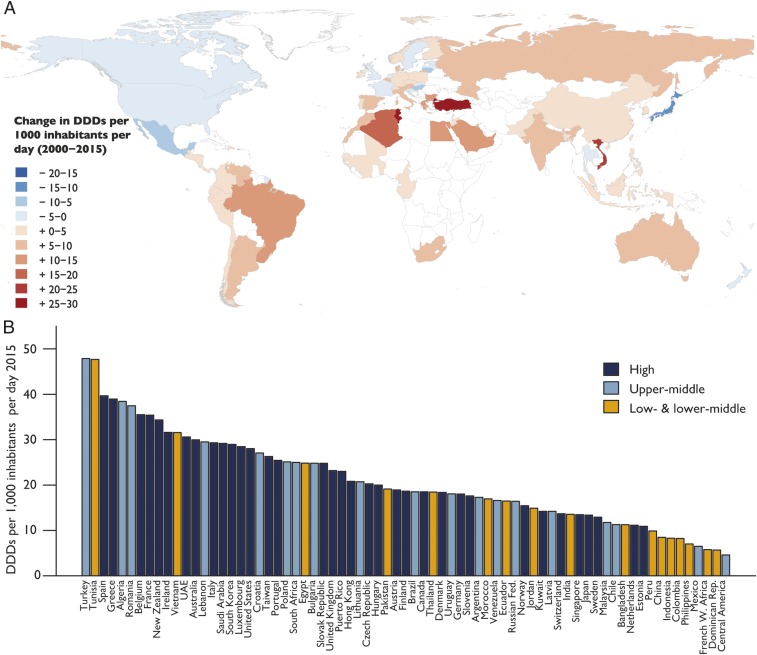
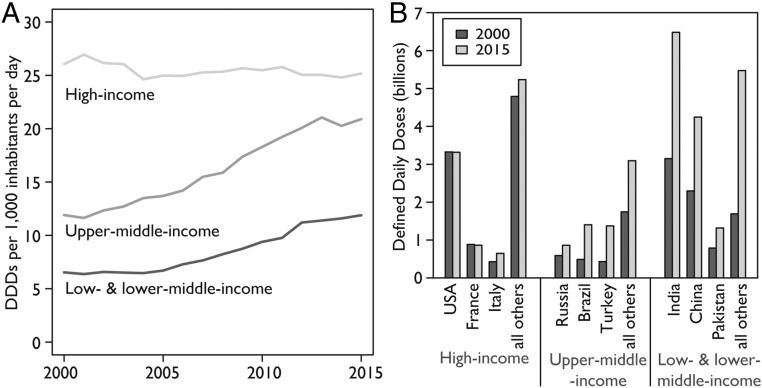
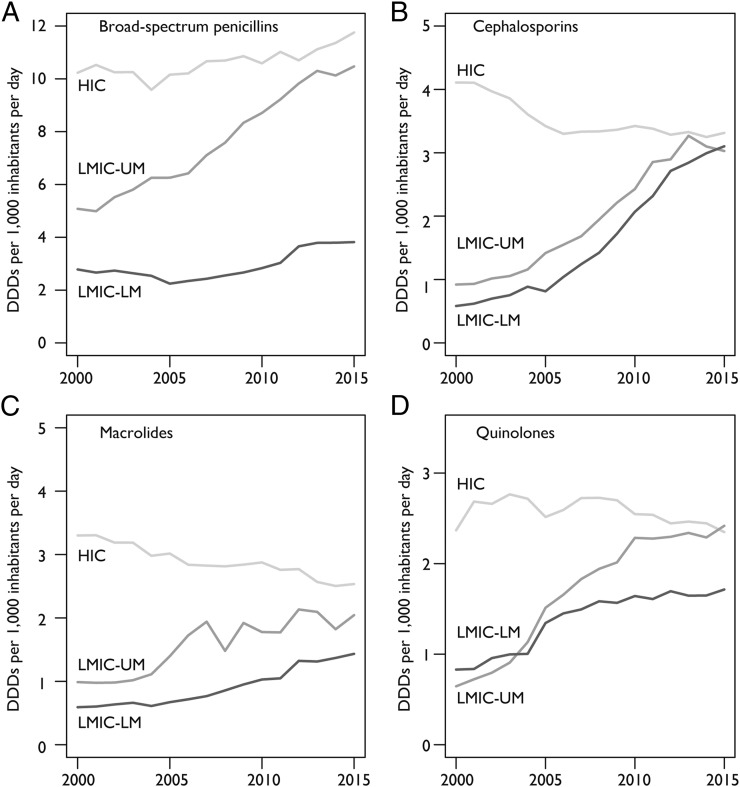
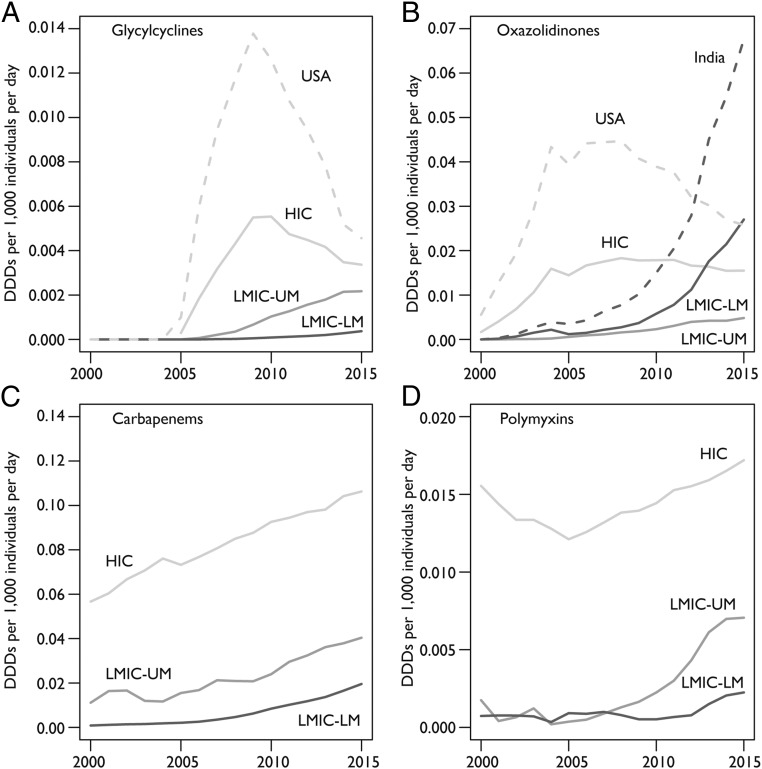
Verification
Claims the paper makes
The claims and statistics of this paper haven’t been checked yet.
Free: it reads the open-access text and checks the first 5 claims that cite a source we can check. Create a free account to check every claim.
Claims other papers make about this one
Each is checked against this paper’s own text: does it say what the citing paper says it does?
The cited source says what the claim attributes to it.
In the citing paper
“A study indicated that between 2000 and 2015, antibiotic consumption (expressed in defined daily doses [DDD]) increased by 65% worldwide, largely driven by LMICs.”
From Over-the-Counter Sale of Antibiotics in India: A Qualitative Study of Providers’ Perspectives across Two States (2021) · cites this paper as [7]
The cited source says what the claim attributes to it.
In the citing paper
“In India, it increased from 3.2 to 6.5 billion DDDs (103%) [7].”
From Over-the-Counter Sale of Antibiotics in India: A Qualitative Study of Providers’ Perspectives across Two States (2021) · cites this paper as [7]
Self-check
Percentages, sums and reported differences re-computed from the paper’s own numbers.
The self-check needs the paper’s full text.
Citations
Cites
Liu, Y.-Y., Wang, Y., Walsh, T. R., Yi, L.-X., Zhang, R., Spencer, J., Doi, Y., Tian, G., Dong, B., Huang, X., et al. (2016) · The Lancet Infectious Diseases · doi:10.1016/s1473-3099(15)00424-7 · Cited by 5,398
Antibiotic resistance-the need for global solutions
Laxminarayan, R., Duse, A., Wattal, C., Zaidi, A. K. M., Wertheim, H. F. L., Sumpradit, N., Vlieghe, E., Hara, G. L., Gould, I. M., Goossens, H., et al. (2013) · The Lancet Infectious Diseases · doi:10.1016/s1473-3099(13)70318-9 · Cited by 4,439
Self-citationTipping elements in the Earth’s climate system
Lenton, T. M., Held, H., Kriegler, E., Hall, J. W., Lucht, W., Rahmstorf, S., & Schellnhuber, H. J. (2008) · Proceedings of the National Academy of Sciences · doi:10.1073/pnas.0705414105 · Cited by 3,982 · cited 1×
“As with climate change, there may be an unknown tipping point (47), and this could herald a future without effective antibiotics.”
BackgroundExtended-Spectrum β-Lactamases: a Clinical Update
Paterson, D. L., & Bonomo, R. A. (2005) · Clinical Microbiology Reviews · doi:10.1128/cmr.18.4.657-686.2005 · Cited by 3,491
Outpatient antibiotic use in Europe and association with resistance: a cross-national database study
Goossens, H., Ferech, M., Vander Stichele, R., & Elseviers, M. (2005) · The Lancet · doi:10.1016/s0140-6736(05)17907-0 · Cited by 3,359 · cited 1×
“The association between antibiotic consumption and resistance is well documented across spatial and temporal scales at individual hospitals (5), nursing homes (6), primary care facilities (7), and communities (8), as well as across countries (9).”
BackgroundSelf-citationGlobal antibiotic consumption 2000 to 2010: an analysis of national pharmaceutical sales data
Van Boeckel, T. P., Gandra, S., Ashok, A., Caudron, Q., Grenfell, B. T., Levin, S. A., & Laxminarayan, R. (2014) · The Lancet Infectious Diseases · doi:10.1016/s1473-3099(14)70780-7 · Cited by 2,280 · cited 1×
“The largest prior study reported that antibiotic consumption increased 36% between 2000 and 2010 in 71 countries (15).”
BackgroundSelf-citationCostelloe, C., Metcalfe, C., Lovering, A., Mant, D., & Hay, A. D. (2010) · BMJ · doi:10.1136/bmj.c2096 · Cited by 1,981 · cited 1×
“The association between antibiotic consumption and resistance is well documented across spatial and temporal scales at individual hospitals (5), nursing homes (6), primary care facilities (7), and communities (8), as well as across countries (9).”
BackgroundTesting for Serial Correlation in Linear Panel-data Models
Drukker, D. M. (2003) · The Stata Journal: Promoting communications on statistics and Stata · doi:10.1177/1536867x0300300206 · Cited by 1,569 · cited 1×
“Serial correlation was assessed using the Wooldridge test (19).”
MethodAccess to effective antimicrobials: a worldwide challenge
Laxminarayan, R., Matsoso, P., Pant, S., Brower, C., Røttingen, J.-A., Klugman, K., & Davies, S. (2016) · The Lancet · doi:10.1016/s0140-6736(15)00474-2 · Cited by 1,465
Self-citationDengue, Urbanization and Globalization: The Unholy Trinity of the 21st Century
Gubler, D. J. (2011) · Tropical Medicine and Health · doi:10.2149/tmh.2011-s05 · Cited by 1,098
Research works printed but not linked: 1
- 21. Institut de veille sanitaire (InVS) et Agence nationale de sécurité du médicament et des produits de santé (ANSM) (2015) Consommation d'antibiotiques et résistance aux antibiotiques en France : Nécessité d'une mobilisation déterminée et durable. Bilan des Données de Surveillance. [Antibiotic consumption and antibiotic resistance in France: The need for a determined and sustainable mobilization. Review of Surveil- lance Data] (Institut de veille sanitaire, Saint-Maurice, France), pp 1-16. French.
Cited by
Items 401–500 of 1,009
Knowledge Gaps in the Understanding of Antimicrobial Resistance in Canada
McCubbin, K. D., Anholt, R. M., de Jong, E., Ida, J. A., Nóbrega, D. B., Kastelic, J. P., Conly, J. M., Götte, M., McAllister, T. A., Orsel, K., et al. (2021) · Frontiers in Public Health · doi:10.3389/fpubh.2021.726484 · Cited by 84
Pucelik, B., & Dąbrowski, J. M. (2022) · Advances in inorganic chemistry · doi:10.1016/bs.adioch.2021.12.003 · Cited by 94
Oldenkamp, R., Beusen, A. H. W., & Huijbregts, M. A. J. (2019) · Environmental Research Letters · doi:10.1088/1748-9326/ab0071 · Cited by 74
Zhanel, G. G., Adam, H. J., Baxter, M. R., Fuller, J., Nichol, K. A., Denisuik, A. J., Golden, A., Hink, R. K., Lagacé-Wiens, P. R. S., Walkty, A. J., et al. (2019) · Journal of Antimicrobial Chemotherapy · doi:10.1093/jac/dkz283 · Cited by 68
Butt, S. Z., Ahmad, M., Saeed, H., Saleem, Z., & Javaid, Z. (2019) · Journal of Infection and Public Health · doi:10.1016/j.jiph.2019.05.015 · Cited by 68
Increasing antibiotic resistance in Clostridioides difficile: A systematic review and meta-analysis
Saha, S., Kapoor, S., Tariq, R., Schuetz, A. N., Tosh, P. K., Pardi, D. S., & Khanna, S. (2019) · Anaerobe · doi:10.1016/j.anaerobe.2019.102072 · Cited by 72
Wang, L., Wang, Y., Li, H., Zhu, Y., & Liu, R. (2021) · Journal of Environmental Management · doi:10.1016/j.jenvman.2021.114382 · Cited by 65
Impact of Anthropogenic Activities on the Dissemination of ARGs in the Environment—A Review
Czatzkowska, M., Wolak, I., Harnisz, M., & Korzeniewska, E. (2022) · International Journal of Environmental Research and Public Health · doi:10.3390/ijerph191912853 · Cited by 80
Zhu, L., Lin, X., Di, Z., Cheng, F., & Xu, J. (2024) · Water · doi:10.3390/w16233428 · Cited by 87
“[42].”
An estimation of total antimicrobial usage in humans and animals in Vietnam
Carrique-Mas, J. J., Choisy, M., Cương, N. V., Thwaites, G. E., & Baker, S. G. (2020) · Antimicrobial Resistance and Infection Control · doi:10.1186/s13756-019-0671-7 · Cited by 92
Measuring antibiotic availability and use in 20 low- and middle-income countries
Knowles, R., Sharland, M., Hsia, Y., Magrini, N., Moja, L., Siyam, A., & Tayler, E. (2020) · Bulletin of the World Health Organization · doi:10.2471/blt.19.241349 · Cited by 78
“data, which reflect the antibiotic consumption of whole countries rather than individuals or communities.(5,30,31) Nevertheless, despite the different data sources used, the proportion of”
BackgroundPostcolonial Global Health, Post-Colony Microbes and Antimicrobial Resistance
Hinchliffe, S. (2021) · Theory Culture & Society · doi:10.1177/0263276420981606 · Cited by 78
A novel self-floating silica adsorbent for antibiotic ciprofloxacin and nickel (II) ion
Hu, C. Y., Jiang, J., An, Y., Jiang, X., Sun, Q., Zheng, H., & Li, H. (2021) · Chemical Engineering Journal · doi:10.1016/j.cej.2021.132227 · Cited by 66
Hayes, A., Murray, L. M., Stanton, I. C., Zhang, L., Snape, J., Gaze, W. H., & Murray, A. K. (2022) · Environment International · doi:10.1016/j.envint.2022.107488 · Cited by 80
Xu, Z., Zhao, D., Lu, J., Liu, J., Dao, G., Chen, B., Huang, B., & Pan, X. (2022) · Chemical Engineering Journal · doi:10.1016/j.cej.2022.140927 · Cited by 67
Hu, X., Zhang, H., Geng, J., Wang, S., Zhang, Z., Xiang, L., & Li, J. (2022) · Chemical Engineering Journal · doi:10.1016/j.cej.2023.141440 · Cited by 66
Georgin, J., Franco, D. S. P., Meili, L., Dehmani, Y., dos Reis, G. S., & Lima, E. C. (2023) · Journal of Water Process Engineering · doi:10.1016/j.jwpe.2023.104407 · Cited by 89
Shrestha, P., Dahal, P., Ogbonnaa-Njoku, C., Das, D., Stepniewska, K., Thomas, N. V., Hopkins, H., Crump, J. A., Bell, D., Newton, P. N., et al. (2020) · BMC Medicine · doi:10.1186/s12916-020-01745-0 · Cited by 63
“There are concerns that this practice promotes antimicrobial resistance (AMR) [14, 15], while rates of antimicrobial consumption are rising globally [16].”
BackgroundAntibiotic consumption in India: geographical variations and temporal changes between 2011 and 2019
Koya, S. F., Ganesh, S., Selvaraj, S., Wirtz, V. J., Galea, S., & Rockers, P. C. (2022) · JAC-Antimicrobial Resistance · doi:10.1093/jacamr/dlac112 · Cited by 71
The removal of pharmaceutical pollutants from aqueous solution by Agro-waste
Bankole, D. T., Oluyori, A. P., & Inyinbor, A. A. (2023) · Arabian Journal of Chemistry · doi:10.1016/j.arabjc.2023.104699 · Cited by 73
The photodegradation of antibiotics on nano cubic spinel ferrites photocatalytic systems: A review
Azimi-Fouladi, A., Falak, P., & Hassanzadeh-Tabrizi, S. A. (2023) · Journal of Alloys and Compounds · doi:10.1016/j.jallcom.2023.171075 · Cited by 67
Zhang, X., Huang, R., Show, P. L., Mahlknecht, J., & Wang, C. (2024) · Sustainable Horizons · doi:10.1016/j.horiz.2024.100091 · Cited by 75
Xu, Z., Jiang, X., Liu, S., & Yang, M. (2019) · Chinese Chemical Letters · doi:10.1016/j.cclet.2019.04.026 · Cited by 65
Gebretekle, G. B., Mariam, D. H., Abebe, W., Fentie, A. M., Degu, W. A., Alemayehu, T., Beyene, T., Libman, M., Fenta, T. G., Yansouni, C. P., et al. (2020) · Frontiers in Public Health · doi:10.3389/fpubh.2020.00109 · Cited by 73
“The global increase in antibiotic consumption noted in the past 15 years has predominantly been driven by Low- and Middleincome countries (LMICs) (4), which can least afford the tremendous human and economic costs of AMR (5, 6).”
BackgroundNguyen, N. V., Do, N. T. T., Nguyen, C. T. K., Toàn, T. K., Ho, P. D., Nguyen, H. H., Huong, V. T. L., Wertheim, H. F. L., van Doorn, H. R., & Lewycka, S. O. (2020) · JAC-Antimicrobial Resistance · doi:10.1093/jacamr/dlaa048 · Cited by 64
Liu, Y., Cai, D., Li, X., Wu, Q., Ding, P., Shen, L., Yang, J., Hu, G., Wu, J., & Zhang, L. (2023) · PLoS ONE · doi:10.1371/journal.pone.0270945 · Cited by 70
Climate warming, environmental degradation and pollution as drivers of antibiotic resistance
Rzymski, P., Gwenzi, W., Poniedziałek, B., Mangul, S., & Fal, A. (2024) · Environmental Pollution · doi:10.1016/j.envpol.2024.123649 · Cited by 73
Kumar, M., Chaminda, T., Honda, R., & Furumai, H. (2019) · APN Science Bulletin · doi:10.30852/sb.2019.799 · Cited by 63
“…antibiotic resistant bacteria (ARB) and antibiotic resistance genes (ARG) in municipal solid waste leachate, sludge (Jiang et al., 2013), sediments (Klein et al., 2018), wastewater (Van Boeckel et al., 2015), surface water (GARP, 2011), drinking water and groundwater (Kümmerer, 2009), perhaps the…”
BackgroundSepsis and Septic Shock in Low- and Middle-Income Countries
Stephen, A. H., Montoya, R. L., & Aluisio, A. R. (2020) · Surgical Infections · doi:10.1089/sur.2020.047 · Cited by 78
“Despite these issues, antibiotic use in LMICs increased by 114% from 2000 to 2015, a greater increase than in HICs [41].”
Antibacterial Activity of Nitrogen-Doped Carbon Dots Enhanced by Atomic Dispersion of Copper
Nichols, F., Lu, J. E., Mercado, R., Rojas‐Andrade, M. D., Ning, S., Azhar, Z., Sandhu, J., Cazares, R., Saltikov, C. W., & Chen, S. W. (2020) · Langmuir · doi:10.1021/acs.langmuir.0c02293 · Cited by 64
Huang, B., Tang, Y., Zeng, Z., Xue, S., Li, S., Wang, Y., Li, E., Tang, C. Y., & Xu, Z. (2021) · Journal of Membrane Science · doi:10.1016/j.memsci.2021.119285 · Cited by 63
Antibiotic residues in the aquatic environment – current perspective and risk considerations
Monahan, C., Nag, R., Morris, D., & Cummins, E. (2021) · Journal of Environmental Science and Health Part A · doi:10.1080/10934529.2021.1923311 · Cited by 69
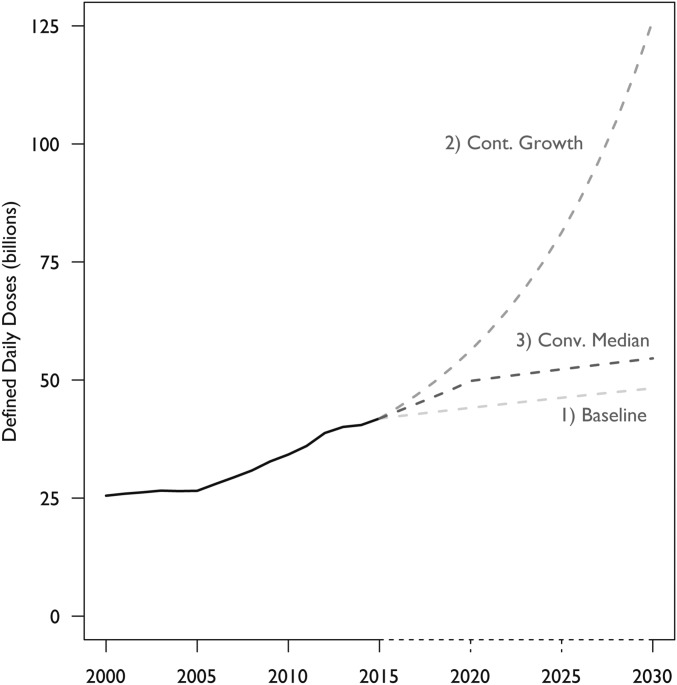
“With current trends, this is predicted to increase again by over 200% between 2015 and 2030.([22]) Analysis of antimicrobial sales data suggests agricultural consumption”
BackgroundAntibiotics and temperature interact to disrupt soil communities and nutrient cycling
Lucas, J. M., Sone, B. M., Whitmore, D., & Strickland, M. S. (2021) · Soil Biology and Biochemistry · doi:10.1016/j.soilbio.2021.108437 · Cited by 65
Mirzaie, F., Teymori, F., Shahcheragh, S., Dobaradaran, S., Arfaeinia, H., Kafaei, R., Sahebi, S., Farjadfard, S., & Ramavandi, B. (2022) · Chemosphere · doi:10.1016/j.chemosphere.2022.135996 · Cited by 68
Li, N., Tao, K., Xia, W., Yu, C., & Yang, H. (2023) · Chemical Engineering Journal · doi:10.1016/j.cej.2023.143265 · Cited by 64
A systematic review of antimicrobial resistance of typhoidal Salmonella in India
Britto, C., John, J. K., Verghese, V. P., & Pollard, A. J. (2019) · The Indian Journal of Medical Research · doi:10.4103/ijmr.ijmr_830_18 · Cited by 69
Das, S., Misra, A. J., Rahman, A. P. H., Das, B., Jayabalan, R., Tamhankar, A. J., Mishra, A., Lundborg, C. S., & Tripathy, S. K. (2019) · Applied Catalysis B: Environmental · doi:10.1016/j.apcatb.2019.118065 · Cited by 65
Shi, L.-D., Xu, Q.-J., Liu, J.-Y., Han, Z.-X., Zhu, Y.-G., & Zhao, H.-P. (2021) · Environmental Science & Technology · doi:10.1021/acs.est.0c05698 · Cited by 62
Filling the gaps in the global prevalence map of clinical antimicrobial resistance
Oldenkamp, R., Schultsz, C., Mancini, E., & Cappuccio, A. (2021) · Proceedings of the National Academy of Sciences · doi:10.1073/pnas.2013515118 · Cited by 61
“This assumption is supported by a sensitivity analysis using antibiotic consumption data available from ResistanceMap (45) (SI Appendix, section S6) and by previous studies showing antibiotic consumption parallel socioeconomic indicators such as the Human Development Index and aging of the population (46), gross domes…”
BackgroundMethodAccounting for variation in and overuse of antibiotics among humans
Blaser, M. J., Melby, M. K., Lock, M. M., & Nichter, M. (2021) · BioEssays · doi:10.1002/bies.202000163 · Cited by 77
“[12] However, global trends reflect a composite of regional differences; for example, cephalosporin consumption rose in LMICs but declined in HICs, as did consumption of other broad-spectrum agents such asmacrolides, fluoroquinolines, and oxazolidiones (Figure 1).[2] Thus, global trends often”
BackgroundInfluentialSu, R., Dai, X., Wang, H., Wang, Z., Li, Z., Chen, Y., Luo, Y., & Ouyang, D. (2022) · International Journal of Environmental Research and Public Health · doi:10.3390/ijerph191912354 · Cited by 66
Highly efficient activation of peroxymonosulfate for rapid sulfadiazine degradation by Fe3O4 @Co3S4
Wang, T., Lu, J. J., Lei, J., Zhou, Y., Zhao, H., Chen, X., Hossain, M. F., & Zhou, Y. (2022) · Separation and Purification Technology · doi:10.1016/j.seppur.2022.122755 · Cited by 62
Majumder, S., Sharma, P., Singh, S. P., Nadda, A. K., Sahoo, P. K., Xia, C., Sharma, S., Ganguly, R., Lam, S. S., & Kim, K. H. (2023) · Journal of environmental chemical engineering · doi:10.1016/j.jece.2023.109590 · Cited by 61
Han, J., Li, W., Yang, Y., Zhang, X., Bao, S., Zhang, X., Zhang, T., & Leung, K. (2023) · Engineering · doi:10.1016/j.eng.2023.09.021 · Cited by 73
“A survey of antibiotic consumption in 76 countries revealed that antibiotic consumption increased by 65% from 2000 to 2015 [3].”
Pindling, S., Azulai, D., Zheng, B. J., Dahan, D., & Perron, G. G. (2018) · FEMS Microbiology Letters · doi:10.1093/femsle/fny188 · Cited by 71
Coumarin-1,2,3-triazole Hybrid Molecules: An Emerging Scaffold for Combating Drug Resistance
Upadhyay, H. C. (2021) · Current Topics in Medicinal Chemistry · doi:10.2174/1568026621666210303145759 · Cited by 65
Schmiege, D., Evers, M., Kistemann, T., & Falkenberg, T. (2020) · International Journal of Hygiene and Environmental Health · doi:10.1016/j.ijheh.2020.113497 · Cited by 72
Juela, D. M., Vera, M., Cruzat, C., Alvarez, X., & Vanegas, E. (2021) · Chemosphere · doi:10.1016/j.chemosphere.2021.130687 · Cited by 61
A short review of human exposure to antibiotics based on urinary biomonitoring
Hu, Y., Zhu, Q., Wang, Y., Liao, C., & Jiang, G. (2022) · The Science of The Total Environment · doi:10.1016/j.scitotenv.2022.154775 · Cited by 66
Wang, F., Zhang, Y., Li, H., Gong, W., Han, J., Jiang, S., Li, D., & Yao, Z. (2024) · Food Chemistry · doi:10.1016/j.foodchem.2024.141122 · Cited by 98
Jamieson, O. D., Soares, T. C. C., de Faria, B. D. A., Hudson, A. D., Mecozzi, F., Rowley‐Neale, S. J., Banks, C. E., Gruber, J., Novakovic, K., Peeters, M., et al. (2019) · Chemosensors · doi:10.3390/chemosensors8010005 · Cited by 61
“Antibiotic consumption has increased 65% worldwide between the years 2000 and 2015 [3].”
BackgroundWhat are the economic barriers of antibiotic R&D and how can we overcome them?
Renwick, M. J., & Mossialos, E. A. (2018) · Expert Opinion on Drug Discovery · doi:10.1080/17460441.2018.1515908 · Cited by 61
Izzudin, N. M., Jalil, A. A., Aziz, F. F. A., Azami, M. S., Ali, M. W., Hassan, N. S. B., Rahman, A. F. A., Fauzi, A. A. B., & Vo, D. N. (2021) · Environmental Chemistry Letters · doi:10.1007/s10311-021-01272-1 · Cited by 61
Liu, C., Chen, J., Shan, X., Yang, Y., Song, L., Teng, Y., & Chen, H. (2022) · The Science of The Total Environment · doi:10.1016/j.scitotenv.2022.160513 · Cited by 66
Emerging contaminants bioremediation by enzyme and nanozyme-based processes – A review
Bittencourt, G. A., Vandenberghe, L. P. D. S., Martínez-Burgos, W. J., Valladares-Diestra, K. K., de Mello, A. F. M., Maske, B. L., Brar, S. K., Varjani, S., Pereira, G. V. D. M., & Soccol, C. R. (2023) · iScience · doi:10.1016/j.isci.2023.106785 · Cited by 73
Application of iron-modified biochar in the fields of adsorption and degradation of antibiotics
Yang, X., Tian, X., Xue, Y., & Wang, C. (2025) · Journal of Environmental Management · doi:10.1016/j.jenvman.2025.124875 · Cited by 65
Antimicrobial Peptides: Mechanisms, Applications, and Therapeutic Potential
Alzain, M., Daghistani, H., Shamrani, T., Almoghrabi, Y. M., Daghistani, Y., Alharbi, O., Sait, A. M., Mufrrih, M., Alhazmi, W. A., Alqarni, M. A., et al. (2025) · Infection and Drug Resistance · doi:10.2147/idr.s514825 · Cited by 73
“5,6 This misuse extends to livestock, where antimicrobials are frequently employed as growth promoters, compounding the public health threat.”
Weiss, D., Wallace, R. M., Rwego, I. B., Gillespie, T. R., Chapman, C. A., Singer, R. S., & Goldberg, T. L. (2018) · Applied and Environmental Microbiology · doi:10.1128/aem.01632-18 · Cited by 67
“We caution that route of administration, mechanism of action, availability, clinical effects/side effects, and many other factors may have contributed to the trend observed and that antibiotic consumption is increasing globally (31).”
BackgroundHayat, K., Rosenthal, M., Gillani, A. H., Zhai, P., Aziz, M. M., Ji, W., Chang, J., Hu, H., & Fang, Y. (2019) · International Journal of Environmental Research and Public Health · doi:10.3390/ijerph16091565 · Cited by 68
“Additionally, there has been a reported 65% rise in consumption of antibiotics in Pakistan from 2000 to 2015, making the problem of AMR more severe day by day [15].”
Khouja, T., Mitsantisuk, K., Tadrous, M., & Suda, K. J. (2022) · Journal of Antimicrobial Chemotherapy · doi:10.1093/jac/dkac028 · Cited by 67
Mangalgiri, K. P., Ibitoye, T., & Blaney, L. M. (2022) · The Science of The Total Environment · doi:10.1016/j.scitotenv.2022.155508 · Cited by 60
Zergiebel, S., Ueberschaar, N., & Seeling, A. (2022) · Food Chemistry · doi:10.1016/j.foodchem.2022.134270 · Cited by 65
Sonkar, V., Venu, V., Nishil, B., & Thatikonda, S. (2024) · Environmental Science and Pollution Research · doi:10.1007/s11356-024-34567-1 · Cited by 70
“Global antibiotic consumption has increased by 65% between 2000 and 2015 due to rapid population growth, high-living standards, disease-free animal farming, and aquaculture (Van Boeckel et al. 2015; Klein et al. 2018; Zhao et al. 2019b).”
Zhang, R., Yu, K., Li, A., Wang, Y., Pan, C., & Huang, X. (2019) · The Science of The Total Environment · doi:10.1016/j.scitotenv.2019.135288 · Cited by 61
Nayiga, S., Kayendeke, M., Nabirye, C., Willis, L. D., Chandler, C., & Staedke, S. G. (2020) · JAC-Antimicrobial Resistance · doi:10.1093/jacamr/dlaa082 · Cited by 67
Davies, K. R., Cherif, Y., Pazhani, G. P., Anantharaj, S., Azzi, H., Terashima, C., Fujishima, A., & Pitchaimuthu, S. (2021) · Journal of Photochemistry and Photobiology C Photochemistry Reviews · doi:10.1016/j.jphotochemrev.2021.100437 · Cited by 66
Escalating antimicrobial resistance among Enterobacteriaceae: Focus on carbapenemases
Lynch, J. P., Clark, N. M., & Zhanel, G. G. (2021) · Expert Opinion on Pharmacotherapy · doi:10.1080/14656566.2021.1904891 · Cited by 58
“Importantly, global antibiotic consumption has increased substantially over the past two decades [101].”
BackgroundInfluentialFarooqui, H. H., Mehta, A., & Selvaraj, S. (2019) · PLoS ONE · doi:10.1371/journal.pone.0224848 · Cited by 58
“had reported estimates of antibiotic consumption in India through use of pharmaceutical sales data[2, 24].”
BackgroundLiu, W., Li, N., Zhang, X., Zhao, Y., Zong, Z., Wu, R., Tong, J., Bi, C., Shao, F., & Fan, Y. (2021) · Crystal Growth & Design · doi:10.1021/acs.cgd.1c00359 · Cited by 58
Shi, B., Cheng, X., Chen, H.-Z., Xie, J., Zhou, Z., Jiang, S., Peng, X., Zhang, Y.-D., Zhu, D., & Lu, Z. (2022) · Journal of Environmental Management · doi:10.1016/j.jenvman.2022.116311 · Cited by 63
Li, Y., Hu, J., Zou, Y., Lin, L., Liang, H., Lei, H., Li, B. J., & Li, X. (2022) · Chemical Engineering Journal · doi:10.1016/j.cej.2022.139890 · Cited by 61
Freshwater environment as a reservoir of extended-spectrum β-lactamase-producing Enterobacteriaceae
Cho, S., Jackson, C. R., & Frye, J. G. (2023) · Journal of Applied Microbiology · doi:10.1093/jambio/lxad034 · Cited by 68
Yazhini, C., Mathew, G., Anpo, M., Maurin, G., Choi, W., & Neppolian, B. (2023) · Advanced Optical Materials · doi:10.1002/adom.202301625 · Cited by 63
Zeng, X., Zhang, L., Chen, Q., Yu, K., Zhao, S., Zhang, L., Zhang, J., Zhang, W., & Huang, L. (2020) · Environment International · doi:10.1016/j.envint.2020.105638 · Cited by 59
Allwell-Brown, G., Hussain‐Alkhateeb, L., Kitutu, F. E., Strömdahl, S. K., Mårtensson, A., & Johansson, E. W. (2020) · The Lancet Global Health · doi:10.1016/s2214-109x(20)30079-6 · Cited by 75
What Water Professionals Should Know about Antibiotics and Antibiotic Resistance: An Overview
Jovanović, O., Amábile-Cuevas, C. F., Shang, C., Wang, C., & Ngai, K. W. (2021) · ACS ES&T Water · doi:10.1021/acsestwater.0c00308 · Cited by 61
Nair, M., Tripathi, S., Mazumdar, S., Mahajan, R., Harshana, A., Pereira, A., Jimenez, C., Halder, D., & Burza, S. (2019) · PLOS ONE · doi:10.1371/journal.pone.0219002 · Cited by 57
“8 billion DDDs between 2000 and 2015, largely driven by rising consumption in low- and middle-income countries, according to a recent study published in Proceedings of the National Academy of Sciences [1].”
InfluentialCai, Y., Yan, Z., Ou, Y., Peng, B., Zhang, L., Shao, J., Lin, Y., & Zhang, J. (2021) · Journal of Environmental Sciences · doi:10.1016/j.jes.2021.03.037 · Cited by 57
Low-cost silica xerogels as potential adsorbents for ciprofloxacin removal
Kaya, G. G., Aznar, E., Deveci, H., & Martínez‐Máñez, R. (2021) · Sustainable Chemistry and Pharmacy · doi:10.1016/j.scp.2021.100483 · Cited by 65
Ohore, O. E., Wei, Y., Wang, Y., Nwankwegu, A. S., & Wang, Z. (2022) · Chemosphere · doi:10.1016/j.chemosphere.2022.135428 · Cited by 57
Zhang, H., Li, Q., Qi, X., Li, Y., Ma, H., Grinholc, M., Nakonieczna, J., Yu, B., Wang, X., & Zhang, L. (2022) · Chemical Engineering Journal · doi:10.1016/j.cej.2022.138261 · Cited by 56
Wang, K., Su, Z., Reguyal, F., Bian, R., Li, W., Yu, H., Sun, Y., Zhuang, Y., & Shang, W. (2022) · The Science of The Total Environment · doi:10.1016/j.scitotenv.2022.158579 · Cited by 58
Ren, C., Xu, Q., Alvarez, P. J. J., Zhu, L., & Zhao, H. (2023) · Water Research · doi:10.1016/j.watres.2023.120442 · Cited by 59
“Antibiotic consumption is on the rise worldwide, and the global antibiotic consumption in 2030 is projected be 200% higher than that in 2015 (Klein et al., 2018).”
BackgroundYasmin, S., Azam, M. G., Hossain, M. S., Akhtar, U. S., & Kabir, M. H. (2024) · Heliyon · doi:10.1016/j.heliyon.2024.e33317 · Cited by 62
“Between 2000 and 2015, the growth in the global antibiotic consumption was estimated to be 65% (from 21.1 to 34.8 billion Defined Daily Doses), and by 2030, it was predicted to increase by another 200% [1,2].”
BackgroundInfluentialChu, L., Chen, D., Wang, J., Yang, Z., & Shen, Y. (2019) · Waste Management · doi:10.1016/j.wasman.2019.07.031 · Cited by 56
Ho, J. Y., Jong, M., Acharya, K., Liew, S. S. X., Smith, D. R., Noor, Z. Z., Goodson, M. L., Werner, D., Graham, D. W., & Eswaran, J. (2020) · Journal of Hazardous Materials · doi:10.1016/j.jhazmat.2020.124687 · Cited by 63
Antimicrobial resistance at the livestock–human interface: implications for Veterinary Services
Magnusson, U., Moodley, A., & Osbjer, K. (2021) · Scientific and Technical Review (World Organisation for Animal Health) · doi:10.20506/rst.40.2.3241 · Cited by 77
Limato, R., Lazarus, G., Dernison, P., Mudia, M., Alamanda, M., Nelwan, E. J., Sinto, R., Karuniawati, A., van Doorn, H. R., & Hamers, R. L. (2022) · The Lancet Regional Health - Southeast Asia · doi:10.1016/j.lansea.2022.05.002 · Cited by 135
Werkneh, A. A., & Islam, M. A. (2023) · Heliyon · doi:10.1016/j.heliyon.2023.e15360 · Cited by 67
Chen, D., Chu, L., Wang, J., Yang, Z., Yang, Q., & Shen, Y. (2019) · Chemical Engineering Journal · doi:10.1016/j.cej.2019.06.021 · Cited by 55
Oliveira, J. T., de Sousa, M. C., Martins, I. A., SENA, L. M. G., Nogueira, T. R., Vidal, C. B., Neto, E. F. A., Romero, F. B., Campos, O. S., & do Nascimento, R. F. (2021) · Electrochimica Acta · doi:10.1016/j.electacta.2021.138499 · Cited by 57
Gautham, M., Spicer, N., Chatterjee, S., & Goodman, C. A. (2021) · Social Science & Medicine · doi:10.1016/j.socscimed.2021.113813 · Cited by 69
Godman, B., Fadare, J. O., Kwon, H.-Y., Dias, C. Z., Kurdi, A. B., Godói, I. P. D., Kibuule, D., Hoxha, I., Opanga, S. A., Saleem, Z., et al. (2021) · Journal of Comparative Effectiveness Research · doi:10.2217/cer-2020-0273 · Cited by 72
Sanz-Codina, M., Bozkır, H. Ö., Jorda, A., & Zeitlinger, M. A. (2023) · Clinical Microbiology and Infection · doi:10.1016/j.cmi.2023.03.018 · Cited by 65
Wang, J., Lu, X., Jing, Q., Zhang, B., Ye, J., Zhang, H., Xiao, Z., & Zhang, J. (2023) · Journal of Hazardous Materials · doi:10.1016/j.jhazmat.2023.131409 · Cited by 59
Alshammari, M. K., Ramadan, M., Haif, H., Abdullah, B., Mubarak, J., Ahmad, W., Mari, S., Hassan, S., Eid, R., Hasan, M. Y., et al. (2023) · Antibiotics · doi:10.3390/antibiotics12101504 · Cited by 63
“Antibiotic overuse entails the inappropriate and excessive utilization of antibiotics, encompassing unwarranted prescriptions and administration, as well as the mishandling and excessive consumption of these vital medications through self-medication or leftover usage [1,2].”
BackgroundRetractedBortone, B., Jackson, C., Hsia, Y., Bielicki, J., Magrini, N., & Sharland, M. (2021) · PLoS ONE · doi:10.1371/journal.pone.0241899 · Cited by 54
Xu, J., Liu, X., Lv, Y., Guo, X., & Lu, S. (2020) · Ecotoxicology and Environmental Safety · doi:10.1016/j.ecoenv.2020.111332 · Cited by 55
Antibiotics, rational drug use and the architecture of global health in Zimbabwe
Dixon, J., Manyau, S., Kandiye, F., Kranzer, K., & Chandler, C. (2020) · Social Science & Medicine · doi:10.1016/j.socscimed.2020.113594 · Cited by 67
“Low- and middle-income countries (LMICs) have seen a significant rise in antibiotic use in recent decades (Klein et al., 2017) and have been identified as particular targets for intervention.”
BackgroundZakir, M., Khan, M., Umar, M. I., Murtaza, G., Ashraf, M., & Shamim, S. (2021) · Microorganisms · doi:10.3390/microorganisms9122484 · Cited by 82
“Its plausible explanation was attributable to the over-prescription or inadequate prescription practices that favor many second- and third-generation antibiotics, where a large portion of typhoid cases in Pakistan receive a prescription without the confirmation of the pathogen through blood culture or lack of diagnost…”
Background
Metadata
- Authors
- Klein, E. Y., Van Boeckel, T. P., Martinez, E. M., Pant, S., Gandra, S., Levin, S. A., Goossens, H., & Laxminarayan, R.
- Affiliations
- Center for Disease Dynamics, Economics & Policy (US)
- Institute of Integrative Biology, ETH Zürich, CH-8006 Zürich, Switzerland;
- Princeton University (US)
- University of Antwerp (BE)
- Corresponding author
- Klein, Eili Y.
- Levin, Simon A.
- ORCID
- Venue
- Proceedings of the National Academy of Sciences
- Publisher
- National Academy of Sciences
- Published
- 2018-03-26
- Volume
- 115
- Issue
- 15
- Pages
- E3463-E3470
- ISSN
- 0027-8424 (ISSN-L)
- 1091-6490
- PMC
- PMC5899442
- OpenAlex
- W2791781902
- Cited by
- 3,232
- References
- 43
- Citations by year
- 2026: 247 · 2025: 416 · 2024: 456 · 2023: 476 · 2022: 432 · 2021: 490 · 2020: 386 · 2019: 252 · 2018: 71
- FWCI
- 183.08
- Type
- journal article
- Language
- en
- Open access
- hybrid
- doi.org
- Licence
- Locations
- Proceedings of the National Academy of Sciences (publishedVersion, cc-by)
- Europe PMC (PubMed Central) (publishedVersion, cc-by)
- PubMed Central (publishedVersion, cc-by)
- PubMed (publishedVersion)
- IFPRI E-brary (International Food Policy Research Institute) (submittedVersion, other-oa)
- CGSPace A Repository of Agricultural Research Outputs (Consultative Group for International Agricultural Research) (submittedVersion, other-oa)
- International Food Policy Research Institute (International Food Policy Research Institute) (submittedVersion, other-oa)
- Repository for Publications and Research Data (ETH Zurich) (submittedVersion, cc-by)
- ETH Zürich Research Collection (cc-by)
- Funders
- Bill and Melinda Gates Foundation (OPP1112355)
- Princeton Environmental Institute, Princeton University (N/A)
- ETH Zurich's Center for Adaptation to a Changing Environment (N/A)
- HHS | Centers for Disease Control and Prevention (16IPA1609425, 16IPA1609424)
- Topics
- Health Sciences › Medicine › Infectious Diseases › Antibiotic Use and Resistance
- Health Sciences › Medicine › Microbiology (medical) › Antibiotic Resistance in Bacteria
- Physical Sciences › Environmental Science › Pollution › Pharmaceutical and Antibiotic Environmental Impacts
- Keywords
- antibiotic use, last-resort antibiotics, carbapenems, polymyxins, oxazolidinones, glycylcyclines, high-income countries, low- and middle-income countries, antibiotic resistance, consumption projections, antibiotic access
- MeSH terms
- Anti-Bacterial Agents, Bacterial Infections, Drug Resistance, Microbial, Economics, Health Services Accessibility, Humans
About these checks
Registry, retraction, Cites and statistics results are computed, not judged, with one exception: a printed reference that no index lists is read once by a model before it counts as a citation error. Claims are extracted by a model and kept only when their quote appears verbatim in the text; each cited source is then checked, with a model’s help, for whether it says what the claim relies on. Those verdicts can be wrong — read the claim’s quote and the cited source before relying on one.
Statistics and arithmetic are recomputed, not judged.
Confidence bands are shown only for fields calibrated on our annotated test set. None is calibrated yet, so no band is shown.
What counts as a claim ›How we measure confidence ›How we check this ›
Are you an author, or do you see a problem with this page? Request a review
Data sources
Bibliographic data: Semantic Scholar, OpenAlex, Crossref.
Contains information from the Semantic Scholar Academic Graph Datasets, made available under the ODC Attribution License (ODC-BY 1.0).
Semantic Scholar’s data is described in: Kinney, R., et al. (2023). The Semantic Scholar Open Data Platform. arXiv:2301.10140.
