

Global increase and geographic convergence in antibiotic consumption between 2000 and 2015
Open accessThe DOI matches its Crossref record; 43 of the 43 references it cites were found in a registry or an index.
Abstract
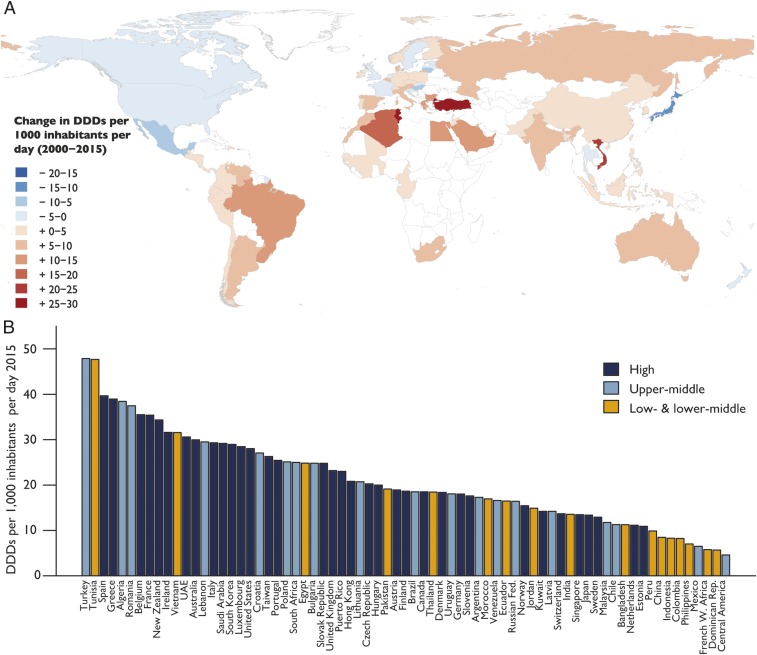
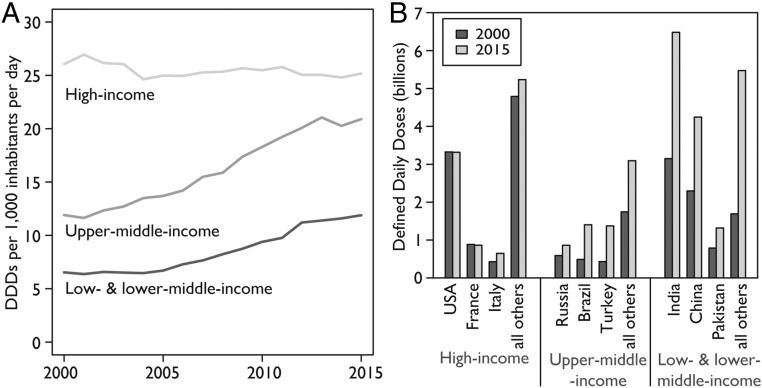
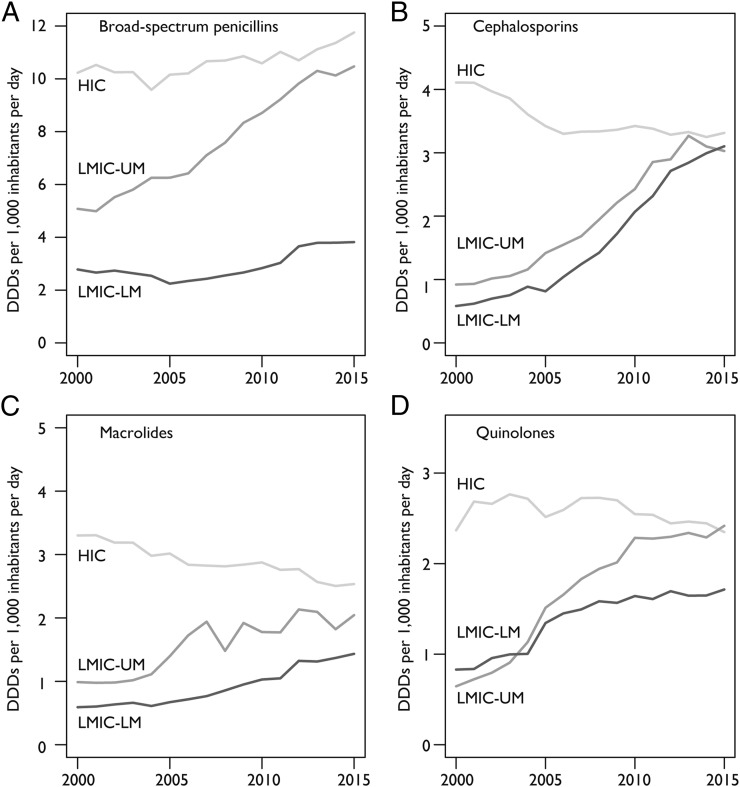
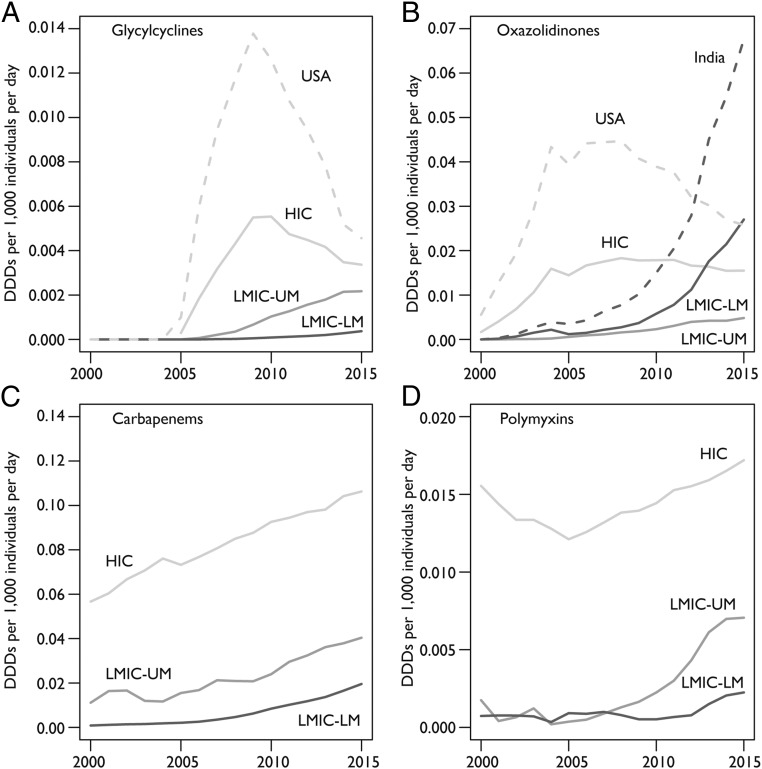
Significance: Antibiotic resistance, driven by antibiotic consumption, is a growing global health threat. Our report on antibiotic use in 76 countries over 16 years provides an up-to-date comprehensive assessment of global trends in antibiotic consumption. We find that the antibiotic consumption rate in low- and middle-income countries (LMICs) has been converging to (and in some countries surpassing) levels typically observed in high-income countries. However, inequities in drug access persist, as many LMICs continue to be burdened with high rates of infectious disease-related mortality and low rates of antibiotic consumption. Our findings emphasize the need for global surveillance of antibiotic consumption to support policies to reduce antibiotic consumption and resistance while providing access to these lifesaving drugs.
Overview
The claims and statistics of this paper haven’t been checked yet.
Free: it reads the open-access text and checks the first 5 claims that cite a source we can check. Create a free account to check every claim.
Integrity signals
Registry
Cites
Statistics
Figures
Verification
Claims the paper makes
The claims and statistics of this paper haven’t been checked yet.
Free: it reads the open-access text and checks the first 5 claims that cite a source we can check. Create a free account to check every claim.
Claims other papers make about this one
Each is checked against this paper’s own text: does it say what the citing paper says it does?
The cited source says what the claim attributes to it.
In the citing paper
“A study indicated that between 2000 and 2015, antibiotic consumption (expressed in defined daily doses [DDD]) increased by 65% worldwide, largely driven by LMICs.”
From Over-the-Counter Sale of Antibiotics in India: A Qualitative Study of Providers’ Perspectives across Two States (2021) · cites this paper as [7]
The cited source says what the claim attributes to it.
In the citing paper
“In India, it increased from 3.2 to 6.5 billion DDDs (103%) [7].”
From Over-the-Counter Sale of Antibiotics in India: A Qualitative Study of Providers’ Perspectives across Two States (2021) · cites this paper as [7]
Self-check
Percentages, sums and reported differences re-computed from the paper’s own numbers.
The self-check needs the paper’s full text.
Citations
Cites
Liu, Y.-Y., Wang, Y., Walsh, T. R., Yi, L.-X., Zhang, R., Spencer, J., Doi, Y., Tian, G., Dong, B., Huang, X., et al. (2016) · The Lancet Infectious Diseases · doi:10.1016/s1473-3099(15)00424-7 · Cited by 5,398
Antibiotic resistance-the need for global solutions
Laxminarayan, R., Duse, A., Wattal, C., Zaidi, A. K. M., Wertheim, H. F. L., Sumpradit, N., Vlieghe, E., Hara, G. L., Gould, I. M., Goossens, H., et al. (2013) · The Lancet Infectious Diseases · doi:10.1016/s1473-3099(13)70318-9 · Cited by 4,439
Self-citationTipping elements in the Earth’s climate system
Lenton, T. M., Held, H., Kriegler, E., Hall, J. W., Lucht, W., Rahmstorf, S., & Schellnhuber, H. J. (2008) · Proceedings of the National Academy of Sciences · doi:10.1073/pnas.0705414105 · Cited by 3,982 · cited 1×
“As with climate change, there may be an unknown tipping point (47), and this could herald a future without effective antibiotics.”
BackgroundExtended-Spectrum β-Lactamases: a Clinical Update
Paterson, D. L., & Bonomo, R. A. (2005) · Clinical Microbiology Reviews · doi:10.1128/cmr.18.4.657-686.2005 · Cited by 3,491
Outpatient antibiotic use in Europe and association with resistance: a cross-national database study
Goossens, H., Ferech, M., Vander Stichele, R., & Elseviers, M. (2005) · The Lancet · doi:10.1016/s0140-6736(05)17907-0 · Cited by 3,359 · cited 1×
“The association between antibiotic consumption and resistance is well documented across spatial and temporal scales at individual hospitals (5), nursing homes (6), primary care facilities (7), and communities (8), as well as across countries (9).”
BackgroundSelf-citationGlobal antibiotic consumption 2000 to 2010: an analysis of national pharmaceutical sales data
Van Boeckel, T. P., Gandra, S., Ashok, A., Caudron, Q., Grenfell, B. T., Levin, S. A., & Laxminarayan, R. (2014) · The Lancet Infectious Diseases · doi:10.1016/s1473-3099(14)70780-7 · Cited by 2,280 · cited 1×
“The largest prior study reported that antibiotic consumption increased 36% between 2000 and 2010 in 71 countries (15).”
BackgroundSelf-citationCostelloe, C., Metcalfe, C., Lovering, A., Mant, D., & Hay, A. D. (2010) · BMJ · doi:10.1136/bmj.c2096 · Cited by 1,981 · cited 1×
“The association between antibiotic consumption and resistance is well documented across spatial and temporal scales at individual hospitals (5), nursing homes (6), primary care facilities (7), and communities (8), as well as across countries (9).”
BackgroundTesting for Serial Correlation in Linear Panel-data Models
Drukker, D. M. (2003) · The Stata Journal: Promoting communications on statistics and Stata · doi:10.1177/1536867x0300300206 · Cited by 1,569 · cited 1×
“Serial correlation was assessed using the Wooldridge test (19).”
MethodAccess to effective antimicrobials: a worldwide challenge
Laxminarayan, R., Matsoso, P., Pant, S., Brower, C., Røttingen, J.-A., Klugman, K., & Davies, S. (2016) · The Lancet · doi:10.1016/s0140-6736(15)00474-2 · Cited by 1,465
Self-citationDengue, Urbanization and Globalization: The Unholy Trinity of the 21st Century
Gubler, D. J. (2011) · Tropical Medicine and Health · doi:10.2149/tmh.2011-s05 · Cited by 1,098
Research works printed but not linked: 1
- 21. Institut de veille sanitaire (InVS) et Agence nationale de sécurité du médicament et des produits de santé (ANSM) (2015) Consommation d'antibiotiques et résistance aux antibiotiques en France : Nécessité d'une mobilisation déterminée et durable. Bilan des Données de Surveillance. [Antibiotic consumption and antibiotic resistance in France: The need for a determined and sustainable mobilization. Review of Surveil- lance Data] (Institut de veille sanitaire, Saint-Maurice, France), pp 1-16. French.
Cited by
Items 301–400 of 1,009
Kotwani, A., Joshi, J., & Lamkang, A. S. (2021) · Antibiotics · doi:10.3390/antibiotics10091123 · Cited by 87
“Although the per-capita consumption of antibiotics in India is lower than that in several other countries [7], the proportion of broad-spectrum antibiotic consumption”
BackgroundZhang, Y., Chen, H., Jing, L., & Teng, Y. (2020) · The Science of The Total Environment · doi:10.1016/j.scitotenv.2020.139128 · Cited by 91
Kirchhelle, C., Atkinson, P., Broom, A. F., Chuengsatiansup, K., Ferreira, J. P., Fortané, N., Frost, I., Gradmann, C., Hinchliffe, S., Hoffman, S. J., et al. (2020) · BMJ Global Health · doi:10.1136/bmjgh-2020-003091 · Cited by 105
Shu, W., Zhang, Y., Wen, D., Wu, Q., Liu, H., Cui, M.-H., Fu, B., Zhang, J., & Yao, Y. (2021) · Journal of Hazardous Materials · doi:10.1016/j.jhazmat.2021.125520 · Cited by 91
Candida auris on Apples: Diversity and Clinical Significance
Yadav, A., Jain, K., Wang, Y., Pawar, K., Kaur, H., Sharma, K. K., Tripathy, V., Singh, A., Xu, J., & Chowdhary, A. (2022) · mBio · doi:10.1128/mbio.00518-22 · Cited by 86
Antimicrobial Resistance: The Impact from and on Society According to One Health Approach
Ferraz, M. P. (2024) · Societies · doi:10.3390/soc14090187 · Cited by 140
Zhao, K., Si, T., Liu, S., Liu, G., Li, D., & Li, F. (2024) · The Science of The Total Environment · doi:10.1016/j.scitotenv.2024.176561 · Cited by 94
Impact of national interventions to promote responsible antibiotic use: a systematic review
Lim, J. M., Singh, S. R., Duong, M. C., Legido‐Quigley, H., Hsu, L. Y., & Tam, C. C. (2019) · Journal of Antimicrobial Chemotherapy · doi:10.1093/jac/dkz348 · Cited by 101
Lü, S., Lin, C., Lei, K., Xin, M., Gu, X., Lian, M., Wang, B., Liu, X., Ouyang, W., & He, M. (2021) · Journal of Hazardous Materials · doi:10.1016/j.jhazmat.2021.127487 · Cited by 91
Geta, K., & Kibret, M. (2021) · Scientific Reports · doi:10.1038/s41598-021-00617-8 · Cited by 103
Burden of Typhoid and Paratyphoid Fever in India
John, J. K., Bavdekar, A., Rongsen‐Chandola, T., Dutta, S., Gupta, M., Kanungo, S., Sinha, B., Srinivasan, M., Shrivastava, A., Bansal, A., et al. (2023) · New England Journal of Medicine · doi:10.1056/nejmoa2209449 · Cited by 109
Antibiotics in Dentistry: A Narrative Review of the Evidence beyond the Myth
Contaldo, M., D’Ambrosio, F., Ferraro, G. A., Stasio, D. D., Palo, M. P. D., Serpico, R., & Simeone, M. (2023) · International Journal of Environmental Research and Public Health · doi:10.3390/ijerph20116025 · Cited by 130
Jiang, T., Wu, W., Ma, M., Hu, Y., & Li, R. (2024) · The Science of The Total Environment · doi:10.1016/j.scitotenv.2024.175664 · Cited by 116
Crisis of Antimicrobial Resistance in China: Now and the Future
Qu, J., Huang, Y., & Lv, X. (2019) · Frontiers in Microbiology · doi:10.3389/fmicb.2019.02240 · Cited by 85
“The use of antimicrobial peptides as adjuvants to antimicrobials could probably slow down the development of drug resistance (Lázár et al., 2018).”
BackgroundTorres, R. T., Carvalho, J., Cunha, M. V., Serrano, E., Palmeira, J. D., & Fonseca, C. M. D. (2020) · One Health · doi:10.1016/j.onehlt.2020.100198 · Cited by 103
“Still, antibiotic consumption and overuse are considered the primary drivers of AMR [8] and a substantial part of the resistance burden in humans is attributable to antimicrobial use in livestock production, primarily for disease prevention and growth promotion pur-”
BackgroundSelenium Nanomaterials to Combat Antimicrobial Resistance
Truong, L. B., Medina-Cruz, D., Mostafavi, E., & Rabiee, N. (2021) · Molecules · doi:10.3390/molecules26123611 · Cited by 101
“Although not a new problem, rather a feature of bacteria that has always been present, the AMR crisis has been amplified through the severe overuse and misuse of current antibiotics in healthcare, agriculture and livestock, among other settings [3].”
BackgroundWei, J., Chen, M., & Wang, J. (2023) · TrAC Trends in Analytical Chemistry · doi:10.1016/j.trac.2023.117214 · Cited by 91
Coevolutionary Governance of Antibiotic and Pesticide Resistance
Jørgensen, P. S., Folke, C., Henriksson, P. J. G., Malmros, K., Troell, M. F., & Zorzet, A. (2020) · Trends in Ecology & Evolution · doi:10.1016/j.tree.2020.01.011 · Cited by 95
Morel, C. M., Lindahl, O., Harbarth, S., de Kraker, M. E. A., Edwards, S. E., & Hollis, A. (2020) · The Journal of Antibiotics · doi:10.1038/s41429-020-0300-y · Cited by 98
“Despite all these efforts, the amount of antibiotic prescribing is still increasing in many countries, even in upper-middle-income countries [22], and additional efforts to incentivize their prudent use are needed.”
BackgroundNurse role and contribution to antimicrobial stewardship: An integrative review
Gotterson, F., Buising, K. L., & Manias, E. (2020) · International Journal of Nursing Studies · doi:10.1016/j.ijnurstu.2020.103787 · Cited by 101
Antibiotics, gut microbiota, and irritable bowel syndrome: What are the relations?
Mamieva, Z. A., Poluektova, E. A., Свистушкин, В. М., Sobolev, V., Shifrin, O. S., Guarner, F., & Ivashkin, V. T. (2022) · World Journal of Gastroenterology · doi:10.3748/wjg.v28.i12.1204 · Cited by 110
Bhuyan, A., & Ahmaruzzaman, M. (2023) · Environmental Science and Pollution Research · doi:10.1007/s11356-023-25707-0 · Cited by 93
Haenssgen, M. J., Charoenboon, N., Zanello, G., Mayxay, M., Reed‐Tsochas, F., Lubell, Y., Wertheim, H. F. L., Lienert, J., Xayavong, T., Zaw, Y. K., et al. (2019) · BMJ Open · doi:10.1136/bmjopen-2018-028224 · Cited by 96
“The main field site differences were Thailand’s more advanced economic and health system context and more established AMR action plan.(21) For example, Thailand maintains a national strategic plan on AMR (2017–2021),(22) its public health expenditure per capita in 2016 was nearly 10 times higher than Lao’s (US$496.”
Hrbacek, J., Čermák, P., & Zachoval, R. (2020) · Antibiotics · doi:10.3390/antibiotics9090630 · Cited by 95
“Antibiotic consumption is a primary driver for AMR, a fact documented on a hospital, regional, and country level [18,19].”
BackgroundZhao, C., Xin, L., Xu, X., Qin, Y., & Wu, W. (2021) · Journal of Hazardous Materials · doi:10.1016/j.jhazmat.2021.127526 · Cited by 90
Substandard and falsified antibiotics: neglected drivers of antimicrobial resistance?
Zabala, G. A., Bellingham, K., Vidhamaly, V., Boupha, P., Boutsamay, K., Newton, P. N., & Caillet, C. (2022) · BMJ Global Health · doi:10.1136/bmjgh-2022-008587 · Cited by 104
Girijan, S. K., Paul, R., Rejish Kumar, V. J., & Pillai, D. (2020) · The Science of The Total Environment · doi:10.1016/j.scitotenv.2020.141538 · Cited by 83
How do freshwater microalgae and cyanobacteria respond to antibiotics?
Le, V. V., Tran, Q., Ko, S.-R., Lee, S., Oh, H., Kim, H.-S., & Ahn, C. (2022) · Critical Reviews in Biotechnology · doi:10.1080/07388551.2022.2026870 · Cited by 84
Green, D. L., Keenan, K. L., Fredricks, K. J., Huque, S., Mushi, M. F., Kansiime, C., Asiimwe, B., Kiiru, J., Mshana, S. E., Neema, S., et al. (2022) · The Lancet Global Health · doi:10.1016/s2214-109x(22)00423-5 · Cited by 96
Tu, B., Che, R., Wang, F., Li, Y., Li, J., & Qiu, J. (2024) · Separation and Purification Technology · doi:10.1016/j.seppur.2024.127323 · Cited by 82
Metallo-β-Lactamase Inhibitors Inspired on Snapshots from the Catalytic Mechanism
Palacios, A. R., Rossi, M.-A., Mahler, G., & Vila, A. J. (2020) · Biomolecules · doi:10.3390/biom10060854 · Cited by 96
“β-Lactam antibiotics are the most frequently prescribed and best-selling antimicrobial drugs (Figure 1) [7,8].”
BackgroundRavikumar, Y., Yun, J., Zhang, G., Zabed, H. M., & Qi, X. (2022) · Environmental Technology & Innovation · doi:10.1016/j.eti.2022.102504 · Cited by 92
Wang, Q., He, X. G., Xiong, H., Chen, Y., & Huang, L. (2022) · The Science of The Total Environment · doi:10.1016/j.scitotenv.2022.157778 · Cited by 85
Shahrin, E. W. E. S., Narudin, N. A. H., Shahri, N. N. M., Nur, M., Lim, J. W., Bilad, M. R., Mahadi, A. H., Hobley, J., & Usman, A. (2022) · Emerging contaminants · doi:10.1016/j.emcon.2022.100199 · Cited by 97
Nazir, A., Huo, P., Wang, H., Weiqiang, Z., & Wan, Y. (2023) · Journal of Materials Science · doi:10.1007/s10853-023-08391-w · Cited by 94
“519:273–284 [182] Klein EY, Boeckel TPV, Martinez EM et al (2018) Global”
BackgroundXue, X., Su, X., Zhou, L., Ji, J., Qin, Z., Liu, J., Li, K., Wang, H., & Wang, Z. (2023) · Environmental Science & Technology · doi:10.1021/acs.est.3c02801 · Cited by 83
A review on current pollution and removal methods of tetracycline in soil
Ren, S., Wang, S., Liu, Y., Wang, Y., Gao, F., & Dai, Y. (2023) · Separation Science and Technology · doi:10.1080/01496395.2023.2259079 · Cited by 86
“[9] 14] As the mobility of TCs in the environment, soil and even air will continuously accept more TCs.”
BackgroundMondal, S., Xu, J., Chen, G., Huang, S., Huang, C., Li, Y., & Ouyang, G. (2018) · Analytica Chimica Acta · doi:10.1016/j.aca.2018.09.060 · Cited by 87
Estimating global trends in total and childhood antibiotic consumption, 2011-2015
Jackson, C., Hsia, Y., Bielicki, J. A., Ellis, S., Stephens, P. N., Wong, I. C. K., & Sharland, M. (2019) · BMJ Global Health · doi:10.1136/bmjgh-2018-001241 · Cited by 87
“A recent analysis reported that this increase continued up to 2015, with consumption measured in defined daily doses (DDDs) and that patterns of change varied by country and antibiotic.(3) This contrasts with the plateau in consumption measured in SUs which we report.”
Hu, Y., Shen, Y., & Wang, J. (2020) · Journal of Cleaner Production · doi:10.1016/j.jclepro.2020.122190 · Cited by 79
Ohore, O. E., Zhang, S., Guo, S., Addo, F. G., Manirakiza, B., & Zhang, W. (2021) · Bioresource Technology · doi:10.1016/j.biortech.2020.124574 · Cited by 81
Ndaki, P. M., Mushi, M. F., Mwanga, J. R., Konje, E. T., Ntinginya, N. E., Mmbaga, B. T., Keenan, K. L., Sabiiti, W., Kesby, M., Benitez‐Paez, F., et al. (2021) · Antibiotics · doi:10.3390/antibiotics10081025 · Cited by 95
“A systematic evaluation of antibiotic consumption by the World Health Organization (WHO) across 76 countries over a 15-year period (2000–2015) revealed overall use per capita increased by 26% in the firstand second-line therapies and 91% in those used only with specific indication due to high resistance [2].”
MethodAntibiotics in the global river system arising from human consumption
Macedo, H. E., Lehner, B., Nicell, J. A., Khan, U., & Klein, E. Y. (2025) · PNAS Nexus · doi:10.1093/pnasnexus/pgaf096 · Cited by 110
“Of all antibiotics, it has by far the highest global consumption (i.e. 75% of the total as reported by Klein et al. (20) as it is easily accessed and often available without prescription (28).”
InfluentialSelf-citationLangata, L. M., Maingi, J. M., Musonye, H. A., Kiiru, J., & Nyamache, A. K. (2019) · BMC Research Notes · doi:10.1186/s13104-019-4068-8 · Cited by 86
“Worldwide, there has been an increase in consumption of antibiotics [4].”
BackgroundWaseem, H., Ali, J., Sarwar, F., Khan, A., Rehman, H. S. U., Choudri, M., Arif, N., Subhan, M., Saleem, A. R., Jamal, A., et al. (2019) · Antimicrobial Resistance and Infection Control · doi:10.1186/s13756-019-0517-3 · Cited by 99
Li, Z., Wang, X., Zhang, X., Yang, Y., & Duan, J. (2020) · Chemical Engineering Journal · doi:10.1016/j.cej.2020.127494 · Cited by 79
Lesho, E. P., & Laguio-Vila, M. R. (2019) · Mayo Clinic Proceedings · doi:10.1016/j.mayocp.2018.11.005 · Cited by 92
Zhang, Y., Yang, J., Zhao, D., Liu, Z., Li, D., Fan, L., & Hu, T. (2019) · CrystEngComm · doi:10.1039/c9ce01164a · Cited by 78
Mwita, J. C., Ogunleye, O. O., Olalekan, A. O., Kalungia, A. C., Kurdi, A. B., Saleem, Z., Sneddon, J., & Godman, B. (2021) · International Journal of General Medicine · doi:10.2147/ijgm.s253216 · Cited by 87
Carey, M. E., Jain, R., Yousuf, M. A., Maes, M., Dyson, Z. A., Thu, T. N. H., Nguyen, T. N. T., Dan, T. H. N., Nguyen, Q. N. P., Mahindroo, J., et al. (2021) · Clinical Infectious Diseases · doi:10.1093/cid/ciaa1773 · Cited by 96
Antimicrobial resistance in nephrology
Wang, T. Z., Kodiyanplakkal, R. P., & Calfee, D. P. (2019) · Nature Reviews Nephrology · doi:10.1038/s41581-019-0150-7 · Cited by 90
Hu, Y., Lei, D., Wu, D., Xia, J., Zhou, W., & Cui, C. (2021) · Journal of Hazardous Materials · doi:10.1016/j.jhazmat.2021.127840 · Cited by 77
Qi, X., Xiong, J.-Q., Zhao, C.-Y., & Ru, S. (2022) · Water Research · doi:10.1016/j.watres.2022.119285 · Cited by 78
Allel, K., Stone, J., Undurraga, E. A., Day, L., Moore, C. E., Lin, L. K., Furuya‐Kanamori, L., & Yakob, L. (2023) · PLoS Medicine · doi:10.1371/journal.pmed.1004199 · Cited by 102
The grey water footprint of human and veterinary pharmaceuticals
Wöhler, L., Niebaum, G., Krol, M. S., & Hoekstra, A. Y. (2020) · Water Research X · doi:10.1016/j.wroa.2020.100044 · Cited by 76
“The latter can be explained by differences in consumption patterns (Klein et al., 2018; OECD, 2017) and wastewater treatment coverage (Oldenkamp et al., 2019).”
BackgroundInfluentialKortesmäki, E., Östman, J. R., Meierjohann, A., Brozinski, J., Eklund, P., & Krönberg, L. (2020) · Environmental Toxicology and Chemistry · doi:10.1002/etc.4805 · Cited by 88
Consumption of antibiotics in the community, European Union/European Economic Area, 1997–2017
Bruyndonckx, R., Adriaenssens, N., Versporten, A., Hens, N., Monnet, D. L., Molenberghs, G., Goossens, H., Weist, K., Coenen, S., the ESAC-Net study group, et al. (2021) · Journal of Antimicrobial Chemotherapy · doi:10.1093/jac/dkab172 · Cited by 76
Self-citationAntibiotic Chlortetracycline Causes Transgenerational Immunosuppression via NF-κB
Qiu, W., Chen, B., Tang, L., Zheng, C., Xu, B., Liu, Z., Magnuson, J. T., Zhang, S., Schlenk, D., Xu, E. G., et al. (2022) · Environmental Science & Technology · doi:10.1021/acs.est.1c07343 · Cited by 78
Olaru, I. D., Walther, B., & Schaumburg, F. (2023) · Infectious Diseases of Poverty · doi:10.1186/s40249-023-01113-z · Cited by 106
Antimicrobial resistance and the post antibiotic era: better late than never effort
Chandra, P., Unnikrishnan Unnikrishnan, M. K., ke, V., Mukhopadhyay, C., Acharya, U. D., Mallayasamy, S., & Rajesh, V. (2021) · Expert Opinion on Drug Safety · doi:10.1080/14740338.2021.1928633 · Cited by 94
“6 DDDs/1,000 inhabitants/day) between 2000 and 2015 [22].”
Enrofloxacin Induces Intestinal Microbiota-Mediated Immunosuppression in Zebrafish
Qiu, W., Liu, T., Liu, X., Chen, H., Luo, S., Chen, Q., Magnuson, J. T., Zheng, C., Xu, E. G., & Schlenk, D. (2022) · Environmental Science & Technology · doi:10.1021/acs.est.1c08712 · Cited by 79
Gabapentinoid consumption in 65 countries and regions from 2008 to 2018: a longitudinal trend study
Chan, A. Y. L., Yuen, A. S. C., Tsai, D. H., Lau, W. C. Y., Jani, Y. H., Hsia, Y., Osborn, D., Hayes, J., Besag, F., Lai, E. C., et al. (2023) · Nature Communications · doi:10.1038/s41467-023-40637-8 · Cited by 84
“Where the strength or formulation of the product was missing, theywereimputedbasedon therespectiveinformationofthe most-sold product of the same drug 53 .”
Olesen, S. W., Barnett, M. L., MacFadden, D. R., Lipsitch, M., & Grad, Y. H. (2018) · BMJ · doi:10.1136/bmj.k3155 · Cited by 86
Zhong, X., Zhu, Y., Wang, Y., Zhao, Q., & Huang, H. (2021) · Ecotoxicology and Environmental Safety · doi:10.1016/j.ecoenv.2021.111954 · Cited by 73
Milliken, S., Allen, R. M., & Lamont, R. F. (2019) · Expert Opinion on Drug Safety · doi:10.1080/14740338.2019.1579795 · Cited by 74
“Between 2000 and 2015 the use of antibiotics worldwide has risen by 65%, and by 114% in low-income and middle-income countries [1].”
BackgroundBelachew, S. A., Hall, L., Erku, D. A., & Selvey, L. A. (2021) · BMC Public Health · doi:10.1186/s12889-021-11163-3 · Cited by 73
Ren, C.-Y., Wu, E.-L., Hartmann, E. M., & Zhao, H.-P. (2021) · Environmental Science & Technology · doi:10.1021/acs.est.1c04641 · Cited by 73
Oldenkamp, R., Hoeks, S., Čengić, M., Barbarossa, V., Burns, E. E., Boxall, A. B. A., & Ragas, A. M. J. (2018) · Environmental Science & Technology · doi:10.1021/acs.est.8b03862 · Cited by 77
Evans, L. E., Krishna, A., Ma, Y., Webb, T. E., Marshall, D. C., Tooke, C. L., SPENCER, J. M., Clarke, T. B., Armstrong, A., & Edwards, A. M. (2019) · Journal of Medicinal Chemistry · doi:10.1021/acs.jmedchem.8b01923 · Cited by 80
Li, Z., Wan, C., Liu, X., Wang, L. A., & Lee, D. (2020) · The Science of The Total Environment · doi:10.1016/j.scitotenv.2020.144054 · Cited by 79
Rodríguez, E. A., Ramirez, D., Balcázar, J. L., & Jiménez, J. N. (2021) · Environmental Pollution · doi:10.1016/j.envpol.2021.116736 · Cited by 83
Visible light driven doped CeO2 for the treatment of pharmaceuticals in wastewater: A review
Iqbal, J., Shah, N. S., Khan, Z. U. H., Rizwan, M., Murtaza, B., Jamil, F., Shah, A., Ullah, A., Nazzal, Y., & Howari, F. M. (2022) · Journal of Water Process Engineering · doi:10.1016/j.jwpe.2022.103130 · Cited by 76
Policy options for reducing antibiotics and antibiotic-resistant genes in the environment
Bloomer, E., & McKee, M. (2018) · Journal of Public Health Policy · doi:10.1057/s41271-018-0144-x · Cited by 78
Allerton, F., Prior, C., BAĞCIGİL, A. F., Broens, E. M., Callens, B., Damborg, P., Dewulf, J., Filippitzi, M., Carmo, L. P., Gómez‐Raja, J., et al. (2021) · Antibiotics · doi:10.3390/antibiotics10040409 · Cited by 83
The Natural History of Integrons
Ghaly, T. M., Gillings, M. R., Penesyan, A., Qi, Q., Rajabal, V., & Tetu, S. G. (2021) · Microorganisms · doi:10.3390/microorganisms9112212 · Cited by 82
“The world’s antibiotic usage continues to increase [54], resulting in significant antibiotic pollution radiating from human populations and agricultural areas [55,56].”
BackgroundZhang, J., Xiang, S., Wu, P., Wang, D., Lu, S., Wang, S., Gong, F., Wei, X., Ye, X., & Ding, P. (2021) · The Science of The Total Environment · doi:10.1016/j.scitotenv.2021.152351 · Cited by 72
Verinda, S. B., Muniroh, M., Yulianto, E. S., Maharani, N., Gunawan, G., Amalia, N. F., Hobley, J., Usman, A., & Nur, M. (2022) · Heliyon · doi:10.1016/j.heliyon.2022.e10137 · Cited by 72
“8 DDDs per 1,000 inhabitants each day [1].”
BackgroundAbdelaziz, A., Tawfik, A. G., Rabie, K. A., Omran, M., Hussein, M., Abou‐Ali, A., & Ahmed, A. F. (2019) · Antibiotics · doi:10.3390/antibiotics8020035 · Cited by 81
Yang, Y., Zhao, L., Sun, M., Wei, P., Li, G., & Li, Y. (2020) · Dyes and Pigments · doi:10.1016/j.dyepig.2020.108444 · Cited by 69
Consumption of quinolones in the community, European Union/European Economic Area, 1997–2017
Adriaenssens, N., Bruyndonckx, R., Versporten, A., Hens, N., Monnet, D. L., Molenberghs, G., Goossens, H., Weist, K., Coenen, S., the ESAC-Net study group, et al. (2021) · Journal of Antimicrobial Chemotherapy · doi:10.1093/jac/dkab176 · Cited by 71
Self-citationAn overview of antibiotic and antibiotic resistance
Chin, K. W., Tiong, H. L. M., Luang‐In, V., & Ling, N. (2022) · Environmental Advances · doi:10.1016/j.envadv.2022.100331 · Cited by 85
Ma, T., Wang, Z., Qin, X. S., Ju, C., Lau, W. C. Y., Man, K. K. C., Castle, D. J., Chang, W. C., Chan, A. Y. L., Cheung, E. C. L., et al. (2023) · SLEEP · doi:10.1093/sleep/zsad124 · Cited by 82
Zhao, F., Yang, L., Yen, H., Feng, Q., Li, M., & Chen, L. (2023) · Nature Communications · doi:10.1038/s41467-023-41258-x · Cited by 75
“5 and 6).”
Yu, G., Sun, Q., Yang, Y., Chen, S., Long, Y., Li, Y., Ge, S., & Zheng, D. (2024) · Journal of Alloys and Compounds · doi:10.1016/j.jallcom.2024.173733 · Cited by 78
The Mandate for a Global “One Health” Approach to Antimicrobial Resistance Surveillance
Thakur, S., & Gray, G. C. (2019) · The American Journal of Tropical Medicine and Hygiene · doi:10.4269/ajtmh.18-0973 · Cited by 71
Umeokonkwo, C. D., Madubueze, U. C., Onah, C. K., Okedo‐Alex, I. N., Adeke, A. S., Versporten, A., Goossens, H., Igwe-Okomiso, D., Okeke, K. C., Azuogu, B. N., et al. (2019) · Journal of Global Antimicrobial Resistance · doi:10.1016/j.jgar.2019.01.013 · Cited by 86
Self-citationOgunleye, D. T., Akpotu, S. O., & Moodley, B. (2020) · Environmental Technology & Innovation · doi:10.1016/j.eti.2020.100616 · Cited by 70
Zhang, W., Bian, Z., Xin, X., Wang, L., Geng, X., & Wang, H. (2020) · Chemosphere · doi:10.1016/j.chemosphere.2020.127955 · Cited by 70
Distribution, transfer, ecological and human health risks of antibiotics in bay ecosystems
Liu, D., Xu, Y., Junaid, M., Zhu, Y., & Wang, J. (2021) · Environment International · doi:10.1016/j.envint.2021.106949 · Cited by 72
Sharma, M., Yadav, A. K., Mandal, M. K., & Dubey, K. K. (2022) · International Journal of Environmental Science and Technology · doi:10.1007/s13762-021-03894-y · Cited by 78
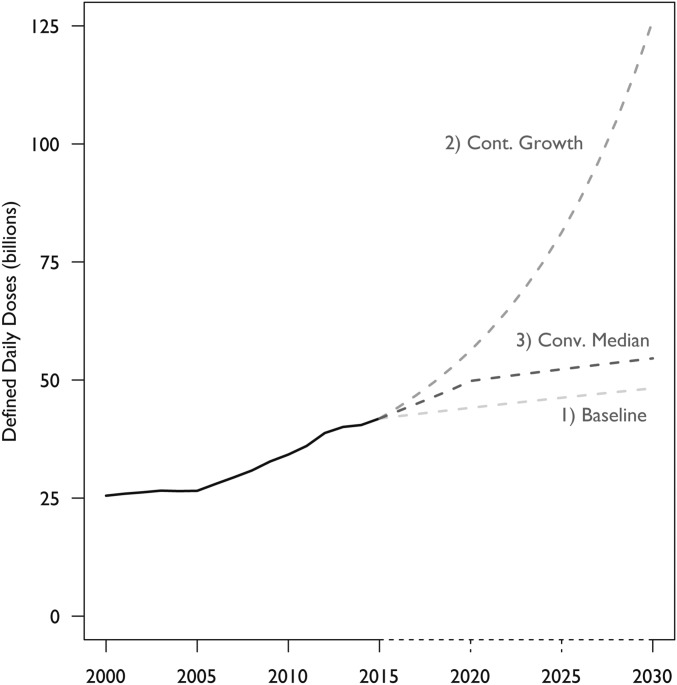
“With regard to human consumption, it is suggested that by 2030, global antibiotic consumption will rise up to 200% more than defined daily doses in 2015 (Klein et al. 2018).”
BackgroundEffects of Perinatal Antibiotic Exposure and Neonatal Gut Microbiota
Morreale, C., Giaroni, C., Baj, A., Folgori, L., Barcellini, L., Dhami, A., Agosti, M. A., & Bresesti, I. (2023) · Antibiotics · doi:10.3390/antibiotics12020258 · Cited by 92
Robertson, J., Iwamoto, K., Hoxha, I., Ghazaryan, L., Abilova, V., Cvijanovic, A., Pyshnik, H., Darakhvelidze, M., Makalkina, L., Jakupi, A., et al. (2019) · Frontiers in Pharmacology · doi:10.3389/fphar.2018.01156 · Cited by 68
Park, J., Kim, C., Hong, Y., Lee, W., Chung, H.-M., Jeong, D.-H., & Kim, H. (2020) · International Journal of Environmental Research and Public Health · doi:10.3390/ijerph17030687 · Cited by 80
“The high detection rates of these substances in the influent were related to their consumption; according to statistics from 2000 to 2015, fluoroquinolone and macrolide had the third and fourth highest consumption rates for antibiotics worldwide [28].”
ResultMódenes, A. N., Bazarin, G., Borba, C. E., Locatelli, P. P. P., Borsato, F. P., Pagno, V., Pedrini, R., Trigueros, D. E. G., Espinoza‐Quiñones, F. R., & Scheufele, F. B. (2020) · Journal of Cleaner Production · doi:10.1016/j.jclepro.2020.123775 · Cited by 76
Atif, M., Ihsan, B., Malik, I., Ahmad, N., Saleem, Z., Sehar, A., & Babar, Z. (2021) · BMC Infectious Diseases · doi:10.1186/s12879-021-06043-5 · Cited by 99
Lv, M., Zhang, D., Niu, X., Ma, J., Lin, Z., & Fu, M. (2022) · Journal of Environmental Management · doi:10.1016/j.jenvman.2022.116028 · Cited by 77
Diao, Y., Shan, R., Li, M., Gu, J., Yuan, H., & Chen, Y. (2022) · ACS Omega · doi:10.1021/acsomega.2c06234 · Cited by 75
Xu, Z., Jia, Y., Zhang, X., Hu, S., Luo, Y., He, H., Chen, B., Huang, B., & Pan, X. (2023) · Chemical Engineering Journal · doi:10.1016/j.cej.2023.143724 · Cited by 74
Taşçı, F., Canbay, H. S., & Doğantürk, M. (2021) · Food Control · doi:10.1016/j.foodcont.2021.108147 · Cited by 68
Lee, O., Madjet, M. E., & Mahmoud, K. A. (2021) · Nano Letters · doi:10.1021/acs.nanolett.1c01986 · Cited by 68
Metadata
- Authors
- Klein, E. Y., Van Boeckel, T. P., Martinez, E. M., Pant, S., Gandra, S., Levin, S. A., Goossens, H., & Laxminarayan, R.
- Affiliations
- Center for Disease Dynamics, Economics & Policy (US)
- Institute of Integrative Biology, ETH Zürich, CH-8006 Zürich, Switzerland;
- Princeton University (US)
- University of Antwerp (BE)
- Corresponding author
- Klein, Eili Y.
- Levin, Simon A.
- ORCID
- Venue
- Proceedings of the National Academy of Sciences
- Publisher
- National Academy of Sciences
- Published
- 2018-03-26
- Volume
- 115
- Issue
- 15
- Pages
- E3463-E3470
- ISSN
- 0027-8424 (ISSN-L)
- 1091-6490
- PMC
- PMC5899442
- OpenAlex
- W2791781902
- Cited by
- 3,232
- References
- 43
- Citations by year
- 2026: 247 · 2025: 416 · 2024: 456 · 2023: 476 · 2022: 432 · 2021: 490 · 2020: 386 · 2019: 252 · 2018: 71
- FWCI
- 183.08
- Type
- journal article
- Language
- en
- Open access
- hybrid
- doi.org
- Licence
- Locations
- Proceedings of the National Academy of Sciences (publishedVersion, cc-by)
- Europe PMC (PubMed Central) (publishedVersion, cc-by)
- PubMed Central (publishedVersion, cc-by)
- PubMed (publishedVersion)
- IFPRI E-brary (International Food Policy Research Institute) (submittedVersion, other-oa)
- CGSPace A Repository of Agricultural Research Outputs (Consultative Group for International Agricultural Research) (submittedVersion, other-oa)
- International Food Policy Research Institute (International Food Policy Research Institute) (submittedVersion, other-oa)
- Repository for Publications and Research Data (ETH Zurich) (submittedVersion, cc-by)
- ETH Zürich Research Collection (cc-by)
- Funders
- Bill and Melinda Gates Foundation (OPP1112355)
- Princeton Environmental Institute, Princeton University (N/A)
- ETH Zurich's Center for Adaptation to a Changing Environment (N/A)
- HHS | Centers for Disease Control and Prevention (16IPA1609425, 16IPA1609424)
- Topics
- Health Sciences › Medicine › Infectious Diseases › Antibiotic Use and Resistance
- Health Sciences › Medicine › Microbiology (medical) › Antibiotic Resistance in Bacteria
- Physical Sciences › Environmental Science › Pollution › Pharmaceutical and Antibiotic Environmental Impacts
- Keywords
- antibiotic use, last-resort antibiotics, carbapenems, polymyxins, oxazolidinones, glycylcyclines, high-income countries, low- and middle-income countries, antibiotic resistance, consumption projections, antibiotic access
- MeSH terms
- Anti-Bacterial Agents, Bacterial Infections, Drug Resistance, Microbial, Economics, Health Services Accessibility, Humans
About these checks
Registry, retraction, Cites and statistics results are computed, not judged, with one exception: a printed reference that no index lists is read once by a model before it counts as a citation error. Claims are extracted by a model and kept only when their quote appears verbatim in the text; each cited source is then checked, with a model’s help, for whether it says what the claim relies on. Those verdicts can be wrong — read the claim’s quote and the cited source before relying on one.
Statistics and arithmetic are recomputed, not judged.
Confidence bands are shown only for fields calibrated on our annotated test set. None is calibrated yet, so no band is shown.
What counts as a claim ›How we measure confidence ›How we check this ›
Are you an author, or do you see a problem with this page? Request a review
Data sources
Bibliographic data: Semantic Scholar, OpenAlex, Crossref.
Contains information from the Semantic Scholar Academic Graph Datasets, made available under the ODC Attribution License (ODC-BY 1.0).
Semantic Scholar’s data is described in: Kinney, R., et al. (2023). The Semantic Scholar Open Data Platform. arXiv:2301.10140.
