

High sensitivity and interindividual variability in the response of the human circadian system to evening light
Open accessThe DOI matches its Crossref record; 50 of the 50 references it cites were found in a registry or an index.
Abstract
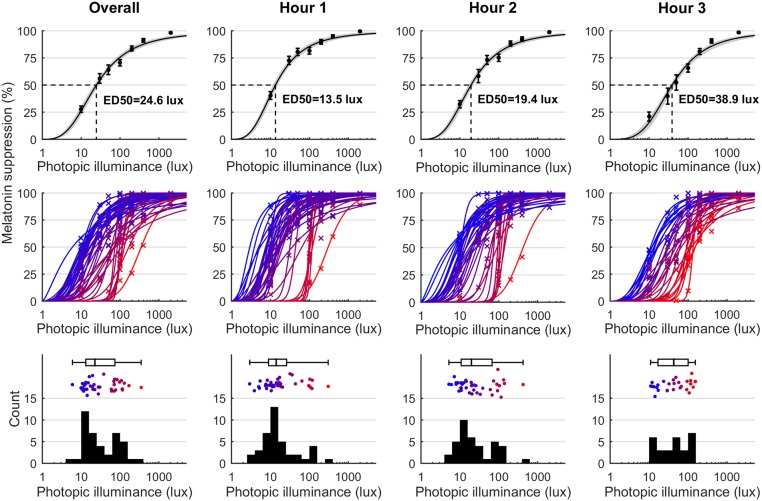
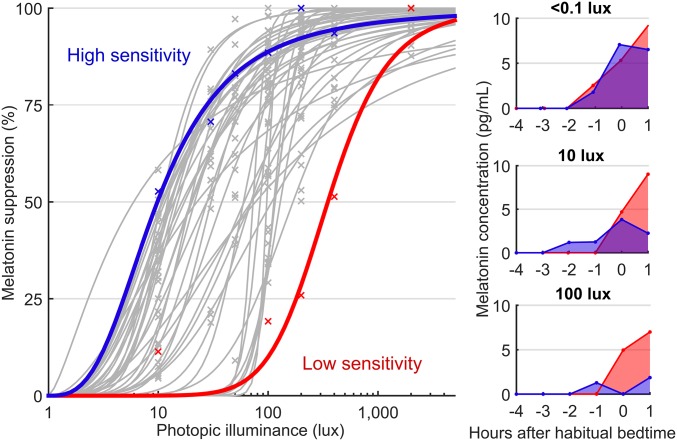
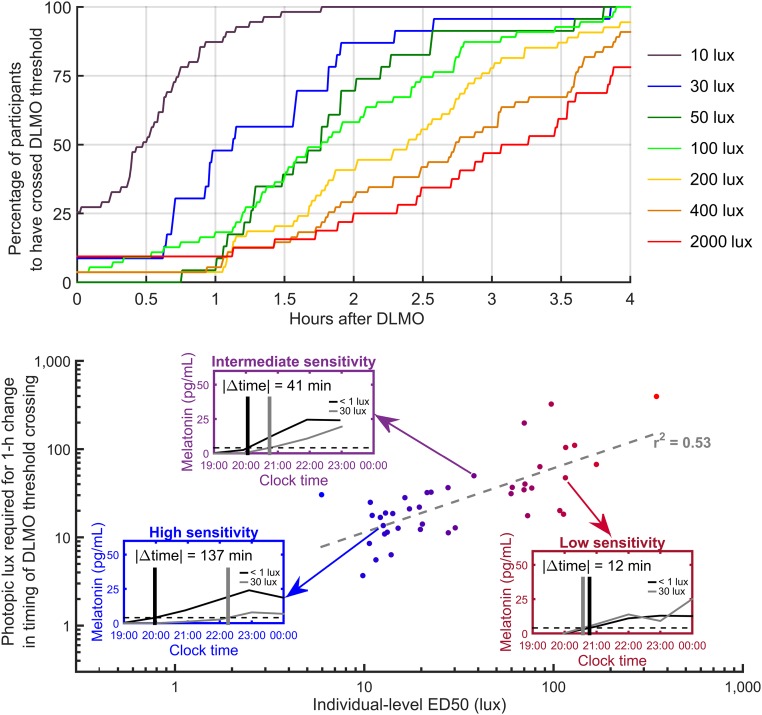
Significance: Electric lighting has fundamentally altered how the human circadian clock synchronizes to the day/night cycle. Exposure to light after dusk is pervasive in the modern world. We examined group-level sensitivity of the circadian system to evening light and the degree to which sensitivity varies between individuals. We found that, on average, humans are highly sensitive to evening light. Specifically, 50% suppression of melatonin occurred at <30 lux, which is comparable to or lower than typical indoor lighting used at night, as well as light produced by electronic devices. Significantly, there was a >50-fold difference in sensitivity to evening light across individuals. Interindividual differences in light sensitivity may explain differential vulnerability to circadian disruption and subsequent impact on human health.
Overview
The claims and statistics of this paper haven’t been checked yet.
Free: it reads the open-access text and checks the first 5 claims that cite a source we can check. Create a free account to check every claim.
Integrity signals
Registry
Cites
Statistics
Figures
Verification
Claims the paper makes
The claims and statistics of this paper haven’t been checked yet.
Free: it reads the open-access text and checks the first 5 claims that cite a source we can check. Create a free account to check every claim.
Claims other papers make about this one
Each is checked against this paper’s own text: does it say what the citing paper says it does?
The source backs part of the claim, not all of it — or backs it for a different population, condition or comparison.
In the citing paper
“There is, in fact, growing evidence showing that humans are, on average, highly sensitive to lower illuminance levels than previously thought (dependent on their prior light exposure history, and individually variable) and that a 50% suppression of melatonin can occur even at <30 lux. 16”
From Sustained remission from perinatal depression after bright light therapy: A pilot randomised, placebo‐controlled trial (2022) · cites this paper as [16]
Experimental — accuracy not yet measured
Self-check
Percentages, sums and reported differences re-computed from the paper’s own numbers.
The self-check needs the paper’s full text.
Citations
Cites
Stability, precision, and near-24-hour period of the human circadian pacemaker
Czeisler, C. A., Duffy, J. F., Shanahan, T. L., Brown, E. N., Mitchell, J. F., Rimmer, D. W., Ronda, J. M., Silva, E. J., Allan, J. S., Emens, J. S., et al. (1999) · Science · doi:10.1126/science.284.5423.2177 · Cited by 1,705 · cited 1×
“6% (4), showing that the human circadian period distribution was in fact similar to that seen in nonhuman animals studied in dark conditions.”
BackgroundChang, A.-M., Aeschbach, D., Duffy, J. F., & Czeisler, C. A. (2015) · Proceedings of the National Academy of Sciences · doi:10.1073/pnas.1418490112 · Cited by 1,430 · cited 1×
“Exposure to electric light after sunset in this range is extremely common in industrialized countries (9, 12–14), and the increasing use of light-emitting devices is a further source of evening light that is potentially disruptive to the circadian system (15, 16).”
BackgroundMeasuring and using light in the melanopsin age
Lucas, R. J., Peirson, S. N., Berson, D. M., Brown, T. M., Cooper, H. M., Czeisler, C. A., Figueiro, M. G., Gamlin, P. D., Lockley, S. W., O’Hagan, J. B., et al. (2014) · Trends in Neurosciences · doi:10.1016/j.tins.2013.10.004 · Cited by 1,278 · cited 1×
“blue light) on the circadian pacemaker (47).”
Self-citationHattar, S., Lucas, R. J., Mrosovsky, N., Thompson, S., Douglas, R. H., Hankins, M. W., Lem, J., Biel, M., Hofmann, F., Foster, R. G., et al. (2003) · Nature · doi:10.1038/nature01761 · Cited by 1,245 · cited 1×
“(5), it is important to note that the circadian system receives light via a complex pathway involving contributions frommultiple photoreceptors (45, 46).”
BackgroundZeitzer, J. M., Dijk, D., Kronauer, R. E., Brown, E. N., & Czeisler, C. A. (2000) · The Journal of Physiology · doi:10.1111/j.1469-7793.2000.00695.x · Cited by 1,175
Entrainment of the Human Circadian Clock to the Natural Light-Dark Cycle
Wright, K. P., McHill, A. W., Birks, B. R., Griffin, B. R., Rusterholz, T., & Chinoy, E. D. (2013) · Current Biology · doi:10.1016/j.cub.2013.06.039 · Cited by 783 · cited 1×
“The interindividual differences we observed in light sensitivity may underlie interindividual differences in sleep and circadian timing that are known to arise with access to electric light (8, 25, 26), in addition to previously identified physiological factors, including intrinsic period of the circadian clock and sl…”
BackgroundCajochen, C., Frey, S., Anders, D., Späti, J., Bues, M., Pross, A., Mager, R., Wirz-Justice, A., & Stefani, O. (2011) · Journal of Applied Physiology · doi:10.1152/japplphysiol.00165.2011 · Cited by 730 · cited 1×
“Exposure to electric light after sunset in this range is extremely common in industrialized countries (9, 12–14), and the increasing use of light-emitting devices is a further source of evening light that is potentially disruptive to the circadian system (15, 16).”
BackgroundMolecular Dissection of Two Distinct Actions of Melatonin on the Suprachiasmatic Circadian Clock
Liu, C., Weaver, D. R., Jin, X., Shearman, L. P., Pieschl, R. L., Gribkoff, V. K., & Reppert, S. M. (1997) · Neuron · doi:10.1016/s0896-6273(00)80350-5 · Cited by 723 · cited 1×
“These findings indicate that the rise of melatonin, an important signal for the initiation of sleep that inhibits electrical activity of SCN neurons (44), is extremely sensitive to suppression by eveninglight exposure.”
BackgroundCajochen, C., Zeitzer, J. M., Czeisler, C. A., & Dijk, D.-J. (2000) · Behavioural Brain Research · doi:10.1016/s0166-4328(00)00236-9 · Cited by 653 · cited 1×
“A related avenue of future work would be to examine whether individual differences in melatonin suppression predict individual differences in other outcomes that are known to follow similar dose–response curves at the group-average level, such as the effect of light on alertness (48).”
BackgroundWever, R. A. (1979) · Topics in Environmental Physiology and Medicine · doi:10.1007/978-1-4612-6142-1 · Cited by 608
Cited by
Items 201–300 of 450
Longcore, T., Villanueva, S. A. M. B., Nguyen-Ngo, K., Ghiani, C. A., Harrison, B., & Colwell, C. S. (2024) · Journal of Experimental Biology · doi:10.1242/jeb.247235 · Cited by 13
Spitschan, M., Kervezee, L., Stefani, O., Gordijn, M. C. M., Veitch, J. A., & Lok, R. (2025) · BMJ Public Health · doi:10.1136/bmjph-2025-003205 · Cited by 14
Lee, S., Kinoshita, S., Noguchi, A., Eto, T., Ohashi, M., Nishimura, Y., Maeda, K., Motomura, Y., Awata, Y., & Higuchi, S. (2020) · Chronobiology International · doi:10.1080/07420528.2020.1752704 · Cited by 14
Huiberts, L., Opperhuizen, A., & Schlangen, L. J. M. (2022) · Lighting Research & Technology · doi:10.1177/14771535221074725 · Cited by 15
Pun, T. B., Phillips, C. L., Marshall, N. S., Comas, M., Hoyos, C. M., D'Rozario, A. L., Bartlett, D. J., Davis, W., Hu, W., Naismith, S. L., et al. (2022) · Clocks & Sleep · doi:10.3390/clockssleep4030030 · Cited by 15
“There is also a large interindividual variability in light sensitivity [22,73,74].”
BackgroundSelf-citationVerma, A. K., Garg, G., Singh, S., & Rizvi, S. I. (2020) · Biological Rhythm Research · doi:10.1080/09291016.2020.1741265 · Cited by 13
“However, a recent study provides evidence that even artificial light less than 30 lux results in 50% reduction in the pineal melatonin synthesis in humans (Phillips et al. 2019).”
BackgroundMichel, S. H., & Kervezee, L. (2023) · Journal of Comparative Physiology A · doi:10.1007/s00359-023-01680-4 · Cited by 12
“…differences in light sensitivity of the circadian system that have been observed between individuals as measured by light-induced melatonin suppression (Phillips et al. 2019), it is plausible that there are considerable inter-individual differences in the impact of season on physiology as well.”
BackgroundPredicting circadian phase in community‐dwelling later‐life adults using actigraphy data
Mayer, C., Kim, D. W., Zhang, M., Lee, M. P., Forger, D. B., Burgess, H. J., & Moon, C. (2024) · Journal of Sleep Research · doi:10.1111/jsr.14425 · Cited by 12
“…in certain circadian parameters, such as sensitivity to light and intrinsic period, and that these differences can greatly impact circadian timing (Mayer et al., 2023; Phillips, Chen, & Robinson, 2010; Phillips et al., 2019; Stone et al., 2020; Wright Jr, Gronfier, Duffy, & Czeisler, 2005).”
Light Hygiene for Circadian Health: A Molecular Perspective
Gubin, D. G., Stefani, O., & Cornélissen, G. (2025) · Frontiers in Bioscience-Landmark · doi:10.31083/fbl39097 · Cited by 13
Jiang, X.-L., Ren, Z., Hai, X., Zhang, L., Wang, Z.-G., & Lyu, F. (2023) · Frontiers in Physiology · doi:10.3389/fphys.2023.1063601 · Cited by 13
“Before the invention of electric lighting, mammals and invertebrates spent nearly all of their time during the day exposed to natural daylight (>300 lx) and nearly all of their time after sunset exposed to dim sources of light (<30 lx), including moonlight, starlight and small fires (Phillips et al., 2019).”
BackgroundGenomic heterogeneity affects the response to Daylight Saving Time
Tyler, J., Fang, Y., Goldstein, C. A., Forger, D. B., Sen, S., & Burmeister, M. (2021) · Scientific Reports · doi:10.1038/s41598-021-94459-z · Cited by 13
Peeters, S., Smolders, K. C. H. J., Kompier, M. E., & de Kort, Y. A. W. (2022) · LEUKOS The Journal of the Illuminating Engineering Society of North America · doi:10.1080/15502724.2021.2001345 · Cited by 13
“…of potentially strong interindividual differences in responsiveness to the acute effects of light as assessed with melatonin suppression (Phillips et al. 2019), we included in our analyses an exploration of interindividual differences in sensitivity to the acute alerting effects of…”
BackgroundLe, B., White, A. C. G., Chaudhari, A., Al‐Mutawaly, N., White, J. E., Lee, W., Hsu, Y., & White, J. D. (2021) · Optics Express · doi:10.1364/oe.443050 · Cited by 13
Feng, H., Ho, A. W.-Y., Lei, B., Chan, J. W. Y., Wang, J., Liu, Y., Tsang, J. C. C., Chan, N. Y., Lam, S. P., Merikangas, K. R., et al. (2022) · Journal of Affective Disorders · doi:10.1016/j.jad.2022.07.029 · Cited by 11
Squire, T., Ryan, A., & Bernard, S. (2020) · Life Sciences in Space Research · doi:10.1016/j.lssr.2020.05.005 · Cited by 14
Biologically Relevant Lighting: An Industry Perspective
Soler, R. R., & Voss, E. (2021) · Frontiers in Neuroscience · doi:10.3389/fnins.2021.637221 · Cited by 13
Correlated color temperature and light intensity: Complementary features in non-visual light field
Argüelles-Prieto, R., Madrid, J. A., Rol, M. A., & Bonmatí‐Carrión, M. (2021) · PLoS ONE · doi:10.1371/journal.pone.0254171 · Cited by 12
“This fact, together with the high interindividual variability in the circadian responses [69], make necessary further investigations in this area.”
BackgroundThe Circadian Effect Versus Mesopic Vision Effect in Road Lighting Applications
Li, M., Wu, P., Ding, J., Yao, Q., & Ju, J. (2020) · Applied Sciences · doi:10.3390/app10196975 · Cited by 14
“[37] showed that a 50% melatonin suppression level corresponds to 13.”
BackgroundMethodWescott, D. L., Hasler, B. P., Franzen, P. L., Taylor, M. L., Klevens, A. M., Gamlin, P., Siegle, G. J., & Roecklein, K. A. (2024) · SLEEP · doi:10.1093/sleep/zsae066 · Cited by 11
Relationships between light exposure and aspects of cognitive function in everyday life
Didikoğlu, A., Woelders, T., Bickerstaff, L., Mohammadian, N., Johnson, S. J., van Tongeren, M., Casson, A. J., Brown, T. M., & Lucas, R. J. (2025) · Communications Psychology · doi:10.1038/s44271-025-00373-9 · Cited by 12
“Including adjustments for time of day, time awake, last sleep duration, and last sleep midpoint, we assessed correlations withcurrentlightintensityasthemeanlightexposureoverthepreceding30, 60,90,and120min.”
Individual light history matters to deal with the Antarctic summer
Castillo, J., Tonon, A. C., Hidalgo, M. P. L., da Silva, A. C. R., & Tassino, B. (2023) · Scientific Reports · doi:10.1038/s41598-023-39315-y · Cited by 10
Shi, D., Dang, J., Chen, H., Yang, D., Yu, Z., Guo, L., Dong, Y., Li, J., Li, X., Li, X., et al. (2024) · Environmental Pollution · doi:10.1016/j.envpol.2024.124689 · Cited by 10
Associations between real‐life light exposure patterns and sleep behaviour in adolescents
Lopes, L. D. C., Vallim, J. R. D. S., Tufik, S., Louzada, F. M., & D’Almeida, V. (2024) · Journal of Sleep Research · doi:10.1111/jsr.14315 · Cited by 11
“Our sample's average light exposure was close to the recommendations for indoor exposure during the evening (Brown et al., 2022) and below the 30 lux threshold (Phillips et al., 2019).”
Nie, J., Chen, Z., Jiao, F., Chen, Y., Pan, Z., Deng, C., Zhang, H., Dong, B., Xi, X., Kang, X., et al. (2022) · Building and Environment · doi:10.1016/j.buildenv.2022.109767 · Cited by 10
The impact of daylight‐saving time (DST) on patients with delayed sleep‐wake phase disorder (DSWPD)
Reis, C., Pilz, L. K., Kramer, A., Lopes, L. V., Paiva, T., & Roenneberg, T. (2023) · Journal of Pineal Research · doi:10.1111/jpi.12867 · Cited by 10
“The advancing effects of more morning light (in DST) are compensated both by being exposed to more evening light when coming home earlier in DST, amplified by a higher light sensitivity in the evening, especially for late chronotypes.(29) In addition, extreme DSWPD patients show a decreased light sensitivity in compar…”
BackgroundHuman Centric IoT Lighting Control based on Personalized Biological Clock Estimations
Papatsimpa, C., Bonarius, J. H., & Linnartz, J. M. G. (2020) · IEEE World Forum on Internet of Things (WF-IoT) · doi:10.1109/wf-iot48130.2020.9221206 · Cited by 14
“Yet, we know that the effects of change in light intensity depend largely on the characteristics of the individual, such as intrinsic period (whether you are a “morning” or a “night” person), light sensitivity and age [3].”
BackgroundNogueira, L. F. R., & Marqueze, E. C. (2021) · Chronobiology International · doi:10.1080/07420528.2021.1918143 · Cited by 12
“There is also an interindividual variability in the response of the circadian system to artificial light exposure at night, which induces higher or lower melatonin suppression according to the degree of sensitivity and light intensity (Phillips et al. 2019).”
BackgroundSchlangen, L. J. M., Belgers, S., Cuijpers, R. H., Zandi, B., & Heynderickx, I. E. J. (2022) · Lighting Research & Technology · doi:10.1177/14771535221120350 · Cited by 10
Khan, T. U., Luan, X., Nabi, G., Raza, M. F., Iqbal, A., Khan, S. N., & Hu, H. (2025) · Insects · doi:10.3390/insects16030289 · Cited by 9
“This study used MaxEnt (v. 3.4.3) [128,129] to identify the suitable habitat available for A. dorsata in the study area.”
InfluentialIshihara, A., Brychta, R. J., LaMunion, S. R., McGehee, S., Donayre, M., Jordan, O., Davis, K., Sanchez, G., Smith, L., Chung, S. T., et al. (2025) · SLEEP · doi:10.1093/sleep/zsaf358 · Cited by 10
Rajzer, M., Wojciechowska, W., Januszewicz, A., Yu, Y., Wang, J.-G., Hahad, O., Daiber, A., Spitschan, M., van de Borne, P., Jelaković, B., et al. (2026) · Cardiovascular Research · doi:10.1093/cvr/cvag061 · Cited by 10
Melatonin Prescription in Children and Adolescents in Relation to Body Weight and Age
Kimland, E. E., Dahlén, E., Martikainen, J., Célind, J., & Kindblom, J. M. (2023) · Pharmaceuticals · doi:10.3390/ph16030396 · Cited by 9
“However, the dosing in that study displayed a large variation [33], indicating that several individual factors may be of importance for dosing of melatonin, such as pronounced inter-individual differences in melatonin production [34], endogenous melatonin production sensitivity to ambient light [35,36], timing of inta…”
BackgroundTassino, B., & da Silva, A. C. R. (2024) · Frontiers in Physiology · doi:10.3389/fphys.2024.1347377 · Cited by 9
Khan, T., Ullah, I., Hu, Y., Liang, J.-C., Ahmad, S., Omifolaji, J. K., & Hu, H. (2024) · Animals · doi:10.3390/ani14101453 · Cited by 8
Cheng, X., D'Orsogna, M. R., & Chou, T. (2021) · Computational and Structural Biotechnology Journal · doi:10.1016/j.csbj.2020.10.035 · Cited by 9
E-Textiles: A Soft Touch Barometer for Female Students to Self-Manage Their Stress
Coulter, J. E., Magee, J., & Nugent, C. (2022) · Journal of Textile Design Research and Practice · doi:10.1080/20511787.2022.2128033 · Cited by 10
“J. Coulter et al. Jo ur na lo f Te xt ile D es ig n R es ea rc h an d P ra ct ic e 2 5 8 is recommended, recent studies have shown that blue light is effective at only 200 lux (Phillips et al. 2019).”
BackgroundRice, A., Sather, O., Wright, K. P., Vetter, C., Martin, M. A., & de la Iglesia, H. O. (2023) · SLEEP · doi:10.1093/sleep/zsad059 · Cited by 9
Nourishing the brain on deep space missions: nutritional psychiatry in promoting resilience
Pathare, N. N., Fayet‐Moore, F., Fogarty, J. A., Jacka, F. N., Strandwitz, P., Strangman, G. E., & Donoviel, D. B. (2023) · Frontiers in Neural Circuits · doi:10.3389/fncir.2023.1170395 · Cited by 9
Wu, H.-S., Gao, F., Davis, J. E., & Given, C. W. (2023) · Supportive Care in Cancer · doi:10.1007/s00520-023-08157-9 · Cited by 12
Disruption of the Body Temperature Circadian Rhythm in Hospitalized Patients
Geneva, I. I., & Javaid, W. (2021) · The American Journal of the Medical Sciences · doi:10.1016/j.amjms.2021.06.021 · Cited by 10
Spitschan, M., Biller, A. M., Broszio, K., FISCHER, E. O., Hegewald, J., Rabstein, S., Saathoff, E., Smolders, K. C. H. J., Thalji, S. M., Weigelt, S., et al. (2026) · BMC Medicine · doi:10.1186/s12916-025-04608-8 · Cited by 10
“Individual variability in the response to light is well-established [51, 52, 60].”
Stone, J. E., Wiley, J. F., Chachos, E., Hand, A. J., Lu, S., Raniti, M. B., Klerman, E. B., Lockley, S. W., Carskadon, M. A., Phillips, A. J. K., et al. (2022) · BMJ Open · doi:10.1136/bmjopen-2021-055716 · Cited by 8
Self-citationThe relationship between sensory processing sensitivity and medication sensitivity: brief report
Jagiellowicz, J., Acevedo, B. P., Tillmann, T., Aron, A. P., & Aron, E. N. (2024) · Frontiers in Psychology · doi:10.3389/fpsyg.2023.1320695 · Cited by 8
How lights affect the circadian rhythm in sleep-awake circle
Li, X., & Xu, Y. (2024) · Chinese Journal of Physics · doi:10.1016/j.cjph.2024.08.016 · Cited by 8
Varma, P., & Rahman, S. A. (2024) · SLEEP · doi:10.1093/sleep/zsae214 · Cited by 9
“…paradigm consisted of a gradual transition to moderately bright, short-wavelength (blue) enriched light (wall-mounted LED lights, melanopic-EDI 238 lux [430 lux]), then to dim, short-wavelength depleted lighting (melanopic-EDI 3 lux [7 lux]) at group-average time of the core temperature minimum.”
BackgroundA digital, real-time, history-based sleep-management tool to enhance alertness
Song, Y. M., Choi, S. J., Lim, D., Wijaya, R. H., Jang, H. J., Park, H. R., Joo, E. Y., & Kim, J. K. (2025) · SLEEP · doi:10.1093/sleep/zsaf160 · Cited by 8
Linander, C. B., Kallemose, T., Joergensen, L. M., Andersen, O., Nehlin, J. O., & Jawad, B. N. (2020) · Archives of Gerontology and Geriatrics · doi:10.1016/j.archger.2020.104223 · Cited by 9
Mason, B., Tubbs, A. S., Fernandez, F., & Grandner, M. A. (2022) · Chronobiology International · doi:10.1080/07420528.2021.2021229 · Cited by 8
Visual Comfort and Acute Alerting Effects of Diurnal Intermittent Bright Light
Kompier, M. E., Smolders, K. C. H. J., Schlangen, L. J. M., & de Kort, Y. A. W. (2022) · LEUKOS The Journal of the Illuminating Engineering Society of North America · doi:10.1080/15502724.2022.2068573 · Cited by 9
“Participants may have responded differently to the light manipulation due to interindividual differences in light sensitivity (Phillips et al. 2019) and/or vulnerability to sleep loss (Vandewalle et al. 2009; van Dongen et al. 2004).”
BackgroundNorazahar, N., & Suppiah, D. (2022) · Process Safety and Environmental Protection · doi:10.1016/j.psep.2022.12.050 · Cited by 9
Cui, Y., Kwan, M., & Liu, Y. (2025) · Environmental Science & Technology · doi:10.1021/acs.est.5c08270 · Cited by 7
Acute effect of light and time of day on thermal physiology, perception, and behavior
Elkounni, A., Vellei, M., Dréau, J. L., Schweiker, M., & Inard, C. (2025) · Scientific Reports · doi:10.1038/s41598-025-22542-w · Cited by 7
“They found that some individuals needed over fifty times more light than others to reach this threshold, clearly showing that treating light sensitivity as a single constant would hide these enormous personal differences 110 .”
Home lighting, blue-light filtering, and their effects on melatonin suppression
Terán, E., Yee-Rendón, C. M., Sosa-Arámbula, H. J., la Herrán-Arita, A. K. D., & Woods, R. L. (2026) · Scientific Reports · doi:10.1038/s41598-025-29882-7 · Cited by 7
“This model does not account for the substantial inter-individual variability in light sensitivity that has been reported 1,3 , the mechanisms of which remain unknown.”
Weng, M., Schöllhorn, I., Kazhura, M., Cardini, B. B., & Stefani, O. (2022) · Clocks & Sleep · doi:10.3390/clockssleep4040047 · Cited by 9
“While a 180 min long light exposure of 40lx mEDI should be sufficient for an evening melatonin suppression of up to 50% [54], light intensities applied in this study were possibly not high enough to affect some individual participants (required light intensity can vary between 6 and 350lx [63]).”
BackgroundGubin, D. G. (2024) · Royal Society of Chemistry eBooks · doi:10.1039/bk9781839167553-00536 · Cited by 7
Mapping the physiological changes in sleep regulation across infancy and young childhood
Webb, L., Phillips, A. J. K., & Roberts, J. A. (2024) · PLoS Computational Biology · doi:10.1371/journal.pcbi.1012541 · Cited by 9
“In adults, it is well established that there are large inter-individual differences in sleep and circadian physiology [33-36].”
BackgroundSelf-citationBeute, F., Löwden, A., & Aries, M. M. (2022) · Lighting Research & Technology · doi:10.1177/14771535221136099 · Cited by 7
“14,15 These counterintuitive outcomes may be due to differences between highly controlled laboratory studies and everyday light exposure (i.e. affected by light history or differences in light levels 19–21 , 24 ).”
BackgroundImpact of Light Schedules and Model Parameters on the Circadian Outcomes of Individuals
Mayer, C., Walch, O., Forger, D. B., & Hannay, K. M. (2023) · Journal of Biological Rhythms · doi:10.1177/07487304231176936 · Cited by 8
“Individuals likely vary substantially in several of the parameter values, such as intrinsic circadian period or light sensitivity (Stone et al., 2020; Phillips et al., 2019).”
BackgroundInfluentialTang, S., Liu, M., Wang, W., Liang, A., Zhang, F., & Luo, A. (2023) · New Journal of Chemistry · doi:10.1039/d3nj02297h · Cited by 7
Chronotype and lipid metabolism in Arctic Sojourn Workers
Gubin, D. G., Ветошкин, А. С., Петровна, Ш. Н., Gapon, L., Borisenkov, M. F., Cornélissen, G., & Weinert, D. (2023) · Chronobiology International · doi:10.1080/07420528.2023.2256839 · Cited by 7
“Considering the large individual differences in light sensitivity (Chellappa 2021; Phillips et al. 2019), late chronotypes may face several health issues working under conditions combining work at high Arctic latitudes and the need for regular re-adaptation to the photo-periodic and temperature…”
de Abreu, A. C. O. V., de Oliveira, M. A. B., Alquati, T., Tonon, A. C., Reis, M. D. N., Rossi, A. C., Bonatto, F., & Hidalgo, M. P. L. (2023) · Journal of Biological Rhythms · doi:10.1177/07487304231201752 · Cited by 7
“Cho et al., 2016; Phillips et al., 2019; Stebelova et al., 2020; Tähkämö et al., 2019).”
BackgroundWang, L., Ma, X., Chen, L., Jiang, F., & Zhou, J. (2022) · BMC Pregnancy and Childbirth · doi:10.1186/s12884-021-04311-5 · Cited by 7
“The chronomedicine was to clarify the rhythm mechanism of physiology and behavior in living organisms, to clarify that adapting to natural rhythms actively may help maintaining health, reducing or avoiding the infestation of pathogenic factors [2].”
BackgroundFaulkner, S., Drake, R., Ogden, M., Gardani, M., & Bee, P. (2022) · PLoS ONE · doi:10.1371/journal.pone.0269453 · Cited by 7
How Fast Do “Owls” and “Larks” Eat?
Verde, L., Docimo, A., Chirico, G., Savastano, S., Colao, A. A. L., Barrea, L., & Muscogiuri, G. (2023) · Nutrients · doi:10.3390/nu15061437 · Cited by 7
“The extremes of this normal variation appear to be strongly driven by genetics, along with other features of circadian periodicity in humans; sensitivity to zeitgebers (environmental stimuli that synchronize the biological rhythms of organisms with their environment) has also been shown to be genetically variable [26].”
BackgroundZhang, J., Feng, J., & Feng, C. (2023) · Pharmaceutical Science Advances · doi:10.1016/j.pscia.2023.100019 · Cited by 7
“Similar to what occurs in humans, light has a striking suppressive effect on sleep in fi sh (leading to a 90% reduction of sleep) [7,14,15].”
The Role of the Circadian System in Attention Deficit Hyperactivity Disorder
Bondopadhyay, U., Díaz-Orueta, U., & Coogan, A. N. (2021) · Advances in experimental medicine and biology · doi:10.1007/978-3-030-81147-1_7 · Cited by 8
Barreira, J., Marques, E. A., Nakamura, F. Y., Brito, J., & Figueiredo, P. (2025) · Sleep And Breathing · doi:10.1007/s11325-025-03531-9 · Cited by 7
Jones, C. W., Larson, O., Basner, M., & Dinges, D. F. (2024) · SLEEP · doi:10.1093/sleep/zsae091 · Cited by 6
Crowley, S. J., Poole, E., Adams, J. E., & Eastman, C. I. (2024) · SLEEP Advances · doi:10.1093/sleepadvances/zpae065 · Cited by 6
The Circadian Response to Evening Light Spectra in Early Childhood: Preliminary Insights
Hartstein, L. E., Wright, K. P., Behn, C. D., Stowe, S. R., & LeBourgeois, M. K. (2025) · Journal of Biological Rhythms · doi:10.1177/07487304241311652 · Cited by 6
“Even dim levels of light in the evening can reduce production of the sleep-pro-moting hormone melatonin and delay the timing of the circadian rhythm (Duffy and Wright, 2005), with large individual differences observed in both adults and children (Hartstein et al., 2023a; Phillips et al., 2019).”
Xu, Y.-X., Li, J., Wan, Y., Su, P., Tao, F., & Sun, Y. (2025) · Social Science & Medicine · doi:10.1016/j.socscimed.2025.117689 · Cited by 7
Klevens, A. M., Taylor, M. L., Wescott, D. L., Gamlin, P. D., Franzen, P. L., Hasler, B. P., Siegle, G. J., & Roecklein, K. A. (2024) · SLEEP · doi:10.1093/sleep/zsae109 · Cited by 6
Do no harm: the beginning of the age of healthy hospital lighting
Cain, S. W., & Phillips, A. J. K. (2021) · SLEEP · doi:10.1093/sleep/zsab016 · Cited by 6
Self-citationCárthaigh, S. M., Perry, J. L., & Griffin, C. P. (2022) · Behaviour and Information Technology · doi:10.1080/0144929x.2022.2136533 · Cited by 6
“…by the empirical literature is to minimise evening light exposure in general, rather than selectively reducing exposure to smart-phones (Bartel, Gradisar, and Williamson 2015; Munch et al. 2006; Phillips et al. 2019; Santhi et al. 2012; Te Kulve, Schlangen, and van Marken Lichtenbelt 2019).”
BackgroundThe effect of season of birth on brain epigenome-wide DNA methylation of older adults
Didikoğlu, A., Nair, N., Robinson, A., Roncaroli, F., Pendleton, N., Payton, A., & Canal, M. M. (2021) · Journal of Developmental Origins of Health and Disease · doi:10.1017/s2040174421000453 · Cited by 6
Data-driven modelling approach to circadian temperature rhythm profiles in free-living conditions
Lipsanen, J. O., Kuula, L., Elovainio, M. J., Partonen, T., & Pesonen, A. (2021) · Scientific Reports · doi:10.1038/s41598-021-94522-9 · Cited by 7
Ritter, P. S., Glenn, T., Achtyes, E. D., Alda, M., Ağaoğlu, E., Altınbaş, K., Andreassen, O. A., Angelopoulos, E. K., Ardau, R., Aydın, M., et al. (2024) · International Journal of Bipolar Disorders · doi:10.1186/s40345-024-00364-5 · Cited by 5
A higher illuminance reduces momentary exhaustion in exhausted employees: Results from a field study
Frick, S., Smolders, K. C. H. J., van der Meij, L., Demerouti, E., & de Kort, Y. A. W. (2025) · Journal of Environmental Psychology · doi:10.1016/j.jenvp.2025.102543 · Cited by 6
The circadian rhythm of human body temperature – Clinical implications and review of the literature
Geneva, I. I. (2025) · Chronobiology International · doi:10.1080/07420528.2025.2511268 · Cited by 5
Stone, J. E., Steven, D., Cheng, W., Cain, S. W., & Phillips, A. J. K. (2025) · Journal of Biological Rhythms · doi:10.1177/07487304251391268 · Cited by 6
“These interindividual differences in responses are particularly pronounced for intermediate levels of light exposure, which are typically experienced indoors (Phillips et al., 2019).”
Self-citationConnolly, L. J., Rajaratnam, S. M. W., Spitz, G., Lockley, S. W., & Ponsford, J. L. (2021) · Frontiers in Neurology · doi:10.3389/fneur.2021.651392 · Cited by 5
Self-citationWang, T., Rong, X., Hu, D., Xu, J., Wang, Z., Shao, R., Liu, W., Lan, D., Wu, H., Hao, L., et al. (2025) · Journal of Building Engineering · doi:10.1016/j.jobe.2025.112575 · Cited by 5
Zeman, M., Štefánik, P., Rumanova, V. S., & Okuliarová, M. (2025) · Molecular and Cellular Endocrinology · doi:10.1016/j.mce.2025.112559 · Cited by 5
Optimizing the Potential Utility of Blue-Blocking Glasses for Sleep and Circadian Health
Glickman, G. L., Harrison, E. M., Herf, M., Herf, L., & Brown, T. M. (2025) · Translational Vision Science & Technology · doi:10.1167/tvst.14.7.25 · Cited by 6
Bright light exposure during simulated night work improves cognitive flexibility
Sunde, E., Mrdalj, J., Pedersen, T., Bjorvatn, B., Grønli, J., Harris, A., Waage, S., & Pallesen, S. (2022) · Chronobiology International · doi:10.1080/07420528.2022.2050922 · Cited by 7
“Previously, large individual differences in the responses to light exposure have been reported (Phillips et al. 2019), hence individual differences may have affected the current results.”
ResultThe Updating and Individualizing of Sleep Hygiene Rules for Non-clinical Adult Populations
Urbanová, L., Vňuková, M., Anders, M., Ptáček, R., & Bušková, J. (2023) · Prague Medical Report · doi:10.14712/23362936.2023.26 · Cited by 6
“On the other hand, inter-individual differences in light sensitivity must also be taken into account in this case (Phillips et al., 2019).”
Fazlali, F., Lazar, R., Yahya, F., Epple, C., Spitschan, M., Stefani, O., & Cajochen, C. (2025) · iScience · doi:10.1016/j.isci.2025.112983 · Cited by 6
Estimating Representative Group Intrinsic Circadian Period from Illuminance-Response Curve Data
Stack, N., Zeitzer, J. M., Czeisler, C. A., & Behn, C. D. (2019) · Journal of Biological Rhythms · doi:10.1177/0748730419886992 · Cited by 5
“Recent work has highlighted interindividual differences in the sensitivity of the human circadian clock to evening light as measured by dose-response curves in melatonin suppression (Phillips et al., 2019), but less is known about interindividual differences in phase-shifting responses.”
BackgroundLight in ecological settings: Entrainment, circadian disruption, and interventions
Fischer, D. R., & Hilditch, C. J. (2022) · Progress in brain research · doi:10.1016/bs.pbr.2022.04.001 · Cited by 5
Chromaticity-based real-time assessment of melanopic and luminous efficiency of smartphone displays
Yao, Q., Zhang, L., Dai, Q., Wang, Y., & Wu, P. (2020) · Optics Express · doi:10.1364/oe.384884 · Cited by 5
Weed, L., Jamgochian, A. L., Hilaire, M. A. S., Cheng, P., Kochenderfer, M. J., & Zeitzer, J. M. (2025) · Journal of Biological Rhythms · doi:10.1177/07487304251392289 · Cited by 5
“Evaluations that include multiple collections of both criterion standard phase markers with proximal light exposure patterns can be used to further optimize these models by customizing individual sensitivities to light as well as other model parameters (Stone et al., 2020; Phillips et al., 2019).”
Mechanism study of exercise intervention on circadian disruption in Alzheimer’s disease
Zhang, M., Shi, L., Meng, X., Dong, Y., Sun, Y., Qian, Q., & Jin, Q. (2025) · Frontiers in Neuroscience · doi:10.3389/fnins.2025.1696673 · Cited by 4
Naturalistic light exposure patterns in relation to medication status, mood symptoms, and chronotype
Fitton, R., Stone, J., Lander, A. C., Hrnjic, M., Burge, M. T., Buller, E., White, A. P., Phillips, A. J. K., Cain, S. W., & McGlashan, E. M. (2026) · npj Biological Timing and Sleep · doi:10.1038/s44323-025-00062-0 · Cited by 6
“Additionally,previousstudies have shown a > 50-fold difference in response to evening light among young adults 12 , and this variability is likely ampli fi ed in a sample including those taking medications like SSRIs 17 .”
InfluentialSelf-citationOhashi, M., Eto, T., Takasu, T., Motomura, Y., & Higuchi, S. (2023) · Clocks & Sleep · doi:10.3390/clockssleep5040041 · Cited by 4
“Photosensitivity and nocturnalization of circadian rhythms have been examined in of melatonin suppression as well as phase delay due to light at night [37,38].”
BackgroundSánchez-Cano, A. I., Blasco-Yachemet, L., & Aporta, J. (2025) · Buildings · doi:10.3390/buildings15111779 · Cited by 4
Stevenson, S., Suppiah, H. T., & Driller, M. W. (2025) · Lighting Research & Technology · doi:10.1177/14771535251338582 · Cited by 5
An, Z., Merrill, N. J., Lee, K., Robin, R., Hayat, A., Zapfe, O., & Piccoli, B. (2021) · Bulletin of Mathematical Biology · doi:10.1007/s11538-020-00829-5 · Cited by 5
“In a recent study by Phillips et al. (2019), their data demonstrates that the dim evening light has a significant effect on the human circadian system.”
He, M., Chen, H., Li, S., Ru, T., Chen, Q., & Zhou, G. (2023) · Journal of Sleep Research · doi:10.1111/jsr.14113 · Cited by 4
“…(460 – 480 nm) of light (Dacey et al., 2005; Dkhissi-Benyahya et al., 2007), such that exposure to short-wavelength light at night can produce more pronounced NIF effects on melatonin suppression (Chang et al., 2015; Phillips et al., 2019) and sleep (Chang et al., 2015; Münch et al., 2006).”
Genetic and biological factors in sleep
Gentry, N. W., Ptáček, L. J., & Fu, Y. (2021) · Elsevier eBooks · doi:10.1016/b978-0-12-815501-1.00001-6 · Cited by 5
Circadian photoreception: The impact of light on human circadian rhythms
Zeitzer, J. M., & Lok, R. (2022) · Progress in brain research · doi:10.1016/bs.pbr.2022.04.005 · Cited by 5
Metadata
- Authors
- Phillips, A. J. K., Vidafar, P., Burns, A. C., McGlashan, E. M., Anderson, C., Rajaratnam, S. M. W., Lockley, S. W., & Cain, S. W.
- Affiliations
- Monash University (AU)
- Corresponding author
- Cain, Sean W.
- ORCID
- Venue
- Proceedings of the National Academy of Sciences
- Publisher
- National Academy of Sciences
- Published
- 2019-05-28
- Volume
- 116
- Issue
- 24
- Pages
- 12019-12024
- ISSN
- 0027-8424 (ISSN-L)
- 1091-6490
- PMC
- PMC6575863
- OpenAlex
- W2946852268
- Cited by
- 430
- References
- 50
- Citations by year
- 2026: 53 · 2025: 54 · 2024: 60 · 2023: 54 · 2022: 76 · 2021: 64 · 2020: 51 · 2019: 17
- FWCI
- 28.72
- Type
- journal article
- Language
- en
- Open access
- hybrid
- doi.org
- Licence
- Locations
- Proceedings of the National Academy of Sciences (publishedVersion, cc-by-nc-nd)
- Europe PMC (PubMed Central) (publishedVersion, cc-by-nc-nd)
- PubMed Central (publishedVersion, cc-by-nc-nd)
- PubMed (publishedVersion)
- Monash University Research Portal (Monash University) (submittedVersion, other-oa)
- Surrey Research Insight Open Access (The University of Surrey) (submittedVersion)
- Funders
- Department of Health | National Health and Medical Research Council (1064231)
- Topics
- Life Sciences › Neuroscience › Endocrine and Autonomic Systems › Circadian rhythm and melatonin
- Physical Sciences › Environmental Science › Global and Planetary Change › Impact of Light on Environment and Health
- Social Sciences › Psychology › Experimental and Cognitive Psychology › Sleep and Work-Related Fatigue
- Keywords
- circadian system, evening light, melatonin suppression, interindividual variability, photosensitivity, circadian rhythm disruption, electric lighting, indoor lighting
- MeSH terms
- Adult, Circadian Rhythm, Female, Humans, Individuality, Light, Lighting, Male, Melatonin, Young Adult, Circadian Clocks
About these checks
Registry, retraction, Cites and statistics results are computed, not judged, with one exception: a printed reference that no index lists is read once by a model before it counts as a citation error. Claims are extracted by a model and kept only when their quote appears verbatim in the text; each cited source is then checked, with a model’s help, for whether it says what the claim relies on. Those verdicts can be wrong — read the claim’s quote and the cited source before relying on one.
Statistics and arithmetic are recomputed, not judged.
Confidence bands are shown only for fields calibrated on our annotated test set. None is calibrated yet, so no band is shown.
What counts as a claim ›How we measure confidence ›How we check this ›
Are you an author, or do you see a problem with this page? Request a review
Data sources
Bibliographic data: Semantic Scholar, OpenAlex, Crossref.
Contains information from the Semantic Scholar Academic Graph Datasets, made available under the ODC Attribution License (ODC-BY 1.0).
Semantic Scholar’s data is described in: Kinney, R., et al. (2023). The Semantic Scholar Open Data Platform. arXiv:2301.10140.
