

High sensitivity and interindividual variability in the response of the human circadian system to evening light
Open accessThe DOI matches its Crossref record; 50 of the 50 references it cites were found in a registry or an index.
Abstract
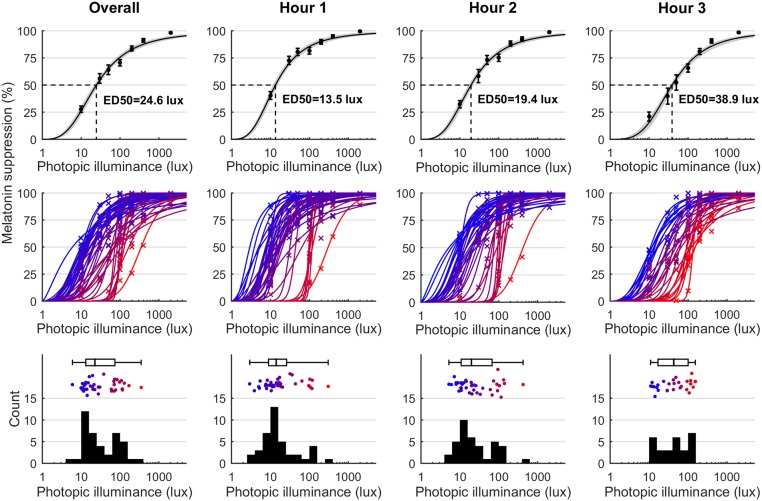
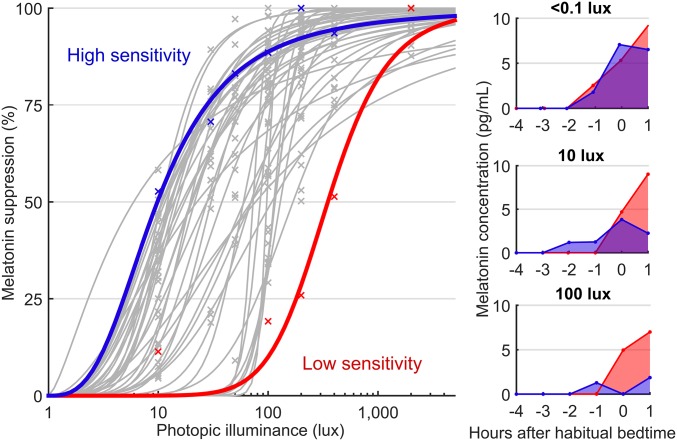
Significance: Electric lighting has fundamentally altered how the human circadian clock synchronizes to the day/night cycle. Exposure to light after dusk is pervasive in the modern world. We examined group-level sensitivity of the circadian system to evening light and the degree to which sensitivity varies between individuals. We found that, on average, humans are highly sensitive to evening light. Specifically, 50% suppression of melatonin occurred at <30 lux, which is comparable to or lower than typical indoor lighting used at night, as well as light produced by electronic devices. Significantly, there was a >50-fold difference in sensitivity to evening light across individuals. Interindividual differences in light sensitivity may explain differential vulnerability to circadian disruption and subsequent impact on human health.
Overview
The claims and statistics of this paper haven’t been checked yet.
Free: it reads the open-access text and checks the first 5 claims that cite a source we can check. Create a free account to check every claim.
Integrity signals
Registry
Cites
Statistics
Figures
Verification
Claims the paper makes
The claims and statistics of this paper haven’t been checked yet.
Free: it reads the open-access text and checks the first 5 claims that cite a source we can check. Create a free account to check every claim.
Claims other papers make about this one
Each is checked against this paper’s own text: does it say what the citing paper says it does?
The source backs part of the claim, not all of it — or backs it for a different population, condition or comparison.
In the citing paper
“There is, in fact, growing evidence showing that humans are, on average, highly sensitive to lower illuminance levels than previously thought (dependent on their prior light exposure history, and individually variable) and that a 50% suppression of melatonin can occur even at <30 lux. 16”
From Sustained remission from perinatal depression after bright light therapy: A pilot randomised, placebo‐controlled trial (2022) · cites this paper as [16]
Experimental — accuracy not yet measured
Self-check
Percentages, sums and reported differences re-computed from the paper’s own numbers.
The self-check needs the paper’s full text.
Citations
Cites
Stability, precision, and near-24-hour period of the human circadian pacemaker
Czeisler, C. A., Duffy, J. F., Shanahan, T. L., Brown, E. N., Mitchell, J. F., Rimmer, D. W., Ronda, J. M., Silva, E. J., Allan, J. S., Emens, J. S., et al. (1999) · Science · doi:10.1126/science.284.5423.2177 · Cited by 1,705 · cited 1×
“6% (4), showing that the human circadian period distribution was in fact similar to that seen in nonhuman animals studied in dark conditions.”
BackgroundChang, A.-M., Aeschbach, D., Duffy, J. F., & Czeisler, C. A. (2015) · Proceedings of the National Academy of Sciences · doi:10.1073/pnas.1418490112 · Cited by 1,430 · cited 1×
“Exposure to electric light after sunset in this range is extremely common in industrialized countries (9, 12–14), and the increasing use of light-emitting devices is a further source of evening light that is potentially disruptive to the circadian system (15, 16).”
BackgroundMeasuring and using light in the melanopsin age
Lucas, R. J., Peirson, S. N., Berson, D. M., Brown, T. M., Cooper, H. M., Czeisler, C. A., Figueiro, M. G., Gamlin, P. D., Lockley, S. W., O’Hagan, J. B., et al. (2014) · Trends in Neurosciences · doi:10.1016/j.tins.2013.10.004 · Cited by 1,278 · cited 1×
“blue light) on the circadian pacemaker (47).”
Self-citationHattar, S., Lucas, R. J., Mrosovsky, N., Thompson, S., Douglas, R. H., Hankins, M. W., Lem, J., Biel, M., Hofmann, F., Foster, R. G., et al. (2003) · Nature · doi:10.1038/nature01761 · Cited by 1,245 · cited 1×
“(5), it is important to note that the circadian system receives light via a complex pathway involving contributions frommultiple photoreceptors (45, 46).”
BackgroundZeitzer, J. M., Dijk, D., Kronauer, R. E., Brown, E. N., & Czeisler, C. A. (2000) · The Journal of Physiology · doi:10.1111/j.1469-7793.2000.00695.x · Cited by 1,175
Entrainment of the Human Circadian Clock to the Natural Light-Dark Cycle
Wright, K. P., McHill, A. W., Birks, B. R., Griffin, B. R., Rusterholz, T., & Chinoy, E. D. (2013) · Current Biology · doi:10.1016/j.cub.2013.06.039 · Cited by 783 · cited 1×
“The interindividual differences we observed in light sensitivity may underlie interindividual differences in sleep and circadian timing that are known to arise with access to electric light (8, 25, 26), in addition to previously identified physiological factors, including intrinsic period of the circadian clock and sl…”
BackgroundCajochen, C., Frey, S., Anders, D., Späti, J., Bues, M., Pross, A., Mager, R., Wirz-Justice, A., & Stefani, O. (2011) · Journal of Applied Physiology · doi:10.1152/japplphysiol.00165.2011 · Cited by 730 · cited 1×
“Exposure to electric light after sunset in this range is extremely common in industrialized countries (9, 12–14), and the increasing use of light-emitting devices is a further source of evening light that is potentially disruptive to the circadian system (15, 16).”
BackgroundMolecular Dissection of Two Distinct Actions of Melatonin on the Suprachiasmatic Circadian Clock
Liu, C., Weaver, D. R., Jin, X., Shearman, L. P., Pieschl, R. L., Gribkoff, V. K., & Reppert, S. M. (1997) · Neuron · doi:10.1016/s0896-6273(00)80350-5 · Cited by 723 · cited 1×
“These findings indicate that the rise of melatonin, an important signal for the initiation of sleep that inhibits electrical activity of SCN neurons (44), is extremely sensitive to suppression by eveninglight exposure.”
BackgroundCajochen, C., Zeitzer, J. M., Czeisler, C. A., & Dijk, D.-J. (2000) · Behavioural Brain Research · doi:10.1016/s0166-4328(00)00236-9 · Cited by 653 · cited 1×
“A related avenue of future work would be to examine whether individual differences in melatonin suppression predict individual differences in other outcomes that are known to follow similar dose–response curves at the group-average level, such as the effect of light on alertness (48).”
BackgroundWever, R. A. (1979) · Topics in Environmental Physiology and Medicine · doi:10.1007/978-1-4612-6142-1 · Cited by 608
Cited by
Items 301–400 of 450
How Daylight Controls the Biological Clock, Organises Sleep, and Enhances Mood and Performance
Wirz‐Justice, A. (2022) · Springer eBooks · doi:10.1007/978-3-031-04108-2_10 · Cited by 5
Wen, P., Tan, F., Wu, M., Cai, Q., Xu, R., Zhang, X., Wang, Y., Li, S., Lei, M., Chen, H., et al. (2023) · Heliyon · doi:10.1016/j.heliyon.2023.e14627 · Cited by 4
“Adolescents are particularly susceptible to the effects of evening light environments [22].”
The effect of topical 1 % atropine on ocular dimensions and diurnal rhythms of the human eye
Nilsen, N. G., Gilson, S. J., Pedersen, H. R., Hagen, L. A., Wildsoet, C. F., & Baraas, R. C. (2023) · Vision Research · doi:10.1016/j.visres.2023.108341 · Cited by 4
“…were confined to the lab for the evening measurements, during which time ambient light levels were kept below 20 lx to avoid artificially suppressing melatonin secretion, as there can be large between-individual variations in sensitivity in suppressing melatonin (Phillips et al., 2019).”
Wen, P., Tan, F., Li, S., Lei, M., Chen, H., & Hu, X. (2024) · Building and Environment · doi:10.1016/j.buildenv.2024.111749 · Cited by 6
Erel, E., & Ateş, B. (2025) · Analytical Letters · doi:10.1080/00032719.2025.2454935 · Cited by 3
“Healthy MT levels in the human body range from 0.01 l g L − 1 in light to 0.20 l g L − 1 in darkness (Phillips et al. 2019; Deng et al. 2022).”
InfluentialLiu, Z., Xie, Z., Zhuang, C., Hu, M., Zhuang, Z., & Chen, T. (2025) · Displays · doi:10.1016/j.displa.2025.103235 · Cited by 3
Micic, G., Reynolds, A. C., Phillips, A. J. K., Zee, P. P., Richardson, C. E., Burgess, H. J., Lack, L. C., CATCHESIDE, P. G., Goldstein, C. A., Scott, H., et al. (2026) · Sleep Medicine Reviews · doi:10.1016/j.smrv.2026.102240 · Cited by 4
Self-citationTrebucq, L. L., Moyano, M. D., Coldeira, M. F., Golombek, D. A., de la Iglesia, H. O., Spiousas, I., & Casiraghi, L. P. (2026) · SLEEP · doi:10.1093/sleep/zsag039 · Cited by 3
Monterastelli, A. J., Misiunaite, I., Eastman, C. I., & Crowley, S. J. (2026) · Scientific Reports · doi:10.1038/s41598-026-37985-y · Cited by 3
Perspective: sleep regularity—where do we go from here?
Phillips, A. J. K., & Steven, D. (2026) · SLEEP · doi:10.1093/sleep/zsag114 · Cited by 4
Self-citationNighttime light exposure and cardiac structure and function
Dai, J., Dai, W., Heianza, Y., & Qi, L. (2026) · European Heart Journal · doi:10.1093/eurheartj/ehag563 · Cited by 4
Uncovering personal circadian responses to light through particle swarm optimization
Vicente-Martínez, J., Bonmatí‐Carrión, M., Madrid, J. A., & Rol, M. A. (2023) · Computer Methods and Programs in Biomedicine · doi:10.1016/j.cmpb.2023.107933 · Cited by 3
Olivera, A., Passos, C., Vazquez, J. I., Tassino, B., & Migliaro, A. (2024) · Neotropical Ichthyology · doi:10.1590/1982-0224-2023-0100 · Cited by 3
Smolders, K. C. H. J. (2024) · Lighting Research & Technology · doi:10.1177/14771535241237002 · Cited by 3
“12,13 Insights into inter-individual differences can inform questions regarding for whom interventions are most beneficial and to what extent the recommendations for healthy luminous exposure need to be person-tailored.”
BackgroundThe dark side of light: light at night may raise the risk of type 2 diabetes
Xue, P., Nôga, D. A., & Benedict, C. (2024) · The Lancet Regional Health - Europe · doi:10.1016/j.lanepe.2024.100955 · Cited by 5
“For instance, light sensitivity of the master clock can vary considerably between individuals, 9 which may also impact to what extent light at night may affect the risk of developing type 2 diabetes.”
BackgroundOptimizing alertness in a 24-hour society: the role of personalized digital tools
Postnova, S. (2025) · SLEEP · doi:10.1093/sleep/zsaf185 · Cited by 3
“These include • inter-individual variability in circadian and sleep physiology, e.g. sensitivity to light [16], chronotypes [6], age [17], and sex [18]; • differences in behavior, including various social and cultural constraints and commitments; • the ever-changing daily schedules and commitments…”
Circadian Profile of Salivary Melatonin Secretion in Hypoxic Ischemic Encephalopathy
Kapek, Ł., Paprocka, J., Kijonka, M., Zych, M., Emich‐Widera, E., Rzepka-Migut, B., Borys, D., Kaczmarczyk‐Sedlak, I., & Sokol, M. B. (2020) · International Journal of Endocrinology · doi:10.1155/2020/6209841 · Cited by 3
“Due to the volume differences of plasma and saliva, the interindividual differences in sensitivity to the light, a diurnal variation in melatonin synthesis, and the effects associated with the continuous production of saliva and low salivary melatonin concentrations, the salivary melatonin sampling is of lower resolut…”
BackgroundEmotional Response to Different Lighting Conditions
Saleem, D., & Nazari‐Heris, M. (2023) · Indoor Environment and Sustainable Building/Indoor environment and sustainable building · doi:10.1007/978-3-031-41148-9_12 · Cited by 3
Power Analysis for Human Melatonin Suppression Experiments
Spitschan, M., Vidafar, P., Cain, S. W., Phillips, A. J. K., & Lambert, B. C. (2024) · Clocks & Sleep · doi:10.3390/clockssleep6010009 · Cited by 4
Self-citationOn the issue of adaptive fitness of chronotypes in high latitudes
Borisenkov, M. F., Gubin, D. G., & Sergey, K. (2024) · Biological Rhythm Research · doi:10.1080/09291016.2024.2363742 · Cited by 3
“Epigenetic mechanisms of the chronotype and the role of individual genes in feedback with the light environment have not been determined, considering the large individual differences in light sensitivity (Phillips et al. 2019).”
Nie, J., Chen, Z., Jiao, F., Li, C., Chen, Y., Zhan, J., Chen, Y., Yu, T., Kang, X., Wang, Y., et al. (2019) · China International Forum on Solid State Lighting & International Forum on Wide Bandgap Semiconductors China (SSLChina: IFWS) · doi:10.1109/sslchinaifws49075.2019.9019809 · Cited by 3
Rhythm Monitor - A Wearable for Circadian Health Monitoring
Somalakshmi, K., Venkataraman, R., Shalin, N., Samrai, M. J., & Viveka, M. (2022) · International Conference on Electronic Systems and Intelligent Computing (ICESIC) · doi:10.1109/icesic53714.2022.9783609 · Cited by 3
“It depends on the characteristics of that particular individual and how much light they are exposed to[10].”
BackgroundWilson, C. E., Crouse, J. J., Carpenter, J. S., & Hickie, I. B. (2021) · Elsevier eBooks · doi:10.1016/b978-0-12-822963-7.00147-x · Cited by 3
Light at night and mental health, cause or consequence?
Zeitzer, J. M. (2023) · Nature Mental Health · doi:10.1038/s44220-023-00144-7 · Cited by 3
Huang, Y. C., Xu, Y.-X., Shen, Y., Zhou, Y., Wan, Y., Tao, F., & Sun, Y. (2024) · British Journal Of Nutrition · doi:10.1017/s0007114524001636 · Cited by 4
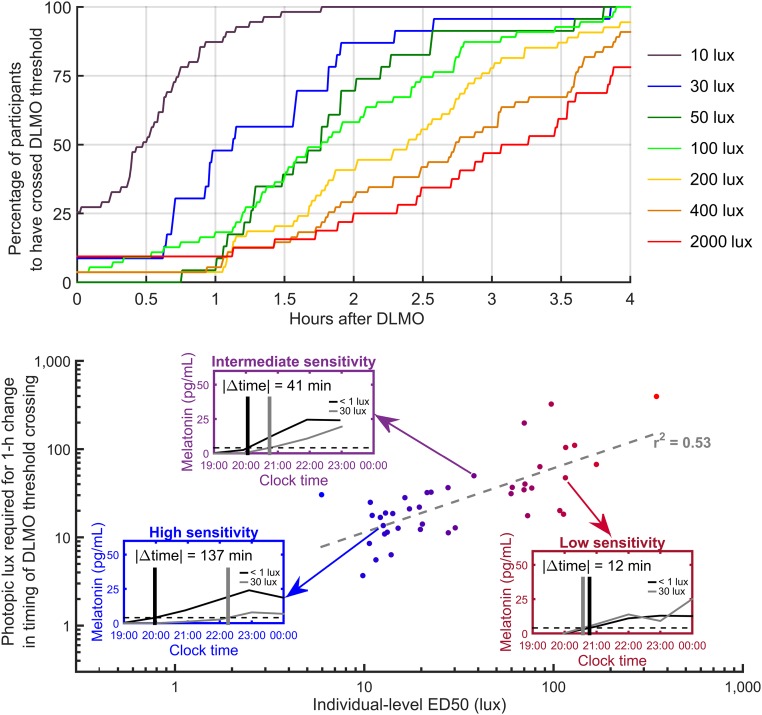
“Dim-light melatonin onset (DLMO) was calculated as the linear interpolated clock time at which evening salivary melatonin concentrations crossed and maintained above a 5 pg/ml threshold (27) .”
Light quality and time in shelter modulate behavior and cortisol in the domestic cat (Felis catus)
Yaw, A. M., Gardella, M. E., Jacobs, J., & Hoffmann, H. M. (2025) · iScience · doi:10.1016/j.isci.2025.112709 · Cited by 2
Fernandez‐Alonso, M., & Spitschan, M. (2025) · Journal of Pineal Research · doi:10.1111/jpi.70051 · Cited by 2
“More recently, some studies have also incorporated digital displays as a light source in evening studies to deliver a controlled light intervention [22, 23].”
Yang, J., Ru, T., Liu, W., Bai, H., Long, X., Chen, Q., & Zhou, G. (2025) · Biological Rhythm Research · doi:10.1080/09291016.2025.2539208 · Cited by 2
“…light parameters across these studies, the inconsistencies could also be explained by differences in timing of light exposure (Huiberts et al. 2017; Phillips et al. 2019), prior mental state to light exposure (Smolders and de Kort 2014) and the nature of task (i.e. cognitive domain and task…”
Illuminating the Risks of Nighttime Light for Cardiovascular Health
Cedernaes, J. (2025) · JAMA Network Open · doi:10.1001/jamanetworkopen.2025.39038 · Cited by 2
History of COVID-19 and Circadian Light Hygiene in Young Adults
Gubin, D. G., Boldyreva, Y. V., Danilova, L. A., Николаевич, К. С., Solovieva, S. V., Alkhimova, L. E., Кузнецова, Н. Е., Stefani, O., Weinert, D., & Cornelissen, G. (2025) · Russian Open Medical Journal · doi:10.15275/rusomj.2025.0404 · Cited by 2
Ferguson, A., Kamenská, I., Ahmad, N., Needham, N., Farquhar, M., Stephens, C., Abid, U., Perry, D., Gardani, M., Meyer, N., et al. (2026) · BMJ Mental Health · doi:10.1136/bmjment-2025-302101 · Cited by 2
Sex and age modulate the relationship between melanopsin-dependent light sensitivity and chronotype
van der Zwet, G., Bor, Z., Bos, R., van Dorp, R., Pape, L. M., van der Zwet, L. C. A., van Dijk, E. H. C., van de Stadt, H., McGlashan, E. M., Michel, S. H., et al. (2026) · SLEEP · doi:10.1093/sleep/zsag057 · Cited by 2
“Individuals vastly differ in how sensitive their circadian system is to light [ 8], which may lead to differences in circadian timing [ 9].”
Self-citationReis, C., Tomás, R., Cardoso, V., Costa, J. A., & Brito, J. (2026) · npj Biological Timing and Sleep · doi:10.1038/s44323-026-00074-4 · Cited by 3
“For instance, Phillips et al. showed that melatonin onset can shift by 12 to 137 min among individuals exposed to the same light levels 11 .”
Light Exposure as a Modifiable Determinant of Mental Health
Spitschan, M., & Zauner, J. (2026) · Current Psychiatry Reports · doi:10.1007/s11920-026-01671-7 · Cited by 4
Li, Y., Zhang, Y., Kam, K. W., Cui, Y., Chan, P. P. M., Ip, P., Zhang, W., Young, A., Pang, C. P., Tham, C. C. Y., et al. (2026) · Environmental Research · doi:10.1016/j.envres.2026.124647 · Cited by 5
Bipolar disorder and the mammalian rut: an evolutionary perspective
D’Agati, D. V., & D’Agati, D. C. (2026) · International Review of Psychiatry · doi:10.1080/09540261.2026.2750272 · Cited by 2
Dimming the Lights to Support the Overall Human Wellbeing In An Urban Context
Akanpinar, O. (2022) · IOP Conference Series Earth and Environmental Science · doi:10.1088/1755-1315/1099/1/012050 · Cited by 2
“appeared under 30 lux conditions and the sensitivity of the melatonin suppression was more than fiftyfold per individual [16].”
BackgroundXie, Y., Wu, X., Mou, X., Wang, M., Tao, S., Wan, Y., & Tao, F. (2023) · Journal of Biological Rhythms · doi:10.1177/07487304221141939 · Cited by 2
“First, although we already collect saliva in the dim light (<50 lx) to detect DLMO, recent research (Phillips et al., 2019) also suggests that some people might show sensitivity to light levels lower than 50 lx.”
BackgroundTham, W. Q., Chandra, S., Norton, B., & McCormack, S. J. (2023) · Sustainable buildings · doi:10.1051/sbuild/2023007 · Cited by 2
“Studies have shown that there are differences in melatonin suppression sensitivities between individuals [31].”
BackgroundHuman Body Temperature Circadian Rhythm in Health and Disease
Geneva, I. I. (2024) · IntechOpen eBooks · doi:10.5772/intechopen.1003852 · Cited by 5
Adaptation of sleep to daylight saving time is slower in people consuming a high-fat diet
McHill, A. W., Sano, A., Barger, L. K., Phillips, A. J. K., Czeisler, C. A., & Klerman, E. B. (2024) · iScience · doi:10.1016/j.isci.2024.110677 · Cited by 3
“One possibility is a potential dietary contribution to circadian light sensitivity, as there are large differences between people in the circadian clock’s sensitivity to light, 13 with lower sensitivity in those with a higher fat diet.”
Self-citationWoelders, T., Didikoğlu, A., Bickerstaff, L., Brown, T. M., & Lucas, R. J. (2024) · SLEEP · doi:10.1093/sleep/zsae289 · Cited by 3
“Given the technological challenges in measuring light-dependent adjustments in human circadian phase, many studies of human circadian photosensitivity employ light-dependent suppression of pineal melatonin as a proxy [7].”
Bio-Environment Working Group Report
Bará, S., Bouroussis, C. A., Jägerbrand, A. K., Jechow, A., Longcore, T., Lowenthal, J. D., Motta, M., Sanhueza, P. A., Schlangen, L. J. M., & Schroer, S. (2020) · TU/e Research Portal · Cited by 2
Prayag, A. S., Münch, M. Y., Aeschbach, D., Chellappa, S. L., & Gronfier, C. (2021) · Clocks & Sleep · doi:10.3390/clockssleep3030026 · Cited by 2
“The low EC10, EC50, and EC90 (0.2 and 2.5, 36.6 µW·cm−2 melanopic irradiance) that we derived from our melanopic-illuminance curve is similar to that by Phillips et al. (2019) after two hours of light exposure following dim-light melatonin onset (0.3, 1.5, and 36.6 µW·cm−2 melanopic irradiance,…”
InfluentialLovato, N., Phillips, A. J. K., Micic, G., Lack, L. C., & Cain, S. W. (2022) · Elsevier eBooks · doi:10.1016/b978-0-12-822963-7.00377-7 · Cited by 2
Self-citationKunorozva, L., Rae, D. E., & Roden, L. C. (2022) · Chronobiology International · doi:10.1080/07420528.2022.2139184 · Cited by 1
“A simulated westward travel with evening light exposure may have different findings (Phillips et al. 2019; Watson et al. 2018).”
BackgroundEvaluating Occupant Light Exposure and Usage Patterns in an Inpatient Behavioral Health Unit
Banasiak, M., Wilkerson, A. M., & Safranek, S. (2023) · HERD Health Environments Research & Design Journal · doi:10.1177/19375867221150226 · Cited by 1
“More recently, researchers found that there can be a 50-fold difference in the suppression of melatonin in response to evening light between individuals (Phillips et al., 2019).”
BackgroundBuilding Circadian Effective Spectra: An Open Source C Language Toolkit
Ansari, M. A., & White, J. D. (2024) · LEUKOS The Journal of the Illuminating Engineering Society of North America · doi:10.1080/15502724.2024.2423721 · Cited by 1
“Phillips et al. (2019) has shown a 100-fold difference in response of the human circadian system to evening light between individuals.”
Plastic chemicals disrupt molecular circadian rhythms via adenosine 1 receptor in vitro
McPartland, M., Ashcroft, F. J., & Wagner, M. (2025) · Environment International · doi:10.1016/j.envint.2025.109422 · Cited by 1
Circadian photoreception influences loss aversion
Lander, A. C., Burge, M. T., Thomas, B. G., Phillips, A. J. K., McGlashan, E. M., & Cain, S. W. (2025) · Scientific Reports · doi:10.1038/s41598-025-97370-z · Cited by 2
“…in sensitivity to evening light, with some individuals exhibiting > 50% melatonin suppression (a marker of light sensitivity) in response to dim light (~ 10 lx), while less sensitive individuals required ~ 400 lx (equivalent to bright office lights) to achieve the same melatonin suppression 49 .”
Self-citationSleep and Circadian Rhythms and Metabolism
Chang, A., Kaki, P. C., Yuan, R. K., Depner, C. M., & Buxton, O. M. (2025) · Oxford University Press eBooks · doi:10.1093/oxfordhb/9780197602751.013.42 · Cited by 1
Visual Impairment and Cancer Risk: A Nationwide Cohort Study of Adult Swedish Men and Women
Pistiolis, L., Litsne, H., Bagge, R. O., & Axelsson, K. F. (2025) · Cancers · doi:10.3390/cancers18010147 · Cited by 1
“Moreover, increasing evidence indicates variability in the magnitude of melatonin suppression by LAN [47–49].”
Skálová, K., Maleček, J., Kolář, D., Červená, K., Kopřivová, J., Tufano, J. J., Omcirk, D., Padecky, J., Větrovský, T., & Bendová, Z. (2026) · Frontiers in Physiology · doi:10.3389/fphys.2025.1732257 · Cited by 1
“Typical indoor lighting (>300 lux) and even much dimmer light ( ∼ 6 lux) can suppress melatonin in some individuals (Phillips et al., 2019; Cain et al., 2020).”
Blue-light-filtering spectacle lenses in managing vision-related symptoms: an updated review
Khorrami‐Nejad, M., Naroo, S. A., Oklla, A., & Narooie-Noori, F. (2026) · Therapeutic Advances in Ophthalmology · doi:10.1177/25158414251412798 · Cited by 3
“57 Despite the growing body of research on blue-light-filtering lenses, several limitations persist.”
Hong, W. (2026) · Journal of Clinical Medicine · doi:10.3390/jcm15041371 · Cited by 1
Holme, A. N., Moen, L. V., Sallinen, M., Nilsen, K. B., Boccara, C. N., Phillips, A. J. K., Haugen, F., & Matre, D. (2026) · Scandinavian Journal of Work Environment & Health · doi:10.5271/sjweh.4295 · Cited by 1
“The circadian system is highly sensitive to light, and even low intensities, such as typical room light, may suppress melatonin production ( 12).”
Self-citationFrom Sunlight to Screens: Modeling When Light Exposure Matters Most for Sleep and Circadian Health
Tavella, F., Gradisar, M., Lok, R., & Walch, O. (2026) · Clocks & Sleep · doi:10.3390/clockssleep8020021 · Cited by 1
“Models moreover allow us to simulate combinations of lighting conditions and individual phenotypic parameters, such as light sensitivity [25,26].”
Chronobiomaterials for circadian-aligned brain therapeutics
Garg, S., Walters, B., & Fernandez, D. C. (2026) · Trends in Pharmacological Sciences · doi:10.1016/j.tips.2026.05.005 · Cited by 1
The Circadian-Light-Hygiene Hypothesis: A Potential Modulator of Fertility and Birthrate Trends
Gubin, D. G., Stefani, O., Cornélissen, G., & Touitou, Y. (2026) · Biology · doi:10.3390/biology15131023 · Cited by 2
Li, B., Liu, Y., Li, W., Ma, Y. T. J., Huss, A., Chan, J. W. Y., Wing, Y. K., & Tse, L. A. (2026) · Occupational and Environmental Medicine · doi:10.1136/oemed-2026-111078 · Cited by 1
Dynamic lighting during nurses’ shift work improved alertness, mood and modified circadian rhythm
Wang, T., Gao, S., Li, J., Wang, Y., & Rong, X. (2026) · Intelligent Buildings International · doi:10.1080/17508975.2026.2718179 · Cited by 1
Optimizing dynamic lighting for visual and non‑visual impact with emphasis on power efficiency
Ansari, M. A., & White, J. D. (2026) · Building and Environment · doi:10.1016/j.buildenv.2026.115188 · Cited by 1
Bonatto, F., Correia, R. R. B., Borges, R. B., Pilz, L. K., Macedo, P. E. D. O., Skalnes, K., Idiart, M., do Amaral, F. G., & Hidalgo, M. P. (2026) · Journal of Environmental Psychology · doi:10.1016/j.jenvp.2026.103192 · Cited by 1
“…that biological and behavioural responses to light are shaped by personal characteristics such as prior light history, daily routines, and individual sensitivity to light (Castillo et al., 2023; Chang et al., 2011; H ´ ebert et al., 2002; Phillips et al., 2019;Refinetti, 2019;Smith et al., Fig.”
Bessman, S. C., Harrison, E. M., Wilkerson, A., Herf, M., Pattison, M., Vetter, C., & Glickman, G. L. (2026) · npj Biological Timing and Sleep · doi:10.1038/s44323-026-00110-3 · Cited by 1
Mammalian torpor and depressive disorders: a review of evidence for a connection
D’Agati, D. V., & D’Agati, D. C. (2026) · International Review of Psychiatry · doi:10.1080/09540261.2026.2753429 · Cited by 1
The significance of winter depression and summer depression in the evolution of bipolar disorders
D’Agati, D. V., & D’Agati, D. C. (2026) · International Review of Psychiatry · doi:10.1080/09540261.2026.2750262 · Cited by 1
Metabolomics as a tool for precision medicine
Saccenti, E., & Tenori, L. (2022) · Elsevier eBooks · doi:10.1016/b978-0-323-85062-9.00017-9 · Cited by 1
Drăgoi, C. M., Dumitrescu, I.-B., & Nicolae, A. C. (2022) · IntechOpen eBooks · doi:10.5772/intechopen.102021 · Cited by 1
Chronobiological Study Designs
Weinert, D., & Gubin, D. G. (2024) · Royal Society of Chemistry eBooks · doi:10.1039/bk9781839167553-00579 · Cited by 1
Basics of circadian rhythms: Essentials for athletes and sport professionals
Mason, B., Fernandez, F., Ghani, S. B., Lujan, M. R., & Grandner, M. A. (2024) · Elsevier eBooks · doi:10.1016/b978-0-12-822969-9.00009-2 · Cited by 1
Characterizing the Human Heart Rate Circadian Pacemaker through Widely Available Wearable DevicesPreprint
Bowman, C., Huang, Y., Walch, O., Fang, Y., Frank, E., Goldstein, C. A., Sen, S., & Forger, D. B. (2020) · bioRxiv (Cold Spring Harbor Laboratory) · doi:10.1101/2020.03.12.988899 · Cited by 1
“As a recent example, melatonin suppression due to light exposure was found to vary significantly between subjects (Phillips et al., 2019).”
BackgroundSleep in People Experiencing Homelessness Under Different Conditions and SeasonsPreprint
Rice, A., Casiraghi, L. P., Gildee, C. M., Almquist, Z. W., Hagopian, A., Martin, M. A., & de la Iglesia, H. O. (2025) · bioRxiv (Cold Spring Harbor Laboratory) · doi:10.1101/2025.01.23.634551 · Cited by 2
Dim light sensitivity and delayed sleep timing in young people with emerging mental disordersPreprint
Tonini, E., Hickie, I. B., Shin, M., Carpenter, J. S., Nichles, A., Zmicerevska, N., Jeon, E., Hindmarsh, G., Phung, E., Janiszewski, C., et al. (2026) · medRxiv · doi:10.64898/2026.03.02.26347467 · Cited by 1
Self-citationScene-based field validation of wearable light loggersPreprint
Gemici, B., Tabandeh, N., Ozkucukler, C., Zauner, J., Didikoğlu, A., & Spitschan, M. (2026) · arXiv (Cornell University) · doi:10.48550/arxiv.2606.20719 · Cited by 1
“…nighttime life, precisely the conditions where accurate characterisation may matter most, given that the human circadian system is highly sensitive to relatively low levels of evening light exposure and even modest illuminance can substantially affect circadian timing and melatonin regulation [29].”
Dakin, J. T. (2021) · doi:10.1063/9780735423992_008 · Cited by 1
Sussing out sensitivity to light: How evening light impacts individuals’ circadian systems
Curtis, A. M. (2019) · Science Translational Medicine · doi:10.1126/scitranslmed.aax9568
Prayag, A. S., & Gronfier, C. (2019) · Journal of Biological Rhythms · doi:10.1177/0748730419874139
SLEEP AND CIRCADIAN PHENOTYPES IN SEASONAL DEPRESSION
Wescott, D. L. (2021) · D-Scholarship@Pitt (University of Pittsburgh)
The non-visual effects estimation of industrial lighting sources
Suvorova, K., Kulakova, K., & Lyashenko, О. (2020) · Lighting Engineering & Power Engineering · doi:10.33042/2079-424x-2020-3-59-92-96
3D reconstruction by integrating shape and range data with application in dentistry.
Yamany, S. M., Mostafa, M. G. M., & Farag, A. A. (2004) · Circuits, Signals, and Systems
Hui, K. Y., & Ripperger, J. A. (2021) · Springer eBooks · doi:10.1007/978-3-030-22009-9_1100
Price, L., Khazova, M., & Udovičić, L. (2021) · Annals of Work Exposures and Health · doi:10.1093/annweh/wxab109
Hilaire, M. A. S. (2022) · Progress in brain research · doi:10.1016/bs.pbr.2022.04.007
Circadian Rhythm Sleep Wake Disorders
Chan, J. W. Y. (2022) · Springer eBooks · doi:10.1007/978-981-19-5791-8_12
Heat Illness and Critical Care
Shaikh, N. (2023) · IntechOpen eBooks · doi:10.5772/intechopen.104339
Fitzpatrick, N. K., Chachay, V., Capra, S. M., Briskey, D. R., Jackman, S. R., Shore, A. C., & Bowtell, J. L. (2024) · BMC Public Health · doi:10.1186/s12889-024-17637-4
“The EDUQ could also have applications in other areas of research interested in how device use may relate to population behaviours such as sleep and physical activity or psychological areas such as depression and body dissatisfaction [33, 34].”
Background(2024) · Frontiers research topics · doi:10.3389/978-2-8325-4873-8
Accurate Light Spectrum Reconstruction from Low-Resolution Spectral Sensors Using Neural NetworksPreprint
Ming-Yi, S., Mohamed, A., Jian, L. W., Lim, J. M.-Y., Liang, S.-N., Cain, S. W., Phillips, A. J. K., & Kalavally, V. (2024) · SSRN Electronic Journal · doi:10.2139/ssrn.4823373
Self-citationHung, C.-L., & Chou, C. (2024) · SSRN Electronic Journal · doi:10.2139/ssrn.4867753
Acevedo, B. P. (2024) · Elsevier eBooks · doi:10.1016/b978-0-323-99727-0.00006-9
Pollution and Climate Changes as Environmental Determinants of Poor Mental Health
Tortorella, A. A. V., & Menculini, G. (2024) · Sustainable development goals series · doi:10.1007/978-3-031-70165-8_15
Nocturnal Light Pollution Synergistically Impairs Glucose Metabolism With Age and Weight in Monkeys
Wang, S. G., Cheng, X., Liang, Z., Chen, Z., Zhang, J., & Xu, Q. (2024) · Journal of Diabetes Research · doi:10.1155/2024/5112055
“Possibly, due to di ff erent individual susceptibility or genetic reasons [27], the variations were quite obvious within some groups.”
Soler, R. R., & Voss, E. (2020) · Lighting Design + Application · doi:10.1177/036063252005001015
Smolders, K. C. H. J. (2024) · IEEE Sustainable Smart Lighting World Conference & Expo (LS) · doi:10.1109/ls2463127.2024.10880870
A Study on the Effect of Nighttime Light Intrusion on the Phase Shift of Human Rhythms
Zhang, B., Li, J., Liu, M., Li, R., Zhao, K., Guo, L., & Liu, M. (2025) · Buildings · doi:10.3390/buildings15060946
Stowe, S. R., Duston, A., Robinson, W. A., & Behn, C. D. (2025) · Journal of Pineal Research · doi:10.1111/jpi.70056
“In this setting, incorporating individualized responses in the dynamics of endogenous and exogenous melatonin would be needed [66, 67].”
Kováčová, K., Dzirbíková, Z., Grácová, L., Turlík, M., Hartman, P., Bacigál, T., Hanuliak, P., Vargová, A., Hraška, J., & Stebelová, K. (2025) · Chronobiology International · doi:10.1080/07420528.2025.2556842
“Light at night immediately suppresses melatonin production, depending on the illuminance intensity (Grubisic et al. 2019; Rahman et al. 2019; Yasukouchi et al. 2019), with high variability in individual sensitivity to melatonin suppression (Phillips et al. 2019; Vidafar et al. 2024).”
Paruzel, M., Pryzwan, T., Włodarczyk, A., & Dolibog, P. (2025) · Environmental Medicine · doi:10.26444/ms/211864
Exploring effects of lighting in physical and virtual spaces
Steffen, R. (2023) · Publication Server of Kaiserslautern University of Technology (Kaiserslautern University of Technology) · doi:10.26204/kluedo/7316 · Cited by 2
Metadata
- Authors
- Phillips, A. J. K., Vidafar, P., Burns, A. C., McGlashan, E. M., Anderson, C., Rajaratnam, S. M. W., Lockley, S. W., & Cain, S. W.
- Affiliations
- Monash University (AU)
- Corresponding author
- Cain, Sean W.
- ORCID
- Venue
- Proceedings of the National Academy of Sciences
- Publisher
- National Academy of Sciences
- Published
- 2019-05-28
- Volume
- 116
- Issue
- 24
- Pages
- 12019-12024
- ISSN
- 0027-8424 (ISSN-L)
- 1091-6490
- PMC
- PMC6575863
- OpenAlex
- W2946852268
- Cited by
- 430
- References
- 50
- Citations by year
- 2026: 53 · 2025: 54 · 2024: 60 · 2023: 54 · 2022: 76 · 2021: 64 · 2020: 51 · 2019: 17
- FWCI
- 28.72
- Type
- journal article
- Language
- en
- Open access
- hybrid
- doi.org
- Licence
- Locations
- Proceedings of the National Academy of Sciences (publishedVersion, cc-by-nc-nd)
- Europe PMC (PubMed Central) (publishedVersion, cc-by-nc-nd)
- PubMed Central (publishedVersion, cc-by-nc-nd)
- PubMed (publishedVersion)
- Monash University Research Portal (Monash University) (submittedVersion, other-oa)
- Surrey Research Insight Open Access (The University of Surrey) (submittedVersion)
- Funders
- Department of Health | National Health and Medical Research Council (1064231)
- Topics
- Life Sciences › Neuroscience › Endocrine and Autonomic Systems › Circadian rhythm and melatonin
- Physical Sciences › Environmental Science › Global and Planetary Change › Impact of Light on Environment and Health
- Social Sciences › Psychology › Experimental and Cognitive Psychology › Sleep and Work-Related Fatigue
- Keywords
- circadian system, evening light, melatonin suppression, interindividual variability, photosensitivity, circadian rhythm disruption, electric lighting, indoor lighting
- MeSH terms
- Adult, Circadian Rhythm, Female, Humans, Individuality, Light, Lighting, Male, Melatonin, Young Adult, Circadian Clocks
About these checks
Registry, retraction, Cites and statistics results are computed, not judged, with one exception: a printed reference that no index lists is read once by a model before it counts as a citation error. Claims are extracted by a model and kept only when their quote appears verbatim in the text; each cited source is then checked, with a model’s help, for whether it says what the claim relies on. Those verdicts can be wrong — read the claim’s quote and the cited source before relying on one.
Statistics and arithmetic are recomputed, not judged.
Confidence bands are shown only for fields calibrated on our annotated test set. None is calibrated yet, so no band is shown.
What counts as a claim ›How we measure confidence ›How we check this ›
Are you an author, or do you see a problem with this page? Request a review
Data sources
Bibliographic data: Semantic Scholar, OpenAlex, Crossref.
Contains information from the Semantic Scholar Academic Graph Datasets, made available under the ODC Attribution License (ODC-BY 1.0).
Semantic Scholar’s data is described in: Kinney, R., et al. (2023). The Semantic Scholar Open Data Platform. arXiv:2301.10140.
